
I DO KNOW SOME THINGS by Richard Siken — reviewed by Thomas
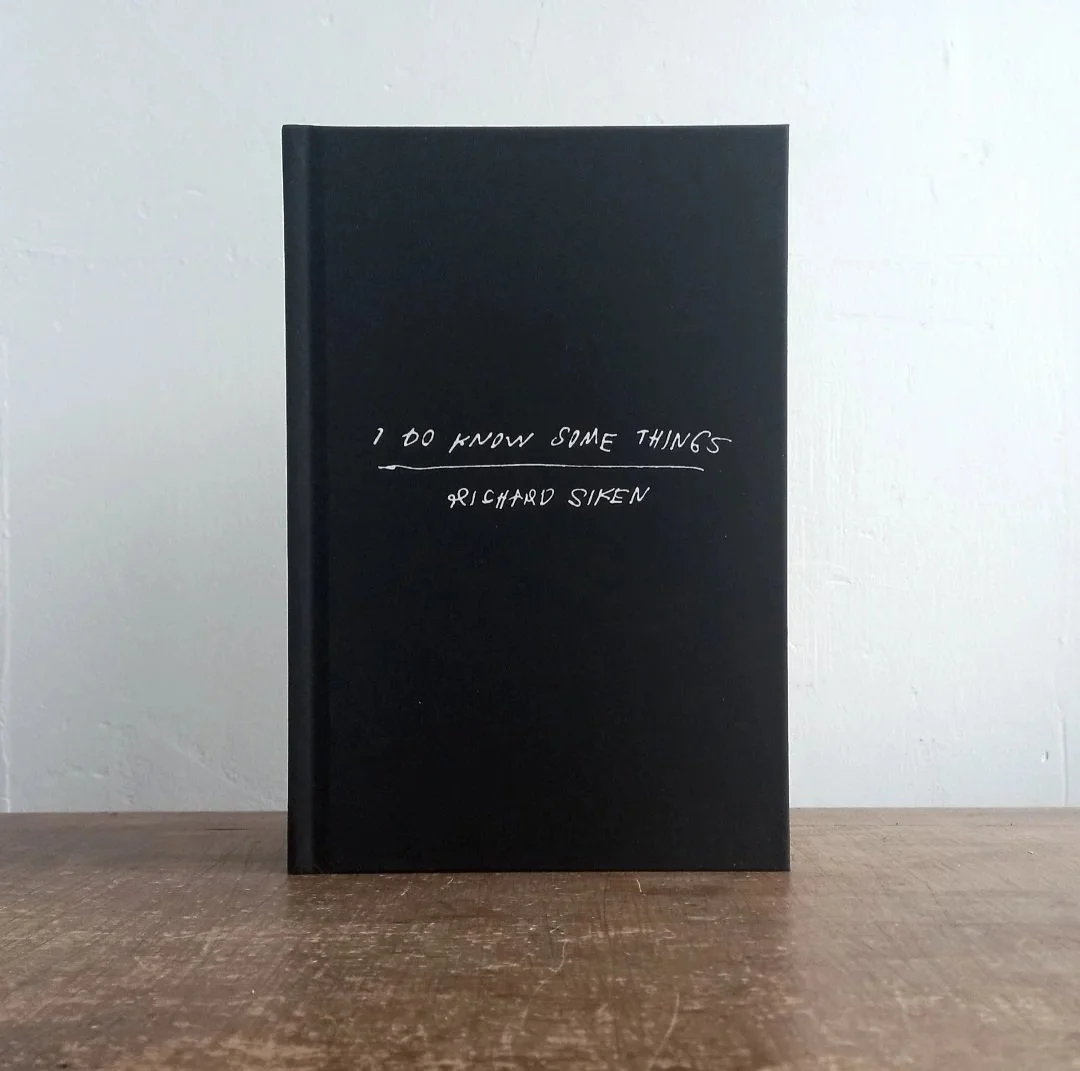
In 2012, lying in a hospital bed, clinging to language, wondering what my brain was doing, I wrote: “my inability to sleep my inability to remain asleep imperfect inability in either case my imperfect inability to fall asleep therefore a slight ability to fall asleep perhaps all it takes not much of a claim my nearly complete inability to fall asleep my nearly complete inability to remain asleep nothing remarkable there in either case all sleepers awake perhaps sooner perhaps later excepting those who will not ever wake but who will no longer be asleep in any case my nearly complete inability to remain asleep for more than a few seconds no my complete inability to remain asleep for more than a few seconds so it seems who knows eyes open in the dark my complete inability to fall asleep…”. I had driven myself to the hospital one-handed (I shouldn’t have done that) after finding that my left arm had become entirely unresponsive and discovering how hard it is to peel an egg for lunch using only one hand (typing had been manageable and I had really wanted to finish what I was working on). They gave me all the tests. My stroke was a small one compared with the one that wiped out poet Richard Siken in 2019, though his was at first misdiagnosed at the hospital as a panic attack. Afterwards he found himself having to completely rebuild his relationship with his body, with his world, and with language itself — the medium that previously had come most naturally to him. To help him with this, or, rather, to grab desperately and uncertainly at both language and memory, he wrote a series of short paragraphs, firstly just to explain himself to himself, that later formed the core of the book I Do Know Some Things. The 77 prose poems are written in the empty place made clean by the stroke, they are careful and simply constructed, the experiences they delineate are immediate, ordinary, and often tragically personal, and yet shafts of sublime poetry and insight strike often when least expected, sublimity and insight that surely would not have been possible without the emptiness cleared in Siken’s world by the stroke. Also, notably, this is a darkly hilarious book, both vitriolic and tender. What began for Siken as a series of exploratory and explanatory survival notes to himself built into a series of playful interrogations of memories, traumas and losses, a pinning of personal phantoms, a renegotiation of the contract between inner and outer worlds, and an unfurling of new and vulnerable possibilities in language and in life — new and vulnerable possibilities that could not have been accessed but from a place of helplessness and hopelessness. “If it can be done, there’s a way to do it poorly,” writes Siken of his failure to properly fill a place in the world, but it is this failure, this struggle and attendance to the most basic problems of living and thinking, that provides access to new ways of writing, where the quotidian and the ecstatic, the simple and the infinite, the personal and the universal, the tragic and the treasured, death and renewal, the gauche and the inspired are barely separate at all. Surely this is what poetry is always aiming for. “A man lies down in leaves, singing, so we’re surrounded by trees in wind. His song is a mountain and all the ladders that every living thing is climbing. He will sing his beast into a larger beast and trample the open field of himself into wonderment. These things happen. It frightens me, this availability to the world, the vulnerability it takes for possible joy.”