
IT LASTS FOREVER AND THEN IT'S OVER by Anne de Marcken — reviewed by Thomas
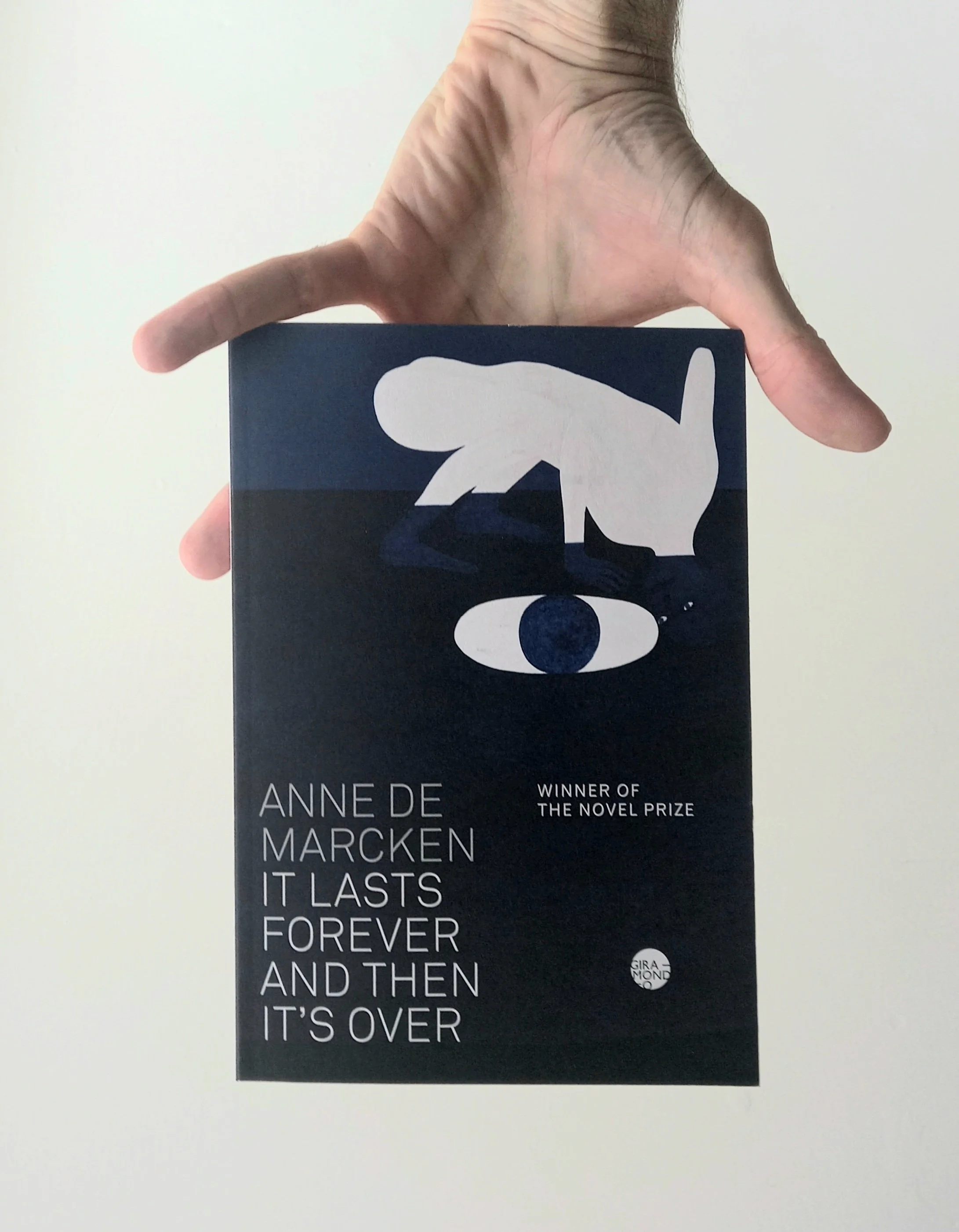
If undying love is possible it can ultimately be possible only for the undead. Anne de Marcken’s beautifully written poetic novel is addressed in fragments (appropriately) by its narrator, a zombie but not as we know one (although not exactly not not as we know one, either), to a departed lover (if her lover is not in fact a departed part of herself (which is always a difficult distinction to make)) as she overcomes the hunger-and-rage cycle common to zombies (“Fasting makes sense of hunger. If I am hungry and I eat and I remain hungry, hunger becomes rage. But to deny fulfilment makes sense of the hunger — I don’t eat, so I am hungry.”) and stumbles westward from the zombie hotel towards the dunes and towards the ocean, locations of the lovers’ past which still pull and hum and resonate with memory. “Everything I encounter has the quality of having been encountered before. An always already feeling. And at the same time, everything I encounter is strange to me. Have I been here with you? Did we come this way? What is familiar because I have seen it before and what is just part of a familiar story? What is remembered and what is received? What is strange because I have forgotten it, or because it is new, or because this time I am on foot, or because this time I am undead, or because this time I am without you?” What does happen to the past once it has passed? Every experience, every moment has of course a natural instinct to survive, to persist, to cling to us as memory, to give us an idea of ourselves in return for its survival. In youth and growth, our world enlarges itself and we are nourished by the new, but as memory accretes to us, as we reiterate our identities until they lose their fluidity, as we cease to grow, as we age, as we tire, as we despair, as we start to be defined by loss, apart from whatever else the loss of the experiences of the past, the very experiences that continue to inhabit us as memories, if not ourselves the loss of body parts as for the narrator of this book (her arm comes off on the first page; she hollows a place in her chest for a dead blackbird to lie where her heart used to be) though maybe, we all become zombies in effect. Our zombiehood is our relationship to time. Once something has happened, we continue, undead, always beyond the end. “It was the end. But we did not know it then. You do not know the end has happened until later. Or you do not admit it. Looking back, you can see it. And you realise that all the time after that was just an effect to keep you going as if it weren’t already over.” What keeps our narrator moving slowly west? “The black hole that is sucking me inside-out. … Not nothing. Not real or unreal. It is not simple emptiness. Not lack. Not want. It is not hunger. It is grief.” She moves perhaps towards her dissolution or perhaps towards completion, if we even have the capacity to tell one from the other.