
FLASHLIGHT by Susan Choi — Review by Stella
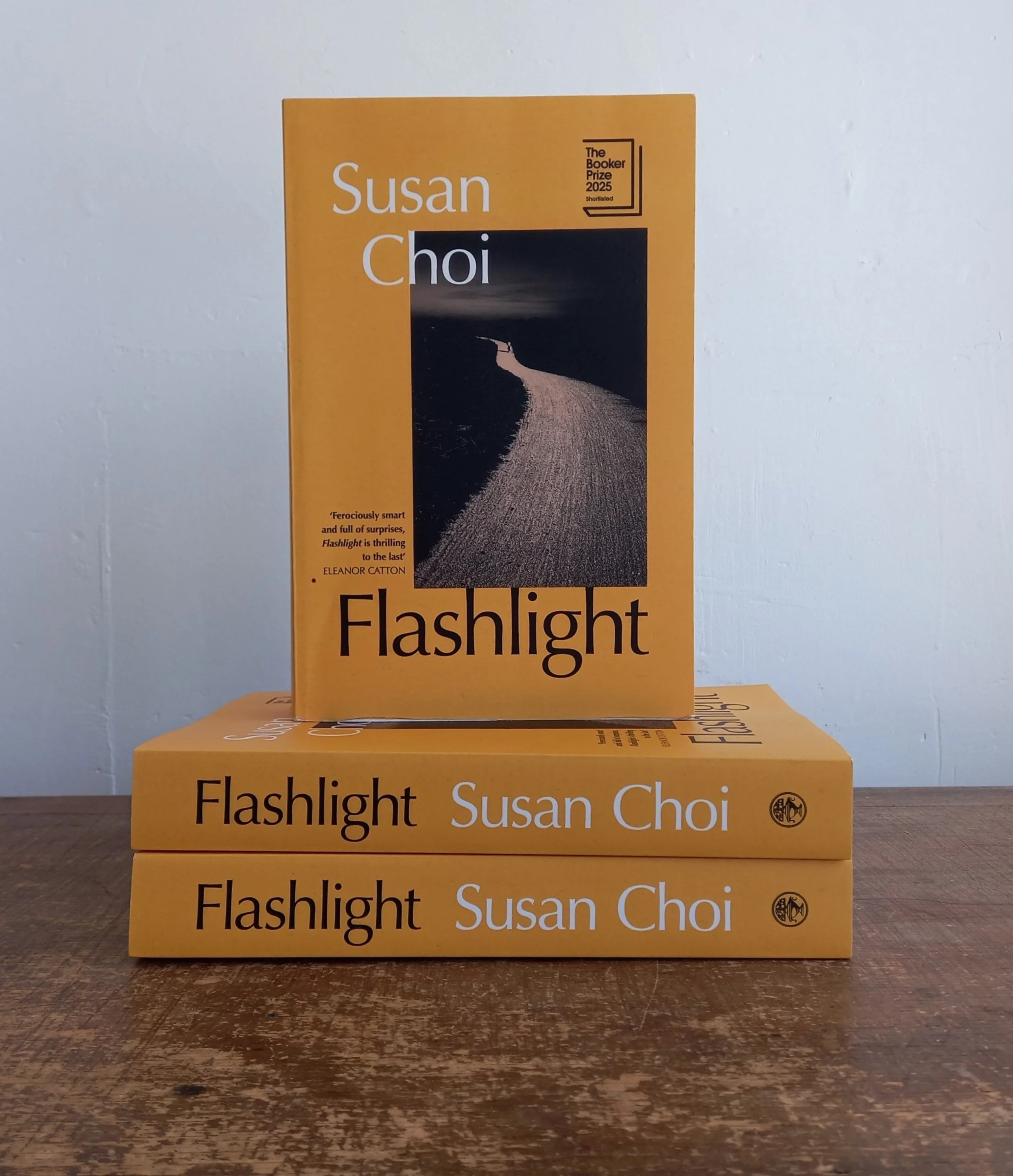
A night walking on the beach with her father Serk, looking at the stars, turns to tragedy for 10-year-old Louisa. Her father disappears, and is presumed drowned. She survives the tumult of the sea and is washed up on the shore, blue with cold, but in one piece aside from her memory of the evening’s events. Her last being the beam of the flashlight in her father’s hand, the light not revealing enough for a coherent story of what happened. Louisa and her parents have been living in Japan for the year. Louisa, although a conspicuously tall American-Korean child, had fitted in at school and her new neighbourhood. Unlike her mother, Anne, who struggled with the language, a husband who ignored her, and the onset of a degenerative disease. Serk and Anne had been at an impasse for a while, their relationship fraught and mechanical, sometimes violent. Each alone in their secrets and discontent. The distance and secrets continued to grow. Anne has made contact with Tobias, her son she had at nineteen, and doesn’t tell Serk. Serk is seeking his family, who left Japan to be repatriated to Korea, not to the island they were from, but to North Korea on the promise of a better life. A decision that Serk strongly disagreed with. In Flashlight, Choi swings the beam of the light from one to the other, taking us into the worlds and stories of each character. We head to the past. Serk’s childhood, where he is known as Hiroshi at school, and Seok by his family. (His name changes depending on his circumstances, Americanised, nickname, erased.) Here is the child that refuses to return to Korea, who thinks of himself as Japanese, but as a young man becomes embittered by his position in that society, and when an opportunity to leave comes, America beckons. Study and later a middling academic job. And a wife, and a child. We meet Anne, a girl mostly ignored, wanting something more than what is expected of her. Anne falls pregnant and her child is taken from her by the man she thought would save her from a dull life. Despite this deep sadness, she makes her way and is fiercely independent. Her marriage to Serk is another adventure, but one that after the first blush holds very little joy for her (or Serk) but they have Louisa. Louisa is cherished by both, but also caught in the crosshairs. She has Serk’s intelligence and Anne’s stubbornness. A fiery, as well as guilt-laden, relationship exists between mother and child; a tension that never resolves. Flashlight is a study in trauma, family dynamics, and in self. It’s outward and external in its telling of a piece of history of which I was oblivious (no spoilers here) and in relating the dynamics of this family unit with each other and in the world over several decades. It’s inward and internal in exploring the suffering, resilience, and resolve experienced by each of the main characters. There aren’t exactly happy endings here, but there is a sense of completion, which a less able novelist would have struggled with. This is a big novel — Flashlight is a novel that has much packed into it. Complex characters, with weaknesses and strengths; intriguing history which puts a spotlight on political power and nation-states; family relationships and secrets that hold no easy answers; and sharp writing that pulls it all together.