
NEW RELEASES (4.2.26)
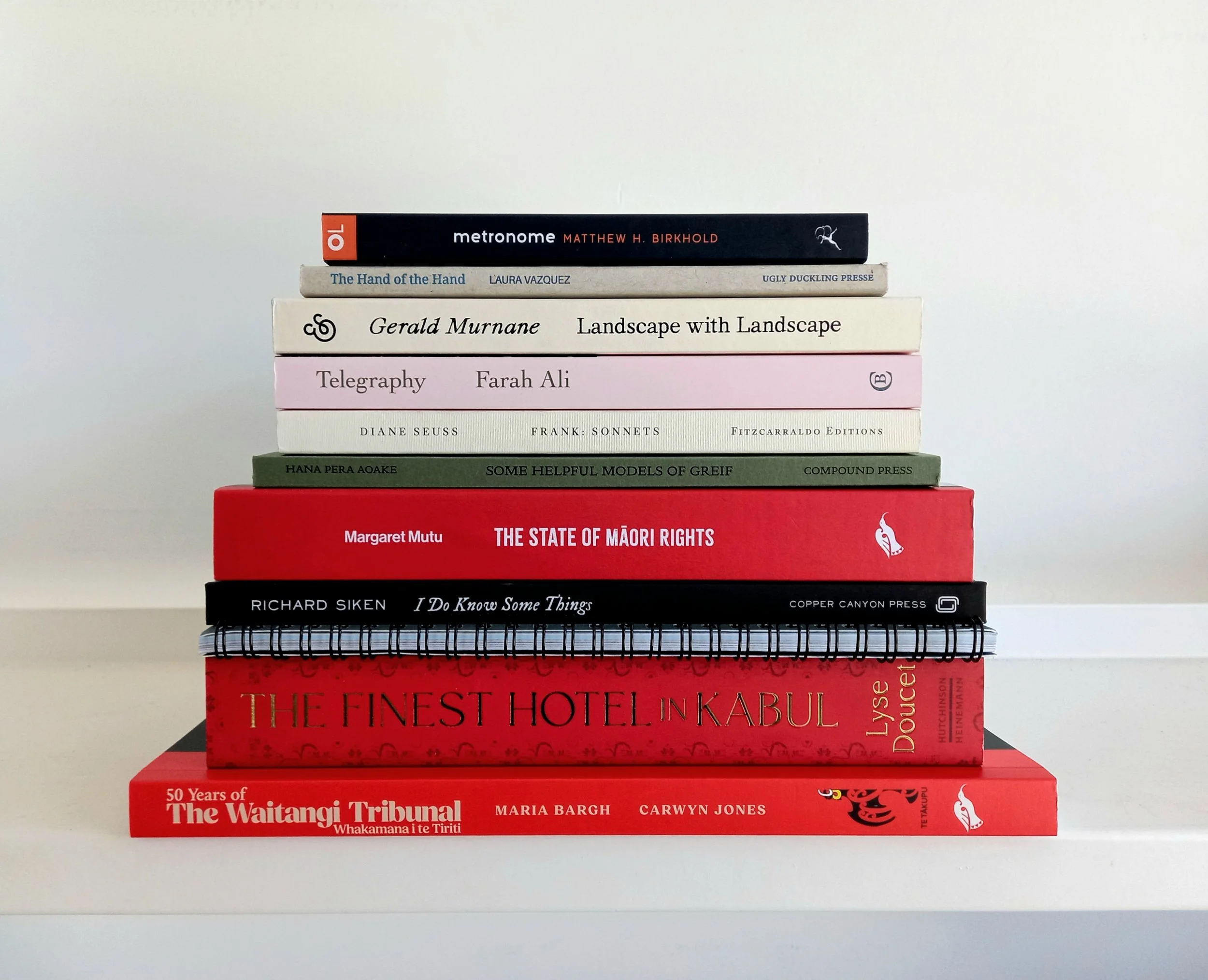
All your choices are good! Click through to our website (or just email us) to secure your copies. We will dispatch your books by overnight courier or have them ready to collect from our door in Church Street, Whakatū.
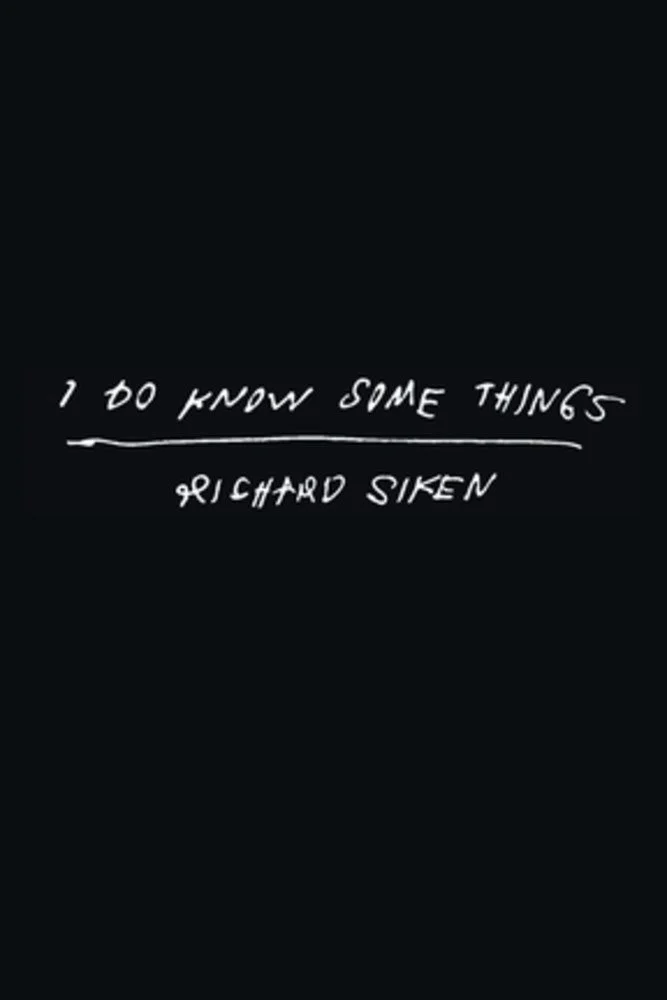
I Do Know Some Things by Richard Siken $50
Richard Siken's long-anticipated third collection, I Do Know Some Things, navigates the ruptured landmarks of family trauma: a mother abandons her son, a husband chooses death over his wife. While excavating these losses, personal history unfolds. We witness Siken experience the death of a boyfriend and a stroke that is neglectfully misdiagnosed as a panic attack. Here, we grapple with a body forgetting itself — "the mind that / didn't work, the leg that wouldn't move...". Meditations on language are woven throughout the collection. Nouns won't connect and Siken must speak around a meaning: "dark-struck, slumber-felt, sleep-clogged." To say "black tree" when one means "night." Siken asks us to consider what a body can and cannot relearn. "Part insight, part anecdote," he is meticulous and fearless in his explorations of the stories that build a self. Told in 77 prose poems, I Do Know Some Things teaches us about transformation. We learn to shoulder the dark, to find beauty in "The field [that] had been swept clean of habit." Recommended. [Hardback]
"An astonishing feat of poetic prowess. Siken has created 'an encyclopedia of myself,' a kaleidoscope of memory, language and identity that reveals — at times revels — in the faultiness of our own narratives. Siken's voice — and language — is both rooted and aloft, even as he avers that these are not 'poems of song.' Beyond such marvels, this is a virtuosity of candor and technique, bound by a seemingly effortless linguistic choreography that leans into multiplicity and mutability, with continuous sparks and joys, from one of our finest contemporary poets." —Mandana Chaffa, Chicago Review of Books
"The second-person strategies of Crush are abandoned in I Do Know Some Things for a more direct style, but Siken's signature intensity still throbs between sentences. Siken's prose is often deft and exciting. As he relearned everything, the prose poem helped him rediscover how to create poetic tension, how to be dynamic without the gravity-defying magic of enjambment. Syntactic variation. Quick, unexpected shifts in register. Artful repetition. These are all refined strategies in the collection. The prose is also a steadying element. It is another way of not losing oneself, of not falling through the cracks." —Richie Hoffman, Yale Review
>>Wiped clean.
>>The most fundamental poetic device.
>>Landmarks for meaning.
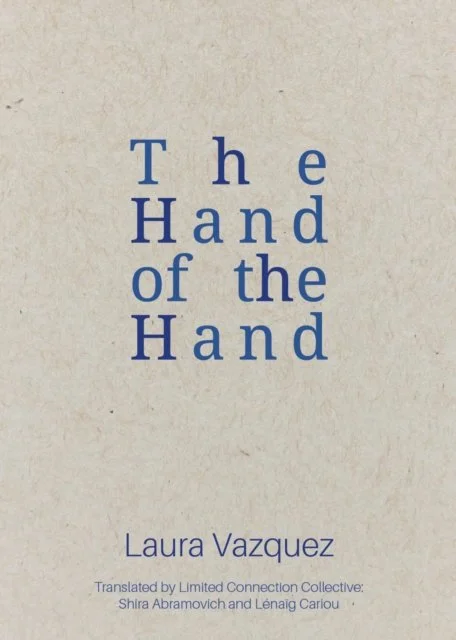
The Hand of the Hand by Laura Vazquez (translated from French by Shira Abramovich and Lénaïg Cariou) $48
The Hand of the Hand brings us poetry from a visceral alternate world in which earth, animal, and human intertwine — where stomachs have meadows, milk pours itself over trees, and flies wash the dead. Vazquez pulls deceptively simple, bare language into puzzling formations, creating an ambient unease. By turns lyrical and absurd, The Hand of the Hand explores the mystery and strangeness of what it means to be both speech and body, tongue and dirt. English/French bilingual edition. [Paperback]
”The tentacular porousness of Laura Vazquez’s début collection sweeps selfhood off its feet.” —Sarah Riggs
”This remarkable and subtle poetic series moves continually outward—one thing leads to another and another, gaining momentum until its evocations achieve a true fusion of body and world. Whether through forests, ants, stones, or words, it’s a fusion that allows the reader, too, to become one with the world as a unified gesture, and it’s the hand—as bridge, as touch, as grasp—that animates this gesture, this hand that seems ubiquitous, which, in fact, it is. “ —Cole Swensen
”In this knockout first collection in English, Laura Vazquez shows us the simplicity and the complexity of the real. But what is the real? It’s these poems, written right on the very skin of it, where the human and everything else feel it. These poems, like Lucretius’, explain the world to us at the granular, allowing us to see these strange perceptions and arrangements of body (‘I folded my tongue, the way I know how’) in all its pleasure and wonder.” —Eleni Sikelianos
>>Read some extracts.
>>The Endless Week.
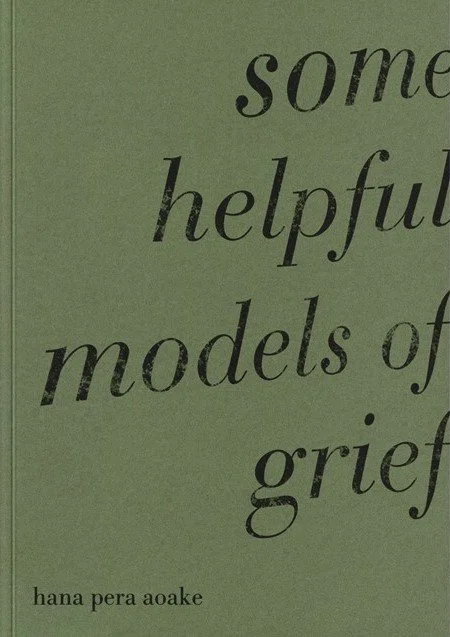
Some Helpful Models of Grief by Hana Pera Aoake $30
A composite chronicle of various loves — desired, lost, or never realised — and their corresponding joys and griefs against the backdrops of contemporary art and late capitalism. These poems radiate with Aoake's characteristic force, tenderness, intelligence, and humour, often all within the very same breath. The personal is the political is the personal. [Paperback]
”Everything Hana writes has a pulse. It could be moss, Britney or Plato but it sings a song that is nervous, in the body and out of the body. You’d be a fool not to take in all of Hana’s grins.” —Talia Marshall
”Hana’s writing is daring, elliptical, charismatic and above all, interesting. The kind of writer where it doesn’t matter what the subject is, you know you are always in good company.” —Hera Lindsay Bird
“He haerenga whakatautau, he haerenga atamai, he haerenga ngoto. Sometimes difficile, always différente, Some helpful models of grief is an unique, polymorphous panorama of pāmamae that will be sure to beguile any reader.” —Vaughan Rapatahana
”Hana has always had a way of using words to weave together complex stories and narratives. The words and pieces found throughout this collection are tender and beautiful.” —Khadro Mohamed
>>Read some extracts!
>>Look inside.
>>A bathful of kawakawa and hot water.
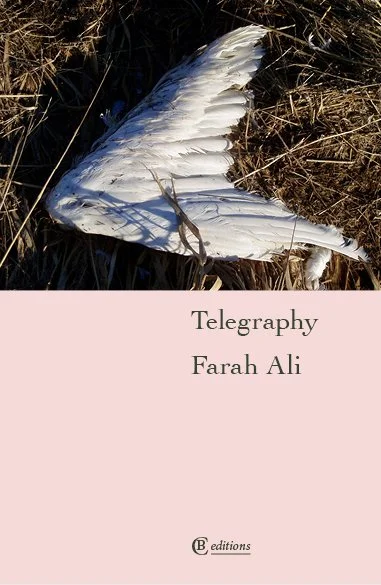
Telegraphy by Farah Ali $38
Growing up in Pakistan, Annie experiences the death of her mother, goes to college in Karachi, falls in love with a singer in a band, marries the wrong man, and all her life has visions and illnesses no doctor can explain. Signals are received by the body from across time and space. Passages interwoven with Annie’s narrative include Vesalius stealing the corpse of a hanged man, a visit to the house of the 17th-century Dutch anatomist Frederik Ruysch, correspondence between far-flung friends in the 19th-century Ottoman Empire, a family’s centuries-long dispersal following an earthquake in Kibyra in 23 CE, and a man stepping onto a landmine in contemporary Waziristan. [Paperback with French flaps]
‘“Farah Ali’s novel, Telegraphy, connects the past with the present, the mythical with the ‘real’. It connects our desires, our longing, the fear that haunts even waking hours, with what we end up becoming — pieces of a whole that was fractured from the beginning, the skin around the bones just a fragile casing for the unbearable weight of suffering. Well crafted, deeply pensive, this is a novel that speaks to each one of us, if we dare to speak to ourselves.” —Feryal Ali Gauhar
”Telegraphy is a deeply strange book. The ethereal quality of Farah Ali’s writing holds this curious, clever, almost devious book with such tenderness, I felt I was in the hands of a writer who had been working for decades to distil this fine work.” —Lara Pawson
”A true book of the body, its pains and resonances, and a bold, unique structure with a captivating voice.” —Han Smith
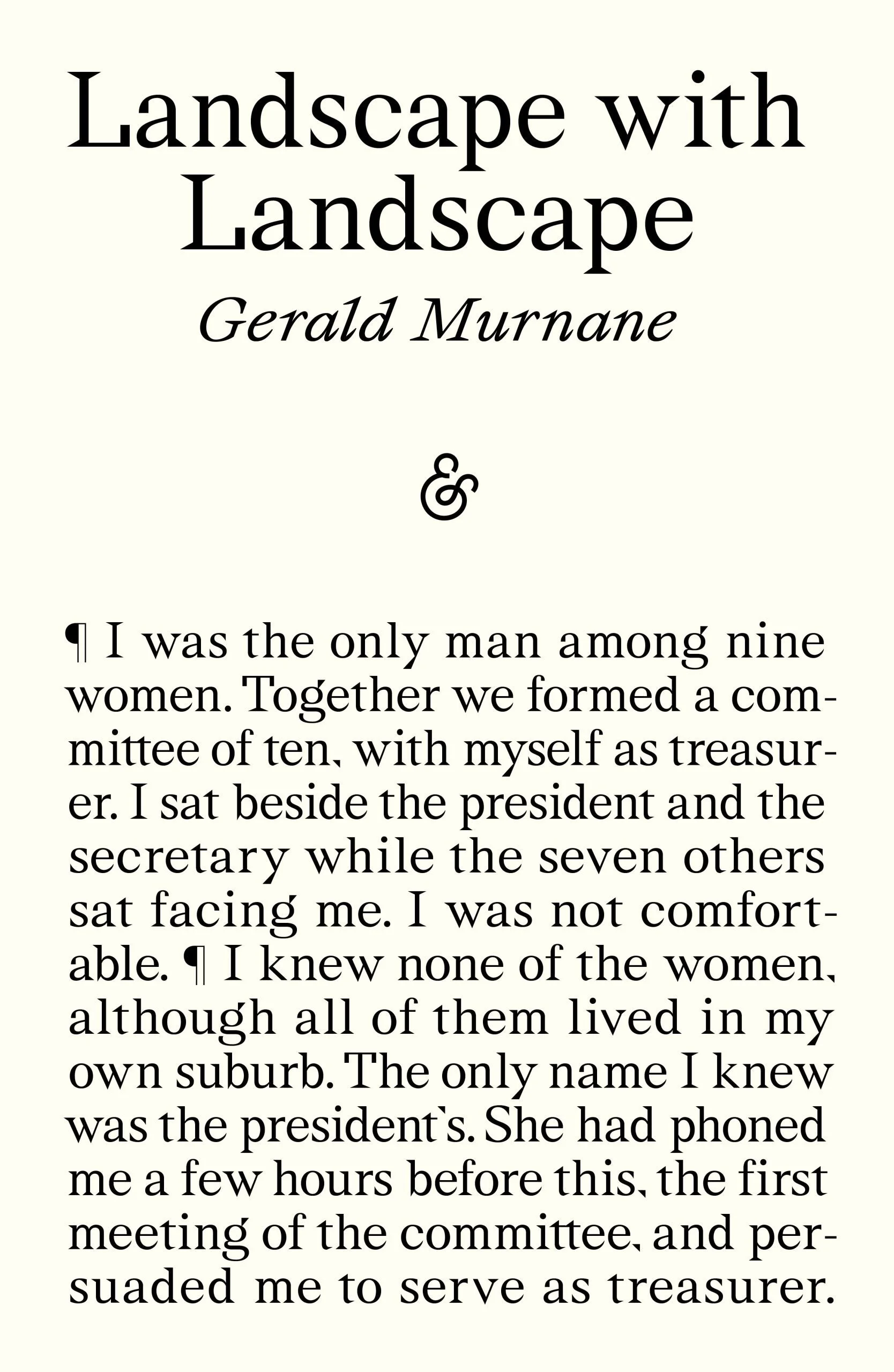
Landscape with Landscape by Gerald Murnane $48
Landscape with Landscape was Gerald Murnane's fourth book, after The Plains, and his first collection of short fiction. When it was first published, thirty years ago, it was cruelly reviewed. "I feel sorry for my fourth-eldest, which of all my book-children was the most brutally treated in its early years," Murnane writes in his foreword to this new edition. In hindsight it can be seen to contain some of his best writing, and to offer a wide-ranging exploration of the different landscapes which make up the imagination of this extraordinary Australian writer. Five of the six loosely connected stories also trace a journey through the suburbs of Melbourne in the 1960s, as the writer negotiates the conflicting demands of Catholicism and sex, self-consciousness and intimacy, alcohol and literature. The sixth story, 'The Battle of Acosta Nu', is remarkable for its depth of emotion, as it imagines a Paraguayan man imagining a country called Australia, while his son sickens and dies before his eyes. [Paperback with French flaps]
”Murnane is unlike anyone else, the sort of writer who demands to be read in a new way but, above all, demands to be read.” —Brian Evenson, Chicago Review of Books
”The emotional conviction is so intense, the sombre lyricism so moving, the intelligence behind the chiselled sentences so undeniable, that we suspend all disbelief.” —J. M. Coetzee
”This is some of his finest writing, and a major work by any measure.” —Michael LaPointe, Times Literary Supplement
>>Read Thomas’s reviews of some others of Murnane’s fictions.
frank: sonnets by Diane Seuss $35
”The sonnet, like poverty, teaches you what you can do / without,” Diane Seuss writes in this brilliant, candid work, her most personal collection to date. These poems tell the story of a life at risk of spilling over the edge of the page, from Seuss's working-class childhood in rural Michigan to the dangerous allures of New York City and back again. With sheer virtuosity, Seuss moves nimbly across thought and time, poetry and punk, AIDS and addiction, Christ and motherhood, showing us what we can do, what we can do without, and what we offer to one another when we have nothing left to spare. Like a series of cells on a filmstrip, frank: sonnets captures the magnitude of a life lived honestly, a restless search for some kind of 'beauty or relief'. Seuss is at the height of her powers, devastatingly astute, austere, and — in a word — frank. [Paperback with French flaps]
”This book is a response to death, a way of living in knowledge of death's privations. What Seuss is hoping for is an extended enough death to allow for a witty recognition of the shape it is imposing on the life it ends. Beyond that, though, what she wants is enough life to make her death into a kind of 'last rhyme', a sound that radiates both into the past and into the future, where it might make contact with your body, or mine.” —Kamran Javadizadeh, London Review of Books
”Seuss layers the work with a litany of cultural and literary references. It is at that bright, fascinating collision between tradition and innovation that these poems reside.” —Soft Punk Magazine
”These poems are taut and careful glimpses into a life lived on the fringes but threaded with wildness; there is a constant sense that everything they contain might erupt at any moment. If autobiographical writing is an attempt to fix a life inside language, frank: sonnets and Modern Poetry are both convincing arguments for the absolute impossibility of ever really succeeding in doing so. Instead, they offer an alternative: debris, glimpses, constellations, ghosts. Suffering and all its attendant bewilderment is given the space it deserves, and pleasure, transcendence, and love are all given due space alongside it.” —Maija Makela, Stinging Fly
>>What is a coffin for?
>>Body parts will always wash up.
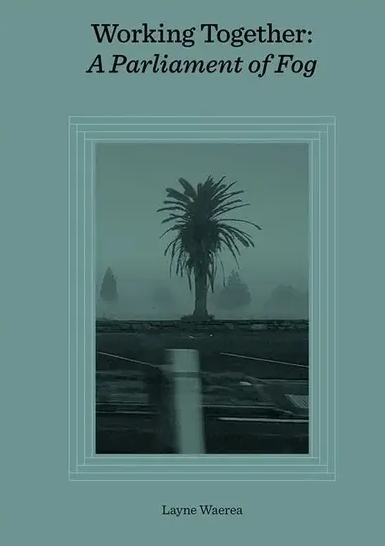
A Parliament of Fog by Layne Waerea $35
For more than a decade, fog has rematerialised throughout the work of lawyer-turned-artist Layne Waerea. Her public interventions and performances explore what she describes as “legal-social subjectivities”, centering the implications of Te Tiriti o Waitangi as Aotearoa New Zealand’s only living treaty with Māori. For Waerea, the act of chasing fog pursues a physical or ideological space where borders can be tested — “a fertile area where there are lots of question marks” — and where imagination, hope, participation, and failure can be explored. A Parliament of Fog celebrates ten years of Waerea’s ongoing project the chasing fog club (Est. 2014), and also marks the occasion of its second-ever “Annual General Meeting.” Developed over 2023-24 within a fraught political climate leading up to the New Zealand elections and the first term of a new right-wing coalition government, the publication approaches the club — and Waerea’s recent practice — as a springboard for taking the pulse of the moment. Reflecting on the recent activities of the club in dialogue with a group of collaborators, A Parliament of Fog considers how conditions of opacity, uncertainty, and transition might offer space for collective reimagining. Featuring contributions by the chasing fog club (Est 2014), Sophie Davis, Ioana Gordon-Smith, Deborah Rundle, and Layne Waerea. [Paperback (appropriately spiral-bound)]
>>Look inside.

50 Years of the Waitangi Tribunal: Whakamana i te Tiriti edited by Maria Bargh and Carwen Jones $50
The Waitangi Tribunal has been a unique and integral part of the Aotearoa New Zealand judicial and legislative process, upholding te Tiriti o Waitangi and providing expertise on historical claims, Maori language, land, resources and contemporary issues. This collection contains chapters on themes of land, water and the natural environment, the settlements process, the Kaupapa Inquiries, and issues of social policy, mana, and rangatiratanga, each written by an expert in the area. There are also interviews with two past chairpersons of the Tribunal. The collection highlights the breadth of issues considered by the Tribunal and also the impact the Tribunal has had on complex legal concepts, representation of communities, and understanding of te Tiriti o Waitangi. [Paperback]
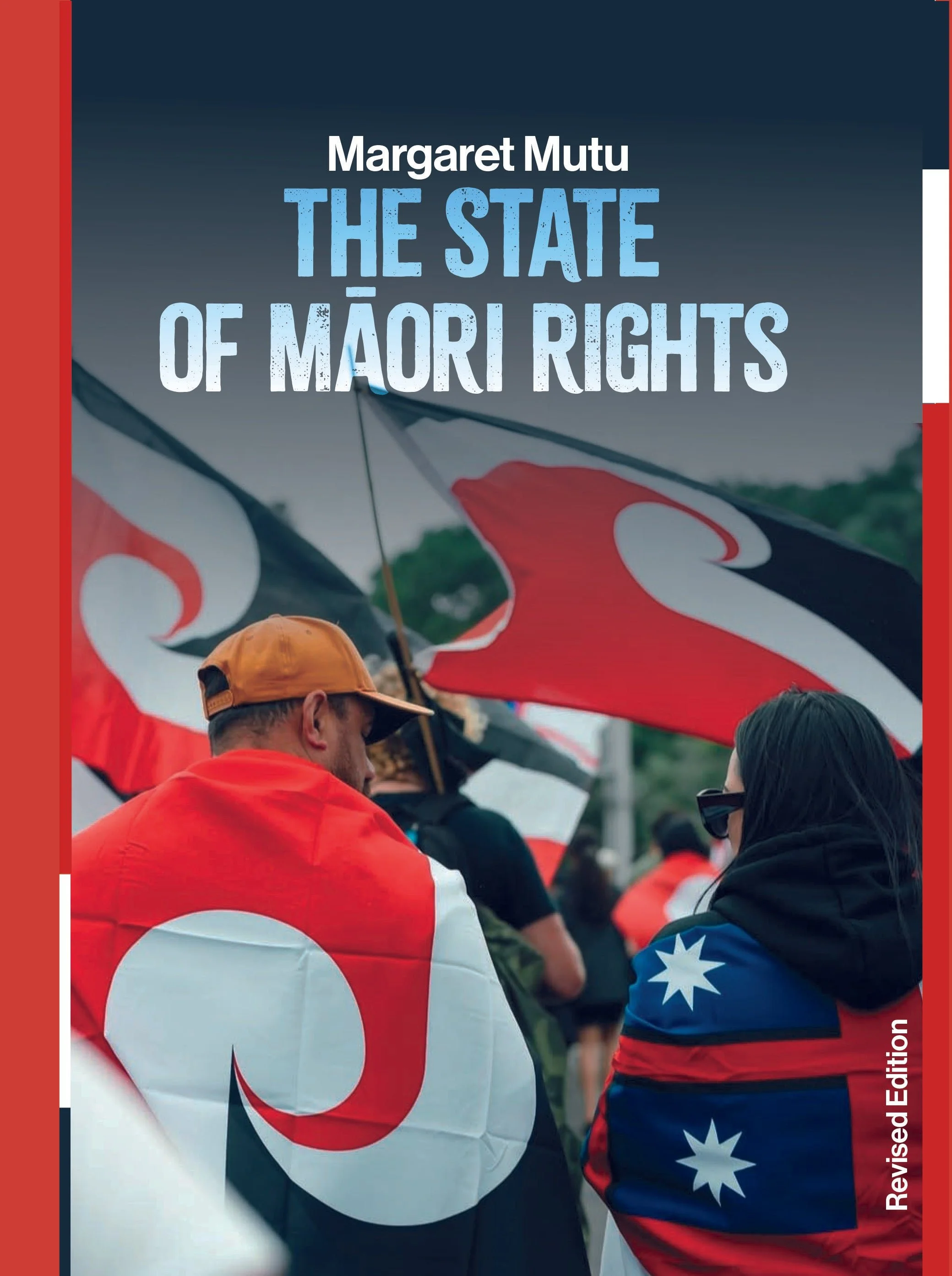
The State of Māori Rights by Margaret Mutu $55
The State of Māori Rights was first published in 2011 and brought together a Māori view of events and issues that occurred between 1994 and 2009 with a direct impact on Māori. This includes the 1994 fiscal envelope policy debate, the 50,000-strong protest march against the foreshore and seabed legislation, the Waitangi Tribunal and its Treaty claims process, and media attacks on Māori MPs. This new edition, revised and updated with new chapters, brings Margaret Mutu’s The State of Māori Rights through to 2024, a time when Māori rights under the Treaty of Waitangi are once again being violated. Mutu covers Māori responses to COVID-19 and to national disasters such as the White Island eruption and the Christchurch Mosque Attacks on the Muslim community. Māori initiatives and success stories run through these years too, which, in Mutu’s words, “encourage us not to lose sight of our ancestors’ vision”. [Paperback with French flaps]
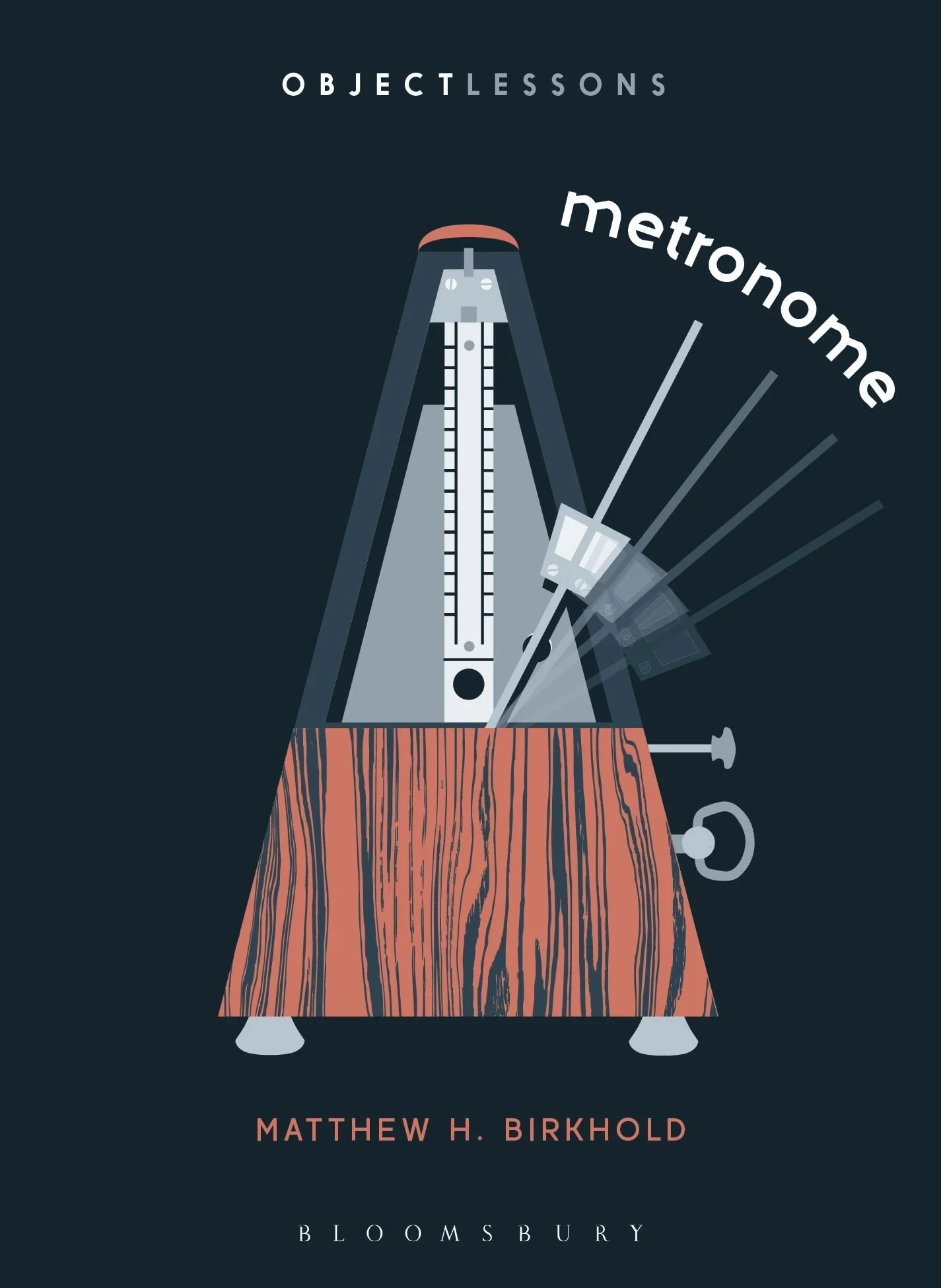
Metronome by Matthew H. Birkhold $23
When the metronome was invented in 1815, it transformed the music world. Composers and musicians now had a tool that could help them maintain a precise and consistent tempo. And while giants of classical music like Beethoven early embraced the metronome and proponents came to see its essential role in music instruction, critics believed it created mindless players and inhibited the creation of great art. The metronome evokes strong feelings because of its uncompromising power. Through it, we are connected to the past, propelled into the future, and kept focused on the present. For that reason, this object has appeared in unlikely settings as athletes, scientists, psychologists, authors, and other professionals have found uses for it beyond music. Metronome uncovers the surprising and fraught history of a timeless object. [Paperback with French flaps]
”In this clever and thoughtful exploration, Matthew Birkhold reveals how a simple ticking device became both liberator and tyrant, reshaping not just how we make music but how we understand rhythm, precision, and ultimately, our own humanity.” —Christopher Cerrone
”Matthew Birkhold reveals the fascinating history of the metronome that not only covers music, but touches upon dance, art, education, philosophy, physics, psychology, and sports medicine. Devised by Johann Nepomuk Maelzel in 1815, Beethoven was an early supporter, but soon Maelzel's metronome (the original M.M.) inspired passionate debates amongst musicians, conductors, composers, pedagogues, and musicologists. Birkhold has successfully unveiled the deeper meanings of an innocuous device that spells out perfect time, as opposed to human time. An illuminating read.” —Fumi Tomita
>>How starfish move without a brain.
>>Other books in the excellent ‘Object Lessons’ series.
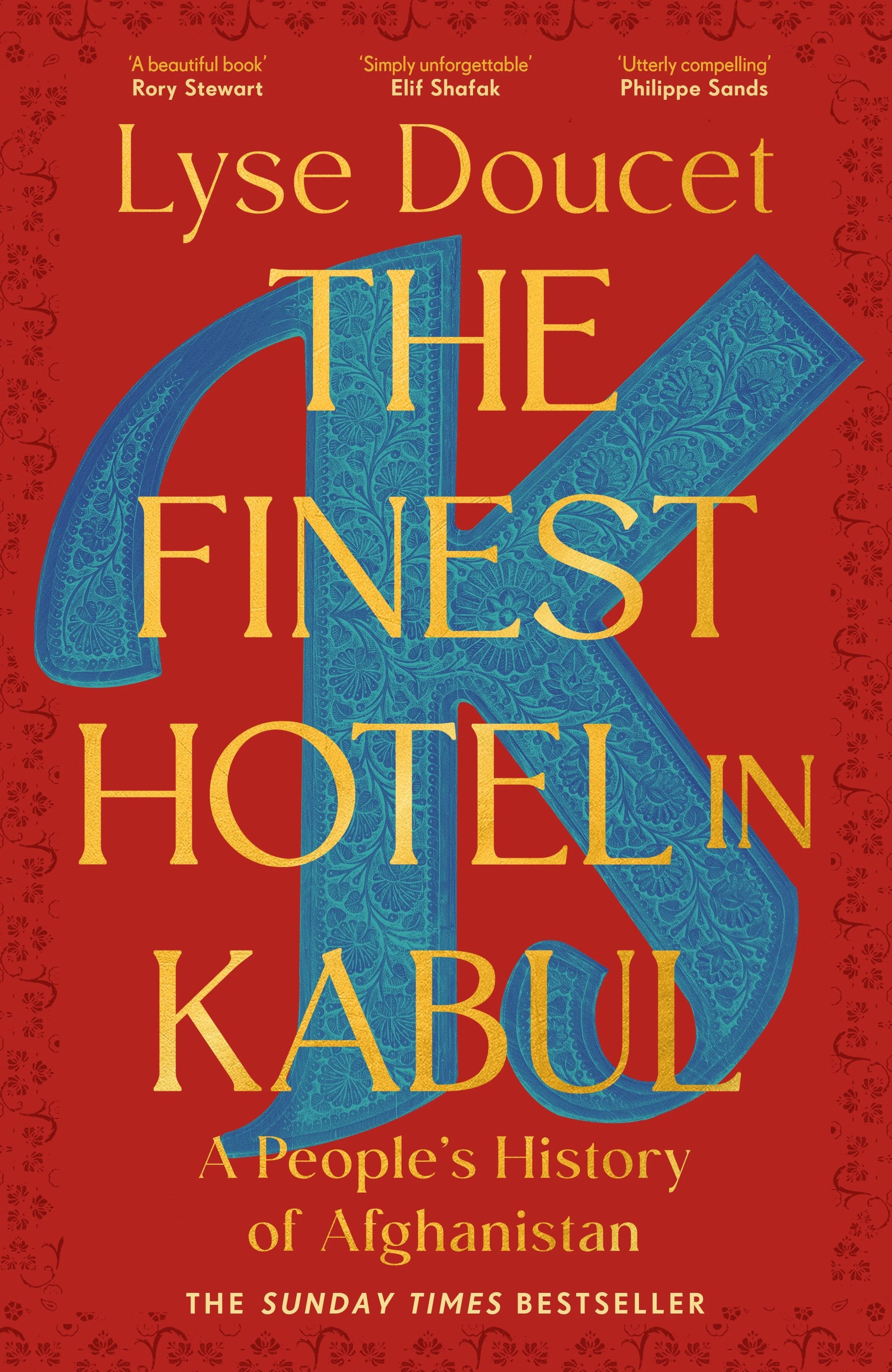
The Finest Hotel in Kabul: A people’s history of Afghanistan by Lyse Doucet $40
When the Inter-Continental Hotel opened in Kabul in 1969, it reflected the hopes of the country: a glistening white edifice that embodied Afghanistan's dreams of becoming an affluent, modern power. Five decades later, and the Inter-Continental is a dilapidated, shrapnel-damaged shell. It has endured civil wars, terrorist attacks, the US occupation, and the rise, fall and rise of the Taliban. But its decaying grandeur still hints at ordinary Afghans' hopes of stability and prosperity. Lyse Doucet, the BBC's Chief International Correspondent, has been staying at the Inter-Continental since 1988. She has spent decades meeting its staff and guests, and listening to their stories. And now, she uses their experiences to offer an evocative history of modern Afghanistan. It is the story of Hazrat, the octogenarian receptionist who for five decades has been witnessing diplomats and journalists, mujahideen and US soldiers, passing through the hotel's doors. It is the story of Abida, the first female chef to work in the Inter-Continental's famous kitchen after the fall of the Taliban in 2001. And it is the story of Sadeq, the 24-year-old front-desk worker who personifies the ambitions of a new generation of Afghans. The result is a remarkably vivid account of how ordinary Afghans have experienced half a century of disorder. [Paperback]