
NEW RELEASES (10.12.25)
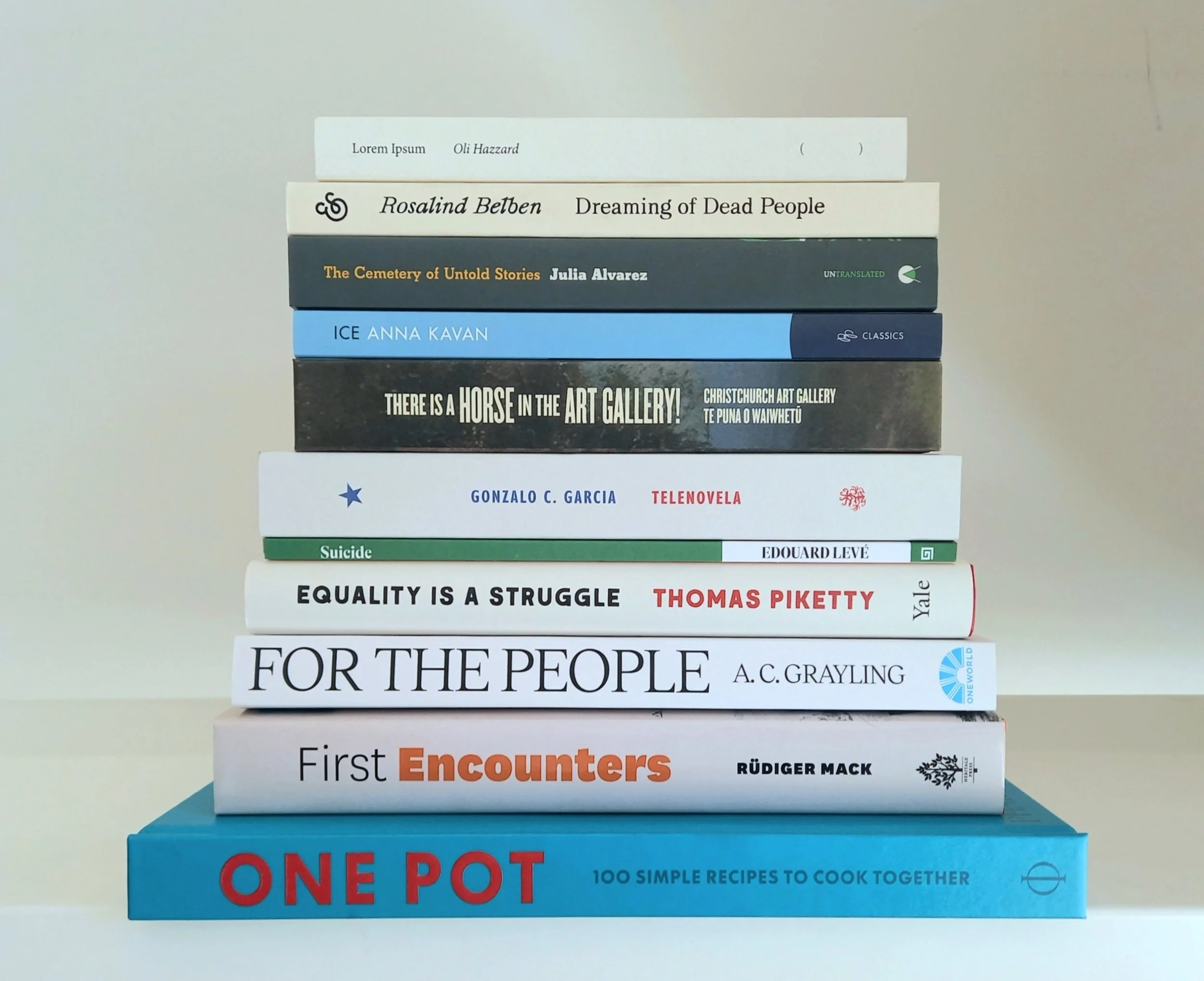
All your choices are good! Click through to our website (or just email us) to secure your copies. We will dispatch your books by overnight courier or have them ready to collect from our door in Church Street, Whakatū.

Dreaming of Dead People by Rosalind Belben $35
In the ‘middle of life’ — although this is only thirty-six — and with the unsparing eye of a portraitist, Lavinia reviews her frustrations and her solitariness, the grief and the rapture: these are her seeming companions in a pageant presided over, as it were, by the medieval masks of Owl, signifying winter, and Cuckoo, for erotic love. In attendance are dreams of rustic places and once-dear animals. But it is no ordinary procession, for her childhood comes last. The idiosyncratic Dreaming of Dead People was first published in 1979, yet remains as surprising as ever: it is frank, mordantly funny, true to itself and raw. [Paperback with French flaps]
”So extraordinarily good that one wants more, recognising a writer who can conjure an inner life and spirit, can envisage, in unconnected episodes, a complete world: one unified not by external circumstances but by patterns of the writer's mind.” —Isabel Quigly, Financial Times
”Her heroine is a solitary woman who tells of her past and recalls, often, the countryside, where being alone is not painful and, if there is no meaning to life, the call to the senses is immediate. The book is beautifully written.” —Hilary Bailey, The Guardian
”Belben has written pages about sexual desire, frustration and loss which are clearer and more compelling than any I can think of in literature. An achievement to celebrate.” —Maggie Gee, The Observer
”From the publisher that brought Ann Quin back into print comes another lost classic from an English visionary. Rosalind Belben's work is both terrific and disconcerting, an essential read for lovers of extraordinary fiction.” —Camilla Grudova
>>”Rivals anything by Virginia Woolf.”
>>Writing ugly.
>>The foreplay of wordplay.
>>No ticks in the long grass.
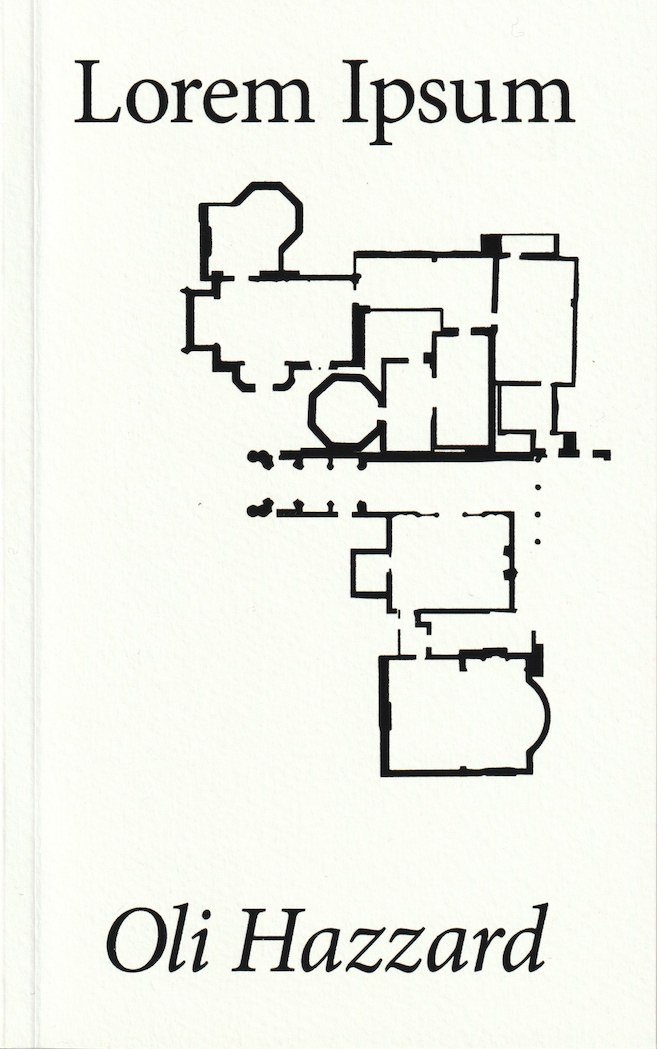
Lorem Ispum by Oli Hazzard $40
Lorem Ipsum consists of a single, 50,000-word sentence. An epistolary fiction addressed to an unidentified email recipient, the novel is modelled after the Japanese prose genre of the zuihitsu, which means ‘following the brush'. This playful, disruptive and digressive novel is written out of and towards a moment of crisis in the ordinary, in which the experience of attention has changed entirely. Lorem Ipsum is also an intimate, singular exploration of being a parent and a child, of dreams, work, fantasies, reading, happiness, secrets, memory, protest, repetition, intergenerational conflict and the forms of community which appear or disappear based on how we conceive of ‘shared time'. It is a book about the foundations upon which we build our lives, and what happens when they are shaken. [Paperback]
>>Should a novel avoid the processes of its own composition?
>>Technology, attention, and the extremely long paragraph.
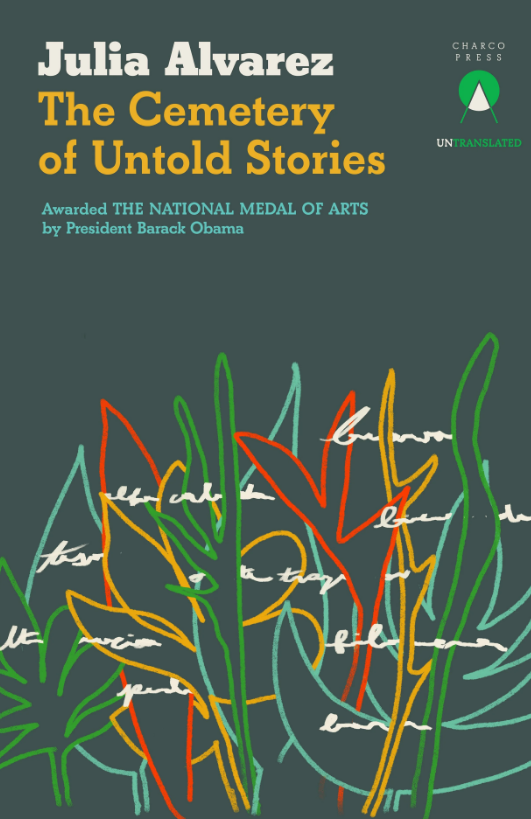
The Cemetery of Untold Stories by Julia Alvarez $42
Alma Cruz, the celebrated writer at the heart of The Cemetery of Untold Stories , doesn't want to end up like her friend, a novelist who fought so long and hard to finish a book that it threatened her sanity. So when Alma inherits a small plot of land in the Dominican Republic, her homeland, she has the beautiful idea of turning it into a place to bury her untold stories — literally. She creates a graveyard for the manuscript drafts and revisions, and the characters whose lives she tried and failed to bring to life and who still haunt her. Alma wants her characters to rest in peace. But they have other ideas, and the cemetery becomes a mysterious sanctuary for their true narratives. Filomena, a local woman hired as the groundskeeper, becomes a sympathetic listener as Alma's characters unspool their secrets. Among them: Bienvenida, the abandoned wife of dictator Rafael Trujillo, consigned to oblivion by history, and Manuel Cruz, a doctor who fought in the Dominican underground and escaped to the United States. The characters defy their author: they talk back to her and talk to one another behind her back, rewriting and revising themselves. The Cemetery of Untold Stories asks: Whose stories get to be told, and whose buried? Finally, Alma finds the meaning she and her characters yearn for in the everlasting vitality of stories. [Paperback with French flaps]
"Only an alchemist as wise and sure as Alvarez could swirl the elements of folklore and the flavor of magical realism around her modern prose and make it all sing." —New York Times
>>From the mouth to the page.

Ice by Anna Kavan $28
Ice will soon cover the entire globe. As the glacial tide creeps forward, society breaks down. Hurtling through the frozen chaos is a nameless narrator, seeking the white-haired girl he once loved, desperate to rescue her - or perhaps to annihilate her. Through nightmarish, ever-shifting scenes, she flees him and his powerful enemy, the Warden. But none of them can outrun the ice. Anna Kavan's masterwork is an apocalyptic vision of environmental devastation and possessive violence, rendered in unforgettable, propulsive, hallucinatory prose. [New paperback edition]
”A strange and compelling classic of dystopian and climate fiction, one that with foreboding and deep compassion maps the psyche and the terrain of dislocation.” —Jeff VanderMeer
”One might become convinced that Kavan had seen the future.” —New Yorker
>>Read Thomas’s review.
>>Self-medication.
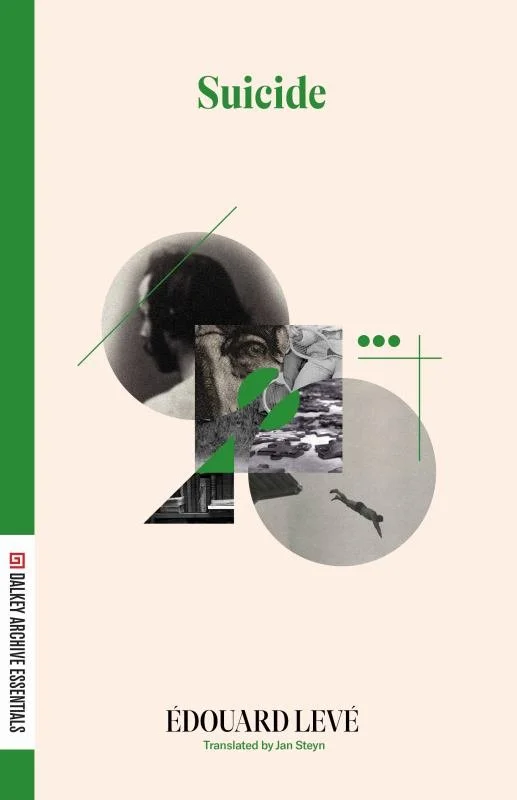
Suicide by Édouard Levé (translated from French by Jan Steyn) $33
Suicide cannot be read as simply another novel — it is, in a sense, the author's own oblique, public suicide note, a unique meditation on this most extreme of refusals. Presenting itself as an investigation into the suicide of a close friend — perhaps real, perhaps fictional — more than twenty years earlier, Levé gives us, little by little, a striking portrait of a man, with all his talents and flaws, who chose to reject his life, and all the people who loved him, in favour of oblivion. Gradually, through Levé's casually obsessive, pointillist, beautiful ruminations, we come to know a stoic, sensible, thoughtful man who bears more than a slight psychological resemblance to Levé himself. But Suicide is more than just a compendium of memories of an old friend: it is a near-exhaustive catalog of the ramifications and effects of the act of suicide, and a unique and melancholy farewell to life. Back in print at last. [New paperback edition]
"With a precision that can be frightening, Leve describes a man who is wholly alienated from the consolations of the outside world, beholden only to the tiniest shifts in his perception and sensations. As the narrator's revelations about his friend's inner life become increasingly complex, the reader comes to see "tu" as a stand-in for the narrator's own self, an externalised form that allows him empathic clarity about the most disturbed parts of his own being." —Hannah Tennant-Moore, n+1 Magazine
"If this irony-laden book contains a message to the reader it may well be this: 'You suffered real life in its continuous stream, but you controlled the flow of fictional life by reading at your own rhythm. As a reader, you had the power of a god: time submitted to you.' If one were to substitute 'reading' and 'reader' with 'creating' and 'creator' one might conclude that it's possible to read Suicide not simply as a veiled cri de coeur by a man looking to air the messy circumstances for which he took his life, but as a controlled work of art by a conceptual artist who wanted to leave us with a lasting document from which we might, paradoxically, muster the strength to carry on." —Christopher Byrd, The Guardian
"Suicide is both fiction and final, nonfictional statement, both novel and memoir. It is we, as readers and participants, who stand at the center of these two mirrors hung opposite each other and find the author infinitely, diminishingly multiplied. Though we'll probably never know whether Levé — who in addition to being a writer was a successful photographer with an interest in conceptual art — killed himself to bring his grim metafiction full circle, it is all but impossible not to read his haunting Suicide in this troubling light." —Laird Hurt, Bookforum
"Suicide reads like a photo album. This is no surprise, considering that Levé was as much an accomplished photographer as he was anything else. The prose is clipped, almost terse; while each line can be seen to represent a single idea in just the same way a photo in an album represents one moment in time. Suicide is at times beautiful, immensely sad at others, and in more moments than one might want to admit there is the potential in the text to be deeply relatable." —Tom McCartan,Three Percent
>>Read Thomas’s review.
>>Pulverised non-narratives.
>>Also in stock: Autoportrait.
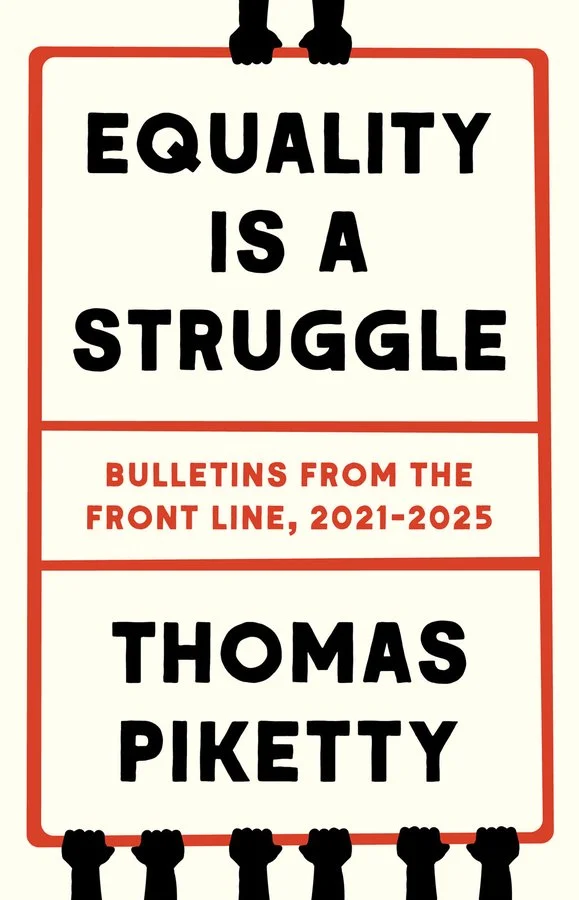
Equality Is a Struggle: Bulletins from the front line, 2021—2025 by Thomas Piketty $45
In this new volume drawn from his columns for the French newspaper Le Monde, renowned economist Thomas Piketty takes measure of the world since 2021: leaders grappling with the aftershocks of a global pandemic; politics shifting rightward in Europe and America; and wars breaking out and escalating, from Russia's invasion of Ukraine to the conflict in Israel and Gaza. Together with an extended introductory essay arguing that an ecological socialism remains the best hope for global equality, these articles present Piketty's vivid first draft of history—on the rise of China, political upheaval, armed conflict, inequity within and between nations, discrimination, and beyond. Despite the gathering clouds, Piketty continues to find reasons for hope. [Hardback]
"In this compelling book, Piketty advocates for ecological socialism. His vision is ambitious but realistic, being based on a majestic understanding of the history of capitalism and detailed pragmatic knowledge of anti-inequality policies." —Ha-Joon Chang
TELENOVELA by Gonzalo C. Garcia $42
Set in Santiago towards the end of Pinochet's dictatorship, TELENOVELA explores the secret lives of a family swept up in this dark period of Chile's history. There is Lucho: bullied by fellow soldiers for his love of poetry, thwarted in his ambitions to become a writer, unhappy at work. He seems like a loving father. He seems plain loveable, in fact. And maybe he is. But as TELENOVELA unfolds, other things come to light about Lucho that are less easy to indulge — or forgive. There is Ramona, Lucho's wife: tormented by anxiety, overwhelmed by self-loathing and body image problems. As a drama student, Ramona once hoped to become a Telenovela star; she secretly daydreams that she might still get her big break. Guileless, gentle, Ramona seems like an innocent. But is she? Then there is Pablo, their son: dreamy, gentle, eager to make friends, to form his own band and write some worthwhile songs. Desperate to be cool. And increasingly, just desperate. Gonzalo C. Garcia makes us feel for these characters and want to understand them — but, as the novel unfolds, come to the frightening realisation of what it really means to have such understanding. And so it is that deeply human and deeply personal stories of mislaid ambition, failure and intergenerational trauma take on national — and universal — significance. [Paperback]
“A unique and breath-taking talent.” —Scarlett Thomas
“Consistently funny — and unexpectedly sympathetic.” —The Guardian
>>Resisting cliche through prose.
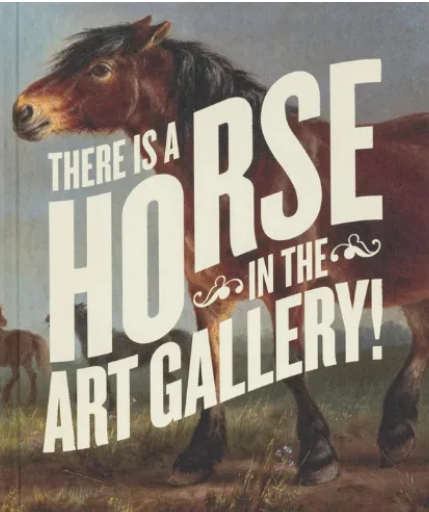
There’s a Horse in the Art Gallery! by Sarah Pepperle $25
A delightful new board book introducing young children to the animals living in the art gallery! Full-page colour artworks by amazing artists from Aotearoa and around the world, warm and friendly read-aloud texts, animal names in English and te reo Maori, paintings, sculpture, photography and prints from the 1700s to the present. Artists include Fatu Feu’u, Bill Hammond, Louise Henderson, Eileen Mayo, Ron Mueck, Balthazar Ommeganck, Ani O’Neill, Michael Parekōwhai, Agnes Miller Parker, Michael Smither, Ethel Spowers, Michel Tuffery, Francis Upritchard. [Board book]
>>Look inside!
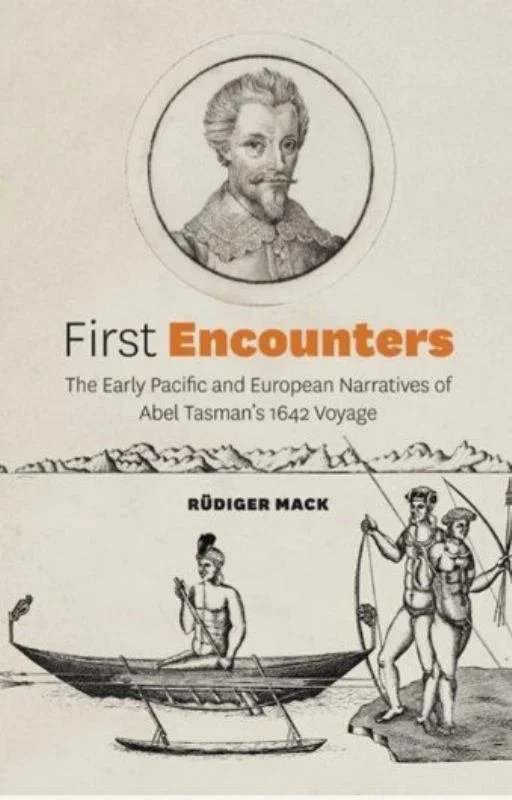
First Encounters: The early Pacific and European narratives of Abel Tasman’s 1642 voyage by Rüdiger Mack $60
Rüdiger Mack seeks to rebalance our perspective by focusing upon the expedition led by Abel Tasman, in 1642-1643, which ‘discovered’ Tasmania, New Zealand, Fiji and New Britain, and visited Tonga, the Solomon Islands and New Guinea. It also includes the first-ever complete English translation of an important resource for the voyage — from Nicolaes Witsen's 1705 book Noord en Oost Tartarye — as well as preserves excerpts and illustrations from the journal of Tasman's chief navigator, Francois Jacobsz. Rüdiger Mack has uncovered new and fascinating details around this extraordinary exploration, from the reasons for its secrecy, the competitive environment of 17th century exploration, and new insights on first contacts with the indigenous populations of the wider Pacific. The overarching theme is a new and fresh look at the very first beginnings of New Zealand's shared Māori-Pakeha history. The book covers the background, the planning and the European, Māori and Tongan accounts of Abel Tasman’s voyage in 1642-43 during which he was the first European to see Tasmania, New Zealand and several of the Tonga islands. The book is ground-breaking in several ways: —It is the first book that brings together all six known Māori oral history accounts of the first contact between Māori and Europeans. —The book publishes the first complete English translation of an important Dutch source which has previously been largely ignored. —Delving into art history the book has for the first time been able to identify the artist who copied the 45 illustrations into Tasman’s official account after the return of the expedition to Batavia in 1643. —It discusses a Maori place name on the West Coast of the South island which probably refers to Maori seeing Dutch ships at anchor there in December 1642. —The book identifies an archaeological site in Golden Bay, South Island which is connected with Tasman’s brief stay there. —The book discusses the authenticity of two well-known supposed paintings of Abel Tasman and suggests another portrait as a more likely depiction of the famous navigator. [Hardback]
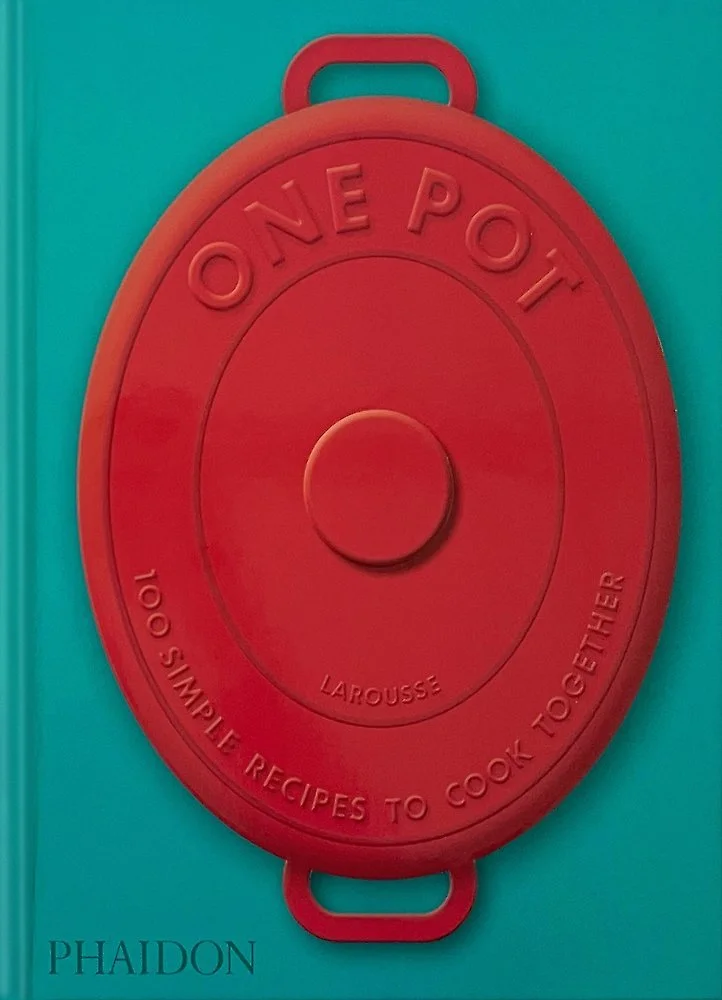
One Pot: 100 simple recipes to cook together by Amandine Bernardi $70
The casserole dish or Dutch oven is an essential kitchen tool for creating convenient meals without compromising on taste. In One Pot, author Amandine Bernardi presents 100 effortless recipes featuring vibrant international dishes. This attractive cookbook offers a range of recipes for every occasion, from quick weeknight dinners to special gatherings. Home cooks will discover wholesome dishes like Ratatouille and Mujadara with Cauliflower; mains, including Beef Bourguignon, Coq au Vin, and Moroccan Fish Stew; and sweet treats, such as Baked Apples with Honey. With a guide to equipment, serving suggestions, and dietary symbols designating vegan, gluten-free, dairy-free, and nut-free options, One Pot is suitable for novice and experienced cooks alike. [Hardback]
”As you may have guessed, every recipe in the book can be made in a simple Dutch oven — don't expect a sink full of dirty dishes and finicky specialty tools. Instead, you can revel in simple, elegant takes on ratatouille, beef bourguignon, and coq au vin (did we mention Bernardi is French?) without breaking a sweat.” —Katie Couric Media
>>Look inside.
For the People: Resisting authoritarianism, saving democracy by A.C. Grayling $39
Around the world the foundations of democracy, freedom, civil liberties are being eroded — what can be done? Are we living through the end of the democratic moment? The past few decades have revealed a fragile reality. Once liberal countries are turning to authoritarianism, wealthy individuals and corporations are interfering with elections evermore flagrantly, and faith in democracy has plummeted among every demographic. What happened? From gerrymandering and partisanship to corporate interference and tainted donations, A. C. Grayling reveals the forces undermining our democratic ideals and offers some solutions. [Paperback]