
NEW RELEASES (11.3.26)
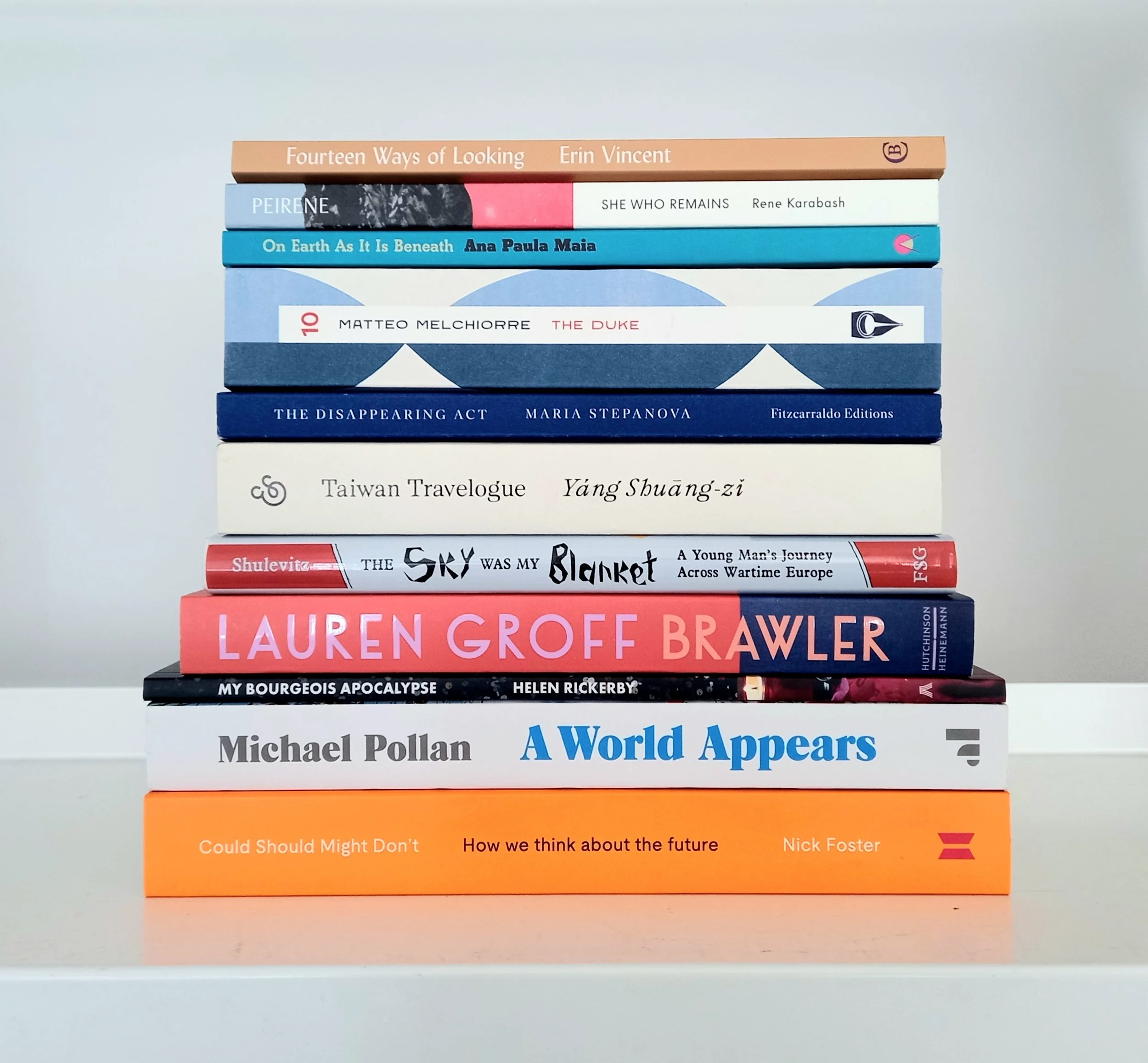
All your choices are good! Click through to our website (or just email us) to secure your copies. We will dispatch your books by overnight courier or have them ready to collect from our door in Church Street, Whakatū.
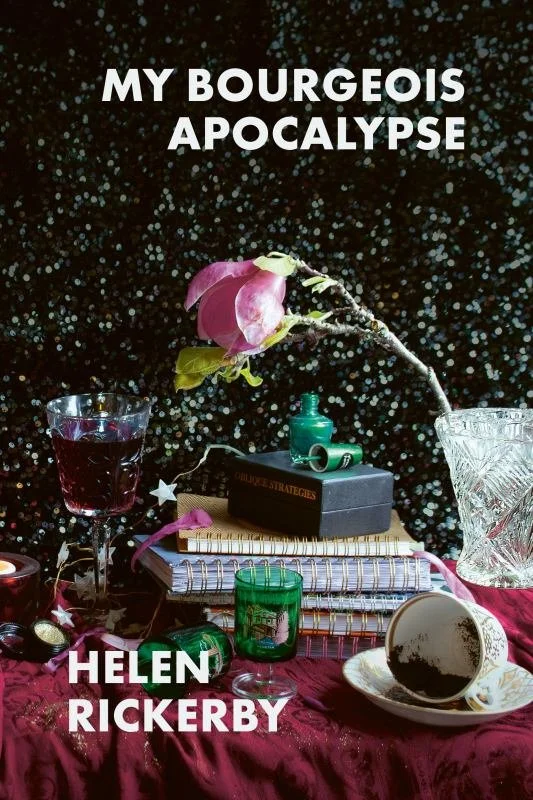
My Bourgeois Apocalypse by Helen Rickerby $25
”I write not to communicate or reveal but to mull and conceal, but I guess that's a form of communication too, of connection, of little anchors, little hooks, little holes you can put your eye up to, your heart up to, and maybe you will see something you will recognise.” In her new collection — a poetic collage-essay-memoir — Helen Rickerby crafts poems out of personal correspondence and sentences from her journals, cataloguing her life over a tumultuous period of lockdowns, terrorist attacks and mid-life crises. In glimpses of the day-to-day, in occasional bits of Italian homework and dining-room dance parties, pieces of a life are constructed into a sensuous yet disarming whole. Through friendships and grief, joy and love, combining wry humour with philosophical musing, Rickerby reflects on doubt, gaps, the nature of poetry, connection and disconnection, and not going quietly into middle age. This is a work of fragments encompassing the whole of a life. [Paperback]
”This is a dazzling work, part notebook, part memoir, part puzzle. The reader might feel played like a fish, lured in with a line that seems to be leading to a scene, or a situation, only to find themselves disoriented by a change of pronoun, a detail out of place, a movement in time. Before long it becomes apparent that the sentences do not quite read consecutively, but by now the reader is hooked by the text's strange rhythms, narrative threads and depths of passionate feeling.” —Anna Jackson
>>Read a sample!
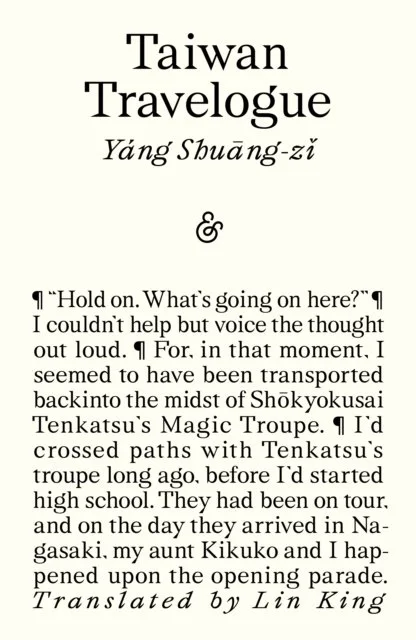
Taiwan Travelogue by Yáng Shuāng-zǐ (translated from Mandarin Chinese by Lin King) $48
May 1938. The young novelist Aoyama Chizuko has sailed from her home in Nagasaki, Japan, and arrived in Taiwan. She’s been invited there by the Japanese government ruling the island, though she has no interest in their official banquets or imperialist agenda. Instead, Chizuko longs to experience real island life and to taste as much of its authentic cuisine as her famously monstrous appetite can bear. Soon a Taiwanese woman — who is younger even than she is, and who shares the characters of her name — is hired as her interpreter and makes her dreams come true. The charming, erudite, meticulous Chizuru arranges Chizuko’s travels all over the Land of the South and also proves to be an exceptional cook. Over scenic train rides and braised pork rice, lively banter and winter melon tea, Chizuko grows infatuated with her companion and intent on drawing her closer. But something causes Chizuru to keep her distance. It’s only after a heartbreaking separation that Chizuko begins to grasp what the ‘something’ is. Disguised as a translation of a rediscovered text by a Japanese writer, this novel was a sensation on its first publication in Mandarin Chinese in 2020 and won Taiwan’s highest literary honour, the Golden Tripod Award. Taiwan Travelogue unearths lost colonial histories and deftly reveals how power dynamics inflect our most intimate relationships. [Paperback with French flaps]
”On a government-sponsored tour of 1930s colonised Taiwan, a Japanese author with an insatiable appetite develops complex feelings towards her local interpreter. Despite the instant spark between the two women, the power imbalance inherent in their relationship proves difficult to navigate. With sumptuous food writing, laugh-out-loud dialogue and metafictional twists, this novel was impossible to put down. Taiwan Travelogue pulls off an incredible double act: it succeeds as both a delicious romance and an incisive postcolonial novel. —International Booker Prize judges’ citation
"Reading the book is like peeling an onion: the smell is at first undetectable; but with each layer you peel, the smell gets more intoxicating, pungent, intense, and at the very end, it brings tears to your eyes." —Christina Ng
"Yáng Shuāng-zǐ 's novel, a runaway bestseller in Taiwan, ranges from playful and intimate depictions of the lush countryside of Taiwan to the ordered world of the colonial city. But what at first feels like a simple travelogue is actually an examination of an often-overlooked period of East Asian history and of the human heart. This wise and wily novel, as self-aware as it is provocative, ultimately goes down like the luscious soup dumplings that appear in its pages and sent me scrambling for takeout. But what does it mean to eat someone else's food, and what is the nature of a relationship when any kind of power is involved? Beginning in a world as solid and stately as Kawabata's The Makioka Sisters, Taiwan Travelogue deftly takes the reader down a rabbit hole as filled with longing and misunderstanding as Sarah Waters's The Night Watch." —Marie Mutsuki Mockett
>>Read an extract.
>>Other books listed for the 2026 International Booker Prize.
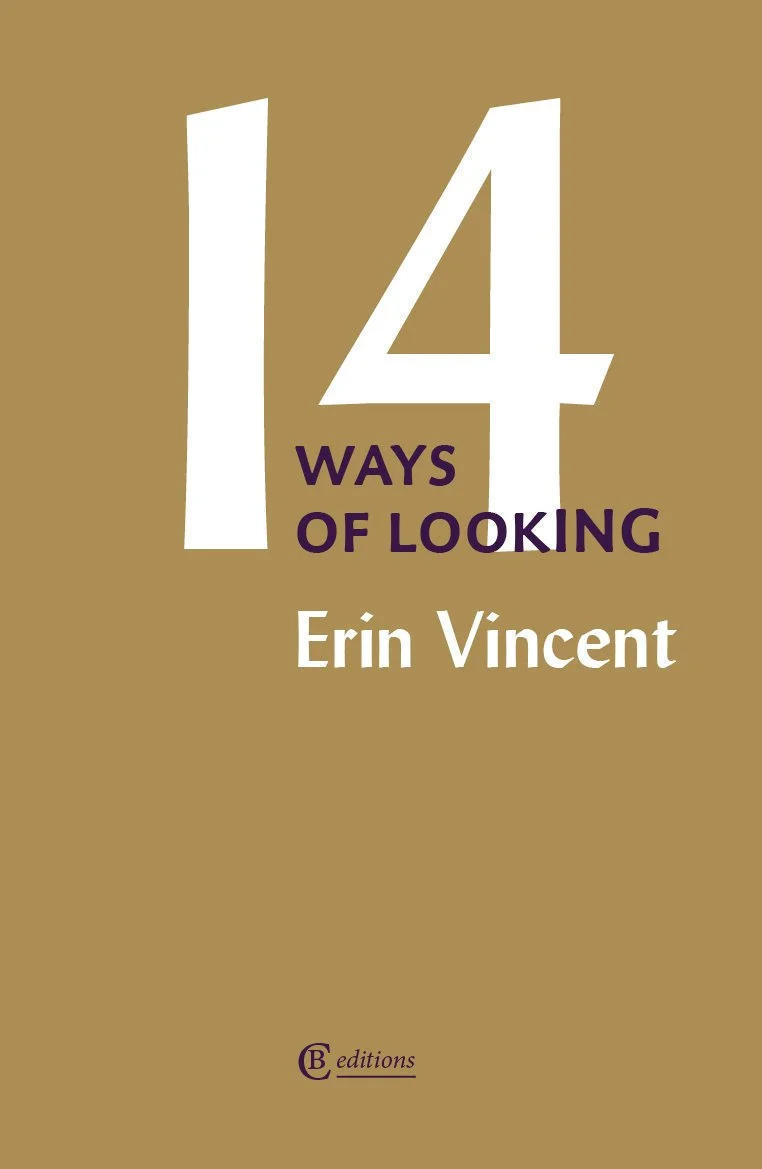
Fourteen Ways of Looking by Erin Vincent $38
When Erin Vincent was fourteen her parents were struck down by a truck driver. Years later, the number fourteen reverberates – in books and films and art and music and in the lives of the people who made them. Finding in these places not comfort or consolation but an infinite network of orrespondences, Fourteen Ways of Looking becomes a paradigm for the act of writing itself. [Paperback]
”Fourteen Ways of Looking is a deep dive into the moment after which nothing is the same — life as afterlife, and yet it’s what we have. Vincent’s effort is both psychological and literary: trying to wrangle meaning from an event that may have none, or may hold it all. And what then, of her autonomy to make her own life? In her efforts to free herself by going back to the source of trauma, she is both Odysseus and Euridice, damned and saved. A remarkable achievement.” —Anna Funder
”Erin Vincent’s book is magnificent, simply one of the best books I’ve read in ages. I read it in a reverie of blissed-out, horrified amazement. It will be compared to Markson, but it’s better than Markson – more formally disciplined, more cold-blooded in its self-scrutiny. I can easily imagine this book becoming a cultural touchstone like Max Porter’s Grief Is the Thing with Feathers or Maggie Nelson’s Bluets.” —Sarah Manguso
”Fourteen — for Erin Vincent — is the age at which her self was formed, and this text is itself an astonishing formal experiment. The number fourteen becomes uncanny and arbitrary, both divine symbol and violent accident, as she remembers her younger self and tries to find patterns in chaos. An incredible achievement: unclassifiable, humane and haunting. I was moved to tears.” —Clare Pollard
”Through a structure and project that holds the book to the tightest of attention, Vincent brings to this astute exploration of personal grief the world’s grief, the reader’s grief, the planet’s grief. All of time concertinas into these perfectly formed fragments that interrogate the number fourteen through the lens of how we are changed by the things of life that stop us in our tracks. However, I think the final message of Vincent’s magnificent work is the things we notice once we have been changed and the ways these act as markers to our inevitable tentative steps into the rest of life. This is an astounding work — resonant, intelligent and generous.” —Pip Adam
>>The presence of an orphan.
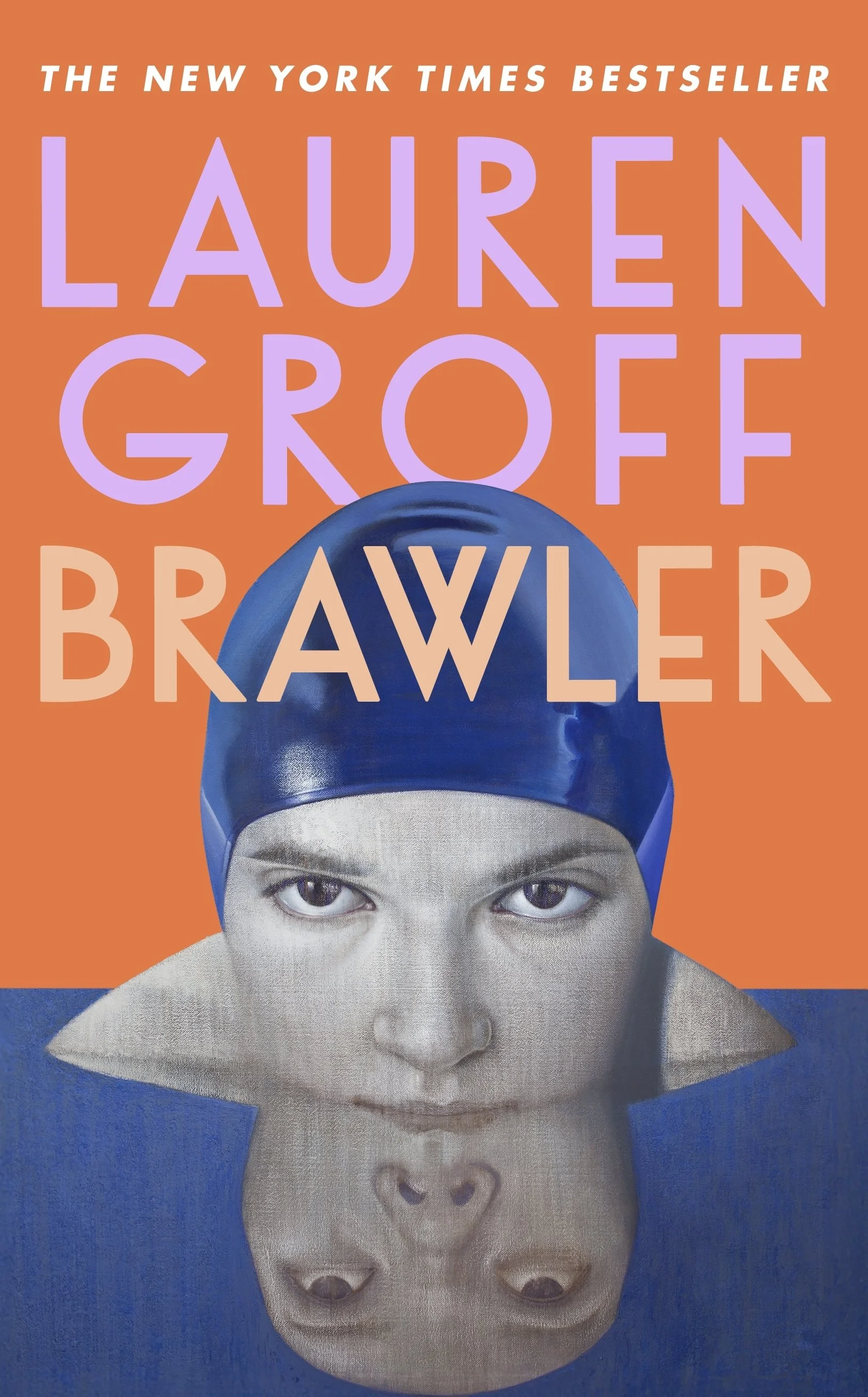
Brawler by Lauren Groff $38
Ranging from the 1950s to the present day and moving across age, class, and region — from New England to Florida to California — these nine stories reflect and expand upon a single shared theme — the ceaseless battle between the dark and light in all of us. Among those caught in this match are a young woman suddenly responsible for her disabled sibling; a hot-tempered high school swimmer in need of an adult; a mother blinded by the loss of her family; and a banking scion endowed with a different kind of inheritance. Motivated by love, impeded by human fallibility, they try to do the right thing for as long as they can. Precise, surprising and provocative, anchored by profound insight into human nature, Brawler reveals the repeated fracture points between love and fear, compassion and violence, reason and instinct, altruism and survival.[Paperback]
”Few collections have an opener as powerful and instantly classic as Brawler's 'The Wind'. For most writers, it would be an impossible act to follow, and yet every story here continues a conversation about secrets, hopes, fears and the persistence of love in the face of it all. Brawler captures a towering talent and follows protagonists caught in the undertow of their messiest emotions. As one character says, ‘in every human there is both an animal and a god wrestling unto death’. Groff's bargain with the reader is simple, and impossible to refuse: instead of easy epiphanies, she offers glimpses of acute clarity, meaning or happiness. They will not repeat; but they are enough to carry you through a life.” —Financial Times
”I'm in awe at how Groff conjures a whole world in each brilliant story.” —Claire Fuller
”These are stories of fracture and survival, of the fulcrums on which lives tilt. On finishing Brawler, the world felt more densely peopled, richer with stories. Groff reminds us of the myriad human galaxies all around us, spinning off brightly into the dark.” —Melissa Harrison
>>You just do language.
>>Taut yet teeming.
>>Includes swimming.
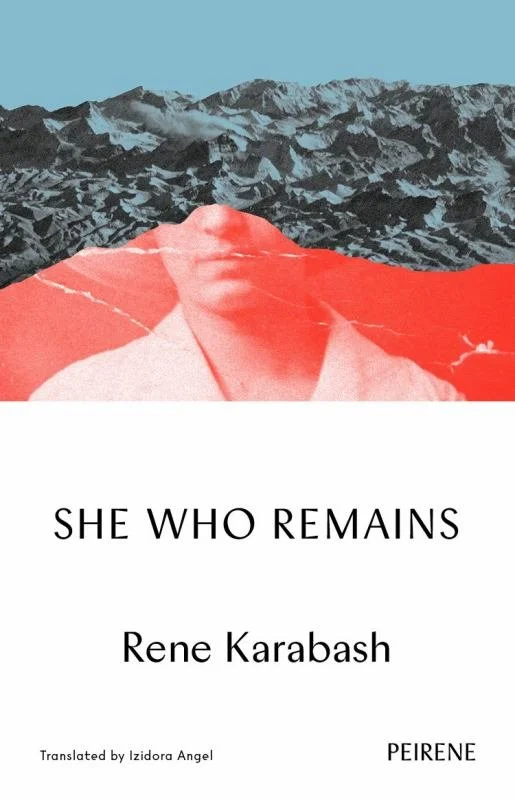
She Who Remains by Rene Karabash (translated from Bulgarian by Izidora Angel) $42
High in Albania’s Accursed Mountains, in a village ruled by the ancient laws of the Kanun, Bekja escapes an arranged marriage by becoming a sworn virgin, renouncing her womanhood to live as a man. Her decision sets off a brutal chain of events, destroying her family and separating her from the one she loves the most. Years later, as Bekija — now Matija — tells their story to a visiting journalist, long-buried truths come to light, along with the realisation of all that might have been. [Paperback with French flaps]
”She Who Remains reads like a dark fairy tale from a time when life was lived closer to the bone . . . Bold and visionary, Rene Karabash's novel unfurls a world of blood feuds and sworn virgins — women accepted into society as men — in a dreamlike narration that burns up the page with feverish urgency. Izidora Angel's translation from Bulgarian thrillingly captures the novel's dense tapestry of hypnotic language.” —Katrina Dodson
”Rene Karabash has composed an enigmatic and mesmerizing tale, one as lyrical, lucid and enchanting as a song. The rhythm of the sentences has the pulse of a dark and sparkling river, carrying the reader away. She Who Remains is a fever dream about breaking down archaic rituals and being haunted by them; a modern fairy tale written in blood and milk, spinning its spellbinding threads into a story of loss and longing, destiny and desire.” —Kirstine Reffstrup
”In a village governed by archaic laws in the Albanian Alps, a teenage girl swears a vow of chastity to escape an arranged marriage. As a ‘sworn virgin’, with a new name, Matija is free to live as a man. But that freedom comes at a cost that tears Matija’s family apart. Told with understated poetry, this novel perfectly captures the slippery uncertainty of painful memories. Matija is a compelling narrator, whose story swept us up completely. She Who Remains is an unforgettable modern fairy tale.” —International Booker Prize judges’ citation
>>Read an extract.
>>Other books listed for the 2026 International Booker Prize.
The Disappearing Act by Maria Stepanova (translated from Russian by Sasha Dugdale) $36
The writer known as M. is living in exile while her home country wages war on a neighbouring state. Wracked by shame and severed from her language, M. finds herself unable to write, unmoored in a present where the future feels unknowable. When she travels to a nearby country for an event, a twist of fate leaves her stranded in an unfamiliar city, phoneless and untraceable. In this rupture, she feels a flicker of liberation — the possibility of starting over — but memories of childhood, books, films and tarot cards pull her back, the last fragments of a vanishing world. Then she meets a troupe of circus performers who invite her to join them. For a moment, reinvention seems within reach. Oscillating between reality and dream, written in rich, hypnotic prose, The Disappearing Act is a haunting meditation on identity, language and the fragile desire to disappear. [Paperback with French flaps]
”The Disappearing Act is about what happens when the story of one's life cleaves in uncomfortable, incongruous ways.... Much of the novel exists on this symbolic plane. But Stepanova is equally adept at building a physical world that evokes the experience of exile.... If there is a through-line to Stepanova's work, it is not some grand, totalizing vision but rather the habit of looking closely at what falls through the cracks.” —Matthew Janney, Financial Times
”M describes the country she comes from as a ‘beast’ waging war against its neighbour. We can guess her meaning without turning to the author's biographical note. Maria Stepanova — whose masterly In Memory of Memory combined family memoir, essay and fiction — left her native Russia after its full-scale invasion of Ukraine in 2022. We might also wonder how closely The Disappearing Act tracks her own life. But the novelist M is not here to discuss autofiction — she has more important things to reflect on.... Wherever her escapade brings her next, she is proof that it takes a novelist with poetic imagination to capture the nature of the beast.” —Anna Aslanyan, Guardian
”Essential. Written with deep insight, despair and an intrinsic sense of the alarming recurrence of the present's failure to learn lessons from the past. The Disappearing Act, expertly translated by Sasha Dugdale, is the dreamlike testimony of a novelist, known simply as M, who is witnessing from exile her country of origin's invasion of a separate sovereign state. Creatively and psychologically paralysed by the horrors of war seen at a distance, M can no longer write; every innocuous image becomes superimposed with horror, and so she retreats into self-erasure and memory in order to survive, never mind evolve.” —Catherine Taylor, Irish Times
”Political evil has re-emerged across the West, imposing agony upon all people of conscience, and new challenges on writers and artists. In her incandescent poems and essays, Maria Stepanova has never shirked the weight of history long borne by writers from Russia, Asia, Africa and Latin America. Her artistic, intellectual and spiritual resources seem even richer in her first novel, The Disappearing Act. I have not read a novel that attests, with such melancholy precision, to the shame, absurdity and confusion of being human today, or describes so acutely the immense but too often frustrated craving for radical self-transformation.” —Pankaj Mishra"
”A profound, unsettling meditation — at once lucid and mournful — on political exile, reinvention after the rupture of belonging, the writer's reckoning with collective responsibility, and the beasts we carry — national, ancestral, unnamed — that shape us even as they threaten us.” —Lea Ypi
>>Read Thomas’s review of In Memory of Memory.
The Duke by Matteo Melchiorre (translated from Italian by Antonella Lettieri) $48
Outside Vallorgana, a tiny, isolated village high in the foothills of the Dolomites, the ‘Duke’ lives in the villa of his aristocratic ancestors. The last in the centuries’ old line of the Cimamontes, he spends his days on his land and absorbed in the family archive, tolerated, if gently ridiculed by the villagers who are his neighbours. When he finds out that the village big man is taking timber from his land, he has a decision to make. Will he stay in his glorious, cerebral isolation or will he honour his ancestral blood and take action against this affront? Matteo Melchiorre’s portrait of the idiosyncratic character of the Duke and the world of Valorgana is a sweeping feat of literary imagination. With the pace, panorama and plot twists of a great nineteenth-century classic, the breathless story of the Duke’s ensuing feud unfolds, asking some big twenty-first century questions about our relationships with privilege, the past, the natural world and each other. [Paperback with French flaps]
”The Duke is the story of a feud between two men set in an Italian village in the Dolomites. The build-up of tension as the quarrel gradually escalates is electric, as each move they make turns the heat up one more notch. Anyone who’s been in a dispute will recognise the reluctance to step away from the fight. The characters that the author paints are wonderfully evocative, including many of the minor figures who form part of the village. The village itself is one of the strongest ‘characters’ and we loved the feeling of claustrophobia of the place as the narrative unfolds. Packed full of plot twists, this is storytelling at its best.” —International Booker Prize judges’ citation
>>Read an extract.
>>Other books listed for the 2026 International Booker Prize.
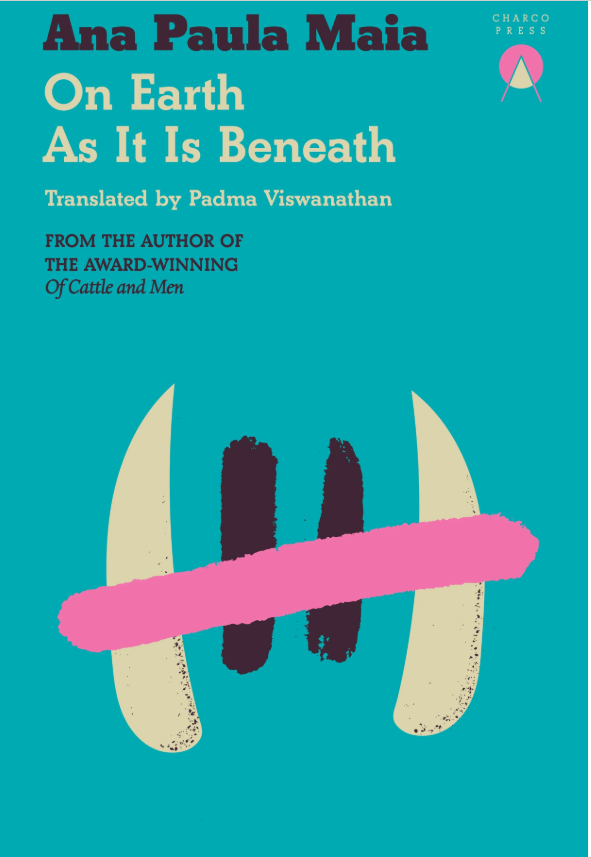
On Earth As It Is Beneath by Ana Paula Maia (translated from Portuguese by Padma Viswanathan) $40
On land where enslaved people were once tortured and murdered, the state built a penal colony in the wilderness, where inmates could be rehabilitated, but never escape. Now, decades later, and having only succeeded in trapping men, not changing them for the better, its operations are winding down. But in the prison's waning days, a new horror is unleashed: every full-moon night, the inmates are released, the warden is armed with rifles, and the hunt begins. Every man plans his escape, not knowing if his end will come at the hands of a familiar face, or from the unknown dangers beyond the prison walls. Ana Paula Maia has once again delivered a bracing vision of our potential for violence, and our collective failure to account for the consequences of our social and political action, or inaction. No crime is committed out of view for this novelist, and her raw, brutal power enlists us all as witness. [Paperback with French flaps]
”Set in a remote penal colony built on land scarred by slavery and colonialism, this vivid and haunting novel unfolds in a landscape where punishment has replaced justice and cruelty has become the norm. As the colony nears its end, the warden introduces a ritualised full-moon hunt, releasing prisoners into the forest for sport. Through spare yet masterful prose, Ana Paula Maia renders a closed world thick with dread, brutality and moral decay. The prisoners and guards alike are trapped within a system that corrodes and suffocates everyone it touches. On Earth As It Is Beneath is a stark, unsettling exploration of power, violence, destruction and institutional corruption that will linger with readers long after the final page.” —Booker International Prize judges’ citation
>>Read an extract.
>>Other books listed for the 2026 International Booker Prize.
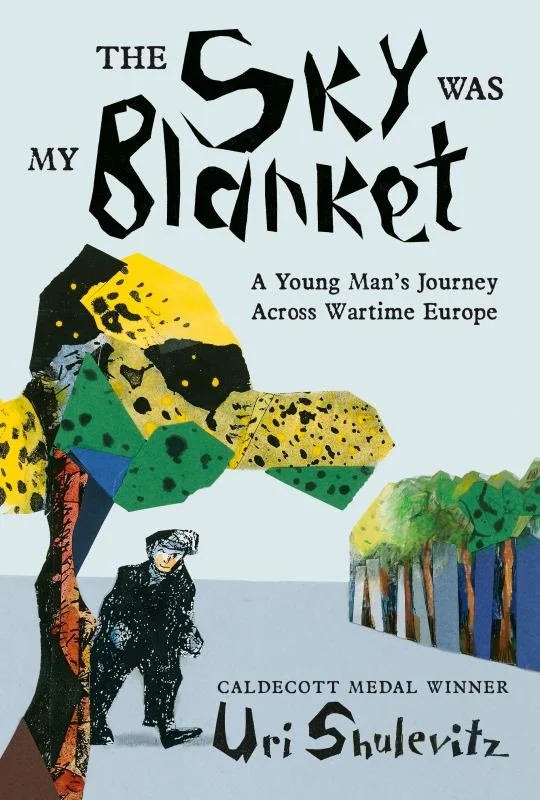
The Sky Was My Blanket: A young man’s journey across wartime Europe by Uri Shulevitz $39
Born in the tumult of World War I, a young Jewish boy named Yehiel Szulewicz chafes at the borders of his hometown of Zyrardów, Poland, and at the rules set in place by his restrictive parents. Brimming with a desire for true adventure, he leaves home at fifteen-and-a-half years old to seek his future elsewhere. Little does Yehiel know, he’ll never see his parents again. His journey takes him beyond Polish borders, to Austria, Croatia, France, and Spain. With no money and no ID papers, he often sleeps under the stars, with only the sky as his blanket. But even wayfaring Yehiel can’t outrun the evil spreading across Europe in the years leading up to World War II. As the fascists and Nazis rise to power, Yehiel soon finds himself a member of the Spanish Republican Army and then the Jewish Resistance in Vichy France, fighting for freedom, his friends, and his very life. Inspired by the true story of Uri Shulevitz’s uncle and illustrated by the author, The Sky Was My Blanket is a riveting account of one man’s courage and resilience. [Hardback]
A World Appears: A journey into consciousness by Michael Pollan $45
When it comes to the phenomenon that is consciousness, there is one point scientists, philosophers, and researchers can all agree on with a level of certainty: that it feels like something to be ourselves. And yet, the fact that each and every one of us has a subjective experience of the world continues to be one of the greatest mysteries in nature. How is it that our mental operations are accompanied by feelings, thoughts, and a sense of self? What would studying the idea of an inner life even look like, considering we have as little distance and perspective on it as fish do of the sea? What began for Michael Pollan as a startling awareness of his own consciousness soon evolved into a greater fascination with this strange and elusive phenomenon. In A World Appears, Pollan traces the unmapped continent that is consciousness via several radically different perspectives — scientific, philosophical, spiritual, historical, and psychedelic — to see what each has to teach us about this central kernel of our lives. When scientists began to study consciousness in earnest, in the early 1990s, they questioned how and why it came to be that three pounds of spongy gray matter could generate a subjective point of view — if indeed the brain is the locus of our felt reality. But Pollan ventures to the latest cutting-edge advances in the field, beyond the brain labs attempting to track down the neural correlates of this enigmatic experience and offering us a seat at the table with plant neurobiologists studying nature's surprisingly complex intelligence and ability to problem solve, neuroscientists and psychoanalysts attempting to engineer feeling into AI, and psychologists interpreting the thoughts that enter our slippery stream of consciousness. [Paperback]
>>Inside voice.
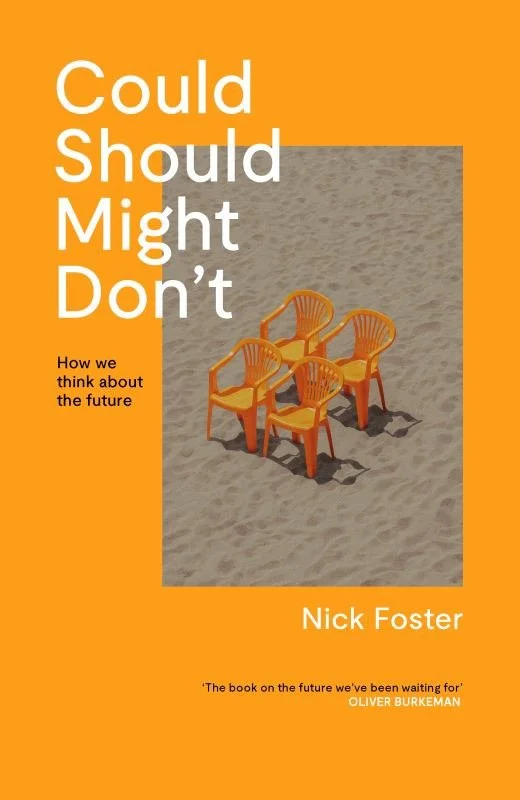
Could, Should, Might, Don’t: How we think about the future by Nick Foster $40
As the tempo of change accelerates beyond anything our ancestors could have imagined, the ability to think clearly about what lies ahead has never been more important — yet we remain remarkably bad at it. So how might we think about the future with greater rigour? From the Could of excitable, science fiction utopianism and the Should of data-driven, dogmatic certainty, to the Might of scenario planning and the Don't of fear-driven risk avoidance, Foster explores how humanity has grappled with the concept of the future throughout history, tracing the emergence of distinct schools of thought and exploring the virtues, blind spots and inevitable shortcomings of each. Could Should Might Don't resists making cocksure prophecies and bombastic predictions, instead encouraging us to create more balanced, detailed and truthful versions of the future, so that we might improve what we leave behind for those who might follow. [Paperback]
”This is the book on the future we'd been waiting for - an impassioned argument for replacing lazy certainties and fearful fantasies with a rigorous, rationally optimistic and ultimately empowering stance toward what might be coming next.” —Oliver Burkeman
”I couldn't put down this brilliant, eye-opening work — it's just the kind we need at the moment. Foster has spent a lifetime exploring tomorrows, and his message is clear: serious thinking about the future is essential if we hope to shape it rather than be blindsided by it>” —David Eagleman
>>Mostly nonsense.
>>The future of thinking about the future.