NEW RELEASES (16.9.26)
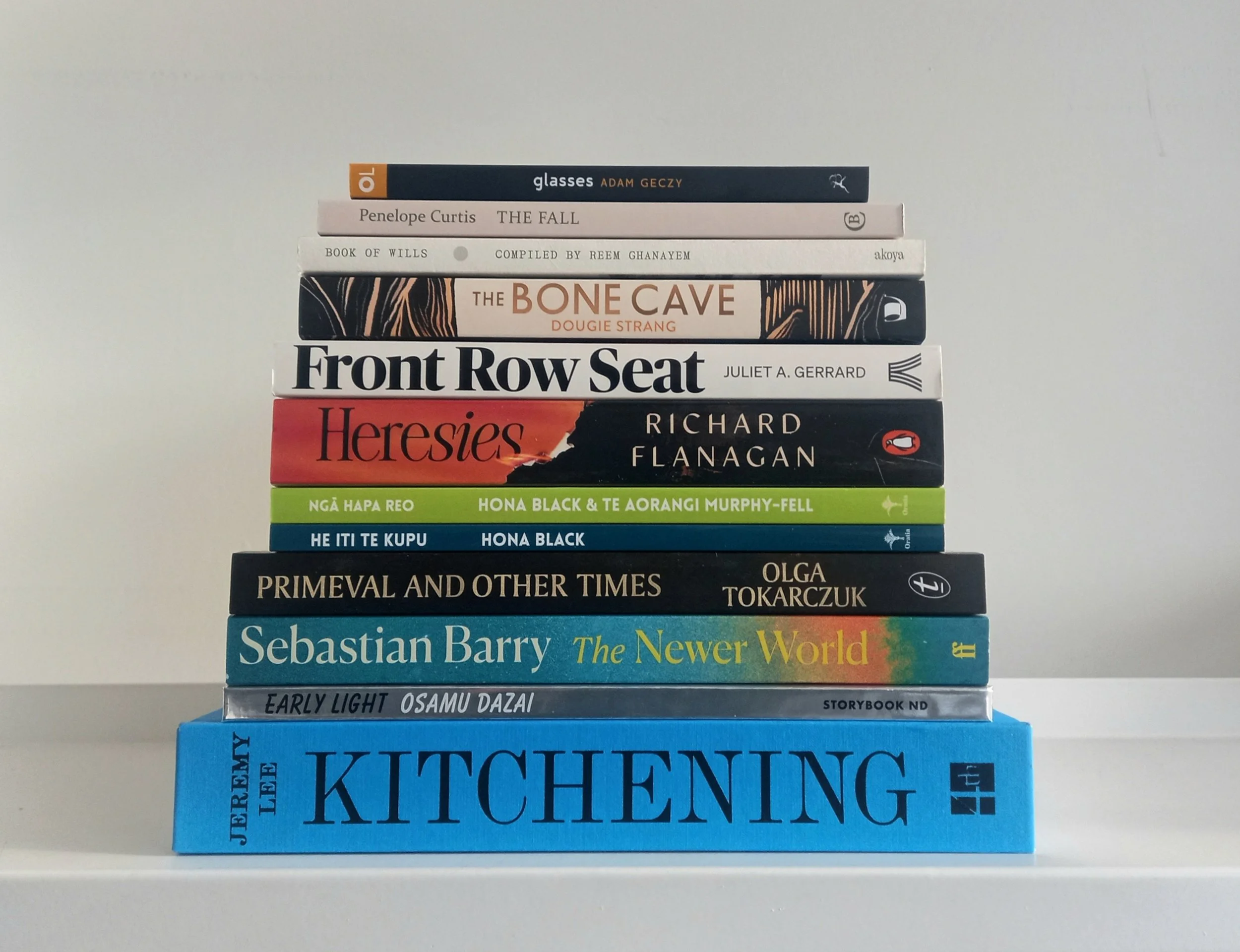
All your choices are good! Click through to our website (or just email us) to secure your copies. We will dispatch your books by overnight courier or have them ready to collect from our door in Church Street, Whakatū.
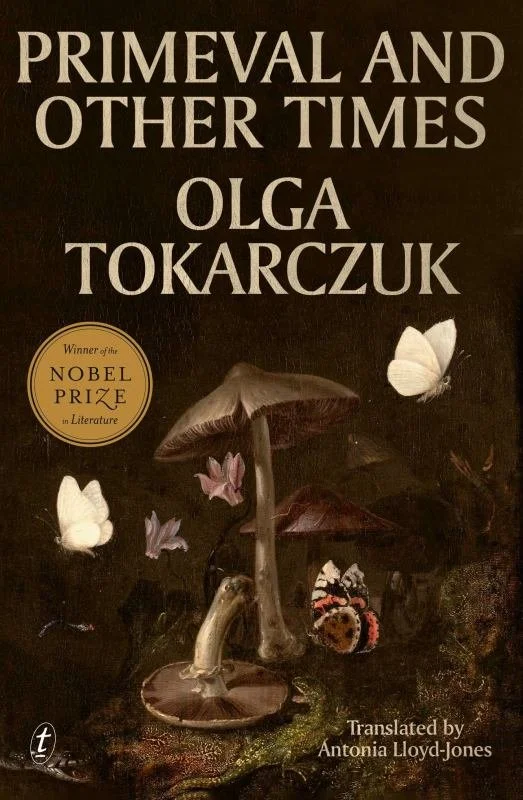
Primeval and Other Times by Olga Tokarczuk (translated from Polish by Antonia Lloyd-Jones) $40
“People think they live more intensely than animals, than plants, and especially than things. Animals sense that they live more intensely than plants and things. Plants dream that they live more intensely than things. But things last, and this lasting is more alive than anything else.” Primeval and Other Times is the story of three generations of a small Polish village called Primeval, from 1914 to the beginnings of Solidarity in 1980. Centered around the fate of the Niebieski family (Michał, Genowefa, Misia Boska, and Izydor), whose struggles and loves during a century of war and occupation determine the book’s dramatic arc, Primeval and Other Times is structured into short chapters, the “Times” of the novel’s title. Each Time tells the story of a different character or locale—human, animal, vegetable, mineral, and spirit. Some of the Times are interrelated, as in the case of the Niebieski family; some closely peripheral, like that of Cornspike, a witch-healer who lives in the forest with her daughter Ruta; and some emerge only once, such as the Time of Kurt, a German officer stationed to Primeval during the occupation. Bloodshed, betrayal, and the dramas of daily life mark the birth, life, and decline of Primeval's little world and Times, making us consider afresh the stories by which we comprehend our own. [Paperback]
‘The novel’s kaleidoscopic structure combines with its chronological sweep to create a portrait of a community that is at once epic and intimate, precise and universal. At times it has the feel of a dark fairy tale, with elements of magical realism and echoes of Hasidic folk legends; at others, we are unmistakably in the realm of historical reality. The “times” that cover the annihilation of Primeval’s Jews are stark and unsparing.’ —Rebecca Abrams, Financial Times
‘A constellation of eerie fables, focusing on the inhabitants of a single village, from a soothsayer to a coffee grinder…. If Tokarczuk’s work does have a single binding philosophy, it is one centred on all-encompassing empathy, and it therefore manifests in rich, authentic characters.’ —Sam Corbett, The Times
>>Territory and terroir.
>>Other books by Olga Tokarczuk.
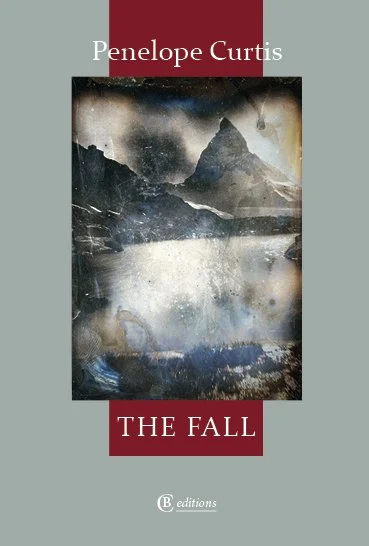
The Fall by Penelope Curtis $39
The Fall traces three paths taken through one small village in Lincolnshire – by Isaac Newton, who received his first schooling there in the mid-17th century; by the Rev. Charles Hudson, who was vicar in the 1860s; and by the actor David Niven, who visited his mother-in-law there in the 1940s. Each is intent on his own preoccupations – on understanding the physical world, on conquering the Matterhorn, on conquering women – but there is a thread which binds them. An insignificant village becomes the unwitting centre of life-changing events and inevitable tragedy. Told from the margins – through the experience of a questioning child, and of wives and mothers who live as helpmeets to their men – The Fall is an act of vivid observation and reclamation. [Paperback]
‘It is a rare pleasure to read such beautifully clear prose, with its attractively poignant mixture of sadness and calm.’ —Gavin Bryars
‘Rich and spare, idiosyncratic yet full of big currents of life and history. The times feel simultaneous, all here at once on the surface of the present, as well as reaching and echoing across centuries. Young Isaac will live in my mind – wandering about planning his sundial – but the whole works as a sort of astronomical clock with its moving parts aligning in different ways.’ —Alexandra Harris
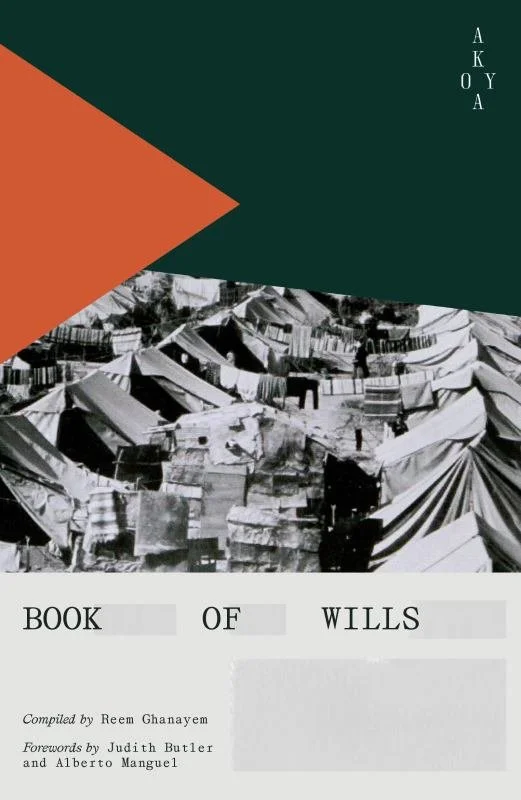
Book of Wills edited by Reem Ghanayem $49
'To write a will under siege is not surrender — it's defiance. It says: I existed. I felt. I belonged. I am not yours to erase.' —Reem Ghanayem. In Book of Wills, eighteen Gazan writers share their last will and testament. Several of the writers who contributed to this collection — including Rifaat Al-Ara'ir, whose poem 'If I Must Die' brought home the realities of war to so many — have since been killed. A profound exploration of the written word as an act of resistance, Book of Wills commemorates the lives and memories of the Gazan people, ensuring their stories are recorded. Forewords by Judith Butler and Alberto Manguel. [Paperback with French flaps]
'There is almost no politics in Book of Wills, which brings together the testimonies of Gazan writers from the heart of the war. This is an emotional portrait of life in the shadow of horror and death, where every moment may be the last.' —Suha Taweel Kadry
'These writings invite us to think and ask very important questions. What can language do in the face of this existential catastrophe?' —Karim Mohamed
'It seems that the Palestinian has nothing left to offer the world except his will.' —Karim Mohamed
'This book isn't just for reading, it's a book for history. It's important for the words in this book to stay alive.' —Yasmine Hassan
'Timely, relevant, and powerful. Book of Wills is part of the remedy as it gathers Palestinian voices with the invitation to speak, to love, and to connect and be heard.' —Ibtisam Barakat
>>”I refuse to let news of my death pass without notice.”
Early Light by Osamu Dazai (translated from Japanese by Donald Keene and Ralph McCarthy) $34
Early Light offers three very different aspects of Osamu Dazai's genius: the title story relates his misadventures as a drinker and a family man in the terrible fire bombings of Tokyo at the end of WWII. Having lost their own home, he and his wife flee with a new baby boy and their little girl to relatives in Kofu, only to be bombed out anew. “Everything's gone, the father explains to his daughter: Mr. Rabbit, our shoes, the Ogigari house, the Chino house, they all burned up, Yeah, they all burned up, she said, still smiling.” ‘One Hundred Views of Mount Fuji’, another autobiographical tale, is much more comic: Dazai finds himself unable to escape the famous views, the beauty once immortalized by Hokusai and now reduced to a cliche. In the end, young girls torment him by pressing him into taking their photo before the famous peak: “Goodbye, he hisses through his teeth, Mount Fuji. Thanks for everything. Click.” And the final story is ‘Villon's Wife’, a small masterpiece, which relates the awakening to power of a drunkard's wife. She transforms herself into a woman not to be defeated by anything, not by her husband being a thief, a megalomaniacal writer, and a wastrel. Single-handedly, she saves the day by concluding that “There's nothing wrong with being a monster, is there? As long as we can stay alive.” [Large-format glazed papered boards]
"It is here that themes explored throughout the series — identity's abnegation under the weight of art and history, the attendant wish for an alternative that fails to arrive — appear in their most unvarnished form." —J.W. McCormack, The New Left Review
"I like Dazai a lot." —Wong Kar-Wai
>>No Longer Human.

Glasses by Adam Gleczy $23
Glasses are among the oldest and most commonplace prosthetics we have invented. But what does it mean to wear glasses? There is more to the answer than correcting vision. Glasses alter, enhance, and shield the way that we view the world, and the way the world sees us. Everyone has encounters with glasses, passively or actively, from reading glasses to sunglasses. At times they are the main identifiers in a face (think John Lennon), and they signify extremes from nerdy and brainy to cool and sleazy. They are alternately the most mundane of things on our bodies and potentially the most glamorous. Adam Geczy explores this most pervasive and accessible accessory and shows that it is both a conduit to and a barrier between ourselves and the world outside. [Paperback with French flaps]
”Glasses offers an insightful and engaging reflection on optics as aesthetics, asking what it means to look, and to be looked at, through and within lenses. With clarity and ease, it explores how glasses shape not only what we see but how we are seen. Sharp, focused, and full of vision.” —Ania Malinowska
”A brisk pop meditation and manifesto, Adam Geczy's Glasses finds the poetry in prosthesis. As an unrepentant four-eyed nerd myself, I loved it.” —Jessica Glasscock
>>Other interesting books in the ‘Object Lessons’ series.
Front Row Seat: How sciencde can (and can’t) shape public decision-making by Juliet Gerrard $35
Responding to the terrorist attack on a Christchurch mosque and a global pandemic, the volcanic eruption at Whakaari/White Island, and the occupation of Parliament grounds, for six years Juliet Gerrard stood next to Prime Minister Jacinda Ardern and her successors to provide the insights that science might bring to decisions on issues of public importance. Sometimes these were emergencies: How fast will Covid spread? How many people are likely to die under different policies? Will the mosque terrorist produce copycats? And sometimes they were longer-term issues: What does the science say about cannabis? Should we worry about 5G or genetic engineering? Will it be easy or hard to get rid of plastic bags? Through case studies like these, Gerrard reflects on the realities of providing evidence to inform policy in the political arena, unpacking the tensions and drawing out general principles. [Paperback]
'Juliet Gerrard's Front Row Seat offers a comprehensive look at what was a very challenging period for New Zealand, one in which science advice played a crucial role. It is to Gerrard's credit that the more exceptional events (a terrorist attack, an eruption, a pandemic) don't dominate the book. Indeed, she offers a wide range of case studies, and in doing so, traverses almost all the terrain a science advisor could be expected to encounter. I found the text very readable. Gerrard's warmth and sense of humour also come through strongly.' —Shaun Hendy
'For six momentous years, Dame Juliet Gerrard provided a vital bridge, linking the worlds of science and policy at the highest levels of government. Drawing on this unique experience, together with her deep scientific expertise and practical wisdom, Front Row Seat explores the challenge of harnessing robust evidence to improve decision-making and protect the public interest. In this disturbing era of populist mantras, industrial-scale misinformation, and post-truth politics, her book provides a sober, perceptive, inspiring, and highly accessible corrective.' —Jonathan Boston
'Front Row Seat is a masterclass in the practical application of evidence-based policymaking, bridging the gap between academia and the high-stakes reality of governance. Dame Juliet Gerrard offers a rare, behind-the-scenes look at how science navigates the world of politics. Part memoir and part manual, this book is an essential resource for leaders, researchers, and anyone looking to understand how science advice can help solve the most varied and complex challenges of our time. It is a timely reminder that the most effective decisions in science diplomacy are not made in isolation but are built on a foundation of rigorous evidence and collaborative expertise.' —Jan Ludert
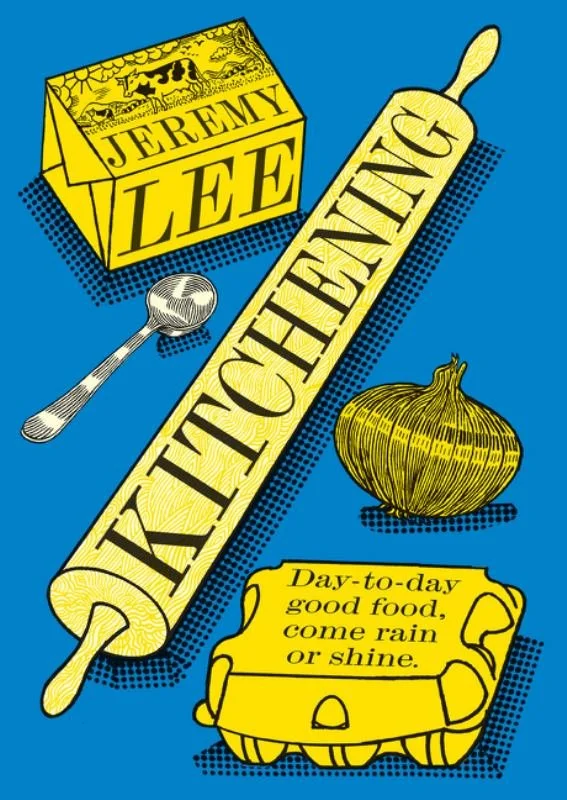
Kitchening: Day-to-day good food, come rain or shine by Jeremy Lee $85
From Jeremy Lee, always good company in the kitchen, comes a new seasonal cookbook on the day-to-day kitchening of good food. In this follow-up to the multi-award-winning Cooking, Jeremy shows you how to make the most of local produce while finding joy in the simple act of being in the kitchen. With wit and expertise, he spotlights the finest offerings from each month of the year. There are spring classics like leeks vinaigrette and baked asparagus with parmesan; summer delights such as pickled mackerel with gooseberries or quail with artichokes and broad beans; autumn feasts like spiced chickpeas with a pot of polenta; and practical tips like how to joint and preserve a goose for a variety of winter dishes. Each season includes indispensable guidance on which cheeses to buy and essential pudding recipes, including peach and redcurrant trifle; pear and ginger tart; and lemon, ricotta and olive cake. There is plenty of clever advice on how to use a glut of produce, including compotes and preserves, and suggestions for swapping ingredients to make recipes work throughout the year. Kitchening is a beautifully packaged collection of timeless recipes, charming anecdotes and culinary wisdom. [Hardback]
'Overflowing with deliciousness.' —Margot Henderson
'Gorgeous recipes in an equally gorgeous book, written with Jeremy's innate intelligence and wit.' —Stanley Tucci
'Jeremy's simple dishes are glorious and his endearingly enthusiastic, poetic, witty and authoritative words are a joy to read.' —Claudia Roden
>>Look inside!
>>Also recommended: Cooking: Simply and well, for one or many.
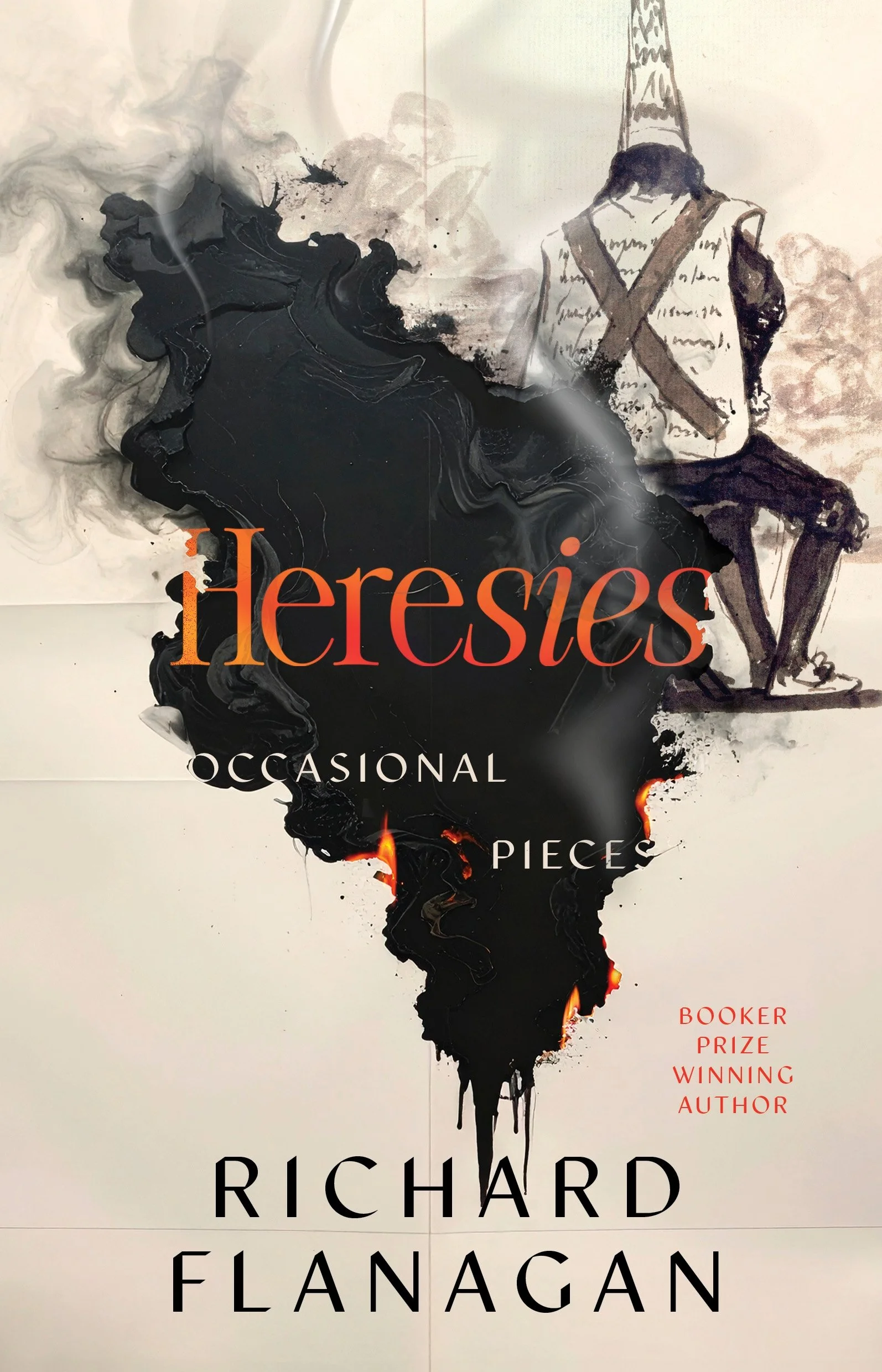
Heresies: Occasional pieces by Richard Flanagan $40
From Manus to MONA to birds to Australia’s Black Summer, from the destruction of our natural world to the hope offered by Indigenous Australia to the growing corrosion of democracy, from Salman Rushdie to the Segal Report, family and love, Flanagan's non-fiction writings carry the author's trademark elegance, subversive wit, and humanity. This showcase of Richard Flanagan's heretical brilliance over twenty years speaks to the heart of our troubled times now. 'Heresy allows a writer to write freely, allows writing to be an act of joy that arises from the same deep place where laughter lives, countering the farce of dogma with the reality of life. Perhaps for any of us to write of hope, to write of love, we must learn once more to be free, and to embrace heresy.' Flanagan is the only author ever to have won both the Booker Prize and the Baillie Gifford Prize. [Paperback with French flaps]
>>Read our reviews of Question 7.
Ngā Hapa Reo by Hona Black and Te Aorangi Murphy-Fell $35
He Iti Te Kupu: Ngā huahuatau me ngā kupu whakarite by Hona Black $35
Fully te reo Māori editions of these two useful and popular works.
Surging interest in te reo Maori in recent years has led to a range of errors becoming common in classrooms and everyday use, many caused by language interference (following the patterns of English rather than te reo). Ngā Hapa Reo sets out to correct that trend with easy-to-follow, fun examples of language errors.
He Iti te Kupu contains nearly 500 sayings that draw a comparison between something (often the natural world) and people, events or contexts. This accessible guide explains the use, meaning and context of a host of the principal figures of speech in te Reo.
>>Get Ngā Hapa Reo.
>>Get He Iti Te Kupu.
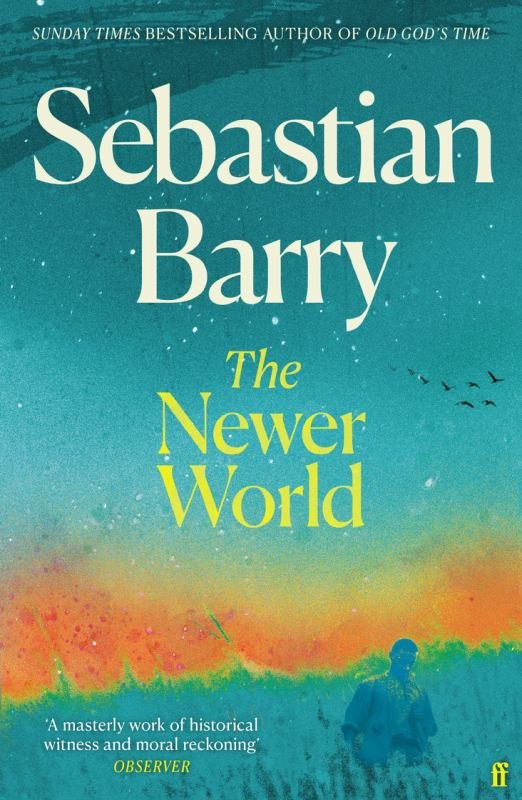
The Newer World by Sebastian Barry $38
”I knew as I made my way home that there was no home. All the old things were gone forever.” In the aftermath of the American Civil War, Tennyson Bouguereau — freed man, devoted brother, nascent singer, conflicted soldier and wanted man — journeys to find meaning and belonging. From the relative safety of home in Tennessee with his sister Rosalee, he is offered the possibility of a whole new life in Nashville, until a surprising trip to Victorian England changes everything.The Newer World is a novel about what it is to survive, and what might be lost along the way. [Paperback]
"A beautiful, sweeping, intimate tale awash in miraculous language. That Tennyson's perspective is conjured so vividly, without any pretense, is the enduring triumph of this book." —Kirkus
"A mix of Larry McMurtry's novels of the West and Terence Malick's film The Tree of Life. Barry creates precise and stirring images that make the time and locations come alive, and the examination of what it means to be free creates excellent fodder for discussion." —Library Journal
"There's a beautiful looseness to the novel, almost a wildness, the mark of a true, natural storyteller. It's easily among his best works." —Kevin Barry
'A masterly work of historical witness and moral reckoning.' —Observer
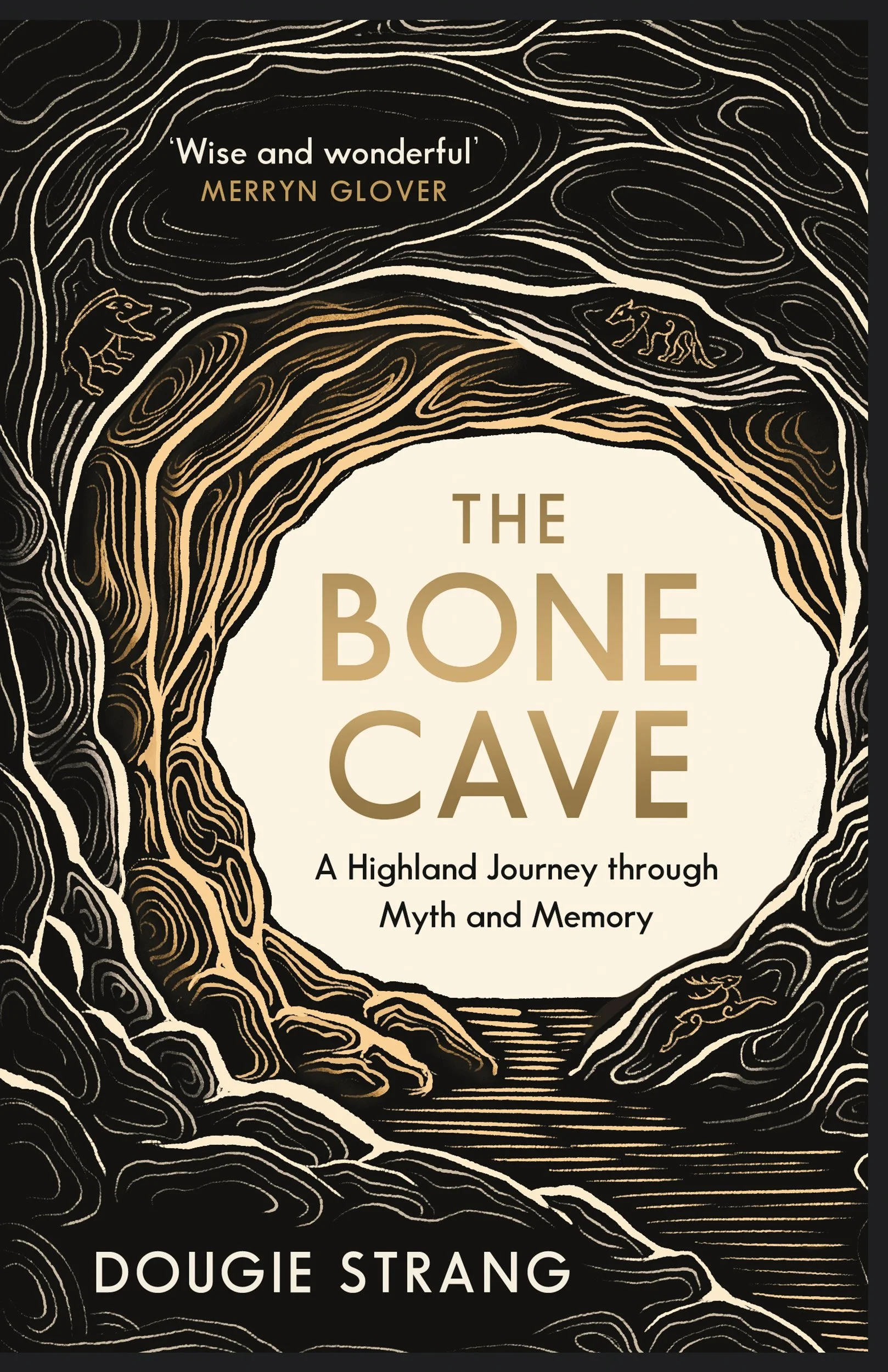
The Bone Cave: A Highland journey through myth and memory by Dougie Strang $30
A vivid account of a journey through the Scottish Highlands, The Bone Cave follows a series of folktales and myths to the places in which they're set. Travelling mostly on foot, and camping along the way amid some of Scotland's most beautiful and rugged landscapes, Dougie Strang encounters a depth of meaning to the tales he tracks one that offers a unique perspective on place, culture, land ownership and ecological stewardship, as well as insights into his own entanglement with place. Dougie sets out on his walk at the beginning of October, which also marks the start of the red deer rut. The bellowing of stags forms the soundtrack to his journey and is a reminder that, as well as mapping invisible landscapes of story, he is also exploring the tangible, living landscape of the present. [Paperback]
’The Bone Cave is a meditation on the move; a listening to the voices of bird, wind and river, a holding onto tree and stone, a watching of deer. As Strang pitches his tent across the Highlands, kindling fire and memory, he draws us into the enfolded layers of landscape, wildlife and folktale that tell us who we were and yet might be. Wise and wonderful.’ —Merryn Glover, author of The Hidden Fires
'A fascinating insight into the ways in which landscape and folklore are intertwined in Scotland. The ways in which these stories are linked to the landscape — and to the daily lives of the people who used to inhabit it — are expertly teased out by Strang.' —Roger Cox, The Scotsman