
NEW RELEASES (16.5.26)
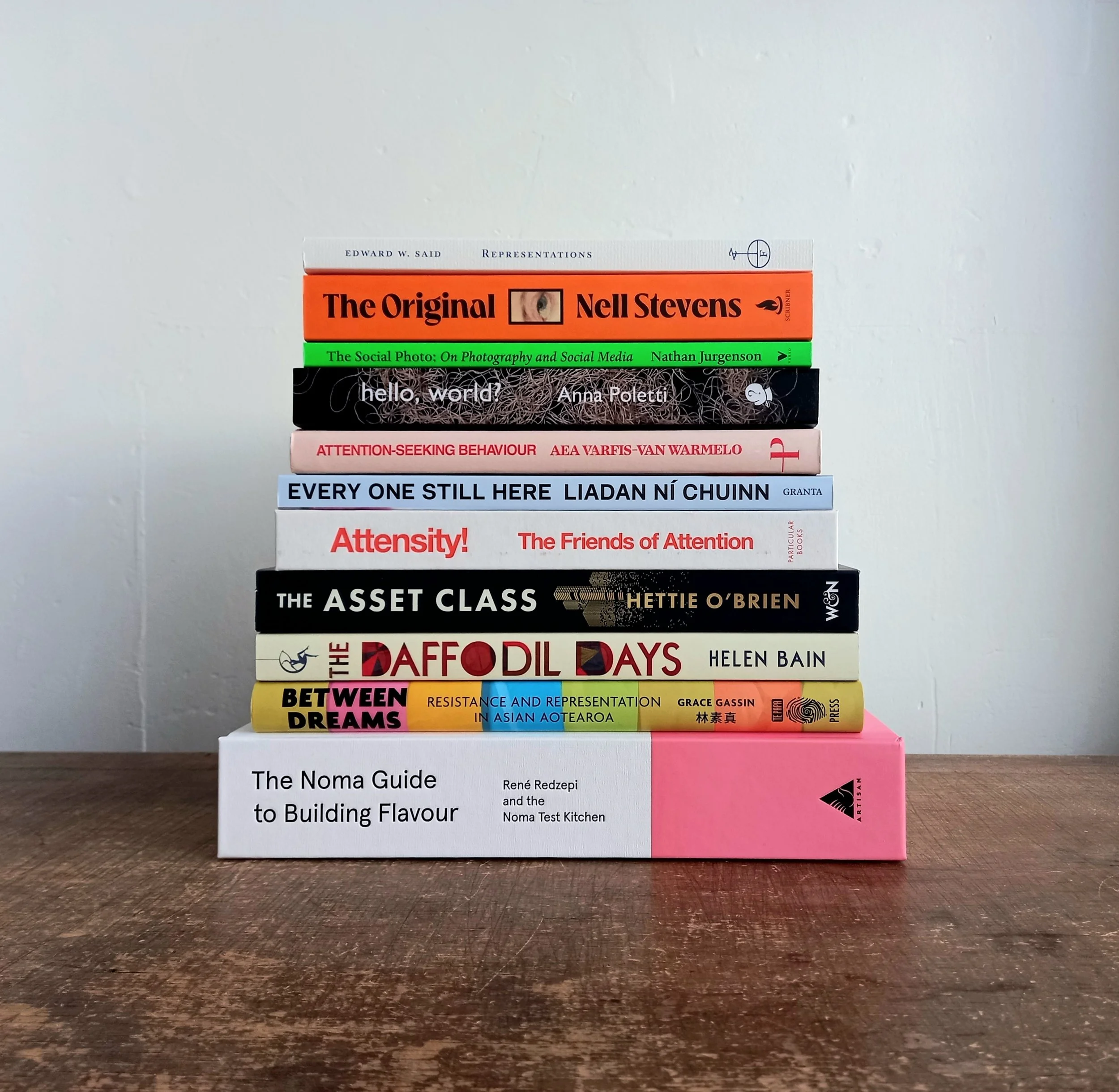
All your choices are good! Click through to our website (or just email us) to secure your copies. We will dispatch your books by overnight courier or have them ready to collect from our door in Church Street, Whakatū.
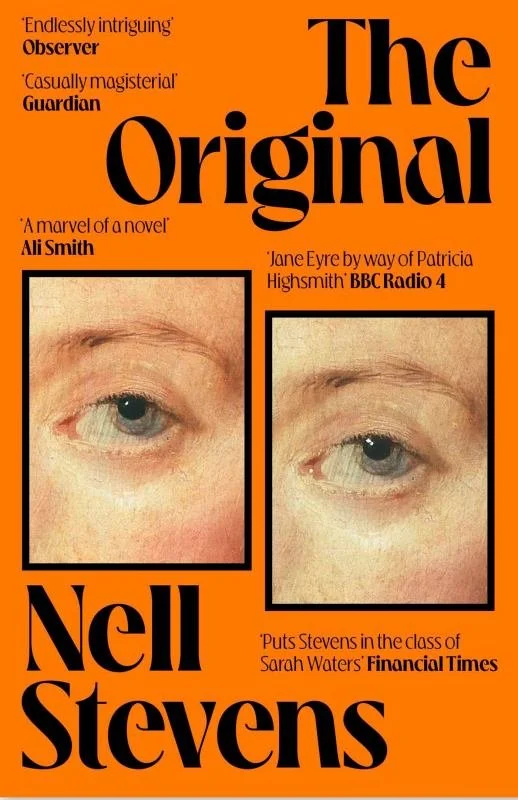
The Original by Nell Stevens $40
Oxfordshire, 1899. Grace Inderwick grows up on the peripheries of a once-great household, an unwanted guest in her uncle’s home. She has unusual skills and unusual predilections: for painting, though faces elude her; for lurking in the shadows; for other girls. Then a letter arrives, postmarked Saint Helena. After years missing at sea, Grace’s cousin Charles is ready to come home. When Charles returns, unrecognisable and uncanny, a rift emerges between those who claim he is an imposter and Grace’s aunt, who insists he is her son. And Grace, whose intimate knowledge of forgeries is her own closely-guarded secret, must decide who and what to believe in, and what kind of life she wants to live. Deftly-plotted and shimmering with distinctive intelligence, style and wit, The Original is a novel about the value of authenticity in art and in love, and what it means to be a true original. [Now in paperback]
”A marvel of a novel.” —Ali Smith
”What a bewitching book this is. A sinuous, thrilling meditation on fakes and forgers, with echoes of Daphne du Maurier and Sarah Waters and an audacity that is totally original to Nell herself.” —Olivia Laing
”A delightful, playful puzzle of a novel, and a brilliant twist on the nineteenth century orphan-makes-good story. The Original asks whether, sometimes, faking it is the right thing to do.” —Claire Fuller
”A wonderful novel about identity, creativity, money and belonging. It's so witty and propulsive you will forget how brilliantly constructed it is, this tale that brims with the beauty of art, of how to triumph in a difficult world.” —Jessie Burton
”Intricate, and endlessly intriguing. The reader is kept guessing until the very end; as Stevens deftly raises the stakes, the pages seem to turn themselves. The narrative captivates intellectually, too, probing questions of authenticity, imitation, and self-realisation, in love and in art. The overall effect is of an author boldly stepping out on her own, pursuing themes that were hers all along.” —Observer
>>Written by the light of a lava lamp.
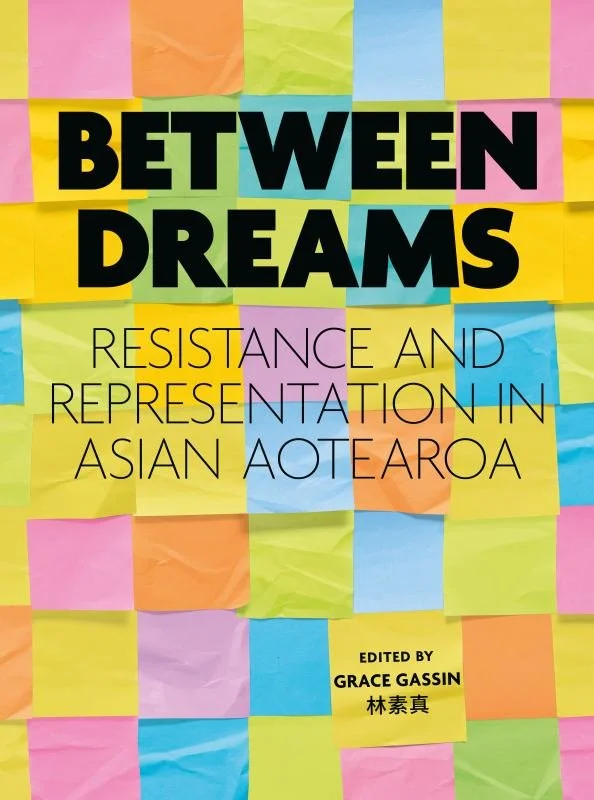
Between Dreams: Resistance and representation in Asian Aotearoa edited by Grace Gassin (林素真) $50
This landmark collection presents fresh, progressive perspectives on what it means to be ‘Asian’ in Aotearoa. Te Papa curator Grace Gassin draws together journalists, researchers, activists, filmmakers and political commentators to relate experiences of living between cultures and to explore the legacies of New Zealand’s diverse Asian diaspora histories. Featuring a broad range of taonga from the museum’s collections, this timely book brings these social histories into focus, revealing shared themes of resistance and representation that offer ways to reckon with the past and imagine new futures. Contributions by: Umi Asaka, Mohan Dutta, Christopher Fung, Rebekah Jaung, Tze Ming Mok, Keith Ng, Sun-Min Elle Park, Sapna Samant, Balamohan Shingade, Isaac Te Awa (Ngāpuhi, Kāti Māmoe, Kāi Tahu, Waitaha) and Sidney Wong. [Flexibound]
>>Look inside.
>>Lip service.
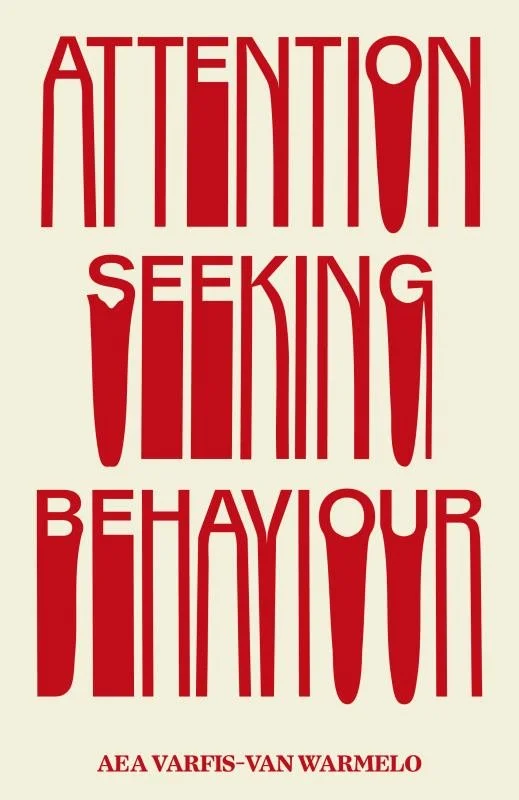
Attention-Seeking Behaviour by Aea Varfis-van Warmelo $45
The narrator of Attention-Seeking Behaviour, a woman in her mid-twenties, is “complex, creative and nasty.” She is also, by her own admission, a compulsive liar. Trying to break this habit for the sake of Normal Ben, an honest and uncomplicated man, she looks back over her life. By turning to writing she attempts an honest reckoning with her long history of deception, its psychological roots, and the terrible cost it has exacted on her romantic and professional relationships. But can we believe a word she says? Hilarious, sexy, and politically astute, Attention-Seeking Behaviour is at once a personal confessional and a critical history of lie detection methods and their role in modern policing. Blending fiction and non-fiction — memoir, novel, and essay — it wields confession shamelessly while positively embracing the proximity of literature and lying. [Hardback]
”I loved Aea Varfis-van Warmelo's Attention-Seeking Behaviour. Aea speaks with such clarity to the mutability of memory and self-narration, and the painful difficulty of breaking out of one's own patterns and specific self. Her honest look at lying has produced a novel which is both amazingly playful and deeply serious; warm and destabilising, intellectually rigorous and aesthetically stylish.” —Harriet Armstrong
”Attention-Seeking Behaviour is a book to be read for its sentences alone. Each line reveals the author's control over fiction's delicate veils, shaping a mercurial, lyrical reality that embroils the reader into an eerily unstable sense of certainty. Through quiet inversions, diminishments, and disillusions of account, Varfis-van Warmelo offers a voice that is all brain, all mammal-suspended within the mechanics of social life, yet governed by a vulnerable, perhaps universal will to power. The result is painterly and polymorphous: a book that does so much more than seek attention, it renewed what I now hope to find in the contemporary novel altogether.” —Eve Esfandiari-Denney
”Sexy, frightening, immaculately written and mercilessly perceptive. It's also the most exacting, eviscerating self-critique since St Augustine. Left me with a deeper understanding of myself that I sort of wish I didn't have. I loved every page.” —Luke Kennard
>>Making the reader complicit.
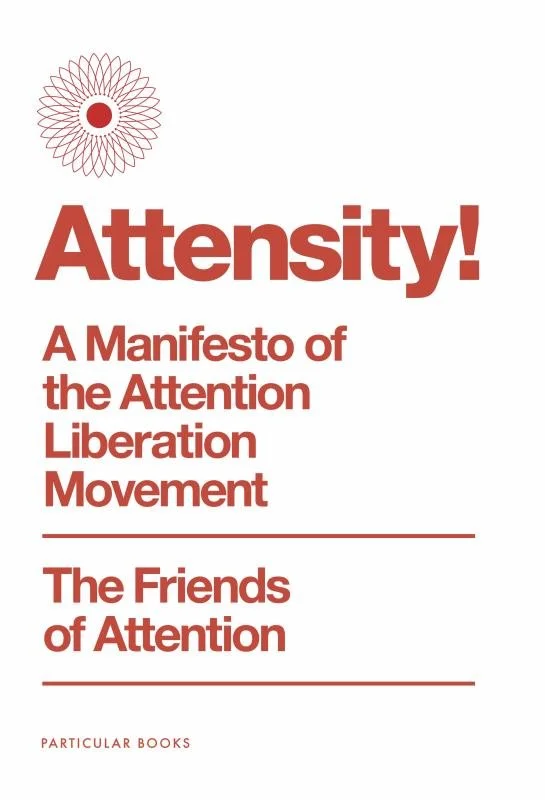
ATTENSITY! A manifesto of the Attention Liberation Movement by The Friends of Attention $50
A rallying cry to fight the commodification of human attention, with the tools we need to reclaim our humanity, by a group of writers, artists, and activists in the vanguard of the movement. We all feel it — something is seriously wrong. Our attention — that essential ability to give our minds and senses to the world — is being trapped, gutted, and sold out from under us by an industry of immense technological and financial power. The heedless exploitation of this vital capacity by a handful of tech companies is harming us all, reducing our very selfhood to that which can be quantified, bought, and sold — and shaking the foundations of our democracy. To push back against this 'human fracking’, we need more than individual will-power or isolated efforts. We need a movement of collective resistance. Such a movement is beginning to bloom, and in this radical, first-of-its-kind guide, The Friends of Attention show us how to join the fight. We meet welders, nurses, poets, and surfers, all of whom are engaged in attentional practices. We learn to seek out sanctuaries — theatres and museums, houses of worship, dance parties — where together we can take refuge from the frackers. Drawing on a rich legacy of critical intellectuals and the creative wisdom of diverse traditions, Attensity! takes our apocalyptic present, turns it on its head, and reveals new vistas of human flourishing. [Hardback]
”Attensity! reminds us that how we attend to the world shapes what the world can be for us, and for one another. With a lively, even joyful blend of philosophical seriousness and practical imagination, it invites us to see attention not as a private asset to be hoarded but as a shared capacity to be cultivated and protected.” —Kwame Anthony Appiah
”At a time when most reports are of the world getting worse, here's a zinging, erudite book that arrives with the happy news that one thing can get better if we put our minds to it. Attensity! is about how to reclaim one of our most powerful and valuable qualities — our attention-through a path back to the human things that matter: community, care, imagination, and art. It's both a keen historical analysis and a call to movement-building from a group of people who have spent years working in the libraries and the classrooms but also, with the shared force of their attention, in the ever-changing streets.” —Nathan Heller
>>Visit the Friends of Attention.
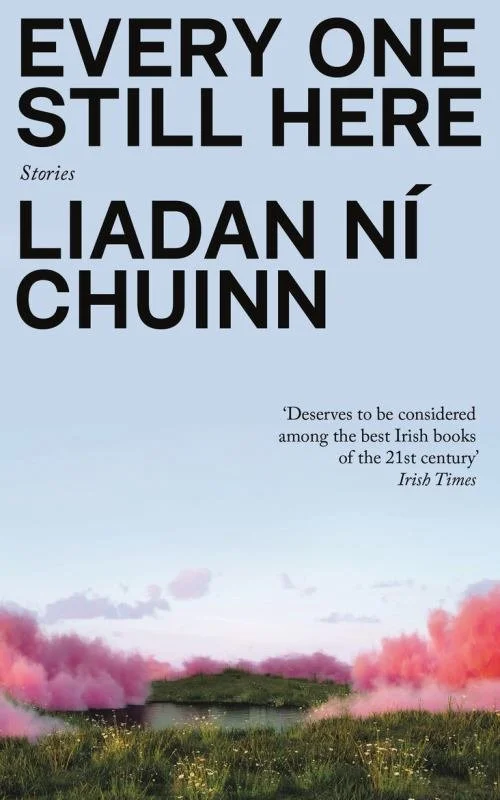
Every One Still Here by Liadan Ní Chuinn $33
A young girl spends her days on a double-decker bus. A bride-to-be prays to St Valentine's bones. Bouquets are found all over a museum. Teenagers gather to dissect a human body. Brimming with compassion and thrumming with energy, these stories are scrupulous in their attention to detail, epic in their scope. In this bravura debut collection, Liadan Ní Chuinn delivers a blend of the personal and the political. [Paperback]
”Here's a writer who knows how to swerve gracefully from the expected. Her work is instinctive, intriguing and truly exciting. I cannot wait to see what's in store for her.” —Lisa McInerney
”It's a long time since I've read a short story collection where I've felt such an aching tenderness for the people within its pages. These stories are rich. They have heart and weight. This is singular, controlled, dextrous writing from someone who is now one of my favourite writers.” —Wendy Erskine
”These are exceptional stories, stark yet richly textured and told in a voice that is at once plain-spoken and lyrical. Liadan Ni Chuinn is the real deal.” —Louise Kennedy
”An extraordinary book by an extraordinary author who refuses to look the other way. Ni Chuinn's incantatory sentences quiver like seismographs, registering the quakes and ruptures that can crack a life in two.” —Thomas Morris
>>Causing harm, or failing to prevent it.
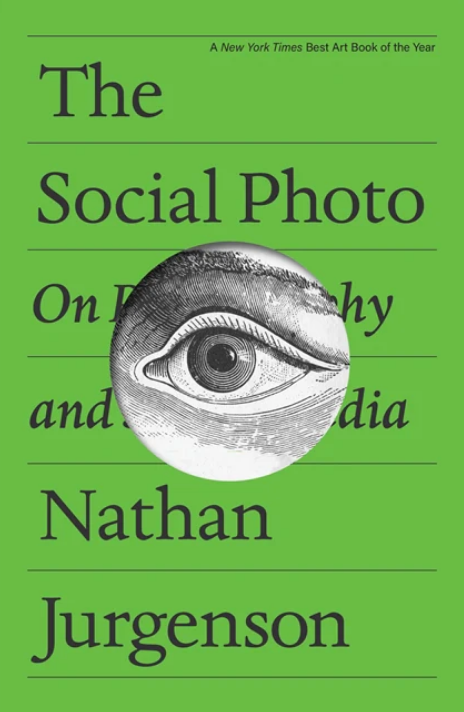
The Social Photo: On photography and social media by Nathan Jurgenson $27
With the rise of the smart phone and social media, cameras have become ubiquitous, infiltrating nearly every aspect of social life. The glowing camera screen is the lens by which many of us apprehend and communicate our experience. But our thinking about photography has been slow to catch-up; this major fixture of everyday life is still often treated in the terms of art or journalism. In The Social Photo, social theorist Nathan Jurgenson develops bold new ways of understanding the transformations wrought by these image-making and sharing technologies and the cultural objects they have ushered in: the selfie, the faux-vintage photo, the self-destructing image, the food photo. Jurgenson shows hows these devices and platforms have remade the world and our understanding of ourselves within it. [Paperback]
”Like Susan Sontag's On Photography to which it self-consciously responds, The Social Photo is slim, hard-bitten and picture-free. For if the average photo is ever dumber, photography matters even more; the social photo, in Mr. Jurgenson's phrase, has effected a "fusion of media and bodies" that has made every gallerygoer a cyborg.” —Jason Farago, New York Times
”’Social photos are not primarily about making media but about sharing eyes,' Nathan Jurgenson writes in this important and timely book. Grappling with the significance of the billions of largely ephemeral images that inhabit social media, he persuasively delineates many of the key boundaries between what was previously understood to be photography and the contemporary image environment.” —Fred Ritchin, author of Bending the Frame
>>Why this moment will be mis-remembered.
>>Susan Sontag On Photography.
Representations of the Intellectual by Edward W. Said $33
In these impassioned and inspiring essays, based on his 1993 Reith Lectures, Edward Said explores the role of the intellectual in the modern world. Are intellectuals merely the servants of special interests or do they have a larger responsibility? In these wide-ranging essays, one of our most brilliant and fiercely independent public thinkers addresses this question with extraordinary eloquence. Said sees the intellectual as an exile and amateur whose role it is 'to speak the truth to power' even at the risk of ostracism or imprisonment. Drawing on the examples of Jonathan Swift and Theodor Adorno, Robert Oppenheimer and Henry Kissinger, Vietnam and the Gulf War, Said explores the implications of this idea and shows what happens when intellectuals succumb to the lures of money, power, or specialisation. [Paperback with French flaps]
”For all that's changed, Said's principles for a worthwhile intellectual life — in particular, remaining independent despite the financial temptations offered by governments or institutions, and being relentlessly honest, whatever the risks — are as vital as ever.” —Juliet Jacques, Novara Media
”What is the task of the intellectual at a time when, at the heart of liberal democracies, genocide is normalised and protest suppressed? Said understood that the intellectual's position is not easy to occupy, certainly not with any kind of consistency. There is no template, and no guarantee that the intellectual's willingness to put themselves on the line will make a difference in the short term. Because they cannot trust institutions, states, or religions, conscience must be their guide. But the resonance of Said's books in our particular moment — the fact that they matter in certain respects now even more than they did at the time of their composition — shows that short-term calculus is not always the most relevant measure of their value. Sometimes, the intellectual must also look to the future.” —Rebecca Ruth Gould, Los Angeles Review of Books
”Representations of the Intellectual is a masterly meditation on some of the most important questions with which intellectuals must grapple, notably their relation to power and their responsibility to speak the truth out of a commitment to a bedrock of universal values. It speaks of such issues in a way that is satisfying and at the same time whets the reader's appetite for more, surely the sign of an important work.” —Rashid Khalidi
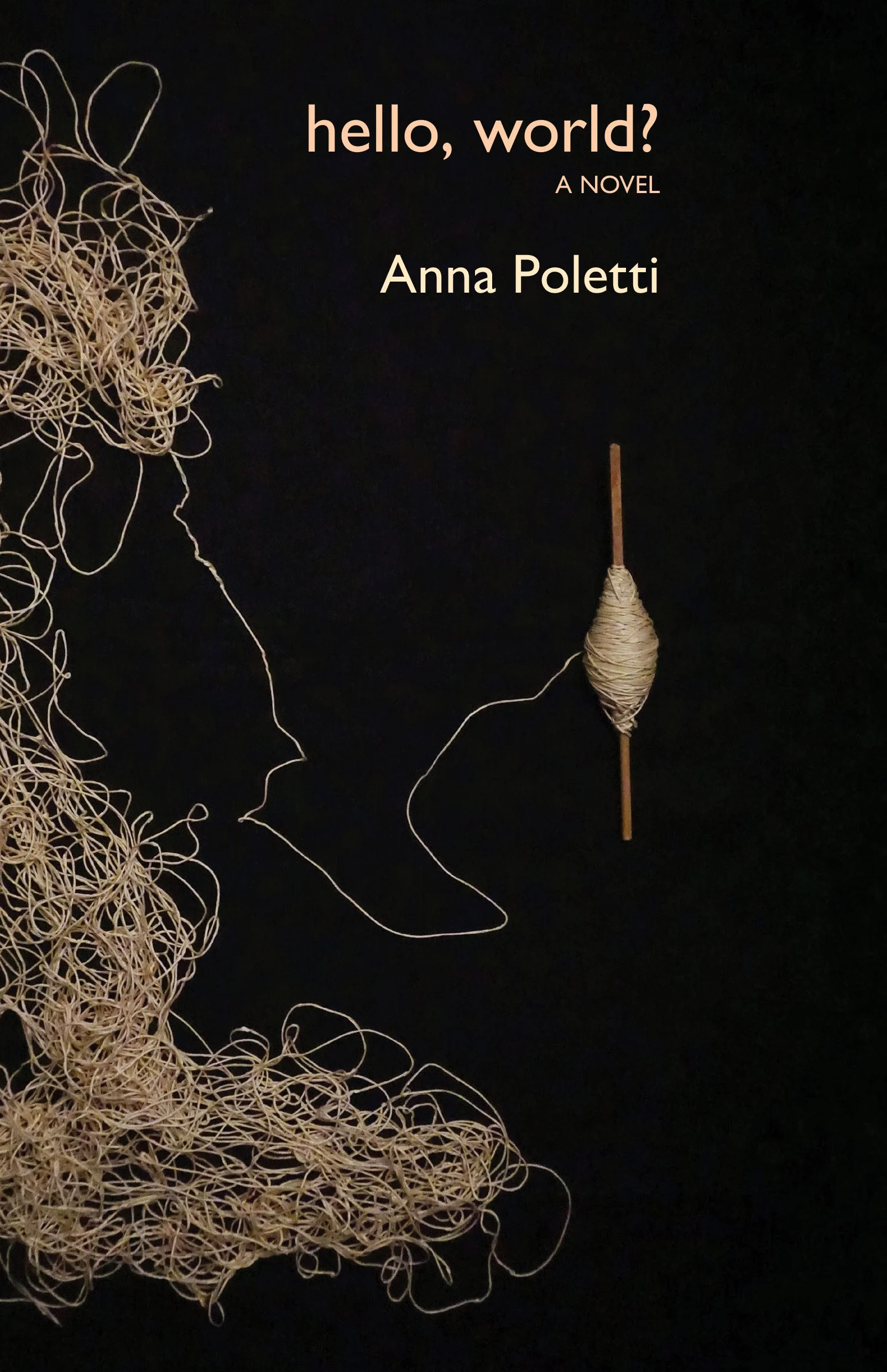
hello, world? by Anna Poletti $40
Abandoned by their Dutch partner after giving up their home and their job to follow him to the Netherlands, Seasonal finds themself single in a strange place for the first time in a decade. Still adjusting to life outside Australia, they turn to the internet to find a new anchor. Dipping into the rabbit hole of digital eroticism, Seasonal meetsLászló, a male sub who volleys back their cerebral sexts and is seeking a dominant guide. His dating-app profile thinly veils his desire to be annihilated. It's a desire that Seasonal senses they can fulfil. But to do it, Seasonal must forget the hard earned ways of keeping themself safe they developed in the milieu of violence and sexual threat that marked their upbringing in working-class, small-town Australia. At home, men were usually a threat. What if the roles were reversed? Seasonal and László embark on an experiment in remaking intimacy outside the Republic of Gender. But as it continues, the two realise they are staging separate confrontations with domination: Seasonal finds they must confront what it has meant to be raised as woman in Australia, while László stages his own confrontation with his decision to leave Viktor Orbn's Hungary. As the two improvise a theatre of domination in search of freedom, the energies of their sexuality stalk this collaboration, threatening to give them exactly what they bargained or begged for. A reverse novel of education, where two people try to unlearn everything they think they know about intimacy, Anna Poletti's hello, world? dares to fully face the violence, beauty, and uncharted territories of human sexuality. [Paperback]
“The delight in this book is not just in how closely observed and felt its themes are, but how closely thought as well.” —McKenzie Wark
”A stunning and radical book.” —Chris Kraus
>>Glitching the binary.
>>Not knowing how to keep warm.
>>Inconvenient and ungovernable.
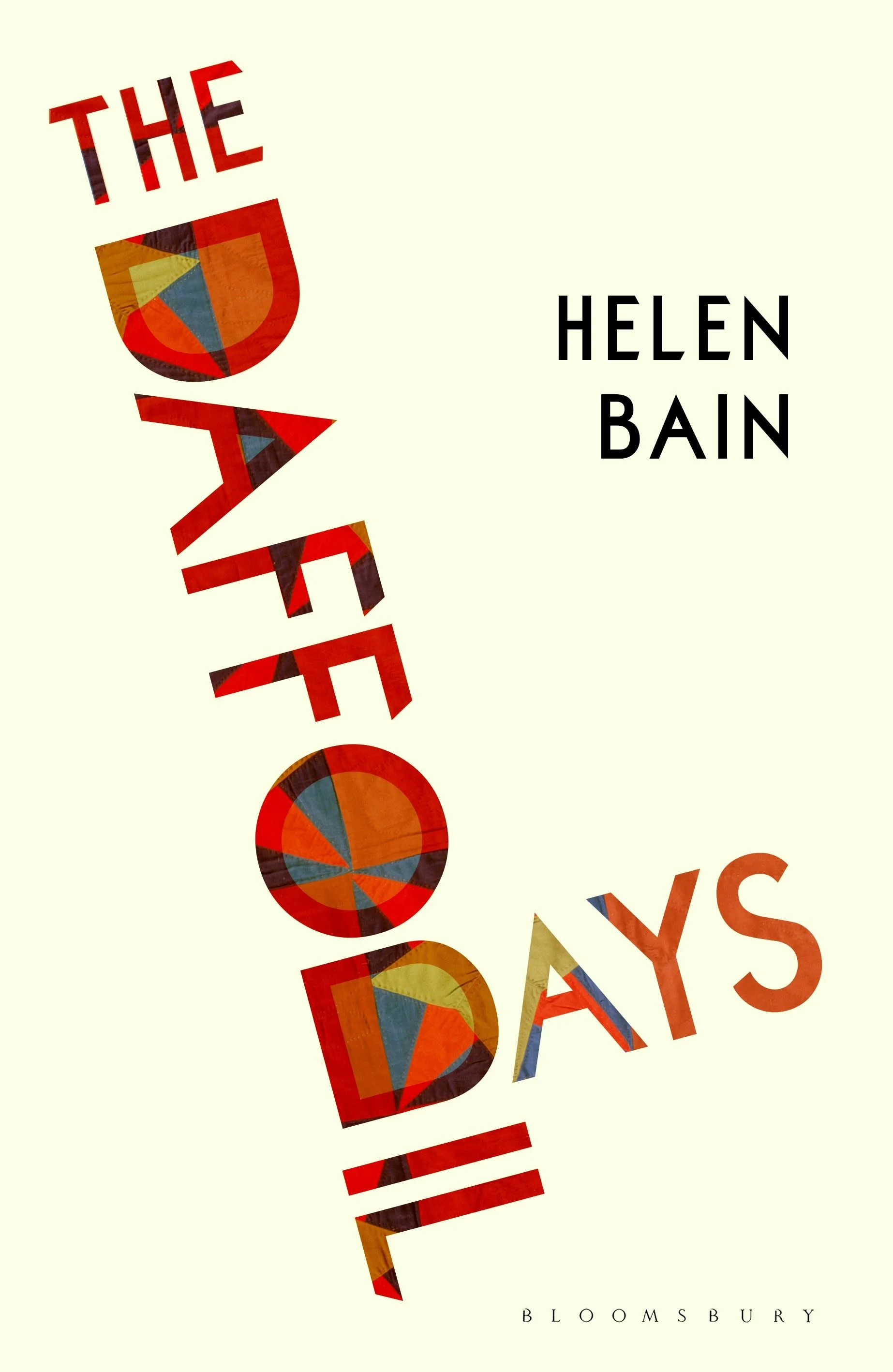
The Daffodil Days by Helen Bain $37
In the early 1960s, in a small town near Dartmoor, the church bells ring. The people of North Tawton go about their days, catching glimpses of one another's lives. There's the local GP, who knows more about his patients than he would sometimes prefer. There's the young shop assistant at Kestrels, who understands that the ladies who come there for a new outfit sometimes hope to find a new self. There's the tenant farm labourer who rings the tower bells at the church three times a week, the notes harmonious and clashing rippling out across the rooftops of the town. Amid all these lives, a young couple move into focus. New to the town with their small daughter, they have escaped London for a quieter existence in the thatched house beside the church, Court Green. The life they intend to build here out of fresh lino tiles, second-hand furniture painted with hearts and flowers, and expertly-cooked suppers for weekend guests will be a good and happy one. The Daffodil Days depicts a pivotal year in the marriage of one of the 20th-century literature's most infamous couples, witnessed by the people they lived among. It is a kaleidoscopic portrait of this enigmatic pair, refracted through the rich inner lives of a rural community caught if only for a moment in their light. [Paperback]
”Beautiful, affecting and deeply impressive, this is an ingeniously constructed novel, told slant. I loved it.” —Louise Kennedy
”An exceptional novel, with shades of Hilary Mantel. Helen Bain takes the familiar and makes it utterly new. I loved it.” —Meg Mason*
”A luminous, deeply researched debut, The Daffodil Days reimagines Sylvia Plath's Court Green period through a chorus of village voices — letting the known story fall away until what remains feels bracingly human and close. Helen Bain's prose is exact and alive, and the novel builds with a quietly devastating inexorable force you can't look away from.” —Paula McLain
>>A free, supple life.
>>The injured thumb.
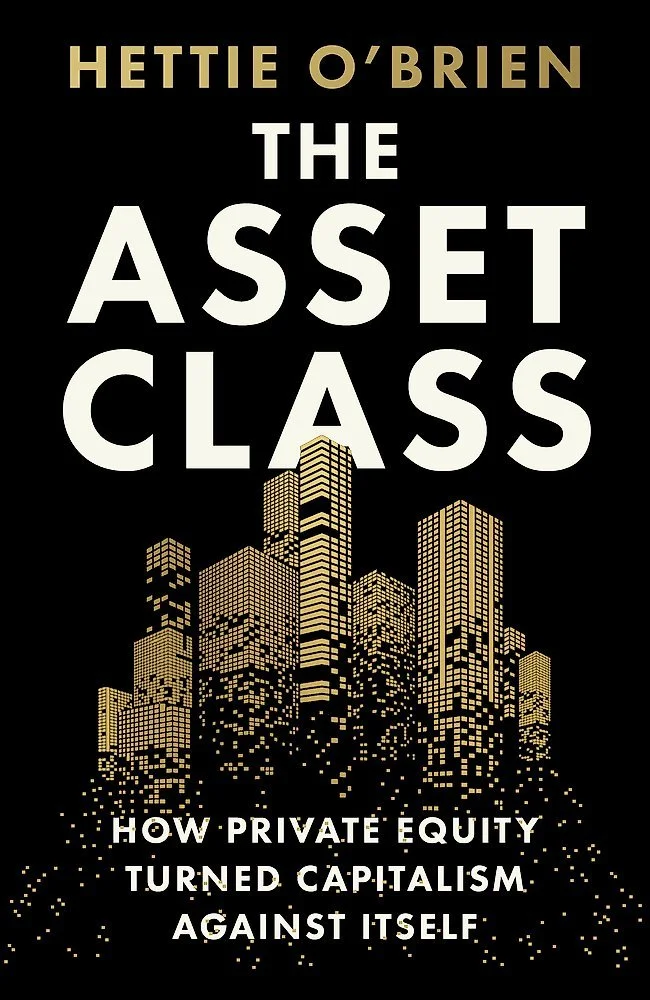
The Asset Class: How private equity turned capitalism against itself by Hettie O’Brien $40
You don't know their names, but they own the house you rent. They own your hospitals, nurseries and care homes, the media you consume and the companies you work for. They even own the tools your union uses to fight back. Business is a contest — and they say their people are built to win. But when does competition become a struggle to the death? For decades, private equity firms have infiltrated every corner of modern life. Wielding debt as a weapon, they push vital services into crisis. Their cover story: that this is merely the 'creative destruction' essential to growth. Old-school capitalists say they're dismantling everything that made our economies work. In The Asset Class, reporter Hettie O'Brien penetrates a hidden empire of billion-dollar deals and covert financial warfare. From Copenhagen to San Francisco, Barcelona to the Yorkshire Dales, she follows the money, the ideological roots and the trail of destruction. What she finds is chilling: private equity isn't just reshaping the economy — it's selling out the foundations of Western society. The new owners think they can hide in the shadows. But the owned are fighting back. Pertinent. [Paperback]
”Private equity has quietly taken control of the foundations of everyday life, spreading insecurity and 'enshittifying' everything from coffee shops to care homes. O'Brien reveals its arcane dynamics by telling the stories of the fascinating — and often unscrupulous — characters at its heart. This is essential reading.” —Grace Blakely, author of Vulture Capitalism
”The story of how money to fund housing, social care and hospitals was captured by the few. We should call this what it is: a legalised smash-and-grab raid on public infrastructure whilst governments, many bought with donations, sat and watched. A wild and engaging ride.” —Jolyon Maugham, author of Bringing Down Goliath
”A scary book. Through a dazzling investigation, it shows how the secretive industry of private equity has extended its dominion over everyday life and is now tearing apart the very fabric of our society. However, it is ultimately empowering. It clearly tells us how this industry works and what its pressure points are, knowing which is the first step towards fighting back. The struggle to rebuild a decent society should start with this book.” —Ha-Joon Chang
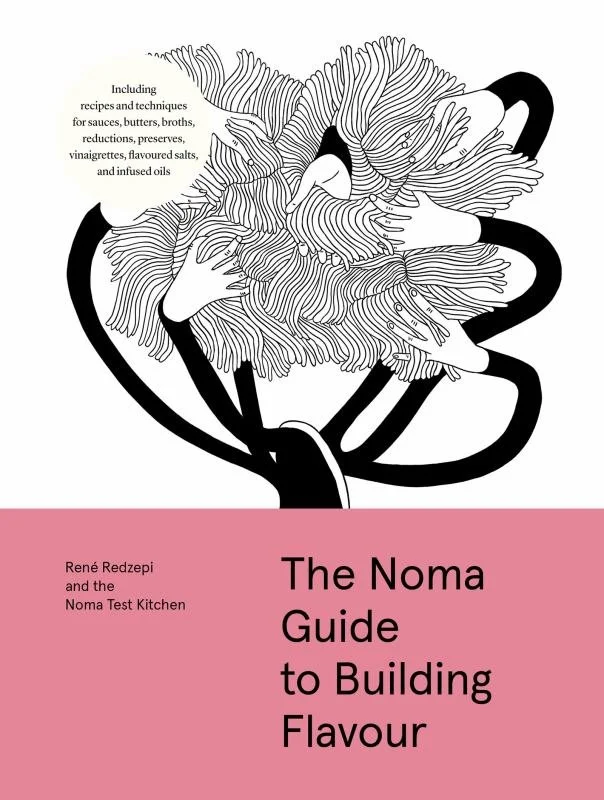
The Noma Guide to Building Flavour: Including recipes and techniques for sauces, butters, broths, reductions, preserves, vinaigrettes, flavoured salts, and infused oils by the Noma Test Kitchen $90
The long-anticipated follow-up to the bestselling The Noma Guide to Fermentation offers more than 150 recipes for infused oils, vinaigrettes, fudges, spice mixes, rubs, sauces, and other flavour-boosting condiments that professional and home cooks can use to elevate every part of their cooking. These are the components that define the inimitable taste of Noma, including iconic preparations such as roasted kelp salt, smoked egg yolk sauce, Nordic pesto, and lacto-koji beurre blanc. Most of the recipes are illustrated with step-by-step photo sequences detailing the techniques needed to transform surprisingly familiar ingredients into elements of Noma's distinctive cuisine. Noma uses these recipes to create elevated preparations for the restaurant (a selection of plated-dish photos are included), but readers — whether professionals or avid home cooks — will find plenty of inspiration for their own kitchens, aided by do-able suggestions from Noma chefs. In conversational essays and anecdotes woven throughout the book, Rene Redzepi shares how staff members from around the globe have influenced Noma's flavour palette, and how Noma chefs take pristine seasonal ingredients and blend, grind, dry, smoke, macerate, reduce and otherwise elicit the most potent and desirable flavours that make up the sensory language of Noma. [Hardback]
"Brillat-Savarin once wrote that the discovery of a new dish does more for human happiness than the discovery of a star. The Noma team have developed an entire galaxy of flavours in this new book, giving chefs everywhere the vocabulary to speak — and cook — an entirely new language in the kitchen." —Jose Andres
>>Look inside!