
NEW RELEASES (18.6.26)
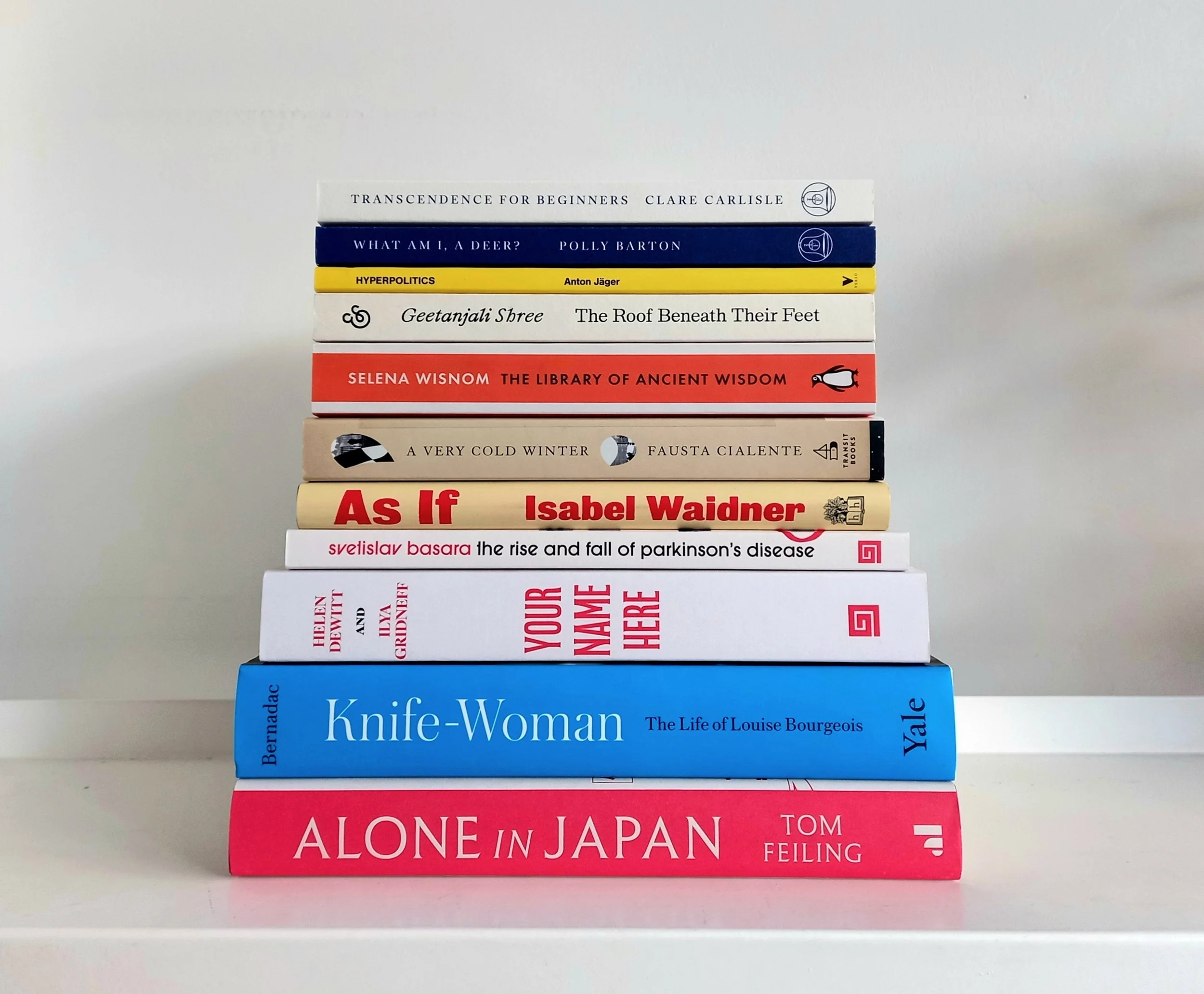
All your choices are good! Click through to our website (or just email us) to secure your copies. We will dispatch your books by overnight courier or have them ready to collect from our door in Church Street, Whakatū.
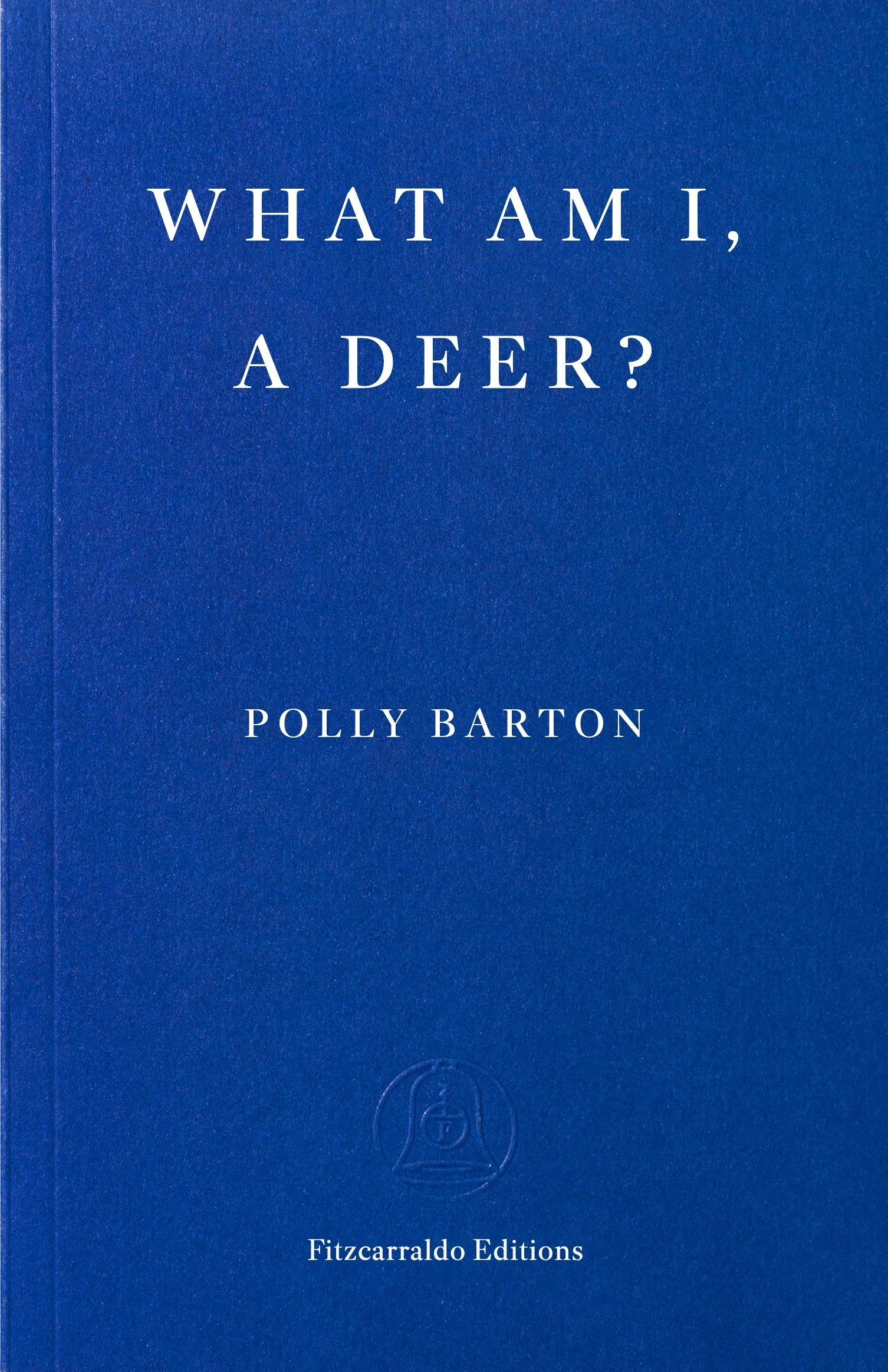
What Am I, A Deer? by Polly Barton $38
What does it mean to lose yourself — and is that something you should be aiming for? A young woman with little interest in games takes up a job in Frankfurt at a famous gaming company, naively set on reinvention. On her morning commute, in the familiar clutches of tedium and self-loathing, she encounters a nice-eyed stranger who returns her forgotten umbrella and finds herself catapulted into a dizzying, year-long whirlwind of obsession - not just with this endlessly attractive spectre, but also with the feverish karaoke trips from which she draws the ultimate solace. With astonishing existential acuity, Polly Barton's formidable novel renders the paradoxes of modern life in all its complexity, in deliriously self-conscious prose that is at once propulsive, titillating and bitingly funny. Echoing with the sounds of Whitney Houston and The Cure, reaching for the sublime in dark, sweaty boxes, What Am I, A Deer? is an exhilarating exploration of authenticity, fantasy, romance and intoxication. [Paperback with French flaps]
”A stunning achievement of narrative craft. The pleasures of What Am I, A Deer? lie in the way its constituent episodes, themes and recursions crystallize into layers of insight on the hopes and fantasies that drive people to action. It is a funny, moving work that rewards thoughtful, careful reading — with breaks to listen to the songs and videos it references.” —Arin Keeble, Financial Times
”Barton's prose is offbeat and witty, alive to the excruciating pain of clutching at a romantic fantasy. A good novel tells us about ourselves, scooping out our worst impulses and deepest hopes, and Barton does so with a disarming candour. What emerges is a piercing study of yearning, and of the modern condition of feeling perpetually on the verge of one's own life.” —Emma Loffhagen, Guardian
“Its prose tidal and prone to extending the briefest encounters into meditations full of associative logic, the novel is a brilliant, sustained monologue. Indeed, by laying bare a primal, feminine solitude — crafted by the narrator's selective interiority, buoyed by obsession, and further exacerbated by her work-abroad circumstances — the woman becomes an integral conduit for wider fissures between hoped-for escapist fantasies and a lonelier reality in which communication is fraught but worth braving. A woman's candid thoughts percolate in the striking, artful novel What Am I, A Deer?, about trying to fit in, love, and become self-aware.” —Karen Rigby, Foreword Reviews
>>Love and limerence.
>>Shyness, obsession, and the joy of karaoke.
>>The extremes of having a crush.
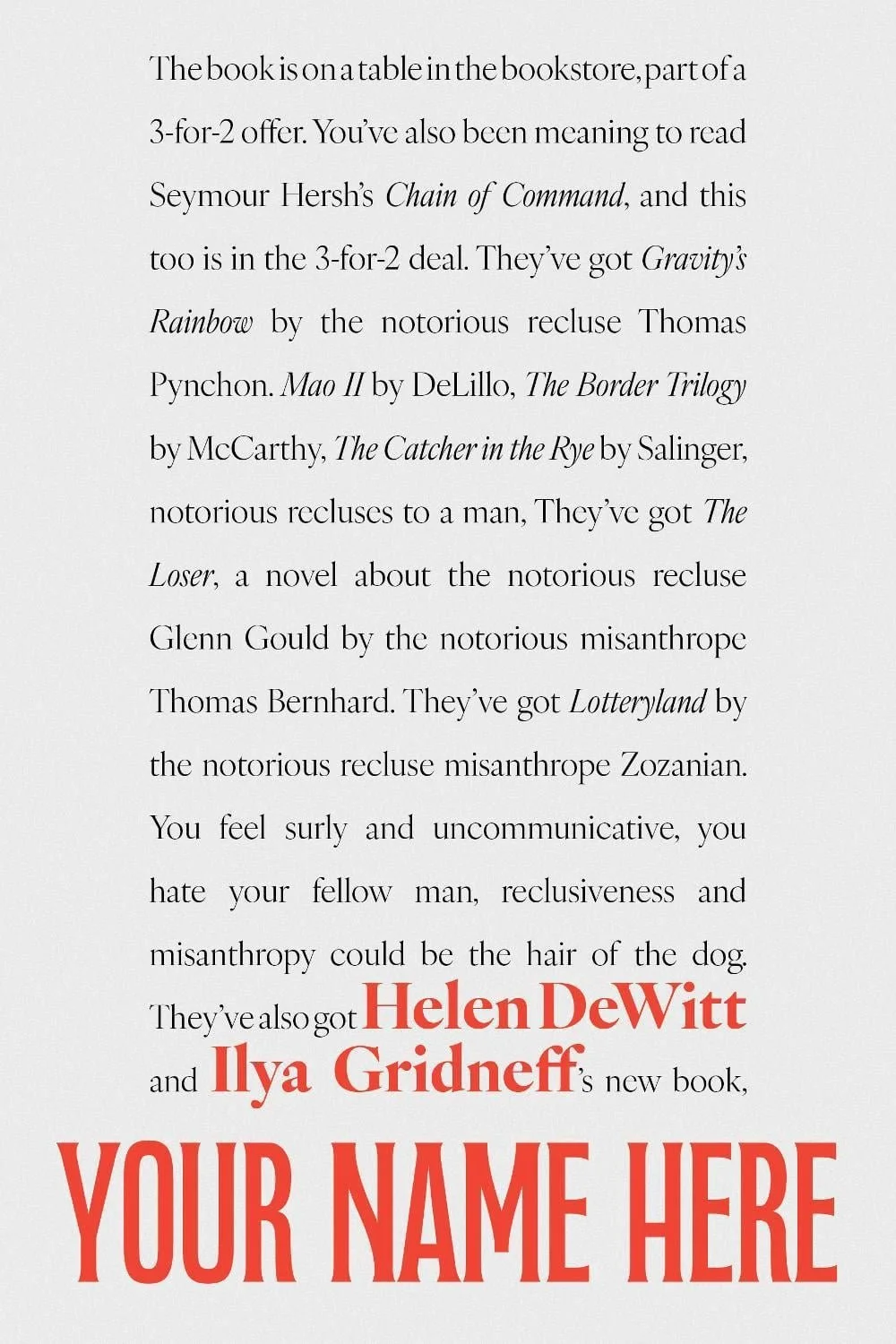
Your Name Here by Helen DeWitt and Ilya Gridneff $45
Your Name Here is a spectacular honeycomb of books-within-books. In this death-defying feat of ambition, collaborators Helen DeWitt and Ilya Gridneff weave together America's ‘War on Terror’, countless years of literary history, authorial sleight of hand, Scientology, dream analysis, multiple languages, emails, images, graphs, into something wondrous and unique.A metafictional Pygmalion story reminiscent of Charlie Kaufman's Oscar-nominated Adaptation, or Italo Calvino's If on a winter's night a traveller; Your Name Here is a rare work of art that captures the process of becoming itself. A reminder that a masterpiece and a doomed voyage look the same at the start. [Paperback]
"A work of genius. What began as a playful collaboration became, like most of DeWitt's work, weirder, riskier and more ambitious. After at least 20 drafts and countless revisions, it morphed into a 600-page work that resists categorization and almost defies description." —The New York Times Magazine
"It is a novel of permanent, persistent becoming, a story whose endings are multiple and essentially arbitrary, and it takes its own seeming unpublishability as a theme, or perhaps a promise. Reading a novel like Your Name Here, you can come to see that there are no real limits in literature, and fewer in life than you'd expect." —The Atlantic
"Although the book may appear, to begin with, to be plotless, it turns out to be tightly organised: a Godard-like enfilade of shaftings, a frontispiece-of-Leviathan-type portrait of the world as a great 'Biz' made up of millions of little bizzes. Your Name Here is a novel that doesn't really believe in novels. The writing is delightfully shameless, disheveled and dissolute; globalised and pornified and digitised somehow, bit after bit after bit." —The London Review of Books
>>Move your head and the picture changes.
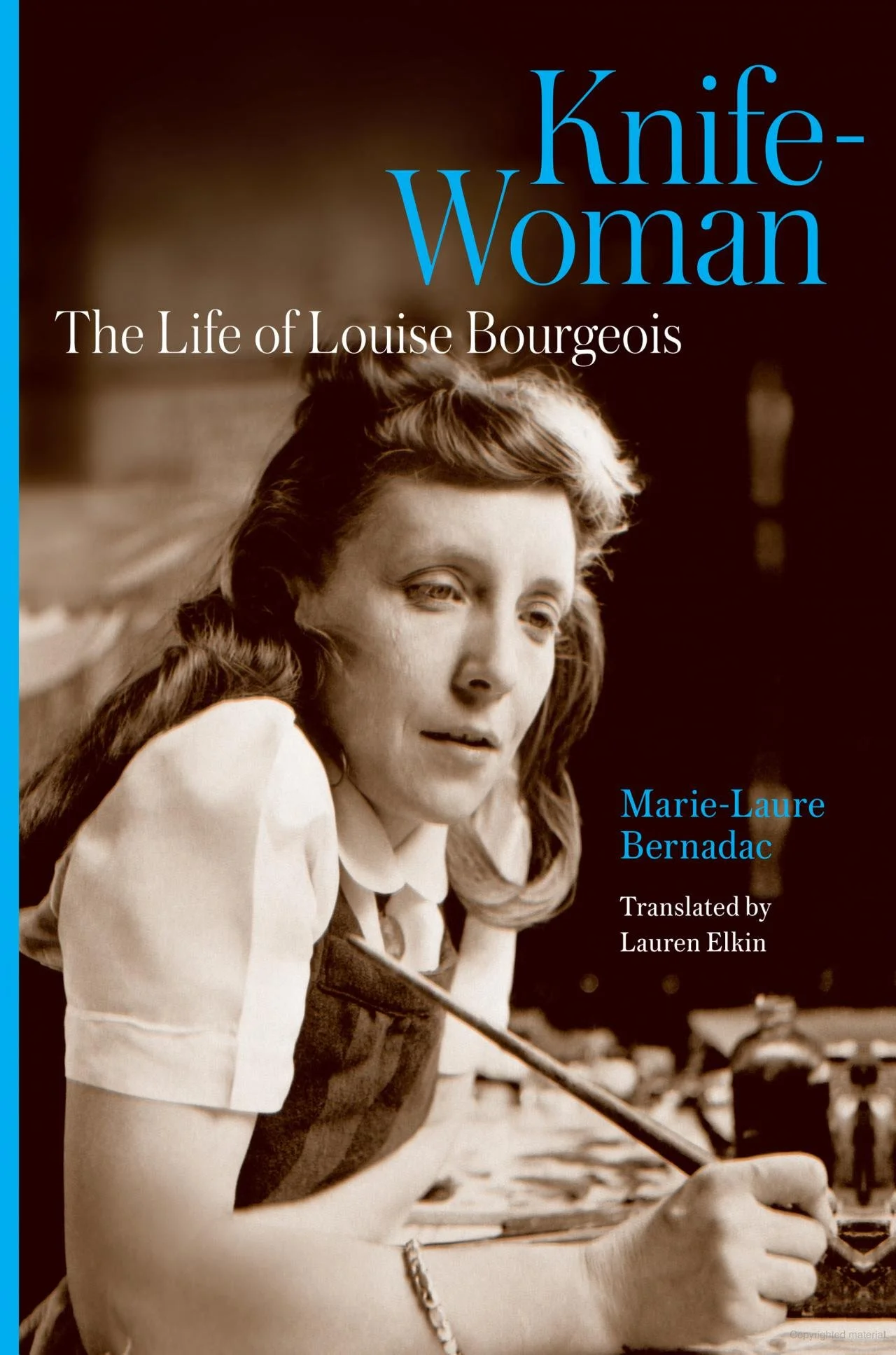
Knife-Woman: The life of Louise Bourgeois by Marie-Laure Bernadac (translated from French by Lauren Elkin) $72
Louise Bourgeois (1911-2010) was one of the most important artists of the twentieth century. She is known for a body of work that spans sculpture, painting, and printmaking but eludes any aesthetic classification. Her life and art were so intertwined that it is often difficult to tell them apart. In her own words: "Sculpture is the body. My body is the sculpture." Marie-Laure Bernadac's biography of Bourgeois traces the career of a great artist, her training, and her influences, as it tells the story of an exceptional woman's life. Featuring personal photographs as well as reproductions of her work, this landmark publication is the first major biography to draw on the artist's unpublished personal archives, including diaries, correspondence, and psychoanalytic writings, as well as the many interviews she gave and the reminiscences of those who knew her. Bernadac elucidates Bourgeois's friendships and rivalries with other major figures, including sculptor Louise Nevelson and Museum of Modern Art director Alfred H. Barr Jr. She also draws on Bourgeois's well-known fascination with psychoanalysis to explore the deeply autobiographical nature of her artwork. This erudite and keenly insightful biography pays tribute to the talent of the artist and the complexity of the person. [Hardback]
"Bourgeois's life was inseparable from her art and this too was constantly revised. One of the triumphs of Bernadac's book is her sangfroid in dealing with this slipperiness. She was deeply untrustworthy, impossible to believe. Yet truth, as Bernadac notes, wasn't the point. Louise Bourgeois had to be experienced." —Charles Darwent, Literary Review
"In Knife-Woman, Louise Bourgeois is revealed as a complex, self-analysing, and profound artist —embedded and respected in both the New York and Paris art worlds, impassioned by materials, and worldly and introspective. Her penchant for living for work was periodically arrested by the agony of depression, yet this never stopped the flow of wit, insight, and creative energy." —Griselda Pollock
>>Look inside.
>>Chelsea.
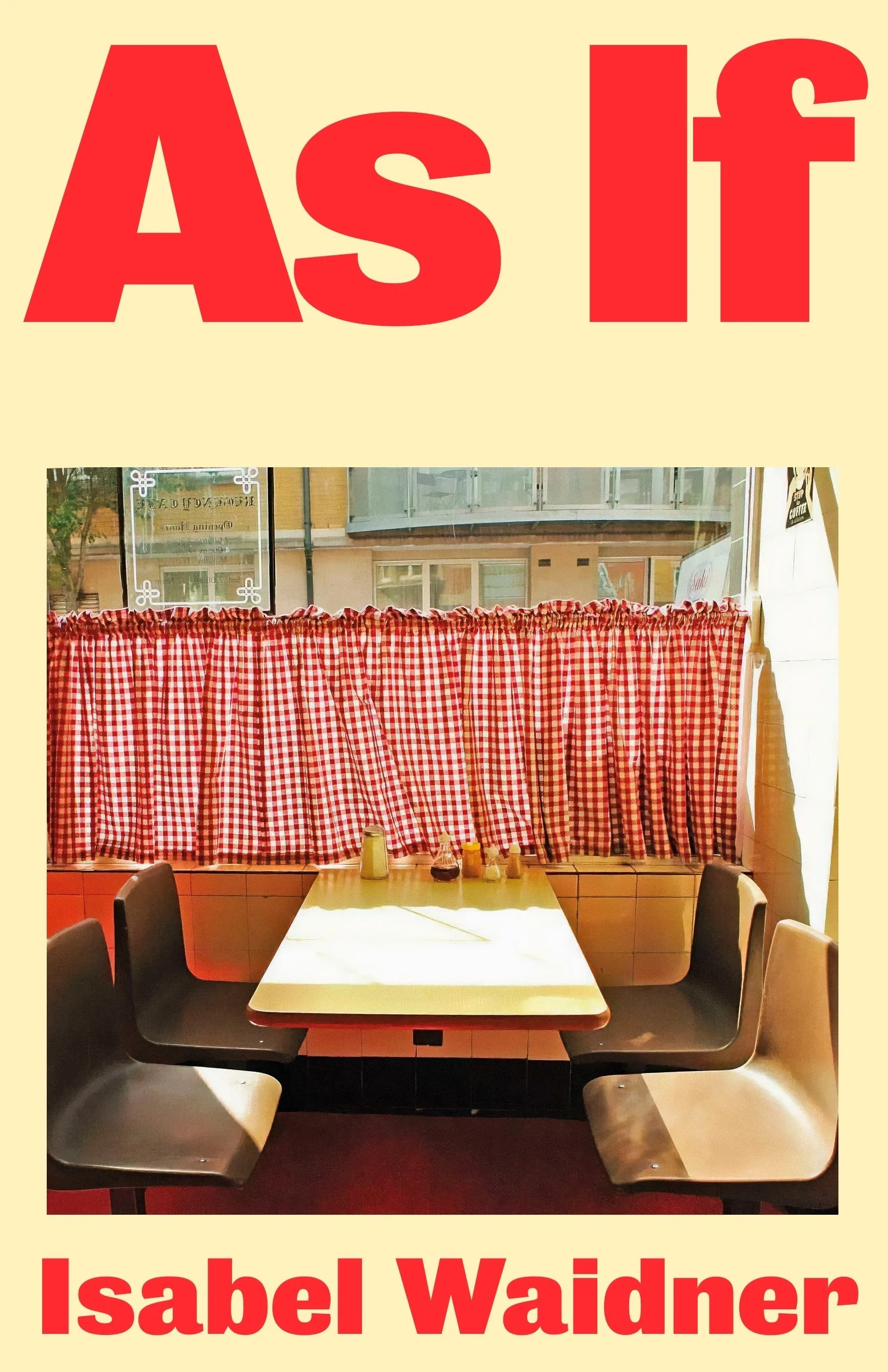
As If by Isabel Waidner $40
Two men meet in a flat in London. They are total strangers and yet they look remarkably alike. Lewis is grieving his dead wife; Korine is hiding from his very-much-alive one. Lewis never had children; Korine is an ambivalent parent at best. Lewis is an erstwhile actor, too depressed to attend the big audition that has just fallen into his lap. Korine has tried a dozen dead-end jobs but never pursued his acting dreams. Two men living mirror image lives. Each seeking a second chance to get things right. Each wanting what the other has. As If is an existential farce about the road not taken. Surreal and slyly poignant, suffused with ironic melancholia, it is a parable for the twenty-first century everyman- a character trapped in reality's hall of mirrors, endlessly searching for something to live for. [Hardback]
”Wonderfully implausible and absurdly humorous, the latest novel from a Goldsmiths Prize-winner follows a rich tradition. As If is a great step forward, a maturing of Waidner's talent with no loss of the quixotic qualities that gave the other books their charm. It adds depth without sacrificing energy. Kafka and Beckett are good touchstones, because, like Waidner, they are very funny without telling obvious jokes.” —Daily Telegraph
”The novel feels calculatedly aloof, the emancipatory glee of Waidner's past work giving way to a more subterranean drama shaped by psychic contortions of dissimulation and masquerade. A taut psychological puzzler, As If leaves behind antic cartwheeling — no UFOs or repurposed celebrity biographies — for suspense and ambiguity.” —Observer
”A surreal existential caper exploring identity and performance, midlife purpose and regret, and the difficulty of finding — and escaping — yourself. Isabel Waidner makes a playful contribution to the literary tradition of dopplegangers, following in the footsteps of Dostoevsky, Kafka and Beckett. Sly, absurd and poignant, it is a triumph of narrative voice.” —Spectator
”Waidner's writing, always dazzlingly clever and formally inventive, is here also deeply moving. As If is a great success and an intriguing departure: a dourly beguiling dark comedy about fluffing your lines halfway through the performance of a lifetime and being given another chance.” —Times Literary Supplement
>>Absurdist realism, queerness, and doppelgängers.
>>Hours of my life are lost to writing.
>>Absurdity is anything but nonsensical.
>>Some other books by Isabel Waidner.
Transcendence for Beginners by Clare Carlisle $30
Carlisle examines life writing and philosophy across certain European and Indian traditions, exploring questions of childhood and mortality, art and religion, beauty and loss. Informed by her experience as a biographer of Søren Kierkegaard and George Eliot as well as her own life, Carlisle asks what one human existence can reveal, and how writing can transmit its truth. Intellectually stimulating and deeply moving, Transcendence for Beginners enacts a philosophy of the heart, told by a generous and compelling guide. This bold, enlivening work asserts Carlisle's place as one of our most innovative thinkers. [Paperback with French flaps]
”The final chapter of Transcendence for Beginners ties it all together, asking whether we can have access to a noble or radiant realm while still in the midst of life. By this time, we have climbed quite a mountain of ineffability, but Carlisle has led us so gently step by step that we are willing to follow. Having arrived at the ending, we look back to see that we have traversed territory that is not completely religious but is not merely aesthetic or literary or psychological either. Like the man in Blixen’s fable, we see a picture traced by our steps, but I suspect it may vary for each reader, and even for the same reader at different times and in different moods. This is to Carlisle’s credit: we can make our own shape out of her words because she is never dogmatic and because she is clearly on an open-ended quest herself. All possibilities remain alive in this subtle, generous and humane book.” —Sarah Bakewell, Guardian
”In this gem of a book, Carlisle asks a question that may especially preoccupy professors of philosophy (which she is) and biographers (which she is also, of Søren Kierkegaard and George Eliot), but that equally concerns the rest of us: How to make sense of a human life?” —New Yorker
”This is the book of a lifetime, and a book about lifetimes. What is the relationship between philosophy and biography? How can a line of writing reveal a line of living? Clare Carlisle is a guide and a guru: Transcendence for Beginners is a transformative and transcending experience.” —Frances Wilson
>>Half-way up a mountain.
>>Life to the page.
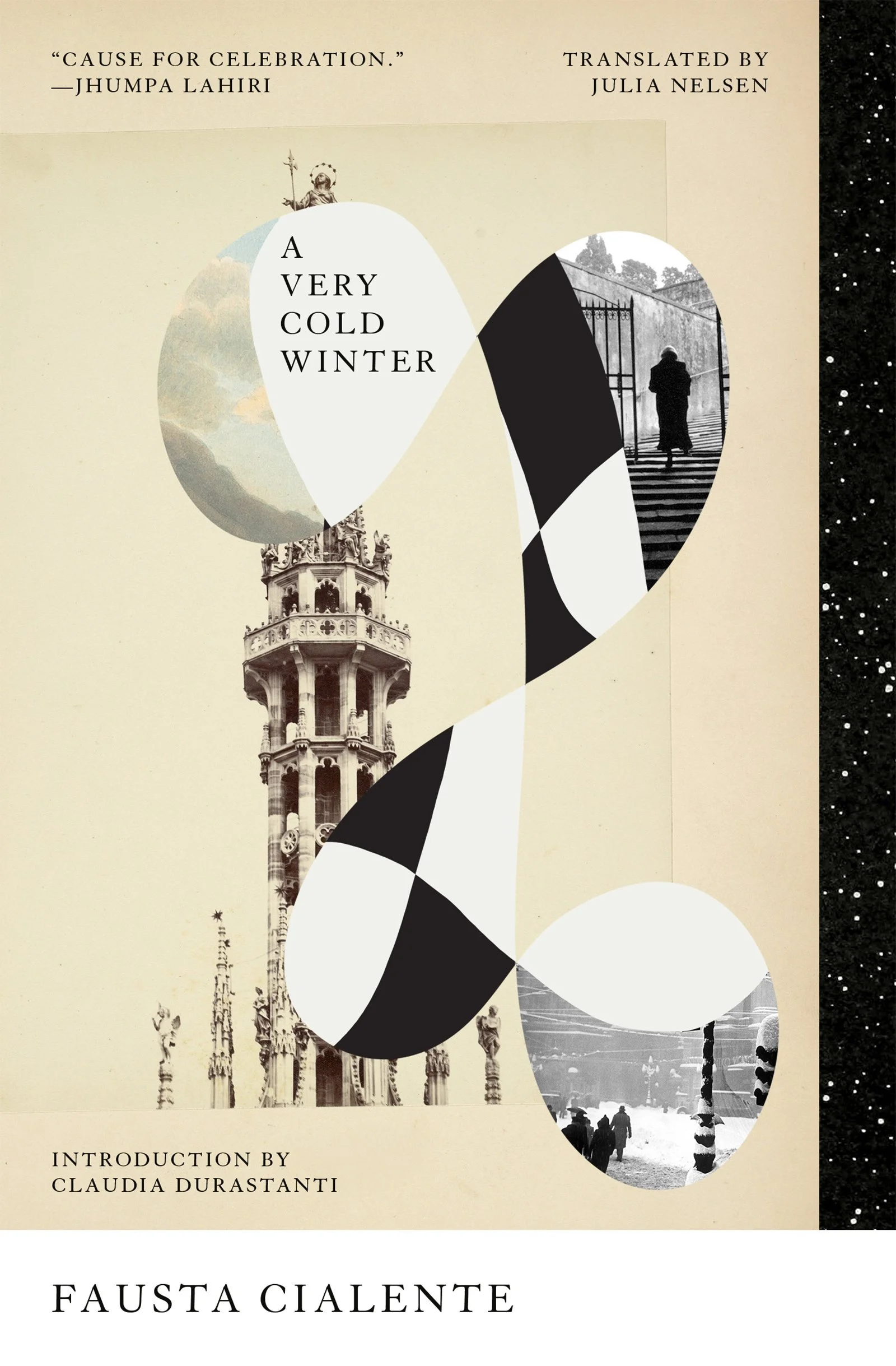
A Very Cold Winter by Fausta Cialente (translated from Italian by Julia Nelsen) $40
It is 1946 and Milan is in ruins. A woman named Camilla opens her illegally occupied attic to her extended family as they rebuild their lives among the rubble. The absence of men — lost to war, death, or abandonment — leaves the burden of survival to the women, who use the attic to incubate fragile futures: Camilla works to carry the family toward dignity and normalcy; Lalla dreams of becoming a novelist to escape their grim reality; Regina, widowed by the war, pins her hopes on her infant daughter; Alba chases independence and love. Varying political ideologies, loyalties, and wartime secrets filter through the house, creating a thick net of tension. As the narrative roams from the thoughts of character to character, the residents of this ‘hotel for the poor’ consider their own complicity and moral compromises, wondering if they're able to escape the weight of what they've lived through. Fausta Cialente's exquisite prose captures the frailty of the human heart in its desperate search for connection. A Very Cold Winter is about the impossibility of forgetting the past and the difficulty of living with it. [Paperback]
"Cialente was a pioneering feminist, anti-fascist writer with a profound literary sensibility. In this crucial account of post-war Italy, her rootless authorial perspective sheds unique light on individual, collective, and national trauma, and speaks to ever-relevant questions about what it means to be a woman, a foreigner, and a survivor. Julia Nelsen's engrossing English translation is cause for celebration." —Jhumpa Lahiri
"The first of the undersung Fausta Cialente's books to appear in English, A Very Cold Winter contends with what it means to move on in the aftermath of war." —The New Yorker
"In this overdue translation of Cialente's vital 1966 novel, a family struggles to find harmony while crammed together in a frigid Milan squat. The result is an exquisite chronicle of frozen hearts and their gradual thaw." —Publishers Weekly
>>Read an extract.
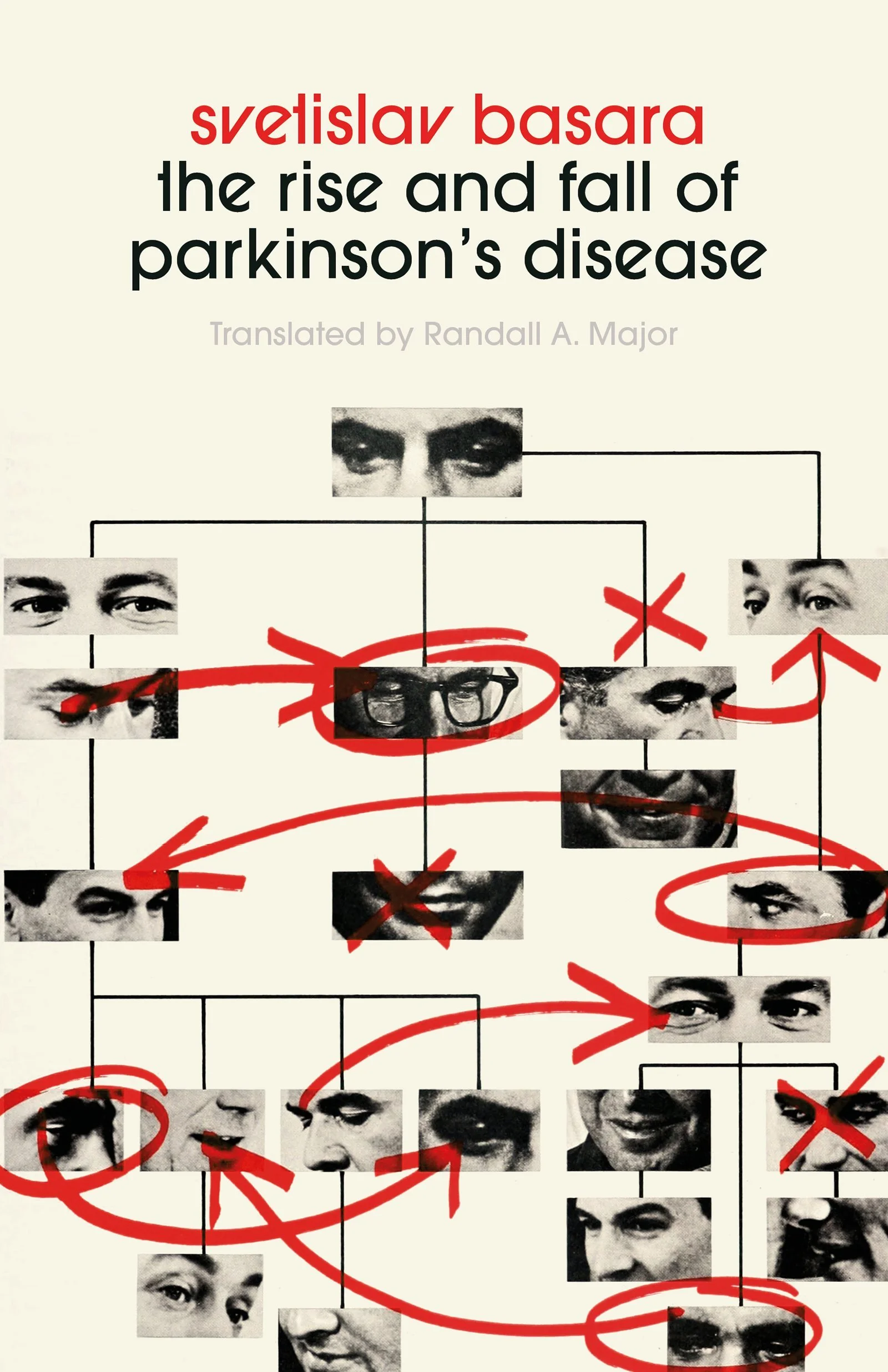
The Rise and Fall of Parkinson’s Disease by Svetislav Basara (translated from Serbian by Randall A. Major) $35
Told as an eclectic collection of appropriated testimonies, treatises, missives, and police files, The Rise and Fall of Parkinson's Disease follows the progression of the contagion's patient zero, a Soviet citizen (sometimes) named Demyan Lavrentyevich Parkinson, as he ascends from hellish health to the sacred illness. Hailed as one of Serbia's most influential living writers, Svetislav Basara's scathing, irreverent critiques of authoritarianism have twice won him acclaim and notoriety. In The Rise and Fall of Parkinson's Disease, Basara lives up to this reputation with a book as formally ambitious as it is intellectually sophisticated. His blend of grotesque absurdism and wry humour evokes the paranoid, vexing worlds of Franz Kafka's novels and the meta-textual assemblages of Paul Auster. Told from a colourful range of perspectives, the novel is a multifaceted, crystalline account of truth, lies, and history, a sprawling case study of humans in an inhuman society. [Paperback]
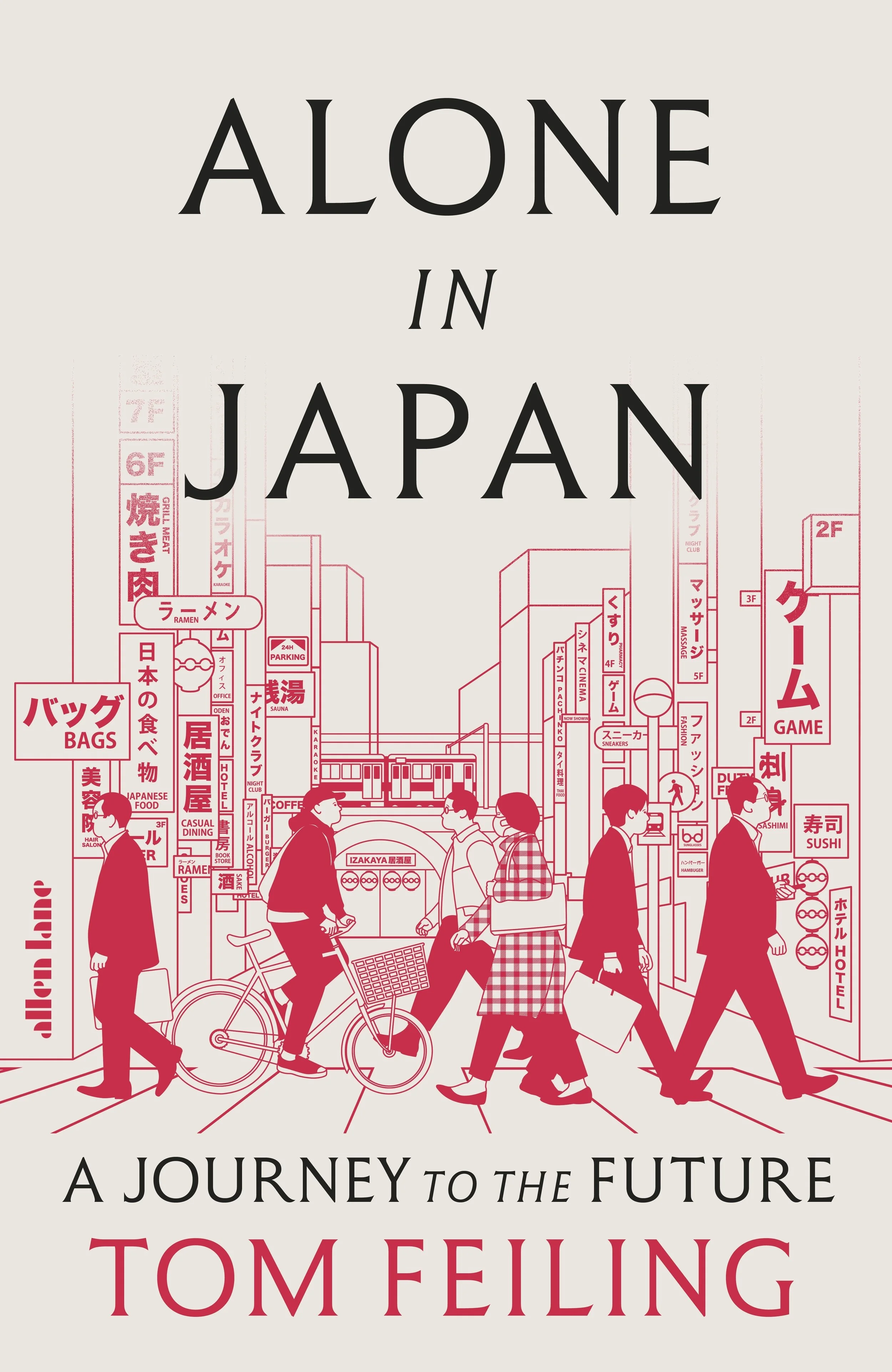
Alone in Japan: A journey to the future by Tom Feiling $65
When Tom Feiling moved to Tokyo as a student in the early nineties, Japan was a beacon of the future: a rising superpower, a technology giant, and a global symbol of prosperity, civility and success. When he returned twenty-four years later, the country was still a sign of things to come - but, he began to realize, it was no longer a beacon. It was a warning. This book offers a unique portrait of life in contemporary Japan, from the quiet of its furthest flung villages to the dynamism of its megacities. It tells the story of how, from the mid-seventies onwards, Japanese society unknowingly embarked on a vast, silent process of transformation that is still unfolding today. The country is still peaceful; it is still prosperous. But the population is shrinking. As things stand, it will fall by a third with each new generation. Travelling through shrines and bars, rice fields and mango farms, coffee shops and old peoples' homes, Feiling meets those affected by, and driving, this transformation. Through countless interviews and extensive research, he weaves together a powerful account of how and why men and women are ceasing to pair off and have kids. He reveals how sexual appetites and behaviours are both shaped by, and reshaping the evolving economy, and considers the risks — and the opportunities — of the rise in solo living in Japan, and beyond. Clear-sighted and surprising, Alone in Japan is a portrait of love, sex and death in contemporary Japan that should provoke and engage us all. [Hardback]
>>Days without seeing any children.
>>The story of the book in 21 photos.
The Roof Beneath Their Feet by Geetanjali Shree (translated from Hindi by Rahul Soni) $35
In this Indian modern classic, roofs are a special place; they are meant for wild things, for romance and for play. They are realms of freedom freedom from the male gaze, sexual freedom, and freedom from society. Chachcho and Lalna use their roofs to build a friendship that transcends time and memory. Suddenly one day, Lalna has to leave, to return only after Chachcho's passing. Amidst rumors and gossip in the neighborhood, Chachcho's nephew tries to piece together his memories of the two women, one of whom is his mother. The truth he is searching for could destroy him forever, but to not find out is no longer an option. Now finally published outside of India, this consummate novel of twists and turns by the International Booker Prize-winning author of Tomb of Sand. [Paperback with French flaps]
”What does mourning look like? What is the nature of grief? These are some of the questions that Geetanjali Shree explores. In The Roof Beneath Their Feet, grief takes different forms. It spreads everywhere. Memory becomes grief. This is a lucid meditation on desire, grief and belonging. Geetanjali Shree's prose is animated — the walls and doors have a special role to play. They hold people's secrets. They have seen and heard things. They have eyes and ears, but none of the biases of people.” —Hindustan Times
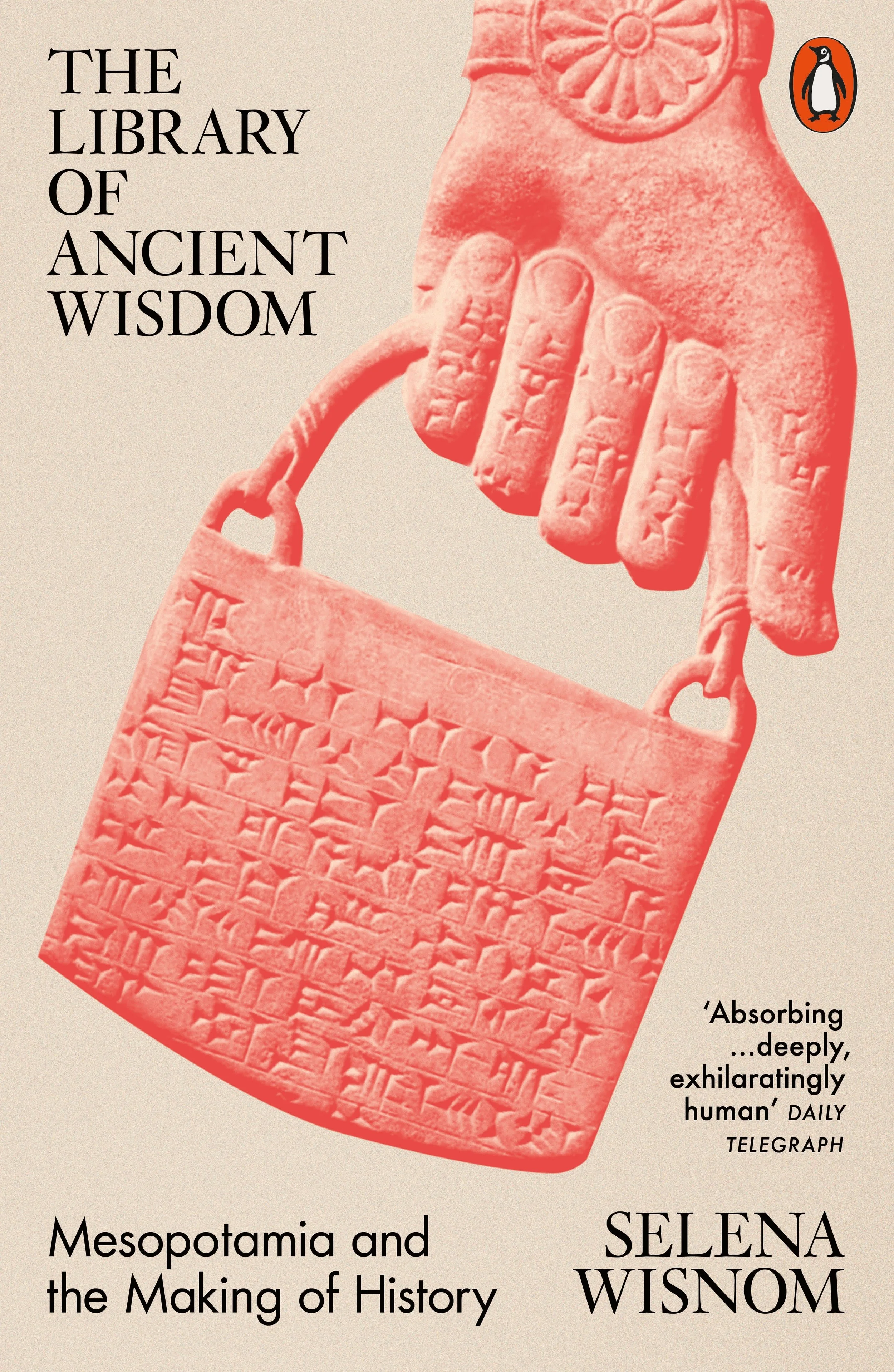
The Library of Ancient Wisdom: Mesopotamia and he making of history by Selena Wisnom $35
When a team of Victorian archaeologists dug into a grassy hill in Iraq, they chanced upon one of the oldest and greatest stores of knowledge ever seen — the library of the Assyrian king Ashurbanipal, seventh century BCE ruler of a huge swathe of the ancient Middle East known as Mesopotamia. After his death, vengeful rivals burned Ashurbanipal's library to the ground — yet the texts, carved on clay tablets, were baked and preserved by the heat. Buried for millennia, the tablets were written in cuneiform — the first written language in the world. More than half of human history is written in cuneiform, but only a few hundred people on earth can read it. In this captivating new book, Assyriologist Selena Wisnom takes us on an immersive tour of this extraordinary library, bringing ancient Mesopotamia and its people to life. Through it, we encounter a world of astonishing richness, complexity and sophistication. Mesopotamia, she shows, was home to advanced mathematics, astronomy and banking, law and literature. This was a culture absorbed and developed by the ancient Greeks, and whose myths were precursors to Bible stories — in short, a culture without which our lives today would be unrecognisable. The Library of Ancient Wisdom unearths a civilisation at once strange and strangely familiar — a land of capricious gods, exorcisms and professional lamenters, whose citizens wrote of jealous rivalries, profound friendships and petty grievances. Through these pages we come face to face with humanity's first civilisation — their startling achievements, their daily life, and their struggle to understand our place in the universe. [Now in paperback]
”Fascinating and rich in detail, this book provides an excellent survey of Mesopotamian literary classics, including the Epic of Gilgamesh, and the ways in which they influenced later cultures and texts, such as the Iliad and the Odyssey. Wisnom also offers snippets of daily life, including an account of Ashurbanipal's father, Esarhaddon, getting into a panic because a mongoose had run under his chariot (was it a fatal omen?) and the actual agenda of a meeting.” —Bijan Omrani, Literary Review
”In this remarkable book, Wisnom takes her readers on a spell-binding tour through one of antiquity's great monuments to knowledge: the Library at Nineveh. As she surveys the clay tablets that were buried in a blaze millennia ago, a lost world of learning and literature comes back to life.” —Sophus Helle, author of Gilgamesh: A New Translation of the Ancient Epic
Hyperpolitics: Extreme politicisation without political consequences by Anton Jäger $30
What happens when politics is everywhere, yet nothing seems to change? From the abandoned dance floors of Thatcher's London to the mass mobilizations of Black Lives Matter, Anton Jäger traces how public life has become infused with protest, spectacle, and moral urgency — while the old infrastructure of parties, unions, and civic solidarity has been hollowed out. Hyperpolitics revisits the illusions of the ‘end of history’ and dissects the strange energies that replaced them: viral outrage, endless culture wars, and the digital rush of causes that flare and vanish overnight. Jäger shows how the promises of post-Cold War liberalism gave way to a restless, unsteady public sphere where private passions overflow into politics but rarely build enduring power. Ranging from Guy Debord and Wolfgang Tillmans to Houellebecq's disenchanted fictions, Hyperpolitics makes sense of a world in which collective action remains fragmented and the social fabric thinner than ever. For anyone trying to grasp why our age feels so charged yet so inconsequential, this book offers a vital map through the new contradictions of our hyperpolitical moment. [Paperback with French flaps]