NEW RELEASES (25.3.26)
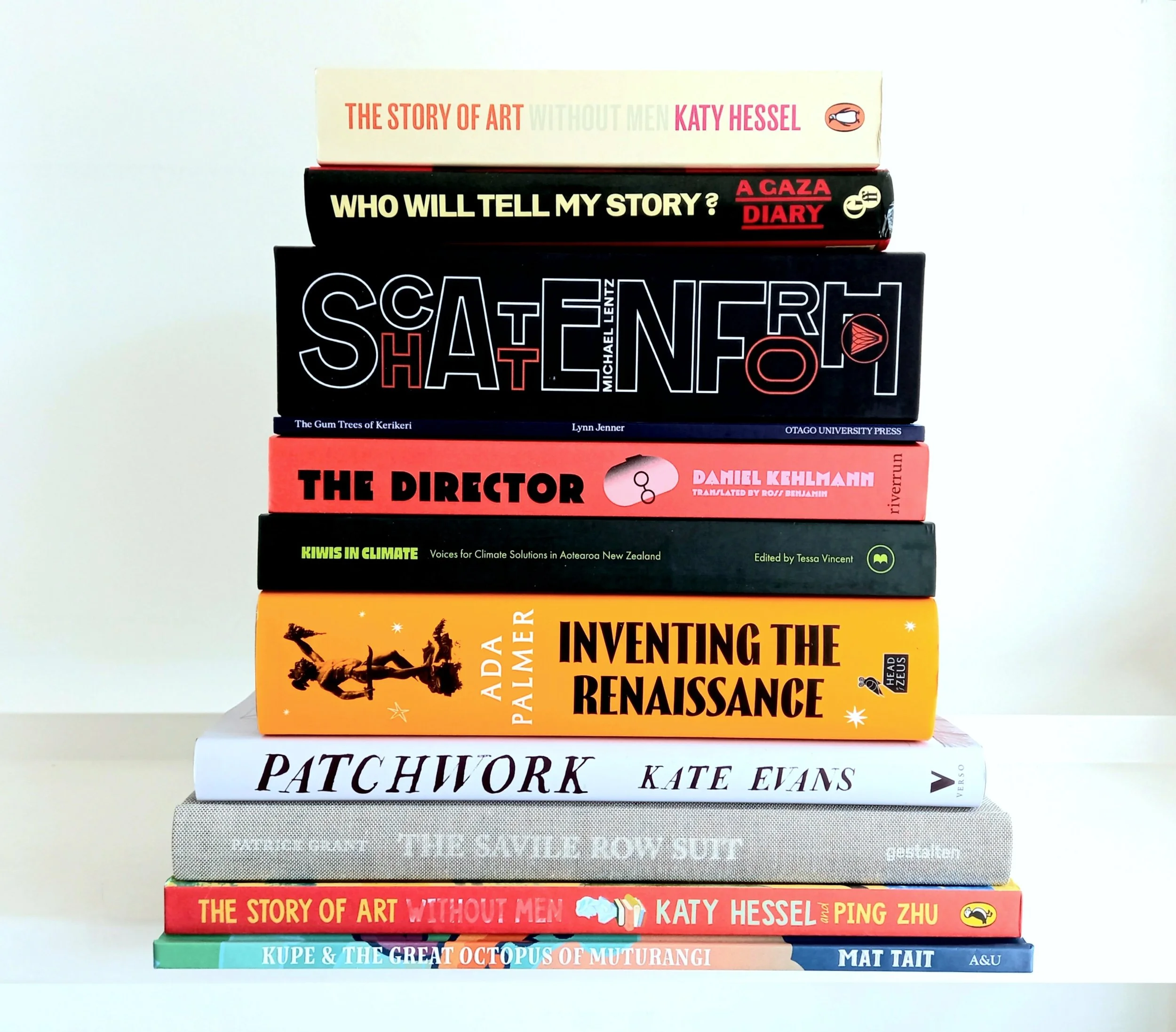
All your choices are good! Click through to our website (or just email us) to secure your copies. We will dispatch your books by overnight courier or have them ready to collect from our door in Church Street, Whakatū.
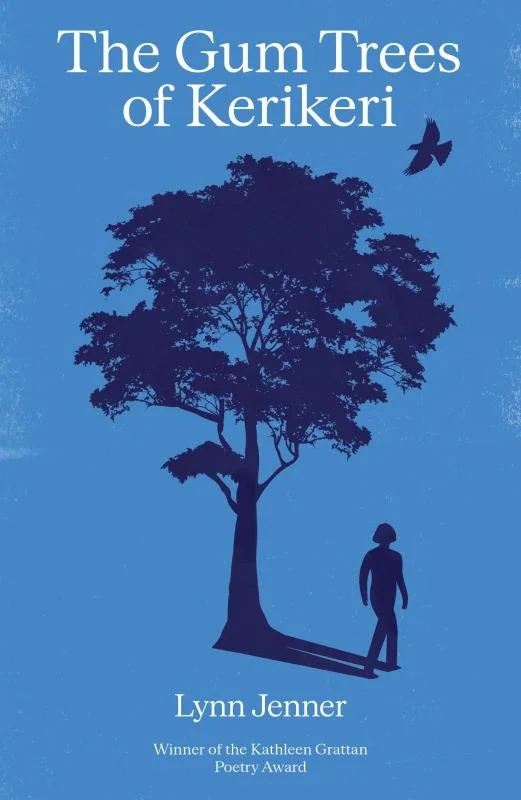
The Gum Trees of Kerikeri by Lynn Jenner $30
Grounded in the natural world and the community of the land the speaker lives on — an area in the far north of Aotearoa New Zealand that was once a kauri forest — this collection of prose poems weaves observations and encounters from daily life with musings on societal and environmental issues, memory, history, art and culture. The result is a deeply observant, reflective collection on that most challenging of constants: change. From the opening poem, Jenner traces how this land has been transformed since the late nineteenth century. Where kauri forest once stood there have been gumfields, orchards, dairy farms, lavender rows and now tourist accommodation. Humans and landscapes alike continue to be altered over time, but Jenner asks that we not forget the past. Across 56 finely tuned prose poems, Jenner’s technical restraint and precision allow her explorations to unfold with calm, measured power. She draws connections between people, place and creative practice, examining how time, art and memory shape our sense of belonging. The Gum Trees of Kerikeri is a thoughtful, sensitively balanced work that shows how close observation can uncover new understandings of the world and our own circumstances — even as the speaker sometimes doubts that any of it is useful in a world speeding towards catastrophe. Winner of the 2025 Kathleen Grattan Poetry Award. [Paperback]
”Jenner’s sensitive engagement with the world reminds us that poetry can be found in the smallest moments of our day-to-day lives and how such moments become intertwined with a much larger tapestry of human experience. —Chris Tse
>>On the up.
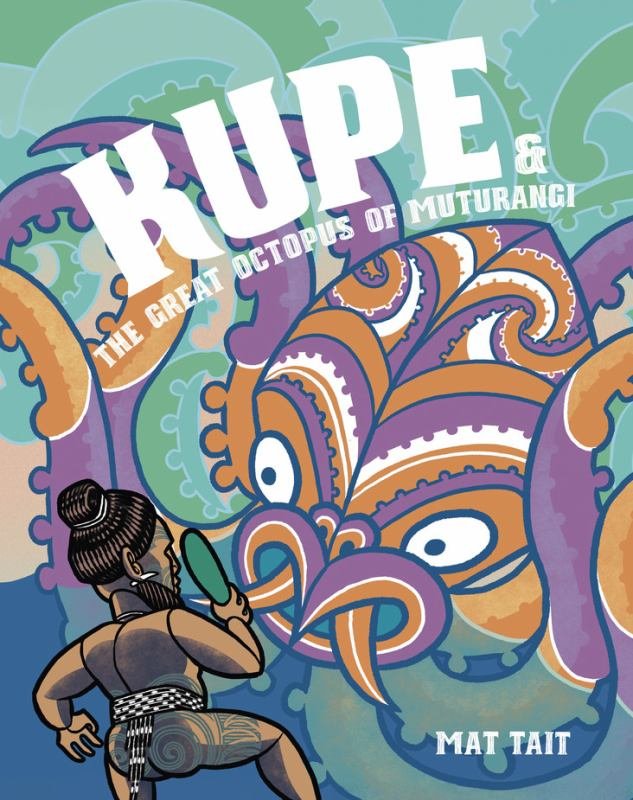
Kupe and the Great Octopus of Muturangi by Mat Tait $30
Kupe found that a huge, fearsome wheke was taking all the fish in the ocean and the people of Hawaiki had nothing to eat. So Kupe chased that wheke across Te Moana-nui-a-Kiwa. Finally Hine-te-Aparangi, Kupe's wife, saw land and a long white cloud: Aotearoa! Find out what happened when the wheke and Kupe had a massive battle (and why you should cover your eyes when passing certain rocks). [Hardback]
>>Look inside!
>>Mat Tait’s Te Wehenga was named the 2023 Margaret Mahy Book of the Year.
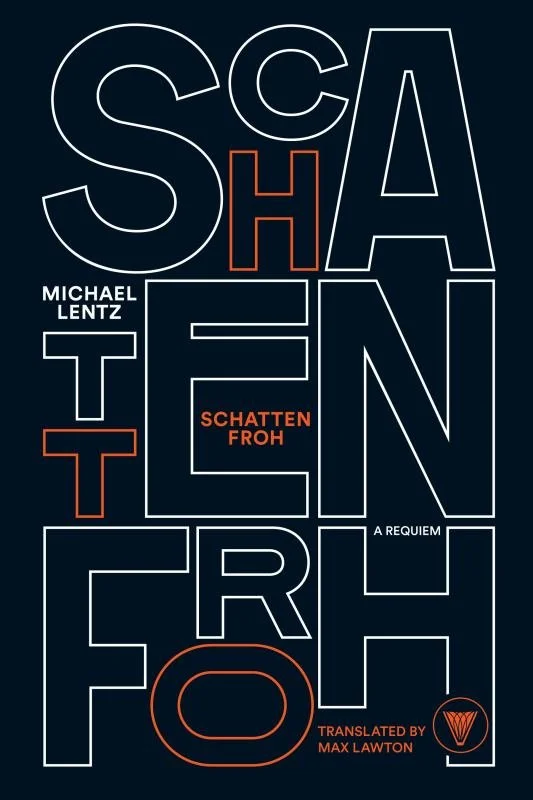
Schattenfroh by Michael Lentz (translated from German by Max Lawton) $58
A bizarre and troubling novel for our bizarre and troubling times — an intricate, metaphysical, ambitious, thousand-page ‘psychogeography of the self’ that both disrupts and elevates the 21st century vision of the novel. Our narrator is held in complete darkness and isolation. His endless thoughts are turned into the book we are reading — Schattenfroh — directed by none other than the narrator's mysterious jailer by the same name. Undulating through explorations of Renaissance art, the German reformation, time-defying esoterica, the printing process in the 16th century, Kabbalistic mysticism, and beyond, Schattenfroh is a remarkable book that, in turn, asks the remarkable of its readers. Interruptions, breaks, and annotations both buoy and deceive, and endless historical references, literary allusions, and wordplay construct a baroque, encyclopedic quest. [Paperback]
"One of the great, and greatly demanding, literary pleasures of the year." —The New York Times
"Schattenfroh is extremely long and prodigiously learned, with scenes — and even sentences — that veer from one century to another, and with a taste for literary and art historical in-jokes that might try the patience of even the most erudite reader. All the more impressive, then, is Max Lawton's translation, which renders Lentz's flinty though extravagant German into English sentences that are clear, nimble, and frankly full of beans, capturing the propulsive energy of the original text without sacrificing its difficulty." —New York Review of Books
"Michael Lentz's Schattenfroh attempts to tell the history of the annihilated world. Yet Lentz constantly prods his reader to ask who the author of that history is, and what they might be leaving out, despite their claims to completeness." —Cleveland Review of Books
"What does Schattenfroh do? Intrigue, frustrate, hypnotise, even — yes — entertain, after a certain point. What novels are supposed to do, in other words — which, we begin to realise, is not actually to create Presence but to carve around it." —Los Angeles Review of Books
"The best stuff in the book — the nightmare visionary parts whose eeriness is enhanced by the hypnotic state the book has put you in — are a kind of unconscious registration of the very scenario in which we find ourselves: the encroachment of ever more unforgivingly capitalist forms of cultural streamlining, of AI that purports to write and compose and make movies." —The Baffler
>>A fable about totalitarianism written in brain-fluid.
>>Devil and invention.
>>The genesis of Schattenfroh.
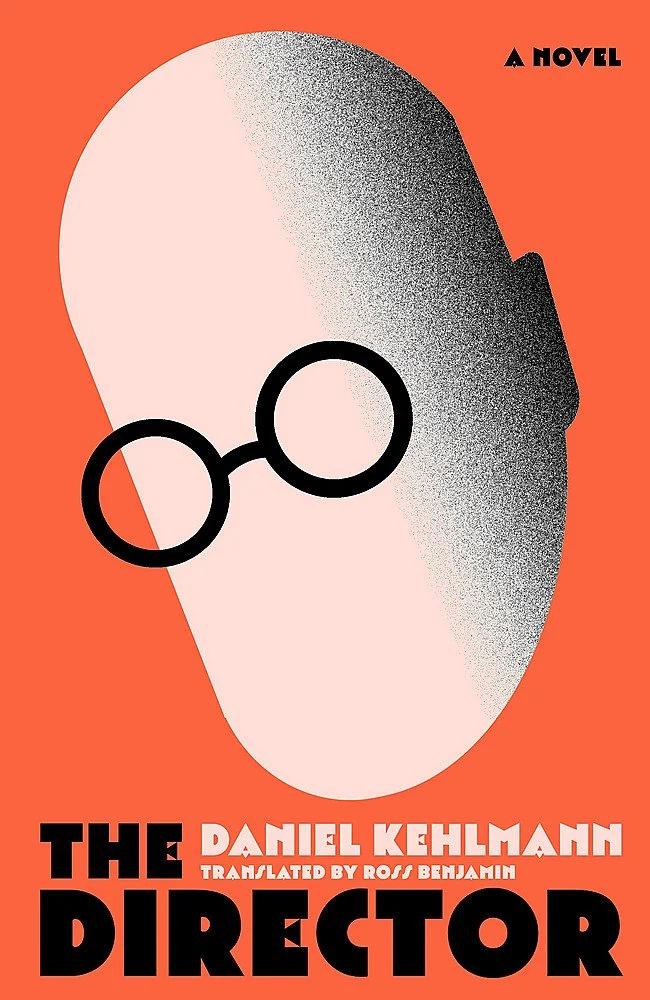
The Director by Daniel Kehlmann (translated from German by Ross Benjamin) $38
G.W. Pabst, one of cinema's greatest, perhaps the greatest director of his era: when the Nazis seized power he was filming in France, to escape the horrors of the new Germany he flees to Hollywood. But under the blinding California sun, the world-famous director suddenly looks like a nobody. Not even Greta Garbo, who he made famous, can help him. And thus, almost through no fault of his own, he finds himself back in his homeland of Austria, which is now called Ostmark. The returning family is confronted with the barbaric nature of the regime. But Goebbels, the minister of propaganda in Berlin, wants the film genius, he won't take no for an answer and makes big promises. While Pabst still believes that he will be able to resist these advances, that he will not submit to any dictatorship other than art, he has already taken the first steps into a hopeless entanglement. [Paperback]
”In The Director, Daniel Kehlmann performs a literary panning shot over the career of real-life filmmaker G. W. Pabst and charts the ways in which Nazi ideology leaked into the arts during Europe’s occupation. Where is the line between survival and collaboration? And can art survive the moral bankruptcy of its makers? It’s hard to imagine any writer tackling such hefty themes with lightness, yet Kehlmann does just this, writing compassionately, humorously and unsparingly from the perspectives of his complex characters, guiding the reader through the moral maze. Translator Ross Benjamin writes each shifting voice and set-up with the nuance they demand in a juggling act of wit and gravity that shouldn’t look this easy. Deeply intelligent, ambitiously structured and unputdownable.” —International Booker Prize judges’ citation
”A wonderful book about complicity and the complicity of art. It's also funny, and brilliant.” —Zadie Smith
”Daniel Kehlmann is shockingly brilliant, a writer of extraordinary range and grace. At times absurdist, at times horrifyingly realist, The Director asks where the moral duty of the artist resides, and how the narcissism of the artistic project can bleed into complicity.” —Lauren Groff
”The Director is engrossing and luminous, an epic act of historical imagination and an intimate parable about moral compromise and the seductions of art. After Tyll, I wasn't sure how Kehlmann could possibly top himself. He has. This book is a marvel” —Ayad Akhtar
”Daniel Kehlmann, the finest German writer of his generation, takes on the life of the eminent film director G. W. Pabst to weave a tragicomic historical fantasia that stretches from Hollywood to Nazi Germany, from Garbo to Goebbels, to show how even a great artist can make, and be unmade by, moral compromises with evil. A dazzling performance and a real page turner.” —Salman Rushdie
”An incomparably accomplished and inventive piece of fiction by one of the most intelligent novelists at work today.” —Jeffrey Eugenides
>>Read an extract.
>>The fate of the artist under totalitarianism.
>>Complicity.
>>Opening the door.
>>Some films of G.W. Pabst.
>>Other books long-listed for the 2026 International Booker Prize.
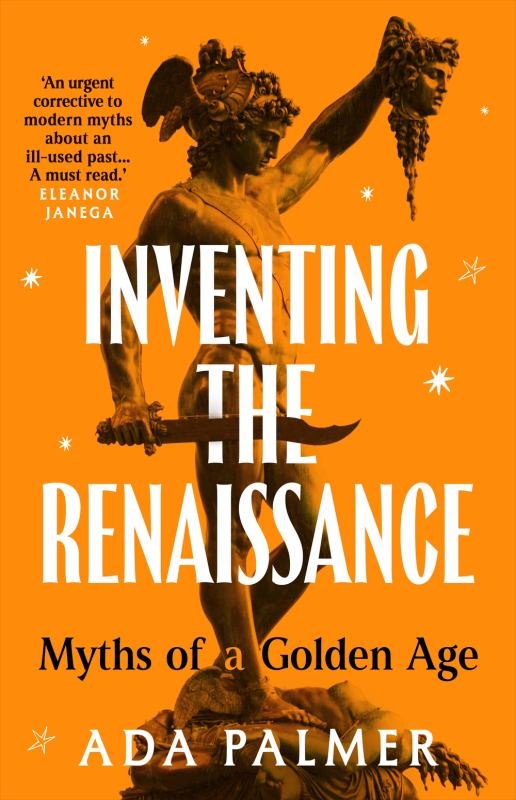
Inventing the Renaissance: Myths of a Golden Age by Ada Palmer $70
The Renaissance is one of the most studied and celebrated eras of history. Spanning the end of the Middle Ages to the beginning of modernity, it has come to symbolise the transformative rebirth of knowledge, art, culture and political thought in Europe. And for the last two hundred years, historians have struggled to describe what makes this famous golden age unique. In Inventing the Renaissance, Ada Palmer provides a fresh perspective on what makes this epoch so captivating. Her witty and irreverent journey through the fantasies historians have constructed about the period show how its legend derives more from later centuries' mythmaking than from the often grim reality of the period itself. She examines its defining figures and movements: the enduring legacy of Niccolò Machiavelli, the rediscovery of the classics, the rise of the Medici and fall of the Borgias, the astonishing artistic achievements of Michelangelo, Leonardo, and Cellini, the impact of the Inquisition and the expansion of secular Humanism. Palmer also explores the ties between culture and money: books, for example, could cost as much as grand houses, so the period's innovative thinkers could only thrive with the help of the super-rich. She offers fifteen provocative and entertaining character portraits of Renaissance men and women, some famous, some obscure, whose intersecting lives show how the real Renaissance was more unexpected, more international and, above all, more desperate than its golden reputation suggests. [Hardback]
”Inventing the Renaissance does something magical: it manages to take a tightly-held conviction (that there was a thing in European history called 'the Renaissance'), dismantle it with humor and intelligence, then put it back together as something different and more true to the past itself. But maybe more importantly, Palmer's expertise and storytelling helps us better understand how golden ages are imagined, and why rejecting those invented constructions of the past provides us with hope as we confront our own contemporary world. As she says herself: 'we can do better than the Renaissance.” —Matthew Gabriele
”An urgent corrective to modern myths about an ill-used past. Palmer has written a vital, absorbing and incredibly entertaining history of the so-called Renaissance. Challenging conventional wisdom, Inventing the Renaissance delves deep into the historical circumstances that have given rise to one of the most pervasive and frustrating narratives of the early modern period. It is a must read for all history enthusiasts.” —Eleanor Janega
>>Where did the idea of the Renaissance come from?
>>Golden and Dark Ages.
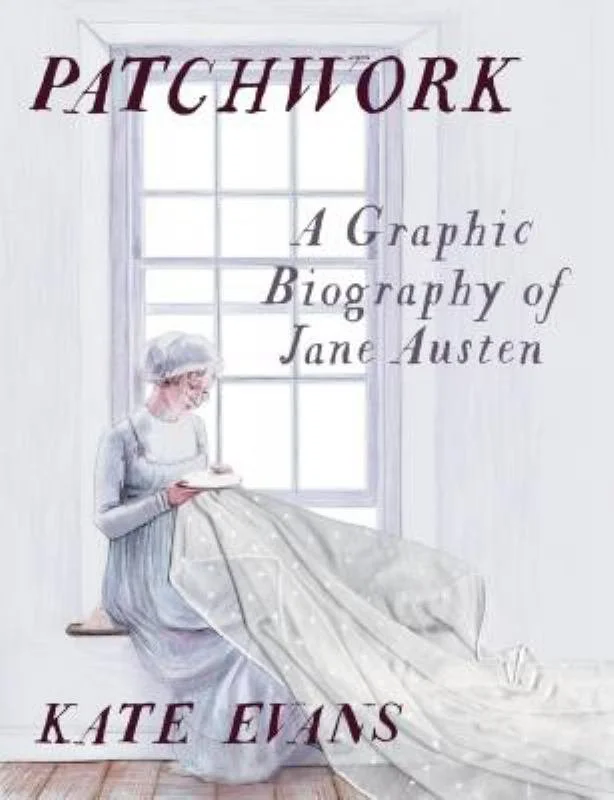
Patchwork: A graphic biography of Jane Austen by Kate Evans $37
In her later years, Jane Austen made a patch-work quilt. She folded thousands of tiny scraps of fabric over diamond-shaped slips of paper and painstakingly stitched them together. Kate Evans employs these slivers of cloth to illustrate Jane Austen's life story. Evans teases apart the threads that connect Austen's beloved novels, the events of her life, and the fabric of society in Regency England. Kate Evans has an ability to marry drama, comedy, and historically immersive detail, bringing Austen's story to life with fluid, dynamic artwork, at times embroidered onto cloth itself. The author's love for Austen shines throughout. Her eye for historical detail — panes of glass, bits of lace, hedgelaying styles, the cut of a coat or the architecture of a Hampshire cottage — creates a captivating vision of Jane Austen's world. Evans is always cognisant, as well, of the political, economic and social contexts which defined Austen’s place in the world. [Hardback]
>>Look inside!
>>The threads of empire.
>>What you didn’t know about Jane Austen.
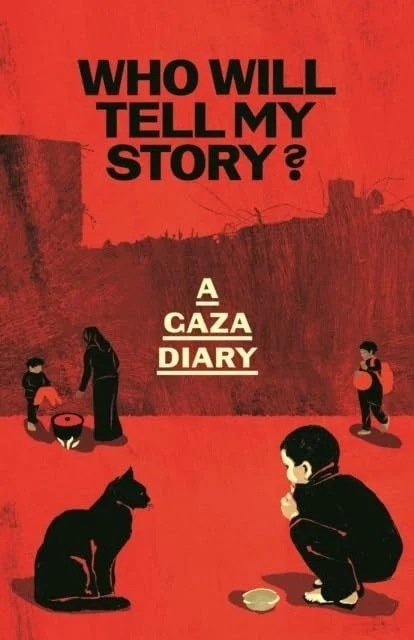
Who Will Tell My Story? A Gaza diary [Anonymous] $30
”It was a sleepless night full of tears and fear . . . I am not sure — if I make it out alive — if I will still possess what makes me, me. And I wonder: will I be there in the future, or will I be someone to be remembered in a diary or over a cup of tea by a friend after I am gone?” This diary presents an ordinary existence interrupted by unfathomably seismic and unjust events. On the ground during the first months of the assault on Gaza following the events of 7 October, the author of this diary — first published in The Guardian — maps out the physical and psychological terrain of a life under siege. Traversing the bombed ruins of his country, we see him as he searches for foodstuffs and power to charge devices, maintaining contact with the outside world, checking in with his friends and family along the way; we see his heart swing between despair and faith, fear and optimism, his mind imagining different futures and confronting the brutal truth of his present.Shining a light on the fate of all those living through war and occupation, Who Will Tell My Story? conveys with astonishing clarity how seeds of hope might linger amid the most trying of times. The author is a Palestinian man in his thirties. He lived in Gaza with his family and contributed a diary to The Guardian newspaper following the attacks on Gaza after the events of October 7th, 2023. After some time, he was able to flee the country; he hopes to return to his home. [Hardback]
>>The entries, as we read them.
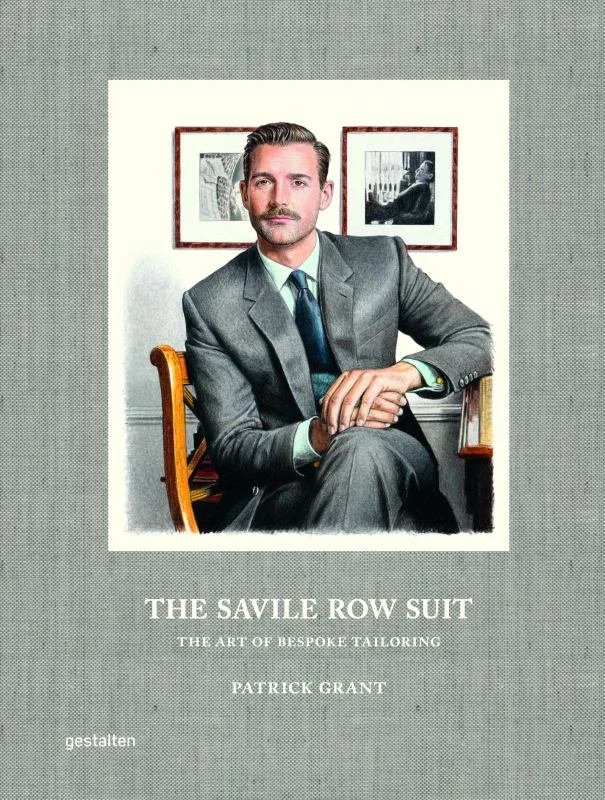
The Savile Row Suit: The art of bespoke tailoring by Patrick Grant, illustrated by Oriana Fenwick $70 (special price)
Very useful and clear, this book provides a step-by-step guide on the creation of the perfect suit. Through detailed illustrations and comprehensive text, readers will gain an understanding of the tailoring process, from measuring to fit and fabric selection. From suits to trousers and waistcoats, this contemporary instructional manual is the guide to creating a timeless classic and how to wear it. In addition to being a practical guide, The Savile Row Suit also offers a history on the tradition of Savile Row tailoring, providing insights into the ethos, the craftsmanship, materials and culture that have made Savile Row the most respected tailoring location in the world. [Hardback]
>>Look inside!
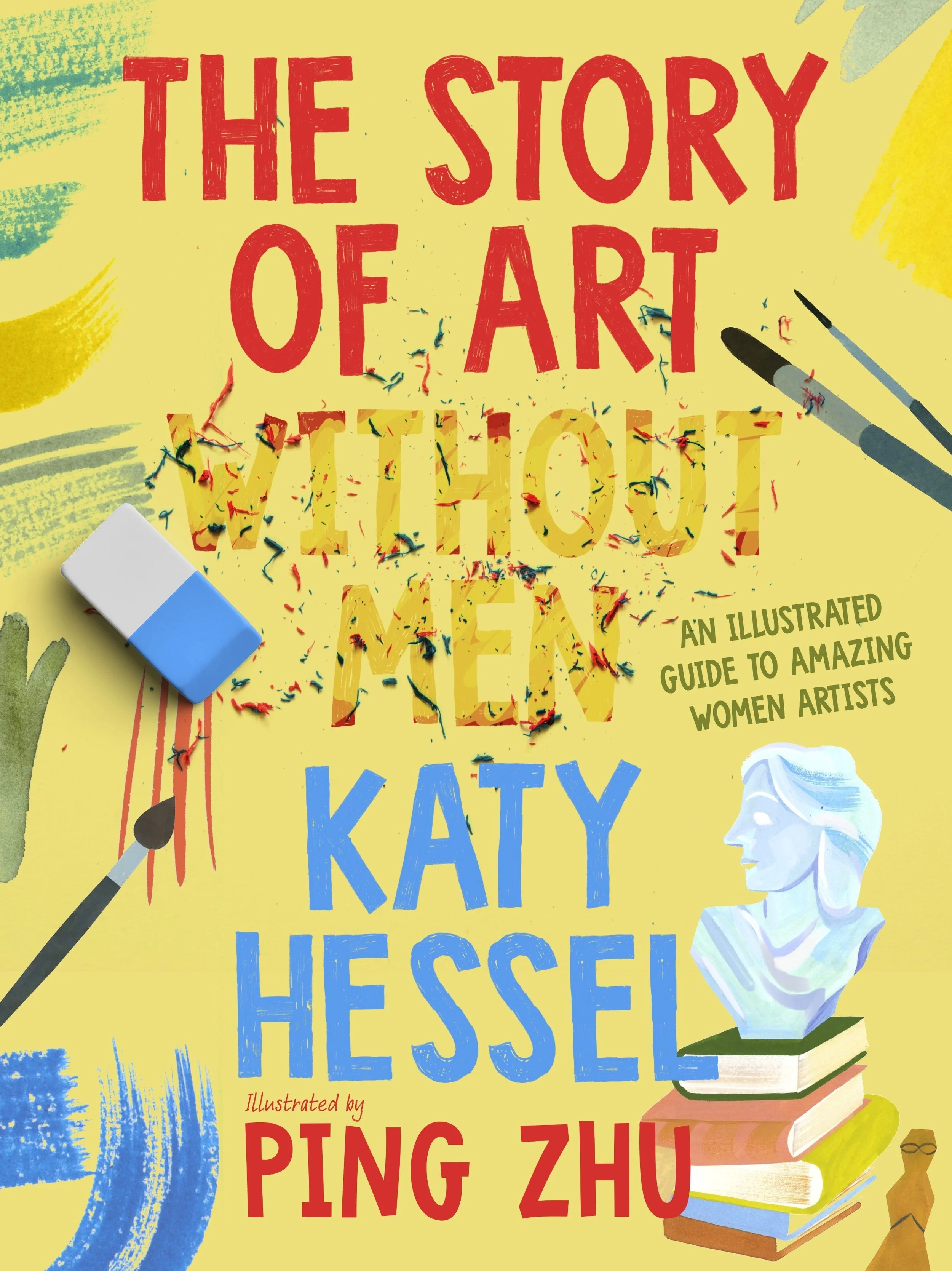
The Story of Art Without Men: An illustrated guide to amazing women artists by Katy Hessell, illustrated by Ping Zhu $50
Step into the incredible lives of the women artists who have gone uncelebrated for too long, in this lively version for children of Hessell’s landmark book. Journey through history, from the Renaissance to the Second World War, and across the globe, from Cornwall to Manhattan, Nigeria, Japan and more, to discover the stories of women who changed the world with their incredible art. You'll learn about the extraordinary lives of freedom fighters, game changers and adventurers - and be astounded by the art they made, with its striking landscapes, hidden messages and calls for women's rights. Based on the bestselling book The Story of Art Without Men, this version includes breathtaking illustrations and a host of new art and artists to discover. [Large-format hardback]
>>Look inside!
The Story of Art Without Men by Katy Hessell $35
How many women artists do you know? Who makes art history? Did women even work as artists before the twentieth century? And what is the Baroque anyway? Discover the glittering Sofonisba Anguissola of the Renaissance, the radical work of Harriet Powers in the nineteenth-century USA and the artist who really invented the Readymade. Explore the Dutch Golden Age, the astonishing work of post-War artists in Latin America and the women artists defining art in the 2020s. Have your sense of art history overturned, and your eyes opened to many art forms often overlooked or dismissed. From the Cornish coast to Manhattan, Nigeria to Japan, this is the history of art as it's never been told before. Fully illustrated. [Now in paperback]
”A long overdue, revisionist history of art by the brilliant Katy Hessel. Never stuffy or supercilious, Hessel's book is a revelation and an important first step towards redressing the balance of an art world in which women have been sidelined, stepped over and trampled upon for far too long.” —Refinery29
“This book changes everything.” —Ali Smith

Kiwis in Climate: Voices for claimate solutions in Aotearoa New Zealand edited by Tessa Vincent $45
Kiwis in Climate brings together practical visions for Aotearoa to lead on climate solutions. Scientists, politicians, CEOs and citizens demonstrate what we are doing now — and what we must do — to mitigate and adapt to the impacts of climate change. Over 30 New Zealanders explain how climate solutions can improve our lives, from cheaper energy to job creation and healthier communities. [Paperback]
>>A book for everyone.