
NEW RELEASES (20.5.26)
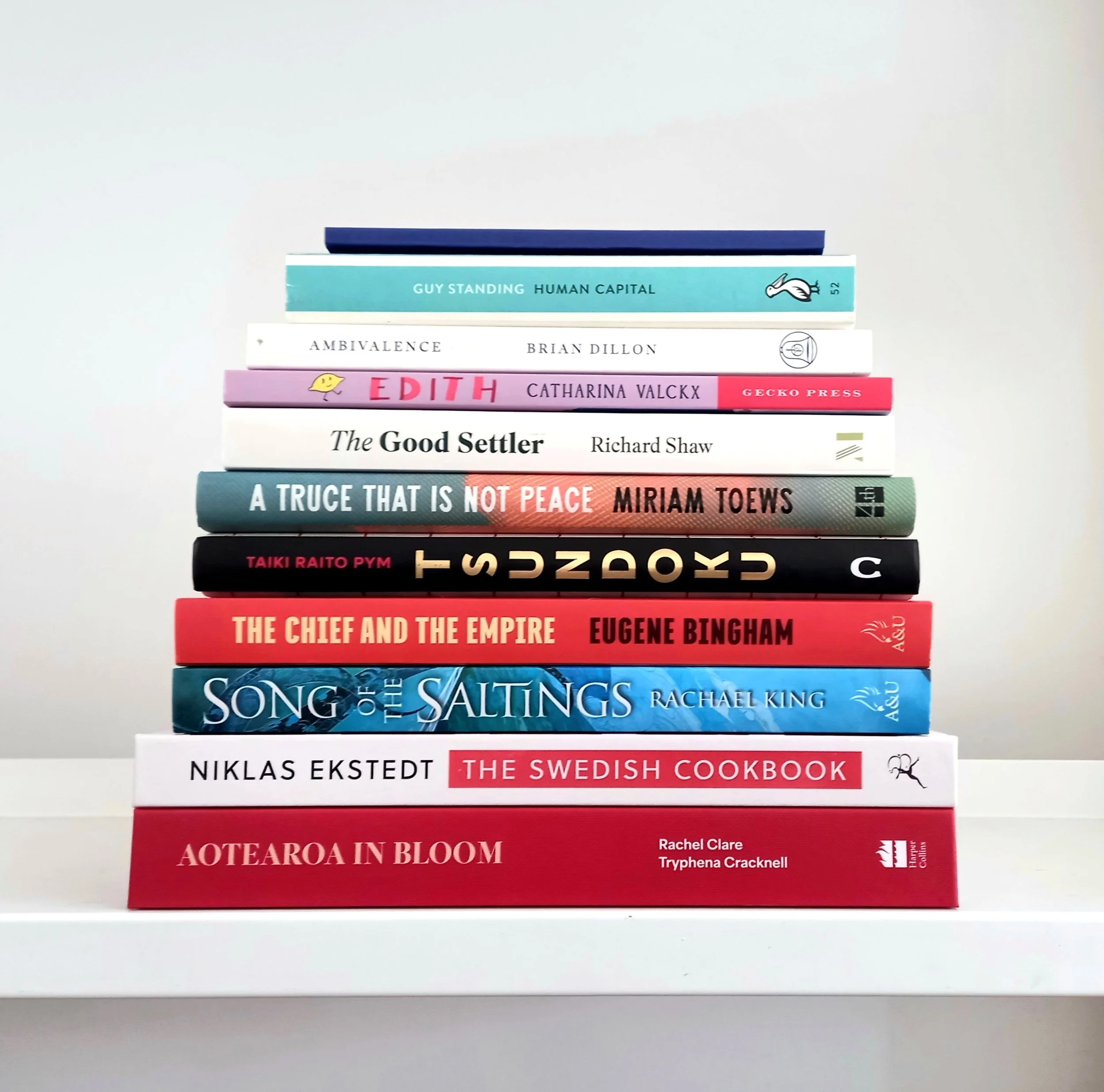
All your choices are good! Click through to our website (or just email us) to secure your copies. We will dispatch your books by overnight courier or have them ready to collect from our door in Church Street, Whakatū.
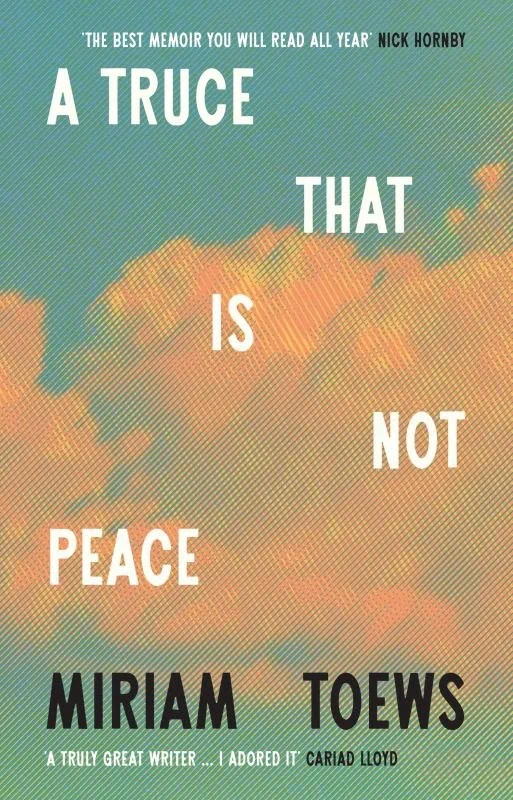
A Truce That Is Not Peace by Miriam Toews $45
‘Why do you write?’ the organiser of a literary event in Mexico City asks Miriam Toews. Each attempted answer from Toews — all of them unsatisfactory to the organiser — surfaces new layers of grief, guilt and futility connected to her sister’s suicide. She has been keeping up, she realises, a decades-old internal correspondence, filling a silence she barely understands. And we, her readers, come to see that the question is as impossible to answer as deciding whether to live life as a comedy or a tragedy. A Truce That Is Not Peace is the first time Toews has written about her own life in nonfiction. Inventive yet controlled; wrenching and joyful — Toews remakes her world and invents an astonishing new literary form to contain it. [Hardback]
”A layered confrontation with the deaths, grief, and guilt that have animated her work for nearly 30 years, providing haunting insights on how to live after tragic loss.” —The Atlantic
”A profoundly moving meditation on the frailty of memory and the permanence of loss. Nothing short of a masterpiece.” —San Francisco Chronicle
”An affirmation of life in all its richness and variety. This remarkable book will live forever.” —Celia Paul
>>Are writing and suicide related?
>>Loss, literature, and the unspoken.
>>Grief, guilt, and memory.
>>Why do you write?
>>How to stay alive.
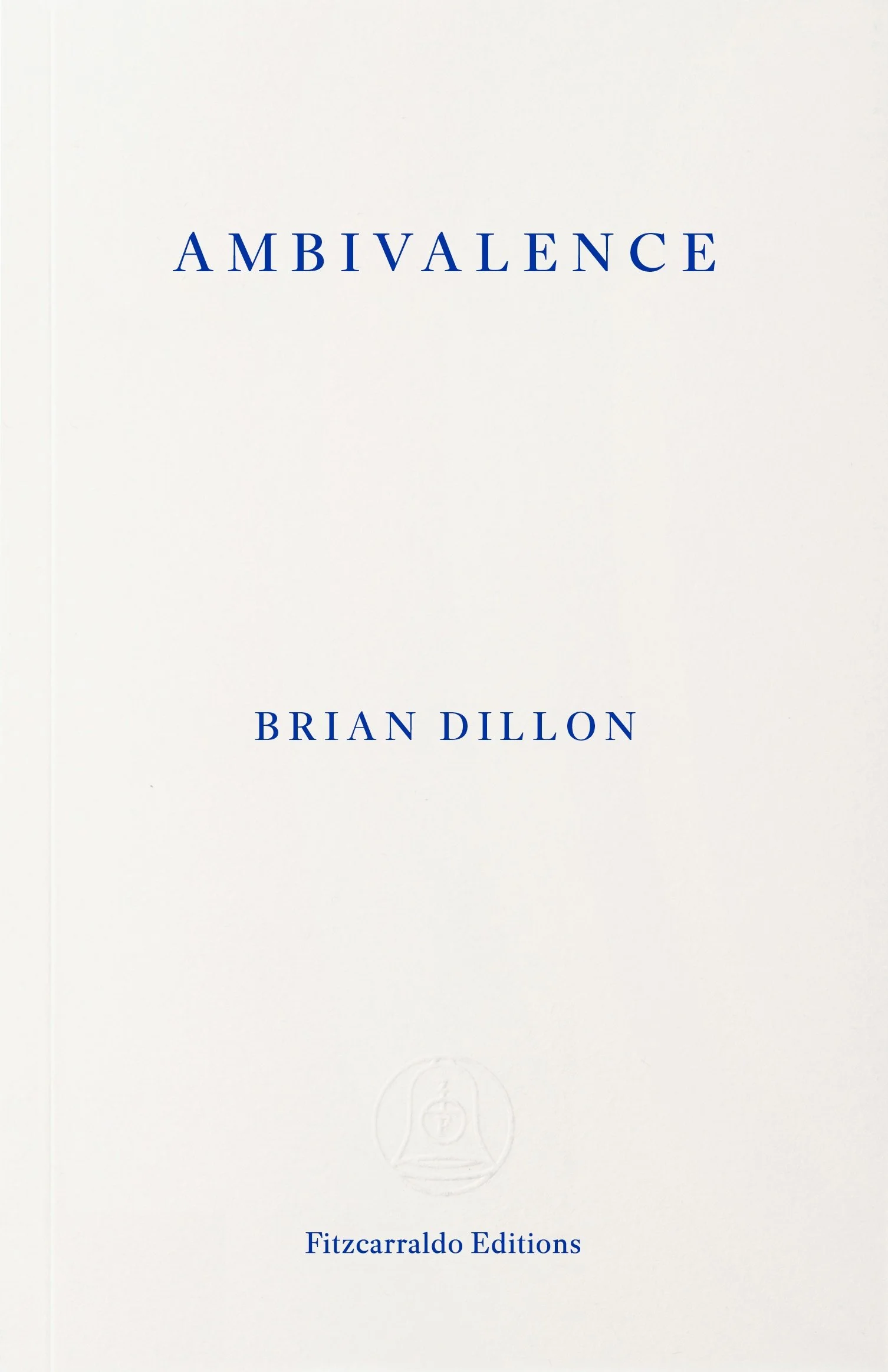
Ambivalence by Brian Dillon $42
When Brian Dillon was sixteen his mother died and he simply gave up all schoolwork. While he courted exam failure, his real education was going on elsewhere: with books, music, films and television. When at last he made it to university, his head was already full of avant-garde writing, art and ideas. Could academia live up to the hopes and dreams he had invested in it? Halfway through university his father died, and the stakes of reading and writing seemed even higher. Ambivalence explores what learning meant to its author, what it enabled and denied, between the ages of seventeen and twenty-six, when he left his native Dublin. It's at once a memoir of that city in the 1980s and 1990s, an uncynical portrait of the adolescent and early-adult mind, and an intimate defence of radical thinking about literature and life. In vivid present-tense fragments, Dillon describes his first encounters with writers such as Virginia Woolf, Walter Benjamin, Samuel Beckett, Roland Barthes and Jacques Derrida. He recalls being seduced by ambivalence, ambiguity and androgyny — on the page and in the life he hoped his reading would transfigure. The era he describes seemed to demand new ways of thinking about aesthetics and politics. Today, when rights are fragile, arts and humanities attacked, and students dismissed as radicals or narcissists, Ambivalence is an argument for the poetic and revolutionary force of changing yourself and even the world by changing what you know. [Paperback with French flaps]
”What, then, does Ambivalence amount to? Perhaps simply the assertion that uncertainty has its own value. This is persuasive when we acknowledge just how often, as politicians demonstrate for us daily, people lay claim to conviction that is unearned. At the start of the memoir, we meet B as a boy who, standing at a crossroads, ‘considers his limited options’. By the end, despite considerable personal tragedy, he has accessed an open-minded way of thinking through books that, in their complex variety, carry ‘the promise of promise itself’. This is a surprisingly hopeful book. The state of being uncertain carries with it a rich source of possibility.” —Sarah Moorhouse, Spectator
”Brian Dillon is one of the true treasures of contemporary literature — a critic and essayist of unmatched style, sensitivity and purpose.” —Mark O'Connell
”Brian Dillon is always invigoratingly brilliant. His sentences, his stylistic innovations, the range and potency of his intellectual adventures; he is a true master of the literary arts and a writer I would never hesitate to read, whatever his subject.” —Max Porter
”Brian Dillon's essays match discernment and critical thinking with a sense of pleasure in finding a work of art that speaks to him and lures him into contemplating its mystery and intricacy. His writing is exact and calm; rather than explain he explores, playing what is tentative against what is certain.” —Colm Toibin
>>Other books by Brian Dillon.
>>Remastered.
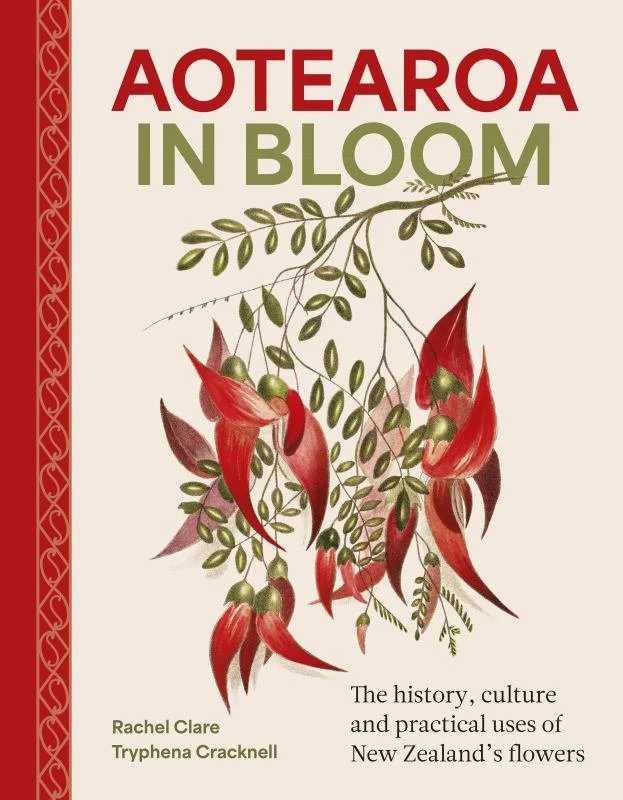
Aotearoa in Bloom: The hisotry, culture and practical uses of New Zealand’s flowers by Rachel Clare and Tryphena Cracknell $60
He puāwai, he kōrero. For every flower, a story. Did you know that Aotearoa has more than 2000 species of flowering plants, and that more than 80 per cent of them are found nowhere else on Earth? This book invites you on a botanical hīkoi through Aotearoa's flowers. Discover where they grow, when they bloom, the roles they play in their ecosystems, and which ones you can grow in your garden. From native mistletoes and around 120 orchid species to the fuzzy edelweiss, the iconic pōhutukawa and the precious ngutukākā, which is almost extinct in the wild, you will learn about their ornamental and practical uses and their significance in te ao Māori. Explore the stories behind their names and how these plants have taken root in our modern cultural identity. Combining photographs with historic botanical drawings, Aotearoa in Bloom weaves together stories of people and plants. Part social history, part gardening guide, this special book is a blossoming celebration of Aotearoa's unique natural heritage. [Hardback]
>>Look inside!
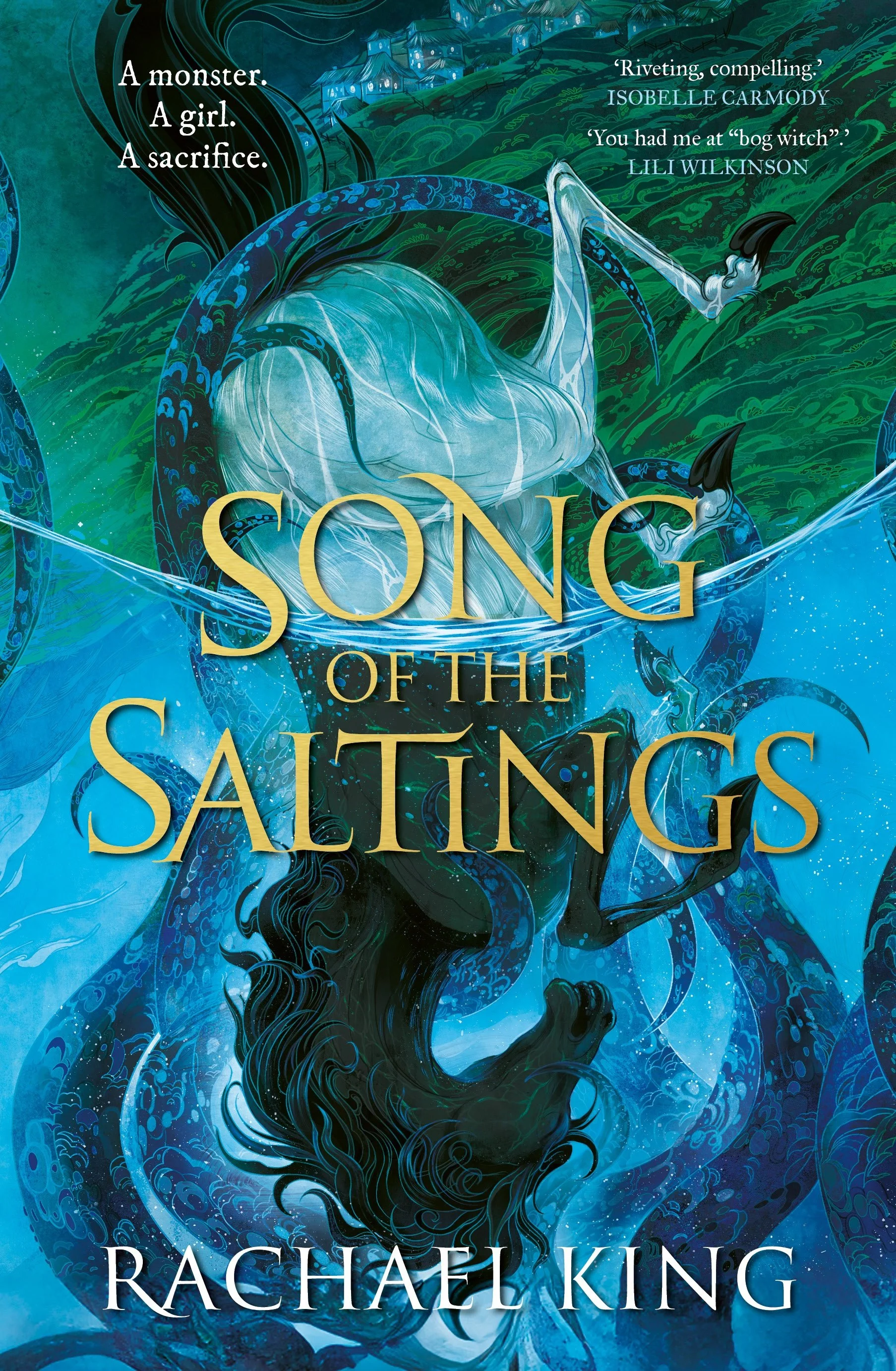
Song of the Saltings by Rachael King $28
On the isolated island of Brack, the people live by an ancient bargain: every year, a sacrifice must be made to the Glimm, the creature that haunts the salt marshes.Eight years after the monster spared her, 16-year-old Lotta tends the Council's sacrificial horses and keeps her distance from the villagers who whisper about her fate. But something is stirring. The island is dying. It hums beneath her feet, and a song threads through her dreams. Is the Glimm calling Lotta back? A chance encounter with Moss, a village outcast, will change both their lives, and the fate of the island, forever. To uncover Brack's deepest secrets, Lotta and Moss will need to trust each other and risk everything they hold dear.Because on Brack, monsters come in many forms. [Paperback]
”Utterly gripping, lyrical and haunting.” —Rachael Craw
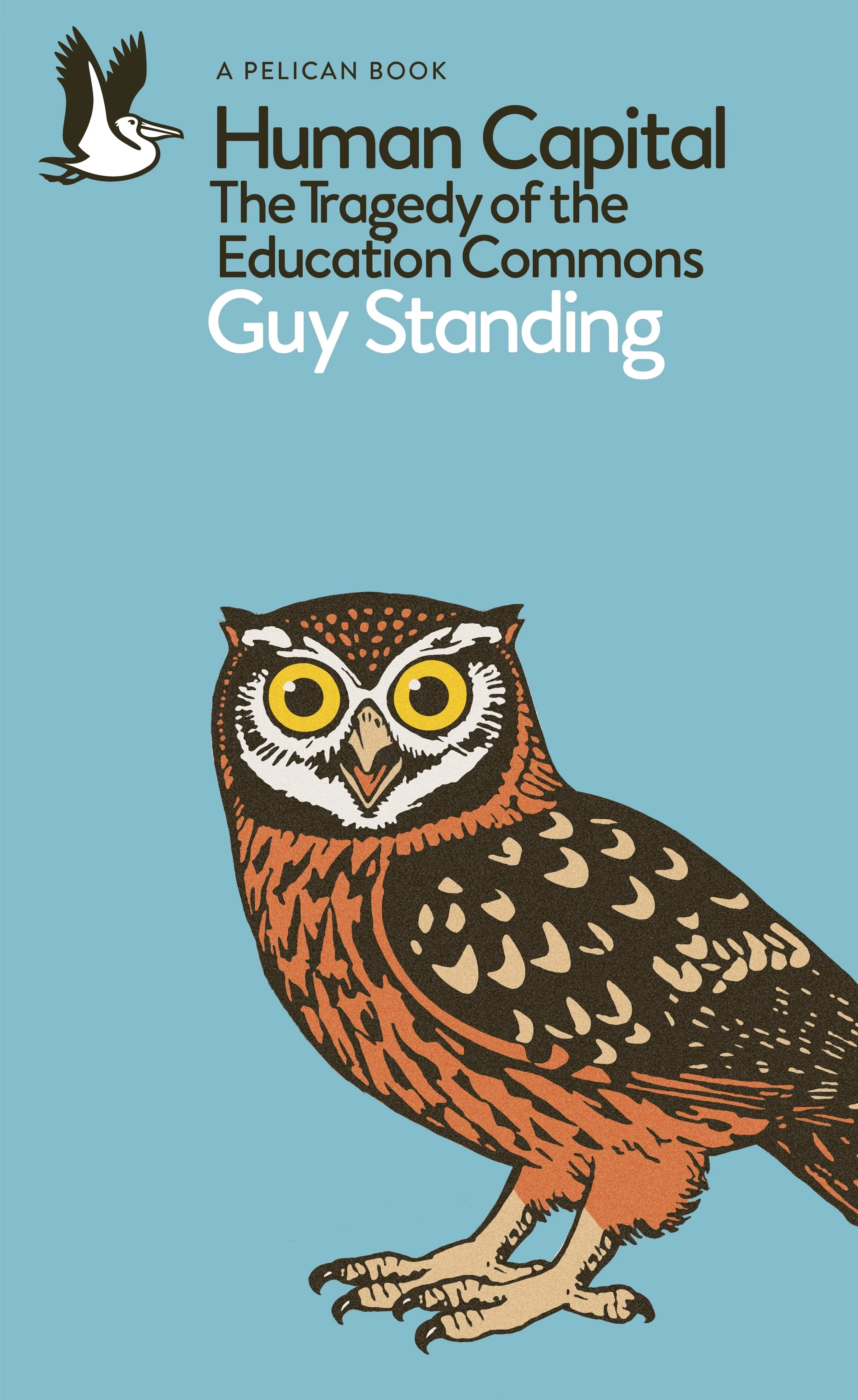
Human Capital: The tragedy of the education commons by Guy Standing $30
Does the education system make better people? Why are so many — teachers and students alike — stressed and dissatisfied? Do we need to revive real education? Ideally, education is about the pursuit of truth, beauty and morality. But in the last few decades, a perilous fixation with ‘human capital’ — skills, knowledge and aptitudes required for the labour market — has trampled over curricula, schools and universities. Rather than learning how to think critically about the world, from cradle to grave students are trained to be more effective workers, to make more money, and to serve an hegemonic ideology. Teachers and researchers are pressed to serve those goals. Standing shows us how education — intrinsically a common public good — has been enclosed, privatised, financialised and corrupted, turned into an instrument of societal control, not human emancipation, weakening democracy, not strengthening it. Human Capital charts how the education industry largely serves commercial interests, not its teachers and students, and considers how to revive its lost values, to save society for the common good. Very timely. [Paperback]
”Urgent and compelling, Human Capital is a rallying cry for a radically different kind of education system — one that puts imagination and empathy at its heart, and genuinely equips young people for the challenges ahead, instead of the current narrow joyless focus on 'schooling', where success is measured in money and status alone. A searing attack on the 'education industry', Standing's latest book should be required reading for every education minister.” —Caroline Lucas
Quantum Listening by Pauline Oliveros $28
What is the difference between hearing and listening? Does sound have consciousness? Can you imagine listening beyond the edge of your own imagination? In response to the anti-war movements of the 1960s, pioneering musician and composer Pauline Oliveros began to expand the way she made music, experimenting with meditation, movement and activism in her compositions. Fascinated by the role that sound and consciousness play in our daily lives, Oliveros developed a series of Sonic Meditations that would eventually lead to the creation of Deep Listening — a practice for healing and transformation open to all, rooted in her musicianship. Quantum Listening is a manifesto for listening as activism. Through simple yet profound exercises, Oliveros shows how Deep Listening is the foundation for a radically transformed social matrix: one in which compassion and peace form the basis for our actions in the world. First published at the turn of the millennium, this timely edition brings Oliveros's futuristic vision — blending technology and spirituality — together with a new Foreword and Introduction by Laurie Anderson and IONE. [Paperback]
"Pauline's Quantum Listening is a clearly worded manifesto advocating for the practice of Deep Listening - the practice of practice. Accessing both the focal and the global at once makes us Futurists too, both creators and recipients of the newness, the peace and the health we long for. A champion of the underserved and underrepresented, Pauline dares us to embrace change, the unfamiliar and even the unknown. She wants us to be bold enough to imagine a benevolent society that can embrace technology to create a sublime music." —IONE
"Quantum Listening is not really a Buddhist exercise. But like Buddhism, Deep Listening puts experience before everything else. It emphasises both detail and scope of, in Pauline's words, 'the sounds of daily life, of nature, or one's own thoughts'. 'We're not a nation of listeners,' she wrote. To say the least! Deep Listening is inside your head and empathetic. Both focal and global." —Laurie Anderson
>>The difference between hearing and listening.
>>Deep Listening.
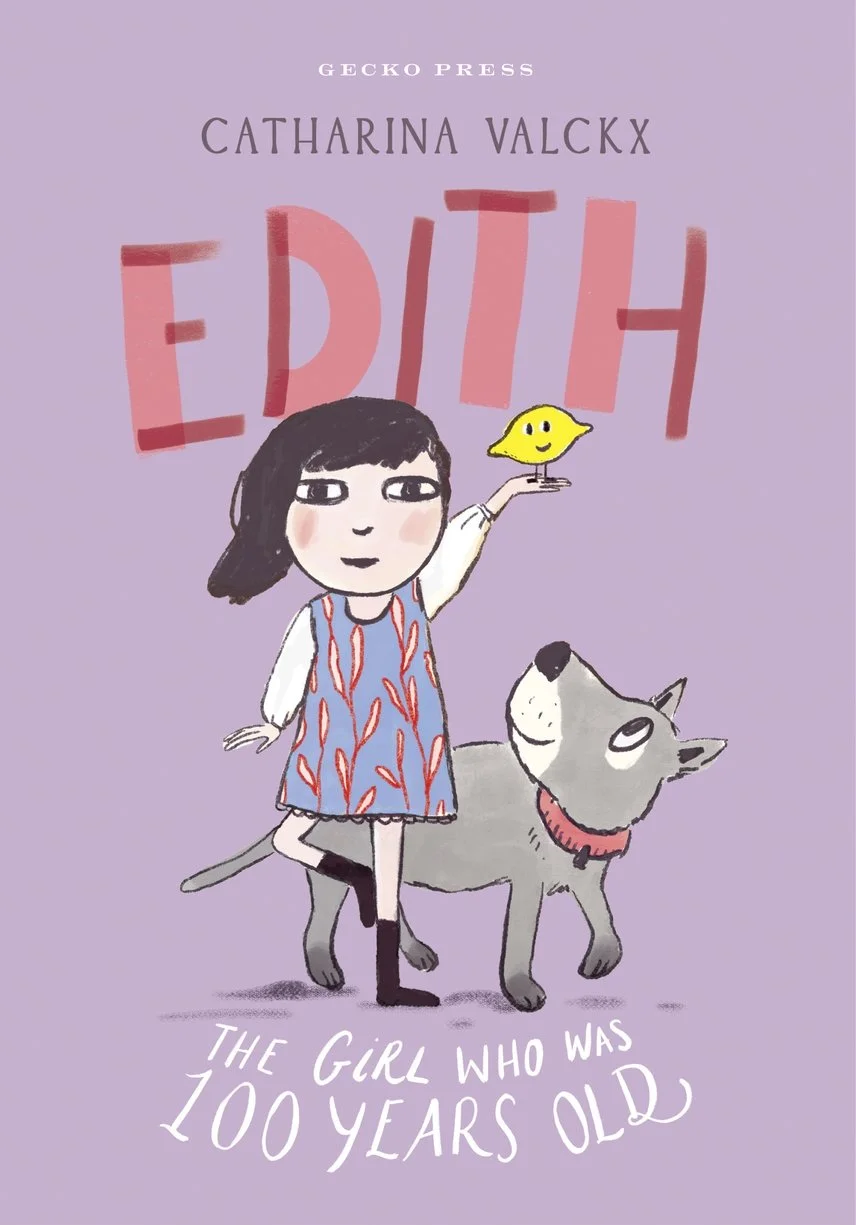
Edith: The girl who was 100 years old by Catharina Valckx $20
A philosophical adventure story for early readers that playfully combines fairytale with absurd comedy to ask a big question about what makes a good life. As a newborn, Edith received two gifts: the ability to bring any object to life and eternal childhood. That’s why today, 100 years later, Edith is celebrating her centenary as a seven-year-old. What will she wish for this time? Certainly a new life—being seven forever has its downside. On her birthday, Edith sets off to find the fairy who bewitched her and reverse the spell. She takes her only friends, a wise dog and a talking lemon. Fully illustrated in colour, this one-of-a-kind chapter book bursts with good things: the dry wit of a faithful dog, a fairytale adventure, camping, boating, friendship and danger, and a question that matters. [Paperback with French flaps]
>>Look inside.
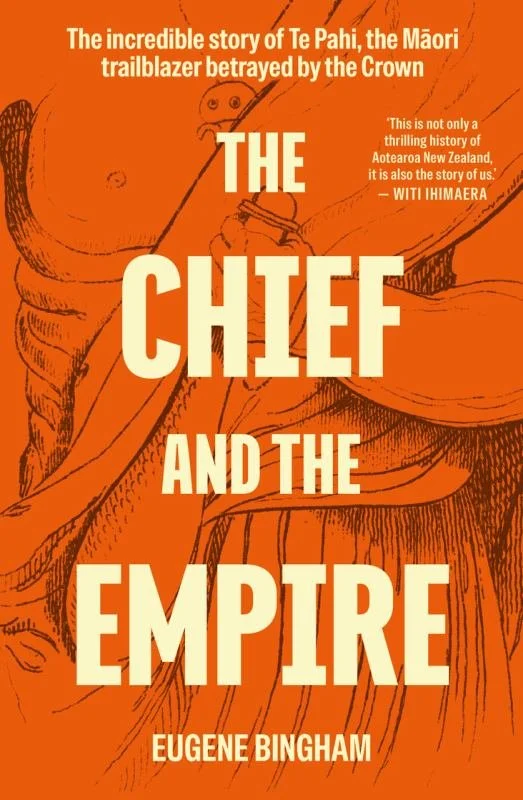
The Chief and the Empire: The incredible story of Te Pahi, the Māori trailblazer betrayed by the Crown by Eugene Bingham $40
The Chief and the Empire uncovers the extraordinary true tale of Te Tai Tokerau rangatira Te Pahi — the first influential Māori leader to cross the Tasman — whose curiosity about the Pākehā world forged alliances, saved lives, and ultimately cost him his own. On a visit to Sydney in 1805 Te Pahi was feted as a celebrity. He built close ties with the Governor of NSW, Philip Gidley King, even staying as a guest in the Governor's house for several months. He also met the missionary, Samuel Marsden, both men recognising Te Pahi's remarkable character and mana.Te Pahi examined the budding NSW colony and its brutal justice system with intelligence and compassion — and shocked King, by condemning the death sentences for a group of men accused of stealing food, ultimately sparing some of their lives. But history did not reward his courage. On returning home, Te Pahi was wrongly blamed for a deadly attack on a British ship, the Boyd, and killed, his name darkened for generations.Part history, part true-crime investigation, this is a riveting account of Te Pahi's remarkable journey and early Māori-Pākehā encounters, the injustice that destroyed a leader, and the unexpected legacy carried by the descendants of the men he fought to protect. [Paperback]
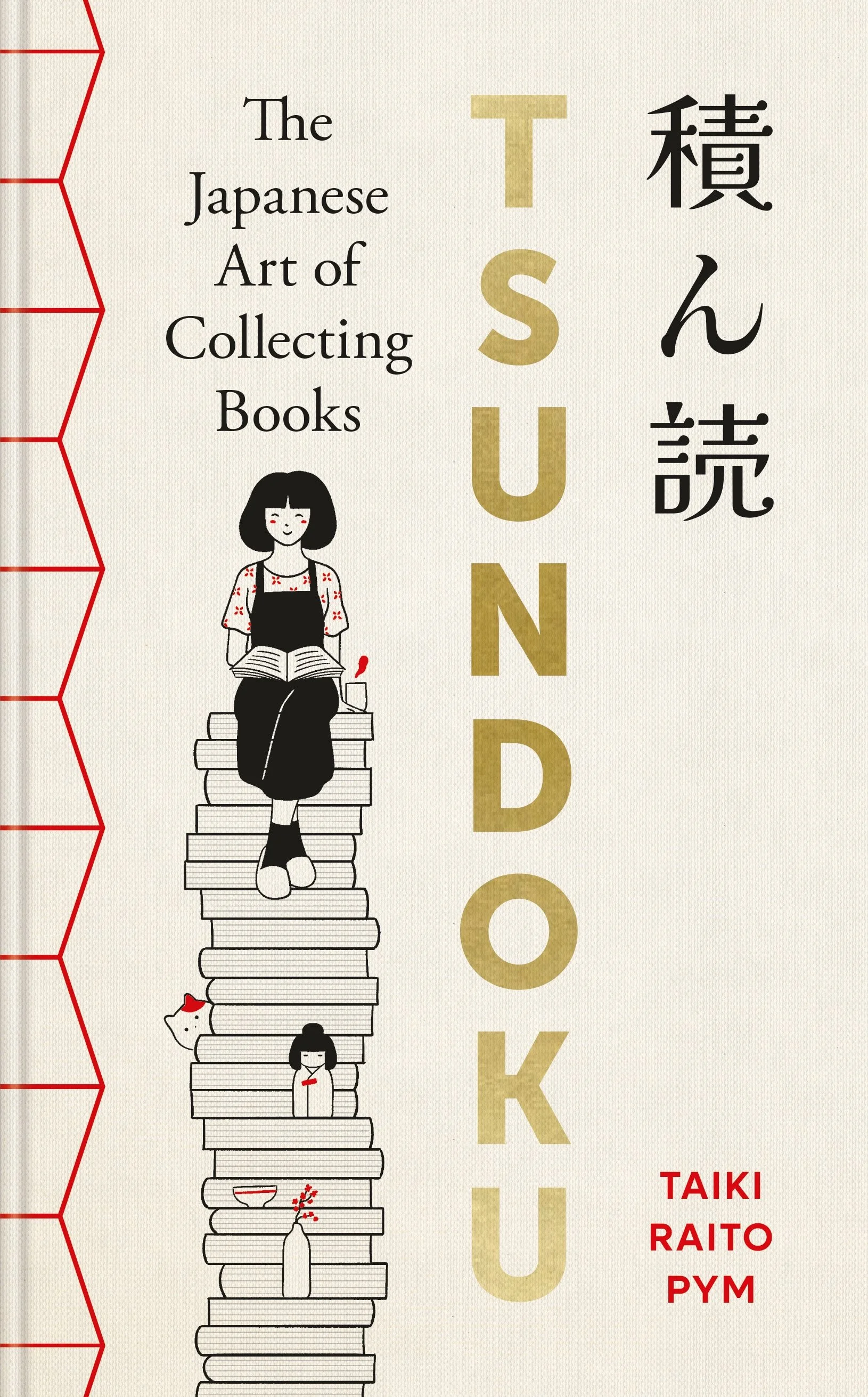
Tsundoku: The Japanese art of collecting books by Taiki Raito Pym $40
Drawing on the evocative Japanese term tsundoku — first coined in the Meiji era to describe the growing stacks of unread books that accumulate around devoted readers — this insightful and warmly humorous book reframes what some might see as clutter or guilt as a deeply meaningful way of living. From the tactile pleasure of flipping through pages to the quiet ritual of rearranging overflowing shelves, Tsundoku explores the psychology, culture, and poetry behind the irresistible urge to collect and cherish books. It offers meditations on the joy of choosing and buying books, the rebellion against reading lists, creative ways to organise your shelves, foolproof excuses for sneaking in yet another new title, techniques for remembering what you've read, and the guilty — but glorious — pleasure of re-reading. Above all, this philosophy reminds us that we do not necessarily have to have read all the books we own to love them unconditionally. Feelings of guilt, be gone! Unread books can be even more fascinating because they take us on wonderful journeys, and speak to us regardless, whether we open them or keep them closed. We know that books are a cure for the soul: just touching one, smelling one, or leafing through one makes us feel better immediately. [Hardback]
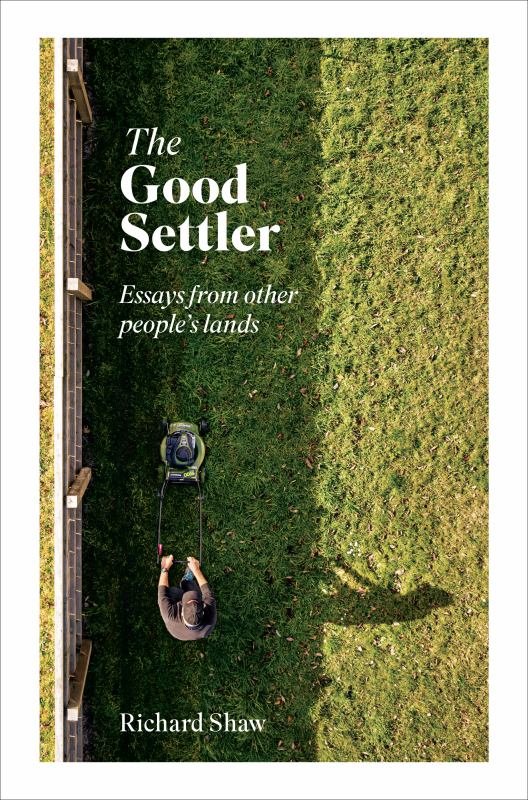
The Good Settler: Essays from other people’s lands by Richard Shaw $40
”Where once I saw a view as I drove around the Taranaki coast along State Highway 45, I now see confiscated land from an invasion road. The creation story I used to subscribe to, the one in which hard-working people came here and settled the land, now jars. Weirdly, even the lawn looks different. The form of things just won't settle.” So writes Richard Shaw in his third book examining colonisation. Both have been warmly welcomed by readers and this third volume of powerful essays, with its wide lens, will not disappoint. As he says, “Growing numbers of Pākehā find themselves standing on restless ground these days: they, too, are seeing things differently, and in these pages you will also hear their voices as we reach — fitfully and painfully, individually and collectively — for an accommodation with our colonial past.” [Paperback]
>>The Unsettled.
>>The Forgotten Coast.
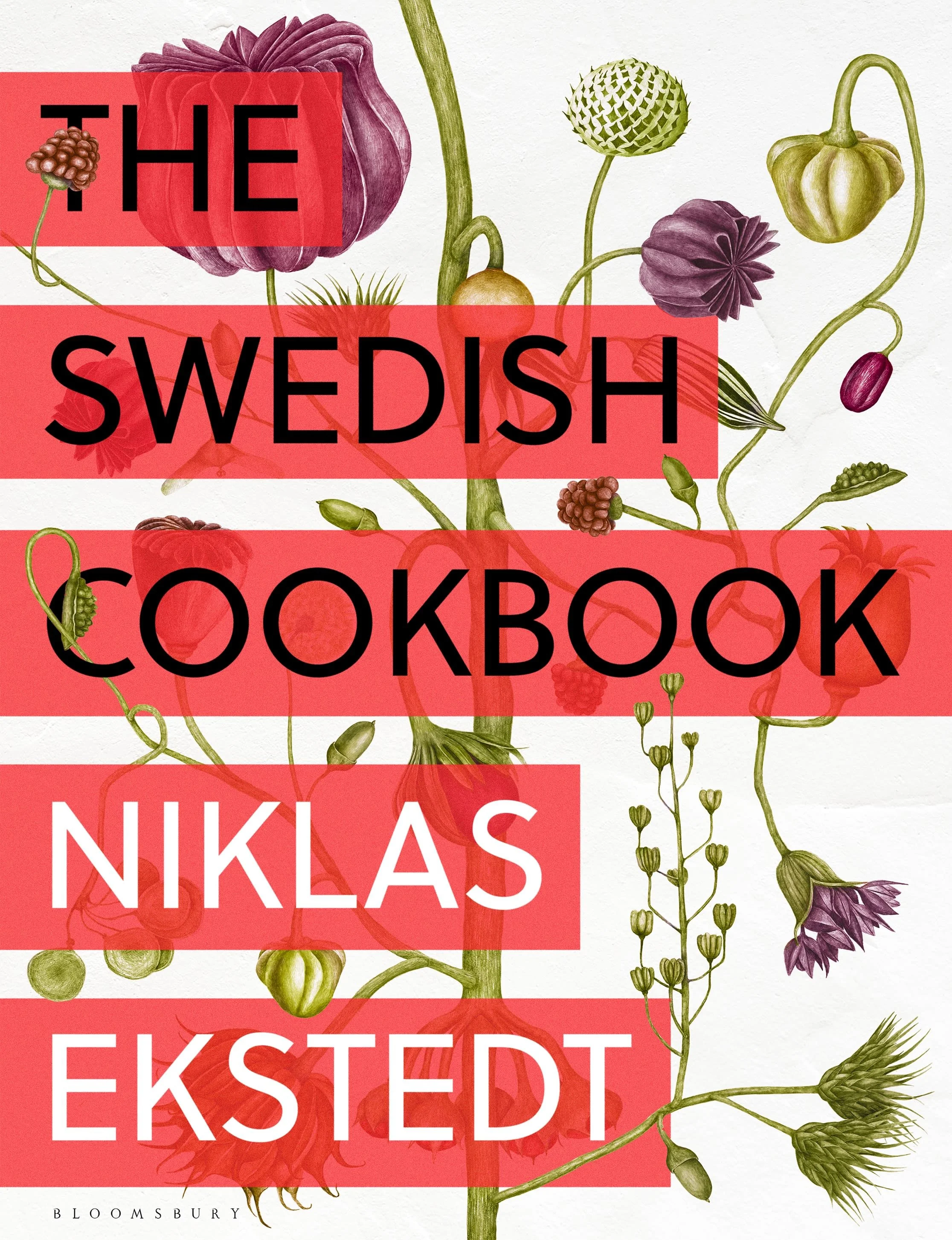
The Swedish Cookbook: Lagom flavours for the modern kitchen by Niklas Ekstedt $55
The best Swedish cuisine starts with a touch of lagom. Meaning 'balanced' or 'just right', lagom informs the culinary traditions of Sweden — the fresh, bright ingredients in its recipes, and the rich, harmonious flavours that come together on its tables. Following the lagom philosophy, Michelin-starred chef Niklas Ekstedt has perfected classic and modern Swedish cooking alike, and in The Swedish Cookbook, he shares his best recipes from everyday meals to special feasts, showing home cook how to master it all. These are fuss-free recipes handed down through generations, full of nourishment and sure to become family favourites. So whether you're a seasoned cook or just starting your culinary journey, it's time to find your lagom in the kitchen and savour the delightful simplicity of Swedish cuisine. Swedish Meatballs with Potatoes & Pressed Cucumber; Swedish Waffles Two Ways; Gravlax; Cabbage Salad with Blueberries & Shaved Frozen Feta Cheese'; Potato Pancakes with Lingonberries & Sour Cream; Rhubarb Pie with Vanilla Sauce; Cardamom Buns… [Hardback]
>>Look inside!