
NEW RELEASES (26.11.26)
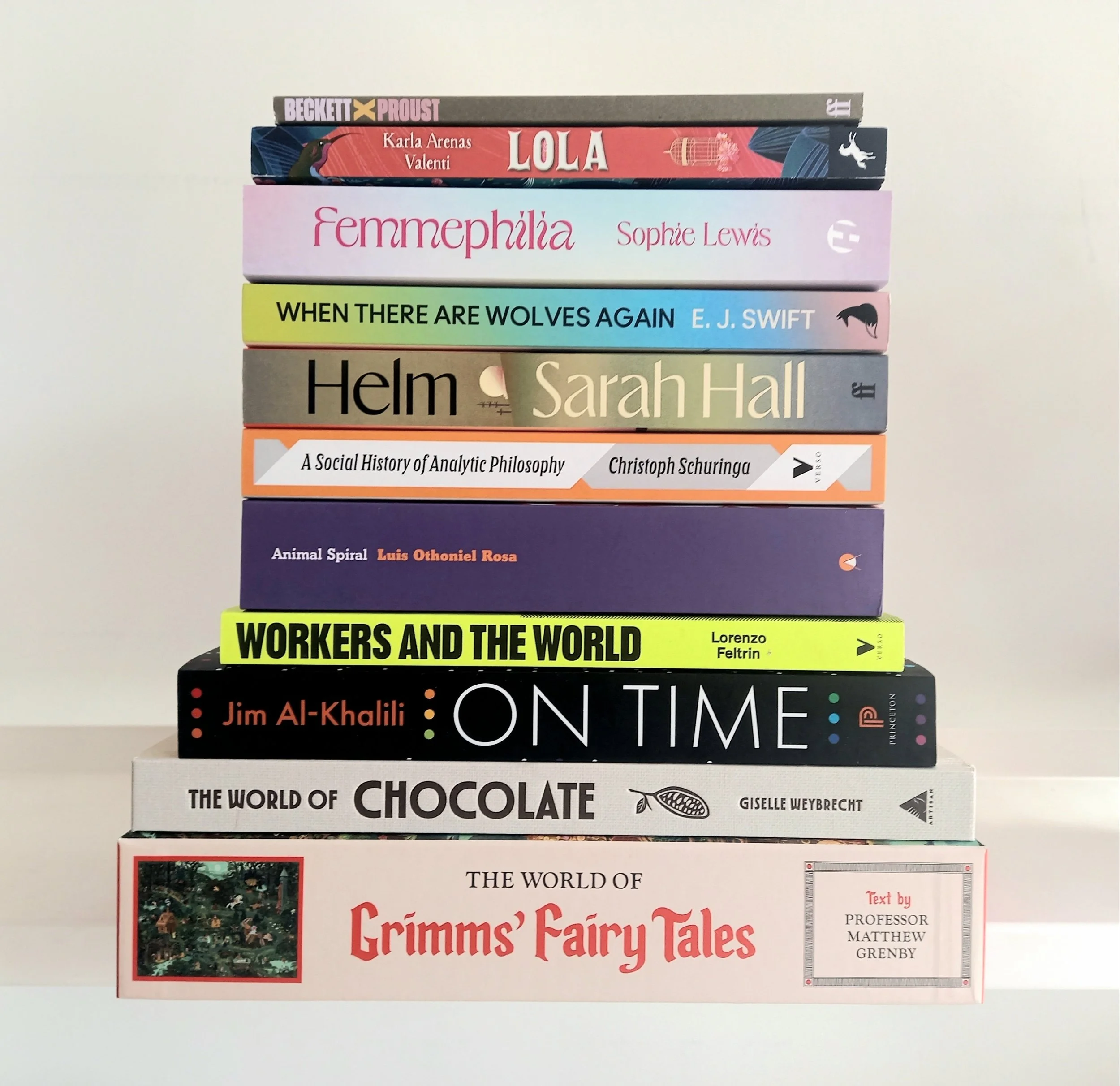
All your choices are good! Click through to our website (or just email us) to secure your copies. We will dispatch your books by overnight courier or have them ready to collect from our door in Church Street, Whakatū.
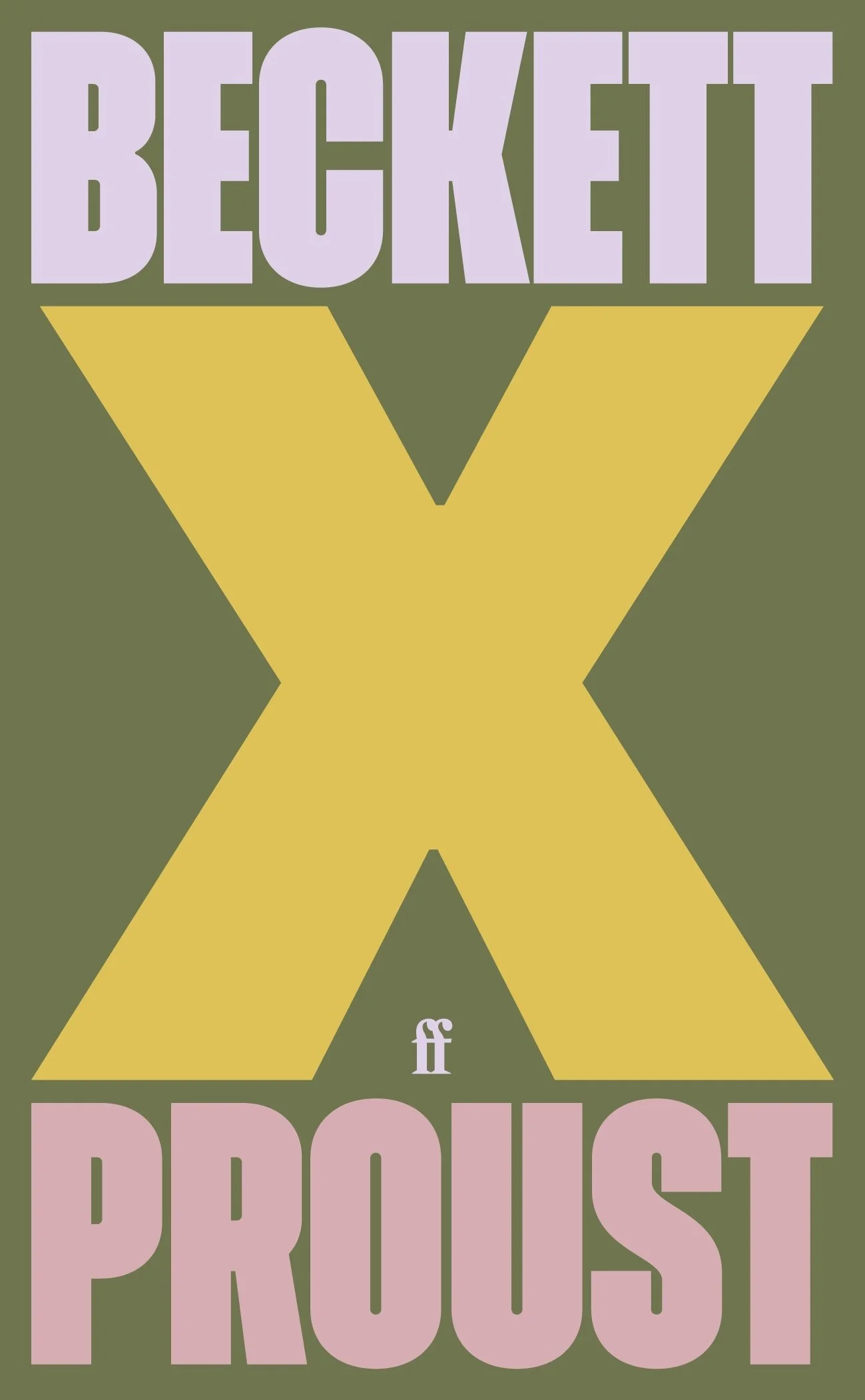
Proust by Samuel Beckett $25
When he was only 25, Samuel Beckett published his first ever book: a dissection of Marcel Proust's masterpiece, À la recherche du temps perdu (Fun fact: Beckett had not yet read Proust’s work when he agreed to write the book). Habit, memory and time: Beckett argues that these are the defining characteristics of the human condition. Involuntary memories — like those prompted by Proust's famous madeleine — are radical moments that pierce the veil of habit, and offer inspiration that soothes the existential anguish of time passing. Through analysing Proust's technique, the young Beckett puts forth a blazing artistic manifesto for his own future works. [Paperback with French flaps]
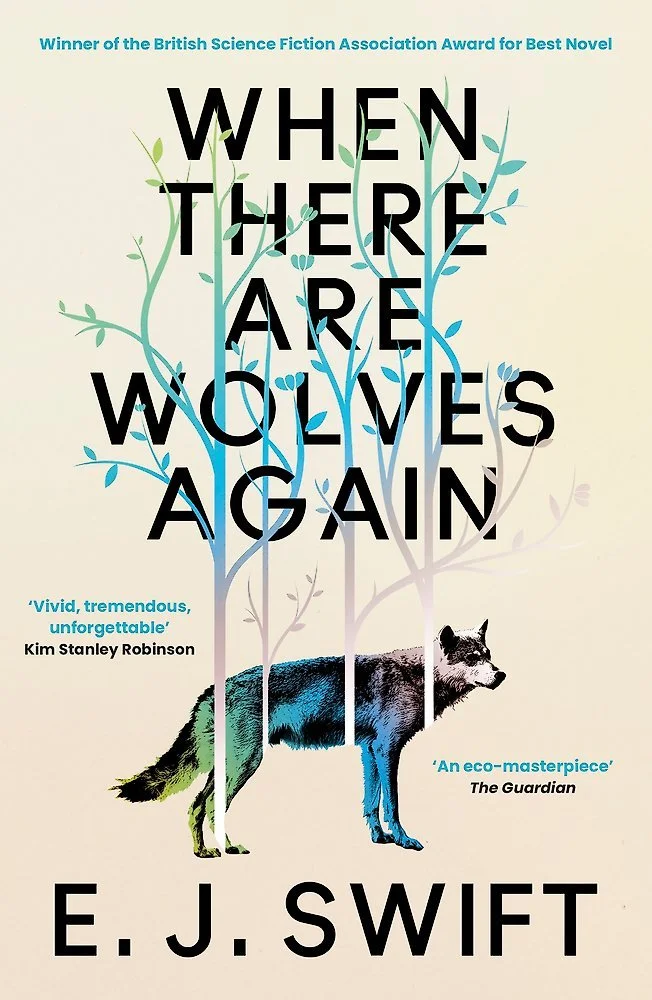
When There Are Wolves Again by E.J. Swift $28
Decades from now, two women sit beside a campfire and reflect on their life stories. Activist Lucy's earliest memories are of living with her grandparents during the 2020 pandemic and discovering her grandmother's love of birds. Filmmaker Hester was born on the day of the Chornobyl explosion and visits the site years later to film its feral dogs in the Exclusion Zone. Here she meets Lux, the wolf dog who will give her life meaning. Over half a century, their journeys take them from London to the Highlands to Somerset, through protests, family rifts, and personal tragedy. Lucy joins the fight to restore Britain's depleted natural habitats and revive the species who once shared the island, whilst Hester strives to give a voice to those who cannot speak for themselves. Both dream of a time when there are wolves again. [Paperback]
Winner of the 2026 Arthur C. Clarke Award for Science Fiction.
'Vivid, tremendous, unforgettable.’ —Kim Stanley Robinson
’This book is powered by a passionate love of nature and deep concern for the planet's future. Evocative and beautifully written, this character-driven novel also inspires as an argument for rewilding in Britain. An eco-masterpiece.’ —The Guardian
’A remarkable work. Beautifully written and sensitively observed, it demonstrates how great speculative fiction can speak to our present and prepare us for the future. Swift has written a powerful and necessary novel, one that beautifully captures the precarity of our current times whilst anticipating and preparing us for the struggles that will inevitably come ahead. It confirms Swift as one of modern speculative fiction's key visionaries, and as one of our most engagingly human writers.’ —Fantasy Hive
>>The power of long-term hope.
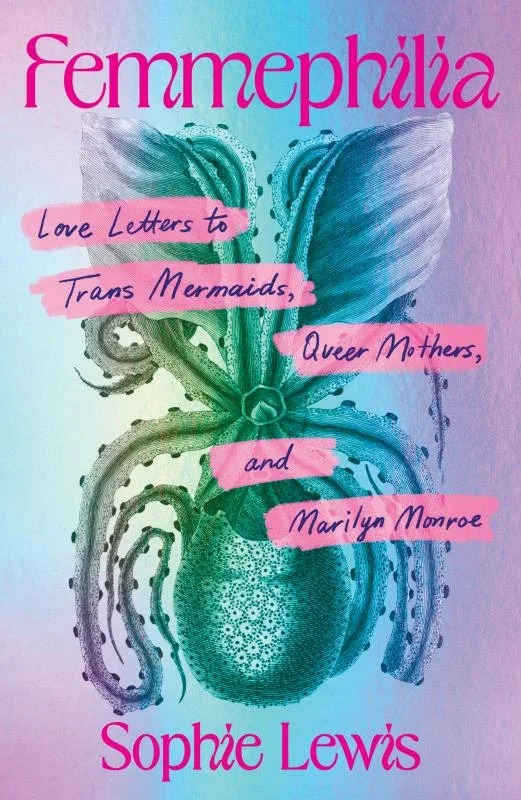
Femmephilia: Love letters to trans mermaids, queer mothers, and Marilyn Munroe by Sophie Lewis $45
To be femme is to embody a dispossessed femininity, to be freighted with freedom, to refuse to be made proper or institutionalised. To love it is to embrace love for women (be they butch or not) in the broadest sense. In Femmephilia, Sophie Lewis makes the case for the vital importance of politicised femme-ness: a feminism that is self-consciously artificial, extravagant in its erotic and political appetites, and staunchly anti-work, abolitionist, and utopian. Femme labours deserve our care, respect, and support, but instead face dismissal from masculinist antagonists and feminist allies alike. Where neoliberal women's empowerment has failed to combat the eruption of right-wing, anti-trans, and anti-feminist attacks, Lewis argues that femmephilia can help us imagine a radical future. In essays on the high femme genius of Marilyn Monroe and trans yearning in the myth of Apollo and Daphne; on octopuses and girlbosses, reluctant heterosexuals, lesbian separatists, and anti-work cats; and on a mother on strike from maternity, Femmephilia offers a new logic of liberation for all feminised people. [Paperback]
'Femmephilia collects seventeen of Sophie Lewis's essays, drenched in excessive, decorative, provocative, seductive prose, devoted to expansive communist femmeinism, founded in the distinction between insurrectionist femme-ness and supposedly natural, normative femininity. The essays are a gorgeous, enthralling, essential addition to our collective intellectual, political and aesthetic wardrobe.' —Lisa Duggan
"Like its author, Femmephilia is irresistible and indispensable. Sexy, cerebral, and exhilarating, this collection of essays both instructs and delights, giving us a grand tour inside the mind of a truly revolutionary thinker. Every word should be shouted from the rooftops and written across the sky." —Anahid Nersessian
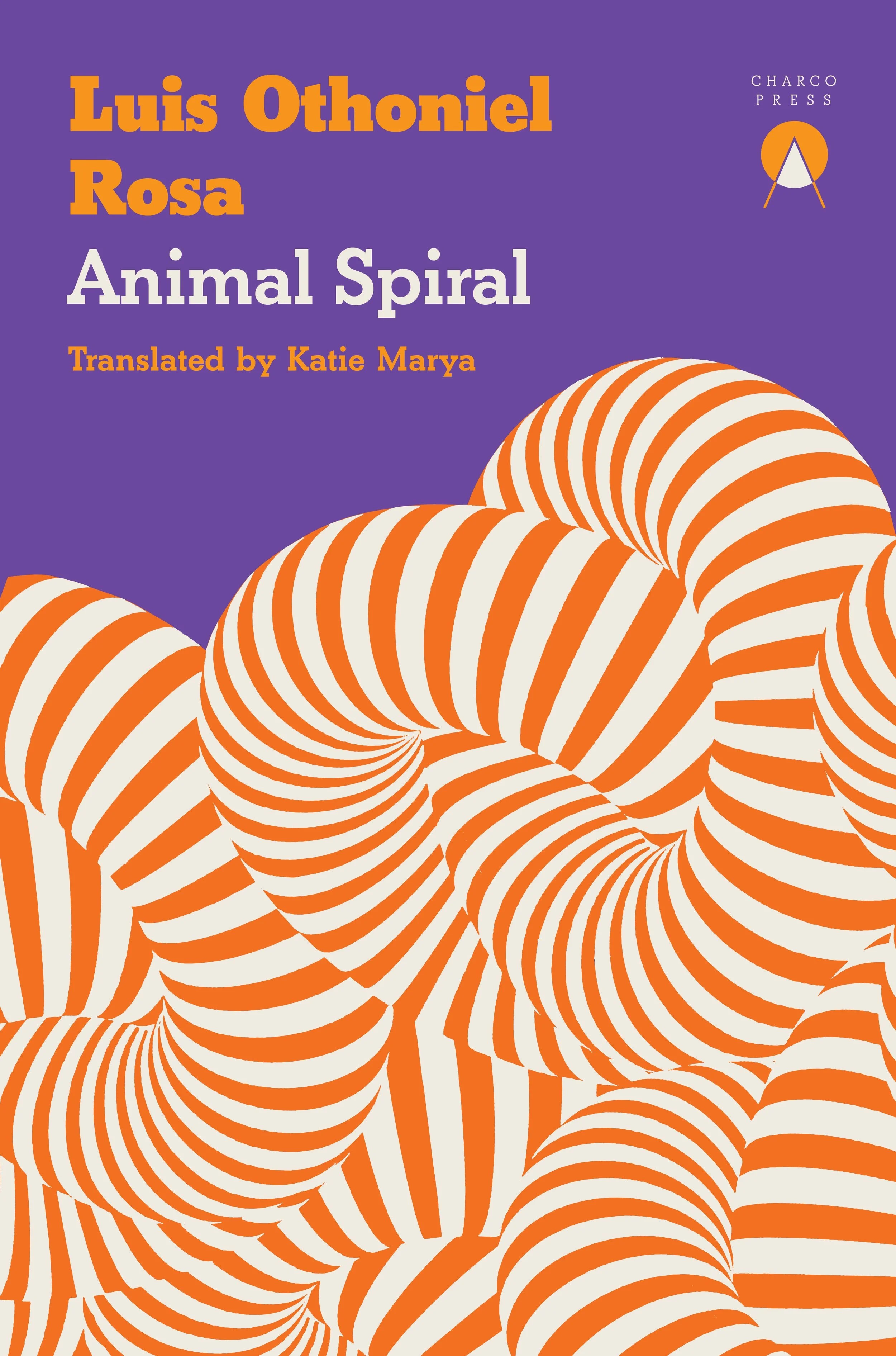
Animal Spiral by Luis Othoneal Rosa (tranlated from Puerto Rican Spanish by Katie Marya) $35
Middle-aged streamer twins in Bayamn, Puerto Rico, are the first human beings to successfully connect — sharing their consciousness across 34 translucent cables. In that moment, the Animal is born, an intracerebral force that quickly grows to encompass anthills of synaptically entwined bodies, a floating library kitchen redolent of rice and beans far above the Mississippi river, and a transhuman compound in a future Cuba on the Isle of Youth. Circling back and forth and ever progressing, Animal Spiral moves through 400 years of human, and then post-human history, beginning with a revolution on the streets of San Juan and ending with five brilliant siblings: the Squash (humanoid), Calima (beetles), Yemay (eels), Coatlicue (serpents), and Juracn (anthropomorphic birds), who have millions of bodies and all the world's intelligence, but only want to no longer be alone. This is a buoyant, joyous ode to possibility, a warning about the dangers of neglecting what makes us human, and an astonishing exercise of the flexibility and capacity of liminal spaces. Loneliness is a collective disease! We defend our right to madness! Brave are not the ones who resist; brave are the ones who let go! [Paperback with French flaps]
"If there's a more meaningful journey for science fiction to take us on at the present moment, I can't think of it." —Locus
"Animal Spiral will appeal to fans of Octavia Butler, Jorge Luis Borges and Donna Haraway with its exploration of radical reimaginings, the magic of dreams and cyborg-like assemblages." —The Skinny
"Funny, terrifying, ironic and utterly original - a novel that makes most contemporary science fiction seem timid by comparison." —Morning Star
"Healing, regenerative, and indispensable, Luis Othoniel Rosa's Animal Spiral is a brilliant delirium of a novel, an ecstatic catalyst for radical reimaginings, a decolonizing masterpiece of trembling and touch. Probing our most fundamental sociopolitical assumptions to shatter the shackles of petrocolonialism and misogyny, Animal Spiral births a lush new world." —Joy Castro
"Luis Othoniel Rosa describes literature as a natural phenomenon. It is no surprise, then, that he is drawn to fractals, and his latest novel may be the most powerful accomplishment of this idea." —World Literature Today
>>Creation is a force much older than reason or will.
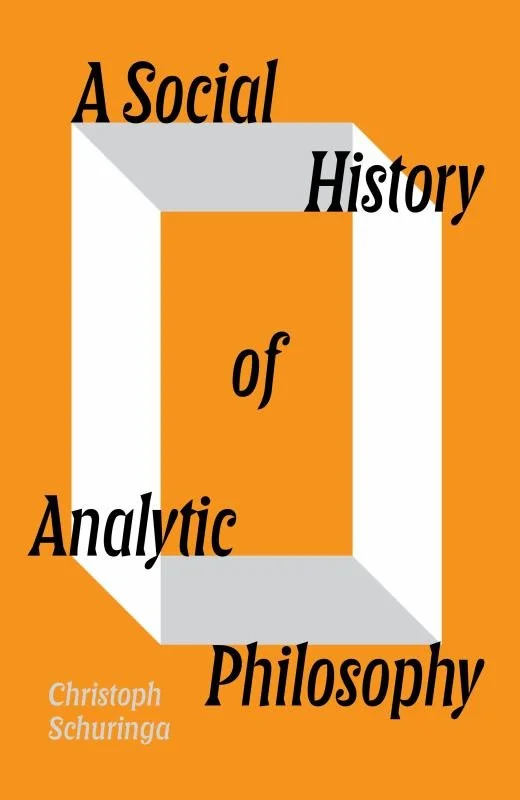
A Social History of Analytic Philosophy: How politics has shaped an apolitical philosopy by Christoph Schuringer $39
Analytic philosophy is the leading form of philosophy in the English-speaking world. What explains its continued success? Christoph Schuringa argues that its enduring power can only be understood by examining its social history. Analytic philosophy tends to think of itself as concerned with eternal questions, transcending the changing scenes of history. It thinks of itself as apolitical. This book, however, shows that the opposite is true. The origins of analytic philosophy are in a set of distinct movements, shaped by highly specific sets of political and social forces. Only after the Second World War were these disparate, often dynamic movements joined together to make 'analytic philosophy' as we know it. In the climate of McCarthyism, analytic philosophy was robbed of political force. To this day, analytic philosophy is the ideology of the status quo. It may seem arcane and largely removed from the real world, but it is a crucial component in upholding liberalism, through its central role in elite educational institutions. As Schuringa concludes, the apparently increasing friendliness of analytic philosophers to rival approaches in philosophy should be understood as a form of colonisation; thanks to its hegemonic status, it reformats all it touches in service of its own imperatives, going so far as to colonise decolonial efforts in the discipline. [Paperback]
’Christoph Schuringa's A Social History of Analytic Philosophy achieves the impossible: while it follows a clear line of interpretation — analytic philosophy is not politically neutral, it is deeply rooted in capitalist liberalism and its struggle against Leftist engagement — it develops this line in a vast and complex narrative full of fascinating historical and personal details, from the Cambridge beginnings of analytic thought (Russell, Moore) through the key role of analytic philosophy in McCarthy purges up to how analytic approach was crucial in including anti-colonial and feminist orientations into the liberal frame (Appiah). Schuringa's book is unputdownable — applied to it, this term is not a cliche but a simple description of its effect on a reader.’ —Slavoj Zizek
’Written with wit, rigour and a deep concern about the future of an intellectual tradition harbouring colonial ambitions, Schuringa's book is essential reading for both contemporary practitioners of philosophy and anyone interested in engaging with contemporary academic philosophy. Balancing nuance, a sweeping overview of over a century of philosophical texts, and a knack for pithy summaries of works across 'a tradition that manages to think of itself as no tradition at all', Schuringa produces a persuasive case for analytic philosophy's fundamental role as a powerful intellectual tool of bourgeois liberal ideology.’ —Adam Knowles, Radical Philosophy
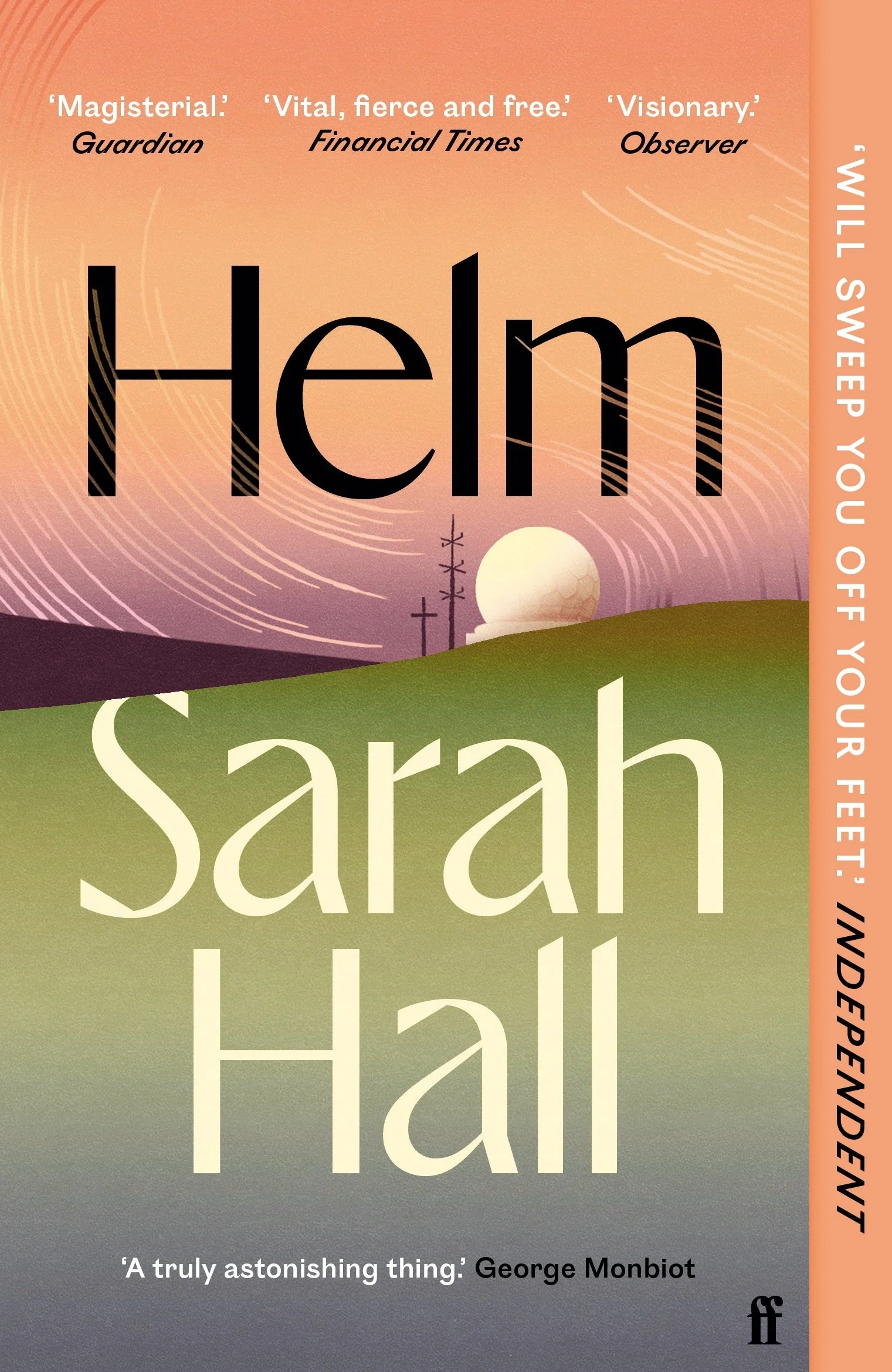
Helm by Sarah Hall $28
Britain's only named wind, Helm, has been roaring down Eden Valley in Cumbria since winds began. Sarah Hall's eloquent novel tells Helm's story through the swathe of human history, from the Neolithic to the present, through the experiences of those whose lives it has blown through. Helm is also the wider story of humanity’s relationship with nature, a warning of what will be lost if we do not mend our part of that relationship, and an invitation to live more wildly and more wisely. [New paperback edition]
"A moving, urgent novel. Hall is both playful and serious, bringing everyday warmth and droll humor to substantial ideas...We may be watching a long tragedy unfold in the alienation of our kind from the places we belong to, and the seriousness of this rupture is palpable in Helm." —Lydia Millet, New York Times Book Review
"A joy to read something so profound and playful. In every line, there is a new insight or a wonderful surprise." —The Guardian
"A magnificent novel — wonderfully strange, expansive and eerily atmospheric. Hall spins a tale that stretches across millennia — from a Neolithic healer and a Victorian meteorologist to a 21st-century researcher who investigates airborne microplastics. Each strand has its own distinctive voice, bound together by the presence of the wind — and, of course, Hall's mesmerising prose." —The New Statesman
>>The wind was like a childhhood friend.
>>Slow motion.
>>Radical optimism.
>>Making climate catastrophe feel real.
>>Decentring human primacy.
>>Blow by blow.
>>An ill wind.
>>A maker’s mark.
>>The larger-format edition is still available.
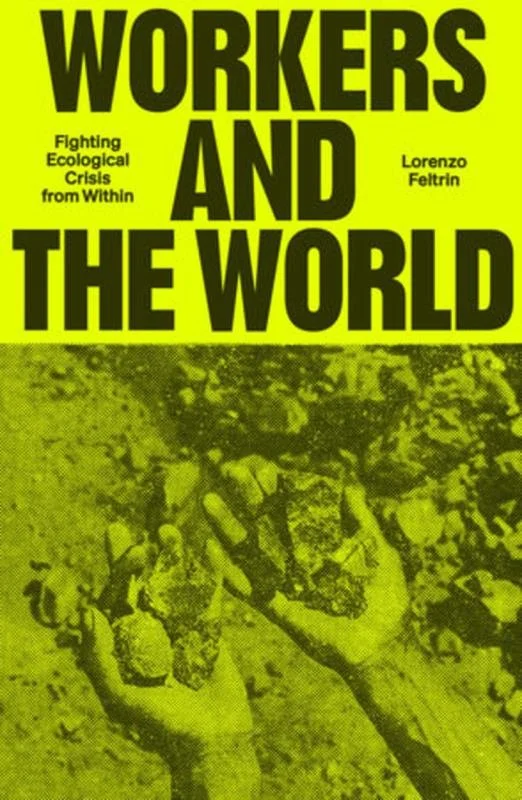
Workers and the World: Fighting ecological crisis from within by Lorenzo Feltrin $40
We are in the ecological crisis, and not just as victims of an environmental devastation that is unequally distributed along intersecting hierarchies of class, 'race' and gender. We are part of the crisis because, in our society, the vast majority of us rely on work to pay for the things we need to survive. This means we also depend on the infinite growth of commodity production that defines capitalism and drives the ecological crisis. Nonetheless, workers' insertion in capital accumulation also has an antagonistic face, rooted in their very separation from the means of production. Therefore, labour is also a crucial collective actor against the ecological crisis. This book explores the relationship between workers and nature by bringing Italian operaismo into a dialogue with a broad range of traditions, from dependency theory to ecofeminism. Drawing on sustained research in both the Global South — Tunisia and Chile — and the Global North — the UK and Italy — it tackles four timely issues in relation to the ecological crisis: automation and deindustrialisation, employment precarity, imperialism and war, and social reproduction. [Paperback]
”Lorenzo Feltrin shows us that there are many alternatives to the authoritarian rule of fossil capital, but also to capital as a social relation, since workers essentially reproduce capital. Organised workers and local communities are at the core of struggles for environmental justice and an ecological transition from below. Workers and the World shows the relevance of operaismo. A must-read!” —Ulrich Brand
”Can workers win the world for humanity? In this synthesis of shop floor and study, Lorenzo Feltrin makes the most compelling case yet for the ecological potentials of working-class politics. A handbook and treatise, this is a treat for trade union organisers, militant environmentalists and connoisseurs of operaismo alike.” —Andreas Malm
>>Find out more.
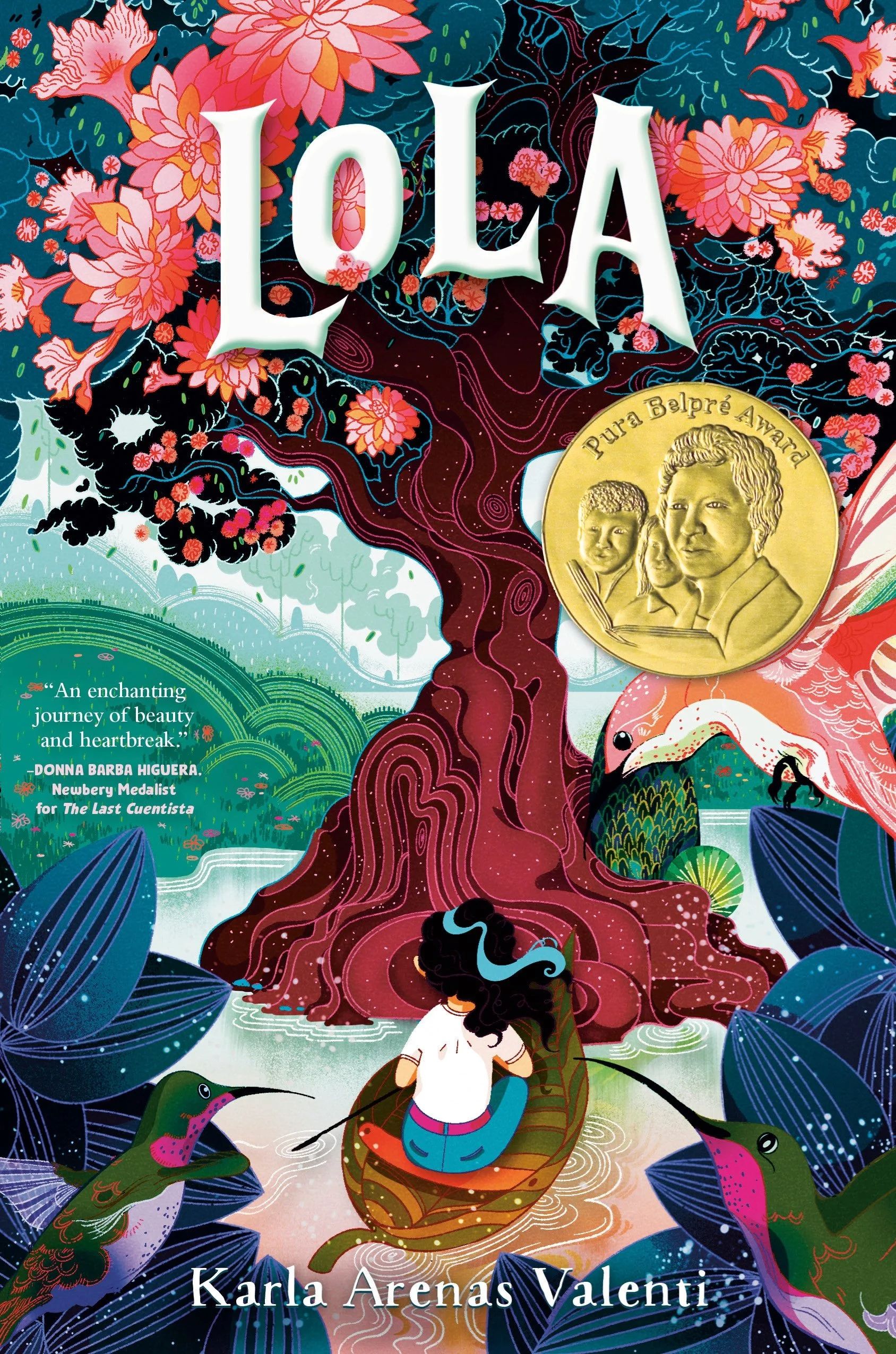
Lola by Karla Arenas Valenti $21
Ten-year-old Lola has always been touched by magic. In her Mexico City home, built around a towering tree, she is accustomed to enchanted blooms that change with the seasons, a sandbox that spits out mysterious treasures, and mischievous chaneques that scuttle about unseen by all but her. Magic has always been a part of her life, but now she must embrace the extraordinary as never before. Ever since The Thing That Happened, Lola's brother Alex has been sick. As his condition worsens, something begins eating away at the tree, causing its leaves and blossoms to crumble like ash. The two are related, Lola is sure of it, but how? Seeking a cure, she visits a grocery store oracle who bids her to follow the chaneques down one of their secret passages... into a hidden world. Here in Floresta, a land of myths and monsters and marvels untold, lies the key to healing her brother. But the kingdom's young queen stands in the way. Lola must use her wits and face her deepest fears if there's any hope of saving Alex in time. [Paperback]
"A truly enchanting adventure that both enthralls and entertains." —Booklist
On Time: The physics that makes the universe tick by Jim Al-Khalili $45
While we have come a long way toward deciphering the laws of the universe, many physicists still regard time to be one of the greatest unsolved mysteries. On Time provides answers to the questions about time that philosophers and scientists have been asking for millennia, such as whether it has a beginning and an end, why it only points toward the future and not the past, whether it can be stretched and squeezed or even reversed, and whether it is even real. In this mind-altering book, Jim Al-Khalili tackles the enduring problems of time head-on, carefully examining them across the three central pillars of physics quantum mechanics, general relativity, and thermodynamics. He shows how, in each domain, time can be understood differently: as a coordinate or label, as an inseparable dimension of space-time, or as a direction or 'arrow'. He explains why it can be difficult to reconcile these different perspectives and describes how theorists at the frontiers of physics are attempting to do just that. Al-Khalili makes the persuasive case that time is real, not illusory, and that a master arrow of time is not merely a trick of our senses but is rather a fundamental feature of reality that was baked into the structure of our universe from the very beginning. [Paperback]
The World of Chocolate by Giselle Weybrecht $60
The chocolate lover's encyclopedia, packed with full-color photographs, illustrations, graphs, and charts that unpack everything from understanding cacao to making the world's best brownie. There's so much more to chocolate than meets the eye. Or our tastebuds. The World of Chocolate covers it all: dark, milk, white, and more. Exploring every part of the chocolate story — from agriculture to history and science to archeology, and taking the reader through the forests and fields of the cacao belt, visiting the growers and craft makers who are shaping chocolate's future — it gives readers a rich and lively new understanding of not only how the amazingly complex ingredient called chocolate came to be, but also how to identify, buy, taste, pair, and bake with chocolate like a professional. [Hardback]
>>Look inside.
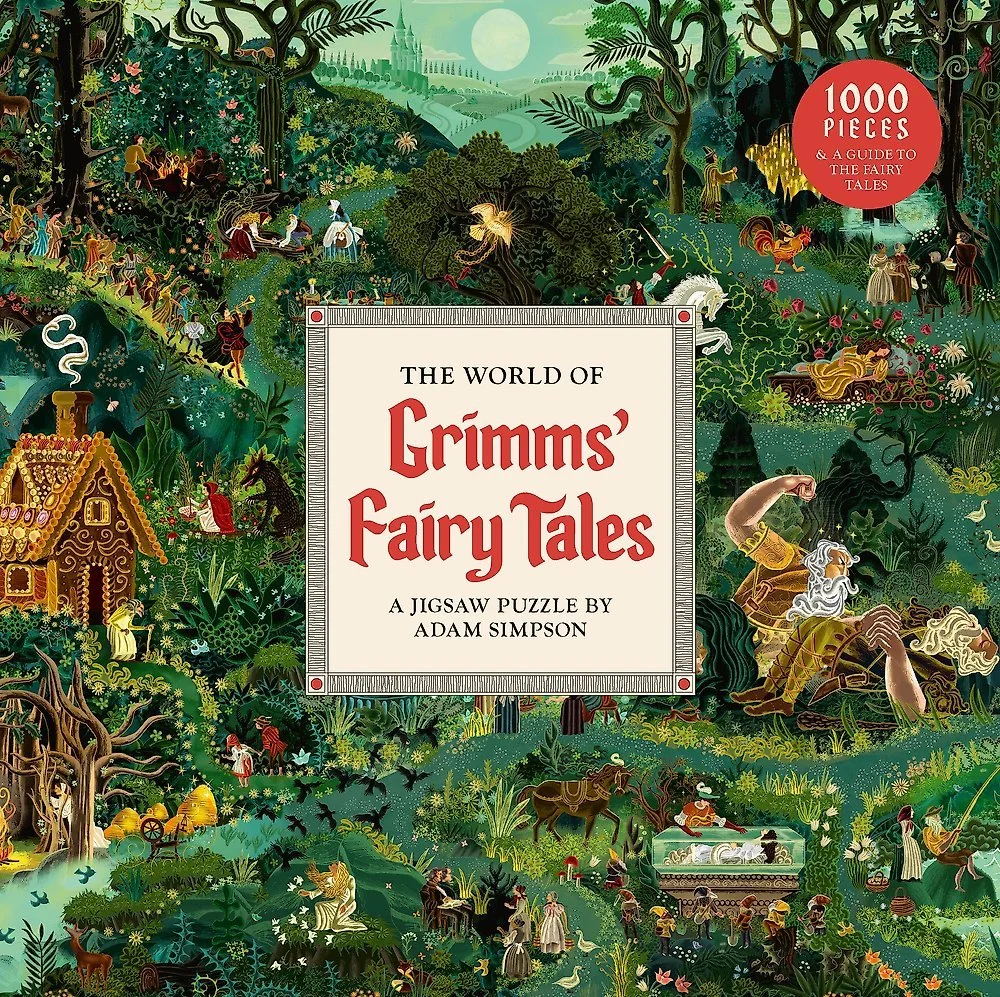
The World of Grimms’ Fairy Tales: A 1000-piece jigsaw puzzle by Adam Simpson $45
From Rumpelstiltskin to Rapunzel, Snow White to Hansel and Gretel, this jigsaw brings to life some of our most-loved fairy tales, as well as the fascinating history behind them. Spot moments of magic and the macabre, discover how the Brothers Grimm collected their famous stories and read excerpts from the tales themselves on the accompanying poster. Completes to 49cm x 68cm. Boxed.
>>The complete picture.
>>Other jigsaw puzzles.