
NEW RELEASES (4.6.26)
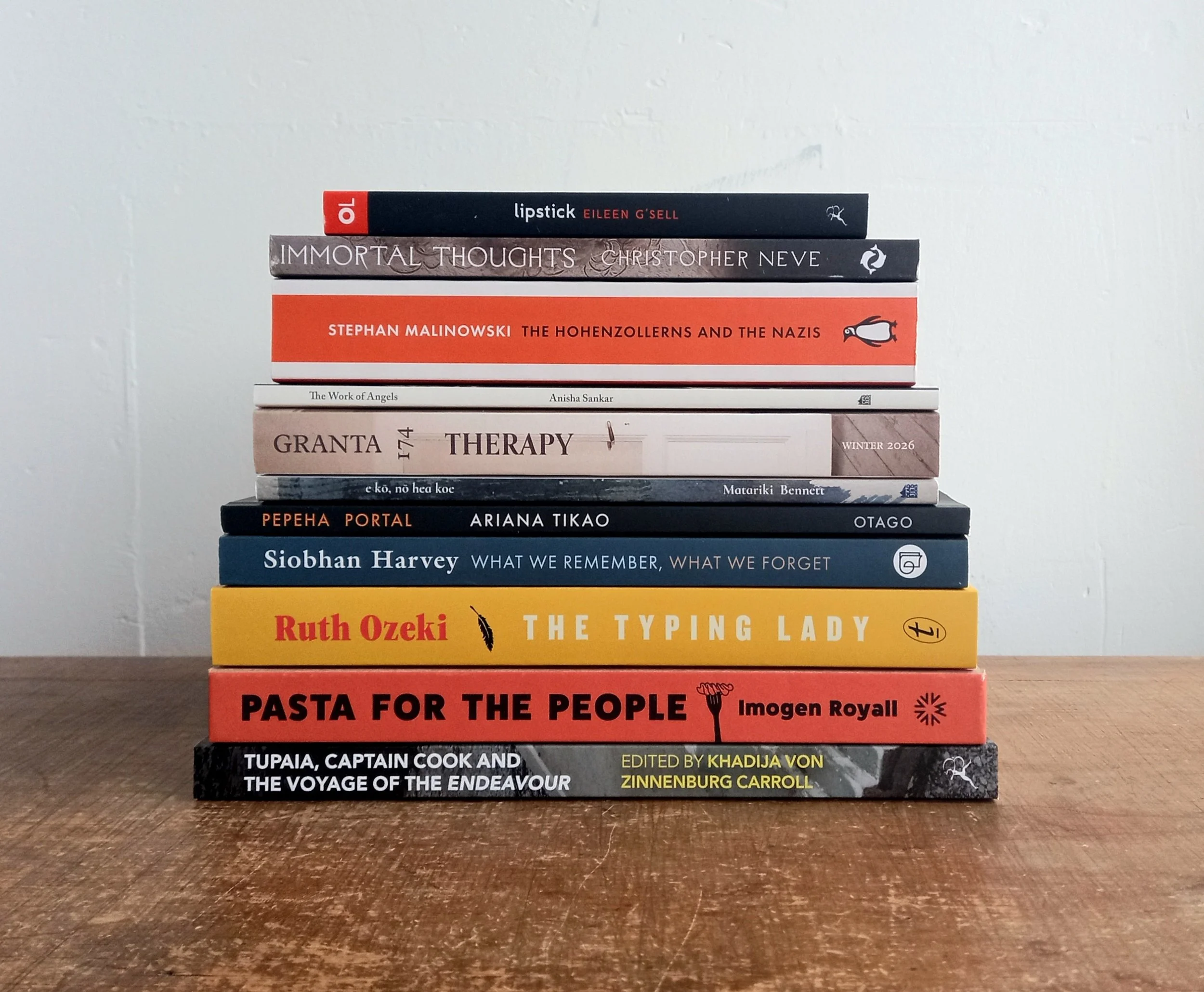
All your choices are good! Click through to our website (or just email us) to secure your copies. We will dispatch your books by overnight courier or have them ready to collect from our door in Church Street, Whakatū.
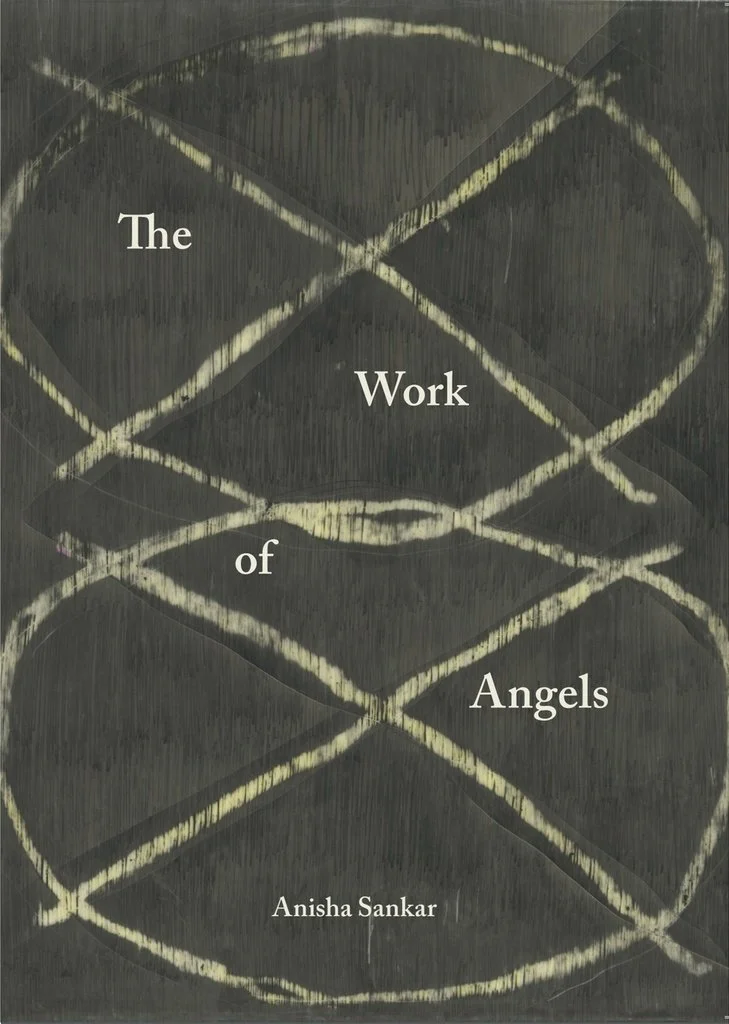
The Work of Angels by Anisha Sankar $35
The Work of Angels is a meditation on sex, the celestial, and the spectre of communism. These appear where history and subject don’t quite meet; here, the lover (a worker, child, philosopher of history, mystic-astronomer) speaks to her other through a language made possible by losses, thefts, and the wars that constitute politics. Desire—the etymology of which is something like of the stars—is inaugurated by these planetary negations, setting into orbit a conspiracy between romance and exploitation, mysticism and violence, prophecy and ordinary inertia. [Paperback]
Anisha Sankar is Chennai-born and Te Awakairangi-raised. She lives in Toronto, where she’s completing her PhD. She is a member of Al-Rifaq, a Pōneke-based collective that translates and publishes contemporary political analysis produced by the revolutionary currents of Palestine and the Arab world. With Emma Blackett, she is writing a book elaborating a Marxist and psychoanalytic theory of the subject. The Work of Angels is her first book of poetry.
“Like Clarice Lispector and Aimé Césaire before her, Anisha Sankar twirls history, myth, and ordinary relation into a shining wing that hovers above the void. Elegant, intelligent, and tender, this book does something that only poetry can do.” —Sholto Buck, author of Light Film (Pilot Press, 2025)
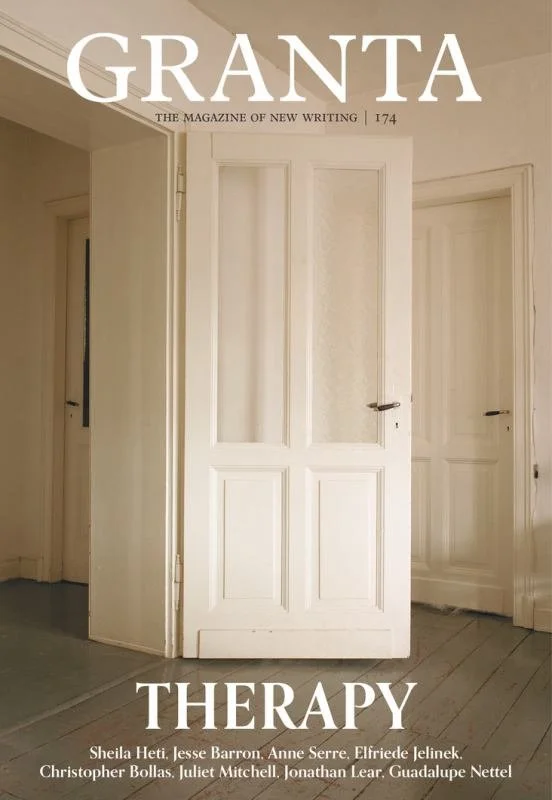
Granta 174: Therapy edited by Thomas Meaney $37
When Sigmund Freud died, Auden wrote ‘he is no more a person now but a whole climate of opinion’. Something similar could be said for therapy today. We live in a therapeutic age. It is generally accepted that the world of subconsciousness plays into all of our thoughts and actions, and that, in the hands of experts, it can be directed along more fruitful pathways. But as a science and a practice, therapy has always been fraught with dilemmas and crises. It has been bound up with power and manipulation, though its finest practitioners and participants counter that it contributes to human liberation. This issue of Granta explores all of these dimensions of therapy. Featuring non-fiction by Jesse Barron, Dushko Petrovich Córdova, Sheila Heti, Elfriede Jelinek, Paul Keegan and Deborah Levy. New fiction by Camilla Grudova, Benjamin Kunkel, Anne Serre and Missouri Williams. Conversations between Christopher Bollas and Granta, Juliet Mitchell and Lidija Haas, and Jonathan Lear and Benjamin Y. Fong. Art and photography by Louise Bourgeois, Rinko Kawauchi, Musuk Nolte (introduced by Guadalupe Nettel) and Nigel Shafran. Poetry by Olive Franklin, Robert Hass, Victor Heringer and Natalie Shapero. [Paperback]
>>The animal side of life.
>>Louise Bourgeois’s psychoanalytic writings.
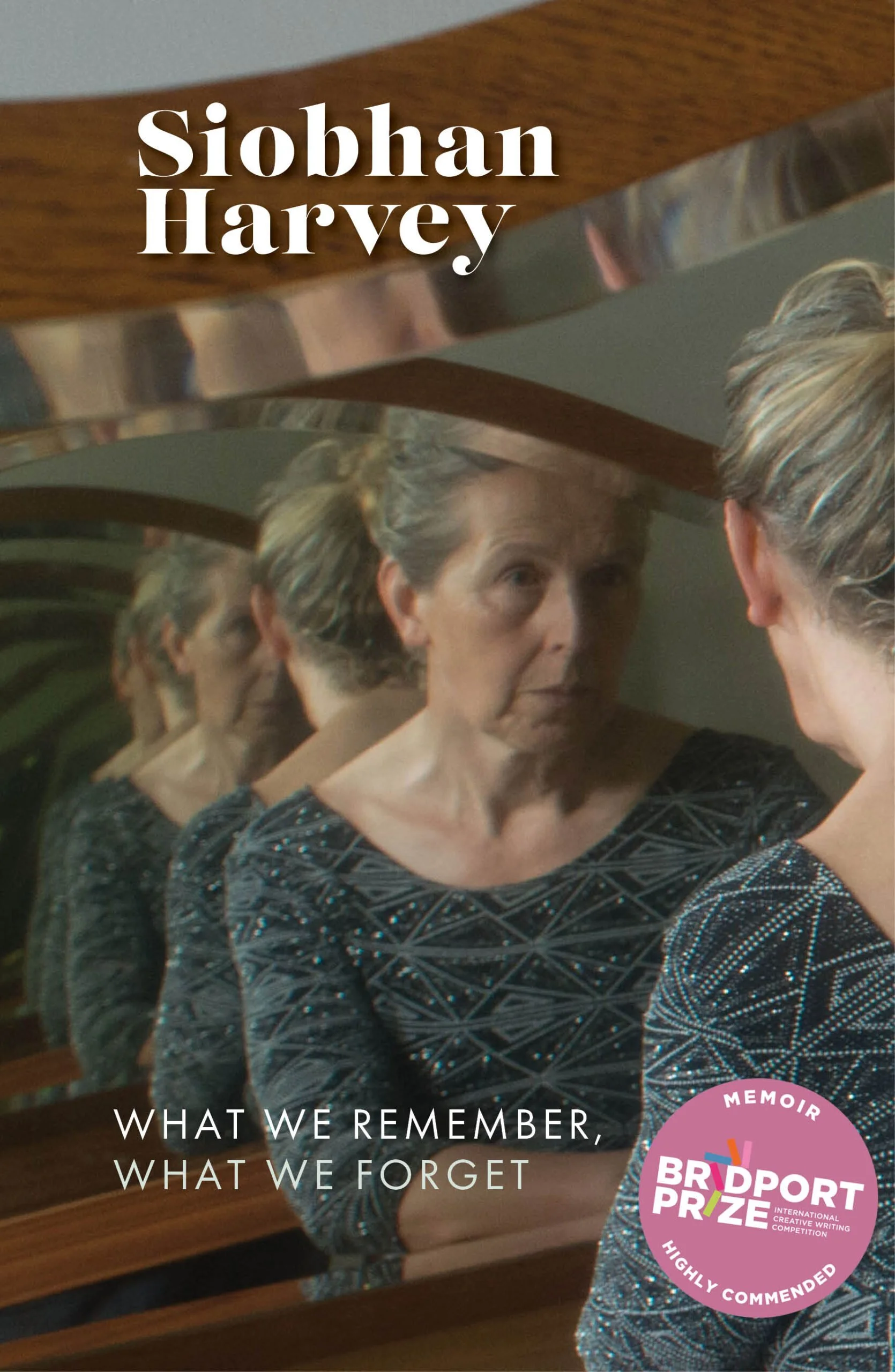
What We Remember, What We Forget: A memoir in memory by Siobhan Harvey $35
”We are our memories. They are a repository of our lives.” What We Remember, What We Forget is a personal narrative and poignant meditation on the power and peril of remembering — as well as of forgetting. Moving between childhood, early adulthood, imagination and the present, Harvey writes with honest intimacy about trauma, family and queerness; harm, silence and survival. Interweaving life story with reflections on philosophy and psychology, Harvey considers how memory both wounds and sustains, and how it may be safely carried so as to create the life one wants. Elegantly written, this is a powerful work about attention, language and the hard but fruitful labour of understanding. What We Remember, What We Forget asks: how should we retrieve our memories, and how can we trust what we find? “Memory is a creative endeavour: memory, the director’s cut; memory, a book of collected poems; memory, an exhibition of curated portraits; memory, a Surrealist retrospective.” [Paperback]
”The work is less autobiography and more a mosaic of fractured glimpses that catch the light as Harvey privately studies them. The experience feels less like witnessing a final version of a story, where every word and emotion have been decisively fixed in place, but observing the process of shifting and rearranging memories, constructing meaning and selfhood, and attempts at healing in action. The result is deeply intimate, vulnerable, and painful, at times almost overwhelmingly so.” —Sara Bucher, Aotearoa New Zealand Review of Books
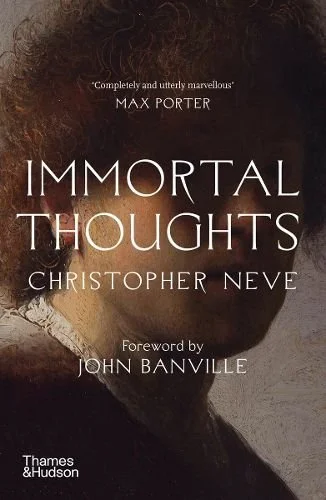
Immortal Thoughts by Christopher Neve $28
”Painting exists and exults in immortal thoughts.” —William Blake. In 2020, as the spread of Covid-19 causes pandemonium worldwide, an elderly artist returns to his childhood home to watch the transcendent beauty of the seasons and reflect on the final work of the artists he most admires. It seems to him that in their final art works — their late style — that they have something remarkable in common. This has more to do with intuition and memory than with rationality or reason and comes from trying to write about painting itself. Immortal Thoughts is an anthology of these reflections. In this personal and moving account, nineteen short essays on artists are interspersed with short accounts of the cataclysmic global progress of the disease in poignant contrast to the beauty of the seasons in the isolated house and garden, narrative strands that are closely intertwined. From Cézanne's last watercolours to Michelangelo's final five drawings, Rembrandt and suffering to Gwen John and absence, Christopher Neve dwells on artists' late ideas, memory, risk, handling and places, in the terrible context of Time and mortality. As much art history as a discussion of great art in the context of the Dance of Death, Neve writes with renewed passion about Bonnard, Michelangelo, Morandi, Poussin, Soutine and many others in his distinctive style. Introduction by John Banville. [Paperback]
”Completely and utterly marvellous.” —Max Porter
”From Titian and Michelangelo to Cezanne and Soutine, from Velazquez and Chardin to Bonnard and Pissarro, Neve sketches out the final periods of artists' lives in lilting, lyrical prose. His painterly style, his eye for detail and colour, is all the more powerful for the way that he juxtaposes it with the news of the outside world. His approach amounts to a kind of emotional ekphrasis.” —Times Literary Supplement
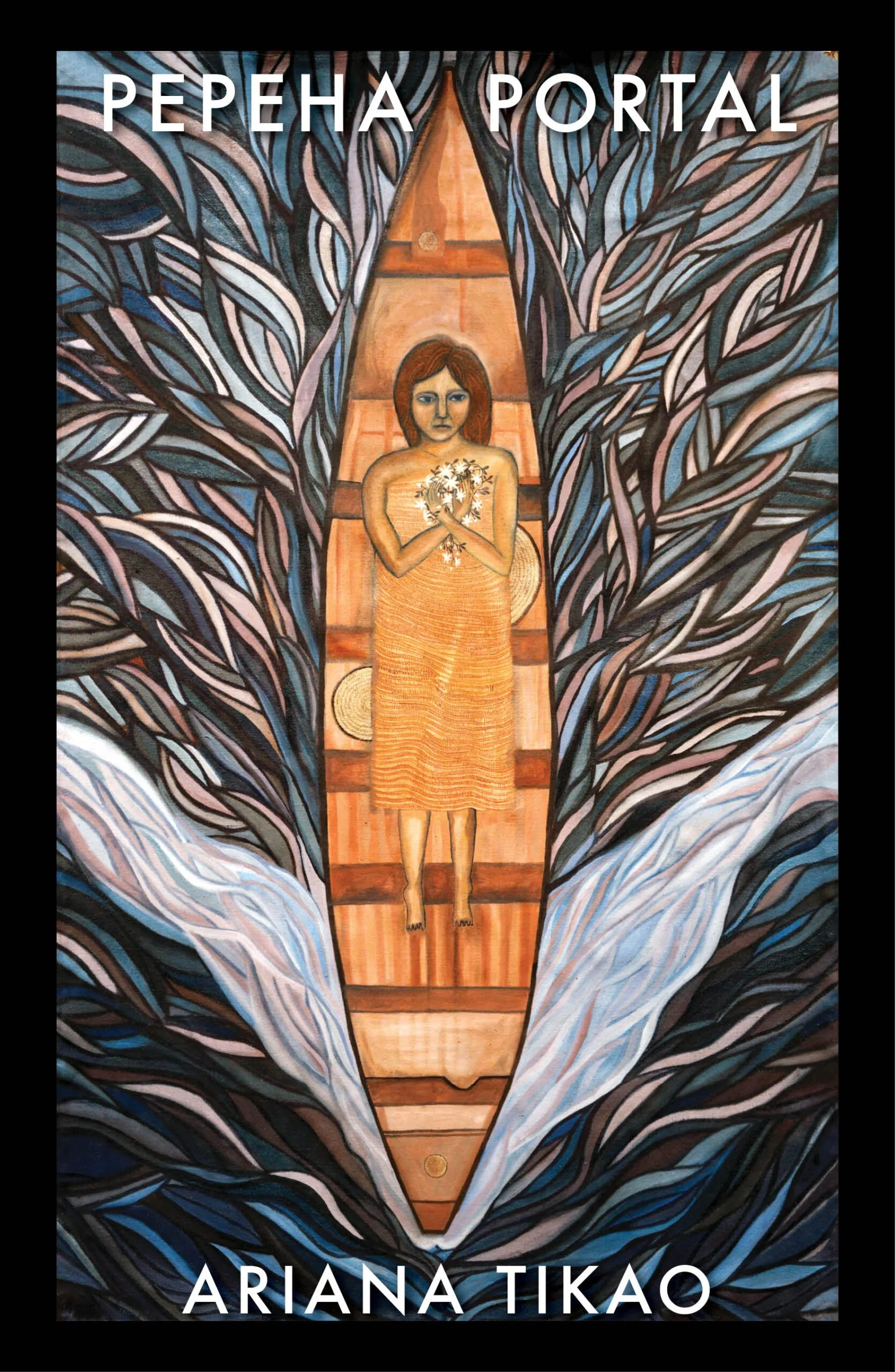
Pepeha Portal by Ariana Tikau $30
Rooted in Kai Tahu identity, the collection chronicles a homecoming and offers a moving account of memory, place and belonging. Born and raised in Otautahi Christchurch, Tikao left the city after the devastating earthquakes of 2010 and 2011. In 2023 she was awarded the Ursula Bethell Residency at the University of Canterbury and returned to live in a place that was both deeply familiar and astonishingly new. Written largely during this period, Pepeha Portal is shaped by stories embedded in the landscape - many long erased by colonialism and only recently exposed by cultural, as much as geological, shifts. Responding to suburban landscapes and tipuna places, personal memory and ancestral voice, Pepeha Portal considers how language, whakapapa and whenua act as portals to belonging. [Paperback]
”There’s breathtaking scope and emotional depth in this collection, so much whakapapa wisdom, and finely hued poetry. He taoka toikupu.” —Robert Sullivan, New Zealand Poet Laureate
”Tikao sees the world from a clear and compelling Māori perspective. Pepeha Portal is one of the most polished and forthright poetry collections I have seen for years.” —Nicholas Reid, NZ Listener
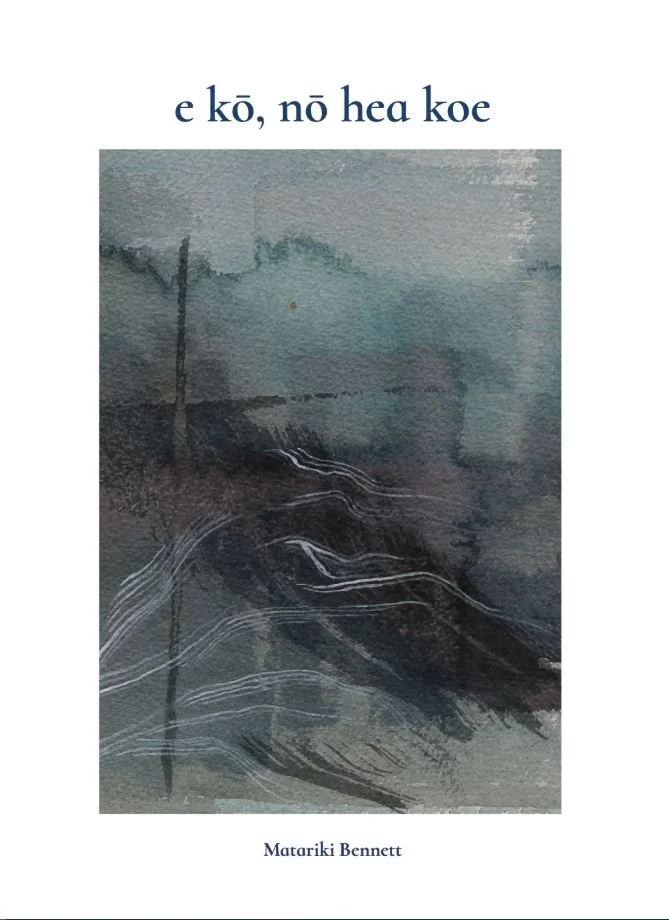
E kō, nō hea koe by Matariki Bennett $35
The debut collection of poetry from Matariki Bennett (Ngāti Pikiao, Ngāti Whakaue, Ngāti Hinerangi) is a series of goodbyes and attempts to slow the shedding. It's a group of teenagers sparking up as they watch the great Pacific garbage patch catapult into space and become a second moon, it's endless conversations with Grandmama about stars, it is the constant rebirth of whakapapa and learning that silence isn’t the best part of her. [Paperback]
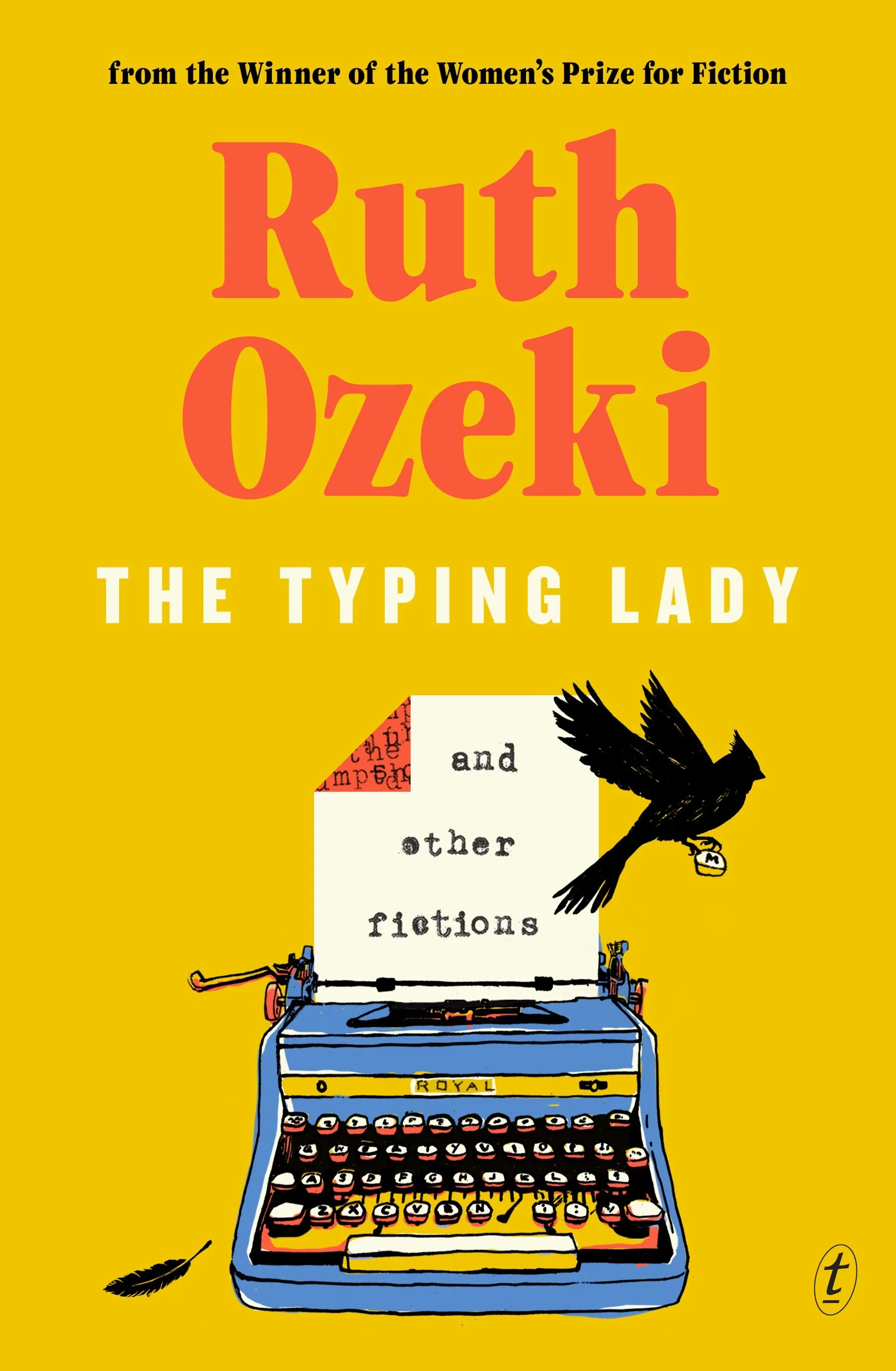
The Typing Lady, And other fictions by Ruth Ozeki $40
A story collection about the lives we almost lived, the people we can't quite forget, and the stories that shape us. A college student falls for her professor and learns to transmute longing into language. A disquieted husband watches with tenderness and unease as the ghost of his wife's ambition roams the woods outside their home. A long-deceased Beat poet hijacks the mind of a young publishing assistant during a sales meeting, railing against the state of modern literature. A curious grandmother creates a fake online dating profile to spy on her granddaughter's romantic life — and sets in motion a deception she can't control. Spanning eras and geographies, The Typing Lady is a meditation on the stories we tell ourselves, and the stories we become. [Paperback]
”Delightful, moving, and profound, The Typing Lady is a book of love stories of every kind. It is a book of great treasures.” —Lily King
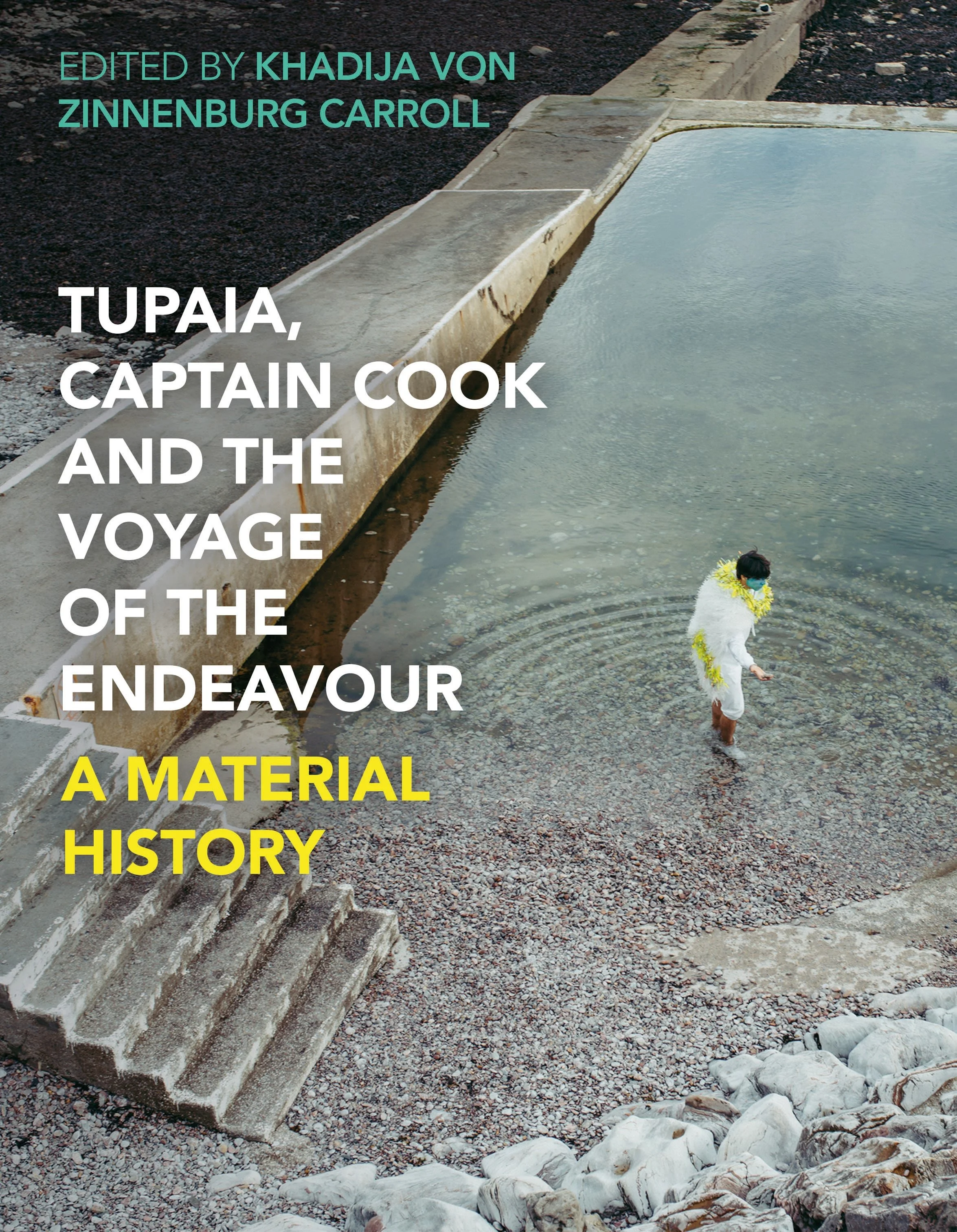
Tupaia, Captain Cook, and the Voyage of the Endeavour: A material history edited by Khadija von Zinnenburg Carroll $74
Centring priest and navigator Tupaia and Pacific worldviews, this richly illustrated volume weaves a new set of cultural histories in the Pacific, between local islanders and the crew of the Endeavour on James Cook's first 'voyage of discovery' (1768-1771). Contributors consider material collections brought back from the voyage, paying particular attention to Tupaia's drawings, maps, cloth and clothes, and the attending narratives that framed Britain's engagement with Pacific peoples. Bringing together indigenous and Pacific-based artists, scholars, historians, theorists and tailors, this book presents a cross-cultural conversation around the concepts of acquired and curated artefacts that traversed oceans and entwined cultures. Each chapter draws attention to a particular material, object or process to reveal fresh insights on the voyage, the societies it brought together and the histories it transformed. Authors also explore animal iconography, instruments and ethnomusicology, and performances and rituals. This work challenges colonial museum collections and celebrations of Cook's voyages, using materials old and new to make connections between past and present, whilst reinforcing Tupaia's agency as both a historical figure and a contemporary muse. Tracing overlapping folds of symbolism, this book draws together a picture of the diverse materials and people at the centre of cultural exchange. [Paperback]
>>Look inside.
”The book provides an enlightening alternative prism through which we can rediscover the Pacific agency in Tupaia, beyond the gaze of the dominant colonial history, which often revolves around Captain Cook's view of the world. It is a must-read collection of narratives woven together into an intellectually illuminating tapestry of cultural history with a strong Pacific flavour. A highly recommended text.” —Steven Ratuva, Distinguished Professor and Director of the Macmillan Brown Centre for Pacific Studies, University of Canterbury
”This rich and wonderful book exemplifies the explosion of research, reflection and creative practice around European maritime exploration over the last thirty years. Building especially on the work of Anne Salmond, commemorative studies of celebrity navigators such as Captain Cook have been succeeded by critical inquiry into cross-cultural voyaging, the deep histories of collecting, projects to return artefacts from institutions such as the Museum of Archaeology and Anthropology in Cambridge to Australia, Aotearoa and Tahiti, and art practices that re-imagine encounters towards postcolonial futures. The Society Islands priest, artist and navigator Tupaia has been at the heart of these studies. This book offers a key set of debates and contributions that will be widely valued.” —Nicholas Thomas, Director of the Museum of Archaeology and Anthropology, University of Cambridge, UK
”This set of essays does not result in a history, nor in a re-evaluation of previous histories but instead it is a tapestry of relations, of conversations and reflections on the Ra'iatean navigator Tupaia. This contemporary engagement with Tupaia redresses thin colonial understandings of his role with layers of social fabric that emerge from the multivocality of the volume's authors, including established and emerging artists, scholars, filmmakers and composers. From multiple vantage points, the authors reveal that the strength of material culture, in this case the cloaks of Tupaia and Cook, is in their relationship to the intangible, the cross-temporal, the sonic, the performative, and how these make kin of all involved.” —Kathryn Bunn-Marcuse, Director of the Bill Holm Center, Burke Museum of Natural History and Culture and Associate Professor of Native Art, University of Washington, USA
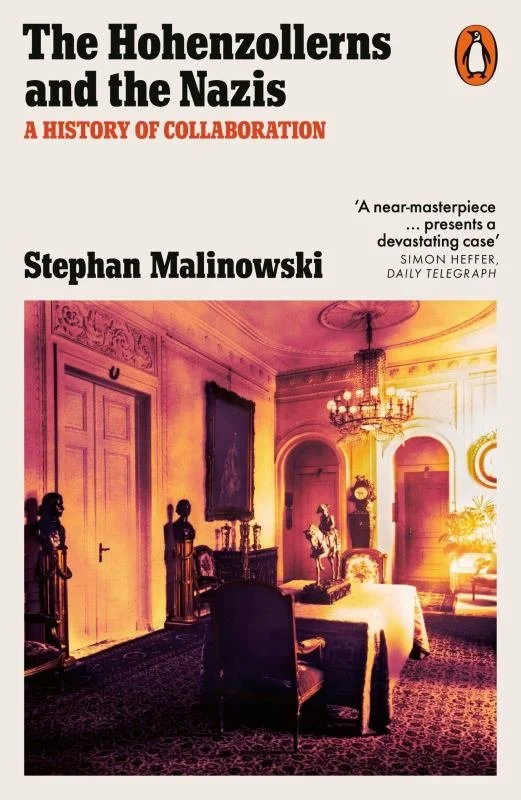
The Hohenzollerns and the Nazis: a history of collaboration by Stephan Malinowski $50
The disappearance of the Hohenzollern family from the history of Germany in November 1918 as the Kaiser fled into Dutch exile is one of the most startling, rapid instances of a once all-powerful royal family becoming almost overnight irrelevant and marginal. Except this is not exactly what happened. Stephan Malinowski's book is an extraordinary work of recovery. It suited both the Weimar Republic and then the Third Reich to view the Hohenzollerns with contempt, and yet the royal family's hatred of the former and approval of the latter were for millions of Germans a significant factor in their own view of their country and its government. With forensic and often shocking detail, Malinowski shows that, far from being ridiculous, marginal figures the Hohenzollerns lay at the heart of Germany's ongoing nightmare. Despite formally losing power, the members of the royal family remained prominent, catastrophically allowing many other conservative Germans to stay distanced from the new republic and to eventually betray conservative traditions and values. Battered from both left and right, the Republic collapsed in 1933 in part because conservative forces, fearful of both Communism and Fascism, had abandoned their own principles just as much as the leading members of former royal family had, who were themselves beguiled by and fooled by Hitler. This is an important and shocking book, as well as a devastating picture of an inadequate and trivial royal family painfully underequipped to fulfil its role. [Paperback]
”A highly detailed and scrupulously researched book. Malinowksi's work is a near-masterpiece, relating a story not synthesised in this way before, and about which any number of self-serving myths exist. He presents a devastating case why, with regards to their conduct during the Third Reich, the Hohenzollerns were the authors of their own misfortune.” —Simon Heffer
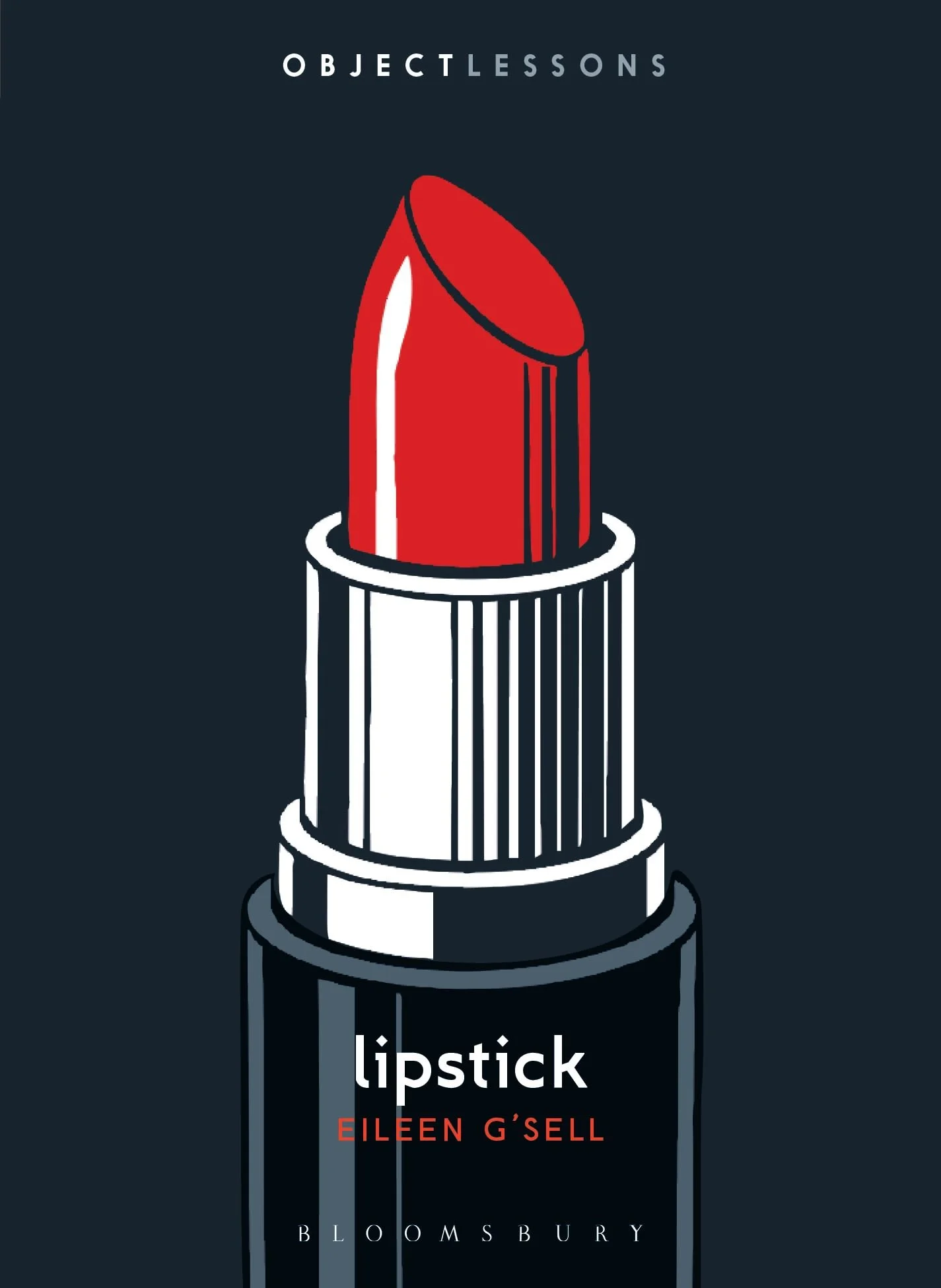
Lipstick by Eileen G'Sell $23
From Revlon to Glossier, from Marilyn to Gaga, lipstick is as shape-shifting and unwieldy as femininity itself. Who wears lipstick today as a matter of routine? And for those who do, is it out of obligation to a strict feminine standard, or some other reason entirely? Lipstick reconsiders the beauty world's most conspicuous and contentious tool of artifice. Tossing expired ideas about femininity like so many tubes of melting wax, Lipstick explores how self-adornment can be a source of play, pleasure, and transformation, as well as how lipstick can knock gender norms off balance. [Paperback with French flaps]
”Brilliant, biting, and irresistibly stylish, Lipstick treats beauty as the serious subject that it is. With deep insight, lyrical precision, and humor, Eileen G'Sell examines how painted lips expose the tensions between conformity and self-expression, beauty standards and personal agency. Less a book about makeup, and more about what we make of ourselves, this is cultural criticism at its most relatable and relevant.” —Zahra Hankir
”What if pigmented wax was one of humanity's oldest technologies of honesty? In this homage to the form, Eileen G'Sell gives us a lipstick for all. Her elegant book not only lays out the cultural evolution of the object, but points to the expansively feminist ethics and latently utopian politics of colorful mouths. Pucker up, dive in, and dispel your femmephobia today.” —Sophie Lewis, author of Enemy Feminisms
>>Other books in the ‘Object Lessons’ series.
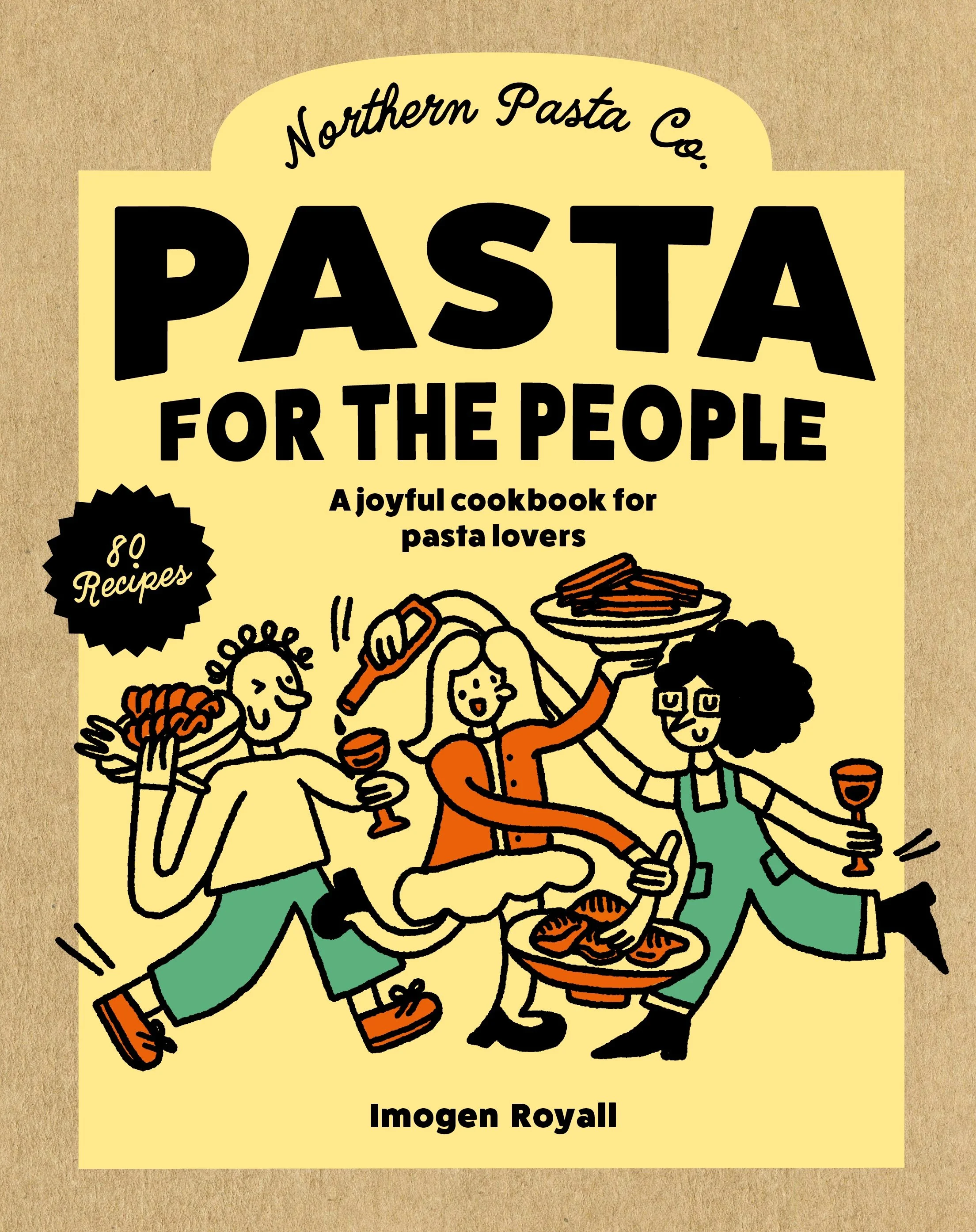
Pasta for the People: A joyful cookbook for pasta lovers by Imogen Royall $45
Pasta is comfort — easy, familiar, endlessly satisfying. But too often we get stuck in the loop of the same recipes: a trusty bolognese, a jar of pesto, the reliable carbonara. What if pasta could be more? This book is an invitation to rethink pasta: to explore fresh flavours, global influences, and unexpected pairings that bring new joy to the table.This cookbook shares many of Imogen Royall’s recipes alongside favourites from celebrated chefs and food creators, including: Max La Manna's Zesty Radiatori Summer Salad, Olia Hercules's Rigatoni from Napoli via Genoa & Odesa, Izzie Cox's Miso Gochujang Pumpkin Rigatoni, Helen Graham's Tomato & Tamarind Gigli, Tom Jackson's Slow-cooked Courgette Casarecce, Saliha Khan's Desi Meema Rigatoni. [Hardback]
>>Look inside.
>>Try a few of the recipes.