NEW RELEASES (5.11.26)
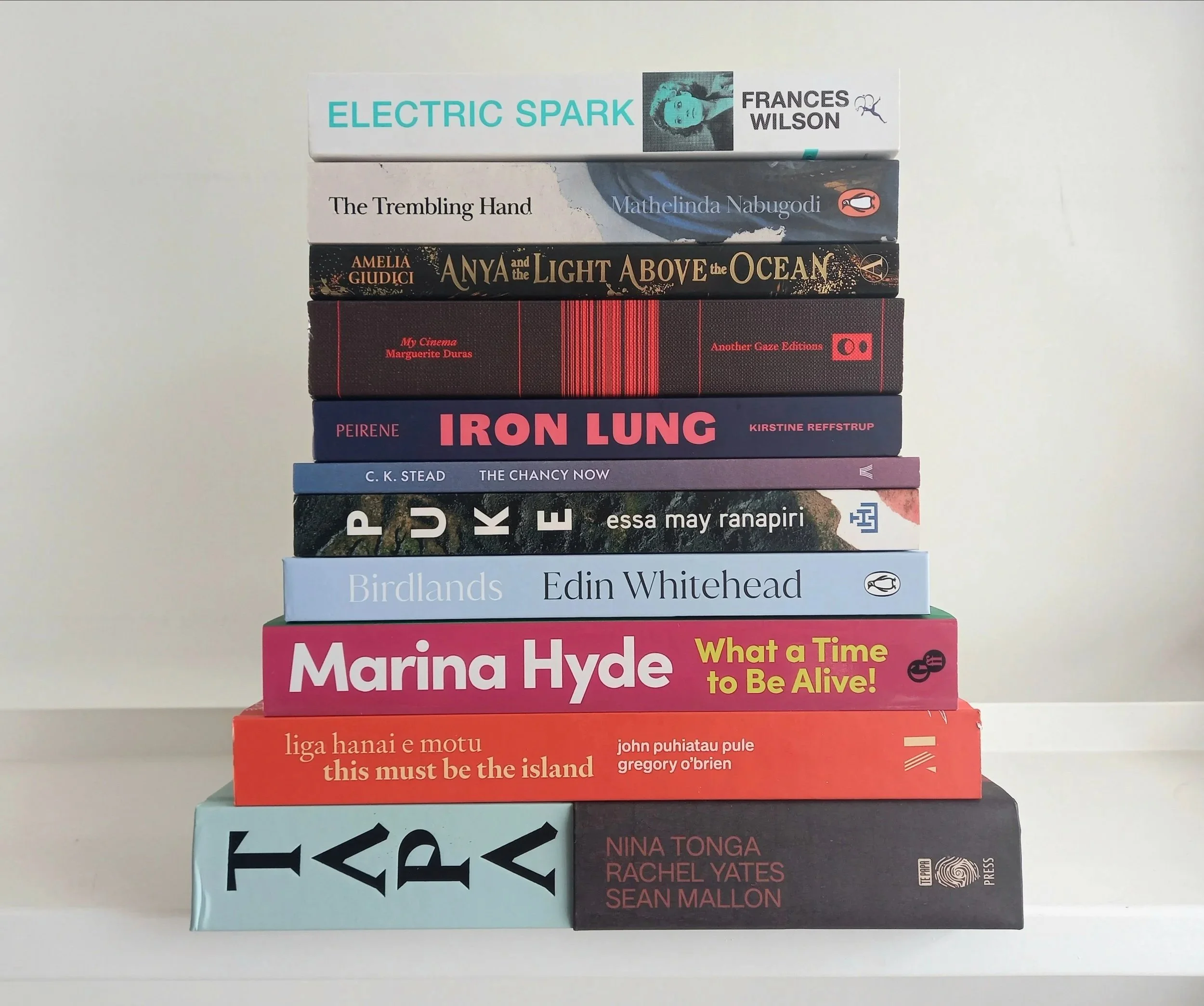
All your choices are good! Click through to our website (or just email us) to secure your copies. We will dispatch your books by overnight courier or have them ready to collect from our door in Church Street, Whakatū.
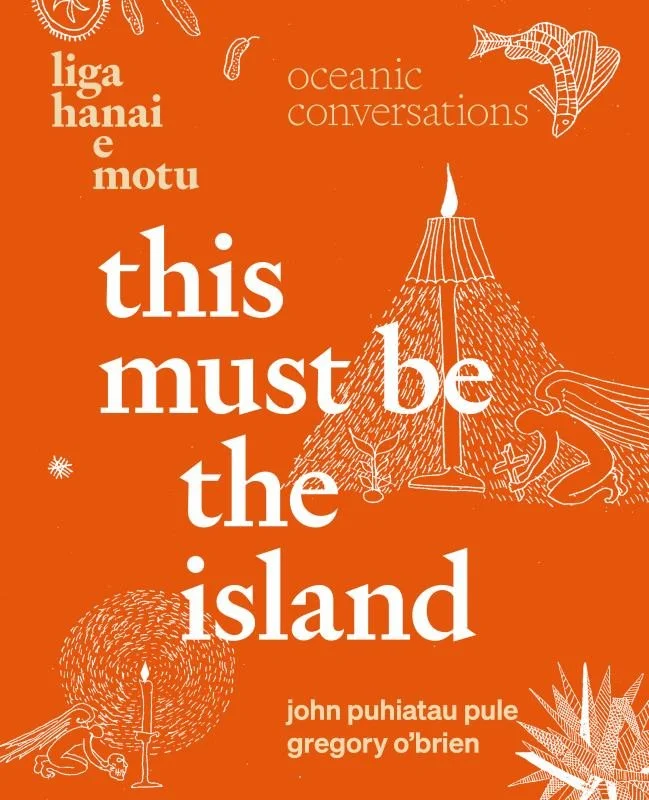
This Must Be the Island — Liga Hanai e Motu: Oceanic conversations by John Puhiatau Pule and Gregory O’Brien $70
In 2010, poet-artists John Puhiatau Pule and Gregory O'Brien embarked on a voyage of artmaking and travel around the South Pacific, making collaborative etchings, corresponding, writing poetry and immersing themselves in Moana Oceania. Sixteen years on, their collaboration continues to yield a heady mixture of dreams, memories and a pervasive sense of the joy and wonder of being alive in this part of the world. This Must Be the Island--Liga Hanai e Motu is the story of their creative friendship and an art project as expansive and all-encompassing as the Pacific. [Hardback]
>>Look inside!
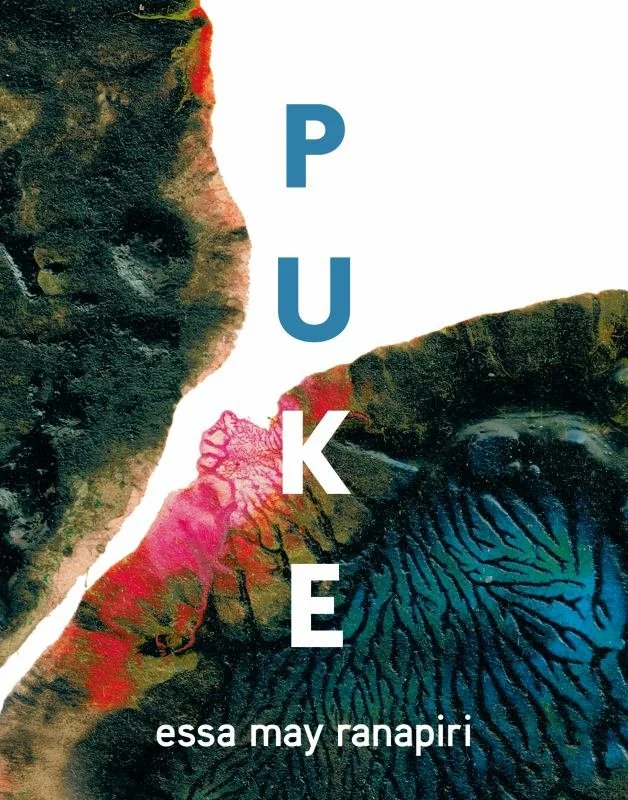
PUKE by essa may ranapiri $35
A takataapui verse epic that follows two atua waahine living their queer, poorhara lives on a giant Dead Fish. They first meet a million years ago, in the eruption of a volcano. The second time, it's in a liquor store: Hinenuitepo is buying a lighter for Mahuika; Hinemoana is picking up drinks. Before long, they become entangled in rituals of mortality — love, hot chips, a carved bone strap-on, multiple evictions and a new puppy — all while holding down their duties as Death and the Sea. But there is a great sickness rising in them both. The other atua have begun to disappear, and their world is slowly dying. Somewhere, an insidious power waits. As the story shifts between our two lovers, PUKE weaves a modern puuraakau of desire, decay and decolonisation. [Paperback]
>>No relation.
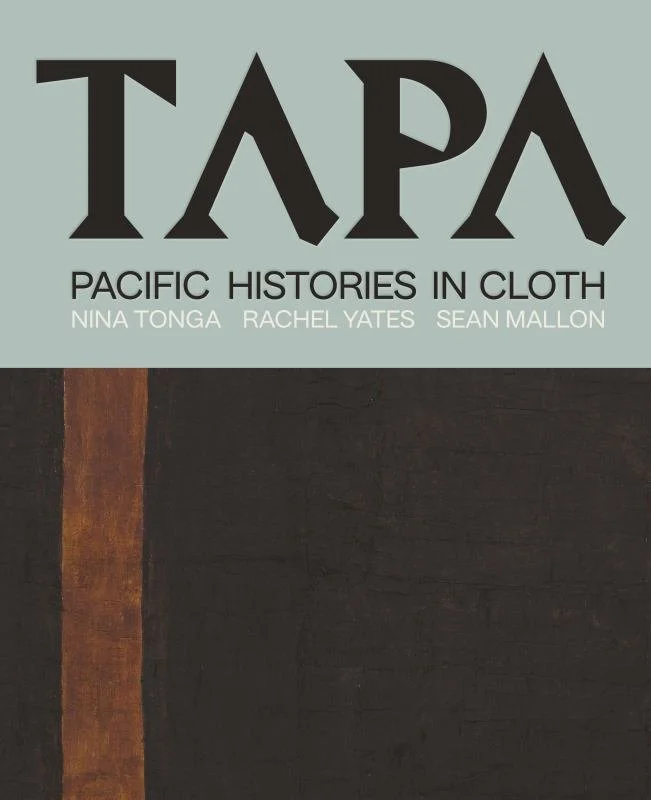
Tapa: Pacific histories in cloth by Nina Tonga, Rachel Yates and Sean Mallon $95
The most significant contribution of knowledge about tapa in a generation, offering new views on its practices, meanings and histories across art, dress, culture and curation. This multi-authored book draws upon the vast collections of the Museum of New Zealand Te Papa Tongarewa, illustrating over two hundred tapa from 18 Pacific island nations, from Taiwan to Hawai‘i, to explore its lineages. For centuries, people across Pacific communities have created beautiful and functional tapa cloth from tropical tree bark. Understood by many names, its uses for mats, clothing, ceremony and art are well known and have been further highlighted by the recent revitalisation of customary techniques. Tapa reveals the many creative processes that shape how tapa mediates these Indigenous histories, both in and out of the museum. Placing artists and makers at its centre, the authors and contributors explore the processes and cultural politics of contemporary tapa making alongside experiences of migration, art, dress, conservation and curatorship that reflect the complex social and cultural lives of tapa cloth. [Hardback]
>>Look inside.
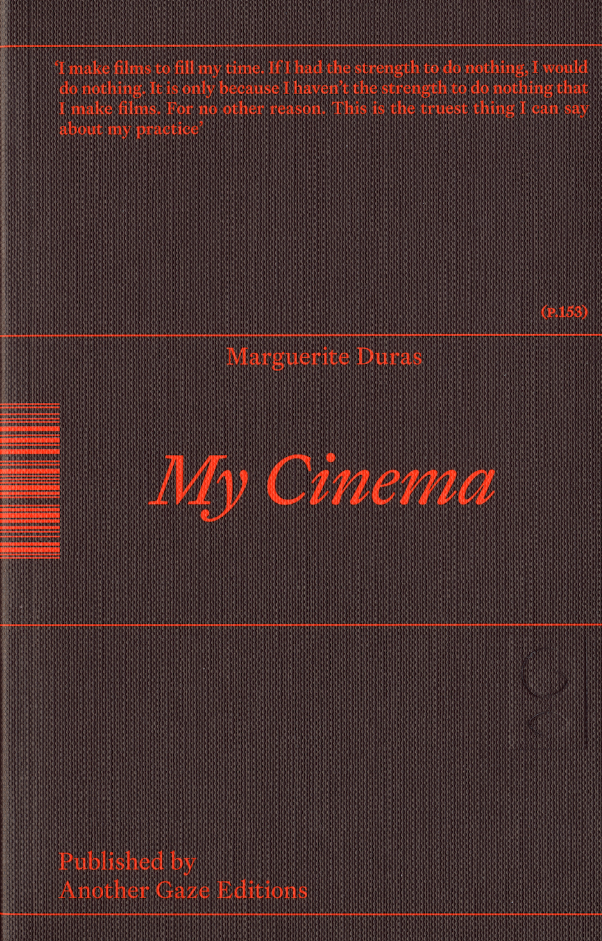
My Cinema by Marguerite Duras (translated from French by Daniela Shreir) $55
Working chronologically through her nineteen films, made between 1966 and 1985, this collection of reflections by Marguerite Duras (1914–1996) includes non-standard press releases, notes to her actors, letters to funders, short essays on themes as provocatively capacious as ‘mothers’ and ‘witches’, as well as some of the most significant interviews she gave about her cinematic and writing practices (with filmmakers and critics including Jacques Rivette, Caroline Champetier and Jean Narboni). In Duras's hands, all of these forms turn into a strange, gnomic literature in which the boundary between word and image becomes increasingly blurred and the paradox of creating a cinema that seeks ‘to destroy the cinema’ finds its most potent expression. Yet, Duras is never concerned only with her own work, or even with the broader project of making cinema: her preoccupations are global, and the global crucially informs her perceptions of the way in which she works. With the audiovisual as a starting point, her encyclopaedic associative powers bring readers into contact with subjects as diverse as the French Communist Party, hippies, Jews, revolutionary love, madness and freedom, across four decades of an oeuvre that is always in simultaneous dialogue with the contemporary moment and world history. A beautifully designed and produced volume, illustrated with film stills.
”To still be able to hear Marguerite Duras’s voice as she speaks and writes about her filmmaking practice is a gift.” —Bette Gordon, filmmaker
”Both ahead of her time and nostalgically mired in the past, in My Cinema, Duras deconstructs her own methods, going gleefully against the grain in order to ‘destroy’ conventional cinema. A beautifully translated collection of writing by an often maddening genius.” —Lizzie Borden, filmmaker
>>Look inside!
>>Some films by Marguerite Duras.
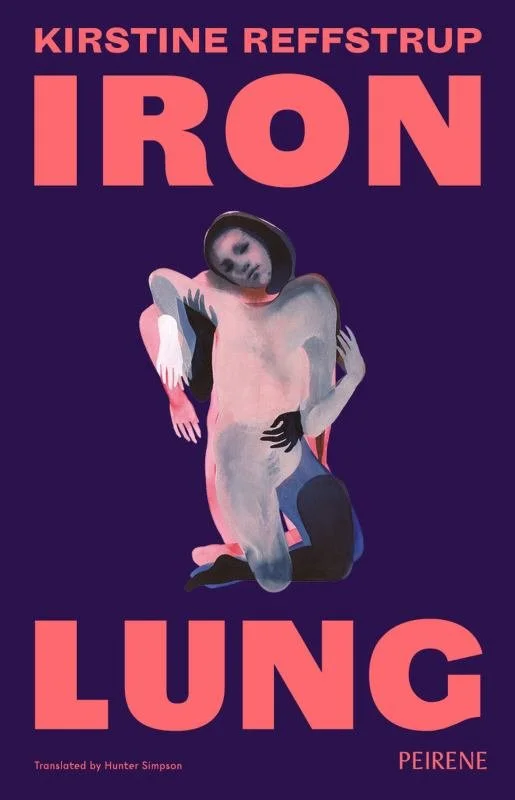
Iron Lung by Kirstine Reffstrup (translated from Danish by Hunter Simpson) $38
A girl is struck down by polio during the terrifying epidemic of the early 1950s. Paralysed and unable to breathe on her own, she is committed to hospital in Copenhagen and placed in an iron lung. Forty years earlier, near Budapest, a child grows up in an orphanage for boys. The child goes by the name of 'Boy' but is not like the others, as their body seems to transcend the categories of boy or girl. Between these two young people, there is a powerful, enigmatic bond that stretches across time and space. [Paperback with French flaps]
'Reading Iron Lung felt like remembering a past life, at once so foreign and familiar. With her lucid, pulsating sentences, as poetic as they are precise, Kirstine Reffstrup pierces a little hole in history and pulls a thin, but shining thread through it: a vital and very moving connection between two distant young children living at the edges of time and normality. The result is a wonderfully singular novel that is both historically rooted and full of queer fabulation, both violent and brimming with a desire for embodiment and connection.' —Jonas Eika, author of After the Sun
'What if bodies were not told as pathologies or perversions but rather as stories of spiders, rivers, eggs, and laboured breaths? With sensuous sensitivity, Iron Lung imagines the queer twinnings that arise between bodies cast aside by the twentieth century.' —Selby Wynn Schwartz, author of After Sappho
'A wonderful book: writing which is so vital and so visual coupled with a story which is strange, psychedelic, precise and filled with melancholy. Virtuosic work.' —Aidan Cottrell-Boyce
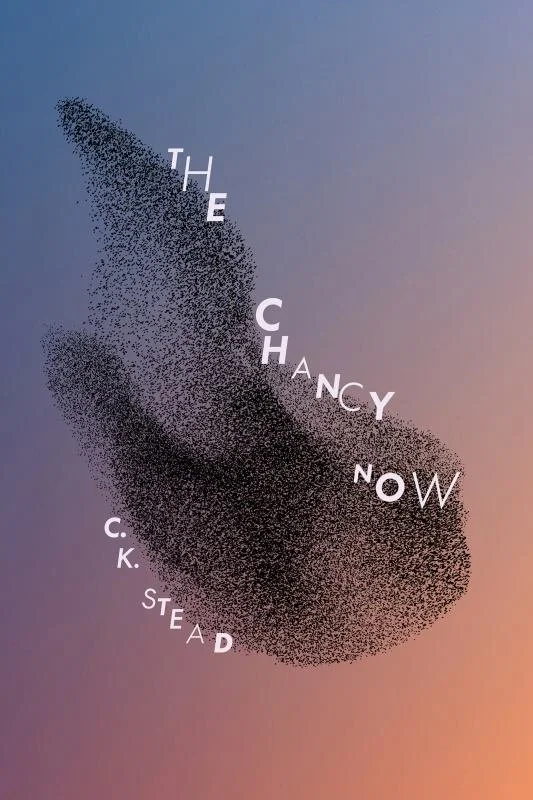
The Chancy Now: 120 sonnets by C.K. Stead $25
In the 1970s a young professor, I rescued from a puddle in Princes Street a Penguin of Nietzsche’s Thus Spake Zarathustra, dried it and read it, annotating as I went, underlining his thought that one must have chaos within if one is to give birth to a dancing star. At 93, his wife Kay and son Oliver recently dead, writing nothing, C. K. Stead thought there were no more books. Then, ‘alive on pills, / and the surgeon’s knife’, enduring grief and recovery, sonnets began to appear, three or four a week, the poems collected in this volume. Chaos won’t teach a sonnet to limit its lines but every sonnet should have its dancing star. From the ABs under the high ball to Braunias’s lamingtons, from Dionysus to Guide Rangi, from the Uber driver (‘He’s a Wittgenstein man so we get along perfectly / passing over in silence what can’t be discussed’) to the author (‘My Chookspeak’s better than my French because I learned it / in the right way, by ear, not off the page’), 120 sonnets reveal a poet battered, bruised and still in his prime. After a sonnet tending to self-pity and crap I consign it to the bin and set off knowing today’s wild northerly wind and rough seas at Kohi will knock me into shape. [Paperback]
'If we were able to talk comfortably of an Australasian literature, rather than its Australian and New Zealand sub-branches, then C. K. Stead would be regarded as one of the dominant writers of the past half century . . . a towering talent, cosmopolitan, lucidly intelligent. Few writers on either side of the Tasman have matched Stead's multi-faceted achievement.' —Peter Pierce, Sydney Morning Herald
'Stead writes the way Torvill and Dean skate. He makes it look so easy you don't realise until afterwards that very few people can put together such luminous sentences.' —Iain Sharp
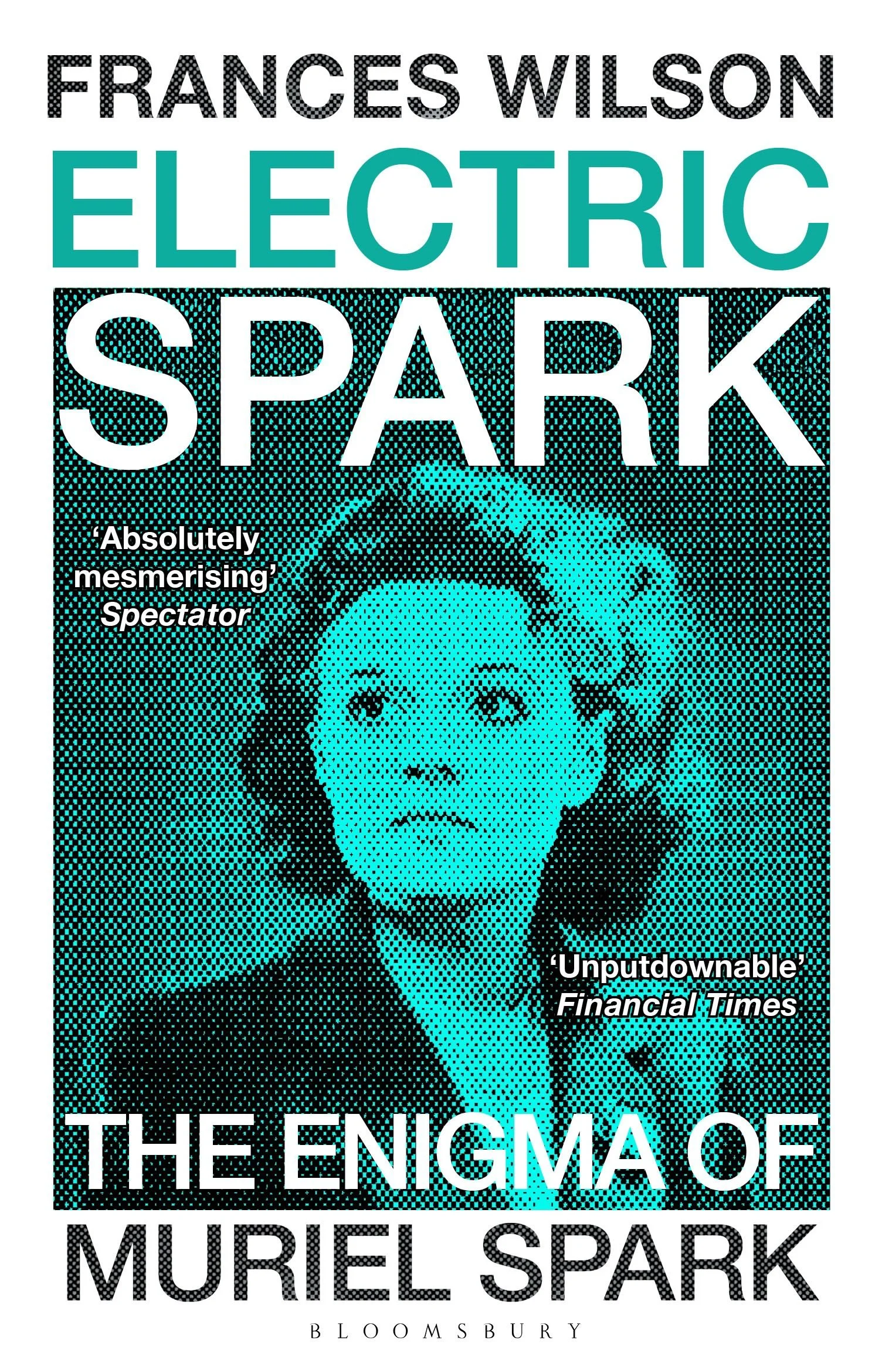
Electric Spark: The enigma of Muriel Spark by Frances Wilson $30
“A revolutionary book. When Spark published her first novel, The Comforters, in 1957, it was recognised as unique — something that quite simply had never been done before. Wilson's achievement in Electric Spark is equally remarkable: an entirely original method of life writing which leaves conventional biographical techniques gasping in the dust. Electric Spark heaves with ghosts and furies, burglaries and blackmail. It is disquieting and absolutely mesmerising. I was possessed by this book in the same way that I suspect its author was possessed by Spark. It still hasn't put me down.” —Lisa Hilton, Spectator
”Wilson is not any old biographer. Her books are intense, eclectic and wildly diversionary, her intelligence rising from their pages like steam — and in Spark, the cleverest and the weirdest of them all, she may have found her ultimate subject.” —Rachel Cooke, Observer
>>World-beating buster-upper.
>>Odd things happened when she was around.
>>Life echoes fiction (or vice versa).
>>Right into the deep end.
>>Spark meets her match.
>>The matter of fact.
>>Twin menace.
>>More than nerve.
>>Strike a few Sparks.
>>Also still available in hardback.
>>Other remarkable biographies by Frances Wilson.
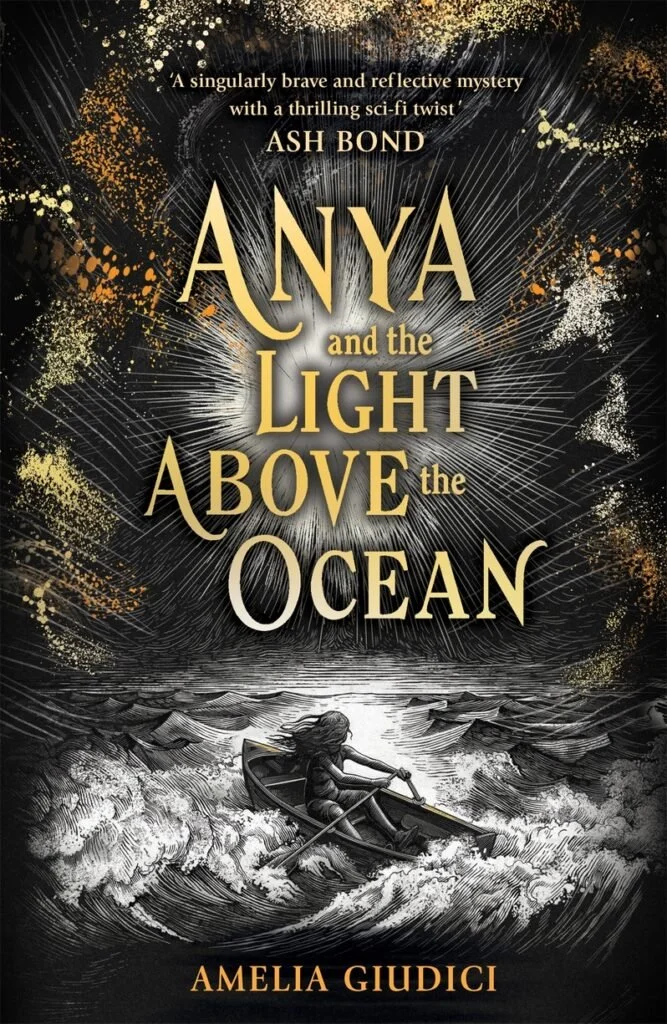
Anya and the Light Above the Ocean by Amelia Giudici $22
When her scientist mum disappears one night, Anya sets out to find her in the middle of a storm. Taking a boat out to sea, she encounters a strange window of light hovering above the waves. Transfixed, she reaches out to touch it. Moments later, Anya wakes in her boat. The sea now eerily silent. With her mum still missing, Anya is packed off to stay with the odd, unwelcoming Mr and Mrs Ungsworth. Trapped under their watchful gaze, she uncovers a shocking secret: the light has split her into two people. Anya escapes and returns home — to find another girl, identical to her, living there. Confronted with this impossible situation, the girls soon realise the organisation their mum worked for, Janus, is seeking to harness the power of the mysterious light and is now after them. Thrown headfirst into the perilous world of Janus, both versions of Anya must now team up to escape them. But can Anya’s battle to find herself also lead her back to her mother? [Paperback]
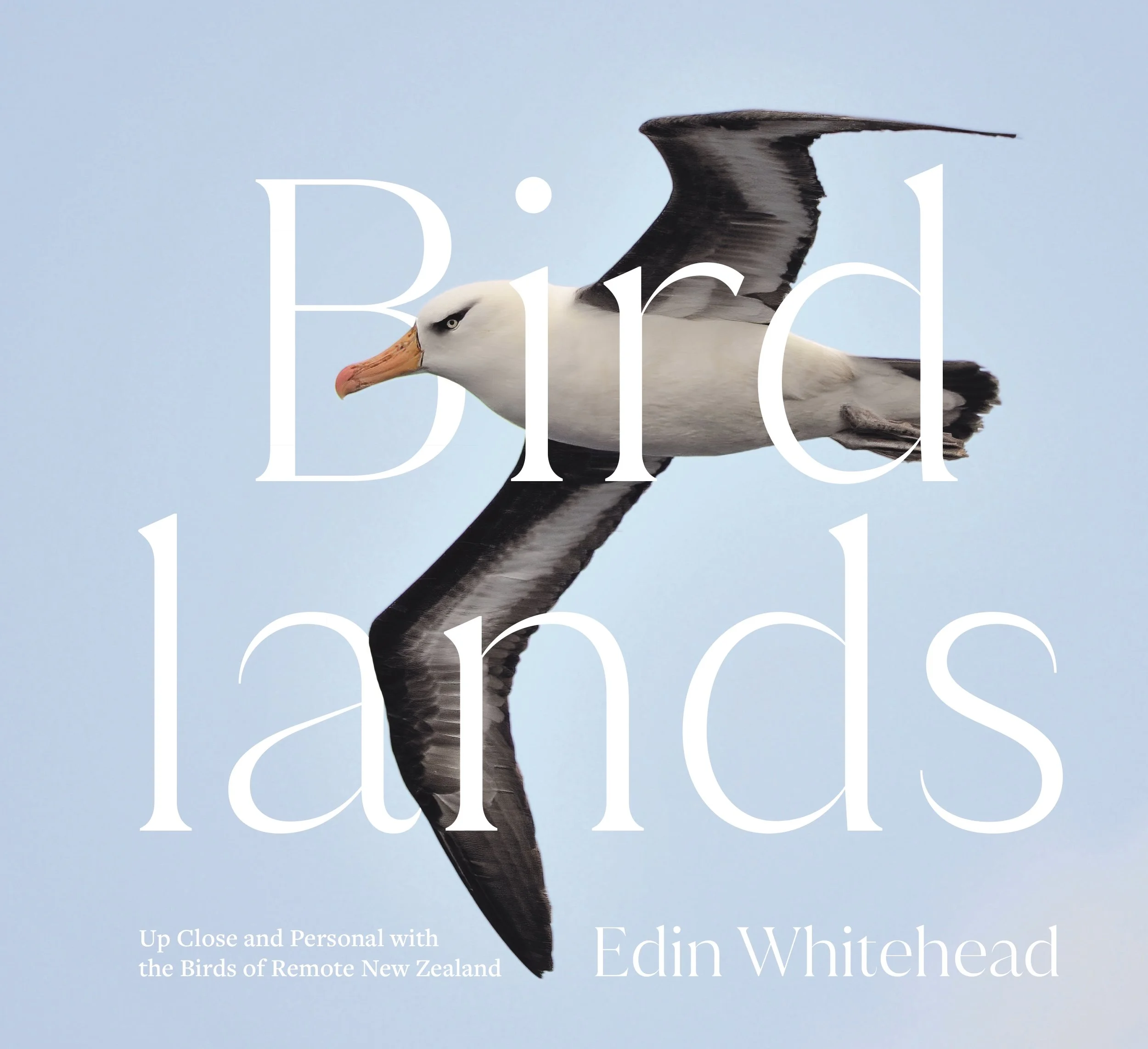
Birdlands: Up close and personal with the birds of remote New Zealand by Edin Whitehead $50
In the most remote outposts of Aotearoa, our islands are populated not with people, but with birds. From the storm-lashed Subantarctic Islands in the deep south to the scattered volcanic islands of Tikapa Moana/Hauraki Gulf in the north, Birdlands offers a rare passage through the largely inaccessible places where birds still thrive. Guided by scientist and writer Edin Whitehead, Birdlands is part natural history and part love letter to these remote edges and their inhabitants, with stunning photography capturing the wonder and urgency of life among albatrosses, petrels, penguins, kakariki, kiwi and more. This is New Zealand as few of us will ever see it, wild and fragile, and a beautiful reminder that while these birdlands are not ours to visit, they are ours to protect. [Hardback]
>>Look inside.
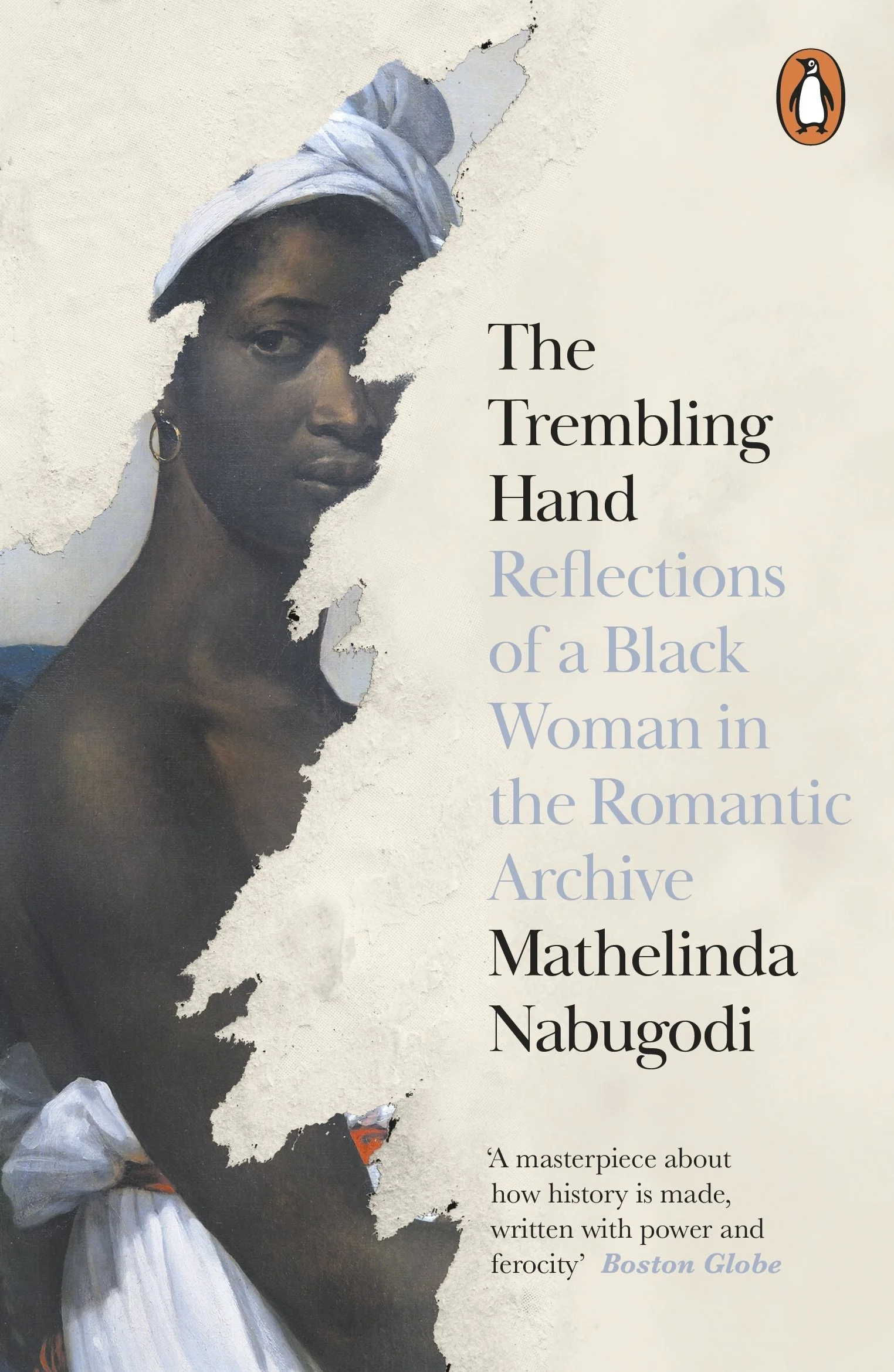
The Trembling Hand: Reflections of a Black woman in the Romantic archive by Mathelinda Nabugodi $35
Wordsworth, Shelley, Byron, Keats — the Romantic poets are titans of English literature, taught and celebrated around the world. Their writings are associated with the sublime power of nature and revolutionary politics. But these literary icons also lived through the climax of the transatlantic slave economy. They witnessed both the explosion of the abolition movement — and the reactionary formation of white supremacist ideologies. The Trembling Hand examines how the lives and works of six major Romantic authors were entangled with the racial politics of their era. Mathelinda Nabugodi studies manuscripts and archival treasures — a teacup, a baby rattle, a lock of hair — to recover startling links between the poetry of freedom and the practices of slavery in the Romantic period. [Now in paperback]
”Propelled by a voice that is urgent, exasperated and eager to share what it knows. Her account of Byron shows why she wrote this book, and also her ability to argue with herself, to dramatise her own doubts. That's a rare gift for any critic. Her passion, and her learning, ensure that one will never look at these poets in quite the same way.” —The New York Times
”Ambitious and ingenious, Mathelinda Nabugodi engages the reader both emotionally and intellectually in the quest to re-see, re-imagine and re-read the past. A voice sometimes tentative and searching, then sure of its scholarship, then puzzled by some large absence in the archive, then engrossed by a poem, an essay, a letter.” —Colm Toibin
>>And also still available in hardback.
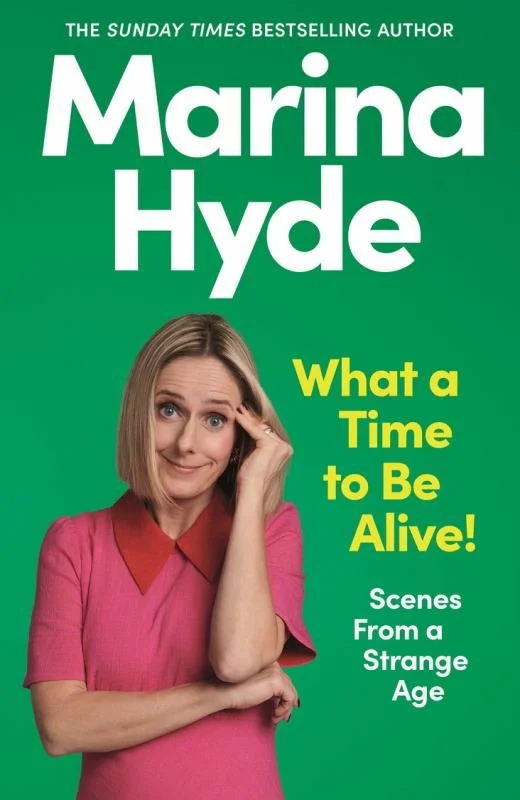
What a Time to Be Alive! Scenes from a strange age by Marina Hyde $38
What a Time to be Alive! So lettuce remember Liz Truss, relive the last days of the Tories, meet the guy they called No-Drama Starmer, and succumb to hyper-resistant superbug Nigel Farage. Travel stateside to meet our supranational Silicon Valley overlords, Donald Trump and his cavalcade of henchmen — then head for infinity and beyond with Lauren Sanchez and Jeff Bezos. Experience testing times for misunderstood men in television, create wonder in every moment with Meghan, and relive the horror of the Gwyneth Paltrow ski massacre trial. Truly, these are times that make you want to put your hands over your eyes, even when your hands are already over your eyes. Collected from Hyde’s weekly Guardian columns. [Paperback]
'Britain’s foremost living satirist.' —Vogue
'Hyde's columns are the solid-silver lining of Britain's political shitstorm.' —Caitlin Moran