
NEW RELEASES (8.9.26)
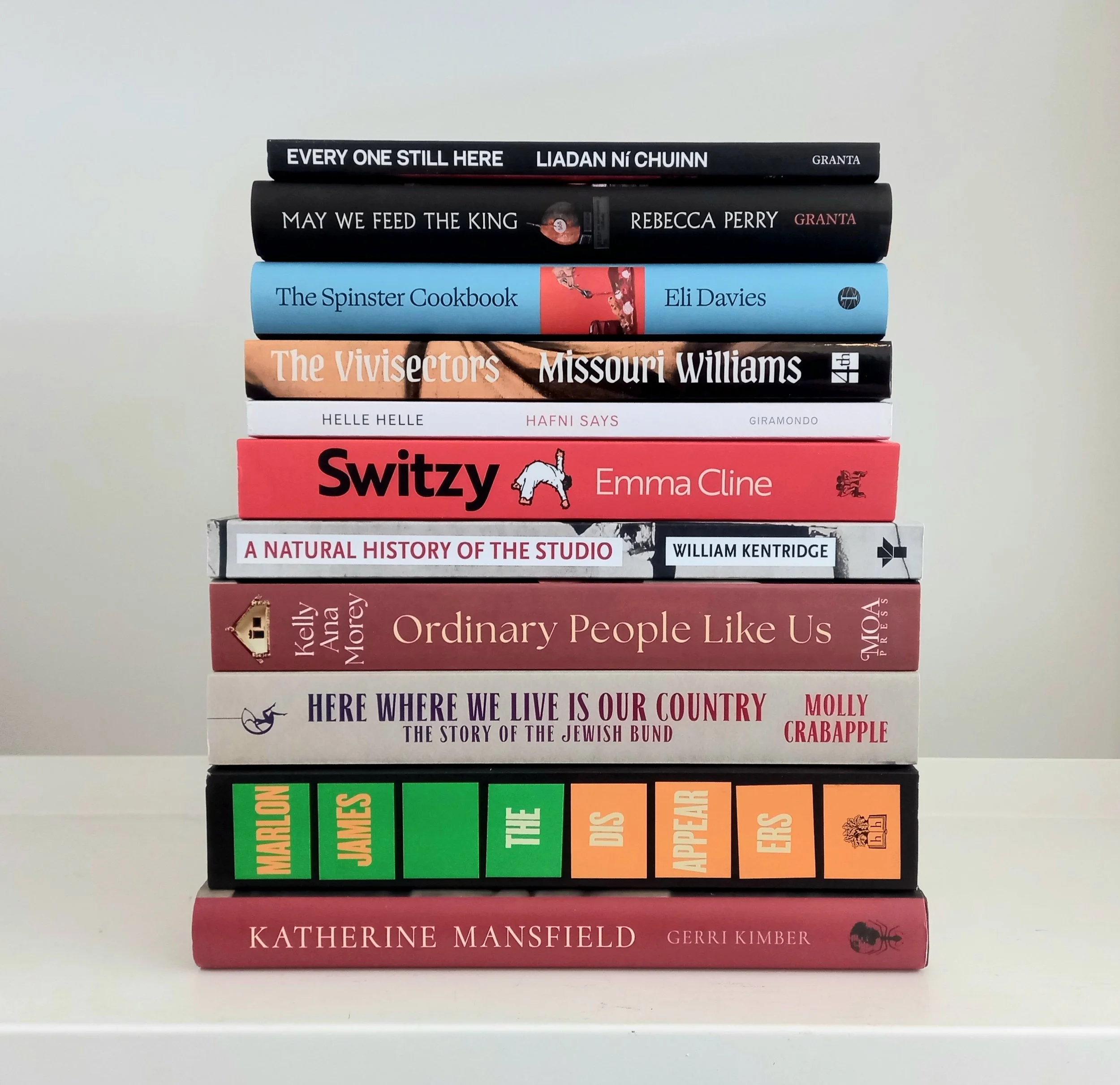
All your choices are good! Click through to our website (or just email us) to secure your copies. We will dispatch your books by overnight courier or have them ready to collect from our door in Church Street, Whakatū.
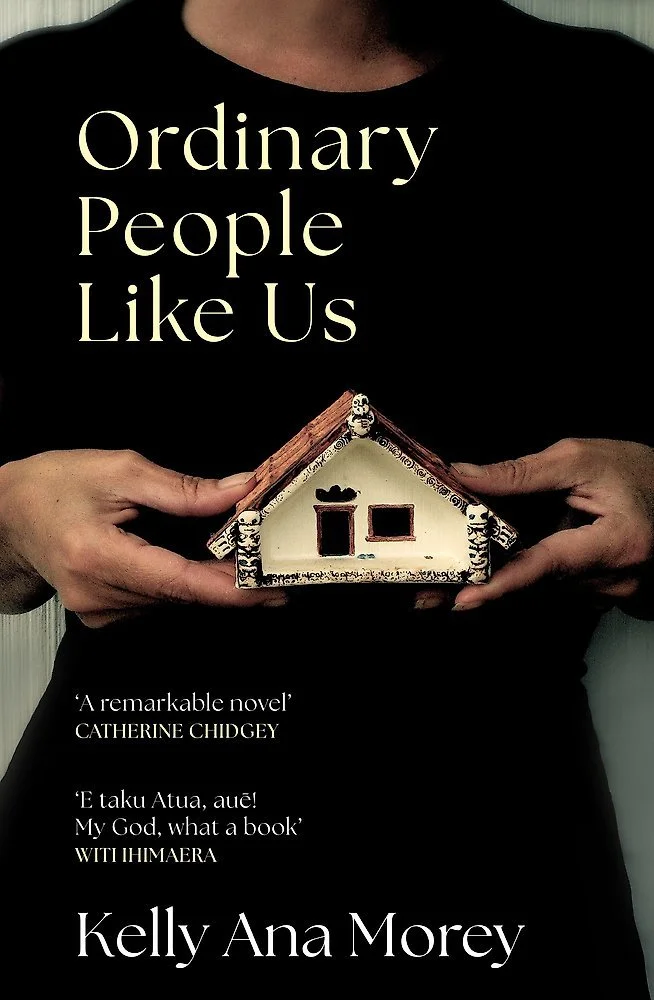
Ordinary People Like Us by Kelly Ana Morey $38
”And here I was thinking we were just ordinary people.” From the landscapes of the Far North, through inner-city Auckland and to London in the 1970s and 90s, Ordinary People Like Us follows five generations of Māori women through a century of profound social and cultural change. Bird. Kaa. Annie. Lorna. Jen. Pax. Where should we start? What is there to know? Some fall in love easily, while others wait half a lifetime for their person. One walks a thin line between the land of the living and the call of the void. Some listen to the ghosts of the past, and each forges their unique way in the world. Gifted with an otherworldly instinct, in their most ordinary lives, they are all extraordinary. Expansive and intimate, exploring the bonds that endure through generations, Ordinary People Like Us is a celebration of family and a powerful reminder that no matter how far we travel, it is the people who love us that keep us whole. [Paperback]
”A remarkable, generous novel.” —Catherine Chidgey
”E taku Atua, auē! My God, what a book!” —Witi Ihimaera Smiler
>>The final, magnificent novel.
>>Catherine Chidgey on bringing the manuscript to publication after the author’s death.
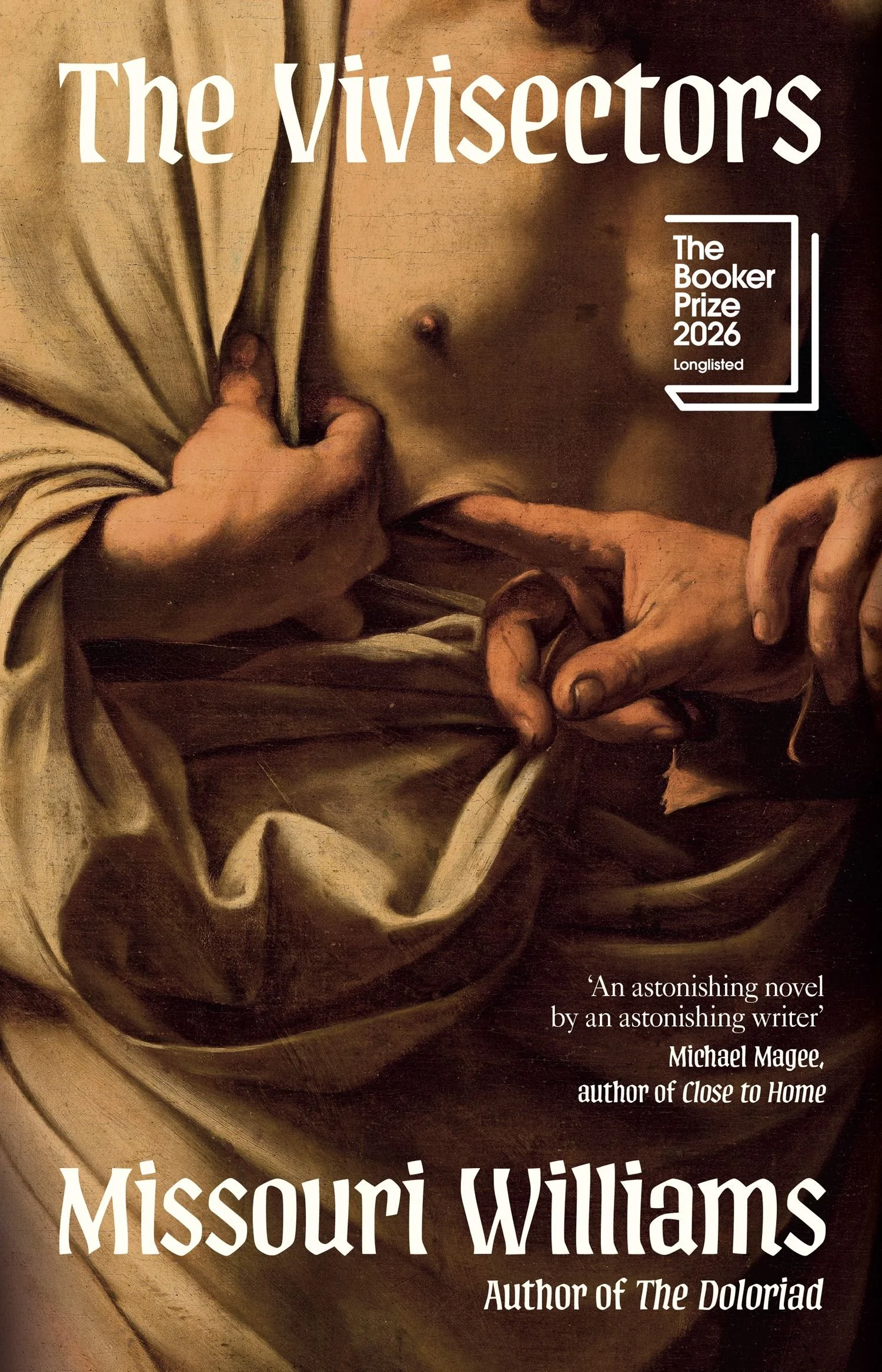
The Vivisectors by Missouri Williams $35
In a famed but crumbling university city overrun by vegetation, where power is held in a fragile balance between the academics and a contingent of rogue gardeners, Agathe spends her days listlessly propping up the career of her fraudulent professor boss. One day, a campus scandal threatens to rupture her carefully managed routine: Adam, a contrarian and the pet student of her boss, comes into heated conflict with a rising young professor, with both men claiming discrimination. As the crisis consumes the university, Agathe remains unmoved. But when her boss instructs her to turn double agent and gather information by befriending Adam, Agathe finds herself both caught up in the events tearing the city apart and increasingly drawn towards the alluring student at the heart of it all. But can anyone be taken at their word in a struggle over the truth? Coursing with icy suspense and rendered with violent precision, The Vivisectors is a new kind of love story for a broken era. Missouri Williams holds up a mirror to humanity's most intimate contradictions and reflects them back through a novel of blazing spiritual reckoning. [Paperback]
‘A bracing antidote to the cosy campus and the dark academia novel, The Vivisectors instead imagines higher education as a transparent citadel where human axolotls masquerading as professors and students are bent on drawing and quartering each other with no mercy, as their nameless city is overtaken by relentless vegetable growth. No one is protected, everyone is exposed, it is highly doubtful anyone is learning anything, and on top of all that vines are coming up your legs. Genuinely experimental, relentlessly and rollickingly told – in places truly menacing – The Vivisectors is the rare title that actually earns its name.’ —2026 Booker Prize judges’ citation
'Williams writes with a singular brand of Ballardian ferocity — she revels in the wretched and the craven.' —Guardian
'Part love story, part ecological fable; a bleakly funny study of ideological certainty.' —The Times
'A compelling exploration of love, whether with another person or with God.' —Financial Times
'Her prose folds itself into the literary legacy of writers such as Clarice Lispector, Anna Kavan, Rachel Kushner and Ottessa Moshfegh.' —Our Culture
'This is the modern rupture — our crisis of meaning and spiritual malaise shaped into a novel unlike any other.' —Paul Lynch
'Hypnotic and sublimely disturbing.' —Sara Baume
>>Read an extract.
>>Twisted love.
>>Strange institutional power.
>>Locked within subjectivity.
>>Any reality.
>>Never needing to think again.
>>The Doloriad.
>>Other books long-listed for the 2026 Booker Prize.
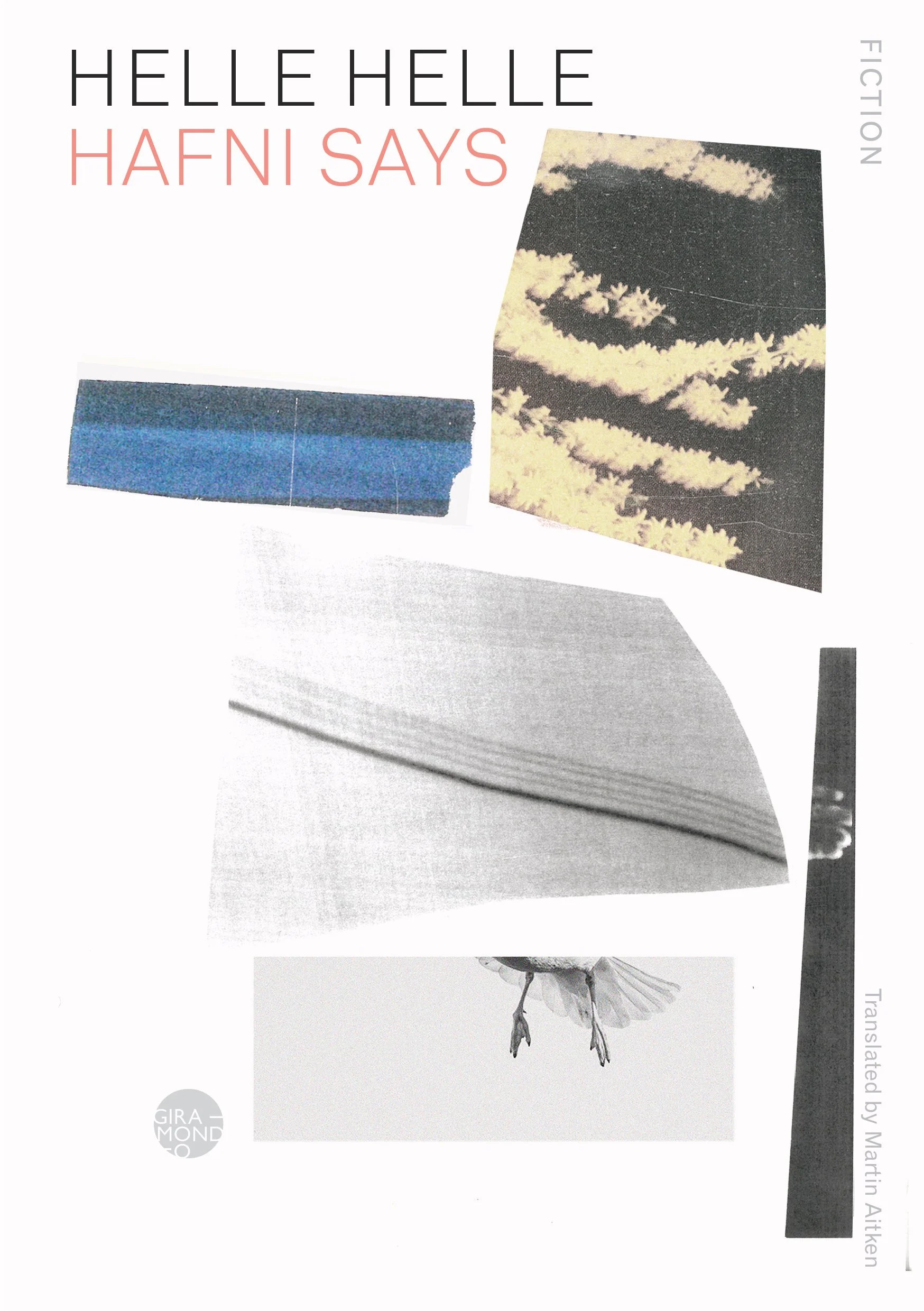
Hafni Says by Helle Helle (translated from Danish by Martin Aitken) $35
Hafni says: I don't want to be me. I want to change who I am. I don't know how to change who I am. Hafni says she's getting divorced. To celebrate, she sets out across southern Denmark on a smørrebrød tour, to sample Danish classics, open-faced sandwiches, and afternoon teas. A month later, she makes a phone call from a rest stop to the novel's narrator (a main character from Helle Helle's previous novel they) to explain how she went wrong, and why a trip that was meant to take a week has ended up consuming an entire month. Her storytelling seems to incarnate how Hafni herself digresses, how her past unfolds as one long series of accidents and mishaps, the accumulation of which somehow became the life she is living. Infused with Helle Helle's subtlety and dark humour, and brought into English in Martin Aitken's virtuosic translation, Hafni Says explores the desire to be anyone but yourself and what it means to try to make yourself anew. [Paperback]
”Helle Helle will enchant readers with the terse transfiguration of the ordinary into poetic strangeness.” —Sydney Morning Herald
>>Read an excerpt.
>>they.
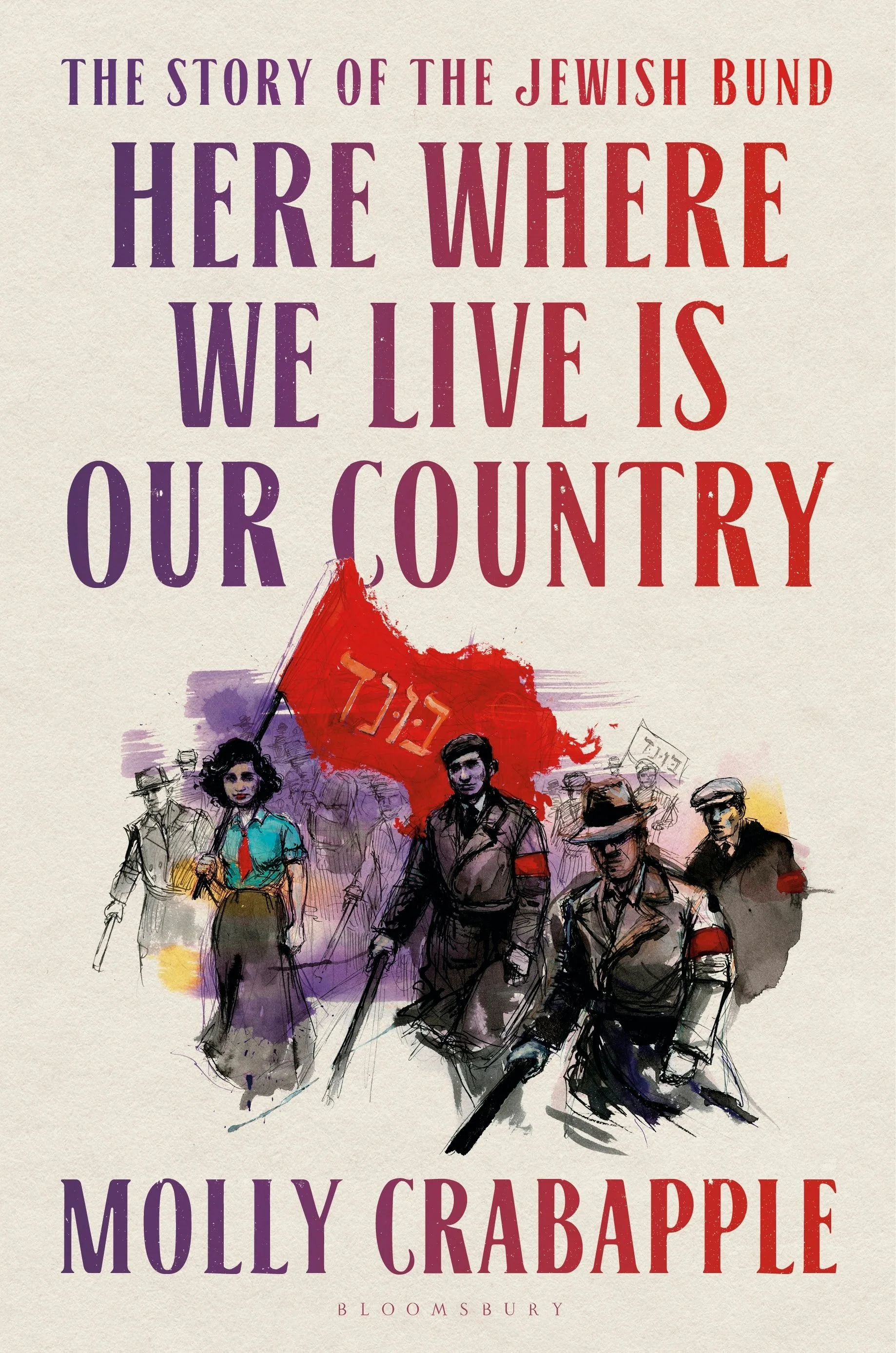
Here Where We Live Is Our Country: The story of the Jewish Bund by Molly Crabapple $40
Here Where Live Is Our Country is the story of a revolutionary movement — the Jewish Bund — which played a part in nearly every major conflict in Eastern Europe from 1900-1945, but still remains an almost unknown part of twentieth-century history. The movement's central philosophy of ‘herenes’ — the belief that Jews had a right to freedom and dignity in the countries where they lived — led them to fight the Tsar, reject Zionism, resist the Nazis, and ultimately help lead the Warsaw ghetto revolt. It is also a philosophy that immediately resonates with the political situation all over the world today. In this book, Molly Crabapple tells the story of the Bund through the lives of the bold and brilliant individuals who were pivotal to carrying out the doctrine, including her own great-grandfather, through whom she first discovered the movement. [Paperback]
”Molly Crabapple is a time traveller, a necromancer and an unclassifiable genius. She beckons readers through a portal to an irresistible, lost world, one bound together by passion, solidarity, and a burning hunger for justice. Here Where We Live Is Our Country is that rarest of books: a gripping, human story of love, idealism and betrayal — and an immense, rigorous contribution to the historical record. Reading it feels revolutionary.” —Naomi Klein
”In 380 lush, high-tempo, strikingly poignant pages Crabapple documents the Bund's extraordinary rise and fall. The relevance of her material for our present moment is impossible to ignore.” —Guardian
”Crabapple's terrific Here Where We Live is Our Country unearths the story of a Jewish political movement that opposed ethnic nationalism of all stripes. Thrillingly energetic, delightful, vivid.” —New York Times Book Review
”Vast in scope, elegiac in prose, this book brings to life the profound humanity of those who stood up to the blood soaked ethno-nationalisms that led to so many of the twentieth century's storied horrors. All the while, Crabapple never lets us forget that they were also fighting for a world that would not give rise to such evil. This book is many things: an ode to the grand legacy of anti-Zionist Jewishness; a profound reflection on whether history has morals; and an essential resource for anti-fascist history, concepts and tools.” — Jason Stanley
”Molly Crabapple not only recounts, with a novelist's mastery of detail, one of the most extraordinary rebellions of the human spirit in modern history. She animates, too, elegantly and boldly, a political and spiritual tradition that the zealots of ethnonationalism had managed to suppress for too long. In the long battles ahead for truth and dignity, her book will be an indispensable resource.” —Pankaj Mishra
>>Back to the Bund.
>>Solidarity across difference.
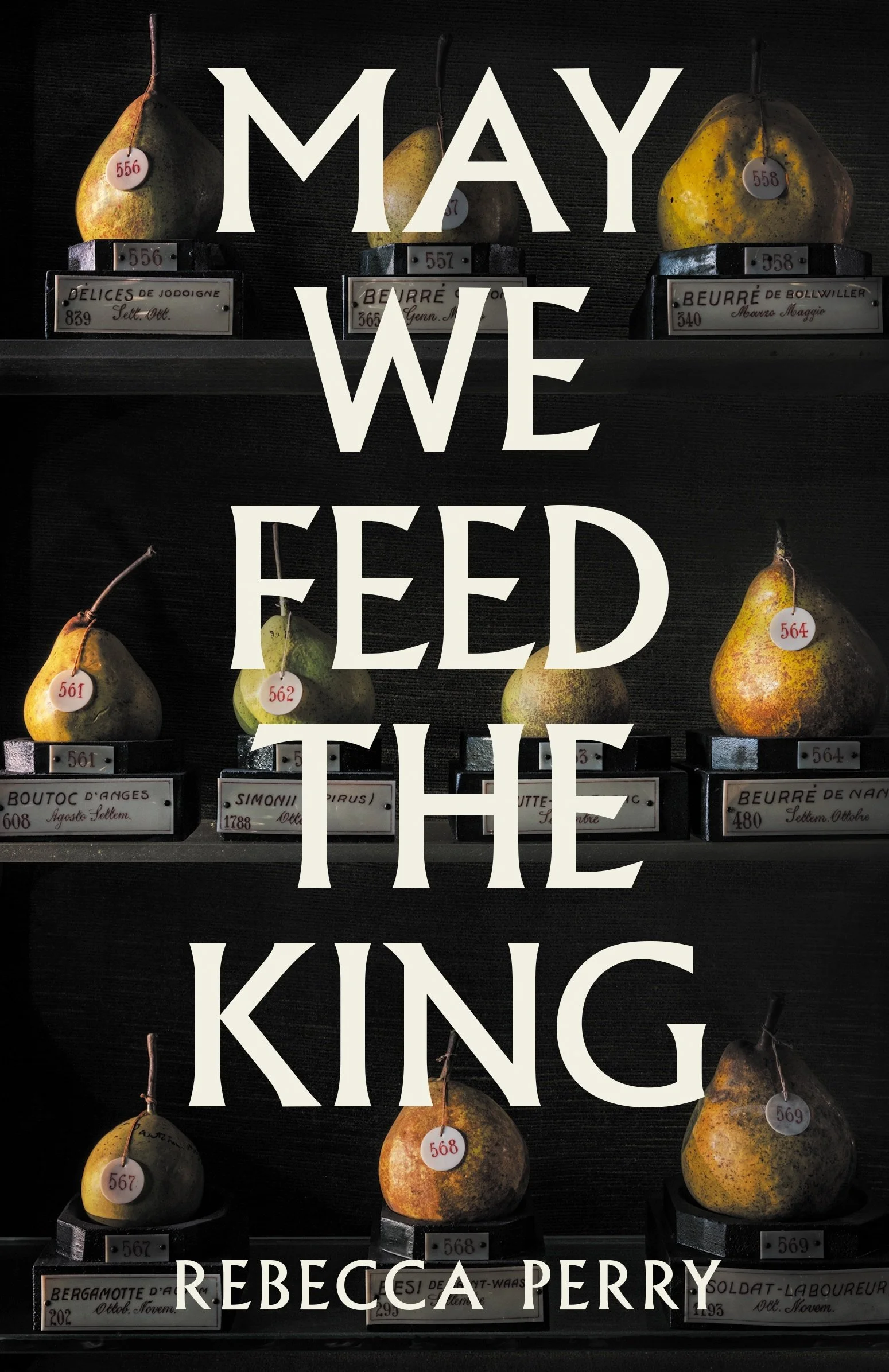
May We Feed the King by Rebecca Perry $38
She is a curator, who spends her time dressing the rooms of historic buildings to bring them to life. But in the lush private quarters of a medieval palace, she finds herself so transfixed by the reign of an almost-forgotten King that the edges of her life begin to blur. He is a reluctant ruler with no hunger for power, rushed to the throne after the untimely deaths of his older brothers. But it isn’t long before whispers begin to fly around the court. And with the growing belief that the King is not fit for the throne comes the idea that another might rule in his stead. May We Feed the King dances between the lives of a historical subject who risks the future of his kingdom and a woman who turns to the past to hide from her present. [Hardback]
‘Perry combines the story of a reserved museum curator who recreates historical banquets, using a careful array of fake pies and pomegranates – with the story of a medieval king, reluctant to occupy the throne (and possibly unfit for it anyway). It’s a wonderfully enticing, and eye-opening, combination of themes, woven together with an extraordinary delicacy of touch. You can’t read May We Feed the King without reflecting on the fragile boundary between the present and the past. What’s the difference between historical fiction and historical fact? Can history ever be a safe place we can go to escape the present?’ —2026 Booker Prize judges’ citation
”Perry combines effortless exactitude with canny ambiguity to create a novel that is always as stimulating as it is enchanting. May We Feed the King is a rare achievement, I absolutely loved it.” —Claire-Louise Bennett
”The historical fiction I have always wanted to read. Surreal and dreamlike, with an eye on the tiny, overlooked details of worlds long gone, this book felt like something hidden come to life — what is real, and what is true, and in the middle of all that, what really matters?” —Jessie Burton
”Meditative, compelling and intricate as a puzzle box — I found myself turning it over and over, admiring and wrong footed and dazzled.” —Kiran Millwood Hargrave
”May We Feed The King floored me with the precision of its emotional insights and eccentric view of history-as-narrative... A sort of perfect snow globe, presenting a decadent world in miniature that surprises us with the depth of its reflections on power, yearning and loneliness.” —A.K. Blakemore
”A gemlike take on historical fiction, moving between a curator who creates luscious and historically accurate tableaux in historic buildings, and the life of a reluctant king. It's intricate and uncanny and beautiful.” —Sophie Mackintosh
>>Read an extract.
>>Somewhat outside of the genre.
>>Leaving gaps.
>>The colour of patience is grey.
>>Other books long-listed for the 2026 Booker Prize.
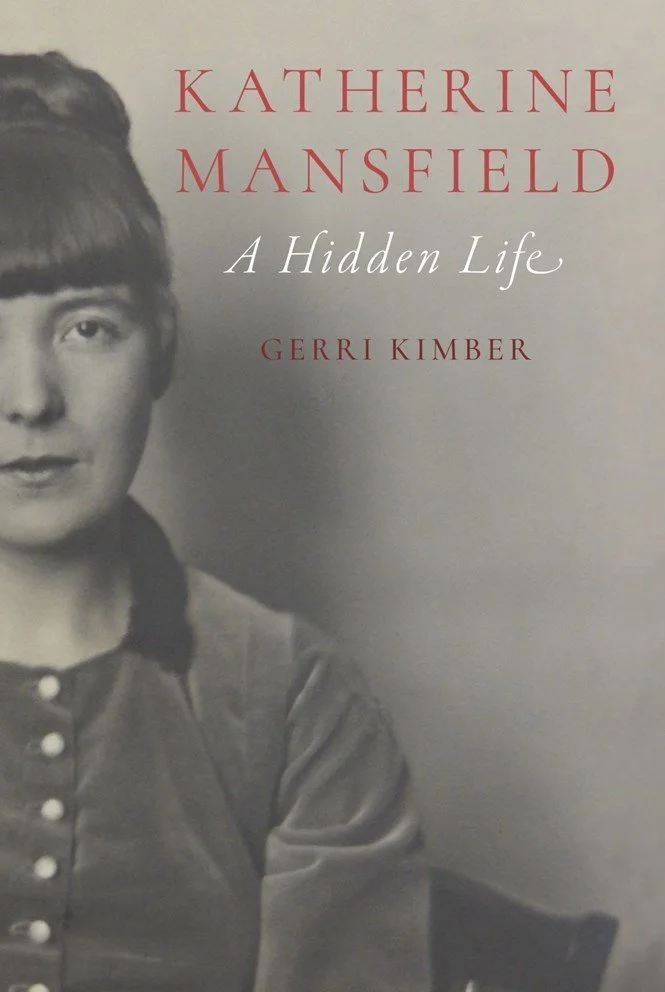
Katherine Mansfield: A hidden life by Gerri Kimber $45
On the fringes of Bloomsbury, and friends with D. H. Lawrence, Aldous Huxley, T. S. Eliot and many others, Mansfield was at the heart of literary London at its most experimental. By the time of her death in 1923, aged just 34, she had broken boundaries and created new ways of writing that led her literary sparring partner Virginia Woolf to later admit that Mansfield's 'was the only writing I was ever jealous of'. Based on compelling new research, Gerri Kimber challenges previous conceptions surrounding the author's life, uncovers friendships and relationships formerly barely acknowledged and offers innovative readings of Mansfield's most celebrated stories. [Hardback]
”Kimber, whose prodigious scholarship (often in collaboration with others) has given us Mansfield's letters and poems as well as unedited versions of the collected fiction and of archival discoveries that tell us more about her sexuality and relationships. In 2016 she published an account of Mansfield's early life; now we have this full, studious biography, whose claims rest on complexity and nuance, on hidden facts over rumour.” —Sophie Oliver, Literary Review
”You will find [the Mansfield story] here in its brilliant light and terrible shadow, its weird Kiwi mix of the banal and the marvellous.” —New Zealand Listener
”The book provides a wealth of new material and insights. Kimber is good at making connections, at filling out and tightening the narrative. Readings of the stories often provide information when other sources are missing. Katherine Mansfield: A Hidden Life expands the Mansfield story, and gives us a writer who is feisty, sexually adventurous, confounded in her 'messy life' by disasters of her own making, experiencing extremes of despair and wild exultation, and finally, impressively, making her own reckoning.” —Janet Wilson, Katherine Mansfield Society Newsletter
>>A civet-cat taken to street-walking.
>>Some other books on Mansfield.
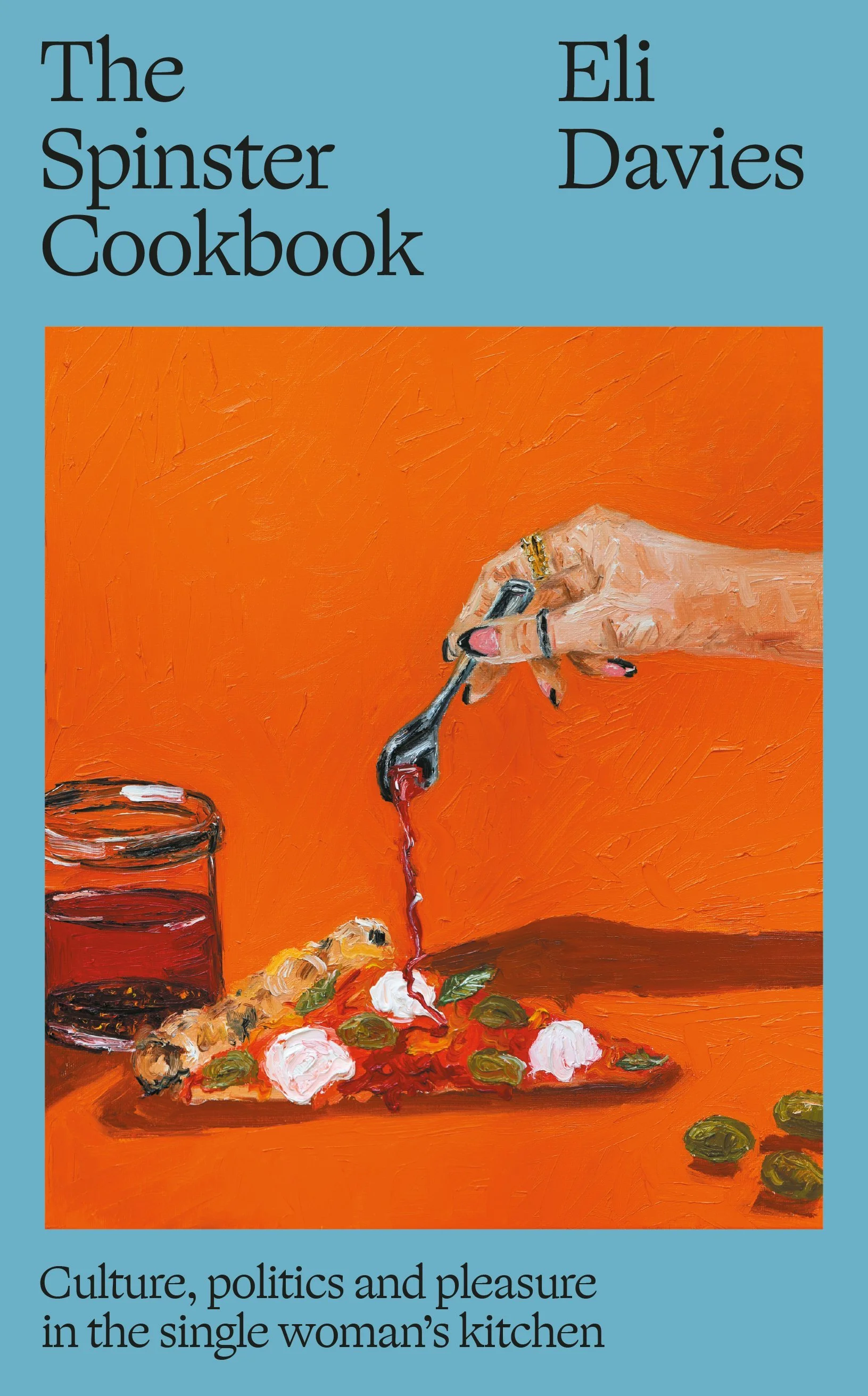
The Spinster Cookbook: Culture, politics and pleasure in the single woman’s kitchen by Eli Davies $40
The Spinster Cookbook is a piercing exploration of what it means to cook for one in a society designed for couples and families. With sharp cultural insight, Eli Davies takes us on a culinary tour of the single woman's kitchen, a space shaped as much by a search for freedom as by appetite. The kitchen has always been a complex space for women: a place of labour and gendered expectations, as well as a site of nourishment, care and company. But how does this change when you're alone, not cooking for family or friends, but simply for yourself? Eli Davies explores what happens when food is uncoupled from domestic duty and romantic relationships and what it means to cook (or not) for yourself and by yourself. How does this shape your mealtimes, the way you shop for food, the kitchen equipment you use, and your relationship to cleaning up and looking after yourself? With warmth, humour and insight, The Spinster Cookbook explores shopping and leftovers, solo meals and dinner parties for one, joy and grief and the politics of living on your own. This is a book about making a home in the face of housing precarity, loneliness, heartbreak and social norms, and finding independence, pleasure and self-expression through cooking. It's a cookbook of sorts, and a manifesto for living differently. [Hardback]
'Eli Davies has written a profoundly relatable culinary memoir of 00s life — of drinking in a rented kitchen while a Nigel Slater dinner bubbles on the stove on the eve of moving house (again) after your landlord has sold up — that will be familiar to so many. An immensely pleasurable and companionable enquiry into what it means to cook for oneself, alone — full of delicious references and research that never burden the lively writing. Barbara Pym's heroines would approve!' —Rebecca May Johnson, author of Small Fires
>>Gendered expectations.
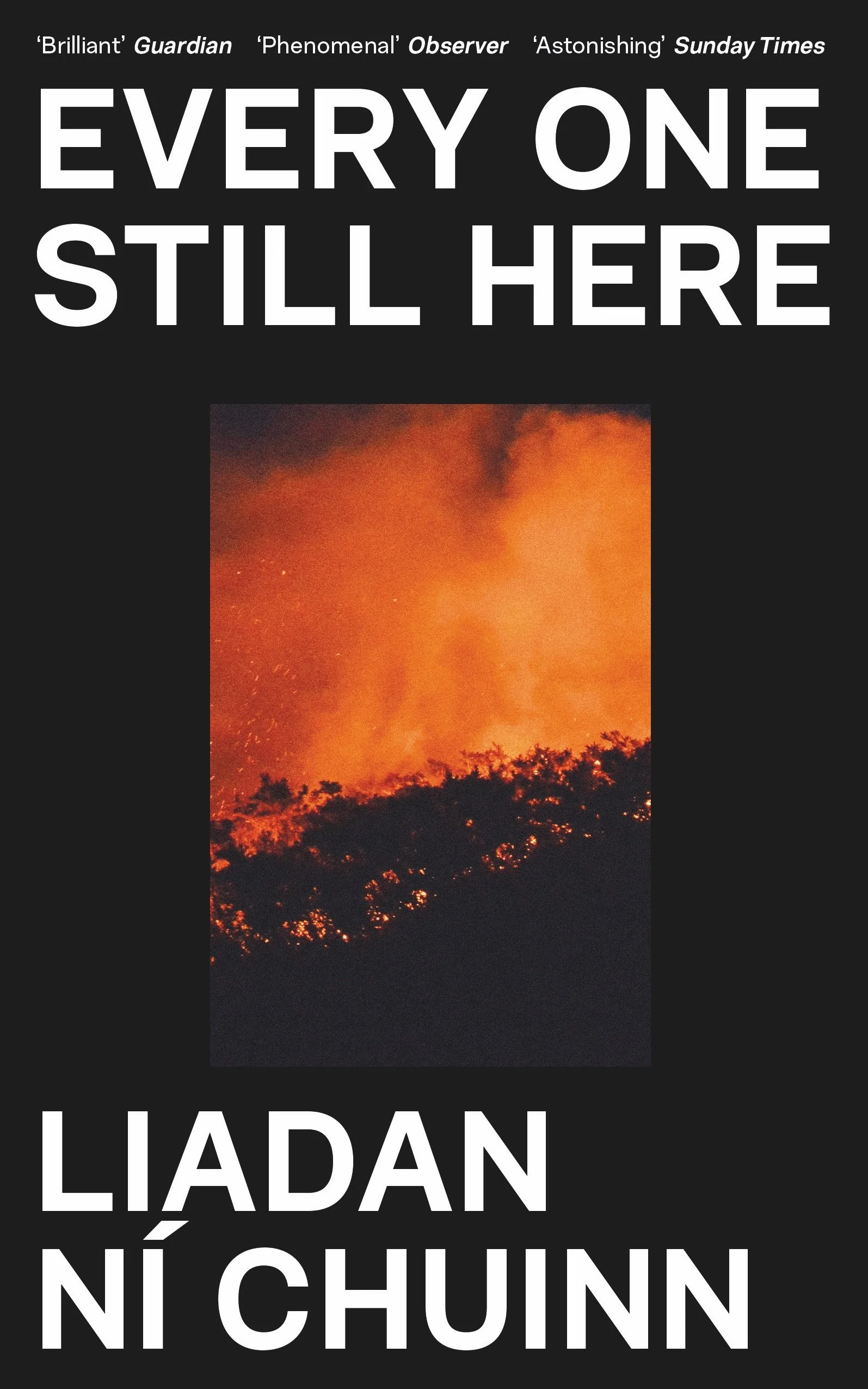
Every One Still Here by Liadan Ní Chuinn $28
A young girl spends her days on a double-decker bus. A bride-to-be prays to St Valentine's bones. Bouquets are found all over a museum. Teenagers gather to dissect a human body. Brimming with compassion and thrumming with energy, these stories are scrupulous in their attention to detail, epic in their scope. In this bravura debut collection, Liadan Ní Chuinn delivers a blend of the personal and the political. [Paperback]
”Here's a writer who knows how to swerve gracefully from the expected. Her work is instinctive, intriguing and truly exciting. I cannot wait to see what's in store for her.” —Lisa McInerney
”It's a long time since I've read a short story collection where I've felt such an aching tenderness for the people within its pages. These stories are rich. They have heart and weight. This is singular, controlled, dextrous writing from someone who is now one of my favourite writers.” —Wendy Erskine
”These are exceptional stories, stark yet richly textured and told in a voice that is at once plain-spoken and lyrical. Liadan Ni Chuinn is the real deal.” —Louise Kennedy
”An extraordinary book by an extraordinary author who refuses to look the other way. Ni Chuinn's incantatory sentences quiver like seismographs, registering the quakes and ruptures that can crack a life in two.” —Thomas Morris
>>Causing harm, or failing to prevent it.
>>Or this edition.
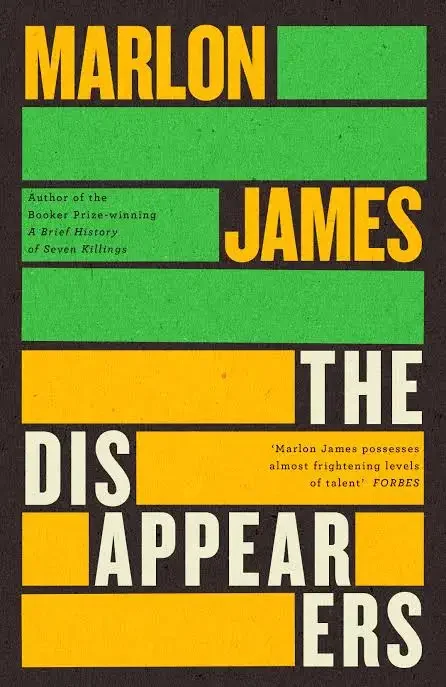
The Disappearers by Marlon James $38
In 1988, eight men in Kingston, Jamaica, begin rehearsals for a play. The men are strangers to one another and each has a different reason for being involved. But they all share one inescapable truth: all of them are gay — a ‘batty man’ in Jamaican argot — and all of them must contend with the dangers that such a truth lays bare. One night a mob savagely attacks them, killing one of the men. For the survivors, their recovery is as much emotional as it is physical: as their bodies heal, each man must grapple with the violence, the hatred, and the rage that the attack made plain. Some try to ignore what the attack has unearthed, while others double down on retribution. The Disappearers is both a dramatic page-turner and an unflinching exploration of queer life in Jamaica during the 1980s and 1990s. [Paperback]
”James has written a masterpiece, the novel of the decade and possibly of the century thus far. It deserves to be talked about alongside Salman Rushdie's Midnight's Children, for its tumult of language and its crisscrossing post-colonial themes; Toni Morrison's Song of Solomon (James picks up on a revenge scenario from that novel); and William Faulkner's Absalom, Absalom! The Disappearers was one of the signal reading experiences of my adult life. It sank knives deep into my heart. I'm still in recovery from it: You don't finish The Disappearers. It finishes you.” —New York Times
”A scorching expose of homophobia in Jamaica. Few books have mapped the beleaguered realities of queer existence with such psychological depth, harrowing realism and searing condemnation. James makes room for the contradictions of queer life, its intimacies, estrangements and hungers, in utterly indelible ways. His prose is a consistent triumph: bitter and hilarious, lyrical, bawdy, pugnacious and scorchingly, ravishingly queer. The Booker judges have described this novel as a ‘reckoning’; it is incontestably also a haunting. A remarkable novel.” —Guardian
”The Disappearers is among Marlon James's most ambitious and history-making works, a novel that examines territory Caribbean literature has rarely dared to occupy. James is a singular literary talent. His dialogue is sharp and propulsive, his phrasing is poetic, visceral and capable of moving from the painful to the darkly hilarious within a single exchange.” —Booker Prize judges’ citation
>>Read an extract.
>>Fiction is ideally placed.
>>Other books long-listed for the 2026 Booker Prize.

A Natural History of the Studio by William Kentridge $50
Kentridge offers a personal insight into his work, his childhood and his artistic techniques. For more than three decades, South African artist William Kentridge has created a vast body of work comprising drawings and multimedia installations that have been exhibited worldwide. Here he immerses us in the artistic, intellectual and production processes of his creations, providing philosophical, autobiographical, technical and practical commentary and giving intimate insight into the studios where he has created throughout his life. A Natural History of the Studio is a personal and philosophical exploration of the creative process, and a critical look at the world and the human condition. Illustrated throughout. [Paperback with French flaps]
”Kentridge's blow-by-blow account of the artistic process is frank, unromanticised and often moving. Art scholars and students will be rapt.” —Publishers Weekly
”Kentridge lays claim to Picasso's legacy. He is just about the only artist now who can dizzy you in a comparable way with the abundance of his creativity.” —Jonathan Jones, Guardian
>>Look inside!
>>How does one make sense of the world with the tools and the techniques of the studio?
>>The film is the book.
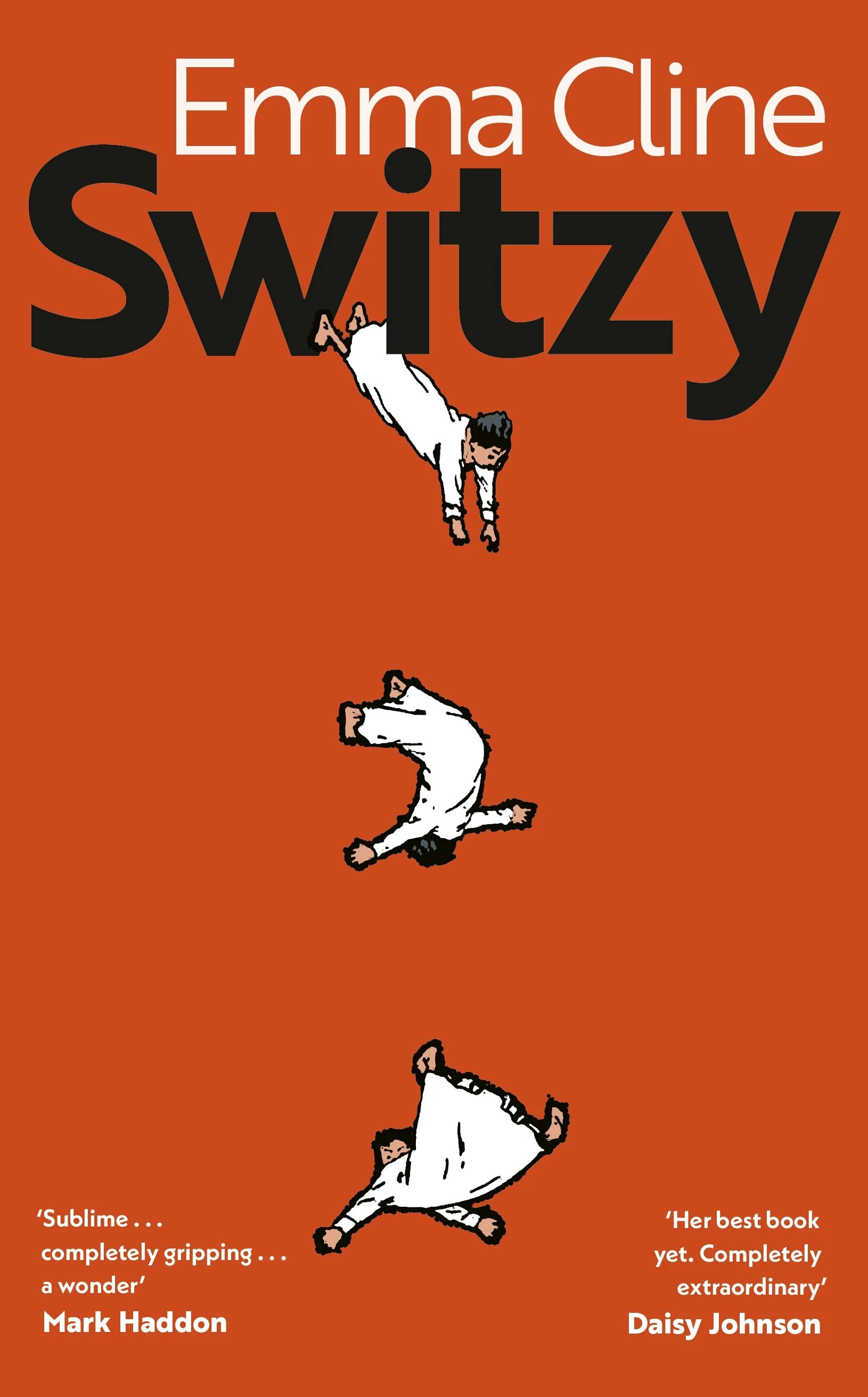
Switzy by Emma Cline $38
A private plane cuts through the winter night, somewhere over Greenland. David, a retired executive, sits back in his leather seat, playing solitaire on his phone. Click. Click. Drag. Click. The notebook in his jacket pocket is filled with familiar phrases, urgent reminders to himself, but he struggles to recognize his own handwriting. A mystery, among many mysteries. The world, once so knowable, has been rendered inscrutable. This is what David knows: Cody, his assistant, asleep in the seat next to him, will shepherd him along the voyage. A stopover in London. Dinner with his adult daughter. A meeting in France with an old friend, estranged for decades. His final destination is Zurich. David glides through hotel rooms and airports and foreign cities, running out the clock on his mortal life. His grasp on the present slips away, and the past rushes in- the Sunday roasts of childhood. The stiff clothes meant only for church. A summer at a school friend's house. The losses and missteps that punctuate a life. As David's arrival in Zurich looms, an exquisitely rendered portrait of an unravelling mind emerges, both darkly humorous and profoundly moving. Hypnotic and startlingly original, Switzy probes the depths of human consciousness, revealing what a man is left with when the accomplishments and compromises that have defined him, and the illusions he's relied on, vanish. [Paperback]
’A perfect novel, one that goes to the places only novels can go.’ —Samantha Harvey
‘We live in a time ruled by overpowered and undersocialised wealthy boy kings; Emma Cline’s mordant novel considers what, if anything, remains at the end of one such luxurious yet lonely life. David is a retired American business executive with dementia who decides to be euthanised in a Swiss clinic. As he voyages across Europe, fuzzy memories from his life slip in and out of his consciousness. There are final gestures towards intimacy with family and friends, and a whimsical cartoon becomes a symbol of a bygone childhood. What makes a life? Cline writes vividly about the trappings of the elite – the private jets, the heirloom watches, all that time spent in the office – as well as their sad social cost in a story that feels immersive, elegiac, and very real. As one of us put it: “I travel a lot, and know these guys.”’ —2026 Booker Prize judges’ citation
‘The reading experience is hypnotic, eerie, and unsettling; the misheard words (pinot-barbiedoll for phenobarbital; assfart for Ausfahrt, the German word for highway exit) and misapprehended objects add a bitter sort of humor. It’s almost scary to think about what a convincing job Cline has done imagining this shattered form of consciousness, both near and far from what goes on in one’s supposedly healthy brain. Unexpected, beautifully controlled, and almost dangerously captivating.’ —Kirkus
‘Cline is an alert, sensitised writer, and there’s real pathos in seeing her attentiveness filtered through David’s worsening cognitive decline. Poignant but unsentimental, it is her best novel yet.’ —Jem Calder, Independent
>>Read an extract.
>>Final journey.
>>The author’s own feelings of mortal terror and loss.