
ONE DAY A TANIWHA by TĪHEMA BAKER — Review by Stella
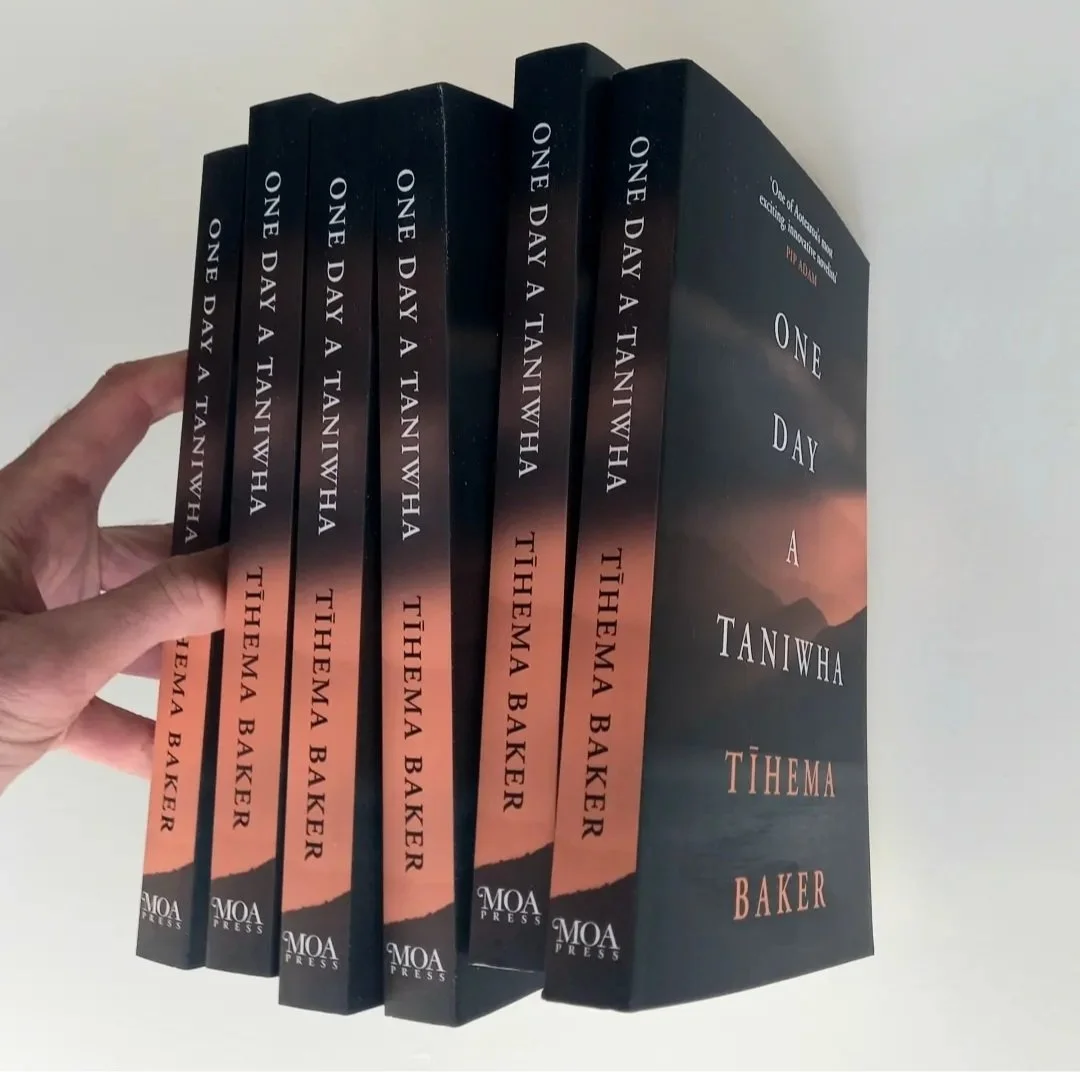
Is it possible to be terrified as you read a novel? You know you can close the book, that it is merely words. Tīhema Baker lets you in easy. The door is opened wide to the domestic scene of father, mother and child. The baby, Wī, not sleeping, the parents Āniwa and Hōhepa sleep deprived. Nothing unusual here, aside from Hepa’s vivid dreaming. Everyone is feeling trapped, the grind of life with a small child, a first child and all the changes this entails. None more so than Hōhepa: bereft at moving from the public service of Wellington central to up the coast at the city council, a little at sea with fatherhood, and isolated from his past social circles, as well as his tūrangawaewae. Add to that the pressure of never enough money, and Hepa’s desire to be a good father and partner – to be a good role model to his son, to both protect and provide, and be sensitive to the needs of his family, while juggling work, protesters outside the office, racism at work and in the news, and a sense of panic at all the evils that could befall his son. If you have read Turncoat, you’ll recognise a few familiar themes – concerns over the degradation of te Tiriti, institutional racism, Pākehā ignorance — and Baker’s ability to slice humour into his books without degrading the serious and confronting aspects of his novels. Unlike Turncoat, and Baker’s young adult novels, there is no sci-fi here. This is a contemporary setting, well bogged down in the quotidian life of a middle class Māori father. But this is Tīhema Baker writing, so expect the unexpected. There’s another entity, one that comes in dreams, who like One Day a Taniwha seems relatively benign at first. The pāua-shelled eyes appear to look with curiousity from the face of the lizard; it is silent, appearing in Hepa’s dreams at first as a bystander, a witness. Yet Hepa is right to be wary of this visitor. Talking to Uncle Bush, he finds out you can travel in your dreams, some believe to actual places and people. The dreams become more vivid, the taniwha less benign, the pāua shell eyes teasing and bullying, the creature shapeshifting, its voice inside Hepa’s head goading him, to the point where Hepa’s is looking for a way to have dreamless sleep. As Hōhepa’s lack of sleep and the pressure he puts himself under pushes him to the edge, the darkest emotions and actions take place in his dreams. There is a violence there that is difficult to read without being shaken; it is a violence of frustration, the violence of colonisation and its ongoing consequences, and a battle of ideas about masculinity. The edges are fraying, unravelling at pace, and when dreams and reality merge, the consequeces are frightening. In One Day a Taniwha, Tīhema Baker examines fatherhood, masculinity, and male Māori mental health. Deceptively playful at first, this crescendo of a novel, is a powerful piece of writing.