
SAID THE DEAD by Doireann Ní Ghríofa — Review by Stella
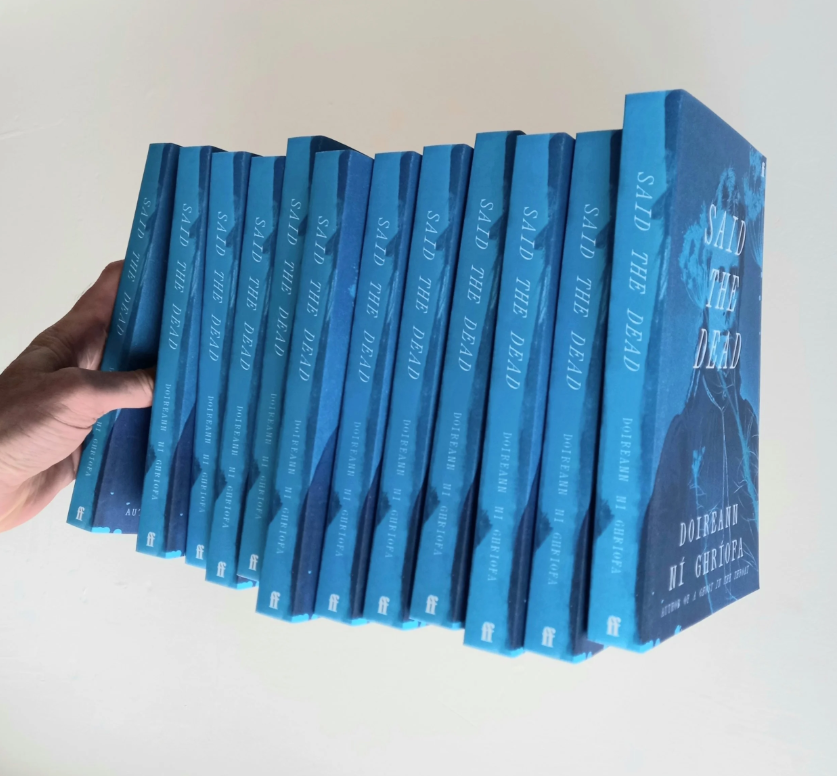
I want to be heard. Read me, see me. These are the murmurs escaping from century-old casebooks and played out across the pages of Doireann Ní Ghríofa’s novel of a Cork asylum: the multitude of women who were committed there, and a female physician L. Strangman. The derelict Victorian hospital is crumbling away, readying itself for a new life as apartments. The ‘For Sale’ sign triggers a response in the researcher. It beckons to her: a sign to act, to delve into the past, or be pulled into it, by the voices that eminate from the archive, from the casebooks. The casebooks, notes made over years, decades, talk to her. They call her back: the more she reads, the more she learns; the more she learns, the more she brings these entries into the light. In Said the Dead, Ní Ghríofa employs the style of archivist, historian, poet, novelist and memoirist to take us into the past, and to the bring the past into the present. Time merges, voices merge, women call to the author, and to the reader from across the divide of time. A ghost story of literary proportions, told with empathy, deep recognition and startling awareness, time and place are overlayed in Said the Dead — there is no straight line. Like her early memoir/autofction , A Ghost in the Throat, the rules of engagement are blurred. Who’s speaking? Is it a woman emerging from the casebook, her story jotted down in the doctor’s quick precise hand, or is it the author’s pencil (only pencils allowed in the archive library) performing an act of seeing, of bringing the patient to life with a richer nararative. Here imagination and fact mingle, yet still feel so accurate. Said the Dead is a work of research — the asylum, a building of vast preportions, is a real place; the abandonned wastelands of the soon-to-be building site really were boarded with sheet iron; and the author, I imagine, did graze her leg inching through to explore. The story of Lucia Stangman (who we get to know well, beyond ‘the facts’, via the author’s pencil), the first woman doctor to enter the asylum service in Ireland is compelling, and the patients are not pretend players. Yet Doireann Ní Ghríofa takes it further. She invokes something within herself, is compelled to write, as we are to read, the stories of these women, to bring them out, to shake off the grime and cobwebs of abandon, to see them as more then the almost forgotten in casebooks crumbling under the narrator’s touch. As with her earlier work, she is a player in her own book, pushing at the conventions of the novel form while embracing the ability of story to compell us to read, to hear the voices and for a moment to be there; whether there is sitting beside her in the archive library or walking in a corridor humming with the activity of asylum’s morning routine.