
TAIWAN TRAVELOGUE by Yáng Shuāng-zǐ — Review by Stella
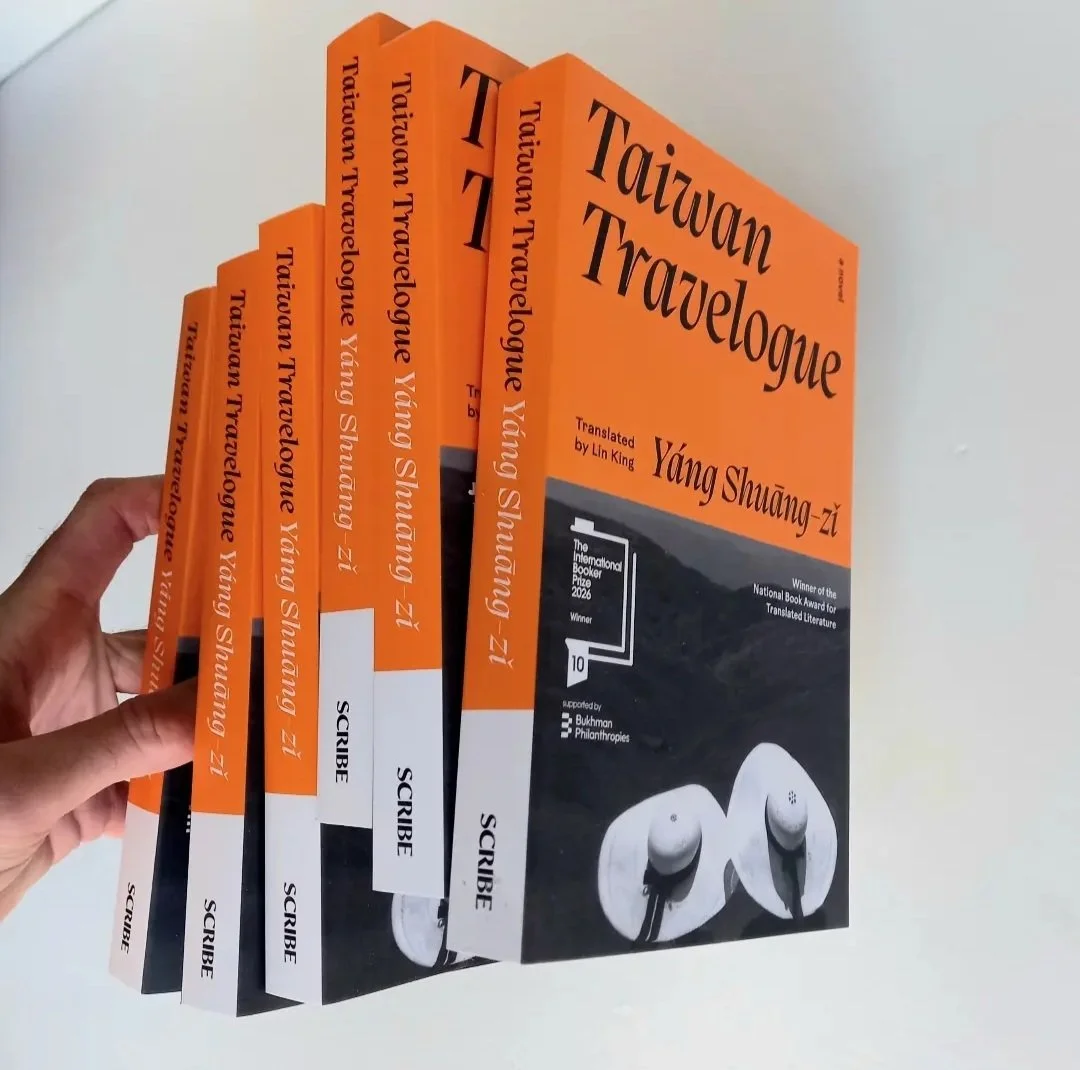
This week at our Talking Books session we disucssed the 2026 International Booker winner Taiwan Travelogue. The conversation was wide-ranging: we talked about the content, themes of colonisation and power imbalances, the love story, language and translation, and the novel’s structure. Initially published in Taiwan in 2020, disguised as a translation of a rediscovered text of a Japanese writer from the late 1930s, its premise rests on the experiences of a writer touring Taiwan in 1938 and the relationship they develop with their translator. Aoyama Chizuko is a young woman, famous for her semi-autobiographical novel, a work that has captured Japan in print and in film. She’s in a position of privilege, able to live an independent bohemian life. She’s free to choose her own path. She heads to Taiwan to write about the place, the people and, in particular, the food. She loves to eat and has a furious appetite. Her initial assigned government interpretator is not to her liking, and, not very long after she arrives, her host introduces her to Ông Tsian-hóh (Ō Chizuru). This young woman will be pivotal not only in Aoyama’s experiences of food and culture in Taiwan, but also her emotional development, although one can not be sure just when Aoyama to recognises her lack of awareness. Aoyama is as demanding as Chizuru is accommodating. Through their travels on the island, the foods consumed (many) and their conversation, Yáng Shuāng-zǐ reveals much about Taiwan’s history, the Japanese empire's desire to colonise Taiwan as a gateway to the south (they arrived in 1895 and left in 1945 when Taiwan was handed to the Republic of China), and the many layers of power within society at the time. While Aoyama becomes increasingly enamoured with Chizuru, attempting to convince her to forgo an arranged marriage and move with her to Japan, she is blind to the reasons the young interpreter refuses this offer. Playing detective, Aoyama bullishly keeps questioning the young woman trying to unpick the story. How does Chizuru know so much about all the different foods ? How come she speaks multiple languages? Why does she insist on walking miles when she could just stay at Aoyama’s lodgings? What she doesn’t think to ask is: What does Chizuru want. Aoyama forgets that whatever she asks for will be attended to — Chizuru is her employee. Here is a situation of taking and giving, one where Aoyama is blind to the fact that her position, in spite of her obvious care for and love for this woman, makes the situation impossible. In this way, these characters carry the perspective of opposing forces within their psyche, much like the roles enforced by colonisation. Read Taiwan Travelogue for the history, the food, and to gain a little insight into how the past informs the present in this interesting country. Read it for its enjoyable structural play. There are footnotes from translators, there are notes at the back ‘fictionally’ responding to the ‘fictional’ publication of the rediscovered classic. The English edition is excellently translated by Lin King.