
LIFE OF M by Rachel Cusk — Review by Stella
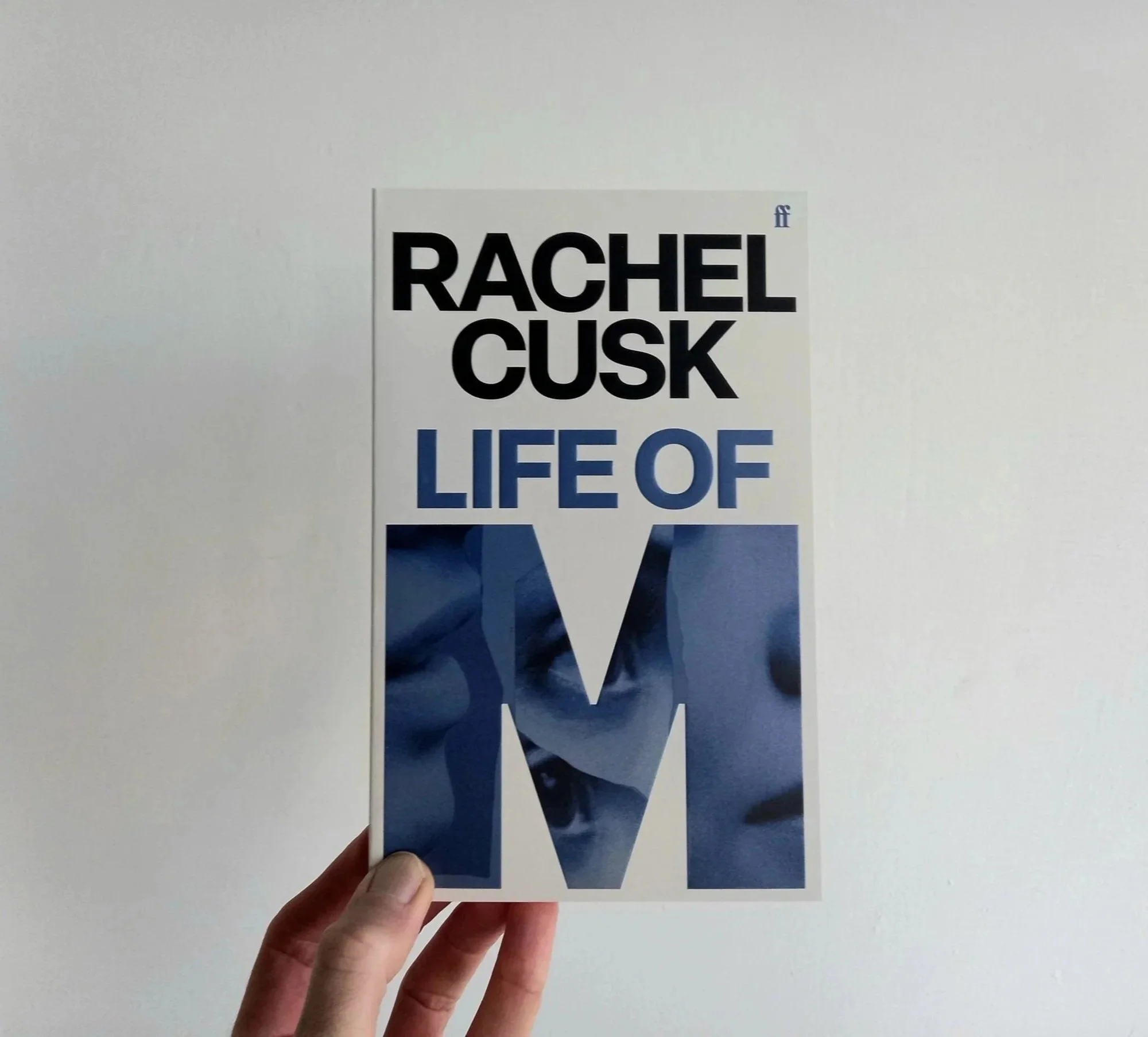
Who are you and who am I? Can one ever be authentic? And what is a person? Thinking about Rachel Cusk’s new novel, if that is what it is, raises more questions then answers. It explores authenticity, fame, and it’s flipside obscurity,. It gives us fine details of place and objects, each chapter starting its progress with an action or an environment which then unleashes a strand of philosophical thought, emotions (in their most calculated way) or unanswered/unanswerable questions: the writer — the I of the novel — assuming we wish to be as observant as them. This ultra-observation is compelling, a puzzle of sorts. What is Cusk doing? Why is she leading me down this path? And yes, I do not know, as I read, where it’s heading. At first, although you find your self adhereing to this structure, you wonder why you keep turning the page. You get the premise: a writer has asked a famous actor if they can write their ‘authobiography’, but it will be fabricated (well, mostly) and the actor, being a ‘good sport’, agrees. In previous Cusk novels, the author has pushed plot and narrative to the edge, one may say pushing these conventions off the cliff. In Life of M, the semblance of character is hang out to dry. This clever analysis of writerly tropes, of the meaning of a writer’s life — poking around into a place within, and observing in a detached manner the world, the people, they know and don’t know — is problematic in a sense, yet we come back for more. Cusk’s choice of an actor as the writer’s muse is ideal for this project. An actor is always being someone else, to the extent that it becomes hard for the watcher to define the ‘real’ self. As it possibly is for us also. Can we know ourselves? The idea of personhood is elusive, and Cusk’s novel cuts to the heart of this dilemma or, for some, escape. Life of M is not all deep philosophy and unaswerable questions, though: it’s also brilliantly funny in that cutting Cuskian way, illuminating the absurd expectations we have of the famous and our fascination with celebrity, and of our idea of personhood. It has the most memorable description of a day spa; makes us yearn for someone to eat the pastries in a meeting room (they will not be touched); and takes us to idyllic settings that can only be invented by power and money. Over and over again, Cusk brings us a seemingly disconnected selection of happenings, curious vignettes, which build a strange rhythm. A rhythm we find difficult to adjust to at first, but one that draws us in until we dancing in the Cuskain way, unsure how we got there but quite pleased we ventured on.