
THE VALLEY by Asher Emanuel — Review by Stella
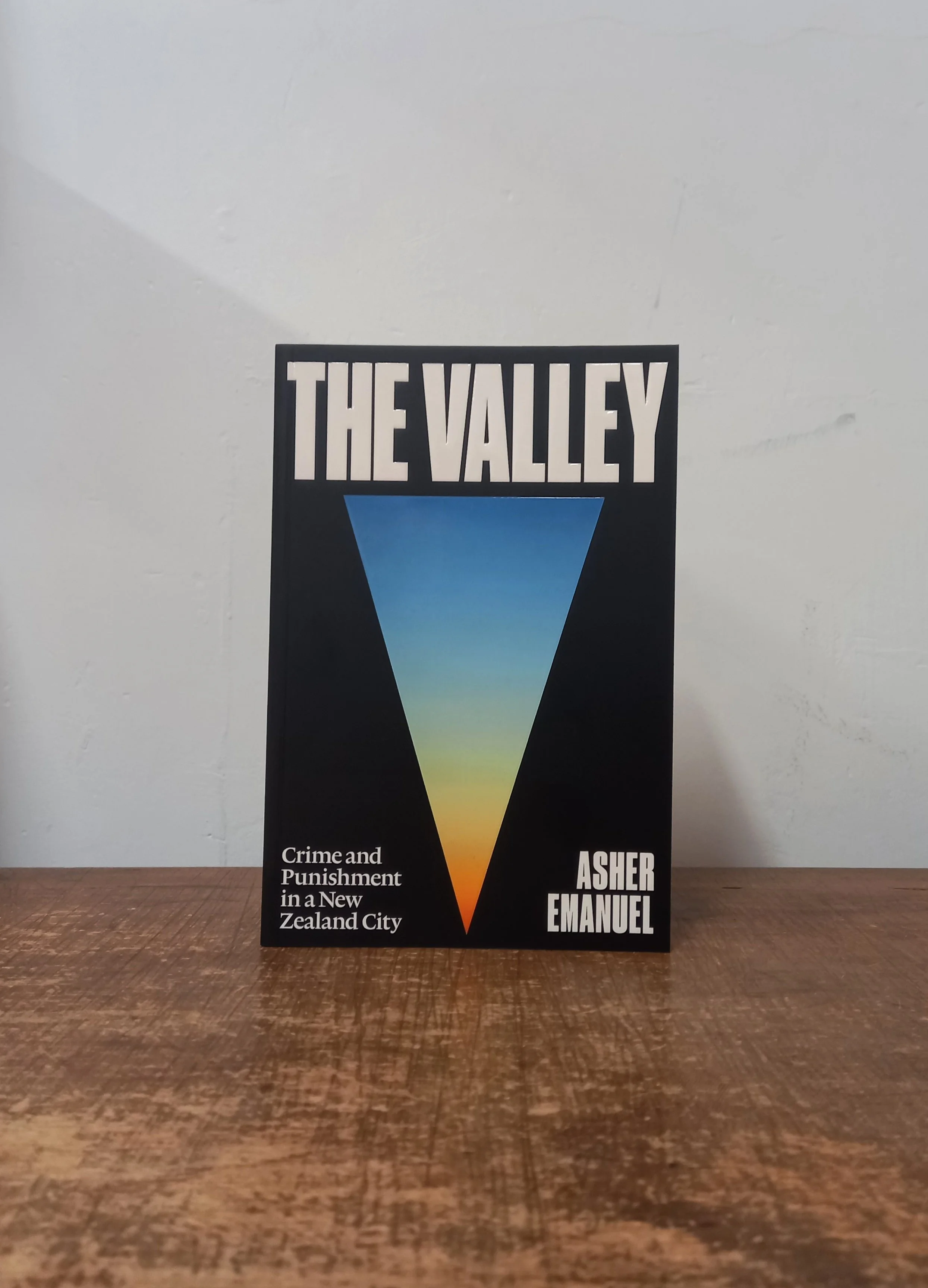
A few years ago, I accidently came across a podcast called Ear Hustle when I was searching for something else. Ear Hustle is a non-fiction podcast about prison life centred around San Quentin State Prison. It’s a fascinating and honest insight into the lives of the prisoners: often sad, sometimes brutual, yet also laced with humour and pathos. It’s eye-opening, as is Asher Emanuel’s brilliant The Valley: Crime and Punishment in a New Zealand City, which shares some of the same attributes. Here, the action focuses on the criminal justice system. The courts, the Hutt Valley in particular (although this could be any district court in Aotearoa), and the systems that intertwine with these courts: social welfare, the police, bailiffs, probation officers, housing services, and rehab, to name a few. I say action, because Emanuel’s reportage style burns with immediacy; with its intimate portrayals and authentic dialogue. The book is predominantly verbatim conversation, and centres around two defendants, Nathan Morley and Rikihana Wallace, and their overworked defence lawyer Lewis Skerett. I dare you to read the first few chapters and not be hooked. The lives are real, the crimes are ordinary, but this is a world many live outside of, and often our knowledge of the justice system is only of sound-bite news items which reveal very little of substance or tend towards the sensational. The Valley avoids this dramatic nonsense, giving instead a direct and sometimes confronting view of what the criminal justice system looks like from the inside, and more importantly from the perspective of those that navigate it, whether they are the defendents, the lawyers or the special courts that attempt to mitigate the glaring problems at the heart of the justice system and the wider welfare system. Asher Emanuel draws us into this world with clarity, calmness and care. The Valley has integrity, and is vitally important. The wider issues of poverty, government policy over several decades, our degraded welfare system, issues with our addiction services, as well as housing supply, all pulse simulatneously alongside the stories of Nathan and Rikihana. If you read one book this year make it this one. (We will be discussing The Valley at our June Talking Books session).