
U.X.O. by Brannavan Gnanalingam — reviewed by Stella
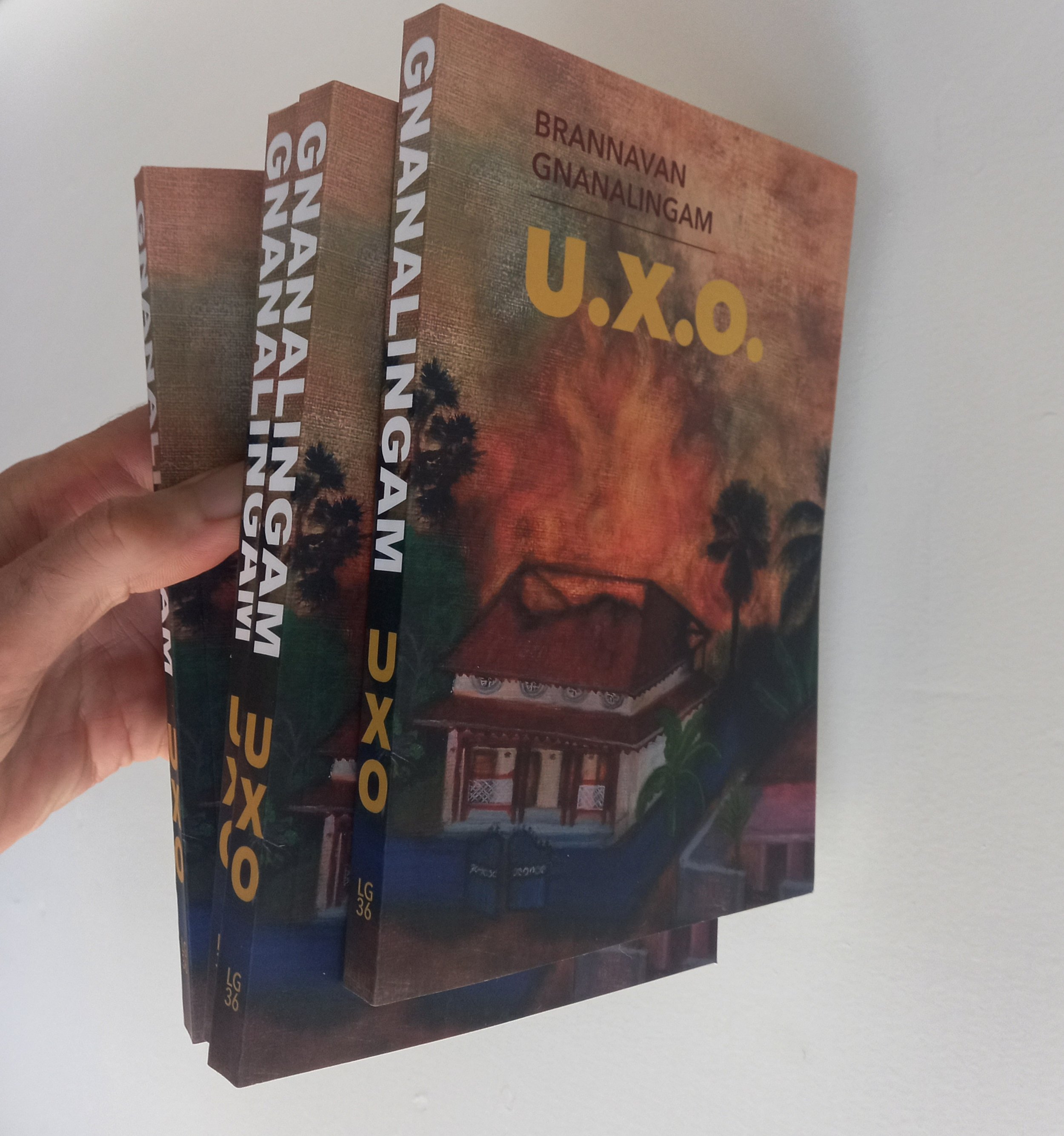
A man puts on a uniform and goes to a country he thinks he’ll understand. A place where he thinks he can make a difference, or so he infers in one of his explanations. He goes out of frustration, because of poverty, to escape his responsibilities, due to his own sense of failure — or any number of reasons. He returns ashamed, defeated, wishing for escape, confused, belligerent, damaged, haunted, fortunate to be alive. In a new country, his grandson Arjun asks him about the past, about the war, for a school project. He promises to write something to capture his time as a peacekeeper. The Sri Lankan civil war was a 26-year conflict between the Sri Lankan government and the LLTE (Tamil Tigers), from 1983-2009. In 1987, the Indian goverment sent a peacekeeping force. While initially welcomed in some quarters, the IPKF became increasingly unpopular and a ‘peace force’ in name only, before withdrawing in 1990. In U.X.O. the narrator is a grandfather negotiating the past with himself. In an attempt to tell his story, he tells many stories. Gnanalingam cleverly sets these as ‘drafts’ — each story a retelling of a day, a partiuclar event or, conversely, many events. Each draft starts with ‘This is how I went to Sri Lanka.’ The man is a lowly solider, the lowest rank, part of a four-person patrol. They are there to check, watch, and question. They are disliked. The narrator, partly chosen for his origins, he is Indian Tamil, is surprised by the locals’ distrust; the others on his patrol less disturbed by it. Yet we only have the narrator’s view: his re-tellings often putting him in a better light than his fellows. Are his clutch of notes, which he hands over to Arjun’s mother (a Sri Lankan Tamil) a confession, a justification, a denial, or a witnessing? In U.X.O. Gnanalingam cuts to the heart of conflict and war crimes, drawing on UN reports and family history, as well as literature and analytical histories. This is a novel with rich characters, writing that grabs you and doesn’t look away from the violence: its consequences for both victim and perpetrator. Who is accountable for actions commited in the height of madness or callousness? And can one ever absolve oneself from one’s actions, whether that is done as an individual or as part of a group or behalf of the state — where does the repsonsibility lie? This is also a story of a family, of generations, and the consequences of actions and behaviours — of what is said or done in love or anger. It’s a story of dislocation, externally and internally, both physically and culturally. Drawing on literary traditions of narration and philosophical studies of genocide, Gnanalingam not only brings to light the atrocities commited in the name of the more powerful, but delivers it with consideration to form, making this an important and interesting work. Gnanalingam is an excellent writer and I will not be surprised to see this novel on the book awards shortlist in 2027.