

Before he was catapaulted into the literary sphere at the age of 42 with the publication of Heart of Darkness in 1899, Joseph Conrad worked as a merchant seaman and frequented ports in Australia and New Zealand between 1878 and 1893 (he captained the Otago until he declined to repeat a sugar-trade run between Australia and Mauritius). Martin Edmond does a superb job of tracing Conrad’s ghost in the Antipodes, and reveals how many elements, incidents and characters in his fiction draw directly from his experiences in this part of the world. As always, Edmond’s style, precision and personal, thoughtful approach to writing non-fiction make the book a pleasure to read.

A selection of books from our shelves. Solve your book problem with a new mystery.
Click through to find out more:

Feeling the pinch?
Try our Snips — intelligent books at ridiculous prices!
Read our latest newsletter!
5 April 2024.
Move through autumn with a book in your hand!

The Faculty of Dreams by Sara Stridsberg (translated from Swedish by Deborah Bragan-Turner)
In this beautifully abject and uncomfortable biographical novel, Sara Stridsberg suspends her subject, Valerie Solanas, indefinitely at the point of death in San Francisco’s disreputable Bristol Hotel in 1988 and subjects her to a long sequence of interrogations by a self-styled ‘narrator’, superimposing upon the distended moment of death two additional narratives stands: of her life from childhood until the moment Solanas shot Andy Warhol in 1968, and from the trial via the mental hospital to society's margins and the Bristol hotel. Stridsberg has strung a multitude of short dialogues in these strands, typically preceded by the narrator setting the scene, so to call it, in the second person, and then scripting conversations between Solanas and the narrator, or with Solanas’s mother, Dorothy, or with her friend/lover Cosmogirl, or with Warhol or ‘the state’ or a psychiatrist or a nurse, or with the opportunistic Maurice Girodias, whose Olympia Press published Solanas’s remarkable SCUM Manifesto , a radical feminist tirade against the patriarchy at once scathingly acute and deliciously ironic. Stridsberg (aided by her translator into English, Deborah Bragan-Turner) conjures Solanas’s voice perfectly, animating the documentary material in a way that is both sensitive and brutal. This is, of course, both against and absolutely in line with Solanas’s wishes, making herself available to “no sentimental young woman or sham author playing at writing a novel about me dying. You don’t have my permission to go through my material.” The Solanas of the dialogues is often largely the deathbed Solanas, suspended in a liminal state between times and on the edge of consciousness, whereas her interlocutors are more affixed to their relevant times, for instance her mother Dorothy forever caught in Solanas’s childhood - in which Valerie was abused by her father and, later, by her mother’s boyfriends - yet hard to get free of, due to “that life-threatening bond between children and mothers.” The scene/dialogue mechanism that comprises most of the novel appears to remove authorial intrusion from the representation of Solanas’s life more effectively than a strictly ‘factual’ biography would have done, while all the time flagging the fictive nature of the project. “I fix my attention on the surface. On the text. All text is fiction. It wasn’t real life; it was an experience. They were just fictional characters, a fictional girl, fictional figurants. It was fictional architecture and a fictional narrator. She asked me to embroider her life. I chose to believe in the one who embroiders.” Stridsberg does a remarkable job at being at once both clinical and passionate, at undermining our facile distinctions between tenderness and abjection, between beauty and transgression, between radical critique and mental illness, between verbal delicacy and the outpouring of “all these sewers disguised as mouths.” Solanas shines out from the abjection of America, unassimilable, a person with no place, no possible life. “It was an illness, a deranged, totally inappropriate grief response. I laughed and flew straight into the light. There was nothing to respond appropriately to.” At the end of the book the three strands of narrative draw together and terminate together: Solanas shoots Warhol at the moment of her own death two decades later, and the personae are released. All except Warhol, who lived in fear of Solanas thereafter: “People say Andy Warhol never really came back from the dead, they say that throughout his life he remained unconscious, one of the living dead.”

Chanelle Moriah was diagnosed with autism at 21 and ADHD (Attention Deficit/ Hyperactivity Disorder) at 22. They are the author and Illustrator of I Am Autistic and This Is ADHD. These are practical and informative handbooks for neurodivergent folk and by extension their whanau, friends and colleagues. I’ve just finished reading This is ADHD and I found it extremely useful, as well as interesting. It has helped me start to understand what life is like for someone with ADHD. Why simple tasks become so complicated, what neurodivergence can be, how behaviours can be misinterpreted, and how other disorders (depression and anxiety to name two) can impact the ADHDer. Whether you are (or your loved one is) diagnosed or not, this book will be helpful. In the first reading, it has given me more understanding and knowledge about ADHD, and hopefully prepared me to be a better parent and support person. The book is set out with a bold pattern and colour palette, with passages highlighted, and plenty of lists and tick-boxes. The text is in a hand-written style (not a typed font), which surprised me. Moriah has made this book the way that makes sense to them and sits comfortably for someone with ADHD. I was also surprised at the references that jump you forward and back in the book, but after reading about boredom and ADHD this all made sense. There are plenty of spaces and pages to write on, with only a swirl of colour — no completely blank pages. There are many short chapters on numerous aspects (some which will be relevant to the individual, others not — Moriah stresses that ADHD is diverse), including sleep, mood, anxiety, talking too much, zoning out, dopamine, and learning styles. Moriah tells it as it is: they give plenty of options and tools for dealing with some of the challenges of ADHD, but also celebrate the benefits. This is ADHD is empowering, interactive and an excellent resource for anyone interested in neurodiversity.
Move through autumn with a book in your hand!
Click through to place your orders:
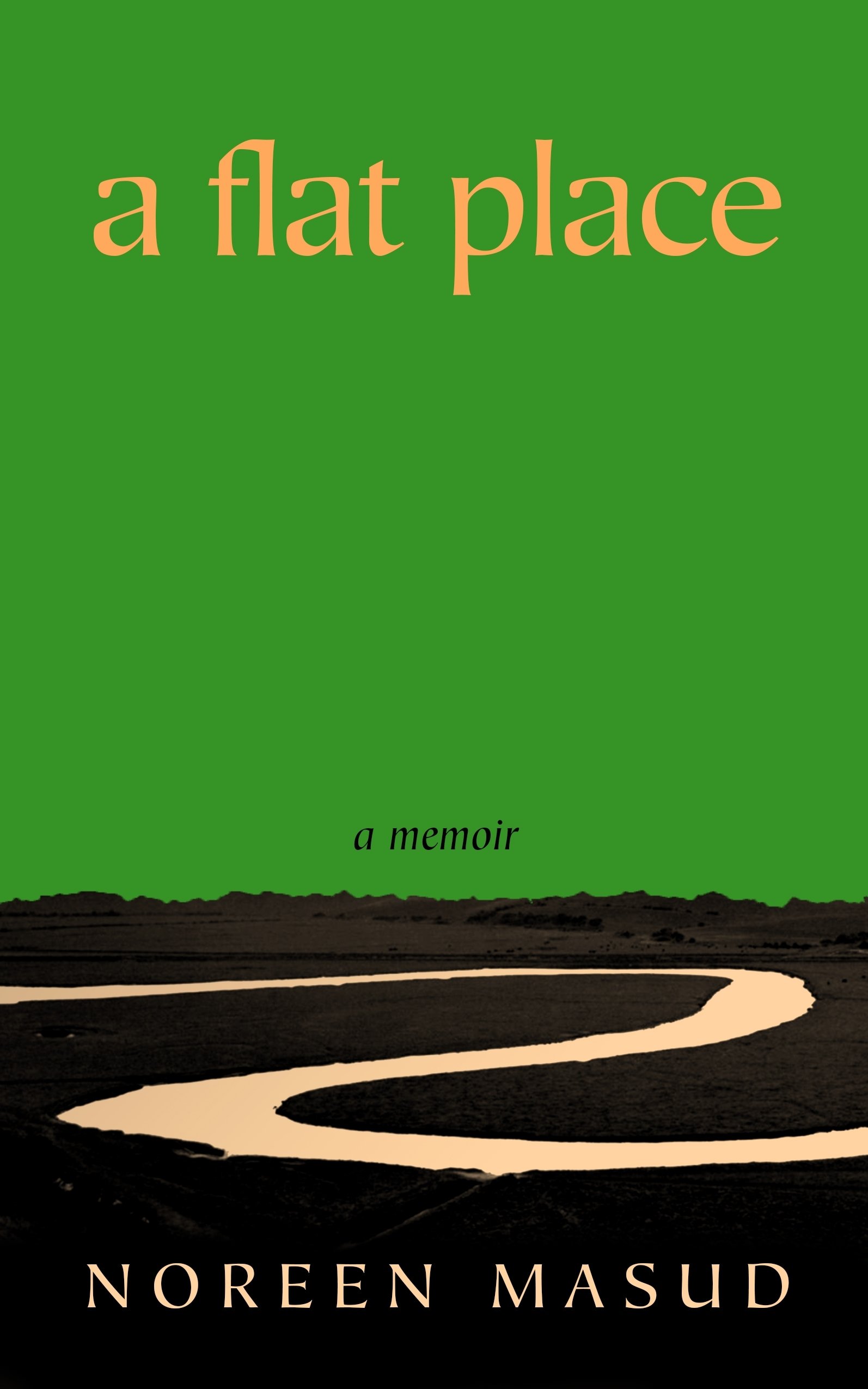
A Flat Place by Noreen Masud $40
Noreen Masud has always loved flat landscapes — their stark beauty, their formidable calm, their refusal to cooperate with the human gaze. They reflect her inner world- the 'flat place' she carries inside herself, emotional numbness and memory loss as symptoms of childhood trauma. But as much as the landscape provides solace for this suffering, Britain's flatlands are also uneasy places for a Scottish-Pakistani woman, representing both an inheritance and a dispossession. Pursuing this paradox across the wide open plains that she loves, Noreen weaves her impressions of the natural world with the poetry, folklore and history of the land, and with recollections of her own early life, rendering a startlingly strange, vivid and intimate account of a post-traumatic, post-colonial landscape — a seemingly flat and motionless place which is nevertheless defiantly alive.
”It would be easy to assume that A Flat Place, dealing as it does in the currency of trauma, racism and exile, is a bleak book. But this memoir is too interested in what it means and how feels to be alive in a landscape to be anything other than arresting and memorable. In the flatlands of Britain, and in the memories they evoke of the flat places of Pakistan, Masud both finds a way to comprehend her own story and establishes a strong voice that confirms her as a significant chronicler of personal and national experience. A Flat Place is a slim volume, but that belies its expansive scope.” —Financial Times

Te Waka Hourua Whītiki, Mātike, Whakatika! $30
Following the treaty redaction action at Te Papa by Te Waka Hourua in December 2023, this book authored by the artists themselves is a first-hand recollection and reflection of their experience, complemented with some memorabilia of the action, and its impact in the public discourse. Te Waka Hourua is a tangata whenua-led, direct action, climate and social justice rōpū. Their kaupapa is as described by their whakaaturanga: “Our waka hourua has set its course. We feel it is beyond time to shed light on the truth of our current and existential situation; endless destruction by an elite minority at the expense of the majority, and of hospitable life on planet earth.”

Here Today, Gone Tomorrow: Wellington street art by Jamie D. Baird $70
Art or vandalism, protest or social commentary — how you see street art depends on where you stand. Jamie Baird’s Here Today Gone Tomorrow documents his 40-year fascination with these ephemera as “a testament to human imagination, innovation and cultural diversity.” The fascinating book, with over 1200 photographs taken over four decades, really captures the variety and vitality that is Wellington's unofficial culture and true life.

Granta 165: Deutschland edited by Thomas Meeney $35
From Lower Saxony to Marienbad, the carwash to the planetarium, this issue of Granta reflects on Germany today. Featuring non-fiction by Alexander Kluge, Peter Handke, Fredric Jameson, Lauren Oyler, Michael Hofmann, Peter Kuras, Adrian Daub, Peter Richter, Lutz Seiler, Ryan Ruby, Jan Wilm and Jürgen Habermas. As well as a conversation between George Prochnik, Emily Dische-Becker and Eyal Weizman. The issue introduces two young novelists on the German scene – Leif Randt and Shida Bazyar – forthcoming work from Yoko Tawada, a short story from Clemens Meyer, and autofiction by Judith Hermann. Plus, poetry by Elfriede Czurda and Frederick Seidel. Photography by Martin Roemers (with an introduction by the poet Durs Grünbein); Ilyes Griyeb (with an introduction by Imogen West-Knights) and Elena Helfrecht (with an introduction by Hanna Engelmeier).

Martyr! by Kaveh Akbar $38
Cyrus Shams is lost. The orphaned son of Iranian immigrants, Cyrus never knew his mother. Killed when her plane was shot down over the Persian Gulf in a senseless accident, Cyrus has spent his life grappling with the meaningless nature of his mother’s death. Now he is set to learn the truth of her life. When Cyrus’s obsession with the lives of the martyrs – Bobby Sands, Joan of Arc – leads him to a chance encounter with a dying artist, he finds himself drawn towards the mysteries of his past: an uncle who rode through Iranian battlefields dressed as the Angel of Death; and toward his mother, who may not have been who or what she seemed. As Cyrus searches for meaning in the scattered clues of his life, a final revelation transforms everything he thought he knew.
”As a poet, Akbar is a master of economy of language, and that mastery remains untouched in this 350-page novel. The writing in Martyr! dances on the page, effortlessly going from funny and witty to deep and philosophical to dialogue that showcases the power of language as well as its inability to discuss certain things. It brilliantly explores addiction, grief, guilt, sexuality, racism, martyrdom, biculturalism, the compulsion to create something that matters, and our endless quest for purpose in a world that can often be cruel and uncaring. Akbar was already known as a great poet, but now he must also be called a great, fearless novelist.” —NPR

Service by Sarah Gilmartin $37
When Hannah learns that famed chef Daniel Costello is facing accusations of sexual assault, she's thrust back to the summer she spent as a waitress at his high-end Dublin restaurant. Drawn in by the plush splendour of the dining rooms, the elegance of the food, the wild parties after service, Hannah also remembers the sizzling tension of the kitchens. And how the attention from Daniel morphed from kindness into something darker... His restaurant shuttered, his lawyers breathing down his neck, Daniel is in a state of disbelief. Decades of hard graft, of fighting to earn recognition for his talent - is it all to fall apart because of something he can barely remember? Hiding behind the bedroom curtains from the paparazzi's lenses, Julie is raking through more than two decades spent acting the supportive wife, the good mother, and asking herself what it's all been for. Their three different voices reveal a story of power and abuse, victimhood and complicity. This is a novel about the facades that we maintain, the lies that we tell and the courage it takes to face the truth.
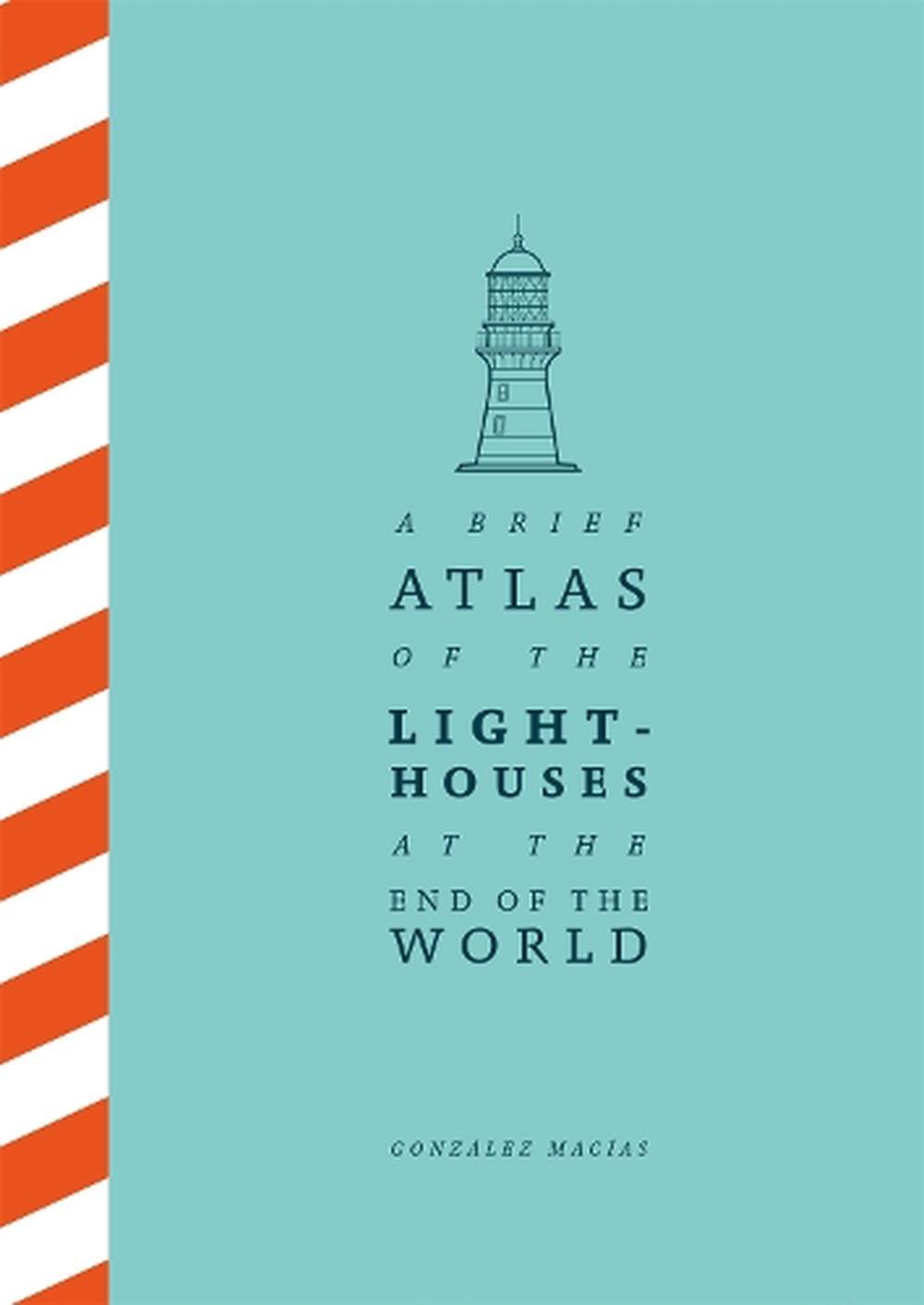
A Brief Atlas of the Lighthouses at the End of the World by González Macías (translated from Spanish by Daniel Hahn) $50
From a blind lighthouse keeper tending a light in the Arctic Circle, to an intrepid young girl saving ships from wreck at the foot of her father's lighthouse, and the plight of the lighthouse crew cut off from society for forty days, this is a book full of illuminating stories that transport us to the world's most isolated and interesting lighthouses. Over thirty tales, each accompanied by beautiful illustrations, nautical charts, maps, architectural plans and curious facts. Includes the Stephens Island lighthouse in the Marlborough Sounds.

We Need to Talk About Death: An important book about grief, celebrations, and love by Sarah Chavez, illustrated by Annika Le Large $25
A beautifully illustrated, frank and affirming book about death though history and around the world, and also in our own lives. Death is an important part of life, and yet it is one of the hardest things to talk about — for adults as well as children. Reading this book, children will marvel at the flowers different cultures use to represent death. They will find out about eco-friendly burials, learn how to wrap a mummy, and go beneath the streets of Paris to witness skull-lined catacombs! Readers will also ride a buffalo alongside Yama, the Hindu god of death, come face-to-face with the terracotta army a Chinese emperor built to escort him to the afterlife, and party in the streets to celebrate the Day of the Dead in Mexico. Through these examples the book showcases the amazing ways humans have always revered those who have died. Full of practical tips, this book won't stop the pain of losing a loved one or a pet, but it may give young readers ideas for different ways they can celebrate those who have passed away, and help begin the healing process.

The One Straw Revolution by Masanobu Fukuoka (translated from Japanese by Larry Korn) $30
Call it "Zen and the Art of Farming" or a "Little Green Book," Masanobu Fukuoka's manifesto about farming, eating, and the limits of human knowledge presents a radical challenge to the global systems we rely on for our food. At the same time, it is a spiritual memoir of a man whose innovative system of cultivating the earth reflects a deep faith in the wholeness and balance of the natural world. As Wendell Berry writes in his preface, the book "is valuable to us because it is at once practical and philosophical. It is an inspiring, necessary book about agriculture because it is not just about agriculture. "Trained as a scientist, Fukuoka rejected both modern agribusiness and centuries of agricultural practice, deciding instead that the best forms of cultivation mirror nature's own laws. Over the next three decades he perfected his so-called "do-nothing" technique: commonsense, sustainable practices that all but eliminate the use of pesticides, fertilizer, tillage, and perhaps most significantly, wasteful effort. Whether you're a guerrilla gardener or a kitchen gardener, dedicated to slow food or simply looking to live a healthier life, you will find something here.

Erasing Palestine: Free speech and Palestinian freedom by Rebecca Ruth Gould $37
Having been accused of antisemitism for writing an account of the injustices she witnessed in Palestine, Rebecca Ruth Gould embarks on a journey to understand how the fight against antisemitism has been weaponised not to defend civil rights, but to deny them. In this exploration, she comes to a broader understanding of how censorship threatens the intersectional movements against racism and prejudice in all its forms, including antisemitism and anti-Palestinian racism. Gould warns of the consequences if academic freedom is not protected and highlights the importance of free speech for the politics of liberation.
”A detailed, in-depth study that gets to the heart of one of the contemporary world's most contentious issues. A bold and expert expose of the real reasons behind the West's current antisemitism industry: the silencing of Palestinians and their erasure from history.” —Ghada Karmi,
”Never have we been more in need of hearing the heroic voices of Palestinian activists and their supporters, still unwaveringly resisting the ongoing Israeli seizure of their land and daily control over their lives and movement. In this meticulously researched, moving and persuasive book, Rebecca Ruth Gould surveys the ever-mounting silencing of any support for justice for Palestinians with specious accusations of anti-Semitism against any and all of those joining the struggle to end Israel's brutal occupation, including against the author herself. “ —Lynne Segal

Portico: Cooking and Feasting in Rome’s Jewish kitchen by Leah Koenig $62
Over 100 recipes, and photographs of Rome's Jewish community, the oldest in Europe. The city's Jewish residents have endured many hardships, including 300 years of persecution inside the Roman Jewish Ghetto. Out of this strife grew resilience, a deeply knit community, and a uniquely beguiling cuisine. Today, the community thrives on Via del Portico d'Ottavia (the main road in Rome's Ghetto neighborhood) — and beyond. Leah Koenig's recipes showcase the cuisine's elegantly understated vegetables, saucy braised meats and stews, rustic pastas, resplendent olive oil-fried foods, and never-too-sweet desserts. Home cooks can explore classics of the Roman Jewish repertoire with Stracotto di Manzo (a wine-braised beef stew), Pizza Ebraica (fruit-and-nut-studded bar cookies), and, of course, Carciofi alla Giudia, the quintessential Jewish-style fried artichokes. A standout chapter on fritters — showcasing the unique gift Roman Jews have for delicate frying — includes sweet honey-soaked matzo fritters, fried salt cod, and savory potato pastries (burik) introduced by the thousands of Libyan Jews who immigrated to Rome in the 1960s and '70s. Every recipe is tailored to the home cook, while maintaining the flavor and integrity of tradition. Suggested menus for holiday planning round out the usability and flexibility of these dishes. A cookbook for anyone who wants to dive more deeply into Jewish foodways, or gain new insight into Rome

Electric Life by Rachel Delahaye $22
Estrella is the ‘perfect’ society: an immaculate, sanitised, hyper-connected environment where everything is channelled through the digital medium. There is no dirt, no pain, no disease and no natural world. Feelings like boredom are frowned upon and discouraged. Alara is dropped down to London Under and into a new-old world that bewilders and disorientates her. How will she survive in a society where noise, dirt and sometimes pain are everyday experiences, and where food is not synthetic and tastes real? Will she accomplish her mission? Who can she trust? How will she get back to her family and her worry-free life in Estrella? This fast-paced and thrilling story set in a fictional yet believable future explores important themes and asks some big questions about where our society could be heading.

The Spectacular Science of Art: From the Renaissance to the Digital Age by Rob Colson, illustrated by Moreno Chiacchiera $25
What is colour theory? How do artists use maths in their paintings? How do scientists spot forgeries in a laboratory? And many, many more!The bright, busy artworks will encourage science-hungry children to pore over every detail and truly get to grips with the science that underpins everything around us. Clear information is delivered on multiple levels, allowing readers to dip in and out at speed, or take a deep dive into their favourite subjects.

Island of Whispers by Frances Hardinge, illustrated by Emily Gravett $38
On the misty island of Merlank, the lingering dead can cause unspeakable harm if they're not safely carried to the Island of the Broken Tower, where they can move on. Milo's father always told him that he wasn't suited for dealing with the dead and could never become the Ferryman — but one day, he's unexpectedly thrust into the role. And his father is his first passenger . . . Milo's father was killed by the Lord of Merlank, in pursuit of his dead daughter who he's unwilling to give up. It's a race to the island as Milo must face swarms of sinister moths, strange headless birds, and dangerous storms to carry his ghostly passengers across the secret seas.

The public service is hot news this week with cuts announced and more cuts to come. It fact, all year the Wellington folk who make the wheels of government turn have been in the churn of the news cycle. Not far behind are increasingly loud noises from the coalition government about co-governance and the place of Te Tiriti o Waitangi. It seems like a very good time to read Tīhema Baker’s satirical, but highly perceptive, novel Turncoat.
Daniel is a young, idealistic Human, determined to make a difference for his people. He lives in a distant future in which Earth has been colonised by aliens. His mission: infiltrate the Alien government called the Hierarch and push for it to honour the infamous Covenant of Wellington, the founding agreement between the Hierarch and Humans.
With compassion and insight, Turncoat explores the trauma of Māori public servants and the deeply conflicted role they are expected to fill within the machinery of government. From casual racism to co-governance, Treaty settlements to tino rangatiratanga, Turncoat is a timely critique of the Aotearoa zeitgeist, holding a mirror up to Pākehā New Zealanders and asking: “What if it happened to you?”
Find out more:
Listen to Tīhema Baker
Longlisted for the JANN MEDLICOTT ACORN PRIZE FOR FICTION (and in the running for the Best First Book Award!)
Another standout from excellent indie publisher Lawrence & Gibson
We will be discussing Turncoat at our TALKING BOOKS session in May!

A selection of books from our shelves.
Click through to find out more:

Use the code 'PEOPLE' when checking out for a swingeing 30% discount on this selection of superb books on HISTORY, POLITICS, and ECONOMICS.
This carousel stops spinning on 15 April, so jump on now! (The offer extends only to items currently in stock (single copies only, in most instances).)

Read our latest newsletter and find out what we’ve been reading and recommending! Take a spin on our sales carousels and stack up some excellent books for the coming season (Reading Season).
28 March 2024

An unexpected knock on the door brings an unwelcome stranger conveying news that Eilis can hardly believe. It’s 1976 and Eilis Lacey lives in Long Island with her husband, Tony, and their two teenage children, surrounded by his Italian family. Eilis has found a way to belong in this forthright family and has even eked out a little independence with a part-time office job. Falling into middle age, her marriage is comfortable and predictable. The news that arrives rocks her world to the core and unsettles her, reviving prejudices and doubts in her code of conduct and her expectations of others. Tony has fathered a child, not hers, and the baby when it is born is going to be deposited on the father and his family. Eilis won’t, unsurprisingly, have a bar of it, and decides she needs to get away. Her mother is turning eighty and this is a good enough reason as any to return to Ireland. As Tony, and particularly his mother, make plans for the forthcoming baby, Eilis finds herself cut out of any discussion or decision-making. Returning to her home village of Enniscorthy is hardly the escape she imagined. Nothing has changed. It is as stultifying as ever. The same preoccupations keep the rumour mill turning and the same prejudices about social class and morality persist. It may be 1970 everywhere else but here it could be the 1950s. Judgement, pettiness, and grudges circle under the everyday pleasantries. Yet despite this, it is here that Eilis will face her greatest challenge — being true to her feelings. Her love for Jim Farrell has been dormant all those years. When we leave Eilis in Brooklyn, she is running away, and in Long Island she is escaping again. Nothing is straightforward. Tóibín has a gift for capturing intimate relationships — their nuances, inconsistencies, and delusions. Under the seemingly benign runs a thread of tension. There is the obvious complication of Nancy, Eilis's former best friend, and her dreams of a better life out of the chip shop with the willing publican Jim. And then the problem of Tony and the children — can Eilis make a new life for herself in America? As the story progresses Eilis, Jim, and Nancy are on a collision course that can not be avoided. Yet Long Island is not merely driven by the captivating plot, it is a commentary on expectation and illusion, where everyone has their private dream, but no one is honest to each other nor themselves. Where social mores hold behaviour in check even in the most intimate moments. Brilliantly written with a deft touch, it is only at the end that the breath you have been holding will be exhaled, but only briefly.
We will be discussing Long Island in our online book group, Talking Books, on 9 July. Join us!

“An expertly braided novel about the entanglement of personal and national transformations, set amid the tumult of 1980s Berlin. Kairos unfolds around a chaotic affair between Katharina, a 19-year-old woman, and Hans, a 53-year-old writer in East Berlin. Erpenbeck’s narrative prowess lies in her ability to show how momentous personal and historical turning points intersect, presented through exquisite prose that marries depth with clarity. She masterfully refracts generation-defining political developments through the lens of a devastating relationship, thus questioning the nature of destiny and agency. Kairos is a bracing philosophical inquiry into time, choice, and the forces of history.” — International Booker Prize judges' citation

The Wall by Marlen Haushofer (translated from German by Shaun Whiteside)
A woman accompanies her cousin and her cousin’s husband to their hunting lodge in Upper Austria and, when they don’t return from a walk to the village that evening, she discovers that she is encapsulated within an impenetrable transparent wall, outside which all humans and animals have been petrified (such as the old man frozen in the act of washing his face under a tap at a visible farmhouse). Thinking herself the only remaining human on earth, the narrator devotes herself to planting potatoes and beans, milking and tending the cow trapped with her inside the wall, tending the bullock the cow gives birth to, building relationships with the dog and a cat and its kittens, laying in supplies of firewood and hay for the winter, and killing the occasional deer or trout for food. Through the minutiae of her mundane yearly work, including her taking the cattle to the alpine pasture for the summer, and in her responses to the impersonal forces of place and climate, the narrator, in a ‘neutral’ prose account that she does not expect anyone to read but writes merely to keep sane, conveys the shifts in her thinking as she makes a new life for herself and comes to terms with her isolation, the freedom she feels from identity, name, face, society and meaning, the relief at no longer feeling the gulf that separated her from other people, the responsibility she feels towards the animals she cares for and that she believes depend upon her for their survival (to the extent that she does not explore the possibility of passing under the wall where the stream passes under), the ecstatic personless oneness with her world she feels the first summer in the alpine meadow, the terrifying emptiness waiting always at the edges of her awareness, and the passing of time carrying her and all she cares about towards extinction. From early in the book the narrator tells us that an awful thing has happened, and this casts its shadow over even the most rapt of her descriptions of the natural world. In the final pages, in no more than a brief paragraph, the narrator describes the sudden appearance of a man who kills first the bullock and then the dog with an axe before she shoots him and throws his body over the escarpment from the alpine meadow. I have not spoilt the book by telling you this. The pervasive feeling of the book is one of dread, within which all our love, our caring and our work can provide a small bubble in which it is just possible to survive as we move from one day to the next.

Buy a cookbook during April and go in the draw to win a copy of Leah Koenig's superb new book, Portico: Cooking and feasting in Rome's Jewish kitchen. Every cookbook you buy gets you another entry in the draw.

A selection of books from our shelves.
Click through to find out more:

Read our latest newsletter and find our what we’ve been reading and recommending (and what our cat has been reading and recommending), join our online book group, and find out about our Book of the Week, the books listed for various awards, and the books that have arrived this week!
22 March 2024
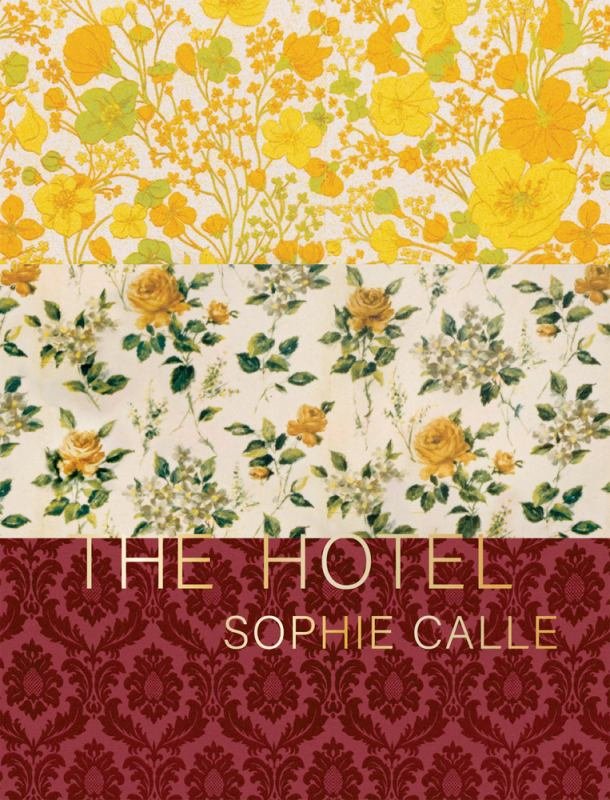
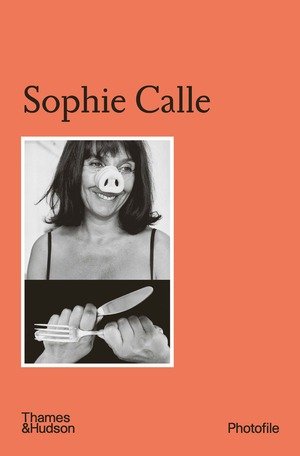
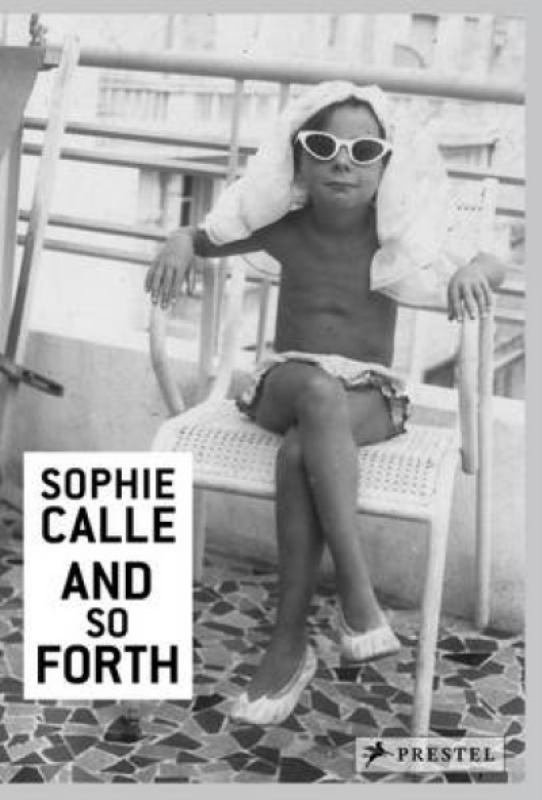
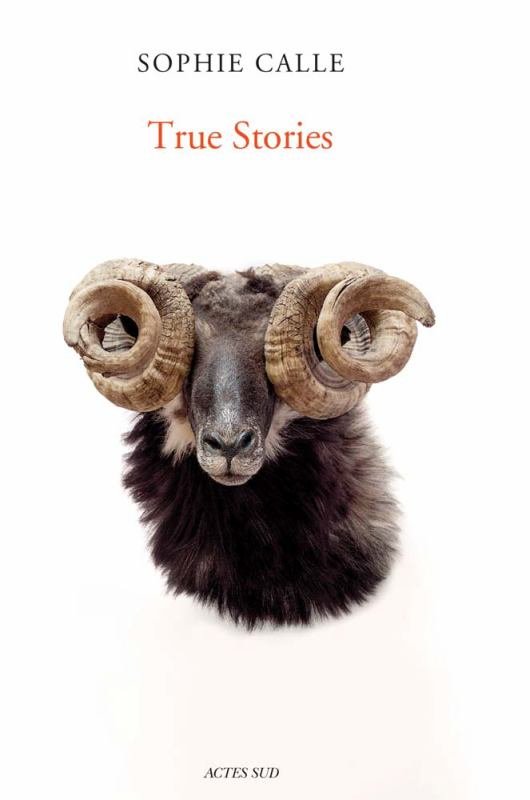
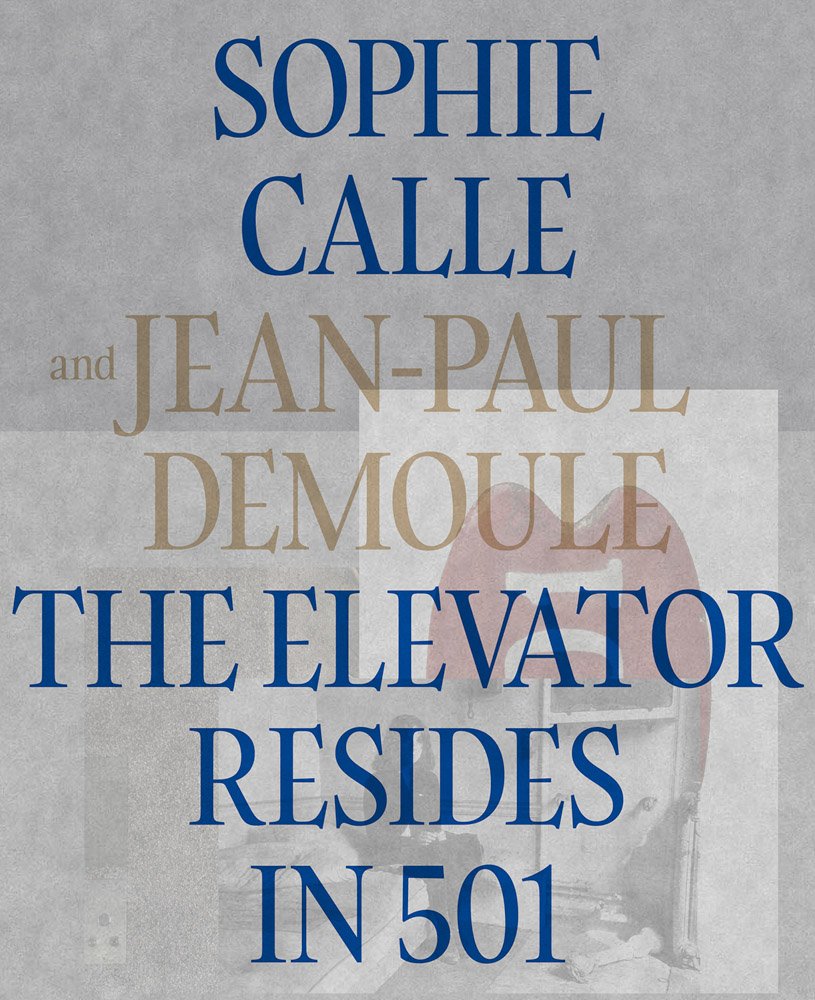
Artist Sophie Calle makes intriguing art and beautiful books. I’ve been lucky enough to be a recipient of several Sophie Calle publications and I love them all. This French photographer and writer’s art practice consists of rules-based (Oulipo-style) projects — many controversial, some intimate and quiet — where she follows strangers, stalks ex-lovers, becomes invisible, performs and imposes her camera on abandoned places and unseen people. Sophie Calle investigates identity and intimacy, records the ordinary, and documents public as well as private lives. Her photographs are infused with story, and she disrupts the concepts of autobiography and memories, her own as well as others. If you are keen to start on your Calle journey, the primer, Sophie Calle, is a good place to start. If you are curious, Hotel is wonderful, Blind is deeply moving and stunningly beautiful in text and image, and the True Stories (regularly updated) books captivating. Internationally acclaimed, Sophie Calle has been making work since the 1970s, her most recent show was at the Picasso Museum (walk through in the link below).

The story of a photograph: Stella’s stack of Sophie Calle publications photographed in the late evening in low light with handmade objects. Jug made by Thomas’s grandfather Alexander Bannerman Ingram. Jug is dated November 1961. Runner gifted to us by our friend and excellent weaver Meg Nakagawa.
Find out more >>>
*Unfortunately, we can’t hold all her books in stock. Fortunately, we can order any of these and get them to you within 2-4 weeks.
This book is exquisite. It’s not just the packaging, even though this is a great start: cloth-covered, gilt-edged, and excellent layout make this a pleasure to hold in the hand and eye. The cover is a triptych of patterns, reminiscent of wallpaper, fabric sheets or curtains and the golden edges are just the right touch of tack and glamour. The endpapers are the perfect hotel green. For this is a book about hotels, or rather those who stay in them through, the eyes of a chambermaid. In fact, a not-a-chambermaid. French artist Sophie Calle spent a few months in 1981 employed at a Venetian hotel. Here she conducted a series of observations in photography and text of the rooms she cleaned when the guests were absent. She was a voyeur, an explorer into what is both intimate and anonymous. She cleaned rooms and took photographs, read guests postcards, noted their underwear, the way in which they slept in the beds. She opened suitcases and clicked her camera. She pried. The result was an exhibition and later a book — a book which until now has been available only in French. This new English-language edition of Hotel from Silglo is a welcome addition to Calle’s other artist books. The photographs are a mix of black and white and stunning colour. The elaborate decor (the floral glitz and the formal wooden furniture) of the hotel rooms is lovingly juxtaposed with the personal effects of the visitors: some drab, commonplace; others surprising and cumulatively interesting. Why does this guest have a letter from 16 years ago on holiday with them? What can it be but nostalgia? The two women in Room 26 have near-matching pyjamas, porn magazines and cigarettes — they leave behind the two coke bottles, mostly empty and the magazines in the rubbish. The family in Room 47 have a balloon tied to a drawer handle, towels piled up in the bidet, repetitive postcards, and Calle’s assessment on day one, “On the luggage stand, a second suitcase. It is full. I don’t go through it; I just look. I am bored with these guests already.” And what do they leave behind — a deflated balloon and stale biscuits. Some guests are neat, others unpack everything. Calle notes their nightclothes, whether they use them, the arrangement of their pillows — the different approaches between couples. What medicines and cosmetics do they carry with them? She leaves us to draw our own conclusions as to the why. The photographs are intriguing — the objects, the angles with which Calle captures these fleeting moments, these ‘peepings’ into others’ lives through things and the way in which they interact with their environment — the hotel room. The careful calculations of light that cross these rooms, highlighting a crease in the sheet, or a slight rucking of the carpet, or the shine of new luggage or the wear and tear of old, is testament to Calle's skill behind the lens. And the text adds another dimension. It tells us what Calle does, how she sees the guests and what she does in the rooms. Each episode is recorded by Room, date and time. The best episodes straddle multiple days — with each visit to a room (with the same occupants) Calle seems bolder and more intrigued with the evidence of the guests. This isn’t merely reportage — Calle laces her words with droll humour and a storyteller’s gift, taking us, the readers, into our own imagination as we become voyeurs alongside her. Somehow it never seems that she is stepping over a border, although she trends very closely to the edge. We are briefly submerged in the lives of others while remaining at a distance, remote, despite this most intimate experience.

Any idea that we have of ourselves, and it is difficult to avoid forming an an idea of ourselves even though we have nothing but functional reasons to do so, not that functional reasons for this, or for anything else for that matter, are not sufficient, or, in fact, the only possible, reasons, is a fiction, depending on what we understand as a fiction, constructed around, or, more accurately, by, the evidence, so to call it, that presents itself, or is sought, in the phenomenon known generally as memory. How does the past, given that it is convenient for us to consider, for the purposes of this rumination at least, that there is an actual progression through states of what, for want of a better word, we might call, lazily, the universe, or, lazily and sloppily, reality, or vaguely but pedantically, if it is possible to be vague and pedantic simultaneously, actuality, persist into the present in order to provide us with sufficient evidence, the word used cautiously but inverted commas resisted, for these fictions that pass, for us and/or for others, as identities, personalities and other such trappings and conveniences, that enable, or enable the illusion of, or the belief in, our agency as entities at once immersed in and in opposition to the other agglutinations of our existence, so to call them, vaguely, those entities that are not us but which are necessary for us to define ourselves against by the relations of action or perception? It is precisely to avoid such nested clauses and to save excessive wear to the comma keys on our computer keyboards that by convention we eschew the pedantic compulsion, if we can, to apply the rigours of uncertainty to the basic functional fictions such as that of the persistence of entities through time, despite whatever changes to these entities occur. Indeed we seem seldom to be uncertain of the persistence of an entity despite such changes, often more seldom the greater or more transforming these changes, as with the changes expressed by the entities we think of as ourselves, given that we have the idea of ourselves as entities. In any case, given that we deceive ourselves and others merely for the sake of functional convenience, which is only reprehensible in an abstract sense, if indeed reprehensibility can be anything other than abstract, we construct our fictions around the evidence of moments, thought of as in the past, persisting as images, in whatever way we may think of images, the meaning of a word tailored always to the demands of its application, to the present. Photographs, despite whatever other meanings we may impute upon them, seem to demand from us a response such as that expected by a moment of the past persisting to the present, very like, in many ways, the images and fragments from which the fictions, the not untrue fictions, or at least the not necessarily untrue fictions, or what we perhaps may term our functionally true fictions, we think of as our memories. Sophie Calle’s excellent True Stories is a series of images related to what we are encouraged to think of, and have no reason not to think of, as her life, images with, to me at least, and, presumably, also to Calle, and, reasonably, perhaps, to most people, the resonance and texture of the fragments to which we pin, or from which we construct, the memories so described and undercut above. Each is accompanied by a brief memory-text by Calle, which gives the resonance of the image a responding or corresponding context in the story of her life. These texts, funny, sad, tragic, empowering, unsparing of herself and others, or merely straightforward, if such a thing is possible, describe, in the most efficient manner, what we may think of as the character of Calle. The images and the texts have equal weight, and the rigours of the process of recording are sufficiently evident to induce in the reader/viewer of this book the complementary rigours of reception that make the project of awareness concomitant to existence so rewarding.

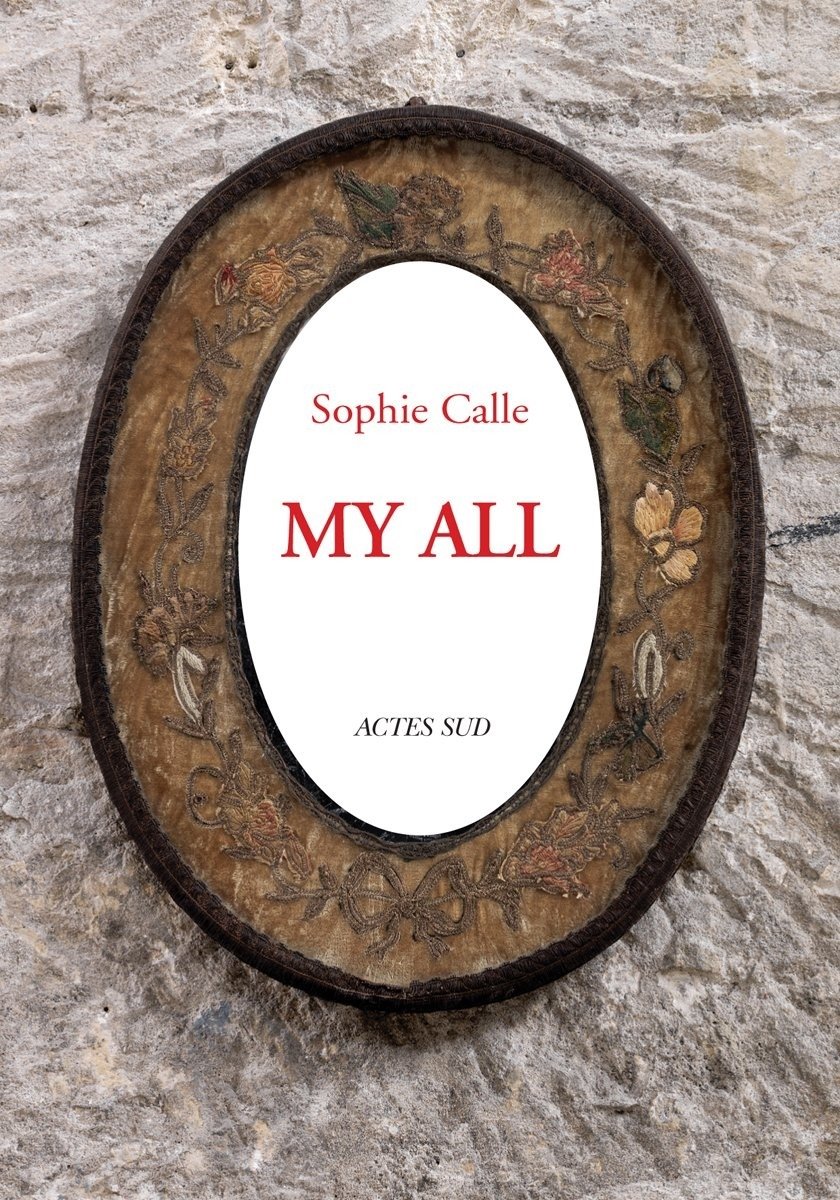
In the same way that photography is a crime against time, My All, a retrospective survey of photographer Sophie Calle’s various projects over her thirty-year career, is a crime against retrospective surveys, and for pretty much the same reasons. Calle eschews the magisterial tendencies of retrospective surveys by producing one comprised of 110 loose postcards, thus violating both any expected sequentiality (the cards can be arranged in any order, defeating any attempt at narration or development) and any expected omnitudity (the cards can be send or left out or lost or pinned up with no obvious detriment to the remainder). In doing so, she makes this collection into a project of its own. Almost all of Calle’s work has consisted of constraint-determined experiments (i.e. games) playing with the properties of the photograph as an instant wrenched out of time but so strongly implying a narrative that one will be created by the viewer of the image from their own charged mental fields (‘imagination’, in its literal sense). The divergence between the two contexts of the image tells us also something of the operations of memory, which similarly separates instants from the continuums that induced them and builds narratives to support them using disparate, unreliable and often inappropriate materials. All photographs are challenges to narrative and memory, and Calle is remarkable in the subtlety and in which she uses her camera to record and provoke at the edges of the acceptable and the expected. She is often particularly interested in the biographical power of images, and in the place of objects in bridging (or widening) the disjunction between time and the memory of time, between what is seen and what is hidden, between the public/shared and private/personal spheres. Always interested in transgressing limits as a way of understanding the mechanisms of those limits, Calle’s playful rigours move the viewer in and out of contexts and reveal in us motivations and responses that we had perhaps hitherto not suspected.