
HAPPINESS AND LOVE by Zoe Dubno — Reviewed by Stella
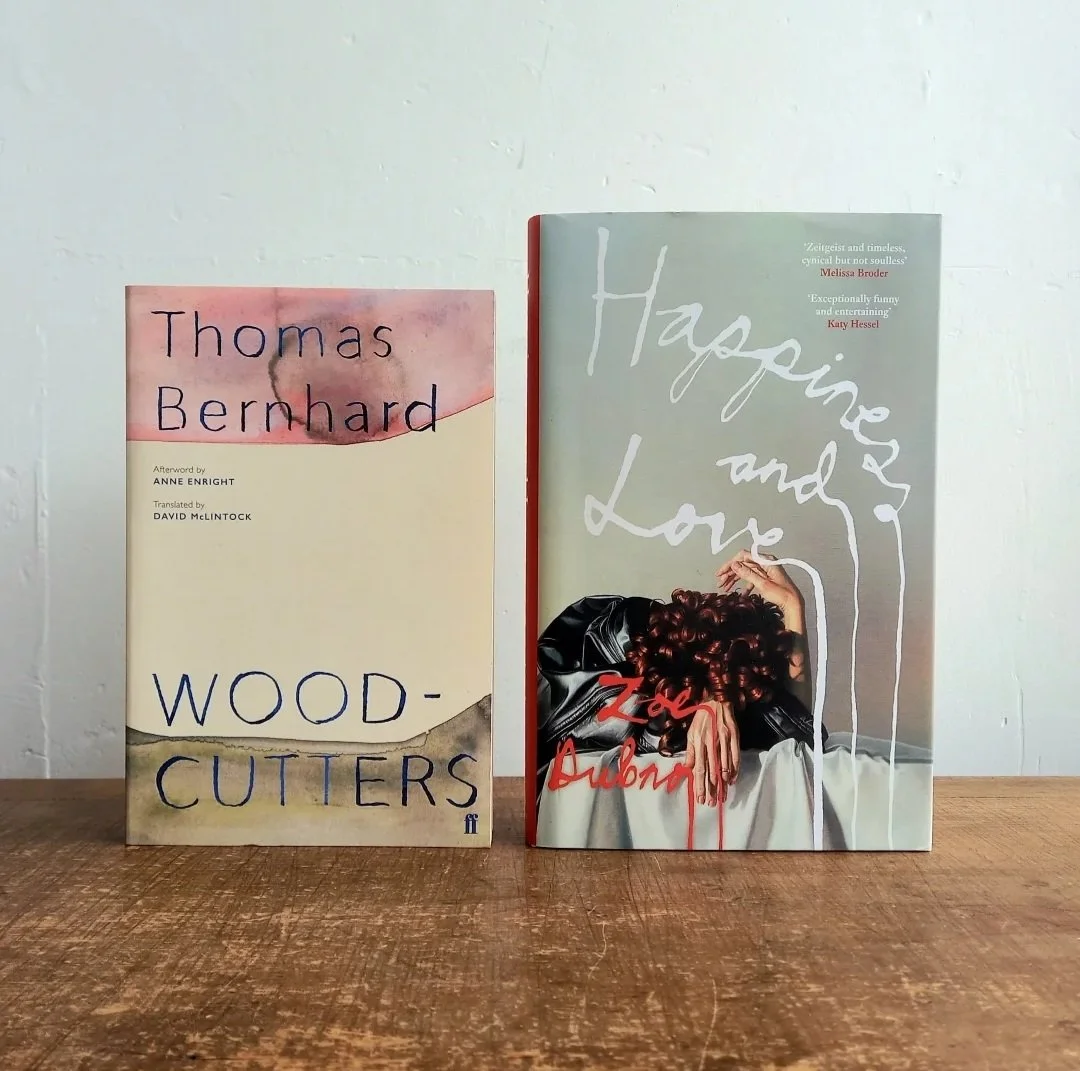
Ever found yourself at a dinner party you would rather avoid? Zoe Dubno tackles art and the creative scene, New York-style, in this sharp, slightly nasty, often wickedly funny novel. Our narrator, after escaping the claustrophobia of an art-scene couple who love to collect young artists and writers, finds herself smack back in the centre of their world again after the overdose death of Rebecca, a highly strung actress and friend. Inside the head of our narrator, we view the scene from her position seated on the white sofa in the high-end designer city loft. Here, across the room from her is the couple: Eugene pouring himself another wine and pawing a young naive hopeful artist, and Nicole, now aging, but still projecting all that money, position, and confidence can bring, regal in her control of the room and the people in it. Here too, is The Writer, Alexander, for whom our narrator has a particularly nasty case of bile. The narrator, a writer of medium success and not a lot of confidence (hardly surprising considering the company she has kept) keeps us engaged with her wry asides, observant eye (especially in retrospect — she has escaped, although now is feeling a little trapped and somewhat contrite), and laugh-out-loud snarkiness. Yet you also, like her, are a little repulsed by the company. This tension is cleverly pulled at by Dubno — letting us see, making us laugh and curl our lip simultaneously. We observe, we have our narrator’s internal dialogue of disgust and also self-loathing to digest, as well as her shocking unguestlike behaviour — several times she can hardly contain herself, breaking into barking and inappropriate laughter. As you read on, her behaviour towards this circle of writers, artists, wannabes, and the maniapulative couple at its centre is fully warranted. Here they wait for the guest of honour, a famous actress, here they say shallow things about the recently deceased Rebecca, they pontificate on their art — hint at their successes and talk up their brilliance, they fish for compliments and make snide putdowns to put others in their place, while working the room to their best advantage. Art is mentioned as if it is a by-product, merely a name-dropping convenience of what they truely want: attention. And when the dinner is finally served, the actress in her place at the head of the table, with Eugene slobbering over her as he is increasingly wine-fuelled and drug-sniffed, and Nicole sagely nodding and smiling to everything she says until… a conversation that cuts to the heart of the pretension plays out. The actress launches into a heated debate with the arrogant and soon-to-be-cut-down Alexander. Revenge for the narrator is sweet, the actress acting as a vehicle for our narrator’s distaste of the company. Zubno openly takes Thomas Bernhard’s The Woodcutters and brings it to America in the current century, using the same form — one paragraph (not that I noticed until the end) and one evening — and despite the shallow characters creates something clever, ruthless, and reflective. (I’ll be reading the original to compare.)