
MINOR DETAIL by Adania Shibli — Review by Stella
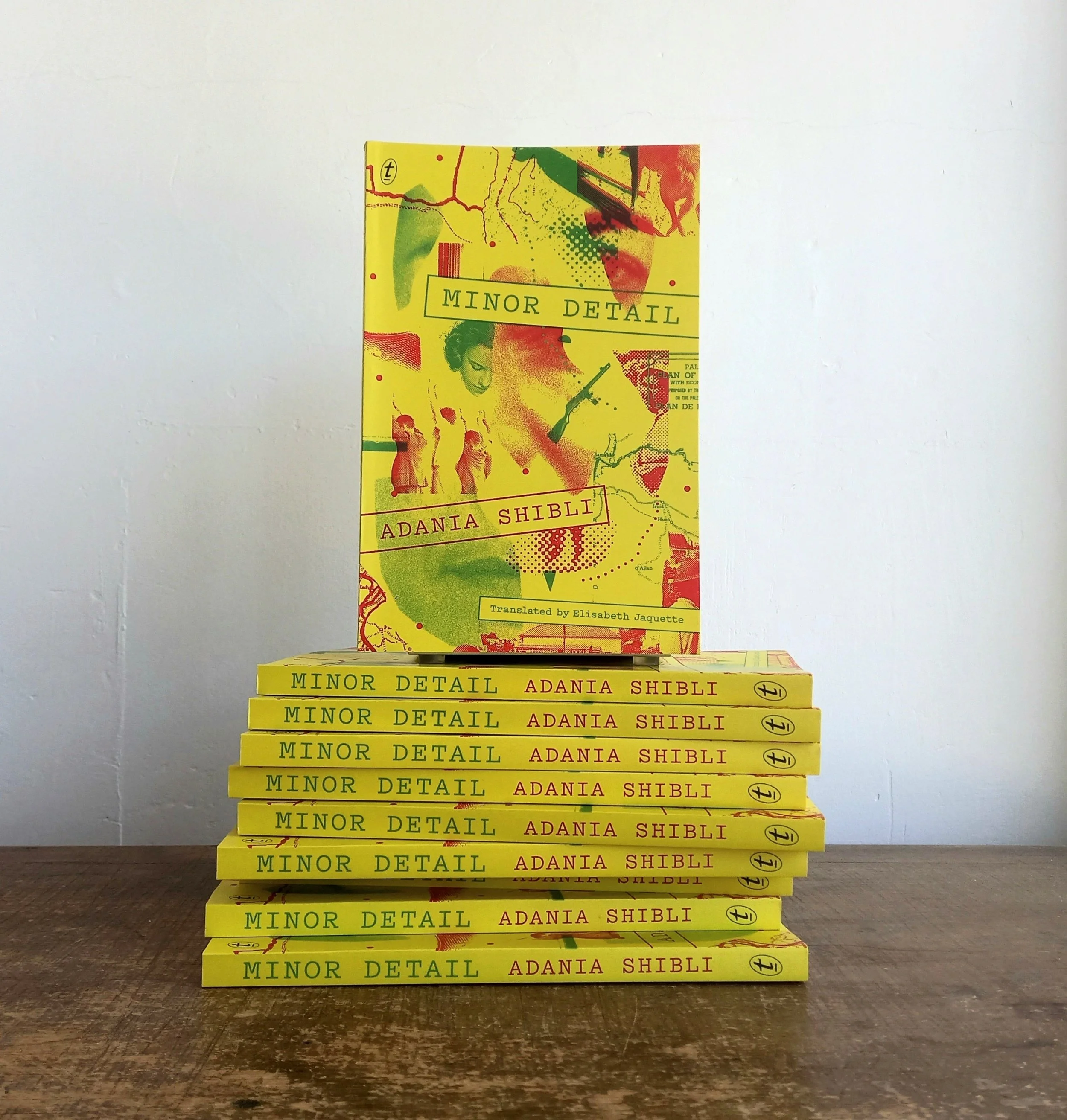
Walls, straight roads, borders, maps, places in the landscape, a meeting place, construction on taken land, roads dismissed, control, histories overwritten, obliterated, questions of the past for the present and the future, justice, the disappeared, the unnavigable, violence, justification, denial, displacement, erasure. In Minor Detail Adania Shibli takes us to the desert. It’s 1949 and the military have set up camp near the Egyptian border, to stake their ground, and to wipe the remaining Arabs from the new state of Israel. Told from the perspective of the officer in command of a platoon, the observation is crystal clear in his description of the landscape — the Negev both brutal and awesome, his encounter with a scorpion — the wound on his swelling leg repulsive, as are his actions towards the young Bedouin girl the soldiers have abducted and raped, and he has killed. The horror of this crime is never glazed over, and the actions of the officer are never questioned by those around him. In fact, his fellows fight to get in the queue. The horror of this event is voiced by an increasingly agitated dog. The motif of the barking or howling dog continues into the second part of this novella. A young Palestinian woman in Ramallah on discovering this event when the archives are opened is compelled to travel to the place of reckoning. Compelled by compassion, and a minor detail: her birthday is the Bedouin girl's day of death. To travel to the zone she must borrow a fellow worker’s ID, and rent the car in another’s name. As she travels with two maps overlayed, one historic showing the villages and roads that have now been almost completely obliterated, and the other the zones of the Israeli state, she drives to museums, settlement villages and towards the military-controlled zones, the new roads burn their straight lines and codes of engagement into the landscape, as well as her psyche. She is haunted by the girl, and there is always a dog pacing or howling nearby. You question her sanity in carrying out such a mission, and then question your own judgement. Should confronting an injustice be abandoned because it is dangerous? As she passes through each checkpoint, each glance at the borrowed ID, it feels as if a knife is being drawn slowly over a whetting stone, its edge sharper each time. And you realise that living under an authoritarian regime where you are a person without freedom of movement, where you are marked as unwanted, means that your last breath could be at any moment — a gun always trained on you. Shibli’s writing is sparse and evocative, the tension tautly held — there is no let up. Minor Detail is a powerful display of resistance.