
NEW RELEASES (31.3.26)
All your choices are good! Click through to our website (or just email us) to secure your copies. We will dispatch your books by overnight courier or have them ready to collect from our door in Church Street, Whakatū.
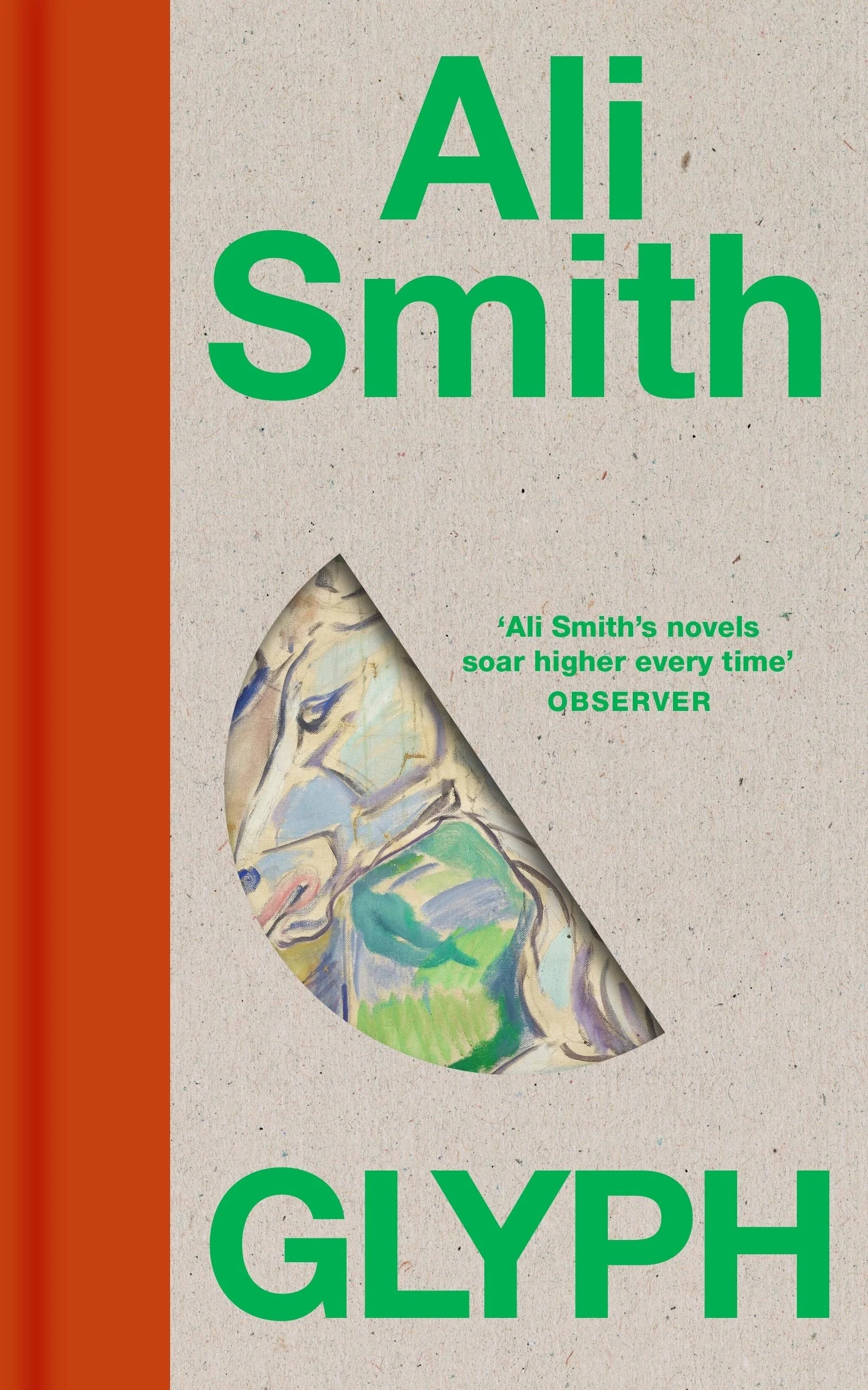
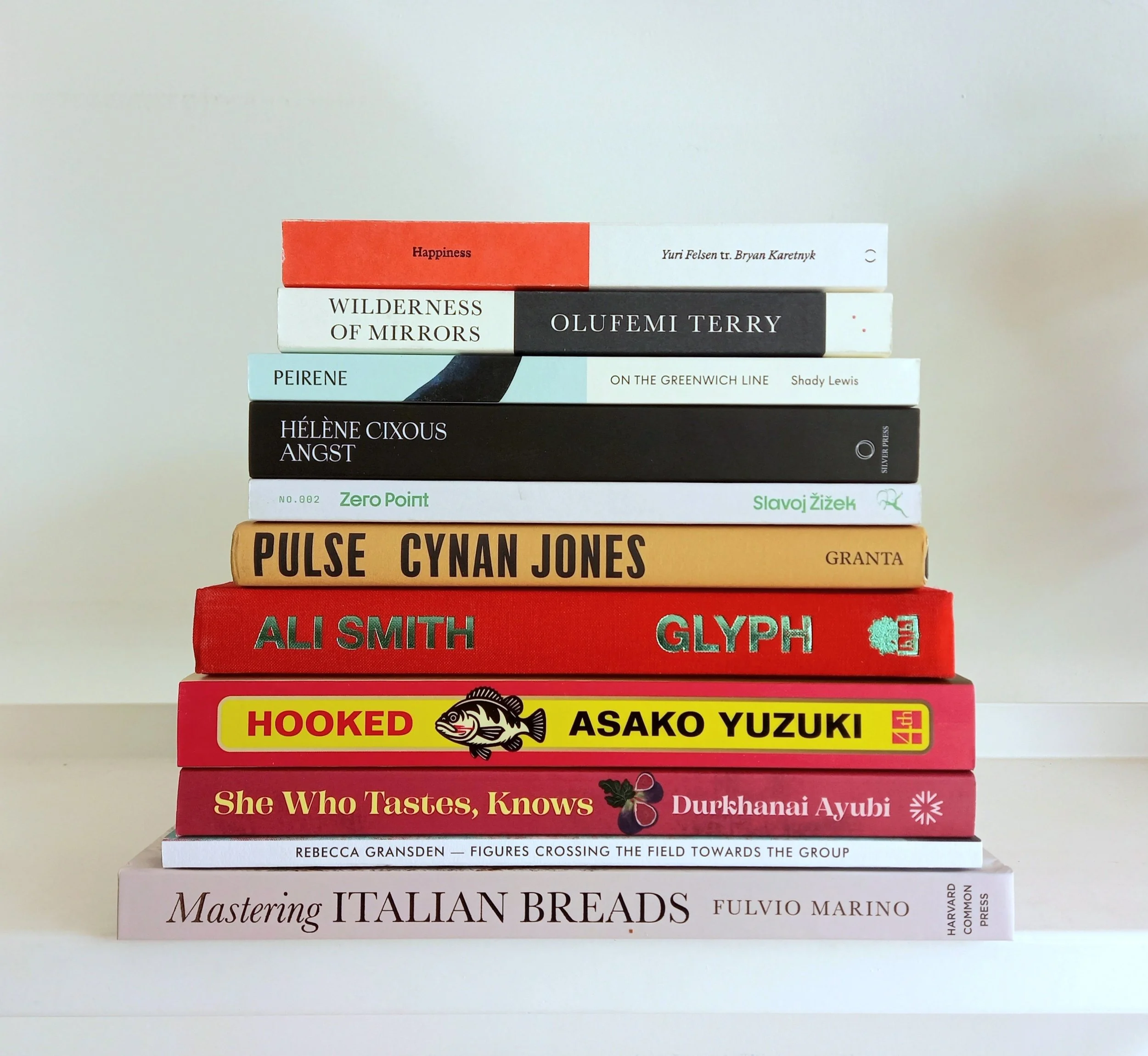
Glyph by Ali Smith $45
It sounds like Gliff? Well, it's something else altogether. Glyph follows Ali Smith's 2024 novel Gliff and tells a story hidden in the first novel. Ghosts don't exist. They don't. End of. Story, however. It is haunting. Everything tells it. It all starts when Petra and her little sister Patch hear a horrifying story from the past and find themselves making up a ghost. Is it imaginary? Is it real? Then it all starts again thirty years later when Petra, now estranged from Patch, finds a phantom horse kicking the furniture to pieces in her bedroom. What to do? She phones her sister. In a chiaroscuro dance through our increasingly antagonistic era, Glyph asks if we’re attending to the history that’s made us and to the history we’re making. A funny, warm and clear-eyed take on where we are now, Glyph is about what our imaginations are for and how, in a broken, brutal and divided time, we rekindle care, solidarity, resistance and openness. This anti-war novel, Ali Smith’s most soulful, playful and vital yet, is a work of lightness that goes deep to counter the forces currently flattening the modern world. [Hardback]
”Glyph's primary power comes from its commitment to excavating the sediments of language; its etymological resonance and inference. Smith's tonal skill as a writer is also used to great effect when dealing with bureaucratic, authoritarian absurdity. It is a bold move to be so morally unflinching, especially in the face of a perceived aesthetic orthodoxy that so often privileges distance and irony, but in Glyph we see a major British writer answering the call of the day when so many others have equivocated or turned away. There is also something about Smith's relentless focus on language that makes her particularly well suited to the task. Smith's sensibility is fine-tuned to grapple with the avalanche of passive-voice headlines, asymmetric categorisations, outright linguistic inversions and semantic absurdities that have accompanied the increasingly desperate attempts to justify the unjustifiable.” —Keiran Goddard, Guardian
”Smith is an exceptionally gifted storytelle. She can bring any sentence alive with the verve of her wordplay, as her characters spark off one another in speech, echoing, patterning and discovering the energy contained in a single moment. Smith's capacity for hope is infectious, and the hope posited by these books is that storytelling can restore not just our humanity but our political responsibility and agency. Between them, Gliff and Glyph offer a world of endlessly proliferating gliffs: slivers of conscience that Smith imbues with a power that is not illusory simply because it is imagined. Indeed, Smith suggests that made-up stories may, at this point, be the least illusory things we have.” —New Statesman
>>Exhilirating/excoriating.
>>Read Stella’s review of the companion volume, Gliff.
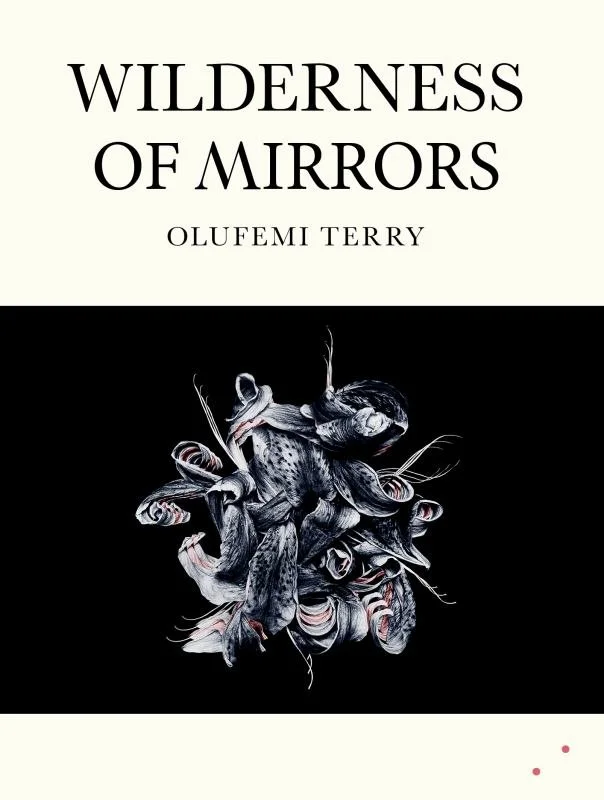
Wilderness of Mirrors by Olufemi Terry $48
When Emil’s father suggests that he set aside his studies to help steady his cousin’s life, the young neurosurgeon-in-training moves in with indifferent relatives in Stadmutter, an unfamiliar, deeply divided city at Africa’s southern tip. There he is drawn to tamsin, a white doctoral student, and Bolling, a wealthy Haitian-German whose reactionary ideas hold a curious allure. Beneath Stadmutter’s languid surface, a gathering Creole movement is straining the country’s fragile racial peace. Through Bolling’s machinations, Emil is pulled into events that threatne his future and pushed towards irrevocable choices. [Paperback with French flaps]
”I loved this novel, at once vivid and mysterious, beautiful and frightening. Olufemi Terry speaks with great clarity and precision to the aimlessness and self-disconnect of youth, the formlessness of relationships developed under liminal conditions, and the frightening sensation of being gradually absorbed into something vast and opaque. Emil is a fascinating protagonist; Wilderness of Mirrors follows his movements closely, yet he remains — to himself, too — often half-absent, though occasionally brought into sharp focus and placed under the lens of his own self-analysis. Wilderness of Mirrors follows Emil's search for meaning and emotion amidst the mysteries of himself and of the parallel South Africa in which the novel is set, to deeply absorbing, often destabilising effect.” —Harriet Armstrong, author of To Rest Our Minds and Bodies
”In Wilderness of Mirrors, Olufemi Terry conjures up a parallel South Africa where, although apartheid is decades gone, its young people move through an existential transience, fitfully straining to reckon with the gaps their country's history has left them. For Emil and Tamsin, there's no coming of age, only a hollow sense that they should be doing more with selves they are still figuring out. It's a world that is all too familiar, yet Terry transfixes the reader such that we are loath to turn away.” —Evan Narcisse, author of Rise of the Black Panther
>>Read an extract.
>>What lies beneath?
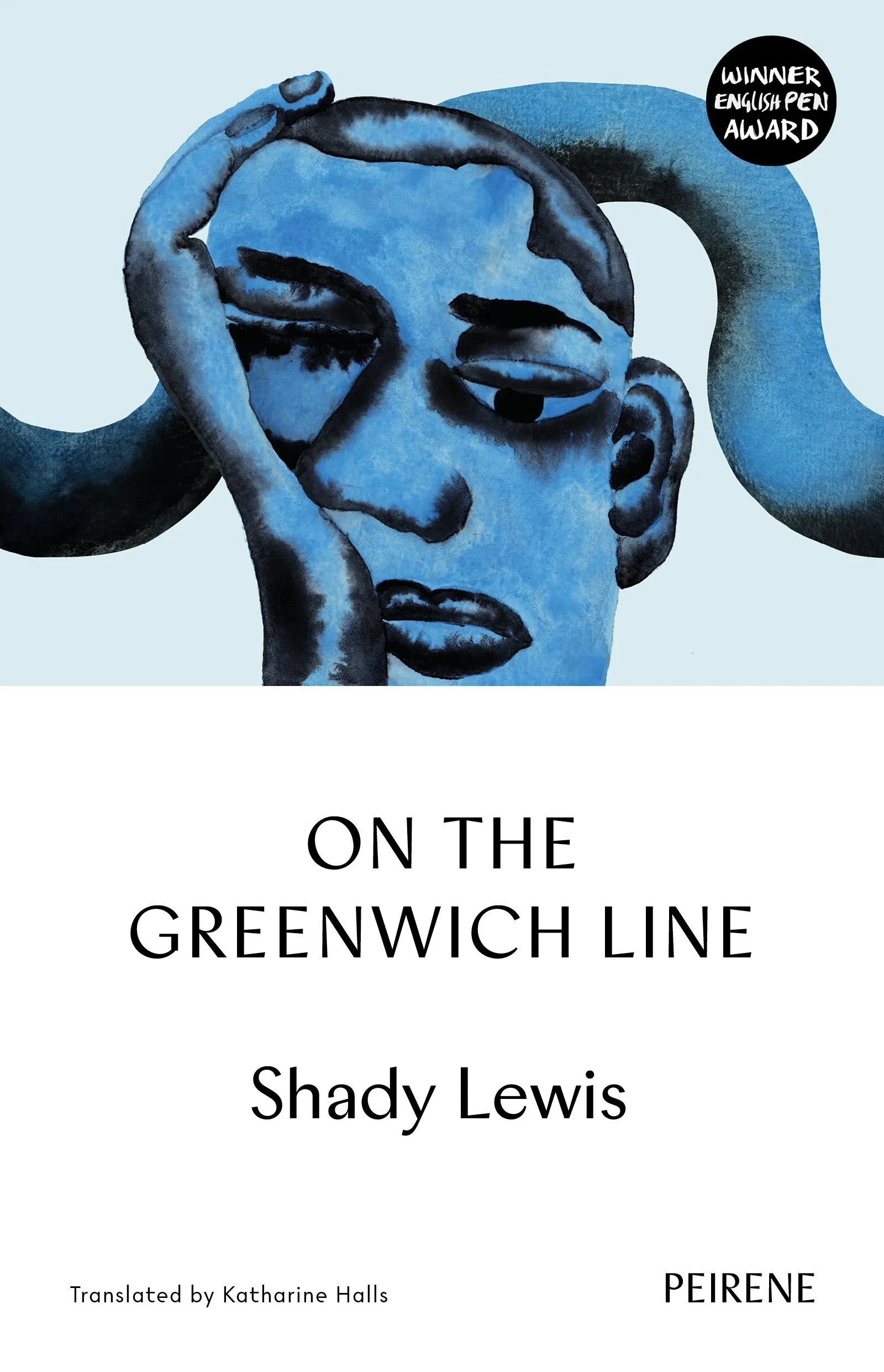
On the Greenwich Line by Shady Lewis (translated from Arabic by Katharine Halls) $43
In a run-down East London housing office, migrants and frustrated local government employees cross paths and try to work out what the latest policy means for them. As a favour to a friend, one man finds himself roped into organizing the funeral of Ghiyath, a young Syrian refugee. It is not until his life collides with Ghiyath's death that he realises just how much he has in common with those who've fallen through the cracks. Told with a wry cynicism and deadpan wit, On the Greenwich Line traces the absurdities of racism, austerity, and bureaucracy in contemporary England. This is a story about systemic failure and human courage, and about London and its many lost souls, full of insight, humour and profound humanity. [Paperback with French flaps]
”I was riveted and charmed by this funny, humane and poignant novel. It's written in a voice that is as ardent as it is sensitive, one marked by history and yet managing to remain beautifully unruly and independent.” —Hisham Matar
”Shady Lewis makes fun of everything and everyone with great humanity: we become attached to these characters who are more lost than crazy, who do what they can keep going. Lewis, with scathing humour and a healthy lightness of touch, examines everything: from the god Khnum to Margaret Thatcher via Karl Marx, freedom of expression, Facebook, romantic breakups, colonization, identity and religious tensions - nothing escapes his acerbic and lucid gaze. A delicious tragicomic novel about contemporary society.” —Nina Chastel, Orient XXI
”This introspective novel delights with its finesse and depth, and invites us to look at reality from the author's sensitive perspective. In painfully beautiful, funny and tragic prose, Shady Lewis skilfully and accurately expresses the difficulty of being excluded and stigmatized because of their difference.” —Nadia Leila Aissaoui, l'Orient litteraire
>>Madness and philosophy.
>>The translator reads a passage (and there’s a slideshow).
>>Fifty shades of whiteness.
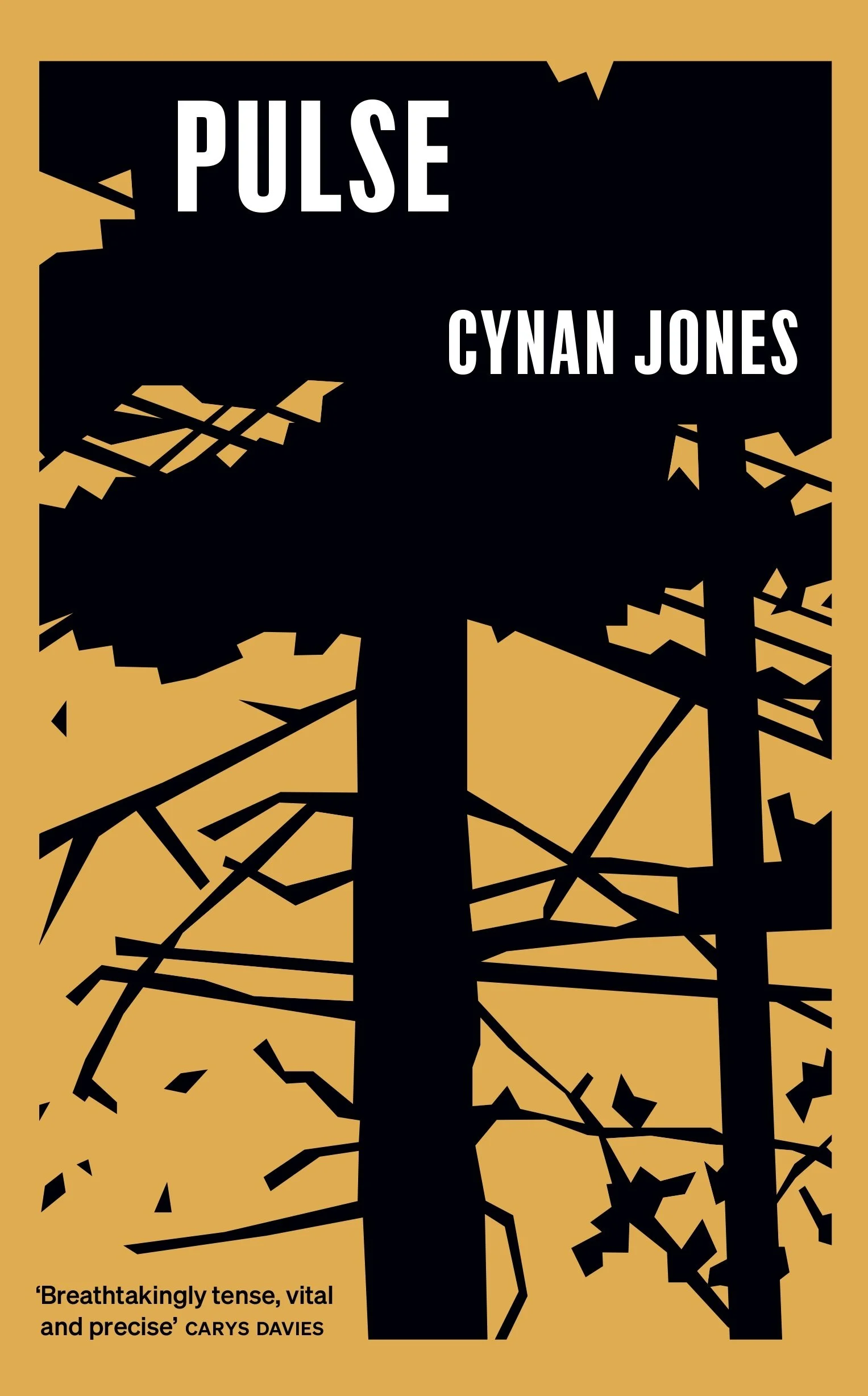
Pulse by Cynan Jones $35
A collection of viscerally powerful short stories in which man is pitted against nature, against circumstance, and against himself. A man heads into the snow to hunt down the bear that has been taking stock from farms in the valley. A father tries to make something go right for the son he no longer lives with. A partner is called to help when a cow's labour goes horribly wrong. A fierce storm threatens to bring down a tree on powerlines over a family's home. Fear, vulnerability, tension and resolve course through these arresting and indelible stories from the Welsh author of The Dig and Cove. [Hardback]
”Breathtakingly tense, vital and precise. Cynan Jones has a rare gift for making us experience, moment by moment, the struggles of his characters to survive.” —Carys Davies
”Pellucid clinical sentences craft a loving symphony of meat and magic, mucous, mud and mire. Cynan Jones's writing is pure electric energy. Every story thrums and squirms with life. The accumulative affect is to deliver a shock to the heart of what a wild, strange and wonderful thing it is to be human.” —Megan Barker
”Each paragraph reads like a beautiful, multi-layered prose poem. The crystalline language conveys, with real emotive power, the squelch and suck of mud and manure, the stink of blood, the skin-feel of drizzle. Spending time with this collection is a sensory, immersive experience.” —Niall Griffiths
”Cynan Jones is a blast of fresh air, a stumble in the dark, and a sudden chill in the guts.” —Tim Winton
”The six tales in Cynan Jones’s new collection vibrate with fear. Jones introduces a mood of fearful expectation on the first page and maintains it, with few moments of respite. Much of the tension arises from our not knowing what is going on. Such withholding of information is a studied technique on the author’s part, a means of creating mystery, sparking our curiosity and prompting us to ask questions. Pared-down though his writing may be: it is shot through with moments of arresting originality and beauty. The painterly effect is exquisite, the first sentence of the first story exemplifying the quiet power of Cynan Jones’s prose.” —Times Literary Supplement
>>Nature and non-linear love.
>>Writing in your head.
Angst by Hélène Cixous (translated from French by Sophie Lewis) $48
A woman replays her abandonment by her mother, who is sometimes addressed as a male mother-god. She is also abandoned by her lover, to whom she is in thrall. She tries repeatedly to make or receive phone calls with the beloved figures, without success. She waits for their letters and imagines their contents. In a dream-like, torrid sequence, suffering, fear, fatigue and imperfection are apostrophised. Forgetting is examined and toyed with from every angle. Mythical hybrid creatures are invoked: a snake-headed lion, wolf-snakes, a wolf-peacock. How did this come to be? In a cunningly, wittily wrought rush, the unique, unpredictable voice of the narrator speaks from multiple perspectives to express powerful anguish and, ultimately, catharsis. [Paperback]
”Cixous reminds us that women have long spoken from a wound. To be is already to be abandoned, already to have lost, and still to love. To read Cixous is to tarry with this open wound, to hear how writing becomes testimony to its own possibility.” —Jamieson Webster
”Language in Cixous’s hands is molten, constantly opening onto fresh possibilities.” —Maggie Nelson
”With Hélène Cixous you must close your eyes and open your mouth. Wider. So open your throat opens. Your esophagus. Your lungs. Wider. So open your spine unclatters. Your hips swim loose. Your womb worlds itself. Wider. Open the well of your sex. Now speak your body from your other mouth. Yell corporeal prayer. This is writing.” —Lidia Yuknavitch
>>On Angst.
>>Very close, very far.
Happiness by Yuri Felsen (translated from Russian by Bryan Karetnyk) $42
Influenced by the great modernists such as Marcel Proust, James Joyce and Virginia Woolf, Yuri Felsen’s writing stood at the forefront of aesthetic and philosophical currents in European literature. Set among the exiled Russian community of interwar Paris, Happiness offers both a vivid social snapshot and an unnerving psychological portrait, and its exploration of desire, rivalry, masculinity and self-deception, shaped by shifting sexual and emotional mores, feels strikingly modern. Written as a diary addressed to his beloved Lyolya, Happiness unfolds as an intense stream of consciousness in which Volodya — its anxious, self-scrutinising narrator — revisits the fragile equilibrium of their difficult relationship. When new figures enter Lyolya’s orbit, Volodya’s hard-won certainties begin to collapse. Forced to contend with a series of rivals — a Soviet film star, a dashing ex-soldier, a wealthy businessman — he is driven ever deeper into jealousy and self-analysis, with tragic results. As the relationship fractures, Volodya probes the uneasy bond between emotional suffering and artistic creation, and the elusive nature of happiness itself. Felsen’s writing has only recently been rediscovered. At the height of his career, following the Nazi occupation of France, he was deported and killed in the gas chambers at Auschwitz, and his legacy and archive were largely destroyed by the Nazis. [Paperback]
”Felsen has rightly been compared to Proust in his determination to make language capture every atom of the mind’s workings. This translation is a formidable achievement.” —Literary Review
”The miracle of Yuri Felsen is how his apparently Nabokovian rhythms lull you into a false sense of security, before a sudden and chilling exposure to the weather of a walk where the whole elegantly interwoven conceit of the narrator is ripped apart. And the pain of someone like Walser glints through a decadent surface of exiled life in Paris, to hint at darker shadows to come.” —Iain Sinclair
Zero Point by Slavoj Žižek $22
The essays in Zero Point ask how we distinguish defeat from disaster, and how we confront despair without collapsing into it — questions never more pertinent than the current moment in the wake of electoral victories for authoritarian populists and unceasing news of violent atrocities. The 'zero-point' of the title is ground level, rock bottom, the place to which one retreats and where one regroups. Taken from Vladimir Lenin's 1922 piece 'On Ascending a High Mountain, in which Lenin considers the complexities of how one 'retreats' while keeping faith in the cause, the central simile of the climber offers a blueprint for resilience, flexibility, and the persistence of hope. This is the revolutionary as living out the Beckettian motto — 'Try again. Fail again. Fail better.' In Žižek’s hands, this becomes the formula for confronting the antagonisms of existing world order. With a particular focus on the Middle East — the point at which all our tensions threaten to explode — Žižek argues nothing can be addressed meaningfully without such a confrontation. [Paperback]
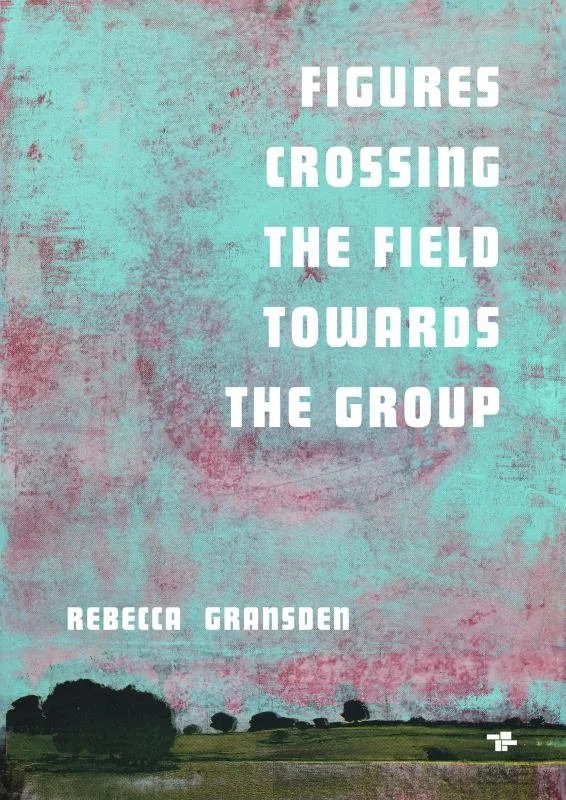
Figures Crossing the Field Towards the Group by Rebecca Gransden $40
In the midst of an apocalyptic event of unknown provenance — a mass of red spreading north from the southern counties — a young girl sets out on a journey. Along the way she encounters a series of eccentric characters, the few left behind in the wake of a widespread evacuation. Some of these individuals are ravaged and on the edge of death, while others are immersed in their own hermetic practices, be they solipsistic, nihilistic, or otherwise. None wish to engage for more than the brief time necessary to offer their meagre assistance. There is talk of 'anti-spores', pools of blood, and of a hum spreading through communication wires. The hum has altered the very appearance of written language, pushing words apart, leaving only single syllables behind. This constraint is present in the third-person narration we read but is removed during periods of dialogue. This results in a rhythmic, chantlike flow to the prose. As with the best of work that employs the tropes of apocalyptic fiction, Rebecca Gransden's unusual novella ends with many of its questions floating in the scarlet haze it generates, leaving them for the reader to ponder in the wake of what is surely a singular literary experience. [Paperback]
"Linguistically inventive, alert in every sense, and propelled with such narrative force that hairs burn on the unsuspecting reader’s neck." —Iain Sinclair
>>The way of salt and sin.
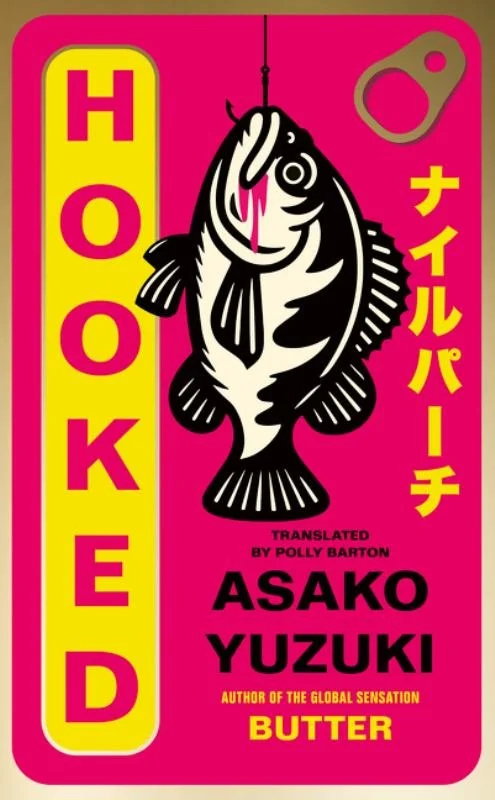
Hooked by Asako Yuzuki (tranlsated from Japanese by Polly Barton) $37
The new novel from the author of Butter. Eriko really wouldn't mind being savaged, if it was her best friend doing the savaging. Eriko's life appears perfect — devoted parents, spotless apartment and a job in the seafood division of one of Japan's largest trading companies. Her latest project, to reintroduce the controversial Nile perch fish into the Japanese market, is characteristically ambitious. But beneath her flawless surface she is wracked by loneliness. Eriko becomes fascinated with a popular blog written by a housewife, Shoko. Shoko's posts about eating convenience store food and her untidy home are the opposite of the typical Japanese housewife's manicured lifestyle. When Eriko tracks Shoko down at her favourite restaurant and befriends her, Shoko is at first charmed by her new companion. But as Eriko's obsession with Shoko deepens, her increasingly possessive behaviour starts to raise suspicion. As Eriko's carefully laid plans begin to unravel, how far will she go to hold on to the best friend that she's ever had? [Paperback]
”Obsession, tension and toxic loneliness: Hooked had me in a headlock. No one writes about the hidden depths and lurking monstrosities of womanhood quite like Asako Yuzuki.” —Alice Slater
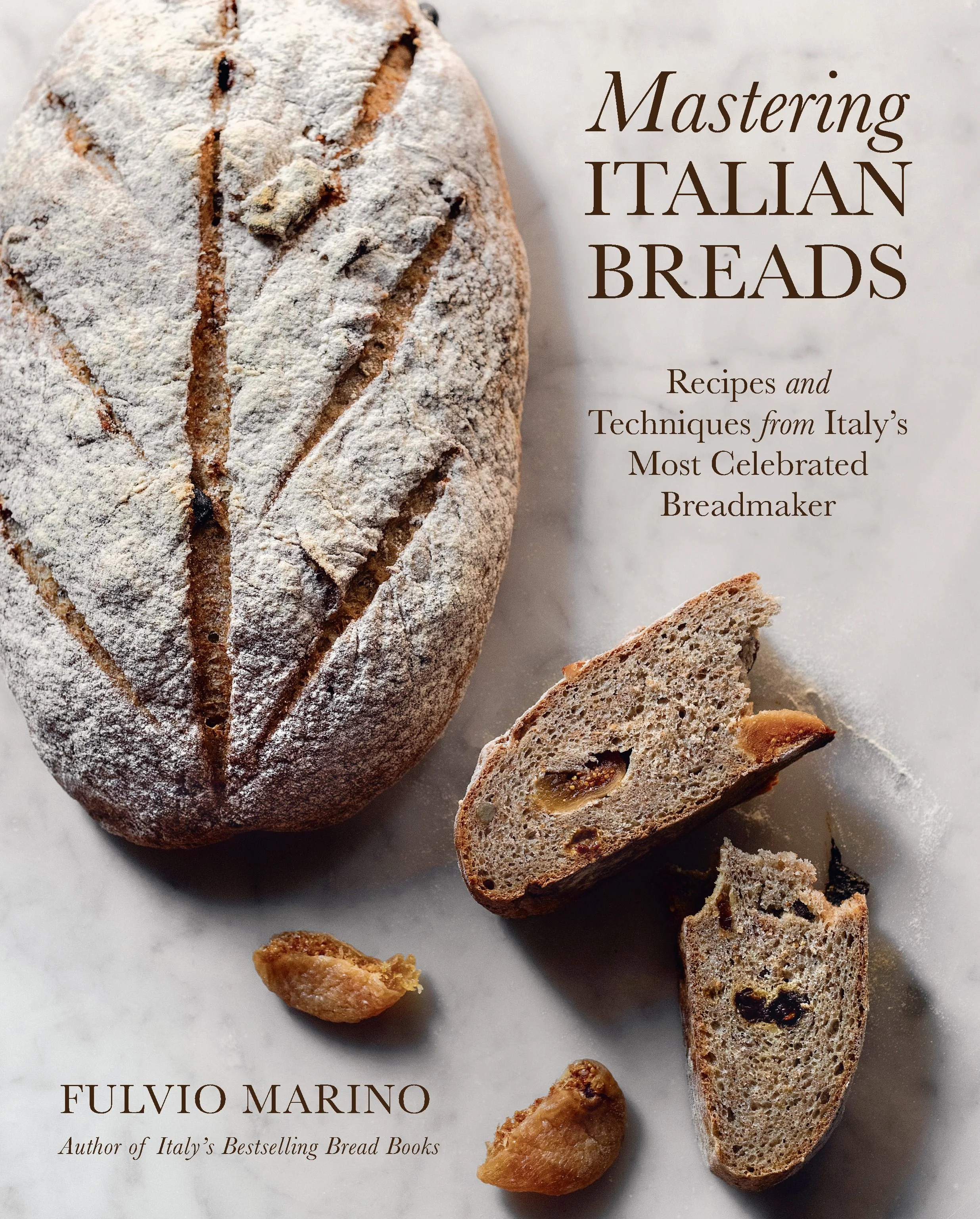
Mastering Italian Breads: Recipes and techniques from Italiy’s most celebrated breadmaker by Fulvio Marini $60
From humble homes in the mountain villages of Umbria and the Piedmont to the grand bakeries of Milan and Rome, the Italians know bread-baking. The same breads they make are also made in fancy, expensive bakeries outside of Italy, too, but few people realize how easy, gratifying, and inexpensive it is to make these spectacular loaves at home. Enter Fulvio Marino, one of Italy's most celebrated bread-makers, who has made it his mission to teach everyday home cooks the secrets of Italian artisan breads. He has written a big, colorful book that reveals his secrets and those of his fellow artisans. Illustrated with hundreds of step-by-step color photos that show you how the breads are folded and shaped, Mastering Italian Breads includes well-known classics like Focaccia, Ciabatta, Crostata, and Pan DolceLesser known-but worth discovering! —Italian regional breads like Pane Pugliese and Teglia alla Romana. —More than a dozen Italian spins on rolls, biscuits, and breadsticks. —Six rustic and delicious versions of pizza doughs. —Breads with a sweet side, such as Cannoli and Panettone. Authoritative, easy-to-follow advice about yeasts, wheat varieties, proofing, rising, shaping, and baking. Both useful and inspiring. [Hardback]
>>Look inside!
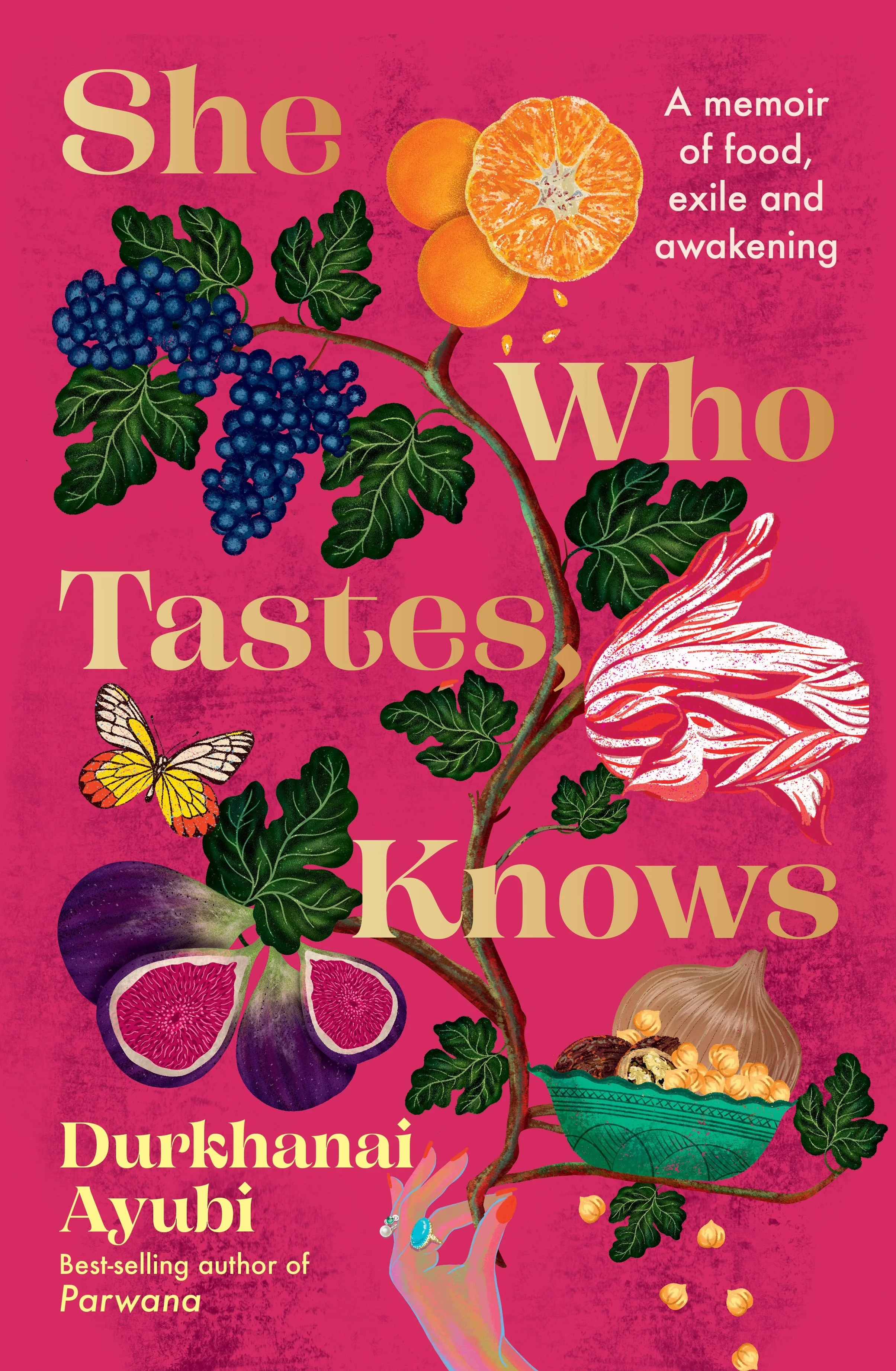
She Who Tastes, Knows: A memori of food, exile, and awakening by Durkhanai Ayubi $38
To truly understand things, we need to know them. We need to taste them. This is a story of how food connects us all — not only at the table but to each other's cultures and histories. Durkhanai Ayubi was born in Afghanistan in the 1980s, and she and her family became refugees when she was a small child. She's grown to see her ancestral lands be misunderstood as a desolate war zone of helpless people, with no history or culture worthy of mention, when the reality is in fact steeped in rich, complex histories of incredible cultural significance. Living in Australia, Durkhanai's only tangible connection to the histories of her homeland was through food, first through cooking with her family, and then as an owner of her much-loved award-winning Adelaide family restaurant, Parwana. Years on, and following Afghanistan's systemic collapse in 2021, Durkhanai realised that it was time to revisit those histories and tell the previously untold stories that can help shape a more optimistic future. She Who Tastes, Knows is an expansive history of Durkhanai's homeland and a vivid, moving story about what it truly means to understand another's culture. Through stories of food, family, belonging and migration, the book traverses cultural boundaries, weaving a tapestry of dignity, empathy and understanding. Each chapter draws on a particular ingredient important to Durkhanai's cultural identity, and explores their life cycles to uncover unseen histories of Afghan culture, the complexities of migrant and refugee experience, and how we as a society might work towards unifying our disparate cultures and ways of seeing the world. In our modern world, which can feel so disjointed, this book shows us how new possibilities for connection are just under the surface, waiting to bloom. [Paperback]
>>Ayubi is best known as the author of the Afghan cookbok Parwana.