
NEW RELEASES (15.10.26)
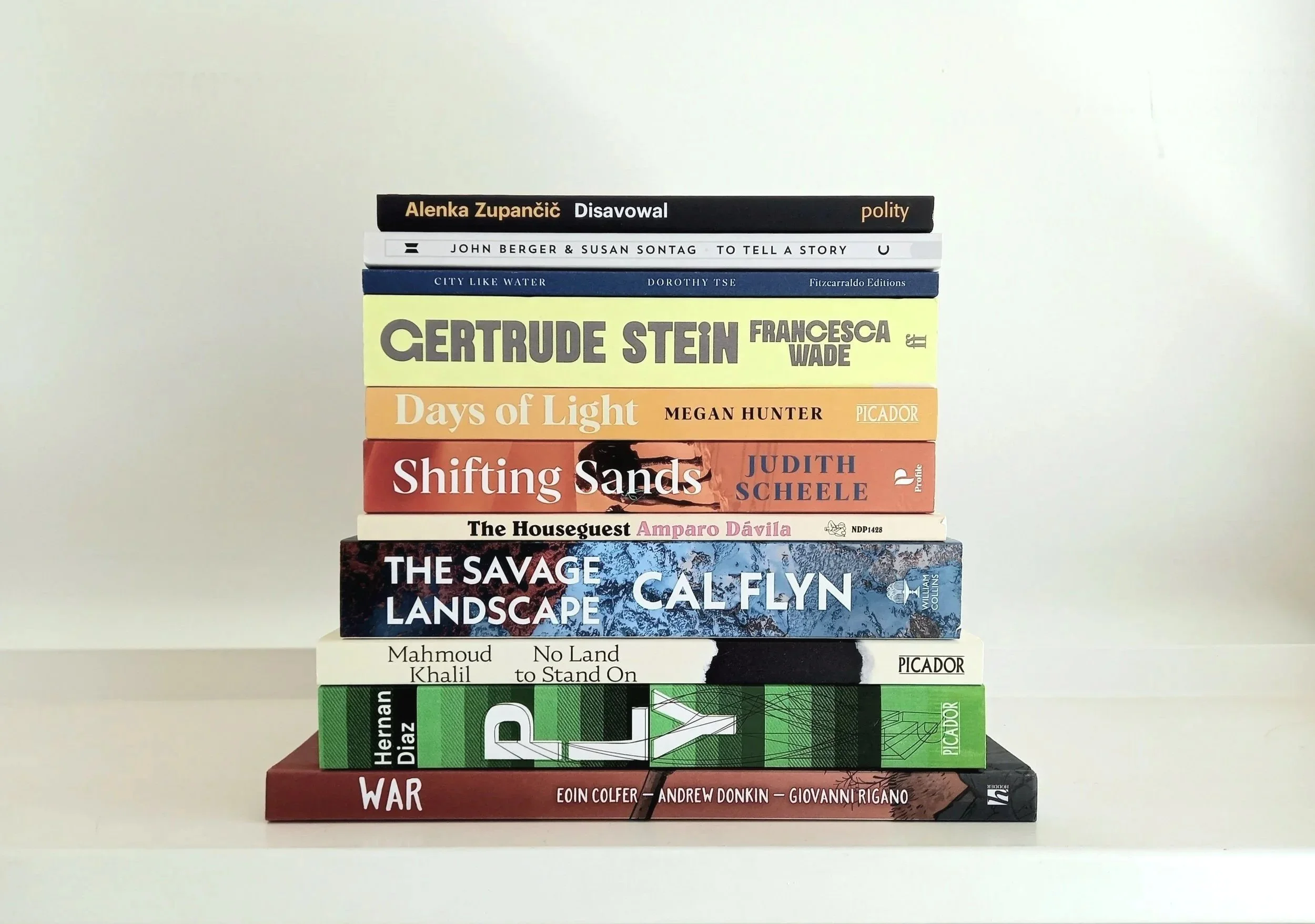
All your choices are good! Click through to our website (or just email us) to secure your copies. We will dispatch your books by overnight courier or have them ready to collect from our door in Church Street, Whakatū.
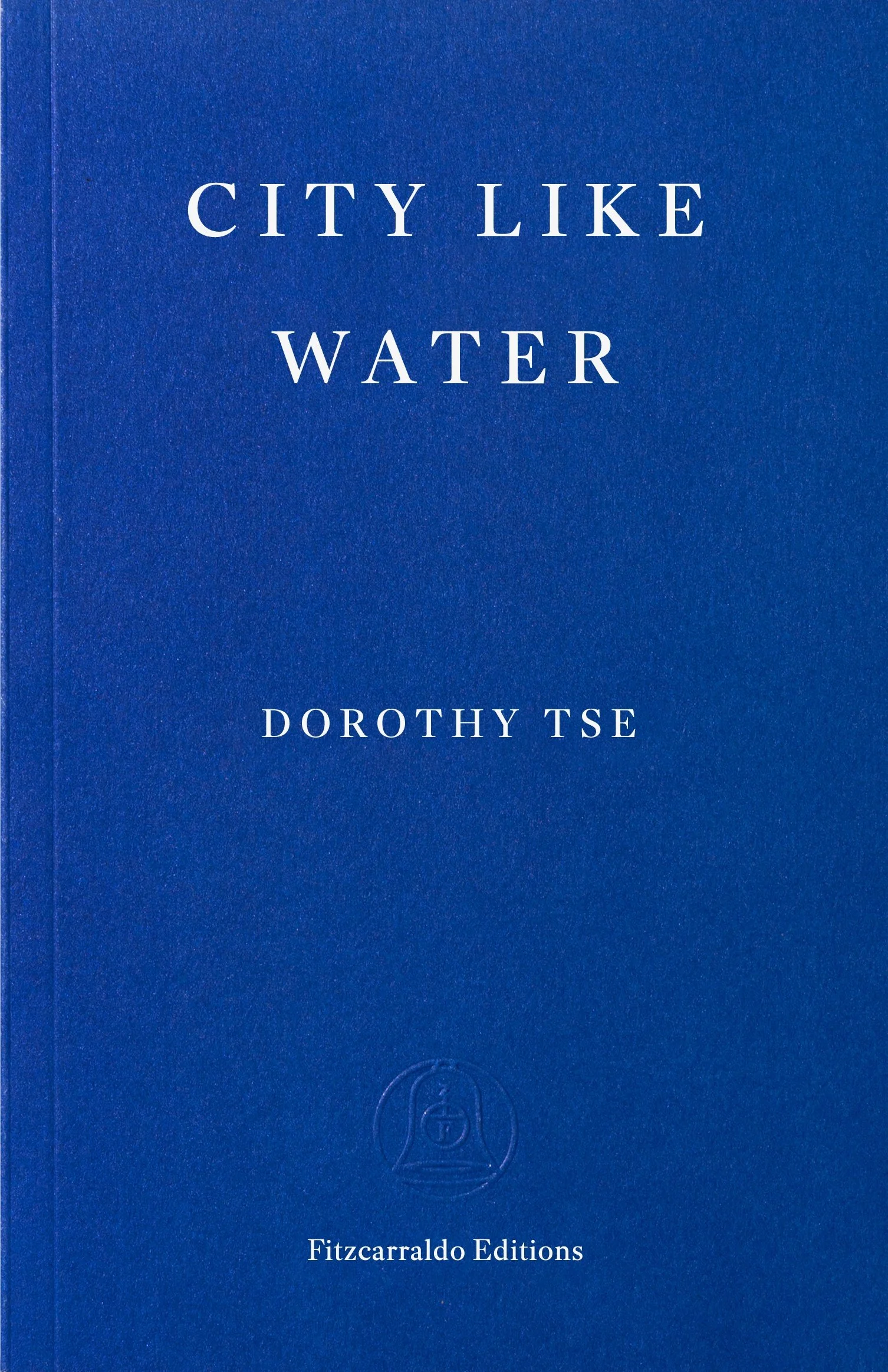
City Like Water by Dorothy Tse (translated from Chinese by Natascha Bruce) $33
The city you grew up in is gone, as if sunk to the bottom of the ocean. Though so much has vanished with it — classmates, teachers, counterfeit watches, the erotic toe cleavage that used to lead the way down secret passages — you still catch snatches of conversation lingering in the air and glimpse sun-dazzled residents retreating into dark crevices. But then the disappearances come closer to home. Your mother joins in a housewives' protest over fake lotus roots only to be turned into a glittering bronze statue by the police. Then it's just you and your father at home, until he is quietly absorbed into the enormous new TV gifted by the government, and you spot him picking through leftovers in the background of soap operas. And didn't you once have a little sister, before she flew away in her school uniform? As the police go undercover and transform your neighborhood into a violent labyrinth you can no longer navigate, where does this leave you? Lucid, nightmarish and indelible, City Like Water is a wondrous and pointed message in a bottle from a city not so different from your own. A dream elegy for the political death of Hong Kong, from the author of Owlish. [Paperback with French flaps]
'Through the vibrancy of his account, Tse binds us to our narrator, even as he remains apathetic to the damage mounting before his eyes. Strip away the magical devices, and the novel describes the loneliness that enfolds and isolates people as popular movements flag, as the gravity disperses, and brighter possible futures are extinguished. In City Like Water, Tse suggests that so long as its citizens conserve the memory of their distinct and irrepressible city, whether in prison or exile, a chink of hope remains.'
—Katherine Waters
'City Like Water is a synecdoche for wider realms of social and political unrest. But by the end of its nineteen chapters, the novella devolves into a twisted tale of mutilated memories and shifting realities in a post-protest, increasingly authoritarian city. In the face of structural censorship, all that remains is the remembrance of things past. Tse knows that memory is ever-rippling, uncapturable, and more inclined to the minor, passive tremors of everyday life than the major events that mark the act of narration.'
—Michelle Chan Schmidt, Words Without Borders
'City Like Water is playful, and it is sinister. Tse blends these moods and twists inside a surreal, hypnotic cityscape, accented by ferocious bursts that will describe — for example — the thud of a falling body using the image of a meteor that bores through the narrator's skull, turns it to coral, and crushes her at the bottom of a black ocean. Tse's piece, short enough to call a novella, is experimental without pause. But its maze of impressionistic anxiety, sensory overload, and random reality shifts are not purely aesthetic. The maze and its terrors are means for insight into a place in time where place and time — and the will to live, the why to live — are becoming unmoored.' —Angus Stewart, Asian Review of Books
'How to describe a city when its very existence is at odds with a dominant narrative? In City Like Water, Dorothy Tse conjures a corroded reality inhabited by strange (and estranged) citizens, seductive illogic and bizarre meals of haunted lotus roots and rice. With shimmering prose — gorgeously rendered by Natascha Bruce — Tse evokes the disquieting collision of revolt, nostalgia and desire.' —Kaliane Bradley, author of The Ministry of Time
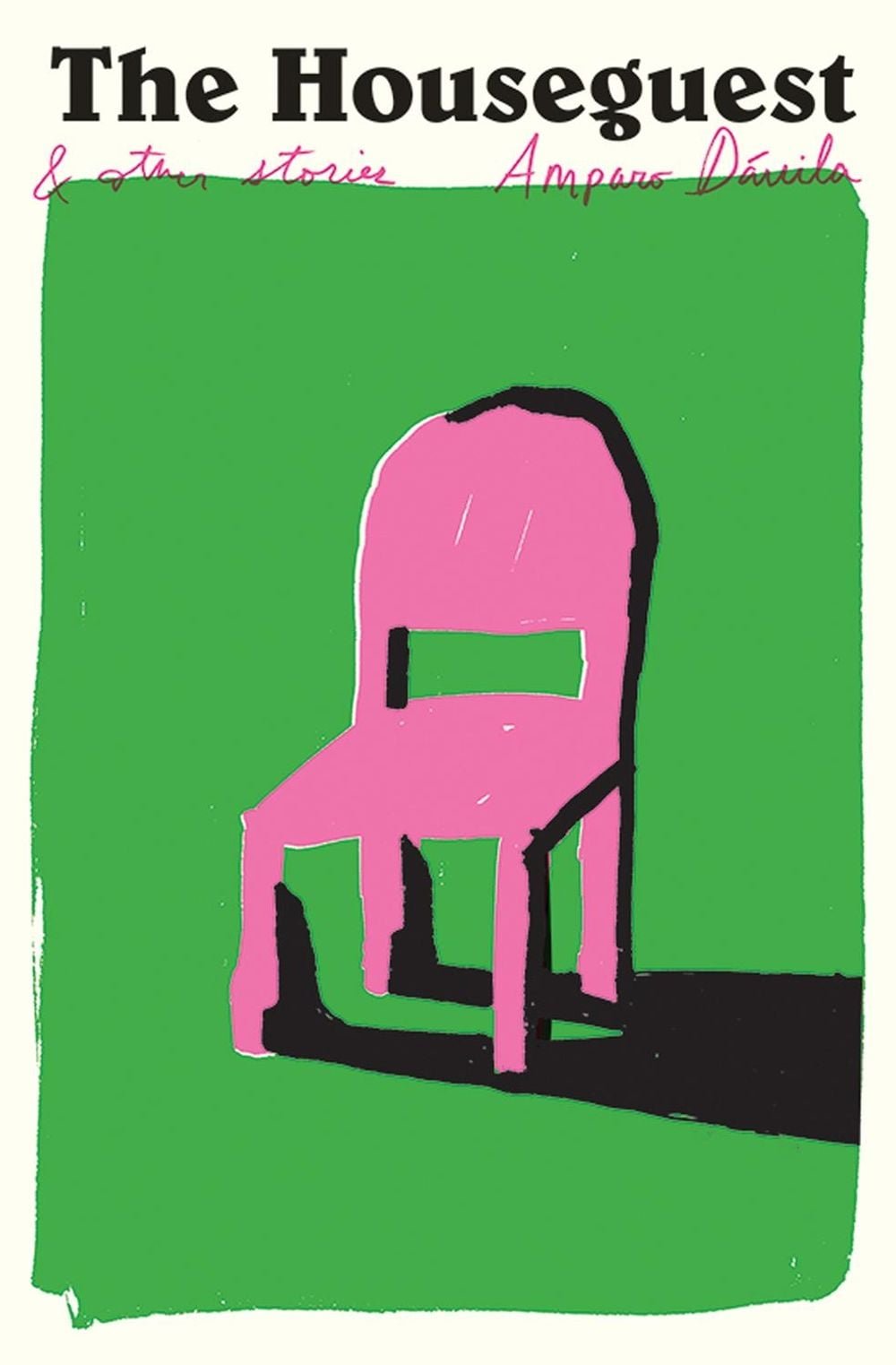
The Houseguest, And other stories by Amparo Dávila (translated from Spanish by Matthew Gleeson and Audrey Harris) $44
Like those of Kafka, Poe, Leonora Carrington, or Shirley Jackson, Amparo Dávila's stories are terrifying, mesmerising, and expertly crafted — you'll finish each one gasping for air. With acute psychological insight, Dávila follows her characters to the limits of desire, paranoia, insomnia, and fear. She is a writer obsessed with obsession, who makes nightmares come to life through the everyday: loneliness sinks in easily like a razor-sharp knife, some sort of evil lurks in every shadow, delusion takes the form of strange and very real creatures. After reading The Houseguest you'll wonder how this secret was kept for so long. [Paperback]
"The Houseguest will make you paranoid; you will second guess every shadow and slight movement that catches your eye. Amparo Davila's prose, her psychological awareness, and the beauty of her characters' misery is encompassing. I cannot believe that this is the first that I am experiencing Davila in English." —Nick Buzanski, Book Culture
"Like a dream, Davila's fictional realm is filled with signs and symbols, with hybrid creatures who appear to defy the laws of nature, and with characters who do not act according to logic or reason. Davila has said in interviews that one of her favorite subjects is the mysterious, the unknown, that which is not within our grasp. Her writing is intentionally opaque and allows readers to draw a number of different interpretations; it is this intriguing, elusive quality that has perhaps led to her enduring popularity in Mexico." —The Paris Review
"Each of these stories is equal parts Hitchcock film and razor blade: austere, immaculately crafted, profoundly unsettling, and capable of cutting you. Amparo Davila is Kafka by way of Ogawa, Aira by way of Carrington, Cortazar by way of Somers, and I'm so grateful she's in translation." —Carmen Maria Machado
>>The crying cat.
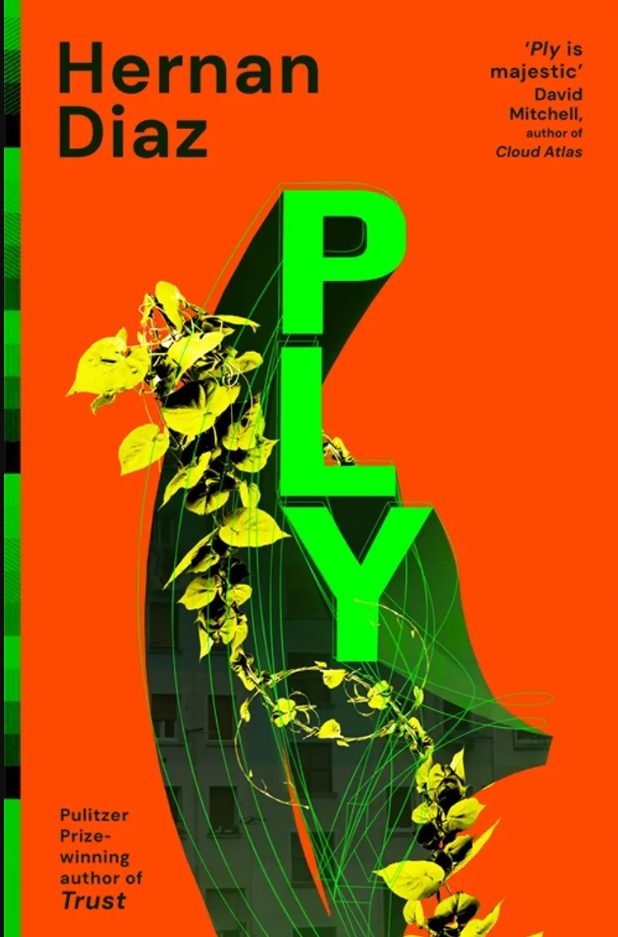
Ply by Hernan Diaz $38
Centuries from now, an orphan adrift in an American city grows up to become a pincher. Stealing electricity from the grid to power the vibrant downtown music scene she adores is a risky occupation, and the city she moves through can be dangerous. She is right to be wary. But soon, she is drawn into a paranoid maze where her closest friends and even her own identity are put into question — all while following a thread leading to a scientific experiment that could change the fabric of reality itself. Set in a future filled with both uncertainty and promise, Ply is a humane novel that interrogates the role of technology in a deeply changed society. A gripping quest for truth at the dawn of a new historical epoch, it offers us a deep dive into the burden of capitalism, while charting the boundaries of selfhood, and the distance that stands between us and those we love. From the Pulitzer Prize-winning author of Trust. [Paperback]
”Ply is majestic. A cracked mirror world, a lot like ours; peopled by survivors, a lot like us; sentences so fine they break the skin; a plot that swerves through loss, love, trust, betrayal, art, science, society and control.” —David Mitchell
”Ply, like Trust, is a tricksy novel. It delivers intriguing homilies on technology and ownership that follow on nicely from the themes of Trust. The most compelling thread is the one rooted in physics, which tethers Diaz to the present and launches him towards his most exciting ideas about the future.” —The Times
>>Literature as a linguistic event.
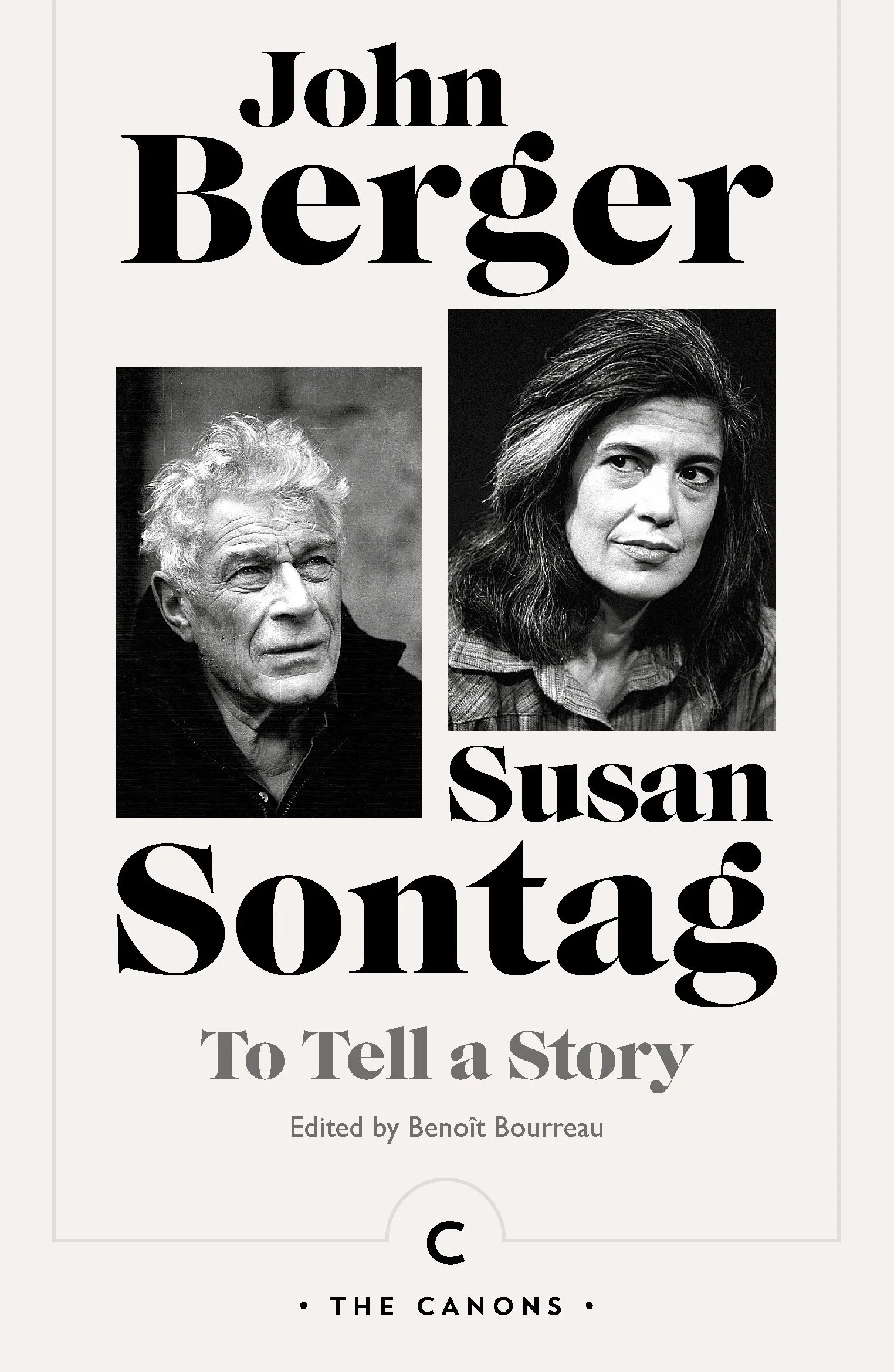
To Tell a Story by John Berger and Susan Sontag (edited by Benoît Bourreau) $28
Despite their status as intellectual giants of the twentieth century, John Berger and Susan Sontag's artistic collaboration — and intense friendship — remains virtually unknown. Published for the first time, To Tell a Story offers a glimpse into their shared history that spanned nearly a quarter-century. From sources such as their eponymous film broadcast, personal letters (several of which are included here in facsimile), and archival recordings, the composite fragments build a portrait of a relationship that was often lively and challenging, sometimes trivial and always affectionate. Berger and Sontag's voices echo throughout these pages, riffing off the other as they grapple with their respective concerns. Above all, their conversations reveal a deep reciprocal admiration and an exchange of ideas about storytelling, the self and society that informed their own work. [Paperback]

Disavowal by Alenka Zupančič $24
This book argues that the psychoanalytic concept of disavowal best renders the structure underlying our contemporary social response to traumatic and disturbing events, from climate change to unsettling tectonic shifts in our social tissue. Unlike denialism and negation, disavowal functions by fully acknowledging what we disavow. Zupančič contends that disavowal, which sustains some belief by means of ardently proclaiming the knowledge of the opposite, is becoming a predominant feature of our social and political life. She also shows how the libidinal economy of disavowal is a key element of capitalist economy. The concept of fetishistic disavowal already exposes the objectified side of the mechanism of the disavowal, which follows the general formula: I know well, but all the same, the object-fetish allows me to disregard this knowledge. Zupančič adds another twist by showing how, in the prevailing structure of disavowal today, the mere act of declaring that we know becomes itself an object-fetish by which we intercept the reality of that very knowledge. This perverse deployment of knowledge deprives it of any reality. This structure of disavowal can be found not only in the more extreme and dramatic cases of conspiracy theories and re-emerging magical thinking, but even more so in the supposedly sober continuation of business as usual, combined with the call to adapt to the new reality. To disrupt this social embedding of disavowal, it is not enough to change the way we think: things need to change, and hence the way they think for us. [Paperback]
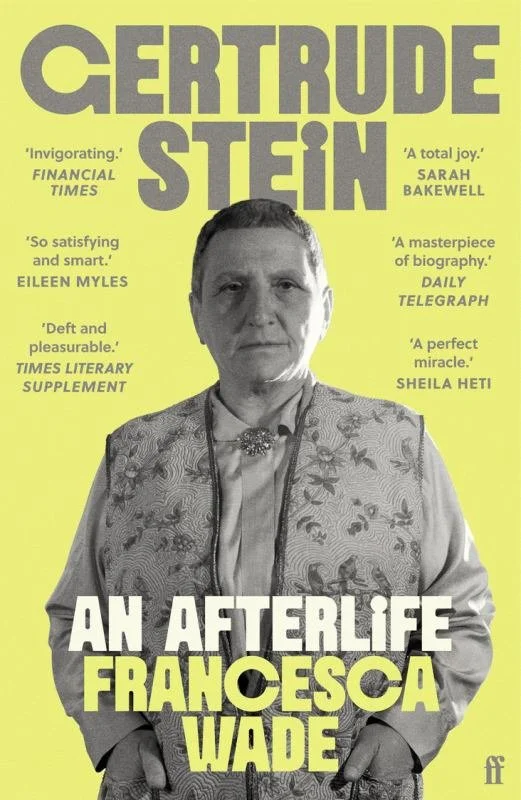
Gertrude Stein: An afterlife by Francesca Wade $30
'Think of the Bible and Homer, think of Shakespeare and think of me,' wrote Gertrude Stein in 1936. Admirers called her a genius, sceptics a charlatan: she remains one of the most confounding — and contested — writers of the twentieth century. In this literary detective story, Francesca Wade delves into the creation of the Stein myth. We see her posing for Picasso's portrait; at the centre of Bohemian Parisian life hosting the likes of Matisse and Hemingway; racing through the French countryside with her enigmatic companion Alice B. Toklas; dazzling American crowds on her sell-out tour for her sensational Autobiography — a veritable celebrity. Yet Stein hoped to be remembered not for her personality but for her work. From her deathbed, she charged her partner with securing her place in literary history. How would her legend shift once it was Toklas's turn to tell the stories — especially when uncomfortable aspects of their past emerged from the archive? Using astonishing never-before-seen material, Wade uncovers the origins of Stein's radical writing, and reveals new depths to the storied relationship which made it possible. This is Gertrude Stein as she was when nobody was watching: captivating, complex and human. [Now in paperback]
"Wade on Stein is a perfect miracle. I feel like I have been waiting for this book my entire life." —Sheila Heti
"Francesca Wade's great coup here is to make us understand that there are as many Steins as readers of Stein; that her non-essential essence resides in the relays between her, Toklas, a gaggle of male modernists, a media that wanted a personality but not the challenge of her prose, and a posterity that's only just beginning to find labels for what she was doing. It's a double-coup: to track these shifts and, in their very transpositions, their reflections and diffractions and inversions, to coax an image sharply into view, clear as the lucid if continually morphing picture inside a kaleidoscope." —Tom McCarthy
"A thrillingly intelligent and original book. Not only a tour-de-force of biographical writing, but also a breakthrough in biographical form." —Edmund Gordon
>>Devotion to the cut.
>>Charlatan or genius?
>>Not everyone got the joke.
Days of Light by Megan Hunter $28
Easter Sunday, 1938. Ivy is nineteen and ready for her life to finally begin. Her sprawling, bohemian family and their friends gather in the idyllic English countryside for lunch, arranging themselves around well-worn roles. They trade political views and artistic arguments as they impatiently await the arrival and first sight of Frances, the new beau of Ivy's beloved older brother, Joseph. In this auspicious atmosphere of springtime, Ivy's world feels on the cusp of something grand-but neither she nor those closest to her predicts how a single, enchanted evening and an unexpected tragedy will alter the rest of their lives. A radiant, philosophical, and intimate journey through time, Days of Light chronicles six pivotal days across six decades to tell the story of Ivy's pursuit of answers — to the events of this fateful Easter Sunday and to the shifting desires of her own heart. Moving through the Second World War up to the close of the 20th century, Hunter captures the galvanic love and transformative moments that define a winding, beautiful life. [Now in paperback]
'Think One Day written by (and starring) Virginia Woolf. This is a lyrical and captivating book, dropping decade by decade into a single day in the life of the brilliant, headstrong Ivy.' —The Observer
’Days of Light is luminous in content, structure and language, and a telling portrayal of a woman’s life through changing times.’ —Stella
>>Read Stella’s review.
The Savage Landscape: How we made the wilderness by Cal Flyn $37
This book takes us into the wild – deep into dark forests, to the top of mountains and into the heart of deserts. It addresses our deep yearnings to be awed and inspired by landscapes that remain beyond our reach and examines what nature gets up to in the absence of humans. In 10 chapters, each loosely structured around a visit to some of the world’s wildest and most invigorating landscapes, the book asks provocative questions about the nature of wilderness and how wild places might best be appreciated or preserved. These locations have been chosen for their physical beauty, their perceived isolation, and the moral or emotional complexity of the human stories that can be found there. What kinds of people are drawn to the wilderness, and why? [Paperback]
'A thrilling, tender, acute tour through the wildernesses of the world outside us and the far wilder worlds inside. Why does the desolate allure? It's an urgently important, complex question. We need to know for the sake of our souls, our politics and our planet. Flyn is the perfect guide.' —Charles Foster
'Cal Flyn is one of the most exciting writers around - for the poetry and precision of her prose, for the vast scope of her learning, for her fearless (and self-questioning) spirit. In The Savage Landscape, she opens one door after another, to wonder, to terror, to rich and mixed feelings, so that we can see the world anew and in all its deepest dimensions. This book is at once thrilling adventure and bracing meditation.' —Pico Iyer
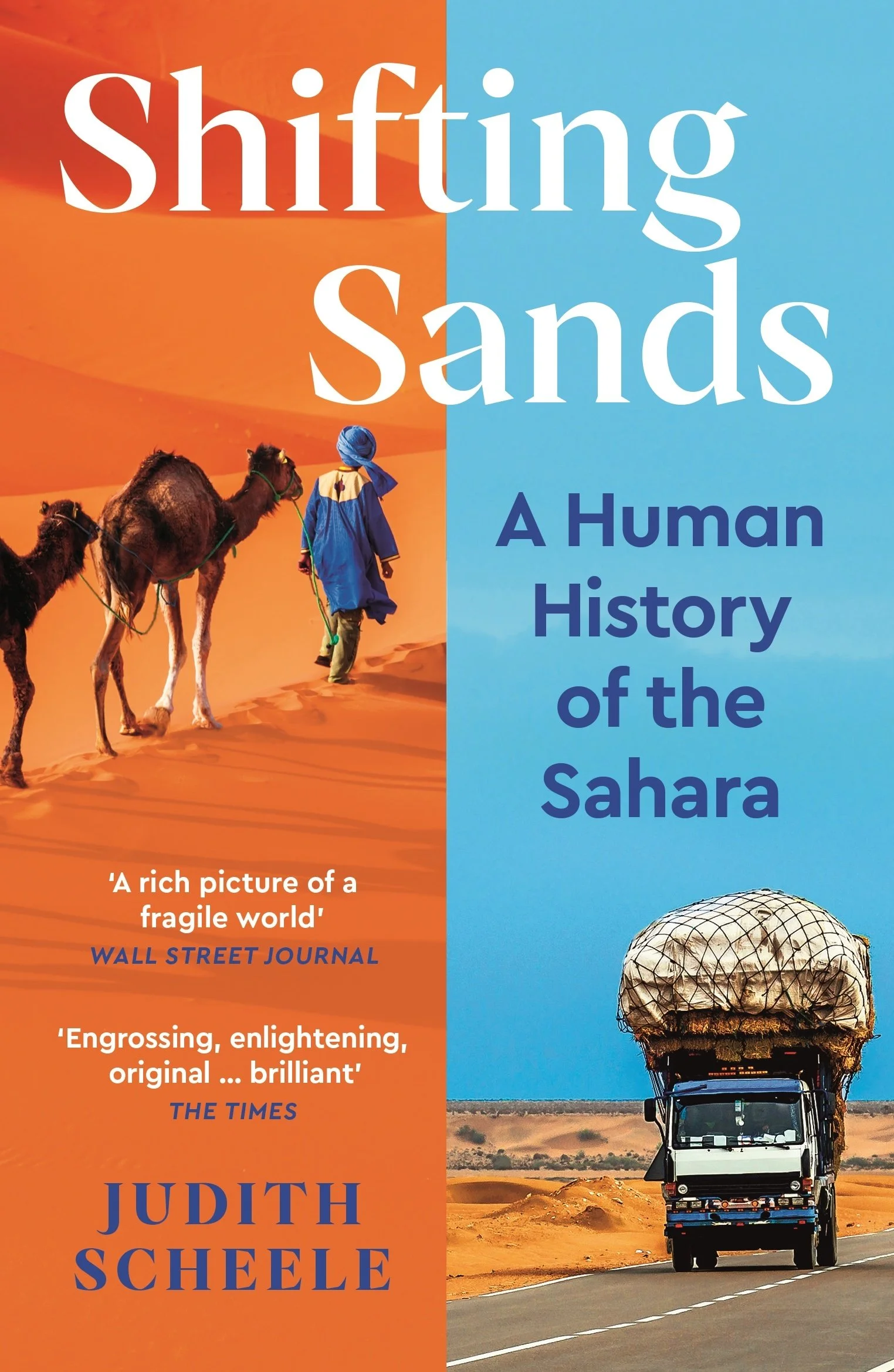
Shifting Sands: A human history of the Sahara by Judith Scheele $33
Judith Scheele reveals the rich history and complex reality of the world's largest hot desert. Drawing on decades of research, and years spent living in the region, Scheele leads us from the ancient Roman Empire through the bloody colonial era to the geopolitics of the present — and the race for resources that will define the future. The Sahara covers parts of eleven countries, and Scheele follows in the footsteps and tyre-tracks of the many people who cross the desert, taking us into the homes, mosques, palm groves and battlefields where history is written, spoken and remade. Encompassing the geology, religions, peoples and politics that shape and fracture the region, Shifting Sands tells the immersive story of a place whose future holds implications for us all. [Now in paperback]
”Scheele presents a detailed, often gritty, picture of a fragile world. Her travels trace the web of exchanges, linguistic and material, that crisscross a harsh, vast and sometimes impassable terrain. Instead of ‘mental maps of vertical and historically immutable trade routes’, Scheele finds a pattern of pathways that, like the grazing routes of the pastoralists' livestock, shifts with changes in climate, economics and politics. This is a clearsighted and unsentimental study of life on the edge.” —Dominic Green, Wall Street Journal
No Land to Stand On: Protest, Palestine, and being unfree in America by Mahmoud Khalil $40
'Are you Mahmoud Khalil?' This was the question asked by ICE as they took the Palestinian student and U.S. legal resident from his pregnant wife and home in New York City, transported him across the country, and locked him up in a Louisiana detention camp under threat of deportation. His 'crime': exercising his right to free speech at Columbia University, where he emerged as a leading voice against the slaughter of Palestinians in Gaza. No Land to Stand On is his indelible account, the story of a man confronting the reality that he had become target number one in a lawless regime shredding basic rights. Drawing on his prison diary and writing in vivid, page-turning detail, Mahmoud Khalil conjures the despair and cruelty of ICE detention, where prisoners can vanish overnight and visiting families risk their own deportation. There is humanity, too, in the men's acts of care, as they help each other with documents, and make a prison cake for Mahmoud after he can only follow the birth of his son on a public payphone. In tandem, he tells the multi-generational story of a family expelled from Palestine to a Syrian refugee camp, of flight from Assad's regime to Lebanon, of arrival in an America that promised permanence and protection, and of the enduring struggle for Palestine. A work of immense courage and resistance, No Land to Stand On is a call to all of us to defend the inalienable right to safety, freedom, and a place to call home. [Paperback]
”No Land to Stand On not only recounts, with chilling precision, an intimate experience of the free world's sinister new tyrannies, but it also describes a longer and ongoing ordeal of exile and ostracism. And yet, while troubling our consciences, Mahmoud Khalil opens our minds and hearts with his dignity, compassion and hopefulness. With its spiritual and intellectual power, his book is already a classic of dissident literature, a true peer of Nadezhda Mandelstam's Hope Against Hope and Eugenia Ginzburg's Journey into the Whirlwind.” —Pankaj Mishra
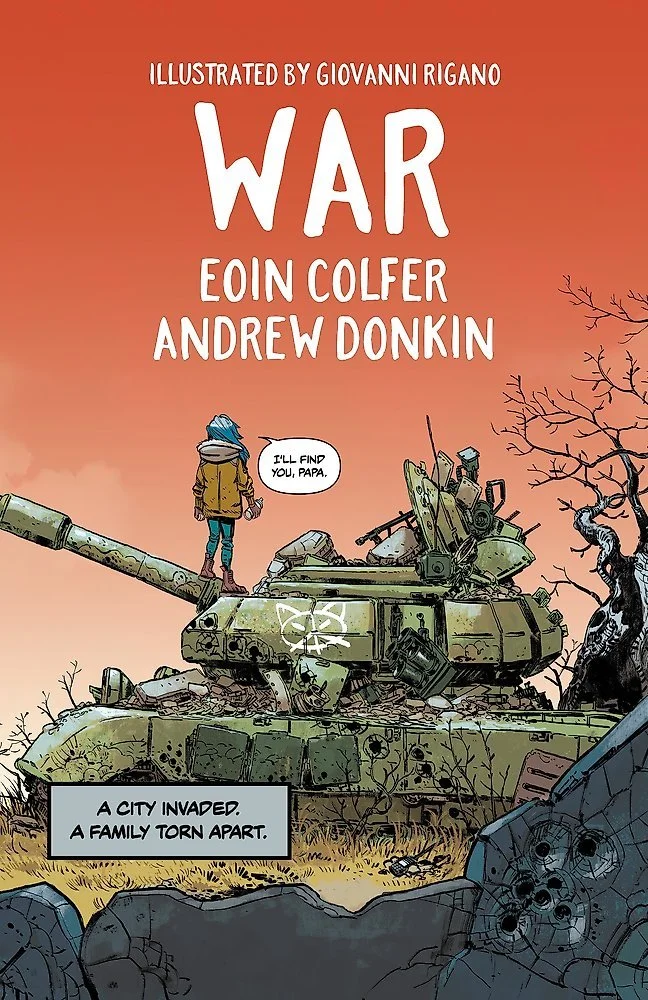
WAR by Eoin Colfer and Andrew Donkin, illustrated by Giovanni Rigano $40
WAR is set in an unnamed city in an unnamed country. It tells the story of Kat, a fourteen-year-old graffiti artist who finds her life turned upside down when her home city is invaded. When her father is taken and held without charge by the invading forces, Kat chooses not to flee with her mother and little sister, instead sneaking off to remain in the city and try to rescue her father. Also featured is Adam, a young conscript who struggles to understand why he is being made to fight. This graphic novel is based on accounts from children from actual war zones. [Hardback]
>>Look inside.