THE ROSE FIELD by Philip Pullman — Review by Stella
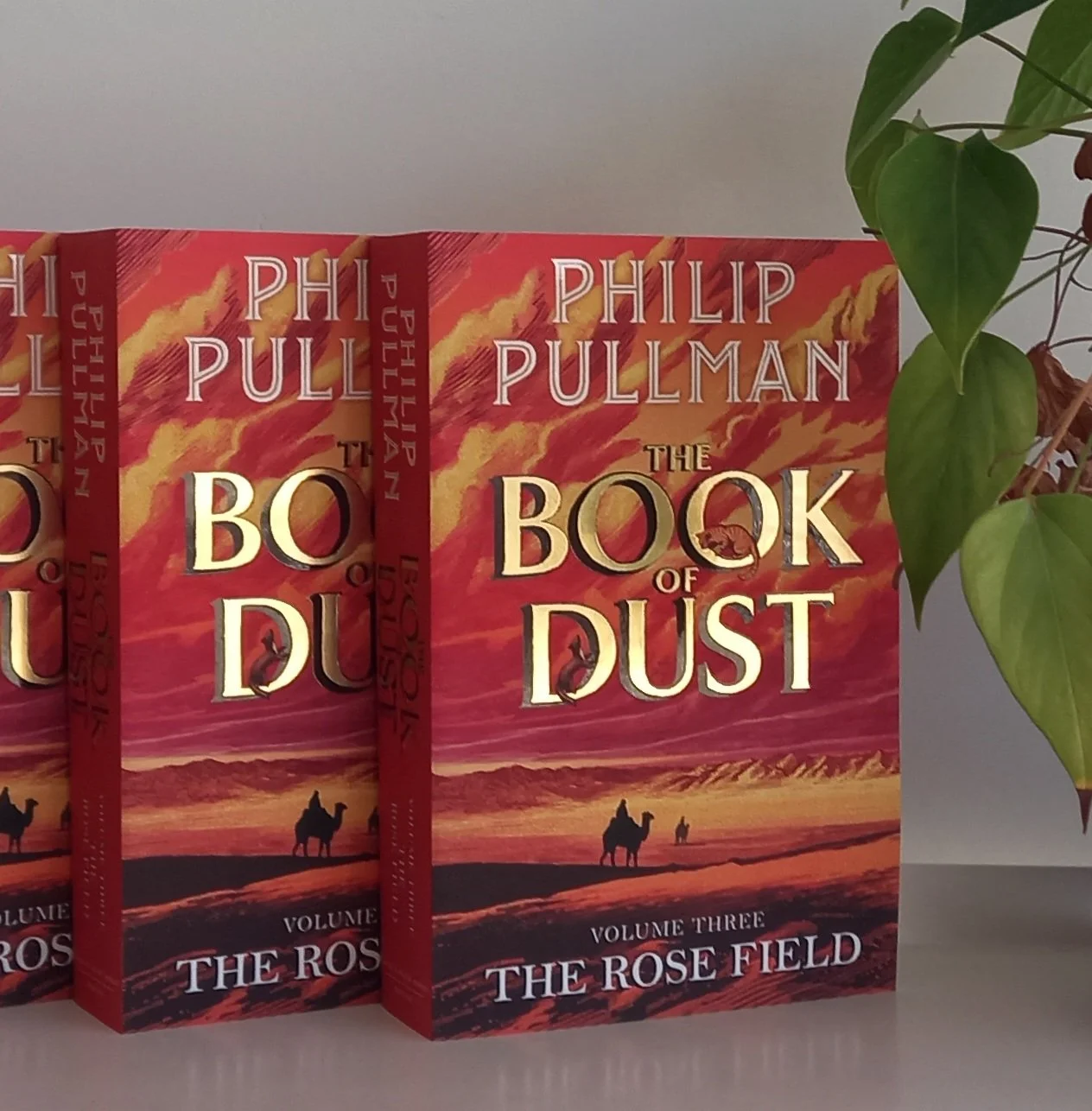
I entered The Rose Field with a mixture of trepidation and excitement. The long-awaited third instalment of ‘The Book of Dust’ trilogy has been much anticipated by fans of Lyra Belacqua and her daemon Pantalaimon. Six books and several novellas later, we finally are in Lyra’s world again, and at 600+pages the final book is quite a journey. We left Lyra in The Secret Commonwealth in a dangerous place without Pan, and intent on reaching the Red Building, on finding her daemon and her imagination. Lyra is now twenty, and in many ways takes a more measured approach to her journey, sometimes heeding the advice of her guide, but still the Lyra of Northern Lights remains — now more determined than headstrong. Yet the same questions prevail. Who can be trusted? Why are the Magisterium making alliances and gathering an army? What is the connection between Dust and the red building? And who wants to covet it and who wants to destroy it, and why? And where is Pan? As Lyra Silvertongue and Pantalaimon travel, one across land and sea, the other high into the mountains, we meet the gold-loving gryphons, the witches return, and Lyra has a strange encounter with an angel. Pullman draws us to characters both appealing and not, he creates situations where the intentions of some are unclear, and puts us inside the minds of some we would like to escape. Like Lyra, we are bound to move forward towards the questions that need stories, rather than answers. Along the way there are intriguing characters. The charming and powerful Mustafa Bey, a merchant who holds in his palm all the intricacies of connection and trade throughout the region. Malcolm Polstead returns — scholar, spy, artisan, and protector of Lyra. While there is no Serafina Pekkala, there are other witches as admirable, and there are the gold-loving gryphons. But best of all, and my favourite charcaters of The Rose Field, are Pan and Asta. The daemons are the heroes of this book. Yes, there is adventure, danger, crazed autocrats (Delamare is a fanatic), there is disorder in places and in people (Olivier Bonneville being the most damaged and possibly the most dangerous), there is the emotionally charged relationship between Lyra and Malcolm, and the possibility/impossibility of a future for them, and as always the question which will always remain, even at the conclusion, of the windows to the other worlds. What do they mean? Why they are feared by some, yet strike curiosity in others? And for others are portals that stoke their power and greed. As Lyra sees the world in all its destruction, can she also harness the good in it?
As with all high anticipated ‘finals’ there is commentary galore, and I avoided this until I closed the back cover. I was curious to find some disappointed — they wanted to come full circle back to the stories of a youthful Lyra. A sentimental journey which I was pleased was avoided. (In fact, there were unexpected twists, yet all in keeping with the essence of the series.) While others felt the conversations about consciousness and self were overplayed (strange — as this has always been a core aspect of the series, especially considering the relationship between a person and their daemon). Another theme that annoyed some was the focus on the environmental destruction due to greed and power. This again, is a core aspect of the whole series. In Northern Lights, what they were doing in the north, through either the desire for wealth or scientific discovery created a constant tension between the greater good and the short-term ill effects for some. I was pleased to see the concept of Dust still held that mysterious quality, now joined in memory with the highly sought-after rose oil, and the beauty of the roses although we only encounter this in myth. Curiosity remains, and like all good stories, there is no ending, and the possibilities for interpretation are endless.