
Why I read Ali Smith — by Stella
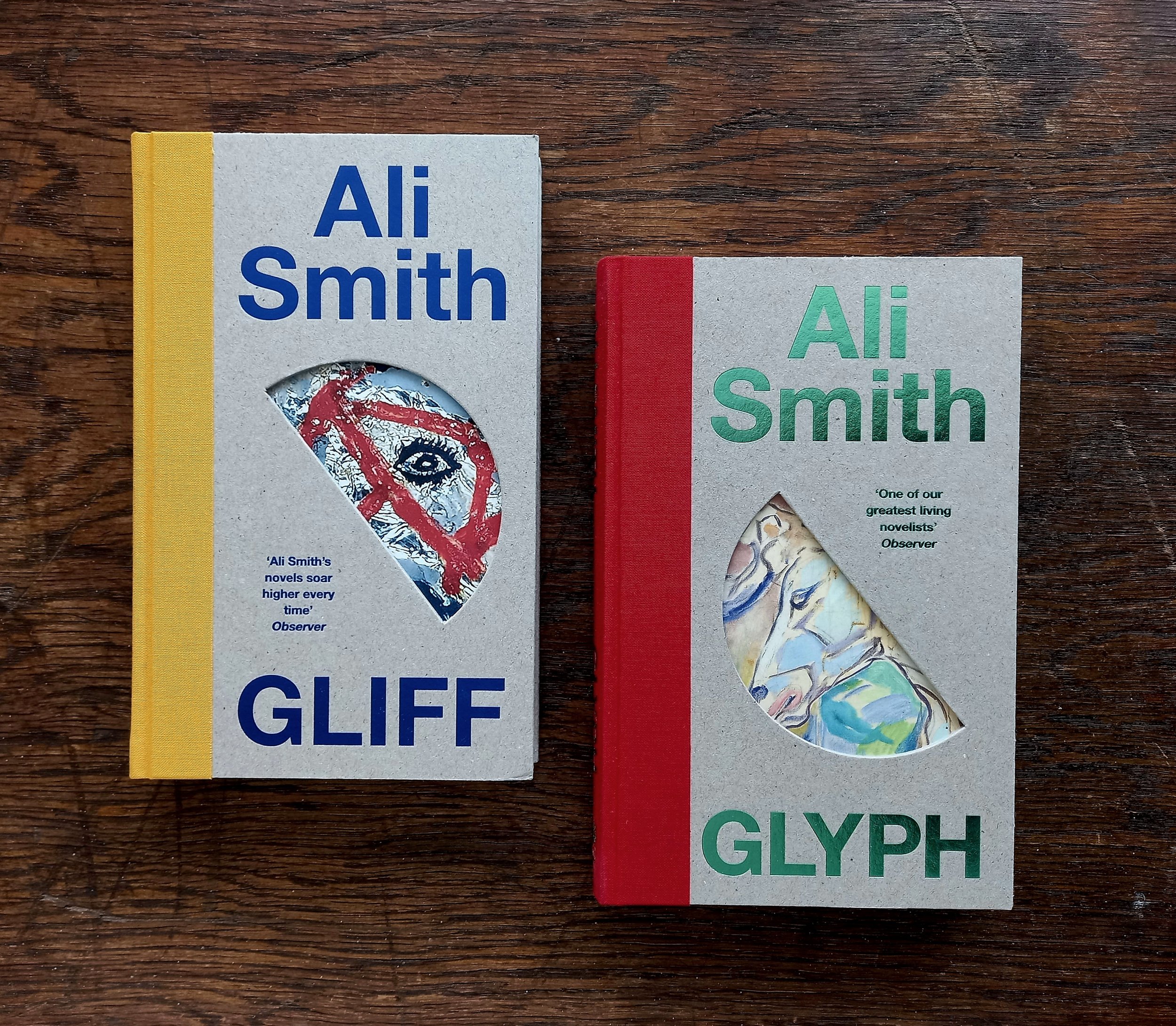
I’ve been reading Ali Smith for decades. From her debut novel, Like, through her short story collections, Hotel World springs to mind, her retelling of mythologies, Girl Meets Boy and The Story of Antigone, to the discomfort of There But For The and the unexpected visitor in The Accidential, to the art of How to Be Both, Smith’s books have always been intriguing, centred on human interactions and our ability to live in the world. Yet it was the seasonal quartet: Autumn, Winter, Spring, Summer; and the books that have followed: Companion Piece, Gliff, and now Glyph; with their immediacy and provocation to act, to be part of the story that pushed her writing and the reading of her work into a realm where only Ali Smith could take us. Her ability to use language, to incorporate art, culture, and politics is invigorating, pointed and surprising.
Here are some of the things I said in my reviews at the close of reading each of the quartet novels and Gliff: “….a book that will both stun you and fill you with hope, moments of kindness, forgiveness, and a window to a better world if we dare to step through.”, “..a meditation on time, ….and the surprising things that the past can reveal to us in the present.”; “…with a hammering of words that are explosive…demands your attention. Ferocious and tender.”, “…draws richness out of desolation…and she does it with intelligence, wit and style.”, “To stay in this playfulness of words, the richness of language and story, to be suspended with curiosity, while also confronted by the urgency of our 21st century landscape must surely be a work of genius.”
In Ali Smith’s novels I have been introduced to artists, and experienced writers and mythology in new ways. I am asked to see, to shift or sharpen my perspective bringing the telescope’s lens to its best advantage, even when that clarity is frightening. Characters are brave, and also cowards. The curtains of the theatre that allow a player to be revealed, and then escape and hide, are constantly in motion. We flex our emotions. The reader is emboldened, then stunned. We remember why we should ask the most important question: Why? Ali Smith feeds our desire for story, for narrative, not at its surface level, but at its core: why narrative is important; whether that is in words, art, myth, nature, politics; and how it is used and how we can claim it. We can read the world, see it for what it is and more importantly what it could be. I think reading books is a subversive act: in reading we acquire knowing. We are in the book, and this action does not allow interference. If a book makes you curious, curious enough to ask questions, you are thinking. If you are thinking, this is a good thing. I have two new Ali Smiths on my reading pile, Glyph and So in the Spruce Forest. Autmnn will be a good reading season.