
 | Jeaslousy by Alain Robbe-Grillet {Reviewed by THOMAS} The only reality is the present moment, and the only certainty about that is that it is the present moment, constantly assailed as it is by the fantasies of the past and the future, each of which presents itself as an imitation present, a simulacrum differing either more or less from the present it seeks to replace. In retrospect, the present and the futures and pasts that assailed it are not different in kind and become hopelessly entangled, whatever geometry we apply to the task of considering it, undermining certainty and leaving us only with an endlessly loopable - and inescapable - experience of a present without any of the qualities of this present being fixed or certain. The unnarrated narrator of Jealousy narrates repeatedly a limited sequence of events: the presence of their neighbour Franck in the house he shares with the character referred to as A…, the interactions of Franck and A…, about which the narrator is uncomfortable and which culminate in the arrangement for Franck to take A... with him on his trip to the port town some hours drive from the tropical banana plantation in which they live, and also the return of Franck and A… the next day, having had to stay the night in the town apparently on account of Franck’s car having broken down. As much as possible, the narrator has excised himself from the narrative. He is only a point of observation and is careful to betray no agency. He is of course implied by his narration (ironically, A… eludes the geometry of his descriptions (even her name remains an ellipsis), the very descriptions that ensnare the narrator (despite his best efforts)), even, possibly, implicated by his narration. The narrative restricts itself to the present tense and to ‘objective’ detail, so to call it. As the narrator goes over and over the sequence of events (very much in the way he describes the overheard song of one of his drivers: “These repetitions, these tiny variations, halts, regressions, can give rise to modifications - though barely perceptible - eventually moving quite far from the point of departure.”), he allows, little by little, more evidence (so to call it) about what he suspects to be A…’s relationship with Franck to slip into the narrative. Detail puts a brake on the narrative, slowing its approach to trauma, but it is also the vector of that trauma. The details, the repetitions, become tighter and tighter around the trauma, like white blood cells clustering around the trauma. The narrator suspects A… and Franck of something that he cannot bear to think about but is obsessed with all the same. The precision of minuscule detail given about Franck’s pocket, from which protrudes, despite Franck’s best efforts to hide it, the corner of a piece of blue notepaper upon which A… was observed writing something earlier and which A… has presumably handed him after sending the narrator indoors for ice for their drinks, is an exemplar of the way in which detail can be used to control the pace and focus of the reader’s attention, as well as demonstrating how psychological weight can inform and distort objective description (an oxymoron). The narrator’s uncertainty about A… (her smile “can be interpreted as derision just as well as affection, or the total absence of feeling whatever.”) and about her relationship with Franck leads him to obsess over detail, which, under this sort of pressure, becomes unstable. “It’s no use making up contrary possibilities, since things are the way they are: reality stays the same,” states the narrator, but his repetitions begin to contradict themselves, first positing potentials (“A… may have put her face into the opening above the seat” after getting out of Franck’s car) and then assailing what we have previously ‘known’ (Franck crushing the centipede in A…’s bedroom rather than in dining room, Franck approaching A…’s bed, Franck’s car exploding in an accident), these alternative presents evidently constructed out of the narrator’s jealousy and bringing into question the actuality of his other observations. Everything is a play of images, interchangeable with other images, precision no guarantee of actuality. The port to which Franck takes A… has no more reality than the picture of the port on the calendar on the wall, or, rather, these realities contend with each other for the attention that will fulfill them. The present is inescapable, though it may be endlessly iterated and altered when relived in memory. The distinction between experience and memory is destabilised, the narrative chopped and repeated and discontinuous like memory. We are presented simultaneous contraries. The narrator both creates and erases the mark of the catastrophe, the trace, the stain of the centipede, the letter, the bloodstain (surely not...), the memory. In this endlessly iterated and permuted remembered present, at what point might an imagined future (also experienced as a present) begin to insert itself and start to drag the narrative, disengaged now from an actuality that is uncertain, off onto a branch that is more an expression of psychology than of so-called reality? Is it possible, even, that the entire narrative, from beginning to end, in all its permutations, takes place in the narrator’s frantic mind as he waits in A…’s room for her return from the port? As the narrator observes of A…’s and Franck’s discussion of a novel that the narrator has not read, “The variations as extremely various; the variations of these, still more so.” |

>>Signs, songs, stumps and symbols.
>>Have a look inside the book.
>>The art of protest.
>>Voices on the radio.
>>A significant portion of the book is devoted to the long tradition of Māori activism.
>>How to tell a story through objects.
>>The book has just been long-listed for the 2020 Ockham New Zealand Book Awards.
>>Click and collect.
NEW RELEASES
 Motherwell: A girlhood by Deborah Orr $60
An insightful, devastating and well-written account of growing up in a housing estate on the west coast of Scotland.
"A non-fiction book for the ages. Motherwell is a searching, truthful, shocking (and timely) observance of the blight that monetarist policies can bring about in a community of workers, indeed on a whole culture of fairness and improvement, while also showing — in sentences as clean as bone — the tireless misunderstandings that can starve a family of love." —Andrew O'Hagan, Guardian
 The Shadow King by Maaza Mengiste $33
A compelling novel concerning women soldiers defending Ethiopia during the Italian invasion of 1935.
"Devastating." —Marlon James
"Magnificent." —Aminatta Forna
 Nietzsche and the 'Burbs by Lars Iyer $37
When a new student transfers in from a posh private school, he falls in with a group of like-minded suburban stoners, artists, and outcasts too smart and creative for their own good. His classmates nickname their new friend Nietzsche (for his braininess and bleak outlook on life), and decide he must be the front man of their metal band. As always, Iyer blends philosophical rigour and quotidian misery to humorous effect.
>>Read Thomas's review of Spurious.

Art This Way by Tamara Shopsin and Jason Fulford $40
Unfold pages, lift flaps, gaze into mirrors, and interact with art like never before. Inspired by the many ways that art can be viewed and experienced, this book encourages children to spend time with a curated selection of fine art from the Whitney collection — and to dig deeper and consider all angles. Each artwork is showcased with a novelty mechanism and caption, for curious hands and wondering eyes. Delightful.
 Black Wave: Saudi Arabia, Iran and the forty year rivalry that unraveled culture, religion and collective memory in the Middle East by Kim Ghattas $38
An unprecedented and ambitious examination of how the modern Middle East unravelled and why it started with the pivotal year of 1979.
"An essential account of the ideologies that have shaped the region." —Guardian
 Venus and Aphrodite: History of a goddess by Bettany Hughes $35
Beginning in Cyprus, the goddess's mythical birthplace, Hughes decodes Venus's relationship to the Greek goddess Aphrodite, and, in turn, Aphrodite's mixed origins, both as a Cypriot spirit of fertility and procreation, and as a descendant of the prehistoric war goddesses of the Near and Middle East. Hughes also moves forward to show how the figure of Venus became the repository of socially destabilising and hence often proscribed forces of desire.
>>Shocking Blue.
>>Venus in Furs.
 Sovietistan: A journey through Turkmenistan, Kasakhstan, Tajikistan, Kyrgyzstan and Uzbekistan by Erika Fatland $38
The five former Soviet Republics of Kazakhstan, Kyrgyzstan, Tajikistan, Turkmenistan and Uzbekistan all became independent when the Soviet Union fell apart in 1991. In the Kyrgyzstani villages Erika Fatland meets victims of the widely known tradition of bride snatching; she visits the huge and desolate Polygon in Kazakhstan where the Soviet Union tested explosions of nuclear bombs; she meets Chinese shrimp gatherers on the banks of the dried out Aral Sea and she witnesses the fall of a dictator. She travels incognito through Turkmenistan, a country that is closed to journalists. She meets exhausted human rights activists in Kazakhstan, survivors from the massacre in Osh in 2010, and German Menonites who found paradise on the Kyrgyzstani plains 200 years ago.
 The Unlikely Escape of Uriah Heep by H.G. Parry $25
Literary characters refuse to be confined to their books and start causing havoc in Wellington and in the otherwise normal lives of Charley Sutherland's family.
>>Usually confined to David Copperfield.
>>Good grief.
 Out of the Woods by Luke Turner $28
Finding solace among the trees of Epping Forest, Turner comes to terms with his religious upbringing, sexual abuse, and identity as a bisexual man.
"Electrifying." —Olivia Laing
"Refreshing, frank, edifying, courageous." —Amy Liptrot
 My Father's Arms are a Boat by Stein Erik Lunde and Øyvind Torseter $38
A beautiful and gentle story in which a young boy receives reassurance from his father about loss being part of the cycles of nature.
 How to Be an Anti-Capitalist in the 21st Century by Erik Olin Wright $33
Urgent. Useful. Our shared values — equality and fairness, democracy and freedom, community and solidarity — can both provide the basis for a critique of capitalism, and help to guide us towards a truly democratic society.
 The Kid Who Came from Space by Ross Welford $17
When Tammy disappears, only her twin brother Ethan knows she's safe — but he can't tell anyone or he won't see her again. Ethan teams up with his friend Iggy and the mysterious (and very hairy) Hellyann, a spaceship called Philip, and Suzy the trained chicken, in a nail-biting attempt to get his sister back. From the author of Time Travelling with a Hamster, The 1000-Year-Old Boy and other wonders.
 Thrust: A history of the codpiece in art by Michael Glover $22
An enthralling history of a signifier of masculinity in costume, art, literature and popular culture, from the middle ages to today.
 The Self Delusion: The surprising science of how we are connected and why that matters by Tom Oliver $38
Unless we stop seeing ourselves as individuals and start recognising that we are but parts of the larger organism our our environment, we will not be able to find a way to address problems that have arisen primarily from our separation from this larger self.
"Timely and challenging." —Guardian
 A Quiet Place by Seicho Matsumoto $23
While on a business trip to Kobe, Tsuneo Asai receives the news that his wife Eiko has died of a heart attack. Eiko had a heart condition so the news of her death wasn't totally unexpected. But the circumstances of her demise left Tsuneo, a softly-spoken government bureaucrat, perplexed. How did it come about that his wife—who was shy and withdrawn, and only left their house twice a week to go to haiku meetings—ended up dead in a small shop in a shady Tokyo neighborhood?
 The Little Ice Age, How climate made history, 1300—1850 by Brian Fagan $30
Interesting. Demonstrates the social upheavals that accompany climate change.
 Serious Noticing by James Wood $30
A selection of the outstanding literary critic's essays, from 1919 to 2019.
 The Man on a Donkey by H.F.M. Prescott $23
In 1536, Henry VIII was almost toppled when Northern England rose to oppose the Dissolution of the Monasteries. A classic of historical fiction, first published in 1952.
"By widespread assent, one of the finest historical novels ever written. It may even be the finest." —Times Literary Supplement
 The Nine Hundred: The extraordinary young women of the first official Jewish Transport to Auschwitz by Heather Dune Macadam $38
Boarding a train in Propad, Slovakia, the women believed they had been offered work in a factory, but they had been sold to the Nazis as slave labour by their government. Almost all were killed.
 The Captain and the Glory by Dave Eggers $26The new Captain of the Glory is vulgar, bumbling and inexplicably confident. With no knowledge of nautical navigation or maritime law - nor even, as he has repeatedly remarked, a particular liking for boats — he solemnly swears to shake things up. What are we to make of his admiration of a much-feared pirate? A hilarious political satire.
 Beauty by Bri Lee $23
A meditation on beauty and body image from the author of Eggshell Skull.
 The Onion's Great Escape by Sara Fanelli $37
Sara Fanelli's activity book asks young readers to help the onion break free by answering thought-provoking questions and completing the activities within, finally pressing a three-dimensional character right out of the pages. The book encourages young children to be imaginative and think about complex issues in unexpected ways.
>>Like this!
>>Sara Finelli.
An insightful, devastating and well-written account of growing up in a housing estate on the west coast of Scotland.
"A non-fiction book for the ages. Motherwell is a searching, truthful, shocking (and timely) observance of the blight that monetarist policies can bring about in a community of workers, indeed on a whole culture of fairness and improvement, while also showing — in sentences as clean as bone — the tireless misunderstandings that can starve a family of love." —Andrew O'Hagan, Guardian
A compelling novel concerning women soldiers defending Ethiopia during the Italian invasion of 1935.
"Devastating." —Marlon James
"Magnificent." —Aminatta Forna
When a new student transfers in from a posh private school, he falls in with a group of like-minded suburban stoners, artists, and outcasts too smart and creative for their own good. His classmates nickname their new friend Nietzsche (for his braininess and bleak outlook on life), and decide he must be the front man of their metal band. As always, Iyer blends philosophical rigour and quotidian misery to humorous effect.
>>Read Thomas's review of Spurious.
Art This Way by Tamara Shopsin and Jason Fulford $40
Unfold pages, lift flaps, gaze into mirrors, and interact with art like never before. Inspired by the many ways that art can be viewed and experienced, this book encourages children to spend time with a curated selection of fine art from the Whitney collection — and to dig deeper and consider all angles. Each artwork is showcased with a novelty mechanism and caption, for curious hands and wondering eyes. Delightful.
An unprecedented and ambitious examination of how the modern Middle East unravelled and why it started with the pivotal year of 1979.
"An essential account of the ideologies that have shaped the region." —Guardian
Beginning in Cyprus, the goddess's mythical birthplace, Hughes decodes Venus's relationship to the Greek goddess Aphrodite, and, in turn, Aphrodite's mixed origins, both as a Cypriot spirit of fertility and procreation, and as a descendant of the prehistoric war goddesses of the Near and Middle East. Hughes also moves forward to show how the figure of Venus became the repository of socially destabilising and hence often proscribed forces of desire.
>>Shocking Blue.
>>Venus in Furs.
The five former Soviet Republics of Kazakhstan, Kyrgyzstan, Tajikistan, Turkmenistan and Uzbekistan all became independent when the Soviet Union fell apart in 1991. In the Kyrgyzstani villages Erika Fatland meets victims of the widely known tradition of bride snatching; she visits the huge and desolate Polygon in Kazakhstan where the Soviet Union tested explosions of nuclear bombs; she meets Chinese shrimp gatherers on the banks of the dried out Aral Sea and she witnesses the fall of a dictator. She travels incognito through Turkmenistan, a country that is closed to journalists. She meets exhausted human rights activists in Kazakhstan, survivors from the massacre in Osh in 2010, and German Menonites who found paradise on the Kyrgyzstani plains 200 years ago.
Literary characters refuse to be confined to their books and start causing havoc in Wellington and in the otherwise normal lives of Charley Sutherland's family.
>>Usually confined to David Copperfield.
>>Good grief.
Finding solace among the trees of Epping Forest, Turner comes to terms with his religious upbringing, sexual abuse, and identity as a bisexual man.
"Electrifying." —Olivia Laing
"Refreshing, frank, edifying, courageous." —Amy Liptrot
A beautiful and gentle story in which a young boy receives reassurance from his father about loss being part of the cycles of nature.
Urgent. Useful. Our shared values — equality and fairness, democracy and freedom, community and solidarity — can both provide the basis for a critique of capitalism, and help to guide us towards a truly democratic society.
When Tammy disappears, only her twin brother Ethan knows she's safe — but he can't tell anyone or he won't see her again. Ethan teams up with his friend Iggy and the mysterious (and very hairy) Hellyann, a spaceship called Philip, and Suzy the trained chicken, in a nail-biting attempt to get his sister back. From the author of Time Travelling with a Hamster, The 1000-Year-Old Boy and other wonders.
An enthralling history of a signifier of masculinity in costume, art, literature and popular culture, from the middle ages to today.
Unless we stop seeing ourselves as individuals and start recognising that we are but parts of the larger organism our our environment, we will not be able to find a way to address problems that have arisen primarily from our separation from this larger self.
"Timely and challenging." —Guardian
While on a business trip to Kobe, Tsuneo Asai receives the news that his wife Eiko has died of a heart attack. Eiko had a heart condition so the news of her death wasn't totally unexpected. But the circumstances of her demise left Tsuneo, a softly-spoken government bureaucrat, perplexed. How did it come about that his wife—who was shy and withdrawn, and only left their house twice a week to go to haiku meetings—ended up dead in a small shop in a shady Tokyo neighborhood?
Interesting. Demonstrates the social upheavals that accompany climate change.
A selection of the outstanding literary critic's essays, from 1919 to 2019.
In 1536, Henry VIII was almost toppled when Northern England rose to oppose the Dissolution of the Monasteries. A classic of historical fiction, first published in 1952.
"By widespread assent, one of the finest historical novels ever written. It may even be the finest." —Times Literary Supplement
Boarding a train in Propad, Slovakia, the women believed they had been offered work in a factory, but they had been sold to the Nazis as slave labour by their government. Almost all were killed.
A meditation on beauty and body image from the author of Eggshell Skull.
Sara Fanelli's activity book asks young readers to help the onion break free by answering thought-provoking questions and completing the activities within, finally pressing a three-dimensional character right out of the pages. The book encourages young children to be imaginative and think about complex issues in unexpected ways.
>>Like this!
>>Sara Finelli.

BOOKS @ VOLUME #162 (25.1.20)
Events, courses, book groups, new books, our reviews — all can be found in our NEWSLETTER.

>>Read Stella's review.
>>On growing up as a Chinese New Zealander in Aotearoa.
>>Rose Lu on Radio NZ.
>>Red Packet.
>>The Tiger Club.
>>Cleaver.
>>The migrant experience and the tangata whenua experience.
>>Three myths about hiring for diversity.
>>The cover is by Sharon Lam, author of Lonely Asian Woman.
>>Click and collect.
 | All Who Live on Islands by Rose Lu {Reviewed by STELLA} Rose Lu’s collection of essays is sharp, precise and insightful. Lu draws on her own life — childhood, relationships and culture — to highlight what it means to be Chinese in New Zealand. The strongest essays, which are excellent, explore the difficulties of stepping through the minefields of cultural expectations and stereotypes. How do you navigate the world as a young child when you live in different worlds? At school, you are the 'Asian child' and you bear all the prejudice and stereotypes of your obvious ‘difference’; at home, you are the link between your grandparents and your generation — one of the few grandchildren who can understand their dialect, and you are a child for whom your parents have forsaken their own careers. This is the migrant story: come to a new land for better opportunities for the next generation. In Lu’s opening story she describes changing her slippers. “On this journey I change my...slippers twice, from the lounge pair to the house pair, then from the house pair to the shop pair.” While I imagine Rose Lu doing this —I have a clear image in my head of her slipping off, on, off and on again her footwear moving from room to room — I also sense this is a method by which she has stepped through the diverse arena of her life. We all do it: fit a persona for whatever purpose we require — home, work, family gatherings — and for whatever role we may be complying to at any given time — wife, mother, manager, worker. Yet Lu’s arena, like many migrants or children of migrants, is overlaid with her cultural experiences. Being Chinese or Asian in Aotearoa is to be both visible and invisible. School camp is no exception — the experience of trying new food (lasagne) and of being pushed together with the other Chinese girl, Winnie. Indigestible suggestions on both counts. “A dish I had only heard about, and couldn’t wait to try… I had learned the word lasagne long before I had my first bite...A red slab was slopped on my plate...Further down the table I could see Winnie pushing her food around the plate. My cheeks reddened. I averted my gaze.” What Lu says in a few words creates images that immediately resonant because in many ways she is writing about our shared experience. Whether that’s growing up in small-town New Zealand, working out who you are as a young independent person, or the relationships you delve into much to your horror looking back, there is the bud of familiarity. Yet this is intensified for Lu by the racism and prejudice which occurs on an everyday basis and by the importance of her ethnicity. Many of the essays also touch on how you can feel discombobulated within your own culture and by it. Having put her Chinese self safely in the box at some time in her late teens and more so during her years studying in Christchurch, you get a sense of this 'self' becoming integrated into her everyday life, as she develops who she is by using her love of language and her humour, as well as her obvious appreciation of her family and their migrant story, to unpack herself through words in a candid and considered way. She isn’t obviously confronting, yet she does not shirk from pointing out the obvious stereotypical behaviour of mainstream New Zealand. Having grandparents who migrated to New Zealand in the 1950s and spoke little or no English all of their lives, I found myself drawn predominantly to the stories of family and the importance of food within cultures to act as a common language and a receptacle of past lives — a way in which the strands of ancestry can be preserved. Other readers will find other essays resonate — returning to and travelling through your cultural homeland, finding like-minded friends and associates with common experiences, or the action of finding yourself among the words that tell stories — the art of the personal essay. Rose Lu’s essay collection is a fine debut. |
 | A Million Windows by Gerald Murnane {Reviewed by THOMAS} The great concern in Murnane’s writing is the relationship between the fiction he writes and what he calls the ‘image world’ (he insists this is nothing to do with ‘imagination’ in the sense of making things up (he is, he says, incapable of making things up)), and, to a lesser yet strongly implied degree, the relationship between these two and the ‘actual world’, which he seems to regard as little more than an access point to (or of) the image world, and a place of frailties, disappointment and impermanent concerns. When Murnane describes the “chief character of a conjectured piece of fiction… a certain fictional male personage, a young man and hardly more than a boy” preferring the image-world relationship he had inside his head with a “certain young woman, hardly more than a girl” he sees every day in the railway carriage in which he travels home from school to the actual relationship he starts to develop (and soon abandons) with her after they eventually start to converse, he underscores a turning away, or, rather, a turning inward to the more urgent and intense image-world. Like some woefully under-recognised antipodean Proust, Murnane is fascinated by the mechanics of memory, which he sees as an operation of the image-world upon the actual, giving rise to the ‘true fictions’ that allow elements of the image-world to present themselves to awareness in a multiplicity of guises and versions. Murnane differs from many theorists of fiction in that he does not attribute primacy to the text but to the image-world to which the text gives access and which may contain, for instance, characters who have access, perhaps through their fictions, to image-worlds and characters inaccessible (at least as yet) to us. The million windows (from Henry James: “The house of fiction has in short not one window, but a million”) are those of “a house of two or maybe three storeys”, inhabited by writers, all perhaps versions or potential versions of Murnane himself, who look out over endless plains as they engage in the act of writing fiction, or discuss doing so. The multiplicity of this process stands in relation to an unattainable absolute towards which memories and other fictions reach, or, rather, which reaches to us in the form of memories and other fictions. Murnane’s small pallet, his precisely modulated recurring images and his looping, delightfully pedantic style are at once fascinating, frustrating, soporific and revelatory. |
NEW RELEASES!
 Virtuoso by Yelena Moskovich $38
A novel tracing the trajectories of two Prague schoolfriends and one-time lovers, Jana and Zorka, as they move to the west and shape lives for themselves there. From the author of The Natashas.
"A hint of David Lynch, a touch of Elena Ferrante, the cruel absurdity of Antonin Artaud, and the fierce candour of Anaïs Nin." —The Guardian
"A bold feminist novel." —TLS
 Nudibranch by Irenosen Okojie $38
"Microdosing LSD has become fashionable over the last few years, with some users reporting improvements to mood and productivity. Reading Irenosen Okojie’s stories is more like taking an old‑fashioned megadose: familiar reality peels away to reveal a world of bizarre transformations, stutters in time, encounters between gods and humans, and the fragmentation, or even the dissolution, of the self." —Chris Power, Guardian
>>By the author of Speak Gigantular.
 Braised Pork by An Yu $34
bathroom of her Beijing apartment to find her husband - with whom she had been breakfasting barely an hour before - dead in the bathtub. Next to him a piece of paper unfolds like the wings of a butterfly, and on it is an image that Jia Jia can't forget. Troubled by what she has seen, even while she is abruptly released from a marriage that had constrained her, Jia Jia embarks on a journey to discover the truth of the sketch. Starting at her neighbourhood bar, with its brandy and vinyl, and fuelled by anger, bewilderment, curiosity and love, Jia Jia travels deep into her past in order to arrive at her future.
"Wild and distinctive." —Guardian
 American Dirt by Jeanine Cummins $35
A highly anticipated and controversial novel on the sufferings of Mexican migrants into the United States.
 Hide and Seek City by Agathe Demois and Vincent Godeau $30
Use the special red-filter 'magnifying glass' to look through the walls and see all the strange things the inhabitants of the buildings are up to! [Doesn't work on real buildings, BTW]
 Time for Lights Out by Raymond Briggs $48
In his customary pose as the grumpiest of grumpy old men, Raymond Briggs contemplates old age and death... and doesn't like them much. Illustrated with Briggs's inimitable pencil drawings, Time for Lights Out is a collection of short pieces, some funny, some melancholy, some remembering his wife who died young, others about the joy of grandchildren, of walking the dog... He looks back at his schooldays and his time as an evacuee during the war, and remembers his parents and the house in which he grew up.
 Mac's Problem by Enrique Vila-Matas $38
When Mac finds himself unemployed, he decides, of course, to become a writer. His wife thinks he is wasting his time. Finding that the stories written long ago by his neighbour are considerably better than his own, Mac decides that, rather than write his own stories, he will read, revise, and improve his neighbour's, which are mostly narrated by a ventriloquist who has lost the ability to speak in different voices. But Mac finds that the stories have a strange way of imitating life. Or is life imitating the stories?
 The Doll by Ismail Kadare $33
At the centre of young Ismail's world is the enigmatic figure of his mother, the Doll: naïve and unchanging,she appears lost in her husband's great stone house and is constantly at odds with her wise and thin-lipped mother-in-law. As her son grows, his writing career flourishes; he uses words she doesn't understand, publishes radical poetry and falls in love outside of marriage. Ismail seems to be renouncing everything his mother embodies of old-world Gjirokastra. Most of all, the Doll fears that one day her intellectual, free-thinking son will exchange her for a better mother.
 Uncanny Valley by Anna Wiener $33
An incisive memoir of life among the young and wealthy of Silicon Valley, and how it became unbearable.
"A definitive document of a world in transition: I won't be alone in returning to Uncanny Valley for clarity and consolation for many years to come." —Jia Tolentino, author of Trick Mirror
>>Beggars and tech millionaires.
 The Life and Rhymes of Benjamin Zephaniah by Benjamin Zephaniah $27
From 1980s anarchist street activist dub poet to contemporary anarchist street activist dub poet, performer and YA author, Zephaniah has remained sharp, political and humane.
"The Life and Rhymes has a performative quality reminiscent of Zephaniah's poetry — honest, unshowy and ultimately unthreatening. It matches the man.' —The Guardian
>>'Money'.
 Where Architects Sleep: The most stylish hotels in the world by Sarah Miller $40
A companion of sorts to Where Chefs Eat.
 The Wolf and the Fly by Antje Damm $17
Gulp, gulp, gulp: one toy after another disappears into the mouth of the hungry wolf. Now he's almost full, just a last little fly for dessert...
The Wolf and the Fly combines story and guessing game. Together you can guess which object on the shelf will be eaten next, then, when everything re-emerges, the game starts anew. Fun.
 When They Call You a Terrorist by Patrisse Khan-Cullers $33
A powerful memoir from one of the founders of Black Lives Matter.
 All the Dear Little Animals by Ulf Nilsson and Eva Eriksson $18
Esther was very brave. I was little and scared. One summer’s day we started a business called Funerals Ltd, to help all the poor dead animals in the world. Esther did the digging, I wrote the poems, and Esther’s little brother, Puttie, cried.
An excellent, gentle, unsentimental book about death, from a child's perspective.
 A Woman is No Man by Etaf Rum $25
A novel in which three generations of Palestinian-American women struggle to express their individual desires within the confines of their Arab culture in the wake of shocking intimate violence in their community.
 You Can Only Only Yell at Me for One Thing at a Time: Rules for couples by Patricia Marx and Roz Chast $35
e.g. "It is easier to stay inside and wait for the snow to melt than to fight about who should shovel." Roz Chast is, well, Roz Chast.
>>Some samples!
 Dangerous Experiments for After Dinner by Kendra Wilson, David Hopkins and Angus Hyland $30
Bored of the same old dinner-party chitchat? Spice up your soirees, impress your guests and show up your brother-in-law with these hilarious, and sometimes dangerous, after-dinner tricks and challenges. 21 cards display the step-by-step instructions and explanations of the science behind the tricks. From sabring a bottle of champagne to hammering a needle through a coin, each of these tricks is guaranteed to wow your guests.
>>Look inside the tin!
A novel tracing the trajectories of two Prague schoolfriends and one-time lovers, Jana and Zorka, as they move to the west and shape lives for themselves there. From the author of The Natashas.
"A hint of David Lynch, a touch of Elena Ferrante, the cruel absurdity of Antonin Artaud, and the fierce candour of Anaïs Nin." —The Guardian
"A bold feminist novel." —TLS
"Microdosing LSD has become fashionable over the last few years, with some users reporting improvements to mood and productivity. Reading Irenosen Okojie’s stories is more like taking an old‑fashioned megadose: familiar reality peels away to reveal a world of bizarre transformations, stutters in time, encounters between gods and humans, and the fragmentation, or even the dissolution, of the self." —Chris Power, Guardian
>>By the author of Speak Gigantular.
bathroom of her Beijing apartment to find her husband - with whom she had been breakfasting barely an hour before - dead in the bathtub. Next to him a piece of paper unfolds like the wings of a butterfly, and on it is an image that Jia Jia can't forget. Troubled by what she has seen, even while she is abruptly released from a marriage that had constrained her, Jia Jia embarks on a journey to discover the truth of the sketch. Starting at her neighbourhood bar, with its brandy and vinyl, and fuelled by anger, bewilderment, curiosity and love, Jia Jia travels deep into her past in order to arrive at her future.
"Wild and distinctive." —Guardian
A highly anticipated and controversial novel on the sufferings of Mexican migrants into the United States.
Use the special red-filter 'magnifying glass' to look through the walls and see all the strange things the inhabitants of the buildings are up to! [Doesn't work on real buildings, BTW]
In his customary pose as the grumpiest of grumpy old men, Raymond Briggs contemplates old age and death... and doesn't like them much. Illustrated with Briggs's inimitable pencil drawings, Time for Lights Out is a collection of short pieces, some funny, some melancholy, some remembering his wife who died young, others about the joy of grandchildren, of walking the dog... He looks back at his schooldays and his time as an evacuee during the war, and remembers his parents and the house in which he grew up.
When Mac finds himself unemployed, he decides, of course, to become a writer. His wife thinks he is wasting his time. Finding that the stories written long ago by his neighbour are considerably better than his own, Mac decides that, rather than write his own stories, he will read, revise, and improve his neighbour's, which are mostly narrated by a ventriloquist who has lost the ability to speak in different voices. But Mac finds that the stories have a strange way of imitating life. Or is life imitating the stories?
At the centre of young Ismail's world is the enigmatic figure of his mother, the Doll: naïve and unchanging,she appears lost in her husband's great stone house and is constantly at odds with her wise and thin-lipped mother-in-law. As her son grows, his writing career flourishes; he uses words she doesn't understand, publishes radical poetry and falls in love outside of marriage. Ismail seems to be renouncing everything his mother embodies of old-world Gjirokastra. Most of all, the Doll fears that one day her intellectual, free-thinking son will exchange her for a better mother.
An incisive memoir of life among the young and wealthy of Silicon Valley, and how it became unbearable.
"A definitive document of a world in transition: I won't be alone in returning to Uncanny Valley for clarity and consolation for many years to come." —Jia Tolentino, author of Trick Mirror
>>Beggars and tech millionaires.
From 1980s anarchist street activist dub poet to contemporary anarchist street activist dub poet, performer and YA author, Zephaniah has remained sharp, political and humane.
"The Life and Rhymes has a performative quality reminiscent of Zephaniah's poetry — honest, unshowy and ultimately unthreatening. It matches the man.' —The Guardian
>>'Money'.
A companion of sorts to Where Chefs Eat.
Gulp, gulp, gulp: one toy after another disappears into the mouth of the hungry wolf. Now he's almost full, just a last little fly for dessert...
The Wolf and the Fly combines story and guessing game. Together you can guess which object on the shelf will be eaten next, then, when everything re-emerges, the game starts anew. Fun.
A powerful memoir from one of the founders of Black Lives Matter.
Esther was very brave. I was little and scared. One summer’s day we started a business called Funerals Ltd, to help all the poor dead animals in the world. Esther did the digging, I wrote the poems, and Esther’s little brother, Puttie, cried.
An excellent, gentle, unsentimental book about death, from a child's perspective.
A novel in which three generations of Palestinian-American women struggle to express their individual desires within the confines of their Arab culture in the wake of shocking intimate violence in their community.
e.g. "It is easier to stay inside and wait for the snow to melt than to fight about who should shovel." Roz Chast is, well, Roz Chast.
>>Some samples!
Bored of the same old dinner-party chitchat? Spice up your soirees, impress your guests and show up your brother-in-law with these hilarious, and sometimes dangerous, after-dinner tricks and challenges. 21 cards display the step-by-step instructions and explanations of the science behind the tricks. From sabring a bottle of champagne to hammering a needle through a coin, each of these tricks is guaranteed to wow your guests.
>>Look inside the tin!

BOOKS @ VOLUME #161 (18.1.20)
Read out latest newsletter and find out about some excellent summer reading and literary events.

“If our culture can produce a writer this wonderful, there must be something beautiful about us yet.” —George Saunders

Use the selector to choose your summer reading.
Use the 'click and collect' function on our website to reserve your copies, or pay on-line for delivery anywhere. If you don't find what you're looking for here, come and talk to us: we have many other interesting books on our shelves — or browse our website.
List #1: FICTION
List #3: SCIENCE & NATURE
List #4: FOOD & DRINK
List #5: BIOGRAPHY, MEMOIR & ESSAYS
List #6: CHILDREN'S NON-FICTION
List #7: NEW ZEALAND POETRY
List #8: HISTORY & POLITICS
List #9: VISUAL CULTURE
List #10: GRAPHIC NOVELS
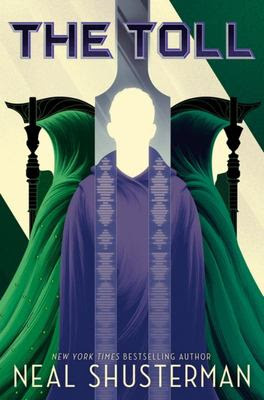 | The Toll ('Arc of Sythe' #3) by Neal Shusterman {Reviewed by STELLA} The 'Arc of a Scythe' series is now concluded with the third instalment, The Toll. Greyson Tolliver has been claimed by the Tonists, Citra and Rowan have disappeared, presumed drowned (or devoured by flesh-eating fish) when the floating island of Endura was destroyed, Scythe Goddard is all-powerful and set on world domination, and the Thunderhead is silent. For those who haven’t read the previous books (Scythe and Thunderhead) in this intense young-adult series, here’s a quick breakdown: Earth is no longer ruled by elected representatives or despots, nor heading towards oblivion due to climate crisis, overpopulation and lack of resources. The Thunderhead, an AI, all-seeing and all-knowing, keeps the planet in equilibrium in a practical, emotional and intellectual sense. The world population is kept in balance with available resources and, while humans can age and die naturally, many choose to reset (put the clock back) and live another life. To give humans some sense of chance, there is the Scythedom — a group of special ‘cullers’ — ethical and trained to impart death without pain and with consideration. Each Scythe has a yearly quota which they may not exceed and a code of honour which must be upheld. New apprentices are taken on every few years and here’s where the story begins. Citra and Rowan — two teenagers are chosen, much to their abhorrence, to be Scythe apprentices (no one likes the Scythes — they are the bogeymen who come a-knocking), and, strangely, their teacher, Scythe Faraday has chosen two but only one can succeed. Citra and Rowan are pitted against each other and the backdrop is a Scythedom on the edge of turmoil. Different factions are at loggerheads about the rules. Some, like Goddard, want more autonomy — their egos are huge and their desire to kill outweighs their responsibility to the Scythe purpose — to keep the population in check. In the first book, we follow the trials and tribulations of Citra and Rowan — the passions, power and loyalties that drive them and send them into fields of ethical dilemma. In the second book, Thunderhead, we are introduced in greater detail to the Thunderhead (especially through the flawed character of Greyson Tolliver), the larger world and machinations of the Scythedom, Nimbus agents (like the FBI), the Tonists (a religious cult), and the Unsavouries (those whom the Thunderhead has deemed unworthy and cut communication with). Driving through this is Goddard’s increasing influence and power, culminating in a dramatic moment for the Scythedom and devastation for Citra and Rowan. It’s a cliffhanger book 2! So The Toll has been highly anticipated by fans. Greyson Tolliver plays a larger role in this book as the Toll — the only human left with open contact to the Thunderhead. Everyone else has been rendered 'unsavoury' and is no longer able to make direct contact with the AI. This is shocking for the human population who have had the Thunderhead (all-hearing, all-seeing) with them since birth — always there, always caring, and always knowing what was best. We are also introduced a new cast of characters. Jericho, a gender-fluid Madagascan captain on a salvage ship; Loriana, a Nimbus agent who comes into her own; and Scythes from the southern Americas and African sub-continent. Further developed is the archivist and librarian Munira, and Scythe Faraday is back in the mix. As the tension builds with the further rise of Goddard the plot picks up to a rip-roaring pace. Fear and power are his tools and while some resist, they are easily cut down as Goddard’s influence increases. Yet The Toll has a quiet power and The Thunderhead is using all its capacities to make the world better again. There are some excellent reflective moments in The Toll with the Thunderhead becoming a more conscious being — moving from perfection to doubt to improvement (possibly). Shusterman keeps the pace going but does not shy from moments of quiet and solitude — time for his characters to figure out who they are and what they desire. The 'Arc of a Scythe' series is more than an action-packed dystopia, it lays out a question for us to consider — what kind of future world do we desire and can this be a hopeful one? |
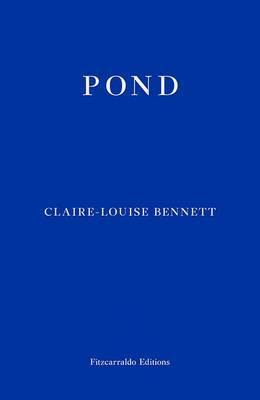 |
Pond by Claire-Louise Bennett {Reviewed by THOMAS}
“English, strictly speaking, is not my first language by the way. I haven’t yet discovered what my first language is so for the time being I use English words in order to say things.” Always hinting at experience just beyond the reach of language, Bennett's remarkable book is impelled by the rigours of noticing. Encounters with persons and with the infraordinary are treated with equivalence: acute, highly acute, overly acute, observations immediately plunge the narrator’s awareness into the depths of her response (“My head is turned by imagined elsewheres and hardly at all by present circumstances.”), far from the surface at which outward contact may be made, or may be being made, a process that is both deeply isolating, terrifying and protective. Bennett’s unsparingly acute observations of the usually unacknowledged or unacknowledgeable motivations, urges and responses that underlie human interaction and quotidian existence seem here induced by an acceptance or a resignation that is enabled by despair, or is indistinguishable from despair, both a resignation and a panic, perhaps, a panic on the edge of self-dissolution which is perhaps our last resistance to self-dissolution and therefore fundamental to individual existence: the anxiety which all human activity is designed to conceal. Bennett’s is a very individual voice (click here to hear her read a sample), resonating at times with other works of irredeemably isolated interiority, such David Markson’s superb Wittgenstein’s Mistress or the suppressed hysteria of Thomas Bernhard’s narrators, but tracking entirely her own patterns of thought (I have perhaps made an error here of conflating the author with the narrator, but, if this is an error, it is one hard to avoid in the book in which style and content are inseparable) with an immediacy that precludes the artificially patterning, pseudo-assimilable explanation of a ‘story’. In one excellent section, ‘Control Knobs’, the narrator describes the gradual disintegration of the three knobs that control her cooker and speculates a coming time when the last interchangeable knob breaks and the cooker will become unusable. This reminds her of the counted matches in Marlen Haushofer’s The Wall (another novel of irredeemably isolated interiority), which mark the time to the point at which that narrator will no longer be able to light a fire to cook and warm herself. Following a discussion of Bennett’s narrator’s reading and misreading of that book, she returns to an account of the ultimate hopelessness of her attempts to procure new knobs for her cooker. “I feel at a loss for about ten minutes and it’s a sensation, I realise, not dissimilar to indifference. So, naturally, I handle it rather well.”
|
NEW RELEASES
 Some Trick: Thirteen stories by Helen DeWitt $32
How is it possible to live a life of the mind in a world that opposes even the slightest possibility of such a thing occurring? Is DeWitt the modern-day Gogol or Calvino?
"DeWitt's style is brilliantly heartless, and cork-dry; original herself, she is a witty examiner of human and cultural eccentricity. She can take a recognisable social situation or fact and steadily twist it into a surrealist skein." —James Wood, The New Yorker
"Brilliant and inimitable Helen DeWitt: patron saint of anyone in the world who has to deal with the crap of those in power who do a terrible job with their power, and who make those who are under their power utterly miserable. Certain stories have something in common with dreams: they’re expressions of the creator’s wish-fulfillment. Helen DeWitt’s wishes are distinct in American literature — in world literature, as far as I know." —Sheila Heti
>>Helen DeWitt has your number.
 Arboretum by David Byrne $45
In a wonderful series of eccentric annotated drawings — each in the form of a tree! — Byrne presents his thoughts about just about every human foible, habit and concept with the same gusto, irony and individual flair that he brings to both his music and his writing.
>>Stop making sense.
 At the Pond: Swimming at the Hampstead Ladies' Pond by
Ava Wong Davies, Margaret Drabble, Esther Freud, Nell Frizzell, Eli Goldstone, Amy Key, Jessica J. Lee, Sophie Mackintosh, So Mayer, Deborah Moggach, Nina Mingya Powles, Leanne Shapton, Lou Stoppard and Sharlene Teo $25
Esther Freud describes the life-affirming sensation of swimming through the seasons; Lou Stoppard pays tribute to the winter swimmers who break the ice; Margaret Drabble reflects on the golden Hampstead days of her youth; Sharlene Teo visits for the first time; and Nell Frizzell shares the view from her yellow lifeguard’s canoe.
>>Three writers dive in.
>>Read Esther Freud's piece.
>>The best place in the world.
 Self-Portrait by Celia Paul $55
"I'm not a portrait painter. If I'm anything, I have always been an autobiographer." From her move to the Slade School of Fine Art at sixteen, through a profound and intense affair with the older and better-known artist Lucian Freud, to the practices of her present-day studio, Paul meticulously assembles the surprising, beautiful, haunting scenes of a life. Paul brings to her prose the same qualities that she brings to her art: a brutal honesty, a delicate but powerful intensity, and an acute eye for visual detail.
"I had to make this story my own."
 2040 AD (McSweeney's Quarterly Concern #58) edited by Claire Boyle $50
A special issue wholly focused on climate change with original speculative fiction from twelve noted contributors in collaboration with twelve scientists. Global in scope, each story is focused on one part of the dire warnings issued by the 2018 Intergovernmental Report on Climate Change. Featuring Tommy Orange, Elif Shafak, Luis Alberto Urrea, Asja Bakic, Rachel Heng, and more.
>>"Given the dire news surrounding climate change, are you hopeful for the future?"
 How the Brain Lost its Mind: Sex, hysteria and the riddle of mental illness by Allan Ropper and B.D. Burrell $33
In 1882, Jean-Martin Charcot was the premiere physician in Paris, having just established a neurology clinic at the infamous Salpetriere Hospital, a place that was called a 'grand asylum of human misery'. Assessing the dismal conditions, he quickly set up to upgrade the facilities, and in doing so, revolutionised the treatment of mental illness. Many of Carcot's patients had neurosyphilis (the advanced form of syphilis), a disease of mad poets, novelists, painters, and musicians, and a driving force behind the overflow of patients in Europe's asylums. The trend of neurology at the time, though, led towards hypnosis and the treatment of the mind and away from medicine and the treatment of the brain. Does the relationship between psychology and neurology mirror that between the mind and the body?
 Broken Stars: Contemporary Chinese science fiction translated and edited by Ken Liu $23
The anthology features works of hard science fiction, cyberpunk, science fantasy, and space opera, as well as genres with deeper ties to Chinese culture: alternate Chinese history, chuanyue time travel, satire with historical and contemporary allusions. Stories include: "Goodnight, Melancholy" by Xia Jia, "The Snow of Jinyang" by Zhang Ran, "Broken Stars" by Tang Fei, "Submarines" by Han Song, "Salinger and the Koreans" by Han Song, "Under a Dangling Sky" by Cheng Jingbo, "What Has Passed Shall in Kinder Light Appear" by Baoshu, "The New Year Train" by Hao Jingfang, "The Robot Who Liked to Tell Tall Tales" by Fei Dao, "Moonlight" by Liu Cixin, "The Restaurant at the End of the Universe: Laba Porridge" by Anna Wu, "The First Emperor's Games" by Ma Boyong, "Reflection" by Gu Shi, "The Brain Box" by Regina Kanyu Wang, "Coming of the Light" by Chen Qiufan, "A History of Future Illnesses" by Chen Qiufan. Essays: "A Brief Introduction to Chinese Science Fiction and Fandom," by Regina Kanyu Wang,
"A New Continent for China Scholars: Chinese Science Fiction Studies" by Mingwei Song, "Science Fiction: Embarrassing No More" by Fei Dao.
 Nam June Paik by Sook-Kyung Lee and Rudolf Frieling $55
An early adopter of digital technologies and new media, Nam June Paik (1932-2006) was in many ways the founder of video art. His cutting-edge, innovative, yet playfully entertaining work continues to be a major influence on art and culture.This ground-breaking publication focuses on Paik's role in the cross-germination of radical aesthetics and experimental practices.
>>Charlotte Moorman performs Nam June Paik's 'TV Cello' (1976).
 The Other Bennet Sister by Janice Hadlow $38
It is a sad fact of life that if a young woman is unlucky enough to come into the world without expectations, she had better do all she can to ensure she is born beautiful. To be handsome and poor is misfortune enough; but to be both plain and penniless is a hard fate indeed. In Jane Austen's Pride and Prejudice, Mary is the middle of the five Bennet girls and the plainest of them all, so what hope does she have? Prim and pious, with no redeeming features, she is unloved and seemingly unlovable. The Other Bennet Sister, though, shows another side to Mary. An introvert in a family of extroverts; a constant disappointment to her mother who values beauty above all else; fearful of her father's sharp tongue; with little in common with her siblings - is it any wonder she turns to books for both company and guidance?
Immersive and engaging." —Guardian
 Ocean Sea by Alessandro Baricco $23
At the Almayer Inn, a remote shoreline hotel, an artist dips his brush in a cup of ocean water to paint a portrait of the sea. A scientist pens love letters to a woman he has yet to meet. An adulteress searches for relief from her proclivity to fall in love. And a sixteen-year-old girl seeks a cure from a mysterious condition which science has failed to remedy. When these people meet, their fates begin to interact.
 The Existentialist's Survival Guide: How to live authentically in an inauthentic age by Gordon Marino $37
What can Kierkegaard and the philosophers who came after him tell us about how to live now?
"Brilliant. Gives existentialism a 21st-century presence that is gripping, nuanced and convincing. The prose is electric, illustrating that existentialism is also literary." —The Los Angeles Review of Books
 A Political History of the World: Three thousand years of war and peace by Jonathan Holslag $26
In three thousand years of history, China has spent at least eleven centuries at war. The Roman Empire was in conflict during at least 50 per cent of its lifetime. Since 1776, the United States has spent over one hundred years at war. The dream of peace has been universal in the history of humanity. So why have we so rarely been able to achieve it?
 The Science of Being Human: Why we behave, think and feel the way we do by Marty Jopson $27
Starting with evolutionary biology and what it physically means to be a human being, this book moves on to include a wide range of topics such as artificial intelligence, virtual reality and how we are evolving as we interact with new technology.
 10 Voyages through the Human Mind edited by Catherine de Lange $30
Undoubtedly the most complex material in the universe, the human brain makes us who we are, but how it works and why has long been a mystery. Through this series of fascinating lectures at The Royal Institution, spanning over a hundred years, experts in the fields of psychology, neurology and biology examine the workings of our most important organ, revealing a hidden and complex world.
 Address Unknown by Kathrine Kressmann Taylor $23
First published in 1938, this novel told in letters between a Jew in America and his German friend demonstrates the way in which society is poisoned at all levels by fascism.
 Nightmareland: Travels at the borders of sleep, dreams, and wakefulness by Lex Lonehood Nover $37
Encompassing accepted medical phenomena such as sleep paralysis, parasomnias, and Ambien "zombies," and the true-crime casebook of those who kill while sleepwalking, to supernatural elements such as the incubus, alien abduction, and psychic attacks, Nover brings readers on an extraordinary journey through history, folklore, and science, to help us understand what happens when we sleep.
How is it possible to live a life of the mind in a world that opposes even the slightest possibility of such a thing occurring? Is DeWitt the modern-day Gogol or Calvino?
"DeWitt's style is brilliantly heartless, and cork-dry; original herself, she is a witty examiner of human and cultural eccentricity. She can take a recognisable social situation or fact and steadily twist it into a surrealist skein." —James Wood, The New Yorker
"Brilliant and inimitable Helen DeWitt: patron saint of anyone in the world who has to deal with the crap of those in power who do a terrible job with their power, and who make those who are under their power utterly miserable. Certain stories have something in common with dreams: they’re expressions of the creator’s wish-fulfillment. Helen DeWitt’s wishes are distinct in American literature — in world literature, as far as I know." —Sheila Heti
>>Helen DeWitt has your number.
In a wonderful series of eccentric annotated drawings — each in the form of a tree! — Byrne presents his thoughts about just about every human foible, habit and concept with the same gusto, irony and individual flair that he brings to both his music and his writing.
>>Stop making sense.
Ava Wong Davies, Margaret Drabble, Esther Freud, Nell Frizzell, Eli Goldstone, Amy Key, Jessica J. Lee, Sophie Mackintosh, So Mayer, Deborah Moggach, Nina Mingya Powles, Leanne Shapton, Lou Stoppard and Sharlene Teo $25
Esther Freud describes the life-affirming sensation of swimming through the seasons; Lou Stoppard pays tribute to the winter swimmers who break the ice; Margaret Drabble reflects on the golden Hampstead days of her youth; Sharlene Teo visits for the first time; and Nell Frizzell shares the view from her yellow lifeguard’s canoe.
>>Three writers dive in.
>>Read Esther Freud's piece.
>>The best place in the world.
"I'm not a portrait painter. If I'm anything, I have always been an autobiographer." From her move to the Slade School of Fine Art at sixteen, through a profound and intense affair with the older and better-known artist Lucian Freud, to the practices of her present-day studio, Paul meticulously assembles the surprising, beautiful, haunting scenes of a life. Paul brings to her prose the same qualities that she brings to her art: a brutal honesty, a delicate but powerful intensity, and an acute eye for visual detail.
"I had to make this story my own."
A special issue wholly focused on climate change with original speculative fiction from twelve noted contributors in collaboration with twelve scientists. Global in scope, each story is focused on one part of the dire warnings issued by the 2018 Intergovernmental Report on Climate Change. Featuring Tommy Orange, Elif Shafak, Luis Alberto Urrea, Asja Bakic, Rachel Heng, and more.
>>"Given the dire news surrounding climate change, are you hopeful for the future?"
In 1882, Jean-Martin Charcot was the premiere physician in Paris, having just established a neurology clinic at the infamous Salpetriere Hospital, a place that was called a 'grand asylum of human misery'. Assessing the dismal conditions, he quickly set up to upgrade the facilities, and in doing so, revolutionised the treatment of mental illness. Many of Carcot's patients had neurosyphilis (the advanced form of syphilis), a disease of mad poets, novelists, painters, and musicians, and a driving force behind the overflow of patients in Europe's asylums. The trend of neurology at the time, though, led towards hypnosis and the treatment of the mind and away from medicine and the treatment of the brain. Does the relationship between psychology and neurology mirror that between the mind and the body?
The anthology features works of hard science fiction, cyberpunk, science fantasy, and space opera, as well as genres with deeper ties to Chinese culture: alternate Chinese history, chuanyue time travel, satire with historical and contemporary allusions. Stories include: "Goodnight, Melancholy" by Xia Jia, "The Snow of Jinyang" by Zhang Ran, "Broken Stars" by Tang Fei, "Submarines" by Han Song, "Salinger and the Koreans" by Han Song, "Under a Dangling Sky" by Cheng Jingbo, "What Has Passed Shall in Kinder Light Appear" by Baoshu, "The New Year Train" by Hao Jingfang, "The Robot Who Liked to Tell Tall Tales" by Fei Dao, "Moonlight" by Liu Cixin, "The Restaurant at the End of the Universe: Laba Porridge" by Anna Wu, "The First Emperor's Games" by Ma Boyong, "Reflection" by Gu Shi, "The Brain Box" by Regina Kanyu Wang, "Coming of the Light" by Chen Qiufan, "A History of Future Illnesses" by Chen Qiufan. Essays: "A Brief Introduction to Chinese Science Fiction and Fandom," by Regina Kanyu Wang,
"A New Continent for China Scholars: Chinese Science Fiction Studies" by Mingwei Song, "Science Fiction: Embarrassing No More" by Fei Dao.
An early adopter of digital technologies and new media, Nam June Paik (1932-2006) was in many ways the founder of video art. His cutting-edge, innovative, yet playfully entertaining work continues to be a major influence on art and culture.This ground-breaking publication focuses on Paik's role in the cross-germination of radical aesthetics and experimental practices.
>>Charlotte Moorman performs Nam June Paik's 'TV Cello' (1976).
It is a sad fact of life that if a young woman is unlucky enough to come into the world without expectations, she had better do all she can to ensure she is born beautiful. To be handsome and poor is misfortune enough; but to be both plain and penniless is a hard fate indeed. In Jane Austen's Pride and Prejudice, Mary is the middle of the five Bennet girls and the plainest of them all, so what hope does she have? Prim and pious, with no redeeming features, she is unloved and seemingly unlovable. The Other Bennet Sister, though, shows another side to Mary. An introvert in a family of extroverts; a constant disappointment to her mother who values beauty above all else; fearful of her father's sharp tongue; with little in common with her siblings - is it any wonder she turns to books for both company and guidance?
Immersive and engaging." —Guardian
At the Almayer Inn, a remote shoreline hotel, an artist dips his brush in a cup of ocean water to paint a portrait of the sea. A scientist pens love letters to a woman he has yet to meet. An adulteress searches for relief from her proclivity to fall in love. And a sixteen-year-old girl seeks a cure from a mysterious condition which science has failed to remedy. When these people meet, their fates begin to interact.
What can Kierkegaard and the philosophers who came after him tell us about how to live now?
"Brilliant. Gives existentialism a 21st-century presence that is gripping, nuanced and convincing. The prose is electric, illustrating that existentialism is also literary." —The Los Angeles Review of Books
In three thousand years of history, China has spent at least eleven centuries at war. The Roman Empire was in conflict during at least 50 per cent of its lifetime. Since 1776, the United States has spent over one hundred years at war. The dream of peace has been universal in the history of humanity. So why have we so rarely been able to achieve it?
Starting with evolutionary biology and what it physically means to be a human being, this book moves on to include a wide range of topics such as artificial intelligence, virtual reality and how we are evolving as we interact with new technology.
Undoubtedly the most complex material in the universe, the human brain makes us who we are, but how it works and why has long been a mystery. Through this series of fascinating lectures at The Royal Institution, spanning over a hundred years, experts in the fields of psychology, neurology and biology examine the workings of our most important organ, revealing a hidden and complex world.
First published in 1938, this novel told in letters between a Jew in America and his German friend demonstrates the way in which society is poisoned at all levels by fascism.
Encompassing accepted medical phenomena such as sleep paralysis, parasomnias, and Ambien "zombies," and the true-crime casebook of those who kill while sleepwalking, to supernatural elements such as the incubus, alien abduction, and psychic attacks, Nover brings readers on an extraordinary journey through history, folklore, and science, to help us understand what happens when we sleep.

 | The Starless Sea by Erin Morgenstern {Reviewed by STELLA} Anticipation is a dangerous thing. Erin Morgenstern had a bestseller — a phenomenon — with her debut, The Night Circus. The book is about a mystical black and white circus, star-crossed lovers, competitive magicians and a cast of acts fantastic in all their endeavours, as well the circus devotees in all their guises. Some readers watched for that circus to pop up unexpectedly in their neighbourhood. It’s been eight years between books, and this one will thrill some, but not everyone. More magical, more fantastical and more complex, The Starless Sea isn’t for the fainthearted. It has stories within stories, books hidden in libraries, doors that appear to chosen individuals only to lead them into the caverns and winding underworld pathways of misinformation, discovery and confusion; dead ends, surprises, beauty and words, stories forever and ever. It’s whimsical as well as captivating, full of symbolism, borrowings (fantasy tropes) and myth. Opening with an imprisoned pirate telling tales to a woman who will rescue him, only for that rescue to be thwarted elsewhere in the book, we flip to completely different stories in the next few chapters. The first part of this novel feels disjointed, but bear with it: as part of the charm of these stories is that they reappear, develop and intertwine throughout the book alongside the main characters' discoveries in the world beyond the mysterious doors. Zachery Ezra Rawlins — a senior university student — is spending his term break reading his way through the library. When he comes across a book out of place he goes to check it out to find that it isn’t recorded in the library’s catalogue. A manual entry is made and Zachery heads home with it only to discover that this strange book is telling his own story — part of it. The tale is of a boy who discovers a painted door on a wall, an image so realistic that it seems like you could reach out, turn the handle, open the door and step through. The boy hesitates and walks on. The next day the door is gone. This childhood memory is revived, and Zachery, understandably, is disconcerted. His fascination with this book leads to some detective work on his part and he takes himself off to New York to a masked ball — a fundraiser for the Trust connected to the mysterious book. Here Zachery meets the stunning and enigmatic Mirabel (a woman from the world beyond the doors) as well as the attractive Damian who sets him a task — one which will plunge him into the labyrinthine world of the Starless Sea. Part of the enjoyment of this novel is piecing the bits of the puzzle together. What is the Starless Sea? Why do some want to preserve it while others wish to destroy it? There are nods to many other fables and myths, as well as to contemporary literary fantasy worlds, and while this is sometimes distracting it is also part of the cosmos Morgenstern has built. Stories within stories within books, and books pulled apart and thrown to the wind — pages folded into origami stars and floated upon the strange sea, others cast off on ribbons — their words mingling and changing. In The Night Circus Morgenstern created vivid imagery, and here she again plays with descriptive metaphor and symbols, adding to the mix a heady scent — the forest comes alive with the smell of trees, humus and needles, the charred remains of a room a lingering reminder of things gone wrong, the sweet cloying smell of honey — close and insular but overwhelming. Will Zachery find his fate? Will Mirabel change hers? And will the young lovers find each other in the pages of a book or be consumed by the Starless Sea — a thing of beauty and threat? |
 |
Summer in Baden-Baden by Leonid Tsypkin {Reviewed by THOMAS}
Nothing drives an obsession to unsustainable extremes more than the unnameable terror that a more moderate degree of love would be overwhelmed by its complementary revulsion. Our so-called cultural artefacts and so-called social institutions are, likewise, mechanisms for privileging one pole of an ambivalence, mechanisms for giving a (usually) positive cast to what we think of as our individual or communal selves. For some individuals, including, seemingly, Leonid Tsypkin and, especially, Fyodor Dostoyevsky (the ostensible subject of Tsypkin’s novel), whatever it is that separates the existential extremes is either exceptionally rigid and brittle or unusually permeable when unattended or in some way unreliable or, possibly, sporadically assailable, which enables, for those individuals, transports both of remarkable insight and of psychological risk. In Tsypkin’s novel, the narrator Tsypkin (or ‘Tsypkin’) is travelling by train from Moscow to Petersburg to visit the Dostoyevsky museum. As he travels, he reads the diary of Dostoyevsky’s young second wife Anna concerning their time spent in Europe, mainly staying in various German towns and suffering, often, from the financial consequences of Fyodor’s gambling addiction (which he had written about in The Gambler and practiced thereafter). Tsypkin’s astounding book, in which each paragraph is a single virtuoso sentence building, often, to hysterical length, dissolves the distinctions between the author (or ‘author’) and his subject, slipping, unnoticed and often within a few clauses, over a century in time and deep into the inner life of Dostoyevsky, revealing the sufferings, tensions and passions that both caused hardship for Dostoyevsky and his wife and enabled Dostoyevsky to write novels of such psychological penetration. The uncommon access that the past has to the present and to cause harm there, what we might call memory, repeatedly damages Dostoyevsky — for instance the humiliations visited upon him during his imprisonment lead him to repeatedly set himself up for humiliations that replay that he had received at the hands of the commandant — but also provide him and us with an intimacy with aspects of human experience that might otherwise be inaccessible. Dostoyevsky’s cycles of enthusiasm and despair are described with great sympathy, both for him and for Anna, and Tsypkin’s unsparing portrayal of the faults of his literary hero produce a suitably ambivalent effect, often within a single sentence, moving at once towards both ridicule and sympathy (readers of Thomas Bernhard will appreciate the mastery here). How is it possible to love another (as Tsypkin loves Dostoyevsky, as Anna loves Fyodor) despite their faults, despite, even, their unforgivable faults? “Why was I so strongly attracted and enticed by the life of this man?” asks Tsypkin, who, like many other Jews, has found that Dostoyevksy and his novels possess a “special attraction” despite Dostoyevsky’s antisemitism. “It strikes me as strange to the point of implausibility that a man so sensitive in his novels to the sufferings of others, this jealous defender of the insulted and the injured … despised me and my kind.” While keeping strictly to biographical fact, Tsypkin has written a novel that provides the sort of psychological insight that is only available through fiction.
|

>>Read Thomas's review.
>>"There's no such thing as no style."
>>On balance and coherence.
>>"A few words well chosen."
>>"Language is character."
>>A writer's writer's writer.
>>Advice to the young.
>>The art of fiction.
>>"Honour the syntax."
>>"My style is a reaction to Proust's long sentences."
>>"Did the idea of having your language corrected have a repressive effect on your talking?"
>>Davis's short — and often very short — stories are exemplars of the form, and her translations are outstanding.
NEW RELEASES

In 1934, the Austrian painter Christiane Ritter travelled to the remote Arctic island of Spitsbergen to spend a year with her husband, an explorer and researcher. They lived in a tiny ramshackle hut on the shores of a lonely fjord, hundreds of miles from the nearest settlement. At first, Christiane is horrified by the freezing cold, the bleak landscape the lack of equipment and supplies, but as time passes, and after encounters with bears and seals, long treks over the ice and months on end of perpetual night, she finds herself falling in love with the Arctic's harsh, otherworldly beauty, gaining a sense of inner peace and a new appreciation for the sanctity of life. A rediscovered classic.

Benson says that the terrifying sequence of Zeus poems that form the first half of Vertigo & Ghost emerged from ‘a long buried experience, and then a sudden pouring-in of words, that I can only explain as coming out of the woods’. The sequence makes palpable the sexualised violence latent in Greek mythology, with Zeus as abuser-in-chief, abetted and feared. It is followed by an exploration of the complex and ambivalent terrain of early motherhood.
Winner of the 2019 Forward Prize.
>>Interview.
>>In conversation with Daisy Johnson.

Really good. See also A Maori Word a Day.

109 photographs taken between 1962 and 1971 in what was Czechoslovakia (Bohemia, Moravia and Slovakia), Romania, Hungary, France and Spain. A unique record of a vanished world.

A lonely psychiatrist in 1948 is preparing fro retirement when he is drawn to a seemingly fragile woman who comes to him as a patient.
"A shrewd, skilful tale of loneliness, the search for meaning and a place in the world, and the problems of truly relating to another human being.” —Independent

The Summer Isles are a sporadically inhabited archipelago off the west coast of the Scottish Highlands. Marsden reached them by sailing along the exposed western coasts of Ireland and Scotland. It is a course that has been followed for centuries by explorers and adventurers, fishermen and monks, all drawn to the western seas and their distant horizons. Combining travel writing, memoir and cultural history, this is a book about the search for real places, for imagined places, and for places that might always exist somewhere in between. Beautifully written.

A record of how a future Moscow was envisioned by a bold generation of architects in the 1920s and early 1930s. Through a wealth of rarely seen material, this book provides a window into an idealistic fantasy of the Soviet capital that was never realised and has since been largely forgotten. Focusing on six unbuilt architectural landmarks, Imagine Moscow explores how these projects reflected changes in everyday life and society following the Revolution.

“The material universe and consciousness are made out of the same stuff.” —Ernst Schrödinger
Is consciousness one of the fundamental properties of all matter? How would our understanding of our universe be altered if we took this to be the case?
"An illuminating introduction to the topic of consciousness. It addresses the real issue — unlike almost all recent popular books on this subject. It stands a good chance of delivering the extremely large intellectual jolt that many people will need if they are to get into (or anywhere near) the right ballpark for thinking about consciousness. This is a great thing." —Galen Strawson, Guardian

Breeze block is back. This surge of interest in the material, though, is more than a nostalgic yearning for the golden years of modernism. Contemporary designers are not only rediscovering the forgotten qualities that made it such an appealing medium for mid-century architects, but finding new ways to enhance and exploit them.

The Marquise of O— by Heinrich von Kleist $28
A crisp new translation by Nicholas Jacob of Kleist's comic novel of the clash between sexuality and respectability, set in northern Italy during the Napoleonic Wars.

How does our perception of the world change in the course of a lifetime? When Heike Faller's niece was born she began to wonder what we learn in life, and how we can talk about what we have learnt with those we love. And so she began to ask everyone she met, what did you learn in life? Out of the answers of children's writers and refugees, teenagers and artists, mothers and friends, came 99 'lessons' — each here delightfully illustrated by Valerio Vidali.

A hilarious collection of essays from "the premier observer of our world and its weirdnesses." —Adam Kay

Showcasing Hervé's signature bold colours and minimalist shapes and lines, this wildly graphic and highly intuitive card game will unlock every young (and old) artist's creative potential. Select WHAT to draw from one deck and HOW to draw it from the other; then flick the colourful spinner wheel to randomise the options. From "draw a tree with your eyes closed" to "draw a friend... upside down!", the combinations are endless — and endlessly fun!
