PLAY THE GAME
Some of the games we have in stock. Just click on the images to find out more, and to make your choices.



PLAY THE GAME
Some of the games we have in stock. Just click on the images to find out more, and to make your choices.

Read our latest NEWSLETTER for book news and new books, and to find out what we've been reading and recommending.


| >> Read all Stella's reviews. | |
 | Sea of Tranquility by Emily St.John Mandel {Reviewed by STELLA} Emily St John Mandel’s Sea of Tranquility is a book to be lost in. It’s a book about time, living and loving. Superbly constructed, it stretches from 1912 to 2401; from the wildness of Vancouver to a moon colony of the future. A remittance man, Edwin St.John St.Andrew, is sent abroad. He’s completely at sea in this new world — he has no appetite for work nor connection — and makes a haphazard journey to a remote settlement on a whim. Here, he has an odd experience which leaves him shaken. He will return to England only to find himself derailed in the trenches of the First World War and later struck down by the flu pandemic. It’s 2020 and Mirella (some readers will remember her from The Glass Hotel) is searching for her friend Vincent (who has disappeared). She attends a concert by Vincent’s brother Paul and afterwards waits for him to appear, along with two music fans at the backstage door. It’s here, on the eve of our current pandemic, that she discovers that Vincent has drowned at sea. Yet it is an art video that Vincent had recorded and been used in Paul’s performance which is at the centre of the conversation for one of the music fans. The film is odd — recounting an unworldly experience in the Vancouver forest. A short clip — erratic and strangely out of place, out of time. It’s 2203 and Olive Llewellyn, author, is on a book tour of Earth. She lives on Moon Colony Two and is feeling bereft — missing her husband and daughter. It’s a gruelling schedule of talks, interviews and same-same hotel rooms; and, if this wasn’t enough, there’s a new virus on the loose. Her bestselling book, Marienbad is about a pandemic. Within its pages is a description of a strange occurrence which takes place in a railway station. When an interviewer questions her about this passage, she’s happy to talk about it, as long it is off the record. It’s 2401, and detective Gaspery-Jacques Roberts from the Night City has been hired to investigate an anomaly in time. Drawing on his experiences and the book, Marienbad, and finding connections between the aforementioned times and people, will lead him to a place where he will make a decision that may have disruptive consequences. A decision which will cause upheaval. Emily St.John Mandel is deft in her writing, keeping the threads of time and the story moving across and around themselves without losing the reader, and making the knots — the connections — at just the right time to engage and delight intellect and curiosity. Moving through time and into the future makes this novel an unlikely contender to be a book of our time, but in so many ways it is. Clever, fascinating, reflective and unsettling, it’s a tender shout-out to humanity. |
| >> Read all Thomas's reviews. | |
 | No-One Is Talking About This by Patricia Lockwood {Reviewed by THOMAS} Is there such a thing as claustrophobia in your own skin, he wondered. He thought about the possibility of a collective mind, a species mind, but why stop at species, a global mind, trapped and compartmentalised into individuals. No wonder we all feel trapped in ourselves, he thought. No wonder we do everything we can, even the most stupid things, to join ourselves back up. The most inane things. And yet, and yet, we are all the time assailed by this collective mind, he thought, how do we protect ourselves from it, and from everyone else that comprises it, how do we hold back even a little space within ourselves to be just ourselves, if there is such a thing? Do we have, or have we ever had, anything that could pass for authenticity, anyway, he wondered, and would we know whether we had it or had lost it, or not? In the age of internet hyperconnectivity, so to call it, should we fear or celebrate that so much of our thinking is done for us outside our head, how liberating, how useful, how frightening, but has this not anyway always been the case, even for our ancestors’ ancestors, is this not where the collective mind came from, after all? Too many question marks, too many superfluous words, he thought. Let’s get on. Patricia Lockwood’s novel No One Is Talking About This straddles these and other polarities, he wrote. It is both clever and moving, both piercingly funny and reassuringly sad, it is both about the bodilessness of the internet and about bodies in the world, about both isolation and intimacy, and about the burden that language bears—and the possibilities language offers—connecting or attempting to connect all these. Now he seemed to have written some sort of blurb instead of a review, he observed, not that what he had been writing or what he usually wrote could have passed as a review anyway, the blurb was closer. The first half of the book is probably the best encapsulation of the internet experience in fiction that he had read, he thought, if encapsulation is the word, though he had not read many fictions that attempted to capture the internet experience, so to call it. Actually there are very few novels that attempt this, he thought, which is surprising considering the way we all use the internet to do our thinking nowadays. Because we are all but a synapse away from everyone else on the planet, the speed of thought really is the speed of thought, he thought, by the time anyone responds to our thought, the world we thought it in has already changed, the collective mind has mutated and normalised the mutation. No One Is Talking About This is written in short paragraphs or sections of a postable size, the length of an internet thought, he thought, separated by blanks, just as thoughts seem to be. “Why were we all writing like this now?” wonders Lockwood’s narrator (that is to say Lockwood herself in the third person, past tense (he knew, he thought, why she wrote like that)). “Because a new kind of connection had to be made, and blink, synapse, little space-between was the only way to make it. Or because, and this was more frightening, it was the way the portal wrote. ::: These disconnections were what kept the pages turning, these blank spaces were what moved the plot forward. The plot! That was a laugh. The plot was that she sat motionless in her chair, willing herself to stand up.” Is this book a celebration or a satire of the internet—the portal—he wondered, who can tell the difference these days, the membrane between irony and sincerity is pretty well transparent, he wrote, avoiding a question mark where one had seemed to be called for. The portal had “once been the place where you sounded like yourself. Gradually it had become the place where we sounded like each other,” Lockwood wrote. All the time, though, as he had said in his blurb, call that the precis of his review, perhaps, the book is really about language and the ways it bears, releases, lets slip, distorts, mocks, grapples with and fails to grapple with whatever it is that language bears, releases, lets slip, etcetera, he wasn’t quite sure what, but language did it anyway, what was always protean was only more protean in the portal. The second half of the book concerns the brief six-month life of Lockwood’s niece, born with Proteus Syndrome, a growth disorder that eventually kills its subject under the chaotic asymmetric growth of their own body. He had forgotten the name of the syndrome and had to look it up in the novel later, only to find that he had used the word adjectivally in his previous sentence, which was a bit awkward and unintentional, but there was no going back now. The Lockwood character is stricken (“If all she was was funny, and none of this was funny, where did this leave her?”), goes to support her sister, and the rest of the novel about language revolves around the niece who would never attain language of her own. The narrator’s love for the doomed niece is the least meme-able thing you could imagine, he thought, and yet the voice continues, the thought length continues, the writing style spun by the portal proves, in Lockwood’s hands (hands? mind? fingers? keyboard?) at least, capable of authenticity and feeling. Perhaps we have always thought like this, or experienced like this, he thought, perhaps the world and we ourselves are comprised of instances, snippets, bundled together by language, and the portal has only helped us to see that this is so. If I feel claustrophobic in my own skin, he thought, imagine how the parts and sub-parts of me feel. Imagine how my thoughts feel, and how badly they want to get out. |
NEW RELEASES





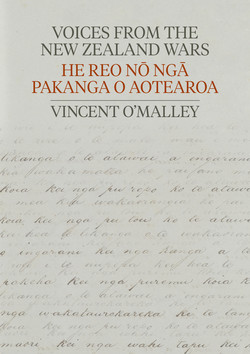
 Read below what the judges have to say about each book, and click through to our website to get your copies (or to send them to your friends).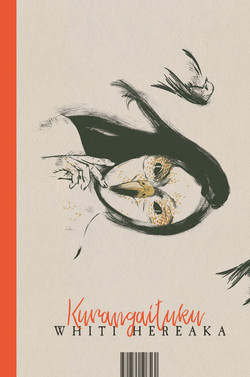




JUDITH BINNEY PRIZE FOR ILLUSTRATED NON-FICTION





Whiti: I think I spent a long time fighting against the structure that this novel finally took on — I tried very hard to write it as a lineal, chronological story! But the story presented in that way was always lacking to me. While I was trying to force it into a “normal” structure it had already separated into the different strands of the story for me — part of my struggle when I was trying to make it into a lineal story was to make the different parts of the book sit together. So this approach solved some of those problems which is great! But really this structure came about because I wanted the novel to read like how a pūrākau would be told — I worked on the rhythms of English so it would read like Te Reo Māori, and I was very well supported by the editors at Huia to do this.
Time and the experience of deep time was also important to me — a creature like Kurangaituku wouldn’t experience time in the same way we do, so I wanted to replicate that in her story. I wrote Legacy while I had put this novel on hold, and I think you can see me figuring out time loops and how to use structure as a vital storytelling component in that novel.
I also wanted to push myself as a writer and because I’ve written across genre and forms I’m interested in how far you can push a novel, I’m interested in the experience of reading a novel and how that experience is unique to the form.
It was also cool! I think ye olde thespian in me is still wanting to put on a show, to put bums on seats — and I think there’s a sort of delight in turning the book when Kurangaituku’s world is overturned, in seeing the story strands weaving together. Again, I have to thank the design team at Huia for taking my outlandish plans and making them work beautifully (in the mechanical sense and the aesthetic!)
Whiti: Oh, I don’t know if I can presume the desires of Kurangaituku nor those of wāhine Māori! I don’t think either need to seek legitimacy or recognition from anyone — they are inherently so. I think what is important to Kurangaituku and Māori is story sovereignty, hell, sovereignty full stop — but that is a much bigger conversation. I think it is important for people to be able to tell their own stories in their own ways — and I think it is helpful for readers to read stories that are told from their cultural view point (and for those not of the culture to spend a bit of time in those stories too.)
Whiti: I think literature should both reflect the world and comment on it — at least, I hope that’s what I do in my mahi.
I think the violence in Kurangaituku both in the action and the character is shown to be ultimately hollow and toxic. Without giving too much away, some of the most gory scenes the violence amounts to nothing and the actors playing out the violence are stuck in a loop — nothing changes because of the violence, it is a useless waste of energy. Often when Kurangaituku herself uses violence, it frustrates her efforts to get what she wants.
I think the anger of Kurangaituku is different from her violence because it is creative — her anger spurs her exploration and her need to tell her story.
Whiti: Wow — I don’t think I can dare to say my name and Angela Carter in the same breath . Angela Carter! While I think Kurangaituku is a feminist retelling, I think more importantly it is an attempt at a decolonised retelling. Because the only place where the women’s voices in pūrākau have been silenced are in the retellings that originated with British ethnologists that published our stories and put their own patriarchal lens on them. It is unfortunate that those retellings of our stories have become those that we are most familiar with.
Being a Māori writer means always having the responsibility of articulating the voices of a community, whether I intend to do that or not! No matter what my work is there will always be the question about how that reflects on Te Ao Māori as a whole. I try my best and I’ll often get is wrong, because it is impossible for one person to speak for the multitudes of people from a community. In this retelling of Kurangaituku and in the retellings in Pūrākau, I hope we are moving away from the idea of a “definitive” telling. My novel is one of the stories told about Kurangaituku — it is one strand of many and I hope that the rope that it is a ply of will become thicker and stronger. Because a strong rope can slow even the sun.
| >> Read all Stella's reviews. | |
 | Companion Piece by Ali Smith {Reviewed by STELLA} There is only one word needed here — brilliant. Ali Smith’s latest instalment is Companion Piece. Written in the same breakneck fashion as her 'Seasons Quartet', it is set in 2021, in the time of Covid, and reaches back to grab a hand onto the scruff of a neck of a young blacksmithing girl at the time of the Black Death. Narrated by Sandy Gray, artist and wordsmith, the novel opens with a hello (a ‘hello’ which we will visit again later in the novel with an etymological dive). In typical Ali Smith style, we are thrown right into the heart of the chaos. Cerberus is there with his three heads making light of the current crisis. “Seen it all before. Let the bodies pile high, more the merrier in a country of people in mourning gas-lit by the constant pressure to act like it’s not a country in mourning.” Sand is past caring as she worries about her father in hospital and copes with lockdown. Her days are filled with looking after her father’s dog, trying to communicate with her father through the iPad, and occasionally staring up at the hospital windows with others, socially distanced, awaiting news. When a phone call from a past acquaintance comes out of the blue, a chain of events disrupts her isolation. Martina Pelf wants information and she’s decided Sand is the person who can interpret a riddle for her. “Curlew or curfew, you choose”. Held at Customs for several hours, the assistant curator Martina has been stuck in a small room with an artefact, the intricately smithed and highly decorative ‘Boothby Lock’, which she has been charged to transport back to the museum and it has ‘spoken’ to her. She wants Sand to figure out this puzzle for her. All okay, even if strange for Sand, as Martina, apart from when she attempted to get Sand to write a poetry essay for her, spent all her time ignoring her at college. All okay, until Martina’s family one by one descends on Sandy Gray’s abode, making themselves at home. Self-centred, maskless and oblivious of their upper-middle-class entitlement, they are completely unaware of their imposition. (Interestingly, invading another’s home is a factor that occurs in at least two other Smith novels: The Accidental and more obviously There But For The). This is also a parallel with another of Smith’s earlier works, How to Be Both (one of my personal favourites) with two distinct stories in time that intersect. In Companion Piece, a young woman, a girl really, surfaces in Sand’s house — homeless, hungry and filthy, needing a place to sleep and new boots. This girl has a companion — a curlew — and an odd manner. “Nails, she was saying now, and spikes and all decoratives, I’m the fellow. What needs mended here? Not counting this poor dog you’ve broken. The break’s an inner crack, yours to mend, I can’t but I’ll trade you a piece of house goods that need mending for a sleep under a roof, I’ve a tolerable hand, stew pans, lock, grate, kettle, candlestick, hinge, last a lifetime, you’ve my word, I’m good at knives, there’s many a person buried with a knife of mine for use in the next life.” So here comes our other narrator (the story within the story), a child of death from a bygone time — left in a ditch, marked with a brand, and cheated of her worth. Yet also a child of grit and insight. Ali Smith’s Companion Piece is an evocative and timely work of fiction that asks us all to consider what is important and what can we do when trust is lost. There are questions to be asked so we can embrace our future. Ali Smith with her wry and insightful wordsmithery is once again brilliant. |
| >> Read all Thomas's reviews. | |
 | Old Masters by Thomas Bernhard (translated from German by Ewald Osers) {Reviewed by THOMAS} It is very tiring to get everything done properly, he said, it is exhausting and, really, a waste of time to get everything done properly, but it is just as exhausting and just as much a waste of time to get everything done not properly, to do a mediocre job, so to speak, he said. As not doing anything at all does not seem to be an option available to me, despite its attractions, he said, as doing nothing is fraught with its own existential dangers, so to call them, I may as well do everything properly, he said. This is a terrible trap. I will exhaust myself and waste my time whether I do things properly or not, nobody will notice whether I do things properly or not, I am uncertain if I can tell whether I am doing things properly or not myself, but they would notice if I do nothing at all. Perhaps what I call properly is in fact mediocre, I aspire to the mediocre but fall short, or I aspire to excellence and fall short, it makes no difference, I fall to the same point, somewhere below the mediocre, far below excellence, I fall to my place in the order of things whether I aspire to the mediocre or to the excellent, I may as well aspire to excellence, whatever that means, and fail more grandly, he said, though he was unsure if this failure was more grand or more pathetic. He had, he said, entertained the intention, at least briefly, of writing a proper review of Old Masters by Thomas Bernhard, he had been rereading Old Masters not merely but at least partly for the purposes of writing this review, and he had even, while researching this review or this book, discovered what seemed to him to be a video game in which he could move around the galleries of the Kunsthistorisches Museum in Vienna, although there were some galleries he could not enter for some reason, perhaps he had to advance to another level or perhaps he was just clumsy, avoiding the gallery attendants, searching for the location in which almost the entire book is set: the bench facing the painting White-Bearded Man by Tintoretto. Using the navigation arrows provided for the purpose by Google, he found, the player of the game can become well acquainted with the endless parquet flooring of the Kunsthistorisches Museum, with the marble staircases and gilded cornices and door-frames of the Kunsthistorisches Museum, and with much of what Reger, the dominant voice if not the narrator of Bernard’s book, dismisses as its collection of “Habsburg-Catholic state art. The Kunsthistorisches Museum is entirely in line with the artistic taste of the Habsburgs, who, at least where painting is concerned, had a revolting, totally brainless Catholic artistic taste,” writes Bernhard as Atzbacher quoting Reger, Atzbacher being the book’s narrator, even though pretty much all he does is quote what Reger has at some time said. He must concentrate on his review, he thought, I am determined to write a proper review, he said aloud, forgetting that he had already reviewed the book with a proper review, or in any case something slightly closer to a proper review than what he felt himself now capable of, not that that is saying much, some years before. Old Masters is an entirely musical book, he wrote, starting at last in a sensible way, despite being set in a painting gallery it is entirely musical both in its phrasing and in its structure, if there is a difference between the two, he thought, drifting from the task, the musical form of the book is what matters, he wondered if he could say the form is all that matters, that form is all that ever matters. Old Masters is narrated in one unbroken paragraph by Atzbacher, about whom we learn little, he wrote, but the voice that reaches us is the voice of Reger, an elderly music reviewer, who has arranged to meet Atzbacher on their regular bench in front of the White-Bearded Man but on an irregular day, they normally meet there on alternate days only. Atzbacher arrives early in order to watch Reger waiting for him from the next room, and the first half of the book consists of Atzbacher telling us what Reger has previously told him, of Reger speaking through Atzbacher, so it seems, just as Reger also speaks, as Atzbacher notes, through the museum attendant Irrsigler: “Irrsigler has, over the years, appropriated verbatim many, if not all, or Reger’s sentences. Irrsigler is Reger’s mouthpiece, nearly everything that Irrsigler says has been said by Reger, for over thirty years Irrsigler has been saying what Reger has said. If I listen attentively I can hear Reger speak through Irrsigler.” As with Irrsigler so with Atzbacher, he thinks, Atzbacher seemingly unaware of the irony. Old Masters is a very funny book, he thinks, Reger’s reported opinions amount to a stream of invective against pretty much everything held in esteem in the society in which Reger lives, and in which Bernhard lived, separated as they are only by tense, admiration, after all, being for Bernhard a form of mental weakness. “There has virtually been no culture in Vienna for a long time, and one day there will really be no culture of any kind left in Vienna, but it will nevertheless be a cultural concept even then. Vienna will always be a cultural concept, it will more stubbornly be a cultural concept the less culture there is in it,” writes Benhard as Atzbacher as Reger and perhaps again as Bernhard. Well, he thought, as with Vienna so with Nelson, though I will not write that down, he thought. Heidegger, Stifter, Bruckner, Vienna’s public lavatories, restaurants, politicians, all are derided in the most amusing fashion and at length, he wrote, in this first section, in the words of Reger as remembered by Atzbacher as he watches Reger waiting for him to arrive. This might even be Bernhard’s funniest book, he thought, the way Reger’s ridicule surges through it, builds and collapses. When Atzbacher keeps his appointment with Reger, Reger’s rants continue via Atzbacher, but at one step less remove, the rants continue but the tone changes, subtly, Old Masters might be Bernhard’s both least and most subtle book, he thought, the least subtle because of Reger’s ranting but the most subtle because of the modulation in that ranting, all in this one paragraph, the rant no longer filtered by Atzbacher’s memory is more extreme, nastier, less enjoyable, clumsier, is the fact that I can go along with Reger’s rants in the first half a mark against me, he wondered, and if so am I redeemed by being put off when we meet Reger himself in the second, so to speak, when we meet Reger in the raw, so to speak, he wondered, and Atzbacher intercuts what Reger says to him at this time in the gallery with recollections of what Reger has said to him previously at the Ambassador cafe, and the depth of Reger’s unhappiness since the death of his wife is expressed in sequences of sentences, each ending “...Reger said at the Ambassador then,” repeated like sobs, and the unhappiness flows through and gives depth to the rest of the book, which principally concerns the difficulties of carrying on living is a world devoid of value, Old Masters is perhaps Bernhard’s funniest book and his saddest. “Oh yes, Reger said, the logical conclusion would invariably be total despair about everything. But I am resisting this total despair about everything, Reger said. I am now eighty-two and I am resisting this total despair about everything tooth and nail, Reger said.” Reger’s vitriol is a survival mechanism, he wrote, to despise is to survive, that is clumsily put, he thought, too clumsily put to write down. “One’s mind has to be a searching mind, a mind searching for mistakes, for the mistakes of humanity, a mind searching for failure. The human mind is a human mind only when it searches for the mistakes of humanity, Reger said. A good mind is a mind that searches for the mistakes of humanity and an exceptional mind is a mind that finds the mistakes of humanity, and a genius’s mind is a mind which, having found these mistakes, points them out and with all the means at its disposal shows up these mistakes.” Reger despises nothing more than old masters, so Reger says, and this is why he has sat on his bench at the Kunsthistorisches Museum every other day for thirty years. “Art altogether is nothing but a survival skill, we should never lose sight of this fact, it is, time and again, just an attempt to cope with this world and its revolting aspects, which, as we know, is invariably possible only by resorting to lies and falsehoods, to hypocrisy and self-deception, Reger said. … All these pictures, moreover, are an expression of man’s absolute helplessness in coping with himself and with what surrounds him all his life. … All these so-called old masters are really failures, without exception they were all doomed to failure.” Our obsession with art, he thought, if we have an obsession with art, or with celebrity, if we have that, or with sport performers, so to call them, or with wealthy people, or actors, or singers, is not with how these apogees of achievement are more successful than us, more skilled, more wonderful, more spiritual even, whatever we mean by that, but with the flaws, the weaknesses, vices and misfortunes that make them like us after all, failures, and we are reassured that not even great success, however that is measured, not even great skill, not even great fame would stop us from being failures, and so we need not therefore even strive for these things, they would not in any case save us, so to speak. When the worst happens, though, we are devastated but it is not true to say that we do not also feel relief, and this is the saddest thing of all, he thought. “Reger was looking at the White Bearded Man and said, the death of my wife has not only been my greatest misfortune, it has also set me free. With the death of my wife I have become free, he said, and when I say free I mean entirely free, wholly free, completely free, if you know, or if at least you surmise, what I mean. I am no longer waiting for death, it will come by itself, it will come without my thinking of it, it does not matter to me when. The death of a beloved person is also an enormous liberation of our whole system, Reger now said. I have lived for some time now with the feeling of being totally free. I can now let anything approach me, really anything, without having to resist, I no longer resist anything, that is it, Reger Said.” Atzbacher accepts the ticket Reger offers him to attend a performance of Kleist’s The Broken Jug, a work also mocking human faillings, at the Bergtheater that evening, but, Atzbacher says, “The performance was terrible,” ending the book with the first opinion he has expressed that might be his own, though, given the formative influence of Reger upon him, can any opinion be his own, can anyone’s opinion anyway be considered their own, he wondered. I will give up on this review, he decided, I cannot write the review properly he realised, whatever could constitute properly, perhaps I could have done so once but I can do so no longer, at least not today, the only day I have to write it, he thought, my mind no longer performs in that way. He had spent a long time playing the Kunsthistorische Museum game but he could not find the painting of the White Bearded Man. |
NEW RELEASES

Pure Colour by Sheila Heti $35
Here we are, just living in the first draft of creation, which was made by some great artist, who is now getting ready to tear it apart. In this first draft, a woman named Mira leaves home for school. There, she meets Annie, whose tremendous power opens Mira's chest like a portal—to what, she doesn't know. When Mira is older, her beloved father dies, and she enters the strange and dizzying dimension that true loss opens up.
"Pure Colour tells the story of a life, from beginning to end. It is a galaxy of a novel: explosive, celestially bright, huge, and streaked with beauty. It is an atlas of feeling, and a shape-shifting epic. Sheila Heti is a philosopher of modern experience, and she has reimagined what a book can hold."
>>Also available as a lovely hardback.
>>Read an extract.
>>Still asking questions.
>>Treated differently.
>>Read our reviews of How Should a Person Be?
>>Read our reviews of Motherhood.






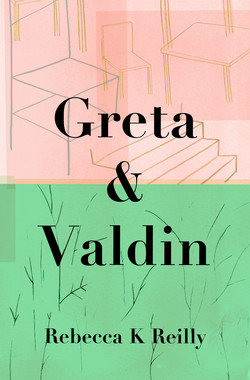
Stella: Greta & Valdin has been a sensation — topping the indie bestseller charts and capturing a rapturous audience. Why do you think it has been so well received?
Rebecca: Oh, I mean, I think only some of a book’s numbers are down to writing. It has to be in the right hands at the right time and have ticked a whole lot of boxes like inoffensive blurb, cover that doesn’t clash in a flat lay, author photo where the writer doesn’t look too furious. Then on top of that you need word of mouth recommendations, so the content of the book has to be okay as well. Here this book has good fortune because it doesn’t really have objectionable content in it, so if the reader enjoys it they can pretty much recommend it freely except to people who are homophobic or have a vested interest in preserving Iberian Spanish. Or people who tend to err on the side of finding any kind of vague angle of intellectualism pretentious and classist, this nerd book is not for them. One of my favourite books is Bear by Marian Engels and I can’t recommend it to many people at all because you have to be chill about what I guess we can call theoretical zoophilia here.
Stella: While reading this, I was actually aware of the balance you strike in keeping the lively energy of the protagonists (and the cityscape they live in — the city is vividly portrayed) front and centre while simultaneously delving into deeper themes on race and gender. Do you think humour is a vital tool in your kete? And where is it most useful or most successfully employed? Can it also, in contrast, obscure the intent of the writer?
Rebecca: I think balance is the key for me here. When I’m editing, I’m mostly thinking about how I can achieve a balance of entertainment and, ugh, pathos I guess? I want to feed the reader the vegetables (the gay agenda) a little bit but I mainly want to do what’s best to make an entertaining story with emotional highs and lows. I think it would be disingenuous to leave out the political realities that people like the characters in the book have to live with, but I’m not, you know, I’m not in the business of achieving social justice through opaque messaging. We don’t need books for that, we have the Instagram explore page.
I guess humour is good when trying to squeeze through material that’s difficult somehow, dense or dull but necessary structurally, or just straight out painful. I am aware that what I’m writing in a manuscript is intended for public consumption so I’m purposefully trying not to obscure my intentions with weird edgy jokes. Sometimes I think of something that would be funny but it’s too much, which I don’t see as self-censorship but rather a form of curation. I save that stuff for my edgy personal associates.
Stella: Love is a central theme to the book, whether that is raw and new or more nuanced and convoluted. At times, your novel seemed to sit alongside a Sally Rooney work, while at other times a classic Austen, Dickens (all those machinations) or a Russian meld of Chekhov and Tolstoy. What do you think?
Rebecca: Ah, I think the book is kind of tricky in this way. It does sit alongside the novels of Sally Rooney, Naoise Dolan, Laura McPhee-Browne and others because in a way, I’m also this kind of writer, I was born at the same time and I’ve spent many years at university and wear midi skirts. But I can’t say that I was influenced by millennial novelists at all, because when I wrote this book I was very out of touch with what was going on culturally with novels. I read all these books after I wrote mine. I think I’m this genre of writer circumstantially, but. . . taller and indigenous and from a different country.
I got an Austen comparison on my original manuscript for this book by the examiner, but I didn’t really know what it meant because I have never read the work of Jane Austen. My grandmother had the BBC adaptation on video and I watched one of the videos, I guess twenty years ago. I’ve never read Dickens either, I just know enough about these things to yell five sisters or Ebenezer when I’m watching The Chase. I’ve never read a Russian novel either, actually. I’ve read Uncle Vanya and The Cherry Tree. I’ve seen a production of The Pōhutukawa Tree.
I think I’ve just always been interested in convoluted plots with many mysterious characters and motives, the first time I was asked to move onto a new project rather than writing one never-ending story was in Year 1 when I filled up a whole exercise book with my story We’re Going to Invercargill, a place I had heard mentioned approximately one time. I think this is maybe what happens when you have an autistic child who likes writing but has no interest in fantasy or science fiction or non-fiction. Just this elaborate take on social realism. I used to play limb centre with my dolls, after going with my dad to pick up a new prosthetic leg once. Now I’m an adult who can invent new people and situations from scratch but would be extremely pressed to make them exist on streets that aren’t real. I’m sorry, I haven’t said anything about love – I like thinking about how love works and how people relate to one another, what sort of forms that can take, how far it can stretch. It’s an interesting area of thought like oceanography or linguistics.
Stella: Your book has a happy ending — mostly. Did you intend this?
Rebecca: The end of the book is definitely the part I’ve had the most negs about (rushed, messy, loses it, but also overly neat, unrealistic, cutesy) but I did intend it to be how it is. I know the author’s intention doesn’t matter and it’s all up to the reader, but here my intention was not to show a happy ending as such, but a not-horrible ending for my two protagonists. You know, in the queer community and in the Māori community we’ve got enough media where something cooked happens to the characters right at the end. This is not a book where people are drowning or going to jail or revealing they’re actually straight-engaged to someone else at the end. My secondary intention was to show that although maybe everything is momentarily fine in the world of the protagonists, they also needed to realise that the world, and even the people closest to them, operate on their own terms without their intervention. I wanted to break from the insularity of the tight first person and show that other stuff was going on and other characters had different viewpoints and other things they were dealing with.
I’m interested in the narrative perspective of Less, by Andrew Sean Greer, where the third-person narrator turns out to be someone in love with the protagonist and A Series of Unfortunate Events where the narrator is in love with someone who turns out to be the deceased mother of the protagonists. I wanted this type of effect as well, for my own Beatrice, a smaller version of it, not directly through narration but an absence of it. From one perspective, this book is a year in the life of a woman who has a lot going on socially and emotionally, but we only ever hear about it from the perspectives of two of her children, one who has no idea what she’s up to and one who seems like he might actually, but he just doesn’t think about it. He’s got a lot on too and has strong reasons for not thinking too much into the affairs of his mother because they affect him too much.
I don’t know, I
think that this thing I’m trying to do is definitely a two-book job and I don’t
regret sowing the seeds into the first book even if I can never be bothered
doing the second one and a fraction of people just think I’m shit at writing
endings. They don’t know what’s in my mind. I’m a real shocker for putting
information for one text in another, I wrote a short story for Starling set
the year before this book and V says that when he turns thirty he’ll simply
stop mentioning his age. Which he does, in Greta & Valdin, he says
that he’s 29 and that it’s his birthday the next month several times in the
first few chapters and then he never mentions it again. I’m just giving away
information at this point because the book came out a year ago next week and I
would like to stop talking about this one soon and move onto the next one, I’m
shit at multi-tasking. Anyway, all the things I’ve done have been worth the
risk, would trade again.

Read our latest NEWSLETTER and find out what we've been reading and recommending, and for book news and new books.
| >> Read all Stella's reviews. | |
 | Entanglement by Bryan Walpert {Reviewed by STELLA} A time traveller, a writer, a lover, a brother, a father. Bryan Walpert’s novel Entanglement, a novel of three parts — intersecting yet separate, entangled yet often also like a long open straight road, both precise and complex — has layers upon layers expanding and collapsing in on itself. It’s cerebral without being boring, pokes fun at itself while still having integrity, and has an emotional core which is richly textured. The three parts are distinct: 'Lake Lyndon Writer Retreat 2019', 'Time Traveller' and 'Sydney 2011'. We move between these stories seamlessly, picking up from where we left off in the previous related episode. Walpert gives each their own flavour. Lake Lyndon has the protagonist answerable to writers’ prompts — the retreat is the perfect time to work on the unwritten novel — to explore mechanisms for approaching his themes. These are often evocative passages, playing to the rules but pulling together story-telling and something of what might be the narrator’s own emotional memory landscape, melding dreamlike episodes with possibly factual encounters. 'Time Traveller' is instantly fascinating. Drawn in by the emotive title you are instinctively required to ask — Who is this time traveller and where have they travelled from and where are they going? And why is it necessary? And then, as an afterthought, is it possible? It’s cold, it’s snowing, the bus is missed, the bus breaks down. The man is lost even in this familiar landscape. He knows he has to be somewhere but he can’t quite piece it together. Is this a willing deception? Walpert asks us to consider memory and trauma — regret lies at the heart of this devastated, desperate individual. 'Sydney 2011' is the love story that runs throughout, the meeting of two minds attracted to each other in a flurry of time philosophy chat and pillow talk. Anise is intelligent and independent. The narrator is drawn to her intellectually, emotionally and physically. Neither expected a romance. Each on their own trajectory, but, as with many paths, theirs intersect and become entangled in unexpected ways. This leads to marriage, a child and moving countries for reasons the couple may regret. Cleverly conceived, these chapters defy time order, sometimes moving backwards in time, so we, the reader, know more than we should and at other times the tale twists in on itself as the protagonist attempts to control the narrative, to keep us from the truth. This is his view, his story to tell. Pushing through the plot is the story of Daniel, the twin — a story that the brother wishes to change. Can time be altered? The writer’s residency at the Centre of Time in Sydney has him attempting to understand the physics of time, and the novel is rich with conversations with various department academics as they explain the science and philosophy of time. As the novel moves along, the time traveller is increasingly desperate to get to an event in the past but is waylaid by being mugged, getting a concussion, and being apprehended by a psychiatrist. We leave him standing on the ice of a frozen lake — or do we? The husband loses his wife and child and there is a heartbreaking awareness of his mistakes, now and then (in 1976). He is trapped in these moments. His guilt has clung to him, shaping the person he is and the decision he makes thirty years on. It is as if time is collapsing in on him and he knows of only one way out. But is it possible? Walpert writes with surety and restless energy. Like the structure of the novel, the thematic concerns are also layered, expressed with self-deprecating humour, earnest intent, and passages of lyrical beauty — as much a novel as a critique of writing itself. Clever and intriguing. |
| >> Read all Thomas's reviews. | |
 | Tractatus Philosophico-Poeticus by Signe Gjessing (traslated from Danish by Denise Newman) {Reviewed by THOMAS} For some reason it had become a habit for him to write his reviews of books in the style of the books themselves, or as near a style as he could manage, a habit or an affectation, he wasn’t sure which, but this habit or affectation, if it was indeed a habit or an affectation, did have a serious intent, and was therefore not really a habit although it still could be an affectation, in that he somehow seemed to believe that a review written in the style of the subject of the review might reveal to him, and possibility to the readers of the review if there chanced to be any readers of the review, if such things could be left to chance, really such things were always left to chance, what was he saying, he seemed to believe that a review written in the style of the subject of the review might reveal something otherwise unnoticed or essential or incidental about the book in question, perhaps he was attempting to remove himself from a position of agency or of responsibility for the review by enticing, if that is the word, the book to write a review of itself. Form generates content, he shouted, frightening the cat, I want to write like a machine, I want to tinker with form until it purrs like a literary motor, then I will be able to put anything at all into the hopper, switch it on, and out comes literature. The cat was quick to resettle, she was used to this kind of excitement. If I were to write a review of Signe Gjessing’s Tractatus Philosophico-Poeticus in the form of Signe Gjessing’s Tractatus Philosophico-Poeticus I would also be writing it in the form of Ludwig Wittgenstein’s Tractatus Logico-Philosophicus, he thought, I would be writing it in the form of Ludwig Wittgenstein’s Tractatus Logico-Philosophicus because Signe Gjessing has written her book in the form of Ludwig Wittgenstein’s Tractatus Logico-Philosophicus, in order, he thought, to see what kind of poetry could be generated by such a form, in order to use form as a machine for the generation of text, in order, he thought, to test the limits of language, to see what it is and is not good for, just like Wittgenstein, or just like Wittgenstein thought he was doing at the time he wrote that book. If Wittgenstein made no distinction between form and content, the same must be true of poetry, he thought. If for Wittgenstein the limits of knowledge are the limits of language, what are we to say of poetry, always straining as it does, or as it should, he thought or thought that perhaps he thought, into the unsayable? If Wittgenstein sought the limit of what can be said, through progressing out linguistically from the obvious towards that limit, pushing at it and establishing it, he thought, he entails that beyond that limit there exists not nothing but rather that about which nothing can be said. What cannot be said is signified by the complete exhaustion of that which can be said. Gjessing also is obsessed with the limit with which Wittgenstein was at the time he wrote his book obsessed, but she stands at that limit as if from the habitat beyond, both Wittgenstein and Gjessing are concerned to discover the nature of the limit inherent in language, if there is such a limit and such a limit is inherent, but Gjessing wants, he thought, to destroy that limit or even to show that the destruction of the limit inherent in language is itself inherent in language. He had written in his bad handwriting in his notebook that Gjessing had written in the introduction to her book that “The poem is a modification of the universal — as though the sayable were an incapacity of the unsayable,” and, he thought, Gjessing is running Wittgenstien’s machine in reverse to see what poetry comes out. If the world is comprised not of things but of states of affairs which are the grammatical relations between things, there is no reason to think that that which is not the case is not governed by or, he thought, even generated by this universal grammar. Texts are comprised not of words but of grammar, he shouted, but the cat was long gone. Well, he thought, if I was going to write my review of Signe Gjessing’s Tractatus Philosophico-Poeticus in the form of Signe Gjessing’s Tractatus Philosophico-Poeticus, I should have started earlier, I should have started, as does Gjessing, as does Wittgenstein to whose text Gjessing’s text is a response and a rejoinder, with a number of numbered statements on the first level to which another number of statements numbered to the first decimal respond or are implied and to which another number of statements numbered to the second decimal respond or are implied and so on until perhaps the fourth decimal or what we could call the fifth level, I’m not exactly sure if this is clear, a shining rack of cogs used in Wittgenstein’s case to generate philosophy, if he believed at that time there even was such a thing, and in Gjessing’s case to generate poetry, or whatever we might choose to call it, if I had written my review like this, he thought, what would I have written? Perhaps if I can devise such a grammatical machine to write reviews, a machine I can just turn upon any text, I can perhaps be relieved of certain of my duties, except perhaps to now and again apply a little oil, and perhaps get sometimes earlier to bed. “3.01 The world is a good alternative to certainty.” —Signe Gjessing, Tractatus Philiosphico-Poeticus |

NEW RELEASES


