NEW RELEASES
Complete Poems by James K. Baxter, edited and with an introduction by John Weir $200
Stunning and unsurpassable, this monumental 4-volume slip-cased edition contains over 3000 poems, half of which have not been previously published. Weir, a poet, friend and confidant of Baxter, has achieved the Herculean task of sorting these into a coherent order, noting where poems have been reworked or repurposed, their possible inspirations and influences, and Baxter’s own thoughts about his work. Baxter’s poetry is rich with imagery and mythology, with themes of nature, religion, social commentary and human frailty. It ranges from the spiritual to the obscene, from simple children’s rhymes and witty epigrams to epic ballads and sophisticated modernist works. He claimed the purpose of art was ‘to provide a healthy and permanent element of rebellion’, and that ‘poetry should contain moral truth’. Especially in his later years, many of his poems railed against injustice and oppression, and gave voice to the destitute and downtrodden. He was well aware of his many human failings, and explored these within his poems as well.

by Emily Hall $30
The narrator is an artist who doesn't know what her art is. As she gets lost on her way to a meeting in an art gallery, walking around in circles in a city she knows perfectly well, she finds herself endlessly sidetracked and distracted by the question of what her work is and how she'll know it when she sees it. Her mental peregrinations take her through the elements that make up her life: her dull office job where she spends the day moving items into a 'completed' column, insomniac nights in her so-called studio (also known as her tiny apartment), encounters with an enigmatic friend who may or may not know her better than she knows herself. But wherever she looks she finds only more questions—what is the difference between the world and the photographed world, why do objects wither in different contexts, what is Cambridge blue—that lead her further away from the one thing that really matters. An extraordinary feat of syntactical dexterity and comic ingenuity, The Longcut is ultimately a story of resistance to easy answers and the place of art and the artist in the world.
"Emily Hall's The Longcut has produced its own inimitable effect. I think of a mayor I read about who advocated digging a hole so big there's no alternative to filling it. Emily Hall's digging (for art) is bedraggled and ecstatic. It makes its mark and I am helplessly subsumed in it still. Her Longcut is like an Artist's Way for bad kids." —Eileen Myles
Remainders of the Day: More diaries from The Bookshop, Wigtown by Shaun Bythell $33
The third of Bythell's hilarious and almost-too-incisive volumes of the diaries he compiles from behind the counter in his now-famous second-hand bookshop. Every entry rings true, from unforgettable customers and their unforgettable comments, to unusual volumes, to the difficulties and joys of running your own bookshop in an increasingly corporatised and impersonal world.
Boulder by Eva Baltasar (translated by Julia Sanches) $33
Working as a cook on a merchant ship, a woman comes to know and love Samsa, a woman who gives her the nickname 'Boulder'. When Samsa gets a job in Reykjavik and the couple decides to move there together, Samsa decides that she wants to have a child. She is already forty and can't bear to let the opportunity pass her by. Boulder is less enthused, but doesn't know how to say no—and so finds herself dragged along on a journey that feels as thankless as it is alien. With motherhood changing Samsa into a stranger, Boulder must decide where her priorities lie, and whether her yearning for freedom can truly trump her yearning for love.
"Exquisite, dark and unconventional, Eva Baltasar turns intimacy into a wild adventure." —Fernanda Melchor
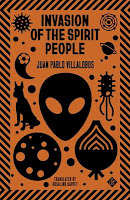
Invasion of the Spirit People by Juan Pablo Villalobos (translated by Rosalind Harvey) $35
Juan Pablo Villalobos's fifth novel adopts a gentle, fable-like tone, approaching the problem of racism from the perspective that any position as idiotic as xenophobia can only be fought with sheer absurdity. In an unnamed city, occupied by an unnamed world power, an immigrant named Gastón makes his living selling exotic vegetables to eateries around the city. He has a dog called Kitten, who's been diagnosed with terminal cancer, and a good friend called Max, who's in a deep depression after being forced to close his restaurant. Meanwhile, Max's son, Pol, a scientist away on a scientific expedition into the Arctic, can offer little support. Gastón begins a quest, or rather three: he must search for someone to put his dog to sleep humanely; he must find a space in which to open a new restaurant with Max; and he must look into the truth behind the news being sent back by Pol: that human life may be the by-product of an ancient alien attempt at colonization . . . and those aliens might intend to make a return visit.
"This is a book about xenophobia and racism and the conflicted tug between isolation and community. It makes a fine - and deliciously strange - addition to Villalobos's already grand personal canon. Wrought with tenderness, wit, and a wonderful sense of absurdity, Villalobos' latest novel is a triumph." —Kirkus
Take a Bite! Eat your way around the world by Aleksandra and Daniel Mizielinski $50
"Food glorious food! Eat your way around the world in this tasty, giant-sized book which explores the food, recipes and cultural traditions from twenty-six different countries. Take a Bite is the work of talented graphic artists Aleksandra and Daniel Mizielinski, the creative married couple behind the bestselling Maps, and its 116 pages of food of every taste and description are guaranteed to make mouths water and tummies rumble. Packed full of fascinating facts, recipes and cultural traditions, this cornucopia of deliciousness takes youngsters (and their parents!) on an entertaining and feast-filled adventure full of delectable food and cookery marvels. Where do corn, wheat and potatoes come from? What have people in Turkey been eating for centuries? Learn how to make Polish pancakes, Vietnamese pancakes, Brazilian pralines and Hungarian lecso. Be a guest at a Moroccan feast, sail along a Vietnamese floating market and indulge in the haute cuisine of France's master chefs. As well as discovering a host of new delicacies, readers will also learn about their remarkable history and cultural roots along the way. Lavishly and colourfully illustrated throughout, designed in an easy-to-read format, and with a text translated by Agnes Monod-Gayraud, this beautiful bonanza book will capture children's imaginations and is the perfect gift for food lovers of any age." —Lancaster Guardian
From Dinaz Aunty's incredible tamarind and coconut fish curry, lamb stewed with cinnamon and Hunza apricots, to baked custards infused with saffron and cardamom, Parsi cuisine is a rich fusion of Persian and Indian influences: unique and utterly delicious. Farokh Talati gathers together a selection of classic Parsi recipes from his travels through India and time spent in the kitchen with family, revealing them here for you to discover and enjoy at home. Recipes include: Parsi omelette Charred sweetcorn and paneer salad Persian scorched rice Parsi kheema Kedgeree - a Parsi version Prawn Patio Mango poached in jaggery and saffron Cardamom doughnuts.
Jackdaw by Tade Thompson $33
In this shocking and at times darkly comic novel, a psychiatrist hired to write a short piece on Francis Bacon becomes obsessed with the artist, his life, and the characters who surrounded him. As he becomes consumed with the need to understand Bacon, and to create his own art, his grip on reality becomes increasingly tenuous, and he is haunted by disturbing figures. This short novel explores how the passion needed to create art can also destroy the artist.
"By turns disturbing and hilarious, Jackdaw gets closer to Bacon's appalling truths about humanity and the treacherous flesh that embodies it than any non-fictional work could do ... Thompson's prose, contaminated by Bacon's unflinching view of the human animal, makes for vital, unsettling reading." —Will Maclean
Exposed: The Greek and Roman body by Caroline Vout $55
The popular conception of the perfection of Classical bodies eptomised in white marble is entirely a modern myth. Not only were Classical sculptures highly coloured, this remarkable book shows that Greek and Roman bodies were ailing, imperfect, diverse, and responsible for a legacy as lasting as their statues. Vout taps into the questions that those in the Greek and Roman worlds asked about their bodies: Where do we come from? What makes us different from gods and animals? What happens to our bodies, and the forces that govern them, when we die? She also reveals the surprising actions people often took to transform their bodies — from sophisticated surgery and contraception to body oils, cosmetics and early gym memberships.
"An extraordinary book that stopped me in my tracks again and again. Filled with insights, surprises and asides that draw on a breath-taking array of sources from the distant past to the present day. A triumph from start to finish." —Peter Frankopan
Capitalism has come, in the twenty-first century, to dominate nearly every sphere of life, from ecology and race to the organisation of care and the practice of politics. In this urgent volume, leading Marxist feminist theorist Nancy Fraser charts the voracious appetite of capital, tracking it from crisis point to crisis point, from ecological devastation to the collapse of democracy, and from the devaluing of care work to racial injustice. These crisis points all come to a head in the perfect storm of Covid-19, which Fraser argues can help us envision the kind of resistance we must build to stop capital from cannibalising our whole world. What we need, she argues, is a broad and wide-ranging socialist movement that can recognise capital’s appetite—and starve it to death.
"Nancy Fraser has produced the most elegant theory yet of capitalism in our age - capitalism not in the narrow economic sense, but capitalism in the sense of a total omnivore, a system that cannot stop devouring everything around it, destroying the lives of people and nature. This is Marxist theory for our age of crisis - and, we shall hope, of reckoning." —Andreas Malm
The Foghorn's Lament: The vanishing music of the coast by Jennifer Lucy Allan $30
What does the foghorn sound like? It sounds huge. It rattles. It rattles you. It is a booming, lonely sound echoing into the vastness of the sea. When Jennifer Lucy Allan hears the foghorn's colossal bellow for the first time, it marks the beginning of an obsession and a journey deep into the history of a sound that has carved out the identity and the landscape of coastlines around the world, from Scotland to San Francisco. Within its sound is a maritime history of shipwrecks and lighthouse keepers, the story and science of our industrial past, and urban myths relaying tales of foghorns in speaker stacks, blasting out for coastal raves. An odyssey told through the people who battled the sea and the sound, who lived with it and loathed it, and one woman's intrepid voyage through the howling loneliness of nature.
"A truly unusual and strangely revealing lens through which to view music and history and the dark life of the sea." —Brian Eno
"Now that so many things can be - and are - recorded, I had forgotten that sound could also become extinct. The massive melancholic sound of the foghorn - the sound of safety and loss - is one of these and this colorful and detailed requiem tells the many interlocking stories of people who love it and try to preserve it. This has become one of my favorite books." —Laurie Anderson
"A wonderful way to get up close and very personal with the foghorn - a perfect example of the power and beauty of industrial music." —Cosey FanniTutti
by Hugh Rennie $60
In 1990 those living on Chatham Islands/ Rekohu/ Wharekauri faced crisis. Annexed to New Zealand by a London proclamation, the Islands had experienced 150 years of New Zealand control. Years of muddlement, some good intentions, financial waste, exploitation and theft, and failure to deliver democratic rights and basic infrastructure. The after-effects of Rogernomics had produced a government decision to 'walk away'. Such infrastructure as existed would be abandoned, with the Islanders left to save themselves, or fail and leave. How could it have come to this? The first part of this book details the improbable constitutional history of the Islands to 1990. It includes gunship visits to enforce rule; support of Maori for Tohu, Te Whiti, and Parihaka pacifism; a revolt where the magistrate’s authority crumbled to nothing; and many more remarkable events. In 1990, Islanders rose to the challenge of their new independence from Wellington. Their independent community co-operative, the Chatham Islands Enterprise Trust, soon flourished. Today it operates electricity, ports, shipping, and other companies; uses a portfolio of fishing quota to support on-Island fishers, and supports private Island businesses.

by Louise Willder $33
It's good to judge a book by its cover. Drawing on her 25 years writing blurbs for Penguin books, Louise Willder explores the art, anecdote and history of the words that only take a few seconds to read but can determine a book's fate. This illuminating and joyful compendium is about blurbs at their very best and worst. It is also about cover design, movie taglines, adverts, quotes, puns, the creative process, writers from Austen to Orwell and much more. It answers questions such as: Why should adjectives generally be murdered? Which author hated blurbs? Is it ever okay to give away the ending? Why should you never start a blurb with 'When'? Can blurbs be sexist? The story of blurbs is the story of our needs and desires as readers; about who we are and want to be.
The Museum of the Wood Age by Max Adams $65
Beginning with an investigation of the material properties of various species of wood, The Museum of the Wood Age investigates the influence of six basic devices - wedge, inclined plane, screw, lever, wheel, axle and pulley - and in so doing reveals the myriad ways in which wood has been worked throughout human history. From the simple bivouacs of hunter-gatherers to sophisticated wooden buildings such as stave churches; from the decorative arts to the humble woodworking of rustic furniture; Max Adams fashions a lattice of interconnected stories and objects that trace a path of human ingenuity across half a million years of history.
Hothouse Earth: An inhabitant's guide by Bill McGuire $25
Bill McGuire, Professor of Geophysical and Climate Hazards, explains the science behind the climate crisis, painting a blunt but authentic picture of the sort of world our children will grow old in, and our grandchildren grow up in; a world that we catch only glimpses of in today's blistering heatwaves, calamitous wildfires and ruinous floods and droughts. Bleak though it is, the picture is one we must all face up to, if only to spur genuine action- even at this late stage - to stop a harrowing future becoming a truly cataclysmic one.
The Po: An elegy for Italy's longest river by Tobias Jones $43
Jones travels the length of the river gathering its stories: its battles, crimes, characters, cuisines, histories, industries and inventions. He visits towns made famous for their sporting legacy, birthplaces of the greatest Italian writers and composers and rediscovers Italy's unusual industries and agricultures; from the marble mines of Paesana that provided the raw materials for the Renaissance to the paddy fields of risotto rice at Chivasso. At the Po's delta is an astonishing nature reserve: a wetland swamp of 380 square kilometres and 450 different lakes.
The writer Felix Hartlaub died in obscurity at just 31, vanishing from Berlin in 1945. He left behind a small oeuvre of private writings from the Second World War: fragments and observations of life from the midst of catastrophe that, with their evocative power and precision, would make a permanent place for him in German letters. Posted to Paris in 1940 to conduct archival research, Hartlaub recorded his impressions of the unfamiliar city in notebooks that document with unparalleled immediacy the daily realities of occupation. With a painter's eye for detail, Hartlaub writes of the bustle of civilians and soldiers in cafes, of half-seen trysts during blackout hours and the sublime light of Paris in spring. Appearing in English for the first time, Clouds Over Paris is a unique testament to the persistence of ordinary life through disaster.






 UME GIFT SELECTOR — THE PERFECT BOOKS FOR BOOK-LOVERS
 Give someone a reading boost! VOLUME Reading Subscriptions are chosen to fulfill individual reading preferences. Subscriptions can be for any number of books, from a one-off pick-me-up to an indefinite course of literary nutrition, administered at whatever frequency you like. You can either take out a full subscription at once, or pay as you go. >>Click through to see how the subscriptions work — or let us know how you would like them to work.
  Give the gift of choice. VOLUME VOUCHERS can be made out for any amount, and can be used on our website or by just e-mailing or phoning us. Our personalised digital vouchers can be e-mailed to you or to the recipient, and can be used bit-by-bit or all-at-once. Either use our website to order or e-mail us with your requirements.


