NEW RELEASES (18.8.23)

New books — just out of the carton! Click through for your copies now.

After the Funeral by Tessa Hadley $40
A collection of twelves stories plumbing the depths of everyday life to reveal the shifting tides and hidden undercurrents of ordinary relationships. Heloise's father died in a car crash when she was a little girl; at a dinner party in her forties, she meets someone connected to that long-ago tragedy. Two estranged sisters cross paths at a posh hotel and pretend not to recognise each other. Janey's bohemian mother plans to marry a man close to Janey's own age — everything changes when an accident interrupts the wedding party. A daughter caring for her elderly mother during the pandemic becomes obsessed with the woman next door; in the wake of his best friend's death, a man must reassess his affair with the friend's wife. Teenager Cecilia wakes one morning on vacation with her parents in Florence and sees them for the first time through disenchanted eyes. These stories illuminate the enduring conflicts between responsibility and freedom, power and desire, convention and subversion, reality and dreams.
>>A master of non-elaboration.
>>On building a story from details.
>>Read the title story.

Chrysalis by Anna Metcalfe $37
”It was hard to be in the present, she said, but if her body were heavier and more in control, then her thoughts would clear and her mind would recover its power.”
An enigmatic young woman drastically transforms her body, working to become bigger, stronger, and stiller in the wake of a trauma. We see her through the eyes of three people, each uniquely mesmerized by her, as they reckon with the consequences of her bizarre metamorphosis. Each of them leaves us with a puzzle piece of who she was before she became someone else. Elliot, a recluse who notices her at the gym, witnesses her physical evolution and becomes her first acolyte. Bella, her mother, worries about the intense effect her daughter's new way of life is beginning to have on others, and she reflects on their relationship, a close cocoon from which her daughter has broken free. Susie, her ex-colleague and best friend, offers her sanctuary and support as she makes the transition to self-created online phenomenon, posting viral meditation videos that encourage her followers to join her in achieving self-sufficiency by isolating themselves from everyone else in their lives. Chrysalis raises questions about selfhood and solitude. It asks if it is possible for a woman to have agency over her body while remaining part of society, and then offers its own explosive answer. (A lovely hardback.)
”Unputdownable, ice-cool and wittily contemporary, Chrysalis announces Anna Metcalfe as a distinctive and daring fresh literary voice. Utterly original and with shades of Ottessa Moshfegh, Patricia Lockwood, Yoko Ogawa and Alexandra Kleeman, this brilliant portrayal of desire and transcendence had me totally entranced.” —Sharlene Teo
>>Loneliness and online selfhood.
>>Transformation.
>>Read an extract.

Wish I Was Here: An anti-memoir by M. John Harrison $40
”Late style is when the people who have all your life jumped in front of you waving their arms — No! Careful! — jump out one more time to encourage you to run them down, and this time you do.”
M. John Harrison has written space opera, speculative fiction, fantasy, magical and literary realism. Every book is subversive of genre and united by restless intelligence, experimentation and rebelliousness of spirit. This is his first memoir, an 'anti-memoir', written in his mid-seventies with aphoristic daring and trademark originality and style, fresh after winning the Goldsmiths Prize in 2020.
”One of the best writers currently at work in English.” —Robert Macfarlane
”Wish I Was Here is a masterpiece. Formally inventive, constantly surprising, M John Harrison has written an archaeology of fragments that shivers with wholeness. It's exquisite.” —Helen Macdonald
”As always with M John Harrison, you're never quite sure what you're reading or where it will take you next. There are only a few certainties: that it will surprise you, sometimes astound you, and leave you profoundly changed.” —Jonathan Coe
”'Harrison is the shape-shifting master of absent and elusive things, many of them absent and eluding in Barnes and the Peak District. In this mesmerising book, the author — or rather his style — goes in search of what may have been his memories of different versions of his life. The result is an enchantment of instability, usually ungraspable, always intense.'' —Neil MacGregor
“So wholly original that a label doesn’t do it justice” —New Statesman
>>The consequences are real.

Foreign Bodies: Pandemics, vaccine, and the health of nations by Simon Schama $70
Covid 19 was not the first instance of a mass infection being met and tempered with a vaccine, as Schama shows in his epic history of vulnerable humanity caught between the terror of contagion and the ingenuity of science. In the eighteenth and nineteenth centuries: smallpox struck London; cholera hit Paris; plague came to India. Threading through Schama’s stories of terror, suffering and hope — in hospitals and prisons, palaces and slums — are an unforgettable cast of characters: a philosopher-playwright burning up with smallpox in a country chateau; a vaccinating doctor paying house calls in Halifax; a woman doctor in south India driving her inoculator-carriage through the stricken streets as dead monkeys drop from the trees. But we are also in the labs when great, life-saving breakthroughs happen, in Paris, Hong Kong and Mumbai.  At the heart of it all, an unsung hero: Waldemar Haffkine. A gun-toting Jewish student in Odesa turned microbiologist at the Pasteur Institute, hailed in England as ‘the saviour of mankind’ for vaccinating millions against cholera and bubonic plague in British India while being cold-shouldered by the medical establishment of the Raj. Creator of the world’s first mass production line of vaccines in Mumbai, he is tragically brought down in an act of shocking injustice.  Just as with the current pandemic, it is politics and self-interest that prevent humanity from receiving the full benefits of science.
>>An indictment of modern leaders’ response to Covid.
>>Science has to run ahead.
>>What history teaches us about pandemics.

Ninth Building by Zou Jingzhi (translated by Jeremy Tiang) $33
A fascinating collection of vignettes drawn from Zou Jingzhi's experience growing up during the Cultural Revolution, first as a boy in Beijing and then as a teenager exiled to the countryside. Zou poetically captures a side of the Cultural Revolution that is less talkedabout — the sheer tedium and waste of young life, as well as the gallows humour thataccompanies such desperate situations. 
>>”I wrote this book to let go of my childhood.”
>>”When I looked at myself, I saw a stranger.”
>>Read an extract.
>>”Everyone should translate.”
>>Also available in this edition.

The Food Almanac 2 by Miranda York $40
A collection of recipes and stories celebrating the joy of food , as a beautifully produced and illustrated hardback. Miranda York has curated a dynamic, diverse mix of history, memoir, stories and poems, alongside recipes, cooking tips and techniques, menus and reading lists — from Caroline Eden describing the dining car on the Siberian Express to Diana Henry honouring the softness of autumn, from Simon Hopkinson discussing the glory of puddings to Russell Norman celebrating bitterness in the beautiful form of chicory and its many Italian varieties. Each month includes a seasonal three-course menu from food writers such as Jeremy Lee, Tommi Miers, Emily Scott and Calum Franklin, plus additional recipes from the likes of Mary Berry, Asma Khan, Darina Allen and Gill Meller — there is an abundance of thought-provoking, hunger-making food writing for you to tuck into, whatever the season.
>>Have a look inside!

The Amazing and True Story of Tooth Mouse Pérez by Ana Cristina Herreros, illustrated by Violeta Lopiz $35
Long ago, throughout the Spanish-speaking world, the Tooth Mouse brought children their permanent teeth, strong and straight as a mouse's. Tracing the Tooth Mouse's beginnings through to his descendants, this book artfully weaves the Tooth Mouse's changing habits as the world industrializes, with the growing independence of the child, as teeth fall out and the child learns to care for themselves. It's also a playful, thought-provoking history of our changing world — as even Tooth Mice and children must adapt their customs when faced with the culture-shifting forces of urbanization, migration, and capitalism… Just remember, magic can always be recovered, and the real gift in losing baby teeth is growing up!
>>Look inside!

The Men with the Pink Triangle: The true life-and-death story of homosexuals in the Nazi Death Camps by Heinz Heger $35
For decades, history ignored the Nazi persecution of gay people. Only with the rise of the gay movement in the 1970s did historians finally recognize that gay people, like Jews and others deemed ‘undesirable’, suffered enormously at the hands of the Nazi regime. Of the few who survived the concentration camps, even fewer ever came forward to tell their stories. This heart-wrenchingly vivid account of one man's arrest and imprisonment by the Nazis for the ‘crime’ of homosexuality, now with a new foreword by Sarah Schulman, remains an essential contribution to gay history and our understanding of historical fascism, as well as a remarkable testament to the resilience of those who experienced the unimaginable cruelty of the concentration camps.
>>About the author and the book.

No Love Lost by Rachel Ingalls $25
After a one-night-stand with the Angel Gabriel, a monk is transformed into a pregnant woman. Lost in the fog, two visitors are lured into a ruined candlelit mansion. A wife confiscates her husband's homemade sex doll, only to demand her own. Great-aunts warn of the deadly skin of the pearlkillers. Rachel Ingalls's incomparable novellas are surrealist, subversive, tragicomic. Prepare to meet what lurks beneath. From the author of Mrs Caliban.
”Wonderful.” —Margaret Atwood
”Genius.” —Patricia Lockwood
”Remarkable.” —Joseph Heller
”Perfect.” —Max Porter
>>Hallucinatory realism.

Penance by Eliza Clark $37
It's been years since the horrifying murder of sixteen-year-old Joan Wilson rocked Crow-on-Sea, and the events of that terrible night are now being published for the first time. That story is Penance, a dizzying feat of masterful storytelling, where Eliza Clark manoeuvres us through accounts from the inhabitants of this small seaside town. Placing us in the capable hands of journalist Alec. Z. Carelli, Clark allows him to construct what he claims is the 'definitive account' of the murder — and what led up to it. Built on hours of interviews with witnesses and family members, painstaking historical research, and most notably, correspondence with the killers themselves, the result is a riveting snapshot of lives rocked by tragedy, and a town left in turmoil. The only question is: how much of it is true? From the author of Boy Parts.
"Eliza Clark is a genius with voice and a master of flipped expectations. Penance astonished me with its breadth, wit and confidence. A wickedly clever deep dive into the nastier corners of the national psyche--you've never read anything like this." —Julia Armfield
"A work of show-stopping formal mastery and penetrating intelligence." —The Guardian
>>A slippery take.
>>A bravura deconstruction of our voyeuristic love for true crime.

The Waters by Carl Nixon $37
One family. Forty years. The Waters kids ― practical, athletic Mark; the physically beautiful dreamer Davey; and the baby of the family, Samantha ― have had to face more than their fair share of challenges. 1979 was the year their father sold up the farm and invested all the family’s money in a doomed property development next to the ocean in Christchurch. Is that when 'everything started going wrong', as Mark believes? Will their bond survive the passage of time or will the three siblings succumb to their parents’ legacy of failure? Can the past be overcome . . . and forgiven?

The Wolf’s Secret by Nicolas Digard and Myriam Dahman, illustrated by Júlia Sardà $23
Wolf is a hunter, feared by every creature. But he has a secret: in the middle of the forest lives a girl whose beautiful voice has entranced him . The Wolf longs for friendship. But is he prepared to sacrifice his own true nature in order for his wish to come true? A beautifully illustrated contemporary fairytale about difference, trust, and the power of friendship.
>>Look inside!
>>Storytime!
>>Júlia Sardà’s website.

War and Punishment by Mikhail Zygar $40
Zygar explores how more than 300 years of propaganda, bad historical scholarship, folk tales and fantasy, from the legendary deeds of the Cossacks to 1970s spy novels, led Russia to commit an act of violence on the Ukraine. By unpicking the historical confusions and telling the strange but true stories of Russo-Ukrainian relations over the past centuries, Zygar reveals the origins of Russia's actionas and points the way out of its self-destructive imperial delusions.

The Archaeology of Loss: Life, love, and the art of dying by Sarah Tarlow $40
As an archaeologist, much of Tarlow’s work is concerned with the ritual and belief behind the practices of grief. In 2012, she was awarded the Chair in Archaeology at the University of Leicester. But in the years that followed this appointment, her husband, Mark, would begin to suffer from a progressive but undiagnosed illness, finally resulting in his inability to drive, to walk, to taste or to care for himself. Though Sarah had devoted her professional life to the study of emotion, of how we anticipate and experience grief, nothing could have prepared her for the realities of care-giving, of losing someone you love and the helplessness attached to both.
>>Wholly Mark and wholly dead.

In Limbo: A graphic memoir by Deb JJ Lee $35
Deborah (Jung-Jin) Lee knows she's different. Ever since her family emigrated from South Korea to the United States, she's felt her Otherness. And as the pressures of high school ramp up, friendships change or end and everything gets harder. Even home isn't a safe place, as fights with her mother escalate. Deb is caught in a limbo, with nowhere to go. But Deb is resilient. And during a trip to South Korea, she realises something that changes her perspective on her family, her heritage, and herself.
>>Look inside!

VOLUME BooksNew releases
GREAT WORKS by Oscar Mardell — reviewed by Stella

Great Works by Oscar Mardell

Oscar Mardell's freezing works poems are a clever addition to the tradition of New Zealand gothic literature. Think Ronald Hugh Morrison’s The Scarecrow and  David Ballantyne's Sydney Bridge Upside Down and you’ll get a sense of the macabre that edges its ways through these poems like entrails. There’s the nostalgia for the stink of the slaughter yards, the adherence to the architects of such vast structures on our landscapes, and the pithy analysis of our colonial pastoral history. That smell so evocative of hot summer days cooped up in a car travelling somewhere along a straight road drifts in as you read 'Horotiu' with its direct insult to the yards and its references to offal. In these poems, there is the thrust and violence of killing alongside the almost balletic rhythm of the work — the work as described on the floor as well as the poetic structure of Mardell’s verse. 

“      th sticking knife th steel th saw
        th skinning knife th hook th hammer
        th spreader the chop & th claw   "

“      the dull thud resonates
        through bodies / still
        swings rhythmically & out of time
        pours out of me / equivocal   ”

Most of the poems note the architect and the date of construction for these ominous structures, which had a strange grandeur — simultaneously horrific and glorious. One of the outstanding architects was J.C.Maddison, a designer known for both his slaughterhouses and churches, alongside other stately public buildings. In 'Belfast', Mardell cleverly bridges these divides — the lambs, the worship, the elation.

“      did he who set a compass
        to port levy & amberly
        who traced th wooden hymnhouses
        for st pauls / divided
        & th holy innocents / drowned   ”

There are plenty of other cultural references tucked away in these poems. Minnie Dean makes an appearance in Mataura and James K Baxter in Ngauranga Abattoir. In the latter, Mardell slips in Baxter's line "sterile whore of a thousand bureaucrats". Yet the poems go beyond nostalgia or clever nods to literature, to sharpen our gaze on our colonial relationship. 'Burnside' tells it perfectly:

“      & ws new zealands little lamb
        to britains highest tables led
        & were th final works performed
        out here in godsown killing shed   ”

Mardell’s collection, Great Works, is pithy and ironic with its clever nods to cultural and social history, gothic in imagery, and all wrapped up like a perfectly trussed lamb in our ‘God’s Own Country’ nostalgia, with a large drop of sauce and a knife waiting to slice. 

THE MATH CAMPERS by Dan Chiasson — reviewed by Thomas

The Math Campers by Dan Chiasson

where the poet writes
or wrote
it was impossible to say
it is impossible to say
where faraway was or why

the reader writes
“it was impossible to say
it is impossible to say
where faraway was or why”
to remember the words
or avoid remembering
but where the poet writes
It may just be my mind, he thought. It may just be my mind.
He wrote: “It may just be my mind.”

how can the reader write
or rewrite that 
he thought 
who never claimed to be a poet
maybe once
how can I write 
or rewrite all those wrotes
within wrotes, nests
within nests
here the poet the reader thought writes 
or wrote about the writing
of the poems he wrote
or is writing or soon will either write 
or not
the poem of how the poem is made
or will be made
or is then being made 
or could be made
or not
in some room of the poet’s mind
or on some paper 
less likely
or in the house of a dead poet
more precisely
literally
On the upstairs deck, I read about
              The deck upstairs. In the daybed
I read about the daybed. In the books
              I read about the books I read.

the poet wrote the reader wrote 
or rewrote
sharing the labour 
each expected of the other
with the other
their separation more a distance of time than a distance of person
not that each is one person
only
the moments flicker
because time
as the poet’s past is the same age as his sons 
as the reader knows the poet knows
each is not one person
only
He turned to meet me, but our element was time. He approached me, where I was standing, years later; and I approached him where he stood, but he was too far in the past.
the pages turn the poems turn
or turn again
the poet is carefully squeezed out of the poem
or squeezed in
the poem changed slightly, crucially—
               because, you know why, because time

this slow precise perfecting process
as the poet writes
as the reader reads
unlike these lines tossed off
if that is how to put it
in less than a minute and unrevisited
the reader can do no justice to the form
but to be fair made no such claims 
in that direction
towards the province of the poet
he thinks
I had no real name. I was the channel through which the mind passed, and then I was a gap, an absence, which frightened me.
again this space this wound in time
this crack
where the words get in
or out
this rift between the poet and his past
if only a moment
passed between poet and poem
which is to say
the poet who breathes and stumbles
and the one squeezed out of the poem
or in
from sleep to type
We were held, suspended within the larger dream;
we alternate coming into, then stepping out of, the light.

the poet wrote the reader wrote
if that makes sense
then
the world wakes up, enlarged—
there is not nor can there be
anything more than this

Book of the Week: TE WEHENGA by Mat Tait

Our Book of the Week has just been named the Margaret Mahy Book of the Year at the New Zealand Book Awards for Children and Young Adults. Mat Tait’s dark and beautiful Te Wehenga: The separation of Ranginui and Papatūānuku is a stunningly illustrated bilingual telling of the Māori creation story, memorably bringing it to life as a new generation struggles into the light.

NEW RELEASES (11.8.23)

New books — just out of the carton! Click through for your copies now.

Tsunami by Ned Wenlock $35
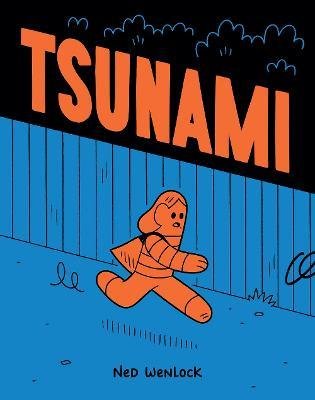
At school, being right isn't always the right answer. Peter's bull-headed commitment to the truth has already picked him out as a target for the school bullies. The misfit new girl is a complete badass, but seems as interested in his nemesis, Gus, as she is in Peter, and his parents are too busy bickering to care about any of it. It all feels overwhelming to Peter — like a tsunami is coming and he isn't sure he can stop it. Tsunami is a 278-page graphic novel about Peter, a self-righteous 12-year-old boy, and his fraught last six weeks at primary school. Told in Ned’s unique and beautifully pared down style, Tsunami is a taunt page turner, a coming-of-age story, and nuanced examination of teenage alienation and the unpredictable consequences of our actions. 
”Heartbreaking, acutely and devastatingly observed, and distinctively drawn.” —Thomas
>>Look inside!

Biography of X by Catherine Lacey $35
When X — an iconoclastic artist, writer and polarising shape-shifter — dies suddenly, her widow, wild with grief, hurls herself into writing a biography of the woman she deified. Though X was recognised as a crucial creative force of her era, she kept a tight grip on her life story. Not even CM, her wife, knew where X had been born, and in her quest to find out, she opens a Pandora's box of secrets, betrayals and destruction. All the while she immerses herself in the history of the Southern Territory, a fascist theocracy that split from the rest of the United States after World War II, as it is finally, in the present day, forced into an uneasy reunification. A counter-factual literary adventure, complete with ‘documentary’ images assembled by X's widow, Biography of X follows a grieving wife seeking to understand the woman who enthralled her. CM traces X's peripatetic trajectory over decades, from Europe to the ruins of America's divided territories, and through her collaborations and feuds with everyone from David Bowie and Tom Waits to Susan Sontag and Kathy Acker. And when she finally understands the scope of X's defining artistic project, CM realises her wife's deceptions were far crueller than she imagined. Biography of X plumbs the depths of grief, art and love, and introduces an unforgettable character who shows us the fallibility of the stories we craft for ourselves.
”Discerning facts from fiction is the pleasure of this Russian doll of a book: a biography of an imaginary subject, written by an imaginary biographer, housed inside a novel pretending not to be one. Biography of X is almost certainly one of the most interesting books you'll read this year.” —Financial Times
”From the superb opening line to Lacey's skewering of the art world and its pretensions, her discernments on grief and loss, the book is endlessly quotable. Come for the glamorous premise, stay for the icy precision of the prose.” —Irish Times
>>Pushing all the buttons at the same time.
>>A novel in disguise.
>>I cannot explain my wife.
>>A different America.
>>Blending fact and fiction.

Hiwa: Contemporary Māori short stories edited by Paula Morris and Darryn Joseph $45
Hiwa is an essential collection of contemporary Māori short stories, featuring twenty-seven writers working in English or te reo Māori. The writers range from famous names and award winners — Patricia Grace, Witi Ihimaera, Whiti Hereaka, Becky Manawatu, Zeb Nicklin — to emerging voices like Shelley Burne-Field, Jack Remiel Cottrell, Anthony Lapwood and Colleen Maria Lenihan. A showcase of contemporary talent, Hiwa includes biographical introductions for each writer’s work, and explores the range of styles and subjects in the flourishing world of Māori fiction. Named for Hiwa-i-te-rangi, the ninth star of Matariki, signifying vigorous growth and dreams of the year ahead, this anthology reveals the flourishing world of Māori writing today, in Aotearoa and beyond.
>>Paula Morris talks to the book.

Rōmeo rāua ko Hurieta by William Shakespeare (translated into te reo Māori by Te Haumihiata Mason) $40
He whakamāoritanga o te whakaari hinapōuri a Hakipia mō te aroha pūhou i waenga i ētahi whānau toheriri e rua. Whakaorangia ana i te pukapuka nei e tōna kaiwhakamāori e Te Haumihiata Mason te ao o Rōmeo rāua ko Hurieta ki te reo whakaatu i te wairua Māori. Mauroa ana te kaingākautia o ngā whakaari a Wiremu Hakipia i te ao Māori – mai i ngā whakamāoritanga a Tākuta Pei Te Hurinui o Te Tangata Whai Rawa o Wēneti, o Othello me Julius Caesar ki ngā whakamāoritanga a Tākuta Merimeri Penfold i ngā oriori aroha a Hakipia. Whāia ana e Te Haumihiata tēnei tikanga i tana whakamāoritanga o Toroihi rāua ko Kāhira i whakaaritia ki te Whare Whakaari o te Globe i Rānana i te 2012, tahuri ana ki te whakaari a Hakipia mō te aroha whaiāipo hinapōuri e tino kaingākautia ana. Te aroha, te tuku mātātahi, te tōwhare, te pākūhā – katoa atu kei a Rōmeo rāua ko Hurieta. Ka kawea ake te whakaari nei e tōna whakamāoritanga ki te manawa o Aotearoa.
>>Star-crossed lovers at Matariki.

Look by Gavin Bishop $25
Completely delightful (and developmentally valuable)! Presented as a two-metre long two-sided concertina board book, Look can be opened out to surround a baby during ‘tummy time’ (building motor skills and strength), or shared as a book (building concepts and affectionate ‘conversations’). The simple and very appealing illustrations show faces for one direction/side, and toys and other familiar objects for the other. This will immediately become one of those special books that are central to a baby’s (and a parent’s) life.
>>Recommended by a baby!

Te Rā : The Māori Sail by Ariana Tikao and Mat Tait $25
Te Rā, which means the sail in te reo Māori, is the last remaining customary Māori sail in the world. Woven from harakeke more than 200 years ago, Te Rā has for many years been held in storage at the British Museum in London. In July 2023, our oldest taonga will once again be brought into the light as it returns home to Aotearoa. Evocatively written by Ariana Tikao from the point of view of Te Rā and beautifully illustrated by Mat Tait, this book commemorates the homecoming of our oldest taonga, and celebrates our past, present and future as New Zealanders.
>>Look inside!
>>The old sail reaches shore.

Pyre by Perumal Murugan (translated from Hindi by Aniruddhan Vasudevan) $25
Saroja and Kumaresan are in love. After a hasty wedding, they arrive in Kumaresan's village, harboring a dangerous secret: their marriage is an inter-caste one, likely to upset the village elders should they get to know of it. Kumaresan is naively confident that all will be well. But nothing is further from the truth. Despite the strident denials of the young couple, the villagers strongly suspect that Saroja must belong to a different caste. It is only a matter of time before their suspicions harden into certainty and, outraged, they set about exacting their revenge. A devastating tale of innocent young love pitted against chilling savagery, Pyre conjures a terrifying vision of intolerance.
Listed for the 2023 International Booker Prize.
>>’Honour’ killings compelled me to write.
>>Read an extract.

Termush by Sven Holm (translated from Danish by Sylvia Clayton) $25
Welcome to Termush: a luxury coastal resort like no other. All the wealthy guests are survivors: preppers who reserved rooms long before the Disaster. Inside, they embrace exclusive radiation shelters, ambient music and lavish provisions; outside, radioactive dust falls on the sculpture park, security men step over dead birds, and a reconnaissance party embarks. Despite weathering a nuclear apocalypse, their problems are only just beginning. Soon, the Management begins censoring news; disruptive guests are sedated; initial generosity towards Strangers ceases as fears of contamination and limited resources grow. But as the numbers — and desperation — of external survivors increase, they must decide what it means to forge a new moral code at the end (or beginning?) of the world. Sven Holm’s 1967 post-apocalyptic dystopia feels eerily prescient today.

Beastly: A new history of animals and us by Keggie Carew $45
In a Polish forest a young woman befriends a boar. An Englishman sets up home with two beavers in Saskatchewan. A zoologist watches a fish make a conscious decision. Darwin finds the evidence for evolution in the backyards of pigeon fanciers. The entire population of Croatia anxiously awaits the arrival of a single stork. Animals have shaped our lives, our land, our civilisation, and they will shape our future. Yet as our impact on the world and the animals we share it with increases, there has never been a greater urgency to understand this foundational relationship. Beastly is the 40,000-year story of animals and humans as it has never been captured before, seen eye-to-eye and claw-to-hand through those humans who have stepped into the myriad worlds of our animal relatives. Our relationship with animals has always been paradoxical, but the greatest paradox may yet be this: diversity of life can heal ecosystems. Animals — if given the chance — could save us.
”What a wonderful and unexpected book. The very opposite of beastly: heavenly and amazing, powerful and affecting, a beloved and very fine teller of tales reminds us how small we are in the face of a nature that we neither understand nor wish to respect or, in any real sense, live with.” —Philippe Sands
”Full of necessary rage, joy and passion: Beastly should be mandatory reading for all humans.” —Claire Fuller

John Mulgan and the Greek Left: A regrettably intimate acquaintance by C.-Dimitris Gounelas and Ruth Parkin-Gounelas $40
In September 1943, New Zealand writer John Mulgan was parachuted by the British Special Services (SOE) into remote mountain terrain in the centre of Nazi-occupied Greece, where he worked with the left-wing resistance to facilitate some of WW2’s most successful episodes of guerrilla warfare. This experience shaped his leftist politics in critical ways, but with the Cold War climate taking over, Mulgan’s allegiance was torn between the andartes he fought alongside and the British command he served under. Found dead in his Cairo hotel room shortly after leaving Greece, Mulgan left many questions about his tragically shortened life unanswered­. Drawing on extensive new research, including much Greek scholarship, as well as close readings of Mulgan’s own writings, this detailed investigation revises the political canvas of wartime and post-war Greece and provides new insight into Mulgan’s activities and contacts – including the identity of the mysterious woman he was with on the night he died – bringing us a much fuller understanding of Mulgan, one in which his ‘intimate acquaintance’ with the Greek left is proved to have been profound and enduring.
”Every generation has found something of its own debates in Man Alone and John Mulgan's complex legacy. C. Dimitris Gounelas and Ruth Parkin-Gounelas, in this scrupulously scholarly and utterly absorbing bi-focal exposition of Mulgan in the Greek crisis, give us a figure for our own day: enmeshed in an under-recognised anti-colonial struggle, caught and bucking against the political compromises of war, and drawn into the currents of the Greek left. An intimately detailed account of Mulgan's then, this story of austerity, resistance, and bureaucracy has much to teach our now.” —Dougal McNeill

A Bird Day by Eva Lindström (translated by Julia Marshall) $30
"Wash your beaks, it's time for lunch—flies again today," says Dad. After lunch the young birds get sent off to play—they sing, hunt mosquitos, compare leg size, and poke grubs. This is how birds spend a day! Eva Lindström reflects the familiar and the absurd in human behavior through this funny bird family. We all recognize the family dynamics of bickering over fried mosquitos and worm pie—only the youngest is allowed to pick out the worms. Toddlers will recognize key moments in a perfectly down to earth day—play, mealtimes, stretching boundaries, and sleep.
>>Look inside!
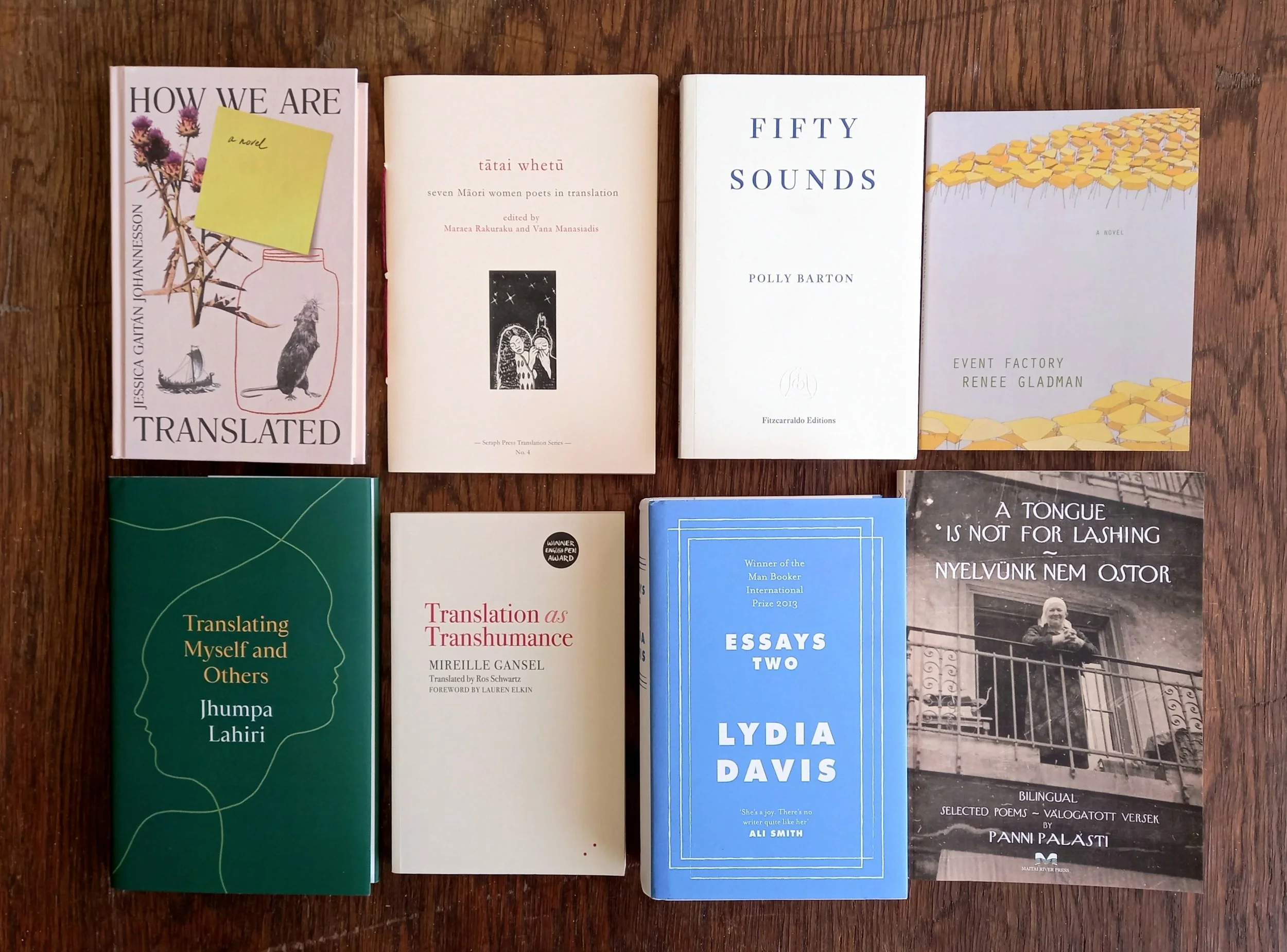
>>A ordinary day for some birds.

The Radical Potter: Josiah Wedgewood and the transformation of Britain by Tristram Hunt $32
From his kilns and workshops in Stoke-on-Trent, Wedgewood revolutionised the production of ceramics in Georgian Britain by marrying technology with design, manufacturing efficiency and retail flair. He transformed the luxury markets not only of London, Liverpool, Bath and Dublin but of America and the world, and helping to usher in a mass consumer society. But Wedgwood was radical in his mind and politics as well as in his designs. He campaigned for free trade and religious toleration, read pioneering papers to the Royal Society and was a member of the celebrated Lunar Society of Birmingham. Most significantly, he created the ceramic 'Emancipation Badge', depicting a slave in chains and inscribed 'Am I Not a Man and a Brother?' that became the symbol of the abolitionist movement.
”This is a remarkable and impassioned book. Josiah Wedgwood innovated across boundaries of technology and art and taste, commerce and scientific enquiry, and Tristram Hunt makes the powerful case for rediscovering his humane entrepreneurial spirit. The Radical Potter brings Wedgwood's protean energy alive for a new generation and I loved it.” —Edmund de Waal

Rental Person Who Does Nothing: A memoir by Shoji Morimoto $33
”If everyone has to be useful, that is just the law of the jungle. Civilisation also values the useless.” Shoji Morimoto was constantly being told that he was a ‘do-nothing’ because he lacked initiative. Dispirited and unemployed, it occurred to him that if he was so good at doing nothing, perhaps he could turn it into a business. And with one tweet, he began his business of renting himself out . . . to do nothing. Morimoto, aka Rental Person, provides a fascinating service to the lonely and socially anxious. Sitting with a client undergoing surgery, accompanying a newly-divorced client to her favourite restaurant, visiting the site of a client’s suicide attempt are just a few of his thousands of true life adventures. He is dependable, non-judgmental and committed to remaining a stranger and the curious encounters he shares are revelatory about both Japanese society and human psychology.
>>The only one who does nothing.

Too Many Rabbits by Davide Calì; illustrated by Emanuele Benetti $33
After a month of pleading, Dad finally takes Owen and Zoey to the pet store to adopt a rabbit. Once there, a two-for-one special offer just cannot be ignored; so they take home two rabbits - one male, and one female. Two rabbits make more rabbits, who then make even more rabbits, and soon there are just too many of the sweet little creatures. So begins a hilarious counting adventure as Owen and Zoey find homes for all of the rabbits. Full of little 'easter eggs' hidden in the art, Too Many Rabbits is a mirthful reminder to be careful of what you wish for and a hilarious lesson in chaos control for young readers. A very enjoyable counting book.
>>Look inside!
VOLUME BooksNew releases
WALL by Jen Craig — reviewed by Thomas

Wall by Jen Craig

She has come back to Australia to clear out her father’s house following his death. Her father was a hoarder so his house is very full. Of many sorts of things. Some of the contents are decaying. Some of the contents are carefully ordered. Others not ordered at all. Carefully disordered, even, if this is possible. This is what remains of her father; her memories of him cannot be untangled from the foibles she now perceives in herself. They are not dissimilar. Or were not dissimilar. Being similar. She thinks of herself as an artist; that is to say, she is therefore an artist, and others also think of her as an artist. Her art doesn’t sound particularly good, but it takes up a lot of her time. Which is something. I suppose she makes art in which other people can perceive the qualities that they look for in art, not that these are related to the qualities she herself perceives in her art, particularly, not that it matters. She is most well-known, not that she is well-known, for a three-person piece of student performance art about their anorexia, a piece that was misperceived, or rather misdetermined, if there is such a word, by others, who assumed conceptual dominion, if that is not too strong a word, over it, which, I suppose, is the anorectic predicament. The person who most misdetermined the work was their tutor, her one-time and seemingly enduring art mentor, so to call him, now a gallerist, whom she badly wants to impress or make use of, which is the same thing, despite his dubious qualities and ludicrous name, or because of them. She wants to make another work, her own work, about anorexia, and to call it ‘Wall’, a work this time determined by her, but she doesn’t know how to do this; perhaps this is impossible, perhaps a self-determined work could never say anything much about anorexia. Anyway, she has come back to Australia and had the idea of making the entire contents of her father’s house into an artwork, not the anorectic artwork, transporting, sorting and displaying it in a gallery. This has been done before, however, so it is not exactly a new idea. Also, she doesn’t have the time or the energy or the stickability to achieve it, and, in any case, it is not as if the contents of her father’s house say in themselves much about her father; rather it is the way that they are packed into the house, some of the contents carefully ordered, others not ordered at all, carefully disordered, even, if such a thing is possible, that comprise the person that was her father. And, of course, she is not dissimilar, or is similar, herself. It is not her thoughts, of which the words in this book are a fair example, that comprise her; many of these thoughts are thoughts that come to her from others, who knows where thoughts come from, detritus and happenstance; it is the bundling of the thoughts, the way they are arranged, their syntactical relationships, that comprise a person. Not that she can perceive herself as a person; she can only be perceived by others. She exists, if that is not too strong a word, only in the ideas had of her by others, as do we all, and the ideas had by others are seldom anything but misperceptions or, rather, misdeterminations, if there is such a word, or, even better, mispresumptions, there is surely no such word, at least until now, which brings us back to the anorectic predicament: what, if anything, of ourselves is not determined by others? Without the ideas that others have of her, we know, she can barely be said to exist. The words we read have ostensibly been written by her to someone, presumably her partner, back in London, and this determining ‘you’ both dominates the text and the form of her existence, so to call it, the bundling of her thoughts, therein, and is as well the mesh against which she can push herself and see what, if anything, and maybe there’s something, gets through. She has come back to Australia to clear out her father’s house. As soon as she arrives there it is obvious to her that she will never make the intended “post-war manifestation of twenty-first century anxiety on a suburban Australian scale” based on Song Dong’s famous artwork; she immediately orders a skip and begins to throw the contents of the hallway onto the lawn. By the end of the book she has only begun to enter and to clear out her father’s house; she has only begun to enter and to clear out the contents of her mind, so to call it, so bound up as it is with the foundational idea of her father, she is a hoarder just like him, a mental hoarder, and to throw the contents out onto the lawn in preparation for the skip, both the objects and the thoughts, if I can force the metaphor, not that this is a metaphor. All accumulations, things crammed into houses, thoughts crammed into minds, function in similar ways, are hoarded and dispersed in similar ways, are susceptible in similar ways to our sifting and sorting and also to our failure or refusal to sift and to sort. Jen Craig’s syntactically superb sentences are the best possible intimations of the ways in which thoughts remain stubbornly embedded in their aggregate when we attempt to bring them into the light.  

>>Your copy.

Personal highlights from our history sale — Stella

This is the week you can add some excellent history books to your shelves. Unlock history with these recommendations. Interested in textiles and the history of clothing, then you need Worn which is an excellent blend of history and social commentary, complete with wonderful information about those five fibre staples; cotton, wool, synthetics, silk and linen. If are intrigued by Japan and enjoy women's histories you can't go past the excellent Stranger in the Shogun's City which is fascinating and superbly written. Other women's histories that are must haves are Svetlana Alexievich's The Unwomanly Face of War and Barbara Brookes's A History of New Zealand Women. For an excellent social history centred on food, Claudia Roden's The Book of Jewish Food is packed with insightful information (and recipes) and will distract you from your cooking. More intrigued by the machinations of Eastern Europe then there's Philippe Sands's brilliant East West Street. Looking for something different, there's the stunning Te Ahi Ka, the fascinating A History of Bombing, and the moving Library of Exile.

  • Use the key HIST101 when checking out for a 15% discount on all history books. (Promotion ends 13 August 2023. (In-stock items only; excludes items already marked down.) >>Click through to start choosing now. 

Book of the Week: LOOK by Gavin Bishop

Our Book of the Week is the completely delightful (and developmentally valuable) LOOK by Gavin Bishop. Presented as a two-metre long two-sided concertina board book, Look can be opened out to surround a baby during ‘tummy time’ (building motor skills and strength), or shared as a book (building concepts and affectionate ‘conversations’). The simple and very appealing illustrations show faces for one direction/side, and toys and other familiar objects for the other. This will immediately become one of those special books that are central to a baby’s (and a parent’s) life.

A MILLION WINDOWS by Gerald Murnane — reviewed by Thomas

A Million Windows by Gerald Murnane — reviewed by Thomas

The great concern in Murnane’s writing is the relationship between the fiction he writes and what he calls the ‘image world’ (he insists this is nothing to do with ‘imagination’ in the sense of making things up (he is, he says, incapable of making things up)), and, to a lesser yet strongly implied degree, the relationship between these two and the ‘actual world’, which he seems to regard as little more than an access point to (or of) the image world, and a place of frailties, disappointment and impermanent concerns. When Murnane describes the “chief character of a conjectured piece of fiction… a certain fictional male personage, a young man and hardly more than a boy” preferring the image-world relationship he had inside his head with a “certain young woman, hardly more than a girl” he sees every day in the railway carriage in which he travels home from school to the actual relationship he starts to develop (and soon abandons) with her after they eventually start to converse, he underscores a turning away, or, rather, a turning inward to the more urgent and intense image-world. Like some woefully under-recognised antipodean Proust, Murnane is fascinated by the mechanics of memory, which he sees as an operation of the image-world upon the actual, giving rise to the ‘true fictions’ that allow elements of the image-world to present themselves to awareness in a multiplicity of guises and versions. Murnane differs from many theorists of fiction in that he does not attribute primacy to the text but to the image-world to which the text gives access and which may contain, for instance, characters who have access, perhaps through their fictions, to image-worlds and characters inaccessible (at least as yet) to us. The million windows (from Henry James: “The house of fiction has in short not one window, but a million”) are those of “a house of two or maybe three storeys”, inhabited by writers, all perhaps versions or potential versions of Murnane himself, who look out over endless plains as they engage in the act of writing fiction, or discuss doing so. The multiplicity of this process stands in relation to an unattainable absolute towards which memories and other fictions reach, or, rather, which reaches to us in the form of memories and other fictions. Murnane’s small pallet, his precisely modulated recurring images and his looping, delightfully pedantic style are at once fascinating, frustrating, soporific and revelatory.

TAKE A BITE! by Aleksandra Mizielinska and Daniel Mizielinski — reviewed by Stella

Take a Bite! Eat your way around the world by Aleksandra Mizielinska and Daniel Mizielinski {Reviewed by Stella}

Quite a few years ago, the wonderful Polish authors Aleksandra and Daniel Mizielinski were touring Aotearoa with the publisher and owner of Gecko Books, Julia Marshall. They came to Nelson and shared their love of illustration with a group of children. It was a delightful event, in which they communicated through drawings and their limited English. You might already own one of their wonderful books, the excellent Maps, or the architecture gem, H.O.U.S.E, and its sister, D.E.S.I.G.N, Impossible Inventions, or the earlier Mamoko series. Take a Bite is a big, glorious book about food around the world. It — of course! — has terrific illustrations, and covers the history of food across many countries and cuisines. Travel the world through this book, and discover intriguing facts about food and culture, cuisine specialties, cooking methods, site-specific ingredients, regional delights, marketplaces, harvesting and gathering, feasts, and sharing food — but wait, — recipes as well! While there’s plenty of history and food facts to keep the best questioner satisfied, it’s also an enjoyable visual experience with vibrant colour, excellent layout, and pockets of wit designed to hook young readers. Take A Bite is an excellent example of exploring the world and our cultural diversity through the universal enjoyment of food. So why not try a Polish pancake, Brazilian pralines, Moroccan Seffa, or Italian bolognese, or maybe you're keen for a spot of fermentation? 

Book of the Week: AUDITION by Pip Adam

The spaceship Audition speeds on towards the event horizon. For it to continue, the three giants imprisoned within it must continue to speak. If they stop speaking they continue to grow larger and more unwieldy. Are the memories of which they speak their own, or a script? Is there even a past? A future? The novel Audition speeds on towards its end. For it to continue, the three characters imprisoned within it must continue to speak…

NEW RELEASES (28.7.23)

New books — just out of the carton! Click through for your copies now.

Blood and Dirt: Prison labour and the making of New Zealand by Jared Davidson $50
”Picture, for a minute, every artwork of colonial New Zealand you can think of. Now add a chain gang. Hard labour men guarded by other men with guns. Men moving heavy metal. Men picking at the earth. Over and over again. This was the reality of nineteenth-century New Zealand.” Forced labour haunts the streets we walk today and the spaces we take for granted. The unfree work of prisoners has shaped New Zealand's urban centres and rural landscapes and Te Moana-nui-a-Kiwa — the Pacific — in profound and unsettling ways. Yet these stories are largely unknown: a hidden history in plain sight. Blood and Dirt explains, for the first time, the making of New Zealand and its Pacific empire through the prism of prison labour. Jared Davidson asks us to look beyond the walls of our nineteenth- and early twentieth-century prisons to see penal practice as playing an active, central role in the creation of modern New Zealand. A consummate history, illustrated throughout. Fascinating.

Rombo by Esther Kinsky (translated from German by Caroline Schmidt) $28
How does the impact of a disaster remain below the surface of consciousness, altering even the most unexpected things? In May and September 1976, two earthquakes ripped through north-eastern Italy, causing severe damage to the landscape and its population. About a thousand people died under the rubble, tens of thousands were left without shelter, and many ended up leaving their homes in Friuli forever. The displacement of material as a result of the earthquakes was enormous. New terrain was formed that reflects the force of the catastrophe and captures the fundamentals of natural history. But it is far more difficult to find expression for the human trauma, the experience of an abruptly shattered existence. In Rombo, Esther Kinsky’s new novel, seven inhabitants of a remote mountain village talk about their lives, which have been deeply impacted by the earthquake that has left marks they are slowly learning to name. From the shared experience of fear and loss, the threads of individual memory soon unravel and become haunting and moving narratives of a deep trauma. A remarkable piece of work.
”In Esther Kinsky’s new novel, language becomes the highest form of compassion and solidarity – not only with us human beings, but with the whole world, organic, non-organic, speaking out with many mouths and living voices. A miracle of a book; should be shining when it gets dark.” —Maria Stepanova
>>Writing itself anew.
>>Read Thomas’s review of Grove.
>>Read Thomas’s review of River.

The Wonders by Elena Medel (translated from Spanish by Thomas Bunstead and Lizzie Davis) $25
Maria and her granddaughter Alicia have never met. Decades apart, both make the same journey to Madrid in search of work and independence. Maria, scraping together a living as a cleaner and carer, sending money back home for the daughter she hardly knows; Alicia, raised in prosperity until a family tragedy, now trapped in a poorly paid job and a cycle of banal infidelities. Their lives are marked by precarity, and by the haunting sense of how things might have been different. Through a series of arresting vignettes, Elena Medel weaves together a broken family's story, stretching from the last years of Franco's dictatorship to mass feminist protests in contemporary Madrid. Audacious, intimate and shot through with razor-edged lyricism, The Wonders is a revelatory novel about the many ways that lives are shaped by class, history and feminism: about what has changed for working class women, and what has remained stubbornly the same.
”The Wonders is a poet's novel, delicate but strong, impressing its images firmly on the imagination.” —Hilary Mantel
”Completely unsentimental and with a harshness that hides the most radiant and painful of scars, The Wonders brings to life several generations of working women: it's a serene and impious novel that puts class, feminism, and the eternal complexity of family ties at the fore.” —Mariana Enriquez
>>Two interlocked spirals.
>>The struggle to determine the course of their own lives.
>>What shapes and defines us?

Ordinary Notes by Christina Sharpe $28
Acutely observed and beautifully written, Sharpe’s Ordinary Notes explores the enduring effects of racism (relevant anywhere), questions about loss, and the shapes of US Black life that emerge in the wake. In a series of 248 notes that gather meaning as we read them, Christina Sharpe skillfully weaves artifacts from the past — public ones alongside others that are poignantly personal — with present realities and possible futures, intricately constructing an immersive portrait of everyday Black existence. The themes and tones that echo through these pages — sometimes about language, beauty, memory; sometimes about history, art, photography, and literature — always attend, with exquisite care, to the ordinary-extraordinary dimensions of Black life. At the heart of Ordinary Notes is the indelible presence of the author's mother, Ida Wright Sharpe. "I learned to see in my mother's house," writes Sharpe. "I learned how not to see in my mother's house . . . My mother gifted me a love of beauty, a love of words." Using these gifts and other ways of seeing, Sharpe steadily summons a chorus of voices and experiences to the page. She practices an aesthetic of ‘beauty as a method’, collects entries from a community of thinkers toward a ‘Dictionary of Untranslatable Blackness’, and rigorously examines sites of memory and memorial. In the process, she forges a new literary form. A beautifully illustrated hardback.
>>Some notes.
>>Slips of the tongue.
>>Notes as form.

Eunuch by Kristina Carlson (translated from Finnish by Mikko Alapuro) $34
Wang Wei has always chosen his words carefully. His unobtrusive presence has seen him through the reign of five emperors, but now, as his own time is running out, he immerses himself in an unbridled account of a life confined at court during the Song dynasty in 12th century China. From the early separation from his parents, sisters, and brother – who did not survive the operation into a eunuch – to the power struggles he has witnessed and endured, Wang Wei examines human relationships with precision and a catching sense of wonder. While rumours are weapons, it is love and its various forms of expression that most fascinate Wang Wei.
”Adeptly using the very particular to get at the achingly universal, Eunuch is a short but striking meditation on difference and belonging. Someone who has always lived in-between will recognise that the stages of dusk are just as real as night and day. Elegant and earthy in turns, evoking whole worlds with deceptively simple words, Carlson’s writing recalls the aphoristic poetry of her narrator’s era.” —Kaisa Saarinen
>>Places I’ve never been.

George: A magpie memoir by Frieda Hughes $37
When Frieda Hughes moved to the depths of the Welsh countryside, she was expecting to take on a few projects: planting a garden, painting and writing her poetry column for the Times. But instead, she found herself rescuing a baby magpie, the sole survivor of a nest destroyed in a storm — and embarking on an obsession that would change the course of her life. As the magpie, George, grows from a shrieking scrap of feathers and bones into an intelligent, unruly companion, Frieda finds herself captivated — and apprehensive of what will happen when the time comes to finally set him free.
”There is an astringent beauty to Frieda Hughes's George. It's one of those books that appears to be about one thing-in this case, hand-rearing the eponymous orphan magpie-whilst being about something altogether more profound: love, loss and how inextricably linked they are. Love comes alive in Hughes' pages as an act of acute attentiveness. Loss lingers in the margins, but George doesn't baulk at the shadows. Instead, this book pulses with a defiant wonder at the living world, as wild and unruly as our feathered hero.'“ —Polly Morland
>>On George.
>>On living life like it matters.
>>On families.

Shadow Worlds: A history of the occult and esoteric in New Zealand by Andrew Paul Wood $50
A vigorous strand of interest in the occult, the spooky and the mysterious hasbeen part of our history since 1840. Shadow Worlds takes a lively look at communicating with spirits, secret ritualistic societies, the supernatural, the New Age — everything from The Golden Dawn and Rosicrucianism to Spiritualism, witchcraft and Radiant Living — and introduces the reader to a cast of fascinating characters who were generally true believers and sometimes con artists. It's a fresh and novel take on the history of a small colonial society that was notquite as ploddingly conformist as we may have imagined.
>>Not hobbits.

Desperate Remedies: Psychiatry and the mysteries of mental illness by Andrew Scull $32
For more than two hundred years, disturbances of reason, cognition and emotion — the sort of things that were once called 'madness' — have been described and treated by the medical profession. Mental illness, it is said, is an illness like any other — a disorder that can be treated by doctors, whose suffering can be eased, and from which patients can return. And yet serious mental illness remains a profound mystery that is in some ways no closer to being solved than it was at the start of the twentieth century. In this provocative exploration of psychiatry, sociologist Andrew Scull traces the history of its attempts to understand and mitigate mental illness — from the age of the asylum and unimaginable surgical and chemical interventions, through the rise and fall of Freud and the talking cure, and on to our own time of drug companies and antidepressants. Through it all, Scull argues, the often vain and rash attempts to come to terms with the enigma of mental disorder have frequently resulted in dire consequences for the patient.
”There are few heroes in this enraging study of a great failing. Fascinating.” —Sebastian Faulks
”Meticulously researched and beautifully written.” —Guardian
”I would recommend this fascinating, alarming and alerting book to anybody. For anyone referred to a psychiatrist it is surely essential.” —Horatio Clare

The Martins by David Foenkinos (translated from French by Sam Taylor) $35
Is it true that every life is the stuff of novels? Or are some people just too ordinary?
This is the question a struggling Parisian writer asks when he challenges himself to write about the first person he sees when he steps outside his apartment. Secretly hoping to meet the beautiful woman who occasionally smokes on his street, he instead sets eyes on octogenarian Madeleine. She's happy to become the subject of his project, but first she needs to put her shopping away. Wondering if his project is doomed to be hopelessly banal, he soon finds himself tangled in the lives of Madeleine's family. Though calm on the surface, the Martins have secrets, troubles and woes, and the writer discovers that the most compelling story is that of an ordinary life. This clever and charming book interrogates the ways in which novels are written, and their relationship to the so-called real world, and assails the perceived schism between the ;literary’ and the ‘mundane’.
”Playing with the rules of autofiction and family comedy, Foenkinos has created a multi-layered novel.” —Le Parisien
>>Trailer.
>>Foenkinos in conversation.

Cobalt Red: How the blood of the Congo powers our lives by Siddharth Kara $55
An unflinching investigation reveals the human rights abuses behind the Congo's cobalt mining operation — and the moral implications that affect us all.
Cobalt Red is the searing, first-ever exposé of the immense toll taken on the people and environment of the Democratic Republic of the Congo by cobalt mining, as told through the testimonies of the Congolese people themselves. Activist and researcher Siddharth Kara has traveled deep into cobalt territory to document the testimonies of the people living, working, and dying for cobalt. To uncover the truth about brutal mining practices, Kara investigated militia-controlled mining areas, traced the supply chain of child-mined cobalt from toxic pit to consumer-facing tech giants, and gathered shocking testimonies of people who endure immense suffering and even die mining cobalt.  Cobalt is an essential component to every lithium-ion rechargeable battery made today, the batteries that power our smartphones, tablets, laptops, and electric vehicles. Roughly 75 percent of the world's supply of cobalt is mined in the Congo, often by peasants and children in sub-human conditions. Billions of people in the world cannot conduct their daily lives without participating in a human rights and environmental catastrophe in the Congo.
>>Unbearable.

Introducing Te Tiriti o Waitangi by Claudia Orange and Jared Davidson $18
In 1840, over 500 Maori leaders put their names to a significant new document: Te Tiriti o Waitangi or the Treaty of Waitangi. Through their signatures, moko or marks they were making an agreement with the British Crown. At stake was the sovereignty of the country, the governance of the land. The history of this agreement is a remarkable one, and ignorance about the centrality of the agreement continues to lead to conflict and prejudice.

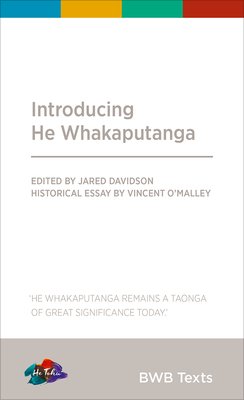
Introducing He Whakaputanga by Vincent O’Malley and Jared Davidson $18
He Whakaputanga o te Rangatiratanga o Nu Tireni/The Declaration of Independence of New Zealand was signed by fifty-two rangatira from 1835 to 1839. It was a powerful assertion of mana and rangatiratanga, made after decades of Maori and European encounters that had been steadily expanding — both within Aotearoa New Zealand and elsewhere on the globe as Maori travelled abroad. As rangatira reached out, they also forged new alliances. He Whakaputanga was part of that process, reinforcing ties between northern rangatira and the British Crown that dated back nearly half a century.

Introducing the Women’s Suffrage Petition, 1893 by Barbara Brookes and Jared Davidson $18
In 1893 New Zealand became the first country in the world with universal suffrage: all New Zealand women now had the right to vote. This achievement owed much to an extraordinary document: the 1893 Women’s Suffrage Petition. Over 270 metres long, with the signatures of some 24,000 women (and at least twenty men), the Suffrage Petition represents the culmination of many years of campaigning by suffragists, led by Kate Sheppard, and women throughout the country.

The Mystery at Dunvegan Castle by T.L. Huchu $38
Ropa Moyo is no stranger to magic or mysteries. But she's still stuck in an irksomely unpaid internship. So she's thrilled to attend a magical convention at Dunvegan Castle, on the Isle of Skye, where she'll rub elbows with eminent magicians. For Ropa, it's the perfect opportunity to finally prove her worth. Then a librarian is murdered and a precious scroll stolen. Suddenly, every magician is a suspect, and Ropa and her allies investigate. Trapped in a castle, with suspicions mounting, Ropa must contend with corruption, skullduggery and power plays. Time to ask for a raise? The third in the excellent ‘Edinburgh Nights’ series.
”Tendai's alternative Edinburgh becomes more real and more exciting with every book. An artful combination of magic, history and imagination wrapped up in an engaging story.” —Ben Aaronovitch

Food writing — WHISK: Cookbooks at Volume

With so much of our personal and collective cultures revolving around a dinner plate, our appetite for reading about food (and its place in our lives and in the lives of others) is insatiable.

Essayist, poet, and pie lover Kate Lebo is inspired by twenty-six fruits. She expertly blends the culinary, medical, and personal in The Book of Difficult Fruit. A is for Aronia, M is for Medlar, and Q is for Quince. Claudia Roden describes it as “ A beautiful, fascinating read full of surprises – a real pleasure.”

What did we eat and when did we eat it? Over the ten chapters of Food: The history of taste, food historian covers the history of food from the hunter-gathers and first farmers to the evolution of the restaurant and the contemporary volume of choice from fast food to slow cooking. Want to know the food fashions of the Renaissance, what they ate during the Industrial Revolution, or the ancient diets of Greece and Rome, this is your book.

Ah, honey! Thinking about getting some bees? Read this delightful account of two men who decide to become beekeepers, learning about nature and about themselves in the process. Inspiring Liquid Gold . “A great book. Painstakingly researched, but humorous, sensitive and full of wisdom. I'm on the verge of getting some bees as a consequence of reading the book.” - Chris Stewart, author of Driving Over Lemons

My First Popsicle is as much an ode to food and emotion as it is to life. A collection of essays edited by actor Zosia Mamet. Contributors include David Sedaris, Patti Smith, Jia Tolentino, and Ruth Reichl. The Kirkus review gave it a thumbs up for gifting. “Most of the essays capture an isolated moment in time, making the book perfect for reading in short, leisurely spurts..the book is an appealing reminder of the power of food...A good gift for foodies." -Kirkus

First Catch is a beautifully written appreciation of making a meal. Stand next to Thom Eagle in the kitchen as he muses on the very best way to coax flavour out of an onion (slowly, and with more care than you might expect), or considers the crucial role of salt in the creation of the perfect assembly for early green shoots and leaves. “A one-off, the kind of food book that I believed was no longer being published ... when I reached the last page, I went back to the beginning.” —Bee Wilson, The Times

Bill Buford's Dirt is a vivid, hilarious, intimate account of his five-year odyssey in French cuisine. Never mind that he spoke no French, had no formal training, knew no one in Lyon, and his wife and twin toddlers lived in New York. A feast of a book. “Buford is excellent company - candid, self-deprecating and insatiably, omnivorously interested... [I] wolfed it down.“ - Orlando Bird, Telegraph

Cooking is thinking! Small Fires is an electrifying, innovative memoir. Rebecca May Johnson rewrites the kitchen as a vital source of knowledge and revelation. Drawing on insights from ten years spent thinking through cooking, she explores the radical openness of the recipe text, the liberating constraint of apron strings, and the transformative intimacies of shared meals. Excellent food writing. 'One of the most original food books I've ever read, at once intelligent and sensuous, witty, provoking and truly delicious, a radical feast of flavours and ideas.' - Olivia Laing

In The Kitchen is a thoughtful and inventive book of essays highlighting our personal relationships with food. Rachel Roddy traces an alternative personal history through the cookers in her life; Rebecca May Johnson considers the radical potential of finger food; Ruby Tandoh discovers a new way of thinking about flavour through the work of writer Doreen Fernandez; and Yemisi Aribisala remembers a love affair in which food failed as a language.

VOLUME BooksWHISK