I HEAR YOU'RE RICH by Diane Williams — reviewed by Thomas

I Hear You’re Rich by Diane Williams

If it is necessary to move out to the very edge of ourselves, to the part of ourselves that is least ourselves, to be near another person, another person who has also moved out to the very edge of themselves, to the part of themselves that is least themselves, in order to be near us, what value can there be in any communication that takes place, if any communication can take place, between parties who are therefore almost strangers even to themselves? Diane Williams’s short, energetic, hugely disorienting short stories pass as sal volatile through the fug of relationships, defamiliarising the ordinary elements of everyday lives to expose the sad, ludicrous, hopeless topographies of what passes for existence. This is not a nihilistic enterprise, however, for Williams has immense sympathies and her stories themselves demonstrate the possibility of connection through the very act of delineating its impossibility. With the finest of needles, the most ordinary of details, Williams picks out the unacknowledged, unacknowledgeable but familiar hopeless longing that underlies our unreasoned and unreasonable striving for human relations, a longing that makes us more isolated the harder we strive for connection. So much is left unsaid in these stories that they act as foci for the immense unseen weight of their contexts, precisely activating pressure-points on the reader’s sensibilities.

BIRD LIFE by Anna Smaill — reviewed by Stella

Bird Life by Anna Smaill $38

Dinah has arrived in Japan to teach English. Her apartment is dismal, her job mediocre, but here, in this foreign city far from her suburban New Zealand upbringing, she thinks she can escape and forget about her twin brother. Yet everywhere she looks he is there. Dinah is moving through the city streets on the edge of tipping into despair. This city is what she wants but it is unexpectedly strange. She is at odds with it. Sleeping outside in the grim park outside her building, suspecting she is the only person living in the apartment complex (she never sees anyone) and wary of an overly aggressive crow. Is what she senses real? How far is she removed from herself when she is not playing the role of the foreign language teacher? Can she thrive here or will she be subsumed by her grief? Yasuko, a teacher at the same school, is polished and precise. From her elegant wardrobe to her observant eye, she is an enigma to her colleagues. They are wary but captivated by her charm and daring, while she holds herself separate and aloof. For this world is of little importance to her. She hides a secret self. One which she represses for her adult son Jun. When her son disappears Yasuko begins to unravel. She has powers within her that connect her to another world, a natural world. This supernatural world seems drawn to Yasuko, as much as she is drawn to it, and the carefully manicured roles she plays as teacher and parent are tentative. The animals in her past and present are increasingly close, although it is to the strange young foreigner she leans. She is convinced that the girl can help her reconnect with Jun. This unexpected relationship will take them both on a journey. For Yasuko, she is driven on by a desire to be released from her burdens towards a place where the voices can fly free. For Dinah, in the hope she will come home to herself, she will follow, as she has always done, without understanding the peril or the pleasure. Bird Life examines the forces that allow us to slip from one world to another, the relationship between the internal and external, and the tentative membrane that exists between genius and madness. As with Anna Smaill’s acclaimed previous novel, The Chimes, the writing is taut and evocative with subtle symbolism and a rhythmic beauty. The magical realism hints at Murakami and Allende, while the quotidian observations keep the novel in the here and now, creating a satisfying fracture in this absorbing story.

Bird Life is due for release on November 9th. Pre-order now.

NEW RELEASES (27.10.23)

A new book is a promise of good times ahead. Click through for your copies:

Everything I Know about Books: An insider view of publishing in Aotearoa edited by Odessa Owens and Theresa Crewdson $35
A really very interesting book about everything that happens to a book as it passes between the mind of the writer and the mind of the reader. Recommended! The list contributors reads like a Who’s Who of the book trade in Aotearoa: Foreword - Witi Ihimaera; Introduction: Everything we know about teaching publishing - Odessa Owens & Theresa Crewdson; Te korihi a te huia: The space for Maori storytelling - Pania Tahau-Hodges; How to edit a poem - Chris Tse; Tomorrow will be the same as this, pretty much - Sarah Pepperle; Festival of dreams: Literary events as world-building - Claire Mabey; The American publishing industry and your Wi-Fi signal - Chloe Gong; How to publish less-heard voices - Ash Davida Jane & Stacey Teague; How to review a book - Charlotte Grimshaw; Why should anyone care? - Lana Lopesi; I learned it at the movies: What film and TV can teach us about publishing—and what they get wrong - Claire Murdoch; An industry of rejection - Angelique Tran Van Sang; Having your book edited is a bit like going through a breakup - Madison Hamill; From the Kiddie-Corner: Some insights into the world of children's book publishing - Lynette Evans; My audiobook epic - Clayton Carrick-Leslie; Story sovereignty in self-publishing - Qiane Matata-Sipu; An Edmonds story - Dom Visini & Alison Shucksmith; On editing your friends - Ashleigh Young; Wild card - Selina Tusitala Marsh; Pushing out the margins - Adrienne Jansen; Reflections from a small Pacific publisher + a manifesto of sorts - Faith Wilson; How to commission - Holly Hunter; Scenes on the screen inside my head - Michael Bennett; Publishing by the book: The Whitireia classroom and beyond - Lauren Donald; Why we need new typefaces: Thoughts from the frontline of type - Kris Sowersby; Sweet Mammalian: Messy, sexy, biased, dirty - Hannah Mettner; Lessons from the business end of the business - Becky Innes; Gunk (mereology) - Joanna Cho; How to avoid defamation - Steven Price; She had me at the cows: The making of a modern classic - Mary McCallum; Taking New Zealand books offshore - Peter Dowling; Waharoa: An (Indigenous) hero's journey into the world of publishing - Nadine Anne Hura; Synapses are how booksellers sell books - Tilly Lloyd; Collective disruption: The art of art book making - Clare McIntosh; Big pond: Experiences in UK publishing - Katie Haworth; On the power of festivals - Rachael King; Swipe card and a dream: Advice for publishing interns - Damien Levi; How to publish a non-fiction bestseller - Jenny Hellen; Valuing two hundred years of Maori books - Jacinta Ruru; From Colenso to Catton: A quick skim through two centuries of book publishing in Aotearoa - Elizabeth Caffin; Centred somewhere else - Marian Evans; Who owns the stories? Adventures in copyright - Sam Elworthy; Having sextuplets: A case study - Trish Harris; I wrote The Porangi Boy for kids like me - Shilo Kino; writers festivals are fucking weird eh - Dominic Hoey; How to be literary philanthropists - Mary & Peter Biggs; Why publishing matters: Behind the scenes in a museum - Sean Mallon; Bringing stories to Aotearoa, curiously - Julia Marshall; How to bankroll a book: Paper may grow on trees-but money doesn't - Malcolm Burgess; Thoughts on correctness - Anna Jackson-Scott; Reps on the road - Marthie Markstein; Prediction: your life will come to this - Jane Arthur; The crooked path to a picture book - Gavin Bishop; From multinational to multitasking - Kevin Chapman; Kia puawai te aroha ki te reo - Mike Dreaver; How to rock self-publishing - Steff Green; More than a numbers game: A view from PANZ - Craig Gamble; The curious reader: Championing books - Kiran Dass; Publishing Nicky Hager - Robbie Burton; Paula Morris reads your emails - Paula Morris; Everything I know about publishing in other languages - Ya-Wen Ho; How to design a book: A focus on covers - Alan Deare; To publish or not to publish, is that the question? - Anahera Gildea; How to publish a blue whale - Susan Paris; Paper trail: The evolution of academic publishing - James L Savage; How to smash the system - Murdoch Stephens & Brannavan Gnanalingam; Joan picks Joan's Picks - Joan Mackenzie; Here's what happens when no one shows up to your writers event - Madeleine Chapman; The Changeover: From page to screen - Stuart McKenzie; And the winner is... - Nicola Legat. Published to mark thirty years of the Whitireia publishing course.


Patu: The New Zealand Wars by Gavin Bishop $40
A stunning, large-format, visual history of the New Zealand Wars of the 1800s, suitable for both children and adults. Discover the key people, perspectives and battles of the New Zealand Wars in this powerfully told and richly illustrated visual history. Auē! Te mamae! Navigate the defining moments of the wars, visit the battle sites and explore the sweeping change that took place in Aotearoa during the 19th century. Guiding readers through the bitter armed clashes over land and sovereignty, PATU is an essential book for every shelf.
>>Find out more and look inside this excellent book.
>>Extraordinary circumstances.


The Glutton by A.K. Blakemore $37
Sister Perpetue is not to move. She is not to fall asleep. She is to sit, keeping guard over the patient's room. She has heard the stories of his hunger, which defy belief: that he has eaten all manner of creatures and objects. A child even, if the rumours are to be believed. But it is hard to believe that this slender, frail man is the one they once called The Great Tarare, The Glutton of Lyon. Before, he was just Tarare. Well-meaning and hopelessly curious, born into a world of brawling and sweet cider, to a bereaved mother and a life of slender means. The 18th Century is drawing to a close, unrest grips the heart of France and life in the village is soon shaken. When a sudden act of violence sees Tarare cast out and left for dead, his ferocious appetite is ignited, and it's not long before his extraordinary abilities to eat make him a marvel throughout the land. The stupendous new novel from the author of The Manningtree Witches.
”One of the most remarkable novels of the year.” —Guardian
 “An embarrassment of riches. A sensory assault fit to slap any reader awake with its gorgeous glut of baroque prose and wise, poised lessons on life, pleasure, class, desire, and love.” —Kiran Millwood Hargrave
>>The man who ate everything.


The Puppets of Spelhorst by Kate DiCamillo and Julie Morstad $28
Once, there was a king. And a wolf. And a girl with a shepherd’s crook. And a boy with a bow and arrow. And also, there was an owl... They were puppets, and they were waiting for a story to begin. Carried off in an old trunk, the puppets find not only their own story but find themselves also acting out a story written by a girl in the house they find themselves in — and whose story will take flight from this puppet show? Thoughtful, well written, and completely charming.
>>Look inside this beautiful book!


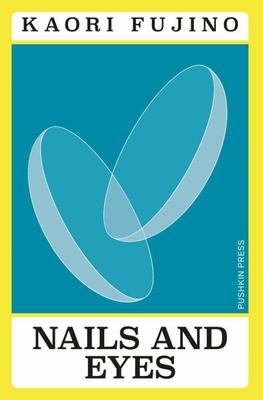
Nails and Eyes by Kaori Fujino (translated from Japanese by Kendall Heitzman) $25
A young girl loses her mother, and her father blindly invites his secret lover into the family home to care for her. As she obsessively tries to curate a pristine life, this new interloper remains indifferent to the girl, who seems to record her every move - and she realises only too late all that she has failed to see. With masterful narrative control, ‘Nails and Eyes’ — appearing in English for the first time — builds to a conclusion of disturbing power. Paired with two additional stories of unsettled minds and creeping tension, it introduces a daring new voice in Japanese literature.
>>’You OK for Time?
>>’Quiet Night’.


Nipponia Nippon by Kazushige Abe (translated from Japanese by Kerim Yasar) $25
Isolated in his Tokyo apartment, seventeen-year-old Haruo spends all his time online, researching the plight of the endangered Japanese crested ibis, Nipponia nippon. Living on an allowance from his parents, he drops ever further into a fantasy world in which he alone shares a special connection with the last of these noble birds, held at a conservation centre on the island of Sado. His conclusion is simple: it is his destiny to free the birds from a society that does not appreciate them, by whatever means necessary. With his emotional state becoming increasingly erratic, he begins to source weapons and prepares for a reckoning.


The Penguin New Zealand Anthology: Fifty stories for fifty years in Aotearoa edited by Harriet Allan $45
Amelia Batistich, Evana Belich, Norman Bilbrough, Ben Brown, Eleanor Catton, Craig Cliff, Marilyn Duckworth, David Eggleton, Fiona Farrell, Sia Figiel, Janet Frame, Maurice Gee, James George, Fiona Kidman, Patricia Grace, Charlotte Grimshaw, Dominic Hoey, Witi Ihimaera, Stephanie Johnson, Lloyd Jones, Tim Jones, Fiona Kidman, Shonagh Koea, Sarah Laing, Sue McCauley, Tina Makereti, Selina Tusitala Marsh, Owen Marshall, Tze Ming Mok, Kelly Ana Morey, Ronald Hugh Morrieson, Paula Morris, Carl Nixon, Julian Novitz, Sue Orr, Vince O'Sullivan, John Puhiatau Pule, Sarah Quigley, Frazer Rangihuna, Victor Rodger, Frank Sargeson, Tracey Slaughter, CK Stead, Bernard Steeds, Alice Tawhai, Ngahuia Te Awekotuku, Elsie Uini, Peter Wells, Albert Wendt, Judith White, Alison Wong.


The Art Thief: A true story of love, crime, and a dangerous obsession by Michael Finkel $37
For centuries, works of art have been stolen in countless ways from all over the world, but no one has been quite as successful at it as the master thief Stéphane Breitwieser. Carrying out more than 200 heists over nearly ten years — in museums and cathedrals all over Europe — Breitwieser, along with his girlfriend who worked as his lookout, stole more than 300 objects, until it all fell apart in spectacular fashion.
"The Art Thief, like its title character, has confidence, elan, and a great sense of timing. It is propelled by suspense and surprises. This ultra-lucrative, odds-defying crime streak is wonderfully narrated by Finkel, in a tale whose trajectory is less rise and fall than crazy and crazier.. Part of what makes Finkel's book so much fun is that, without exception, Breitwieser's strategies are insane." —The New Yorker


Around the World in 80 Games: A mathematician unlocks the secrets of the greatest games by Marcus du Sautoy $38
Why do some games seem to be universal while others have a particular connection to the culture of the people playing them? Around the World in 80 Games is about the mathematics of chance, game theory, gamification, gaming strategies and computer games. Traversing the globe, Marcus du Sautoy looks at the genesis of games new and old, explores how to invent a good game and explains the fascination of a popular lockdown game.
"With the lightest of touches du Sautoy manages persuasively to show how games are both narratives that speak about us and structures whose ideas underlie everything in our known universe. And on top of it, the book serves as an absolutely indispensable compendium. Rainy weekends in Cornwall will now be welcomed.” —Stephen Fry


Foxlight by Katya Balen $20
Fen and Rey were found curled up small and tight in the fiery fur of the foxes at the very edge of the wildlands. Fen is loud and fierce and free. She feels a connection to foxes and a calling from the wild that she's desperate to return to. Rey is quiet and shy and an expert on nature. She reads about the birds, feeds the lands and nurtures the world around her. They are twin sisters. Different and the same. Separate and connected. They will always have each other, even if they don't have a mother and don't know their beginning. But they do want answers. Answers to who their mother is and where she might be. What their story is and how it began. So when a fox appears late one night at the house, Fen and Rey see it as a sign — it's here to lead them to their truth, find their real family and fill the missing piece they have felt since they were born. But the wildlands are exactly that — wild. They are wicked and cruel and brutal and this journey will be harder and more life changing than either Fen or Rey ever imagined...


The Lost Library by Rebecca Stead and Wendy Mass $21
When a mysterious little free library (guarded by a large orange cat) appears overnight in the small town of Martinville, eleven-year-old Evan plucks two weathered books from its shelves, never suspecting that his life is about to change. Evan and his best friend Rafe quickly discover a link between one of the old books and a long-ago event that none of the grown-ups want to talk about. The two boys start asking questions whose answers will transform not only their own futures, but the town itself.


The Natural Garden: Landscape ideas for New Zealand gardens by Xanthe White $60
A revised and updated edition of this standard work on garden planning in Aotearoa. Well photographed, but also with layout plans and plant directories for all the various sorts of gardens: flower, native, rural, dry, inner city, productive, subtropical ,and coastal.
>>Look inside.


A Therapeutic Journey by Alain de Botton $42
A Therapeutic Journey follows the arc from mental crisis and collapse to convalescence and recovery. Written with kindness, knowledge and sympathy, it is both a practical guide and a source of consolation and companionship in what might be some of our loneliest, most anguished moments. Alain de Botton explores how we can cope with a variety of forms of mental pain and illness, from the mild to the severe. It considers how and why we might become ill; how we can explain things to friends, family and colleagues; how we can find our ways towards recovery; and how we can build resilience, so as to live wisely alongside our difficulties.
>>Illustrated throughout.

 
VOLUME BooksNew releases
THE VERY LAST INTERVIEW by David Shields — reviewed by Thomas

The Very Last Interview by David Shields

So, what makes you want to write a review of David Shields’s new book, The Very Last Interview

Then why are you writing one?

Every week? Whose idea was that?   

Surely at your age, you shouldn’t be so bound by obligation or by expectation, or whatever you call it?

Yes, but do you really care what these readers might think, and do you even believe that there are such people? Aren’t you being altogether a bit precious? 

Do you really think that this helps to pay the mortgage, I mean that this makes a direct and measurable contribution towards paying your mortgage? Or even an indirect and unmeasurable but still valuable contribution towards paying your mortgage? 

Well, what else would you be doing?

Surely you’re joking? 

Okay, we’ve got a bit off the track there. I will reframe my first question. What makes you think that you are able to write a review of David Shields’s new book? 

Don’t you think your humility is a bit mannered?

The Very Last Interview is a book consisting entirely of questions that interviewers have asked David Shields over the years, omitting his answers, assuming he will have answered probably at least most of the questions, and your review, if we can call it that, of this book also consists of a series of questions ostensibly directed at you but without your answers, if indeed there were answers, which is less certain in your case than in the case of David Shields. Is this, on your part, a deliberate choice of approach, and, if so, is it justifiable? 

Do you really believe that a review written in imitation of, or in the style of, the work under review inherently reveals something about that work, even if the review is badly written, or should your approach rather be attributed to laziness, stylistic insecurity, or creative bankruptcy? 

Has it ever occurred to you that the supposedly more enjoyable qualities of your writing are actually nothing more than literary tics or affectations, and, furthermore, that it might be these very literary tics and affectations that prevent you from writing anything of real literary worth? 

Do you think that, by removing his input into the original interviews but retaining the questions, David Shields is attempting to remove himself from his own existence, or merely to show that our identities are always imposed from outside us rather than from inside, or that we exist as persons only to the extent that we are seen by others? Is this, in fact, all the same thing? 

What do you mean by that statement, ‘We are defined by the limits we present to the observations of others’?

What do you mean by that statement ‘There is no such thing as writing, only editing,’ and how does that relate to Shields’s work? 

Do you think that David Shields, in this book as in the much-discussed 2010 Reality Hunger, sees the individual as an illusion, a miserable fragment of what is actually a ‘hive mind’ or collective consciousness, and that ‘creativity’, so to call it, is another illusion predicated on this illusion of individuality?

You don’t? What, then?

What do you think David Shields would have answered, when asked, as he was, seemingly in this book, “But what is the role of the imagination in this ‘post-literature literature’ that you envision?” and how might this differ from the answer you might give if asked the same question? 

Shields was asked if he had written anything that couldn’t be interpreted as ‘crypto-autobiography’, but don’t you think the salient question is whether it is even possible to write anything that couldn’t be interpreted as crypto-autobiography? 

Is a perfectly delineated absence, such as David Shields approximates in The Very Last Interview, in fact the most perfect portrait of a person, even the best possible definition of a person, as far as this is possible at all? 

But do you actually have a personal opinion on this? 

Do you think then that you, like Shields, like us all perhaps, are, in essence, a ghost?

Book of the Week: PATU by Gavin Bishop

Gavin Bishop has yet again created a book that needs to be on everyone’s bookshelf. PATU: THE NEW ZEALAND WARS is a masterpiece of illustration that gives any reader, child or adult, a clear and compelling overview of the struggle between settlers and tangata whenua that underlies all of Aotearoa’s subsequent history. The beautiful large-format book covers all the phases and aspects of the conflict, is insightful into the viewpoints of the various participants and into the range of contexts for the events, and includes fold-out plans of many battles and sieges. Highly recommended.

Kiwi Christmas Books

We believe in the power of stories, and in the power of giving.

The Kiwi Christmas Books scheme collects donations of brand new books to give to children in Aotearoa who would otherwise go without at Christmas time. 

Be part of this!

Either choose a book through our website and put "Kiwi Christmas Books" in the 'notes' field, or make a donation and let us choose the books

Volume Focus: THE SHIVERS
VOLUME BooksVolume Focus
END TIMES by Rebecca Priestley — reviewed by Stella

End Times by Rebecca Priestley

Is it the end times now? Was it the end times then? What is this end times? In Rebecca Priestley’s End Times she tackles the anxiety produced by climate change and an uncertain future; her 1980s teen experience of evangelical Christianity set against the background of nuclear threat, testing in the Pacific, and the advent of electronic technology; the existential search to find your place in the world; all explored through a 2021 lens as she road trips the West Coast with her best mate Maz. As with her previous book Fifteen Million Years in Antarctica, Priestley has that knack for being deadly serious and hilariously funny, which is the perfect combination of keeping this many-headed hydra on track. For some the science will come to the fore, the details about the landscape, the rock and sediment, the sea level equations, and the Alpine fault line predictions based on facts and analysis. For others, the descriptions of the townships, empty spaces, and natural environment of the coast overlaid with pockets of history will resonate. There are also personal family histories, those stories that get passed down the generations, some backed up by passenger lists and gravestone records, while others embellished to make the patchwork we call family history. And yet, this is also a book about reconnection. For Priestley, it’s a road trip with her closest friend, in the here and now, but also a reckoning of their teenage years. From flirting with punk to raising their arms to praise, Rebecca and Maz were looking for somewhere to belong at a time when the world felt uncertain. And here they are again in 2021, a year into the pandemic — in a moment of relative calm when borders remained closed, but the isolation of lockdown was being shucked off — seeking an appreciation of these new end times. For Priestley, she’s on a mission to listen. To listen without prejudice, but not with acceptance. There are moments in her recorded conversations with miners, tourist operators, and a mayor, where she’s holding back. You see her desire to dish up the facts, but this restraint reveals better information than confrontation. She wants to work out what makes people believe in one thing over another. How they get their information, and the conclusions they draw using her own experience — her adventures in faith — as a mirror for reflection. Through these observations, there is also a personal reckoning in mid-life with her own anxiety which has peppered her teen and adult years. For both friends, it’s an opportunity to break out from their fifty-something lives, as they drive down the Coast, eat pies (there are not always vegetarian options), drink red wine, meet the locals, and catch up with old friends. There are silly moments, as there should be with close friends, as well as philosophical musings, pushing levity and concern up against each other much like the tectonic plates push against each other creating tensions and fissures. In writing, Rebecca Priestley works her way towards some answers in these end times.

POETICS OF WORK by Noémi Lefebvre — reviewed by Thomas

Poetics of Work by Noémi Lefebvre (translated from French by Sophie Lewis)

How should we occupy ourselves, he wondered, whatever that means, lest we be occupied by someone else, or something else, how do we keep our feet, if our feet at least may be said to be our own to keep, by leaning into the onslaught or by letting it wash through us? Too many metaphors, if they’re even metaphors, he thought, too much thought thought for us by the language we use to think the thoughts, he thought, too many ready-made phrases, who makes them and why do they make them, and what are their effects on us, he wondered, where is the power that I thought was mine, where is the meaning that I meant to mean, how can I reclaim the words I speak from those against whom I would speak them? No hope otherwise. The narrator of Noémi Lefebvre’s Poetics of Work happens to be reading Viktor Klemperer’s Language of the Third Reich, in which Klemperer demonstrates that the success of, and the ongoing threat from, Nazism arose from changes wrought on the ways in which language was used and thus upon the ways people thought. Whoever controls language controls thought, he thought, Klemperer providing examples, authority exerts its power through linguistic mutation, but maybe, he thought, power can be resisted by the same means, resistance is poetry, he shouted, well, perhaps, or at least a bit of judicious editing could be effective in the struggle, he thought, rummaging in the drawer of his desk for his blue pencil, it’s in here somewhere. Fascism depends on buzzwords, says Klemperer, buzzwords preclude thought, and the first step in fighting fascism, says Klemperer, is to challenge the use of these buzzwords, to re-establish the content of discourse, to rescue the particular from the buzzword. Could he think of some current examples of such buzzwords, he wondered, and he thought that perhaps he could, perhaps, he thought, if terms such as the buzzword ‘woke’ or the buzzword ‘cancel’ were removed from discourse and the wielders of these buzzwords had no recourse but to say in plain language what they meant, these once-were-wielders would be revealed to be either ludicrous or dangerous or both ludicrous and dangerous and the particulars of a given situation could be more clearly discussed. That is a subversive thought, he thought, to edit is to unpick power. “There isn’t a lot of poetry these days, I said to my father,” says the narrator at the beginning of Poetics of Work. A state of emergency has been declared in France, it is 2015, terror attacks have resulted in a surge of nationalism, intolerance, police brutality, the narrator, reading Klemperer as I have already said, is aware of the ways in which language has been mutated to control thought, power acts first through language and then turns up as the special police, it seems. What purchase has poetry in a language also used to describe police weaponry, the narrator wonders. “I could feel from the general climate that imagination was being blocked and thought paralysed by national unity in the name of Freedom, and freedom co-opted as a reason to have more of it.” Freedom has become a buzzword, it no longer means what we thought it meant, but even, perhaps, well evidently, its opposite. “Security being the first of freedoms, according to the Minister of the Interior, for you have to work.” You have to work, is this the case, the narrator wonders, you have to work and by working you become part of that which harms you. The book progresses as a series of exchanges between the narrator and their father, the internal voice of their father, of all that is inherited, of Europe, of the compromise between capital and culture, of all that takes things at once too seriously and nowhere near seriously enough. “He’s there in my eyes, he hunches my shoulders, slows my stride, spreads out before me his superior grasp of all things,” the narrator says, embedded in their father, struggling to think a thought not thought for them by their father, their struggle is a struggle for voice, as all struggles are. “I am like my father but much less good, my father can do anything because he does nothing, while I do nothing because I don’t know how to defend a person who’s being crushed and dragged along the ground and kicked to a pulp with complete impunity, nor do I know how to get a job or write a CV or any biography, nor even poetry, not a single line of it.” What hope is there? Is it possible to find “non-culture-sector poetry”, the narrator wonders, or even to write this “non-culture-sector” poetry if there could be such a thing? What sort of poetry can be used to come to grips with even the minor crises of late capitalism, for instance, if any of the crises of late capitalism can be considered minor? “I watched the water flow south, and the swans driven by their insignificance, deaf and blind to the basic shapes of the food-processing industry, ignorant that they, poor sods, were beholden to market price variation over the kilo of feathers and to the planned obsolescence of ornamental fowls.” The book sporadically and ironically gestures towards being some sort of treatise on poetry, it even has a few brief “lessons,” or maxims, but these are too half-hearted and impermanent to be either lessons or maxims, perhaps, he thought, they might qualify as antilessons or antimaxims, if such things could be imagined, though possibly they ironise an indifference to both. “Indifference is a contemplative state, my father said one day when he’d been drinking.” Doing nothing because there is nothing to be done, or, rather, because one cannot see what can be done, is very different from doing nothing from indifference, but the effect is the same, or the lack of effect, so something must be done, the narrator thinks, even if it is the case that nothing can in the end be done. For those to whom language is at once both home and a place of exile, the struggle must be made in language, or for language, resistance is poetry, or poetry is resistance, I have forgotten what I shouted, I will sharpen my blue pencil, after all one must be “someone among everyone,” as the narrator says. “There’s a fair bit of poetry at the moment, I said to my father,” the narrator says at the end of Poetics of Work. “He didn’t reply.”

NEW RELEASES (20.10.23)

A new book is a promise of good times ahead. Click through for your copies:

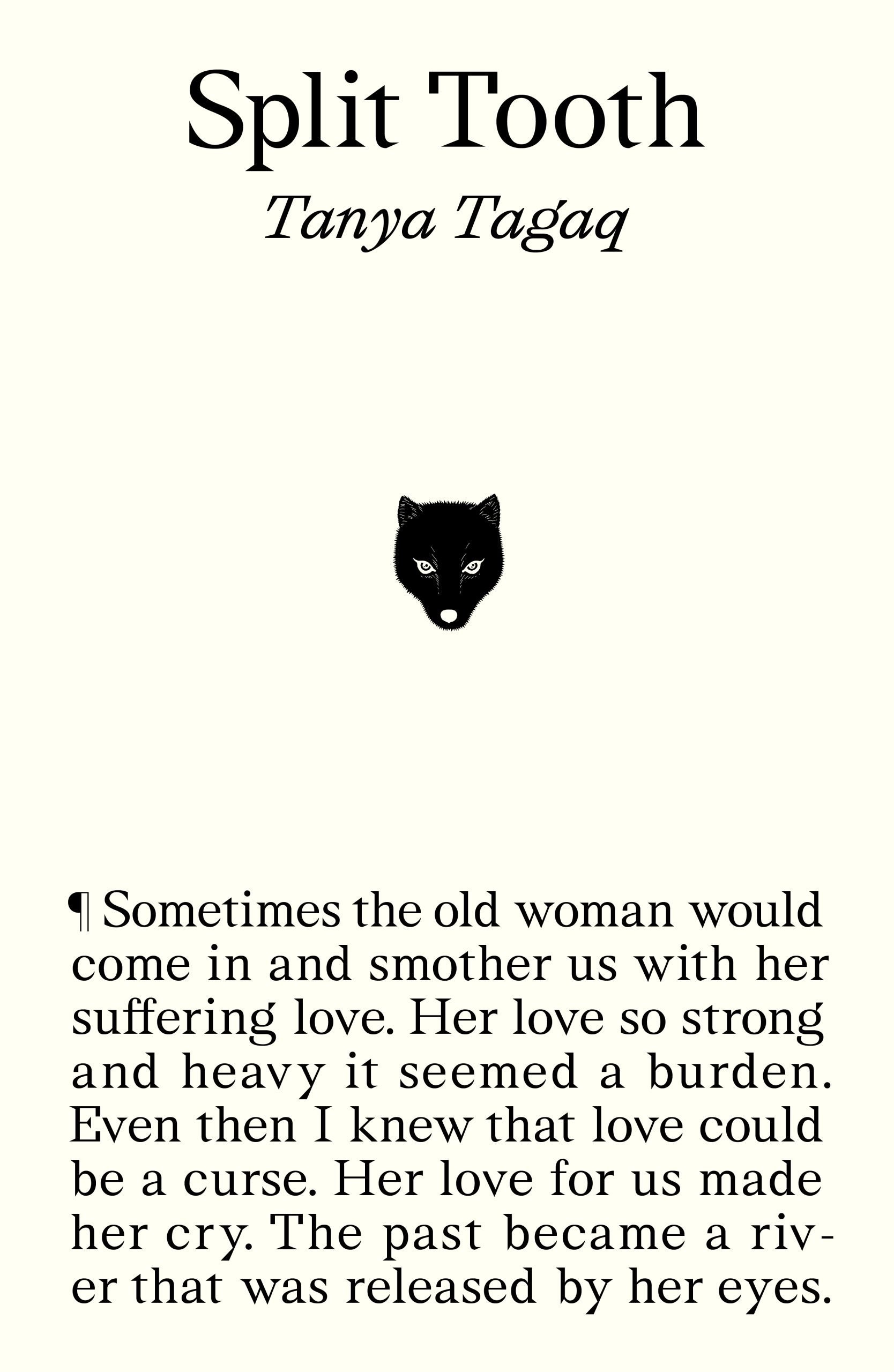
Split Tooth by Tanya Tagaq $42
Fact can be as strange as fiction. It can also be as dark, as violent, as rapturous. In the end, there may be no difference between them. An Inuk girl grows up in Nunavut, Canada, in the 1970s. She knows joy, and friendship, and parents’ love. She knows boredom, and listlessness, and bullying. She knows the tedium of the everyday world, and the raw, amoral power of the ice and sky, the seductive energy of the animal world. She knows the ravages of alcohol, and violence at the hands of those she should be able to trust. She sees the spirits that surround her, and the immense power that dwarfs all of us. When she becomes pregnant, she must navigate all this. In this acclaimed debut novel – haunting, brooding, exhilarating, and tender all at once – Tanya Tagaq explores the grittiest features of a small Arctic town and the electrifying proximity of the worlds of animals and of myth.
”Tagaq's surreal meld of poetry and prose transmutes the Arctic's boundless beauty, intensity, and desolation into a wrenching contemporary mythology.” —The New Yorker
>>Coming of age in the High Arctic.
>>Find out more.


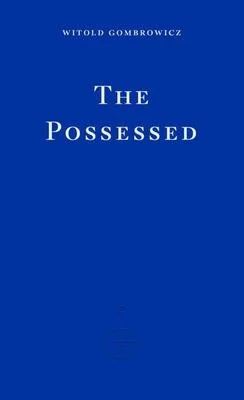
The Possessed by Witold Gombrowicz (translated from Polish by Antonia Lloyd-Jones) $40
Witold Gombrowicz is considered by many to be Poland's greatest modernist, and in The Possessed, he demonstrates his playful brilliance and astonishing range by using the familiar tropes of the Gothic novel to produce a darkly funny and lively subversion ofthe form. With dreams of escaping his small-town existence and the limitations of his class, a young tennis coach travels to the heart of the Polish countryside to train Maja Ochołowska, a beautiful and promising player whose bourgeois family has fallen upon difficult circumstances. Yet as Maja and the young man are alternately drawn to and repulsed by the other, they find themselves embroiled in the fantastic happenings taking place at the dilapidated castle nearby, where a mad prince haunts the halls, and bewitched towels, conniving secretaries, famous clairvoyants, and uncanny doubles conspire to determine the fate of the lovers. Serialized first in Poland in the days preceding the Nazi invasion, and now translated directly into English for the first time by Antonia Lloyd-Jones, The Possessed is both a comic jewel and a hair-raising thriller.
”Gombrowicz is one of the super-arguers of the twentieth century. The relentless intelligence and energy of his observations on cultural and artistic matters, the pertinence of his challenge to Polish pieties, his bravura contentiousness, ended by making him the most influential prose writer of the past half century in his native country.” —Susan Sontag
”What we have here is an unusual manifestation of a writing talent.” —Bruno Schulz
”Despite his anxiety about genre fiction, Gombrowicz acquits himself masterfully, moving deftly between horror, romance and crime. The web of dark motivations and interdependencies that links the characters is intricately and compellingly drawn, and the plot moves at an impressive speed. The novel’s shifts in tone and texture are handled expertly by translator Antonia Lloyd-Jones, who shows a keen sensitively not only to the language of the period but also to the genres being parodied, the translation interlaces passages of prose worthy of Stevenson’s The Strange Case of Dr Jekyll and Mr Hyde and P G Wodehouse, expertly re-creating the original’s tonal palette for the anglophone reader.” —Uilleam Blacker, Literary Review
>>Through the unreal to reality.


Doppelganger: A trip into the mirror world by Naomi Klein $42
When Naomi Klein discovered that a woman who shared her first name, but had radically different, harmful views, was getting chronically mistaken for her, it seemed too ridiculous to take seriously. Then suddenly it wasn't. She started to find herself grappling with a distorted sense of reality, becoming obsessed with reading the threats on social media, the endlessly scrolling insults from the followers of her doppelganger. Why had her shadowy other gone down such an extreme path? Why was identity — all we have to meet the world — so unstable? To find out, Klein decided to follow her double into a bizarre, uncanny mirror world — one of conspiracy theories, anti-vaxxers and demagogue hucksters, where soft-focus wellness influencers make common cause with fire-breathing far right propagandists (all in the name of protecting 'the children'). In doing so, she lifts the lid on our own culture during this surreal moment in history, as we turn ourselves into polished virtual brands, publicly shame our enemies, watch as deep fakes proliferate and whole nations flip from democracy to something far more sinister.
”Naomi Klein never disappoints. Doppelganger swirls through the bewildering ideas of the ultra-right that often appear as a distorted mirror of left struggle and strategy. With her always incisive analysis of the systems and structures linked to global capitalism, Klein now fiercely and brilliantly urges that our justice movements be prepared to follow the quest for new meaning into dimensions where we might least expect to find it: in injury and vulnerability.+ —Angela Y. Davis
”Once a decade, Naomi Klein writes a book that prompts us to completely rethink the moment we're in. If you want to understand where we are now — and how to find our way back to sanity — you have to read this totally brilliant book.” —Johann Hari
>>Down the rabbit hole.


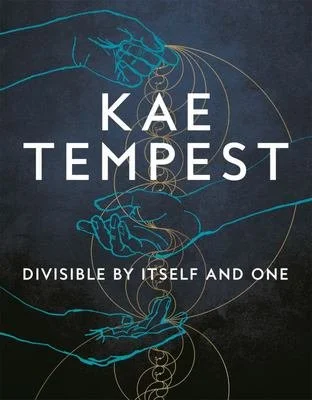
Divisible by Itself and One by Kae Tempest $28
I want to sing you early songs. Go deeper.
I want to take you back where you began,
Find the scraps of you you hid in secret
And bring them back to life beneath my tongue.

Tempest’s new poetry collection shows their familiar passion and truth-telling infused with a newer, more contemplative and metaphysical note; it is a book engaged with the big questions and the emotional states in which we live and create. Some of the poems experiment with form, some are free, and yet all are politically and morally conscious. Divisible by Itself and One is also a book about human form, the body as boundary and how we are read by the world. Taking its bearings — and title — from the prime number, Divisible by Itself and One is concerned, ultimately, with integrity: how to live in honest relationship with oneself and others.
"Tempest delivers their thoughts gorgeously, rhythmically, but also with clarity and a fierce grace." —Observer
>>Looking for the rhythm in a different place.
>>’Simple Things’.


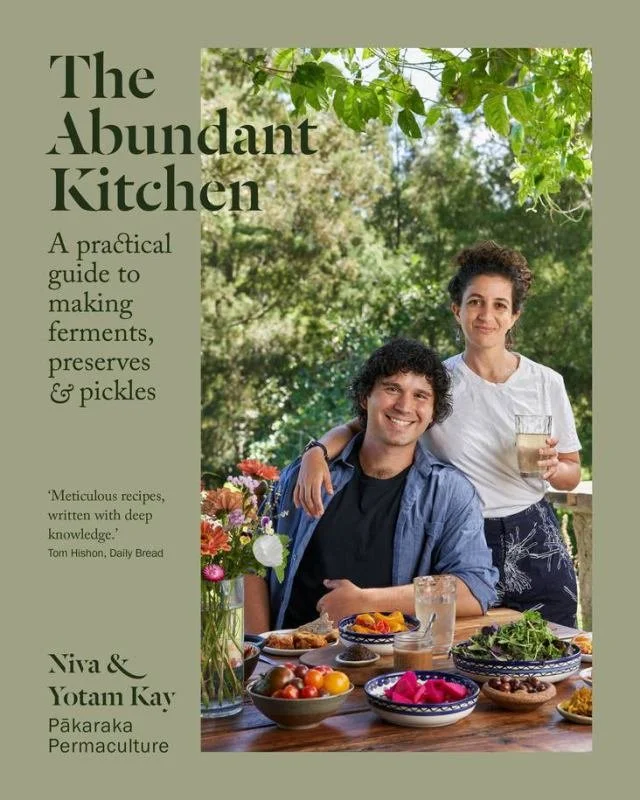
The Abundant Kitchen: A practical guide to making ferments, preserves and pickles by Niva Kay and Yotam Kay $50
The authors of the remarkably approachable and practical The Abundant Garden, Niva and Yotam Kay, share their knowledge and experience in making ferments, pickles, preserves, sourdough, koji, cured meat, ginger beer, yoghurt, vinegar, kombucha, and much more. With 100 easy-to-follow, meticulously written recipes, this book will become a much-loved fermenting bible. Using these recipes is the perfect way to preserve and transform the bounty from your garden into delicious classics, Middle Eastern flavours and other tastes from around the globe. Whether you are a seasoned fermenter or taking your first steps into the world of live cultures, The Abundant Kitchen, with its helpful tips, step-by-step instructions and timeless techniques, will be very useful.
>>Look inside!
>>Back into The Abundant Garden.


Abolishing the Military: Arguments and alternatives by Griffin Leonard, Joseph Llewellyn and Richard Jackson $18
In an era of escalating global conflicts, this book challenges the conventional belief that nation-states need military forces to ensure their security and contribute to international peace. As academic discourse on non-violent methods of national defence and global peace promotion gains momentum, there is growing evidence supporting the viability of such policy approaches. Far from being a matter of solely academic concern, this debate parallels increasing public awareness that militaries are struggling to deal effectively with (and may actually exacerbate) contemporary threats and challenges such as terrorism, climate change and inequality. Abolishing the Military: Arguments and Alternatives critically examines several widely held assumptions regarding the necessity of a military force for Aotearoa New Zealand. In doing so, it demonstrates that these assumptions often rest on shaky foundations or evidence. Moreover, the book explores alternative non-violent strategies for national defence and international peace promotion, offering a fresh perspective on global security in the twenty-first century.


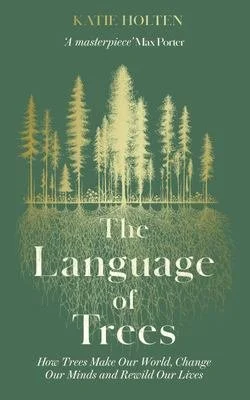
The Language of Trees: How trees make our world, change our minds, and rewild our lives by Katie Holten $40
A beautifully illustrated homage to the hidden wonders of the forest and our indelible connection to trees, filled with prose, poetry and art from over fifty collaborators, including Ursula K. Le Guin, Robert Macfarlane, Zadie Smith, Radiohead, Elizabeth Kolbert, Amitav Ghosh, Richard Powers, Suzanne Simard, Gaia Vince, Tacita Dean, Plato and Robin Wall Kimmerer. In this thoughtful collection, artist Katie Holten gives us her visual Tree Alphabet -—made of the trees themselves — and uses it to translate and illustrate these pieces from writers and artists, activists and ecologists. Holten guides us on a journey from prehistoric cave paintings and creation myths to the death of a 3,500 year-old cypress tree, from Tree Clocks in Mongolia and forest fragments in the Amazon to the language of fossil poetry. In doing so, she unearths a new way of seeing the natural beauty that surrounds us and creates an urgent reminder of what could happen if we allow it to slip away.
A masterpiece.” —Max Porter
>>Look inside!
>>Pulling at the roots.


Polish’d: Modern vegetarian cooking from global Poland by Michał Korkosz $65
100 fresh, modern Polish vegetarian recipes — from new takes on traditional favorites to fusions from around the world. Polish'd includes both typical Polish favorites made vegetarian, like Kakory (Potato Empanadas) Filled with Roasted Vegetables and Cheese, and new flavors brought to Poland through immigration and cultural exchange, like Miso Burek with Mashed Potatoes, Roasted Mushrooms, and Dill. Its recipes showcase fresh vegetables, grains, and herbs, but there's also plenty of buttery, sugary, and cheesy comfort-food goodness to be found. Readers will see, and taste, Polish food in a new way as they enjoy dishes like: —Chilled Cucumber-Melon Soup with Goat Cheese, Crispy Apple, and Mint —Kopytka with Umami Sauce, Spinach, Hazelnuts, and Poppy Furikake —Nettle Pesto Pasta with Radishes and Asparagus —Grilled Broccoli with Lemon Mayo, Umami Bomb Sauce and Poppy Seeds —Tomatoes and Peaches with Soft Goat Cheese, Crispy Sage, and Superior Brown Butter Sauce —Carmelized Twarg Basque Cheesecake.
>>Look inside!
>>Korkosz has won awards for his food photography.
>>The author’s video channel (in Polish).


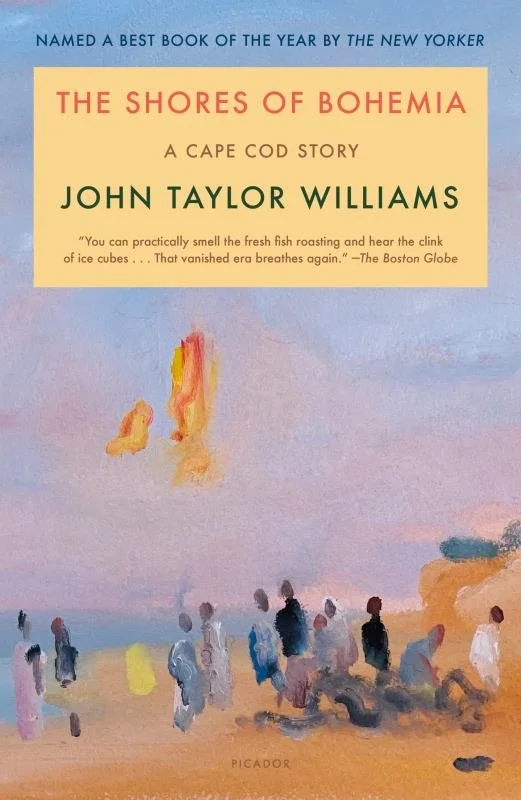
The Shores of Bohemia: A Cape Cod story by John Taylor Williams $43
An intimate portrait of the legendary generation of artists, writers, activists, and dreamers who set about creating a utopia on the shores of Cape Cod during the first half of the twentieth century. Their names are iconic: Eugene O'Neill, Willem de Kooning, Josef and Anni Albers, Emma Goldman, Mary McCarthy, Edward Hopper, Walter Gropius — the list goes on and on. Scorning the devastation that industrialisation had wrought on the nation's workforce and culture in the early decades of the twentieth century, they gathered in the streets of Greenwich Village and on the beachfronts of Cape Cod. They began as progressives but soon turned to socialism, then communism. They founded theaters, periodicals, and art schools. They formed editorial boards that met in beach shacks and performed radical new plays in a shanty on the docks, where they could see the ocean through cracks in the floor. They welcomed the tremendous wave of talent fleeing Europe in the 1930s. But at the end of their era, in the 1960s, as the postwar economy boomed, they took shelter in liberalism when the anticapitalist movement fragmented into other causes.


An Honourable Exit by Éric Vuillard (translated from French by Mark Polizzotti) $40
19 October 1950. The war is not going to plan. In Paris, politicians gather to discuss what to do about Indochina. The conflict is unpopular back home in France: too expensive, and too far away for the public to care. Withdrawal is not an option - a global power cannot surrender to an army of peasants — but victory is impossible without more soldiers and more money. The soldiers can be sourced from the colonies, but the money is out of the question. A solution needs to be found. In this gripping novel, Éric Vuillard exposes the tangled web of politicians, bankers and titans of industry who all had a vested interest in France's prolonged presence in lands far from Paris. Skilfully skewering the guilty, Vuillard shows us how key players in conflicts throughout history often have a motivation even deeper and darker than nationalism and political ideology — greed.
”Excoriating and profound — a remarkable work. I cannot think of an Anglophone author who writes with such polemical, poetical indignation.” —The Scotsman


Unravelling the Silk Road: Travels and Textiles in Central Asia by Chris Aslan $45
The famous Silk Road united east and west through trade.  Older still was the Wool Road, of critical importance when houses made from wool enabled nomads to traverse the inhospitable winter steppes. Then, later, came the Cotton Road, marked by greed, colonialism and environmental disaster.
At this intersection of human history in Central Asia, fortunes were made and lost through shimmering silks, life-giving felts and gossamer cottons. Aslan gives a fascinating account of this area little known to the West.
>>Find out more.


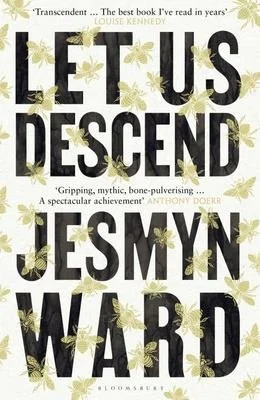
Let Us Descend by Jesmyn Ward $37
A reimagining of American slavery, Ward’s new novel is a journey from the rice fields of the Carolinas to the slave markets of New Orleans and into the fearsome heart of a Louisiana sugar plantation. Annis, sold south by the white enslaver who fathered her, is the reader's guide through this hellscape. As she struggles through the miles-long march, Annis turns inward, seeking comfort from memories of her mother and stories of her African warrior grandmother. Throughout, she opens herself to a world beyond this world, one teeming with spirits — of earth and water, of myth and history; spirits who nurture and give, and those who manipulate and take. While Ward leads readers through the descent, this, her fourth novel, is ultimately a story of rebirth and reclamation.
”For all its boundless suffering, this is a novel of triumph.” —Washington Times


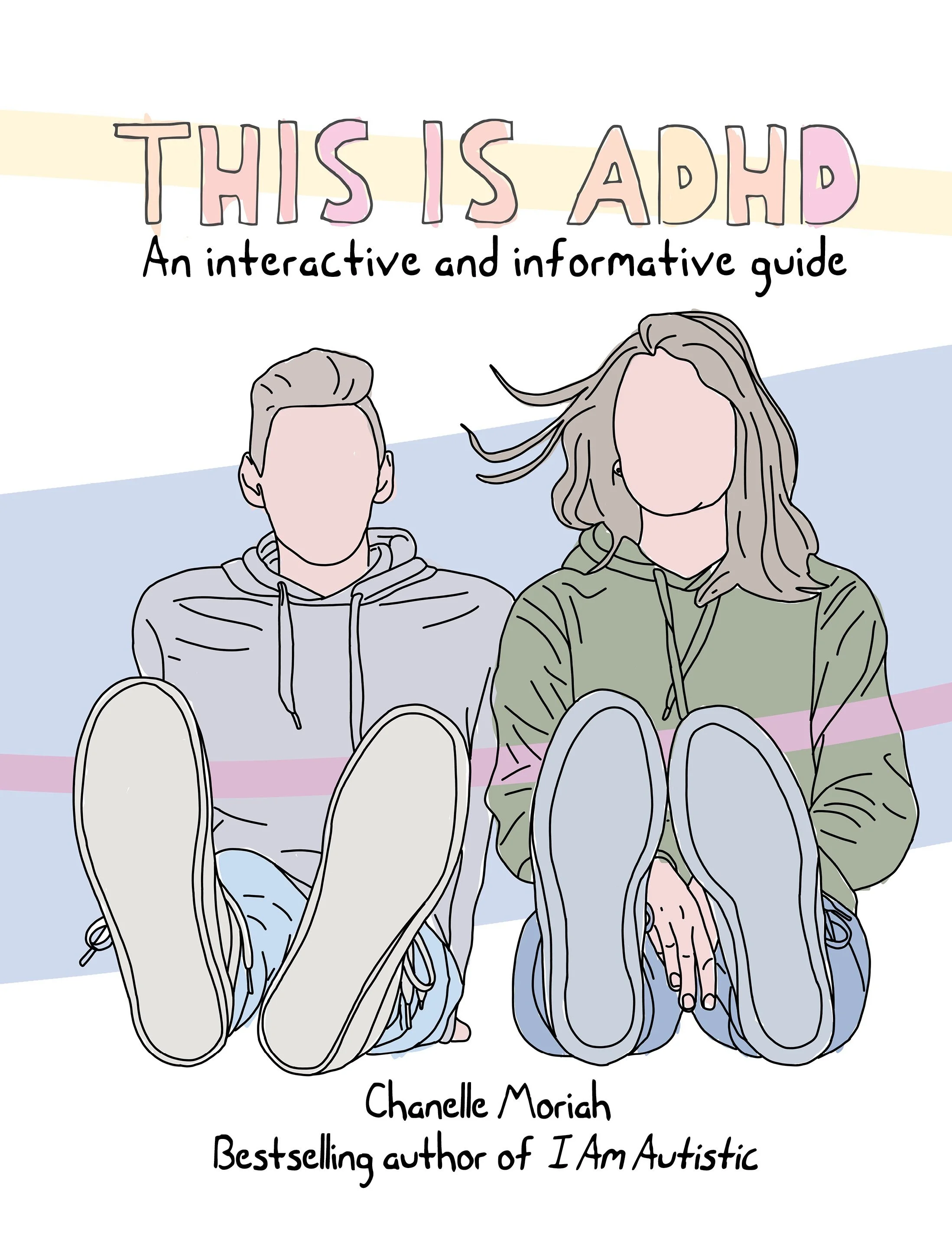
This Is ADHD: An interactive and informative guide by Chanelle Moriah $33
An essential Aotearoa guide to understanding Attention Deficit / Hyperactivity Disorder — commonly known as ADHD —  written and illustrated from the perspective of someone with ADHD. Chanelle Moriah was officially diagnosed with ADHD at 22, and soon discovered just how inaccessible a lot of information can be for ADHD adults and those who may not yet have been able to obtain an assessment or supports. Chanelle has created a simple resource that explains what ADHD is and how it can impact the different areas of someone's life. This is ADHD is a tool for both diagnosed and undiagnosed people with ADHD to explain or make sense of their experiences. It also offers non-ADHD people the chance to learn more about ADHD from someone who has it.
>>Look inside.


I Am Autistic: A interactive and informative guide to autism (by someone diagnosed with it) by Chanelle Moriah $37
An essential Aotearoa guide to understanding autism — for autistic people and their families, friends and workmates. When Chanelle Moriah was diagnosed with autism at 21, life finally began to make sense. Hungry for information, Chanelle looked for a simple resource that could explain what autism is and how it can impact the different areas of an autistic person's life, but found that there was little written from the perspective of someone who is autistic. So Chanelle decided to create that missing resource. Chanelle discovered just how difficult it can be for autistic adults — particularly females or those assigned female at birth — to be diagnosed or even be assessed for autism. This is partly because there is very little understanding of the different ways autism can present itself. I Am Autistic is a tool for both diagnosed and undiagnosed autistics to explain or make sense of their experiences. It also offers non-autistic people the chance to learn more about autism from someone who is autistic.
>>Look inside.

 
VOLUME BooksNew releases
Book of the Week: SPLIT TOOTH by Tanya Tagaq

Split Tooth, by Inuk writer, composer and singer Tanya Tagaq, is presented as a sequence of heightened verbal experiences conveying a teenager’s coming of age in the Canadian far north. The book eschews the narrative binds of the literary fiction novel as we typically see it, alternating between poems, short vignettes that read like flash fiction, and lengthier passages that unfold wondrous, spiritual happenings in the vein of magical realism before returning with a snap to the realities of Arctic indigenous life, and meandering back again through literary forms, artistic genres, and modes of being, thinking, experiencing, knowing.

MINOR DETAIL by Adania Shibli — reviewed by Thomas

Minor Detail by Adania Shibli (translated by Elisabeth Jaquette)

Sand absorbs water poured upon it just as it absorbs blood spilt upon it and the actions committed upon it. Where does this water, this blood, and where do these actions go? Can they be recovered? How do they return? Adania Shibli’s remarkable novel is comprised of two parts. The first, told in the third person, describes with elegant impassivity and equivalence the actions and movements of an officer in the Israeli army in the Naqab/Negev desert during the 1948-49 Naqba/War of Independence. Although we gain no access to his thoughts (how could we gain access to his thoughts, after all?), we are witness to his obsessive washing routines, his watchfulness for spiders and insects within his hut and his destruction of them, his tending of a festering spider bite on his thigh, his journeys into the surrounding desert either in vehicles with his soldiers, using maps, searching for Arab ‘insurgents’, or alone, on foot around the camp, following the topography. The other soldiers have no reachable dimension other than being soldiers because any such dimensions would be irrelevant. The officer is the only one who speaks, and that hardly at all except for a long lecture expressing the view that the desert is a wasteland that can be made fertile when cleansed of its current inhabitants. As the rituals of army life are repeated and repeated, the tension builds beneath the narrative. The soldiers come across a group of unarmed Bedouin at an oasis and kill them and their camels, taking a dog and a young woman back to the camp. Their mistreatment of her, culminating in gang rape and later her murder and burial near the camp, can be felt in the narrative long before they occur. The howling dog witness shifts the first section of the book to the second, where a howling dog keeps the first-person narrator awake at night in her house in contemporary Ramallah. She has become obsessed with the fate of the young woman, which she has read about in a newspaper article, and by “the conviction that I can uncover details about the rape and murder as the girl experienced it, not relying on what the soldiers who committed it disclosed.” What happens to those who have no agency in their own story? The narrator cannot accept that the young woman is “a nobody who will forever remain a nobody whose voice nobody will hear,” and, with a borrowed ID, which will help her to enter different areas, and a rented car, one weekend she sets out to see if she can find out more. She takes a pile of maps: the official Israeli maps that show the roads, checkpoints, settlements and army zones in the Negev but do not mark even still-existing Palestinian settlements, and maps of the Naqab before 1948, which give information possibly relevant to her search. Maps are a way in which power imprints itself on territory, and Shibli spends a great deal of careful attention in both parts of the novel to the movements of her main characters over the land, contrasting the movement associated with maps with that concerned with and guided by the terrain. These different ways of moving have, for eeach of them, quite different results. The movements of the officer in the first section imprints power upon a territory, a pattern traced by the woman in the second section over land that holds the trace of violence in itself. The past is never left behind though it can never be recovered, either. In the first part, the officer has complete ease of movement, heading wherever he wishes, inside or out; in the second part the narrator has her movement checked and restricted wherever she goes (until she reaches the Naqab). “The borders imposed between things here are many. One must pay attention to them, and navigate them, which ultimately protects everyone from perilous consequences,” she notes, waiting at the checkpoints in the wall that divides the territory. “There are some who consider focusing on minor details as the only way to arrive at the truth, and therefore proof of its existence, to reconstruct an incident one has never witnessed simply by noticing little details that everyone else finds to be insignificant,” she says, as a reason for her search. This may be true, but if such minor details exist their significance may also be unrecognised by the searcher. In the military museum that she visits, the only ‘evidence’ is the soap, the jerricans, the uniforms, the vehicles and the weapons mentioned in the first part. Intention leaves no residue. Also these objects constitute the majority of the soldiers’ experience, given how little the woman meant to them. Part of the narrator’s and Shibli’s project is to uncover the particular from the general, the experience from the history. Although both she and the author bewail injustice, the narrator shows no enmity towards any of the people she meets, all are treated with sympathy; harm arises only from structures of power. Power withdraws the evidence of its actions, hides its victims, disappears into the understructure of everyday life. There is no residue unless the land holds a residue. The second half of the book is lightly told, in keeping with the personality of its narrator, and often funny (she describes a film rewinding in a museum and the settlers dismantling their houses). She visits the settlement with the name of the place where the crime occurred and learns that the actual place is near by, she visits the place and finds nothing of interest, she walks through the surrounding plantations where the desert has been made fertile, but is frightened back by a dog. “I am here in vain,” she says. “I haven’t found anything I’ve been looking for, and this journey hasn’t added anything to what I knew about the incident when I started out.” Reluctant to return to Ramallah, she drives back and forth in the desert, gives a ride to an old woman, and then decides to follow her through a military zone, where she comes across an oasis. The land has drawn her to the core of her quest, but she has no way of recognising it as such, and she does not expect that her quest will be, still unknowingly, fulfilled in the last sentence of the book. 

LITERARY CAROUSEL

A revolving selection of excellent recent fiction, significantly reduced in price to encourage your discovery. 
Just enter the discount code CAROUSEL2 when adding the books to your cart for a 20% discount. 
This offer is extended on these books only until 22 October 2023, and is limited to the copies currently in stock.

VOLUME Books
W, OR, THE MEMORY OF CHILDHOOD by Georges Perec — reviewed by Thomas

W, or, The memory of childhood by Georges Perec (translated from French by David Bellos)

“I write: I write because we lived together, because I was once amongst them, a shadow amongst their shadows, a body close to their bodies. I write because they left in me their indelible mark, whose trace is writing. Their memory is dead in writing; writing is the memory of their death and the assertion of my life.” Both of Perec’s parents were killed in the 1939-1945 war, his father early on as a French soldier, and, soon after, his mother sent to a death camp. Their young son was smuggled out of Paris and spent the war years in a series of children’s homes and safe villages. “My childhood belongs to those things which I know I don’t know much about,” he writes. W alternates two narratives, the first an attempt by Perec to set down the memories of his childhood and to examine these not only for their accuracy but in order to learn the way in which memory works. Often factual footnotes work in counterpoint to the ‘remembered’ narrative, underscoring the limitations of the experiences that formed it. Right from birth the pull of the Holocaust is felt upon Perec’s personal biography, and his story is being shaped by this force, sucking at it, sucking his family and all stability away. Sometimes he attaches to himself experiences of which he was merely a witness, the memories transformed by remembering and by remembering the remembering, and so forth, and by the infection of memories by extraneous imaginative details. “Excess detail is all that is needed to ruin a memory.” The absences around which these memories circulate fill the narrative with suppressed emotion. The other narrative begins as a sort of mystery novel in Part One, telling how one Gaspard Winckler is engaged by a mysterious stranger to track down the fate of the boy whose name he had unknowingly assumed and who had gone missing with his parents in the vicinity of Terra del Fuego where they had gone in search of an experience that would relieve the boy’s mutism. In Part 2, the tone changes to that of an encyclopedia and we begin to learn of the customs, laws and practices of the land of W, isolated in the vicinity of Terra del Fuego, a society organised exclusively around the principles of sport, “a nation of athletes where Sport and life unite in a single magnificent effort.” Perec tells us that ‘W’ was invented by him as a child as a focus for his imagination and mathematical abilities during a time when his actual world and his imaginative world were far apart, his mind filled with “human figures unrelated to the ground which was supposed to support them, disengaged wheels rotating in the void” as he longed for an ordinary life “like in the storybooks”. Life and sport on W are governed by a very complex system of competition, ‘villages’ and Games, “the sole aim to heighten competitiveness or, to put it another way, to glorify victory.” It is not long before we begin to be uncomfortable with some of the laws and customs of W, for instance, just as winners are lauded, so are losers punished, and all individual proper names are banned on W, with athletes being nameless (apart from an alphanumeric serial number) unless their winnings entitle them to bear, for a time, the name of one of the first champions of their event, for “an athlete is no more and no less than his victories.” Perec intimates that there is no dividing line between a rationally organised society valuing competition and fascism, the first eliding into the second as a necessary result of its own values brought to their logical conclusions. “The more the winners are lauded, the more the losers are punished.” The athletes are motivated to peak performance by systematic injustice: “The Law is implacable but the Law is unpredictable.” Mating makes a sport of rape, and aging Veterans who can no longer compete and do not find positions as menial ‘officials’ are cast out and forced to “tear at corpses with their teeth” to stay alive. Perec’s childhood fantasy reveals the horrors his memoir is unable to face directly. We learn that the athletes wear striped uniforms, that some compete tarred and feathered or are forced to jump into manure by “judges with whips and cudgels.” We learn that the athletes are little more than skin and bone, and that their performances are consequently less than impressive. As the two strands of the book come together at the end, Perec tells of reading of the Nazi punishment camps where the torture of the inmates was termed ‘sport’ by their tormentors. The account of W ends with the speculation that at some time in the future someone will come through the walls that isolate the sporting nation and find nothing but “piles of gold teeth, rings and spectacles, thousands and thousands of clothes in heaps, dusty card indexes, and stocks of poor-quality soap.”

Some friendly books — reviewed by Stella

After a request for children’s picture books about making friends and getting on with others, we had a decent stack on our table. Here’s a selection from the pile.

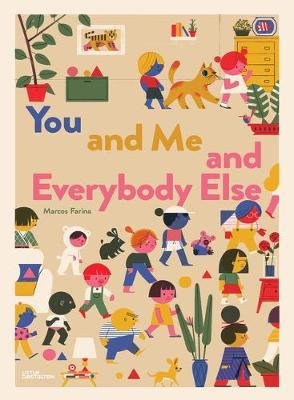
You and Me and Everybody Else is a wonderful book about what makes us different, but more importantly what we have in common. Its bold colours, playful design, and Playmobil-like characters are instantly appealing. On every page, there is action (plenty of activities are taking place), but also quiet spaces where children rest, read, chat, and relax. The text at the bottom of each page has repeating lines creating a sense of familiarity which works well as a read-aloud. Each paragraph starts with ‘everybody’, then moves on to ‘some’. Everybody loves to play. Everybody learns new things. Everybody gets angry, Everybody dreams. / Some like to play with others. Some learn by doing it themselves. Sometimes things don’t work out. Some dream of things that don’t exist yet. Children play, get bored, are happy and sad, are lonely and scared, laugh, eat and sleep. They dream and are surprised. The illustrations show children building with blocks, on swings and slides, waiting and watching, alone, and with friends, giving gifts and frights, falling off bikes, playing chess, making music, and making art. There is a diverse range of activities and cultures on every page and the table spread for lunch has noodles and fruit, pizza and popcorn, couscous, and sushi. [>>Look inside.]

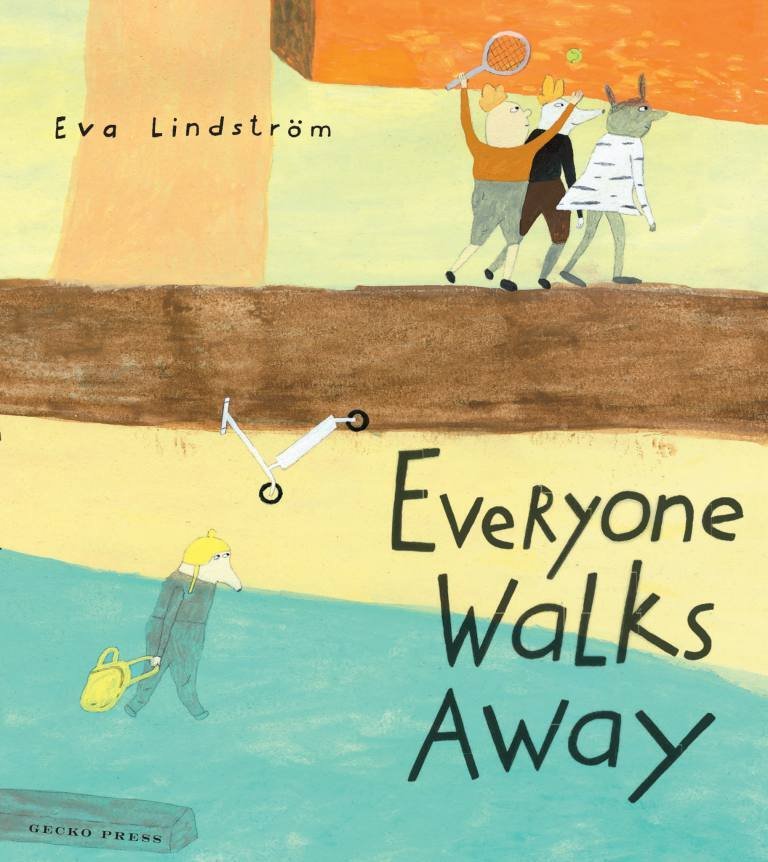
In Eva Lindstrom’s Everyone Walks Away things aren’t so straightforward. Frank is always alone. The others (Tilly, Paul, and Milan) are having fun, and they have each other to play with, and they laugh together, not always kindly. When Frank wanders off to the surprise of the others, Tilly, Paul, and Milan become curious. Where has he gone? They follow at a distance. Frank has gone home to cry, and like Owl (in Owl at Home) he’s making tear-water tea letting his tears fall straight into the pot. Later when the tea has been made with the much-needed sugar (if you look closely, you will see Frank is a jam connoisseur) and cooled by the breeze from the window, Frank makes toast and gets things ready. Will anyone come to drink and eat? Maybe. Or will the others keep larking about outside? Lindstrom’s illustrations are a mix of watercolour, gouache, and pencil giving the pages a delightful and sometimes dreamy aspect juxtaposed with deft detail. Her colour palette for this book of yellows, blue-greens, and oranges is strangely attractive. Humour threads its way through the illustrations; there are suggestively sly side glances, and her children’s personalities are expressed by their quirky, slightly animalish features. Tilly’s braided green hair sticks up like perky animal ears, two of the children have snouts rather than petite noses and Frank’s yellow helmet hat gives him a mole-like aspect. The more times you read this sweet sad story, the more you will notice. And I think there might be a happy ending. [>>Look inside.]

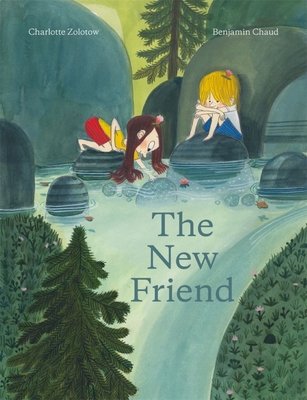
There’s more crying in The New Friend, but don’t worry; this is an optimistic tale. Having a best friend is excellent. Losing a best friend is difficult. The excellent author Charlotte Zolotow manages to talk about betrayal, sadness and anger, and the empowering action of overcoming a difficult situation without resorting to easy saccharine answers. At the beginning is memory. Memories of all the wonderful things you did with your friend. Walking in the woods, listening to the rain, picking flowers, eating apples in a tree, and reading books together. And then, they are no longer there. They are with a new friend, sharing all your wonderful friendly things. You’re sad and mad. You cry until you fall asleep. You dream of a someone else. They take you on new paths with different adventures to places you have never been before. When you wake up, it’s time to go in search of this new friend. Looking for them is an adventure in itself, and your memory of your first friend is tucked inside. This classic Zolotow story (first published in 1968) has fresh joyful illustrations by Benjamin Chaud. Chaud’s style is both quiet (the rain falling over the rooftops, the soft wallpaper that cocoons the child in bed) and effervescent (running across the field, a jaunty sun umbrella for a reading shelter) capturing the different moods of the text. There are small birds flittering through the pages and a rabbit popping up when least expected which add little, surprising details to this dreamy thoughtful, and hopeful landscape. [>>Look inside.]