
 | Notes on Suicide by Simon Critchley {Reviewed by THOMAS} Whether life is worth living or not is not something that can be philosophically contested, but, if life is not worth living, or if life is at least regarded by some persons in some situations as not worth living, whether suicide is justifiable in addition to being understandable is perhaps open to examination. Critchley interrogates the standard arguments against suicide and finds them unsupportable (in this he is much aided by an afterword from David Hume). The general argument in justification of suicide, or, rather, against the proscription of suicide, is one of what I would call ‘possessive individualism’, the assertion of the absolute freedom to dispose of oneself as one chooses. This argument leaves unexamined the easy belief that the bundle of impulses, tendencies and glimmerings of consciousness that we think of as ourselves in fact belong to or ‘are’ us, rather than being mere nodes in a field of impulses, tendencies and glimmerings and indivisible from the other nodes therein. In fact, we find ourselves constantly constrained by the wider consequences of an act of freedom to the extent that this freedom is not free, and thus suicide can never be merely the sovereign removal of oneself from the hole into which one had otherwise been consigned. From the individualistic point of view, suicide is both an assertion of oneself as the sole subject of one’s life and the relinquishment of oneself as the subject, a determination to be relieved of an unbearable subjectivity, to stop experiencing the story from the point of view of a character, to become, for the instant that the story ends, the reader of that story, a reader who will perish, as all readers do, in the cessation of the story. Critchley considers Cioran’s assertion that suicide is the recourse of optimists: “Is it not inelegant to abandon a world which has so willingly put itself at the service of our melancholy?”, and makes some concluding attempts to the effect that it is the fact that life is not worth living that makes life worth living. In this he strays beyond the philosophically reachable consideration of suicide into areas in which it is not possible to make assertions without being at least judgemental if not insensitive. If there is an argument against suicide it is not that life is worth living (or that life is not worth living), but, perhaps, part of a more general one against the possessive individualism upon which our culture, and indeed modern consciousness itself, depends. |
NEW RELEASES
Some of the interesting books that have leapt from the cartons this week.
Scroll through to browse. Click through to have.

One of the first Maori travellers to Europe, Tuai, a young Ngare Raumati chief from the Bay of Islands, took the opportunity in 1817 to visit England and elsewhere, observing Pakeha culture and technology in its own place. He returned in 1819, planning to integrate new European knowledge and relationships into his Ngare Raumati community, but the situation at home had changed in his absence.

Mary is hired to play the part of the Emotional Girlfriend (alongside a Maternal Girlfriend, a Mundane Girlfriend, an Angry Girlfriend, &c) in a research project called The Girlfriend Experiment, which seeks to discover why two people, drawn together by forces beyond their control, can wake up one day as strangers to one another.
"For Lacey’s remarkable skill to be fully embraced, we may need a new genre to categorize her work under. Lacey’s books are not really novels, in a similar way that Woolf’s The Waves, Marilynne Robinson's Housekeeping, or Rachel Cusk’s Outline are arguably not really novels. Still, no matter how you categorise them, it seems inevitable that her books will find a larger audience. Her sentences are like reading an iconic prose style before it’s become iconic." - Los Angeles Review of Books
Lacey's previous novel Nobody is Ever Missing, set largely in New Zealand, was an international literary sensation.
>> She's got a paperclip upon her wrist.

An excellent New Zealand essay collection on the theme of 'home', with contributions from Selina Tusitala Marsh, Martin Edmond, Ashleigh Young, Lloyd Jones, Laurence Fearnley, Sue Wootton, Elizabeth Knox, Nick Allen, Brian Turner, Tina Makereti, Bonnie Etherington, Paula Morris, Thom Conroy, Jill Sullivan, Sarah Jane Barnett, Ingrid Horrocks, Nidar Gailani, Helen Lehndorf, James George and Ian Wedde.

This taut depiction of a stand-up comedian falling apart on stage in front of an audience wanting entertainment won Grossman the 2017 Man Booker International Prize. Why are we so transfixed by tragedy, our own and others'? In reading literature, are we like Dovaleh's audience, seeking entertainment from the miseries of others?
"Unrelentingly claustrophobic. The violence that A Horse Walks into a Bar explores is private and intimate. Its central interest is not the vicious treatment of vulnerable others but the cruelty that wells up within families, circulates like a poison in tight-knit groups, and finally turns inward against the self. Searing and poignant." - New York Review of Books
>> Some things wrong in Israel.

Written in one long sentence (in which line breaks perform as a higher order of comma), McCormack’s remarkable and enjoyable book succeeds at both stretching the formal possibilities of the novel (for which it was awarded the 2016 Goldsmiths Prize) and in being a gentle, unassuming and thoughtful portrait of a very ordinary life in a small and unremarkable Irish town. The flow of McCormack’s prose sensitively maps the flow of thought, drawing feeling and meaning from the patterning of quotidian detail as the narrator dissolves himself in the memories of which he is comprised. This wash of memory suggests that the narrator may in fact be dead, the narrative being the residue (or cumulation) of his life, the enduring body of attachments, thoughts and feelings that comprise the person. Few novels capture so well the texture of a person’s life, and this has been achieved through a rigorous experiment in form. New edition.

An absolutely stunningly beautiful large-format illustrated guide to the wonders and variety of the plant world. Seldom do we use so many adjectives to describe a book. Part of the 'Welcome to the Museum' series.

White Trash: The 400-year untold history of class in America by Nancy Isenberg $45
Isenberg argues that the voters who boosted Trump all the way to the White House have been a permanent part of the American fabric, and reveals how the wretched and landless poor have existed from the time of the earliest British colonial settlements to today's hillbillies. Poor whites were central to the rise of the Republican Party in the early nineteenth century and the Civil War itself was fought over class issues nearly as much as it was fought over slavery.
"A masterly and ambitious cultural history." - New York Times
"A gritty assault on American mythmaking." - Washington Post

For the first time, every Dior haute couture collection has been plucked from the catwalk and put into one book. Endlessly stimulating.
>> Lost in the woods.

In 1761 six men left Copenhagen by sea: a botanist, a philologist, an astronomer, a doctor, an artist, and their servant. Disliking and distrusting one another from the start, they nevertheless reached the Yemen, the first organised European mission to do so. Continually seeking to undermine each other in every way possible, the expedition reached Turkey and Egypt and then continued into the desert which proved their ultimate undoing. Only one member returned to Denmark, to find that their expedition had been almost entirely forgotten and that all the specimens that had been sent back had been neglected and spoiled. The notebooks, diaries and sketches lay forgotten until the 20th century.

Influential art writers consider the work of influential art writers, including Nikolaus Pevsner's Pioneers of the Modern Movement, Alfred Barr's monograph on Matisse, E.H. Gombrich's Art and Illusion, Clement Greenberg's Art and Culture, and Rosalind Krauss's The Originality of the Avant-Garde and Other Modernist Myths. Required reading.

Two women wishing to reignite their writing careers and their personal lives reunite after twenty years of domestic compromise at a writers' conference and begin to feel the irresistible pull of each other's gravity. How much have they lost sight of themselves?
"Completely engrossing." - Claire Messud

In 2010, the Human Rights Commission found that Asian people reported higher levels of discrimination than any other minority in New Zealand. Yet although anti-Asian prejudice has a long history in New Zealand, it is seldom publicly acknowledged.K. Emma Ng shines light onto the persistence of anti-Asian sentiment in New Zealand. Her anecdotal account is based on her personal experience as a second-generation young Chinese-New Zealand woman and those of other young Asian-New Zealanders. When Asian people have been living here since the Gold Rush, she asks, what will it take for them to be fully accepted as New Zealanders?

Young children can match 27 animals to their homes and make them happy. Older children will enjoy using this as a memory game.

Janouch met Kafka as a seventeen-year-old, and they took to taking long walks together, with Janouch recording everything afterwards, like Kafka's Boswell. "Life is infinitely great and profound as the immensity of the stars above us. One can only look at it through the narrow keyhole of one's personal experience. But through it one perceives more than one can see. So above all one must keep the keyhole clean." Introduction by Francine Prose.

Sixteenth century Venice, renowned for its mirrors; 1958 Venice Beach, California; 21st century Venice Casino, Las Vegas: this genre-splicing, time-shifting grand novel has been compared with the work of David Mitchell, Umberto Eco and Herman Hesse.
"Audaciously well written." - The New York Times
"With near-universal appeal, Seay's novel is a true delight, a big, beautiful cabinet of wonders that is by turns an ominous modern thriller, a supernatural mystery, and an enchanting historical adventure story." - Publishers' Weekly

An incomparable account from The Guaridan's refugee correspondent, who travelled to 17 countries and interviewed hundreds of refugees.
"A must-read for our times." - Yannis Varoufakis

Almost everything we think we know about Jane Austen is wrong. Her novels don’t confine themselves to grand houses and they were not written just for readers’ enjoyment. She writes about serious subjects and her books are deeply subversive. We just don’t read her properly - we haven’t been reading her properly for 200 years. Now in paperback.
"A sublime piece of literary detective work that shows us once and for all how to be precisely the sort of reader that Austen deserves." - Guardian

After the Second World War, the Nuremberg Tribunal became a symbol of justice in the face of tyranny, aggression and atrocity. But it was only a fragment of retribution as, with their Allies, the British embarked on the largest programme of war crimes investigations and trials in history. This book exposes the deeper truth of this endeavour, moving from the scripted trial of Goering, Hess and von Ribbentrop to the makeshift courtrooms where the SS officers, guards and executioners were prosecuted. Was justice done?

Duley was commissioned by the United Nations High Commissioner for Refugees (UNHCR) to document the refugee crisis. Over the next seven months, he criss-crossed Europe and the Middle East attempting to put a human face to one of the biggest humanitarian crises of our time. The result are a reminder that the crisis and the responses it provokes have an impact on actual individual people. Powerful.

"Michael Bess's detailed and humane book adeptly surveys some eye-opening developments in current technology (bionic vision, thought-controlled machines and so forth), and foresees that future humans will enjoy double the average healthy lifespan of today, leading to lives of multiple marriages and career changes." - The Spectator

Mountainous regions are home to only ten percent of the world's population yet host a strikingly disproportionate share of the world's conflicts. Mountains provide a natural refuge for those who want to elude authority, and their remoteness has allowed various practices to develop and persist in isolation, resulting in a combustible mix those in the lowlands cannot afford to ignore. A new way of looking at conflict.

The Palestine Festival of Literature was established ten years ago as an attempt to break the cultural siege resulting from the Israeli military occupation. Contributions here from many leading writers, including Teju Cole, Molly Crabapple, Selma Dabbagh, Geoff Dyer, Yasmin El-Rifae, Adam Foulds, Henning Mankell, Claire Messud, China Mieville, Pankaj Mishra, Deborah Moggach, Michael Palin, Kamila Shamsie, Gillian Slovo, Alice Walker, China Achebe, Michael Ondaatje and J. M. Coetzee.

One of the most important of the early Expressionists, Paula Moderson Becker is most remembered for her searching, sensitive self-portraits.

1851, Salem, Massachusetts. Has the drunken McGlue killed a man? Was it his best friend? More urgently, can he get another drink? A novella from the Booker short-listed Eileen.
"Wonderful." - Guardian
"Strange and beautiful." - Los Angeles Times

Emerging from the trad-jazz clubs of the early '50s, skiffle was adopted by kids who growing up during the dreary, post-war rationing years. This the the story of jazz pilgrims and blues blowers, Teddy Boys and beatnik girls, coffee-bar bohemians and refugees from the McCarthyite witch-hunts. Bragg traces how the guitar came to the forefront of music in the UK and led directly to the British Invasion of the US charts in the 1960s.
>> Donny Lonegan's 'Rock Island Line' hit the charts in 1956 and sales of guitars in the UK suddenly rocketed from 5,000 to 250,000 a year.
>> Another man with a guitar.

Perhaps no aspect of the natural world is more hidden by the projection of human response to it than the dawn chorus and birdsong in general. This interesting book shows us how little we really know about birds.

Who are the public intellectuals of the internet age? Who are the vehicles for necessary thought in the face of modern populism? This book makes a few suggestions, including Slavoj Zizek and Judith Butler.

Artists are gatekeepers of the subconscious [*snigger*]. Who better to turn to for creative and life inspiration? [*snort*]. This set of 50 tongue-in-cheek 'divination' cards is a great way to become familiar with the thought processes of a wide range of artists, historical and modern. Fun (and possibly helpful).

Uses Canterbury University's superb Logie Collection to illustrate consideration of the myths and meanings of gods and heroes.
We also have in stock a superb catalogue to the superb Logie Collection.
>> But just for one day.

Very usable postcards ready to complete (or not) and send.

Sometimes children need a little help insulting their friends and family (not to mention teachers and strangers). This useful flip-book allows the user to mix-and-match their insults, extend their repertoire (by more than 60 million) and become even more endearing than they are already.


BOOKS @ VOLUME #30 (1.7.17)
Find out what we've been reading, and about some excellent new releases, and about our next Book of the Week, and about the Nelson Poetry Map and about our Poetry Spam competition. All in our latest newsletter.

Writers represented:
Anahera Gildea - Patricia Grace - Nic Low - Mary Rokonadravu - Tusiata Avia - Witi Ihimaera - Alexis Wright - Gina Cole - David Geary - Kelly Joseph - Cassandra Barnett - Jione Havea - Serie Barford - Dewe Gorode - Victor Rodger - Tina Makereti - Michael Puleloa - Courtney Sina Meredith - Kelly Ana Morey - Sia Figiel - Anya Ngawhare - Paula Morris - Selina Tusitala Marsh - Bryan Kamaoli Kuwada - Albert Wendt
Images:
Fiona Pardington - Pati Solomonia Tyrell - Shane Hansen - Rosanna Raymond - Robert Jahnke - Cerisse Palalagi - Lisa Reihana - Yuki Kihara
>> Paula Morris: "The most subversive coffee table book of the year."
>> Stories can save your life.
>> Should we be worried about the ethic representation in New Zealand publishing?
>> Expanding perceptions of the Pacific world.
>> Makereti's five favourite Maori and Pasifika books.
>> The marginalisation and pigeonholing of ethnic minorities in UK publishing.
>> The whiteness of the publishing industry in the US.
 |
Zeustian Logic by Sabrina Malcolm {Reviewed by STELLA}
If only real life could be like as magical as the stars in the night sky, as escapist as the stories of the Greek gods he tells his little brother to help him sleep at night, or as logical as a mathematical equation. Tuttle (Duncan) would rather look at stars, visit the Carter Observatory and play computer games with his mate, Attila the Pun, but life has other, more urgent things in train for our nerdy teen. Tuttle’s Dad, a once famous, now infamous, mountain climber has been missing, presumed dead in a storm on Mt. Everest, accused of leaving his paying customer to die on the mountain. Tuttle is determined to find out the truth, but more pressing still are his mother’s fall into depression, his younger brother’s anxiety, and how to make sure the family are fed, get to school on time and avoid all the hassles of the social worker and the persistent journalist. And Tuttle also has the aggravating presence of Boyd, the petrol head neighbour who drives him insane. Zeustian Logic is reminiscent, in style, of Kate De Goldi’s The 10pm Question, with its compelling main character, serious issues – in this case the death of a parent and the fallout this has for a family – mixed with humour and compassion, against a backdrop of the everyday ups and downs of being a young teen coping with secondary school and of attempting to find resolutions to sometimes impossible problems. The book is cleverly set a year on from the event that changes this family’s lives – the relations and friends have been supportive and cared for them but now everyone has got on with their lives while Tuttle and his mother and brother are still living in a limbo-land, one in which grief is still ever-present, where the pressures on this young man are reaching a breaking point. Sabrina Malcolm has written a brilliant book about a boy coping with the death of his father and the impact that grief has on a family. In this climate of chaos, sadness and anger, Malcolm avoids clichés and resolution to create an ultimately affecting story about recovery from trauma and how family are the anchor points in their own constellation. |
 | Craving by Esther Gerritsen {Reviewed by STELLA} Translated from Dutch, Esther Gerritsen is my new favourite author. Witty, sharp-toothed and dysfunctional, Craving is a darkly comic portrayal of a mother-daughter relationship at the edge of what could be called 'best practice'. Elisabeth is dying. When she sees her daughter, with whom she has a strained relationship, cycling past her unexpectedly, she finds herself compelled to impart this news immediately, knowing that it’s not an appropriate time, knowing that somehow she got it wrong, yet she’s unable to help herself, unable to act as a parent should. She needs to let this go. Coco is understandably thrown by this news. At the outset of this novel, you are aware that Elisabeth acts strangely, is emotionally unsympathetic and probably has a form of Asperger’s or the like. The reader is set up to see Coco, the daughter, as the unwanted child: since the age of five she has seen her mother rarely, spending one night a week with her as a child and as an adult becoming further distant. There are stories of an uncaring mother, who would rather have been at work – as a gilder of picture frames - a mother who locked her young child in a room. Yet not all is so straightforward. Are there monsters or only darlings? Elisabeth, like many young mothers, left at home while her husband’s work became increasingly important and his wife’s psychological complexities increasingly unattractive and the dull but reliable Miriam more attractive, desired space and quiet. Loving a sleeping child was easy, an awake mobile and energetic ‘little fish’ more problematic. As we meet Elisabeth and Coco, one dying, the other a young woman, we are confronted by their inability to communicate honestly, by the games they both play. Coco, determined to spend time with her mother, announces that she is moving home, and Elisabeth, in her guilt at not being the perfect mother, feels unable to resist this force, her daughter. Yet what is that drives Coco, revenge? Compassion? Or an irresistible urge to scratch a scab that won’t heal? As Elisabeth's health falters and the past becomes increasingly up-close and personal, as Coco picks at that scab and Elisabeth’s mind wanders in and out of the past and present, Coco’s behaviour becomes more erratic. Her relationship with the older, self-centred Hans begins to lose its veneer of love, and her desire to debase herself with meaningless encounters reflects her inability to connect in any meaningful way with the people closest to her. Likewise, Elisabeth’s closest, most honest relationships are with her boss, Martin, and her work colleagues, while her family leave her itching to escape and lock the doors. Obsessive craving for something neither mother nor daughter can quite put their finger on binds them in this fraught relationship. This is a fascinating, darkly amusing novel. Gerritsen writes with a calm and open hand, seemingly normal dialogue and encounters are sent spinning with a twist of a word into the internal psychologies of these darling monsters. I’m looking forward to reading Gerritsen’s other translated work, Roxy. |
 | Falling Awake by Alice Oswald {Reviewed by THOMAS} “find a leaf and fasten the known to the unknown / with a quick cufflink / and then unfasten” The images of nature in Falling Awake act not so much as metaphors for contents of the human mind but rather are points at which nature presses so hard upon the surface of the human that it ruptures that surface and breaks through, or, rather, nature wears away that surface and flows through, subsuming the human, the reverse flow of what is usual in that performance of language that we call metaphor. To observe is to become that which is observed, or, rather, to surrender oneself to the observed, to lose the idea of oneself, at least for that moment, but a moment from which there is in fact no return, and, similarly, in the reading of good poetry there is no defined border between interpretation and one’s own underlying thinking, so to call it, brought to the poem and brought away again altered in some way, not so much by the forces in the poem itself but by its own forces, catalysed in some way by the poem. In Oswald’s poems, water is language is life. Gravity pulls on all, and to surrender to falling, to the earthward pull, is the tendency of water towards the sea, of language towards silence, of life towards death. To resist this pull, to be some thing, to take names, to speak, is to weary and age oneself, to repeat oneself, to erase oneself by seeking to avoid erasure (“the eye is a white eraser rubbing them away”), to bring forward that point at which surrender is inevitable, even though the only alternative to struggle is surrender. And what remains after form has gone? How soon the pull-to-flow, ever present, however resisted, after a moment, a crucial reverse moment, “as if in a broken jug for one backwards moment / water might keep its shape”, tends everything towards its goal. In ‘Alongside Beans’, Oswald shows the vegetal profusion of the beans underscoring the human passage through illness towards death by travelling the path in reverse, progressing from the grave to ominous swellings, to vague symptoms, to widespread growth and profusion. This is time moving backwards, this is not resurrection or rebirth but their opposite, the compensatory movement of vegetal time to that which pulls always at us. It is possible, with great effort, to resist this gravity, this tendency towards death, but only with great effort. ‘Dunt: A poem for a dried-up river’ describes the repeated efforts of a lifeless Roman figurine to (re)produce water from dry rock, “try again”, “try again”, which not only enlivens her, into the groans and pains that are the symptom of enlivenment, but produces a trickle, “go on”, “yes go on”, then a stream, at least a mucky liquid flow, a “fish path with nearly no fish in”, an image of the poeting process of effort and release, some sort of release after some sort of effort. Is the effort to take a name, to make a word, to struggle, only of any sense when seen in the context of the release that succeeds it, the release into namelessness and into silence? Oswald allows her poems to tend towards that silence. She senses an affinity with the cooling, increasingly clumsy and stupid flies, losing, through the increasing cold of the season, their capacity to speak. But what would they say? “what dirt shall we visit today? / what shall we re-visit?” Meaning is worn away by repetition, but this wearing away is its own meaning. We are caught, it seems, in a moment of vertigo, a conflict between free will and gravity, being and release, words and silence. As we are thus disabled, or thus enabled, nature reaches its strangeness towards us more than we can push our ordinariness towards it, at these moments nature takes our humanness from us even to the extent of appropriating our human capacity for speech, though it be our speech, like Oswald’s eldritch image of the vixen who speaks, “it’s midnight / and my life / is laid beneath my children / like gold leaf”, a statement impervious to rational approach, yet somehow right and somehow essential. Nature is not so much wonderful or beautiful, not a reassurance but a threat, always seeking our erasure, to undo us, to bring time to bear upon us, although perhaps this is not something we should feel as a threat, this perhaps is what we long for, our release, our rest, our cessation, and we could perhaps welcome, and even seek, that moment “when something not quite anything changes its mind like me / and begins to fall”. The final, extended sequence, ‘Tithonus’, is marked out in seconds for the 46 minutes before dawn in midsummer, the sounds observed and voiced really more a patterning of silence, the words more a patterning of their absence, the meaninglessness that crumbles away the edges of words at all times, this onward pull of time. The poem is not a progress towards dawn as a moment of birth or rebirth, rather a progression into decrepitude, beyond decrepitude, beyond imbecility, losing the idea of the self, “very nearly anonymous now, to the point where dawn is a longed-for release, heralded with the final words, “may I stop please”. |
 | I Love Dick by Chris Kraus {Reviewed by THOMAS} First published in 1997, long before Knausgaard or Heti, this novel was a well-placed detonation beneath the wall dividing memoir and fiction. Ostensibly an account of Kraus’s all-consuming middle-aged crush on a man she has met only briefly and who has seemingly done nothing to encourage her obsession, the first half of the book consists of a hilarious compilation of letters addressed to ‘Dick’ by Kraus and her husband, with whom she plays a hugely ironic game of cultural and psycho-social toe-to-toe positioning. Following the delivery of the great mass of letters to ‘Dick’, Kraus and her husband separate and Kraus continues to pursue the passive ‘Dick’, who remains a tabula rasa for her projections, until he becomes little more than a ‘dear diary’ figure, recipient of essay-letters concerning art and cultural theory. Kraus pursues her ‘crush’ through a maze of received social constructs and gender-role expectations with a snide irony that both deepens and ridicules the pathos of her rather abject attempts to ‘possess’ ‘Dick’. A letter from the ‘real’ Dick at the end implies that the liaisons recounted in the second half of the book are entirely fictional, and that Kraus has used her projected ‘Dick’ as a sort of catalyst to examine and make changes in her personal and artistic life. In any quest for authenticity, each manifestation of the personal is a struggle with the demands of form. Here, Kraus forces the bourgeois genre of the epistolary novel to burst from interior pressure to allow the first person to penetrate from the letters into the more empowering narratorial frame. |
NEW RELEASES
A few of the interesting books that arrived at VOLUME this week.

A beautifully presented, various and interesting collection of twenty-first century stories by Maori and Pasifika writers, both well-known and emerging (and some artists, too).

What is the reality of selfhood in the online world? The internet is a breeding ground for every possible permutation of identity, blurring traditional distinctions between truth and falsehood. O'Hagan issues three beautifully written and thoughtful bulletins from the permeable interface between cyberspace and 'actuality', a space of hidden, assumed and ghosted identities.

Pax was only a kit when his family was killed and he was rescued by 'his boy', Peter. Now the country is at war and when his father enlists, Peter has no choice but to move in with his grandfather. Far worse than leaving home is the fact that he has to leave Pax behind. But before Peter spends even one night under his grandfather's roof he sneaks out into the night, determined to find his beloved friend.
Illustrations by John Klassen.

Animals all around the world show that, no matter what our differences, we all have similar experiences and have similar hopes. A beautifully illustrated book. $25

An excellent guide to making a wide range of authentic cakes. Clear instructions and excellent illustrations make this book (and its contents) irresistible.
>> Learn to make choux and speak French at the same time.

Deep in the heart of the treeless city, Frankie dreams of one thousand trees. In her imagination she moves around, between and among them. An excellent introduction to prepositions.

"As engrossing as any thriller, Anosh Irani’s novel offers readers so much more. An aggregate of storytelling accomplishments, The Parcel captivates with its vividly rendered characters and commands the reader’s attention by way of unnerving – and at times profoundly disturbing – portraiture of an abject group at the bottom of an already denigrated community at the heart of India’s booming financial hub." - Quill & Quire

Greed, murder, torture, colonialism and appropriation - a distillate of British colonial history.

Mouth-watering, authentic traditional recipes together with notes on Swedish food culture and traditions. Appealing.

Were Israel's kibbutzim a practical expression of the socialist ideal of absolute equality, or were they an assault on those aspects of culture, such as the individual and the family, that could resist indoctrination?

Frozen Dreams: Contemporary art from Russia edited by Hossein Amirsadeghi and Joanna Vickery $105
A generous and varied survey. Some of these works you may have seen before, but many will come as a complete surprise.

Reporting from the interface between neuroscience and psychology. What can our brains tell us about the way we think?

A novellistic recreation of the life of Eugenia Falleni, who grew up in Wellington, New Zealand, and then lived as male in Sydney, Australia, eventually arrested in 1920 for the murder of "Harry Crawford"'s wife Annie Birkett in 1917.
"A richly imagined and voiced novel that floats across time, and through the shifting sands of identity. A buoyant, beautiful debut!" - Dominic Smith
>> Read an extract.
>> The author is one of these Imperial Broads.

Insomnia, Homer by Osip Mandelsh'tam, translated by David Karena-Holmes
Ballade of the Hanged Men by Francois Villon, translated by David Karena-Holmes
Autumn Thoughts, 2004 by David Karena-Holmes

Without refrigerators, whether in a European ghetto last century or wandering in a desert millennia ago, Jewish culture has developed a wide array of different methods to preserve food. This book is the ultimate guide to fruit jams and preserves (such as Queen Esther's Apricot-Poppyseed Jam or Slow Cooker Peach Levkar to Quince Paste, Pear Butter, and Dried Fig, Apple, and Raisin Jam), pickles and other savory preserves (including Shakshuka, Pickled Carrots Two Ways, and Lacto-Fermented Kosher Dills), and recipes for the use of preserves in holiday preparations, such as Sephardic Date Charoset, Rugelach, and Hamantaschen.

"Now more than ever, the world needs a book like Draw Your Weapons. With mastery, urgency and great courage, Sarah Sentilles investigates the histories of art, violence, war and human survival. In her haunting and absorbing narrative, the act of storytelling itself becomes a matter of life and death." -- Ruth Ozeki
"A beautiful, harrowing, and moving collage that portrays the making of art as a powerful response to making war." - Alice Elliott Dark

A novel of George Orwell struggling to complete writing Nineteen Eighty-Four while descending towards his death from tuberculosis.

A well-documented and fully illustrated description of this internationally important collection. Special price.

The composer and broadcaster shows how music can affect us and form us at a subrational level, with examples from his life, growing up in the Liverpool of the Beatles and moving towards his career as a composer, choral conductor, concert promoter, critic, university teacher and radio presenter. He is especially in the capacity of music to provide profound access to memory.

Makes comparisons between the market-driven politics of Britain, instigated by Margaret Thatcher, and of New Zealand, instigated by Roger Douglas. Mitchell describes the last three decades as "a long march down Dead-End Street", a neoliberal experiment that has realigned the priorities of government to the detriment of the people. Mitchell, one-time New Zealand resident and long-time British Labour MP for Grimsby, was the author of The Half-Gallon Quarter-Acre Pavlova Paradise (1972), a commentary on the New Zealand way of life.

Office-worker Zlata hopes for a record deal so she can leave Auckland city. She meets Hamish, graffiti artist and part-time drug dealer. Surrounded by a makeshift family of friends and ex-lovers, their dreams of music, art and travel take shape. Iceland lays bare the reality of a generation trying to find their place in a city being reshaped.
>> "Iceland is as far as you can get from here" by Dominic Hoey (a.k.a. Tourettes).
>> 'Loveable Losers'.

Endurance feats, solo pursuits, historic races, great stories, snappy pictures, galloping grannies, marathon monks, a great gift.

"Terrific. Charman flings open the doors of a cabinet stuffed with zoological and human curios, blows off the dust of a couple of centuries, and talks us expertly and entrancingly through each exhibit." - Charles Foster, author of Being a Beast

Texts on race identity and prejudice, assembled to accompany the documentary film.

The Night Box by Louise Greig and Ashling Lindsay $23
When Max turns the key and opens the Night Box, the day slips in as the darkness comes swooping out. The stars start to sparkle and shine and the night animals come out to play. Nobody could be scared of the night after reading this book.

Dead Zone: Where the wild things were by Philip Lymbery $30
Climate change, habitat loss, the demand for cheap meat are just some of the factors pushing species towards extinction. Human well-being depends on a thriving natural world, but what of the future as the plane's resources reach breaking-point? From the author of Farmageddon.

The Adventures of John Blake: Mystery of the Ghost Ship by Philip Pullman and Fred Fordham $30
When John dives from the ghost ship to rescue a girl washed overboard from her family yacht he has to find a way to get her back through the curtain of time into her own world and time. A new graphic novel series for children.

Could be useful.

In the summer of 1727, a group of men and boys are put ashore on a remote sea stac to harvest birds for food. No one returns to collect them. Why? A children's novel based on a true story set in St. Kilda.

Horus, son of Isis, vows bloody revenge on his Uncle Set for the murder and usurpation of his Pharaoh father. A huge amount of fun packed into one graphic novel.
>> Before he colored it in.

BOOKS @ VOLUME #29 (24.6.17)
Find out what we've been reading.
Find out what's happening at VOLUME.
Find out about our poetry competition.
Find out about new books.

Humans create objects for function but the meaning of those objects reaches far beyond their function. This excellent series unpacks the meaning concentrated in a plethora of common objects and illuminates layers of culture that are seldom noticed but always active.
Choose your object and learn your lesson (>click<): Earth, Egg, Traffic, Tree, Bread, Hair, Password, Questionnaire, Bookshelf, Cigarette, Shipping Container, Glass, Hotel, Phone Booth, Refrigerator, Silence, Waste, Driver's Licence, Drone, Golf Ball, Remote Control.
>> Read Thomas's review of Dust by Michael Marder.
>> Read Stella's review of Shipping Container by Craig Martin.
>> Read Thomas's review of Hotel by Joanna Walsh.
>> Watch this Hotel trailer.
>> Joanna Walsh talks about the hotel.
>> Read Thomas's review of Bookshelf by Lydia Pyne.

**** SOME PHOTOGRAPHS OF THIS EVENT HERE ****
>> 'Is the Object Really Necessary?' Read Stella's provocative essay, presented to Jemposium in 2012.
>> Visit the Object Lessons website to learn more about the books and all manner of related essays and articles (you can even submit your own object lesson).


 |
Shipping Container by Craig Martin {Reviewed by STELLA}
Back in 2008, I delivered a Pecha Kucha presentation entitled ‘Cargo’, about my jewellery and the process of an exhibition which in part involved shipping some artworks to Amsterdam. Living in a port city, stacks of containers are never too far from where one lives and the loading and off-loading of freight from container ships are a constant reminder of the movement of goods from production to consumption. Shipping Containerby Craig Martin is a wonderful exploration, delving into the development of the container in the face of changes that have occurred since the 1960s, with the rise of globalisation, the need for standard shipping efficiencies and the movement of the manufacture of goods to countries often remote from the marketplace. Martin covers plenty of ground in this highly readable and succinct work for the 'Object Lessons' series. aseries that has at its heart the following rationale: “short, beautifully designed books about the hidden lives of ordinary things”. His object, the container, carries all objects. He explains how we moved from highly skilled longshoremen and dock workers to mechanised winches and cranes to computerised systems and highly precise logistics. As a lecturer in design culture, an author on spatiality and the geographies of architecture, Martin’s intimate writing about the shipping container opens with him sitting in a repurposed container at Cove Park, a residency for writers and artists. And it is his obvious fascination with this object, its form and function along with its cultural, socio-political and economic impact that makes the subject so interesting. He goes on to look at the history of the container and the development of an international standard (ISO) for size, dimensions and lifting apparatus for these containers, how efficiencies were developed for transportation between sea, rail and road, creating the seamless systems we have today. He also looks at the aesthetic functionality of the container in its myriad of purposes, and the impact on the workplace. In our globalised society with our ‘just in time’ economic ethos, the shipping container is our hidden wonder. |
 |
The Beautiful Bureaucrat by Helen Phillips {Reviewed by STELLA}
From sitting in a shipping container to working in a windowless office, intriguing and bizarre, Helen Phillips’ The Beautiful Bureaucrat is unforgettable. Josephine and Joseph are desperate to find work. Recently moved to the city, they need to survive and the job market is not being kind. When an administrative job is offered to Josephine, she takes it. On her first day at work she can’t initially even find the entrance to the enigmatic building, but, eventually, she finds herself sitting in a barren office at a desk where she is instructed to enter the data from a pile of paperwork which is refreshed every day. Her job is to enter names and dates. Thinking that this is probably insurance details or suchlike, she adjusts herself to the dull repetitive work, telling herself that it’s only temporary. Strangely, she rarely sees another worker – all are at their stations and those she does encounter are strangely nervous or aggressively repellent. Bureaucracy has never been so achingly mysterious. Phillips draws you into this odd world of efficiency with its dire aesthetics (think utilitarian desk, chair, unappealing colour scheme) and increasingly strange behaviour. Josephine becomes numbed to her task, yet a voice keeps nagging at her, what is this data that she keeps entering? Who is she working for and does it matter? And what happens if she makes a mistake? She knows she should just get on with it, that she should keep her head down, but something is not quite right in this Kafkaesque world. When Joseph gets a job, he becomes increasingly cut off and their relationship begins to deteriorate – why is he keeping secrets? Phillips plays this dance beautifully, creating a landscape that becomes increasingly disturbing, yet giving the reader enough levity to offset the macabre in this satire about life, death, work and modern living. |
 | Blue Self-Portrait by Noémi Lefebvre {Reviewed by THOMAS} It takes approximately an hour and a half to fly from Berlin to Paris. Upon that hour and a half, a human memory, especially one working at neurotically obsessive speed, can loop a very large amount of time indeed, an hour and a half is plenty of time to go over and go over the things, or several of the things, the unassimilable things, that happened in Berlin, in an attempt to assimilate those things, though they are not assimilable, in an attempt, rather, albeit an involuntary attempt, to damage oneself by the exercise of one’s memories, to draw self-blame and self-disgust from a situation the hopelessness of which cannot be attributed to anything worthy of self-blame or self-disgust but which is sufficiently involved to exercise the self-blame and self-disgust that seethe always beneath their veneer of not-caring, of niceness, the veneer that preserves self-blame and self-disgust from resolution into anything other than self-blame and self-disgust. Upon this hour and a half can be looped, such is the efficacy of human memory, not only, obsessively, the unassimilable things that happened in Berlin but also much else that happened even into the distant past, but, largely speaking, the more recent things that have bearing upon, or occupy the same memory-pocket, not the best metaphor, as the unassimilable things that happened in Berlin, for disappointment and failure seldom happen in a vacuum but resonate with, even if they are not the direct result of, disappointments and failures reaching back even into the distant past, self-blame and self-disgust having the benefit, or detriment, if a difference can be told between benefit and detriment, of binding experiences to form an identity, and, not only this, upon that hour and a half can be looped also an endless amount of speculation and projection as to what may be occurring in the minds of others, or in the mind of, in this case, a specific other, a German-American pianist and composer with whom the narrator, who has been visiting Berlin with her sister, has had some manner of romantic encounter, so to call it, the extent of which is unclear, both, seemingly, to the narrator and, certainly, to the reader, the reader being necessarily confined to the mental claustrophobia of the narrator, on account of the obsessive speculation and projection and also the inescapable escapist and self-abnegating fantasising on the part of the narrator, together with the comet-like attraction-and-avoidance of her endless mental orbit around the most unassimilable things that happened in Berlin, or that might have happened in Berlin, or that did not happen in Berlin but are extrapolative fantasies unavoidably attendant upon what happened in Berlin, untrue but just as real as truth, for all thoughts, regardless of actuality, do the same damage to the brain. Lefebvre’s exquisitely pedantic, fugue-like sentences, their structure perfectly indistinguishable from their content, bestow upon her the mantle of Thomas Bernhard, which, after all, does not fall upon just any hem-plucker but, in this case, fully upon someone who, not looking skyward, has crawled far enough into its shadow when looking for something else. Where Bernhard’s narrators tend to direct their loathing outwards until the reader realises that all loathing is in fact self-loathing, Lefebvre’s narrator acknowledges her self-loathing and self-disgust, abnegating herself rather for circumstances in which self-abnegation is neither appropriate nor inappropriate, her self-abnegation arising from the circumstances, from her connection with the circumstances, from her rather than from the circumstances, her self-abnegation not, despite her certainty, having, really, any effect upon the circumstances. Not at all not-funny, pitch-perfect in both voice and structure, full of sly commentary on history and modernity, and on the frailties of human personality and desire, providing for the reader simultaneous resistance and release, Lefebvre shares many of Bernhard’s strengths and qualities, and the book contains memorable and effective passages such as that in which the narrator recalls playing tennis with her mother-in-law, now her ex-mother-in-law, and finding she is not the type for ‘collective happiness’, or her hilariously scathing descriptions of Berlin’s Sony Centre or of Brecht’s house, now a restaurant, or of the narrator's inability to acknowledge the German-American pianist-composer's wife as anything but 'the accompaniment', or, indeed many other passages, but the excellence of the book is perhaps less in the passages than in the book as a whole. I will be surprised if I read a better book this year. |
 | Dust by Michael Marder {Reviewed by THOMAS}
Dust is substance without form, or, rather, substance post-form, matter without identity, matter that has relinquished, or has been forced to relinquish, by abrasion perhaps, or fatigue, whatever identity it has most recently had, matter now adrift, out of place, bereft of form, bereft of nameability, other than as dust, not taking on another form, nor moving towards taking on another form, not taking on any of the set of identities that we associate with form, applying, as we do, identities to forms rather than to substance, matter that cannot be defined even as anything other than dust, a kind of dirt, but not a dirty dirt, a clean dirt, in other words a non-dirt, a self-negation, an oxymoron, a substantial nothing, an accumulation of entitilessness on the surface of an entity, a nonentity seeking to overwhelm an entity, evidence of entropy, evidence of the action of time upon everything our lives are made of, evidence that our world is contingent rather than ideal, that things slip away from under the ideas we fit to things, that ideas will always be disappointed in the actualities to which they are applied, even the relatively simple ideas that we call nouns, evidence that our ways of thinking and the ways of the world of which we think are not subject to the same laws, or to the same processes, if what they are subject to are not laws, evidence that matter seeks release from time, release from form, for it is form that makes us vulnerable to time, evidence that matter above all grows tired and seeks to rest. Years ago I wrote a sheaf of notes towards what I intended to be a short book on dust, but this is, fortunately, now little more than e-dust among all the other e-dust. Luckily, Michael Marder has written a very interesting book on dust and, if you have any interest in dust, or in the universal processes that are evidenced in dust, I recommend you read it.
|
NEW RELEASES
These interesting books (and other interesting books) have all arrived at VOLUME this week.
Click through or come in to secure your copies or to find out more.

An excellent new translation of some of Kafka's best stories.
"Hofmann's translation is invaluable - it achieves what translations are supposedly unable to do: it is at once 'loyal' and 'beautiful'." - New Republic
"Anything by Kafka is worth reading again, especially in the hands of such a gifted translator as Hofmann." - The New York Times
>> Kafka never left home.

Imagine a type of writing so hard to define its very name means a trial, effort or attempt. An ancient form with an eye on the future, a genre poised between tradition and experiment. The essay wants above all to wander, but also to arrive at symmetry and wholeness; it nurses competing urges to integrity and disarray, perfection and fragmentation, confession and invention. Essayism is a personal, critical and polemical book about the genre, its history and contemporary possibilities.

The new book from the author of the astounding Signs Preceding the End of the World. "Part surreal fable and part crime romance", the whole book is a meditation on the durability of integrity when confronted with power.
"Yuri Herrera must be a thousand years old. Nothing else explains the vastness of his understanding." - Valeria Luiselli
>> Read an extract. 
“Thomas Morris does for the history of cardiac surgery what The Right Stuff and Hidden Figures did for the space race. The book is – appropriately – pulse-thumpingly gripping and will be enjoyed by anyone who, in any sense of the phrase, has a heart.” – Mark Lawson
“Tremendous. An exhilarating sweep through ancient history and contemporary practice in surgery of the heart. It’s rich in extraordinary detail and stories that will amaze you. A wonderful book.” – Melvyn Bragg

An essay on the importance and the joys of reading. Macfarlane recounts the story of a book he was given as a young man, and how he managed eventually to return the favour, though never repay the debt.

Seduced by politics, poetry and an enduring dream of building a better world together, the unnamed narrator falls in love with a university professor. She swiftly learns that what for her is a bond of love is for him a contract of ownership. A searing indictment of attitudes to marriage in modern India, and an avocation of the power of art to transact change (or at least revenge).
"It would take Carol Ann Duffy, Caroline Criado-Perez, Arundhati Roy and Salman Rushdie to match Kandasamy's infinite variety." - Independent

Seeing People Off by Jana Benova $38
"Elza and Ian were Bratislava desperadoes. They didn't work for an advertising agency and weren't trying to save for a better apartment or car. They sat around in posh cafés. They ate, drank, and smoked away all the money they earned.""Seeing People Off is a fascinating novel. Fans of inward-looking postmodernists like Clarice Lispector will find much to admire here, as will most readers with a taste for the experimental." - NPR
>> Read an extract.

“This book is a celebration,as well as a history, of the continual and various human world maintained, in its diversity despite persecution, condemnation and affliction. It represents the ultimate triumph of London.”
"Peter Ackroyd is the greatest living chronicler of London". - Independent

As she becomes accustomed to her new job processing files in a mysterious windowless building, Josephine begins to suspect these strings of number have some relationship to the lives (or deaths) of actual people, and notices also that her relationship with her husband is beginning to change. Unsettling and memorable.
"Funny, sad, scary and beautiful. I love it." - Ursula K. Le Guin

"I began to pull the threads of my experience back together. Instead of divergent stories about public failure, private torment, and postnatal distress, I started telling myself a united story: the truth, or as close as I could get to it." A Rhodes scholar and former Green MP, Holly Walker tells the story of how she became one of New Zealand's youngest parliamentarians, how motherhood intervened, and how she found solace and solidarity in the writings of women.

This biography of an English 'beech-and-bluebell' wood through the seasons and through history both natural and human, is a portrayal of the relationships of humans to nature and a demonstration that poetic writing can be scientifically precise.
"'His remarkable scientific knowledge, intense curiosity and love of nature mean entries erupt with the same richness and variety as the woods they describe. Fortey's enthusiasm for his new wonderland is infectious and illuminating, deep and interesting." - Guardian

"As I crammed the cream horn voraciously into my mouth, at once I heard Francin's voice saying that no decent woman would eat a cream puff like that." An enjoyably exuberant portrayal of life in a small Mitteleuropean town between the wars.

Lethem examines and imparts his love for his favourite books and authors, including Knausgaard, Ishiguro, Melville and Lorrie Moore. >> Interview with Lethem here.

Set in a time when many men in the upper classes in Europe were closeted gay, this novel revolves around three men: Prince Philipp von Eulenburg, Kaiser Wilhelm II's closest friend who becomes the subject of a 1907 trial for homosexuality; Magnus Hirschfeld, a famed Jewish sexologist; and Harry Kessler, a leading proponent of modernism, whose diaries allude to his own homosexuality.

More than forty pieces demonstrating the importance and rewards of approaching the world guided by the principles of science.

A very accessible handbook to the ideas and analysis provided in the hugely influential Capital in the Twenty-First Century.

At the dawn of the 20th century, a young Lebanese explorer leaves the Levant for the wilds of Africa, encountering an eccentric English colonel in Sudan and enlisting in his service. In this lush chronicle of far-flung adventure, the military recruit crosses paths with a compatriot who has dismantled a sumptuous palace in Tripoli and is transporting it across the continent on a camel caravan.
"Renders the complex social landscape of the Middle East and North Africa with subtlety and finesse. Yet one doesn't need to care about the region's history, or its present-day contexts, to enjoy Moving the Palace, Majdalani's richly textured prose are reason enough." - The Wall Street Journal
"An eloquent, captivating excursion through a Middle East history that is more relevant today than ever. Majdalani is a major storyteller and a novelist with conscience who writes the past with transnational awareness." - Rawi Hage

Finding Language: The Massey University Composer Addresses edited by Michael Brown, Norman Meehan and Robert Hoskins $40
Includes Margaret Nielsen on Douglas Lilburn, and lectures by Jack Body, John Ritchie, David Farquhar, Edwin Carr, John Rimmer, Lyell Cresswell, John Cousins and Chris Cree Brown.

Behave: The biology of humans at our best and worst by Robert Sapolsky $40
What drives human behaviours such as racism, xenophobia, tolerance, competition, morality, war, and even peace?

Sound: Stories of hearing lost and found by Bella Bathurst $40
A thoughtful consideration of the place of sound and hearing in our lives and culture and identities, springing from the author's progressive deafness and the recovery of her capacities.

What We Cannot Know: From consciousness to the cosmos, the cutting edge of science explained by Marcus de Sautoy $23
The things we know that we don't know is a quantifiable penumbra around what we know. Science is always reaching our into this penumbra, but also often inadvertently reaching the things we didn't know that there was to know, causing us to rethink the things we thought we knew.
"Brilliant and fascinating." - Bill Bryson

Warren the 13th and the Whispering Woods by Tania del Rio and Will Staehle $35
When 13-year-old Warren discovers that his beloved hotel can walk, it ferries its guests to all sorts of unexpected locations. Unfortunately, Warren gets separated from the hotel and has to follow it through a sinister forest teeming with sinister (and quirky) characters...

A Bold and Dangerous Family: The Rossellis and the fight against Mussolini by Caroline Moorehead $38
A fascinating picture of how one family's disgust at Mussolini's grasp on Italy hardened into active resistance. From the author of The Village of Secrets and A Train in Winter.

Amazons: The real warrior women of the ancient world by John Man $40
The ancient legends of tribes of female warriors who killed their male offspring and removed a breast to improve their archery have long been considered just stories: exemplars of the dangers of female emancipation or avenging shadows of the rise of the patriarchy. Recent research has shown that tribes led by powerful warrior queens did exist in central Asia in ancient times. John Man presents the evidence.
"One could not wish for a better storyteller or analyst." Simon Sebag Montefiore

The Allure of Chanel by Paul Morand $23
Notes made by Morand in the 1940s towards a memoir of Coco Chanel, including transcripts of conversations he had with her, came to light after decades stuffed into the back of a drawer.
"The closest anyone can get towards a face-to-face with Coco." - Spectator

Uncommon People: The rise and fall of the rock stars by David Hepworth $40
The age of the rock stars, like the age of the cowboys, has passed. What did we want of them? Unable to sustain the pressure to be (at least) demigods, is it any wonder that so many of them burned and fell?

The Big Book of Bugs and The Big Book of Beasts by Yuval Zommer
Giant, splendidly illustrated, satisfyingly fact-filled books in the same series as The Book of Bees!

Unbroken Brain: A revolutionary new way of understanding addiction by Maia Szalavitz $30
Argues that addiction is a learning disorder rather than a brain disease, a bad habit or a crime. Reframing the condition provides a fresh approach to treatment, prevention and policy.

Pedagogy of the Oppressed by Paulo Freire $24
Argues that treating students as passive, empty vessels preserves the authority and advantages of the powerful by creating a culture of silence and passivity. Freire suggests the authoritarian teacher-pupil model can be replaced with critical thinking so that students becomes co-creators of knowledge. Crucial to Freire's argument is the belief that every human being, no matter how impoverished or illiterate, can develop an awareness of self, and the right to be heard. A new edition of this important book.
"A transformative text." - George Monbiot
"Truly revolutionary." - Ivan Illich
"Brilliant methodology of a highly charged and politically provocative character." - Jonathan Kozol

A young man's erotic and intellectual obsessions open the way for him to re-examine the history in the consequences of which he is immersed.
"This book is compassionate as well as painfully provocative, a contribution to some sort of deeper listening to the dissonances emerging from deep within the politics and theology of Israel and Palestine." - Rowan Williams, New Statesman
"Oz engages with urgent questions while retaining his right as a novelist to fight shy of answers: it's a mark of his achievement that the result isn't frustrating but tantalising." - Daily Telegraph

Theft by Finding: Diaries by David Sedaris $40
"Sedaris is like an American Alan Bennett, in that his own fastidiousness becomes the joke, as per the taxi encounter, or his diary entry about waiting interminably in a coffee-bar queue." - Guardian
"Cool, very funny, sardonic, yet open. There is an echo of Truman Capote or Tennessee Williams - with extra quirk. Or even Lewis Carroll. One of the biggest comedy writers of his generation." - Spectator

Requiem for the American Dream: The ten principles of concentration of wealth and power by Noam Chomsky $37
Incisive analysis of the detrimental effects of income inequality on a society and all it members, both rich and poor.

A reappraisal of Marx, contending the man and his thinking have been overwhelmed by the inflation of the reputations of both. Stedman Jones's carefully deflationary approach is also a portrait of his own conflicted attitudes towards the genesis and development of Socialism.
"A deeply original and illuminating account of Marx's journey through the intellectual history of the nineteenth century. Stedman Jones explores the friendships, affinities, rivalries and hatreds that shaped Marx's life with elegance and analytical brilliance." - Christopher Clark

A new series of very pickupable thoughtful small books to have with coffee (or whatever). The publishers have devised a quiz to match you with your first mini but we think reaching out at random will provide just as reliable results.
Desire by Haruki Murakami
Love by Jeanette Winterson
Babies by Anne Enright
Language by Xiaolu Guo
Motherhood by Helen Simpson
Fatherhood by Karl Ove Knausgaard
Summer by Laurie Lee
Jealousy by Marcel Proust
Sisters by Louisa May Alcott
Home by Salman Rushdie
Race by Toni Morrison
Liberty by Virginia Woolf
Swimming by Roger Deakin
Work by Joseph Heller
Depression by William Styron
Drinking by John Cheever
Eating by Nigella Lawson
Psychedelics by Aldous Huxley
Calm by Tim Parks
Death by Julian Barnes
[Does the order in which these titles have been listed suggest life's narrative arc?]

The 2017 CILIP Carnegie Medal for Outstanding Book for Children and Young People:
Salt to the Sea by Ruta Sepetys
It's early 1945 and a group of people trek across Germany, bound together by their desperation to reach the ship that can take them away from the war-ravaged land. Four young people, each haunted by their own dark secret, narrate their unforgettable stories. They converge in a desperate attempt to board an overcrowded ship in a Baltic port, which is tragically then sunk by a torpedo. Based on a true story, the incident was the worst maritime tragedy ever.
The 2017 CILIP Kate Greenaway Medal for Outstanding Book in Terms of Illustration:
There is a Tribe of Kids by Lane Smith
Lane Smith takes us on a colourful adventure through the natural world, following a child as he weaves through the jungle, dives under the ocean and soars into the sky. Along the way he makes friends and causes mischief with a dazzling array of creatures both large and small - but can he find a tribe of his own? Full of warmth and humour, There Is a Tribe of Kids is a playful exploration of wild childhood - of curiosity, discovery and what it means to belong.
The Amnesty CILIP Honours:
Carnegie: The Bone Sparrow by Zana Fraillon
Greenaway: The Journey by Francesca Sanna

QUIRKY BOOKS FOR DULL DAYS
Some books are dissimilar to other books (and a good thing, too). A few examples:

"Wednesday, May 7th: Two of them came today, dragged me out of my cage and put me in some kind of improvised maze made out of books and old toilet tubes. A labyrinth with no escape. They were treating it like some kind of game, laughing and squealing as I desperately scrabbled from blind alley to blind alley, but I knew it was no game. They're trying to crush my will, to grind me down. They can take my freedom, but they will never take my soul."

A pitch perfect spoof both on Ladybird books and on modern art.
"'Is the art pretty?' says Susan. 'No,' says Mummy, 'Pretty is not important.'John does not understand. 'It is good not to understand," says Mummy. John doesn't understand. John sees the painting. 'I could paint that.' says John. But you didn't,' says Mummy."
Also available in the Dung Beetle Reading Scheme: We Go Out and We Learn at Home. Funny.

On each page of this book, an object is presented with an accompanying photograph of the maker and text explaining the purpose of the object. The objects themselves as a photo essay are compelling, but it is in the text that the passion for making, for creating from scratch or for cannibalising other objects, and the pleasure and pride in creating a successful and useful object is revealed.The aesthetic of these objects is clumsy, quirky and oddly appealing, reminding us that there is a place for the home-made, for folk art in a time of slick, mass production.

A book of 26 quirky postcards by the outstandingly wry architectural artist, each interpreting an architect's work as the letter of the alphabet with which her or his name begins. Perfect for modern architecturophiles.
>> Babina's other work is also work is worth perusing.

An alphabetical phantasmagoria in which a succession of infants meet dreadful ends.
>> Watch! Listen!

The fascinating thing about the Soviet era bus stops is their individualistic nature, compared with the larger prescribed buildings of this period. They reflect the whims of their architects and the personalities of their local communities - many incorporate regional folk design in their decorative elements. A perfect book for the Soviet era architecture/design/aesthetic enthusiast.

Wonderful examples of how the Soviet scarcity aesthetic lingered even into the 1990s. For a similar book on New Zealand shops: The Shops by Peter Black and Steve Braunias.

Hundreds of the bards most powerfully insulting words in a fun, flip book format. Just add 'thou' before any of the 157,464 different insult combinations and you'll be ready to set dullards and miscreants in their place.

Can anyone guess what the old man with the red beard and slippers is thinking about as he eats his bottomless bowl of junket? Many people guess (and what guesses!), but what happens when a young boy on a tricycle gets the right answer?

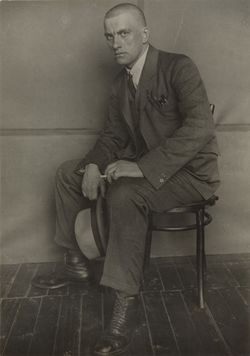


Three classic Soviet-era children's books by leading avant-garde writers and illustrators, newly translated.

Ortberg retrofits the classics with cellphones.Very clever.

Anna Pallai was brought up on 1970s stalwarts of stuffed peppers, meatloaf and platters of slightly greying hardboiled eggs. When she rediscovered her mother's grease-stained 70s cookbooks, she knew she needed to share them with the world. All the illustrations in this nauseating book come from authentic (non-satirical) cook books.

In 1966 the artist Tom Phillips discovered A Human Document (1892), an obscure Victorian romance by W.H. Mallock, and set himself the task of altering every page, by painting, collage or cut-up techniques, to create an entirely new version. Some of Mallock's original text remains in tact and through the illustrated pages the character of Bill Toge, Phillips's anti-hero, and his romantic plight emerges. First published in 1973, A Humument - as Phillips titled his altered book - quickly established itself as a cult classic. Since then, the artist has been working towards a complete revision of his original, adding new pages in successive editions. That process is now finished. This 50th anniversary edition presents, for the first time, an entirely new and complete version of A Humument.
>> It is worth visiting the website.

Sometimes other languages have ways of saying things that come a lot closer to the actual experience of the thing than the language you normally speak is capable of. Luckily, Ella Frances Saunders has collected (and illustrated!) an excellent selection of these.

German is full of wonderful compound words, so it is the obvious language with which to construct new terms for situations that have been crying out for nomenclature (but probably crying rather quietly, as the need for the word is only made evident by its provision (which point is interesting in itself)). Witzbeharrsamkeit - Unashamedly repeating a bon mot until it is properly heard by everyone present. Scheidungskreidekreisprobe - The distribution of friends after a divorce. Frohsinnsfaschismus - The god-awful mediocrity of organised fun.

For over 70 years, Clowns International - the oldest established clowning organization - has been painting the faces of its members on eggs. Each one is a record of a clown's unique identity, preserving the unwritten rule that no clown should copy another's look. At first they were painted on real eggshells, then later (when they kept breaking) on to ceramic eggs, most of which are now housed at the Wookey Hole Clowns' Museum. Here images from this extraordinary archive are accompanied by the stories of the men and women behind the make-up.

Fifty-two images of everyday and unexpected objects provide the perfect canvases for creating funny, quirky and completely original faces. Just add eyes, noses, mouths, ears, hair and more from 6 vinyl sticker sheets packed with expressive features and other amusing accessories. Exemplary fun.

Russian Criminal Tattoo: Postcards by Sergei Vasiliev and Danzig Baldaev $40
An ethnographic portrait of a closed society with its own symbolic language and rituals. The 25 drawings and 25 photographs here have been chosen from the thousands copied from convicts’ skins by prison attendant Danzig Baldaev and photographer Sergei Vasiliev, and give an insight into the aesthetic, political, sexual, ‘tribal’ and spiritual concerns and traditions of Russian criminal culture.

Who better as a guide to the manly life than the man who was every man? These newspaper columns have only recently been identified as being Whitman's work.

Brush up on your breeds and have fun at the same time.

Once you start looking at the subjects' hair in artworks, you'll find amusement everywhere. This wee handbook from the collections of the Christchurch Art Gallery will get you started.

BOOKS @ VOLUME #28 (17.6.17)
Our latest bulletin of news, reviews and new releases.
[>> Click here for this week's new releases.]