
 | The Boy Who Stole Attila's Horse by Ivan Repila {Reviewed by THOMAS} "'It looks impossible to get out,' he says. And also: 'But we’ll get out.'” This is a compellingly unpleasant little book. Two brothers, Big and Small, are trapped down a well in the forest. Calling, climbing and leaping are to no avail. As the days pass (the chapters are numbered with a sequence of prime numbers), we witness (and are spared no detail of) the brothers’ desperation, their physical and mental decline, their diet of worms and maggots (they will not touch the bag of food belonging to their mother), their suffering from both thirst and flooding, the cruelty and tenderness that constitute their deformed relationship. “Life is wonderful, but living is unbearable.” Repila never softens the violence of his language or assuages the discomfort we feel reading of the brothers’ dismal life. When the brothers catch a bird, they fear their shrunken stomachs may not be able to cope with the meat and so let it putrefy as a breeding ground for maggots. Big eats most of the food and deforms his muscles with a sequence of exercises, forcing Small to grow still lighter. At the point of giving up and dying, the brothers enact the revenge they have been preparing - it is not by accident that they are trapped down the well - but it is a revenge that comes at a horrible cost. The book is allegorical on a number of levels, and the epigraphs from Bertold Brecht and Margaret Thatcher (!) underscore the reading of the physical, mental and social harm of economic inequality, especially for those stuck at the bottom (dependent on the ‘trickle down effect' perhaps), and of the mutually destructive revenge that will be enacted when the effects of inequality ultimately become desperate. |

It's not always easy being a tough guy... You might not think it, but tough guys have feelings too. Even when they're with their best friends, or when they're on top of the world, not everything works out. This can be very frustrating.
Our book of the week with week is Keith Negley's wonderful picture book Tough Guys (Have feelings too).
Feeling bad or feeling sad or feeling uncertain or feeling not-very-confident are feelings that everyone has (even tough guys).
Everyone has feelings (well, almost everyone).
>> Tough guys can read this book too.
>> Are boys more likely to show their feelings these days than in the 1970s?
>> The Cure.
And also:

Why doesn't Dad do all those cool things he used to do? Why did he stop? (Could it be because having a child was somehow cooler?)
NEW RELEASES
A few of the books that have come in this week looking for you.

What binds a family together tears a family apart. On the run, Tess is picked up on the side of the road by middle-aged father Lewis Rose, and drawn into the complexity of his life. Tess is a gothic love story set in Masterton at the turn of the millennium.
"I love novels about amelioration, about people trying to mend and fix themselves. Kirsten McDougall's brave and brilliant Tess is one of these. A novel of tender observation and deftly judged suspense, Tess imagines what it might mean for someone to really know what goes on inside others." - Elizabeth Knox

A collection of autobiographical photographs and stories from this boundary-pushing artist.

"This book presents a rich and ranging collection of Maori women speaking from the nineteenth-century archive. The hopes, the persistence, the effort to set down a cause are all apparent in the words of women presented in these pages. It is in various measures an inspiring, instructive and agonising read." - Charlotte Macdonald, Victoria University of Wellington

Simon's little brother can't sleep without his special blanket. Simon usually just tells Casper what to do, but what can he do to solve this problem?

Contributions from James Brown, Elizabeth Knox, Tina Makereti, Damien Wilkins, Bill Manhire. Charlotte Wood, Ashleigh Young and Hera Lindsay Bird.

Spanning the wars in the Waikato to the present day, and including pieces from Robyn Hyde and Pat Booth to Sandra Coney and Phillida Bunkle, Mike White, Jon Stephenson, Nicky Hager and Phil Kitchin, the pieces in this anthology are fresh whatever their age, and remind us of the importance of the contribution made by journalists to public knowledge and discourse.

A selection of stories from the outstanding Hungarian author who was beaten to death in a concentration camp in 1945.
"Szerb is a master whose powers transcend time and language." - Nicholas Lezard, Guardian
"A writer of immense subtlety and generosity. Can literary mastery be this quiet-seeming, this hilarious, this kind? Antal Szerb is one of the great European writers." - Ali Smith

James Joyce was obsessed with the legal system, and Ulysses and Finnegans Wake is full of references to trials and proceedings. This is the first book to give full and fascinating treatment to a neglected facet of Joyce's oeuvre and recreates a legal climate where injustice loomed over every trial.
"This tremendously well-researched and marvellously insightful book is a delight for lawyers and lovers of literature alike." - Irish Independent

"No one can imagine how bad things must be. They sprout in the dark, damp folds of my mind. They grow there - a forest of tiny umbrellas. They flourish - a crown of terrible heads."
How do people survive?

Can a sugar tax improve public health? Even if it can, is it the right thing to do? Considers the New Zealand situation in the light of case studies from around the world.

Built around the abyss, the tightrope, and the trick that we all have to perform to walk across it, Pasifika 'poetry warrior' Selina Tusitala Marsh brings to life in Tightrope her ongoing dialogue with memory, life and death to find out whether stories really can cure the incurable.
>> This video of Marsh launching her previous collection, Dark Sparring, is worth watching again.

Does every writer have their own stylistic footprint? How can a statistician help us to understand how authors thought and wrote? Blatt brings big data to bear on the literary canon. Interesting.

Hoare wraps his remarkable prose for a third time around a watery subject, this time tracing poets', artists', utopians',and adventurers' all-consuming and sometimes fatal attraction to the sea.

Archer B. Helmsley wants an adventure. No, he needs an adventure. His grandparents were famous explorers (until they got stuck on an iceberg). Now Archer's mother barely lets him out of the house. As if that would stop a true Helmsley. Archer enlists Adelaide—the girl who, according to rumor, lost her leg to a crocodile—and Oliver—the boy next door—to help him rescue his grandparents. Quite delightful, and with illustrations by the author. New series.

When a neighbour builds Miles, a "very difficult dog", his own car, he can provide young Norman with some very formative experiences of independence.

"Great short stories are the shape of themselves: image, voice and plot dovetailed to the chosen form. Hall’s stories are vixen-shaped: urban and rural, feral and natural, female and stinky, beautiful and tough. They slide quietly into view and stare at us with their citrine eyes; exceptional, compelling, frightening and authentic." - Guardian

Fascinating, unsettling, wonderful. The specimens are all drawn from the Vrolik Museum in Amsterdam. Includes stereoscope.

"Ordinary Time wonderfully gets the warm, heated, swaddled feeling of early parenthood. In these poems there's closeness, damp, suspension in a state of intensity and the thingishness of life. All is urgent, present and fiercely intimate." - Jenny Bornholdt

Why stop at a room of one's own? Hayes takes Woolf's call to the ultimate sphere, and intimates a life in which language is the governing force.

When English teacher Kuo learned that one of her ex-students had been jailed for murder in the Mississippi delta, she began visiting him and reading and discussing literature. This is a true account of how a life can be turned around by books.

As the 20th century draws to a close, Maria is at the start of a life she never thought possible. She and Khalil are planning their wedding. They are the perfect couple, living together in a black bohemian enclave in Brooklyn. They've even landed a starring role in a documentary about 'new people' like them, who are blurring boundaries as a new era dawns. Everything Maria knows she should want lies before her - yet she can't stop daydreaming about another man. As fantasy escalates to fixation, it dredges up secrets from the past and threatens to unravel Maria's life.

"An utterly magical book. Michael Frank inherits Truman Capote's glorious ability to recreate the past in an act of exquisite, knowing retrieval. Set on the glamorous, conflicted fringes of 20th century Hollywood, Frank's memoir is a glittering, happy-sad evocation of his elegant, tyrannical, stylish aunt and the rest of his extraordinary family. I hung on every word, spying through his child's eyes. This is intense and lyrical prose: I never wanted it to stop." - Philip Hoare

Seven leading journalists express their anger and compassion over the sad fate of so many of their fellow citizens due to the poverty, corruption and violence than has their country in its grip.

400 illustrations reveal changes in thinking about fashion in the last century.

Social beers, adventurous beers, poetic beers, bucolic beers, imaginative beers, gastronomic beers, and contemplative beers. Where in the world can you find such beers?

"My mother, my family and Judaism are nested inside each other. I am Jewish and always Jewish; it's analogous with family, however hard it is, and however strained, it can never be disavowed. I remain, as my therapist put it, 'enmeshed', all tangled up in the family hoard. This book has been both a continuation of my conversations with them, and an attempt to untangle myself." Limburg's brother's suicide triggered for her a re-examination of her genetic and cultural heritage, as she attempted to hold onto her individual identity.

The veteran political commentator looks at the way the certainties upon which New Zealand has built its identity are becoming less certain. How will we respond?

The American founding father catapulted into modern celebrity status by a Broadway musical was an illegitimate, largely self-taught orphan from the Caribbean who overcame the odds to become George Washington's aide-de-camp and the first Treasury Secretary of the United States. He was controversial in his lifetime and has remained so since.

Two privileged young women at Greek Island resort come across a young Arab man washed up on the beach. A casualty of the refugee crisis, he becomes for them a 'project', with disastrous consequences.

LITERARY HORSES
(A selection)

"W. H. Auden once defined poetry as 'a game of knowledge, a bringing to consciousness, by naming them, of emotions and their hidden relationships'. This definition suits Smither's poetry, too, with its sophistication, its wit and humour, its playfulness, its candour, its tenderness, its exploration through simile and metaphor of the unexpected relations between things." - Peter Simpson

December 1941. Britain is at war. Emmaline has been evacuated away from the bombs to Briar Hill Hospital in Shropshire. When she gets there she discovers a secret. It's not to be shared, not to be told to anyone, even her friend Anna. There are winged horses that live in the mirrors of Briar Hill.

A young woman lies dying in hospital. The boy at her bedside asks some questions which unleash the most terrifying of stories.
"Terrifying but brilliant, this dangerously addictive novel in which a woman’s life speeds towards doom is haunted by the bleak landscape of rural Argentina. Schweblin remorselessly cranks up the tension until every sentence seems to tremble with threat. Fever Dream’s ambiguities, and the intricate psychologies with which Schweblin invests her characters, mean that rereading proves rewarding even when the suspense is removed. Wherever you decide the truth lies, aspects of Amanda’s story will continue to puzzle and haunt you long after she stops being able to tell it." - Guardian

“It looks impossible to get out,” he says. And also: “But we’ll get out.” This is a compellingly unpleasant little book. Two brothers, Big and Small, are trapped down a well in the forest. Calling, climbing and leaping are to no avail. As the days pass (the chapters are numbered with a sequence of prime numbers), we witness the brothers’ desperation, their physical and mental decline, their diet of worms and maggots (they will not touch the bag of food belonging to their mother), their suffering from both thirst and flooding, the cruelty and tenderness that constitute their deformed relationship. “Life is wonderful, but living is unbearable.” There are no horses in this book, and no reference to Attila beyond the title.

"Any reader interested in horses, history, art, literature or language will love this book, and be stunned by its scope and stylish intellect. This is about the end of a relationship between man and horse that Raulff likens to the dissolution of an idiosyncratic workers’ union, and what is thrilling is that the horse becomes a subtext – a new way of considering history via the stable door. The book is beautifully and idiosyncratically illustrated, in keeping with the text." - Guardian

One horse witnesses the brutality of the First World War from both sides of the trenches.

"This novel is about horse racing the way Moby-Dick is about a whale; it has a similarly expansive scope, spiritual seriousness and density of grand themes. Morgan’s epic work builds to a climactic series of dramatic race scenes featuring a star filly named Hellsmouth. Along the way, Morgan wrestles with subjects including the history of Kentucky, slavery and its legacies, the iniquities of American healthcare, Darwinism, geology and relations between the sexes." - Guardian

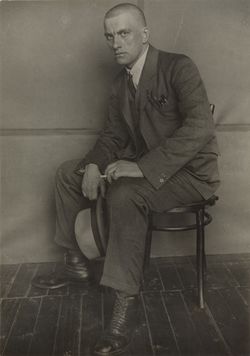


Three classic Soviet-era children's books by leading avant-garde writers and illustrators, newly translated.

John Grady Cole is the last bewildered survivor of long generations of Texas ranchers. Finding himself cut off from the only life he has ever wanted, he sets out for Mexico with his friend Lacey Rawlins. Befriending a third boy on the way, they find a country beyond their imagining: barren and beautiful, rugged yet cruelly civilized; a place where dreams are paid for in blood.
"A darkly shining work executed with consummate skill and much subtlety - the effect is magnificent.: - John Banville, "Observer"

Short stories from women's perspectives set around the 1917 Easter Rising against British rule in Northern Ireland and depicting the misogyny and violence rife in society at the time.

This taut depiction of a stand-up comedian falling apart on stage in front of an audience wanting entertainment won Grossman the 2017 Man Booker International Prize. Why are we so transfixed by tragedy, our own and others'? In reading literature, are we like Dovaleh's audience, seeking entertainment from the miseries of others?
"Unrelentingly claustrophobic. The violence that A Horse Walks into a Barexplores is private and intimate. Its central interest is not the vicious treatment of vulnerable others but the cruelty that wells up within families, circulates like a poison in tight-knit groups, and finally turns inward against the self. Searing and poignant." - New York Review of Books

A childless couple, a troubled inner-city kid and a volatile horse are the ingredients in a complex story of love, guilt and attachment.
"Gaitskill's work feels more real than real life." - Boston Globe

A hunk of meat, an industrial and agricultural machine, a luxury good, a cherished dancer, a comrade in arms, a symbol of a mythical past: the horse has meant many things to humans, most of them revelatory more of human mores than of anything about horses themselves. An interesting examination of the role played by horses in the endless spasm of human history.

Rachel Bush's poetry is remarkable for the amount of meaning, feeling and wry humour it pivots on the ordinary details of life, and by the verbal lightness of touch brought to even the heaviest of subjects. This, her last collection, contains some of her very best work. It shows the breadth of her poetic range and the quiet skill with which she assembled and polished her language, from the conversational asides to the deep fugual patterns which tie meaning to the particular and the ordinary.

"The stories' distinctive flavour comes from Alomar's masterful shifts of character perspective within extremely tight parameters. The book is full of these moments which trip you up, swing bluntly from one psyche to another, rapidly decelerate time and play with scale, all of it exposing the delicate balance of our presumptions and allegiances; the small dictatorships that we foster second by second." - Asymptote
[There are no puns in this list.]

BOOKS @ VOLUME #35 (5.8.17)
Our latest newsletter of reviews, news, events, amusements and new releases.
 Book launch this Friday: A TONGUE IS NOT FOR LASHING by Panni Palásti. Hungarian-born Nelson-resident poet Panni Palásti's new book will be launched at VOLUME at 6 PM on Friday 11 August. Panni will read poems in both Hungarian and English and discuss THE TRAVAILS OF TRANSLATION. All welcome. >Click here to pre-order a signed copy. >Click here for a poster or flyer. All welcome.
T
 he Perfect Gift: WRITING FOR CHILDREN. A workshop at VOLUME taught by Michelanne Forster. Sunday, September 3rd and Sunday, September 10th. 1pm - 4:30 pm (two half-day sessions). Do you have a favourite story or anecdote that you would like to pass on to your children or grandchildren? Would you like to submit your story to a children’s magazine or publishing house, or explore the possibilities of self-publishing? Whatever your goal, this course will help you shape and polish your work. >>Click through to find out more. >>Contact us to enroll. >> Comments from participants in Michelanne's previous workshop at VOLUME.
 We are pleased to be supporting the MAPUA LITERARY FESTIVAL, organised by the Mapua Community Library. An outstanding line-up and a great community feel has already ignited a lot of excitement among VOLUME customers. The programme includes Elizabeth Knox, Fiona Farrell, Sarah Laing, Fiona Kidman, Joe Bennett, Fleur Beale, Gerard Hindmarsh, Duncan Sarkies, Paddy Richardson, Jenny Pattrick, Veronika Meduna, Emma Stevens and Roger Sanders. Brochures for the festival can be had from VOLUME, and the programme is also available on-line. The venue is intimate, so our advice is to book your tickets as soon as you can. Invite your friends.
 |
Decline and Fall on Savage Street by Fiona Farrell {Reviewed by STELLA}
In the wake of the Christchurch earthquakes, Farrell produced two works of non-fiction, The Villa at the Edge of the Empire and The Broken Book- her response to these disasters. “I am normally a fiction writer, but in 2010-11 fiction felt irrelevant. What mattered was reality. What mattered were the factual narratives...” Both these important and exceptional books were short-listed for The New Zealand Book Awards. In a return to fiction, Decline & Fall on Savage Street is Fiona Farrell’s companion novel to The Villa at the Edge of the Empire. In her notes, Farrell says “…fiction has its role…it can go straight to the heart of things, into private and secret places… It gives shape to the random narrative of existence.” Opening in 1906, with the site of the house secured, we are introduced to the possibility of a growing nation, a developing city, a new place from which to see a prosperous future. A chapter later, two years on, the floor plans are ready and George is ready to put his stamp on the house. A grand yet comfortable home, not too big but with some quirks – a house that will entice several owners over the following decade, beguiled by its character. Farrell cleverly weaves a story about the home on Savage Street, the families that live and love there: their ups and downs introducing us to people both familiar and particular - their follies, weaknesses, strengths and loyalties to the each other and the house, and to the communities they are part of. In the first part of the novel, the chapters jump ahead in 2-year leaps, taking the reader through a potted New Zealand history of a developing city, of settlement through two world wars, the changing social mores of the 1950s and '60s, political upheavals of the '80s, economic booms and busts of the '90s, to just beyond the millennium. Part 2 focuses on the period of the earthquakes, starting just prior to the first quake in 2010 and concluding in late 2012. Focusing on one house is an ingenious way to structure this novel: as a reader, you follow the generations of families, see the house loved, let go, sold, change hands, change status as the suburbs grow and morph, get renovated and reinvigorated, and be torn asunder by the ground beneath it. Understandably there is a huge cast of characters: the founding family, the tenants (when needed as circumstances change), the community of idealists that co-own and rescue the house, the doer-uppers, the new blended family - all of whom call this place home. Farrell makes all their stories interesting and relevant to the main threads of the novel. While you often only glimpse their lives, you feel as though you know and understand them all – are a neighbour and confidante looking in through the windows. Interspersed between the chapters are short pieces which anticipate change, which represent the breathing in and out of time, of forces that can’t be controlled, of nature and what happens despite our human interventions and our best-laid plans.
|
 | Rivers of London by Ben Aaronovitch {Reviewed by STELLA}
Policing in London has never been so quirky. DC Peter Grant isn’t doing too well climbing the ranks. His major problem is that he is easily distracted: he notices things others don’t and finds himself wandering off on tangents when he should be focusing on the job in hand. Rivers of London is the first in a successful series by Ben Aaronovitch, which brings together the decidedly real with the completely fantastical in an alarming, funny, quite believable caper. In Rivers of London several people are acting uncharacteristically aggressively, and some of their actions are leading to gruesome murders. PC Grant, after attending one such horror, meets the unusual Chief Inspector Nightingale and finds himself promoted into his team of one (if you don’t count the strange housekeeper, Molly, who seems to float and has rather pointy teeth) and initiated into the world of wizards, the first apprentice in 50 years. Reading this I felt I had fallen into a hybrid of Jasper Fforde madcap, Harry Potter for grown-ups, all mixed with gruesome crime and absurdist plotting. Not only does our DC have to deal with learning magic, the often mysterious behaviour of Nightingale and the obvious contempt of some fellow policing chiefs, he’s trying but failing to keep his mind off fellow police officer Lesley May (who just seems to keep dragging into his troublesome world) and resist the niece of a mighty river goddess. And hence the plot thickens, the river gods Sister and Brother Thames, underworld spirits living in flats near the banks of the Thames with their equally adoring and loyal entourages, are having a bit of a turf war. What are they up to, and who or what is making Londoners turn on each other? Can Nightingale and Grant with the assistance of fellow police officer May and the police computer, HOLMES, and possibly Sister Thames (if she has a mind to) get to the bottom of this mystery?
|
 | W, or, The memory of childhood by Georges Perec {Reviewed by THOMAS} “I write: I write because we lived together, because I was once amongst them, a shadow amongst their shadows, a body close to their bodies. I write because they left in me their indelible mark, whose trace is writing. Their memory is dead in writing; writing is the memory of their death and the assertion of my life.” Both of Perec’s parents were killed in the 1939-1945 war, his father early on as a French soldier, and, soon after, his mother was sent to a death camp. Their young son was smuggled out of Paris and spent the war years in a series of children’s homes and safe villages. “My childhood belongs to those things which I know I don’t know much about,” he writes. W alternates two narratives, the first an attempt by Perec to set down the memories of his childhood and to examine these not only for their accuracy but in order to learn the way in which memory works. Often factual footnotes work in counterpoint to the ‘remembered’ narrative, underscoring the limitations of the experiences that formed it. Right from birth the pull of the Holocaust is felt upon Perec’s personal biography, and his story is being shaped by this force, sucking at it, sucking his family and all stability away. Sometimes he attaches to himself experiences of which he was merely a witness, the memories transformed by remembering and by remembering the remembering, and so forth, and by the infection of memories by extraneous imaginative details. “Excess detail is all that is needed to ruin a memory.” The absences around which these memories circulate fill the narrative with suppressed emotion. The other narrative begins as a sort of mystery novel in Part One, telling how one Gaspard Winckler is engaged by a mysterious stranger to track down the fate of the boy whose name he had unknowingly assumed and who had gone missing with his parents in the vicinity of Terra del Fuego where they had gone in search of an experience that would relieve the boy’s mutism. In Part 2, the tone changes to that of an encyclopedia and we begin to learn of the customs, laws and practices of the land of W, isolated in the vicinity of Terra del Fuego, a society organised exclusively around the principles of sport, “a nation of athletes where Sport and life unite in a single magnificent effort.” Perec tells us that ‘W’ was invented by him as a child as a focus for his imagination and mathematical abilities during a time when his actual world and his imaginative world were far apart, his mind filled with “human figures unrelated to the ground which was supposed to support them, disengaged wheels rotating in the void” as he longed for an ordinary life “like in the storybooks”. Life and sport on W are governed by a very complex system of competition, ‘villages’ and Games, “the sole aim to heighten competitiveness or, to put it another way, to glorify victory.” It is not long before we begin to be uncomfortable with some of the laws and customs of W, for instance, just as winners are lauded, so are losers punished, and all individual proper names are banned on W, with athletes being nameless (apart from an alphanumeric serial number) unless their winnings entitle them to bear, for a time, the name of one of the first champions of their event, for “an athlete is no more and no less than his victories.” Perec intimates that there is no dividing line between a rationally organised society valuing competition and fascism, the first eliding into the second as a necessary result of its own values brought to their logical conclusions. “The more the winners are lauded, the more the losers are punished.” The athletes are motivated to peak performance by systematic injustice: “The Law is implacable but the Law is unpredictable.” Mating makes a sport of rape, and aging Veterans who can no longer compete and do not find positions as menial ‘officials’ are cast out and forced to “tear at corpses with their teeth” to stay alive. Perec’s childhood fantasy reveals the horrors his memoir is unable to face directly. We learn that the athletes wear striped uniforms, that some compete tarred and feathered or are forced to jump into manure by “judges with whips and cudgels.” We learn that the athletes are little more than skin and bone, and that their performances are consequently less than impressive. As the two strands of the book come together at the end, Perec tells of reading of the Nazi punishment camps where the torture of the inmates was termed ‘sport’ by their tormentors. The account of W ends with the speculation that at some time in the future someone will come through the walls that isolate the sporting nation and find nothing but “piles of gold teeth, rings and spectacles, thousands and thousands of clothes in heaps, dusty card indexes, and stocks of poor-quality soap.” |
 | A Tongue is Not for Lashing / Nyelvűnk Nem Ostor by Panni Palásti {Reviewed by THOMAS} Nothing new enters the mind when reading, yet without reading our capacity for new experiences would be constrained to those we could actually have for ourselves (which would be either time-consuming or limiting, either hazardous or limiting, either unreliable or limiting, either either reckless or limiting). To read is to follow, generally with our eyes, a sequence of familiar marks (ink on paper, mutable crystals on a screen, black fire on white fire, or whatever), patterned in largely familiar ways, generally becoming less familiar as the patterns get larger until such point as the pattern and the content diverge and begin to interact in, hopefully, interesting ways (the sooner this interaction is induced, the more ‘poetic’ the text, perhaps). In some way the hooks of text act as a harrow, drawing up and turning over already existing mind-stuff and leaving it in new patterns which are the matrix of new experience. A reader of a text surrenders their mind-stuff to the authority of the author, the postulated person who has wrought the textual harrow, the purpose of which is to translate experience between minds. The better wrought the harrow by the author, the better the chance that the resultant pattern of experience in the mind-stuff of the reader who completes the task of translation will resemble the pattern of experience in the mind-stuff of the author. All text entails the translation of experience and is fraught with avoidable and unavoidable failings due to differences between the pre-existing mind-stuffs of both parties (their pre-existing repertoires of experience) and to the degrees of facility either party has with their part in the process (writing, reading (not too dissimilar (the first being a subset of the second))). When the translation of experience uses not one language as a medium between writer and reader but two, one used as a matrix for experience by the writer and one used as a matrix of experience by the reader, there must necessarily be some refraction as the text passes from one medium to the other, from one language to the other. When this linguistic translation is done by a third party, they cannot but introduce a further refraction as they become first reader and then (re)writer of the text before it reaches and affects the eventual reader, in other words they become in themselves a further medium, an experiential medium as opposed to a linguistic one (not that such a distinction can be made except usefully), interposed between author and reader, in addition to the two linguistic media, and the translator must align within themselves two linguistic matrices upon the one experience. This is not to say that such translation necessarily 'harms' a work, for the intensive reading required furthers and joins the reading done by the author to create the work and that done by the reader to complete it. When the translator is the author, as in A Tongue is Not for Lashing, the process of translation takes place in a field in which the medium of a third party’s experience has not been introduced, and the task of translation is to align the two linguistic matrices so that meaning passes as cleanly as possible between the two. More than with translation made by a third party, the differences between the work and the work translated by the author, when most rigorously done, manifest the differences between the two linguistic matrices used to arrange the mind-stuff of experience. As these differences are least avoidable at the closer stages of the interaction between pattern and content, these differences are most manifest in the translation of poetry. What Palasti terms ‘the travails of translation’ are the most strenuous and the most exacting and the most hopeless and the most fertile and creative in the translation of poetry. As Marianna Birnbaum says of the translation of poetry in the introduction to A Tongue is Not for Lashing, “The struggle cannot end in total victory, since the original poem is built, precisely, on that single literary solution of the poet, that unique amalgam of form and meaning. In the duel between form and meaning usually form is the loser.” It would be hard for a reader to ‘trust’ a third-party translator who permitted form to contribute as much to the translated poem as it most surely did to the creation of the original, but we have fewer reservations when it comes to translation by the author. Even though the author-as-translator may allow form, the demands of the linguistic matrix particular to the destination language, to give a translated poem a degree of divergence from the original we would find unacceptable from a third-party translator, we more readily trust the author to deliver us a poem, which we regard as parallel at least, which expresses, at a deeper level at least, whatever it was they were originally trying to say. If we have some degree of aptitude with both languages, and have both versions available as in the parallel texts of A Tongue is Not for Lashing, we may compare the two and follow the author/translator in her travails. For the rest of us, we may trust the poet and gauge the degree to which her experience induces an experience in us across the medium through which it travels, as well as the experience we have of language patterned by the author’s labour. “All my poems are political,” states Palasti, all are the expression of an individual striving for freedom and experience and intimacy often in the face of societal (or even natural) forces configured to stifle freedom, annul experience and prevent intimacy. Now in her ninth decade, Palasti left her native Hungary as a refugee after the the defeat of the 1956 revolution, and has worked on this bilingual edition of a selection of her poems as a way of speaking in two languages at once and aligning the dual matrices of her own experiences. I particularly like the somewhat Seabldian photographs with which the book is scattered, their simultaneous reachability and unreachability presenting a version of the translation of experience particular to the nature of their medium, and thus complementing the work of the poems.
>> Panni will be launching A Tongue is Not for Lashing, reading poems in both Hungarian and English, and talking about bilinguality at VOLUME at 6 PM this Friday (11 August). Please come along.
|

>> Read Stella's review.
>> Extracts.
>> Fiona Farrell on 'Standing Room Only': Sunday 6.8.17, 1:45.
>> The author on writing the book.
>> "Writing big" (whatever that means).
>> A white-hot response.
>> What makes a city a city?
>> Fiona's writing day.
>> Naughty reading secrets.
NEW RELEASES
These books have just come in looking for you.

When Roxy's husband and his lover are killed in a car accident, Roxy will not be denied her revenge. Who will she direct this at, though?Written in a concise, lucid style, this book is a clear exploration of the emotional weight grief and anger lever upon ordinary details.
"Gerritsen's skillful writing creates tension with its forward-propelling relentless plot, a compelling awkward narrator and uncertain outcomes. The clever ironic conversations between the characters and zany happenings hit you like a slap, while what is unsaid, what is hinted at and implied between the words and lines on the page, jolts you awake. Like Craving, Roxy is a candid portrayal of damage and trauma, sometimes shocking, often blackly funny." - Stella

A very appealing graphic novel weaving together three narrative strands: true-life Arctic expeditions from 1912 and 1926, and a contemporary story of a professor tracking the fates of the earlier expeditions.

The Ukraine was once bristling with statues of Vladimir Ilyich Ulyanov, better known as Lenin. Political changes have left these toppled, broken, vandalised and stored in sheds and back rooms. Ackerman and Gobert have set about recording these statues, and the residual attitudes towards them amongst the Ukrainians.

The excellent Monsieur Dutilleul has always been able to pass through walls, but has never seen the point of using his gift, given the general availability of doors. One day, however, his tyrannical boss drives him to desperate, creative measures - he develops a taste for intramural travel and becomes something of a super-villain. How will the unassuming clerk adjust to a glamorous life of crime?

Two people and a dog sail out amongst ships of all kinds in this inventive pop-up book. There are even life-rings and mooring ropes. A lovely book.

A novel telling how (and why) Fletcher Christian led the mutineers who seized the Bounty from Captain Bligh, and all that happened after the mutineers settled on Pitcairn.
Lay's James Cook trilogy was very well regarded.
>> Reason for mutiny.

An exquisitely designed and produced survey of the photography and installations of the remarkable contemporary Chinese artist.
>> Gao Bo had a major retrospective in Paris this year.

Artist Gangu Bai records and explores her memories of growing up in traditional Bhil culture in central India, a culture making no distinction between the natural and the human world.

Davies questions the values and judgements that are so often the mainstay of architectural surveys, and in doing so asks: what is the importance of the style we know as Modernism?

A darkly satirical account of a childhood spent in times of war. The book involves the transformation of people into animals and features a boy more at home with numbers than with people. The book is set in Sri Lanka, but the story is relevant anywhere that children are robbed of their childhood by war.

A wonderful, scary myriorama: the 20 cards can be laid out in any order making a seamless story scene of almost infinite variety.

Excellent and amusing graphic biographies.

An astounding culinary journey through the various regions of Mexico, profiling nuns; grande dames; campesinos; barrio residents; creatives in the arts, architecture, music, film and media; businesspeople - and chefs and giving real insight into local food cultures. Beautifully illustrated.

Why do we respond to music in the way we do? How does music reveal and affect parts of our minds not accessible to linguistic and verbal approaches? What kinds of understanding can we achieve through music?

An illicit air convoy of drugs and weapons disappears somewhere over the Sahara. An aid worker watches helplessly as the refugees she is attempting to save are brutally betrayed. A mysterious Englishman sets up a solar farm in the desert, and his attempts to bring free energy to Africa make him the target of callous international businessmen, hell-bent on destroying his vision for a more humane world. As jihadists stop at nothing to recover the contents of the missing air convoy, and as millions attempt to escape famine and genocide by crossing the African continent to find a way into Europe, the genii are watching from the skies. Speculative fiction grounded in contemporary issues.

Not everyone likes the same things. It seems that everyone is happy on a sunny day - except for a lonely raincloud and a lonely, grumpy little girl. Can they find their own happiness?

The 20 double-sided pictorial pieces can be put together in any order, creating any number of inventive (and spooky (but not too spooky)) stories.

The war of 1967 dramatically redrew the map of Israel and Palestine, and changed the lives of millions of people both in the Middle East and across the world. Analysing the historical origins of the annexation of the West Bank and Gaza in the 1920s and 30s, Pappe goes on to examine the bureaucratic apparatus that has been developed to manage this occupation, from the political, legal, financial and even dietary measures to the military and security plans put in place over almost half a century.

The turbulence of the financial markets is often explained in terms of the immorality of market agents, misguided economic theory or unsuitable regulation. Even when these explanations are not false ones, they leave aside the main problem: the nature of financial value.

Everyone can spend hours enjoying these mazes, searches and odd-one-outers. Beautiful hand-drawn illustrations in a large-format hardback book.

A practical guide and a source of inspiration for finding and responding to the wilderness around you, and withing you too. Includes photographs and hand-drawn illustrations.

When Thomas Powell and his family left Leeds, England, and sailed out to India in the early 1850s, they little realised that within a few years they would be living in New Zealand and facing different futures. An interesting family history illuminating life and issues in and around Wanganui in the 1860s and 1870s. Local author.

Textured artwork and text translated also into Braille help children to gain understanding of what it might be like to apprehend the world without the sense of sight.

Match the iconic actors with the equally iconic images from 25 iconic films. Reinforce your knowledge of popular culture with notes to the films, from the leading indie film magazine.

The leading forensic cyberpsychologist examines the various ways human behaviour changes on-line.

Can large-scale kelp farming absorb carbon surpluses (and solve our other problems, too)?

No longer a pariah in the fridge. Includes the science behind this 'nutritional powerhouse'.

Fourteen-year-old Sin is training to be a spy for the Covert Operations Group, but her life (and other people's lives) is in danger in this steampunk adventure. New Zealand author (when he's not being a New Zealand bookseller!).

A lifetime on the left, including 10 years as a Green MP.

The definitive survey of the art of this dropper of depth-charges in the psyche.

Classed and 'enemy aliens' in the US, the 'Ritchie Boys' returned to Europe as a secret elite army unit, detailed particularly with gathering intelligence and interrogation. A little-known history.

Match the monsters and the crazy creatures. Don't let Clarence put you off your tea.

BOOKS@VOLUME #34 (29.7.17)
Our latest newsletter, including our reviews and recommendations, events, competitions, and a selection of the week's most interesting new releases.

This week's Book of the Week is Arundhati Roy's long-anticipated second novel The Ministry of Utmost Happiness.
>> Read an extract.
>> And another extract.
>> A strange and frightening dream.
>> Fiction and politics.
>> Roy returns to fiction, in fury.
>> Interviewed on Democracy Now.
>> "Black ants, pink crumbs."
>> The God of Small Things won the Booker Prize in 1997.
>> Can she win it again this year?
>> Chatting with Rushdie (1997).
>> Other books by Roy.
>> Why Roy thinks India is a corporate upper-caste state.
  |
Book-related games and activities that are enjoyable ways to introduce children to concepts and story telling structures. A favourite at VOLUME isStory Box. The box contains 20 double-sided puzzle pieces that can be arranged (and re-arranged) to make wordless fairy tales. The illustrations are playful and clever allowing for different interpretations depending on the nieghbouring cards. An array of characters from gnomes and brave children to kings, witches (who may or may not be friendly) and wolves, against backdrops of farms, forests and mountains where people live in humble homes, majestic castles and forest trees give children an endless array of possible stories. My favourite cards include the wolf flavouring the tied-down gnome with salt and pepper, the strange giant pink rabbit who is busily nibbling away at the palace, the princess on her moped in the night-time forest, and gnomes lamenting some catastrophe, their boxes of tissues well in use. Sturdy, and with plenty of story-telling possibilities: ideal for 3-to-6-year-olds. {STELLA}
Animals at Home is a matching card game for young children. 27 animals nee to find their homes. This great for small children - they are introduced to a variety of animals, some of which will be familiar (horse, bee, mouse), others perhaps new to them (beaver, platypus, mole). All the cards remain face up and the matching begins. Where does the beaver live? Who goes home to the cave? The illustrations are bright and clear and the text is restricted to nouns. There are clues in the colour backgrounds - you're right when the background colour matches. To make the game a little more challenging it can be a matching memory game with all the cards turned face down. Sturdy cardboard pieces are just the right size for little hands.
{STELLA}
|
  |
For children who love animals, Amazing Animal Facts is brilliant. This is produced in book form as well as a boxed file set. The box contains 50 postcards (25 different animal fact cards, so one of each can be posted) that can be coloured in and sent as postcards or kept as information file cards. The file box is segmented into five categories; Sea, Forest, Field, Jungle and Sky, with 5 different animals apiece. The Blue Whale fact card tells us that its heart is as big as a car and that it has a belly button, that the Sloth is so slow that it grows green algae on its fur, and that flies are deaf, poop every 5 minutes, and that a group of flies is called a business. Wonderfully designed, with intriguing facts perfect for young enquiring minds (and plenty for adults to learn too)! {STELLA}
|
 | Hood by Alison Kinney {Reviewed by THOMAS} A hood divides the world into the two most unequal possible parts. A hood obfuscates the face of the wearer, the face that would otherwise declare, “this is a person, this is an individual.” A hood declares that whoever is present is not present, that here stands a non-person. A hood makes its wearer into both a cypher and a vector. The hood declares that what is done by a hood wearer is not done by any person in particular but by a transpersonal force, or that what is done to a hood wearer is not done by any person in particular but by a transpersonal force. A hood privileges either the wearer or everyone present but the wearer, depending on who has the say on the hood. The hood privileges power, either the power of the mass over the wearer or the power of the wearer as apart from the mass. The hood is an ambivalent text, a rampart in the struggle between the individual and the circumstance. Whether the hood is worn by the individual or by the agent or agents of the circumstance determines and is determined by the characteristics of power. The experiences of whoever is within the hood and whoever is outside the hood are always at odds. The hood makes protection and vulnerability into antagonists. The hood depersonalises the relations of power. The hood pretends that although what is happening is happening, either it is not happening to an actual person or it is not being enacted by an actual person, but not both. The struggle over who does and who does not wear the hood is the struggle over who will be vulnerable and who will be protected, but vulnerability is not inherent in either hood wearing or non-hood wearing and protection is not inherent in either hood wearing or non-hood wearing. Vulnerability and protection are negotiated ad hoc across the hem of the hood. Vulnerability and protection are determined by who decides who wears the hood rather than by who wears the hood or by who does not wear the hood. The anonymity of the hood allows power to be exerted which without the hood would not be able to be exerted, but either the wielder or the victim of that power could be wearing the hood. The hood itself is only a disjunction, a border, a division, a territory cleared of individual presence, or beyond which the declaration of individual presence has been withheld. Kinney’s book, from the excellent ‘Object Lessons’ series, is full of surprises and interesting perspectives, of moments when you realise that you hadn’t thought much about something or perhaps had thought about it wrongly. She treats the hood throughout history, particularly modern American history, as worn by monks, judges, penitents, inquisitors (or not), the Grim Reaper (or not), the Ku Klux Klan (or not), by torturers, the tortured, executioners (or not), the executed, by criminals, by youth, by activists, and by those who wear hoods for religious reasons. She illuminates the wielding and suffering of anonymised power by concentrating on the concealment that enables the anonymisation of this power. I have not worn a hood since I was a child and wore a windbreaker, but this book makes me curious to do so again. To be present anonymously, to displace my volume in society, has a certain appeal, possibly an unhealthy appeal. You could also wear a hood to keep warm. |
NEW RELEASES
These books have just arrived and are already lining up for a space on your shelf.

When the Soviets circulated images of 9/11 they had got by the use of time machines, the Twin Towers were never built, jet travel was abandoned and history veered off course. Time travel was made illegal, but it went underground and became the recourse of criminals, bankers and activists. It is 1975, and in New Zealand a few people are taking tentative steps (so to call them) into the future (so to call it).
>> Not perhaps quite as you remember 1975.

In 1934 Batten flew from England to Australia and in 1936 from England to New Zealand. What was it like up there all alone?
>> "One of the greatest flights in history."

How does the place where writing takes place affect what is written there? What can we learn about a book by visiting there? Mourby visits fifty rooms in which fifty writers wrote fifty books, and compares the locations with what ended up on the page.

Published to mark the centenary of the first Hogarth Press printing, Woolf's original story 'The Mark on the Wall' is here paired with a new story by Haddon. All the pleasures and production qualities of the original have been retained.

The far-flung Hebrides lie on the outer edge not just of Britain, but of Europe. Bunting's finely written insular psychogeography explores the relationship of the land not only to the people who have lived on it or visited it, but to those for whom it forms an island for the mind.
"Bunting's crisp and luminous prose is the ideal medium to capture the ambiguities and dichotomies of the landscape; between ever-shifting sea and unfathomably old rock; between tradition and modernity; between wilderness and depopulation; between feudal subsistence and aristocratic profligacy." - The Scotsman

"Of all cities St Petersburg is most like a novel. Conceived in the mind of a Tsar like a writer might give birth to a book,it has never ceased to be relentlessly dramatic, as if being like a novel is its destiny. Miles tells the tale magnificently." - Peter Pomerantsev

A wonderfully unrelenting indictment of colonialism and the damage it did to what had been a thriving country. Two centuries of British rule devastated the economy, violated human rights, and introduced institutions and infrastructure that enabled Britain to thrive at India's expense.

Lost in the frozen polar wastes, an explorer huddles in his shelter, typing, with frozen fingers, the story of his lonely, extraordinary exploits, preparing to send the story to the nephew he has never seen. With his only companion, the tortoise-like mutant Jackson, the Uncle has gone in search of his ambition and his destiny: the awesome and mysterious White Lion. A wonderful facsimile edition of Peake's fully illustrated, weirdly weird tale.

Under the house the earth moves according to its geological time, while upon it the lives and times of humans move by different rhythms. One house is the place where these forces interact. Farrell's new novel is a sort of counterpart to The Villa on the Edge of the Empire.
"Any reader interested in horses, history, art, literature or language will love this book, and be stunned by its scope and stylish intellect. This is about the end of a relationship between man and horse that Raulff likens to the dissolution of an idiosyncratic workers’ union, and what is thrilling is that the horse becomes a subtext – a new way of considering history via the stable door. The book is beautifully and idiosyncratically illustrated, in keeping with the text." - Guardian

What happens when angry young rebels become wary older women, ageing in a leaner, meaner time: a time which exalts only the 'new', in a ruling orthodoxy daily disparaging all it portrays as the 'old'? Delving into her own life and those of others who left their mark on it, Segal tracks through time to consider her generation of female dreamers, what formed them, how they left their mark on the world, where they are now in times when pessimism seems never far from what remains of public life.

From Vietnam to Bosnia to Iraq, Bell has witnessed great changes both in the way wars are fought but even more in the way war is reported. He has seen the truth degraded and sanitised and groomed with specific audiences in mind. Is there a place for journalism in a 'post-truth', social media-saturated world?

In Known and Strange Things we learned of Cole's interest in the practices of photography, and in Blind Spot we can see what he sees from behind his camera. The results are impressive, and will add another dimension to your understanding of this interesting author.

Since the most ancient times, Humans have chosen to organise information in circles. This profoundly illustrated book surveys the various types of circular device through history and around the world.

Why was meteorologist Alexey Wangenheim, who had been hailed by Stalin as a national hero, arrested in 1934 and sent off to a gulag? How did an innocent man get caught up in state paranoia?

When a barber disappears from an Anatolian village over night and appears in a bar in a town far away, unable to explain how he got there, reality develops a fracture that has widening implications.
“A poetic masterpiece of world literature. Toptas is an oriental Kafka, enriched with the literary achievements of Islamic mysticism” – Frankfurter Allgemeine Zeitung

We know how the brain works, but do we understand the mind? In an age when we are finally taking mental health as seriously as physical health, this issue of Granta explores the conscious self: how it perceives, judges and lives in the world.

"It's not enough to say I immensely enjoyed A Strange Beautiful Excitement; it's simply splendid." - Fiona Kidman
"The best account I have ever read of Wellington and Karori as they were in Mansfield's day. Vivid and vigorous, it is a pleasure to read." - K.M. biographer Kathleen Jones

Was it a coincidence that geology has a pivotal science in an age of social and political repositioning? Maddox introduces us to the diverse range of geologists who kept focussed during the geology vs. Genesis showdown.

"I went on holiday to New York, to visit Aunt Gloria and Salim. While I was there, a painting was stolen from the Guggenheim Museum, where Aunt Gloria works. Everyone was very worried and upset. I did not see what the problem was. I do not see the point of paintings, even if they are worth millions of pounds. Perhaps that's because of my very unusual brain, which works on a different operating system to everyone else's. But then Aunt Gloria was blamed for the theft - and Aunt Gloria is family. And I realised just how important it was to find the painting, and discover who really had taken it."
The sequel to Dowd's The London Eye Mystery.
 Crossing the Lines by Sulari Gentill $33
Two writers begin to realise that they are each other's fictional creations. Eeek.
 The Zoo by Christopher Wilson $28
There are certain things that Yuri Zipit knows: that being Stalin's official food-taster requires him to drink too much vodka for a 12-year-old, and that you do not have to be an elephantologist to see that the great leader is dying. Just because his mind is damaged, this does not mean Yuri doesn't notice what goes on at state banquets. Perhaps this politics business is not too difficult after all...
"A wonderfully inventive and slyly constructed novel, horrifying, horribly funny, and disgracefully entertaining." - John Banville


The sequel to Dowd's The London Eye Mystery.
Two writers begin to realise that they are each other's fictional creations. Eeek.
There are certain things that Yuri Zipit knows: that being Stalin's official food-taster requires him to drink too much vodka for a 12-year-old, and that you do not have to be an elephantologist to see that the great leader is dying. Just because his mind is damaged, this does not mean Yuri doesn't notice what goes on at state banquets. Perhaps this politics business is not too difficult after all...
"A wonderfully inventive and slyly constructed novel, horrifying, horribly funny, and disgracefully entertaining." - John Banville
How to Be a Stoic by Massimo Pigliucci $35
"How to Be a Stoic proves many things: that the ancient school of Stoicism is superbly relevant to our times; that profound wisdom can be delivered in lively, breezy prose; and that Massimo Pigliucci is uniquely gifted at translating philosophy into terms helpful for alleviating and elevating the lives of many." - Rebecca Newberger Goldstein
Travels with my Sketchbook by Chris Riddell $40
A visual diary of Riddell's two years as Children's Laureate, including his travels around Britain and the development of his various illustrative projects.
To Die in Spring by Ralf Rothmann $40
Walter Urban and Friedich 'Fiete' Caroli work side by side as hands on a dairy farm in northern Germany. By 1945, it seems the War's worst atrocities are over. When they are forced to 'volunteer' for the SS, they find themselves embroiled in a conflict which is drawing to a desperate, bloody close. Walter is put to work as a driver for a supply unit of the Waffen-SS, while Fiete is sent to the front. When the senseless bloodshed leads Fiete to desert, only to be captured and sentenced to death, the friends are reunited under catastrophic circumstances. In a few days the war will be over, millions of innocents will be dead, and the survivors must find a way to live with its legacy.
"In this masterpiece, Ralf Rothmann manages the seemingly impossible. He describes the guilt of their fathers' generation from the viewpoint of the post-War generation without betraying it to a moralising know-it-all attitude." - Badische Zeitung
"In contemporary German literature, there is nothing that can be compared to this book." - Frankfurter Allgemeine Zeitung
Reputations by Juan Gabriel Vasquez $22
A political cartoonist who finds his convictions tested when a traumatic past event returns to haunt him.
"One of the most original voices of Latin American literature." - Mario Vargas Llosa
The Evolution of Beauty: How Darwin's theory of mate choice shapes the animal world - and us by Richard O. Prum $55
Why does the animal world display such a range of characteristics that are superfluous to, and even hazardous to, individual survival? Is there an extent to which sexual selection is an evolutionary force over and above natural selection. If there is a criterion of beauty in mate selection, where does this criterion come from and what purposes does it serve?
Pig/Pork: Archaeology, zoology, edibility by Pia Spry-Marques $37
Pigs have been intimately involved in human culture since Palaeolithic times. How has this relationship shaped both pigs and humans?

The Regional Office's female assassins protect the world from evil forces, but is it under threat from within? A crazed, fast-paced piece of hyperkinetic cyberpunk.

Probably it is time to introduce yourself to the smoky flavourful spirit distilled from any of fifty varieties of agave in nine Mexican states. The procedure of distillation is so involved and labour-intensive that the possibilities for artisanal variation are immense.

What do you do when you are on your way home and you see your house suddenly fly away?

Hares are small animals with many predators but they have no burrow or tunnel to shelter them from danger. They survive by a combination of two skills honed to unimaginable extremes: hiding in plain sight, and running fast. This handsome book deals in detail with hares, both as they are, both biochemically and behaviourally, and as they are imagined in art, mythology and legend.

SHORT SHORT SHORT SHORT SHORT
A few books currently in stock notable for containing stories often considerably less than a page long.

Unless he has been incarcerated or deported by the current US administration, Osama Alomar is working as a taxi driver in New York. Before moving to the US as a refugee, he was an acclaimed author in Syria, especially as a practitioner of al-qisa al-qasira jiddan (very short short stories). The two collections of his that we have in English translation place him somewhere in a rough triangle apexed by the fables of Aesop, the personification tales of Hans Christian Andersen and the Rubaiyat of Omar Khayyam (albeit an ‘Omar Khayyam’ arising from a world of state-sponsored torture and media-fuelled anti-Arab prejudice). These micro-fables, few longer than a few sentences, rail against injustice, are socially and politically most acute at the point where they are seemingly most ludicrous, and acknowledge despair without being without hope. A man climbs out of a narrow metal tunnel to find himself emerging from the gun barrel now pointed at his chest, a rubbish bag becomes swollen with pride at finding itself at the top of the heap of rubbish bags, a man finds a question mark in his eye when looking in the mirror. The stories often have an aphoristic feel, and are fables in that they do not intimate any further story lying beyond them (compared, for instance, with Sarah Manguso’s 500 Arguments, which are like the nuggets sieved out of novels).

“The courtroom correspondent is the closest of all to human misery and its absurdity and can endure the experience only for a short time, and certainly not his whole life, without going crazy. The probable, the improbable, even the unbelievable, the most unbelievable are paraded before him every day in the courtroom, and, because he has to earn his bread by reporting on actual or alleged but in any case shameful crimes, he is no longer surprised by anything at all.” Bernhard’s brief spell as a crime reporter before becoming an author was the ideal preparation for the writing of these 104 one-page stories, which, in the perfect deadpan style of journalism or of jokes, record the miseries, cruelties and disasters that fester beneath the surfaces of human lives, surfaces that open from time to time to receive more hurt and then close over again until they can be contained no longer and make the news, so to speak, overwriting the lives with 'stories'. The book contains 26 murders, 18 suicides (Austria’s national pastimes, according to Bernhard, are committing suicide and resisting committing suicide (it could be said that much of Bernhard’s writing arises from a sublimation of his own inclination towards this pastime)) and six other painful deaths, but these only as the mechanisms by which the unresolved and unresolvable tragedies beneath the mundanity of lives manifest themselves and turn those lives inside out so that the tragedy is on the outside and the mundanity is revealed at the core. Accidents lead to tragedies, ill intentions lead to tragedies, good intentions also lead to tragedies. Nothing is made better or repaired or created in accidents. Although this book is structurally unlike any of his others, Bernhard’s perfect sentences, with their nested clauses-within-clauses, with their fugual repetitions, with their self-mocking pedantry, with their sudden shifts of tone as they respond to their terrain, explore in miniature the material more fully developed in his novels. Different facets of authenticity (‘authenticity’) arise from the plots and from the details, set against each other, as are the tragic and the quotidian, to comic effect. It is this ambivalence, this at-once-one-thing-and-its-opposite, this at-once-intimacy-and-distance, this at-once-sympathy-and-hatred that makes all Bernhard’s work so revelatory. Whether telling of the voice imitator incapable of imitating his own voice, ‘newspaper’ accounts of the attribution, misattribution, malattribution and nonattribution of guilt, first person plural anecdotes of persons met when travelling, second-hand reports of the statements of others, such as the dancer who cannot dance if thinking about dancing, the stories are free from narrators able to initiate either action or response. Many of the stories appear to have arisen from actual events (Bernhard was a devoted reader of newspapers in cafes), sometimes distorted or reshaped, reality both observed and denied, such as the account of the burns suffered by Bernhard’s here unnamed friend Ingeborg Bachmann, recognisable despite the ‘incorrect’ facts in the story. Part of the reason for this is the impossible relationship between reality and language, between experience and its representation, between proceedings and reportage. Each makes demands of its other but each moves too differently to conform. What is known and what is said are always in conflict in even the most seemingly straightforward account, even though their trajectories may be twinned. One story here tells of a playwright who, just like Bernhard, had great success “because he was honest enough to pretend [sic] that his comedies were always tragedies and his tragedies comedies,” because, at base, he hated the theatre altogether.

The narrower the aperture, the greater the depth of field. Many of Lydia Davis’s stories are little more than a detail or an image or a wry observation presented without a misplaced word or superfluous comma, precise enough to suggest that great slabs of life hinge about her words, without these slabs being fiction as such. Perhaps the distinction between actuality and fiction is too coarse to be relevant to such literature of the infra-ordinary and should be left to the literatures of the ordinary (for which this distinction is constantly contestable if ultimately unimportant) and of the extra-ordinary (for which it is pre-established in the effective contract between author and reader). Thrifty with her language, characterisation and narrative to the point of asceticism, Davis’s work attains a whittled acuity subtle enough to glance off the surfaces they address without (generally) becoming embedded in them. Davis is a master of the concise, the precise and the incisive: each sentence she writes is a scalpel wielded at the life of the emotions, removing scar tissue and all the while exposing the operations of minds under pressure and the inner gravel of ordinary life.

I began the day remembering, or what for me passes for remembering, or at least attempting to perform what passes for me for remembering, the book I had just read, a torrent of short essays written by Renee Gladman, each of which begins with, I began the day. The essays, or what pass for Gladman as essays, start out being about not very much, small ordinary particulars of Gladman’s life, or small observations such as a poet might make about the ordinary particulars of life, but really they are not so much about these things as they are about the writing about these things, that is to say about the relationship of a writer to her experience and to her work and about her trying to decide what sort of relationship there might be, both actually and ideally, between this experience of hers and this work. The essays that start out being about not very much end up being about even less or rather more, depending on your point of view, depending on whether you think the universals that open from particulars lie within them or beyond them. Gladman is concerned not so much with the signified, or even with the signifier, as she is with the act of signification, the act of conduction which causes, or allows, a spark to sometimes leap across. Gladman’s touch is light, and she constructs some beautiful sentences, and the sparks leap often, and she usually avoids being precious. In the final, numbered, section of the book, Gladman ties the compositional knot as tight as it can be tied, removing content almost entirely from her writing other than the act itself of writing. “I was a body and it was a page, and we both had our proverbial blankness.” What is her relationship to the text she produces, irrespective of the content of that text? “ I didn’t know whether at some point in my past, perhaps at the very moment that I set out to write, the page had fallen out of me or I had risen out of it.” She relates her prolonged rigours in attempting to find the essence, so to call it, of writing, to reduce writing to the irreducible, the making of a mark, the drawing of writing. “Language was beautiful exposed; it was like a live wire set loose, a hot wire, burning, leaving a trace. The wire was a line, but because it was electrified it wouldn’t lie still: it thrashed, it burned, it curled and uncurled around itself. … I was amazed that I was talking about wires when really I was talking about prose.” I’m not sure that the making of a mark is the irreducible essence of writing, but it is the irreducible essence of something, something which may perhaps be taken for some aspect of writing, at least in the physical sense. But maybe this is what Gladman is trying to isolate and understand, or to split, the duality between content and form, literature’s version of the mind-body problem (or, rather, the mind-body calamity). Although writing is all her art, Gladman wants to reach the limits of this art, of narrative, of words, of the act of writing, “writing so as not to write, so to find the limit (that last line) beyond which the body is free to roam outside once more.”

Newspaper by Édouard Levé
Édouard Levé and I drew our first breaths almost simultaneously, and we have been similarly concerned with the problematics of authorial presence in (or absence from) texts, although Levé concluded his struggles in this regard by killing himself immediately after delivering the manuscript for his novel Suicide in 2007. In Newspaper (first published in French in 2004), Levé succeeds in removing himself from the text almost entirely. Though presented as a book, the work takes the form of a newspaper, divided into the standard various sections, complete with articles, advertisements and so forth, from which all specificity has been removed (names, places, currencies, dates, identities), leaving only the patterns of information and the linguistic structures which support them. Shorn of referents, a newspaper is shown to be not so much outward-looking as inward-looking, a portrait of the obsessions and underlying anxieties of the society of which it is an organ. Subjects are shown to be incidental to stories, created and consumed by them. I am pretty sure I remember some of the stories here so treated and I suspect Levé has been rigorous throughout in his experiment upon written media (he achieved something similar in his photographic practice (in Actualitésand Quotidien (2001-2003)) by restaging press photographs using anonymised actors and a blank backdrop). It is only in the ‘Arts’ section that some slight residue of the personal can perhaps be detected, some indication that for Levé at that time the arts still slightly resisted the personally obliterative interchangeability that had engulfed the rest of existence.
Édouard Levé and I drew our first breaths almost simultaneously, and we have been similarly concerned with the problematics of authorial presence in (or absence from) texts, although Levé concluded his struggles in this regard by killing himself immediately after delivering the manuscript for his novel Suicide in 2007. In Newspaper (first published in French in 2004), Levé succeeds in removing himself from the text almost entirely. Though presented as a book, the work takes the form of a newspaper, divided into the standard various sections, complete with articles, advertisements and so forth, from which all specificity has been removed (names, places, currencies, dates, identities), leaving only the patterns of information and the linguistic structures which support them. Shorn of referents, a newspaper is shown to be not so much outward-looking as inward-looking, a portrait of the obsessions and underlying anxieties of the society of which it is an organ. Subjects are shown to be incidental to stories, created and consumed by them. I am pretty sure I remember some of the stories here so treated and I suspect Levé has been rigorous throughout in his experiment upon written media (he achieved something similar in his photographic practice (in Actualitésand Quotidien (2001-2003)) by restaging press photographs using anonymised actors and a blank backdrop). It is only in the ‘Arts’ section that some slight residue of the personal can perhaps be detected, some indication that for Levé at that time the arts still slightly resisted the personally obliterative interchangeability that had engulfed the rest of existence.

“Think of this as a short book composed entirely of what I hoped would be a long book’s quotable passages,” states Manguso in one of the 300 aphorisms and ‘arguments’ (as in ‘the argument of the story’ rather than a disputation) that comprise this enjoyable little book. Indeed the whole does feel as if it bears some relation to another considerably longer but nonexistent text, either as a reader’s quotings or marginalia, or as a writer’s folder of sentences-to-use-sometime or jottings towards a novel she has not yet written (“To call a piece of writing a fragment, or to say that it’s composed of fragments, is to say that it or its components were once whole but are no longer”). Many of the aphorisms are pithy and self-contained, often dealing with awkwardness and degrees of experiential dysphoria (so to call it), and other passages, none of which are more than a few sentences long, are distillates or subsubsections of stories that are not further recorded but which can be felt to pivot on these few sentences. Some of the ‘arguments’ reveal unexpected aspects of universal experiences (“When the worst comes to pass, the first feeling is relief” or “Hating is an act of respect” or “Vocation and ambition are different but ambition doesn’t know the difference”) and others are lighter, more particular (and, I'm afraid, a few do belong on calendars on the walls of dentists’ waiting rooms). Some of the arguments are just singular observations: “The boy realises that if he can feed a toy dog a cracker, he can just as easily feed a toy train a cracker” or “Many bird names are onomatopoeic - they name themselves. Fish, on the other hand, have to float there and take what they get.” To read the whole book is to feel the spaces and stories that form the invisible backdrop for these scattered points of light, and the reader is left with a residue similar to that with which you are left having read a whole novel.

“We love to contemplate blue, not because it advances to us but because it draws us after it,” wrote Goethe. Maggie Nelson’s book, comprised of 240 short numbered, mostly beautifully written passages, describes her life-long affinity for and attraction to (what she calls ‘love’ for) the colour blue in all its literal and figurative senses, along with describing a period of mourning after the end of an intense relationship (also called ‘love’). She is, she says, not interested in learning “what has been real and what has been false, but what has been bitter, and what has been sweet.” To this end, and with the assistance of a range of co-opted “blue correspondents” reporting from art, literature and history, she intimates a field of nuanced responses to the colour blue, even though subjective colour response is almost impossible to communicate. Indeed, blue’s attraction is almost its absence of meaning, or its relief from meaning. “Blue has no mind. It is not wise, nor does it promise wisdom. It is beautiful, and despite what the poets and philosophers and theologians have said, I think beauty neither obscures truth nor reveals it. It leads neither towards justice nor away from it.” More than colour, blue is also merely colour, altering the cast of whatever it is seen upon. Although she attempts to draw correlations between the two (“I have found myself wondering if seeing a particularly astonishing shade of blue, for example, or letting a particularly potent person inside you, could alter you irrevocably, just to have seen or felt it. In which case, how does one know when, or how, to refuse? How to recover?”), there is an apparently unbridgeable gap in Nelson’s life, at least in the period treated in this book, between, on the one side, her intellectual passions and, on the other, her physical passions, between, as she would term it, thinking and fucking. Each side yearns towards the other, but encounters only the seductively nullifying colour of the void between them: blue.

What do you report when you become uncertain of the facts, of the notion of truth and of the purpose of writing? What can you understand of yourself when you are uncertain how or if your memories can be correlated with known 'facts'? Is your idea of yourself anything other than the sum of your memories? Lara Pawson was for some years a journalist for the BBC and other media during the civil wars in Angola, and on the Ivory Coast. In this book, her experiences of societies in trauma, and her idealism for making the 'truth' known, are fragmented (as memory is always fragmented) and mixed with memory fragments of her childhood and of her relationships with the various people she encountered before, during and after the period of heightened awareness provided by war. It is this intermeshing of shared and personal perspectives, sometimes reinforcing and sometimes contradicting each other, always crossing over and back over the rift that separates the individual and her world, that makes this book such a fascinating description of a life. By constantly looking outwards, Pawson has conjured a portrait of the person who looks outwards, and a remarkable depiction of the act of looking outwards. Every word contributes to this pointillist self-portrait, and the reader hangs therefore on every word.

If it is necessary to move out to the very edge of ourselves, to the part of ourselves that is least ourselves, to be near another person, another person who has also moved out to the very edge of themselves, to the part of themselves that is least themselves, in order to be near us, what value can there be in any communication that takes place, if any communication can take place, between parties who are therefore almost strangers even to themselves? Diane Williams’ short, energetic, hugely disorienting short stories pass as sal volatile through the fug of relationships, defamiliarising the ordinary elements of everyday lives to expose the sad, ludicrous, hopeless topographies of what passes for existence. This is not a nihilistic enterprise, however, for Williams has immense sympathies and her stories themselves demonstrate the possibility of connection through the very act of delineating its impossibility. With the finest of needles, the most ordinary of details, Williams picks out the unacknowledged, unacknowledgeable but familiar hopeless longing that underlies our unreasoned and unreasonable striving for human relations, a longing that makes us more isolated the harder we strive for connection. So much is left unsaid in these stories that they act as foci for the immense unseen weight of their contexts, precisely activating pressure-points on the reader’s sensibilities. These are some of the finest stories you will read.

Joy Williams is a devastating observer of social vacuities, yet shows great sympathy for the ways in which her characters attempt to shore up their dissolving realities, and a sharp eye for the tiny details which form the pivots upon which great weights of existence turn. A few years ago The Visiting Privilege introduced many of us to four decades’ worth of work from the underknown Williams, one of America’s finest short story writers, and 99 Stories of God shows her now becoming even sharper, stranger, more despairing and compassionate. The stories, few more than a page long, many a single paragraph or even a sentence, are each written such sharpness and lightness of touch that they draw blood unexpectedly and without pain. Sparely, flatly written, using the language of the newspaper report or the encyclopedia entry, trimmed utterly of superfluities, the stories read like jokes that make us cry instead of laugh, or like laments that make us laugh instead of cry. Comparison may be made with Thomas Bernhard’s The Voice Imitator, the scalpel-work of Lydia Davis or the Franz Kafka of the Zurau Aphorisms, but Williams’ sensibilities and turns of phrase are very much her own: she comes upon her subjects at unexpected angles, giving insight into the strangeness hung on the most ordinary of details (and, conversely, making the strangest of details seem necessary and familiar). The 99 stories have the texture of Biblical parables or Aesopian fables but they are not parables or fables due to the indeterminacy of their meanings (unless they are parables or fables which eschew lessons and morals and return the reader instead to the actual). The title of each follows the story and often sits at odds with the reader’s experience of the story, forcing a further realignment of sensibilities. Brevity, sparsity, clarity: these are distillates of novels, tragedies told as jokes, aqua vitae for anyone who reads, observes, thinks or writes.
{THOMAS}