
 | The Hideout by Egon Hostovský {Reviewed by THOMAS} “All the love I am able to wring out of my desolate heart, all the feeling and devotion I may be putting into these lines, is released in me only because I know that I shall soon die.” The Hideout takes the form of a long valedictory letter by a Czech engineer to his wife from the cellar in France in which he has been hiding in an attempt to wait out the Second World War. The engineer confesses to his wife that, out of boredom of family life, in 1939 he followed a young Jewish widow, Madame Olga, to Paris, and that he dared not return to Czechoslovakia after the German invasion as he believed that the Germans would be hunting for him because he had destroyed the blueprints for an anti-aircraft gun-sight he had invented. When the Germans then invade France, he accepts the offer of a Dr Aubin, a man of indeterminate taste and ambivalent personality, to hide in the cellar of his house in Normandy until the war ends. Ominously, when they meet, Dr Aubin tells the engineer of a ‘cousin’ who was kept in the cellar as he slowly went mad: “he didn’t last long.” The book goes on to chart the disintegration of the engineer’s mental and physical capacities, describing his killing of a German soldier and ending with his consent to blow up a ship on behalf of the Resistance with the cost of his own life. It becomes clear that, by the time of writing, the engineer lives in a world that has for a long time had little resemblance to actuality, but it is unclear exactly when this divergence became established. I would contend that the insanity overwhelmed him quite early in his narrative, and his particular dangers are entirely delusional. There is no evidence that the Germans were in fact at all interested in his destruction of the blueprints, and they would hardly recognise him or be looking for him in France in any case. His whole flight and secretion is perhaps a sublimation of his guilt about his infidelity, his lack of specific danger contrasting with the real danger faced by the Jewish widow Madame Olga, whom he abandons as soon as the Germans invade France. The engineer tells of his years hiding in the cellar of the house of the Mephistophelian Dr Aubin, the delineation of whom may or may not be in reference to an actual person. He tells of the torment he suffers when Dr Aubin has a German soldier boarding in the house above his head, a man who peers into the cellar, noseless and demonic. Clearly by this time Dr Aubin and the boarder are little more than projections of the engineer’s paranoia, serving to reinforce the ‘necessity’ of his self-incarceration. When Dr Aubin suggests that the Germans “aren’t fighting against people but against nature,” he affronts the engineer’s certainty that the Germans are interested in his ‘crime’ against them, and his suggestion that the the Germans may not in fact be interested in his anti-aircraft gun-sight merely makes the engineer deeply suspicious of Dr Aubin and strengthens his insane resolve. “My memories and my visions were like blocks which I could use to built infinite structures.” Isolated in his own head, the engineer so misconstrues his own history that he cannot experience his present surroundings as anything beyond his delusions. He sees from his cellar window his “little double,” a child playing with an imaginary dog, and when he finally sees a German soldier (a “German soldier”), it is, implausibly, his only German school-mate (in SS uniform), and the engineer immediately tells him all his secrets. When Fischer offers the engineer safe passage in return for his anti-aircraft gun-sight, a way out of the cellar, the engineer kills him with a spade and hides the body under his bed until Dr Aubin eventually returns and disposes of it. Clearly, by this time, the Fischer figure is as real as the child’s ‘dog’, evidence that the engineer’s mental deterioration is reaching a critical point. The Hideout is such a good depiction of delusional paranoia and attendant claustrophobia partly because we have only the narrator’s own words with which to grapple with his reality, and partly because delusional dangers often convincingly clad themselves in the semblance of real dangers in times when everyone’s version of reality is distorted by fear. |
 | One Hundred and Forty Five Stories in a Small Box by Deb Olin Unferth, Sarah Manguso and Dave Eggers {Reveiwed by STELLA} McSweeney’s know how to make intriguing and innovative books. One Hundred and Forty-Five Stories in a Small Box is just that. The box with artwork by American artist Jacob Magraw-Mickelson draws your attention before you even notice the three small cloth-covered hardback books sitting within. In green, cream and puce, each volume contains a collection of short-short stories from three authors. All have a gift for this form, and pull in the absurd, the very funny and the affecting to great cumulative effect. The writing is pungent yet also sparse, nuanced yet light - breathless and meaningful in their single gulps. The authors Dave Eggers, Sarah Manguso and Deb Olin Unferth each have their particular style, and these writings butt up against each, as well as spring off each other successfully. (I've been reading them a volume at a time, but I'm curious to go back and intersperse the authors' writings). The volumes are titled Minor Robberies (Unferth), Hard to Admit and Harder to Escape(Manguso) and How the Water Feels to the Fishes (Eggers). After picking up the Manguso volume in the bookshop and reading a few, this collection of 145 stories quickly convinced me that it had a place on our home bookshelf, and I’ve been enjoying exploring these short-shorts ever since. |
 | Nobody is Ever Missing by Catherine Lacey {Reviewed by THOMAS} For reasons she is never quite able to formulate, Elyria flees her marriage and New York and runs away to New Zealand, where she wanders about, seemingly incapable of either achieving or escaping personhood (the closest she achieves to a self-nullifying stability is when working in the garden of an aging poet, who eventually frees himself of her with the necessarily blunt observation, “You are a sad person, and I’m not a person who can tolerate other people’s sadness”). Elyria is caught in a tourniquet of self-observation which borders at times on the hysterical (perhaps the ultimate result of all self-observation). She thinks back to the early period of life with the person who became with her husband, when “I was not an observer of myself, but a be-er of myself, a person who just was instead of a person who was almost”, but we know that this relationship, with a man Elyria met because he was the last person her sister talked to before her suicide, was both formed and deformed by a trauma Elyria could not face, a trauma which the relationship is unable to either heal or address. Although Elyria recognises she has a problem with authenticity (“A rational person would feel upset instead of just knowing she was upset.”), this appears to be incurable, existential, as she is manifestly incapable of relaxing the vigilance that keeps her ‘inner wildebeests’ hidden and thus prevents her escape into authenticity: “I was not a person but just some evidence of myself”. Only at the end of the book, when she has returned and been rejected by her husband and is walking through New York in torrential rain, does she perhaps (but only perhaps) exhibit an awareness of her surroundings that is not distorted by self-obsession, but this clarity (possibly fleeting, possibly terminal) is predicated on a relinquishment that is uncertain in its implications. |
The winners of the New Zealand Book Awards for Children and Young Adults have just been announced!

2017 Margaret Mahy Book of the Year: SNARK by David Elliot
Copyright Licensing NZ Young Adult Fiction Award: The Severed Land by Maurice Gee
Esther Glen Award for Junior Fiction: My New Zealand Story: Bastion Point by Tania Roxborogh
Elsie Locke Award for Non Fiction: Jack and Charlie, Boys of the Bush by Jack Marcotte
Picture Book Award: That's Not A Hippopotamus! by Juliette MacIver and Sarah Davis
Te Kura Pounamu Award: Te Kaihanga Māpere by Sacha Cotter, translated by Kawata Teepa, illustrated by Josh Morgan
Russell Clark Illustration Award: Snark by David Elliot
Best First Book Award: The Discombobulated Life of Summer Rain by Julie Lamb


BOOKS @ VOLUME #36 (12.8.17)
Our newsletter of reviews, news, events, new releases and other recommendations.
 |
The New Zealand Project by Max Harris (Reviewed by STELLA}
At a time when we face unprecedented challenges - climate change, rising inequality, economic uncertainties, a rapidly changing concept of ‘work', just to mention a few - we are also seeing an increased disillusionment and more pointedly a dissociation with politics and a lack of discourse (even in an election year). Why is it that many don’t vote, and why is it that political conversation doesn’t happen around every dining room table? We have seen a gradual decline in involvement in politics on either a small, local scale or a grander scale in recent decades, particularly in the face of neoliberalism over the last 40 years or so, accelerated by the accusation of governments being more in cahoots with big business and their own social groupings than with people they claim to represent. There are exceptions, for instance Obama’s successful presidential campaign (yet once in ‘power’, it’s debatable whether much really changed) that harnessed swathes of America and gained the attention worldwide.The economic collapses of 2007-8 could have made a difference in the way that people viewed and made use of political tools, yet, despite the 1% movement and other similar protest movements, the banks were rescued, a few figureheads went to jail and the world carried on in that boom/crash manner of capitalism. The phenomena of Bernie Sanders in the US and Jeremy Corbyn in the UK have given us a glimpse, though, of what might be achieved when people feel engaged with the political system. But sitting right along side this is Brexit (a vote which harnessed the will of disgruntled and disenfranchised) and likewise Trump for similar reasons. Max Harris’s book, The New Zealand Project, isn’t looking at what has been, so much as at what can be: an optimistic discussion about where we are, and a suggestion of new way forward. Harris is an Examination Fellow at All Souls College, Oxford, and this Project is part of his work on political systems and the need to change the principles at the core of these systems. In The New Zealand Project, Harris is interested in values, a ‘politics of love’, and how the ideas of community, care and creativity can make a difference in building a better society. These three elements are the anchor stones for talking about inequality, economic structures, foreign policy, decolonisation, social infrastructure (health, education and housing), climate change and a politics that engages people and their power to play a positive role in their political lives. Harris is unashamedly idealistic, something which I also noted in Chloe Swarbrick’s address at a recent event in Nelson, and this positivity has also grabbed the attention of the public in the rise of Jacinda Ardern. It’s refreshing and, while I probably fall into the cynic camp when it comes to politics, I can’t help but feel buoyed by the fact that there are new ideas and energy on the horizon, ideas that don’t necessarily come from traditional left/right paradigm. Talking in terms of positivity and values or 'love politics' might give you the wrong impression. The New Zealand Project is a serious, intelligent and thoughtful vision that challenges our preconceptions, tackles the tough questions, and gives us a framework on which to think about New Zealand’s political future and how changes in political concepts are vital to creating a better society for all. It is incredibly detailed, given the breadth of its content, and while reading it I wanted my post-it notes handy so I could come back to intriguing ideas, questions raised and thoughts triggered. Max Harris wants a discussion - he wants people to ask questions and debate concepts. This is a book that should be read, absorbed and discussed. And you can find out more from the author himself - Max will be in Nelson on Thursday 17th (see above). |
     |
{The 'Lockwood & Co.' series, reviewed by STELLA}
I started reading Jonathan Stroud’s 'Bartimaeus Trilogy' when I should have been reading something else this week! (I’m blaming this in my son’s exclamation “I can’t believe you haven’t read this yet. You have to.”) - a hazard when there are so many excellent books to read and always new titles arriving on my pile. Reading Stroud took me right back to my first encounter with his writing for children and teens, The Screaming Staircase, the first in the 'Lockwood & Co.' series. For fifty years, London has been haunted by ghosts, and the only people how can quell these beings are young, talented agents. There are several Psychic Investigations Agencies, but none are quite like Lockwood & Co. For a start they are a small team of three, they don’t have an adult ruling the roost and they do have a reputation for getting into quite a fix every once and so often. They are also extremely good at their job: Lockwood himself is brave, unflappable (you could definitely say he enjoys danger - maybe too much!) and highly skilled; George is the brains of the organisation - the one who will delve into the puzzles behind the ghostly problems finding the key that may quite often save their lives; and Lucy is smart, brave, and has an unwavering ability to tune into ghosts, especially the disaffected and trickiest ones. All in all, it’s dangerous, scary and filled with wonderful details and excellent characters. As the series continues the world of Lockwood & Co. becomes increasingly complex, the ghosts more malign, the apparitions more startling and the machinations and jealousies of the agencies increasingly mysterious. With titles like The Screaming Staircase,The Whispering Skull, The Hollow Boy and The Creeping Shadow, these are not for the faint-hearted. Yet Stroud isn’t all about scares; he uses humour excellently and draws out the relationship between our three heroes with pithy dialogue and the epic values of loyalty, courage and compassion. The fifth and final book, The Empty Grave, is due in September!
|
 | True Stories by Sophie Calle {Reviewed by THOMAS} Any idea that we have of ourselves, and it is difficult to avoid forming an an idea of ourselves even though we have nothing but functional reasons to do so, not that functional reasons for this, or for anything else for that matter, are not sufficient, or, in fact, the only possible, reasons, is a fiction, depending on what we understand as a fiction, constructed around, or, more accurately, by, the evidence, so to call it, that presents itself, or is sought, in the phenomenon known generally as memory. How does the past, given that it is convenient for us to consider, for the purposes of this rumination at least, that there is an actual progression through states of what, for want of a better word, we might call, lazily, the universe, or, lazily and sloppily, reality, or vaguely but pedantically, if it is possible to be vague and pedantic simultaneously, actuality, persist into the present in order to provide us with sufficient evidence, the word used cautiously but inverted commas resisted, for these fictions that pass, for us and/or for others, as identities, personalities and other such trappings and conveniences, that enable, or enable the illusion of, or the belief in, our agency as entities at once immersed in and in opposition to the other agglutinations of our existence, so to call them, vaguely, those entities that are not us but which are necessary for us to define ourselves against by the relations of action or perception? It is precisely to avoid such nested clauses and to save excessive wear to the comma keys on our computer keyboards that by convention we eschew the pedantic compulsion, if we can, to apply the rigours of uncertainty to the basic functional fictions such as that of the persistence of entities through time, despite whatever changes to these entities occur. Indeed we seem seldom to be uncertain of the persistence of an entity despite such changes, often more seldom the greater or more transforming these changes, as with the changes expressed by the entities we think of as ourselves, given that we have the idea of ourselves as entities. In any case, given that we deceive ourselves and others merely for the sake of functional convenience, which is only reprehensible in an abstract sense, if indeed reprehensibility can be anything other than abstract, we construct our fictions around the evidence of moments, thought of as in the past, persisting as images, in whatever way we may think of images, the meaning of a word tailored always to the demands of its application, to the present. Photographs, despite whatever other meanings we may impute upon them, seem to demand from us a response such as that expected by a moment of the past persisting to the present, very like, in many ways, the images and fragments from which the fictions, the not untrue fictions, or at least the not necessarily untrue fictions, or what we perhaps may term our functionally true fictions, we think of as our memories. Sophie Calle’s excellent True Stories is a series of images related to what we are encouraged to think of, and have no reason not to think of, as her life, images with, to me at least, and, presumably, also to Calle, and, reasonably, perhaps, to most people, the resonance and texture of the fragments to which we pin, or from which we construct, the memories so described and undercut above. Each is accompanied by a brief memory-text by Calle, which gives the resonance of the image a responding or corresponding context in the story of her life. These texts, funny, sad, tragic, empowering, unsparing of herself and others, or merely straightforward, if such a thing is possible, describe, in the most efficient manner, what we may think of as the character of Calle. The images and the texts have equal weight, and the rigours of the process of recording are sufficiently evident to induce in the reader/viewer of this book the complementary rigours of reception that make the project of awareness concommitant to existence so rewarding. |
 | The Boy Who Stole Attila's Horse by Ivan Repila {Reviewed by THOMAS} "'It looks impossible to get out,' he says. And also: 'But we’ll get out.'” This is a compellingly unpleasant little book. Two brothers, Big and Small, are trapped down a well in the forest. Calling, climbing and leaping are to no avail. As the days pass (the chapters are numbered with a sequence of prime numbers), we witness (and are spared no detail of) the brothers’ desperation, their physical and mental decline, their diet of worms and maggots (they will not touch the bag of food belonging to their mother), their suffering from both thirst and flooding, the cruelty and tenderness that constitute their deformed relationship. “Life is wonderful, but living is unbearable.” Repila never softens the violence of his language or assuages the discomfort we feel reading of the brothers’ dismal life. When the brothers catch a bird, they fear their shrunken stomachs may not be able to cope with the meat and so let it putrefy as a breeding ground for maggots. Big eats most of the food and deforms his muscles with a sequence of exercises, forcing Small to grow still lighter. At the point of giving up and dying, the brothers enact the revenge they have been preparing - it is not by accident that they are trapped down the well - but it is a revenge that comes at a horrible cost. The book is allegorical on a number of levels, and the epigraphs from Bertold Brecht and Margaret Thatcher (!) underscore the reading of the physical, mental and social harm of economic inequality, especially for those stuck at the bottom (dependent on the ‘trickle down effect' perhaps), and of the mutually destructive revenge that will be enacted when the effects of inequality ultimately become desperate. |

It's not always easy being a tough guy... You might not think it, but tough guys have feelings too. Even when they're with their best friends, or when they're on top of the world, not everything works out. This can be very frustrating.
Our book of the week with week is Keith Negley's wonderful picture book Tough Guys (Have feelings too).
Feeling bad or feeling sad or feeling uncertain or feeling not-very-confident are feelings that everyone has (even tough guys).
Everyone has feelings (well, almost everyone).
>> Tough guys can read this book too.
>> Are boys more likely to show their feelings these days than in the 1970s?
>> The Cure.
And also:

Why doesn't Dad do all those cool things he used to do? Why did he stop? (Could it be because having a child was somehow cooler?)
NEW RELEASES
A few of the books that have come in this week looking for you.

What binds a family together tears a family apart. On the run, Tess is picked up on the side of the road by middle-aged father Lewis Rose, and drawn into the complexity of his life. Tess is a gothic love story set in Masterton at the turn of the millennium.
"I love novels about amelioration, about people trying to mend and fix themselves. Kirsten McDougall's brave and brilliant Tess is one of these. A novel of tender observation and deftly judged suspense, Tess imagines what it might mean for someone to really know what goes on inside others." - Elizabeth Knox

A collection of autobiographical photographs and stories from this boundary-pushing artist.

"This book presents a rich and ranging collection of Maori women speaking from the nineteenth-century archive. The hopes, the persistence, the effort to set down a cause are all apparent in the words of women presented in these pages. It is in various measures an inspiring, instructive and agonising read." - Charlotte Macdonald, Victoria University of Wellington

Simon's little brother can't sleep without his special blanket. Simon usually just tells Casper what to do, but what can he do to solve this problem?

Contributions from James Brown, Elizabeth Knox, Tina Makereti, Damien Wilkins, Bill Manhire. Charlotte Wood, Ashleigh Young and Hera Lindsay Bird.

Spanning the wars in the Waikato to the present day, and including pieces from Robyn Hyde and Pat Booth to Sandra Coney and Phillida Bunkle, Mike White, Jon Stephenson, Nicky Hager and Phil Kitchin, the pieces in this anthology are fresh whatever their age, and remind us of the importance of the contribution made by journalists to public knowledge and discourse.

A selection of stories from the outstanding Hungarian author who was beaten to death in a concentration camp in 1945.
"Szerb is a master whose powers transcend time and language." - Nicholas Lezard, Guardian
"A writer of immense subtlety and generosity. Can literary mastery be this quiet-seeming, this hilarious, this kind? Antal Szerb is one of the great European writers." - Ali Smith

James Joyce was obsessed with the legal system, and Ulysses and Finnegans Wake is full of references to trials and proceedings. This is the first book to give full and fascinating treatment to a neglected facet of Joyce's oeuvre and recreates a legal climate where injustice loomed over every trial.
"This tremendously well-researched and marvellously insightful book is a delight for lawyers and lovers of literature alike." - Irish Independent

"No one can imagine how bad things must be. They sprout in the dark, damp folds of my mind. They grow there - a forest of tiny umbrellas. They flourish - a crown of terrible heads."
How do people survive?

Can a sugar tax improve public health? Even if it can, is it the right thing to do? Considers the New Zealand situation in the light of case studies from around the world.

Built around the abyss, the tightrope, and the trick that we all have to perform to walk across it, Pasifika 'poetry warrior' Selina Tusitala Marsh brings to life in Tightrope her ongoing dialogue with memory, life and death to find out whether stories really can cure the incurable.
>> This video of Marsh launching her previous collection, Dark Sparring, is worth watching again.

Does every writer have their own stylistic footprint? How can a statistician help us to understand how authors thought and wrote? Blatt brings big data to bear on the literary canon. Interesting.

Hoare wraps his remarkable prose for a third time around a watery subject, this time tracing poets', artists', utopians',and adventurers' all-consuming and sometimes fatal attraction to the sea.

Archer B. Helmsley wants an adventure. No, he needs an adventure. His grandparents were famous explorers (until they got stuck on an iceberg). Now Archer's mother barely lets him out of the house. As if that would stop a true Helmsley. Archer enlists Adelaide—the girl who, according to rumor, lost her leg to a crocodile—and Oliver—the boy next door—to help him rescue his grandparents. Quite delightful, and with illustrations by the author. New series.

When a neighbour builds Miles, a "very difficult dog", his own car, he can provide young Norman with some very formative experiences of independence.

"Great short stories are the shape of themselves: image, voice and plot dovetailed to the chosen form. Hall’s stories are vixen-shaped: urban and rural, feral and natural, female and stinky, beautiful and tough. They slide quietly into view and stare at us with their citrine eyes; exceptional, compelling, frightening and authentic." - Guardian

Fascinating, unsettling, wonderful. The specimens are all drawn from the Vrolik Museum in Amsterdam. Includes stereoscope.

"Ordinary Time wonderfully gets the warm, heated, swaddled feeling of early parenthood. In these poems there's closeness, damp, suspension in a state of intensity and the thingishness of life. All is urgent, present and fiercely intimate." - Jenny Bornholdt

Why stop at a room of one's own? Hayes takes Woolf's call to the ultimate sphere, and intimates a life in which language is the governing force.

When English teacher Kuo learned that one of her ex-students had been jailed for murder in the Mississippi delta, she began visiting him and reading and discussing literature. This is a true account of how a life can be turned around by books.

As the 20th century draws to a close, Maria is at the start of a life she never thought possible. She and Khalil are planning their wedding. They are the perfect couple, living together in a black bohemian enclave in Brooklyn. They've even landed a starring role in a documentary about 'new people' like them, who are blurring boundaries as a new era dawns. Everything Maria knows she should want lies before her - yet she can't stop daydreaming about another man. As fantasy escalates to fixation, it dredges up secrets from the past and threatens to unravel Maria's life.

"An utterly magical book. Michael Frank inherits Truman Capote's glorious ability to recreate the past in an act of exquisite, knowing retrieval. Set on the glamorous, conflicted fringes of 20th century Hollywood, Frank's memoir is a glittering, happy-sad evocation of his elegant, tyrannical, stylish aunt and the rest of his extraordinary family. I hung on every word, spying through his child's eyes. This is intense and lyrical prose: I never wanted it to stop." - Philip Hoare

Seven leading journalists express their anger and compassion over the sad fate of so many of their fellow citizens due to the poverty, corruption and violence than has their country in its grip.

400 illustrations reveal changes in thinking about fashion in the last century.

Social beers, adventurous beers, poetic beers, bucolic beers, imaginative beers, gastronomic beers, and contemplative beers. Where in the world can you find such beers?

"My mother, my family and Judaism are nested inside each other. I am Jewish and always Jewish; it's analogous with family, however hard it is, and however strained, it can never be disavowed. I remain, as my therapist put it, 'enmeshed', all tangled up in the family hoard. This book has been both a continuation of my conversations with them, and an attempt to untangle myself." Limburg's brother's suicide triggered for her a re-examination of her genetic and cultural heritage, as she attempted to hold onto her individual identity.

The veteran political commentator looks at the way the certainties upon which New Zealand has built its identity are becoming less certain. How will we respond?

The American founding father catapulted into modern celebrity status by a Broadway musical was an illegitimate, largely self-taught orphan from the Caribbean who overcame the odds to become George Washington's aide-de-camp and the first Treasury Secretary of the United States. He was controversial in his lifetime and has remained so since.

Two privileged young women at Greek Island resort come across a young Arab man washed up on the beach. A casualty of the refugee crisis, he becomes for them a 'project', with disastrous consequences.

LITERARY HORSES
(A selection)

"W. H. Auden once defined poetry as 'a game of knowledge, a bringing to consciousness, by naming them, of emotions and their hidden relationships'. This definition suits Smither's poetry, too, with its sophistication, its wit and humour, its playfulness, its candour, its tenderness, its exploration through simile and metaphor of the unexpected relations between things." - Peter Simpson

December 1941. Britain is at war. Emmaline has been evacuated away from the bombs to Briar Hill Hospital in Shropshire. When she gets there she discovers a secret. It's not to be shared, not to be told to anyone, even her friend Anna. There are winged horses that live in the mirrors of Briar Hill.

A young woman lies dying in hospital. The boy at her bedside asks some questions which unleash the most terrifying of stories.
"Terrifying but brilliant, this dangerously addictive novel in which a woman’s life speeds towards doom is haunted by the bleak landscape of rural Argentina. Schweblin remorselessly cranks up the tension until every sentence seems to tremble with threat. Fever Dream’s ambiguities, and the intricate psychologies with which Schweblin invests her characters, mean that rereading proves rewarding even when the suspense is removed. Wherever you decide the truth lies, aspects of Amanda’s story will continue to puzzle and haunt you long after she stops being able to tell it." - Guardian

“It looks impossible to get out,” he says. And also: “But we’ll get out.” This is a compellingly unpleasant little book. Two brothers, Big and Small, are trapped down a well in the forest. Calling, climbing and leaping are to no avail. As the days pass (the chapters are numbered with a sequence of prime numbers), we witness the brothers’ desperation, their physical and mental decline, their diet of worms and maggots (they will not touch the bag of food belonging to their mother), their suffering from both thirst and flooding, the cruelty and tenderness that constitute their deformed relationship. “Life is wonderful, but living is unbearable.” There are no horses in this book, and no reference to Attila beyond the title.

"Any reader interested in horses, history, art, literature or language will love this book, and be stunned by its scope and stylish intellect. This is about the end of a relationship between man and horse that Raulff likens to the dissolution of an idiosyncratic workers’ union, and what is thrilling is that the horse becomes a subtext – a new way of considering history via the stable door. The book is beautifully and idiosyncratically illustrated, in keeping with the text." - Guardian

One horse witnesses the brutality of the First World War from both sides of the trenches.

"This novel is about horse racing the way Moby-Dick is about a whale; it has a similarly expansive scope, spiritual seriousness and density of grand themes. Morgan’s epic work builds to a climactic series of dramatic race scenes featuring a star filly named Hellsmouth. Along the way, Morgan wrestles with subjects including the history of Kentucky, slavery and its legacies, the iniquities of American healthcare, Darwinism, geology and relations between the sexes." - Guardian

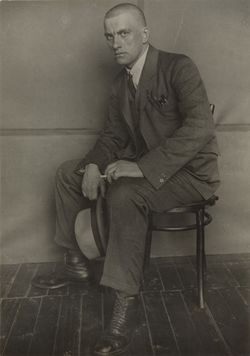


Three classic Soviet-era children's books by leading avant-garde writers and illustrators, newly translated.

John Grady Cole is the last bewildered survivor of long generations of Texas ranchers. Finding himself cut off from the only life he has ever wanted, he sets out for Mexico with his friend Lacey Rawlins. Befriending a third boy on the way, they find a country beyond their imagining: barren and beautiful, rugged yet cruelly civilized; a place where dreams are paid for in blood.
"A darkly shining work executed with consummate skill and much subtlety - the effect is magnificent.: - John Banville, "Observer"

Short stories from women's perspectives set around the 1917 Easter Rising against British rule in Northern Ireland and depicting the misogyny and violence rife in society at the time.

This taut depiction of a stand-up comedian falling apart on stage in front of an audience wanting entertainment won Grossman the 2017 Man Booker International Prize. Why are we so transfixed by tragedy, our own and others'? In reading literature, are we like Dovaleh's audience, seeking entertainment from the miseries of others?
"Unrelentingly claustrophobic. The violence that A Horse Walks into a Barexplores is private and intimate. Its central interest is not the vicious treatment of vulnerable others but the cruelty that wells up within families, circulates like a poison in tight-knit groups, and finally turns inward against the self. Searing and poignant." - New York Review of Books

A childless couple, a troubled inner-city kid and a volatile horse are the ingredients in a complex story of love, guilt and attachment.
"Gaitskill's work feels more real than real life." - Boston Globe

A hunk of meat, an industrial and agricultural machine, a luxury good, a cherished dancer, a comrade in arms, a symbol of a mythical past: the horse has meant many things to humans, most of them revelatory more of human mores than of anything about horses themselves. An interesting examination of the role played by horses in the endless spasm of human history.

Rachel Bush's poetry is remarkable for the amount of meaning, feeling and wry humour it pivots on the ordinary details of life, and by the verbal lightness of touch brought to even the heaviest of subjects. This, her last collection, contains some of her very best work. It shows the breadth of her poetic range and the quiet skill with which she assembled and polished her language, from the conversational asides to the deep fugual patterns which tie meaning to the particular and the ordinary.

"The stories' distinctive flavour comes from Alomar's masterful shifts of character perspective within extremely tight parameters. The book is full of these moments which trip you up, swing bluntly from one psyche to another, rapidly decelerate time and play with scale, all of it exposing the delicate balance of our presumptions and allegiances; the small dictatorships that we foster second by second." - Asymptote
[There are no puns in this list.]

BOOKS @ VOLUME #35 (5.8.17)
Our latest newsletter of reviews, news, events, amusements and new releases.
 Book launch this Friday: A TONGUE IS NOT FOR LASHING by Panni Palásti. Hungarian-born Nelson-resident poet Panni Palásti's new book will be launched at VOLUME at 6 PM on Friday 11 August. Panni will read poems in both Hungarian and English and discuss THE TRAVAILS OF TRANSLATION. All welcome. >Click here to pre-order a signed copy. >Click here for a poster or flyer. All welcome.
T
 he Perfect Gift: WRITING FOR CHILDREN. A workshop at VOLUME taught by Michelanne Forster. Sunday, September 3rd and Sunday, September 10th. 1pm - 4:30 pm (two half-day sessions). Do you have a favourite story or anecdote that you would like to pass on to your children or grandchildren? Would you like to submit your story to a children’s magazine or publishing house, or explore the possibilities of self-publishing? Whatever your goal, this course will help you shape and polish your work. >>Click through to find out more. >>Contact us to enroll. >> Comments from participants in Michelanne's previous workshop at VOLUME.
  We are pleased to be supporting the MAPUA LITERARY FESTIVAL, organised by the Mapua Community Library. An outstanding line-up and a great community feel has already ignited a lot of excitement among VOLUME customers. The programme includes Elizabeth Knox, Fiona Farrell, Sarah Laing, Fiona Kidman, Joe Bennett, Fleur Beale, Gerard Hindmarsh, Duncan Sarkies, Paddy Richardson, Jenny Pattrick, Veronika Meduna, Emma Stevens and Roger Sanders. Brochures for the festival can be had from VOLUME, and the programme is also available on-line. The venue is intimate, so our advice is to book your tickets as soon as you can. Invite your friends.
 |
Decline and Fall on Savage Street by Fiona Farrell {Reviewed by STELLA}
In the wake of the Christchurch earthquakes, Farrell produced two works of non-fiction, The Villa at the Edge of the Empire and The Broken Book- her response to these disasters. “I am normally a fiction writer, but in 2010-11 fiction felt irrelevant. What mattered was reality. What mattered were the factual narratives...” Both these important and exceptional books were short-listed for The New Zealand Book Awards. In a return to fiction, Decline & Fall on Savage Street is Fiona Farrell’s companion novel to The Villa at the Edge of the Empire. In her notes, Farrell says “…fiction has its role…it can go straight to the heart of things, into private and secret places… It gives shape to the random narrative of existence.” Opening in 1906, with the site of the house secured, we are introduced to the possibility of a growing nation, a developing city, a new place from which to see a prosperous future. A chapter later, two years on, the floor plans are ready and George is ready to put his stamp on the house. A grand yet comfortable home, not too big but with some quirks – a house that will entice several owners over the following decade, beguiled by its character. Farrell cleverly weaves a story about the home on Savage Street, the families that live and love there: their ups and downs introducing us to people both familiar and particular - their follies, weaknesses, strengths and loyalties to the each other and the house, and to the communities they are part of. In the first part of the novel, the chapters jump ahead in 2-year leaps, taking the reader through a potted New Zealand history of a developing city, of settlement through two world wars, the changing social mores of the 1950s and '60s, political upheavals of the '80s, economic booms and busts of the '90s, to just beyond the millennium. Part 2 focuses on the period of the earthquakes, starting just prior to the first quake in 2010 and concluding in late 2012. Focusing on one house is an ingenious way to structure this novel: as a reader, you follow the generations of families, see the house loved, let go, sold, change hands, change status as the suburbs grow and morph, get renovated and reinvigorated, and be torn asunder by the ground beneath it. Understandably there is a huge cast of characters: the founding family, the tenants (when needed as circumstances change), the community of idealists that co-own and rescue the house, the doer-uppers, the new blended family - all of whom call this place home. Farrell makes all their stories interesting and relevant to the main threads of the novel. While you often only glimpse their lives, you feel as though you know and understand them all – are a neighbour and confidante looking in through the windows. Interspersed between the chapters are short pieces which anticipate change, which represent the breathing in and out of time, of forces that can’t be controlled, of nature and what happens despite our human interventions and our best-laid plans.
|
 | Rivers of London by Ben Aaronovitch {Reviewed by STELLA}
Policing in London has never been so quirky. DC Peter Grant isn’t doing too well climbing the ranks. His major problem is that he is easily distracted: he notices things others don’t and finds himself wandering off on tangents when he should be focusing on the job in hand. Rivers of London is the first in a successful series by Ben Aaronovitch, which brings together the decidedly real with the completely fantastical in an alarming, funny, quite believable caper. In Rivers of London several people are acting uncharacteristically aggressively, and some of their actions are leading to gruesome murders. PC Grant, after attending one such horror, meets the unusual Chief Inspector Nightingale and finds himself promoted into his team of one (if you don’t count the strange housekeeper, Molly, who seems to float and has rather pointy teeth) and initiated into the world of wizards, the first apprentice in 50 years. Reading this I felt I had fallen into a hybrid of Jasper Fforde madcap, Harry Potter for grown-ups, all mixed with gruesome crime and absurdist plotting. Not only does our DC have to deal with learning magic, the often mysterious behaviour of Nightingale and the obvious contempt of some fellow policing chiefs, he’s trying but failing to keep his mind off fellow police officer Lesley May (who just seems to keep dragging into his troublesome world) and resist the niece of a mighty river goddess. And hence the plot thickens, the river gods Sister and Brother Thames, underworld spirits living in flats near the banks of the Thames with their equally adoring and loyal entourages, are having a bit of a turf war. What are they up to, and who or what is making Londoners turn on each other? Can Nightingale and Grant with the assistance of fellow police officer May and the police computer, HOLMES, and possibly Sister Thames (if she has a mind to) get to the bottom of this mystery?
|
 | W, or, The memory of childhood by Georges Perec {Reviewed by THOMAS} “I write: I write because we lived together, because I was once amongst them, a shadow amongst their shadows, a body close to their bodies. I write because they left in me their indelible mark, whose trace is writing. Their memory is dead in writing; writing is the memory of their death and the assertion of my life.” Both of Perec’s parents were killed in the 1939-1945 war, his father early on as a French soldier, and, soon after, his mother was sent to a death camp. Their young son was smuggled out of Paris and spent the war years in a series of children’s homes and safe villages. “My childhood belongs to those things which I know I don’t know much about,” he writes. W alternates two narratives, the first an attempt by Perec to set down the memories of his childhood and to examine these not only for their accuracy but in order to learn the way in which memory works. Often factual footnotes work in counterpoint to the ‘remembered’ narrative, underscoring the limitations of the experiences that formed it. Right from birth the pull of the Holocaust is felt upon Perec’s personal biography, and his story is being shaped by this force, sucking at it, sucking his family and all stability away. Sometimes he attaches to himself experiences of which he was merely a witness, the memories transformed by remembering and by remembering the remembering, and so forth, and by the infection of memories by extraneous imaginative details. “Excess detail is all that is needed to ruin a memory.” The absences around which these memories circulate fill the narrative with suppressed emotion. The other narrative begins as a sort of mystery novel in Part One, telling how one Gaspard Winckler is engaged by a mysterious stranger to track down the fate of the boy whose name he had unknowingly assumed and who had gone missing with his parents in the vicinity of Terra del Fuego where they had gone in search of an experience that would relieve the boy’s mutism. In Part 2, the tone changes to that of an encyclopedia and we begin to learn of the customs, laws and practices of the land of W, isolated in the vicinity of Terra del Fuego, a society organised exclusively around the principles of sport, “a nation of athletes where Sport and life unite in a single magnificent effort.” Perec tells us that ‘W’ was invented by him as a child as a focus for his imagination and mathematical abilities during a time when his actual world and his imaginative world were far apart, his mind filled with “human figures unrelated to the ground which was supposed to support them, disengaged wheels rotating in the void” as he longed for an ordinary life “like in the storybooks”. Life and sport on W are governed by a very complex system of competition, ‘villages’ and Games, “the sole aim to heighten competitiveness or, to put it another way, to glorify victory.” It is not long before we begin to be uncomfortable with some of the laws and customs of W, for instance, just as winners are lauded, so are losers punished, and all individual proper names are banned on W, with athletes being nameless (apart from an alphanumeric serial number) unless their winnings entitle them to bear, for a time, the name of one of the first champions of their event, for “an athlete is no more and no less than his victories.” Perec intimates that there is no dividing line between a rationally organised society valuing competition and fascism, the first eliding into the second as a necessary result of its own values brought to their logical conclusions. “The more the winners are lauded, the more the losers are punished.” The athletes are motivated to peak performance by systematic injustice: “The Law is implacable but the Law is unpredictable.” Mating makes a sport of rape, and aging Veterans who can no longer compete and do not find positions as menial ‘officials’ are cast out and forced to “tear at corpses with their teeth” to stay alive. Perec’s childhood fantasy reveals the horrors his memoir is unable to face directly. We learn that the athletes wear striped uniforms, that some compete tarred and feathered or are forced to jump into manure by “judges with whips and cudgels.” We learn that the athletes are little more than skin and bone, and that their performances are consequently less than impressive. As the two strands of the book come together at the end, Perec tells of reading of the Nazi punishment camps where the torture of the inmates was termed ‘sport’ by their tormentors. The account of W ends with the speculation that at some time in the future someone will come through the walls that isolate the sporting nation and find nothing but “piles of gold teeth, rings and spectacles, thousands and thousands of clothes in heaps, dusty card indexes, and stocks of poor-quality soap.” |
 | A Tongue is Not for Lashing / Nyelvűnk Nem Ostor by Panni Palásti {Reviewed by THOMAS} Nothing new enters the mind when reading, yet without reading our capacity for new experiences would be constrained to those we could actually have for ourselves (which would be either time-consuming or limiting, either hazardous or limiting, either unreliable or limiting, either either reckless or limiting). To read is to follow, generally with our eyes, a sequence of familiar marks (ink on paper, mutable crystals on a screen, black fire on white fire, or whatever), patterned in largely familiar ways, generally becoming less familiar as the patterns get larger until such point as the pattern and the content diverge and begin to interact in, hopefully, interesting ways (the sooner this interaction is induced, the more ‘poetic’ the text, perhaps). In some way the hooks of text act as a harrow, drawing up and turning over already existing mind-stuff and leaving it in new patterns which are the matrix of new experience. A reader of a text surrenders their mind-stuff to the authority of the author, the postulated person who has wrought the textual harrow, the purpose of which is to translate experience between minds. The better wrought the harrow by the author, the better the chance that the resultant pattern of experience in the mind-stuff of the reader who completes the task of translation will resemble the pattern of experience in the mind-stuff of the author. All text entails the translation of experience and is fraught with avoidable and unavoidable failings due to differences between the pre-existing mind-stuffs of both parties (their pre-existing repertoires of experience) and to the degrees of facility either party has with their part in the process (writing, reading (not too dissimilar (the first being a subset of the second))). When the translation of experience uses not one language as a medium between writer and reader but two, one used as a matrix for experience by the writer and one used as a matrix of experience by the reader, there must necessarily be some refraction as the text passes from one medium to the other, from one language to the other. When this linguistic translation is done by a third party, they cannot but introduce a further refraction as they become first reader and then (re)writer of the text before it reaches and affects the eventual reader, in other words they become in themselves a further medium, an experiential medium as opposed to a linguistic one (not that such a distinction can be made except usefully), interposed between author and reader, in addition to the two linguistic media, and the translator must align within themselves two linguistic matrices upon the one experience. This is not to say that such translation necessarily 'harms' a work, for the intensive reading required furthers and joins the reading done by the author to create the work and that done by the reader to complete it. When the translator is the author, as in A Tongue is Not for Lashing, the process of translation takes place in a field in which the medium of a third party’s experience has not been introduced, and the task of translation is to align the two linguistic matrices so that meaning passes as cleanly as possible between the two. More than with translation made by a third party, the differences between the work and the work translated by the author, when most rigorously done, manifest the differences between the two linguistic matrices used to arrange the mind-stuff of experience. As these differences are least avoidable at the closer stages of the interaction between pattern and content, these differences are most manifest in the translation of poetry. What Palasti terms ‘the travails of translation’ are the most strenuous and the most exacting and the most hopeless and the most fertile and creative in the translation of poetry. As Marianna Birnbaum says of the translation of poetry in the introduction to A Tongue is Not for Lashing, “The struggle cannot end in total victory, since the original poem is built, precisely, on that single literary solution of the poet, that unique amalgam of form and meaning. In the duel between form and meaning usually form is the loser.” It would be hard for a reader to ‘trust’ a third-party translator who permitted form to contribute as much to the translated poem as it most surely did to the creation of the original, but we have fewer reservations when it comes to translation by the author. Even though the author-as-translator may allow form, the demands of the linguistic matrix particular to the destination language, to give a translated poem a degree of divergence from the original we would find unacceptable from a third-party translator, we more readily trust the author to deliver us a poem, which we regard as parallel at least, which expresses, at a deeper level at least, whatever it was they were originally trying to say. If we have some degree of aptitude with both languages, and have both versions available as in the parallel texts of A Tongue is Not for Lashing, we may compare the two and follow the author/translator in her travails. For the rest of us, we may trust the poet and gauge the degree to which her experience induces an experience in us across the medium through which it travels, as well as the experience we have of language patterned by the author’s labour. “All my poems are political,” states Palasti, all are the expression of an individual striving for freedom and experience and intimacy often in the face of societal (or even natural) forces configured to stifle freedom, annul experience and prevent intimacy. Now in her ninth decade, Palasti left her native Hungary as a refugee after the the defeat of the 1956 revolution, and has worked on this bilingual edition of a selection of her poems as a way of speaking in two languages at once and aligning the dual matrices of her own experiences. I particularly like the somewhat Seabldian photographs with which the book is scattered, their simultaneous reachability and unreachability presenting a version of the translation of experience particular to the nature of their medium, and thus complementing the work of the poems.
>> Panni will be launching A Tongue is Not for Lashing, reading poems in both Hungarian and English, and talking about bilinguality at VOLUME at 6 PM this Friday (11 August). Please come along.
|