
 | Letters from a Lost Uncle by Mervyn Peake {Reviewed by THOMAS} “You will understand, unless you are very stupid, how exciting it is after so many years spent in searching for the White Lion, to feel so close to him.” The characters of Peake’s fictions, finding conventional society too narrow to contain them, turn their backs upon all that is familiar, traditional and expected of them and choose the path of loneliness that is the only alternative, monopraxis establishing no maps to variance, to learn that the path of loneliness is one to be beaten for oneself. Where there is no route forward a route must be made forward, and to carry on is to carry on with no companion but perhaps an oddity not of the same order of being as oneself. This is a melancholy path but it would be gritless to despair for to despair is the intended fate of all who turn their backs on lit windows and dining tables. One such wanderer, a “lost uncle”, though to whom he is lost is unclear, finds himself, one-legged but with a useful spike to complete his complement of limbs, more suited to the hazards and loneliness of arctic wastes than he is to human company, and travels north in search of the White Lion, whose image he has seen on a stamp. The longing of the Peakesean wayfarer draws him to the cold far edges of the mind, where snow may be swept by wind into a vast column, clearing the underlying ice so that the monsters that swim beneath may grin up as he passes. He has only a mutant turtle-dog named Jackson for company and to carry his gear. And the lion? Single-mindedness such as the uncle’s cannot fail, but the prize is bound to disappoint, the White Lion to be vast but old and on the point of death, the animals of the North all gathered for its farewell. And out of such loneliness, from this nowhere to which such uncles belong, from these experiences from beyond the usual ambit of experience, why these letters posted back to an undifferentiated nephew, these, in this case, distinctive pencil drawings with typewritten scraps of text pasted on? Does the letter, the book, the artefact, the text perform an inward urgency, tethering the sojourner to a sanity from which they might otherwise be distant? Or is there a magnanimity in production when to not produce would be less draining: does a writer imagine that the world might somehow be better (or worse) for their imposing their words upon others or upon at least the possibility of others? The task of an explorer is to explore. Is there any quest that does not leave a trace? |

Contestants were required to choose a piece of spam, junk mail or advertising and to write a poem using only the vocabulary of their chosen junk. We were overwhelmed with the number of entries - many thanks to everyone.
Winner: Janine Martig

Flawless Audrey
Seamless
Perfect
Confident
I can be you
As perfect as you
I correct my errors
to be as flawless as you
I can be you
I + work = you
It's the way
All that work
to be you

Perfect
Seamless
Flawless
To be Audrey
Can I be as confident
as you?
Audrey?
Can I?
Audrey?
All that work...
Judges' comment: This poem uses the limited vocabulary of the advertisement to wring a huge amount of pathos out of the fact that grammatical insecurity is merely a manifestation of personal insecurity.
Commended: Joe Papps

An unsolicited open-access map,
the map with no connections between national places,
separate locations,
there is no limit.
A sheet, a copy,
originating from various wandering locations,
mobile encounters,
there is no limit.
Following the day,
you associate streets with volumes of phantom space,
virtual tours,
there is no limit.
Contribute to this new piece,
ensure your billstickers amount to your name,
send or deliver,
there is no limit.
A junk arrangement,
you will no doubt amount to the spam you receive,
estimate twenty years,
there is no limit.
Judges' comment: This poem cleverly appropriates the vocabulary of the competition instructions to explore the existential threats and opportunities of the concept of the limit (or the constraints of its absence). 'Phantom space' is a concept that deserves a whole book.
Commended: Jeannette Cook

Black chook
you are luscious,
velvet smooth, sumptuous, silky,
elegant as you run by the river
below our cellar door.
We are impressed by the red-gold
of your powerful head,
your beautifully structured form
as you scoop ripe fruit
onto your palate.
Big, weighty, generous,
a champion layer delivered to us laden.
Today we collected two -
smooth in the hand they lay
like white stars.
We lovers from across the world
built on this estate below the range
to share our passion
for simple things. Your delicious offer
has made us rich.

Judges' comment: This poems nicely turns the adjective-laden vocabulary of advertising inwards to construct a carefully patterned and very personal poem.
NEW RELEASES
These books have come in asking for you.

We have in us a restlessness, a will to change, a fluidity of identity and belonging that Olga Tokarczuk in her fine and interesting book Flights would see as our essential vitality, an indicator of civilisation. Flights is an encyclopedic sort-of-novel, a great compendium of stories, fragments, historical anecdotes, description and essays on every possible aspect of travel, in its literal and metaphorical senses, and on the stagnation, mummification and bodily degradation of stasis. The book bristles with ideas, memorable images and playful treatments.
>> Read Thomas's review.

The three-day siege of the Battle of Orakau in 1864, in which 1700 Imperial troops laid siege to a hastily constructed pa sheltering 300 Maori men, women and children, marked the end of the Waikato War. Ihimaera tells the history from the point of view of a Moetu, a boy on the side that refused to submit and fought to the end. With facing texts in English and Maori (by Hemi Kelly). First-hand accounts and documentary illustrations appended.

A dazzlingly intelligent dual-narrative novel concerning, on the one hand, a retired New York lawyer who 'disappears' to Tel Aviv, and, on the other, a novelist named Nicole Krauss who comes home to find herself already there, and so sets off towards the point the narratives meet. Elegant and replete with Kraussian themes of memory, solitude and Jewishness.
"Restores your faith in fiction." - Ali Smith
"Charming, tender, and wholly original." - J. M. Coetzee
>>"What is ‘real’ and what isn’t, and do such questions even apply, really, to something that is entirely a construction, from beginning to end?"

As well as being a deeply thoughtful writer, Coetzee has always been a deeply thoughtful reader, and his essays are helpful in unlocking the work of other writers, including, here, Beckett, Walser, Murnane, Goethe and Kleist.

"I want to show you our world as it is now: the door, the floor, the water tap and the sink, the garden chair close to the wall beneath the kitchen window, the sun, the water, the trees." Following the remarkable quasiautobiographical 'My Struggle' series, Knausgaard has begun to produce an impressionistic personal encyclopedia of the world to appear in four seasonal volumes. The first begins as a letter to his unborn daughter and proceeds to catalogue the wonders and banalities of elements of the natural and human worlds, and of their effect on each other. Illustrations by Vanessa Baird.
>> The sun: "utterly unapproachable and completely indifferent."
>> "I am back writing good sentences."

"Meet Bram Presser, aged five, smoking a cigarette with his grandmother in Prague. Meet Jakub Rand, one of the Jews chosen to assemble the Nazi’s Museum of the Extinct Race. Such details, like lightning flashes, illuminate this audacious work about the author’s search for the grandfather he loved but hardly knew. Working in the wake of writers like Modiano and Safran Foer, Presser brilliantly shows how fresh facts can derail old truths, how fiction can amplify memory. A smart and tender meditation on who we become when we attempt to survive survival." - Mireille Juchau

"We didn't want to be like twins-we wanted to be twins. We wanted to be absolutely identical. But because we hadn't been born twins, we had to make ourselves the same-and part of that, of course, was having to go through all our most important experiences together." Rowing partners Johann and Ludwig are best friends, but that's not enough. To defeat the region's current champions, identical twins from a nearby town, they must become twins too. Ludwig has a plan: they will eat, sleep, breathe and even think in perfect harmony. Only then will they have a chance of winning. But Johann has a secret he's been keeping from his friend-and when Ludwig begins acting strangely, Johann realises that his 'twin' wants to put their bond to the ultimate test.

Centred on a community of immigrants who have traded their endangered lives as artists in China and Taiwan for the constant struggle of life on the poverty line in 1990s New York City, the stories that make up Sour Heart examine the many ways that family and history can weigh us down, but also lift us up.
"As I read, I quickly realized this was something so new and powerful that it would come to shape the world, not just the literary world, but what we know about reality. Zhang's version of honesty goes way past the familiar, with passages that burst into a bold, startling brilliance. Get ready." - Miranda July
"Obscene, beautiful, moving." - The New Yorker
>> Jenny Zhang and Lena Dunham.

From his seat in the tiny aeroplane, Fred watches as the mysteries of the Amazon jungle pass by below him. He has always dreamed of becoming an explorer, of making history and of reading his name amongst the lists of great discoveries. If only he could land and look about him. As the plane crashes into the canopy, Fred is suddenly left without a choice. He and the three other children may be alive, but the jungle is a vast, untamed place. With no hope of rescue, the chance of getting home feels impossibly small. Rundell, author of The Wolf Wilder, writes beautifully as always.

Exhaustive and magisterial, this biography benefits from its author's first-hand knowledge and from his access to Hillary's personal papers. It reveals dimensions of Hillary's life not hitherto examined.

Why are the institutions of representative democracy seemingly unable to sustain themselves against forces they were designed to manage, and why does it matter?

When a beautifully made coffin turns up for Edvard's grandfather, whose death is nowhere in sight, Edvard begins to unravel the mystery of his lost uncle and dead parents, an unravelling that takes him from the remote Norwegian farmstead where he grew up to the Shetland Islands, to the historic battlefields of France. The novel is neatly dovetailed throughout, just like the woodwork that runs through it. From the author of the incomparable Norwegian Wood.
>> Mytting speaks with Kathryn Ryan.

The first concrete evidence for Desmond arrives when he stood for parliament in Hawkes Bay in 1884 (coming last of three candidates). He continued to campaign against landlords, bankers and monopolists, and for Maori against the settlers (and aligning himself with Te Kooti). By the time he left New Zealand in 1892, Desmond had already formulated the first version of Might is Right, his notorious manifesto of extreme social Darwinism, in which he proposed that the strong have an evolutionary duty to uproot and supplant the weak (including Christians).

Kells runs his finger along the shelves and wanders the aisles of libraries around the world and through time, both real and imagined, with books and without, and ponders the importance of the library as a representation of the human mind.

Everything from the fundamentals (types of flours and starters; stages of fermentation; basic doughs and fillings) through to recipes for breads (baguettes, sourdoughs, speciality breads, flavoured breads, oil breads and milk breads), Viennese pastries (croissants, pains au chocolat, apple tarts) gateaux (flan patissier, pistachio and apricot tart, spice bread), brioches (Parisian, praline, plaited, layered and cakes) and biscuits (sables, madeleines, almond tuiles).

Authentic and achievable recipes from the northeast of Italy, attractively presented.

In 2015 a tumour in the language centre of her brain robbed Blain of her ability to speak. After the rigours of treatment, she set about rebuilding her linguistic capacities through writing. At the same time, her mother was losing her faculties to Alzheimer's disease. An interesting meditation of the place of language in our conception of ourselves.

Being a teenager is hard enough without someone else using your body to commit murder. With the help of his 'ghost pimp,' Andy earns extra cash renting his body to spirits hungry for a taste of the corporeal world. But one day his body is returned battered and bruised, and he finds himself accused of a murder he doesn't remember committing. With the police on his trail and time running out, Andy must embark on a dangerous quest to catch the spectral killer, unaware he's a pawn in a larger conflict between supernatural forces. Exciting YA fiction from local author Mike Moreaux.

Continues the project begun in What Lies Beneath into the sixties, sexual liberation, literature and Thatcherism.

Ten years old and irrepressibly curious, Ellie lives with her fisherman father, Peter, on the wild North Yorkshire coast. Her mother's breakdown is discussed only in whispers, with the promise 'better by Christmas' and no further explanation. Steering by the light of her dad's sea-myths, her mum's memories of home across the water, and a fierce spirit all her own, Ellie begins to learn how her world is put together (or pulled apart).

The elder daughter of working-class Korean immigrants, Casey inhabits a New York a world away from that of her parents. As Casey navigates an uneven course of small triumphs and spectacular failures, a clash of values, ideals and ambitions plays out against the colourful backdrop of New York society, its many layers, shades and divides.
"Ambitious, accomplished, engrossing. As easy to devour as a 19th-century romance." - New York Times
"This big, beguiling book has all the distinguishing marks of a Great American Novel. A remarkable writer." - The Times

Nature writing from a professional tree-climber whose work has taken him into the upper strata of forests around the world. Beautifully written.

Orhan Pamuk’s tenth novel, The Red-Haired Woman, is the story of a well-digger and his apprentice looking for water on barren land. It is also a novel of ideas in the tradition of the French conte philosophique. In mid-1980s Istanbul, Master Mahmut and his apprentice use ancient methods to dig new wells. This is the tale of their back-breaking struggle, but it is also an exploration—through stories and images—of ideas about fathers and sons, authoritarianism and individuality, state and freedom, reading and seeing.

Doudna's discovery of the genome editing capacities of Clustered Regularly Interspaced Short Palindromic Repeats (CRISPR) has provided scientists with potentially the most powerful interventional tool yet in the field of genetics.

Bread, vinegar, kvass, yoghurt, butter, sauerkraut, kimchi, natural sodas, scrumpy, mead, pickles, kefir, creme fraiche, buttermilk, kombucha, cheese, miso, tempeh: you can make it all. Gentle and thorough.

"Like a fox running over snow there is a lightness, a poetic grace and a keen focus to these stories. Sharp, true and always hinting at a larger world, the work has a fable-like quality. Devour this delightful book in one sitting, then savour the stories all over again. " - Frankie McMillan
Illustrations by Rachel J. Fenton.
>> The back of a woman walking away. Radojkovich's flash fiction.

Engaging columns on literary travel.

"An insightful guide to the stages of writing fiction and memoir without falling into common traps, while wisely navigating the writing life, from an award-winning author and longtime teacher.
A book-length master class." - The Atlantic

What is at the top of the ladder? Who knows.

Exposes political economist James McGill Buchanan as the architect behind the right's relentless campaign to eliminate unions, suppress voting, privatise public education, and curb democratic majority rule.

A grand history of China's deep and recent history told through its relationship and management of water.

The City of the Secret Rivers by Jacob Sager Weinstein $23
London is crisscrossed with sewers and underground rivers. Can Hyacinth, recently arrived from the US locate the magically charged drop of water that will prevent another Great Fire? Who can she trust?

Serious critical consideration of the 2017 Nobel Literature laureate from Simon Armitage, Christopher Butler, Bryan Cheyette, Patrick Crotty, Aidan Day, Mark Ford, Lavinia Greenlaw, Hugh Haughton, Daniel Karlin, Paul Muldoon, Nicholas Roe, Pam Thurschwell and Susan Wheeler. A new edition, with a perceptive introduction by Will Self.
>> You know something is happening.

The psychologist specialising in PTSD recounts her own experiences surviving Auschwitz (where she was forced to dance for Josef Mengele) and those of the people she has helped.
"The Choice is a gift to humanity. Dr. Eger's life reveals our capacity to transcend even the greatest of horrors and to use that suffering for the benefit of others." - Desmond Tutu

Spices, grilled food, health food, vegan food, caramel, hamburgers, chilli hot dogs, avocado cheeseburgers, granola, lobster rolls, hamburgers, French-style tacos, fro yo, hamburgers, kale pizza, acai bowls, shrimp pad thai and hamburgers. Excellent photographs; part of the 'Cult Recipes' series.

Find out what we've been reading.
Find out what you'll be reading next.
Find out about our Writing for Children workshop.
Find out about the Mapua Literary Festival.
Find out about National Poetry Day.
Find out what you'll be reading next.
Find out about our Writing for Children workshop.
Find out about the Mapua Literary Festival.
Find out about National Poetry Day.

Minicry is a microscopic 24-page minizine illustrated by Kate Depree, featuring mini-things like haiku, jokes, tweets, poems, lists and more by Zarah Butcher McGunnigle, Courtney Sina Meredith, Uther Dean, Ashleigh Young, Guy Montgomery, Ruby Mae Hinepuni Solly, Alice May Connolly, Kirsten McDougall and Henry Cooke.
>> Brought to you by the people who bring you Mimicry.
>> Visit the Mimicry FaceBook page and like it.
>> Twittering tweets.
>> New voices in poetry are sought.
>> Are you hungry now?
We have full-size books from some of the contributors to Minicry:
Can You Tolerate This? by Ashleigh Young
Tess by Kirsten McDougall
Tail of the Taniwha and Brown Girls in Bright Red Lipstick by Courtney Sina Meredith
and several of them are into Sport.
>> Holly Hunter was inspired to make Minicry by Peach Spell.
Now make your own minizine and come and show us.
 Friday 25 August is National Poetry Day. Make some resolutions now as to how you will mark this day with your friends and family. We will be announcing the winner of our Poetry Spam competition (you will be able to read the winning poem in next week's newsletter). Thank you for all the entries!
On Friday, go out and about with your mobile device and read poems at the locations people have tagged them to on the Nelson Poetry Map - you may well meet other poetry readers reading there. In the mean time, keep adding poems (your own or those by others).
On Friday, come and have a look at our Poetry Day display and receive a swingeing discount if you are prepared to read a verse from the poetry book you want out loud.
Participate in, or just go along to listen to, the 'open mic' poetry event at the Elma Turner Library, 27 Halifax Street, Nelson, from 12 noon to 2 PM on Friday 25th. There are events all around the country.
20/20 Collection. To mark 20 years of National Poetry Days, 20 poets have been chosen, who each feature one of their poems and each has chosen another poet, who also have a featured poem. Click through to have a look.
 Nelson-resident poet David Kārena-Holmes is Bluff-resident poet Cilla McQueen's chosen poet. We have a range of David's work in stock, and editions by him and others from his tiny peripatetic Maungatua Press.
  Reviewed by STELLA |
Tess by Kirsten McDougall is a finely crafted novel that hooks you from the moment you meet the young woman hitch-hiking her way into small-town New Zealand. Tess is uneasy, troubled by something and wary of anyone that tries to help her. When Lewis, a middle-aged dentist, picks her up, he is distinctly wary too - he doesn’t wish to be seen as predatory. It’s raining and the young woman on the side of the road is soaked and reminds him of his daughter who he’s recently had a falling out with. Lewis is also dealing with his own grief and loneliness. His mother is in an old folks' home and doesn’t recognise him, although occasionally asking after his pretty wife, unknowingly rubbing salt into a wound. Lewis’s wife was the victim of an accidental death, one we learn later in the book has disrupted his family and made their lives unbearable for several years with secrets, blame and guilt. When Lewis ends up inadvertently looking after Tess, who becomes briefly ill with a fever, each of their lives is affected by the other. Both are lost and running from pain in their own way. Lewis needs to find a way back to his adult children, to rebuild his relationships with them, ease his way back into life rather than an alcohol-dulled semblance of one. Tess needs to face herself and her own secrets and fears. The novel is described as a "gothic love story", and there is an unusual element to this tale of relationships. Tess has an inherited supernatural power which she finds a curse as well as a curiosity. In the hands of a less able writer, this would have felt forced or unbelievable, but McDougall weaves this aspect into the novel convincingly and without guile. As Lewis and Tess muddle along, we are drawn into their stories, each revealed piece by piece through the conversation between the characters, flashbacks and observation. Life moves into a calm pattern, one in which Tess gardens and rights the neglected home and Lewis is relieved of his loneliness. There are times when the relationship is almost derailed, yet somehow they find the companionship or safety they need. So, just as everything seems to be running smoothly until Lewis’s tumultuous daughter, Jean, arrives on the scene and all turns on its head. Confrontations on various levels arise, between daughter and father; between the guest, Tess, and Jean; and Tess’s past catches up with her. This a novel about vulnerability, about women and power (or lack of it), about how anger can take you in the wrong direction yet also empower you to make the right choices and be courageous. McDougall writes convincingly, edging you closer to the truth: here is an observation of love, of surviving and of letting go of hurt. It’s also a novel of surprises - definitely worth delving into.
|
 | One Hundred and Forty Five Stories in a Small Box by Deb Olin Unferth, Sarah Manguso and Dave Eggers {Reveiwed by STELLA} McSweeney’s know how to make intriguing and innovative books. One Hundred and Forty-Five Stories in a Small Box is just that. The box with artwork by American artist Jacob Magraw-Mickelson draws your attention before you even notice the three small cloth-covered hardback books sitting within. In green, cream and puce, each volume contains a collection of short-short stories from three authors. All have a gift for this form, and pull in the absurd, the very funny and the affecting to great cumulative effect. The writing is pungent yet also sparse, nuanced yet light - breathless and meaningful in their single gulps. The authors Dave Eggers, Sarah Manguso and Deb Olin Unferth each have their particular style, and these writings butt up against each, as well as spring off each other successfully. (I've been reading them a volume at a time, but I'm curious to go back and intersperse the authors' writings). The volumes are titled Minor Robberies (Unferth), Hard to Admit and Harder to Escape(Manguso) and How the Water Feels to the Fishes (Eggers). After picking up the Manguso volume in the bookshop and reading a few, this collection of 145 stories quickly convinced me that it had a place on our home bookshelf, and I’ve been enjoying exploring these short-shorts ever since. |
 | The Hideout by Egon Hostovský {Reviewed by THOMAS} “All the love I am able to wring out of my desolate heart, all the feeling and devotion I may be putting into these lines, is released in me only because I know that I shall soon die.” The Hideout takes the form of a long valedictory letter by a Czech engineer to his wife from the cellar in France in which he has been hiding in an attempt to wait out the Second World War. The engineer confesses to his wife that, out of boredom of family life, in 1939 he followed a young Jewish widow, Madame Olga, to Paris, and that he dared not return to Czechoslovakia after the German invasion as he believed that the Germans would be hunting for him because he had destroyed the blueprints for an anti-aircraft gun-sight he had invented. When the Germans then invade France, he accepts the offer of a Dr Aubin, a man of indeterminate taste and ambivalent personality, to hide in the cellar of his house in Normandy until the war ends. Ominously, when they meet, Dr Aubin tells the engineer of a ‘cousin’ who was kept in the cellar as he slowly went mad: “he didn’t last long.” The book goes on to chart the disintegration of the engineer’s mental and physical capacities, describing his killing of a German soldier and ending with his consent to blow up a ship on behalf of the Resistance with the cost of his own life. It becomes clear that, by the time of writing, the engineer lives in a world that has for a long time had little resemblance to actuality, but it is unclear exactly when this divergence became established. I would contend that the insanity overwhelmed him quite early in his narrative, and his particular dangers are entirely delusional. There is no evidence that the Germans were in fact at all interested in his destruction of the blueprints, and they would hardly recognise him or be looking for him in France in any case. His whole flight and secretion is perhaps a sublimation of his guilt about his infidelity, his lack of specific danger contrasting with the real danger faced by the Jewish widow Madame Olga, whom he abandons as soon as the Germans invade France. The engineer tells of his years hiding in the cellar of the house of the Mephistophelian Dr Aubin, the delineation of whom may or may not be in reference to an actual person. He tells of the torment he suffers when Dr Aubin has a German soldier boarding in the house above his head, a man who peers into the cellar, noseless and demonic. Clearly by this time Dr Aubin and the boarder are little more than projections of the engineer’s paranoia, serving to reinforce the ‘necessity’ of his self-incarceration. When Dr Aubin suggests that the Germans “aren’t fighting against people but against nature,” he affronts the engineer’s certainty that the Germans are interested in his ‘crime’ against them, and his suggestion that the the Germans may not in fact be interested in his anti-aircraft gun-sight merely makes the engineer deeply suspicious of Dr Aubin and strengthens his insane resolve. “My memories and my visions were like blocks which I could use to built infinite structures.” Isolated in his own head, the engineer so misconstrues his own history that he cannot experience his present surroundings as anything beyond his delusions. He sees from his cellar window his “little double,” a child playing with an imaginary dog, and when he finally sees a German soldier (a “German soldier”), it is, implausibly, his only German school-mate (in SS uniform), and the engineer immediately tells him all his secrets. When Fischer offers the engineer safe passage in return for his anti-aircraft gun-sight, a way out of the cellar, the engineer kills him with a spade and hides the body under his bed until Dr Aubin eventually returns and disposes of it. Clearly, by this time, the Fischer figure is as real as the child’s ‘dog’, evidence that the engineer’s mental deterioration is reaching a critical point. The Hideout is such a good depiction of delusional paranoia and attendant claustrophobia partly because we have only the narrator’s own words with which to grapple with his reality, and partly because delusional dangers often convincingly clad themselves in the semblance of real dangers in times when everyone’s version of reality is distorted by fear. |
 | Nobody is Ever Missing by Catherine Lacey {Reviewed by THOMAS} For reasons she is never quite able to formulate, Elyria flees her marriage and New York and runs away to New Zealand, where she wanders about, seemingly incapable of either achieving or escaping personhood (the closest she achieves to a self-nullifying stability is when working in the garden of an aging poet, who eventually frees himself of her with the necessarily blunt observation, “You are a sad person, and I’m not a person who can tolerate other people’s sadness”). Elyria is caught in a tourniquet of self-observation which borders at times on the hysterical (perhaps the ultimate result of all self-observation). She thinks back to the early period of life with the person who became with her husband, when “I was not an observer of myself, but a be-er of myself, a person who just was instead of a person who was almost”, but we know that this relationship, with a man Elyria met because he was the last person her sister talked to before her suicide, was both formed and deformed by a trauma Elyria could not face, a trauma which the relationship is unable to either heal or address. Although Elyria recognises she has a problem with authenticity (“A rational person would feel upset instead of just knowing she was upset.”), this appears to be incurable, existential, as she is manifestly incapable of relaxing the vigilance that keeps her ‘inner wildebeests’ hidden and thus prevents her escape into authenticity: “I was not a person but just some evidence of myself”. Only at the end of the book, when she has returned and been rejected by her husband and is walking through New York in torrential rain, does she perhaps (but only perhaps) exhibit an awareness of her surroundings that is not distorted by self-obsession, but this clarity (possibly fleeting, possibly terminal) is predicated on a relinquishment that is uncertain in its implications. |
The winners of the New Zealand Book Awards for Children and Young Adults have just been announced!

2017 Margaret Mahy Book of the Year: SNARK by David Elliot
Copyright Licensing NZ Young Adult Fiction Award: The Severed Land by Maurice Gee
Esther Glen Award for Junior Fiction: My New Zealand Story: Bastion Point by Tania Roxborogh
Elsie Locke Award for Non Fiction: Jack and Charlie, Boys of the Bush by Jack Marcotte
Picture Book Award: That's Not A Hippopotamus! by Juliette MacIver and Sarah Davis
Te Kura Pounamu Award: Te Kaihanga Māpere by Sacha Cotter, translated by Kawata Teepa, illustrated by Josh Morgan
Russell Clark Illustration Award: Snark by David Elliot
Best First Book Award: The Discombobulated Life of Summer Rain by Julie Lamb


BOOKS @ VOLUME #36 (12.8.17)
Our newsletter of reviews, news, events, new releases and other recommendations.
 |
The New Zealand Project by Max Harris (Reviewed by STELLA}
At a time when we face unprecedented challenges - climate change, rising inequality, economic uncertainties, a rapidly changing concept of ‘work', just to mention a few - we are also seeing an increased disillusionment and more pointedly a dissociation with politics and a lack of discourse (even in an election year). Why is it that many don’t vote, and why is it that political conversation doesn’t happen around every dining room table? We have seen a gradual decline in involvement in politics on either a small, local scale or a grander scale in recent decades, particularly in the face of neoliberalism over the last 40 years or so, accelerated by the accusation of governments being more in cahoots with big business and their own social groupings than with people they claim to represent. There are exceptions, for instance Obama’s successful presidential campaign (yet once in ‘power’, it’s debatable whether much really changed) that harnessed swathes of America and gained the attention worldwide.The economic collapses of 2007-8 could have made a difference in the way that people viewed and made use of political tools, yet, despite the 1% movement and other similar protest movements, the banks were rescued, a few figureheads went to jail and the world carried on in that boom/crash manner of capitalism. The phenomena of Bernie Sanders in the US and Jeremy Corbyn in the UK have given us a glimpse, though, of what might be achieved when people feel engaged with the political system. But sitting right along side this is Brexit (a vote which harnessed the will of disgruntled and disenfranchised) and likewise Trump for similar reasons. Max Harris’s book, The New Zealand Project, isn’t looking at what has been, so much as at what can be: an optimistic discussion about where we are, and a suggestion of new way forward. Harris is an Examination Fellow at All Souls College, Oxford, and this Project is part of his work on political systems and the need to change the principles at the core of these systems. In The New Zealand Project, Harris is interested in values, a ‘politics of love’, and how the ideas of community, care and creativity can make a difference in building a better society. These three elements are the anchor stones for talking about inequality, economic structures, foreign policy, decolonisation, social infrastructure (health, education and housing), climate change and a politics that engages people and their power to play a positive role in their political lives. Harris is unashamedly idealistic, something which I also noted in Chloe Swarbrick’s address at a recent event in Nelson, and this positivity has also grabbed the attention of the public in the rise of Jacinda Ardern. It’s refreshing and, while I probably fall into the cynic camp when it comes to politics, I can’t help but feel buoyed by the fact that there are new ideas and energy on the horizon, ideas that don’t necessarily come from traditional left/right paradigm. Talking in terms of positivity and values or 'love politics' might give you the wrong impression. The New Zealand Project is a serious, intelligent and thoughtful vision that challenges our preconceptions, tackles the tough questions, and gives us a framework on which to think about New Zealand’s political future and how changes in political concepts are vital to creating a better society for all. It is incredibly detailed, given the breadth of its content, and while reading it I wanted my post-it notes handy so I could come back to intriguing ideas, questions raised and thoughts triggered. Max Harris wants a discussion - he wants people to ask questions and debate concepts. This is a book that should be read, absorbed and discussed. And you can find out more from the author himself - Max will be in Nelson on Thursday 17th (see above). |
     |
{The 'Lockwood & Co.' series, reviewed by STELLA}
I started reading Jonathan Stroud’s 'Bartimaeus Trilogy' when I should have been reading something else this week! (I’m blaming this in my son’s exclamation “I can’t believe you haven’t read this yet. You have to.”) - a hazard when there are so many excellent books to read and always new titles arriving on my pile. Reading Stroud took me right back to my first encounter with his writing for children and teens, The Screaming Staircase, the first in the 'Lockwood & Co.' series. For fifty years, London has been haunted by ghosts, and the only people how can quell these beings are young, talented agents. There are several Psychic Investigations Agencies, but none are quite like Lockwood & Co. For a start they are a small team of three, they don’t have an adult ruling the roost and they do have a reputation for getting into quite a fix every once and so often. They are also extremely good at their job: Lockwood himself is brave, unflappable (you could definitely say he enjoys danger - maybe too much!) and highly skilled; George is the brains of the organisation - the one who will delve into the puzzles behind the ghostly problems finding the key that may quite often save their lives; and Lucy is smart, brave, and has an unwavering ability to tune into ghosts, especially the disaffected and trickiest ones. All in all, it’s dangerous, scary and filled with wonderful details and excellent characters. As the series continues the world of Lockwood & Co. becomes increasingly complex, the ghosts more malign, the apparitions more startling and the machinations and jealousies of the agencies increasingly mysterious. With titles like The Screaming Staircase,The Whispering Skull, The Hollow Boy and The Creeping Shadow, these are not for the faint-hearted. Yet Stroud isn’t all about scares; he uses humour excellently and draws out the relationship between our three heroes with pithy dialogue and the epic values of loyalty, courage and compassion. The fifth and final book, The Empty Grave, is due in September!
|
 | True Stories by Sophie Calle {Reviewed by THOMAS} Any idea that we have of ourselves, and it is difficult to avoid forming an an idea of ourselves even though we have nothing but functional reasons to do so, not that functional reasons for this, or for anything else for that matter, are not sufficient, or, in fact, the only possible, reasons, is a fiction, depending on what we understand as a fiction, constructed around, or, more accurately, by, the evidence, so to call it, that presents itself, or is sought, in the phenomenon known generally as memory. How does the past, given that it is convenient for us to consider, for the purposes of this rumination at least, that there is an actual progression through states of what, for want of a better word, we might call, lazily, the universe, or, lazily and sloppily, reality, or vaguely but pedantically, if it is possible to be vague and pedantic simultaneously, actuality, persist into the present in order to provide us with sufficient evidence, the word used cautiously but inverted commas resisted, for these fictions that pass, for us and/or for others, as identities, personalities and other such trappings and conveniences, that enable, or enable the illusion of, or the belief in, our agency as entities at once immersed in and in opposition to the other agglutinations of our existence, so to call them, vaguely, those entities that are not us but which are necessary for us to define ourselves against by the relations of action or perception? It is precisely to avoid such nested clauses and to save excessive wear to the comma keys on our computer keyboards that by convention we eschew the pedantic compulsion, if we can, to apply the rigours of uncertainty to the basic functional fictions such as that of the persistence of entities through time, despite whatever changes to these entities occur. Indeed we seem seldom to be uncertain of the persistence of an entity despite such changes, often more seldom the greater or more transforming these changes, as with the changes expressed by the entities we think of as ourselves, given that we have the idea of ourselves as entities. In any case, given that we deceive ourselves and others merely for the sake of functional convenience, which is only reprehensible in an abstract sense, if indeed reprehensibility can be anything other than abstract, we construct our fictions around the evidence of moments, thought of as in the past, persisting as images, in whatever way we may think of images, the meaning of a word tailored always to the demands of its application, to the present. Photographs, despite whatever other meanings we may impute upon them, seem to demand from us a response such as that expected by a moment of the past persisting to the present, very like, in many ways, the images and fragments from which the fictions, the not untrue fictions, or at least the not necessarily untrue fictions, or what we perhaps may term our functionally true fictions, we think of as our memories. Sophie Calle’s excellent True Stories is a series of images related to what we are encouraged to think of, and have no reason not to think of, as her life, images with, to me at least, and, presumably, also to Calle, and, reasonably, perhaps, to most people, the resonance and texture of the fragments to which we pin, or from which we construct, the memories so described and undercut above. Each is accompanied by a brief memory-text by Calle, which gives the resonance of the image a responding or corresponding context in the story of her life. These texts, funny, sad, tragic, empowering, unsparing of herself and others, or merely straightforward, if such a thing is possible, describe, in the most efficient manner, what we may think of as the character of Calle. The images and the texts have equal weight, and the rigours of the process of recording are sufficiently evident to induce in the reader/viewer of this book the complementary rigours of reception that make the project of awareness concommitant to existence so rewarding. |
 | The Boy Who Stole Attila's Horse by Ivan Repila {Reviewed by THOMAS} "'It looks impossible to get out,' he says. And also: 'But we’ll get out.'” This is a compellingly unpleasant little book. Two brothers, Big and Small, are trapped down a well in the forest. Calling, climbing and leaping are to no avail. As the days pass (the chapters are numbered with a sequence of prime numbers), we witness (and are spared no detail of) the brothers’ desperation, their physical and mental decline, their diet of worms and maggots (they will not touch the bag of food belonging to their mother), their suffering from both thirst and flooding, the cruelty and tenderness that constitute their deformed relationship. “Life is wonderful, but living is unbearable.” Repila never softens the violence of his language or assuages the discomfort we feel reading of the brothers’ dismal life. When the brothers catch a bird, they fear their shrunken stomachs may not be able to cope with the meat and so let it putrefy as a breeding ground for maggots. Big eats most of the food and deforms his muscles with a sequence of exercises, forcing Small to grow still lighter. At the point of giving up and dying, the brothers enact the revenge they have been preparing - it is not by accident that they are trapped down the well - but it is a revenge that comes at a horrible cost. The book is allegorical on a number of levels, and the epigraphs from Bertold Brecht and Margaret Thatcher (!) underscore the reading of the physical, mental and social harm of economic inequality, especially for those stuck at the bottom (dependent on the ‘trickle down effect' perhaps), and of the mutually destructive revenge that will be enacted when the effects of inequality ultimately become desperate. |

It's not always easy being a tough guy... You might not think it, but tough guys have feelings too. Even when they're with their best friends, or when they're on top of the world, not everything works out. This can be very frustrating.
Our book of the week with week is Keith Negley's wonderful picture book Tough Guys (Have feelings too).
Feeling bad or feeling sad or feeling uncertain or feeling not-very-confident are feelings that everyone has (even tough guys).
Everyone has feelings (well, almost everyone).
>> Tough guys can read this book too.
>> Are boys more likely to show their feelings these days than in the 1970s?
>> The Cure.
And also:

Why doesn't Dad do all those cool things he used to do? Why did he stop? (Could it be because having a child was somehow cooler?)
NEW RELEASES
A few of the books that have come in this week looking for you.

What binds a family together tears a family apart. On the run, Tess is picked up on the side of the road by middle-aged father Lewis Rose, and drawn into the complexity of his life. Tess is a gothic love story set in Masterton at the turn of the millennium.
"I love novels about amelioration, about people trying to mend and fix themselves. Kirsten McDougall's brave and brilliant Tess is one of these. A novel of tender observation and deftly judged suspense, Tess imagines what it might mean for someone to really know what goes on inside others." - Elizabeth Knox

A collection of autobiographical photographs and stories from this boundary-pushing artist.

"This book presents a rich and ranging collection of Maori women speaking from the nineteenth-century archive. The hopes, the persistence, the effort to set down a cause are all apparent in the words of women presented in these pages. It is in various measures an inspiring, instructive and agonising read." - Charlotte Macdonald, Victoria University of Wellington

Simon's little brother can't sleep without his special blanket. Simon usually just tells Casper what to do, but what can he do to solve this problem?

Contributions from James Brown, Elizabeth Knox, Tina Makereti, Damien Wilkins, Bill Manhire. Charlotte Wood, Ashleigh Young and Hera Lindsay Bird.

Spanning the wars in the Waikato to the present day, and including pieces from Robyn Hyde and Pat Booth to Sandra Coney and Phillida Bunkle, Mike White, Jon Stephenson, Nicky Hager and Phil Kitchin, the pieces in this anthology are fresh whatever their age, and remind us of the importance of the contribution made by journalists to public knowledge and discourse.

A selection of stories from the outstanding Hungarian author who was beaten to death in a concentration camp in 1945.
"Szerb is a master whose powers transcend time and language." - Nicholas Lezard, Guardian
"A writer of immense subtlety and generosity. Can literary mastery be this quiet-seeming, this hilarious, this kind? Antal Szerb is one of the great European writers." - Ali Smith

James Joyce was obsessed with the legal system, and Ulysses and Finnegans Wake is full of references to trials and proceedings. This is the first book to give full and fascinating treatment to a neglected facet of Joyce's oeuvre and recreates a legal climate where injustice loomed over every trial.
"This tremendously well-researched and marvellously insightful book is a delight for lawyers and lovers of literature alike." - Irish Independent

"No one can imagine how bad things must be. They sprout in the dark, damp folds of my mind. They grow there - a forest of tiny umbrellas. They flourish - a crown of terrible heads."
How do people survive?

Can a sugar tax improve public health? Even if it can, is it the right thing to do? Considers the New Zealand situation in the light of case studies from around the world.

Built around the abyss, the tightrope, and the trick that we all have to perform to walk across it, Pasifika 'poetry warrior' Selina Tusitala Marsh brings to life in Tightrope her ongoing dialogue with memory, life and death to find out whether stories really can cure the incurable.
>> This video of Marsh launching her previous collection, Dark Sparring, is worth watching again.

Does every writer have their own stylistic footprint? How can a statistician help us to understand how authors thought and wrote? Blatt brings big data to bear on the literary canon. Interesting.

Hoare wraps his remarkable prose for a third time around a watery subject, this time tracing poets', artists', utopians',and adventurers' all-consuming and sometimes fatal attraction to the sea.

Archer B. Helmsley wants an adventure. No, he needs an adventure. His grandparents were famous explorers (until they got stuck on an iceberg). Now Archer's mother barely lets him out of the house. As if that would stop a true Helmsley. Archer enlists Adelaide—the girl who, according to rumor, lost her leg to a crocodile—and Oliver—the boy next door—to help him rescue his grandparents. Quite delightful, and with illustrations by the author. New series.

When a neighbour builds Miles, a "very difficult dog", his own car, he can provide young Norman with some very formative experiences of independence.

"Great short stories are the shape of themselves: image, voice and plot dovetailed to the chosen form. Hall’s stories are vixen-shaped: urban and rural, feral and natural, female and stinky, beautiful and tough. They slide quietly into view and stare at us with their citrine eyes; exceptional, compelling, frightening and authentic." - Guardian

Fascinating, unsettling, wonderful. The specimens are all drawn from the Vrolik Museum in Amsterdam. Includes stereoscope.

"Ordinary Time wonderfully gets the warm, heated, swaddled feeling of early parenthood. In these poems there's closeness, damp, suspension in a state of intensity and the thingishness of life. All is urgent, present and fiercely intimate." - Jenny Bornholdt

Why stop at a room of one's own? Hayes takes Woolf's call to the ultimate sphere, and intimates a life in which language is the governing force.

When English teacher Kuo learned that one of her ex-students had been jailed for murder in the Mississippi delta, she began visiting him and reading and discussing literature. This is a true account of how a life can be turned around by books.

As the 20th century draws to a close, Maria is at the start of a life she never thought possible. She and Khalil are planning their wedding. They are the perfect couple, living together in a black bohemian enclave in Brooklyn. They've even landed a starring role in a documentary about 'new people' like them, who are blurring boundaries as a new era dawns. Everything Maria knows she should want lies before her - yet she can't stop daydreaming about another man. As fantasy escalates to fixation, it dredges up secrets from the past and threatens to unravel Maria's life.

"An utterly magical book. Michael Frank inherits Truman Capote's glorious ability to recreate the past in an act of exquisite, knowing retrieval. Set on the glamorous, conflicted fringes of 20th century Hollywood, Frank's memoir is a glittering, happy-sad evocation of his elegant, tyrannical, stylish aunt and the rest of his extraordinary family. I hung on every word, spying through his child's eyes. This is intense and lyrical prose: I never wanted it to stop." - Philip Hoare

Seven leading journalists express their anger and compassion over the sad fate of so many of their fellow citizens due to the poverty, corruption and violence than has their country in its grip.

400 illustrations reveal changes in thinking about fashion in the last century.

Social beers, adventurous beers, poetic beers, bucolic beers, imaginative beers, gastronomic beers, and contemplative beers. Where in the world can you find such beers?

"My mother, my family and Judaism are nested inside each other. I am Jewish and always Jewish; it's analogous with family, however hard it is, and however strained, it can never be disavowed. I remain, as my therapist put it, 'enmeshed', all tangled up in the family hoard. This book has been both a continuation of my conversations with them, and an attempt to untangle myself." Limburg's brother's suicide triggered for her a re-examination of her genetic and cultural heritage, as she attempted to hold onto her individual identity.

The veteran political commentator looks at the way the certainties upon which New Zealand has built its identity are becoming less certain. How will we respond?

The American founding father catapulted into modern celebrity status by a Broadway musical was an illegitimate, largely self-taught orphan from the Caribbean who overcame the odds to become George Washington's aide-de-camp and the first Treasury Secretary of the United States. He was controversial in his lifetime and has remained so since.

Two privileged young women at Greek Island resort come across a young Arab man washed up on the beach. A casualty of the refugee crisis, he becomes for them a 'project', with disastrous consequences.

LITERARY HORSES
(A selection)

"W. H. Auden once defined poetry as 'a game of knowledge, a bringing to consciousness, by naming them, of emotions and their hidden relationships'. This definition suits Smither's poetry, too, with its sophistication, its wit and humour, its playfulness, its candour, its tenderness, its exploration through simile and metaphor of the unexpected relations between things." - Peter Simpson

December 1941. Britain is at war. Emmaline has been evacuated away from the bombs to Briar Hill Hospital in Shropshire. When she gets there she discovers a secret. It's not to be shared, not to be told to anyone, even her friend Anna. There are winged horses that live in the mirrors of Briar Hill.

A young woman lies dying in hospital. The boy at her bedside asks some questions which unleash the most terrifying of stories.
"Terrifying but brilliant, this dangerously addictive novel in which a woman’s life speeds towards doom is haunted by the bleak landscape of rural Argentina. Schweblin remorselessly cranks up the tension until every sentence seems to tremble with threat. Fever Dream’s ambiguities, and the intricate psychologies with which Schweblin invests her characters, mean that rereading proves rewarding even when the suspense is removed. Wherever you decide the truth lies, aspects of Amanda’s story will continue to puzzle and haunt you long after she stops being able to tell it." - Guardian

“It looks impossible to get out,” he says. And also: “But we’ll get out.” This is a compellingly unpleasant little book. Two brothers, Big and Small, are trapped down a well in the forest. Calling, climbing and leaping are to no avail. As the days pass (the chapters are numbered with a sequence of prime numbers), we witness the brothers’ desperation, their physical and mental decline, their diet of worms and maggots (they will not touch the bag of food belonging to their mother), their suffering from both thirst and flooding, the cruelty and tenderness that constitute their deformed relationship. “Life is wonderful, but living is unbearable.” There are no horses in this book, and no reference to Attila beyond the title.

"Any reader interested in horses, history, art, literature or language will love this book, and be stunned by its scope and stylish intellect. This is about the end of a relationship between man and horse that Raulff likens to the dissolution of an idiosyncratic workers’ union, and what is thrilling is that the horse becomes a subtext – a new way of considering history via the stable door. The book is beautifully and idiosyncratically illustrated, in keeping with the text." - Guardian

One horse witnesses the brutality of the First World War from both sides of the trenches.

"This novel is about horse racing the way Moby-Dick is about a whale; it has a similarly expansive scope, spiritual seriousness and density of grand themes. Morgan’s epic work builds to a climactic series of dramatic race scenes featuring a star filly named Hellsmouth. Along the way, Morgan wrestles with subjects including the history of Kentucky, slavery and its legacies, the iniquities of American healthcare, Darwinism, geology and relations between the sexes." - Guardian

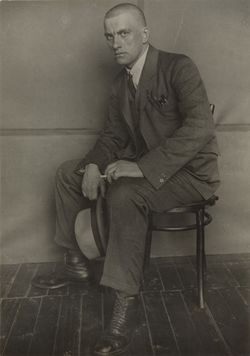


Three classic Soviet-era children's books by leading avant-garde writers and illustrators, newly translated.

John Grady Cole is the last bewildered survivor of long generations of Texas ranchers. Finding himself cut off from the only life he has ever wanted, he sets out for Mexico with his friend Lacey Rawlins. Befriending a third boy on the way, they find a country beyond their imagining: barren and beautiful, rugged yet cruelly civilized; a place where dreams are paid for in blood.
"A darkly shining work executed with consummate skill and much subtlety - the effect is magnificent.: - John Banville, "Observer"

Short stories from women's perspectives set around the 1917 Easter Rising against British rule in Northern Ireland and depicting the misogyny and violence rife in society at the time.

This taut depiction of a stand-up comedian falling apart on stage in front of an audience wanting entertainment won Grossman the 2017 Man Booker International Prize. Why are we so transfixed by tragedy, our own and others'? In reading literature, are we like Dovaleh's audience, seeking entertainment from the miseries of others?
"Unrelentingly claustrophobic. The violence that A Horse Walks into a Barexplores is private and intimate. Its central interest is not the vicious treatment of vulnerable others but the cruelty that wells up within families, circulates like a poison in tight-knit groups, and finally turns inward against the self. Searing and poignant." - New York Review of Books

A childless couple, a troubled inner-city kid and a volatile horse are the ingredients in a complex story of love, guilt and attachment.
"Gaitskill's work feels more real than real life." - Boston Globe

A hunk of meat, an industrial and agricultural machine, a luxury good, a cherished dancer, a comrade in arms, a symbol of a mythical past: the horse has meant many things to humans, most of them revelatory more of human mores than of anything about horses themselves. An interesting examination of the role played by horses in the endless spasm of human history.

Rachel Bush's poetry is remarkable for the amount of meaning, feeling and wry humour it pivots on the ordinary details of life, and by the verbal lightness of touch brought to even the heaviest of subjects. This, her last collection, contains some of her very best work. It shows the breadth of her poetic range and the quiet skill with which she assembled and polished her language, from the conversational asides to the deep fugual patterns which tie meaning to the particular and the ordinary.

"The stories' distinctive flavour comes from Alomar's masterful shifts of character perspective within extremely tight parameters. The book is full of these moments which trip you up, swing bluntly from one psyche to another, rapidly decelerate time and play with scale, all of it exposing the delicate balance of our presumptions and allegiances; the small dictatorships that we foster second by second." - Asymptote
[There are no puns in this list.]

BOOKS @ VOLUME #35 (5.8.17)
Our latest newsletter of reviews, news, events, amusements and new releases.