>> Read all Thomas's reviews. 


The Coming Bad Days by Sarah Bernstein    {Reviewed by Thomas}
“The truth is that sometimes we just want the worst to happen,” she writes, he supposes because there is no other way that we can be conclusively relieved of our fear that the worst may happen. Until such relief arrives, he thinks, we attempt to suppress our fear with whatever means we have at our disposal. “When we probed underneath everyday life,” she writes. “When we pressed on to the other side of the ordinary, did we not after all conclude that boredom was a form of anxiety, if not of sheer terror? When one acted out of boredom, it was an effort to forestall the worst taking one by surprise.” We learn very little about the narrator of this book, he thinks, we learn very little and the very little that we do learn is eventually taken away. The narrator sheds rather than accrues character, the things that happen to her are either without consequence or with no consequence other than being later undone, the narrator ends up less connected to any of the other characters, so to call them, than she was when she had not yet met them, she continuously makes observations and intimations but these observations and intimations are strangely devoid of content, they are structures with no core. The nameless narrator takes a post at a nameless university in a nameless city prone, seemingly, to flooding. Someone puts portentous notes under her door, but don’t expect to learn why or who. She develops an enduring fascination with Clara, the wife of the Department Chair, who leaves her husband, who knows why, and moves into the narrator’s cottage, who knows why, and then moves out again, who knows why and who knows where, certainly the narrator doesn’t seem to know why or where. “Our turning towards each other … might best be understood as an orientation towards an ideal, and it is for that very reason that the whole enterprise suggested devastation from the start. It contained within it the seeds that made its own realisation impossible,” she writes. It is unclear what the relationship between Clara and the narrator could be, the narrator doesn’t seem able to relate to anyone on any level, the two are almost complete opposites in every way, but, judging from hurts that the narrator is intent upon receiving from this relationship, if it even is a relationship, we could do worse than to speculate that Clara, one of only two characters who have been given a name, is mostly a projection of the narrator, a masochistic fantasy, a tool for self-harm. “Clara suggested that I had allowed myself to descend further and further into the realms of abjection in an effort to make myself interesting. Perhaps, she said, it was for the best that I could not write, for if I could not write, I would not then compromise myself in the ways that I had previously described to her — that is, in ways that were, when one looked closely, actually relatively shameful. … Although I may at one point have been a good thinker, this was evidently no longer the case.” After Clara leaves, something happens to her, there have been intimations of physical threats towards women throughout the novel, though we don’t know exactly what. “I did not want to think about what had happened to Clara. I did not want to think about what had happened. I did not want to think that what had happened to me had happened to her.” This is the only time that the narrator hints at a reason behind her evident self-loathing and abjection. Some unfaceable trauma has left her believing that abjection is her due, left her without faith in the possibility of any continuity or reciprocation, “sure to be found out for transgressions I did not recall having committed but was nonetheless guilty of.” She believes herself fated to endless loss and misfortune, “merely because one found oneself in the wrong place at the wrong time. Merely because, increasingly, it seemed to me, there was no right place or right time, still less did the two together exist anywhere, hard though one looked.” The narrator is unable to achieve anything or believe in anything closer than an immense distance between herself and her material, the sort of distance a narrator might maintain from the details of the story of another character in another book or of the story or some other personage unknown to them but narrated by another character, but in this book the material from which this degree of remove is maintained is herself. There is no past, and there is hardly any present either, and, turned upon itself, the narrator’s text sometimes almost eliminates any excuse for its production. At other times, often when taking a more casual attachment to the material, such as the story of a woman sitting on a park bench in Helsinki, perhaps when the material itself is at sufficient remove, Bernstein’s precise, cool, devastating prose takes on a Cuskian quality in highly memorable passages balancing dismissal, sympathy and unsparing humour. Bernstein’s sentences often have an aphoristic quality, sometimes unsettlingly at odds with their purported content. Her prose prickles. “What was absolute was not necessarily unconditional.”


Our Book of the Week is Zarah Butcher-McGunnigle's Nostalgia Has Ruined My Life,  a very enjoyable book of vignettes concerning a depressed young woman’s heroic efforts to achieve not very much and the degrees of shortness to which those efforts fall. The book is at once funny and pathetic and terribly sad. 
>>Read Thomas's review
>>There must be more to life than who to blame
>>"Hi" sounds so passive-aggressive. 
>>From the discomfort of my own home. 
>>Wearing neutral colours
>>"You don't seem like and INFP."
>>"You don't look sick."
>>Usually the practitioner sits in the seat closest to the door.
>>Other things to read. 
>>Autobiography of a Marguerite
>>Instagram has ruined my life
>>Your Nostalgia Has Ruined My Life

RECENT RELEASES 

Brief Lives of Idiots by Ermanno Cavazzoni           $32
A parody of the medieval Lives of the SaintsBrief Lives of Idiots offers us a perfect month of portraits of idiots drawn from real life, from overly realist writers to fringe-belief obsessives. This roll call extends the ridiculous to melancholic extremes, introducing us to such exemplary fools as the father and husband unable to recognise his own family, the Marxist convinced that Christ was an extraterrestrial, the would-be saint who finds a private martyrdom through the torturous confinement of a pair of ill-fitting leather oxfords, and the man who failed to realise that he had spent two years in a concentration camp. This is a display of myriad idiocy, discovered and achieved by hook or by crook, be it through paranoia, misapplied methodology, religious hallucination or relentless diarrhea. But Cavazzoni engages in neither finger pointing nor celebration. If saints can be counted, idiots cannot: idiocy is ultimately the human condition.
The Liquid Land by Raphaela Edelbauer (translated by Jen Calleja)           $40
A town that doesn't want to be found. A countess who rules over the memories of an entire community. A hole in the earth that threatens to drag them all into its depths. When her parents die in a car accident, the highly talented physicist Ruth Schwarz is confronted with an almost intractable problem. Her parents' will calls for them to be buried in their childhood home—but for strangers, Gross-Einland is a village that remains stubbornly hidden from view. When Ruth finally finds her way there, she makes a disturbing discovery—beneath the town lies a vast cavern that seems to exert a strange control over the lives of the villagers. There are hidden clues about the hole everywhere, but nobody wants to talk about it—not even when it becomes clear that the stability of the entire town is in jeopardy. Is this silence controlled by the charming countess who rules the community? And what role does Ruth's family history, a history she is only just beginning to uncover, have to play?
>>An interview with the translator
Alexandria: The quest for the lost City Beneath the Mountains by Edmund Richardson             $33
For centuries the city of Alexandria Beneath the Mountains was a meeting point of East and West. Then it vanished. In 1833 it was discovered in Afghanistan by the unlikeliest person imaginable: Charles Masson, an ordinary working-class boy from London turned deserter, pilgrim, doctor, archaeologist and scholar. On the way into one of history's most extraordinary stories, Masson would take tea with kings, travel with holy men and become the master of a hundred disguises; he would see things no westerner had glimpsed before and few have glimpsed since. He would spy for the East India Company and be suspected of spying for Russia at the same time, for this was the era of the Great Game, when imperial powers confronted each other in these remote lands. Masson discovered tens of thousands of pieces of Afghan history, including the 2,000-year-old Bimaran golden casket, which has upon it the earliest known face of the Buddha. 
"Full, extraordinary, heart-breaking, utterly brilliant." —William Dalrymple
>>Richardson on RadioNZ
A Luminous Republic by Andrés Barba          $23
One day, the children begin to show up in the subtropical town of San Cristobal, unwashed and hungry. No one knows where they have come from or where they disappear to each night. And then they rob a supermarket and stab two adults, bringing fear to the town. So begins a thrilling morality tale that retraces the lines between good and evil, the civil and the wild, dragging our assumptions about childhood and innocence out into the light.
"Engaging, at times playful, wholly compelling." —Colm Toibin 
"At first you will feel fear, but what you feel next is something much deeper, disturbing and luminous." —Samanta Schweblin
Eve by Una              $38
In the near future, in a world that seems just like our own, Eve grows up in a loving family that is increasingly threatened by a society which seems to be sleepwalking into totalitarianism. After a catastrophe that changes everything, Eve must set off on her own to try to survive and find a new way to live. Eve is a powerful graphic novel of mothers, daughters, human relationships, trust and community, human weakness, conflict, hopeful futures and painful pasts. 

Intimacies by Lucy Caldwell               $33
Intimacies charts the steps and missteps of young women trying to find their place in the world. From a Belfast student ordering illegal drugs online to end an unwanted pregnancy to a young mother's brush with mortality; from a Christmas Eve walking the city centre streets when everything seems possible, to a night flight from Canada which could change a life irrevocably, these are stories of love, loss and exile, of new beginnings and lives lived away from 'home'.
"Precise and beautifully controlled fictions but with strange, wild energies pulsing along just beneath the surface. A tremendous collection." —Kevin Barry

Kleinzeit by Russell Hoban              $26
On an ordinary day in a strangely unfamiliar London, Kleinzeit is fired from his advertising job and told he must go to hospital with a skewed hypotenuse. There on Ward A4, he falls in love with the divine, rosy-cheeked Sister and is sent spinning into a quest involving, among other things, a glockenspiel, sheets of yellow paper, Orpheus, the Underground and that dirty chimpanzee, Death.
"Kleinzeit, is a sort of holy fool, a fierce, lonely intelligence desperately trying to make sense of a hopeless world. A tour de force. Entirely delightful." —Auberon Waugh

Clive Bell and the Making of Modernism by Mark Hussey             $55
Clive Bell is perhaps better known today for being a Bloomsbury socialite and the husband of artist Vanessa Bell, sister to Virginia Woolf. Yet Bell was a highly important figure in his own right- an internationally renowned art critic who defended daring new forms of expression at a time when Britain was closed off to all things foreign. His groundbreaking book Art brazenly subverted the narratives of art history and cemented his status as the great interpreter of modern art. Bell was also an ardent pacifist and a touchstone for the Wildean values of individual freedoms, and his is a story that leads us into an extraordinary world of intertwined lives, loves and sexualities.
Ten Acceptable Acts of Arson by Jack Remiel Cottrell               $30
Cottrell's fiery, fey, finely-tuned fictions leap from sci-fi to fantasy, comedy to horror, literary realism to romance, and to hybrids of all of these. Featuring sport, friendship, love, health, family, climate change, artificial intelligence, desire, magic, Greek gods, ghosts, peanut butter, cyber pranks, racial prejudice, and creepy medical advances, his stories play with the allure of the past, the disturbances of our own times, and the dangerous idealism of our future technologies - each one in fewer than 300 words.

Two Girls, Fat and Thin by Mary Gaitskill                $26
Dorothy Never - fat - lives alone in New York, eats and works the night shift as a proofreader. Justine Shade - thin - is a freelance journalist who sleeps with unsuitable men. Both are isolated. Both are damaged by their pasts. When Justine interviews Dorothy about her involvement with an infamous and charismatic philosophical guru, the two women are drawn together with an intense magnetism that throws their lives off balance. 
"What makes Gaitskill scary, and what makes her exciting, is her ability to evoke the hidden life, the life unseen, the life we don't even know we are living." —The New York Times

Europe Against the Jews, 1880—1945 by Götz Aly             $40
The Holocaust was perpetrated by the Germans, but it would not have been possible without the assistance of thousands of helpers in other countries: state officials, police, and civilians who eagerly supported the genocide. If we are to fully understand how and why the Holocaust happened, we must examine its prehistory throughout Europe. We must look at countries as far-flung as Romania and France, Russia and Greece, where, decades before the Nazis came to power, a deadly combination of envy, competition, nationalism, and social upheaval fueled a surge of anti-Semitism, creating the preconditions for the deportations and murder to come. Now in paperback. 
Beirut 2020: The collapse of a civilisation, A journal by Charif Majdalani          $33
Majdalani's reportage through the months of 2020 bears witness to the ways in which an ancient civilization slowly, then rapidly, descends into the abyss: corruption and vice infect the corridors of power; currency plummets into freefall, rats scurry between piles of rotting rubbish that grow higher along the pavements. Born from the rancour of existential pestilence, violence erupts and Beirut's citizens find themselves in high-voltage stand-offs with law enforcement. Then, the unexpected, Beirut collapses under the explosive force of 2,750 tons of ammonium nitrate. The blast kills hundreds and injures thousands. But through the rubble and the sirens, a people finds its strength to survive and its heart to unite. 
Sentient: What animals reveal about our senses by Jackie Higgins          $38
Through their eyes, ears, skins, tongues and noses, the furred, finned and feathered reveal how we sense and make sense of the world, as well as the scientific revolution stirring in the field of human perception. The harlequin mantis shrimp can throw a punch that can fracture aquarium walls but, more importantly, it has the ability to see a vast range of colours. The ears of the great grey owl have such unparalleled range and sensitivity that they can hear twenty decibels lower than the human ear. The star-nosed mole barely fills a human hand, seldom ventures above ground and poses little threat unless you are an earthworm, but its miraculous nose allows it to catch those worms at astonishing speed – as little as one hundred and twenty milliseconds. Here, too, we meet the four-eyed spookfish and its dark vision; the vampire bat and its remarkable powers of touch; the bloodhound and its hundreds of millions of scent receptors, as well as the bar-tailed godwit, the common octopus, giant peacocks, cheetahs and golden orb-weaving spiders. Each of these creatures illustrates the sensory powers that lie dormant within us. 
From Cornwall to the Cairngorms, James explores British landscapes to coax these much-maligned creatures out from the cover of darkness and into the light. Moths are revealed to be attractive, astonishing and approachable; capable of migratory feats and camouflage mastery, moths have much to tell us on the state of the nation's wild and not-so-wild habitats. As a counterweight to his travels, James and his young daughter track the seasons through a kaleidoscope of moth species living innocently yet covertly in their suburban garden. Moths may be everywhere, but above all, they are here

Switch by A.S. King          $24
 Time has stopped. It's been June 23, 2020 for nearly a year. Frantic adults demand teenagers focus on finding practical solutions to the crisis. Sixteen-year-old javelin-throwing prodigy Tru Becker lives in a house with a switch that no one ever touches, a switch her father guards every day by nailing it into hundreds of larger and larger boxes. Somehow, from box seven, Tru has to deal with her troubled brother in box eleven. And in her science class at school she's supposed to come up with a solution to the world's problems in her science class. But why was her sister sent away, and will her mother ever return? Will anyone ever feel emotions properly again? Tru has a crowbar, and one way or another, she's going to see what happens when she flips the switch. 
The Stubborn Light of Things by Melissa Harrison            $33
A Londoner for over twenty years, moving from flat to Tube to air-conditioned office, Melissa Harrison knew what it was to be insulated from the seasons. Adopting a dog and going on daily walks helped reconnect her with the cycle of the year and the quiet richness of nature all around her: swifts nesting in a nearby church; ivy-leaved toadflax growing out of brick walls; the first blackbird's song; an exhilarating glimpse of a hobby over Tooting Common. Moving from scrappy city verges to ancient, rural Suffolk, where Harrison eventually relocates, this diary maps her joyful engagement with the natural world and demonstrates how we must first learn to see, and then act to preserve, the beauty we have on our doorsteps - no matter where we live.
"A writer of great gifts." —Robert Macfarlane
"A nature writer with a knowledge and eye for detail that recalls Thomas Hardy and John McGahern. —The Times
The Rome Zoo by Pascal Janovjak         $35
The Rome Zoo is a place borne of fantasy and driven by a nation's aspirations. It has witnessed - and reflected in its tarnished mirror - the great follies of the twentieth century. Now, in an ongoing battle that has seen it survive world wars and epidemics, the zoo must once again reinvent itself, and assert its relevance in the Eternal City. Caught up in these machinations is a cast of characters worthy of this baroque backdrop: a man desperate to find meaning in his own life, a woman tasked with halting the zoo's decline, and a rare animal, the last of its species, who bewitches the world. Drifting between past and present, The Rome Zoo weaves together these and many other stories, forming an evocative tapestry of life at this strange place. This novel is both a love story and a poignant juxtaposition of the human need to classify, to subdue, with the untameable nature of our dramas and anxieties.
Mother of Invention: How good ideas get ignored in an economy built for men by Katrine Marçal             $38
Why did it take us 5,000 years to attach wheels to a suitcase? How did bras take us to the moon? And what would the world be like if we listened to women? Bestselling author Katrine Marçal reveals the shocking ways our deeply ingrained ideas about gender continue to hold us back. Every day, inventions and ideas are side-lined in a world that remains focussed on men. But it doesn't have to be this way. From the beginning of time, women have been pivotal to our society, offering ingenious solutions to some of our most vexing problems. More recently, it is women who have transformed the way we shop online, revolutionised the lives of disabled people and put the climate crisis at the top of the agenda. Despite these successes, we still fail to find and fund the game-changing ideas that could alter the future of our planet, giving just 3% of venture capital to female founders.
The New Nomads: How the migration revolution is making the world a better place by  Felix Marquardt         $38
Suggests that our times require more migration rather than less, and that the reality of a new generation of nomads should cause us to rethink prejudices and presumptions reflected to us by the media. 
The Art of Patience: Seeking the snow leopard in Tibet by Sylvain Tesson           $33
In 2018, in the company of leading wildlife photographer Vincent Munier and two companions, Tesson headed up to the high plateaux of remotest Tibet. There, at 5,000 metres and in temperatures of -25C, the team set up their hides on exposed mountainsides, and occasionally in the luxury of an icy cave, to await a visitation from the almost mythical beast. This tightly focused and tautly written narrative is simultaneously an account of an exacting journey, an apprenticeship in the art of patience, a meditation on what happens when time slows right down, an acceptance of the ruthlessness of the natural world and, finally, a plea for ecological sanity. From the author of Consolations of the Forest
The traces of much of human history and that which preceded it lie beneath the ocean surface; broken up, dispersed, often buried and always mysterious. This is fertile ground for speculation, even myth-making, but also a topic on which geologists and climatologists have increasingly focused in recent decades. We now know enough to tell the true story of some of the continents and islands that have disappeared throughout Earth's history, to explain how and why such things happened, and to unravel the effects of submergence on the rise and fall of human civilisations.
The Undocumented Americans by Karla Cornejo Villavicencio       $33
One of the first undocumented immigrants to graduate from Harvard reveals the hidden lives of her fellow undocumented Americans. Karla Cornejo Villavicencio combines sensitive reporting and powerful personal narratives to bring to light remarkable stories of resilience, madness, and death. She finds the singular, effervescent characters across the nation often reduced in the media to political pawns or nameless laborers. The stories she tells are not deferential or naively inspirational but show the love, magic, heartbreak, insanity, and vulgarity that infuse the day-to-day lives of her subjects. And through it all we see the author grappling with the biggest questions of love, duty, family, and survival.
Black Skin, White Masks by Frantz Fanon         $26
A major influence on civil rights, anti-colonial, and black consciousness movements around the world, Black Skin, White Masks is a study of black responses to a white world. Hailed for its scientific analysis and poetic grace when it was first published in 1952, establishing Fanon as a revolutionary thinker, it remains relevant and powerful today. New edition. 
White Skin, Black Fuel: On the danger of fossil fascism by Andreas Malm and the Zetkin Collective                        $55
In recent years, the far right has done everything in its power to accelerate the heating- an American president who believes it is a hoax has removed limits on fossil fuel production. The Brazilian president has opened the Amazon and watched it burn. In Europe, parties denying the crisis and insisting on maximum combustion have stormed into office, from Sweden to Spain. On the brink of breakdown, the forces most aggressively promoting business-as-usual have surged always in defense of white privilege, against supposed threats from non-white others. Where have they come from? The first study of the far right in the climate crisis, White Skin, Black Fuel presents an eye-opening sweep of a novel political constellation, and reveals its deep historical roots. Fossil-fueled technologies were born steeped in racism. None loved them more passionately than the classical fascists. Where will it end? 
Blackface by Ayanna Thompson            $24
Why are there so many examples of white public figures, entertainers, and normal, everyday white people in blackface? And why aren't there as many examples of people of color in whiteface? This book explains what blackface is, why it occurred, and what its legacies are in the 21st century. "There is a filthy and vile thread—sometimes it's tied into a noose—that connects the first performances of Blackness on English stages, the birth of blackface minstrelsy, contemporary performances of Blackness, and anti-Black racism." Blackface examines that history and provides hope for a future with new performance paradigms. 
This Land: The struggle for the Left by Owen Jones            $26
The British Left's last attempt to upend the established order and transform millions of lives came to a crashing halt on 12th December 2019, when Jeremy Corbyn led the Labour party to its worst electoral defeat since 1935. In This Land, Jones provides an insider's honest and unflinching appraisal of a movement—how it promised to change everything, why it went so badly wrong, where this failure leaves its values and ideas, and where the Left goes next in the new world we find ourselves in.
Ergo by Alexis Deacon and Viviane Schwartz               $30
Ergo wakes up and sets about exploring her world. She discovers her toes. She discovers her wings and her beak. She has discovered EVERYTHING! But then she considers the wall. And something outside the wall goes BUMP. What could it be? The only way to find out is to peck peck peck through to the other side...


VOLUME BooksNew releases


>> Read all Stella's reviews.


Nightbitch by Rachel Yoder    {Reviewed by STELLA}
Being a mother of an active and non-sleeping toddler who refuses to sleep in his own bed can drive the best of us into a frenzy of frustration and hopelessness. Combine this with a husband who as the bread-winner is claiming a special dispensation from the trials of day-to-day care and you start to see a picture emerge. Add in the fact that the mother has abandoned her plan to be a multi-tasking goddess who can work, create and nurture all in one gulp and you have the perfect storm. Yoder isn’t telling us anything new about motherhood, but she is providing a hilarious take on the soul-destroying tiredness of parenthood. When the mother notices a rough patch of hair at her nape, a pointed sharpness to her teeth and a certain canine fascination, she is at first disturbed, then embraces it, dubbing herself Nightbitch. Embracing her feral self gives new dimensions to her mothering and her role as a wife, much to her husband’s surprise. There are some excellent and very funny moments in this novel. Embracing her doggy-ness gives her, and by extension her son, a playfulness in her interactions with the world and her child. They bark, chase, tumble and playfight to their hearts’ content. Her appetite for meat, red meat, is endless and there is an excellent scene at the local cafe. Nightbitch piles up her plate with meaty treats and starts eating, initially with her fork, then with her hands, until in full animal mode she is face down, chomping up her lunch. It’s all a glorious game to her young son. Yet this isn’t a novel with only hilarity: even while Yoder cleverly pokes fun at the middle classes, the ‘mummy sets’ and the social mores perpetuated by media and peer pressure, not to mention familial expectations, there is always an undercurrent of the danger. The monster or more precisely the beast within, and depending on your take of this situation whether you read Nightbitch as ‘real’ or an animalistic psychological state, the beast outed, is liberating and controlling. It gives the mother a sense of freedom but also expels her from part of herself, and her relationship with her son and husband is on the brink of disaster on several occasions.  Nightbitch is not for the faint-hearted. Think fluffy cats and innocent bunnies. Violence is never too far from the heart of the mother’s new persona—a violence born out of anger and desperation. Anger at the curtailed life of clean, wash, tidy and constant care of a small human, who she does adore. And desperation at her seeming failure to keep all her ambitions, particularly her independence and creative practice, alive. Like a Kafkaesque exploration, yet more in line with some of Angela Carter’s feminist writing, Nightbitch is ambitious with its desire to come to grips with the female psyche under pressure. The ability to find a way out of the mayhem is at the core of the changing roles of women as they confront the wall that demarks the moment of before and after motherhood. Enjoy and wallow in its humour but watch out for the bite that comes with this joyous bark!


 >> Read all Thomas's reviews. 


The Cheap-Eaters by Thomas Bernhard (translated by Douglas Robertson)   {Reviewed by THOMAS}
Not so much a mental cripple, as Douglas Robertson has translated whatever Thomas Bernhard wrote in German, not so much a mental cripple as an intellectual cripple, he thought, not someone who is crippled mentally as the phrase mental cripple might imply but someone who is a physically crippled intellectual, perhaps even someone physically crippled by their intellectuality, crippled by their mentality, maybe the translation is alright, someone who has allowed themselves to be physically crippled, in the instance of Koller in this book The Cheap-Eaters, someone who could be thought to have willed, if unconsciously willed, if that is a possibility, or whose fate rather accords somewhat with their will, which is the best we can be sure of, that a dog has mauled their leg to such an extent that it has had to be amputated, the dog of an industrialist, no less, in Koller’s case, in order to secure a settlement from the said industrialist which enables them to live, exclusively, the life of the mind, so to call it, to pursue, without the interruption of quotidian or practical concerns, his intellectual interests “to their utmost limits”, in Koller’s case a treatise on physiognomy, not that there is any interest these days in a treatise on physiognomy, not that Koller has even begun to write his treatise on physiognomy, though, he tells the unnamed narrator of the book, he is now ready to do so, having observed over many years a group of individuals who, like him, order only the cheapest food at the Vienna Public Kitchen, which observation will inform the central chapter of his treatise on physiognomy when he comes to write it, not that we learn anything about the physiognomy of these cheap-eaters or about any way in which Koller’s observation of these cheap-eaters or their physiognomies, if these can be distinguished, could inform any part of a treatise on physiognomy, even though Koller summons the narrator to meet him at the narrator’s regular café, the God’s Eye, to expound on the contents of the said central chapter of his yet-to-be-written treatise on physiognomy Koller never even begins to expound on this as he fills the entire period at the God’s Eye expounding and ranting on the circumstances that led him to be in a position to write his treatise on physiognomy, the treatise he never actually writes and of which we and the narrator receive not the slightest inkling of its thrust or what it might contain. Neither Koller nor the narrator consider that they may have mistaken Koller’s obsession for genius. “His existence had also always been a more perilous one than mine, the abysses into which he had gazed were undoubtedly always deeper, the altitude at which he existed had always been a much loftier one and a vertiginous one most of the time, an altitude for which I had always lacked each and every basic qualification.” The narrator, who is writing as a way of making “Koller’s communications clear to myself, in other words, of recollecting his recollections,” has known Koller since their high-school days, they had met at a pharmacy when picking up prescriptions, in the narrator’s case for a sore throat, in Koller the visionary’s case for inflamed eyes, but their relationship has always been been a very unequal one and the narrator had always been in awe of Koller: “I had to reconcile myself to the fact that from the moment at which he entered my life onward I would always have to be second best. … From my perspective, his presence very soon ceased to be able to have any other function than to weaken me, whereas he, thanks to the fact of my availability, had been able to climb higher and higher, and to the same extent that I had been weakened, to strengthen himself.” The narrator, an ordinary, well-balanced person, an unremarkable person, possesses none of the qualities that he mistakes for genius in Koller. “Koller had never wanted to be a different person, whereas I had very often wanted to be a different person. I had very often wanted to be him, but he had never wanted to be me. All his life he had remained himself, just as I had remained myself, but he had always remained himself more consistently though just as logically as I remained myself. … In point of fact he had never been a victim of his own insecurity, whereas I for my part had very often been a victim of my own insecurity.” And possibly it is only this insecurity that saves us from the monomania which has isolated and ultimately destroyed Koller without even granting him his desperate impossible treatise on physiognomy. Thought expends itself and leaves nothing. “These people who are preoccupied with their thoughts and who actually exist only through their thoughts descend little by little into total isolation, in which they think their train of thought and intensify it and ignore everything but this train of thought until they are overwhelmed and asphyxiated and annihilated. … Koller was an exemplary practitioner of such a lethal procedure. Finally everything within him and having to do with him was no longer anything but thought and intolerability.” But for Koller there was no alternative to his obsession: “To salvage so important an singular an essay as my Physiognomy, the writer of such an essay must under certain circumstances gradually withdraw from all people, must renounce all ties, must cut himself off completely, must cease to exist except on his own, so he said. … Anybody who did not from a very early age devote the majority of his energy to pushing back against the madness of the masses would ineluctably fall victim to feeblemindedness, so he said. … Life or existence was nothing other than the unceasing and actually uninterrupted and hopeless attempt to extricate oneself from everything in every possible department and drag oneself into the future, a future that time and again had nothing to offer but a renewal of this selfsame unending lethal process.” The individual may struggle against the masses but they will ultimately fail and be reabsorbed by those masses, they will ultimately fail and until their failure is incontrovertible they will pay the price of utter isolation in order to make a difference that is no difference other than the appearance of a difference. We learn from Koller that either we surrender to our own annihilation or we struggle against it and are annihilated nonetheless, but, really, this is the wrong lesson. The narrator is a person capable of friendship whereas Koller was not capable of friendship. The narrator may not be capable of writing a world-shaking treatise on physiognomy or whatever but Koller was ultimately also incapable of doing so and paid an unbearable price for what was ultimately nothing. This is possibly the wrong lesson, too. 

Meticulously researched, beautifully designed, and full of important information, our Book of the Week is He Ringatoi o ngā Tūpuna: Isaac Coates and his Māori portraits by Te Tau Ihu historians Hilary and John Mitchell. Between 1841 and 1845 Coates painted portraits of 58 Māori in the Nelson, Marlborough and Wellington areas. This superb book reproduces the portraits and provides whakapapa and biographical details of the subjects, as well as new information on Coates's own story.
>>Find out more about the book
>>Hilary and John discuss the book on Radio NZ
>>Some of the portraits
>>Dawn Smith was instrumental in identifying Coates as the artist behind many of the portraits
>>Read the authors' speeches that were to be given at the book's launch (which was cancelled due to the pandemic): >Hilary's speech. >John's speech

 NEW RELEASES

He Ringatoi o ngā Tūpuna: Isaac Coates and his Māori portraits by Hilary and John Mitchell             $80
Isaac Coates was an Englishman who lived in Wellington and Nelson between 1841 and 1845. During that time he painted watercolour portraits of 58 Māori from Nelson, Marlborough, Wellington, Waikanae and Kapiti. Some of these portraits have been well-known for nearly 180 years, although their creator was not definitively identified until 2000. The discovery in 2007 of a Coates book of portraits in the Pitt Rivers Museum at Oxford University added many previously unknown images to his body of work. The portraits depict Māori men and women from chiefly whakapapa, as well as commoners and at least one slave. Coates's meticulous records of each subject's name, iwi and place of residence are invaluable, and his paintings are strong images of individuals, unlike the more stereotyped work of some of Coates's contemporaries. Whānau, hāpu and iwi treasure Coates's works because they are the only images of some tūpuna, and they are reminders of those who risked their lives to bring their people to a better life in the Cook Strait regions of Kapiti coast, Wellington, Nelson and Marlborough. In He Ringatoi o ngā Tūpuna Te Tau Ihu historians John and Hilary Mitchell unravel the previously unknown story of Isaac Coates, as well as providing biographical details and whakapapa of his subjects, where they can be reliably identified. Meticulously researched and beautifully presented.
I Couldn't Love You More by Esther Freud           $33
"Freud’s ninth novel is about mothers, daughters and secrets, telling the story of three generations of women: the men they love and the choices they make. There’s Aoife, in contemporary Cork, who relates to her dying husband Cashel the story of their long marriage; pregnant Rosaleen in 60s London, in love with bohemian sculptor Felix; Kate, an artist 30 years later, with a difficult partner, a small daughter and a desperate desire to know where she has come from. 'How do we even know we’re not dead?' little Freya asks Kate. This book is how. We know we’re alive because of the stories we tell each other, and the things we make, and the people we love, and that’s all we ever get. Freud knows that, and it is good in this bleak year to be reminded." —Guardian
>>"I didn't learn to read until I was about ten."
The Inheritance by Armin Greder               $33
A powerful picture book calling out the greed of those contributing most to the destruction of nature. "All this will soon be yours, respect what I have built and make it prosper." These are the last words of the old industrialist before dying. While the three brothers discuss how to fulfil their father's wishes, the sister lists for them the disastrous consequences that would follow: disease; marine pollution; deforestation; the destruction of the landscape; pollution of skies and rivers.
>>Some other picture books by Greder

Seek You: A journey through American loneliness by Kristen Radtke           $50
Shameful to talk about and often misunderstood, loneliness is everywhere, from the most major of cities to the smallest of towns. In this remarkable graphic memoir, a wide-ranging exploration of our inner lives and public selves, Radtke digs into the ways in which we attempt to feel closer to one another, and the distance that remains. Through the lenses of gender and violence, technology and art, Radtke ushers us through a history of loneliness and longing, and shares what feels impossible to share. Ranging from the invention of the laugh-track to the rise of Instagram, the bootstrap-pulling cowboy to the brutal experiments of Harry Harlow, Radtke investigates why we engage with each other, and what we risk when we turn away. 
>>Read an extract
The Child by Kjersti A. Skomsvold          $28
A young mother speaks to her newborn child. Since the drama of childbirth, all feels calm. The world is new and full of surprises, even though dangers lurk behind every corner; a car out of control, disease ever-present in the air, the unforgiving speed of time. She tells of the times before the child was born, when the world felt unsure and enveloped in darkness, of long nights with an older lover, of her writing career and the precariousness of beginning a relationship and then a family with her husband, Bo. A portrait of modern motherhood, The Child is a story about what it means to be alive and stay alive, no matter how hard the journey.
Wayward Lives, Beautiful Experiments: Intimate histories of riotous Black girls, troublesome women, and queer radicals by Saidiya Hartman               $28
At the dawn of the twentieth century, black women in the US were carving out new ways of living. The first generations born after emancipation, their struggle was to live as if they really were free. These women refused to labour like slaves. Wrestling with the question of freedom, they invented forms of love and solidarity outside convention and law. These were the pioneers of free love, common-law and transient marriages, queer identities, and single motherhood - all deemed scandalous, even pathological, at the dawn of the twentieth century, though they set the pattern for the world to come. 

Things Are Against Us by Lucy Ellmann          $26
Bold, angry, despairing and very funny, these essays cover everything from matriarchy to environmental catastrophe to Little House on the Prairie to Agatha Christie. Ellmann calls for a moratorium on air travel, rails against bras, and pleads for sanity in a world that hardly recognises sanity when it (occasionally) appears.
"Joyously electric." —Guardian
>>Read Thomas's review of Ducks, Newburyport
Outrageous Horizon by Adrien Bosc           $33
March 1941. A converted cargo ship, the Paul-Lemerle, left Marseille on a voyage to the Caribbean, fleeing Vichy France and the devastation of the war. The ship was filled with immigrants from the East, exiled Spanish Republicans, Jews, stateless persons and decadent artists. Among them were Claude Levi-Strauss, the painter Wifredo Lam, the writers Anna Seghers and Andre Breton, and the Russian revolutionary Victor Serge. Mixing the documentary techniques of history, the imaginative leaps of fiction and the cool analysis of the essay, Bosc takes us from Marseille to Casablanca to Martinique and on to New York, to tell an evocative story of migration, cultural crisis and the intellectual cost of the rise of fascism.
"Outrageous Horizon is an erudite, brilliantly imagined odyssey into exile that weaves historic narrative, psychological writing, and cultural history. With his immersive portrait of a distinguished cast of mid-20th century refugees, Adrien Bosc guides us into the choppy seas of our own present moment where catastrophe, once again, meets opportunity." —Kapka Kassabova
The Cookbook of Common Prayer by Francesca Haig              $33
A heart-rending tale of a family in turmoil after the death of a child is kept secret from one of his siblings. When their eldest son drowns overseas, Gill and Gabe, desperate to protect their unwell teenaged daughter from the news, decide they must hide the truth from her at all costs - a decision that has ripple effects throughout their family. Told through alternating perspectives, with frequent flashbacks to the past, the story unfurls, revealing the key moments that have shaped each character into the people they are today. 
Neither Vertical Not Horizontal: A theory of political organisation by Rodrigo Nunez             $43
A decade ago, a wave of mass mobilisations described as "horizontal" and "leaderless" swept the planet, holding the promise of real democracy and justice for the 99%. Many saw its subsequent ebb as proof of the need to go back to what was once called "the question of organisation". For something so often described as essential, however, political organisation remains a surprisingly under-theorised field. In this book, Rodrigo Nunes proposes to remedy that lack by starting again from scratch. Redefining the terms of the problem, he rejects the confusion between organisation and any of the forms it can take, such as the party, and argues that organisation must be understood as always supposing a diverse ecology of different initiatives and organisational forms. Drawing from a wide array of sources and traditions that include cybernetics, poststructuralism, network theory and Marxism, Nunes develops a grammar that eschews easy oppositions between "verticalism" and "horizontalism", centralisation and dispersion, and offers a fresh approach to enduring issues like spontaneity, leadership, democracy, strategy, populism, revolution, and the relationship between movements and parties.
The Labyrinth by Amanda Lohrey             $37
Erica Marsden's son, an artist, has been imprisoned for homicidal negligence. In a state of grief, Erica cuts off all ties to family and friends, and retreats to a quiet hamlet on the south-east coast near the prison where he is serving his sentence. There, in a rundown shack, she obsesses over creating a labyrinth by the ocean. To build it - to find a way out of her quandary - Erica will need the help of strangers. 
Winner of the 2021 Miles Franklin award. 
"A deeply meditative book. Lohrey's writing here is beautifully layered, rich in imagery and meaning, without ever being laboured. The Labyrinth offers a pull towards the unknown and a comfort in solitude. It is a sharply tuned novel, a sprawling narrative that resists rigid expectations, instead allowing those who inhabit the pages to surrender themselves to the mode of 'reversible destiny' that it is constructed around." —Guardian
The Last Man Takes LSD: Foucault and the end of revolution by Mitchell Dean and Damiel Zamora        $43
In May 1975, Michel Foucault took LSD in the desert in southern California. He described it afterwards as the most important event of his life, and it led him to turn away from his critique of power relations and focus instead on the experiments of subjectivity, and the care of the self. Through this lens he would re-evaluate his political positioning and incline towards the apparent mechanisms of autonomy inherent in a new force on the French political scene: neoliberalism(!).
"Michel Foucault saw neoliberalism as an opportunity to think about the revitalisation of civil society. The authors Daniel Zamora and Mitchell Dean explain why he lost sight of its authoritarian dimension." - Woz
Patented: 1000 deign patents edited by Thomas Rinaldi        $70
An unprecedented, essential field guide to more than a century of fascinating product and industrial design. From legendary classics to anonymous objects that are indispensable in homes and offices, this collection of original patent documents celebrates the creative genius of designers, inventors, creators, innovators, and dreamer, including Eero Saarinen, Charles Eames, Isamu Noguchi, Ettore Sottsass, Raymond Loewy, and George Nelson, alongside everyday designs for tape dispensers, pencil sharpeners, food processors, desk fans, and drink bottles.

China Room by Sunjeev Sahota            $35
Mehar, a young bride in rural 1929 Punjab, is trying to discover the identity of her new husband. She and her sisters-in-law, married to three brothers in a single ceremony, spend their days hard at work in the family's ‘china room’, sequestered from contact with the men. When Mehar develops a theory as to which of them is hers, a passion is ignited that will put more than one life at risk. Spiralling around Mehar's story is that of a young man who in 1999 travels from England to the now-deserted farm, its ‘china room’ locked and barred. In enforced flight from the traumas of his adolescence — his experiences of addiction, racism, and estrangement from the culture of his birth — he spends a summer in painful contemplation and recovery, finally finding the strength to return home.
What Artists Wear by Charlie Porter             $30
In the hands of artists, garments reveal themselves to be tools of expression, storytelling, resistance and creativity. In What Artists Wear, style luminary Charlie Porter takes us on an invigorating, eye-opening journey through the iconic outfits worn by artists, in the studio, on stage, at work, at home and at play. From Yves Klein's spotless tailoring to the kaleidoscopic costumes of Yayoi Kusama and Cindy Sherman; from Andy Warhol's signature denim to Charlotte Prodger's casualwear, Porter's roving eye picks out the magical, revealing details in the clothes he encounters, weaving together a new way of understanding artists, and of dressing ourselves. 

The Promise by Damon Galgut              $37
A taut and menacing novel that charts the crash and burn of an Afrikaans family, the Swarts. Punctuated by funerals that bring the ever-diminishing family together, each of the four parts opens with a death and a new decade of South African history. As we traverse the decades, Galgut interweaves the story of a disappointed nation from apartheid to Jacob Zuma.
"The Promise is fully rooted in contemporary South Africa, but the novel's weather moves into the elemental while attending also to the daily, the detailed and the personal. The book is close to a folktale or the retelling of a myth about fate and loss, about three siblings and land, a promise made and broken. The story has an astonishing sense of depth, as though the characters were imagined over time, with slow tender care." —Colm Toibin
Great Circle by Maggie Shipstead      $37
In 1920s Montana, wild-hearted orphan Marian Graves spends her days roaming the rugged forests and mountains of her home. When she witnesses the roll, loop and dive of two barnstorming pilots, she promises herself that one day she too will take to the skies. Years later, after a series of reckless romances and a spell flying to aid the British war effort, Marian embarks on a treacherous flight around the globe in search of the freedom she has always craved. She is never seen again. More than half a century later, Hadley Baxter, a troubled Hollywood starlet beset by scandal, is irresistibly drawn to play Marian Graves in her biopic, a role that will lead her to probe the deepest mysteries of the vanished pilot's life."Thoroughly clever." —Guardian
What a Submarine Sees: A fold-out journey under the waves by Laura Knowles and Vivian Mineker        $28
This charming concertina book follows the journey of a little submersible on a voyage beneath the waves, down into the deep ocean and back again. Folding out to nearly 2.5 metres, children can look at all the different things the sub sees on its way, as it travels past a shipwreck, through a coral reef, near to a pod of orcas hunting for their lunch, past a leatherback turtle feasting on jellyfish, and past some rather strange fish as the ocean gets deeper and darker.
The Bedside Book of Birds: An avian miscellany edited by Graeme Gibson          $95
Sumptuously illustrated and ranging through literature, mythology and natural history, The Bedside Book of Birds is an unexpected and fascinating treasure trove of paintings, drawings, essays and scientific observations. It conveys the hope, the longing and the enchantment that birds have evoked in humans in all cultures and all times. With an introduction by Gibson's widow, Margaret Atwood. 

The Sweetness of Water by Nathan Harris             $35
In the dying days of the American Civil War, newly freed brothers Landry and Prentiss find themselves cast into the world without a penny to their names. Forced to hide out in the woods near their former Georgia plantation, they're soon discovered by the land's owner, George Walker, a man still reeling from the loss of his son in the war. When the brothers begin to live and work on George's farm, the tentative bonds of trust and union begin to blossom between the strangers. But this sanctuary survives on a knife's edge, and it isn't long before the inhabitants of the nearby town of Old Ox react with fury at the alliances being formed only a few miles away.
"Better than any debut novel has a right to be." —Richard Russo
"Gardening, then, is a practice of sustained noticing." In this collection of essays, fourteen writers go beyond simply considering a plot of soil to explore how gardening is a shared language, an opportunity for connection, something that is always evolving. Penelope Lively trains her gardening eye on her gardens past and present; Paul Mendez reflects on the image of the paradisal garden; Jon Day asks whether an urban community garden can be a radical place; and Victoria Adukwei Bulley considers the power of herbs and why there is no such thing as a weed.
A Town Called Solace by Mary Lawson              $37
Clara's sister is missing. Angry, rebellious Rose had a row with their mother, stormed out of the house and simply disappeared. Eight-year-old Clara, isolated by her distraught parents' efforts to protect her from the truth, is grief-stricken and bewildered. Liam Kane, newly divorced, newly unemployed, newly arrived in this small northern town, moves into the house next door – a house left to him by an old woman he can barely remember — and within hours gets a visit from the police. It seems he's suspected of a crime. At the end of her life Elizabeth Orchard is thinking about a crime too, one committed thirty years ago that had tragic consequences for two families and in particular for one small child. She desperately wants to make amends before she dies. Set in Northern Ontario in 1972, A Town Called Solace explores the relationships of these three people brought together by fate and the mistakes of the past.
 Adam Sedgwick was a priest and scholar. Roderick Murchison was a retired soldier. Charles Lapworth was a schoolteacher. It was their personal and intellectual rivalry, pursued on treks through Wales, Scotland, Cornwall, Devon and parts of western Russia, that revealed the narrative structure of the Paleozoic Era, the 300-million-year period during which life on Earth became recognisably itself.
"A joyful collision of science, history and nature writing, The Greywacke shines a light on the almost superhuman feats of endurance, the unglamorous physical realities, the many, many hours of patient labour that the science of geology is built upon." —Helen Gordon
The comparative study of the southern Polynesian islands and Rapa Nui provides a thematic examination of movement and migration, adaptation and change, and development and expansion to offer an optimal means of understanding Polynesia during this period, in an account that incorporates oral traditions, historical analysis and archaeology.


VOLUME BooksNew releases


 >> Read all Thomas's reviews. 


Nostalgia Has Ruined My Life by Zarah Butcher-McGunnigle    {Reviewed by THOMAS}
There is nothing funnier than depression, he thought, at least nothing funnier to me than my own depression. There is nothing more ludicrous than my inability to do even the simplest things, the kind of inability you would ordinarily expect to belong to the most difficult things, but really the simplest things are for me the most difficult, or at least indistinguishable from the most difficult, there is no difference between the simplest and the most difficult, but not in a way that would make the most difficult things achieveable, though really there is no reason why this should not be the case, other than my inability to imagine myself as the person who has achieved even the simplest, let alone the most difficult, things, he thought. There is nothing more ludicrous and perforce nothing funnier than that, he thought. There is a rupture of some kind, he thought, between me and my fortunate place in the world, making one of those self-obsessed, self-indulgent, grandiloquent statements that he found intolerable when others made them and so usually pretended not to hear them, which probably made him appear unsympathetic when he was in fact oversympathetic, which is just as useless. Is there any point in being oversympathetic to the self-revulsion of others, he wondered, no, this is just as pointless as my own self-revulsion, experience is disjoined from reality, neither revulsion is reasonable or appropriate, these revulsions are entirely ludicrous and perforce funny. That there is nothing funnier than my own self-revulsion should make my self-revulsion tolerable, but then it would hardly be self-revulsion and therefore not ludicrous enough to be funny, he thought. If I could find relief in this way from my suffering, he thought, recognising the self-obsession, self-indulgence and grandiloquence of this statement about suffering even as he made it, if I could find relief in this way from my suffering it wouldn’t be suffering and therefore wouldn’t be ludicrous enough to qualify as a relief. There is no relief, which only makes my suffering all the more ludicrous and perforce all the more funny. The more pathetic my suffering, the more inappropriate and ludicrous my suffering, the more self-obsessed and self-indulgent and grandiloquent and entirely pointless and unreasonable my suffering, the more I perforce suffer, and the funnier it is. Nothing funnier, he thought. Is this why I enjoyed this book, Nostalgia Has Ruined My Life, he wondered, this book he had read almost inadvertently, this book concerning a depressed young woman’s heroic efforts to achieve not very much and the degrees of shortness to which those efforts fall, this book concerning the disjunction between this young woman and her place in the world, this book at once funny and pathetic and, he supposed, terribly sad, written in the first person by Zarah Butcher-McGunnigle but, as it says on the front cover, fiction, just like what he is writing now. He could not decide if he was oversympathetic or undersympathetic when he found this supposedly fictional woman’s depression so funny, but, he thought with a ludicrously grandiose thought, the tragic is only more tragic for not existing in the context of a tragedy, and it is this disjunction, he thought, that makes depression so ludicrous. Taking it seriously would increase the disjunction and make it more ludicrous still. 


>> Read all Stella's reviews.


The Echo Chamber by John Boyne    {Reviewed by STELLA}
A satire shouting in the face of social media. John Boyne takes down the scroll, click, comment and ‘like’ culture with his latest novel, The Echo Chamber. It’s almost theatrical in its undertaking. Curtain rises. Centre stage, the self-professed ‘national treasure’ media chat-show host George Cleverley, has got himself into a bit of bother with a tweet. Stage right, his wife Beverly, an important novelist (actually, her assistants write her books — to her instruction, of course) is having a romance with a Ukrainian dancer she met on Dancing with the Stars and is currently looking after (feeding it after-dinner mints!) her lover’s tortoise, Ustym Karmaliuk. Imagine her there on the stage popping the chocolates into the mouth of the 115-year-old pet cradled in her arms. Stage left, the three adult Cleverley children. First up — Nelson, seeing a psychiatrist (who just happens to be having an affair with Dad) because he only feels comfortable in uniform (nurse, police officer, etc) — uniforms which get him into some extreme situations and have unfortunate repercussions.  Next up — Elizabeth, a rich ‘liberal’, tweeting her good deeds with her boyfriend, who’s keen to go off to a leper colony for the social media cache, on one hand, and with the other has a handle known as TruthasSword — a super-troller. Her main ambition is to get the blue tick. And last, but not least, the youngest, Achilles, who cons men out of thousands by seducing them and then switching to blackmail. The stage is set for mayhem, wickedly funny scenes and some savage exploration of social media, as well as the upper-middle class. Boyne doesn’t hold back, and his characters and the scenarios are absurdist yet also remarkably normal. Affairs are commonplace, people are remarkably seduced by their alter-egos, boredom can lead to nonsensical behaviour, and our adherence to that little rectangle of plastic is quite surreal. Enjoy this novel for the satire it is and the sheer hilarity of watching this highly unlikable family turn tighter and tighter circles to patch up their wrongs until...it all comes crashing down. When the curtain falls it’s not all bad, and the Cleverleys have learnt a thing or two about the pitfalls of this brave new world, and maybe they might even be a little bit happier with themselves and each other. 


The winning books in the 2021 New Zealand Book Awards for Children and Young Adults have been announced. Read the judges' citations below and click through to order your copies!

Margaret Mahy Book of the Year

  • book

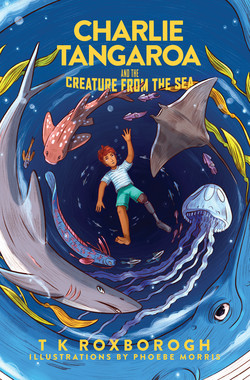
    Written by T K Roxborogh

    Charlie Tangaroa is not defined by his disability, he is not defined by his place in the world, he defines himself through his family. This is a book that has so many themes that resonate in today’s culture. Disability, whanaungatanga, Charlie’s whakapapa, the environment – all are all dealt with a sure hand, and a gentle heart. Charlie’s fractured family is reflected in the warring brothers, and we are taken along at pace, with assured handling, and although so many issues are raised, they are never shoved in the reader’s face – rather they are presented as they are, as just another step in Charlie’s journey.

    This is a uniquely New Zealand story, and one in which so many of us can see ourselves.

Category Winners

PICTURE BOOK AWARD

  • book

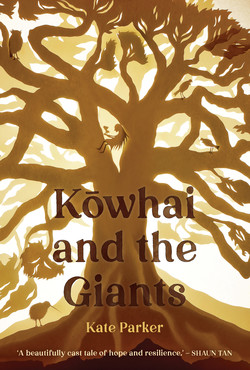
    Kōwhai and the Giants

    Published by: Little Love, Mary Egan Publishing

    Written and illustrated by Kate Parker

    Based on a shadow box exhibition at the Arataki Visitor Centre in 2016/17, Kate Parker’s illustrations capture a sense of their original three dimensions, using a palette from kauri browns to kōwhai golds. These accompany a poetic text, which tells us of Kōwhai’s attempt to carry a message from the threatened kauri giants to the people. This gentle environmental story captured the judges’ hearts, both for its call to action and the original illustrations. They described the book as a classic in the making, delivering an important message for future generations in an engaging manner.

WRIGHT FAMILY FOUNDATION ESTHER GLEN AWARD FOR JUNIOR FICTION

  • book

    Written by T K Roxborogh

    It’s the beginning of the summer holidays in Tolaga Bay and Charlie is soon to find out that “things are never, ever as they first appear to be”. Māori mythology is woven into this story as Charlie draws on the pūrākau and waiata that his Grandad has taught him, as well as the down-to-earth lessons from family life, to mediate between battling, sibling gods. The judges were impressed by the diversity of characters and their authenticity, and also by the inclusion of a character with a disability. They felt that this added depth to the story while not being the focal point, as did the underlying issue of humans disturbing the natural environment.

YOUNG ADULT FICTION AWARD

  • book

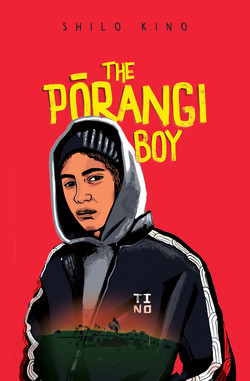
    The Pōrangi Boy

    Published by: Huia Publishers

    Written by Shilo Kino

    In The Pōrangi Boy, Shilo Kino has crafted, through hard edges and deftness of touch, a story that will endure. Niko’s intensely personal journey is woven through with threads of issues that permeate the lives of young people in Aotearoa – environmental damage, neocolonialism, bullying, poverty – but never slips into didacticism or preachiness. Where the story shines the brightest is in Shilo Kino’s uncontestable genius for crafting believable, authentic voices that are thoroughly rooted in this place, these times. You feel the shapes of the words in your mouth, hear the resonance they leave in your ears – and the resonance of these words and this book is clear and long-lasting.

ELSIE LOCKE AWARD FOR NON-FICTION

  • book

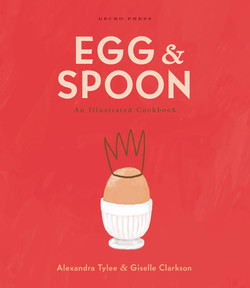
    Egg and Spoon: An Illustrated Cookbook

    Published by: Gecko Press 

    Written by Alexandra Tylee and illustrated by Giselle Clarkson

    The pages of this beautifully designed and illustrated cookbook await the splatters of eager young cooks as they learn essential life skills while creating simple meals or celebratory dishes. From basic cooking skills such as boiling an egg, chopping an onion and knowing when a cake is cooked, the novice home chef can go on to produce complete meals and desserts. The judges praised the varied and thoughtful content of the book, with recipes presented methodically and spaciously, accompanied by luscious illustrations, often with humour.

RUSSELL CLARK AWARD FOR ILLUSTRATION

  • book

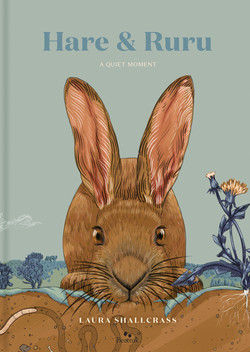
    Hare & Ruru: A Quiet Moment

    Published by: Beatnik Publishing

    Illustrated and written by Laura Shallcrass

    Laura Shallcrass has crafted a beautiful book, full of incredible illustration spreads that are highlighted through the sparse texts, and ever-changing views, from Hare’s full face to a star-speckled sky that spells out a message for us all. Browns and blues create Hare’s earthy environment, and Ruru is coloured a delicious dark that melts into the night-time background. Hare & Ruru: A Quiet Moment is a book with a relevant, modern message, which takes us up high into its branches yet keeps us safe and warm in Hare’s burrow. It delivers a beautiful world and message.

WRIGHT FAMILY FOUNDATION TE KURA POUNAMU AWARD FOR TE REO MĀORI

  • book

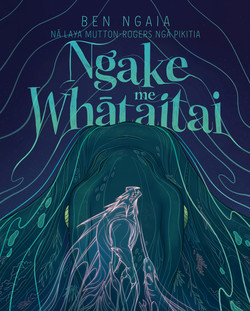
    Ngake me Whātaitai

    Published by: Huia Publishers 

    Written by Ben Ngaia and illustrated by Laya Mutton-Rogers

    He kōrero ātaahua nei o ngā taniwha e rua, ko Ngake me Whātaitai. This is a wonderful journey for the reader in acknowledging the formation of Te Whanganui a Tara. Through storytelling, children learn about the pūtaiao of the hidden movements within Papatūānuku, and how these beautiful Māori placenames were given – “Ka tapaina ko Te Whatu Wai Moana.” This book encourages youth to aspire to new heights through the art of reading, literacy and writing. Ko te reo kia rere, ko te reo kia tika, ko te reo kia Māori. The author personifies this through the use of the tangata whenua mita, and the illustrator’s graphic interpretation lifts the quality of the kupu and kōrero to new horizons.

BEST FIRST BOOK AWARD

  • book

    Kōwhai and the Giants

    Published by: Little Love, Mary Egan Publishing

    Written and illustrated by Kate Parker

    It is symbolic when the giant trees tell Kōwhai “each tiny seed holds the promise of great hope”. This is a call to action for Kōwhai to nurture each important seed, and leaves readers with hope for a positive future.This story has a poetic quality, and is threaded with themes of kaitiakitanga. Subtle images in a limited colour palette of browns and golds add to the stirring, deep feelings portrayed on each page. These connect the past and the present with sincerity and gentleness. Through Kōwhai and the Giants, we are led to believe in our personal power to effect change. A promising new talent is discovered.


Find out how fungi make our worlds, change our minds, and shape our futures in this week's fascinating Book of the Week, ENTANGLED LIFE by Merlin Sheldrake. Neither plant nor animal, fungi are found everywhere, but (until now!) have been little understood by the non-specialist public—perhaps because understanding requires a rethinking of our ideas about nature, identity, life, connectedness, and volition. This book is jaw-droppingly interesting throughout. 
>>The secrets of the wood-wide web. 
>>Fungi's lessons for adapting to life on a damaged planet
>>The secret lives of fungi
>>Read an excerpt. 
>>The mycophile's plea
>>"Fundamental to life on earth."
>>From its myriad tips
>>Symbiosis and psychedelics
>>On mycophobic Anglo-Saxons, &c. 
>>A musical collaboration between the author and the fungus devouring his book
>>Sheldrake devours the mushrooms sprouting from his book
>>The sound of the book being devoured by fungus—with piano accompaniment
>>Visit the author's website
>>Your copy
>>Sheldrake also appears in Robert Macfarlane's Underland
 

 NEW RELEASES

Nervous System by Lina Meruane              $33
A young woman struggles to finish her PhD on stars and galaxies. Instead, she obsessively tracks the experience of her own body, listening to its functions and rhythms, finally locating in its patterns the beginning of illness and instability. As she discovers the precarity of her self, she begins to turn her attention to the distant orbits of her family members, each moving away from the familial system and each so different in their experiences, but somehow made similar in their shared history of illness and trauma, both political and personal.
"Meruane is one of the one or two greats in the new generation of Chilean writers who promise to have it all." —Roberto Bolaño
"Nervous System is fast, uncompromising and shimmering with intelligence." —Sarah Moss
"Meruane is an immensely gifted writer... Nervous System burns in the mind long after one has read it." —The New York Times 
Rogomelec by Leonor Fini              $32
All the qualities of the paintings for which Fini is famed can be found in this novella (first published in 1979 but here in its first English translation): an undermining of patriarchy, the ambiguities of gender and the slipperiness of desire, along with darker hints of cruelty and the voluptuousness of fear. This novella's ambiguous narrator sets off for the isolated locale of Rogomelec—where a crumbling monastery serves as a sanatorium and offers a cure involving a diet of plants and flowers—and moves through a waking dream of strangely scented monks, vibratory concerts in a cavernous ossuary and ritualist pomp with costumes of octopi and shining beetles. As the days unfold, the narrator discovers that the "the celebration of the king" is approaching, the events of which will lead to a shocking discovery in Rogomelec's Gothic ruins. Includes 14 drawings by Fini that accompanied the novella's original publication.
>>A gallery of paintings
Hattie and Olaf by Frida Nilsson and Stina Wirsén             $20
Hattie wants a horse more than anything. Her friend Ellen has three ponies. When Hattie’s father finally comes home with a horse float, Hattie is ecstatic. But instead of a horse, out stomps Olaf—a donkey. Now Hattie not only has horse fever, she suddenly catches lying sickness as well... The audacious and captivating Hattie and her best friend Linda navigate the social politics of their first school years in this funny illustrated chapter book.
This is Your Mind on Plants: Opium, coffee, mescaline by Michael Pollan           $40
Of all the many things humans rely on plants for, surely the most curious is our use of them to change consciousness—to stimulate, calm, or completely alter, the qualities of our mental experience. In This Is Your Mind On Plants, Michael Pollan explores three very different drugs - opium, caffeine, and mescaline - and throws the fundamental strangeness of our thinking about them into sharp relief. Exploring and participating in the cultures that have grown up around these drugs, while consuming (or in the case of caffeine, trying not to consume) them, Pollan reckons with the powerful human attraction to psychoactive plants, and the equally powerful taboos. Why are some drugs encouraged by governments and others restricted?
>>Ego, death, and the healing power of plants. 
The Echo Chamber by John Boyne           $37
The Echo Chamber is a satiric helter-skelter, a dizzying downward spiral of action and consequence, poised somewhere between farce, absurdity and oblivion. The Cleverley family live a gilded life, little realising how precarious their privilege is, just one tweet away from disaster. George, the patriarch, is a stalwart of television interviewing, a 'national treasure' (his words), his wife Beverley, a celebrated novelist (although not as celebrated as she would like), and their children, Nelson, Elizabeth, Achilles, various degrees of catastrophe waiting to happen. Together they will go on a journey of discovery through the Hogarthian jungle of the modern living where past presumptions count for nothing and carefully curated reputations can be destroyed in an instant. 
The Boy Who Made Things Up by Margaret Mahy, illustrated by Lily Emo            $25
"Shall we just walk along, Dad, or shall we make some of it up?"  Join Michael and his over-worked father as they journey home one fun-filled afternoon. Nelson illustrator won the Margaret Mahy Illustration Award for this book. 
"Voila: an actual Mahy, republished with wildly beautiful artwork by Nelson illustrator Lily Emo. The press release about this one called Emo’s work 'breathtaking' and usually that’s hyperbole but in this case my breath actually did catch, more than a few times, as I turned to a fresh page. The seascapes are dreamy, they’re what you notice first, but after many re-reads my very favourite thing about the art here is Emo’s gentle skewering of adults’ terrible awful screen-induced posture." —Catherine Woulfe, The Spinoff
Underground: Marsupial outlaws and other rebels of Australia's war in Vietnam by Mirranda Burton             $33
A superbly drawn graphic novel recalibrating the history of the entwined Australian and New Zealand involvement in the Vietnam War. Led by an unconscientiously objecting wombat registered for military service during Australia's war in Vietnam, Underground digs tunnels through a chapter of Australian history that many have attempted to bury. Why would a wombat be registered for war? It's 1965, and an old Tattersalls barrel starts rolling marbles to randomly conscript young Australian men to fight in the war in Vietnam. Melbourne housewife Jean McLean is outraged, as are her artist friends Clif and Marlene Pugh, who live in the country with their wombat, Hooper. Determined to wreck the system, Jean forms the Save Our Sons movement's Victorian branch, and she and her supporters take to the streets to protest. Meanwhile, in the small country town of Katunga, Bill Cantwell joins the Australian Army, and in Saigon, young Mai Ho is writing letters to South Vietnamese soldiers from her school desk. And when Hooper's call-up papers arrive, he mysteriously goes underground... As these stories intersect in unexpected ways and destinies entwine, a new world gradually emerges - a world in which bridges of understanding make more sense than war.
>>Born to dig
The Subversive Simone Weil: A life in five ideas by Robert Zearetsky         $38
Known as the 'patron saint of all outsiders', Simone Weil (1909-43) was one of the twentieth century's most remarkable thinkers, a philosopher who truly lived by her political and ethical ideals. In a short life framed by the two world wars, Weil taught philosophy to lycée students and organized union workers, fought alongside anarchists during the Spanish Civil War and labored alongside workers on assembly lines, joined the Free French movement in London and died in despair because she was not sent to France to help the Resistance.


Anni and Josef Albers: Equal and unequal by Nicholas Fox Weber           $210
A beautifully presented and unprecedented visual biography of the leading pioneers and protagonists of modern art and design. Josef Albers - painter, designer, and teacher - and Anni Albers - textile artist and printmaker - are among the twentieth century's most important abstract artists, and this is the first monograph to celebrate the rich creative output and beguiling relationship of these two masters in one elegant volume. It presents their life and work as never before, from their formative years at the Bauhaus in Germany to their remarkable influence at Black Mountain College in the United States through their intensely productive period in Connecticut.
The Shut-Ins by Katherine Brabon            $33
"Not only is The Shut Ins a compelling story about hikikomori, those who seek absolute isolation from society, and those who orbit them in their reclusion, it is also a profound exploration of loneliness, solitude, and that peculiar, ineffable yearning for inner or unconscious worlds; the chimeric 'other side'. Katherine Brabon is a precise and contemplative writer, her prose capable of intense, almost-heady evocation. I will read everything she writes." —Hannah Kent
Nonstop by Tomi Ungerer                $30
The legendary children's book author's last picture book sends a powerful message in trying times. Earth is devastated and empty. Everyone has escaped to the moon—except Vasco. Luckily, Vasco has his shadow to guide him, and he finds little green Poco—someone to care for and bring to safety. Nonstop dangers await Vasco and baby Poco at every corner, but Vasco's shadow rescues and guides them through destroyed cities and apocalyptic landscapes to safety. 
The Other Black Girl by Zakiya Dalila Harris            $33
Twenty-six-year-old editorial assistant Nella Rogers is tired of being the only Black employee at Wagner Books. Fed up with the isolation and the micro-aggressions, she's thrilled when Hazel starts working in the cubicle beside hers. However, when a string of uncomfortable events cause Nella to become Public Enemy Number One and Hazel, the Office Darling.
"Part office satire, part thriller with a twist, this is a fresh and original take on race and class in the publishing industry." —Guardian
Forming in 1971, the Polynesian Panthers sought to raise consciousness and took action in response to the racism and discrimination Pacific peoples faced in New Zealand in the 1970s and 1980s. The Panthers organised prison visit programmes and sporting and debating teams for inmates; provided a halfway-house service for young men released from prison; ran homework centres, and offered `people's loans', legal aid and food banks that catered for 600 families at their height. Drawing on interviews, memoirs, poetry, newspaper articles and critical analysis, Polynesian Panthers is a thought-provoking account of this period in New Zealand. Particularly interesting in light of the government's formal apology for the 'dawn raids' of the 1970s. 
She is Haunted by Paige Clark            $33
"I know lots of things now that I'm dead. Peter from Apartment Two has a spastic bladder. My former boss Morgan keeps her toenails in a gold jewellery box. My brother and his wife are trying for a baby. I always excuse myself before things get too heated. I don't know much about my mother yet. I am waiting for grief to catch her, but she mostly seems ashamed-of her body, of what it made." A mother cuts her daughter's hair because her own starts falling out. A woman leaves her boyfriend because he reminds her of a corpse; another undergoes brain surgery to try to live more comfortably in higher temperatures. A widow physically transforms into her husband so that she does not have to grieve. In She Is Haunted, these renditions of the author search for recognition and connection, and, more than anything else, small moments of empathy. But in what world will she move beyond her haunted past and find compassion for herself?
James Courage Diaries edited by Chris Brickell            $45
New Zealand author James Courage was born in Christchurch in 1903, and he became aware of his homosexuality during his adolescent years. He moved to London in 1927 and began writing novels, plays, poems and short stories. He was much more sexually open than most of his homosexual writer contemporaries Frank Sargeson, Eric McCormick, Charles Brasch and Bill Pearson. A Way of Love, published in 1959, was the first gay novel written by a New Zealander, and some of his other seven novels (including Fires in the Distance and The Call Home) contain queer characters. The NZSA's Courage Day, to recognise the plight of imprisoned and oppressed writers, is named after James Courage. 
"What a wealth of contemporary detail is here about the shadow world (to many readers) of covert sexual engagement, and the sharp and engaging portrait of a middle-class privileged life, with its travel and its civilian experience of war. I also found of great interest his gradual change from an almost copy-book privileged aesthete, to a late in the day socialist." —Vincent O’Sullivan
Whether you start your day with something sweet, finish it with something sweet, or make sure sweets are within reach all day long, you'll find serious inspiration in the pages of Salma Hage's latest cookbook for home cooks. The Middle East's wide range of cultures, ingredients, and influences informs the array of dishes she includes.
Granta 155: The best of young Spanish language novelists edited by Valerie Miles          $28
A selection of the brightest rising stars now writing in Spanish, here translated into English. 
>>Contents


Things Remembered and Things Forgotten by Kyoko Nakajima            $23
"If we want to understand what has been lost to time, there is no way other than through the exercise of imagination—imagination applied with delicate rather than broad strokes." Nakajima portrays men and women beset by cultural amnesia and unaware of how haunted they are—by fragmented memories of war and occupation, by fading traditions, by buildings lost to firestorms and bulldozers, by the spirits of their recent past.
"These impressive stories bridge past and present, the familiar and the otherworldly, the lost and the found." —David Mitchell
"A perfect introduction to the quiet, subtle brilliance of Kyoko Nakajima." —David Peace
Radical Architecture of the Future by Beatrice Galilee           $90
Architectural practice today goes far beyond the design and construction of buildings — the most exciting, forward-thinking architecture is also found in digital landscapes, art, apps, films, installations, and virtual reality. This remarkable book features projects — surprising, beautiful, outrageous, and sometimes even frightening — that break rules and shatter boundaries. The book includes work of architects, designers, artists, photographers, writers, filmmakers, and researchers — all of whom synthesize and reflect spatial environments. 
Architecture and Ugliness: Anti-aesthetics and the ugly in Postmodern architecture edited by Wouter van Acker and Thomas Mical          $55
Whatever 'ugliness' is, it remains a problematic category in architectural aesthetics - alternately vilified and appropriated, either to shock or to invert conventions of architecture. This book presents eighteen new essays which rethink ugliness in architecture - from brutalism to eclectic postmodern architectural productions - and together offer a diverse reappraisal of the history and theory of postmodern architecture and design. The essays address both broad theoretical questions on ugliness and postmodern aesthetics, as well as more specific analyses of significant architectural examples dating from the last decades of the twentieth century, addressing the relation between the aesthetic register of ugliness and aesthetic concepts such as brutalism, kitsch, the formless, ad hoc-ism, the monstrous, or the grotesque. 
August by Callan Wink             $23
August is an average twelve year old - he likes dogs and fishing, and doesn't even mind early morning chores on his family's farm. When his parents' marriage falls apart and he has to start over in a new town, he tries hard to be an average teen - playing football and doing his homework - but he struggles to form friendships, and when a shocking act of violence pushes him off course once more, he flees to rural Montana. There, as he throws himself into work on a ranch, he comes to learn that even the smallest of communities have secrets and even the most broken of families have a bond.
"Wink has a precise, clear prose style. The landscape is a character in itself — well-known, but changeable. Wink skilfully imbues his writing with a subtle sense of foreboding that never leaves. In this tightly controlled yet highly unpredictable novel we discover what it is like to come of age in a part of America that is always changing, always the same." —Guardian
Tim Te Maro and the Subterranean Heartsick Blues by H.S. Valley            $23
Tim Te Maro and Elliott Parker – classmates at Fox Glacier High School for the Magically Adept – have never got along. But when they both get dumped the day before the big egg-baby assignment, they reluctantly decide to ditch their exes and work together. When the two boys start to bond over their magically enchanted egg-baby, they realise that beneath their animosity is something like friendship … or something more. A queer YA romantic comedy and winner of the 2020Ampersand Prize. 

A Registry of My Passage upon the Earth by Daniel Mason           $25
On a fated flight, a balloonist makes a discovery that changes her life forever. A telegraph operator finds an unexpected companion in the middle of the Amazon. A doctor is beset by seizures, in which he is possessed by a second, perhaps better, version of himself. And in Regency London, a bare-knuckle fighter prepares to face his most fearsome opponent, while a young mother seeks a miraculous cure for her ailing son.
Pulitzer Prize fiction finalist, 2021. 
The Heap by Sean Adams            $30
Standing nearly five hundred stories tall, Los Vertical s once bustled with life and excitement. Now this marvel of modern architecture and nontraditional urban planning has collapsed into a pile of rubble known as the Heap. In exchange for digging gear, a rehabilitated bicycle, and a small living stipend, a vast community of Dig Hands removes debris, trash, and bodies from the building's mountainous remains, which span twenty acres of unincorporated desert land. Orville Anders burrows into the bowels of the Heap to find his brother Bernard, the beloved radio DJ of Los Vertical s, who is alive and miraculously broadcasting somewhere under the massive rubble. For months, Orville has lived in a sea of campers that surrounds the Heap, working tirelessly to free Bernard—the only known survivor of the imploded city—whom he speaks to every evening, calling into his radio show. The brothers' conversations are a ratings bonanza, and the station's parent company, Sundial Media, wants to boost its profits by having Orville slyly drop brand names into his nightly talks with Bernard. When Orville refuses, his access to Bernard is suddenly cut off, but strangely, he continues to hear his own voice over the airwaves, casually shilling products as "he" converses with Bernard.
The Keeper of Miracles by Phillip Maisel           $38
Phillip Maisel was born in 1922, in Vilna, Lithuania. When the Germans arrived in Vilna in 1941, Phillip's life changed dramatically. He survived two years in a squalid, overcrowded Jewish ghetto, before enduring multiple Nazi labour and concentration camps. Maisel was liberated in 1945 while on a Death March. He moved to Australia in 1949. For over thirty years, Maisel has worked at Melbourne's Jewish Holocaust Centre, recording over a thousand testimonies of other survivors and their descendants — each story of survival a miracle in its own right — earning Maisel the nickname 'The Keeper of Miracles'. This memoir is published as Maisel turns 99.
How Old Am I? Faces from around the world, 1—100 by J.R.            $35
For young children, the concept of age is abstract when they don't have a relatable context... until now This book showcases the faces and life stories of 100 people from around the world in numerical order, from a one-year-old to a centenarian, giving children a reference point for each age. Striking close-up black-and-white portraits are paired with read-aloud text that shares personal experiences, wishes, memories, and emotions, leaving readers with an appreciation and understanding of the ageing process. Just as fascinating for adults. 


VOLUME BooksNew releases


>> Read all Stella's reviews.


The Island of Missing Trees by Elif Shafak    {Reviewed by STELLA}
A man is burying a tree to protect it from the winter months in a north London backyard. A sixteen-year-old stands up and opens her mouth to express herself in history class only to let out a scream of grief and frustration. A woman is flying to a cold country to help her niece and find solace after her sister’s death. An olive tree. A girl of Turkish and Greek descent who has never stepped on the soil of her parent's homeland. An aunt who is the door to family and history, a link to the past and secrets. When two young people meet in Cyprus, one Greek, the other Turkish, the troubles that will arise in 1974, and the chasm it will cause between them, are far from their minds. Intent on meeting and spending time together, Kostas and Defne, finding a place away from the prying eyes of their families is their only concern. A taverna away from the village is the perfect place. Here, in the courtyard, is a witness to their love: an olive tree. Elif Shafak never cringes away from hard subjects. In her novel, 10 Minutes 38 Seconds in This Strange World, she portrayed the lives of women in Turkey, particularly the poor and the underprivileged, in a novel about the murder of a prostitute taking a deep dive into her life through the clever mechanism of the last minutes of her life, taking us back to her childhood and her path to where she ended. The Island of Missing Trees is an evenhanded portrayal of tragedy in this island nation through the eyes of a bereaved man and his daughter, Ada, surrounded by secrets, and an olive tree. The use of the olive tree as a witness may sound fanciful, but in the hands of Shafak, it works by connecting the natural world with the human history of this place, and this olive tree is a beautiful storyteller of love, longing and redemption. Like the tree, Kostas has been transplanted. After his brother is killed, his mother sends him away to England for safety. Little does Kostas know it will be years before he can return and reunite with Defne. In the time he is away, the island changes, his friends at the Taverna have disappeared, it's harder than he imagined to pick up where he left off. His love of nature inspires him to take a cutting from the olive tree at the Taverna, now sick and uncared for, hoping he can bring a little something of his past to life again. Defne finally agrees to join him in England, but her road of new beginnings is rockier and she is unable to let go of the past and a secret that haunts her. After her death, her sister comes to London to connect with Ada and broker a peace with Kostas. Bringing her Turkish culture and island history with her, she opens doors to the past. A past which Kostas will have to face — one of personal, as well as historical, tragedy. A past that will help Ada connect with her own complex heritage and find a sense of belonging. The Island of Missing Trees is a love story, an ode to the power of nature and the memory of trees, an unwavering look at a confrontation (which continues to flare up) and the ways in which land absorbs tragedy, a warning about the power of untold secrets and the ability to survive them, and a reminder to take the best of who you are, culturally, emotionally and politically, to enable you to walk forward and chose a better path. 


 >> Read all Thomas's reviews. 


Not to Read by Alejandro Zambra (translated by Megan McDowell)    {Reviewed by THOMAS}
“I am writing with a great deal of ease and fluidity. One must distrust that,” wrote Clarice Lispector, quoted by the Chilean Alejandro Zambra in one of the essays in this highly enjoyable collection of literary observations on, ostensibly, some of the more interesting largely (but not exclusively) Latin American literature of the last quarter century, literature that distrusts, as Zambra dismisses, the clichéed fluidity of the ‘Magic Realists’ most readily (and lazily) associated with Latin American literature by Western readers. Zambra instead values literature that is hesitant, inventive, always aware of new possibilities, mentally and linguistically supple, striving always towards new forms. “All great works of literature either dissolve a genre or invent one,” wrote Walter Benjamin (not quoted by Alejandro Zambra (at least not in this book)). Because the reviews collected here are often of books the reader of Not to Read has not read and by authors with whom the reader (at least this reader) is unfamiliar, the reader at the outset may think they might skip quite a bit of the book, to make reading faster, but Zambra’s book is too interesting, too nicely written, and too enjoyable. There are indeed considerations of many authors the reader has not heard of, but the essays deliver the same fascination as reading Borges’s studies of nonexistent books (Borges thought it more worthwhile, and faster, to write about books that do not exist than to write the books themselves), with the added benefit that, just possibly, works by these authors may already be, or may one day be, available in English. At the very least, one reads to read about the writing and reading of texts, which is, after all, the most interesting thing to read about. The reader might have thought that skipping might save time, but the text runs so lightly and so sprightlyly that the reader is in any case carried forward more rapidly by following the text than they would have proceeded had it been possible to skip. The essays and reviews included in Not to Read also function as a sort of literary autobiography of Zambra himself, his concerns, approaches, influences and motivations, and provide a greater appreciation of his other work, direct yet subtle, playful yet poignant, personal yet politically and socially acute, compact yet wonderfully expansive. Zambra recommends books we are sure that we will like, even though we may never get to read them, but, more importantly, the reasons for his recommendations, his observations on and his responses to these books, provide a portrait of a reader we come quickly to admire, and who we as readers may well wish to be more like, as well as of a writer alert to the possibilities of writing. Zambra is frequently very funny, as he is in the title essay ‘Not to Read’, which starts out as a review of Pierre Bayard’s How to Talk About Books You Have Not Read, which Zambra has himself not read, and carries on to become a deliciously prickly lampoon of opinions formed of books without reading them, intercut with seemingly very valid reasons not to read some writers’ books. Zambra’s concision and lightness (Zambra is an exemplar of the literary qualities Italo Calvino thought most important in his Six Memos for a New Millennium) can produce beautiful sentences, such as this one on Santiago, quivering with a sensitivity that undercuts ease and fluidity and leaves us utterly aware: “It’s the city that we know, the city that would follow us if we wanted to flee from it (from ourselves), with its permanent architectural eclecticism, with the dirty river, almost always a mere trickle, cutting the landscape in half, with the most beautiful sky imaginable in those few days of autumn or winter after it rains, when we rediscover the mountains.” 


 Our Book of the Week considers the social, economic and political frameworks arts practitioners and organisations occupy in contemporary Aotearoa, and posits the kinds of spaces and culture we might wish to be working in, and how we might arrive there. AS NEEDED, AS POSSIBLE has contributions from Emma Bugden and Chloe Geoghegan, Sophie Davis, Simon Gennard, Sarah Hudson and Zoe Thompson-Moore, Ella Grace McPherson-Newton, Ōtautahi Kōrerotia, Public Share, James Tapsell-Kururangi and Ema Tavola. It is a beautifully designed and fascinating book. 
>>More about the book
>>The Making of Bread
>>Risky Business
>>An Antidote to Individualism
>>Gains?
>>Finding time to discuss nothing
>>Bounce
>>A lyrical essay about shapeshifting
>>Visit the wonderful Gloria Books
>>The book is produced in association with Enjoy Contemporary Art Space.
>>Your copy

 NEW RELEASES

The Coming Bad Days by Sarah Bernstein               $23
After leaving the man with whom she'd been living, an unnamed protagonist in an unnamed university city is working unspectacularly on the poet Paul Celan. The abiding feeling in the city is one of paranoia; the weather has been deteriorating and outside her office window she can hear police helicopters circling, looking for the women who have been disappearing. She is in self-imposed exile, hoping to find dignity in her loneliness. But when she meets Clara — a woman who is exactly her opposite — her plans begin to unravel.
"Bernstein’s pessimism evokes the likes of Arthur Schopenhauer and Thomas Bernhard, chiming all too well with the current discourse around issues of male privilege." –Spectator
>>"A study in unknowability."
>>Why is she so lonely? 
Nostalgia Has Ruined My Life by Zarah Butcher-McGunnigle        $25
An unnamed woman in her late twenties navigates unemployment, boredom, chronic illness and online dating. Her activities are banal — applying for jobs, looking up horoscopes, managing depression, going on Tinder dates. ‘I want to tell someone I love them but there is no one to tell,’ she says. ‘Except my sister maybe. I want to pick blackberries on a farm and then die.’ She observes the ambiguities of social interactions, the absurd intimacies of sex and the indignity of everyday events, with a skepticism about the possibility of genuine emotion, or enlightenment. Like life, things are just unfolding, and sometimes, like life, they don’t actually get better.
>>Nostalgia has instagrammed my life.
>>Something interesting
As Needed, As Possible: Emerging discussions on art, labour and collaboration in Aotearoa edited by Sophie Davis and Simon Gennard            $30
Considers the social, economic and political frameworks arts practitioners and organisations occupy in contemporary Aotearoa, and makes a contribution to a wider field of discussion thinking through the kind of spaces and culture we wish to be working in, and how we might arrive there. Contributions by Emma Bugden and Chloe Geoghegan, Sophie Davis, Simon Gennard, Sarah Hudson and Zoe Thompson-Moore, Ella Grace McPherson-Newton, Ōtautahi Kōrerotia, Public Share, James Tapsell-Kururangi and Ema Tavola.
>>More about the book

Tokyo Redux by David Peace            $33
Tokyo, July 1949, President Shimoyama, Head of the National Railways of Japan, goes missing just a day after serving notice of 30,000 job losses. In the midst of the US Occupation, against the backdrop of widespread social, political and economic reforms - as tensions and confusion reign - American Detective Harry Sweeney leads the missing person's investigation for General MacArthur's GHQ. Fifteen years later and Tokyo is booming. As the city prepares for the 1964 Olympics and the global spotlight, Hideki Murota, a former policeman during the Occupation period, and now a private investigator, is given a case which forces him to go back to confront a time, a place and a crime he's been hiding from for the past fifteen years. Over twenty years later, in the autumn and winter of 1988, as the Emperor Showa is dying, Donald Reichenbach, an aging American, eking out a living teaching and translating, sits drinking by the Shinobazu Pond in Ueno, knowing the final reckoning of the greatest mystery of the Showa Era is down to him.
"David Peace writes the boldest and most original British fiction of his generation." —New York Times
>>
And Peace's 'comfort read'?
Birds: An anthology edited by Jacqueline Mitchell, illustrated by Eric Fitch Daglish          $40
Arranged by bird, these literary excerpts and poems from classic and modern writers are accompanied by striking woodcuts. A very attractive hardback volume. 
To Write As If Already Dead by Kate Zambreno              $34
To Write As If Already Dead circles around Kate Zambreno's failed attempts to write a study of Hervé Guibert's To the Friend Who Did Not Save My Life. In this diaristic, transgressive work, the first in a cycle written in the years preceding his death, Guibert documents with speed and intensity his diagnosis and disintegration from AIDS and elegizes a character based on Michel Foucault. The first half of To Write As If Already Dead is a novella in the mode of a detective story, searching after the mysterious disappearance of an online friendship after an intense dialogue on anonymity, names, language, and connection. The second half, a notebook documenting the doubled history of two bodies amid another historical plague, continues the meditation on friendship, solitude, time, mortality, precarity, art, and literature. Throughout this rigorous, mischievous, thrilling not-quite study, Guibert lingers as a ghost companion. Zambreno, who has been pushing the boundaries of literary form for a decade, investigates his methods by adopting them, offering a keen sense of the energy and confessional force of Guibert's work, an ode to his slippery, scarcely classifiable genre. The book asks, as Foucault once did, 'What is an author?' Zambreno infuses this question with new urgency, exploring it through the anxieties of the internet age, the ethics of friendship, and 'the facts of the body': illness, pregnancy, and death.
>>Chronology of a body
Voices in the Evening by Natalia Ginzburg            $23
In a hushed, Italian town after the Second World War Elsa lives with her parents in the house where she was born. Twenty-seven and unmarried, she is of constant concern to her mother, whose status anxiety manifests itself in acute hypochondria. Elsa hopes to live a life different to the one she's always known and when she meets Tommasino, it seems possible. Tommasino belongs to the De Francisci family, who owns the cloth factory where Elsa's father works, and whose lives and stories Elsa has known all her life. In the course of their secret meetings, Elsa and Tommasino begin to imagine another future for themselves, free from the constraints of shared history and expectation. But all of this is threatened when their relationship is revealed.
>>Eternal return
Activism, Feminism, Politics and Parliament by Margaret Wilson           $40
This is the story of one of New Zealand’s eminent political actors. A policy-focused campaigner, reluctant to join a political tribe and uncomfortable with the combative attitudes and personal jockeying that politics seemed to entail, Wilson nevertheless rose to become the president of the Labour Party during the turbulent mid-1980s. Going on to become a central and occasionally controversial minister in the Clark government, Wilson held roles as Attorney-General and Speaker of the House.


Objects of Desire by Clare Sestanovich           $38
A college freshman, flying home, strikes up an odd, ephemeral friendship with the couple next to her on the airplane. A long-lost stepbrother's visit to New York prompts a reckoning with a family's old taboos. An office worker, exhausted by the ambitions of the men around her, emerges into the gridlocked city one afternoon to make a decision. A wife, looking at her husband's passwords neatly posted on the wall, realizes there are no secrets left in their marriage. In these eleven short stories, thrilling desire and melancholic yearning animate women's lives — from the brink of adulthood, to the labyrinthine path between twenty and thirty, to middle age, when certain possibilities quietly elapse.
 "Sestanovich's elegant prose takes seriously the quiet unrest that can ravage a life." —Raven Leilani
"Astonishing. One of the best story collections I've read in a long time." —Brandon Taylor
The Musical Human: A history of life on earth by Michael Spitzer          $33
165 million years ago saw the birth of rhythm. 66 million years ago was the first melody. 40 thousand years ago Homo sapiens created the first musical instrument. Today music fills our lives. How we have created, performed and listened to this music throughout history has defined what our species is and how we understand who we are. Yet music is an overlooked part of our origin story. The Musical Human takes us on a journey across the ages, from Bach to BTS and back, to explore the relationship between music and the human species. With insights from a wealth of disciplines, musicologist Michael Spitzer renders a global history of music on the widest possible canvas, looking at music in our everyday lives; music in world history; and music in evolution, from insects to apes, humans to AI.
"Michael Spitzer has pulled off the impossible - a Guns, Germs and Steel for music." —Daniel Levitin
The Ghost in the Garden: In search of Darwin's lost garden by Jude Piesse        $40
Darwin never stopped thinking about the garden at his childhood home, The Mount, in Shrewsbury, Shropshire. It was here, under the tutelage of his green-fingered mother and sisters, that he first examined the reproductive life of flowers, collected birds' eggs, and began the experiments that would lead to his theory of evolution. A century and a half later, with one small child in tow and another on the way, Jude Piesse finds herself living next door to this secret garden. Two acres of the original site remain, now resplendent with overgrown ashes, sycamores, and hollies. The carefully tended beds and circular flower garden are buried under suburban housing; the hothouses where the Darwins and their gardeners grew pineapples are long gone. Walking the pathways with her new baby, Piesse starts to discover what impact the garden and the people who tended it had on Darwin's work.
Recipe for a Kinder Life by Annie Smithers             $38
Founder of the du Fermier restaurant in rural Victoria, Smithers's quest for a way of living more gently and more sustainably with the land comes through in this recipe-rich memoir. 
"The anti-celebrity chef Annie Smithers brings a cook's palate, a grower's heart and a poet's soul to bear in this moving, practical, inspiring story of her life." —Matthew Evans
Tunnelling to the Centre of the Earth by Kevin Wilson           $26A collection of 'Southern Gothic' stories from the author of Nothing to See Here. Kevin Wilson's characters inhabit a world that moves seamlessly between the real and the imagined, the mundane and the fantastic. 'Grand Stand-In' is narrated by an employee of the Nuclear Family Supplemental Provider—a company that supplies 'stand-ins' for families with deceased, ill, or just plain mean grandparents. In 'Blowing Up On the Spot,' a young woman works sorting tiles at a Scrabble factory after her parents have spontaneously combusted.
The Grande Odalisque by  Jérôme Mulot, Florent Ruppert and Bastien Vivès      $48
A remarkable graphic novel from three French comics stars. Alex and Carole, friends since childhood, are now (literal) partners in crime. But the heist — to steal the Ingres painting The Grande Odalisque from the Louvre in Paris — is too much for the duo to handle, so they bring in Clarence, a bureaucrat's son with a price on his head by a Mexican drug cartel and, more importantly, an arms dealer. Next is Sam, a stunt motorcyclist and boxer by trade, who proves trigger happy with tranquilizer darts. Using soda can smoke bombs, rocket launchers, and hang gliders, Alex, Carole, and Sam set off a set of circumstances that results in a battle with the French Special Forces — and their partnership, which was on the rocks, will never be the same again.
>>"Serious, escapist fun."
Pie for Breakfast: Simple baking recipes for kids by Cynthia Cliff               $35
The children at Hazel's school are baking a wonderful range of delicious things to raise money for the library. The clearly presented recipes are a good introduction to baking from around the world. Nicely illustrated, too!


History Is All You Left Me by Adam Silvera           $22
"You're still alive in alternate universes, Theo, but I live in the real world where this morning you're having an open casket funeral. I know you're out there, listening. And you should know I'm really pissed because you swore you would never die and yet here we are. It hurts even more because this isn't the first promise you've broken." OCD-afflicted seventeen-year-old, Griffin, has just lost his first love - his best friend, ex-boyfriend and the boy he believed to be his ultimate life partner - in a drowning accident. In a desperate attempt to hold onto every last piece of the past, a broken Griffin forges a friendship with Theo's new college boyfriend, Jackson. And Griffin will stop at nothing to learn every detail of Theo's new college life, and ultimate death. But as the grieving pair grows closer, readers will question Griffin's own version of the truth - both in terms of what he's willing to hide, and what true love ultimately means.
"History Is All You Left Me overflows with tenderness and heartache. Even when its hero is screwing up royally, maybe especially then, Silvera's humanity and compassion carve out a space where it's not the falling that's important, it's how you pick yourself back up. There isn't a teenager alive who won't find their heart described perfectly on these pages." —Patrick Ness 
"Adam Silvera is a master at capturing the infinite small heartbreaks of love and loss and grief. History Is All You Left Me is a beautiful meditation on what it means to survive devastating loss. This book will make you cry, think, and then cry some more." —Nicola Yoon
See/Saw: Looking at photographs by Geoff Dyer         $55
See/Saw is a history of how photographs frame and change our perspectives. Starting from single images by significant photographers — from Eugene Atget to Alex Webb — Dyer shows us how to read a photograph, as he takes us through a series of close readings that are by turns moving, funny, prescient and surprising.

How the West Stole Democracy from the Arabs: The Syrian Congress of 1920 and the destruction of the Liberal-Islamic Alliance by Elizabeth F. Thompson         $25
When Europe's Great War engulfed the Ottoman Empire, Arab nationalists rose in revolt against their Turkish rulers and allied with the British on the promise of an independent Arab state. In October 1918, the Arabs' military leader, Prince Faisal, victoriously entered Damascus and proclaimed a constitutional government in an independent Greater Syria. Faisal won American support for self-determination at the Paris Peace Conference, but other Entente powers plotted to protect their colonial interests. Under threat of European occupation, the Syrian-Arab Congress declared independence on March 8, 1920 and crowned Faisal king of a 'civil representative monarchy.' Sheikh Rashid Rida, the most prominent Islamic thinker of the day, became Congress president and supervised the drafting of a constitution that established the world's first Arab democracy and guaranteed equal rights for all citizens, including non-Muslims. But France and Britain refused to recognize the Damascus government and instead imposed a system of mandates on the pretext that Arabs were not yet ready for self-government. In July 1920, the French invaded and crushed the Syrian state. The fragile coalition of secular modernisers and Islamic reformers that had established democracy was destroyed, with profound consequences that reverberate still.
Dálvi: Six years in the Artic tundra by Laura Galloway            $33
A DNA test suggesting she shared some genetics with the Sami people, the indigenous inhabitants of the Arctic tundra, tapped into Laura Galloway's wanderlust. An affair with a Sami reindeer herder led her to abandon her high-flying New York life for a fresh start in the tiny town of Kautokeino. When her new boyfriend left her unexpectedly after six months, it would have been easy, and perhaps prudent, to return home. But she stayed for six years. Dalvi is the story of Laura's time in a reindeer-herding village in Arctic Norway, forging a solitary existence as one of the few Westerners living among one of the most remote cultures on earth.
>>Home is in my heart. 
Play and the City: How to create places and spaces to help us thrive by Alex Bonham            $38
Cities have always been sites of play for both adults and children, bringing people together and pushing the boundaries of what is humanly possible. And now we need our cities to encourage and facilitate play of all kinds more than ever.
Khumbu: Gateway to Mount Everest, Pathways to peace by Peter Laurenson         $70
For over three decades, photographer Peter Laurenson has repeatedly visited Khumbu, the Nepalese gateway to Mount Everest and home to the Sherpa people. On his second visit, a chance meeting with a Sherpa family sparked a friendship that grew stronger as Laurenson brought his three sons, each in turn, to trek through this enchanted region. Accompanying this unfolding story of kinship are Laurenson's insights into Sherpa culture, the explosion of activity on Everest, and the changing nature of Khumbu as the area's popularity grew. Throughout, his striking photographs convey the essence of this remarkable land and its people.


 BOOKS @ VOLUME #240 (30.7.21)

Read our latest newsletter. Find out what we've been reading, and about our events, new books, and amusements.