OUR FAVOURITE FICTION from the books we read in 2021 (click through to read our reviews):

STELLA:
1. The Sunken Land Begins to Rise Again by M. John Harrison
2. Crossroads by Jonathan Franzen
3. At Night All Blood Is Black by David Diop
4. Night Bitch by Rachel Yoder
5. Great Works by Oscar Mardell

THOMAS:
1. The Employees by Olga Ravn (translated by Martin Aitken)
2. Three by Ann Quin
3. Chasing Homer by László Krasznahorkai (translated by John Batki), with paintings by Max Neumann and music by Szilveszter Miklós 
4. Veilchenfeld by Gert Hofmann (translated by Eric Mace-Tessler)


 NEW RELEASES

Some Answers Without Questions by Lavinia Greenlaw          $28
Part memoir, part manifesto, Some Answers Without Questions is a rigorous and lyrical work of self-investigation. Lavinia Greenlaw sets out to explore the impulse to say something, to write or sing, and finds herself confronting matters of presence and absence, anger and speechlessness, authority and permission. The result is important and timely, a spirited and vital exploration of what enables anyone — but a woman and an artist in particular — to create and record even when not invited to do so. Some Answers Without Questions is the result of decades of answering questions that don't really matter - and not being asked the ones that do.

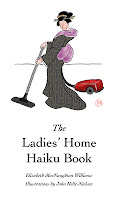
The Ladies' Home Haiku Book by Elizabeth McNaughtan Williams, illustrated by John Helle-Nielsen                $25
Is it the case that repetitive tasks of quotidian cleaning better distill our existential predicaments than the loftiest theoretical musings? Possibly, but, be that as it may, this little book of delightfully sprightly, concisely insightful verse, matched with equally amusing illustrations, will improve the mood of anyone who reads it. 
>>And there are cards!! 

Byobu by Ida Vitale (translated by Sean Manning)            $34
a story's existence, even if not well defined or well assigned, even if only in its formative stage, just barely latent, emits vague but urgent emanations.
Byobu's every interaction trembles with possibility and faint menace. A crack in the walls of his house, marring it forever, means he must burn it down. A stoplight asks what the value of obedience is, what hopefulness it contains, and what insensible anarchy it defies. In brief episodes, aphorisms, and moments of spiritual turbulence and gentle scrutiny, reside a wealth of habits, worries, curiosities, pleasures, peculiarities, and efforts to understand. Representative of the modesty and complexity of Ida Vitale's poetic universe, Byobu flushes the world with meaning and playfully offers another way of inhabiting the everyday.
The Latin American Cookbook by Virgilio Martínez            $70
Strong on regional cuisines and variations, this book brings together 600 remarkable recipes expressing the vibrancy of Latin America and its myriad influences — indigenous, European, Asian and beyond. 
Excavate! The wonderful and frightening world of The Fall by Tessa Norton and Bob Stanley       $55
Over the course of their prolific forty-year career The Fall were consistently one of the most influential and idiosyncratic groups in Britain, with frontman Mark E. Smith hailed as one of the sharpest lyricists. Following Smith's death in January 2018, there was an outpouring of tributes from a surprising spectrum of admirers. With contributions from Adelle Stripe, Dan Fox, Elain Harwood, Mark Fisher, Ian Penman and others, alongside never-before seen artwork, photographs, and hand-written material from Smith and the band, Bob Stanley and Tessa Norton book unpack and make sense of the strangely fascinating landscape of The Fall.
Something Out of Place: Women and disgust by Eimear McBride       $23
McBride unpicks the contradictory forces of disgust and objectification that control and shame women. She asks, —Are women still damned if we do, damned if we don't? —How can we give our daughters (and sons) the unbounded futures we want for them? —In this moment of global crisis, might our gift for juggling contradiction help us to find a way forward?
These Precious Days by Ann Patchett          $33
Essays exploring family, friendship, marriage, failure, success — and how all these forces have shaped her as a writer.
>>What matters most? 
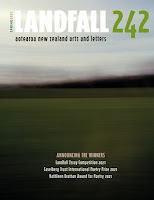
Landfall 242 edited by Linley Edmeades          $30
Results from the Landfall Essay Competition 2021, Caselburg Trust International Poetry Prize 2021 and the Kathleen Grattan Award for Poetry 2021. Art: Conor Clarke, Zina Swanson, et al. Non-fiction: Justine Whitfield, Diane Comer, Andrew Dean, Melody Nixon, Sarah Natalie Webster. Poetry:
Ruth Arnison, Wanda Barker, Owen Bullock, Nathaniel Calhoun, Medb Charleton, Ruth Corkill, Molly Crighton, Mark Edgecombe, David Eggleton, Summer Gooding, Michael Hall, Trevor Hayes, Jenna Heller, Bronte Heron, Hayley Rata Heyes, Zoë Higgins, Lily Holloway, Erik Kennedy, Megan Kitching, Wes Lee, Mary Macpherson, Frankie McMillan, Vana Manasiadis, Cilla McQueen, Rebecca Nash, Janet Newman, Claire Orchard, Robyn Maree Pickens, Hayden Pyke, Derek Schulz, Antonia Smith, Elizabeth Smither, Nicola Thorstensen, Richard von Sturmer, Sophia Wilson, E Wen Wong, Sebastien Woolf, Nicholas Wright. Fiction: Joanna Cho, Olly Clifton, Isabel Haarhaus, Bree Huntley, Eileen Kennedy, Scott Menzies, Airana Ngarewa, James Pasley, Fergus Porteous, Anna Reed, J.D. Robertson.
The Coward by Jarred McGinnis          $33
After a car accident Jarred discovers he'll never walk again. Confined to a 'giant roller-skate', he finds himself with neither money nor job. Worse still, he's forced to live back home with the father he hasn't spoken to in ten years. Add in a shoplifting habit, an addiction to painkillers and the fact that total strangers now treat him like he's an idiot, it's a recipe for self-destruction. How can he stop himself careering out of control? As he tries to piece his life together again, he looks back over his past - the tragedy that blasted his family apart, why he ran away, the damage he's caused himself and others - and starts to wonder whether, maybe, things don't always have to stay broken after all.
Huia Short Stories 14: Contemporary Māori fiction        $25
An exciting collection of emerging writers in te reo Māori and English. 


Secret Selves: A history of our inner space by Stephen Prickett        $44
Our inner sense of self seems a natural and permanent part of being human, but it is in fact surprisingly new. Whilst confessional religious writings, from Augustine to Jane Austen, or even diaries of 20th-century Holocaust victims, have explored inwards as part of a path to self-discovery, our inner space has expanded beyond any possible personal experience. This development has enhanced our capacity not merely to write about what we have never seen, but even to create fantasies and impossible fictions around them. Yet our secret selves can also be a source of terror. The fringes of our inner worlds are often porous, ill-defined and susceptible to frightening forms of external control.
Murakami T: The shirts I love by Haruki Murakami           $38
The literary icon opens his eclectic closet. Here are photographs of Murakami's extensive and personal T-shirt collection, accompanied by essays that reveal a side of the writer rarely seen by the public.


The Night Life of Trees by Bhajju Shayam, Durga Bai, and Ramsingh Urveti         $70
An exquisite hand-bound and screen-printed book of paintings by three of the finest artists of the Gond tribal art tradition. The Gonds, a tribe of central India, are traditionally forest dwellers. They believe that trees are hard at work during the day providing shelter and nourishment to all. Only when night falls can they finally rest, and their spirits reveal themselves. These luminous spirits are captured in The Night Life of Trees, a fascinating and haunting foray into the Gond imagination. Each painting is accompanied by its own poetic tale, myth or lore, narrated by the artists themselves, which recreate the familiarity and awe with which the Gond people view the natural world. Screen-printed by hand on black paper, every page of this limited-edition book is an original print. 
>>How the book was printed
Hogarth: Life in progress by Jacqueline Riding         $45
A major new biography of the artist who represents the texture of Georgian London in the popular imagination. 

Class of '37: Growing up before the war by Claire Langhamer and Hester Barron        $40
It is 1937 in a northern mill-town and a class of twelve- and thirteen-year-old girls are writing about their lives, their world, and the things that matter to them. They tell of cobbled streets and crowded homes; the Coronation festivities and holidays to Blackpool; laughter and fun alongside poverty and hardship. They are destined for the cotton mill but they dream of being film stars. Class of '37 uses the writing of these girls, as collected by the research organisation Mass Observation, to rediscover this lost world, transporting readers back in time to a smoky industrial town in an era before the introduction of a Welfare State.


VOLUME BooksNew releases


 >> Read all Thomas's reviews. 


Chasing Homer by László Krasznahorkai (translated by John Batki), with paintings by Max Neumann and music by Szilveszter Miklós   {Reviewed by THOMAS}
It seemed sometimes that they were even wanting the worst to happen, if only to be relieved of the terrible anticipation that the worst may happen. It seemed sometimes that the worst thing sucks everything else towards it, even our resistance to the worst thing, and the closer we get to the worst thing it seems the less we resist it, just when we would be better to resist it more, until we are drawn over the acquiescence horizon, so to call it, until we are drawn past the point at which the possibility of relief from the effort to resist is stronger than our exhausting effort to resist, the point at which we either try to resist more, which just increases the degree of relief offered by giving up, or we resist less, which draws us closer to giving up. We give up. Of course, we don’t want to be seen to be giving up, not even by ourselves, what we want is a way to be seen to be resisting when in fact we are giving up, what we want is some mechanism that will make it appear that, when the worst happens, it might not have been as bad as it could have been even though it is worse than we could have imagined. How could that *they* have become a *we* so easily? A threat presses unrelentingly on the narrator of Krasznahorkai’s text, the threat of the worst thing, the nullification of that narrator, the narrator *knows* there are assassins on the narrator’s trail, they from whom the narrator flees, they whom the narrator has never seen and may never see, no matter, this just makes the fleeing more urgent, the threat more imminent, the worst that could happen always just on the point of happening if never actually happening. “I know they’ll never relent,” the narrator writes, “it’s as if their orders aren’t to make quick work of me … but rather to keep pursuing me.” The narrator must keep fleeing so as to continue being what a narrator is, the narrator must flee nullification, the narrator must flee into the new. “I have no memories whatever … the past doesn’t exist for me, only what’s current exists … and I rush into this instant, an instant that has no continuation.” The narrator flees in the present tense, the narrator flees by narrating. The text we read is the result of the narrator’s resistance to their own nullification, or, rather, the text *is* the narrator’s resistance to their own nullification. Obviously. “Life is forever merely the incalculable consequence facing the oncoming process, because there’s nothing that lurks behind the process … for me nothing exists that goes beyond the situation that happens to be at hand,” states the narrator, and if fate, or, rather, the causal mechanisms that we mistakenly label as *fate*, is nothing but an ineluctable process of destruction, if nullification is a corrolary of being, then we can only exist in our errors, we can only exist to the extent that we make a mistake. “The decisions I make must be the utterly wrong ones.” the narrator states, “that’s how I can confound my pursuers.” Great forces grapple through the text, through the narrator caught within themselves. We all share this pressure upon us that many would mistake for paranoia, no such luck, we all share this problem with time, this snagging in the moment, this agony of being forced on but this terror of no longer going on. “If I were to divine a plan of action of some kind, it would be all over for me,” the narrator states, though, really, is the threat coming from within or from without? But the narrator *does* divine a plan of action, the narrator *is* seduced by story, the narrator *does* start to abrade against their surroundings and against the people in those surroundings by the very fact of their interaction with those surroundings and with those people. The narrator passes the acquiescence horizon without being aware that they are passing the acquiescence horizon. All is lost. Giving up is no less fatal for looking like merely a change of plan. 

 How are our memories and how are our histories somehow stored in objects? In our Book of the Week, Patch Work: A life amongst clothes, Claire Wilcox, curator of fashion at he Victoria & Albert Museum, tells the story of  her own life through a sequence of items of clothing, from her mother's black wedding suit to her own silk kimono. The book is beautifully and evocatively written, and helps us to think anew about the garments we wear between ourselves and the world. 
>>Read Stella's review
>>"When I look at clothing I'm thinking about narratives."
>>Fashion insiders
>>At the Wearers Festival
>>Material matters
>>Visit the V&A
>>Your copy
>>Twentieth Century Fashion in Detail. 


>> Read all Stella's reviews.


Patch Work: A life amongst clothes by Claire Wilcox    {Reviewed by STELLA}
As a maker of objects and a lover of fabric I was drawn to this memoir from Claire Wilcox, Senior Curator of Fashion at the V&A and Professor in Fashion Curation at the London College of Fashion. Yet this surpassed my expectations. It isn’t a blow by blow account of her career in fashion curation, although there are plenty of mentions of life and work at the V&A; nor is it a window to the history of fashion and textiles, although again there are pepperings of this throughout. It is a wonderful collection of vignettes about a life lived, and Wilcox uses objects as portals into history, both personal and social, and as vessels for memories. With humour and quiet reflection she pinpoints pivotal moments from childhood through to adulthood. The first time she walked into the V&A library in the passage entitled 'Yellow Pages', she was researching the colour yellow. “The invigilator sat at his desk, watching us. Our eyes met, and I blushed, feeling like an imposter and wondering if I was handling the books correctly; I’d never seen a book support before. I was wearing a Laura Ashley blouse, inset with cotton lace — it was early summer — and the deadline for my dissertation was looming ... I felt like a parched traveller who had found an oasis, found their sensibility.” This easy style takes the reader on journeys through objects — each passage either is triggered by a reference to a clothing piece or has recollections that bring to mind a significant historical costume or a more personal item. Through the joys and tiredness of motherhood to the author’s relationship with her own mother. In 'Bound', we have the corduroy baby sling, the crocheted blanket alongside her husband’s hunt for a new suit in the sales and his wedding ring, worn only once. “We were linked to each other by a series of fastenings; complications only bind us tighter. ... And, going all the way back, something I had known in my fingertips but forgotten, a far-away memory in all this remembering of buttons, of sitting on my mother’s lap buttoning up her cardigan, and pushing each button through its buttonhole with very small fingers...I was buttoning and unbuttoning her all the way up, and then all the way down...and we were together in this ritual.” There are references throughout the book to grief, loss, and to delight; to the most intimate. And wonderfully balanced with these moments are the reader’s delight as Wilcox takes us backstage, so to speak, into the rooms of the fashion collection at the V&A. Atmospheric and vividly explored, with sweet snippets of information, these passages are endlessly fascinating. The book has enticing chapter headings — 'Verdant', 'Unbound', 'Entwined', 'Gather', 'Seam', 'Dusk', 'Mist' and 'Vertigo' — and each chapter then includes three or four vignettes. Like a cloth, each strand weaves together to make a whole. Or as per the title, a pieced patch work.

 NEW RELEASES

When You Look Up by Decur        $60
Lorenzo isn't happy about moving. But in his new room, he finds an old desk with what seems likes hundreds of drawers. Each even has its own smell! Deep inside the desk, he finds a book and begins to read. When he looks up, he sees all kinds of curious things. Has the book come to life? Or is it something else? This is a graphic novel about observation, imagination, and the many incredible lenses through which everyday experience might be perceived if you read. Completely wonderful.
>>Decur at work. 
The Paper Lantern by Will Burns           $35
In this beautifully written book, a single speaker charts and interrogates the shifts in mood and understanding that have defined a surreal, transformative period in both his own history and that of the surrounding area. Set in a shuttered pub - The Paper Lantern - in a village in the very middle of the country adjacent to the Chequers estate, the narrator embarks on a series of walks in the Chiltern Hills, which become the landscape for evocations of a past scarred with trauma and a present lacking compass. From local raves in secret valleys and the history of landmarks such as Halton House, to the fallout of the lockdown period, climate change and capitalism, The Paper Lantern creates a tangible, lived-in, complicated rendering of a place.

Orwell's Roses by Rebecca Solnit            $33
From 1936 to 1940, the newly-wed George Orwell lived in a small cottage in Hertfordshire, writing, and tending his garden. When Rebecca Solnit visited the cottage, she discovered the descendants of the roses that he had planted many decades previously. These survivors, as well as the diaries he kept of his planting and growing, provide a springboard for a fresh look at Orwell's motivations and drives — and the optimism that countered his dystopian vision — and open up a mediation on our relationship to plants, trees and the natural world. Tracking Orwell's impact on political thought over the last century, Solnit journeys to England and Russia, Mexico and Colombia, exploring the political and historical events that shaped Orwell's life and her own. From a history of roses to discussions of climate change and insights into structural inequalities in contemporary society, Orwell's Roses is a fresh reading of a towering figure of 20th century literary and political life, and finds optimism, solace and solutions to our 21st century world.
A Guide to Philosophy in Six Hours and Fifteen Minutes by Witold Gombrowicz (translated by Benjamin Ivry)       $34
In a small literary gem full of sardonic wit, brilliant insights, and provocative criticism, Gombrowicz discusses Kant, Hegel, Schopenhauer, Kierkegaard, Sartre, and Heidegger in six one-hour essays—and addresses Marxism for fifteen minutes.

When We Cease to Understand the World by Benjamin Labatut         $23 
The great mathematician Alexander Grothendieck tunnels so deeply into abstraction that he tries to cut all ties with the world, terrified of the horror his discoveries might cause. Erwin Schrodinger and Werner Heisenberg battle over the soul of physics after creating two equivalent yet opposed versions of quantum mechanics. Their fight will tear the very fabric of reality, revealing a world stranger than they could have ever imagined. Using extraordinary, epoch-defining moments from the history of science, Benjamin Labatut plunges us into exhilarating territory between fact and fiction, progress and destruction, genius and madness. Now in paperback. 
"A monstrous and brilliant book." —Philip Pullman
"Wholly mesmerising and revelatory. Completely fascinating." —William Boyd

Chemistry by Tim Pears          $43
A wife compulsively digs in her garden. Two brothers, long estranged, reunite for a terse, heady summer. A woman flies to Krakow to see her adult son. At dusk, a teenage girl pushes her dying mother out into the sea. A small boy sits on his own in the cinema, entranced by the cowboys who light up the screen. With these short stories, Tim Pears illuminates a series of blazing moments in quiet lives the tragic, strange, funny and beautiful fragments that make and unmake us and shines a light into the gulfs that lie between us and those who should know us best.

Nine Lives: New Zealand writers on notable New Zealanders      $40
Lloyd Jones on Paul Melser (potter), Paula Morris on Matiu Rata (politician), Catherine Robertson on Dame Margaret Sparrow (doctor and health advocate), Greg McGee on Ken Gray (all black), Stephanie Johnson on Carole Beu (bookseller), Malcolm Mulholland on Ranginui Walker (academic), Selina Tusitala Marsh on Albert Wendt (writer), Elspeth Sandys on Rewi Alley (writer and activist), and Paul Thomas on John Wright (cricketer).


Literature is a technology like any other. And the writers we revere - from Homer to Shakespeare, Austen to Ferrante - each made a unique technical breakthrough that can be viewed as both a narrative and neuroscientific advancement. But literature's great invention was to address problems we could not solve: not how to start a fire or build a boat, but how to live and love; how to maintain courage in the face of death; how to account for the fact that we exist at all.
Manifesto: On never giving up by Bernadine Evaristo           $35
Bernardine Evaristo's 2019 Booker win was the first by a Black woman. After three decades as a writer, teacher and activist, she moved from the margins to centre stage. Manifesto is Bernardine Evaristo's intimate and inspirational, no-holds-barred account of how she did it, refusing to let any barriers stand in her way. She charts her creative rebellion against the mainstream and her life-long commitment to the imaginative exploration of 'untold' stories. Drawing on her own experiences, she offers a contribution to current conversations around social issues such as race, class, feminism, sexuality, and aging.
Farewell Mr Puffin: A small boat voyage to Iceland by Paul Heiney         $28
The puffin is the joker amongst the seabirds of the north Atlantic, but what is happening to this much-loved bird is far from a laughing matter. This is the conclusion of writer and broadcaster, Paul Heiney, who set sail from the east coast of England bound for Iceland, propelled by a desire to breathe the cool, clear air of the high latitudes, and to follow in the wake of generations of sailors who have made this often treacherous journey since the 13th century. In almost every harbour he tripped over maritime history and anecdote, and came face to face with his own past as he sailed north along his childhood coastline of east Yorkshire towards the Arctic Circle. But there was one major thing missing from this voyage - the sight of puffins.
African Artists, From 1882 > now edited by Joseph L. Underwood and Okeke-Agulu Chika      $110
The most substantial survey to date of modern and contemporary African-born or Africa-based artists. Long overdue. 
Te Kupenga: 101 stories of Aotearoa from the Turnbull by Michael Keith and Chris Szekely                         $60
Published to mark 100 years since the establishment of the Alexander Turnbull Library, this book approaches the history of Aotearoa New Zealand through 101 remarkable objects. Each tells a story, be it of discovery, courage, dispossession, conflict, invention, creation, or conservation. The objects range from letters and paintings to journals, photographs, posters, banners and books.

Your Home Izakaya: Fun and simple recopies inspired by the drinking and dining dens of Japan by Tim Anderson             $50
Izakaya began as sake stores that allowed their customers to drink on the premises, and, over time, they began to serve food as well. The food is simple to prepare but big on flavour, making it conducive to sociable snacking. From Shredded Daikon and Watercress Salad and Sweetcorn with Shoyu Butter, to Spicy Sesame Ramen Salad and Udon Carbonara with Bacon Tempura, the recipes are impressive yet simple to achieve and no specialist equipment is needed. The book includes a guide on how to stock a Japanese bar and instructions on the preparation of some cocktails.
The Bikes We Built: A journey through New Zealand-made bicycles by Jonathan Kennett          $50
"When I explained to the collectors that I hoped to find at least fifty fine examples to showcase an industry that once thrived in every New Zealand city, their eyes lit up. We disappeared together into a world that no longer exists, of forges and lugs and pinstriping. A time when the humble bicycle was not so humble, and everyone knew the name of the craftsman that built the machine they rode." Includes much to recognise and much to discover with surprise. 

In Kiltumper: A year in an Irish garden by Niall Williams and Christine Freen          $55
Thirty-four years ago, when they were in their twenties, Niall Williams (the author of This Is Happiness)and Christine Breen made the impulsive decision to leave their lives in New York City and move to Christine's ancestral home in the town of Kiltumper in rural Ireland. In the decades that followed, the pair dedicated themselves to writing, gardening and living a life that followed the rhythms of the earth. In 2019, with Christine in the final stages of recovery from cancer and the land itself threatened by the arrival of turbines just one farm over, Niall and Christine decided to document a year of living in their garden and in their small corner of a rapidly changing world.

Chouette by Claire Oshetsky                     $38
Tiny is pregnant. Her husband is delighted. 'It's not yours,' she tells him. 'This baby will be an owl-baby.' Tiny's always been an outsider, and she knows her child will be different. When Chouette is born, Tiny's husband and family are devastated by her condition and strange appearance. Doctors tell them to expect the worst. Chouette won't learn to walk; she never speaks; she lashes out when frightened and causes chaos in public. Tiny's husband wants to make her better: 'Don't you want our daughter to have a normal life?' But Tiny thinks Chouette is perfect the way she is. As Tiny and her husband fight over what's right for their child, Chouette herself is growing. In her fierce self-possession, her untameable will, she teaches Tiny to break free of expectations - no matter what it takes.

Edith Widder grew up wanting to become a marine biologist. But after complications from surgery caused her to go temporarily blind while at university, she became fascinated by light, and her focus turned to bioluminescence. On her first visit to the deep ocean, in an experimental diving suit that took her to a depth of 250 metres, she turned off the suit's lights and witnessed breathtaking explosions of bioluminescent activity. Why was there so much light down there? Below the Edge of Darkness takes readers deep into the mysteries of the oceans as Widder investigates one of nature's most widely used forms of communication. She reveals hidden worlds and a dazzling menagerie of creatures, from microbes to leviathans—many never before seen or, like the giant squid, never before filmed.
My Monticello by Jocelyn Nicole Johnson             $30
During a night of power outages, arson and gunfire, the diverse neighbourhood of 1st Street, Charlottesville comes under attack by a white supremacist mob. Fleeing for their lives in an abandoned bus, a group of family, friends and strangers find themselves in the hills above town, where they occupy and take refuge in Monticello, Thomas Jefferson's old plantation house. Led by Da'Naisha, a young black descendant of Jefferson and his slave Sally Hemings, the group find ways to care for and sustain one another while Charlottesville burns below them. 
The Tragedy of the Worker: Towards the proletarocene by Jamie Allinson, China Mieville, Richard Seymour, and Rosie Warren                                   $23
"The current state of the planet, the capitolocene, is a direct result of extractive appetites of capitalism. The threats of climate change are already here and, if we continue along the same path, ensures an apocalyse. The tragedy of the worker is, therefore, twofold- forced to work in such conditions the present is unsupportable. However, within these conditions are exposed the contradictions that might deliver liberation. Nevertheless, this liberation is likely to be into a world that is beyond salvage. What is to be done to create a planet where the prospects of a communist horizon are a new dawn rather than a planetary twilight?"
Irvine's hands-on, often humorous advice steps readers through everything they need to know to grow great produce at home, including garden design, tools and equipment, seasonal planting advice, soil fertility, seed-saving basics, managing pests and diseases, and how to incorporate organic and permaculture gardening methods into any home garden. While documenting a year on her own property, Irvine shows how you can successfully produce bountiful crops throughout the seasons to provide a steady, daily harvest with minimal wastage. The book is illustrated with hundreds of photographs and hand-drawn illustrations that share design concepts and planting plans for gardens of all shapes and sizes. 

New Zealand Seabirds: A natural history by Kerry-Jayne Wilson      $50
Definitively describes the different groups of seabirds, where in New Zealand they occur, their breeding biology, foods and foraging behaviours, the conservation threats they face, and the vast distances they often travel to feed and breed.

Roxy by Neal Shusterman and Jarrod Shusterman           $23
"I am no superhero. But I can save you from the one who claims to be. I am no wizard. But I cast a spell that can bring back the dead. I am, if nothing else, your final defence – your last hope." Isaac is slowly falling down the dark abyss of addiction. Ivy is picking herself up after years of partying and self-medicating. And ROXY, the god of painkillers, sees it all. A chilling YA novel on the opioid epidemic. 
New Zealand's Wild Weather         $45
New Zealand's unique and changeable weather patterns explained by experts at the MetService. 

Cover Story: 100 beautiful, strange and frankly incredible New Zealand LP covers by Steve Braunias           $50
Divided into themes, Cover Story brings Braunias's inimitable wit and empathy to bear on the artistic flair, fashion and occasional gaudiness these album covers represent. Based on interviews and his own experience collecting over 800 albums produced between 1957 and 1987 from op-shops around the country, he reflects on what they say about our popular culture. Each cover is reproduced full-size. 
>>Maria Dallas, anyone? 


VOLUME BooksNew releases


>> Read all Stella's reviews.


The Dangers of Smoking in Bed by Mariana Enriquez     {Reviewed by STELLA}
Let the title of this short story collection be a warning. In the second of Mariana Enriquez's collections to be translated into English, the macabre and disorderly rise to the surface. There are ghosts in these pages, phantoms and hauntings. Some reside just under the surface in superstition, some make their presence known by their unsettled, revenge-seeking wanderings, while others are phantoms that walk in broad daylight, bold and violent. Enriquez’s tales resist the easy condition of horror or the gothic, creeping under our skin — making us uneasy yet fascinated. We can not turn away, as our curiosity gets the better of us. The stories meld the mundane, the daily chores, and the familiar with unresolved crimes, passions and jealousies, and the uneasy moments when you know that the truth lies in a shallow grave just under a veneer of lies. As the characters, predominantly women, navigate their way through the stories, Enriquez spins a web of deceit, dark magic and fantastical scenarios to point a finger at the horror of a place imbued with violence, hypocrisy, fear and grief. Her themes do not rest easy, but the tales and the worlds she builds through metaphor and fantasy are hypnotic, taking us in, sometimes gently, often not. Teenage jealousy in 'Our Lady of The Quarry' conjures up a pack of raving dogs. In 'The Well', a young girl unwittingly becomes the vehicle, body and soul, for her mother, aunt and siblings fear of a malign spirit. So imbued with this malign force, madness is the only solution. 'The Lookout' sends a shiver down your spine — trapped in her frightening form, The Lady Upstairs is looking for a victim — someone to set her free. Each story draws you into a situation that has no easy answers, where friends are bonded by shared crises and sanity is a breath away from collapse. Yet Enriquez’s writing is succinct, beguiling and fizzes with energy — with a force that points a finger at death, at violence and corruption, and says I am not afraid. 


 >> Read all Thomas's reviews. 


Walking by Thomas Bernhard   {Reviewed by THOMAS}
It is thought that makes life intolerable, suggests Bernhard in this 1971 novella that both anticipates and provides a key to reading his subsequent novels of ineluctable self-erasure (notably 1975’s Correction). Bernhard is constantly in mind of the widespread complicity of his fellow Austrians in Nazism, both a symptom and a cause of many of the societal ills he is most perplexed and disgusted by. “I ask myself, says Oehler, how can so much helplessness and so much misfortune and so much misery be possible? That nature can create so much misfortune and so much palpable horror. That nature can be so ruthless toward its most helpless and pitiable creatures. This limitless capacity for suffering, says Oehler. This limitless capricious will to procreate and then to survive misfortune.” But there is no real difference, suggests Bernhard, between objective and subjective suffering. “When we imagine ourselves to be in a state of mind, no matter what, we are in that state of mind, and thus in that state of illness which we imagine ourselves to be in.” We are unavoidably perplexed by our existence and cannot help thinking about it, but thought will not do us any good, as we are always carried towards the conclusion we strive most to avoid, drawn to it by this striving. “If we see something, we check what we see until we are forced to say that what we are looking at is horrible. If we do something, we think about what we are doing until we are forced to say that it is something nasty, something low, something outrageous.” In Bernhard’s works, thought is a kind of a chute leading towards madness and suicide, a chute down which all characters slide, faster or slower, obsessed, losing perspective. “Circumstances are everything, we are nothing.” How, then, are we to carry on existing? “There is little doubt that the art lies in bearing what is unbearable and in not feeling that what is horrible is something horrible. Of course we have to label this art the most difficult of all. The art of existing against the facts. If we do not constantly exist against, but only constantly with the facts, says Oehler, we shall go under in the shortest possible time.” “The art of thinking about things consists in the art, says Oehler, of stopping thinking before the fatal moment.” In common with many of Bernhard’s novels, the unnamed narrator of Walking is effectively passive, effectively annihilated by his role of *merely* reporting what his friend Oehler tells him during their walk or walks together. Oehler’s observations chiefly concern another one-time walking companion, Karrer, who has recently gone “irrevocably mad” and been confined to the Steinhof lunatic asylum. Karrer’s madness  followed the suicide of his friend, the chemist Hollensteiner, and you can feel the pull of this annihilation reaching through the layers of narration as far as the narrator himself, each character being effaced by their narration. “I am struck by how often Oehler quotes Karrer without expressly drawing attention to the fact that he is quoting Karrer. Oehler frequently makes several statements that stem from Karrer and frequently thinks a thought that Karrer thought, I think, without expressly saying, what I am now saying comes from Karrer.” The second of the three paragraphs that constitute the novella describes Karrer’s breakdown in Rustenschacher’s clothing shop, irrevocably losing perspective, ranting about what he perceives as the inferior cloth from which the trousers are sewn, repeatedly banging his walking stick upon the counter. At times the layers of narration are wonderfully deep, such as when the narrator tells us what Oehler tells the narrator that Oehler told the psychiatric doctor Scherrer about what Karrer said and did in Rustenschacher’s shop, and the novella becomes as much about the migration of narrative burden as it is about what the narrative is about. Habit, character, tendency, circumstance comprise a trap, a trap we find ourselves in when we begin to think but into which thinking can only drive us deeper. “When we walk, we walk from one helplessness to another. It is suddenly clear you can do what you like but you cannot walk away. No longer being able to alter this problem of no longer being able to walk away occupies your whole life. From then on it is all that occupies your life. You then grow more and more helpless and weaker and weaker.” All Bernhard’s subsequent novels address this problem of the obliterative nature of thought. “We may not think about why we are walking, says Oehler, for then it would soon be impossible to walk.”


This week we are featuring books published by Lolli Editions, who are bringing some exciting fiction into English.
Recommended, and in stock now: 

The Employees: A workplace novel of the 22nd century by Olga Ravn (translated from the Danish by Martin Aitken). A profound and beautifully written investigation into sentience and into what it means to be human. 
>>Read Thomas's review.
>>Read Stella's review
>>Reading with the mouth
>>Find out more

Sevastopol by Emilio Fraia (translated from the Portuguese by Zoë Perry). Three connected stories stories of yearning and loss, obsession and madness, failure and the desire to persist.

After the Sun by Jonas Eika (translated from the Danish by Sherilyn Nicolette Hellberg). Short stories set in the margins of a globalised world that is both saturated with yearning and brutally transactional.
>>'Alvin'.

The Dolls by Ursula Scavenius (translated from the Danish by Jennifer Russell). Four beautifully and sparely written stories featuring characters beset by disorienting and unfathomable losses in situations that conflate the familiar and the strange. 

Adorable by Ida Marie Hede (translated from the Danish by Sherilyn Nicolette Hellberg). "Adorable pulls us between wanting to live and having to die, between child found and parent lost, feeling from inside Hede's brain-womb all that hide and seek within the concaves of living rooms, telephone calls, and other skins." —Mara Coson
>>"Death is the mindfuck of existence."

 NEW RELEASES

Kurangaituku by Whiti Hereaka           $35
Kurangaituku is the story of Hatupatu told from the perspective of the traditional ‘monster’, Kurangaituku, the bird woman. In the traditional story, told from the view of Hatupatu, he is out hunting and is captured by a creature that is part bird and part woman. The bird woman imprisons him in her cave in the mountains. Hatupatu eventually escapes and is pursued by Kurangaituku. He evades her when he leaps over hot springs, but Kurangaituku goes into them and dies. In this version of the story, Kurangaituku takes us on the journey of her extraordinary life – from the birds who sang her into being, to the arrival of the Song Makers and the change they brought to her world, and her life with Hatupatu and her death. Through the eyes of Kurangaituku, we come to see how being with Hatupatu changed Kurangaituku, emotionally and in her thoughts and actions, and how devastating his betrayal of her was.
The Fell by Sarah Moss         $35
Desperate for some respite from her teenage son during a period of quarantine in England's Peak District, a woman goes for a short walk on the moors. When she falls and injures herself, this triggers a mountain rescue effort and a recalibration of the participants' relationships with nature and with each other, during which the myriad anxieties of contemporary life are brought to the fore. A document of the inner life of our times from the author of Summerwater
September 12: The third test and final protest of the 1981 Springbok tour, photography by Anthony Phelps, foreword by John Minto     $85
A large-format book featuring over 50 superb photographs, many previously unseen, from the Springbok Tour protests of 1981, showing the people, marches, and often violent clashes between the police, protesters and spectators around Eden Park  Photographed on the day of the 3rd rugby test match between New Zealand and South Africa at Eden Park in Auckland with some photos from earlier protest marches including the Day of Shame, the 22nd of July when the first match of the Tour was played. Limited edition of 100 signed copies.
Hei Taonga mā ngā Uri Whakatipu | Treasures for the Rising Generation: The Dominion Museum Ethnological Expeditions, 1919–1923 by Wayne Ngata, Arapata Hakiwai, Anne Salmond, Conal McCarthy, Amiria Salmond, Monty Soutar, James Schuster, Billie Lythberg, John Niko Maihi, Sandra Kahu Nepia, Te Wheturere Poope Gray, Te Aroha McDonnell and Natalie Robertson         $75
From 1919 to 1923, at Sir Apirana Ngata’s initiative, a team from the Dominion Museum travelled to tribal areas across Te Ika-a-Māui The North Island to record tikanga Māori that Ngata feared might be disappearing. These ethnographic expeditions, the first in the world to be inspired and guided by indigenous leaders, used cutting-edge technologies that included cinematic film and wax cylinders to record fishing techniques, art forms (weaving, kōwhaiwhai, kapa haka and mōteatea), ancestral rituals and everyday life in the communities they visited. The team visited the 1919 Hui Aroha in Gisborne, the 1920 welcome to the Prince of Wales in Rotorua, and communities along the Whanganui River (1921) and in Tairāwhiti (1923). Medical doctor-soldier-ethnographer Te Rangihīroa (Sir Peter Buck), the expedition’s photographer and film-maker James McDonald, the ethnologist Elsdon Best and Turnbull Librarian Johannes Andersen recorded a wealth of material. This beautifully illustrated book tells the story of these expeditions, and the determination of early twentieth century Māori leaders, including Ngata, Te Rangihiroa, James Carroll, and those in the communities they visited, to pass on ancestral tikanga ‘hei taonga mā ngā uri whakatipu’ as treasures for a rising generation.
Brickmakers by Selva Almada (translated by Annie McDermott)          $34
Pájaro Tamai and Marciano Miranda, two young men, are dying in a deserted amusement park. The story begins almost at its end, just a little after the two main characters have faced off in a knife fight: the culmination of a rivalry that has pitted them against one another since childhood. The present in Brickmakers is a state of impending death, at moments marked by oneiric visions: Marciano is visited by the ghost of his father, who was murdered when he was a teenager, a father he had sworn to avenge, in a promise he could not keep. Pájaro is also visited, in a recurring nightmare, by his abusive father who disappeared years earlier. A rural tragedy in the great American tradition, a story of love and violence where everything is put at stake. 
Long unavailable and now completely revised and extended, this wonderful well-illustrated book is the definitive guide to the alpine regions that comprise so much of New Zealand. An essential book (even if you already have the earlier edition). 
The Penguin Book of Feminist Writing edited by Hannah Dawson          $55
Beginning in the fifteenth century with Christine de Pizan, who imagined a City of Ladies that would serve as a refuge from the harassment of men, the book reaches around the whole earth and through history to us, now, splashing about in the fourth wave. It goes beyond the usual white, Western story, attentive also to class, capitalism and colonialism, and to the other axes of oppression that intersect with sexism. Alongside Elizabeth Cady Stanton, who declared in Seneca Falls in 1848 the self-evident truth 'that all men and women are created equal', we find Sojourner Truth, born into slavery in New York in 1797, who asked 'and ain't I a woman?' Draws on poems, novels and memoirs, as well roaring manifestos.
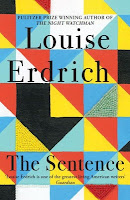
The Sentence by Louise Erdrich              $38
Recently released from a decades-long prison sentence, Tookie - a headstrong and deeply wronged Ojibwe woman with a chequered past - must make a life for herself in a changed, charged world. During her incarceration, her only lifeline were the books she 'learned to read with murderous attention', so when she finds work at a local independent bookshop she also finds kindred spirits among an eclectic, often eccentric, community of fellow booksellers and readers.When the bookshop's most persistent customer, Flora, dies, it soon becomes clear this revenant has unfinished business with Tookie in particular. Her search leads her right back to her roots and the stories her ancestors told; what Tookie unearths is a shocking personal revelation that resonates beyond her to a world in pain.
Bloody Woman by Lana Lopesi             $40
This wayfinding set of essays explores the overlap of being Sāmoan and a woman, as experienced 'from diaspora', by writer and critic Lana Lopesi. Writing on ancestral ideas of womanhood appears alongside contemporary reflections on women's experiences and the Pacific. These often deeply personal essays amount to a complex, rich and multi-layered book. Playful, speculative and far-sighted, these essays are written to support 'the narratives not yet written' and the new generations to come.
A Year in Fleurville: Recipes from rooftops, balconies, and gardens by Felicita Sala            $35
Maria's picking asparagus, Ramon's mum is watering the cucumbers, and a gaggle of kids are eating cherries fresh from the tree and even wearing some as earrings! Meet the many people of Fleurville, delight in their produce, learn their recipes, and find comfort in the cycle of the seasons. Another wonderful picture cookbook for children, with food from all sorts of family backgrounds, from the author of Lunch at No.10 Pomegranate Street. 


He Pou Hiringa: Grounding science in Te Ao Māori edited by Katharina Ruckstuhl, Merata Kawharu and Maria Amoamo             $15
This book brings together writing on the big questions about the role of Maori, tikanga and matauranga in shaping science and technological innovation. Written by Maori from diverse disciplines, it explores the potential for novel approaches, theories, methods and community engagement models in science and technology programmes. It calls for increased participation, initiative and leadership from Maori and presents the views of Maori thinkers on what technology and science mean for the future.
Futilitarianism: Neoliberalism and the production of uselessness by Neil Vallelly             $55
A proposal for countering the futility of neoliberal existence to build an egalitarian, sustainable, and hopeful future. If maximising utility leads to the greatest happiness of the greatest number of people, as utilitarianism has always proposed, then why is it that as many of us currently maximize our utility—by working endlessly, undertaking further education and training, relentlessly marketing and selling ourselves—we are met with the steady worsening of collective social and economic conditions? In Futilitarianism, social and political theorist Neil Vallelly tells the story of how neoliberalism transformed the relationship between utility maximisation and the common good.
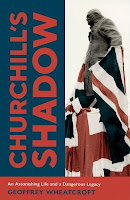
An important book, not only reassessing the achievements—and failures—of Churchill's life and leadership, but examining the legacies of the 'Churchill myth' on all that has come after, from Tony Blair's eagerness to follow the United States into war in Iraq to the belief in British exceptionalism that underpinned Brexit. 
"Provocative, clear-sighted, richly textured and wonderfully readable, this is the indispensable biography of Churchill for the post-Brexit 2020s." —David Kynaston

The Amur River, Between Russia and China by Colin Thubron             $40
In his eightieth year Thubron travelled the length of the river that divides China from Russia, using public transport where possible and sleeping where he could. In his inimitable elegant prose, he evokes the ordinary lives of those in a place of tension between superpowers. 

Tender Is the Flesh by Agustina Bazterrica (translated by Sarah Moses)              $35
Working at the local processing plant, Marcos is in the business of slaughtering humans—though no one calls them that anymore. His wife has left him, his father is sinking into dementia, and Marcos tries not to think too hard about how he makes a living. After all, it happened so quickly. First, it was reported that an infectious virus has made all animal meat poisonous to humans. Then governments initiated the 'Transition'. Now, eating human meat—'special meat'—is legal. Marcos tries to stick to numbers, consignments, processing. Then one day he's given a gift: a live specimen of the finest quality. Though he's aware that any form of personal contact is forbidden on pain of death, little by little he starts to treat her like a human being. And soon, he becomes tortured by what has been lost—and what might still be saved. A disquieting novel about how quickly atrocities become normalised. 
"The novel is horrific, yes, but fascinatingly provocative (and Orwellian) in the way it exposes the lengths society will go to deform language and avoid moral truths." —Taylor Antrim, Vogue
Whatever Happened to Harold Absolon? by Simon Okotie           $32
Although ostensibly about the rather down-at-heel detective Marguerite's attempt to solve the disappearance of a public transport official, the book is more concerned with the hilariously pedantic examination of thought and language, as if clues to this or to some other existential mystery could somehow be found there. 
"An absurdist comedy about overthinking." —Blake Morrison
Te Pakanga a Ngāti Rānaki me Te Ranga-Tipua (Avengers vs X-Men) by Jason Aaron, Brian Michael Bendis, Ed Brubaker, Jonathan Hickman, and Matt Fraction      $50
Kātahi anō te pakanga nui whakaharahara a ngā tuahangata nei ka whakamāoringia hei whakaputanga ki te ao mārama. Ngāti Rānaki me Te Ranga-Tipua – mai anō i te wehenga o Rangi rāua ko Papa ko rāua tonu ngā tauā tuahangata rongonui katoa – ka wera te umu pokapoka o te ao tukupū i tēnei pakanga turaki aorangi. Kātahi nei te pukapuka ko tēnei – he kohinga nō ngā pakiwaituhi hirahira katoa i tēnei tekau tau kua hori – e huihui mai ai a Tua Rino, a Kāpene Amerika, a Toa, a Kaiora, a Katipō, a Tama-Werewere, a Matihao, a Whatupihi, a Rangipō, a Te Autō me te huhua noa atu i tēnei pūrākau e rerekē katoa nei ō rātau āhua ā muri ake nei.
Iron Man, Captain America, Thor, Hulk, Black Widow, Spider-Man, Wolverine, Cyclops, Storm, Magneto and more in te reo Māori!


VOLUME BooksNew releases


>> Read all Stella's reviews.


The Magician by Colm Tóibín   {Reviewed by STELLA}
It takes a certain kind of writer to lift a famous historical figure from the mundanity of the facts to a riveting character in a fictional work. In The Magician, Tóibín reveals the inner workings of the Nobel prize-winning writer Thomas Mann against the backdrop of the first half of the 20th century. We meet Mann as a youngster standing on the landing with his siblings watching their exotic Brazilian mother preparing to descend the stairs to a social gathering at their home in the conservative town of Lübeck. It is a clear image of a close family structure shaped by his rational, business-focused father and effusive mother. The siblings, Thomas and his older brother Heinrich — locked in a close, yet competitive relationship which lasts their lifetimes — and their younger sisters, Lula and Clara — whose lives both end in tragedy — and the baby of the family, Viktor, are arranged as if time stood still for a moment as we the reader walk into their lives. And from here we follow Thomas Mann into adolescence, his growing passions for writing and beautiful boys, and his awareness of the fascinating Katia (his future wife) and her twin Klaus. The twins are from the well-regarded, wealthy and culturally sophisticated Jewish Pringsheim family. Surprisingly, Katia accepts Thomas’s proposal and the couple set up home in Munich. The early part of the book looks at Mann’s time in Italy with his brother Heinrich, as they both set out to be writers, and Thomas’s success in doing just that. His first novels are published to acclaim and he is well on his way to a successful career by the time he marries and starts a family. He is a man of routine, he writes in the morning and can not be disturbed in his study. Katia manages the household and the children, as well as her husband’s business dealings, often advising him on matters that could have sticky unforeseen problems. While it would seem by Mann’s work patterns that his life would not intrude into his literature, the opposite, as Tóibín cleverly navigates us through, is so. Mann’s homosexual desires are hinted at in many of his novels, and the familial, as well as specific situations (eg. Katia’s stay at a TB hospital) are well entrenched in his work. As his family grows and his oldest children enter adulthood, Germany is changing also. Hitler’s brand of fascism is on the rise and the writer Thomas Mann is part of this maelstrom. As Germany changes, it is difficult for Mann to accept that this was not the country he wished to belong to. The idea of Germany as a culturally rich European nation was eroding in front of his eyes. With his socialist brother, and his own unconventional and outspoken twins — Erika and Klaus — along with more radical writers and artists goading his resistance to speaking out he is undoubtedly facing his own demons, as well as the impending political ones. Protected by those who respect him as a writer during the Munich uprising, it is not long until he sees the need to not only speak up, but leave. After a short time in Switzerland, and with other German exiles in France, the announcement of war plunges the family into disarray, and their ability to leave Europe for America provides a welcome, if sometimes confusing, retreat. While Princeton happily embraces the Mann family into their midst, they are not always at home in their refuge. There are confusing demands or expectations on Mann. He at times must speak out against Germany, while at other times, he must stay silent. He is both welcomed as a famous writer, but also, especially as the war presses on, suspect as a German exile. With successive family members to rescue from the oppressive fascist realm and an increasingly dangerous Europe, he is often at a loss to navigate the political machinations of American society. In all this the writing continues, and a move to California, where a new house is built and the Manns live in a bourgeois manner cognisant of their status, gives them a sense of normality. But things are far from smooth. It all runs counter to the chaos of their homeland, the tragedies their own adult children encounter —  who, each in their own way, are reflections of a father whose writing comes first — and the despair that haunts many of his friends and family. Thomas Mann’s repression of his inner world and his increasing disengagement with those closest to him reveal a man at sea in the world, yet sure in his literature. Colm Tóibín's The Magician is a masterpiece, deft and perceptive.
GAUDY BAUBLE by Isabel Waidner — reviewed by Thomas

It is overwhelmingly, facetiously tempting to call Gaudy Bauble a detective novel, principally because it is one (a fake detective novel is just as much a detective novel as a non-fake one, if there can be such a thing as a non-fake detective novel). In Gaudy Bauble the detectives, so to call them, never actually detect anything, they never leave their flats (except for dental repairs, &c), they are effectively ineffectual, placebos, and, when the lost budgerigar that triggered the investigation, so to call it, returns, it is not due to any detecting on their part. “Is not detective work labelling work?” states a voice, presumably that of P.I. Belahg, a writer mainly not writing the script for a television series seemingly entitled Querbird, being filmed by Blulip, Belahg’s lesbian Gilbert-and-George-like double, a film-maker whose ideas change faster than they can be realised. The investigation gains no traction not because there is a lack of evidence but because there is too much. Everything is evidence of something (or of everything). The investigation gains no traction because it is too thorough. The details are too much evidence to amount to anything in particular, only to everything. Every detail, every association, every etymological permutation, every taxonomy, every history, every identity is interrogated and dissolved, every distinction is ruptured, the narrative, so to call it, constantly derailed by detail and by the refusal of detail to retain a fixed identity. In total flux, attributions and prescribed identities function as little more than costumes (clothes have more stable identities than persons), everything mentioned becomes activated by that mentioning, becomes a protagonist, pulls the plot, so to call it, towards it, off course, if it could be said ever to have had a course, or to be a plot. The world, after all, consists not of plot, which is always a fictive result of arbitrary interpretation of an unjustifiably normative kind, but of details, details about which little of certainty can be said without making similarly normative transgressions against their true nature, which lies not in identity but in momentum. In flux, which is the natural state of all entities and from which entities become exiled at the moment they become entities, the state to which all entities long to return, the only certainty that can be maintained is that of momentum, if a certainty can be maintained at all. Gaudy Bauble retains all the excitement and pace and rigour of a detective novel. More and more characters appear, change names, blur their distinctions, overwhelm the narrative from locations in its margins or beyond: “There can never be too many crackpot agents. There could never be too much hyperactive riffraff interfering with events.” The dichotomy between the performative and the authentic is constantly ruptured, as if this dichotomy were a wall set to measure and constrain us, against which it is our nature to rebel, to seek release into illimitable inclusivity. The conflation of the performative and the authentic manifests in a doubling of entities, not only of P.I. Belahg and Blulip, but of the actual and the representation: budgerigar and statuette, tooth and denture, the characters and their appearances on the TV show Querbird. All categories are in flux. There may be a lost budgerigar, a broken tooth, statuettes, and so forth, but these categories are not exclusive of other categories, and tend always, by ontological clinamen, towards these categories. This ontology, since something must be said, or since the author, in choosing to write the novel, has put it about that something must be said in order for the novel to be written, makes language the territory in which this clinamen, this queerness in the nature of the particles, will in this instance be traced. All presences, all absences, all substances, all entities, all dissolutions, all metamorphoses, all wounds and all healing of wounds, are exercises of language, are both problems of language and solutions to these problems of language. Waidner, with nothing more constrained than hyperactive brilliance, somehow combines the register of Janet & John or the Teletubbies with that of specialist academic obscurantism without being anywhere between these poles, for only the extremes are worth conflating. At times there are similarities of rhythm with texts written under lipogrammatic or other artificial constraints, or with the lyric style of Mark E. Smith, or with impromptu dramatic performances using only the text of foreign-language phrasebooks (recommended). “Might sea urchin odontogenesis, fully understood, provide the biochemical tools to transform mainstream prosthodontics?” But, really, the book is quite unlike anything else, and is an exemplar of the sort of enjoyable and uncompromising queering experiment at the edge of literature and with the substance of literature itself that literature so desperately needs if it is to open new potentials within itself. When the novel comes to a (sort-of) end, new, more fluid entities have been achieved in a game of ‘real-life’ Exquisite Corpse, the budgerigar has returned, the momentum of the investigation has been expended. “The truth is the only thing left now. The truth ate everyone else alive.” 

your copy


Book of the weekThings I Learned at Art School by Megan Dunn   

Megan Dunn could never go placidly. All her life she has rubbed up against contemporary society, popular culture, family, art, and her own obsessions in ways that, as she candidly recalls them, are both very funny and strangely moving. These uniquely personal but highly relatable essays tell of Dunn's early life and coming-of-age in New Zealand in the '70s, '80s and '90s. 
Chapters include: The Ballad of Western Barbie; A Comprehensive List of All the Girls Who Teased Me at Western Heights High School, What They Looked Like and Why They Did It; On Being a Redhead; Life Begins at Forty: That Time My Uncle Killed Himself; Good Girls Write Memoirs, Bad Girls Don’t Have Time; Videos I Watched with My Father; Things I Learned at Art School; CV of a Fat Waitress; Nine Months in a Massage Parlour Called Belle de Jour; Various Uses for a Low Self-esteem; Art in the Waiting Room; and Submerging Artist. 

 NEW RELEASES

Aljce in Therapy Land by Alice Tawhai               $29
Workplace bullying, online relationships and stoned friendships — with a good dose of Wonderland added in.
Aljce in Therapy Land is both hilarious and distressing. It captures workplace relationships and power imbalances like few novels from Aotearoa do. Tawhai was already one of the best short story writers around, but she has written a one-of-a-kind novel.” —Brannavan Gnanalingam
“This book will sneak up on you. Aljce in Therapy Land is as much about the way small towns wax and wane as it is about how workplaces can take what ought to be good practice into some very bad places. Tawhai’s skill is in ignoring the three-act structure but still making the reader ultimately side with the titular character.” —Murdoch Stephens
Seesaw by Carmel Doohan           $34
When life gets hard, what will you do to the Other to protect yourself? Boats are sinking in the Mediterranean, and Siobhan begins work at a night shelter for asylum seekers. At the same time she is coping with the fallout of her relationships with an identical twin sister, an ex-girlfriend, and a boyfriend with whom she can no longer have sex. As political conflicts escalate she begins to recognise the destructive, zero-sum dynamic she learned in childhood and is forced to acknowledge her own violent logic of self-preservation. Drawing on cinematic montage, the narrative renders fragments of memory, experience and observation in a pattern of shifting analogies that work to illuminate the possibility of a less binary world.
"In its intimate and dazzling constellation of anecdote and memory, Seesaw’s form seems to be exquisitely composed by the very alliances of correspondence, analogy and sympathetic magic that its narrator dare not believe in. Siobhan’s struggles speak to an existential and political urgency: how does anyone keep balance while seesawing between the personal and the collective, past and present, brutality and hope, the authentic and the algorithm? Seesaw’s brilliance is its refusal to settle easily on either side, all the while reminding us that the middle ground should be more than just an idea – it should be capable of sustaining life. I know that this novel, and its searching, unafraid narrator, will stay with me for a long time." —Daisy Lafarge
>>Read a sample
Today, someone in the wealthiest 1 per cent of adults — now a roughly 40,000-strong club — has a net worth 68 times that of the average New Zealander. Too Much Money is the story of how wealth inequality is changing Aotearoa New Zealand. Possessing wealth opens up opportunities to live in certain areas, get certain kinds of healthcare, make certain kinds of social connections, exert certain kinds of power. But when access to these opportunities becomes alarmingly uneven, the implications are profound. This new book by the country's leading chronicler of economic inequality provides a far-reaching and compelling account of the way that wealth — and its absence — is transforming our lives. Drawing on the latest academic research, personal interviews and previously unexplored data, Too Much Money reveals the way wealth is distributed across the peoples of Aotearoa. Having helped elevate the word 'inequality' into the political lexicon, Max Rashbrooke's widely-anticipated new book arrives at a time of heightened concern for the division of wealth and what this means for our country's future.
The New Zealand Wars of the mid-nineteenth century profoundly shaped the course and direction of our nation's history. This book takes us to the heart of these conflicts with a series of first-hand accounts from Maori and Pakeha who either fought in or witnessed the wars that ravaged New Zealand between 1845 and 1872. From Heni Te Kiri Karamu's narrative of her remarkable exploits as a wahine toa, through to accounts from the field by British soldiers and powerful reports by observers on both sides, we learn about the wars at a human level. The often fragmentary, sometimes hastily written accounts that make up Voices from the New Zealand Wars vividly evoke the extreme emotions — fear, horror, pity and courage — experienced during the most turbulent time in our country's history. Each account is expertly introduced and contextualised, so that the historical record speaks to us vividly through many voices.
>>What does this monument mean?
Black Paper: Writing in a dark time by Teju Cole             $45
"Darkness is not empty," writes Teju Cole in this book that meditates on what it means to sustain our humanity—and witness the humanity of others—in a time of darkness. Wide-ranging but thematically unified, the essays address ethical questions about what it means to be human and what it means to bear witness, recognising how our individual present is informed by a collective past. Cole's writings in Black Paper approach the fractured moment through a constellation of interrelated concerns: confrontation with unsettling art, elegies both public and private, the defense of writing in a time of political upheaval, the role of the colour black in the visual arts, the use of shadow in photography, and the links between literature and activism. Throughout, Cole gives us intriguing new ways of thinking about blackness and its numerous connotations. "Writing on the top white sheet would transfer the carbon from the black paper onto the bottom white sheet. Black transported the meaning."
You Will Never Be Forgotten by Mary South            $25
In this provocative, bitingly funny short story collection, people attempt to use technology to escape their uncontrollable feelings of grief, rage or despair, only to reveal their most flawed and human selves. An architect draws questionable inspiration from her daughter’s birth defect. A content moderator for ‘the world’s biggest search engine’, who spends her days culling videos of beheadings and suicides, turns from stalking her rapist online to following him in real life. At a camp for recovering internet trolls, a sensitive misfit goes missing. A wounded mother raises the second incarnation of her child. Formally inventive, darkly absurdist, savagely critical of the increasingly fraught cultural climates we inhabit, these ten stories also find hope in fleeting interactions and moments of tenderness. They reveal our grotesque selfishness and our intense need for love and acceptance, and the psychic pain that either shuts us off or allows us to discover the greatest depths of empathy.
Middle Distance: Long stories of Aotearoa New Zealand edited by Craig Gamble          $35
Longer than a traditional short story and shorter than a novella, the long story is a form that both compresses and sprawls, expands and contracts, and which allows us to inhabit a world in one sitting. The emerging and established writers in this anthology break new territory in character, setting and storytelling. 


A Game of Two Halves: The best of Sport, 2005—2019 edited by Fergus Barrowman          $35
Sport was conceived in the back of Damien Wilkins's yellow Ford Escort and born in spring 1988. A Game of Two Halves: The Best of Sport 2005–2019 chronicles the second half of the xciting literary magazine’s life. "It wasn’t going to have a manifesto," founding editor Fergus Barrowman remembers. "It was clear to all of us that experimental writing – or postmodern writing, call it what you like – was just as rulebound as literary realism, and no more likely to be any good; that experienced writers took as many risks as beginning writers; and that older beginning writers – Barbara Anderson! – were just as alive in the moment of self-discovery as young writers." This book looks back through the fifteen issues of Sport from 2005 to 2019. It presents fiction, poetry, essays and oddities by 100 of our best writers, from leading lights like Bill Manhire, Ashleigh Young and Elizabeth Knox, to emerging glow worms like Tayi Tibble, Ruby Solly and Eamonn Marra.
London under Snow by Jordi Llavina (translated from Catalan by Douglas Suttle)             $36
Bringing winter a variety of places and cultures to life in six beautifully written short stories, Llavina mixes personal experiences with fictional characters to blur the lines between fiction and reality.


Out Here: An anthology of Takatāpui and LGBTQIA+ writers from Aotearoa New Zealand edited by Chris Tse and Emma Barnes           $50
Aotearoa is a land of extraordinary queer writers, many of whom have contributed to our rich literary history. But you wouldn’t know it. Decades of erasure and homophobia have rendered some of our most powerful writing invisible. Out Here will change that. This landmark book brings together and celebrates queer New Zealand writers from across the gender and LGBTQIA+ spectrum with a generous selection of poetry, fiction, creative nonfiction and much much more.
The Forgotten Coast by Richard Alter-Shaw             $35
A short memoir whose main focus is unpacking a family story that was never told: that a farm in Taranaki on which the family's generations-long comfortable fortunes rested had been directly taken from the people of Parikaha and given to anancestor, a member of the Armed Constabulary following the invasion of the village during the New Zealand Wars.

Shifting Grounds: Deep histories of Tāmaki Makaurau Auckland by Lucy Mackintosh                   $60
Deep histories, both natural and human, have been woven together over hundreds of years in places across Tāmaki Makaurau Auckland, forming potent sites of national significance. This stunning book unearths these histories in three iconic landscapes: Pukekawa/Auckland Domain, Maungakiekie/One Tree Hill and the Ōtuataua Stonefields at Ihumātao. Approaching landscapes as an archive, Lucy Mackintosh delves deeply into specific places, allowing us to understand histories that have not been written into books or inscribed upon memorials, but which still resonate through Auckland and beyond. Shifting Grounds provides a rare historical assessment of Tāmaki Makaurau Auckland's past, with findings and stories that deepen understanding of New Zealand history.
>>"In a city that has forgotten and erased much of its history, there are still places where traces of the past can be found."
The Uprising: The Mapmakers in Cruxcia by Eirlys Hunter        $23
Having triumphed in The Mapmakers' Race, Sal, Joe, Francie and Humphrey Santander are back, looking for their father, a famous explorer who disappeared on his last expedition. Their search takes them to Cruxcia, where the people are fighting to protect their land from the all-powerful Grania Trading Company. The Santanders’ mapping skills may just help Cruxcians save their ancient valley—and perhaps provide the key to reuniting their family.
>>Read Stella's review of the phenomenal first book.
FEM by Magda Cârneci (translated from Romanian by Sean Cotter)         $37
"FEM is a protest novel, a feminist text written with the fervor of a true poet, a book that registers the pain of women in a still male-dominated world. Beyond its feminist radicalism, this novel's readers will discover an impressive quality of mind and artistic refinement that attract our empathy." —Mircea Cartarescu
"Profound, mysterious, emotional and gripping, FEM is a luminous and inspiring work of literature by one of the world's most valuable authors." —Deborah Levy
Entanglement by Bryan Walpert            $35
A memory-impaired time traveller attempts to correct a tragic mistake he made in 1977 when, panicked, he abandoned his brother on a frozen lake in Baltimore. Decades later, in 2011, a novelist researching at the Centre for Time in Sydney becomes romantically involved with a philosopher from New Zealand. A writer at a lake retreat in New Zealand in 2019 obsesses over the disintegration of his marriage following another tragedy. Are they separate stories, or are they one? Is the time traveller actually travelling? Can the past be changed? As the answers to these questions slowly emerge, the lives become entangled in a tale of love, desperation and physics.
“This is a book that makes you slow down your reading because you don’t want the experience to end. That calls to you when you’re going about your day. That makes you nudge your partner to say, Listen to this. Entanglement is erudite, romantic, deeply moving. I reached the end and turned straight back to page one, entangled.” —Gigi Fenster
The Invention of Sicily by Jamie Mackay             $43
Fought over by the Phoenicians and Greeks, the Romans, Goths and Byzantines, Arabs and Normans, Germans, Spanish and the French for thousands of year, Sicily became a unique melting pot where diverse traditions merged, producing a unique heritage and singular culture.
Bayrut: The cookbook by Hisham Assaad          $65
Perfectly poised between the Middle East and the Mediterranean, Lebanese cuisine is hugely popular -- famed for its varied and flavourful regional dishes that emphasise whole grains, fresh fruits, vegetables and seafood.  Beirut's ever-changing, often turbulent, heritage means that its food has evolved an exciting character of its own. In this book, Hisham Assaad shows you the best the city has to offer, with accessible, delicious recipes, ranging from the classics to more modern fare. He tells the story of a city with energy and diversity, of multiple cultures and traditions, with ever-popular street food, a thriving restaurant and café scene, and traditional family favourites handed down through generations.
>>Have a look inside the book. 
Ewa Majewska maps the creation of feminist counterpublics around the world: spaces of protest and ideas, community and common struggle, that can challenge the emergence of fascist states as well as Western democratic 'public spheres' populated by atomised, individual subjects. Drawing from Eastern Europe and the Global South, Majewska describes the mass labor movement of Poland's Solidarnosc in 1980 and contemporary feminist movements across Poland and South America, arguing that it is outside of the West that we can see the most promising left futures. Majewska argues for a feminist political theory that does not reproduce the same forms of domination it seeks to overcome.
New Zealand's Backyard Birds
 by Ned Barraud          $30
The domestic outdoors of Aotearoa is filled with birds, both resident and visiting, both native and introduced. This pleasing book, with its clear illustrations and succinct text, is the perfect companion for every child. 
The Gosden Years by Bill Gosden            $50
Bill Gosden was at the forefront of Aotearoa film culture from 1980 to 2019. The Gosden Years is a record of his legacy as director of the New Zealand International Film Festival. Conceived by Gosden during the last months of his life, the book comprises his curated film notes, with praise for vital and overlooked New Zealand feature films included; programme introductions that illuminate the changing technologies and politics of film exhibition through the decades; and striking original poster art from every year of his tenure.
Oceanarium by Loveday Trinick and Teagan White        $50
Step inside the pages of Oceanarium to enjoy the experience of a museum from the comfort of your own home. This stunning  large-format offering from the 'Welcome to the Museum' series guides readers around the world's oceans, from sandy shorelines to the deepest depths. Get up close and personal with giant whale sharks, tiny tropical fish, majestic manatees and so much more, travel the world from frozen Arctic seas to shimmering coral reefs, and learn why it is so important that we protect our oceans.


Today a Woman Went Mad at the Supermarket by Hilma Wolitzer           $33
Another day! And then another and another and another. It seemed as if it would all go on forever in that exquisitely boring and beautiful way. But of course it wouldn't; everyone knows that.
Hilma Wolitzer invites us inside the private world of domestic bliss, seen mostly through the lens of Paulie and Howard's gloriously ordinary marriage. From hasty weddings to meddlesome neighbours, ex-wives who just won't leave, to sleepless nights spent worrying about unanswered chainmail, Wolitzer captures the tensions, contradictions and unexpected detours of daily life with wit, candour and an acutely observant eye. Including stories first published in magazines in the 1960s and 1970s alongside new writing from Wolitzer, now in her nineties, Today a Woman Went Mad in the Supermarket reintroduces a beloved writer to be embraced by a new generation of readers.
"Electric — with wit, with rage, with grief, with the kind of prose that makes you both laugh and thrill to the darker, spikier emotions just barely visible under the bright surface. What a wonderful collection of stories." —Lauren Groff
Kelcy Taratoa —Who Am I? Episode 001 by Warren Feeney (translated by Hēni Jacob)           $60
Who Am I? is a question at the centre of what it is to be human and for artist Kelcy Taratoa (Ngāi Te Rangi, Ngāti Ranginui, Ngāti Raukawa) it has formed the sub-ject of his painting for two decades. Kelcy Taratoa: Who Am I ?... Episode 001 is a bilingual English and Te Reo publication written by Warren Feeney and translated by Hēni Jacob (Ngāti Raukawa). It traverses the artist’s life from growing up in the suburbs of Levin to Te Haka a Te Tupere, the artist’s wharenui at Rangiwaea marae in Tauranga Harbour. Through his paintings he contends that contemporary technology’s virtual realities and appetite for destruction and distraction is undermining our humanity and experience of the world.
>>A few works
Penny: A graphic memoir by Karl Stevens            $40
Filled with ennui, angst, and vivid dreams, Penny proves that being a cat is more profound than we once thought. Thebeautifully drawn book portrays one cat's struggles between her animal instincts, her philosophical reflections, and the lush creature comforts of a life with human servants.


VOLUME BooksNew releases


 List #1: FICTION

We recommend these books as seasonal gifts and for summer reading. Click through to our website to reserve or purchase your copies—we will have them delivered anywhere or aside for collection. Let us know if you would like them gift-wrapped. 
If you don't find what you're looking for here, browse our website, or e-mail us: we have many other interesting books on our shelves.

A Passage North by Anuk Arudpragasam           $33
"Anuk Arudpragasam's masterful novel is an attempt to come to terms with life in the wake of the devastation of Sri Lanka's 30-year civil war. As Krishan makes the long journey by train from Colombo into the war-torn Northern Province to attend a family funeral, so begins an astonishing passage into the innermost reaches of a country. At once a powerful meditation on absence and longing, and an unsparing account of the legacy of Sri Lanka’s 30-year civil war, this procession to a pyre ‘at the end of the earth’ lays bare the imprints of an island’s past, the unattainable distances between who we are and what we seek." —Judges' commendation on short-listing the book for the 2021 Booker Prize
The Women of Troy by Pat Barker          $37
Troy has fallen and the Greek victors are primed to return home, loaded with spoils. All they need is a good wind to lift their sails. But the wind does not come. The gods are offended — the body of Priam lies desecrated, unburied — and so the victors remain in uneasy limbo, camped in the shadow of the city they destroyed. The coalition that held them together begins to fray, as old feuds resurface and new suspicions fester. Largely unnoticed by her squabbling captors, erstwhile queen Briseis remains in the Greek encampment. She forges alliances where she can — with young, rebellious Amina, with defiant, aged Hecuba, with Calchus, the disgraced priest — and she begins to see the path to revenge. The sequel to the acclaimed The Silence of the Girls
Bug Week
 by Airini Beautrais           $30
Winner of the Jann Meddlicott Acorn Prize for Fiction at the 2021 Ockham New Zealand Book Awards. On awarding the prize, the judges said, "Casting a devastating and witty eye on humanity at its most fallible and wonky, this is a tightly wound and remarkably assured collection. Atmospheric and refined, these stories evoke a strong sense of quiet unease, slow burning rage and the absurdly comic." We agree!
The Inseparables by Simone de Beauvoir (translated by Lauren Elkin)          $30
Written in 1954, five years after The Second Sex, the novel of the intense relationship between two girls who grow up together and then grow apart was never published in Simone de Beauvoir's lifetime. This first English edition includes an afterword by her adopted daughter, who discovered the manuscript hidden in a drawer, and photographs of the real-life friendship which inspired and tormented the author.

The Coming Bad Days by Sarah Bernstein               $23
"Bernstein’s precise, cool, devastating prose takes on a Cuskian quality in highly memorable passages balancing dismissal, sympathy and unsparing humour. Her prose prickles." —Thomas
After leaving the man with whom she'd been living, an unnamed protagonist in an unnamed university city is working unspectacularly on the poet Paul Celan. The abiding feeling in the city is one of paranoia; the weather has been deteriorating and outside her office window she can hear police helicopters circling, looking for the women who have been disappearing. She is in self-imposed exile, hoping to find dignity in her loneliness. But when she meets Clara — a woman who is exactly her opposite — her plans begin to unravel.
"Bernstein’s pessimism evokes the likes of Arthur Schopenhauer and Thomas Bernhard, chiming all too well with the current discourse around issues of male privilege." –Spectator
The Echo Chamber by John Boyne           $37
"Enjoy this novel for the satire it is and the sheer hilarity of watching this highly unlikable family turn tighter and tighter circles to patch up their wrongs—until it all comes crashing down." —Stella 
The Echo Chamber is a satiric helter-skelter, a dizzying downward spiral of action and consequence, poised somewhere between farce, absurdity and oblivion. The Cleverley family live a gilded life, little realising how precarious their privilege is, just one tweet away from disaster. George, the patriarch, is a stalwart of television interviewing, a 'national treasure' (his words), his wife Beverley, a celebrated novelist (although not as celebrated as she would like), and their children, Nelson, Elizabeth, Achilles, various degrees of catastrophe waiting to happen. Together they will go on a journey of discovery through the Hogarthian jungle of the modern living where past presumptions count for nothing and carefully curated reputations can be destroyed in an instant. 
Nostalgia Has Ruined My Life by Zarah Butcher-McGunnigle        $25
An unnamed woman in her late twenties navigates unemployment, boredom, chronic illness and online dating. Her activities are banal — applying for jobs, looking up horoscopes, managing depression, going on Tinder dates. ‘I want to tell someone I love them but there is no one to tell,’ she says. ‘Except my sister maybe. I want to pick blackberries on a farm and then die.’ She observes the ambiguities of social interactions, the absurd intimacies of sex and the indignity of everyday events, with a skepticism about the possibility of genuine emotion, or enlightenment. Like life, things are just unfolding, and sometimes, like life, they don’t actually get better.
>>Read Thomas's review
Second Place by Rachel Cusk              $33
"The writing is compelling, the prose poised and the content both farcical and unsettling. It will make you squirm." —Stella
From the author of the 'Outline' trilogy, a fable of human destiny and decline, enacted in a closed system of intimate, fractured relationships. A woman invites a famed artist to visit the remote coastal region where she lives, in the belief that his vision will penetrate the mystery of her life and landscape. Over the course of one hot summer, his provocative presence provides the frame for a study of female fate and male privilege, of the geometries of human relationships, and of the struggle to live morally between our internal and external worlds. With its examination of the possibility that art can both save and destroy us, Second Place is both deeply affirming and deeply scathing of humanity. 
>>Read our reviews
The Dangers of Smoking in Bed by Mariana Enriquez          $33
Written against the backdrop of contemporary Argentina, The Dangers of Smoking in Bed is populated by unruly teenagers, crooked witches, homeless ghosts, and hungry women. A woman is sexually obsessed with the human heart; a lost, rotting baby crawls out of a backyard and into a bedroom; a pair of teenage girls can't let go of their idol; an entire neighbourhood is cursed to death when it fails to respond correctly to a moral dilemma. 
"The stories walk the uneasy line between urban realism and horror, but with a resounding tenderness toward those in pain, in fear and in limbo. As terrifying as they are socially conscious, the stories press into the unspoken - fetish, illness, the female body, the darkness of human history - with bracing urgency." —Judges' citation on the book's short-listing for the 2021 International Booker Prize
A Good Winter by Gigi Fenster              $37
When Olga's friend Lara becomes a grandmother, Olga helps out whenever she can. After all, it's a big imposition on Lara, looking after her bereaved daughter and the baby. And the new mother is not exactly considerate. But smoldering beneath Olga's sensible support and loving generosity is a deep jealous need to be the centre of Lara's attention and affection-a need that soon becomes a consuming, dangerous and ultimately tragic obsession. Winner of the 2020 Michael Gifkins Prize. 

Crossroads by Jonathan Franzen            $35
Franzen's acute and often hilarious observations on the dynamics and dysfunctions of family life reach a sort of apogee in this unsparing but strangely warm and nuanced novel, set in 1971 as the family of American suburban pastor Russ Hildebrandt feels the pressure of change and starts to lose its acceptable veneer. 
>>Read Stella's review. 
"Warm, expansive and funny – a pure pleasure to read." —Guardian
"Crossroads is Franzen's finest novel yet. He has arrived at last as an artist whose first language, faced with the society of greed, is not ideological but emotional, and whose emotions, fused with his characters, tend more toward sorrow and compassion than rage and self-contempt. —BookForum

Unsettled Ground by Claire Fuller            $37
Twins Jeanie and Julius have always been different. At 51 years old, they still live with their mother, Dot, in rural isolation and poverty. Their rented cottage is simultaneously their armour against the world and their sanctuary. Inside its walls they make music, in its garden they grow (and sometimes kill) everything they need for sustenance. But when Dot dies suddenly, threats to their livelihood start raining down. At risk of losing everything, Jeanie and her brother must fight to survive in an increasingly dangerous world as their mother's secrets unfold, putting everything they thought they knew about their lives at stake. This is a thrilling novel of resilience and hope, of love and survival, that explores with dazzling emotional power how the truths closest to us are often hardest to see.
Everyone Knows Your Mother Is a Witch by Rivka Galchen               $33
1618, in the German duchy of Württemberg. Plague is spreading. The Thirty Years' War has begun, and fear and suspicion are in the air throughout the Holy Roman Empire. In the small town of Leonberg, Katharina Kepler is accused of being a witch. Katharina is an illiterate widow, known by her neighbors for her herbal remedies and the success of her children, including her eldest, Johannes, who is the Imperial Mathematician and renowned author of the laws of planetary motion. It's enough to make anyone jealous, and Katharina has done herself no favors by being out and about and in everyone's business. So when the deranged and insipid Ursula Reinbold (or as Katharina calls her, the Werewolf) accuses Katharina of offering her a bitter, witchy drink that has made her ill, Katharina is in trouble. Her scientist son must turn his attention from the music of the spheres to the job of defending his mother. Facing the threat of financial ruin, torture, and even execution, Katharina tells her side of the story to her friend and next-door neighbor Simon, a reclusive widower imperiled by his own secrets. Drawing on actual historical documents but infused with the intensity of imagination, sly humor, and intellectual fire for which Rivka Galchen is known, Everyone Knows Your Mother Is a Witch is the story of how a community becomes implicated in collective aggression and hysterical fear. It is a tale for our time. 
The Promise by Damon Galgut              $37
Winner of the 2021 Booker Prize.

Galgut won the 2021 Booker Prize for this superb novel exploring the relationships between members of a decaying Afrikaans family in South Africa’s transition from Apartheid. Distilled into accounts of four funerals, each a decade apart, Galgut provides deep insights into the complexities of ethical and personal failings, and the unfortunate resilience of injustice notwithstanding social change and notwithstanding stated intentions — in this case a promise of land owed to a former servant, a promise that is always deferred and never fulfilled. 

"The Promise is fully rooted in contemporary South Africa, but the novel's weather moves into the elemental while attending also to the daily, the detailed and the personal. The book is close to a folktale or the retelling of a myth about fate and loss, about three siblings and land, a promise made and broken. The story has an astonishing sense of depth, as though the characters were imagined over time, with slow tender care." —Colm Toibin
Middle Distance: Long stories of Aotearoa New Zealand edited by Craig Gamble          $35
Longer than a traditional short story and shorter than a novella, the long story is a form that both compresses and sprawls, expands and contracts, and which allows us to inhabit a world in one sitting. The emerging and established writers in this anthology break new territory in character, setting and storytelling. 
A Ghost in the Throat by Doireann Ní Ghríofa          $38
"Endlessly curious and achingly beautiful." —Stella
This remarkably fluid combination of essay and autofiction splices together the stories of an Irish noblewoman who wrote a remarkable poem on finding her husband murdered by English soldiers in 1773, and a young mother today who narrowly avoids tragedy in her own life and feels spoken to directly across the centuries through the poem. 
"An extraordinary book that braids the past and present, self and other into a new kind of poetry. Doireann Ní Gríofa writes with a magical kind of knowledge of herself and the world, and of the remembered and imagined, Eibhlín Dubh. This is a book about life, its wonder and its pain, written with hunger and grace, every line a charm." —Emilie Pine
>>Read Stella's review
Mr Beethoven by Paul Griffiths          $38
"What would Beethoven have done with another seven years of life, and where, in the 1830s, might he have gone? The answer, in this audacious but exacting extension of the composer’s late period, is America, where an oratorio, Job, is completed (and performed) in Boston. Suffering and revelation are the subject-matter, but in Paul Griffiths’ hands, the Biblical sorrow undergoes a lasting modulation into a new key of delight in friendship, communication, and creativity." —Judges' citation shortlisting the novel for the Goldsmiths Prize

Matrix by Lauren Groff             $35
Cast out of the royal court by Eleanor of Aquitaine, deemed too coarse and rough-hewn for marriage or courtly life, seventeen-year-old Marie de France is sent to England to be the new prioress of an impoverished abbey, its nuns on the brink of starvation and beset by disease. At first taken aback by the severity of her new life, Marie finds focus and love in collective life with her singular and mercurial sisters. In this crucible, Marie steadily supplants her desire for family, for her homeland, for the passions of her youth with something new to her: devotion to her sisters, and a conviction in her own divine visions. A historical novel from the author of the outstanding (and very contemporary) Fates and Furies

Afterlives 
by Abdulrazak Gurnah        $23   

From the 2021 Nobel Prize in Literature laureate. 
Restless, ambitious Ilyas was stolen from his parents by the Schutzruppe askari, the German colonial troops in East Africa. After years away, he returns to his village to find his parents gone, and his sister Afiya given away. Hamza was not stolen, but was sold; he has come of age in the army, at the right hand of an officer whose control has ensured his protection but marked him for life. Hamza does not have words for how the war ended for him. Returning to the town of his childhood, all he wants is work, however humble, and security and the beautiful Afiya. 
"A remarkable novel, by a wondrous writer, deeply compelling, a thread that links our humanity with the colonial legacy that lies beneath, in ways that cut deep." —Philippe Sands
"To read Afterlives is to be returned to the joy of storytelling. The story of Hamza and Afiya is one of simple lives buffeted by colonial ambitions, of the courage it takes to endure, to hold oneself with dignity, and to live with hope in the heart." —Aminatta Forna
The Sweetness of Water by Nathan Harris             $35
In the dying days of the American Civil War, newly freed brothers Landry and Prentiss find themselves cast into the world without a penny to their names. Forced to hide out in the woods near their former Georgia plantation, they're soon discovered by the land's owner, George Walker, a man still reeling from the loss of his son in the war. When the brothers begin to live and work on George's farm, the tentative bonds of trust and union begin to blossom between the strangers. But this sanctuary survives on a knife's edge, and it isn't long before the inhabitants of the nearby town of Old Ox react with fury at the alliances being formed only a few miles away.
"Better than any debut novel has a right to be." —Richard Russo

Butcherbird by Cassie Hart          $25
Something is drawing Jena Benedict's family to darkness. Her mother, father, brother and baby sister are killed in a barn fire, and Grandmother Rose banishes Jena from the farm. Now, twenty years on Rose is dying, and Jena returns home with her boyfriend Cade in tow. Jena wants answers about why she was sent away and about what really happened the night of the fire. Will, Rose's live-in caregiver, has similar questions. He hunts for the supernatural, and he knows something sinister lurks in the Benedict homestead. Like Rose, Will has experienced childhood tragedy. Soon, Jena and Will unearth mysteries: a skull, a pocket-watch, a tale of the Dark Man and a tiding of magpies. The duo learn Rose's secrets and confront an evil entity that has been set loose.
Kurangaituku by Whiti Hereaka           $35
Kurangaituku is the story of Hatupatu told from the perspective of the traditional ‘monster’, Kurangaituku, the bird woman. In the traditional story, told from the view of Hatupatu, he is out hunting and is captured by a creature that is part bird and part woman. The bird woman imprisons him in her cave in the mountains. Hatupatu eventually escapes and is pursued by Kurangaituku. He evades her when he leaps over hot springs, but Kurangaituku goes into them and dies. In this version of the story, Kurangaituku takes us on the journey of her extraordinary life – from the birds who sang her into being, to the arrival of the Song Makers and the change they brought to her world, and her life with Hatupatu and her death. Through the eyes of Kurangaituku, we come to see how being with Hatupatu changed Kurangaituku, emotionally and in her thoughts and actions, and how devastating his betrayal of her was.
Klara and the Sun by Kazuo Ishiguro           $37
"Wonderfully narrated, compelling and stimulating." —Stella
A hugely empathic AI, Klara is bought as an Artificial Friend for a girl suffering from an undefined illness. As the full extent of the girl's predicament becomes apparent, Klara, with her wonderful mixture of naivety and capacity, does all she can for the girl, and makes us question what it is to be human. Ishiguro's first novel since being awarded the Nobel Prize in Literature in 2017. 
 "People will absolutely love this book, in part because it enacts the way we learn how to love." —Anne Enright
>>Read Stella's review
How the One-Armed Sister Sweeps Her House by Cherie Jones            $35
Short-listed for the 2021 Women’s Prize for Fiction, this well written multi-generational novel coils its way through issues of race, class and gender in a Barbados where poverty and misogyny lurk under the surface and where a cautionary folk tale takes on multiple meanings for three very different women.

Chasing Homer by László Krasznahorkai (translated by John Batki), illustrated by Max Neumann, with music by Szilveszter Miklós           $45
A hunted being escapes certain death at breakneck speed. Faster and faster, escaping the assassins, the protagonist flies forward, blending into crowds, adjusting to terrains, hopping on and off ferries, always desperately trying to stay a step ahead of certain death—the past did not exist, only what was current existed—a prisoner of the instant, rushing into this instant, an instant that has no continuation. Krasznahorkai's mesmeric prose is accompanied by unsettling paintings by Neumann, and Miklós's percussive accompaniment is accessed via QR codes in each section. Remarkable. 
"Allusive and acerbic: a brilliant work that proves the adage that even paranoiacs have enemies." —Kirkus

When We Cease to Understand the World by Benjamin Labatut         $23  
The great mathematician Alexander Grothendieck tunnels so deeply into abstraction that he tries to cut all ties with the world, terrified of the horror his discoveries might cause. Erwin Schrodinger and Werner Heisenberg battle over the soul of physics after creating two equivalent yet opposed versions of quantum mechanics. Their fight will tear the very fabric of reality, revealing a world stranger than they could have ever imagined. Using extraordinary, epoch-defining moments from the history of science, Benjamin Labatut plunges us into exhilarating territory between fact and fiction, progress and destruction, genius and madness.
"A monstrous and brilliant book." —Philip Pullman
"Wholly mesmerising and revelatory. Completely fascinating." —William Boyd

Silverview by John le Carré          $35
Julian Lawndsley has renounced his high-flying job in the City for a simpler life running a bookshop in a small English seaside town. But only a couple of months into his new career, Julian's evening is disrupted by a visitor. Edward, a Polish émigré living in Silverview, the big house on the edge of town, seems to know a lot about Julian's family and is rather too interested in the inner workings of his modest new enterprise. When a letter turns up at the door of a spy chief in London warning him of a dangerous leak, the investigations lead him to this quiet town by the sea... What happens when public duty and private morals are irreconcilable? This is the last novel from this master of intrigue, whose insider knowledge of the secret service gave his novels a powerful veracity. 

No-One is Talking About This by Patricia Lockwood           $33
"Both clever and moving, both piercingly funny and reassuringly sad, the book is is both about the bodilessness of the internet and about bodies in the world, about both isolation and intimacy, and about the burden that language bears—and the possibilities language offers—connecting or attempting to connect all these." —Thomas 
Lockwood's remarkable novel is both clever and moving, both painfully funny and deeply sad, it is about the bodilessness of the internet and about bodies in the world, about both isolation and intimacy, and about the burden that language bears connecting all these. 
>>Read Thomas's review
She's a Killer by Kirsten McDougall          $30
The world’s climate is in crisis and New Zealand is being divided and reshaped by privileged immigrant wealthugees. Thirty-something Alice has a near-genius IQ and lives at home with her mother with whom she communicates by Morse code. Alice’s imaginary friend, Simp, has shown up, with a running commentary on her failings. The last time Simp was here was when Alice was seven, on the night a fire burned down the family home. Now Simp seems to be plotting something. When Alice meets a wealthugee named Pablo, she thinks she’s found a way out of her dull existence. But then she meets Pablo’s teenage daughter, Erika – an actual genius full of terrifying ambition.
"A claustrophobic eco-thriller with a gloriously unreliable narrator, She’s a Killer is tense and sharp, and feels unnervingly prescient." –Brannavan Gnanalingam
"Equipped with an exhilaratingly badly-behaved protagonist, She’s a Killer builds from a slice of very strange life into a thriller by way of a succession of stunning comic set pieces. You’ll laugh—a lot. And then you’ll cry and be really surprised about it since you were laughing so much." —Elizabeth Knox

The Author's Cut: Short stories by Owen Marshall         $36
Marshall's own selection from the many collections of short stories that have established him as a master of the portrayal of the complexities of small lives, the workings of small minds, and the insularity of small towns (no matter how large). 
"I very much envy Marshall's ability to lay things down in such a way that each one has its natural weight and place, without any straining and heaving." —Maurice Gee

Colouring My Soul by Kat Maxwell           $25
Maxwell's remarkably raw and direct stories and spare, effective style evoke a childhood in a whānau marked by deprivation, misfortune and strength. 
"I write because my stories bruise my brain until they’re written. They fell out of my fingers one day after I had been nostalgic remembering my childhood and my aunties, my nanny and my koro, and all my cousins."
“Kat Maxwell writes vividly and with raw emotion. She’s inside her world, she knows how it works, her stories are brave and bare.”—Maurice Gee
The Fortune Men by Nadifa Mohamed          $37
Mahmood Mattan is a father, a chancer, a petty thief. Many things, in fact, but he is not a murderer. So when a shopkeeper is brutally killed and all eyes fall on him, Mahmood isn’t too worried — secure in his innocence in a country where justice is served. But as the trial nears, it starts to dawn on him that he is in a fight for his life — against conspiracy, prejudice and the ultimate punishment. In the shadow of the hangman’s noose, he realises that the truth may not be enough to save him. Short-listed for the 2021 Booker Prize

A Clear Dawn: New Asian voices from Aotearoa New Zealand edited by Paula Morris and Alison Wong               $50
This collection of poetry, fiction and essays by emerging writers is the first-ever anthology of Asian New Zealand creative writing. A Clear Dawn presents a new wave of creative talent. With roots stretching from Indonesia to Japan, from China to the Philippines to the Indian subcontinent, the authors in this anthology range from high school students to retirees, from recent immigrants to writers whose families have lived in New Zealand for generations. Some of the writers – including Gregory Kan, Sharon Lam, Rose Lu and Chris Tse – have published books; some, like Mustaq Missouri, Aiwa Pooamorn and Gemishka Chetty, are better known for their work in theatre and performance. The introduction outlines New Zealand's long yet under-recognised history of immigration from Asia. 
The Fell by Sarah Moss         $35
Desperate for some respite from her teenage son during a period of quarantine in England's Peak District, a woman goes for a short walk on the moors. When she falls and injures herself, this triggers a mountain rescue effort and a recalibration of the participants' relationships with nature and with each other, during which the myriad anxieties of contemporary life are brought to the fore. A document of the inner life of our times from the author of Summerwater

First Person Singular by Haruki Murakami            $45
"Memoir-ish pieces maybe, but more another realm to explore writing, where it takes us and how far, and how it happens. Simple and complex in equal measure." —Stella
The eight stories in this new book are all told in the first person by a classic Murakami narrator. From memories of youth, meditations on music, and an ardent love of baseball, to dreamlike scenarios and invented jazz albums, together these stories challenge the boundaries between our minds and the exterior world. Occasionally, a narrator may or may not be Murakami himself.
>>Read Stella's review

Things Remembered and Things Forgotten by Kyoko Nakajima            $23
"If we want to understand what has been lost to time, there is no way other than through the exercise of imagination—imagination applied with delicate rather than broad strokes." Nakajima portrays men and women beset by cultural amnesia and unaware of how haunted they are—by fragmented memories of war and occupation, by fading traditions, by buildings lost to firestorms and bulldozers, by the spirits of their recent past.
"These impressive stories bridge past and present, the familiar and the otherworldly, the lost and the found." —David Mitchell
"A perfect introduction to the quiet, subtle brilliance of Kyoko Nakajima." —David Peace

The Cat Who Saved Books by Sosuke Natsukawa        $20
"A magical book — a charming fable about the pleasures of literature and books." —Stella
Bookish high school student Rintaro Natsuki is about to close the secondhand bookshop he inherited from his beloved grandfather. Then, a talking cat named Tiger appears with an unusual request. The cat needs Rintaro’s help to save books that have been imprisoned, destroyed and unloved. Their mission sends this odd couple on an amazing journey, where they enter different labyrinths to set books free. Through their travels, Tiger and Rintaro meet a man who locks up his books, an unwitting book torturer who cuts the pages of books into snippets to help people speed read, and a publisher who only wants to sell books like disposable products. Then, finally, there is a mission that Rintaro must complete alone...
>>Read Stella's review
Fake Accounts by Lauren Oyler         $33
A woman in a post-election tailspin discovers that her boyfriend is an anonymous online conspiracy theorist in this provocative and subversive novel that examines social media, sex, feminism, and fiction, the connection they've all promised, and the lies they help us tell. 
"Fake Accounts is a novel about the enigmatical spectacle of our extremely online world that is itself both enigmatic and spectacular – a dark comedy about a dark time, and a prismatically intelligent work of art. Brilliant." —Guardian
Mordew by Alex Pheby            $40
In this strange, darkly playful and hugely inventive fantasy, the patriarchal Master draws his magical power from the body of God, buried beneath the city. When Nathan Treeves's mother sells him to the Master it becomes apparent that Nathan has a power of his own, one that could destroy all that the Master has wrought—if only Nathan can find out how to use it. 
"Mordew is a darkly brilliant novel, extraordinary, absorbing and dream-haunting. That it succeeds as well as it does speaks to Pheby’s determination not to passively inhabit his Gormenghastly idiom but instead to lead it to its most extreme iteration, to force inventiveness and grotesqueness into every crevice of his work." —Guardian 
The Death of Francis Bacon by Max Porter            $17
"Porter is obsessed, splicing himself into the mind of the painter as he lies on his death-bed, the words worked wet on the page." —Thomas
Madrid. Unfinished. Man Dying. A great painter lies on his deathbed. Max Porter (author of Lanny and Grief is the Thing With Feathers) translates into seven extraordinary written pictures the explosive final workings of the artist's mind. 
"Reads like a private communion with the painter." —Guardian
Bewilderment by Richard Powers               $35
Theo Byrne is an astrobiologist. He is also the widowed father of a most unusual nine-year-old. Robin is loving, funny and full of plans to save the world. He is also about to be expelled, for smashing his friend’s face in with a metal thermos. What can a father do, when the only solution offered is to put his boy on psychoactive drugs? What can he say, when his boy asks why we are destroying the world? The only thing to do is to take the boy to other planets, while helping him to save this one.

The Employees: A workplace novel of the 22nd century by Olga Ravn        $38
"My favourite book of the year." —Thomas
The crew of the Six-Thousand Ship consists of those who were born, and those who were made; those who will die, and those who will not. When the ship takes on a number of strange objects from the planet New Discovery, the crew is perplexed to find itself becoming deeply attached to them, and human and humanoid employees alike start aching for the same things: warmth and intimacy, loved ones who have dies, shopping and child-rearing; our shared, far-away Earth, which now only persists in memory. Gradually, the crew members come to see their work in a new light, and each employee is compelled to ask themselves whether they can carry on as before — and what it means to be truly living. Structured as a series of witness statements compiled by a workplace commission, Ravn's crackling prose is as chilling as it is moving, as exhilarating as it is foreboding. Wracked by all kinds of longing, The Employees probes into what it means to be human, emotionally and ontologically, while simultaneously delivering an overdue critique of a life governed by work and the logic of productivity.
Greta & Valdin by Rebecca K. Reilly             $30
Valdin is still in love with his ex-boyfriend Xabi, who used to drive around Auckland in a ute but now drives around Buenos Aires in one. Greta is in love with her fellow English tutor Holly, who doesn’t know how to pronounce Greta’s surname, Vladisavljevic, properly. From their Auckland apartment, brother and sister must navigate the intricate paths of modern romance as well as weather the small storms of their eccentric Māori–Russian–Catalonian family. This novel by Adam Foundation Prize winner Rebecca K Reilly owes as much to Shakespeare as it does to Tinder. Greta and Valdin will speak to anyone who has had their heart broken, or has decided that they don’t want to be a physicist anymore, or has wondered about all of the things they don’t know about their family.

Dead Souls by Sam Riviere              $38
"Riviere has a keen sense of the ridiculous, and a keen sense of how closely the ridiculous lies to the ordinary, a keen sense that in fact the ridiculous is only the ordinary logically extended." —Thomas
A glorious and hilarious rant against the pretensions of the 'poetry scene', so to call it, and against pretty much everything else that falls under the author's notice, Dead Souls is also a metaphysical mystery and an exploration of the dual pitfalls of plagiarism and invention — a novel with a similar palette of barbs and pleasures to those of Thomas Bernhard
>>Read an extract
Beautiful World, Where Are You? by Sally Rooney          $33
A hugely successful young novelist is having trouble writing her third book. She meets Felix, who works in a distribution warehouse, and asks him if he'd like to travel to Rome with her. In Dublin, her best friend Eileen is getting over a break-up, and slips back into flirting with Simon, a man she has known since childhood. Can these people find or remember or create what is supposed to be good about being alive in this world? The eagerly awaited third novel from the author of the hugely successful Conversations with Friends and Normal People

Great Circle by Maggie Shipstead      $37
In 1920s Montana, wild-hearted orphan Marian Graves spends her days roaming the rugged forests and mountains of her home. When she witnesses the roll, loop and dive of two barnstorming pilots, she promises herself that one day she too will take to the skies. Years later, after a series of reckless romances and a spell flying to aid the British war effort, Marian embarks on a treacherous flight around the globe in search of the freedom she has always craved. She is never seen again. More than half a century later, Hadley Baxter, a troubled Hollywood starlet beset by scandal, is irresistibly drawn to play Marian Graves in her biopic, a role that will lead her to probe the deepest mysteries of the vanished pilot's life. Short-listed for the 2021 Booker Prize
"Thoroughly clever." —Guardian
Devil's Trumpet by Tracey Slaughter          $30
When the stars were rhinestones. When your car was a blue Holden god. When kisses spread to your back teeth, marathons of sucking. When we pashed through jokes, through tunes, through homework, through the leftovers we shovelled out our schoolbags. When you let me tattoo you with talk. Thirty-one new stories from the author of Deleted Scenes for Lovers.
"If Slaughter is writing from the black block in her chest, she is also speaking directly into yours." —Charlotte Graham-McLay
It's Not What You Thought It Would Be by Lizzy Stewart            $48
A remarkable graphic novel, 
"This brilliant debut collection explores the intensity of teenage ennui and female friendship, with a deft feel for its slights and tensions. Almost without exception, the gorgeous, clever short stories in Lizzy Stewart’s It’s Not What You Thought It Would Be are preoccupied with girlhood, as seen through the eyes of women who are now old enough and wise enough to understand all the stuff that was once beyond their comprehension. Several touch on place and the idea of escape, and at least one explores, quite brilliantly, how women are both seen, and not seen, out in the world. The very best of them, however, encompass both teenage boredom, the fretful ennui that we tend to mourn as adults even as we recall how we longed to escape it, and the special intensity of female friendships, particularly those that go all the way back to the awkward, geeky years before we reinvented ourselves." —Rachel Cooke, The Guardian
Terminal Boredom by Izumi Suzuki            $25
The first English-language publication of a legend of Japanese science fiction and a countercultural icon. In a future where men are contained in ghettoised isolation, women enjoy the fruits of a queer matriarchal utopia—until a boy escapes and a young woman’s perception of the world is violently interrupted. The last family in a desolate city struggles to approximate twentieth- century life on Earth, lifting what notions they can from 1960s popular culture. But beneath these badly learned behaviours lies an atavistic appetite for destruction. Two new friends enjoy drinks on a holiday resort planet where all is not as it seems, and the air itself seems to carry a treacherously potent nostalgia. Back on Earth, Emma’s not certain if her emotionally abusive, green-haired boyfriend is in fact an intergalactic alien spy, or if she’s been hitting the bottles and baggies too hard. And in the title story, the tyranny of enforced screen-time and the mechanisation of labour foster a cold-hearted and ultimately tragic disaffection among the youth of Tokyo. Nonchalantly hip and full of deranged prescience, Suzuki’s singular slant on speculative fiction would be echoed in countless later works, from Neuromancer to The Handmaid’s Tale. In these darkly playful and punky stories, the fantastical elements are always grounded in the universal pettiness of strife between the sexes, and the gritty reality of life on the lower rungs, whatever planet that ladder might be on.
Aljce in Therapy Land by Alice Tawhai               $29
Workplace bullying, online relationships and stoned friendships — with a good dose of Wonderland added in.
Aljce in Therapy Land is both hilarious and distressing. It captures workplace relationships and power imbalances like few novels from Aotearoa do. Tawhai was already one of the best short story writers around, but she has written a one-of-a-kind novel.” —Brannavan Gnanalingam
“This book will sneak up on you. Aljce in Therapy Land is as much about the way small towns wax and wane as it is about how workplaces can take what ought to be good practice into some very bad places. Tawhai’s skill is in ignoring the three-act structure but still making the reader ultimately side with the titular character.” —Murdoch Stephens
The Magician by Colm Tóibín            $38
Tóibín brings his immense sympathies and verbal prowess to bear upon the life of Thomas Mann, a writer forced to cope with the turmoil of both public and private life because of war, exile and suicide. Mann's re-evaluation of his relationship to his homeland and his family underlies his novels, and Tóibín reveals the many layers and contradictions of a complex genius. 
"This is not just a whole life in a novel, it's a whole world." —Katharina Volckmer
"The Magician is a remarkable achievement. Mann himself, one feels certain, would approve." —John Banville

The Books of Jacob by Olga Tokarczuk (translated by Jennifer Croft)          $48
In the mid-eighteenth century, as new ideas begin to sweep the continent, a young Jew of mysterious origins arrives in a village in Poland. Before long, he has changed not only his name but his persona; visited by what seem to be ecstatic experiences, Jacob Frank casts a charismatic spell that attracts an increasingly fervent following. In the decade to come, Frank will traverse the Hapsburg and Ottoman empires, throngs of disciples in his thrall as he reinvents himself again and again, converts to Islam and then Catholicism, is pilloried as a heretic and revered as the Messiah, and wreaks havoc on the conventional order, Jewish and Christian alike, with scandalous rumours of his sect’s secret rituals and the spread of his increasingly iconoclastic beliefs. The Nobel Prize in Literature laureate writes the story of Frank through the perspectives of his contemporaries, capturing Enlightenment Europe on the cusp of precipitous change, searching for certainty and longing for transcendence.
"A visionary novel. Tokarczuk is wrestling with the biggest philosophical themes: the purpose of life on earth, the nature of religion, the possibility of redemption, the fraught and terrible history of eastern European Jewry. With its formidable insistence on rendering an alien world with as much detail as possible, the novel reminded me at times of Paradise Lost. The vividness with which it’s done is amazing. At a micro-level, she sees things with a poetic freshness. The Books of Jacob, which is so demanding and yet has so much to say about the issues that rack our times, will be a landmark in the life of any reader with the appetite to tackle it." —Marcel Theroux, Guardian
Out Here: An anthology of Takatāpui and LGBTQIA+ writers from Aotearoa New Zealand edited by Chris Tse and Emma Barnes           $50
Aotearoa is a land of extraordinary queer writers, many of whom have contributed to our rich literary history. But you wouldn’t know it. Decades of erasure and homophobia have rendered some of our most powerful writing invisible. Out Here will change that. This landmark book brings together and celebrates queer New Zealand writers from across the gender and LGBTQIA+ spectrum with a generous selection of poetry, fiction, creative nonfiction and much much more.
Lonely Castle in the Mirror by Mizuki Tsujimora            $37
How can you save your friend's life if she doesn't want to be rescued? In a tranquil neighbourhood of Tokyo, seven teenagers wake to find their bedroom mirrors are shining. At a single touch, they are pulled from their lonely lives to a wondrous castle filled with winding stairways, watchful portraits and twinkling chandeliers. In this new sanctuary, they are confronted with a set of clues leading to a hidden room where one of them will be granted a wish. But there's a catch—if they don't leave the castle by five o'clock, they will be punished. As time passes, a devastating truth emerges—only those brave enough to share their stories will be saved.

Unquiet by Linn Ullman            $26
He is a renowned Swedish filmmaker and has a plan for everything. She is his daughter, by the actress he directed and once loved. Each summer of her childhood, the daughter visits the father at his remote Faro island home on the edge of the Baltic Sea. Now that she's grown up — a writer, with children of her own — and he's in his eighties, they envision writing a book together, about old age, language, memory and loss. She will ask the questions. He will answer them. The tape recorder will record. But it's winter now and old age has caught up with him in ways neither could have foreseen. And when the father is gone, only memories, images and words — both remembered and recorded — remain. And from these the daughter begins to write her own story, in the pages which become this book.
"Linn Ullmann has written something of beauty and solace and truth. I don't know how she managed to sail across such dangerous waters." —Rachel Cusk
We Run the Tides by Vendela Vida              $33
"Compulsively attractive writing. A vivid portrayal of growing up in the 1980s." —Stella
The beautifully written new novel from the author of The Diver's Clothes Lie Empty. Teenage Eulabee and her alluring best friend, Maria Fabiola, own the streets of Sea Cliff, their foggy, oceanside San Francisco neighborhood. They know the ins and outs of the homes and beaches, Sea Cliff's hidden corners and eccentric characters-as well as the swanky all-girls' school they attend. Their lives move along uneventfully, with afternoon walks by the ocean and weekend sleepovers. Then everything changes. Eulabee and Maria Fabiola have a disagreement about what they did or didn't witness on the way to school one morning, and this creates a schism in their friendship. The rupture is followed by Maria Fabiola's sudden disappearance—a potential kidnapping that shakes the quiet community and threatens to expose unspoken truths.
Sterling Karat Gold by Isabel Waidner             $38
Winner of the 2021 Goldsmiths Prize ("for fiction at its most novel").
Aspiring writer Sterling is arrested one morning, without having done anything wrong. Plunged into a terrifying and nonsensical world, Sterling — with the help of their three best friends — must defy bullfighters, football legends, spaceships, and Google Earth tourists in order to exonerate themselves and to hold the powers that be to account. Sterling Karat Gold is Kafka's The Trial written for the era of gaslighting, a surreal inquiry into the very real effects of state violence and coercion on gender-nonconforming, working-class, and Black bodies.
"A sublime, mesmerising feat. The world feels all the better for it." —Irenosen Okojie
"Sterling Karat Gold reminds me of nothing else. With atypical inventiveness Waidner steers us thorugh a marvellous spinning parade of matadors, red cards, time travel and cataclysm. A beautifully elegant miracle of a book." —Guy Gunaratne
little scratch by Rebecca Watson           $35
Watson's remarkable project evokes, to often hilarious effect, the thought processes of its character through the course of a day. Beneath the world of demarcated fridge shelves, office politics, clock-watching and WhatsApp notifications emerges a instance of sexual violence that has shaken and disordered the character's existence. 
"little scratch reads like the cinders settling in the air after an explosion. The silent and enraged inner testimony of a character trying to maintain 'normalcy', little scratch is daring and completely readable." —Colin Barrett
"Playful precise and insightful, Rebecca Watson's writing bursts with enormous energy." —Nicole Flattery
>>Read Thomas's review
Nightbitch by Rachel Yoder          $35
"Wallow in its humour but watch out for the bite that comes with this joyous bark!" —Stella
A sharp, intelligent, playfully transgressive novel-of-ideas that explores the way power, gender and tradition shape modern motherhood. Nightbitch's protagonist, an artist-turned-fulltime-parent, is home with her two-year-old son, struggling with solitude, exhaustion and monotony, even while she feels profound love for her child. Then, over the course of the summer, she experiences a strange metamorphosis (the clue is in the title) which complicates her situation in outrageous ways, whilst also setting her free.
"Graceful, funny and unnerving as hell." —Jenny Offill


List #2: CHILDREN & YOUNG ADULTS

We recommend these books as seasonal gifts and for summer reading. Click through to our website to reserve or purchase your copies—we will have them delivered anywhere or aside for collection. Let us know if you would like them gift-wrapped. 
If you don't find what you're looking for here, browse our website, or e-mail us: we have many other interesting books on our shelves.

New Zealand's Backyard Birds
by Ned Barraud          $30
The domestic outdoors of Aotearoa is filled with birds, both resident and visiting, both native and introduced. This pleasing book, with its clear illustrations and succinct text, is the perfect companion for every child. 


Atua: Māori gods and heroes by Gavin Bishop          $40
Beautifully presented and endlessly fascinating, Bishop's new book belongs on every child's and every adult's bookshelf. Lively illustrations and text tell the unique stories of Aotearoa's gods, demigods and heroes.  
>>Other books by Gavin Bishop

Koro by Gavin Bishop              $18
The child and their koro explore the day – they go for a walk, collect food from the garden, eat, tell stories, and snuggle up for a rest to finish. A beautiful, simple board book in te reo Māori.
>>Also available in English as Pops


Truthmaker ('The Severed Land' #2) by Tony Chapelle         $20
"This sequel captures the essence of my novel and takes my characters on a tense and dangerous journey through the world of The Severed Land." —Maurice Gee. Picking up where The Severed Land left off, this suspense-filled novel continues the story of the brave ex-slave Fliss. Despite her idyllic life behind the safety of the wall, she can't help longing for someone special to fill the vague sense of loneliness that nags at her. That is until a young man appears, preaching peace and unity. His arrival, however, is about to send Fliss and her friend Minnie back through the wall on a hazardous mission. 
>>Read Stella's review
The Tiny Woman's Coat by Joy Cowley and Giselle Clarkson         $25

The tiny woman really needs a coat to keep warm, but how will she get one? The trees give her some leaves, the porcupine gives her a needle, the horse gives her its hair for the thread—everyone contributes something and the tiny woman can make herself a coat. This delightful book will be an instant favourite.

A Winter's Promise ('The Mirror Visitor' #1) by Christelle Dabos            $26
"This is an excellent fantasy epic with compelling characters. Ophelia and Thorn are both intriguingly complex, the clans and their gifts fascinating, and the interpersonal relationships between the main characters complex and ever revealing. There is amazing world-building and the plot is tight and tense, with plenty of twists and turns, political games, and machinations of seduction, threat and trickery as the story and its characters feed on the desire for power and status. You will be craving the next instalment." —Stella
>>Read Stella's review
>>Read the whole series!
The Sky by Hélène Druvert                         $45
This gorgeous, large-format book is filled with astounding laser cutouts that take readers away through the clouds, through the atmosphere and to the planets, the stars and beyond. On the way they'll learn about birds, insects and pollination, witness a tornado and an eclipse, and see all kinds of flying machines. 
>>Other books by Druvert.

The Sun is a Star: A voyage through the universe with Dick Frizzell           $45
Dick Frizzell fills his spaceship with his artist friends (including John Pule, Greg O'Brien, John Reynolds, Judy Darragh, Reuben Patterson, Grahame Sydney, Karl Maughan, Ani O'Neill, Reg Mombassa and Wayne Youle) and sets off into Space to explain the wonders of the universe. 
Te Tuna Wātakirihi me ngā Tamariki o Te Tiriti o Toa / Watercress Tuna and the Children of Champion Street by Patricia Grace and Robyn Kahukiwa (translated by Hirini Melbourne)            $20
What special gifts does the magical Tuna bring the children of Cannon's Creek? Since its publication in 1984, this wonderful, joyous story about a magical eel that presents cultural treasures to a group of Maori, Pasifika and Pakeha children, who then use their gifts to enrich their neighbourhood, has been essential to any child's library.
The Uprising: The Mapmakers in Cruxcia by Eirlys Hunter        $23
Having triumphed in The Mapmakers' Race, Sal, Joe, Francie and Humphrey Santander are back, looking for their father, a famous explorer who disappeared on his last expedition. Their search takes them to Cruxcia, where the people are fighting to protect their land from the all-powerful Grania Trading Company. The Santanders’ mapping skills may just help Cruxcians save their ancient valley—and perhaps provide the key to reuniting their family.
>>Read Stella's review of the phenomenal first book.
There's a Ghost in this House by Oliver Jeffers           $38
A young girl looks everywhere in the haunted house but cannot find the ghosts that are supposed to live here. The glassine overlays show the reader just where they are hiding (and playing), however. A large amount of lightly spooky fun. 
White Fox by Chen Jiatong             $22
Cana Dilah the white fox find the treasure that will enable him to turn into a human? Or will the wicked blue fox get there first? A story steeped in Chinese folklore, and followed by White Fox in the Forest


The Pōrangi Boy by Shilo Kino              $25
"In The Pōrangi Boy, Shilo Kino has crafted, through hard edges and deftness of touch, a story that will endure. Niko’s intensely personal journey is woven through with threads of issues that permeate the lives of young people in Aotearoa – environmental damage, neocolonialism, bullying, poverty – but never slips into didacticism or preachiness. Where the story shines the brightest is in Shilo Kino’s uncontestable genius for crafting believable, authentic voices that are thoroughly rooted in this place, these times. You feel the shapes of the words in your mouth, hear the resonance they leave in your ears – and the resonance of these words and this book is clear and long-lasting." —Judges' citation on the book winning the Young Adults section of the 2021 New Zealand Book Awards for Children and Young Adults. 
Lit: Stories from home edited by Elizabeth Kirkby-McLeod      $29
A collection of vital New Zealand short stories for young adults exploring ideas about identity, activism awareness, coming-of-age, society, and family. Stories by Gina Cole, Lani Wendt Young, Rajorshi Chakraborti, Witi Ihimaera, Anahera Gildea, Elsie Locke, Owen Marshall, David Hill, Katherine Mansfield, Patricia Grace, Frank Sargeson, J.P. Pomare, Tracey Slaughter, Russell Boey, Nithya Narayanan, and Ting J. Yiu. 

Learning to Love Blue by Saradha Koirala              $25
The sequel to the excellent YA novel Lonesome When You Go.  With Vox Pop and high school behind her, 18-year-old Paige arrives in Melbourne with her suitcase and bass guitar; a copy of Bob Dylan's Chronicles and Joni Mitchell's Blue - a gift from her estranged mother that she's still learning to love. Following in the footsteps of her musical heroes, all of whom left home to make it in 1960s New York, Paige knows Melbourne's the new rock and roll capital of the world: if she can't make it here, she can't make it anywhere. Besides, her high school crush Spike lives here... Paige has always had music, but realises she still has a lot to learn about relationships: how to be vulnerable and how to be blue.
Fossils from Lost Worlds by Benjamin Laverdunt and Helene Rajcak           $40
Clues to prehistoric life lie hidden under the ground, and paleontologists are forever modifying our ideas of the deep past on the basis of new evidence. This lively, gloriously illustrated large-format volume for children is a wonderful introduction not only to the sheer variety and strangeness of creatures that preceded us, but also to the ways in which science is always improving the model it builds of reality and of the past. 
Falling into Rarohenga by Steph Matuku            $30
It seems like an ordinary day when Tui and Kae, sixteen-year-old twins, get home from school - until they find their mother, Maia, has disappeared and a swirling vortex has opened up in her room. They are sucked into this portal and dragged down to Rarohenga, the Maori Underworld, a shadowy place of infinite dark levels, changing landscapes and untrustworthy characters. Maia has been kidnapped by their estranged father, Tema, enchanted to forget who she really is and hidden somewhere here. Tui and Kae have to find a way through this maze, outwit the shady characters they meet, break the spell on their mother, and escape to the World of Light before the Goddess of Shadows or Tema holds them in Rarohenga forever.
Baby Meets Bird by Kate Muir         $20
A beautiful high-contrast board book introducing various native birds of Aotearoa. 
The Boy Who Made Things Up by Margaret Mahy, illustrated by Lily Emo            $25
"Shall we just walk along, Dad, or shall we make some of it up?"  Join Michael and his over-worked father as they journey home one fun-filled afternoon. Nelson illustrator won the Margaret Mahy Illustration Award for this book. 
"Voila: an actual Mahy, republished with wildly beautiful artwork by Nelson illustrator Lily Emo. The press release about this one called Emo’s work 'breathtaking' and usually that’s hyperbole but in this case my breath actually did catch, more than a few times, as I turned to a fresh page. The seascapes are dreamy, they’re what you notice first, but after many re-reads my very favourite thing about the art here is Emo’s gentle skewering of adults’ terrible awful screen-induced posture." —Catherine Woulfe, The Spinoff
Stop the Tour! by Bill Nagelkerke           $20
The Springbok Tour held in New Zealand over 3 months in 1981 remains one of the most divisive periods in New Zealandâs recent history. Through his (fictional) diary entries, we learn about 13-year-old Martin Daly's experiences during the tour and his thoughts and feelings about the escalating conflict. His sister, Sarah, is out to stop the tour in protest against South Africa's racist apartheid system. His rugby-mad dad is equally determined that the tour should go ahead. Martin wishes the whole thing would simply go away. But a growing understanding of the issues helps him to stop sitting on the fence and choose a side.
Ngake me Whātaitai by Ben Ngaia and Laya Mutton-Rogers              $20
This strikingly illustrated book in te reo Māori tells the legend of how the two taniwha, Ngake and Whātaitai, formed the harbour and hills of Te Whanganui-a-Tara.


Hattie and Olaf by Frida Nilsson and Stina Wirsén             $20
Hattie wants a horse more than anything. Her friend Ellen has three ponies. When Hattie’s father finally comes home with a horse float, Hattie is ecstatic. But instead of a horse, out stomps Olaf—a donkey. Now Hattie not only has horse fever, she suddenly catches lying sickness as well... The audacious and captivating Hattie and her best friend Linda navigate the social politics of their first school years in this funny illustrated chapter book.
The Loop by Ben Oliver         $22
"A fast-paced sci-fi thriller for teens. Not only is the unwinding story compelling, and the mysterious experiments on the populace mind-bending, but there is also plenty of emotional heft too, with its diverse characters, developing relationships and consequential situations." —Stella
It's Luka Kane's sixteenth birthday and he's been inside The Loop for over two years. Every inmate is serving a death sentence with the option to push back their execution date by six months if they opt into "Delays", scientific and medical experiments for the benefit of the elite in the outside world. But rumours of a war on the outside are spreading amongst the inmates, and before they know it, their tortuous routine becomes disrupted. The government issued rain stops falling. Strange things are happening to the guards. And it's not long until the inmates are left alone inside the prison. Were the chains that shackled Luka to his cell the only instruments left to keep him safe? In a thrilling shift, he must overcome fellow prisoners hell-bent on killing him, the warden losing her mind, the rabid rats in the train tunnels, and a population turned into murderous monsters to try and break out of The Loop, save his family, and discover who is responsible for the chaos that has been inflicted upon the world. 
Inside the Suitcase by Clotilde Perrin            $33
Another wonderfully inventive lift-the-flap book from the creator of Inside the Villains and The House of Madam M. Once upon a time, in a little house behind the hills, a boy packs his suitcase for a long journey. Lift the flaps to see what he takes, and travel with him over oceans and mountains, under water and into the forest. With every step on this voyage of obstacles, the boy faces a decision that will lead to a new adventure and help him get home. Delve deeper into each page and always remember what's in the suitcase.
>>Peek inside the suitcase
>>Read Stella's review

Rhyme Hungry by Antonia Pesenti          $23
Some things sound like other things, and those things could be very silly indeed. Pesenti continues the madness of the very popular Rhyme Cordial in this bold and inventive board book. Each page also opens backwards to reveal an illustrated silly sound-alike. Would you fancy instant poodles or a cheese ghostie for lunch? A large amount of fun. 
A Mother is a House by Aurore Petit               $30
A mother is a nest, a mirror, a moon. The baby sees their mother in every aspect of their day. As the pages go by, the child grows. The mother who was a refuge becomes a road, a story, and a show. On the final page, the child is ready to take their first steps. This beautifully illustrated story looks through the baby's eyes for an unexpected and affecting picture of parents and home. 


Skinny Dip: Poetry edited by Susan Price and Kate De Goldi             $30
Thirty-six poems for young readers from Sam Duckor-Jones, essa may ranapiri, Bill Manhire, Anahera Gildea, Amy McDaid, Kōtuku Nuttall, Ben Brown, Ashleigh Young, Rata Gordon, Dinah Hawken, Oscar Upperton, James Brown, Victor Rodger, Tim Upperton, Lynley Edmeades, Freya Daly Sadgrove, Nina Mingya Powles, Renee Liang and Nick Ascroft. Illustrations by Amy van Luijk.
"Bold and timely. A magnificent range of form from some of our best contemporary voices." —Hera Lindsay Bird

Take Me Home: An activity journal for young explorers by Mary Richards          $20
Mary Richards has created an excellent series of activity books to help children become more aware of their surroundings in fun and creative ways. Look at familiar places — or approach unfamiliar ones — in new ways to engage learning and develop self-expression. 
Also available: 
Charlie Tangaroa and the Creature from the Sea by T.K. Roxborogh            $25
On a beach clean-up, thirteen-year-old one-legged Charlie and his half-brother, Robbie, find a ponaturi - a mermaid - washed up on a beach. An ancient grudge between the Maori gods Tane and Tangaroa has flared up because a port being built in the bay is degrading the ocean and creatures are fleeing the sea. This has reignited anger between the gods, which breaks out in storms, earthquakes and huge seas. The human world and realm of the gods are thrown into chaos. The ponaturi believes Charlie is the only one who can stop the destruction because his stump is a sign that he straddles both worlds. 
"This is a uniquely New Zealand story, and one in which so many of us can see ourselves." —judges' citation when naming this book the 2021 Margaret Mahy Book of the Year
Kia Kaha: A storybook of Māori who changed the world by Jeremy Sherlock and Stacey Morrison        $45
Featuring people and groups both historic and contemporary, who have achieved great things from land marches and language revival to hip hop and contemporary Maori fashion design, this book will fill readers of all ages, and from all walks of life, with aroha, whanaungatanga and hope for our future. Illustrations by Akoni Pakinga, Haylee Ngaroma, Isobel Joy Te Aho-White, Jess Thompson aka Maori Mermaid, Josh Morgan, Kurawaka Productions, Miriama Grace-Smith, Ngaumutane Jones aka Ms Meemo, Reweti Arapete, Taupuruariki Whakataka-Brightwell, Xoe Hall, and Zak Waipara.
The Outlaws Scarlett and Browne, Being an account of their daring exploits and audacious crimes by Jonathan Stroud          $22
New from the author of the wonderful 'Lockwood & Co' and 'Bartimaeus' series. England has been radically changed by a series of catastrophes – large cities have disappeared and London has been replaced by a lagoon. The surviving population exists in fortified towns where they cling to traditional ways, while strangely evolved beasts prowl the wilderness beyond. Conformity is rigidly enforced and those who fall foul of the rules are persecuted: some are killed, others are driven out into the wilds. Only a few fight back – and two of these outlaws, Scarlett McCain and Albert Browne, display an audacity and talent that makes them legends.
"Stroud doesn’t miss a beat in laying down some great challenges: climate change, species mutation, psychological manipulation, and power struggles — as well as more endearing qualities of humanity in bravery, loyalty and friendship." —Stella
No-One Is Angry Today by Toon Tellegen and Marc Boutavant        $35
Ten thoughtful, philosophical, absurd tales about forest animals—from squirrel to scarab beetle—spending their days as friends do, with birthday parties, writing letters, visiting, dancing, or sometimes all alone. Each day brings emotions that are always worth exploring, although not always easy...

Egg Marks the Spot ('Skunk and Badger' #2) by Amy Timberlake and Jon Klassen        $25
Odd companions Skunk and Badger became firm favourites for many (young and old) with their first book, and now they're back, setting off on a rock-finding expedition that is just bound to be very different from what they were expecting!

Oceanarium by Loveday Trinick and Teagan White        $50
Step inside the pages of Oceanarium to enjoy the experience of a museum from the comfort of your own home. This stunning  large-format offering from the 'Welcome to the Museum' series guides readers around the world's oceans, from sandy shorelines to the deepest depths. Get up close and personal with giant whale sharks, tiny tropical fish, majestic manatees and so much more, travel the world from frozen Arctic seas to shimmering coral reefs, and learn why it is so important that we protect our oceans.
When We Got Lost in Dreamland by Ross Welford              $18
When 12 year-old Malky and his younger brother Seb become the owners of a "Dreaminator", they are thrust into worlds beyond their wildest imagination. From tree-top flights and Spanish galleons, to thrilling battles and sporting greatness - it seems like nothing is out of reach when you can share a dream with someone else. But impossible dreams come with incredible risks, and when Seb won't wake up and is taken to hospital in a coma, Malky is forced to leave reality behind and undertake a final, terrifying journey to the stone-age to wake his brother.
The Big Book of Belonging by Yuval Zommer           $35
A celebration of all the ways that humans are connected to life on planet Earth. With children at the heart of every beautifully illustrated spread, this book draws parallels between the way humans, plants, and animals live and behave. We all breathe the same air and take warmth from the same sun, we grow, we adapt to the seasons, and we live together in family groups.