>>Read Stella's review.
>>Looking for ghosts.
>>An eternity of looking for keys.
>>Humour, with a little darkness.
>>Do you believe in ghosts?
>>We can send a copy to anyone!

| >> Read all Stella's reviews. | |
 | There's a Ghost in this House by Oliver Jeffers {Reviewed by STELLA} From the wrap-around translucent tracing paper dust-jacket to the hand-lettered font, to the wonderfully apt dimensions and quality of the paper, There’s a Ghost in this House will immediately draw you in. And this is even before you get to the best bits. This delightful ghostly tale of a girl determined to discover the ghost in her house is another standout from illustrator and author Oliver Jeffers. I loved the muted tones in this picture book, and how Jeffers has integrated his drawings and characters in a collage style with black-and-white images of furniture and interiors gleaned from old books and catalogues — predominately photographic. Add to this the clever use of tracing paper to expose the ghosts who are hiding in plain sight, small detail drawings, and the simple evocative text, and the appeal of this picture book is complete. The young girl who lives in the supposedly haunted house spends her days wandering the large old house looking in all the usual places where ghosts might be: in the attic, in the cupboard under the stairs, in the hall — where she may have heard them rattling their chains, under the bed, and up the chimney, and of course, in the rooms where the lights are off. Alas, to no avail. She wonders what they look like. She’s heard “some say they are white with holes for eyes”. The joy of this picture book lies in the ‘appearance’ of the ghosts as you turn the tracing paper pages. At first, they are quiet and hardly noticeable, but after a while, they become bolder and the relationship between the reader and ghosts, who are still invisible to the young girl, becomes a shared secret. There's plenty of quirky fun here, and Jeffers’s humour comes to the fore: the baby ghost, complete with a dummy, peeping over the edge of the cot. The ghosts under the table — one looking directly out of the page to the reader with a 'shh' finger raised to its lips. Ghosts that swing from chandeliers, ghosts that stop for a cup of tea and a chat, ghosts reading in the library and jumping on the bed. The ghosts are watching our brightly coloured girl and following her every move as she tours the house in her never-ending search, sure that someone is watching her. But where is the ghost? And the more you look, the more you see! Irresistible. |
| >> Read all Thomas's reviews. | |
 | Tropisms by Nathalie Sarraute (translated by Maria Jolas) {Reviewed by THOMAS} In biology, the directional response of a plant’s growth either towards or away from an external stimulus that either benefits or harms it is termed tropism. Nathalie Sarraute, in this subtly astounding book, first published in 1939, applies the term to her brief studies of ways in which humans are affected by other humans beneath the level of cognitive thought. In these twenty-four pieces she is interested in describing “certain inner ‘movements’, which are hidden under the commonplace, harmless appearances of every instant of our lives. These movements, of which we are hardly cognisant, slip through us on the frontiers of consciousness, in the form of undefinable, extremely rapid sensations. They hide behind our gestures, beneath the words we speak. They constitute the secret source of our existence.” We are either attracted or repulsed by the presence of others, though attraction and repulsion are indistinguishable at least in the degree of connection they effect, we are either benefitted or harmed by others, or both at once (which is much more harmful), but we cannot act upon or even acknowledge our impulses without making intolerable the life we have striven so hard to make tolerable in order to survive. Neurosis may be a sub-optimal functional mode, but it is a functional mode all the same. We wish to destroy but we fear, rightly, being also destroyed. We sublimate that which would overwhelm us, preferring inaction to action for fear of the reaction that action would attract, but we cannot be cognisant of the extent to which this process forms the basis of our existence for such awareness would be intolerable. We must deceive ourselves if we are to make the intolerable tolerable, and we must not be aware that we so deceive ourselves. Such devices as character and plot, which we both apply to ‘real life’ and practise in the reading and writing of novels, are “nothing but a conventional code that we apply to life” to make it liveable. Sarraute’s brilliance in this book, which is the key to her other novels, and which constitutes an object lesson for any writer, is to observe and convey the impulses “constantly emerging up to the surface of the appearances that both conceal and reveal them.” Subliminal both in its observations and in its effects, the book suggests the urges and responses that form the understructure of relationships, unseen beneath the effectively compulsive conventions, expectations and obligations that comprise our conscious quotidian lives. Many of the pieces suggest how children are subsumed, overwhelmed and harmed by adults: “They had always known how to possess him entirely, without leaving him an inch of breathing space, without a moment’s respite, how to devour him down to the last crumb.” Sarraute is not interested here in character or plot, but in the unacknowledged impulses and responses that underlie our habits, attitudes and actions. Each thing emerges from, or tends towards, its opposite. All that is beautiful moves towards the hideous. Against what is hideous, something inextinguishable moves to rebel, to survive. ‘Tropism’ also suggests the word ‘trop’ in French, in the sense of ‘too much’. The ideas we have of ourselves are flotsam on surging unconscious depths in which there is no individuality, only impulse and response. Sarraute’s tropisms give insight into the patterns, or clustering tendencies, of these impulses and responses, and are written in remarkable, beautiful sentences. “And he sensed, percolating from the kitchen, squalid human thought, shuffling, shuffling in one spot, going round and round, in circles, as if they were dizzy but couldn’t stop, as if they were nauseated but couldn’t stop, the way we bite our nails, the way we tear off dead skin when we’re peeling, the way we scratch ourselves when we have hives, the way we toss in our beds when we can’t sleep, to give ourselves pleasure and to make ourselves suffer, until we are exhausted, until we’ve taken our breath away.” |
NEW RELEASES





| >> Read all Stella's reviews. | |
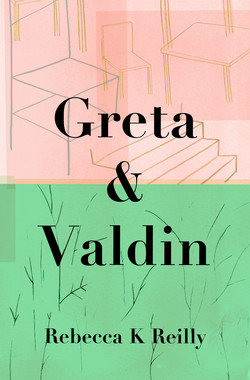
 | Greta & Valdin by Rebecca K Reilly {Reviewed by STELLA} Greta and Valdin are siblings. They live together in central Auckland. Greta is working on her Master’s thesis in comparative literature, enamoured with fellow student Holly and navigating her queerness and her mixed cultural heritage. Valdin has thrown in his career in astrophysics at the University, and has found a new role as a TV presenter — something he is unexpectedly doing well at — and is pining for his ex-boyfriend, Xabi. Basically, he’s having a crisis. In Rebecca K Reilly’s assured debut novel the chapters move between the narratives of these two siblings, their voices distinct and compelling, as they live and love in Tāmaki Makaurau. The city itself, richly described and lively, is a character in itself. While some readers will fall into this novel with little effort — the dialogue and character interactions relatable and the cultural references (films, music and memes) relevant — others will ease in more slowly as they walk along with these 20-somethings in contemporary Aotearoa. For this is a story at first glance about being young, about finding your way and being in love. It has those Sally Rooney hooks. But Reilly has more going on here and you can take this as a sharp, funny and romantic escape or dig a little deeper. The Vladisavljevic family is a blend of Maori, Russian and Catalan, which makes for some great family conversations and interesting experiences for the characters. Here, Reilly, uses humour as well as anger to put the spotlight on racism and prejudice. From the outburst of Valdin on location in Queenstown to the more subtle undercurrents in Betty’s life, from Greta’s annoyance at being pigeonholed to Ell’s exclusion from her family. As we get a glimpse into the lives of other family members, Greta & Valdin becomes a richer novel — more assertive and nuanced. What is family? Why and how does circumstance dictate choices made, paths taken. And how can love be exhilarating, sad and wonderful simultaneously? Whether it is Reilly’s intention or not, Greta & Valdin sings from a similar song sheet as a Dickensian family saga or a Jane Austin classic. The novel opens with despair and ends with a wedding, and is an emotional rollercoaster in-between. There are the complex family interchanges, the tales of woe and happiness, and machinations between characters that lead to both misunderstanding and revelation and acceptance, hurt and forgiveness, romantic and familial love, and humour — complete with witty dialogue. And all set in a distinctly vibrant contemporary Aotearoa complete with all its flaws and charm. And who can resist a happy ending? Shortlisted for the Acorn Prize 2022. |
| >> Read all Thomas's reviews. | ||
 | Mouthpieces by Eimear McBride {Reviewed by THOMAS}
|

NEW RELEASES
























| >> Read all Stella's reviews. | |
  | The Block by Ben Oliver {Reviewed by STELLA} You can run, you can hide, but eventually Happy will find you. Luka and his friends made it out of The Loop in book one of this trilogy to join an uprising — a revolution of the Regulars against the Alts and Galen Rye’s plans. Yet Luka’s freedom was short-lived and now he’s imprisoned again — you can’t always escape super soldiers no matter how determined you are — this time in The Block. If you thought The Loop was repressive, it’s a walk in the park compared with Luka Kane’s new residence. Hours paralysed on a bed, only to be awoken for energy harvesting and mind games are taking a toll on Luka’s sanity and his desire to find The Missing is a distant dream. So is the chance he’ll ever see his friends again, in particular Kina. Yet the unthinkable happens and he finds someone he can outwit — someone who empathises — just in time for a daring rescue. Although is this just another simulation from Happy? Is it real? Well, it turns out that it is, and once again Luka is in hiding and trying to find a way to avoid the wave of destruction that is bearing down on him, and those that don’t wish to be absorbed into the new world dictated to them by a corrupt, and possibly insane, entity. There are more daring explorations in the ruined city, a hiding place through a maze of underground tunnels, and a new plan to find The Missing while avoiding the increasing surveillance of Happy. Drones are everywhere (only one is a friend), as are Alt soldiers, and the AI, Happy, is up to something sinister at the Arc. Luka finds himself propelled into taking things into his own hands, even though it means he will need to abandon his friends again. To save them, he must go his own way and Tyco — his nemesis — has turned up again. stronger and more dangerous. Can Luka keep his promise to Kina? Can he find his sister, Molly, and what is the strange place called Purgatory? The second book in this trilogy is just as action-packed and fast-paced as The Loop, with plenty of emotional heft and some humour to temper the more gruesome moments and weighty themes. No surprise the second book ends on a cliffhanger! Roll on the third. |
| >> Read all Thomas's reviews. | |
 | Die, My Love by Ariana Harwicz (translated by Sarah Moses and Carolina Orloff) {Reviewed by THOMAS} If a thought is thought it must be thought through to its end. This formula is productive both of great misery and of great literature, but, for most people, either consequence is fairly easily avoided through a simple lack of tenacity or focus, or through fear. Unfortunately, we are not all so easily saved from ourselves by such shortcomings. The narrator of Ariana Harwicz’s razor-fine novel Die, My Love finds herself living in the French countryside with a husband and young child, incapable of feeling anything other than displaced in every aspect of her life, both trapped by and excluded from the circumstances that have come to define her. She both longs for and is revolted by family life with her husband and child, the violence of her ambivalences make her incapable of either accepting or changing a situation about which there is nothing ostensibly wrong, she withdraws into herself, and, as the gap separating herself from the rest of existence widens, her attempts to bridge it become both more desperate and more doomed, further widening the gap. Every detail of everything around her causes her pain and harms her ability to feel anything other than the opposite of the way she feels she should feel. This negative electrostatic charge, so to call it, builds and builds but she is unable to discharge it, to return her situation to ‘normal’, to relieve the torment. In some ways, the support and love of her husband make it harder to regain a grip on ‘reality’ — if her husband had been a monster, her battles could have been played out in their home rather than inside her (it is for this reason, perhaps, that people subconsciously choose partners who will justify the negative feelings towards which they are inclined). The narrator feels more affinity with animals than with humans, she behaves erratically or not at all, she becomes obsessed with a neighbour but the encounters with him that she describes, and the moments of self-obliterative release they provide, are, I would say, entirely fantasised. Between these fantasies and ‘objective reality’, however, falls a wide area about which we and she must remain uncertain whether her perceptions, understandings and reactions are accurate or appropriate. At times the narrator’s love for her child creates small oases of anxiety in her depression, but these become rarer. Harwicz’s writing is both sensitive and brutal, both lucid and claustrophobic, her observations both subtle and overwhelming. As the narrator loses her footing, the writer ensures that we are borne with her on through the novel, an experience not dissimilar to gathering speed downhill in a runaway pram*. *Not a spoiler. |

NEW RELEASES


Menand tells the story of American culture in the pivotal years from the end of World War II to Vietnam and shows how changing economic, technological, and social forces put their mark on creations of the mind. How did elitism and an anti-totalitarian skepticism of passion and ideology give way to a new sensibility defined by freewheeling experimentation and loving the Beatles? How was the ideal of "freedom" applied to causes that ranged from anti-communism and civil rights to radical acts of self-creation via art and even crime? Menand takes us inside Hannah Arendt's Manhattan, the Paris of Jean-Paul Sartre and Simone de Beauvoir, Merce Cunningham and John Cage's residencies at North Carolina's Black Mountain College, and the Memphis studio where Sam Phillips and Elvis Presley created a new music for the American teenager. He examines the post war vogue for French existentialism, structuralism and post-structuralism, the rise of abstract expressionism and pop art, Allen Ginsberg's friendship with Lionel Trilling, James Baldwin's transformation into a Civil Rights spokesman, Susan Sontag's challenges to the New York Intellectuals, the defeat of obscenity laws, and the rise of the New Hollywood.


| >> Read all Stella's reviews. | |
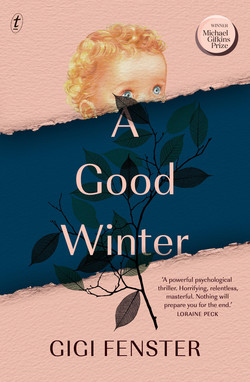
 | A Good Winter by Gigi Fenster {Reviewed by STELLA} Olga’s helping Lara. They are both looking after the baby because Sophie needs them. Lara and Olga are neighbours. They live in the same building. Sophie, Lara’s daughter, is having a tough time with the new baby. Her husband died six months before their child’s birth. Lara puts her life on hold so she can step in to care for her daughter and new grandchild. Thankfully, there is Olga, so sensible and dependable. Olga, who can come at a moment's notice and is a wonderful support for them all, especially Lara. Gigi Fenster, in A Good Winter, convincingly, and without pause, keeps us in the grips of Olga’s mind and perspective. The novel is Olga’s story — her telling. Through her actions and encounters alone we ‘know’ Lara and her family. As the winter progresses, the two women build their routine, a routine that Olga makes happen, making small adjustments in her previous daily structure, unbeknown to Lara. Olga sees her relationship with Lara as special, unlike the other friends, and her obsession with Lara builds as Winter progresses into Spring. They have their special films, their cafe and funny shared phrases. Olga is enamoured with Lara: she’s the only one who understands. As Sophie improves and her depression ebbs, Olga’s behaviour becomes more erratic and her jealousies simmer just under the edge of her reasonable veneer. Being in Olga’s head is never an easy place, but Fenster keeps us engaged in this discomfort, taking us to parts of Olga’s childhood that are almost out of bounds, that Olga attempts to repress; keeping the monologue tight, and striking an almost humorous note with Olga’s judgemental observations. This is a story of an unsettled mind, of tragedy and abandon, one which is riveting and thrilling, one which doesn’t shy from a building sense of alarm while also gently taking us along, allowing us glimpses into Olga’s past, her desires and sadness. The pace is pitch-perfect, the language, with its cleverly constructed conversations and staccato memory snippets, successfully reflects a troubled mind. As these images, Olga’s memories, some true; others constructed, coalesce on the page and build in the reader’s mind, it becomes increasingly likely that this woman’s obsession with Lara and her deep-seated delusions won't be repressed indefinitely. Olga’s betrayals that she carries deep in the pit of herself are screaming to be released. But what will be the trigger that unpicks the carefully constructed blanket? The new young female tenant who doesn’t know the ‘rules’? Sophie’s terribly selfish trashy friend? The new boyfriend? Or something or someone closer to home? Fenster manages to bring a lightness and freshness to a fraught topic and Olga is completely convincing. A Good Winter was awarded the 2020 Gifkin Prize and is longlisted for this year's Acorn Prize. Highly accomplished, this is a sensational piece of writing about betrayal, the harm of a childhood misunderstood, a life desiring purpose and acknowledgement, and ultimately, the story of a woman undone. |
| >> Read all Thomas's reviews. | |
 | Aug 9—Fog by Kathryn Scanlan {Reviewed by THOMAS} At what point does literature begin, he wondered, if there is such a thing as literature and if it does at some point begin. Is it not after all the case, he wondered, that we are assailed at all times and in all circumstances by an unbearable infinitude of details that we must somehow resist or ignore or numb ourselves to almost entirely if we are to bear them, we can only be aware of anything the smallest proportion of things and stay alive or stay sane or stay functioning, he thought, we must tell ourselves a very simple story indeed if we are to have any chance of functioning, we must shut out everything else, we must only notice what we look for, what our story lets us look for, he thought, the froth now frothing in his brain, or rather in his mind, our stories blot stuff out so that we can live, at least a little longer. We are so easily overwhelmed and in the end we are all overwhelmed, the details get us in the end, but until then we cling to our limitations, to the limitations that make the unbearable very slightly bearable, if we are lucky. All thought is deletion. The stories that we think with, he thought, are not possible without an ongoing act of swingeing exclusion, thought is an act of exclusion. What would we put in a diary? What would we put in an essay? What would we put in a novel? If we boil it all down how far can we boil it all down? We find ourselves alive, the details of our life assail us, eventually overwhelm us and destroy us. That’s our story. We die of one detail too many, but if it wasn’t that detail that finished us off it would be another, they are lining up, pressing in, abrading us. Can we resist what we understand, he wondered, to the extent that we even understand it? Is art just this form of resistance? At what point does literature begin, if there is such a thing as literature and if it does at some point begin? Is there something in our life that resists exclusion, something that when the boiling down is done is not boiled completely down? Can we move beyond simplification to a countersimplification, he wondered, and what could this even mean? If Kathryn Scanlan found a stranger’s diary at an auction and she read this diary so often that she felt she almost was its eighty-six-year-old author, if a diary’s keeper is an author, she too became the dairy’s keeper, certainly, at least in some sense, and then if she further edited this dead woman’s year, this dead woman’s words, though the woman was not yet dead, obviously, in the year that she kept the diary, when she was the diary’s keeper, not quite yet dead, whose work do we have in Aug 9—Fog, the boiled down boiled down again, this rendering, this literature, we could call it, rendered from life, here in a two-step rendering process? That is no place for a question mark, he thought. The story of the year is a story of death plucking at an old woman’s life, she loses her husband, her health, her spirits, so to call them, a strange term. The details of her life are the ways in which what she loves is torn away but also these details, often even the same details, are the ways in which this tearing away is resisted, he thought, these details are the ways in which what is loved may be clutched, in which what is loved is saved even while it is borne away. “Turning cooler in eve. We had smoked sausages, fried potatoes & onions. Dr. says it’s a general breaking up of his body. I am bringing in some flowers.” Every very ordinary life, and this is nothing but a very ordinary life, he thought, no life, after all, is anything but a very ordinary life, every very ordinary life is caught in the blast of details that will destroy it but or and these are the very details that enable a resistance to this blast, through literature perhaps, so to call it, resistance is poetry, he thought, an offence against time, a plot against unavoidable loss. We resist time and succeed only when we fail. “Every where glare of ice. We didn’t sleep too good. My pep has left me.” |

NEW RELEASES