| >> Read all Thomas's reviews. | |
 |
|

| >> Read all Thomas's reviews. | |
|
|
NEW RELEASES


| >> Read all Stella's reviews. | |
 | The Secrets of Cricket Karlsson by Kristina Sigunsdotter, illustrated by Ester Eriksson (translated from Swedish by Julia Marshall) {Reviewed by STELLA} Ever been eleven and lonely? Or wondered why your best friend is hanging out with the mean kids? Or wished your mother didn’t sigh so much? If you answer yes to any of these questions then you need Cricket Karlsson. Ever wanted to make art? Ride a horse in the moonlight? Ever been unable to get out of bed or unable to get someone you love out of bed? Then you need Cricket Karlsson. Cricket Karlson is eleven, has a ‘potato’ heart (which is currently mashed because her best friend Noa isn’t talking to her), is finding out about love, is visiting her aunt in the psych ward, loves to draw and doesn’t like the horse girls. And she has secrets — secrets that only a best friend, like Noa, knows! The Secrets of Cricket Karlsson from the pen of Kristina Sigunsdottir and the brush of Ester Eriksson is another standout from Gecko Press. I loved it, and it’s even better on the second reading. It has lists of not very Ugliest Words, absurd and unlikely Things Grandpa Says you Can Die From, unusual Psychiatric Illnesses I Don’t Want, and delightful Secrets I Have Only Told to Noa. Told with the keen observation of an eleven-year-old with all the concerns of childhood and changing circumstances, the words leap off the page with feistiness, humour and pathos. It lightly touches on worries and fears (climate change, mental health, sadness, regret) while embracing the best things about being that age when you’ll still a kid, but only just. Who hasn’t noticed the horse girls with their neighing and prancing, or squirmed when a boy (or a girl) is doe-eyed and you just don’t like him like that, or locked themselves in the bathroom (sometimes crying) to avoid being harassed? Cricket Karlsson finds out that life isn’t always what you expect, that loneliness passes, and that even an eleven-year-old can make a sad person happy. Black humour abounds and Cricket Karlsson is a star (with secrets and lists, a big heart and a little mischief, and her favourite food is cheese-on-cheese-in-cheese). I think I’ll pop to bed and read it again. |
| >> Read all Thomas's reviews. | |
 |
1] Wishing to write a review of the novel Armand V. by the Norwegian author Dag Solstad, I’ve decided the best way to realise this is not by writing a review of the novel but by allowing it instead to appear in an outpouring of footnotes to a review that will not be or can not be written. The sum of the footnotes, therefore, is my review of the novel Armand V. |
NEW RELEASES



Read our latest NEWSLETTER and find out what we have been reading and recommending.

| >> Read all Stella's reviews. | |
 | The Fish by Lloyd Jones {Reviewed by STELLA} Lloyd Jones's latest novel, firmly set in 1960s New Zealand, turns the tables on our expectations. The Fish is a story of a writer, and a tale of a family fraught with shame, tragedy and love. When the teenage daughter, always referred to as The Fish’s Mother, gives birth to ‘Fish’ she is simultaneously both protected and rejected by her family, and by extension, her child also. That this baby is viewed as different — he has googly eyes, a lopsided wide gob, smells strongly and sometimes has gills — is more a reflection of the family’s shame or discomfort with the situation they find themselves in rather than the child in and of itself. Although you do, through the eyes of his uncle (the narrator of this story), get the district impression of an oddity — Fish is not like other children and possibly not like other humans. This otherness lies at the heart of the novel (what happens when you take a fish out of water, or, as a writer, you are both inside and outside of lived family experience?), and the family’s complex responses to Fish, and interactions with each other. Both daughters are wayward: Clara, the eldest, escapes to Sydney, where she works in ‘modelling’ or as she later puts it, the "professional girl-friending" business. The Fish’s Mother is promiscuous and drug-addicted, often found on the ships. Uncle, our narrator, is the youngest of this trio of siblings and, only nine when Clara leaves home and The Fish arrives on the scene, is both witness and victim of the complex family narrative. Anyone who has grown up in a family with a challenging sibling will instantly recognise the conflicting emotions that arise in such family dynamics, moving in a forever-cycle of guilt, blame and shame as well as love and care. Jones hints at incest, but this is ambiguous. Mrs Montgomery’s insistence at naming Fish ‘Colin Montgomery’ after her husband may be her finger-pointing, and her shoplifting, drinking and later dementia may indicate her various forms of escape from the unhappy household. Water — the sea specifically — plays a major character role. As a gentle loving embrace — the house and the caravan (a central refuge, as well as a symbol of heartache, for all the family members at different times in their lives) on the coast, the summers at the beach, the freedom of the ocean, and Fish’s great ability to stay underwater for significant periods of time. And in comparison an angry force, unforgiving and prepared to wreak havoc — the sea (or the ships) take the Fish’s Mother away, washes through Colin Montgomery senior as his heart fails, and a storm, specifically the one that sank the Wahine, swallows its victims — some are spat out, but others are taken to its depths. Lloyd Jones writes with both careful silences — much is unsaid or only hinted at — and descriptive clarity — the Wahine storm is vivid, while the building tempo of 1960s society, piece by piece, reaches a crescendo, its own storm wave. Littered with oblique references to mythology, sea lore, and with metaphoric resonance, The Fish is a thought-provoking novel unafraid, like its protagonist, to travel against the tide while still adhering to what makes a tale compassionate — humanity in all its glory and squall. |
| >> Read all Thomas's reviews. | |
 | The Very Last Interview by David Shields {"Reviewed" by THOMAS} So, what makes you want to write a review of David Shields’s new book, The Very Last Interview? Then why are you writing one? Every week? Whose idea was that? Surely at your age, you shouldn’t be so bound by obligation or by expectation, or whatever you call it? Yes, but do you really care what these readers might think, and do you even believe that there are such people? Aren’t you being altogether a bit precious? Do you really think that this helps to pay the mortgage, I mean that this makes a direct and measurable contribution towards paying your mortgage? Or even an indirect and unmeasurable but still valuable contribution towards paying your mortgage? Well, what else would you be doing? Surely you’re joking? Okay, we’ve got a bit off the track there. I will reframe my first question. What makes you think that you are able to write a review of David Shields’s new book? Don’t you think your humility is a bit mannered? The Very Last Interview is a book consisting entirely of questions that interviewers have asked David Shields over the years, omitting his answers, assuming he will have answered probably at least most of the questions, and your review, if we can call it that, of this book also consists of a series of questions ostensibly directed at you but without your answers, if indeed there were answers, which is less certain in your case than in the case of David Shields. Is this, on your part, a deliberate choice of approach, and, if so, is it justifiable? Do you really believe that a review written in imitation of, or in the style of, the work under review inherently reveals something about that work, even if the review is badly written, or should your approach rather be attributed to laziness, stylistic insecurity, or creative bankruptcy? Has it ever occurred to you that the supposedly more enjoyable qualities of your writing are actually nothing more than literary tics or affectations, and, furthermore, that it might be these very literary tics and affectations that prevent you from writing anything of real literary worth? Do you think that, by removing his input into the original interviews but retaining the questions, David Shields is attempting to remove himself from his own existence, or merely to show that our identities are always imposed from outside us rather than from inside, or that we exist as persons only to the extent that we are seen by others? Is this, in fact, all the same thing? What do you mean by that statement, ‘We are defined by the limits we present to the observations of others’? What do you mean by that statement ‘There is no such thing as writing, only editing,’ and how does that relate to Shields’s work? Do you think that David Shields, in this book as in the much-discussed 2010 Reality Hunger, sees the individual as an illusion, a miserable fragment of what is actually a ‘hive mind’ or collective consciousness, and that ‘creativity’, so to call it, is another illusion predicated on this illusion of individuality? You don’t? What do you think David Shields would have answered, when asked, as he was, seemingly in this book, “But what is the role of the imagination in this ‘post-literature literature’ that you envision?” and how might this differ from the answer you might give if asked the same question? Shields was asked if he had written anything that couldn’t be interpreted as ‘crypto-autobiography’, but don’t you think the salient question is whether it is even possible to write anything that couldn’t be interpreted as crypto-autobiography? Is a perfectly delineated absence, such as David Shields approximates in The Very Last Interview, in fact the most perfect portrait of a person, even the best possible definition of a person, as far as this is possible at all? But do you actually have a personal opinion on this? Do you think then that you, like Shields, like us all perhaps, are, in essence, a ghost? |
NEW RELEASES

Otherlands: A world in the making by Thomas Halliday $54
An exhilarating journey into deep time, showing us the Earth as it used to exist, and the worlds that were here before ours. Travelling back in time to the dawn of complex life, and across all seven continents, Halliday gives us a mesmerizing up close encounter with eras that are normally unimaginably distant. Halliday immerses us in a series of ancient landscapes, from the mammoth steppe in Ice Age Alaska to the lush rainforests of Eocene Antarctica, with its colonies of giant penguins, to Ediacaran Australia, where the moon is far brighter than ours today. We visit the birthplace of humanity; we hear the crashing of the highest waterfall the Earth has ever known; and we watch as life emerges again after the asteroid hits, and the age of the mammal dawns. These lost worlds seem fantastical and yet every description—whether the colour of a beetle's shell, the rhythm of pterosaurs in flight or the lingering smell of sulphur in the air—is grounded in the fossil record. Otherlands is an imaginative feat: an emotional narrative that underscores the tenacity of life—yet also the fragility of seemingly permanent ecosystems, including our own. To read it is to see the last 500 million years not as an endless expanse of unfathomable time, but as a series of worlds, simultaneously fabulous and familiar.

Wivenhoe by Samuel Fisher $40
A young man is found brutally murdered in the middle of the snowed-in village of Wivenhoe. Over his body stands another man, axe in hand. The gathered villagers must deal with the consequences of an act that no-one tried to stop. Wivenhoe is a haunting novel set in an alternate present, in a world that is slowly waking up to the fact that it is living through an environmental disaster. Taking place over twenty-four hours and told through the voices of a mother and her adult son, we see how one small community reacts to social breakdown and isolation. Fisher imagines a world, not unlike our own, struck down and on the edge of survival. If society as we know it is lost, what would we strive to save? At what point will we admit complicity in our own destruction?
"Quiet, fable-like menace radiates from every page of Wivenhoe. Elegant and searching, it asks vital questions about what it means to be part of a community — about integrity, belonging, and how darkness can go unchecked when isolation and suspicion sets in — questions that now feel more relevant than ever." —Sophie Mackintosh








PLAY THE GAME
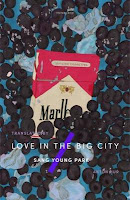
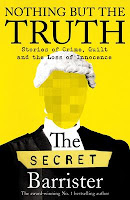
Some of the games we have in stock. Just click on the images to find out more, and to make your choices.


Read our latest NEWSLETTER for book news and new books, and to find out what we've been reading and recommending.


| >> Read all Stella's reviews. | |
 | Sea of Tranquility by Emily St.John Mandel {Reviewed by STELLA} Emily St John Mandel’s Sea of Tranquility is a book to be lost in. It’s a book about time, living and loving. Superbly constructed, it stretches from 1912 to 2401; from the wildness of Vancouver to a moon colony of the future. A remittance man, Edwin St.John St.Andrew, is sent abroad. He’s completely at sea in this new world — he has no appetite for work nor connection — and makes a haphazard journey to a remote settlement on a whim. Here, he has an odd experience which leaves him shaken. He will return to England only to find himself derailed in the trenches of the First World War and later struck down by the flu pandemic. It’s 2020 and Mirella (some readers will remember her from The Glass Hotel) is searching for her friend Vincent (who has disappeared). She attends a concert by Vincent’s brother Paul and afterwards waits for him to appear, along with two music fans at the backstage door. It’s here, on the eve of our current pandemic, that she discovers that Vincent has drowned at sea. Yet it is an art video that Vincent had recorded and been used in Paul’s performance which is at the centre of the conversation for one of the music fans. The film is odd — recounting an unworldly experience in the Vancouver forest. A short clip — erratic and strangely out of place, out of time. It’s 2203 and Olive Llewellyn, author, is on a book tour of Earth. She lives on Moon Colony Two and is feeling bereft — missing her husband and daughter. It’s a gruelling schedule of talks, interviews and same-same hotel rooms; and, if this wasn’t enough, there’s a new virus on the loose. Her bestselling book, Marienbad is about a pandemic. Within its pages is a description of a strange occurrence which takes place in a railway station. When an interviewer questions her about this passage, she’s happy to talk about it, as long it is off the record. It’s 2401, and detective Gaspery-Jacques Roberts from the Night City has been hired to investigate an anomaly in time. Drawing on his experiences and the book, Marienbad, and finding connections between the aforementioned times and people, will lead him to a place where he will make a decision that may have disruptive consequences. A decision which will cause upheaval. Emily St.John Mandel is deft in her writing, keeping the threads of time and the story moving across and around themselves without losing the reader, and making the knots — the connections — at just the right time to engage and delight intellect and curiosity. Moving through time and into the future makes this novel an unlikely contender to be a book of our time, but in so many ways it is. Clever, fascinating, reflective and unsettling, it’s a tender shout-out to humanity. |
| >> Read all Thomas's reviews. | |
 | No-One Is Talking About This by Patricia Lockwood {Reviewed by THOMAS} Is there such a thing as claustrophobia in your own skin, he wondered. He thought about the possibility of a collective mind, a species mind, but why stop at species, a global mind, trapped and compartmentalised into individuals. No wonder we all feel trapped in ourselves, he thought. No wonder we do everything we can, even the most stupid things, to join ourselves back up. The most inane things. And yet, and yet, we are all the time assailed by this collective mind, he thought, how do we protect ourselves from it, and from everyone else that comprises it, how do we hold back even a little space within ourselves to be just ourselves, if there is such a thing? Do we have, or have we ever had, anything that could pass for authenticity, anyway, he wondered, and would we know whether we had it or had lost it, or not? In the age of internet hyperconnectivity, so to call it, should we fear or celebrate that so much of our thinking is done for us outside our head, how liberating, how useful, how frightening, but has this not anyway always been the case, even for our ancestors’ ancestors, is this not where the collective mind came from, after all? Too many question marks, too many superfluous words, he thought. Let’s get on. Patricia Lockwood’s novel No One Is Talking About This straddles these and other polarities, he wrote. It is both clever and moving, both piercingly funny and reassuringly sad, it is both about the bodilessness of the internet and about bodies in the world, about both isolation and intimacy, and about the burden that language bears—and the possibilities language offers—connecting or attempting to connect all these. Now he seemed to have written some sort of blurb instead of a review, he observed, not that what he had been writing or what he usually wrote could have passed as a review anyway, the blurb was closer. The first half of the book is probably the best encapsulation of the internet experience in fiction that he had read, he thought, if encapsulation is the word, though he had not read many fictions that attempted to capture the internet experience, so to call it. Actually there are very few novels that attempt this, he thought, which is surprising considering the way we all use the internet to do our thinking nowadays. Because we are all but a synapse away from everyone else on the planet, the speed of thought really is the speed of thought, he thought, by the time anyone responds to our thought, the world we thought it in has already changed, the collective mind has mutated and normalised the mutation. No One Is Talking About This is written in short paragraphs or sections of a postable size, the length of an internet thought, he thought, separated by blanks, just as thoughts seem to be. “Why were we all writing like this now?” wonders Lockwood’s narrator (that is to say Lockwood herself in the third person, past tense (he knew, he thought, why she wrote like that)). “Because a new kind of connection had to be made, and blink, synapse, little space-between was the only way to make it. Or because, and this was more frightening, it was the way the portal wrote. ::: These disconnections were what kept the pages turning, these blank spaces were what moved the plot forward. The plot! That was a laugh. The plot was that she sat motionless in her chair, willing herself to stand up.” Is this book a celebration or a satire of the internet—the portal—he wondered, who can tell the difference these days, the membrane between irony and sincerity is pretty well transparent, he wrote, avoiding a question mark where one had seemed to be called for. The portal had “once been the place where you sounded like yourself. Gradually it had become the place where we sounded like each other,” Lockwood wrote. All the time, though, as he had said in his blurb, call that the precis of his review, perhaps, the book is really about language and the ways it bears, releases, lets slip, distorts, mocks, grapples with and fails to grapple with whatever it is that language bears, releases, lets slip, etcetera, he wasn’t quite sure what, but language did it anyway, what was always protean was only more protean in the portal. The second half of the book concerns the brief six-month life of Lockwood’s niece, born with Proteus Syndrome, a growth disorder that eventually kills its subject under the chaotic asymmetric growth of their own body. He had forgotten the name of the syndrome and had to look it up in the novel later, only to find that he had used the word adjectivally in his previous sentence, which was a bit awkward and unintentional, but there was no going back now. The Lockwood character is stricken (“If all she was was funny, and none of this was funny, where did this leave her?”), goes to support her sister, and the rest of the novel about language revolves around the niece who would never attain language of her own. The narrator’s love for the doomed niece is the least meme-able thing you could imagine, he thought, and yet the voice continues, the thought length continues, the writing style spun by the portal proves, in Lockwood’s hands (hands? mind? fingers? keyboard?) at least, capable of authenticity and feeling. Perhaps we have always thought like this, or experienced like this, he thought, perhaps the world and we ourselves are comprised of instances, snippets, bundled together by language, and the portal has only helped us to see that this is so. If I feel claustrophobic in my own skin, he thought, imagine how the parts and sub-parts of me feel. Imagine how my thoughts feel, and how badly they want to get out. |
NEW RELEASES