

| >> Read all Stella's reviews. | |
 | Diary of a Void by Emi Yagi (translated by Lucy North and David Boyd) {Reviewed by STELLA} A charming if somewhat absurd novel about office life and maternity expectations in contemporary Japan. Ms Shibata, a thirty-something office worker, is tired of working for a manufacturer of cardboard cores (yes, really!) for paper products. Mostly she’s fed up with the expectation from her predominantly male colleagues that she will empty the rubbish bins, fill the photocopier with paper, empty the ashtrays and wash the coffee cups. So one day she feigns pregnancy to get out of cleaning up after a meeting. Claiming it’s making her feel nauseous, she suddenly finds herself off the hook from these menial tasks, which now fall to the male office junior who has recently started at the company. There’s a problem though — she has to keep up the pretence. And so she does. This is a hilarious tale of subterfuge, interspersed with a surprisingly sharp analysis of impending motherhood, as well as the interest (sometimes intrusive) that being pregnant in the workplace, and, by extension, society, garners for women. Even though she will be a single mother, there is no stigma — more a sense of concern and care. The drawback to pretending to be pregnant is the attention, a different set of expectations, she draws from her office colleagues — some of them, well, one, in particular, are too keen on advice and suggestions of names. On the other hand, she now gets to knock off at 5 pm — a big advantage in the 'long-hours office' world she inhabits: others do the extra tasks and she gets to go to free aerobic classes. There’s a special tag for her bag indicating her status to the world at large, which entitles her to a seat on the train and more consideration as now she’s contributing to the future generation. And, if she pulls it off, there’s a year’s maternity leave — without the overtime: it will be a bit tight but a good budget will ensure it’s enough. Though this is hardly Ms Shibata’s game — there’s no intention of swindling. There’s no plan. In fact, you get the distinct impression that this woman is adrift in a large city, anonymous and ground down by a dull job with few prospects. She’s lonely. The expectant mothers’ fitness class gives her a sense of community, but, of course, she’s also adrift here — not really one of the clan. As she reaches ‘full term’ — she’s been eating for two and stuffing her clothes — there are small moments where she’s so convincing that she’s almost convinced herself. Ms Shibata is in phantom pregnancy territory — it has her slightly derailed, and for a moment the reader worries for her sanity. Emi Yagi's Diary of a Void cleverly takes the concept of time and recording a pregnancy (every expectant mother in Japan is given a government-regulation handbook similar to our Plunket book) to an extreme level — a diary of nothing — in an attempt to highlight the double standards of office culture and the role of motherhood in Japan. Entertaining, ironic and surprisingly endearing. |
| >> Read all Thomas's reviews. | |
 | Multiple Choice by Alejandro Zambra (translated by Megan McDowell) {Reviewed by THOMAS} If texts are not completed until they are read, and if the realisation of those texts is largely dependent upon the contexts in which they are read, each reading becomes a test, both of the text and of the reader (the author by this time having taken refuge in the past (a state indistinguishable from death)). In Zambra's clever, ironic and poignant book, a series of increasingly lengthy texts are presented with accompanying multi-choice questions (modelled on the Chilean Academic Aptitude test, a multi-choice university entrance examination [!]) which demand that the reader insert, exclude, suppress, complete or 'interpret' elements of the text. Any provision of choice combined with the restriction to set choices and the impulsion to choose is not only a way of assessing an aspirant but a way of moulding that aspirant's thinking into categories set by whatever is the relevant authority. This thought-moulding, the reader's constant awareness while reading that they will be judged and categorised but not knowing for what, the constant possibility that one's experience may have aspects of it erased or re-ordered by agents of authority (with whom even the reader may be complicit under unforeseen circumstances) but not knowing in advance which aspects these may be have especial resonance with the Chilean dictatorship in which Zambra grew up, but are always all about us for, after all, is not the erasure or addition of detail concerning the past (and these stories are all written in the past tense) an inescapable part of the tussle for reality that takes place constantly all around us at all levels, personal, interpersonal, historical, political? The book is also 'about' writing stories: how does the inclusion, exclusion and ordering of detail affect the reader's understanding of and response to a text? These are considerations a writer is constantly, dauntingly faced with and which they usually in the first instance answer from their own experience as a reader (in this case the author is incapable of benefitting from criticism by being embedded in the past (a state indistinguishable from death) but has made himself immune to judgement by allowing for all possibilities and committing himself to none (or at least seemingly: is this political prevarication or subversive smokescreen?). As well as being 'about' all these sorts of things, the book is fun and funny, and it can also be read with enjoyment on the level of the spectacle. |
NEW RELEASES

Thirty-four-year-old Ms Shibata works for a company manufacturing cardboard tubes and paper cores in Tokyo. Her job is relatively secure: she's a full-time employee, and the company has a better reputation than her previous workplace, where she was subject to sexual harassment by clients and colleagues. But the job requires working overtime almost every day. Most frustratingly, as the only woman, there's the unspoken expectation that Ms Shibata will handle all the menial chores: serving coffee during meetings, cleaning the kitchenette, coordinating all the gifts sent to the company, emptying the bins. One day, exasperated and fed up, Ms Shibata announces that she can't clear away her colleagues' dirty cups, because she's pregnant. She isn't. But her 'news' brings results: a sudden change in the way she's treated. Immediately a new life begins. How long can she sustain this deception?
"Diary of a Void advances one of the most passionate cases I've ever read for female interiority, for women's creative pulse and rich inner life." —The New Yorker
>>Read Stella's review.  Marble by Amalie Smith (translated by Jennifer Russell) $38
Recently unearthed from the ground, Marble leaves her new lover in Copenhagen and travels to Athens. The city is overflowing with colour, steam and fragrance, cats cry like babies at night, the economic crisis is raging. In this volatile landscape, Marble grasps the world by exploring its immediate surfaces. Capturing specks of colour on ancient sculptures in the Acropolis Museum with an infrared camera, she simultaneously traces the pioneering sculptor Anne Marie Carl-Nielsen, who spent several months in the same place 110 years earlier. Far away from her husband and children, Carl-Nielsen showed that Archaic sculptures were originally painted in bright colours — a feat which meant defying Victorian gender roles and jeopardising her marriage. Marble is a galvanizing novel about the materials life is made of, about korai and sponge diving, about looking and looking again. Multiple Choice by Alejandro Zambra (translated by Megan McDowell) $23
 Concerning My Daughter by Kim Hye-jin (translated by Jamie Chang) $38
 Dinner with Joseph Johnson: Books and friendship in a revolutionary age by Daisy Hay $48
 I'll Keep You Close by Jeska Verstegen $19
 My Own Worst Enemy: Scenes of a childhood by Robert Edric $40
 This Is Not My Memoir by André Gregory and Todd London $40
Recently unearthed from the ground, Marble leaves her new lover in Copenhagen and travels to Athens. The city is overflowing with colour, steam and fragrance, cats cry like babies at night, the economic crisis is raging. In this volatile landscape, Marble grasps the world by exploring its immediate surfaces. Capturing specks of colour on ancient sculptures in the Acropolis Museum with an infrared camera, she simultaneously traces the pioneering sculptor Anne Marie Carl-Nielsen, who spent several months in the same place 110 years earlier. Far away from her husband and children, Carl-Nielsen showed that Archaic sculptures were originally painted in bright colours — a feat which meant defying Victorian gender roles and jeopardising her marriage. Marble is a galvanizing novel about the materials life is made of, about korai and sponge diving, about looking and looking again.
"A novel that, by virtue of its mix of literary suggestion, aesthetic experience and art historical insight, makes something that is simultaneously straightforwardly concrete and almost incomprehensibly abstract come alive." —Jyllands-Posten
Reader, your life is full of choices. Some will bring you joy and others will bring you heartache. Will you choose to cheat (in life, the examination that follows) or will you choose to copy? Will you fall in love? If so, will you remember her name and the number of freckles on her back? Will you marry, divorce, annul? Will you leave your run-down neighbourhood, your long-suffering country and your family? Will you honour your dead, those you loved and those you didn't? Will you have a child, will you regret it? Will you tell them you regret it? Will you, when all's said and done, deserve a kick in the balls? Will you find, here, in this slender book, fictions that entertain and puzzle you? Fictions that reflect yourself back to you? Will you find yourself? Relax, concentrate, dispel any anxious thoughts. Let the world around you settle and fade. Are you ready? Now turn over your papers, and begin.
>>Read Thomas's review.
>>Read Thomas's review.
When a mother allows her thirty-something daughter to move into her apartment, she wants for her what many mothers might say they want for their child: a steady income, and, even better, a good husband with a good job with whom to start a family. But when Green turns up with her girlfriend, Lane, in tow, her mother is unprepared and unwilling to welcome Lane into her home. In fact, she can barely bring herself to be civil. Having centred her life on her husband and child, her daughter’s definition of family is not one she can accept. Her daughter’s involvement in a case of unfair dismissal involving gay colleagues from the university where she works is similarly strange to her. And yet when the care home where she works insists that she lower her standard of care for an elderly dementia patient who has no family, who travelled the world as a successful diplomat, who chose not to have children, Green’s mother cannot accept it. Why should not having chosen a traditional life mean that your life is worth nothing at all?
"I can't help but be moved by a story about women meeting, fighting, helping each other, looking after one another, and raising their voices against the prejudice and criticism they are subject to." —Cho Nam-joo, author of Kim Jiyoung, Born 1982
Joseph Johnson became a bookseller and a maker of books in an age when books appeared to have the potential to change the world. Between 1760 and 1809, the years of Johnson's adulthood, Britain experienced a period of political, social, scientific, cultural, religious and scientific change during which nothing was certain and everything seemed possible. On paper Johnson's dinner guests charted the evolution of Britain's relationship first with America and then with Europe- several were intimately involved in the struggles that reformed the world order. They pioneered revolutions in medical treatment and scientific enquiry and they proclaimed the rights of women and children. The men and women who gathered around Johnson had no communal name and they never moved as a single group. Some, like Wollstonecraft, Fuseli, Bonnycastle and Lindsey, frequented his shop and his dining room without waiting to be invited, treating his home as an extension of their own. Others, like Priestley and Barbauld, viewed St Paul's Churchyard as their pole star. Paine, Trimmer and Darwin left fewer textual traces of their physical presence in Johnson's house. One man, Johnson's engraver William Blake, came to dinner only rarely. The poet William Cowper never visited London but he made his presence felt in the dining room just as surely as did those who came to Johnson's shop and home. Johnson turned his home into a place where writers of contrasting politics and personalities could come together. The dining room provided space for thinking and talking but it also symbolised and served as a sanctuary at times of crisis. Johnson's guests had to contend with events that threatened their physical security as well as their intellectual liberty. In the tumultuous years either side of the French Revolution they faced riots, fire, exile and prison, alongside the more quotidian but no less serious threats of homelessness, mental collapse, poverty and the exigencies of childbirth. Throughout Johnson's house provided a refuge, and his labours allowed his visitors to make their voices heard even when external forces conspired to silence them.
A young girl comes to understand why her mother is so fearful and overprotective when her class starts studying the Holocaust. Jeska doesn't know why her mother keeps the curtains drawn so tightly every day. And what exactly is she trying to drown out when she floods the house with Mozart? What are they hiding from? When Jeska's grandmother accidentally calls her by a stranger's name, she seizes her first clue to uncovering her family's past, and hopefully to all that's gone unsaid. With the help of an old family photo album, her father's encyclopedia collection, and the unquestioning friendship of a stray cat, the silence begins to melt into frightening clarity: Jeska's family survived a terror that they've worked hard to keep secret all her life. And somehow, it has both nothing and everything to do with her, all at once. A true story of navigating generational trauma as a child, I'll Keep You Close is about what comes after disaster: how survivors move forward, what they bring with them when they do, and the promise of beginning again while always keeping the past close.
An honest and moving memoir of a working-class childhood in 1960s Sheffield, and the relationship between a touchy, overbearing bully of a father and a son whose acceptance to grammar school puts him on another track entirely. With a novelist's eye, Robert Edric vividly depicts a now-vanished era: of working-men's clubs; of tight-knit communities in factory towns; and of a time when a woman's place was in the home. And he brings to colourful life his family, both close and extended - though over all of it hovers the vanity and barely-suppressed anger of his own father.
This Is Not My Memoir tells the life story of André Gregory, iconic theater director, writer, and actor. For the first time, André shares memories from a life lived for art, including stories from the making of My Dinner with André. Taking on the dizzying, wondrous nature of a fever dream, This Is Not My Memoir includes fantastic and fantastical stories that take the reader from wartime Paris to golden-age Hollywood, from avant-garde theaters to monasteries in India. Along the way we meet Jerzy Grotowski, Helene Weigel, Gregory Peck, Gurumayi Chidvilasananda, Wallace Shawn, and many other larger-than-life personalities.
>>My Dinner with André.
>>My Dinner with André.
>>Wallace Shawn's Night Thoughts.  Motherlands: In search of our inherited cities by Amaryllis Gacioppo $33
 A Little Devil in America: In praise of Black performance by Hanif Abdurraqib $26
 Conquered: The last children of Anglo-Saxon England by Eleanor Parker $44
 Birdgirl by Mya-Rose Craig $40
 Tomorrow, and Tomorrow, and Tomorrow by Gabrielle Zevin $37
 Atoms by John Devolle $25
 Ways of Being: Beyond human intelligence by James Bridle $50
 Pests and Pestilence: The management of invasive species, pests and disease in New Zealand by Phil Lester $40
 Men to Avoid in Art and Life by Nicole Tersigni $30
Our creation stories begin with the notion of expulsion from our 'original' home. We spend our lives struggling to return to the place we fit in, the body we belong in, the people that understand us, the life we were meant for. But the places we remember are ever-changing, and ever since we left, they continue to alter themselves, betraying the deal made when leaving. Australian writer Amaryllis Gacioppo has been raised on stories of original homes, on the Palermo of her mother, the Benghazi of her grandmother and the Turin of her great-grandmother. But what does belonging mean when you're not sure of where home is? Is the modern nation state defined by those who flourish there or by those who aren't welcome? Is visiting the land of one's ancestors a return, a chance to feel complete, or a fantasy?
"Hanif Abdurraqib's genius is in pinpointing those moments in American cultural history when Black people made lightning strike. But Black performance, Black artistry, Black freedom too often came at devastating price. The real devil in America is America itself, the one who stole the soul that he, through open eyes and fearless prose, snatches back. This is searing, revelatory, filled with utter heartbreak, and unstoppable joy." —Marlon James
The Battle of Hastings and its aftermath nearly wiped out the leading families of Anglo-Saxon England. What happened to the children this conflict left behind?Conquered offers a fresh take on the Norman Conquest by exploring the lives of those children, who found themselves uprooted by the dramatic events of 1066. Among them were the children of Harold Godwineson and his brothers, survivors of a family shattered by violence who were led by their courageous grandmother Gytha to start again elsewhere. Then there were the last remaining heirs of the Anglo-Saxon royal line - Edgar Ætheling, Margaret, and Christina - who sought refuge in Scotland, where Margaret became a beloved queen and saint. Other survivors, such as Waltheof of Northumbria and Fenland hero Hereward, became legendary for rebelling against the Norman conquerors. And then there were some, like Eadmer of Canterbury, who chose to influence history by recording their own memories of the pre-conquest world. From sagas and saints' lives to chronicles and romances, Parker draws on a wide range of medieval sources to tell the stories of these young men and women and highlight the role they played in developing a new Anglo-Norman society.
"Birdwatching has never felt like a hobby, or a pastime I can pick up and put down, but a thread running through the pattern of my life, so tightly woven in that there's no way of pulling it free and leaving the rest of my life intact."
Meet Mya-Rose — otherwise known as 'Birdgirl'. Birder, environmentalist, diversity activist. To date she has seen over five thousand different types of bird- half the world's species. Every single bird a treasure. Each sighting a small step in her family journey — a collective moment of joy and stillness amidst her mother's deepening mental health crisis. And each helping her to find her voice.
"Lyrical, poignant and insightful." —Margaret Atwood
Two kids meet in a hospital gaming room in 1987. One is visiting her sister, the other is recovering from a car crash. The days and months are long there. Their love of video games becomes a shared world — of joy, escape and fierce competition. But all too soon that time is over, fades from view. When the pair spot each other eight years later in a crowded train station, they are catapulted back to that moment. The spark is immediate, and together they get to work on what they love — making games to delight, challenge and immerse players, finding an intimacy in digital worlds that eludes them in their real lives. Their collaborations make them superstars. This is the story of the perfect worlds Sadie and Sam build, the imperfect world they live in, and of everything that comes after success: Money. Fame. Duplicity. Tragedy.
"Utterly brilliant. In this sweeping, gorgeously written novel, Gabrielle Zevin charts the beauty, tenacity, and fragility of human love and creativity." —John Green
What is an atom? Where did they come from? Were dinosaurs made of atoms too? Atoms combines bold, colourful illustrations with jokes and incredible facts to explain some amazing scientific concepts in terms that a four-year-old can understand-from atomic theory to the Big Bang, evolution and the fact that you, your dog and everyone you know are all actually made of stardust!
What does it mean to be intelligent? Is it something unique to humans — or do we share it with other beings? Recent years have seen rapid advances in 'artificial' intelligence, which increasingly appears to be something stranger than we ever imagined. At the same time, we are becoming more aware of the other intelligences which have been with us all along, unrecognised. These other beings are the animals, plants, and natural systems that surround us, and are slowly revealing their complexity and knowledge — just as the new technologies we've built are threatening to cause their extinction, and ours. In Ways of Being, writer and artist James Bridle considers the fascinating, uncanny and multiple ways of existing on earth. What can we learn from these other forms of intelligence and personhood, and how can we change our societies to live more equitably with one another and the non-human world?
The human movement of diseases and pests has affected every corner of the globe, even Antarctica. We need effective management approaches that cause the least possible harm, especially as our population grows and we become increasingly connected. Lester explores the problems of international movement, methodologies designed to limit the unintentional introduction of species across borders, New Zealand’s biosecurity legislation, the limits and possibilities of eradication as a goal, the means of population control, and the management of pathogens in light of the COVID-19 pandemic. Illuminating this discussion are stories of cats on parachutes, angry hippos, cannibalistic cane toads, and a cook who unwittingly gave typhoid to at least 51 other people.
Uses captioned artworks from the Old Masters and others to highlight common instances of presumption, mansplaining, insensitivity, gaslighting, and gross sexism.

| >> Read all Stella's reviews. | |
 | Granta 158: In the Family edited by Sigrid Rausing {Reviewed by STELLA} Granta was a publication which I would seek out in the second-hand bookshop when I was a student. It didn’t matter if it was a recent edition or not, for without fail it would be interesting and introduce me to new writers. Its thematic formula made some issues more appealing than others, but with its combination of fiction, non-fiction and photo essays it was always worth investigating. The latest Granta — Issue 158 — is titled In the Family. It opens with a story from Fatima Bhutto about her pregnant dog during the pandemic when they escaped the city to sit out the worst of the unfolding events of 2020. The vet can’t see her dog unless it’s an emergency. In this piece of writing Bhutto’s experience of helplessness leads her to reflect on the connection between animals and humans. As she explores this she delves into her own family connections (many of her family members have met violent deaths, including her father), to consider the question — what is a good life? Entitled 'The Hour of the Wolf', its nuanced texture keeps giving at an intimate level, is philosophical, draws on political history, and is also right in the moment. It's a clever essay that can hold so much in a few pages. Following on from this is an excerpt from Pure Colour by the excellent Shelia Heti. In this passage, the narrator reflects on a father’s death: the kaleidoscope of emotions, the release, the ambivalence, relief and sadness. “His spirit was sly as a fox, the way it snuck into her — the way it stealthily, like a fox, moved into her. She can still feel it there. sometimes, sneaking about. It is a great joy to have his spirit inside her, like the brightest and youngest fox!” If you know Heti’s work, you will appreciate this. She never fails to take you somewhere unexpected without leaving you behind. Julie Hecht’s 'The Emperor Concerto' is a sharp story about siblings, mother/daughter relationships, and the tang of memory laced with little pinpricks that sits just right. I haven’t read anything by Hecht before, so here’s my discovery and someone I’ll be following up on. And this is what makes a literary journal like Granta so relevant and excellent. There’s something familiar and always something new. The writing is varied in style and structure, so you can dip in and dip out as your mood takes you. And if you feel like a visual hit, the photo essays add extra flavour. Sometimes dramatic, often quotidian, they capture moments that strike a note of right here, right now — a social document which leaves you to make the connections. Worth picking up, always. |
| >> Read all Thomas's reviews. | |
 | W, Or, The Memory of Childhood by Georges Perec {Reviewed by THOMAS} “I write: I write because we lived together, because I was once amongst them, a shadow amongst their shadows, a body close to their bodies. I write because they left in me their indelible mark, whose trace is writing. Their memory is dead in writing; writing is the memory of their death and the assertion of my life.” Both of Perec’s parents were killed in the 1939-1945 war, his father early on as a French soldier, and, soon after, his mother sent to a death camp. Their young son was smuggled out of Paris and spent the war years in a series of children’s homes and safe villages. “My childhood belongs to those things which I know I don’t know much about,” he writes. W alternates two narratives, the first an attempt by Perec to set down the memories of his childhood and to examine these not only for their accuracy but in order to learn the way in which memory works. Often factual footnotes work in counterpoint to the ‘remembered’ narrative, underscoring the limitations of the experiences that formed it. Right from birth the pull of the Holocaust is felt upon Perec’s personal biography, and his story is being shaped by this force, sucking at it, sucking his family and all stability away. Sometimes he attaches to himself experiences of which he was merely a witness, the memories transformed by remembering and by remembering the remembering, and so forth, and by the infection of memories by extraneous imaginative details. “Excess detail is all that is needed to ruin a memory.” The absences around which these memories circulate fill the narrative with suppressed emotion. The other narrative begins as a sort of mystery novel in Part One, telling how one Gaspard Winckler is engaged by a mysterious stranger to track down the fate of the boy whose name he had unknowingly assumed and who had gone missing with his parents in the vicinity of Terra del Fuego where they had gone in search of an experience that would relieve the boy’s mutism. In Part 2, the tone changes to that of an encyclopedia and we begin to learn of the customs, laws and practices of the land of W, isolated in the vicinity of Terra del Fuego, a society organised exclusively around the principles of sport, “a nation of athletes where Sport and life unite in a single magnificent effort.” Perec tells us that ‘W’ was invented by him as a child as a focus for his imagination and mathematical abilities during a time when his actual world and his imaginative world were far apart, his mind filled with “human figures unrelated to the ground which was supposed to support them, disengaged wheels rotating in the void” as he longed for an ordinary life “like in the storybooks”. Life and sport on W are governed by a very complex system of competition, ‘villages’ and Games, “the sole aim to heighten competitiveness or, to put it another way, to glorify victory.” It is not long before we begin to be uncomfortable with some of the laws and customs of W, for instance, just as winners are lauded, so are losers punished, and all individual proper names are banned on W, with athletes being nameless (apart from an alphanumeric serial number) unless their winnings entitle them to bear, for a time, the name of one of the first champions of their event, for “an athlete is no more and no less than his victories.” Perec intimates that there is no dividing line between a rationally organised society valuing competition and fascism, the first eliding into the second as a necessary result of its own values brought to their logical conclusions. “The more the winners are lauded, the more the losers are punished.” The athletes are motivated to peak performance by systematic injustice: “The Law is implacable but the Law is unpredictable.” Mating makes a sport of rape, and aging Veterans who can no longer compete and do not find positions as menial ‘officials’ are cast out and forced to “tear at corpses with their teeth” to stay alive. Perec’s childhood fantasy reveals the horrors his memoir is unable to face directly. We learn that the athletes wear striped uniforms, that some compete tarred and feathered or are forced to jump into manure by “judges with whips and cudgels.” We learn that the athletes are little more than skin and bone, and that their performances are consequently less than impressive. As the two strands of the book come together at the end, Perec tells of reading of the Nazi punishment camps where the torture of the inmates was termed ‘sport’ by their tormentors. The account of W ends with the speculation that at some time in the future someone will come through the walls that isolate the sporting nation and find nothing but “piles of gold teeth, rings and spectacles, thousands and thousands of clothes in heaps, dusty card indexes, and stocks of poor-quality soap.” |

Before the beginning there was nothing. No sound, no air, no colour—nothing. TE KORE, NOTHING. No one knows how long this nothing lasted because there was no time. However, in this great nothing there was a sense of waiting. Something was about to happen.
This wonderful large-format book belongs on every child's—and every adult's—bookshelf. From creation to migration, lively illustrations and text tell the unique stories of Aotearoa's gods, demigods and heroes.
>>Your copy (or one to give away)—more stock will arrive in a few days.
This wonderful large-format book belongs on every child's—and every adult's—bookshelf. From creation to migration, lively illustrations and text tell the unique stories of Aotearoa's gods, demigods and heroes.
>>Your copy (or one to give away)—more stock will arrive in a few days.
>>Book trailer.
>>His own place in the world.
>>The book belongs alongside the wonderful Aotearoa: The New Zealand story and Wildlife of Aotearoa.
>>The book belongs alongside the wonderful Aotearoa: The New Zealand story and Wildlife of Aotearoa.
NEW RELEASES

Is literature a good guide to life? If not, is anything a good guide? It is 1996. Selin is in her second year studying literature at Harvard, but life itself is hard to read. She wonders about the meaning of everything that happened over the summer. Why did Selin's elusive crush, Ivan, find her that job in the Hungarian countryside? What was up with all those other people in the Hungarian countryside? Why is Ivan's weird ex-girlfriend now trying to get in touch with Selin? On the plus side, her life feels like the plot of an exciting novel. On the other hand, why do so many novels have crazy, abandoned women in them? How does one live a life as interesting as a novel-—a life worthy of becoming a novel-without becoming a crazy, abandoned woman oneself? These are important questions. Guided by her literature syllabus and by her more worldly and confident peers, Selin reaches certain conclusions about the universal importance of parties, alcohol, and sex, and resolves to execute them in practice-no matter what the cost.
"Batuman has a gift for making the universe seem, somehow, like the benevolent and witty literary seminar you wish it were. This novel wins you over in a million micro-observations." —The New York Times
"Our funniest overthinker — and the queen of the campus novel. Selin is a droll and disarming narrator, and takes her place as one of the finest hapless scholars in the literary canon." —Sunday Times
>>The need for novels.
"Batuman has a gift for making the universe seem, somehow, like the benevolent and witty literary seminar you wish it were. This novel wins you over in a million micro-observations." —The New York Times
"Our funniest overthinker — and the queen of the campus novel. Selin is a droll and disarming narrator, and takes her place as one of the finest hapless scholars in the literary canon." —Sunday Times
>>The need for novels.
>>Refusing to be a crazy, abandoned woman.
>>The ethical versus the aesthetic life.
>>Books are magic.
>>Either/Both.
>>Controlling words.
>>We first met Selin in The Idiot.
>>The ethical versus the aesthetic life.
>>Books are magic.
>>Either/Both.
>>Controlling words.
>>We first met Selin in The Idiot.

In a Florida almost claustrophobic with life, New Zealand-born Georgie's marriage has stagnated. But there's no room to attend to it, as dangers small and large crowd in: teeth break, her son can't find his words, there's something in her husband's eye, termites swarm the neighbourhood, and she finds a dead boy in the burning woods. And then there's Jason. As the repercussions of her discovery of the body, and her affair, come to land, Georgie digs deep, examining the undercurrents of her actions with curiosity, humour and cutting emotional intelligence. Arms & Legs is a deliriously insightful excavation of love, desire, parenthood and relationships at their best, and worst.
"An astute, fine-grained novel about the fires we light to sustain ourselves — and what happens when they get out of control." —Emily Perkins
"Arms & Legs is gritty, sexy novel that will have you aching for its characters, for the things they can and cannot say to each other. Lane's taut control of the narrative echoes the story's fecund, humid Florida landscape — controlled burn-offs, nature's relentless assaults on besieged boundaries of civilised urban life — and her ability to sustain suspense lasts well beyond the final page." —Sue Orr

In the land of Lapvona, the lord of the land Villiam is cheating the local villagers of their food, their water, their livelihoods. Grotesque and ridiculous, he marries the pregnant and tongueless ex-nun Agata, whom he believes will make him God, and his son will be the second Christ. It's a land of murder, cannibalism, incest and rape. Despite all of the characters' individual inadequacies and madness, you find yourself completely engrossed in each character's fate, be it Marek, Jude, Agata, Villiam, Lispeth, Ina, Father Barnabas. It's an anti-fairytale within a fairytale - maybe this is what hell on earth looks like? Is it an indictment of humanity, of religion, of grotesque despots?
"Moshfegh's genius is her ability to rip away the veil, revealing the horrors beneath, in writing so compelling, and bleakly funny, that we can't bear to look away." —i
"What impresses here is the qualities Lapvona shares with a Francis Bacon painting: depicting in blood-red vitality, without morals or judgment, the human animal in its native chaos." —Guardian
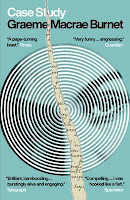
"I have decided to write down everything that happens, because I feel, I suppose, I may be putting myself in danger." London, 1965. An unworldly young woman suspects charismatic psychotherapist Collins Braithwaite of involvement in a death in her family. Determined to find out more, she becomes a client of his under a false identity. But she soon finds herself drawn into a world in which she can no longer be certain of anything. In Case Study, Graeme Macrae Burnet presents both the woman's notes and the life of Collins Braithwaite. The result is a dazzling, page-turning and wickedly humorous meditation on the nature of sanity, identity and truth itself. From the author of His Bloody Project.
"A novel of mind-bending brilliance. Graeme Macrae Burnet is a master of muddying the waters, of troubling ideas of truth and identity, fiction and documentary, and Case Study shows him at the height of his powers." —Hannah Kent
"Enormous fun. A mystery and a psychological drama wrapped up in one. Case Study is a triumph." —Observer
"Brilliant, bamboozling. Burnet captures his characters' voices so brilliantly that what might have been just an intellectual game feels burstingly alive and engaging." —Telegraph

Will you climb a hill with me? Dive into a lake with me? Reach the starry sky with me, and watch the clouds parade? Love can feel as vast as a sky full of breathtaking clouds or as gentle as a sparkling, starlit night. It can scale the tallest mountains and reach the deepest depths of the sea. Standing side by side with someone you love, the unimaginable can seem achievable. But not every magical moment is extraordinary. Simply being together is the best journey of all.
"This stirring ode to the love between parent and child is a must-have for all collections." —School Library Journal

A collection of weird stories from the author of Convenience Store Woman. An engaged couple falls out over the husband's dislike of clothes and objects made from human materials; a young girl finds herself deeply enamoured with the curtain in her childhood bedroom; people honour their dead by eating them and then procreating. Mixing taboo-breaking body horror with feminist revenge fables, old ladies who love each other and young women finding empathy and transformation in unlikely places, Life Ceremony is a wild ride to the outer edges of one of the most original minds in contemporary fiction.
"These stories laid complete claim to me. Ominous and charming. Brilliantly sad. There is not one word wasted here. I lost significant sleep over this collection." —Kiley Reid
>>'A Clean Marriage'.

The Trees is a page-turner that opens with a series of brutal murders in the rural town of Money, Mississippi. The murders present a puzzle, for at each crime scene there is a second dead body: that of a man who resembles Emmett Till, a young black boy lynched in the same town 65 years before. The detectives suspect that these are killings of retribution, but soon discover that similar murders are taking place all over the country. In this bold, provocative book, Everett takes direct aim at racism and police violence, and does so in a fast-paced style that ensures the reader can't look away.
Longlisted for the 2022 Booker Prize.
 Poor People With Money by Dominic Hoey $37
 An Autobiography by Angela Y. Davis $48
 Strandings: Confessions of a whale scavenger by Peter Riley $40
 Return to Harikoa Bay by Owen Marshall $37
 Adopted: Loss, love, family and reunion by Brigitta Baker and Jo Willis $40
 Cult Classic by Sloane Crosley $33
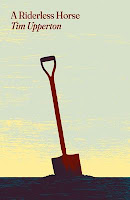 A Riderless Horse by Tim Upperton $25
 Bad Gays: A homosexual history by Huw Lemmey and Ben Miller $33
 Brave New World: A graphic novel by Aldous Huxley and Fred Fordham $48
 The Greatest Invention: A history of the world in nine mysterious scripts by Silvia Ferrara $50
 Under a Big Sky: Facing the elements on a New Zealand farm by Tim Saunders $37
"Everett has mastered the movement between unspeakable terror and knockout comedy."—The New York Times Book Review
"The Trees is unlike any other novel. Everett draws from a series of genres—literary novel, police procedural, horror—to create a book that's both unique and difficult to describe. It's a delicate balancing act that he pulls off masterfully, another brilliant book by one of the most essential authors in American literature." —Alta Journal
Monday Woolridge is a fighter with a face covered in scars and life full of debt. Her Avondale flat has no furniture, her father's dead, her catatonic mother's in an expensive nursing home and her kickboxing gym is going to Thailand. Monday's shitty bartending job pays fifty cents over minimum wage, and she desperately needs another way to generate income. Dealing drugs off the dark web with her flatmate JJ looks like it's working — until it really doesn't, and the pair have to flee Tamaki Makaurau to escape the gangsters, the vampires and the ghosts of Monday's past. This is a pacy, heart-twisting, punch-in-the-guts, darkly comic novel that captures life on the poverty line in Aotearoa now.
"It's kind of renegade literature. This book has an energy conspicuously absent in much New Zealand fiction." —Steve Braunias on Iceland
A powerful account of the life of trailblazing political activist Angela Davis Edited by Toni Morrison and first published in 1974, An Autobiography is a classic of the Black Power era which resonates just as powerfully today. Long hard to find, it is reissued now with a new introduction by Davis, for a new audience inspired and galvanised by her ongoing activism and her extraordinary example. In the book, she describes her journey from a childhood on Dynamite Hill in Birmingham, Alabama, to one of the most significant political trials of the century- from her political activity in a New York high school to her work with the U.S. Communist Party, the Black Panther Party, and the Soledad Brothers; and from the faculty of the Philosophy Department at UCLA to the FBI's list of the Ten Most Wanted Fugitives. Told with warmth, brilliance, humour, and conviction, it is an unforgettable account of a life committed to radical change.
When Peter Riley was thirteen, a woman with blue hair and a comet tattoo asked him to help load the jaw of a sperm whale into the back of a Volvo 245. The encounter set Riley on a decades-long quest to make sense of what had happened. Enter the secretive world of whale scavengers. When a whale washes up on one of Britain's coasts, a fugitive community descends to claim trophies from the carcass. Some are driven by magical beliefs. Some are motivated by profit: there is a black market for everything from ambergris to whaletooth sex toys. But for others, the need goes much deeper. Join Riley on a tour of a stranded kingdom's weird outer reaches, where nothing is as it seems. Meet witches, pedlars, fetishists, conspiracy theorists and fallen aristocrats. And prepare for a final revelation, as the mystery of the comet woman tangles with the enigmatic symbol of Leviathan itself, beached on Britain's fatal shore.
"A wild and wonderful whale chase, of cetaceans real and surreal and imagined, Peter Riley's beautifully written book adopts the sceptical/obsessive tone of a modern Melville (or perhaps that should be Captain Ahab) as he roams Britain from east to west, north to south, in search of usually dead and often rotting whales and the stories they leave in their wake. There's no box of dusty bones he won't stick his nose in, no dubious character on a beach he won't shake down for stolen whale teeth. Indeed, Riley's so interwoven with his subject that I doubt anyone will ever match Strandings for its sheer bravura, its wry insight, and its absolute, engulfing, and brilliantly enlivening whaleheadedness." —Philip Hoare
"Whenever I think of coming to punish my father, it's always in a strong wind, and that's blowing now as I drive up the long, unsealed track to the house and sheds." So begins one of Owen Marshall's superbly subversive stories. He offers up a wide range of subjects, from untimely deaths to unusual discoveries made about friends or neighbours, from burnishing an overseas trip to a tale about saving a business venture.
To not know your family story is a huge loss of your sense of self. It has the potential to undermine your wellbeing and your relationships across a lifetime. Adopted is the account of two of the thousands of children adopted during the era of closed adoption in Aotearoa New Zealand, from 1950 to the mid 1970s. Jo Willis and Brigitta Baker each sought and found their respective birth parents at different stages of their lives and have become advocates for other adopted New Zealanders. They share the complexity of that journey, the emotional challenges they faced, and the ongoing impacts of their adoptions with candour and courage.
Lola - a die-hard New Yorker with the ex-boyfriends, late nights, cigarette-habit and sharp wit to prove it - is out to dinner with old colleagues in Chinatown; people she's grown apart from, but with whom she shares an unshakeable connection. While reminiscing about the past, Lola runs into an ex-boyfriend. They get a late night drink and she returns home to her fiancé, a man she knows should be the perfect choice. But is he? The next day, near the same place, Lola runs into another ex. And another. And another. Something strange is happening. Lola has become the experimental mark of a hipster cult, headed up by her enigmatic former boss and headquartered in an abandoned synagogue. They are using their collective meditative energy (along with social media and the power of intention) to reorder her experience of the world - which just might be the push she needs to understand her past and get on with her future.
"This twisted and very funny New York anti-rom-com may ruin your love. Crosley is a caustic skewerer of internet millennial life on a par with Patricia Lockwood." —The Times
"A book about regret, about hoping you made the right choice, about the noxious power of our memories, but also about one of the worst things a woman can do in a big city: date men." —New York Times
In his third poetry collection, award-winning poet Tim Upperton takes us to the end of the driveway, over the Manawatū – twisting like an eel – and on to Topeka and Paris. These are poems of acid wit (‘I have been to Paris / and apart from the architecture / and the food and some very fine cemeteries / and of course the language / it’s quite like Palmerston North’), intimations of loss (‘The wrong life cannot be lived rightly. I should know’) and unexpected resolution (‘like pollen, / like grace so available nobody wanted it’). Unpredictable and restive, A Riderless Horse stands in the everyday and then runs with it.
A unconventional history of homosexuality. Too many popular histories seek to establish heroes, pioneers and martyrs but as Huw Lemmey and Ben Miller argue, the past is filled with queer people whose sexualities and/or dastardly deeds have been overlooked. We all remember Oscar Wilde, but who speaks for Bosie? What about those 'bad gays' whose un-exemplary lives reveals more than we might expect? Part-revisionist history, part-historical biography and based on the hugely popular podcast series, Bad Gays subverts the notion of gay icons and queer heroes and asks what we can learn about LGBTQ history, sexuality and identity through its villains and baddies. From the Emperor Hadrian to notorious gangster Ronnie Kray, the authors excavate the buried history of queer lives. This includes fascist thugs, famous artists, austere puritans and debauched bons viveurs, Imperialists, G-men and architects. Together these amazing life stories expand and challenge the mainstream assumptions of sexual identity. They show that homosexuality itself was an idea that emerged in the nineteenth century and that its interpretation has been central to major historical moments of conflict from the ruptures of Weimar Republic to red-baiting in Cold War America.
"Why must liberatory history be populated by heroes? And what if it isn't? Huw Lemmey and Ben Miller confront the shadowy side of queer history, a seamy underworld populated by evil twinks and psychopathic villains. Delectable gossip aside, this revelatory book is really an account of toxic power relations, always with an eye to a better, stranger, wilder future." —Olivia Laing
"This book will keep your bedside light burning long into the night. Fred Fordham's subtly futuristic illustrations may bring to mind Fritz Lang or even Steven Spielberg. Their retro styling is superbly dynamic: every frame full of adventure or pathos, or both." —Rachel Cooke, Observer
>>Look inside.
What are the origins of our greatest invention: writing? The L where a tabletop meets the legs, the T between double doors, the D of an armchair's oval backrest--all around us is an alphabet in things. But how did these shapes make it onto the page, never mind form complex structures such as this sentence? In The Greatest Invention, Silvia Ferrara takes a profound look at how—and how many times—human beings have managed to produce the miracle of written language, traveling back and forth in time and all across the globe to Mesopotamia, Crete, China, Egypt, Central America, Easter Island, and beyond.
Tim Saunders writes about his life and work on the farm that's been in his family for five generations. He encompasses drought, farming during lockdown, illness, financial pressure and the drive to become more viable and environmentally friendly. Woven throughout is Tim's love of, and respect for, the land, animals and the environment. He describes how farming is intertwined with the weather, how the weather has changed, how the changes affect farmers and what they are doing to counteract this. Tim describes how his forebears farmed, and how methods have changed. With the impact of climate change there is a need to change farming practices. Like other farmers Tim and his family are closely studying their farming system, deciding what needs to be done to stay viable.  New Zealand's Foreign Service: A history edited by Ian McGibbon $60
During war, humanitarian and natural disasters and flashpoints of global tension, one government department has been charged with the critical role of representing New Zealand's interests overseas. In doing so, the Ministry of Foreign Affairs and Trade (and its predecessors) has needed to respond to ever-evolving political and military allegiances, trade globalisation, economic threats, natural disasters and military conflict on behalf of a small nation that seeks to engage on the global stage while maintaining the principles that underpin its political institutions.
 Birds and Us: A 12,000-year history from cave art to conservation by Tim Birkhead $65
Birkhead takes us on an epic and dazzling journey through our mutual history with birds, from the ibises mummified and deified by Ancient Egyptians to Renaissance experiments on woodpecker anatomy, from Victorian obsessions with egg collecting to the present fight to save endangered species and restore their habitats. Weaving in stories from his own life as a scientist, including far-flung expeditions to Neolithic caves in Spain and the guillemot colonies of the Faroe Islands, this ambitious book is the culmination of a lifetime's research and unforgettably demonstrates how birds shaped us, and how we have shaped them.
"Thought-provoking at every turn, this inspiring, shocking, wonder-filled exploration of our relationship with birds from earliest times delivers a sobering challenge to us living with birds today." —Isabella Tree

The winners in the 2022 NEW ZEALAND BOOK AWARDS FOR CHILDREN AND YOUNG ADULTS have just been announced.
Read below what the judges have to say about these excellent books, and then click through to our website for your copies.
MARGARET MAHY BOOK OF THE YEAR
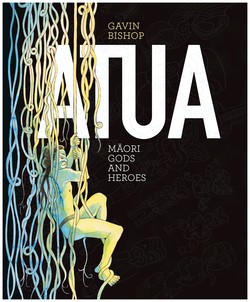

Atua: Māori Gods and Heroes written and illustrated by Gavin Bishop (published by Puffin, Penguin Random House)
Atua is an instant classic, a 'must have' for every Kiwi household and library, that is packaged in stunning production values. Every element of the generously sized masterpiece is carefully considered. With impeccable illustrations in Gavin Bishop’s unmistakable style, it captures the personalities of the many gods and heroes. Each section has a fresh look, from the dense matte blackness of the first pages reflecting Te Kore, nothingness, to the startling blue backgrounds of the migration, with the glorious Te Rā – the sun, between. Atua is much more than a list of Gods and legendary heroes – it’s a family tree, presented with power and simplicity. The text is never overstated, with the glory of the illustrations as the primary mode of storytelling, rewarding the reader who closely examines them. There is a sense of magic about this book, right from the front cover. Atua is a taonga for this generation and the next.
CATEGORY WINNERS
Picture Book Award
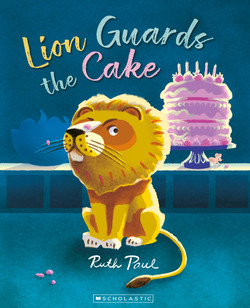
Lion Guards the Cake written and illustrated by Ruth Paul (published by Scholastic New Zealand)
If a good picture book is a symbiosis of story and illustration, a stand-out picture book is one which includes that all-important third symbiotic element – the reader. Lion Guards the Cake is a sweetly irresistible story that invites readers to be both witness and accomplice to lion’s furtive adventures and faux heroism as he upends the notion of duty. Its faultless, inventive rhyme, complemented by rich, silhouetted illustrations, engages the reader with effortless ease and a twinkle in its eye. This is confident storytelling of the highest calibre – a joyful read-out-loud which also rewards a more intimate and leisurely reading.
Lion Guards the Cake written and illustrated by Ruth Paul (published by Scholastic New Zealand)
If a good picture book is a symbiosis of story and illustration, a stand-out picture book is one which includes that all-important third symbiotic element – the reader. Lion Guards the Cake is a sweetly irresistible story that invites readers to be both witness and accomplice to lion’s furtive adventures and faux heroism as he upends the notion of duty. Its faultless, inventive rhyme, complemented by rich, silhouetted illustrations, engages the reader with effortless ease and a twinkle in its eye. This is confident storytelling of the highest calibre – a joyful read-out-loud which also rewards a more intimate and leisurely reading.
Wright Family Foundation Esther Glen Award for Junior Fiction
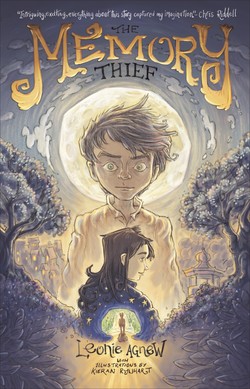
The Memory Thief written by Leonie Agnew (published by Puffin, Penguin Random House)
From its eye-catching cover to the final conclusion, The Memory Thief is a stunning story that captures the reader early and holds them in an embrace of wonder, intrigue and imagination. The judges all agreed on the skill and writing craft of the author, sharing an extra depth and quality of language in this novel. Unique but perfectly believable at the same time, The Memory Thief steps into another world whilst still inside our own. Memories themselves are both villains and heroes as they are taken or returned. The handling of a common illness, with its thought-provoking and original twist, is deftly handled and beautifully written.
Young Adult Fiction Award
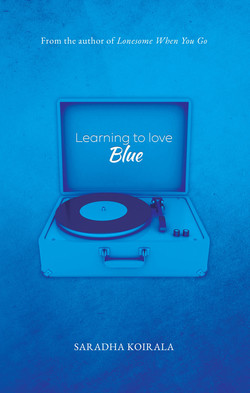
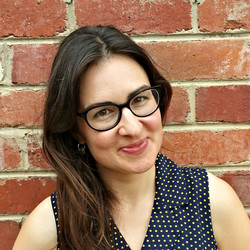
Learning to Love Blue written by Saradha Koirala (published by Record Press)
Learning to Love Blue is a celebration of finding independence in a new city. As Paige moves from Wellington and the comfort of friends and family to Melbourne, she must navigate new friendships and romantic relationships, all the while navigating her complicated feelings about her absent Mum. Saradha Koirala conveys all the mixed emotion of this setting in a way that is realistic, compassionate, and firmly placed in the journey into adulthood. Relatable at every turn, Learning to Love Blue draws you into Paige’s journey through Melbourne’s streets, bands, record and coffee shops, and has you rooting for her to the very end.
Learning to Love Blue written by Saradha Koirala (published by Record Press)
Learning to Love Blue is a celebration of finding independence in a new city. As Paige moves from Wellington and the comfort of friends and family to Melbourne, she must navigate new friendships and romantic relationships, all the while navigating her complicated feelings about her absent Mum. Saradha Koirala conveys all the mixed emotion of this setting in a way that is realistic, compassionate, and firmly placed in the journey into adulthood. Relatable at every turn, Learning to Love Blue draws you into Paige’s journey through Melbourne’s streets, bands, record and coffee shops, and has you rooting for her to the very end.
Elsie Locke Award for Non-Fiction
Atua: Māori Gods and Heroes written and illustrated by Gavin Bishop (published by: Puffin, Penguin Random House)
Variously described by the judges as a taonga, an instant classic and a 'must have' for every Kiwi household, Atua is a family tree for all New Zealanders. These tales of gods and heroes, both familiar and unfamiliar, are richly and emotively told with a novelist's eye for potent detail and the gentle authority of a master storyteller. It is a book designed to be treasured, with stunning production values and a mind-boggling attention to design detail that perfectly complement and enhance the powerfully emotive illustrations. A work of undoubted mastery, Atua is a rare gem indeed.
Atua: Māori Gods and Heroes written and illustrated by Gavin Bishop (published by: Puffin, Penguin Random House)
Variously described by the judges as a taonga, an instant classic and a 'must have' for every Kiwi household, Atua is a family tree for all New Zealanders. These tales of gods and heroes, both familiar and unfamiliar, are richly and emotively told with a novelist's eye for potent detail and the gentle authority of a master storyteller. It is a book designed to be treasured, with stunning production values and a mind-boggling attention to design detail that perfectly complement and enhance the powerfully emotive illustrations. A work of undoubted mastery, Atua is a rare gem indeed.
Russell Clark Award for Illustration
Atua: Māori Gods and Heroes illustrated and written by Gavin Bishop (published by: Puffin, Penguin Random House)
Atua is connected through time and place. Every page and section reveals more about the Māori world. The artwork of Atua is exceptional, with watercolours that mimic elements seen in the taiao or environment, and a use of shapes and traditional Māori patterns and motifs that elevates it to a class of its own. These illustrations create a mauri or life force unique to this book. Even the cover reveals a deliberate intention to reflect pūrākau Māori, with overglossed atua figures on a velvety blackness that connects us to te pō, the beginning of time and existence. Both the illustrator and the publisher should be very proud of the taonga that they have created.
Wright Family Foundation Te Kura Pounamu Award for te Reo Māori
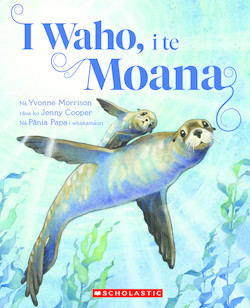

I Waho, i te Moana written by Yvonne Morrison, illustrated by Jenny Cooper, translated by Pānia Papa (published by Scholastic New Zealand)
In I Waho, i te Moana, the many sea creatures of the moana of Aotearoa are brought to life, with beautiful illustrations that highlight the interactions between sea creatures and their world. The story allows children to relate to these creatures, and understand their roles as kaitiaki within the realm of Tangaroa. There is a beautiful flow to the reo, which reflects the expertise of the translator. Te reo Māori will transcend the imagination and encourage interactions between tamariki and parents who read this wonderful story. This will support growth in te reo Māori capacity of both tamariki and parents who are at the conversational level.
I Waho, i te Moana written by Yvonne Morrison, illustrated by Jenny Cooper, translated by Pānia Papa (published by Scholastic New Zealand)
In I Waho, i te Moana, the many sea creatures of the moana of Aotearoa are brought to life, with beautiful illustrations that highlight the interactions between sea creatures and their world. The story allows children to relate to these creatures, and understand their roles as kaitiaki within the realm of Tangaroa. There is a beautiful flow to the reo, which reflects the expertise of the translator. Te reo Māori will transcend the imagination and encourage interactions between tamariki and parents who read this wonderful story. This will support growth in te reo Māori capacity of both tamariki and parents who are at the conversational level.
NZSA Best First Book Award
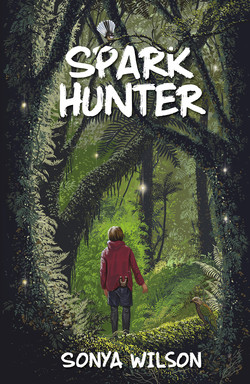
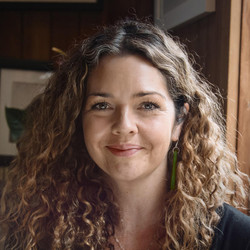
Spark Hunter written by Sonya Wilson (published by The Cuba Press)
Perfectly pitched for middle fiction readers, Spark Hunter weaves history, culture, conservation, humour, tension and adventure into her story of Nissa Marshall, who has always known there is more to the Fiordland Bush than meets the eye. While leaning into the fantastic just enough to encourage the imagination, the inclusion of archival excerpts will spark keen readers to hunt out their own discoveries within the mysterious history of this corner of Aotearoa. Making this story’s light shine bright is te reo Māori blended throughout and a cast of supporting characters that are easily recognisable as classmates, teachers, and friends.
Spark Hunter written by Sonya Wilson (published by The Cuba Press)
Perfectly pitched for middle fiction readers, Spark Hunter weaves history, culture, conservation, humour, tension and adventure into her story of Nissa Marshall, who has always known there is more to the Fiordland Bush than meets the eye. While leaning into the fantastic just enough to encourage the imagination, the inclusion of archival excerpts will spark keen readers to hunt out their own discoveries within the mysterious history of this corner of Aotearoa. Making this story’s light shine bright is te reo Māori blended throughout and a cast of supporting characters that are easily recognisable as classmates, teachers, and friends.

Find out what we've been reading and recommending—and what you will soon be reading and recommending—in our latest NEWSLETTER.
| >> Read all Stella's reviews. | |
 | The Library of the Dead by T.L. Huchu {Reviewed by STELLA} It’s Edinburgh and the ghosts are restless. Ropa has left school to make a meagre living as a ghostalker. She needs to support her Gran and little sister. The ghosts who aren’t quite done with the mortal earth seek out a ghostalker — a passer of messages — to communicate with the living, usually their family members. There are wrongs to right, wills to be instructed, or all sorts of petty family negotiations to be navigated. Ropa is out on her patch, minding her own business, when Nicola, a distraught mother, recently deceased, asks her to find her missing boy. Detective work isn’t Ropa’s usual game and money isn’t forthcoming, but one thing leads to another and she’s in the thick of things. Juggling the bills, keeping the tiny caravan (home) in order, getting Izwa to school and keeping her hustle going keeps her busy, and life is just about to get more complicated. A chance encounter with Jomo, a mate from school, finds her sneaking into an exclusive library under the streets of this dystopian Edinburgh. And getting caught was not the plan, especially when it might lead to her own ghosting. Surprisingly, rather than be punished for her crime, she is given membership to the Library. There’s something magical about Ropa — she is a ghostalker, but you get the distinct impression that there’s more she’s inherited from her mysterious and magical Gran. With her new friend Priya and Jomo in tow, the teens start to unpick the mystery of the disappearing children. And strange and creepy it is. Some of the snatched children find their way home but the change in them is startling — hollowed out and listless, they are old before their time. Add to these scares, The Midnight Milkman (not one you want delivering to your house), a haunted house that holds you by an umbilicus sucked down into a cellar, the eerie in-between ‘everyThere’ underworld, and the excellent, yet disconcerting, Library of the Dead (which in book one we are briefly introduced to). This Edinburgh is a land of post-civil-war destruction, restricted resources and gated wealth. Its inhabitants are lively and diverse. Ropa with her green dreadlocks and black lipstick doesn’t take any stick, Jomo is good-natured and loyal, while Priya, a wheelchair-bound adrenaline junkie, knows her way around on the street and in the lab. The stage is set for the 'Edinburgh Nights' series. Dip your toes in but watch out for the milk — more to come. Plenty of thrills and spooks, with witty dialogue and an underlying commentary on privilege. Fantasy for those who like Ben Aaronovitch’s 'River of London' series and Jonathan Stroud’s 'Lockwood & Co'. Great for adults and teens. |
| >> Read all Thomas's reviews. | |
 | The Dominant Animal by Kathryn Scanlan {Reviewed by THOMAS} He was careful not to write a review that was longer than the stories in the book he was reviewing, but he was uncertain how he could do this. Uncertain seems more of an introspective word than careful, for some reason, and is therefore unsuitable for use in a review of a book which contains no introspection, or at least displays no introspection. This is not to say that the characters are not propelled by forces deep below the surfaces of their appearances, they are propelled entirely by such deep forces, unconscious compulsions, so to call them, we all have them, or similar ones, but these are not manifest in anything but action, action and appearances also, both austerely told, or seemingly so, briefly, directly, barely, or something to that effect, each of the forty stories, he thinks it is around forty stories, told like a folk or fairy tale, without anything unnecessary, without elaboration, like a folk or fairy tale in which someone, the narrator, so to call her, is trapped in the first person. Folk and fairy tales are never told in the first person because the first person is a trap, or trapped, there in the mechanism of the story, told in the past tense, unalterable, and, like fairy tales, Scanlan’s forty stories are about the relations of power, as the title suggests, about the struggle for dominance that is the basis of all stories. All that happens happens as if by instinct, or by reflex, awareness lags, is only good for telling a story and only in the past tense, and, as with all stories, as with all relations of power, as with all struggles for dominance, everything in the past tense is at once horrible and ludicrous. And the same goes for the present. The horrible is ludicrous, the ludicrous is horrible, there are no other modes of being. All other modes are modes of non-being, if there are other modes, he supposed, fictional modes, perhaps, but he was not sure. That which we see in animals, the tooth-and-nail struggle, so to call it, the immediacy of all response, the inescapability of all compulsion, the way of nature, the cruelty, so to call it, what we call cruelty, is mainly true of us, he thought, without introspection he hoped, that which we affect to see in animals we see only of ourselves, is not apt of animals, who in any case have the advantage over us of seldom being capable either of deception or of self-deception. Just like objects, he thought, Scanlan gives objects the same agency as persons, not by giving agency to objects but by removing it from persons, or by recognising its absence, persons are just objects moving in rather complex ways, scudded on by some force, momentum, compulsion, whatever, but no freer to be otherwise or do otherwise than an object thrown at a wall, notable primarily through the effects of our velocity. Scalan is master of the velocity of her prose, honed to sharpness, careful, devastating, puncturing the imposed limit of the conscious to deliver the reader precisely at the point where rationality, or what passes by that name, flounders in what lies beyond, behind, beneath, or wherever, the point where the unsayable is both revealed and annulled. Think Fleur Jaeggy, Lydia Davis, Diane Williams, he thought, these authors share a sensibility both verbal and incisive, but Scalan’s sentences are no-one’s but her own, she who ends a story, “I watched the man drive away in his glossy, valuable car and prayed he might be met with some misfortune. Due to a major failing — the pathological poverty of my imagination — I could not call to mind anything more specific than that.” |

>>Read an extract.
>>Skin and sinew and breath and longing.
>>In praise of visionary women.
>>Cramped destiny.
>>Long-listed for the 2022 Booker Prize.
>>Your copy.
NEW RELEASES

ABÉCÉDAIRE by Sharon Kivland $38
"I wrote five days a week for a year, no more than a page, writing only for the length of the analytic hour, fifty minutes, following Freud's model of train travel for his theory of free association, acting 'as though, for instance, [you were] a traveller sitting next to the window of a railway carriage and describing to someone inside the carriage the changing views outside'. Many of my women character's names begin with A: their first names; there are few surnames, save those of the secondary male characters. Some of these women exist or existed, others are from fiction, or write fiction. Some are friends or acquaintances. None are credited but a keen reader could recognise many of them. I invented nothing. I am the aleph."
"Sharon Kivland is a phenomenal writer, thinker and artist." —Ali Smith
"Each day of this unprecedented novel is its own density, its own lightness. The days are spaces: close interiors; possible gardens; open fields. They are page-spaces; conversation-spaces; spoken aloud spaces. I read Sharon Kivland for this: for the life-supporting habitat of her writing, a place to live and grow." —Kate Briggs

Laughter shakes us out of our deadness. An outburst of spontaneous laughter is an eruption from the unconscious that, like political resistance, poetry, or self-revelation, expresses a provocative, impish drive to burst free from external constraints. Taking laughter’s revelatory capacity as a starting point, and rooted in Nuar Alsadir’s experience as a poet and psychoanalyst, Animal Joy seeks to recover the sensation of feeling alive and embodied. Writing in a poetic, associative style, blending the personal with the theoretical, Alsadir ranges from her experience in clown school, Anna Karenina’s morphine addiction, Freud’s unfreudian behaviours, marriage brokers and war brokers to ‘Not Jokes’, Abu Ghraib, Fanon’s negrophobia, smut, the Brett Kavanaugh hearings, laugh tracks, the problem with adjectives, to how poetry can wake us up. At the centre of the book, though, is the author’s relationship with her daughters, who erupt into the text like sudden, unexpected laughter. These interventions – frank, tender, and always a challenge to the writer and her thinking – are like tiny revolutions, pointedly showing the dangers of being severed from our True Self and hinting at ways we might be called back to it. A bold and insatiably curious prose debut, Animal Joy is an ode to spontaneity and feeling alive.
 Friend by Gavin Bishop $18
 Alte Zachen (Old Things) by Ziggy Hanaor and Benjamin Phillips $40
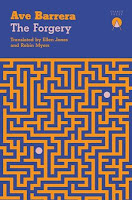 The Forgery by Ave Barrera (translated by Ellen Jones and Robin Myers) $36
 Kōhine by Colleen Maria Lenihan $25
 Disorientation by Elaine Hsieh Chou $38
 Ghosts of My Life: Writings on depression, hauntology, and lost futures by Mark Fisher $45
 The Real and the Romantic: English art between two World Wars by Frances Spalding $80
"To read Animal Joy is to become alive to the condition of wakefulness in the world. This spectacular achievement by the psychoanalyst and writer Nuar Alsadir provokes and destabilizes our understanding of a life’s competing narratives. I can think of no other contemporary work of nonfiction that brings together autobiography, a learned history of psychoanalysis, lyrical poetics, ontological investigations of our attempt to manage our own feelings, with such astute engagement. This is a work that will change conversations about who we are, what we think motivates us, what makes us us. The meeting place of the intentional and the unintentional erupts in Animal Joy in order that we might reinvestigate our incoming thoughts and feelings with a sense of vigor and curiosity. If you are open to introducing 'tiny revolutions' of thought into your life by resisting received and uninterrogated scripts, read this book." —Claudia Rankine
E Hoa by Gavin Bishop $18
A delightful new board book in either te reo Māori
or in English. Simple text and lovely illustrations convey the feelings of both dog and humans, and show us a beautiful friendship.
or in English. Simple text and lovely illustrations convey the feelings of both dog and humans, and show us a beautiful friendship.
11-year-old Benji and his elderly grandmother, Bubbe Rosa, traverse Brooklyn and Manhattan, gathering the ingredients for a Friday night dinner. Bubbe's relationship with the city is complex - nothing is quite as she remembered it and she feels alienated and angry at the world around her. Benji, on the other hand, looks at the world, and his grandmother, with clear-eyed acceptance. As they wander the city, we catch glimpses of Bubbe's childhood in Germany, her young adulthood in 1950s Brooklyn, and her relationships; first with a baker called Gershon, and later with successful Joe, Benji's grandfather. Gradually we piece together snippets of Bubbe's life, gaining an insight to some of the things that have formed her cantankerous personality. The journey culminates on the Lower East Side in a moving reunion between Rosa and Gershon, her first love. As the sun sets, Benji and his Bubbe walk home over the Williamsburg Bridge to make dinner. This is a powerful, affecting and deceptively simple story of Jewish heritage and identity, of generational divides, of the surmountability of difference and of a restless city and its inhabitants.
>>Have a look inside!
>>Have a look inside!
A failing artist turned forger, an architectural masterpiece hidden behind high walls, an impish vagabond, and some very resourceful, very intimidating twins. Forgery pays homage to the likes of Juan Rulfo and Luis Barragán, traversing late 20th century Guadalajara with the exuberance and eccentricity of an 18th Century picaresque.
"Ave Barrera eases us into this microcosmos as strange and shocking as it is true, constructing powerful atmospheres imbued with very varied sensations, ranging from dreamlike hallucinations to terror, horror and beauty." —El País
Tokyo is a humming backdrop to an array of outsiders: a young woman arrives to work as a stripper, the manager of a love hotel hatches a sleazy plan, a spirit wanders Harajuku, and a mother embarks on a sad journey. Linked through recurring characters and themes, these haunting stories hurtle us into the streets of Tokyo and small-town New Zealand. The secular city of salarymen, sex workers and schoolgirls is just a posed with rongoā healers, lone men and rural matriarchs of Aotearoa.
>>'Love Hotel'.
Twenty-nine-year-old PhD student Ingrid Yang is desperate to finish her dissertation on the late canonical poet Xiao-Wen Chou and never read about ‘Chinese-y’ things again. When she accidentally stumbles upon a strange and curious note in the Chou archives, she convinces herself it’s her ticket out of academic hell. But Ingrid’s in much deeper than she thinks. Her clumsy exploits to unravel the note’s message lead to an explosive discovery, one that upends her entire life and the lives of those around her. With her trusty friend Eunice Kim by her side and her rival Vivian Vo hot on her tail, together they set off a roller coaster of mishaps and misadventures, from campus protests and over-the-counter drug hallucinations, to book burnings and a movement that stinks of Yellow Peril propaganda. In the aftermath, nothing looks the same, including her gentle and doting fiancé, Stephen Greene . . . As the events Ingrid instigated keep spiraling, she’ll have to confront her sticky relationship to white men and white institutions – and, most of all, herself.
"The funniest, most poignant novel of the year." —Vogue
"Chou's pen is a scalpel. Disorientation addresses the private absurdities the soul must endure to get free, from tokenism, the quiet exploitation of well-meaning institutions, and the bondage that is self-imposed. Chou does it with wit and verve, and no one is spared." —Raven Leilani
"The funniest novel I've read all year. Uproarious, packed full of sly truths about race, love, and life in general—all of which you're going to miss, because you'll be laughing so hard." —Aravind Adiga
In this incisive collection of writings, the author of (among other things) Capitalist Realism argues that we are haunted by futures that failed to happen. Fisher searches for the traces of these lost futures in the work of David Peace, John Le Carre, Christopher Nolan, Joy Division, Burial and many others.
New edition.
"After the brilliance of Capitalist Realism, Ghosts Of My Life confirms Mark Fisher's role as our greatest and most trusted navigator of these times out of joint, through all their frissons and ruptures, among all their apparitions and spectres, past, present and future." —David Peace
>>"Ferociously intelligent."
>>"Ferociously intelligent."
Bookended by the intensity of commemoration that followed World War I and by a darkening of mood brought about by the foreshadowing of World War II, the decades between the wars saw the growing influence of modernism across British art and design. But as Modernism reached a peak in the mid-1930s, artists were simultaneously reviving native traditions in modern terms and working with a renewed concern for place, memory, history, and particularity. In The Real and the Romantic, Frances Spalding's thematic approach emphasizes the networks of connection between British artists, illuminating the intriguing alliances and shifts in artistic sensibility that fed into the creativity of these years. Throughout the period, an emphasis on the "real" and the authentic remained dominant, even as romantic feeling played an important role in shaping artists' responses to their subjects. Spalding considers the fluidity of the relationship between these two concepts and uses them as guiding themes in this beautifully produced, illustrated volume.
"Superb. Spalding also uses her persuasive narrative to highlight the role of women artists in the period. As the biographer of a cluster of Bloomsbury figures, she unsurprisingly gives Dora Carrington and Vanessa Bell full measure, but also lesser-known figures such as the single-minded New Zealander Frances Hodgkins, Evelyn Dunbar and Winifred Knights." —Michael Prodger
"Delectable. The joy and intense interest of this book will come courtesy of the attention given by its scholarly but always readable author to less well-known names." —Rachel Cooke, Guardian

Jonna lives in an orphanage whose manager is strict and obsessed with cleanliness. Like all the other children, Jonna has only one dream: to be adopted by a well-dressed mother who smells of perfume. But one day, a beat-up car pulls up. The door opens and out step two thick hairy legs with muddy boots, followed by a belly as round as a barrel, and finally, a head like an overgrown pear. It's a gorilla! Surely the orphanage won't let a gorilla adopt a child. But, to Jonna's horror, the gorilla chooses her. Eventually Jonna and the gorilla start to get along, until a man from the council threatens to send Jonna back to the orphanage. The Ape Star is a heartwarming and unconventional chapter book about love, adoption, friendship, and seeing from different perspectives.

Under attack from within, Lia tries to keep the landscapes of her past, her present and her body separate. But time and bodies are porous, and unpredictable. Something gleeful and malign is moving in Lia’s body. It shape-shifts down the banks of her canals, leaks through her tissue, nooks and nodes. It taps her trachea like the bones of a xylophone. It’s spreading. Lia’s story is told, in part, by the very thing that’s killing her; a malevolent voice that wanders her systems, learning her from the inside-out. The novel moves between her past and her present as we come to understand the people that have shaped her life. In turn, each of these take up their place in the battle raging within Lia’s body, at the centre of which dances the murderous narrator and a boy nicknamed ‘Red’ — the toxic chemo that is Lia’s last hope.

Memories have the power to move us, often when we least expect it, a sign of the complex neural process that continues in the background of our everyday lives. Memory is a process that shapes us: filtering the world around us, informing our behaviour and feeding our imagination. Drawing on the poignant stories of her patients, from literature and fairy tales, Veronica O'Keane uses the latest neuroscientific research to ask, among other things, why can memories feel so real? How are our sensations and perceptions connected with them? Why is place so important in memory? Are there such things as 'true' and 'false' memories? And, above all, what happens when the process of memory is disrupted by mental illness? This book is a testament to the courage — and suffering — of those who live with serious mental illness, showing how their experiences unlock our understanding of everything we know and feel.
"Vivid, unforgettable. A fascinating, instructive, wise and compassionate book. There is much for the reader to learn, but there is also a lot that is simply delightful." —John Banville, Guardian

A new edition of the pioneering work first published in 1984, challenging us to look at how the built environment impacts on women's lives. It exposes the sexist assumptions on gender and sexuality that have a fundamental impact on the way buildings are designed and our cities are planned. Written collaboratively by the feminist collective Matrix, the book provides a full-blown critique of the patriarchal built environment both in the home and in public space, and outlines alternative forms of practice that are still relevant today. Making Space remains a path breaking book pointing to possibilities of a feminist future.

Leipzig, 1726. Eleven-year-old Stefan Silbermann, an organ-maker's son, has just lost his mother. Sent to Leipzig to train as a singer in the St Thomas Church choir, he struggles to stay afloat in a school where the teachers are as casually cruel as the students. Stefan's talent draws the attention of the Cantor — Johann Sebastian Bach. Eccentric, obsessive and kind, he rescues Stefan from the miseries of school by bringing him into his home as an apprentice. Soon Stefan feels that this ferociously clever, chaotic family is his own. But when tragedy strikes, Stefan's period of sanctuary in their household comes to a close. Something is happening, though. In the depths of his loss, the Cantor is writing a new work: the Saint Matthew Passion, to be performed for the first time on Good Friday. As Stefan watches the work rehearsed, he realises he is witness to the creation of one of the most extraordinary pieces of music that has ever been written.
"This wise, refreshing novel takes us to the heart of Bach's life and work. James Runcie's expert imagination makes his picture of Leipzig specific and convincing, and behind the music's echo lies a touching human story. It offers a glimpse into a world more faithful and attentive than our own, but not alien to us: 'we listen to music as survivors,' the great Cantor says." —Hilary Mantel
>>BWV 224.
>>BWV 224.

A young woman attends a play about the Berlin Wall coming down and is the only Black person in the audience. She is sitting with her boyfriend by a bathing lake and four neo-Nazis show up. In New York, she witnesses Trump's election victory in a strange hotel room and later awakes to panicked messages from friends. Engaging in a witty question and answer with herself, the narrator looks at our rapidly changing times and tells the story of her family: her mother, who was a punk in East Germany and never had the freedom she dreamed of and her absent Angolan father. But in the background of everything is the memory of her twin brother, who died when they were nineteen.
"So exuberant, inventive, brainy, sensitive and hilarious that it's like a pyrotechnic flare illuminating the whole woman, past and present, radiant, unique, a voice and a novel to take with us into the future." —Francesca Goldman
"Bold and exceptional. Her impressive writing, born of a brilliant mind, surprises — stylistically, and by its frankness and associations. I rode in the passenger seat, beside the beauty and strangeness of 1000 Coils of Fear." —Lynne Tillman

A small boy and his elephant play an absurd game of hide and seek in this beautifully illustrated picture book that will have young readers shouting out loud in delight, and adults laughing too, as Elephant hides, in full view. A te reo Māori edition of this very popular book.

The Sound of Being Human explores, in detail, why music plays such a deep-rooted role in so many lives, from before we are born to our last days. At its heart is Jude's own story: how songs helped her wrestle with the grief of losing her father at age five; concoct her own sense of self as a lonely adolescent; sky-rocket her relationships, both real and imagined, in the flushes of early womanhood, propel her own journey into working life, adulthood and parenthood, and look to the future. Shaped around twelve songs, ranging from ABBA's 'Super Trouper' to Neneh Cherry's 'Buffalo Stance', Kraftwerk's 'Radioactivity' to Martha Reeves and the Vandellas' 'Heat Wave', the book combines memoir and historical, scientific and cultural enquiry to show how music can shape different versions of ourselves; how we rely upon music for comfort, for epiphanies, and for sexual and physical connection; how we grow with songs, and songs grow inside us, helping us come to terms with grief, getting older and powerful memories.
"Too often we treat popular music as wallpaper surrounding us as we live our lives. Jude Rogers shows the emotional and cerebral heft such music can have. It's a personal journey which becomes universal. Fascinating." —Ian Rankin

When Graham Caveney was in his early twenties he began to suffer from what was eventually diagnosed as agoraphobia. What followed were decades of managing his condition and learning to live within the narrow limits it imposed on his life: no motorways, no dual carriageways, no shopping centres, limited time outdoors. Graham's quest to understand his illness brought him back to his first love: books. From Harper Lee's Boo Radley, Ford Madox Ford, Emily Dickinson, and Shirley Jackson: the literary world is replete with examples of agoraphobics — once you go looking for them. On Agoraphobia is a fascinating, entertaining and sometimes painfully acute look at what it means to go through life with an anxiety disorder that evades easy definition.
 The Reluctant Carer: Dispatches from the edge of life by The Reluctant Carer $40
"Never less than completely absorbing, simply because Caveney is such a nimble, exact writer, able to move swiftly but unjarringly between daft jokes and serious reflections. His descriptions of the toll the condition takes on his mental health are horrifying in their precision, but that precision makes them beautiful at the same time...the book has the merit of timeliness, in addition to its eloquence and refreshing sense of being totally unconfected." —Telegraph
Due to their aging parents' declining health, The Reluctant Carer moved back into the family home to care for them. This book conveys both the all-consuming demands of unpaid care and the discovery of the contradictions and new dimensions of human experience that become apparent from this undesired but willing role.
"Compellingly written, addictive to read, The Reluctant Carer turns the demands of compassion into dark farce. Hilarious, bitter, poignant and profound, this is the human condition laid brilliantly bare, like an existential soap opera — only with more laughs. The author relays the trauma of ageing parents — and the decisions so many of us have to face — with honesty, empathy, and absolute integrity. This is the funniest, most touching book I've read in years; it will, quite frankly, break your heart." —Philip Hoare
 The Biggest Number in the World: A journey to the edge of mathematics by David Darling and Agnijo Banerjee $27
 The Glass Wall: Lives on the Baltic frontier by Max Egremont $25
 Winston Churchill: His times, his crimes by Tariq Ali $55
"As funny as it is moving and poetic, The Reluctant Carer marries the forensic honesty of Karl Ove Knausgaard with the dry wit of Alan Bennett, and is every bit as good as that sounds." —Will Storr
Enter the strange, largely unexplored realm between the finite and the infinite, and float through a universe where the rules we cling to no longer apply. Encounter the highest number computable, infinite kinds of infinity and consider whether one infinity can be greater than another.
"A wonderful new book. If you love journeying into imagined mathematical worlds and simply exploring, then this book is pure, unadulterated escapism. Brilliant." —New Scientist
Few countries have suffered more from the convulsions and bloodshed of twentieth-century Europe than those in the eastern Baltic. Small nations such as the Baltic States of Latvia and Estonia found themselves caught between the giants of Germany and Russia, on a route across which armies surged or retreated. Subjected to foreign domination and conquest since the Northern crusades in the twelfth century, these lands faced frequent devastation as Germans, Russians and Swedish colonisers asserted control of the territory, religion, government, culture and inhabitants. The Glass Wall features an extraordinary cast of characters — contemporary and historical, foreign and indigenous — who have lived and fought in the Baltic.
In this coruscating biography, Tariq Ali challenges Churchill's vaulted record. Throughout his long career as journalist, adventurer, MP, military leader, statesman and historian, nationalist self belief influenced Churchill's every step, with catastrophic effects. As a young man he rode into battle in South Africa, Sudan and India in order to maintain the Imperial order. As a minister during the first World War, he was responsible for a series of calamitous errors that cost thousands of lives. His attempt to crush the Irish nationalists left scars that have not yet healed. Despite his record as a defender of his homeland during the Second World War, he was willing to sacrifice more distant domains. Singapore fell due to his hubris. Over 3 Million Bengalis starved in 1943 as a consequence of his policies. As a peace time leader, even as the Empire was starting to crumble, Churchill never questioned his imperialist philosophy as he became one of the architects of the postwar world we live in today.
 Gaia: Goddess of the Earth by Imogen and Isobel Greenberg $33
"In Ali's telling, which draws on more honest existing historical scholarship than most popular biographies of Churchill, the two-times prime minister emerges not so much as deeply racist — some of his contemporaries remarked on it in shock — as profoundly authoritarian, with a soft spot for fascist strongmen, and a hostility to working-class assertion." —Priyamvada Gopal
>>See also Geoffrey Wheatcroft's Churchill's Shadow.
>>See also Geoffrey Wheatcroft's Churchill's Shadow.
A beautifully done graphic novel for children, suing Greek mythology to give a strong ecological message. Imagine you made something that was so beautiful and powerful that everyone wanted to take it for themselves. And then you had to watch them destroy it. Would you fight for it? Meet Gaia, the ancient Greek goddess who created the Earth and the universe that stretched beyond it. She raised trees from their roots to the sky, sent waterfalls tumbling over cliffs and created the tides that sloshed on the shore. She gifted her creation to animals and mortals, and watched as they made it their home. But she also created a force she couldn't control: the ambition of gods. Gaia watched as the gods fought brutal wars and manipulated mortals such as Hercules and Achilles, disturbing peace on Earth. Storms raged, fires blazed and people, animals and plants suffered. Gaia begged the gods to look after her creation, but no one listened.
.gif)

BOOKS @ VOLUME #289 (29.7.22)
Read our latest NEWSLETTER and find out what we've been reading and recommending.

>>Read Thomas's review.
>>On translating the novel.
>>Flora digitalica (working on the commission).
>>Some sample pages are here (scroll down until you find them).
>>Looking through a series of mirrors,
>>Get your copy now.
>>Marble.
| >> Read all Thomas's reviews. | |
 | Thread Ripper by Amalie Smith (translated by Jennifer Russell) {Reviewed by THOMAS} Perhaps, he thought in a rare moment of self-reflection, or in a moment of rare self-reflection, he wasn’t sure which, I have become so accustomed to writing my so-called fictional reviews, to writing my so-called reviews in a fictional manner or even, more confusingly, in an autofictional manner so that they are not immediately recognised as the fictions they are, that I have proverbialised myself into a corner and am incapable of writing a straight review, if there is even such a thing, or a review just written as a review, there might be such a thing as that, he thought, without the novelistic trappings of my approach, my distancing and deflection tricks, my wriggling away from the task at hand and from the possibility that I am not up to the task at hand, he thought, perhaps all my trickeration, so to call it, is just a way of concealing my incapability, from myself at least for surely no-one else is fooled, he thought. None of this helped, he thought, this self-reflection, so to call it, makes me more incapable rather than less, makes anything that might pass for a review, or even for a meta-review, less possible, I have thought myself to a standstill, he thought, unless of course I create a fictional reviewer to write the reviews for me, a fictional reviewer who could write a straight review, a review written as a review, that elusive goal that for me is now unreachable, at least without some trickeration, I have got to the point at which only a fake reviewer can write a real review. Anyway, anyone but me. I wonder how my fictional reviewer will approach this book, Thread Ripper, he thought. Thread Ripper is written in two parallel sequences or threads on the facing pages of each opening, and each of those threads has its own approach to the matters that inform them both. My reviewer would probably find themselves obliged to begin or find it convenient to begin with a description of how the verso pages carry an account, if that is the right word, of the author’s researches and considerations of the history of weaving and computer programming, which turn out to be the same thing, at least in the author’s concurrent artistic practice, so to call it, here also described, and which turn out to be the same thing also as neurology and linguistics, or at least to have typological parallels to neurology and linguistics, if these even warrant separate terms, which the fictional reviewer may speculate on at some length, or not, these recto pages deal with matters outside the author’s head, matters of what could be termed fact, even though the term fact could be applied in this instance to some quite interesting philosophical speculations, speculations about things that may actually be the case, which, for the fictional reviewer, is as good a definition of the term as any. The recto pages are concerned with problems of knowing, the fictional reviewer may begin, or may conclude, whereas the verso pages are concerned with problems of feeling, so to call it, not that in either case should we assume the so-called problems to be necessarily problematic, although in many cases in both strands they are, the recto pages are concerned with what is going on inside the author’s head, with matters subject to temporal mutabilities, temporal mutabilities being an example, or being examples, of the sort of words a fictional reviewer might use when writing a review as a review but not making a very good job of it, though it is unclear whose fault that might be, does he have a responsibility for the performance of this fictional reviewer he has devised to do his job, he supposed he did have some such responsibility but he couldn’t help starting to wonder if successfully creating a character who fails to write well might be more of a success than a failure, though it would be, he supposed, a failure at his stated aim of achieving by the employment of a fictional reviewer the sort of straight review that he found himself these days incapable of writing, he wanted the fictional reviewer to write a real review, after all, a fictional review, which would not need to be actually written and which in this instance he could easily refer to as being wholly positive about this interesting book Thread Ripper, which he has read and enjoyed and which started in his mind, if it warrants to be so called, some quite interesting speculations and chains of thought of his own, and which he could suppose, to make his task easier, his fictional reviewer has also read and enjoyed, they are not so different after all, he thought, such a fictional review would not realise his intention or fulfil the purpose of the reviewer, he had intended the fictional reviewer to review the book in a straightforward way, even though he, even if this intention was by some chance realised, looked as if he would in any case treat the whole exercise, to his shame, as so often, as something of a sentence gymnasium. He would like to write in a straightforward way, he thought, to say, in this instance, I like this book and what is more I think you should buy it because I think you would like it too, but he could not help making the whole exercise into a sentence gymnasium, I never can resist a sentence gymnasium, he thought, these days less than ever, show me a sentence gymnasium or some relatively straightforward task that I could treat as a sentence gymnasium, pretty much anything can be so treated, he realised, and I am lost, he thought, whatever I attempt I fail, I am lost in the fractals of my sentence gymnasiums, or sentence gymnasia, rather, he corrected himself, my plight is worse than I thought, he thought. In Thread Ripper the author on the verso dreams, the fictional reviewer might point out, he thought, or he hoped the fictional reviewer would point out or remember to point out even if they didn’t get so far as to actually point out, according to the verso pages the author dreams and longs, and the author on the recto pages, if we are not at fault for calling either personage the author, programmes her computer with an algorithm to weave tapestries but also with an algorithm to write poetry, the results of which are included on these recto pages, if the author of those pages is to be believed, he didn’t see why not and he thought it unlikely that his fictional reviewer would have any reservations in regard to the authenticity of these poems, so to call them, or rather to the artificial authorship of the poems and of the so-called ‘artificial’ intelligence behind them, any productive system, any arrangement of parts that can produce something beyond those parts, is a sort of intelligence, he thought, though he evidently hadn’t thought this very hard. All thought is done by something very like a machine, even if this is not very like what we commonly term machines, he reasoned, reducing the meaning of his statement almost to nothing while doing so, it is a good thing I am not writing this review myself, it is a good thing I have a fictional reviewer to write the review, a fictional reviewer whom I can make ridiculous without making myself ridiculous, he thought, unconvincingly he had to admit though he didn’t admit this of course to anyone but himself, the universe is full of mess, a mess we are in a constant struggle to reduce. “The digital has become a source not of order, as we had hoped, but of mess, an accumulation of images and signs that just keeps on growing,” writes the author of Thread Ripper. “For humans it’s a mess; a machine can see right through.” Perhaps there is a difference between machine intelligence, which compounds, and human intelligence, which reduces, he thought briefly and then abandoned this thought, perhaps my fictional reviewer will have this thought and perhaps my fictional reviewer will be able to think it through and make something of it, fictional characters often think better than the authors who invent them, fictional characters are themselves a kind of machine for thinking with, artificial characters with artificial thoughts, if there can be such things, perhaps intelligence is the only thing that can never be artificial, he thought, though we might have to change the meanings of several words to make this statement make sense. “I hear on the radio that the human brain at birth is a soup of connections, that language helps us reduce them,” writes the author in Thread Ripper. “The more we learn, the fewer the connections.” Does grammar, then, work as a kind of algorithm, he wondered, or he wondered if his fictional reviewer might be induced to wonder, is it grammar that forms our thoughts by reducing them to the extent that we may affect on occasion to make some sense, whether of not we are right, which is, really, unimportant, the grammar is what matters not the content, is this what Ada Lovelace, who died before she could describe it, referred to as the calculus of the nervous system, could he actually end his sentence with a question mark, he wondered, the question mark that belonged to this Ada Lovelace question, or was he too tangled in his sentence to find its end? |
| >> Read all Stella's reviews. | |
 | The Last Good Man by Thomas McMullan {Reviewed by STELLA} Be careful what you wish for. In The Last Good Man, Thomas McMullan delves into the slippery world of morality and judgement. We meet Duncan Peck on the road from a devastated and chaotic city. He’s travelling across land, it’s dark and bleak and a wrong step will mean a suffocating drowning in the bog. 'Watch your step' could be the catch cry for this dystopian debut. A dark mass rises from the bog nearby only to be quickly surrounded by a plastic-rain-coated group. A rescue team? Unlikely, with their metal pipes and mob mentality. Yet they draw the miserable man from the bog and head back to a village. Duncan Peck stays mum. There’s a familiar voice — the man he is looking for. Finding him is about to change his life. This last good man. If there was ever such a thing. Duncan arrives in the village and catches up with his brother-in-arms, James Hale. There are recriminations, but also joy at being in each other’s company again. Their past both binds and hangs over them. Each is edgy about looking back, especially Hale who has found his place in this community. A small community of structure, rules (seemingly ‘fair’) and justice as dispensed by all — a true community reckoning as needs demand. How did they get to this order from a world of ecological and economic chaos? The Wall. There it is — visible on the horizon from a great distance, looming over the community in size and psychology. Anyone can write on the wall. If a wrong has been done it will be announced. A mention or two may not warrant any punishment, aside from a wooden piece of furniture attached to a back for a few days. Various men and women go about their daily chores with a lamp, chair or table tied to their backs. Hale tells Duncan Peck early in the piece he better sort out his ropes — make sure he has a good one to ease the troublesomeness of such an imposition. Yet, get your name on the wall in repetition and for more troubling matters, then life might not be so easy, or even possible at all. Accusations have to be acted on — it’s natural justice. Gossip and petty jealousies raise their ugly heads. This is the twitter-sphere writ large in analogue. Technology is a thing of the distant past and, while life is simple, it’s definitely not without complexities and intricate dancing if you want to keep your name from the wall and the attention of the mob that will hunt you down when you make a run for it. You can know many secrets and truths but you would be foolish to voice those in this judgemental village. Thomas McMullan brings us a dark unsettling time, with echoes of Riddley Walker (without the language breakdown) and early Ian McEwan, where human behaviour is both attractive and frightening. Everybody wants to be loved. Everybody wants to be good, but somehow no one can quite pull it off without being bogged down in a sticky mire. Desire and survival are bedfellows Duncan Peck can not ignore if he wants to keep his head. |
NEW RELEASES

Pain was Joe Grim's self-expression, his livelihood and reason for being. In 1908-09 the Italian-American boxer toured Australia, losing fights but amazing crowds with his showmanship and extraordinary physical resilience. On the east coast Grim played a supporting role in the Jack Johnson-Tommy Burns Fight of the Century; on the west coast he was committed to an insane asylum. In between he played with the concept and reality of pain in a shocking manner not witnessed before or since. Winkler braids the story of Grim in Australia and meditations on pain with thoughts on masculinity and vulnerability, plus questionable jokes, into a highly creative haymaker.
Short-listed for the Miles Franklin Award.
"The strangest book you are likely to read this year." —J.M. Coetzee
"Grimmish meets a need I didn't even know I had. I lurched between bursts of wild laughter, shudders of horror, and gasps of awe at Winkler's verbal command: the freshness and muscle of his verbs, the unstoppable flow of his images, the bizarre wit of the language of pugilism-and all the while, a moving subterranean glint of strange masculine tenderness." —Helen Garner

Campaigners, chefs and food writers rail against 'intensive farming'. But the problem isn't the adjective. It's the noun. Around the world, farming has been wiping out vast habitats, depleting freshwater, polluting oceans, and accelerating global heating, while leaving millions undernourished and unfed. Increasingly, there are signs that the system itself is beginning to flicker. But there is another way. Regenesis is an journey into a new possible future for food, people and the planet. Drawing on the rapidly advancing science of soil ecology, Monbiot shows how the hidden biological universe beneath our feet could transform what we eat and how we grow it. He travels to meet the people who are unlocking these methods, from the fruit and vegetable growers who cultivate pests as well as potatoes; through producers of perennial grains who are liberating their fields from ploughs; to the scientists pioneering new forms of protein. The tiniest life forms in the soil might help us save the living world, allowing us to produce abundant, cheap, healthy food while returning vast swathes of land to the wild. Interesting and hopeful.

"When my squawking baby brother arrived, I realised I needed a new family. No one seemed to mind when I packed my bag. I took a box and used my best handwriting to write 'FREE KID', then waited for some new parents to take me home." Waiting in a box like an abandoned pet and encountering the passersby changes the child's perspective. At the end of the day, when her parents pretend they need an older sister for their new baby, she is ready to leave her box and go happily back home. A delightful book!

This remarkable book challenges our received narratives of historical determinism and the myths of cultural ‘progress’ devised to justify the status quo. If we unshackle ourselves from these preconceptions and look more closely at the evidence, we find a wide array of ways in which humans have lived with each other, and with the natural world. Many of these could provide templates for new forms of social organisation, and lead us to rethink farming, property, cities, democracy, slavery, and civilisation itself. A fascinating and important book, now in paperback.
>>All figured out.
>>Human history gets a rewrite.
>>Collective self-creation.
>>Inequality is not the price of civilisation.
>>American anarchist.
>>What other social systems have there been?
>>Lots of really good videos.
>>Articles by Graeber.
>>Graeber's playlist.
>>Also available as a very satisfying hardback.
>>Other books by David Graeber

We regularly use Julia Busuttil Nishimura's previous two cookbooks at home because they are full of sure-fire recipes that are a pleasure to make and even more of a pleasure to eat, so we are looking forward to adding this new book to our collection. Julia Busuttil Nishimura always knows the right dish for the occasion, weather or time of day. She also understands the power food has to bring people together, whether that's to prepare a meal or enjoy the delicious results. With recipes ranging from quick, flavourful meals for busy weeknights to simple indulgences for summer feasts, Around the Table perfectly matches dishes to time and place. It includes Mediterranean classics from Italy and Malta, and Japanese dishes Julia has learned from her husband, Nori, that will soon become favourites around your table, too.

A fast-paced fantasy adventure set in a broken, future England, following the further exploits of the outlaws Scarlett and Browne. Scarlett McCain and Albert Browne have outwitted their pursuers and escaped into the wilderness once more, and it’s not long before they become famous for their audacious heists across the Seven Kingdoms. Yet neither is fully able to escape the shackles of the past – as they discover when a dangerous job turns sour. Soon old enemies and sinister new threats are pressing in on every side, and Scarlett and Browne must pull off an impossible mission and strike out against The Faith Houses and the Brothers of the Hand if they are to save the people they hold most dear.
>>Read Stella's review of The Outlaws Scarlett and Browne (#1).
>>Book trailer for Book #2.
>>Read Stella's review of The Outlaws Scarlett and Browne (#1).
>>Book trailer for Book #2.
>>A reader recommends.
 Wonderworks: Literary invention and the science of stories by Angus Fletcher $28
Wonderworks reveals that literature is among the mightiest technologies that humans have ever invented, precision-honed to give us what our brains most want and need. Wonderworks tells the story of the greatest literary inventions through the ages, from ancient Mesopotamia to modern-day America. It draws on cutting-edge neuroscience to demonstrate that the inventions really work: they enrich our lives with joy, hope, courage and energy, and they help our brains heal from grief, loneliness and even trauma.

A newly married woman longs, irrationally, for a silk umbrella; a husband chases away his wife's beloved cat; a betrayed mother impulsively sacks her housekeeper. Underneath the surface of these precisely observed tales of love, marriage and family life in mid-century Copenhagen pulse currents of desire, violence and despair, as women and men dream of escaping their conventional roles and finding freedom and happiness — without ever truly understanding what that might mean.
"An intense reading experience. So clear is Ditlevsen's eye that it's impossible to tear yourself away from the fates of her characters, however grim." —John Self, Guardian

Language opens up our world, and in the same instant, limits it. What does it mean to exist in a language that was never meant for you to speak? Why are we missing certain words? How can we talk about our communal problems without fuelling them? What does it actually mean to speak freely? As a writer and activist fighting for equality, Kübra Gümüşay has been thinking about these questions for many years. In this book she explores how language shapes our thinking and determines our politics. She shows how people become invisible as individuals when they are always seen as part of a group, and the way those in the minority often have to expend energy cleaning up the messy thinking of others. But she also points to how we might shape conversations to allow for greater ambiguity and individuality, how arguments might happen in a space of learning and vulnerability without sacrificing principles — how we might all be able to speak freely.

Julia has landed a fresh start — at a 'pan-European' restaurant. 'Imagine that,' says her mother. 'I'm imagining.' Nick is flirting with sobriety and nobody else. Did you know: adults his age are now more likely to live with their parents than a romantic partner? Life should have started to take shape by now — but instead we're trying on new versions of ourselves, swiping left and right, and searching for a convincing answer to that question: 'What do you do?' Reward System is a set of ultra-contemporary and electrifyingly fresh fictions, of a generation of the cusp, meshed in Zooms and lockdowns, loneliness and love.
"Reward System is an exhilarating and beautiful book by an extraordinarily gifted writer. Reading these stories, I found myself thinking newly and differently about contemporary life." —Sally Rooney

Prescod-Weinstein shares her love for physics, from the Standard Model of Particle Physics and what lies beyond it, to the physics of melanin in skin, to the latest theories of dark matter—along with a perspective informed by history, politics, and the wisdom of Star Trek. One of the leading physicists of her generation, Dr. Chanda Prescod-Weinstein is also one of fewer than one hundred Black American women to earn a PhD from a department of physics. Her vision of the cosmos is vibrant, buoyantly nontraditional, and grounded in Black and queer feminist lineages. Dr. Prescod-Weinstein urges us to recognize how science, like most fields, is rife with racism, misogyny, and other forms of oppression. She lays out a bold new approach to science and society, beginning with the belief that we all have a fundamental right to know and love the night sky. The Disordered Cosmos dreams into existence a world that allows everyone to experience and understand the wonders of the universe.
 Finding the Raga: An improvisation on Indian music by Amit Chaudhuri $25
By turns essay, memoir and cultural study, Finding the Raga is Amit Chaudhuri's singular account of his discovery of, and enduring passion for, North Indian music: an ancient, evolving tradition whose principles and practices will alter the reader's notion of what music might — and can — be. Tracing the music's development, Finding the Raga dwells on its most distinctive and mysterious characteristics: its extraordinary approach to time, language and silence; its embrace of confoundment, and its ethos of evocation over representation.
"Supple, intricate and uncompromising, full of delicate observation and insight, Amit Chaudhuri's Finding the Raga immerses us in the rigorous beauty and cosmology of Indian classical music. It is also a loving memoir about relationships and places, dedication and vocation." —Geoff Dyer

Between 1918 and 1921, over a hundred thousand Jews were murdered in Ukraine and Poland by peasants, townsmen, and soldiers who blamed the Jews for the turmoil of the Russian Revolution. In hundreds of separate incidents, ordinary people robbed their Jewish neighbors with impunity, burned down their houses, ripped apart their Torah scrolls, sexually assaulted them, and killed them. Largely forgotten today, these pogroms – ethnic riots – dominated headlines and international affairs in their time. Aid workers warned that six million Jews were in danger of complete extermination. Twenty years later, these dire predictions would come true. Drawing upon long-neglected archival materials, including thousands of newly discovered witness testimonies, trial records, and official orders, Veidlinger shows how this wave of genocidal violence created the conditions for the Holocaust. Through stories of survivors, perpetrators, aid workers, and governmental officials, he explains how so many different groups of people came to the same conclusion: that killing Jews was an acceptable response to their various problems.

In the closing third of the twentieth century, Wales experienced the simultaneous effects of deindustrialisation, the subsequent loss of employment and community cohesion, and the struggle for its language and identity. These changes were largely forced upon the country, whose own voice, rarely agreed upon within its borders, had to fight to be heard outside of Wales. Brittle with Relics is a history of the people of Wales undergoing some of the country's most seismic and traumatic events: the disasters of Aberfan and Tryweryn; the rise of the Welsh language movement; the Miners' Strike and its aftermath; and the narrow vote in favour of partial devolution. Featuring the voices of Neil Kinnock, Rowan Williams, Leanne Wood, Gruff Rhys, Michael Sheen, Nicky Wire, Sian James, Welsh language activists, members of former mining communities and many more, this is a vital history of a nation determined to survive, while maintaining the hope that Wales will one day thrive on its own terms.
"Richly humane, viscerally political, generously multi-voiced, Brittle with Relics is oral history at its revelatory best: containing multitudes and powerfully evoking that most remote but also resonant of times, the day before yesterday." —David Kynaston
"A testament to the brutal circumstances that bonded the communities of Wales into a new polity for the 21st century." —Gruff Rhys

Who's Hiding? by Satoru Onishi $20
 Obsessive, Intrusive, Magical Thinking by Marianne Eloise $33
 Homesickness by Colin Barrett $35
Board book editions in either te reo Maori or English of this deservedly popular and enjoyable book for infants. 18 colourful animals stand in a row. Something small changes on every double page: animals disappear, turn around, cry or sleep. Young children love spotting the changes and, at the same time, get to know animal names, colours, expressions, emotions and how to count.
"Obsessive was, still is, my natural state, and I never wondered why. I didn't mind, didn't know that other people could feel at peace. I always felt like a raw nerve, but then, I thought that everyone did." Writer and journalist Marianne Eloise was born obsessive. What that means changes day to day, depending on what her brain latches on to: fixations with certain topics, intrusive violent thoughts, looping phrases. Some obsessions have lasted a lifetime, while others will be intense but only last a week or two. Obsessive, Intrusive, Magical Thinking is a culmination of a life spent obsessing, offering a glimpse into Marianne's brain, but also an insight into the lives of others like her. From death to Medusa, to Disneyland to fire, to LA to her dog, the essays explore the intersection of neurodivergence, obsession and disorder, telling the story of one life underpinned and ultimately made whole by obsession.
"The mortifying ordeal of being known, minus the ordeal and sans mortification. I felt recognised on every page, learned so many new things, and laughed so hard I choked on my water. Read this!!!" —Naoise Dolan
The much-anticipated second collection of stories from the author of Young Skins. In these eight stories, Barrett takes us back to the barren backwaters of Ireland's County Mayo, via Toronto, and illuminates the lives of outcasts, misfits and malcontents with an eye for the abrupt and absurd. A quiet night in the neighbourhood pub is shattered by the arrival of a sword wielding fugitive. A funeral party teeters on the edge of this world and the next, as ghosts won't simply lay in wake. A shooting sees an everyday call-out lead a policewoman to confront the banality of her own existence.
 The Rack by A.E. Ellis $24
 Why Patti Smith Matters by Caryn Rose $28
"The stories in Homesickness are crafted with skill and flair. Colin Barrett anchors the work with emotional accuracy and careful delineation of character, and then, using metaphors and beautifully made sentences, he lets his narrative soar." —Colm Toibin
"Superb. There is an utterness to his attention, a devotion to the lives of his characters, that shifts the work into some more lasting place. Barrett is already one of the leading writers of the Irish short story, which is to braggingly say, one of the leading writers of the short story anywhere. He means every word and regrets every word. He just kills it." —Guardian
'Consider yourself an experiment of the gods in what a man can endure.' Paul Davenant, has arrived at a sanatorium in the Swiss Alps with hopes of a full cure and a normal life. But as the weeks and months pass interminably by, he undergoes endless tests and medical procedures, each more horrific and dehumanizing than the last, all the while facing the possibility that his case may be hopeless. Despite the pain, indignity, and tediousness, Davenant never loses sight of the outrageous, farcical side to his situation, the absurdity of it all. And when he falls in love with a fellow patient, he becomes determined to recover his health. Will he succeed, or will all the tortures he has endured have been for nothing? When The Rack was first published in 1958, the critical acclaim was universal — reviewers compared it with the works of Proust, Mann, and Camus and declared it a masterwork destined to take its place among the great novels of the 20th century. It was subsequently all but forgotten until this new edition.
"There are certain books we call great for want of a better term, that rise like monuments above the cemeteries of literature — Clarissa, Great Expectations, Ulysses. The Rack to my mind is one of this company." —Graham Greene
Through her poetry, her songs, her unapologetic vocal power, and her very presence as a woman fronting a rock band, Patti Smith kicked open a door that countless others walked through. Sha has done much that embodies the 'nothing-to-hide' rawness of punk, and has long nurtured a place in society for misfits of every stripe. Why Patti Smith Matters is the first book about the iconic artist written by a woman. The veteran music journalist Caryn Rose contextualises Smith's creative work, her influence, and her wide-ranging and still-evolving impact on rock and roll, visual art, and the written word. Rose goes deep into Smith's oeuvre, from her first album, Horses, to acclaimed memoirs operating at a surprising remove from her music.
>>1976.

A novelisation of the life of Uriah Rennie, the UK football Premier League's first and only Black referee. From Jamaica to Sheffield to the recently formed Premier League, Uri rises through the ranks as a referee, making it to the the highest level of our national game. But along the way he is confronted with tensions and prejudices, old and new, which emerge as his every move is watched, analysed and commented on.
 Bolla by Pajtim Statovci $33
 No Words by Maryam Master $19
 Wooolf! by Stephanie Blake $19
"Freestyle poetry is teamed with kick-by-kick reports in this stirring, stylistically unorthodox novel. A bold and powerful narrative experiment." —Guardian
It is April, 1995. Kosovo is a country on the cusp of a dreadful war. Arsim is twenty-two, newly married, cautious - an Albanian trying to keep his head down and finish his studies in an atmosphere of creeping threat. Until he encounters Milos, a Serb, and begins a life in secret. Bolla is the story of what happens when passion and history collide - when a relationship, already forbidden and laced with danger, is ripped apart by war and migration, separated by nations and fate. What happens when you are forced to live a life that is not yours, so far from your desires? Can the human remain?
Hero doesn't feel like a hero, but sometimes she feels as if the universe is asking her to be one. When Aria, a mysterious boy who never EVER speaks, starts at school and is picked on by His Royal Thug-ness Doofus (Rufus), Hero and her bestie Jaz feel compelled to help. But they're far too chicken to actually do anything heroic, so they befriend Aria and try to uncover the truth about him. What happened to his voice? Where did he come from? What are those three dents on his middle finger? This is the story of a 12-year-old refugee who's trying to establish a new life in a new country, grapple with his past and, most importantly, find his voice.
Once there was a little rabbit who did only what he wanted. When his mother asked him to tidy his room he cried, “Wooolf! The wolf is coming!" and, when she ran away, he did whatever he wanted. One day he did a wee where he wanted, and the wolf came to get him. "Wooolf!" he cried, but his mother didn't fall for that. The wolf got him! It was just Simon's father in a wolf mask. Simon promised never to cry wolf again. But when his mother opened the cupboard in the morning, a wolf cried, "Awwoooo!"
