A selection of books from our shelves.
Click through to find out more:
(*A new novel from the excellent Anna Smaill is due in November! Order now: Bird Life)


A selection of books from our shelves.
Click through to find out more:
(*A new novel from the excellent Anna Smaill is due in November! Order now: Bird Life)
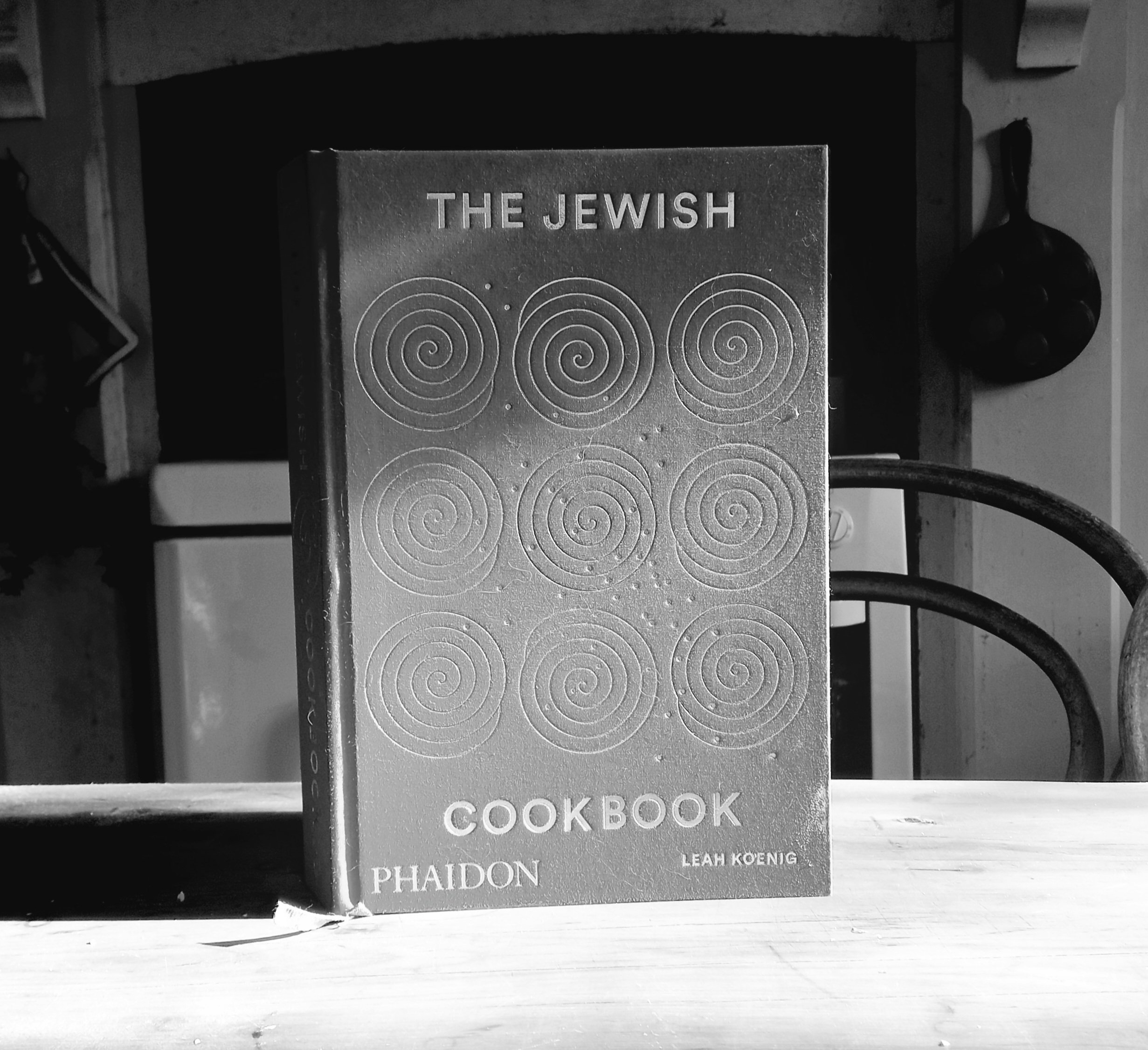
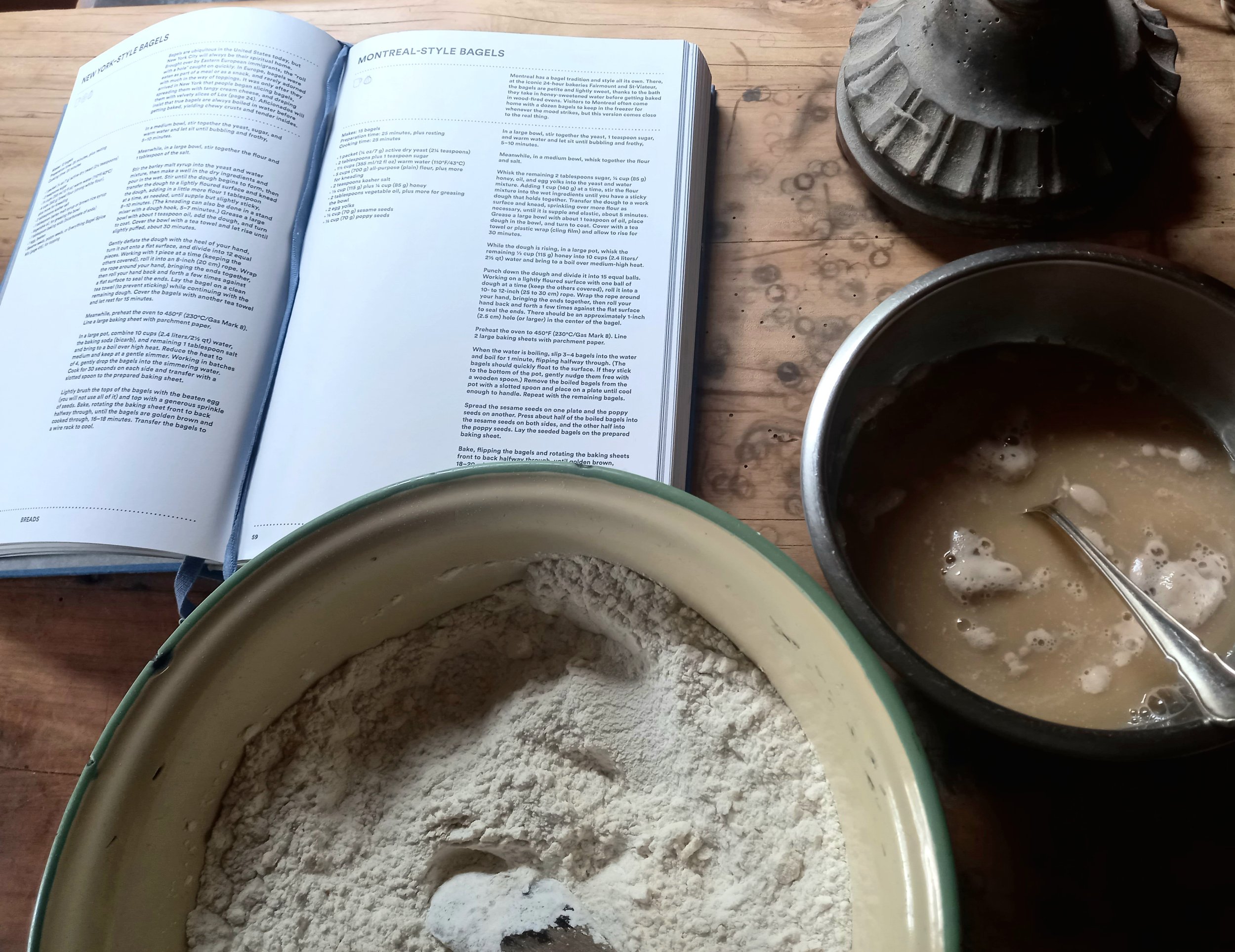
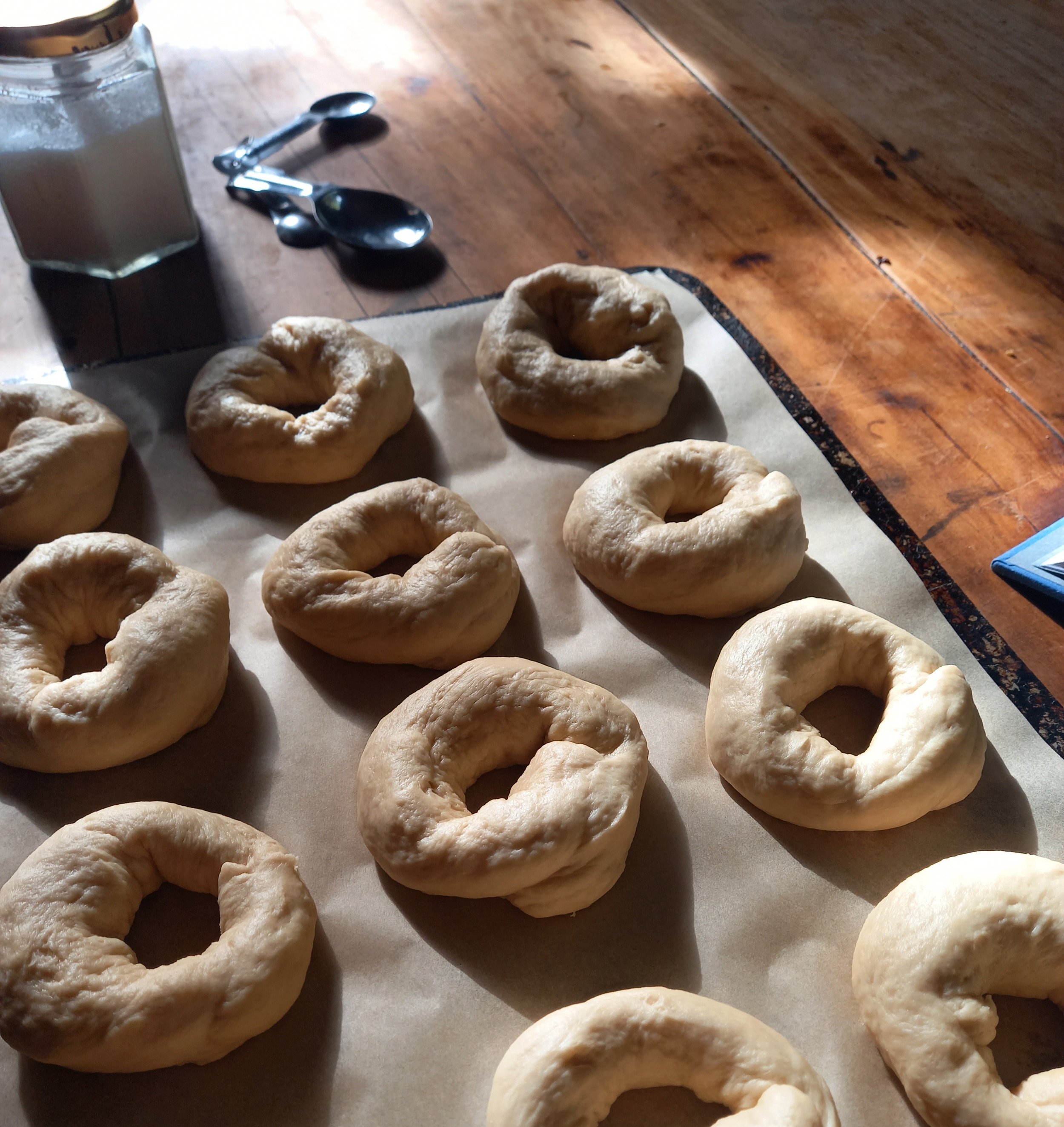
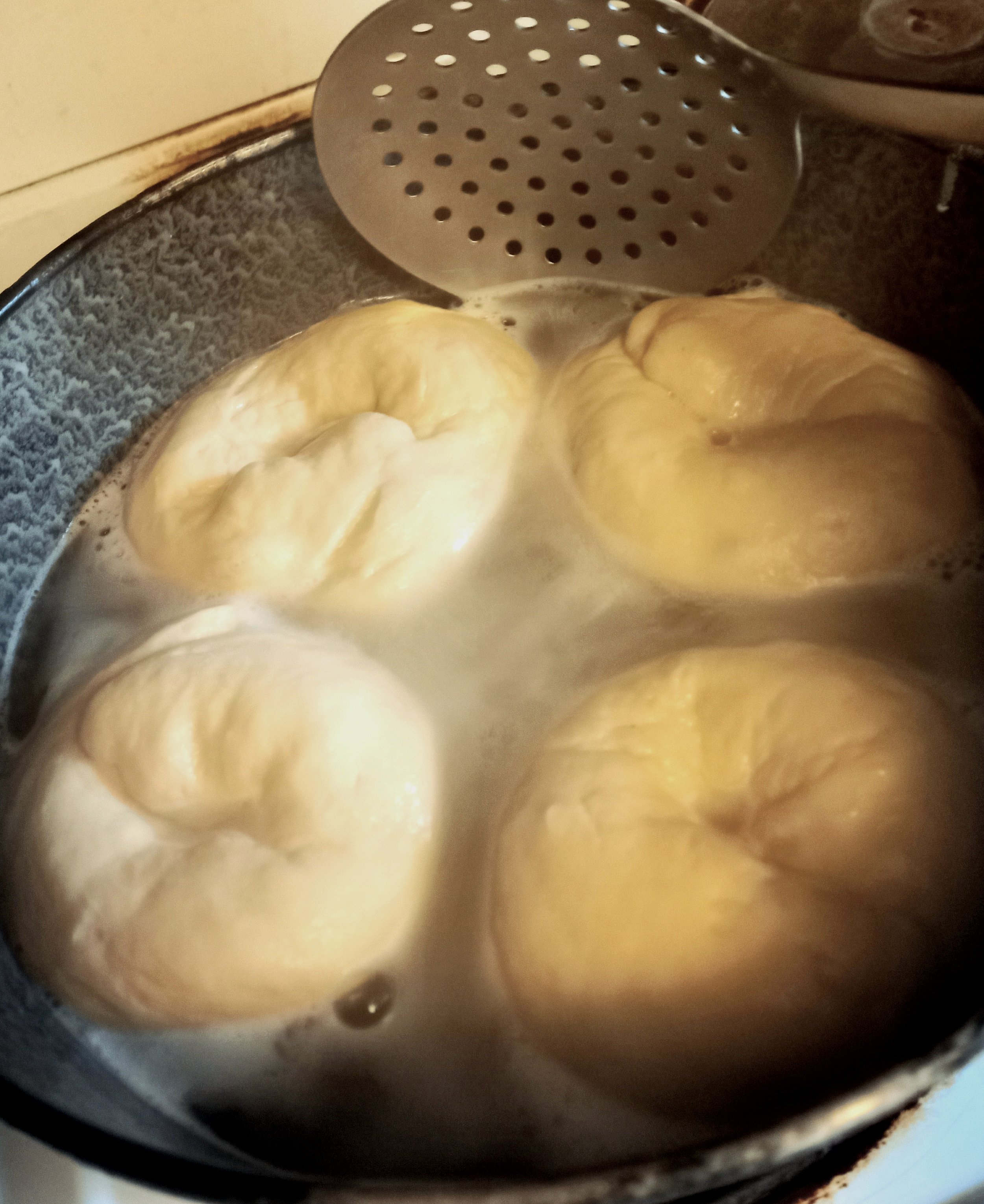
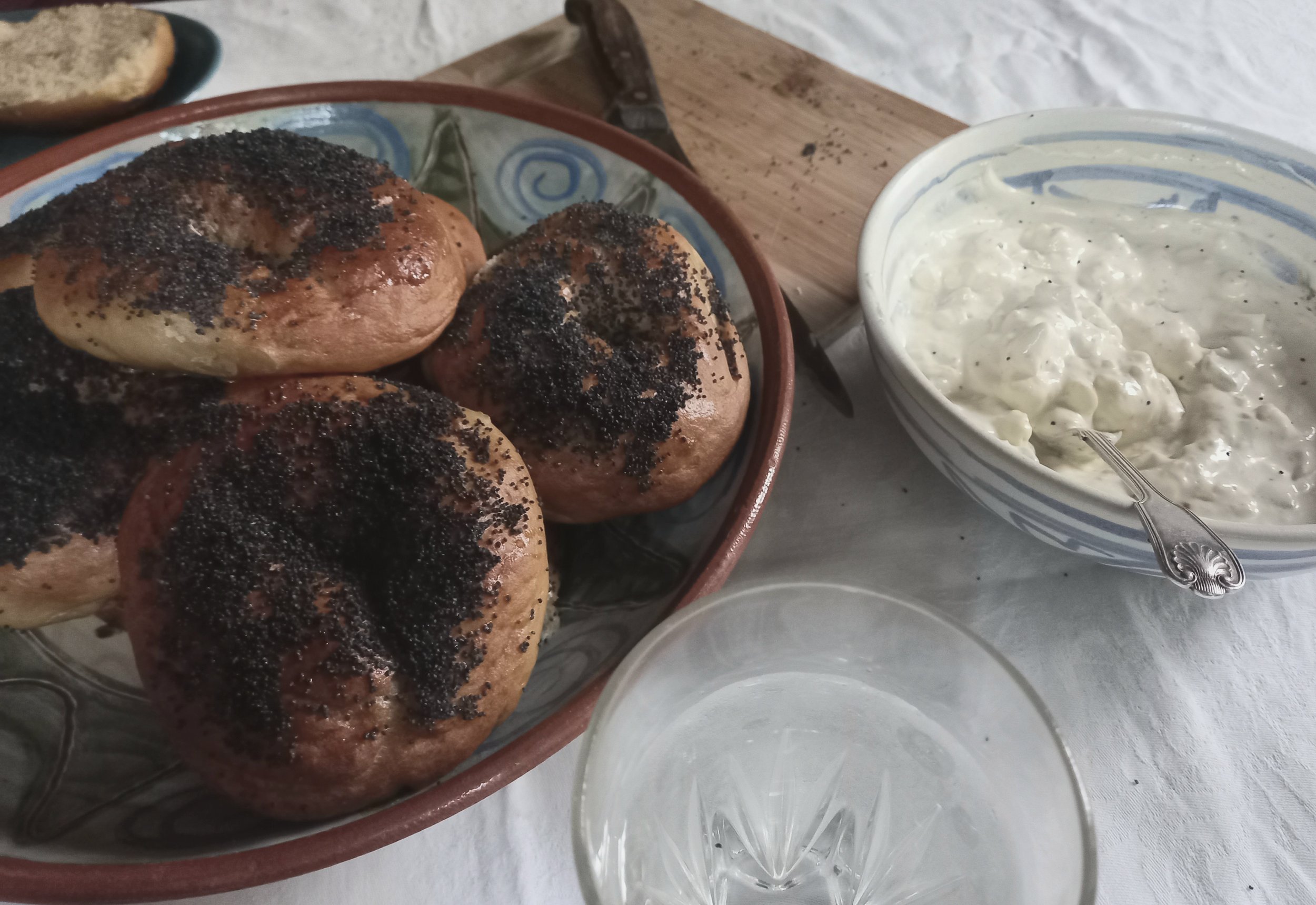
I had always made bagels ‘out of my head’, but since trying the recipe for ‘New York-Style Bagels’ in The Jewish Cookbook by Leah Koenig, I now use this recipe every time. We had these ones with whitefish salad (q.v.). —Thomas

And the Kugelhopf recipe is another of our favourites!

Read our latest NEWSLETTER and find our what we’ve been reading and recommending (and eating!), about some exciting new releases, about a small press we really like, and about the best ways to build your reading stack!
16 June 2023

Selfies by Sylvie Weil (translated from French by Ros Schwartz) — reviewed by THOMAS
The hands holding the book in the painting by Markus Schinwald, and the black curtains between which they protrude, are painted in such a way as to make the viewer suspect that they are looking at a painting, or a part of a painting, by some Old Master, and the viewer, upon researching further, feels a little cheated to find that the artist is still alive. Had we perhaps confused even the name Markus Schinwald with that of some minor Germanic Old Master — perhaps a painter of agonising crucifixions, memento mori and surgically accurate Sts. Sebastians — which would have given this painting, in which the person holding the book into the light is effectively bodiless, concealed behind curtains, a disconcertingly suppressed reference to physical suffering? Maybe we should not feel cheated. Maybe it is the reference to the reference, by way of our confusion, that gives the painting, for us, its meaning.
*
In the picture I didn't end up taking of myself I am sitting in an elderly armchair, the pile of its plush worn to the ghost of its original pattern on the arms and upper back. Beside me is a rather spindly green table upon which sits a vase of stocks, wilted at their tops, and a small empty coffee cup, a lip-mark of coffee at its rim. The sideboard behind me is stacked with books, and the fading light falls from my right onto the book I hold at an odd angle as if trying to postpone the moment in which I will have to get up and switch on a light. I am wearing an ancient green jersey comprised mostly of darning, and my head is thrust awkwardly forward over the oddly angled book, which I seem to be on the verge of finishing. Its title can be read despite the shadow: Selfies by Sylvie Weil.
*
The thirteen exquisite pieces of memoir that comprise Selfies each begin with a description of an actual artwork, a self-portrait by a woman ranging from the thirteen century to today. This ekphrasis is followed by a description of a (possibly hypothetical) self-portrait by Weil which echoes or resonates with the historical work and provides a means of access to the third section of each piece, a more (but variously) lengthy examination of one of the more significant or uncomfortable aspects of Weil’s life. This tripartite structure demonstrates how viewing art can unlock new levels of understanding of our own lives, and how the communication of a stranger’s moment by means of a surface invariably stimulates the viewer’s memory to read that moment in terms of moments from the viewer’s own life, moments pressing at the surface of consciousness from the other side, so to speak. Viewing is remembering. The rigour and delicacy Weil demonstrates in viewing the artists’ works allows her to apply a similar set of criteria to her own memory-images, resulting in a remarkably nuanced set of realisations to be accessed and conveyed, potentially provoking a similar deepening of access in a reader to her or his own memories. Weil’s prose, pellucidly translated from the French by Ros Schwartz, gauges subtle shifts of tone, frequently shifting our understanding of situations or persons before any knowledge about them is attained. The awful American mathematician with whom Weil had a love affair, her son’s mother-in-law, the close friend of her mother’s, the unsympathetic owners of a “Jewish” dog, are all revealed as having complex and often ambiguous relationships with the surfaces they present. Weil’s sentences, at once so straight-forward and so subtle, can move both outwards and inwards at once, operating at various depths simultaneously, as when Weil describes responses to her adult son’s mental breakdown: “I reply politely to friends who say: ‘I wouldn’t be able to cope if something like that happened to my son.’ I didn’t tell them that it could happen to anyone. And that they would cope, as people do. They’d have no choice. I don’t reply that they deserve to have it happen to them. Deep down, I agree that it is unlikely to happen to them. Not to them.” Precision often leads us to the verge of humour, as when Weil describes “the remains of a smile abruptly cut short, as if by the sudden and unexpected arrival of a dangerous animal.” The ‘Self-portrait as an author,’ springing from a description of a 1632 self-portrait of Judith Leyster seen as an advertisement for her portrait commissions (a commercial imperative), is a devastatingly perfect, almost Cuskian account of the people who visited Weil’s signing table at a literary festival. The book is full of images, or moments, details, that implant themselves in the mind of the reader and continue to resonate there in a way similar to the reader’s own memories. What is the purpose of self-depiction? “Everyone takes selfies,” Weil observes. “It’s a way of going unnoticed,” but at the same time each selfie is a form of searching, an attempt to locate oneself, somehow, in the circumstances that comprise one’s life. Memory is the only way we have to attempt to make sense of these moments.
THE JEWISH COOKBOOK Leah Koenig — reviewed by STELLA
Sold on Challah! And some other delights…
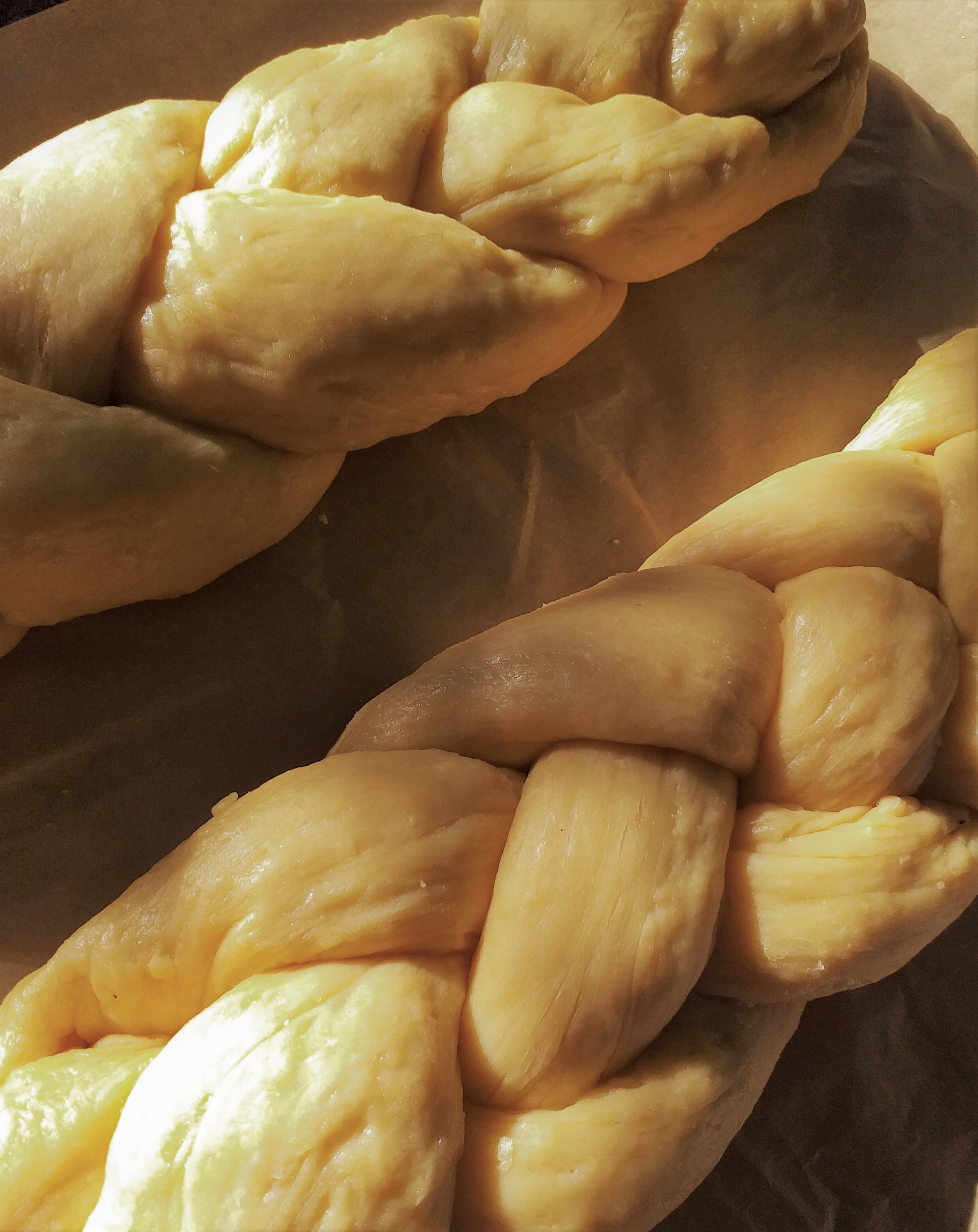
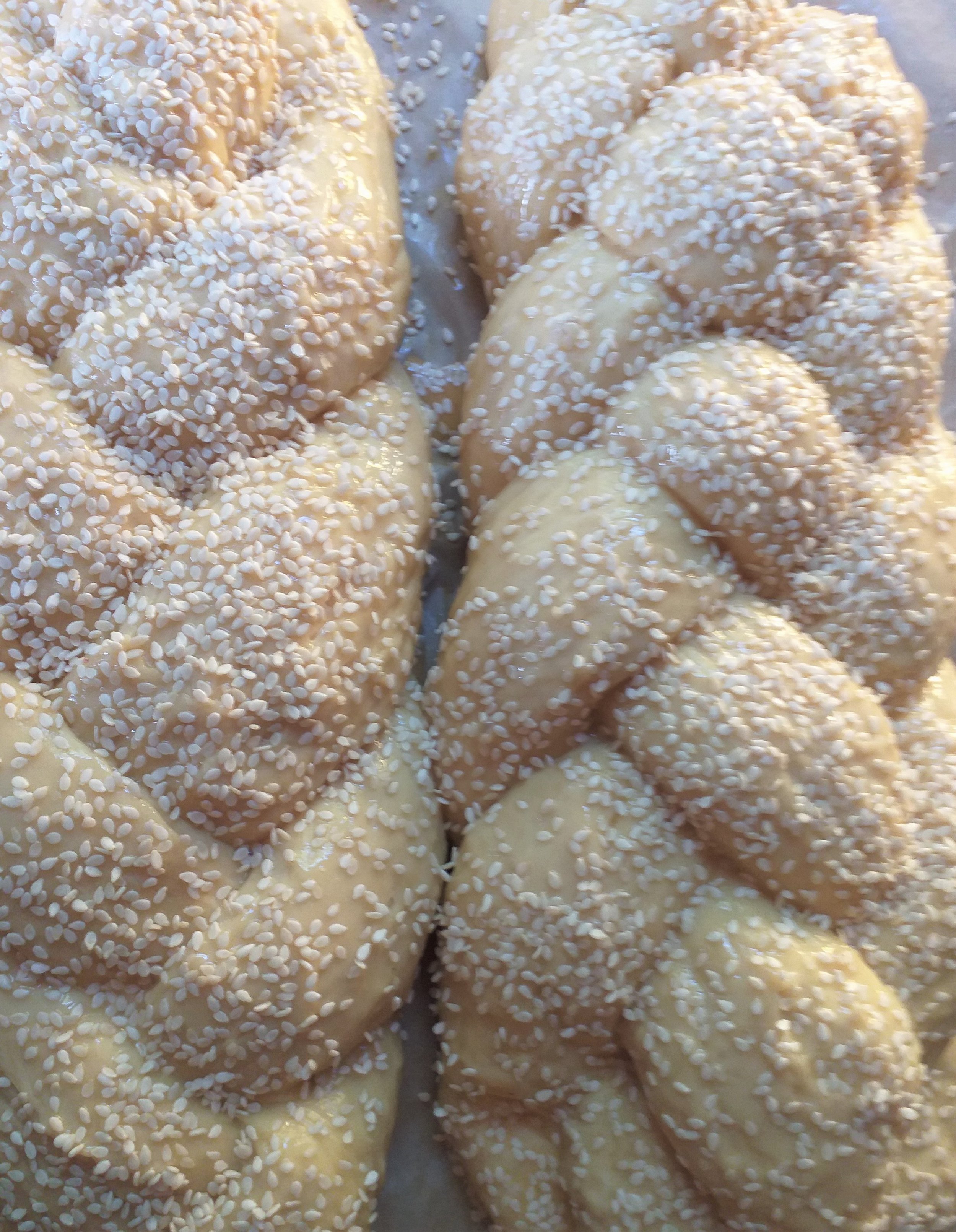
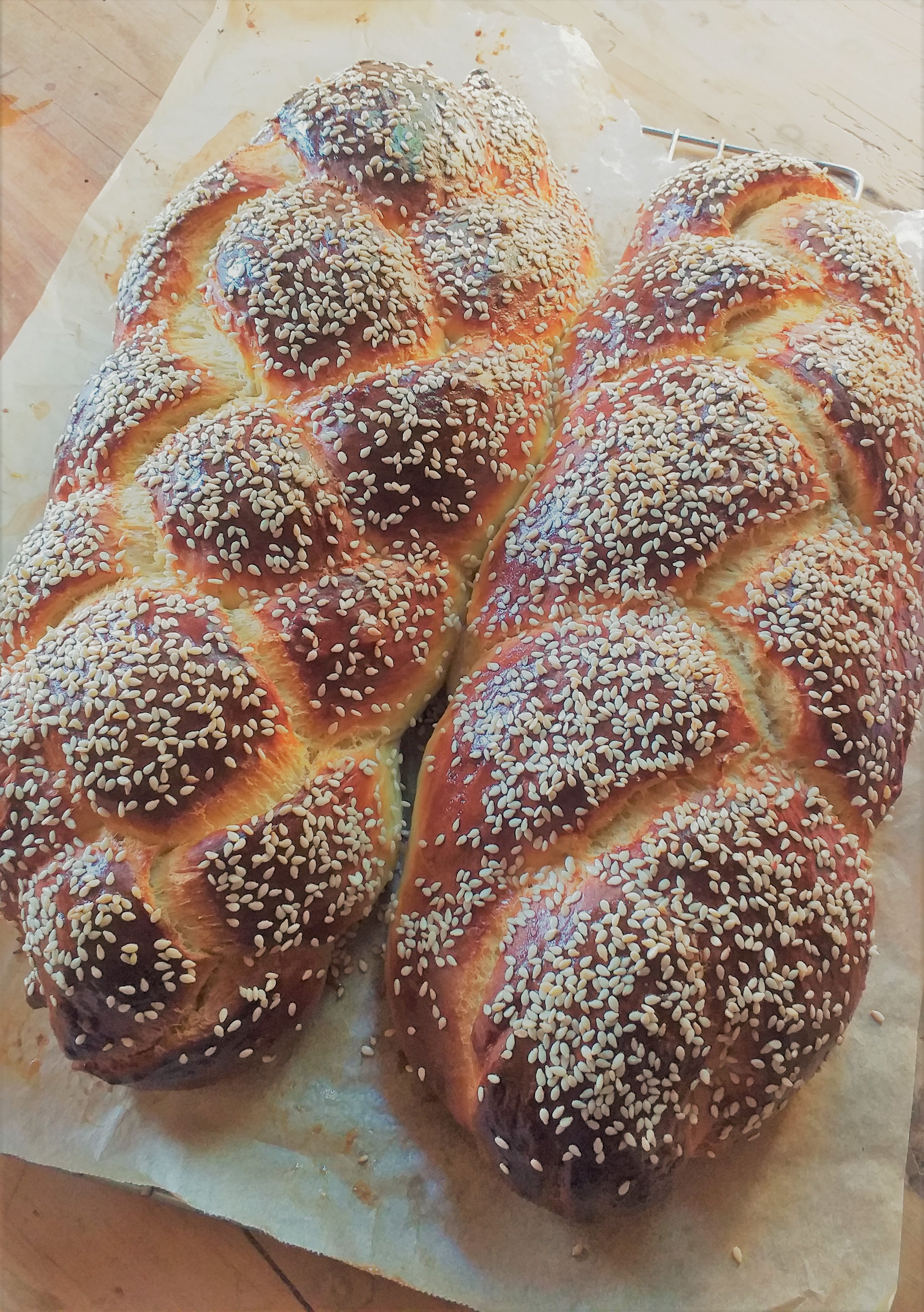
Some cookbooks on your bookcase become favourites and The Jewish Cookbook has become one of my go-to’s since the start of 2023. Every year, for a few now, I plan a birthday celebration around a particular cuisine and this year it was a Jewish feast. Bagels for lunch, an aubergine dish for dinner (à la Ottolenghi), and challah for breakfast. The challah was so delicious, it has become one of our household’s favourite semi-sweet special breads. Here are this week’s loaves. One is a three-plait, the other a four. I haven’t tried a six-plait yet, but anything could happen. The dough is straightforward to make with a good consistency making it easy to knead and shape. It took a little longer to rise, thanks to the cooler seasonal kitchen, but it was worth the wait. I love the combination of oil, eggs, and a little sugar. It’s lighter than a buttery brioche ( and easy to make) but still just as delicious. I’m a fan of a sesame seed topping, but it’s good plain or with poppy seeds for a flavorsome contrast. And the result — on the cooling rack — was quickly sliced for a warm late-afternoon snack. It keeps well, and if it does get a bit stale it’s excellent for French toast.
The Phaidon Cookbooks are renowned for their broad coverage, and in The Jewish Cookbook you will find everything from breakfast to dinner, cakes and dessert, drinks and condiments. The five bagel recipes will keep you attempting to decide which you like the best, and the wonderful variety of fritters and latkas will have you happily standing by your frying pan flipping.
The contributions from chefs, foodies, cafes and restaurants bring contemporary twists and personal takes, as well as the international breadth and diversity so intrinsic to Jewish cuisine. (If you want a Jewish cookbook that explores this diverse cuisine and history in more detail, Claudia Roden’s The Book of Jewish Food was recently reissued and we usually have it in stock) . And the editor of this collection, Leah Koenig, blends it all together wonderfully. So get your bundt tin ready for kugelhopf, get a pot out for borscht, and add sahlab to your winter drinks — it’s a milky drinkable pudding from the Middle East with a splash of vanilla and rosewater, topped with cinnamon and nuts. Warming, sweet and tasty.


A selection of books from our shelves.
Click through to find out more:
New books — just out of the carton! Click through for your copies now.

The Words for Her by Thomasin Sleigh $30
The eagerly anticiapted new novel from the author of Women in the Field, One and Two. Hold up your phone to take a photo and some people won’t be there. Look for them in older images and their bodies are gaps, the rest of the photo still busy around them. People have stopped appearing in photographs. First a handful, then many more. Does this new, troubling group pose a threat? From their home in Whakatāne, Jodie Pascoe and her daughter Jade watch as the number of gaps grows. While protecting Jade, Jodie searches for a friend from the past, Miri, who will help her navigate the collapsing present. The Words for Her is an arresting story about how photographs bind us together and what happens when those binds fall away.
>>Read Stella’s review of Women in the Field, One and Two.
>>Ad Lib.

Past the Tower, Under the Tree: Twelve stories of learning in community edited by Balamohan Shingade and Erena Shingade $38
For many, education is synonymous with uniforms and tote trays, assemblies and sports days. The cool terraces of a lecture theatre; the rotating team of tutors. But another form of education has always existed, and continues in Aotearoa today: teaching that is grounded in relationships, and learning in beloved company. Past the Tower, Under the Tree offers a portrait of twelve artists and activists crafting a life in community. From street theatre to rap, from the tattoo hut to the meditation hall, each contributor offers a window into unexpected contexts and rich forms of practice. In these contributions that span love letters to tributes to appeals, we’re invited to reimagine what it means to learn, and to recover a promise in that process: the possibility of a fuller education, where craft and companionship go together. Featuring contributions from Edith Amituanai, Catherine Delahunty, Mohan Dutta, Dominic Hoey, Areez Katki, Emily Parr, Daniel Michael Satele, Kahurangiariki Smith, Mokonui-a-rangi Smith, Richard von Sturmer, and Terri Te Tau. Beautifully designed, and illustrated throughout.
>>Kōrero with a Tā Moko artist.
>>Also from Gloria: Dwelling in the Margins.

Everything Is Beautiful and Everything Hurts by Josie Shapiro $38
Mickey Bloom: five foot tall, dyslexic, and bullied at school. Mickey knows she's nothing special. Until one day, she discovers running. Mickey's new-found talent makes her realise she's everything she thought she wasn't — powerful, strong and special. But her success comes at a cost, and the relentless training and pressure to win leaves Mickey broken, her dream in tatters. Years later, when Mickey is working in a dead-end job with a drop-kick boyfriend, her mother becomes seriously ill. While nursing her, Mickey realises the only way she can overcome her grief — and find herself — is to run again. A chance encounter with a stranger sees Mickey re-ignite her dreams. The two women form an unbreakable bond, as Mickey is shown what it means to run in the right direction.
”It is both a portrait of an athlete subjected to the male gaze for whom only the result counts, an account of a domination that could be followed by acts of sexual aggression, and a magnificent description of what it really means to run a marathon, in the overcoming of pain, in the terrible effort demanded, in the pleasure one derives from it. This is THE novel that allows us to understand this very special sport. We were caught up in the beauty of this text about a young sportswoman, who runs without us knowing whether she is running or chasing something, but who feels she exists in this effort. It quite simply fascinated us.” —Constance Trapenard, Editions JC Lattes (the publisher of the French edition)

The Financial Colonisation of Aotearoa by Catherine Comyn $30
Finance was at the centre of every stage of the colonisation of Aotearoa, from the sale of Māori lands and the emigration of early colonists to the founding of settler nationhood and the enforcement of colonial governance. This book tells the story of the financial instruments and imperatives that drove the British colonial project in the nineteenth century. This is a history of the joint-stock company, a speculative London property market that romanticised the distant lands of indigenous peoples, and the calculated use of credit and taxation by the British to dispossess Māori of their land and subject them to colonial rule. By illuminating the centrality of finance in the colonisation of Aotearoa, this book not only reframes our understanding of this country’s history, but also the stakes of anti-colonial struggle today.
“Theoretically sophisticated, historically precise, and politically urgent” —Max Haiven
>>Also from ESRA (Economic and Social Research Aotearoa): New Forms of Political Organisation.
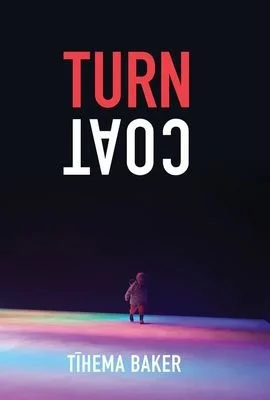
Turncoat by Tīhema Baker $30
Daniel is a young, idealistic Human determined to make a difference for his people. He lives in a distant future in which Earth has been colonised by aliens. His mission: infiltrate the Alien government called the Hierarch and push for it to honour the infamous Covenant of Wellington, the founding agreement between the Hierarch and Humans. With compassion and insight, Turncoat explores the trauma of Māori public servants and the deeply conflicted role they are expected to fill within the machinery of government. From casual racism to co-governance, Treaty settlements to tino rangatiratanga, Turncoat is a timely critique of the Aotearoa zeitgeist, holding a mirror up to Pākehā New Zealanders and asking: “What if it happened to you?”

Wild Places: Selected stories by Katherine Mansfield $40
A handsome hardback edition of 33 of Mansfield’s best stoies. Selected by Claire Harman, author of the excellent All Sorts of Lives.: Katherine Mansfield and the art of risking everything (and a perfect companion to that volume).
”Would you not like to try all sorts of lives — one is so very small — but that is the satisfaction of writing — one can impersonate so many people.” — Katherine Mansfield
”There is something rapturous about her work: through her acute eye and cool, appraising descriptions, she has the power to distil the apparently inconsequential into frozen moments laden with significance.” —Guardian

Soundings: Diving for stories in the beckoning sea by Kennedy Warne $40
For the past 40 years, Kennedy Warne has been exploring the underwater world. His love of the ocean began as a small boy sailing and fishing with this father on the Hauraki Gulf and was further strengthened by a degree in marine biology. This collection draws the reader into 'this shimmering world', beginning with Warne and his father sailing Marline, the boat built by his grandfather, from the Bay of Islands to Auckland. His later adventures writing for National Geographic fill the book with wondrous tales of the otherness of life in the sea; the Natal sardine run, 'the greatest shoal on Earth'; Tuvalu's wandering reef islands; and floating with ragged-tooth sharks off the coast of South Africa. Warne has always felt welcomed by the sea and wants to impart that same sense of belonging to the reader. The oceans as we know them are under threat, but as he travels the waters around New Zealand and the world, Warne discovers a lot to be positive about too. Connection and custodianship are the essential elements that will allow us to restore our relationship with our ancestral seas.
>>Exploring humanity’s relationship with the sea.
>>An immersive act.
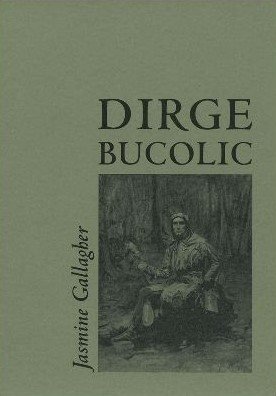
Dirge Bucolic by Jasmine Gallagher $25
Stricken by grief and chronic illness in a breakneck world that refuses to wait, the speaker in survival mode can contemplate colonial history and the heritage of the land with nuance and care. A deep search into the gothic soul of Aotearoa.
”Dirge Bucolic is like a poetics of dust: a mosaic of fragments that are examined with a sharp gaze and recalibrated with a voice both sincere and lyrical. The poet slips around like a ghost, exposing our dark histories, wandering through the grime of our otherwise repressed psyches. Gallagher’s experimental poetry exemplifies the complexities of self, elegising our bucolic backwaters without resorting to an oversimplification of identity. A refreshing voice of Aotearoa poetry that we didn’t know we were waiting for, this book is the remarkable debut of a poet we should all be reading.” —Lynley Edmeades
”In true antipodean form, Gallagher’s Dirge Bucolic inverts the colonial—its language, its archives, its death-drive. Because, growing like flowers through these gritty, playful, ill-met elegiac experiments in autofiction and ecopoetics is the hope that we haven’t completely destroyed the natural world, that we haven’t yet turned the antipodes into a mythical ‘Erewhon’ (nowhere).” —Toby Fitch
”Throughout this book, we see the process of writing “so as to die,” but the destruction of old selves is generative: despite illness, loss, and grief, it is ‘still possible to salvage precious things from their ruins’, Gallagher writes—and in Dirge Bucolic she has.” —Zarah Butcher-McGunnigle
"A richly allusive and nested work that operates in several registers. It’s the knotty, dark little book of sickness and remembrance that we need." —Eric Kennedy (Landfall)

We’re All Made of Lightning by Khadro Mohamed $25
Khadro Mohamed’s We’re All Made of Lightning takes us to distant lands, Egypt and Somalia, in heightened sensory language as she grieves for her homeland. Heart-breaking vulnerability and anger are revealed after a man had taken a knife and sliced straight through the sky on the March 15 attacks. Time, memory, dreams and reality are fluid and woven into lyrical poems and prose poems that consider what she would take if she were to go back to where she came from. —Ockham judges
Winner of the Jessie Mackay Prize for Poetry (best first book) in the 2023 Ockham New Zealand Book Awards.
“These vivid, urgent poems stayed with me. Each poem is its own world of taste and colour: rainwater, moss, wind, a confluence of languages that mirrors the flow of rivers. Khadro Mohamed is an exciting new voice in the poetry of Aotearoa.” —Nina Mingya Powles
“Through her epic storytelling, Khadro unpicks the many layers of the refugee experience. This is a brilliant and insightful poetic journey.” —Abbas Nazari
“Khadro has taken loneliness and cloaked it in images — fireflies in mason jars, foamy goat’s milk, pāua shell and pōhutukawa, her mother's braids. She has cloaked it to brave weather: storms and bright hot sun. She has cloaked it to brave hate and malignant fear, she has cloaked it in languages, the beauty of languages, and has let this loneliness walk from Egypt to Aotearoa and back again. She has taken loneliness and made something vibrant.” —Becky Manawatu

Voyager: The constellations of memory by Nona Fernández $25
One of the world's foremost spots for astronomical observation, the Atacama Desert in Chile is also where, in October 1973, twenty-six people were executed by Pinochet's Caravan of Death. Decades on, a petition gathers for a constellation's stars to be dedicated to them. Nona Fernndez is made a god-mother to Mario Argelles Toro, star HD89353, and asked to write a message to his family. When her own mother begins to suffer from fainting spells, Fernndez accompanies her to neurological examinations. There, the mapping of her mother's brain activity — groups of neurons glowing and sparking on screen — calls to mind the night sky, as memories light up into a complex stellar tapestry. Weaving together the narrative of her mother's illness with stories of the cosmos and of her country, Fernndez braids astronomy and astrology, neuroscience and memory, family history and national history into an intensely imagined autobiographical work. From the author of Space Invaders and The Twilight Zone.
”Nona Fernndez has developed a reputation for composing unsettling portraits of life during Chile's brutal military dictatorship, with stories that venture beyond the stiff and incomplete histories recorded by truth and reconciliation commissions.” —New York Magazine
>>Nostalgia for the Light.
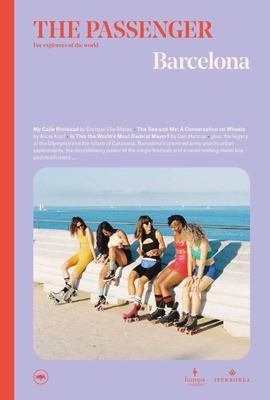
Barcelona (‘The Passenger’) $37
Thirty years after the 1992 Olympics, which redefined the city’s contemporary identity and changed its destiny, ‘The Passenger’ travels to Barcelona to understand the history and future of one of the cradles of political, cultural, and urban change in Europe. From the debate about the impact of mass tourism to the search of new and sustainable models of economic and social development; from the eternal rivalry with Madrid to the rediscovery of the city’s rich tradition of political activism: this volume of ‘The Passenger’ offers a panoramic view of a city striving to trace a new path forward out of the current crisis, and find a way of life centred on the well-being of its citizens. Includes contributions from Enrique Vila-Matas, Gabi Martinez and Miqui Otero. Fully illustrated.
>>Other volumes of ‘The Passenger’.

The Bookbinder of Jericho by Pip Williams $38
In 1914, when the war draws the young men of Britain away to fight, it is the women who must keep the nation running. Two of those women are Peggy and Maude, twin sisters who work in the bindery at Oxford University Press in Jericho. Peggy is intelligent, ambitious and dreams of studying at Oxford University, but for most of her life she has been told her job is to bind the books, not read them. Maude, meanwhile, wants nothing more than what she has. She is extraordinary but vulnerable. Peggy needs to watch over her. When refugees arrive from the devastated cities of Belgium, it sends ripples through the community and through the sisters’ lives. Peggy begins to see the possibility of another future where she can use her intellect and not just her hands, but as war and illness reshape her world, it is love, and the responsibility that comes with it, that threaten to hold her back. From the author of The Dictionary of Lost words.

She Is a Haunting by Trang Thanh Tran $20
Jade Nguyen has always lied to fit in. She's straight enough, Vietnamese enough, American enough at least for this summer with her estranged father in Vietnam. Just five weeks of ignoring the quietly decaying French colonial house he's fixing up, then college and freedom are hers. But soon Jade begins waking up every morning certain that something has clawed down her throat — from the inside. Then the ghost of a beautiful bride visits her with a cryptic warning — DON'T EAT. When her father and little sister don't believe her, Jade decides to scare them into leaving by staging some haunting events of her own. She recruits Florence, the daughter of her dad's business associate (and more of a distraction than Jade bargained for) to help. But the house has other plans. It's hungry. A home, after all, is only as powerful as those who breathe new life into its bones. And this one is determined never to be abandoned again... YA novel.

The Quiet and the Loud by Helena Fox $23
George's life is loud. On the water, though, with everything hushed above and below, George is steady, silent. Then her estranged dad says he needs to talk and George's past begins to wake, looping around her ankles, trying to drag her under. But there's no time to sink. George's best friend, Tess, is about to become a teen mum, her friend Laz is in deep climate grief, her gramps keeps losing all his things, and her mums fill the house with fuss and chatter. Before long, heat and smoke join the noise as distant wildfires begin to burn. Everything is loud, blazing, messy. Could Calliope, the girl who has just cartwheeled into George's world and shot it through with dazzling colour, be her calm amidst the chaos?

This small press has published some of our favourite books!
Les Fugitives champions the publication in English of both new and established voices from the Francophone literary world, especially female authors who have never before been published in English. Working with a variety of internationally acclaimed and new translators, Les Fugitives brings a new kind of writing to Anglophone readers: literary works defying categorisation, texts that tell a certain kind of ‘fugitive’ story. Les Fugitives is an independent literary press based in London, founded in 2014 by French translator Cécile Menon.
To encourage you to discover these excellent books, use the code FUGIT when checking out for a 10% discount (offer expires 22.6.23).
Click through to find out more about the books:
Blue Self-Portrait by Noémi Lefebvre (translated by Sophie Lewis): A woman’s feelings of shame and failure desplay Lefebvre’s exquisite fugue-like sentences. >>Read Thomas’s review.
Poetics of Work by Noémi Lefebvre (translated by Sophie Lewis): The narrator stuggles to find a way to live, overhwelmed by their father and by a society slipping towards fascim. >>Read Thomas’s review.
Chicanes by Clara Schulmann: As she collects them for an essay she is writing, the author becomes the channel for many women’s voices, which affect her in unexpected ways. >>Read Stella’s review. >>Find out more.
Translation as Transhumance by Mireille Gansel (translated by Ros Schwartz): A humanist meditation on the art of translation. >>Read Thomas’s review.
We Still Have the Telephone by Erica van Horn: A wonderfully well-observed mosaic of short pieces on the author’s mother, evoking the slippage of the remembered world from that lived in old age.
No.91/92: Notes on a Paris Commute by Laurn Elkin: Ordinary and infraordinary observations made on a repeated bus route test the relationship between private and shared experience. >>Read Thomas’s review.
Now, Now, Louison by Jean Frémon (translated by Cole Swensen): A second-person ventriloquised autobiographical fiction ‘by’ the artist Louis Bourgeois. >>Read our reviews.
Nativity by Jean Frémon (translated by Cole Swensen), drawings by Louise Bourgeois: A conseration of flesh and anatomy in paintings of the infant Jesus, with five radical drawings by Bourgeois.
Portrait Tales by Jean Frémon (translated by John Taylor): Why do we have an urge to parry death with images?
Selfies by Sylvie Weil (translated by Ros Schwartz): Thirteen exquisite pieces of memoir springing from looking at self-portraits by women. >>Read Thomas’s review.
This Tilting World by Colette Fellous (translated by Sophie Lewis): Deciding to leave Tunisia for good, Fellous looks back at her childhood in the Jewish community of Tunis in the context of the death of a friend and a terrorist attack. >>Read Thomas’s review.
Suite for Barbara Loden by Nathalie Léger (translated by Natasha Lehrer and Cécile Menon): A searing exploration of women’s agency and passivity, centred on the remarkable film Wanda. >>Read Thomas’s review.
The White Dress by Nathalie Léger (translated by Natasha Lehrer): The fate of the artist Pippa Bacca becomes the centre of an exploration of the relationship between art and violence. >>Read Thomas’s review.
Exposition by Nathalie Léger (translated by Amanda DeMarco): A meditation on the half-truths of portrait photography, and the possibilities of (self)(mis)representation. >>Read Thomas’s review.
The Fool, And other moral tales by Anne Serre (translated by Mark Hutchinson): Four astounding stories about the ‘perils’ of desire.
The Governesses by Anne Serre (translated by Mark Hutchinson): A dreamlike tale of desire, power and ambivalence.
Eastbound by Maylis de Kerangal (translated by Jessica Moore): A desperate Russian conscript hopes a chance encounter with an older French woman on the Trans-Siberian Railway will offer him a line of flight.
Eve Out of Her Ruins by Ananda Devi (translated by Jeffrey Zuckerman): Four young people react against their hazardous future in a Mauritian slum (young adults’ edition).>>Read Thomas’s review.
The Living Days by Ananda Devi (translated by Jeffrey Zuckerman): An elderly white woman and a British-Jamaican boy find their relationship threatened by white supremacy, desperation and class conflict on the streets of London.
Down With the Poor! by Sumona Sinha (translated by Teresa Lavender Fagan): A woman (herself an immigrant) tries to understand the rage that led her to attack a refugee.
May the Tigris Grieve for You by Emilienne Malfatto (translated by Lorna Scott Fox): A poetic account of war, loss, tradition and the oppression of women in rural Iraq.
The Child Who by Jeanne Bonameur (tranlsted by Bill Johnston): A child loves to wander a forest where his mother may have disappeared. His father is speechless with anger; his grandmother is concealing her own story.
Little Dancer, Aged Fourteen by Camille Laurens (translated by Willard Wood): An exploration of the life of the model for the famous work by Degas, revealing the misogyny and hypocrisy of their time (and ours).
Absence by Lucie Paye (translated by Natasha Lehrer): A painter obsessively attempts to resolve a figure who keeps appearing under his brush, and a woman adresses letters to an absent loved on.
A Respectable Occupation by Julia Kernion (translated by Ruth Diver): A twining of French and English literary traditions in this account of the writer’s childhood.

Some things grow down and other out and up. In Dig, the potato tuber takes centre stage while in Wilder Girls a plant-like toxin is trying to take everything over, including the inhabitants of an island. These two teen novels are both excellent. Dig by A.S. King deals with some big issues in the world of a group of teens in a Southern town in America while Wilder Girls by Rory Power lands us in Raxter, a girls' boarding school on an island. Each explores the ferocity and grit of teens to overcome challenging situations.

Wilder Girls has been described as The Power meets Lord of the Flies. Hetty, Reese and Byatt are firm friends and become even more dependent on each other as the situation on Raxter escalates. And what a situation it is! The Tox, a robust and vigorous plant-form is suffocating and mutating the environment, as well as the children and teachers that live on the island. Some merely succumb to the plague and die, while others are damaged or find themselves with a variety of growths — extra spinal structures, silvered arms. The island is in quarantine awaiting, the girls think, rescue. Each girl has her role to play, and when Hetty is chosen to be one of a small team to go to the jetty to collect food and other supplies, she realises that the teachers (who are still alive — just two of them) are not being up-front about the school’s predicament. It’s dangerous outside the gates of the school, and at night the mutated forest creatures are hungry beasts who need to be warded off from entering the school grounds. With this mix of illness and fear, the girls, while living chaotically and dividing themselves off into groups pitted against each other, are kept at arm's length from the truth. No one is coming to rescue them. When Byatt has a relapse and disappears from the school infirmary, Hetty and Reese go in search of her, in search of the cause of the Tox and a way off the island. This gripping, imaginative tale where many can not be trusted, where a fierce friendship will help overcome devastation, where you will keep reading despite a sense of unease (it’s a little creepy — the intruding vines and branches) and you will hold your breath until the surprising end.
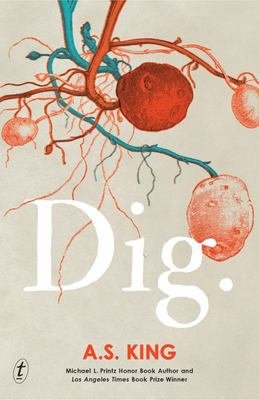
Dig is quieter in its telling but no less powerful. Bringing together of the lives a group of teens whose stories ultimately will intertwine, A.S. King’s young adult's novel is a brilliant piece of work. Set in the South, we are introduced to the characters through their eccentricities: The Freak — a girl who is off the rails and bullied, The Shoveler — a boy who has arrived in a new town (for the umpteenth time) always the outsider, CanIHelpYou? — a girl who works in a drive-thru handing out junk food and hustling hash on the side, Loretta and her flea circus who live in a trailer home with an abusive father and down-trodden mother, and Malcolm — who doesn’t eat lamb. The teens live normal lives, go to school, make some pocket money, regret or despise their parents, try to make their own decisions and go their own way when they can, but reality throws them curve-balls. And then you also meet the young thugs of the town. Bill and Jake, along with the respectable elderly couple, Marla and Gottfried. and as the story progresses you realise that they are tarred with the same brush. Dig down a little and the past, its injustices and prejudices make a quick route to the surface. King does not shy away from the racism, abuse and double standards that permeate middle America and the small-town attitudes that act as a fertiliser. Why are Marla and Gottfried in a position of superior wealth? Why has The Shoveler’s mother moved them to this small town? Why can’t HowCanIHelpYou? remain friends with Ian (her closest friend since primary school)? And why do they all see The Freak unexpectedly flickering in and out of their lives what is she trying to tell them? Dig down and it’s all there underground. Rot, as well as hope.

Ducks, Newburyport by Lucy Ellmann {reviewed by THOMAS}
The fact that the wind is now making the branches scrape against the wall of the house as he sits down to write, though at least they only scrape when the wind blows, he thinks, and even when the wind blows it blows in gusts, so the scraping is not constant, not that it’s any less irritating, he thinks, the fact that this irritation is preventing him from starting to write, the fact that here he is, starting to write his review at the end of the day, despite what he just said, at what is almost the end of the day, at the end of the week, and such a week, the fact there is therefore a deadline of sorts to the completion of his review, the fact that he has not even started to write his review, despite what he just said, the fact that he would prefer to finish reading his book than write his review of the book, the fact that he is enjoying the book, very much, while he is reading it, but if he enjoys reviewing the book the enjoyment will only come when the writing is completed, which seems hardly fair, the fact that the book he is reading and enjoying is over one thousand pages long and is floppy and unwieldy like a paperback dictionary, which seems somehow appropriate, both in that it is floppy and unwieldy, in that it is about the floppiness and unwieldiness of being alive, as a human, in the twenty-first century, conscious and at the mercy of thought, and also in that the book is, in a way, similar to a dictionary in that it could make a fairly good claim to being an exhaustive catalogue of the miseries of consciousness, which is a sort of language, or a field in any case defined by language, the fact that the book is very funny, funny and painful, he thinks, just like consciousness, the fact that nobody should ever publish a paperback dictionary, unless it is a dictionary for incurious people, and there could be a market for that, he thinks, otherwise paperback dictionaries are insufficiently robust to be used more than a very few times, the fact that the floppiness and the unwieldiness of Ducks, Newburyport, the novel by Lucy Ellmann that he is going to review, seem somehow appropriate qualities for this novel of over one thousand pages, being slightly irritating but also in a way comedic and intriguing, just like life in the twenty-first century, the book’s ostensible subject, the fact that Ellmann is “the Proust of modern afflictions”, which quote he made up himself and disposed in speech marks to give it authority, perhaps that should have a capital M, he thinks, that fact that Modernism is a project to undo, or outdo, the strictures of form in order to make literature more resemble thought, the fact that Lucy Ellmann has made her novel resemble thought to the extent that it is both terrifying and compulsive, the fact that thought pops up all over the place, the fact that thought resurges, that is not a good word, he thinks, the fact that we are besieged at all times by thought, the fact that we are submerged in thought at all times, thought from outside our heads, both absolutely us and not us really at all, the fact that we are trying to keep our heads up, above the thoughts, but we can’t, the fact that we think to avoid thinking, the fact that wherever we look there’s a thought, the fact that, if he has to compare Ducks, Newburyport with something, it would be with an itch, as in when you ask yourself, Do I have an itch, then, invariably, you have an itch somewhere, perhaps on your elbow, or at the back of your neck, or an itch on your back, and, if you ask yourself, Do I have another itch, then you have another, and soon, as you know, you will have an itch anywhere you think about, you have itches everywhere, you are one great itch, well Ducks, Newburyport is like that, he thinks, a woman is assailed by her thoughts, she is at the mercy of her thoughts, the thoughts she produces, or, rather, the thoughts that assail her, for, he thinks, obsession is the state of being at the mercy of your own proclivities, the fact that Ducks, Newburyport is written as an endless stream of everything that annoys, or itches, or stimulates, or pains, same thing, a mind in this world, it is, he thinks, a catalogue of thoughts and the thoughts that get in the way of thought, for, he thinks, we all think to avoid thought, we’ve been there before, but, he thinks, not really a catalogue, the opposite of a catalogue, whatever the word for that is, a mishmash perhaps, now there’s a good Yiddish word, a mishmash of thought, linearly recorded, how else, the fact that Ducks, Newburyport is largely a one-thousand-page sentence, no, more than a one-thousand-page sentence, Ducks, Newburyport is a one-thousand-page list, the fact that he had always liked lists, in literature at least, the fact that he had at one time made a list of his favourite lists in literature, though he has lost this, the fact that the one-thousand-page list in Ducks, Newburyport, the one-thousand-page list that is Ducks, Newburyport, except for a short intercut story, told in sentences, about a mountain lion searching for her cubs, told from the mountain lion’s point of view, from a point of bafflement and disgust at humans and their world, which is pretty much an appropriate conclusion, judging from the rest of the text, which is told from a human’s point of view, the fact that the one-thousand-page list that comprises (most of) Ducks Newburyport, uses the phrase “the fact that” to separate its entries, or, rather, to introduce its entries, or, shall we say, to structure its entries, the fact that he finds the fact that the author uses “the fact that” to structure a novel, or a list, if the two forms can be separated, who cares, to structure a novel about living, about striving to live, rather, in a so-called post-factual world, the fact that this post-factual world is overwhelmed with information but short on truth, whatever that is, he thinks, this is the world in which we are all immersed, you’re soaking in it, a meme predating memes, it’s all memes, way back to the beginning of time, that fact that he decided he could write like this, too, in fact it became, as he read Ducks, Newburyport, more and more difficult not to write this way, in a list, like thought, he thinks, the fact that the more he writes in this way, the easier it becomes, and soon, he thinks, the difficulty will not be in writing but in stopping writing, the fact that he might not be able to stop, at least until he has written at least one thousand pages, which would be a remarkable application of method, apart from the fact that Lucy Ellmann has already written one thousand pages in this way, at whatever cost to herself, and to her family, and to her sanity, she had done it, so his achievement in writing his one thousand pages would be a fairly useless and unimpressive achievement, unimpressive on the literary front even if it might remain impressive on the insanity front, the fact that it would still be impressive for its cost to himself, and to his family, and to his sanity, impressive in a negative sense but not impressive in a positive sense, the fact that Lucy Ellmann has already, rightly, appropriated all the benefit from such an enterprise, the fact that Lucy Ellmann was short-listed for the Booker Prize for her one-thousand-page sentence, whereas he would have achieved nothing but the limits of his sanity, the fact that Lucy Ellmann may have achieved the limits of her sanity, though she has nerves of steel, he thinks, and may not even have neared the limits of her sanity, although the book might not have been so good if she had not, the fact that he does not have nerves of steel, he has nerves of tin, the fact that he would soon achieve the limits of his sanity, if he has not already achieved them, the fact that a one-thousand-page review of a one-thousand-page novel would not get him shortlisted for the Booker Prize, or even short-listed for even one person’s attention, the fact that he did not deserve even one person’s attention, the fact that Lucy Ellmann has already appropriated all the available attention for writing in this way, even if this is less attention than she deserves for writing in this way, the fact that she has written an outstanding one-thousand-page novel about human consciousness in the twenty-first century, but that, if he completes his one-thousand-page review of this novel he will be acclaimed as nothing more than a nuisance, if he is acclaimed anything at all, which is unlikely, the fact that benefit is finite but, it seems, detriment is infinite, the fact that negative consequences are inexhaustible, whereas positive consequences are soon exhausted, the fact that Lucy Ellmann’s project is forensic, though forensic about a crime that is infinitely dispersed in both its origins and consequences, the fact that this novel is not only about a woman's life, it is a woman’s life, but not her life only, the fact that a mountain lion’s life has clarity whereas a human life is without clarity, or so it seems, there are too many thoughts, and where do they come from, he thinks, the fact that reading Ducks Newburyport has made him aware of his thoughts, all his thoughts, including the thoughts he represses because they get in the way of his thinking, the fact that, now that he is aware of the mishmash of his thoughts, to use the technical term, his brain will just keep coming up with thoughts, make it stop, a list of thoughts, like in Ducks, Newburyport, structured by the phrase “the fact that”, even at times, such as when he is in the shower, or driving, when it is impossible to record these thoughts, the fact that these thoughts are lost but that the thoughts that arise from these thoughts keep arising, the fact that they show no sign of abating, the fact that this frightens him, at least a little, the fact that there will always be more thoughts is a thought that he finds horrible, the fact that all these thoughts are pushing at him, crowded at the edge of his awareness, waiting their turn, this is a horrible thought, he thinks, the fact that he needs to stop writing before it becomes impossible to stop writing, which has occurred to him before, the fact that he has, in any case, run out of time, there's a deadline after all, and whatever he's written must pass for a review, he'll call it a review, the fact that although he cannot bear to carry on, neither does he want to stop.
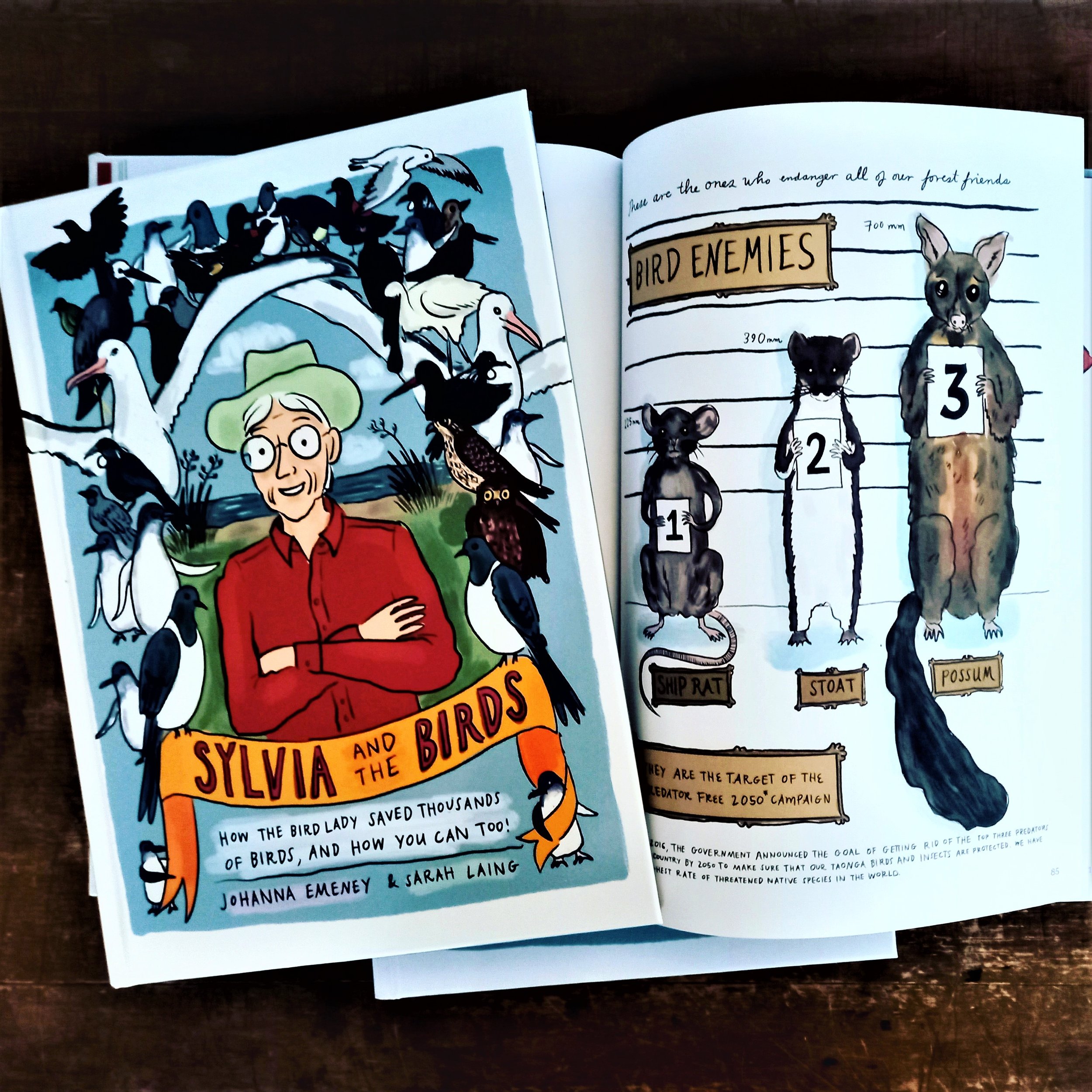
Sarah Laing and Joanna Emeney have produced an inspiring graphic biography of Sylvia Durrant, who helped over 140,000 sick, injured and lost birds during her lifetime and serves as an exemplar of caring for and learning about the natural world around us. SYLVIA AND THE BIRDS: How The Bird Lady saved thousands of birds, and how you can, too is also a practical — and enjoyable — guide to protecting our birdlife. It blends natural history and mātauranga Māori, photographs and Laing's wonderful illustrations, and details the wonders of our native birds, the threats they face and how we can help them. The book has just been announced as a finalist in the 2023 New Zealand Book Awards for Children and Young Adults.
New books — just out of the carton! Click through for your copies.

Pet by Catherine Chidgey $38
The new novel from the winner of the Jann Medlicott Acorn Prize for Fiction in the 2023 Ockham New Zealand Book Awards. Like every other girl in her class, twelve-year-old Justine is drawn to her glamorous, charismatic new teacher and longs to be her pet. However, when a thief begins to target the school, Justine's sense that something isn't quite right grows ever stronger. With each twist of the plot, this gripping story of deception and the corrosive power of guilt takes a yet darker turn. Young as she is, Justine must decide where her loyalties lie. Set in New Zealand in the 1980s and probing themes of racism, misogyny and the oppressive reaches of Catholicism, Pet will take a rightful place next to other classic portraits of childhood betrayal.
"A writer of formidable resources, a deft stylist possessed of uncanny imaginative acuity." —The Guardian
>>Wrestling with admiration.
>>Find out about the Acorn-winning The Axeman’s Carnival.
>>Other books by Catherine Chidgey.

Through Shaded Glass: Women and photography in Aotearoa New Zealand, 1860—1960 by Lissa Mitchell $70
The contribution of women to the first century of photography has been overlooked across the world, including in New Zealand. With few exceptions, photographic histories have tended to focus on the male maker. This important book tilts the balance, unearthing a large and hitherto unknown number of women photographers, both professional and amateur, who operated in New Zealand from the 1860s to 1960, either as assistants in the early studios or later running studios in their own right. Through images and individual stories, it brings an important group of photographers into the light.
>>Have a look inside!

The Specters of Algeria by Hwang Yeo Jung (translated from Korean by Yewon Jung) $38
A group of dramatists commit what was a subversive act during the South Korean military dictatorships of the twentieth century — distributing copies of Karl Marx’s only surviving play, The Specters of Algeria. The consequences of the brutal crackdown by the authorities would set the directions of the lives of two children of the group’s members, Yul and Jing. Despite the deep connection between them, Yul would open up an alteration shop in Seoul and Jing would move to Europe. But now, Cheolsu, a dissatisfied employee at a community theatre, is unearthing the truth about The Specters of Algeria and questioning whether the human situation is as absurd as the play asserts.
>>Fact and fiction are irrevelant.

Owlish by Dorothy Tse (translated by Natascha Bruce) $35
In the mountainous city of Nevers, there lives a professor of literature called Q. He has a dull marriage and a lacklustre career, but also a scrumptious collection of antique dolls locked away in his cupboard. And soon Q lands his crowning acquisition — a music box ballerina named Aliss who tantalisingly springs to life. Guided by his mysterious friend Owlish and inspired by an inexplicably familiar painting, Q embarks on an all-consuming love affair with Aliss, oblivious to the sinister forces encroaching on his city and the protests spreading across the university that have left his classrooms all but empty. Thrumming with secrets and shape-shifting geographies, Dorothy Tse's extraordinary novel is a inventive exploration of life under repressive conditions.
”Beguilingly eerie, richly textured, the pages of Owlish are drenched in strange beauty and menace. Like all the best fairy tales, it reveals the dark truths that we would rather not look at directly, and does so with a surreal and singular clarity.” —Sophie Mackintosh
”Dorothy Tse is a magnificent historian of unreal places. Her sage and serious characters are cast adrift in realities that are neither sage nor serious at all — and possibly impossible. Her parallel worlds and paradoxes brilliantly illuminate our own reality, with all its fictions masquerading as facts (and vice versa). Boundlessly creative, richly philosophical — I loved this book.” —Joanna Kavenna
>>The translator reads from the novel.

Fresh Dirt from the Grave by Giovanna Rivero (translated by Isabel Adey) $38
In Fresh Dirt from the Grave , a hillside is "an emerald saddle teeming with evil and beauty." It is this collision of harshness and tenderness that animates Giovanna Rivero's short stories, where no degree of darkness (buried bodies, lost children, wild paroxysms of violence) can take away from the gentleness she shows all violated creatures. A mad aunt haunts her family, two Bolivian children are left on the outskirts of a Metis reservation outside Winnipeg, a widow teaches origami in a women's prison and murders, housefires, and poisonings abound, but so does the persistent bravery of people trying to forge ahead in the face of the world. They are offered cruelty, often, indifference at best, and yet they keep going. Rivero has reworked the boundaries of the gothic to engage with pre-Columbian ritual, folk tales, sci-fi and eroticism, and found in the wound their humanity and the possibility of hope.
>>Other books by Latin American authors published by the wonderful Charco Press.

Honouring Our Ancestors: Takatāpui, Two-Spirit and Indigenous LGBTQI+ well-being edited by Alison Green and Leonie Pihama $35
In these rigorous and challenging essays, writers from Aotearoa and Turtle Island (Canada and the United States of America) explore the well-being of takatāpui, two-spirit, and Māori and Indigenous LGBTQI+ communities. Themes include resistance, reclamation, empowerment, transformation and healing. Central to Honouring Our Ancestors is the knowledge that, before colonisation, Indigenous peoples had their own healthy understandings of gender, sexual identities and sexuality. Some of these understandings have survived the onslaught of colonisation; others require decolonisation so that our Indigenous nations can begin to heal. Through this lens, the writers gathered here contribute their knowledge and experience of structural and social change.

I’m a Fan by Sheena Patel $23
This novel tells the story of an unnamed narrator’s involvement in a seemingly unequal romantic relationship. With a clear and unforgiving eye, Sheena Patel makes startling connections between power struggles at the heart of human relationships to those in the wider world, offering a devastating critique of social media, access and patriarchal systems.
”A fast, fizzing cherry bomb of a debut, mining the darkest depths of coercion, seduction and abuser dynamics. Like a sociopathic ex who's stalking your Twitter, I'm a Fan will stick with you for a very long time.” —Observer
”I'm a Fan digs its nails deep into the contradictions of power and status with a brutally steady gaze. It's rare to find a book so thrillingly unafraid to offend, so willing to forgo niceties, so full of verve and bristling with insight.” —Alexandra Kleeman
>>Say the thing that you’re not supposed to say.
>>Sheena Patel wants to make you feel sick.
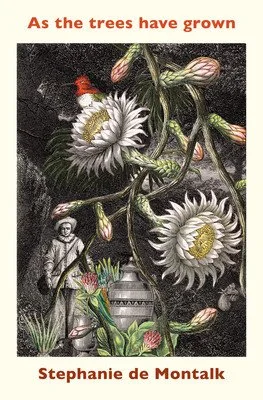
As the Trees Have Grown by Stephanie de Montalk $25
The poems in Stephanie de Montalk's new collection engage with the world as if through a window - cloaked, distanced, guided by the movements of the seasons, the weather, and always, trees. As de Montalk seeks a cure to the life-changing limitations of her physical self, she finds something close to solace in dreaming. These poems are always evocative, mysterious, reaching towards the possibility and hope of healing.
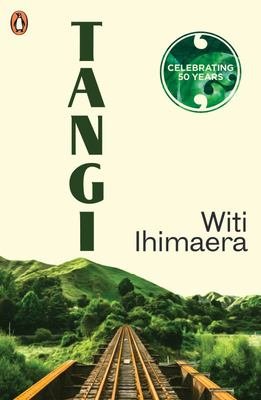
Tangi by Witi Ihimaera $30
First released 50 years ago, Tangi was Witi Ihimaera's debut novel and the first to be published by a Māori. A landmark literary event, it went on to win the James Wattie Book of the Year Award. He was 29 years old at the time. At the centre of the novel is the story of a father and son set within a three-day tangihanga. Revisiting the text for this anniversary edition, Ihimaera has added more details and developed the nascent themes that have continued to preoccupy him over a lifetime of writing.

The Selected Poems by James K. Baxter (selected and edited by John Weir) $40
James K. Baxter (1926–72) was, as he once described Louis MacNeice, “the most human of poets”: a flawed, passionate, complex, haunted man, a ‘lively sinner’ who revealed himself fully and unapologetically in his poems. As editor John Weir has written in his introduction, “from his various quarrels with God, self, society and death emerged a body of work which reveals him to be not merely the most accessible and complete poet to have lived in New Zealand, but also one of the great English-language poets of the twentieth century.” Weir’s selection of James K. Baxter’s best poems has been made from the more than three thousand poems that comprise his literary legacy.
>>The Complete Poems.
>>The Complete Prose.
>>Letters of a Poet.
>>Uncancelled.

The Last Paper Crane by Kerry Drewery $23
A Japanese teenager, Mizuki, is worried about her grandfather who is clearly desperately upset about something. He says that he has never got over something that happened in his past and gently Mizuki persuades him to tell her what it is. We are taken to 1945, Hiroshima, and Mizuki's grandfather as a teenage boy chatting at home with his friend Hiro. Moments later the horrific nuclear bomb is dropped on Hiroshima. What follows is a searing account of the blinding flash, the harrowing search for family and the devastation both human and physical. There is also the very moving and human story as the two teenage boys with great bravery search for and find Keiko, Hiro's five-year-old sister. But then Keiko is lost when Mizuki's grandfather has no option but to leave her in a safe place while he goes for help... Despite a desperate search in the aftermath of the bomb, where he leaves origami folded paper cranes for Keiko with his address on everywhere a survivor could be, he cannot find her.

The First Move by Jenny Ireland $24
Juliet believes girls like her — girls with arthritis — don't get their own love stories. She exists at the edges of her friends' social lives, skipping parties to play online chess under a pseudonym with strangers around the world. There, she isn't just 'the girl with crutches'. Ronan is the new kid — good looking, smart, a bad boy plagued by guilt over what happened to his brother Ciaran. Chesslife is his escape; there, he's not just 'the boy with the brother'. Juliet thinks Ronan thinks someone like Ronan could never be interested in someone like her — and she wouldn't want him to be anyway — he always acts like he's cooler than everyone else. Little do they know they've already discovered each other online, and have more in common than they think.
>>Advance your pawn.

A selection of books from our shelves.
Click through to find out more:
The History of the World in 100 Plants
The Gardner’s Companion to Medical Plants
Browse more books about plants

The first course of WHISK was so successful, we thought we better offer you dessert!
A sweet treat is a pleasure to make and share. This serving brings you the irresistible with the Italian inspired La Vita è Dolce, delectable delicacies of the Middle East, a journey of chocolate with the celebrated chef Jordi Roca, and an intriguing blend of nature, season and flavour in Wild Sweetness.

So fresh, so sweet and so irresistible, La Vita è Dolce is a Volume favourite.
From a joyful Caramelised Citrus Tart to a classic Torta Caprese, this is a stunning celebration of the sweet things in life, and is guaranteed to bring a slice of Italy into your home.

“La Vita e Dolce is a peach of a book, which makes you feel that life is sweet, at least when you have a gelato in your hand. Letitia Clark, whose first book Bitter Honey, celebrated the food of Sardinia, has an extraordinary feeling both for the food of Italy and for sweet foods, from biscotti to panna cotta, from fruit tarts to green lemon posset. The recipes and photographs have a sunny kind of magic to them. Reading it put me in an instantly better mood.” - Bee Wilson

In Wild Sweetness, Thalia Ho captures the essence of the wild, and re-imagines it on the plate. She guides us through a tale of six distinct seasons and the flavors inspired by them: of bright, herbaceous new life in spring, to the aromatic florals that follow, of bursting summer berries, over-ripe fruit, warmth and spice in fall, then ending with winter and its smolder.

“...a beautifully photographed and designed cookbook based on seasonal ingredients. Ho's poetic writing will spark the interest of bakers looking to incorporate more fruits and herbs into their treats.” - Library Journal
”Wild Sweetness is unlike any seasonal cookbook I've read before. Its pages are drenched with evocative text and wistful visuals....There are so many delectable dessert recipes in this book, all with enchanting flavor combinations. Wild Sweetness offers nourishment beyond food.” - Food52

Jordi Roca is currently one of the world’s most advanced chocolatiers, and was proclaimed best pastry chef in the world in the 2014, 50 Best Awards.
Travel with Jordi in his search for the origins of cocoa and his journey to discover how to master chocolate for the creation of new, totally revolutionary desserts.

He travels through cocoa fields in Colombia, Peru and Ecuador to meet producers both in the interior of the jungle and in the new areas that produce some of the most prestigious cocoa on the market. He learns about the nature of the so called creole cacao, native to the Amazon rainforest, the characteristics of the crop and the way in which the cocoa cob ends up being transformed into the fermented and dry bean from which we obtain our chocolate.
The book includes 75 recipes, formulas and totally new creative ideas with cocoa as the mainstay of desserts, chocolates and ice cream.

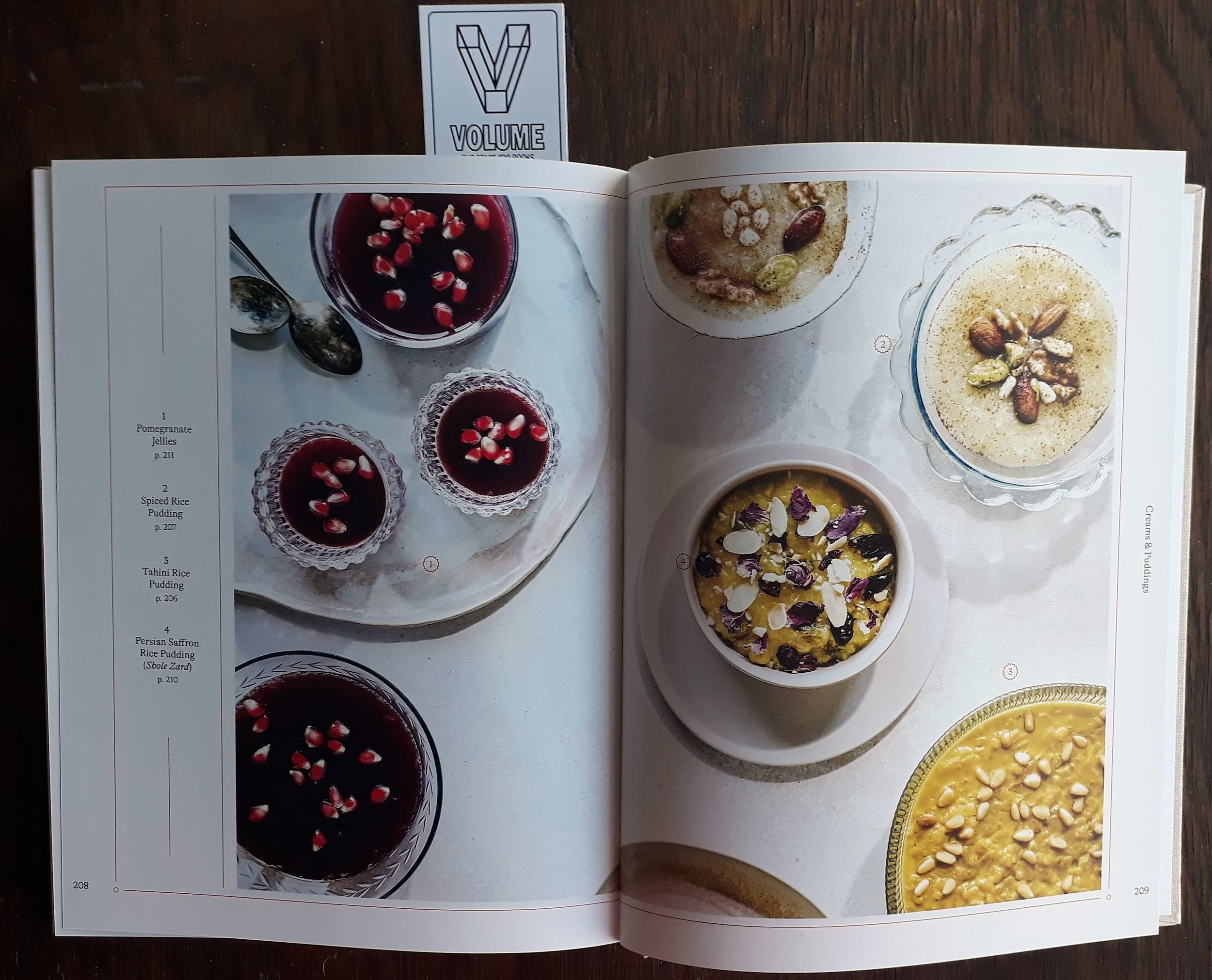
Whether you start your day with something sweet, finish it with something sweet, or make sure sweets are within reach all day long, you'll find serious inspiration in the pages of Salma Hage's latest cookbook for home cooks. The Middle East's wide range of cultures, ingredients, and influences informs the array of dishes she includes - spiced cookies, cream-filled pancakes, aromatic pastries, and delicious cakes - with recipes that are easy to follow and celebrate simple-to-source spices and taste combinations.
'"This stunning, elegantly bound cookbook ... will satisfy even the most discerning sweet tooth.” - Shelf Awareness
”The ideal book for both everyday family or festive meals.”- City Book Review
”Elegant...enticing.'" - Cooks Without Borders
An authentic, indulgent collection of dessert recipes from across the Middle East, from one of the region's most loved home cooks.
BROWSE Cookbooks at VOLUME - we have an excellent selection of culinary delights. Email us with specific requests - we are always happy to source your favourite chefs and cuisine. All featured books can be purchased from our website - click on the links or just email us and we will satisfy your taste buds.

With this serving delve into the modern freshness of Italian cooking, experience a migrant story and the call of home through cooking from North Africa, enjoy essays about food and feelings, and bring the rich heritage of Belgian baking into your kitchen.

Stagioni - Modern Italian Cookery to Capture the Seasons
Stagioni, meaning 'seasons' in Italian, will take you on a journey through the culinary year with recipes for every craving and occasion. Chef and food writer Olivia Cavalli brings together traditional recipes and contemporary creations with an enthusiastic aim to put fruit and vegetables centre stage.

From refreshing summer salads to steaming bowls of wintery pasta, you'll find classics such as aubergine parmigiana, stuffed tomatoes and amaretti peaches alongside more unusual combinations of chestnut gnocchi, grape focaccia and courgette cake. The occasional addition of meat and fish enhances rather than detracts, although recipes can easily be adapted for vegetarians and flexitarians, making these dishes fit seamlessly into a modern way of eating.

Tekebash and Saba: Recipes from the Horn of Africa
A celebration of the food of Ethiopia's northernmost state Tigray, interweaved with the compelling story of author Saba Alemayoh and her mother Tekebash Gebre, who came to Australia as refugees and have nurtured a connection to their beloved homeland through shared recipes and rituals.

”This is not your regular cookbook. The recipes are a legacy of Tekebash Gebre, my extraordinary mother. Tekebash was born in Tigray, under the rule of the last Ethiopian emperor. She lived under a communist regime before fleeing to Sudan. Since then we have been on a migration journey, from Aksum to Khartoum to Melbourne and beyond. Our hearts, however, will forever be Tigrayan, and through Tekebash's simple, vibrant dishes we celebrate a connection that won't be broken. It's our story, and it's my tribute. But it will also resonate with anyone who knows the unceasing pull of a distant homeland and the comfort of its food.” - Saba Alemayoh

Celebrated author Regula Ysewijn explores sweet and savoury bakes from Antwerp to Amsterdam. From the heart of the Low Countries of northwestern Europe, Belgium has long forged a distinctive culinary identity through its seasonal feasts and festivals.

Regula uses history and art to guide the reader through a fascinating period, and paints - through her stunning photography and recipes - the landscape of the region's rich baking culture. Dark Rye and Honey Cake explores a whole year of rustic bakes, unearthing long-forgotten recipes and reviving treasured favourites. There are waffles and winter breads for the 12 days of Christmas, pancakes for Candlemas and Carnival, pretzels for Lent, vlaai and fried dough for Kermis and all the special sweet treats that make up Saint Nicholas and Saint Martin.

My First Popsicle: An Anthology of Food and Feeling
Food is a portal to culture, to times past, to disgust, to comfort, to love: no matter one's feelings about a particular dish, they are hardly ever neutral. In My First Popsicle, Zosia Mamet has curated some of the most prominent voices in art and culture to tackle the topic of food in its elegance, its profundity and its incidental charm. With contributions from David Sedaris on the joy of a hot dog, Jia Tolentino on the chicken dish she makes to escape reality, Patti Smith on memories of her mother's Poor Man's Cake, Busy Philipps on the struggle to escape the patterns of childhood favourites and more, My First Popsicle is as much an ode to food and emotion as it is to life. After all, the two are inseparable.
BROWSE Cookbooks at VOLUME - we have an excellent selection of culinary delights. Email us with specific requests - we are always happy to source your favourite chefs and cuisine. All featured books can be purchased from our website - click on the links or just email us and we will satisfy your taste buds.

NEW BOOKS AND BOOK NEWS
Read our latest NEWSLETTER and find out what we’ve been reading and recommending, and get yourself a new book to read and recommend!
2.6.23

Book of the Week: Knowing What We Know: The transmission of knowledge, from ancient wisdom to modern magic by Simon Winchester
How do we acquire knowledge, first-hand or otherwise? How do we store and sort this knowledge, both inside and outside our heads, and how do we make this knowledge available to others? With advances in technology that have immersed us in a limitless sea of information, what is there left for our brains to do? How do different technologies change the way we think of the world, and of each other? Who controls our experience of information, and to what end? Simon Winchester’s new book asks — and answers — some very important — and interesting — questions.

These Possible Lives by Fleur Jaeggy (translated by Minna Proctor) {Reviewed by THOMAS}
The desire to understand must not be confused with the desire to know, especially in biography. Too often and too soon an accretion of facts obscures a subject, plastering detail over detail, obscuring the essential lineaments in the mistaken notion that we are approaching a definitive life. Such a life could not be understood. Instead a whittling is required, a paring from the mass of fact all but those details that cannot be separated from the subject, the details that make the subject that subject and not another, the details therefore that are the key to the inner life of the subject and the cause of all the extraneous details of which we are relieved the necessity of acquiring (unless we find we enjoy this as sport). Jaeggy, whose fictions remain as burrs in the mind long after the short time spent reading them, has here written three biographies, of Thomas De Quincey, John Keats and Marcel Schwob, each as brief and effective as a lightning strike and as memorable. Jaeggy is interested in discovering what it was about these figures that made them them and not someone else. By assembling details, quotes, sketches of situations, pin-sharp portraits of contemporaries, some of which, in a few words, will change the way you remember them, Jaeggy takes us close to the membrane, so to call it, that surrounds the known, the membrane that these writers were all intent on stretching, or constitutionally unable not to stretch, beyond which lay and lies madness and death, the constant themes of all Jaeggy’s attentions, and, for Jaeggy, the backdrop to, if not the object of, all creative striving. How memorably Jaeggy gives us sweet De Quincey’s bifurcation, by a mixture of inclination, reading and opium, from the world inhabited by others, his house a place of “paper storage, fragments of delirium eaten away by dust”, and poor Keats, whose “moods, vague and tentative, didn’t settle over him so much as hurry past like old breezes,” and Schwob, with his appetite for grief tracing and retracing the arcs of his friends’ deaths towards his own. These essays are so clean and sharp that light will refract within them long after you have ceased to read, drawing you back to read them again. Is the understanding you have gained of these writers something that belongs to them? Too bad, you will henceforth be unable to shake the belief that you have gained some access to their inner lives that has been otherwise denied.

A is for Art by Sarah Pepperle {reviewed by STELLA}
Fresh out of the block is a new ABC art book. This beautifully designed board book comes from the excellent Christchurch Art Gallery Te Puna o Waiwhetū. A is For Art is brilliant. Lively and joyful, it features art from Aotearoa and around the world — all examples from the gallery’s collection ranging from 1880 to the present day and across many art genres. Here you will both find familiar works as well as being introduced to some less well-known, and, for a child, it is all a wonderful new experience. Each work has been chosen with care to appeal to a younger audience without dumbing down the art. It’s lovingly curated and cleverly designed. The white space around the images allows them to sing on the page and text is highlighted with colour accents and a good use of changing scale to accentuate the letter and leading word/s. The text adds another layer of dialogue, complimenting the visual language in the images. It tells stories, suggests we can 'read' the artwork, and gives vocabulary in English and te reo. Turn to ‘D’ and here you will see Rita Angus’s ‘A Goddess of Mercy’ and the text “Dd is for deer friends.” And look again at this very attractive image, and there are the deer — one on each side of the goddess. On the facing page is ‘E’, a playful juxtaposition with the surprised or bemused elephant of Brent Harris’s ‘Troubled (Appalling Moment)’. For D the words tia/deer; for E arewhana/elephant are highlighted. K is kiwi and kete (made from kiwi feathers). The corresponding artists — illustrator Eileen Mayo and weaver Cath Brown. R introduces the rail (in the painting Hawkins by Rata Lovell-Smith) for the train (‘The Present Time, 60 Miles an Hour’ by Thomas Stevens) that will come with T; and Y and Z ask us to look, introducing the ideas of observation and questioning so intrinsic to appreciating art. In Z find the bee in the Willem van Royen ‘Still Life’ and in Y the sentence “The light on the lemon is soft and yellow” is pleasingly evocative for the film still by Nova Paul. These snippets are just some of the delights in A is for Art. It’s a success on so many levels. Excellent choice of artworks with a breadth of styles. There are objects, drawings, paintings, video stills, sculpture and print. There are serious considerations of art ideas in the simplest terms sitting easily alongside playful and humorous connections. It’s ABC that isn’t scared to be a little bit different while still fulfilling a function. And it will be a joy to share with young minds. If you like the gallery’s publications, we also have just received Ink on Paper (excellent), and have several of their books on our shelves.