NEW RELEASES (26.1.24)

The following books seek a home on your shelf, or on your bedside table.
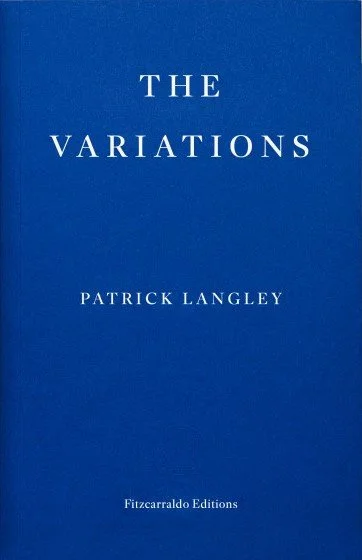
The Variations by Patrick Langley $37

Selda Heddle, a famously reclusive composer, is found dead in a snowy field near her Cornish home. She was educated at Agnes’s Hospice for Acoustically Gifted Children, which for centuries has offered its young wards a grounding in the gift – an inherited ability to tune into the voices and sounds of the past. When she dies, Selda’s gift passes down to her grandson Wolf, who must make sense of her legacy, and learn to live with the newly unleashed voices in his head. Ambitious and exhilarating, The Variations is a novel of startling originality about music and the difficulty – or impossibility – of living with the past.
‘Ecstasy is a word I’d happily associate with Patrick Langley’s lyrical and looping novel The Variations, a work with a similarly thrilling Nabokovian intrigue in the relationship between patterning, form and meaning.... The novel’s epigraph – “Variation is among the oldest and most basic devices in music. It originates in an inherent tendency to modify identical recurrence” – is a quote from the American composer Leon Stein, and almost laughably banal when held up against Langley’s humming prose. But its message is clear: it is Nabokov’s magic carpet, that age-old human impulse that – like music – wants to modify, edit, exceed, transcend itself. With The Variations, Langley appears to be weaving a carpet of his own.’ — Matthew Janney, Guardian
‘For all The Variations’ unusual elements, Langley handles traditional storytelling modes expertly. He can nail a character in a few lines… He can do action. And he has a knack for ending chapters with the expertise of a theatrical director ramping up the tension and then — curtain! — dropping into silence. The Variations, in other words, is a book whose oddness stretches the reader without estranging us. It asks more questions than it answers, but provides plenty of delight to compensate. It’s a novel where, as Selda reflects, “something about the world is revealed, though she can’t say what it is”.’ — John Self, Financial Times
The Variations is a wonderfully mysterious novel suffused with a Lynchian eeriness. I was totally under Langley's spell and under the thrall of the eerie rhythms governing The Variations. Simply unforgettable.’ — Brandon Taylor, author of The Late Americans
‘If Hilary Mantel’s Beyond Black were written by John Banville channelling M. John Harrison, the result would look something like this. And yet Langley has made something new and unexpected about how the present is, necessarily and always, an echo corridor of the past. Beautifully written, powered by a wonderfully intelligent conceptual dynamo, and deftly sprung with surprises, The Variations is an utterly original book about haunting. It is strange, resonant, and, yes, haunting.’ — Neel Mukherjee, author of The Lives of Others
The Variations is a passionate meditation on how past and present meet and annihilate one another in the flare of individual human experience. Music is presented as a kind of weather, blustery and changeable, unlimited by its own time. It takes you up, puts you down, whirls you away. Langley’s prose, lyrical and accurate, enlivens and illuminates. A tremendous, seriously ambitious novel.’ — M. John Harrison, author of Wish I Was Here
your copy
 

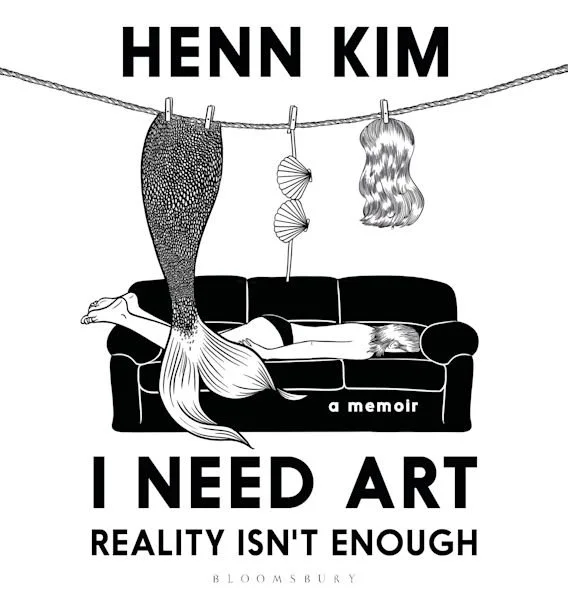
I Need Art: Reality Isn’t Enough, An illustrated memoir by Henn Kim $33
Depression and creativity, love and family, books and music: this personal and vulnerable memoir by the iconic South Korean illustrator explores her life from the ages of seventeen to thirty-three through image, text and poetry. From what nearly broke her to what saved her, everyone will find something to comfort them in Henn Kim's world.

your copy
 

Question 7 by Richard Flanagan $40

Beginning at a love hotel by Japan's Inland Sea and ending by a river in Tasmania, Question 7 is about the choices we make about love and the chain reaction that follows. By way of H. G. Wells and Rebecca West's affair through 1930s nuclear physics to Flanagan's father working as a slave labourer near Hiroshima when the atom bomb is dropped, this genre-defying daisy chain of events reaches fission when Flanagan as a young man finds himself trapped in a rapid on a wild river not knowing if he is to live or to die. At once a love song to his island home and to his parents, this hypnotic melding of dream, history, literature, place and memory is about how reality is never made by realists and how our lives so often arise out of the stories of others and the stories we invent about ourselves.
your copy
 

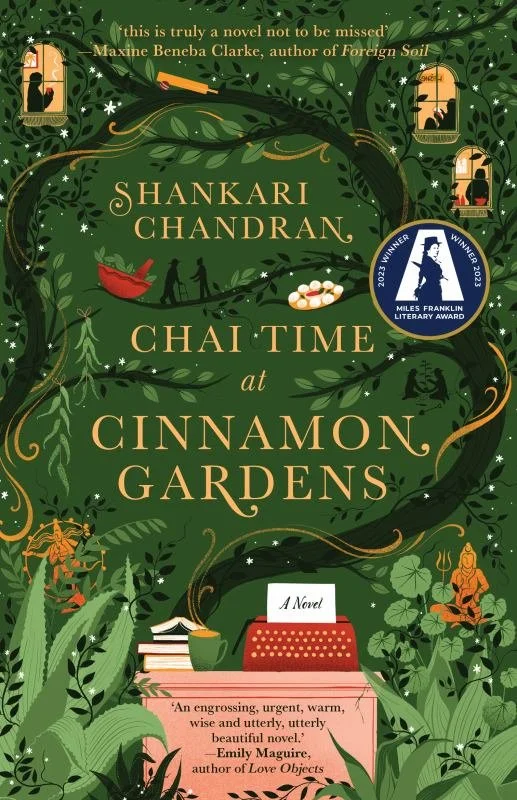
Chai Time at Cinnamon Gardens by Shankari Chandran $28

Welcome to Cinnamon Gardens, a home for those who are lost and the stories they treasure. Cinnamon Gardens Nursing Home is nestled in the quiet suburb of Westgrove — populated with residents with colourful histories, each with their own secrets, triumphs and failings. This is their safe place, an oasis of familiar delights — a beautiful garden, a busy kitchen and a bountiful recreation schedule. But this ordinary neighbourhood is not without its prejudices. The serenity of Cinnamon Gardens is threatened by malignant forces more interested in what makes this refuge different rather than embracing the calm companionship that makes this place home to so many. As those who challenge the residents' existence make their stand against the nursing home with devastating consequences, our characters are forced to reckon with a country divided. Chai Time at Cinnamon Gardens is about family and memory, community and race, but is ultimately a love letter to storytelling and how our stories shape who we are.
Winner of the 2023 Miles Franklin Award.
'This is an engaging story that feels both urgent and necessary. It is also a terrific read.' —The Daily Telegraph
'This story burns with anger and sings with optimism, sprinkled through with moments of levity and humour.' —The Canberra Times
your copy
 

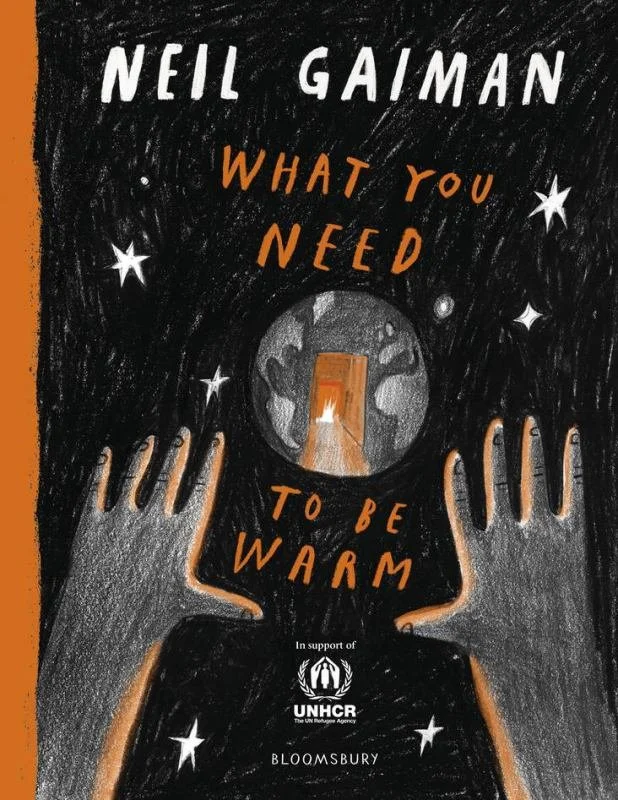
What You Need to Be Warm by Neil Gaiman (and various artists) $23
Troubled by the treatment of refugees around the world, Neil Gaiman asked his social media followers what makes them that they belong and are wanted. He collected the answers, and the resulting book reveals our shared desire to feel safe, welcome and warm in a world that can often feel frightening and lonely. What You Need to Be Warm is an exploration of displacement and flight from conflict through the objects and memories that represent warmth. It is about our right to feel safe, whoever we are and wherever we are from. It is about holding out a hand to welcome those who find themselves far from home. Featuring original illustrations from Chris Riddell, Benji Davies, Yuliya Gwilym, Nadine Kaadan, Daniel Egnéus, Pam Smy, Petr Horácek, Beth Suzanna, Bagram Ibatoulline, Marie-Alice Harel, Majid Adin and Richard Jones, with a thought-provoking cover from Oliver Jeffers.
Sales of every copy of this book will help support the work of UNHCR, the UN Refugee Agency, which helps forcibly displaced communities and stateless people across the world.

your copy
 

The Greatest Invention: A history of the world in nine mysterious scripts by Silvia Ferrara $28
The invention of writing allowed humans to create a record of their lives and to persist past the limits of their lifetimes. In the shadows and swirls of ancient inscriptions, we can decipher the stories they sought to record, but we can also tease out the timeless truths of human nature, of our ceaseless drive to connect, create and be remembered. The Greatest Invention chronicles an uncharted journey, one filled with past flashes of brilliance, present-day scientific research and the faint, fleeting echo of writing's future. Now in paperback!
”Brisk, simple to follow and unfussy — though the author has a way with a helpful metaphor, for which we non-experts are grateful — Ferrara's book is an introduction to writing as a process of revelation, but it's also a celebration of these things still undeciphered, and many other tantalising mysteries besides.” —Daniel Hahn, Spectator

your copy
 

A trail of Crab Tracks by Patrice Nganang $40
Nganang chronicles the fight for Cameroonian independence through the story of a father’s love for his family and his land and of the long-silenced secrets of his former life. For the first time, Nithap flies across the world to visit his son, Tanou, in the United States. After countless staticky phone calls and transatlantic silences, he has agreed to leave Bangwa: the city in western Cameroon where he has always lived, where he became a doctor and, despite himself, a rebel, where he fell in love, and where his children were born. When illness extends his stay, his son finds an opportunity to unravel the history of the mysterious man who raised him, following the trail of crab tracks to discover the truth of his father and his country. At last, Nithap’s throat clears and his voice rises, and he drifts back in time to tell his son the story that is burned into his memory and into the land he left behind. He speaks about the civil war that tore Cameroon apart, about the great men who lived and died, about his soldiers, his martyrs, and his great loves. As the tale unfolds, Tanou listens to his father tell the history of his family and the prayer of the blood-soaked land. From New Jersey to Bamileke country, voices mingle, the borders of time dissolve, and generations merge.
"For Patrice Nganang . . . reimagining a nation has required reimagining the novel. Each work in [his] trilogy takes aim at the intricacies of history through an equally intricate narrative approach: the novels range back and forth across time, weaving real-world figures amid fictional characters, and shifting rapidly among different voices, registers, and languages . . . A Trail of Crab Tracks becomes a singularly complex interrogation of the relationship between thought and action, between writing and the world." —Kristen Roupenian, The New Yorker
your copy
 

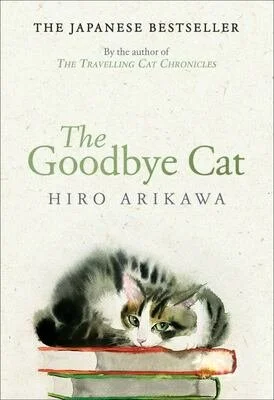
The Goodbye Cat by Hiro Arikawa $37

Against changing seasons in Japan, seven cats weave their way through their owners' lives: A needy kitten rescued from the recycling bin teaches a new father how to parent his own human baby; a colony of wild cats on a holiday island shows a young boy not to stand in nature's way; a family is perplexed by their cat's devotion to their charismatic but uncaring father; a woman curses how her cat constantly visits her at night; and an elderly cat, Kota, hatches a plan to pass into the next world as a spirit so that he and his owner may be together for ever. Includes seven cat drawings.

your copy
 

Hey There, Stink Bug! by Leslies Bulion nd Evans $12
Witty poems describe how insects capture prey, trick predators, attract mates, and have managed to survive for 400 million years. Scientifically accurate information further explains bug behavior. Eye-catching linoleum-cut illustrations practically crawl across the pages. Includes notes that explain 19 poetic forms and stylistic techniques plus a glossary of entomological terms.

your copy
 

The Future by Naomi Alderman $35

The new novel from the author of The Power shows us a future that is very similar to our own. The Future — as the richest people on the planet have discovered — is where the money is. The Future is a few billionaires leading the world to destruction while safeguarding their own survival with secret lavish bunkers. The Future is private weather, technological prophecy and highly deniable weapons. But the Future is a handful of friends — the daughter of a cult leader, a non-binary hacker, an ousted Silicon Valley visionary, the concerned wife of a dangerous CEO, and an internet-famous survivalist — hatching a daring plan. It could be the greatest heist ever. Or the cataclysmic end of civilization. The Future is what you see if you don't look behind you.

your copy
 
VOLUME BooksNew releases
THIS IS THE PLACE TO BE by Lara Pawson — reviewed by Thomas

This Is the Place to Be by Lara Pawson

What do you report when you become uncertain of the facts, of the notion of truth and of the purpose of writing? What can you understand of yourself when you are uncertain how or if your memories can be correlated with known 'facts'? Is your idea of yourself anything other than the sum of your memories? Lara Pawson was for some years a journalist for the BBC and other media during the civil wars in Angola, and on the Ivory Coast. In this book, her experiences of societies in trauma, and her idealism for making the 'truth' known, are fragmented (as memory is always fragmented) and mixed with memory fragments of her childhood and of her relationships with the various people she encountered before, during and after the period of heightened awareness provided by war. It is this intermeshing of shared and personal perspectives, sometimes reinforcing and sometimes contradicting each other, always crossing over and back over the rift that separates the individual and her world, that makes this book such a fascinating description of a life. By constantly looking outwards, Pawson has conjured a portrait of the person who looks outwards, and a remarkable depiction of the act of looking outwards. Every word contributes to this self-portrait, and the reader hangs therefore on every word.

your copy
Pawson's new book: 'Spent Light’
What you should buy from our sale — Stella

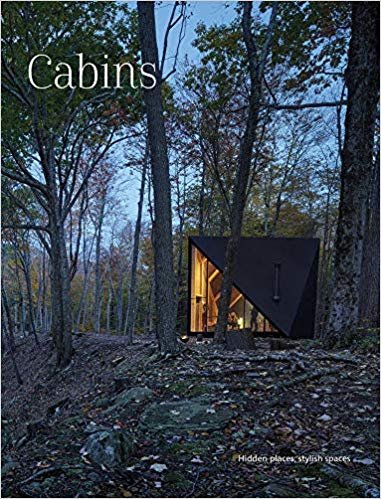
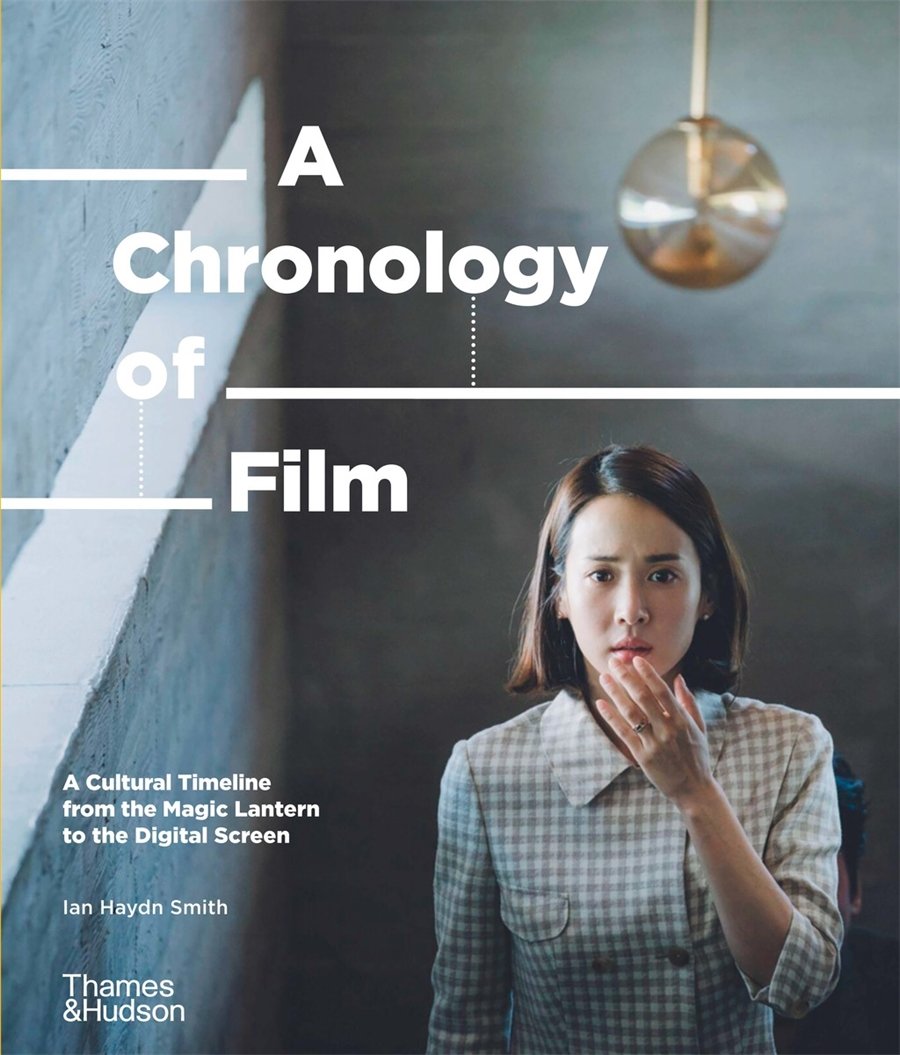
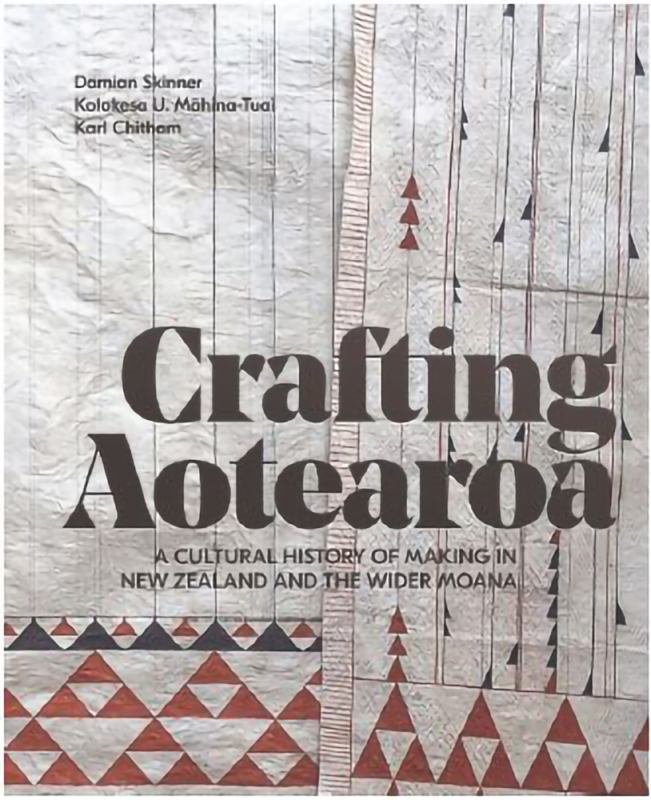
If you haven't already looked and purchased a book from our Art and Architecture Summer Specials, you'll need to be quick. Some of my favourites have already gone, but here are a few that I would like on my shelves (you can click on the covers to look inside these books):
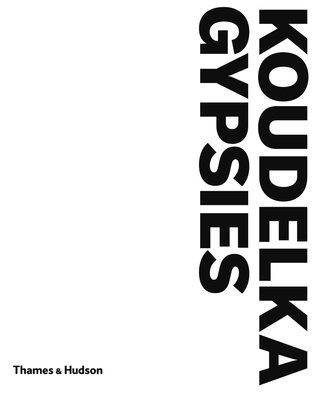
Kouldelka: Gypsies, documentary photography by Josef Koudelka, captures the Roma communities of Europe in the 1960s. Amazing images of a time and place long gone, but the desire for recognition remains. 

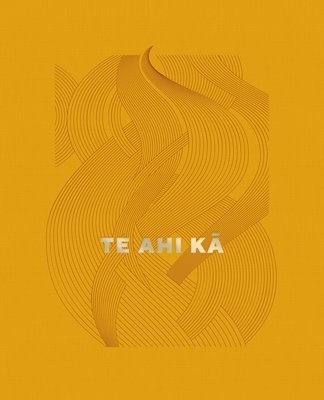
A photographic project closer to home. In Te Ahi Kā, Danish photographer Martin Toft spent six months alongside Māori by the Whanganui River in 1996 as they were in the process of reversing colonisation and returning to their ancestral lands. This stunning book documents this process.

For the sheer pleasure of looking and learning Vitamin D3: Today's best comtemporary drawing. These Phaidon collections are always excellent, and a great way to be introduced to new artists, as well as inspiration for your future projects.

And from the range of architecture books, my pick would beJulia Watson's  Lo-TEK: Design by radical indigenism. An exploration of indigenous philosophy, natural spaces, and resilient infrastructure. Important and urgent.

Publisher Focus: COMPOUND PRESS

This week we are aiming your attention toward a small press based in Tāmaki Makaurau, Aotearoa. Compound Press publishes excellent and unexpected titles, predominantly poetry, from familiar and not-so-familiar authors working in the Pacific region. Their books are beautifully designed (covers and interiors); often short-run, well-produced (sometimes handbound), and made from recycled materials. 

Here's what they say about themselves: "Compound Press was founded in 2012 after hours in the print room of an unnamed law firm with appropriated materials, the name first appearing on an eclectic array of hyperlimited 3-5 run chapbooks. We maintain a particular though non-exclusive commitment to poetry of the Pacific Region while sea-levels still permit."

Help those sea-levels remain steady by adding to your poetry shelf or delving into new waters.

NEW RELEASES (19.1.24)

Out of the carton and onto your shelf!

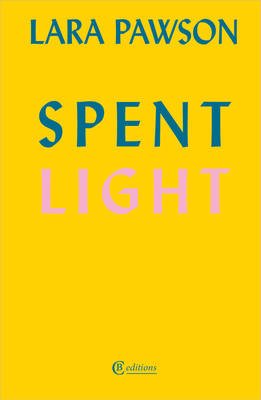
Spent Light by Lara Pawson $38

A woman contemplates her hand-me-down toaster and suddenly the whole world erupts into her kitchen, in all its brutality and loveliness: global networks of resource extraction and forced labour, technologies of industrial murder, histories of genocide, alongside traditions of craft, the pleasures of convenience and dexterity, the giving and receiving of affection and care.    “Everything in this damned world calls for indignation,” the woman says at one point. All of it’s there, all interconnected, and she can’t stop looking. The likeness between a pepper mill and a hand grenade, for example, or the scarcely hidden violence of an egg timer. And what if objects knew their own histories? What if we could allow ourselves to see those weird resonances, echoes, loops, glitches, just as Pawson does so beautifully and unnervingly here? Spent Light asks us to begin the work of de-enchanting all the crap we gather around ourselves to fend off the abyss — because we’ll never manage that anyway, the book warns, the abyss is already in us. But love is too. There might be no home to be found in objects, but there’s one to be made with other people. I think, in the end, this powerful, startling book is a love letter.’ —Jennifer Hodgson
”I’m flabbergasted by the naked determination on show here, not to say the talent. Page by page, image by image, association by association, Lara Pawson develops a picture of the world that you won’t be offered anywhere else: stark, unremitting, brilliantly formed and written.” —M. John Harrison
”A shocking book. Lara Pawson’s merciless and exquisite prose adorns everyday objects with the violence of history – the savage comedy by which living creatures have become broken, petrified things. I will never look at a toaster or a timer, a toenail or a squirrel, the same way again.” —Merve Emre

your copy
 

Unwords by Andrew Gallix $40

An enjoyable companion to the best new reading and to intriguing re-readings, this book contains essays on the highest form of intergloss (and everything having already been said), the death of the novel, the death of the author, the unwritten, the unread and unreadable, the International Necronautical Society, fictive realism, Alain Robbe-Grillet's reality hunger, the Oulipo and literary bondage, Rene Girard and mimetic desire, literary prizes, Andy Warhol's answer to Ulysses, the poetics of spam, the literati and digerati, the disappearance of 3:AM Magazine (and literature), umbilical worlds, the melancholy of Guy the Gorilla, the world without me, two interviews with philosopher Simon Critchley, and an after(un)word-cum-writing manifesto made up exclusively of quotations. It also contains reviews of works by Jenn Ashworth, Zygmunt Bauman, Claire-Louise Bennett, Gavin James Bower, Kevin Breathnach, Michel Butor, David Caron, Joshua Cohen, Douglas Coupland, Tim Etchells, Jonathan Franzen, Dan Fox, Paul Gorman, James Greer, Len Gutkin, Isabella Hammad, Jean-Yves Jouan.
”I'm starting to suspect that the last quarter century of literary history has in reality been a projection of the mind of Andrew Gallix, paused in reverie above the blank sheet of a masterpiece so perfect as to be unfeasible. We thought we were writing, reading and debating; in fact, he was daydreaming us all." —Tom McCarthy
"Andrew Gallix is the thinking punk's intellecual, a vital voice at the forefront of literary criticism. He is eminently readable, an alternative national (and international) treasure." —Benjamin Myers
"Andrew Gallix has long been one of our most astute, witty, and suprising critical thinkers. For a start, he understands how a modernist novel is put together. This is not to be taken for granted — it is one of the many reasons to enjoy the spirit of this valuable and intellectually entertaining collection." —Devorah Levy

your copy
 

The Good Die Young: The verdict on Henry Kissinger edited by Bhaskar Sunkara, René Rojas, and Jonah Walter $38

 If the American foreign policy establishment is a grand citadel, then Henry Kissinger is the ghoul haunting its hallways. For half a century, he was an omnipresent figure in war rooms and at press briefings, dutifully shepherding the American empire through successive rounds of growing pains. For multiple generations of anti-war activists, Kissinger personified the depravity of the American war machine. The world Kissinger wrought is the world we live in, where ideal investment conditions are generated from the barrel of a gun. Today, global capitalism and United States hegemony are underwritten by the most powerful military ever devised. Any political vision worth fighting for must promise an end to the cycle of never-ending wars afflicting the world in the twenty-first century. This book follows Kissinger's fiery trajectory around the world because he, more than any other public figure, illustrates the links between capitalism, empire, and the feedback loop of endless war-making that plagues us today.

your copy
 

The I Wonder Bookstore by Shinsuke Yoshitake $30

At The I Wonder Bookstore, customers come in and ask the owner countless variations on its namesake question ("I wonder if you have any books about...") and he is happy to fill their requests — he has books that play at the edges (and yet somehow are central to) our ideas of books and reading. Readers will discover books that grow on trees, books designed to be read by two (or more) people at once, books that can only be read by moonlight, bookstore weddings, an underwater library, a boot camp for charismatic bookstore attendants, and many more wonders that celebrate, books, and bookshops. Hugely inventive, thoughtful, and fun.

your copy
 

A History of Queen’s Redoubt and the Invasion of the Waikato by Neville Ritchie and Ian Barton $50

On 12 July 1863, British and colonial troops under the command of Lt. Gen. Duncan Cameron crossed Mangatawhiri stream, Waikato Maori’s northern border, instigating the Waikato War. In order to do so they had amassed a vast infrastructure that included building the Great South Road (the ‘Road to War’), establishing a military supply train capable of providing for the needs of 6,000 soldiers, erecting a telegraph service between Auckland and Pokeno, forming a navy of armoured gunboats on the Waikato River, and constructing the second largest military fort built by the British Army in New Zealand: The Queen’s Redoubt. At the height of the invasion, some 14,000 British and colonial troops contested the Waikato against Maori forces which never exceeded 3000. The Waikato was occupied from July 1863 to April 1864, followed by massive land confiscations. This book tells the story of the Redoubt, and the buildup of military power along the Waikato border, which led directly to the most significant campaign of the New Zealand Wars, the invasion of the Waikato.
”Queen’s Redoubt was the launching pad for the invasion of Waikato in 1863. Ian Barton and Neville Ritchie have produced a valuable account of its place in this defining conflict in New Zealand’s history.” — Vincent O’Malley

your copy
 

Mountains of Fire: The secret lives of volcanoes by Clive Oppenheimer $40

olcanoes mean more than threat and calamity. Like our parents, they've led whole lives before we get to know them. They have inspired our imaginations, provoked pioneering explorations and shaped the path of humanity. Volcanologist Clive Oppenheimer has worked at the crater's edge in the wildest places on Earth, from remote peaks in the Sahara to mystical mountains in North Korea. He's faced down AK47s, learned from tribal elders, and watched red hot rocks shoot into the sky. More people have been into space than have set eyes on the fiery depths of Mount Erebus in Antarctica, where he has measured the Earth's powerful forces. In Mountains of Fire, he paints volcanoes as otherworldly, magical places where our history is laid bare, and shows us just how entangled volcanic activity is with our climate, economy, politics, culture and beliefs.
”What the French adventurer Jacques Cousteau was to the hidden world under our seas, Oppenheimer is to the hidden, molten world bubbling under our feet.” —Sunday Times
”Gripping ... reads] like a thriller. Perhaps one final attribute of a volcanologist is that he should be a good storyteller. Oppenheimer is better than good. This is terrific.” —Spectator
”A fantastic account of the power and importance of volcanoes to history. Clive Oppenheimer takes us on a wonderful tour of some of the world's best and least known volcanoes in a book that will make all readers want to become volcanologists.” —Peter Frankopan

your copy
 

High: A journey across the Himalayas through Pakistan, India, Bhutan, Nepal, and China by Erika Fatland $30

The Himalayas meander for more than two thousand kilometres through many different countries, from Pakistan to Myanmar via Nepal, India, Tibet and Bhutan, where the world religions of Islam, Buddhism and Hinduism are interspersed with ancient shamanic beliefs. Countless languages and vastly different cultures exist in these isolated mountain valleys. Modernity and tradition collide, while the great powers fight for influence.We have read about climbers and adventurers on their way up Mount Everest, and about travellers on a spiritual quest to remote Buddhist monasteries. Here, however, the focus is on the communities of these Himalayan valleys, those who live and work in this extraordinary region. As Erika Fatland introduces us to the people she meets along her journey, and in particular the women, she takes us on a vivid and dizzying expedition at altitude through incredible landscapes and dramatic, unknown histories.

your copy
 

Feeling and Knowing by Antonio Damasio $35

In recent decades, many philosophers and cognitive scientists have declared the question of consciousness unsolvable, but Antonio Damasio is convinced that recent findings in neuroscience, psychology and artificial intelligence have given us the necessary tools to solve its mystery. In Feeling & Knowing, Damasio elucidates the myriad aspects of consciousness and presents his analysis and new insights in a way that is faithful to our own intuitive sense of the experience. In forty-eight brief chapters, Damasio helps us understand the relation between consciousness and the mind; why being conscious is not the same as either being awake or sensing; the central role of feeling; and why the brain is essential for the development of consciousness. He synthesises the recent findings of various sciences with the philosophy of consciousness, and, most significantly, presents his original research which has transformed our understanding of the brain and human behaviour. Now in paperback.
“Damasio has succeeded brilliantly in narrowing the gap between body and mind.” —The New York Times Book Review

youR copy
 

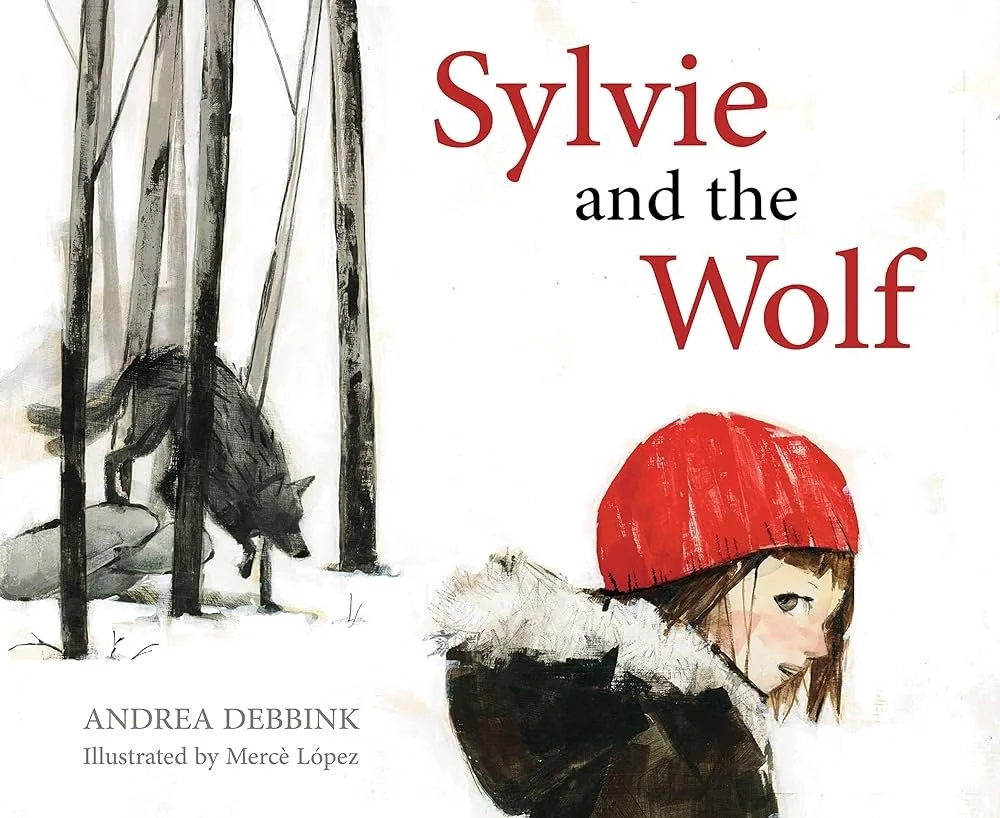
Sylvie and the Wolf by Andrea Debbink, illustrated by Merce Lopez $38

Sylvie has a secret. She's seen a wolf in the woods and is afraid to tell anyone about it. She thinks people won't believe her or will make fun of her. As her fear begins to control her life, she stops going to the woods, spending time with friends, and doing the things she loves. Eventually, with the encouragement of a loving aunt, Sylvie is able to confront her fear. She learns that instead of running or hiding, she can live alongside her anxiety. She also learns that everyone is dealing with something that scares them — even the wolf.

your copy
 

In the Museum — 1000-piece jigsaw puzzle by Tomi Um $35

Familiar faces and delightful discoveries abound in this menagerie of art gallery visitors, from inquisitive art students, to selfie-snapping divas, and aspiring artists who happen to be mice. Each gallery offers new details to discover and allusions to art movement across time and history.

do it yourself
 
VOLUME BooksNew releases
ART AND ARCHITECTURE SUMMER SPECIALS

This summer, discover new art, be inspired, add to your reference shelves; get your imagination fired up for your next building project or craft pursuit; or simply enjoy the sheer pleasure of leafing through a beautiful book filled with intriguing images and ideas.
This is your opportunity to pile up a selection of superb books on art, architecture, photography, craft, and design, from both Aotearoa and overseas — all at satisfyingly reduced prices.

Judging from previous years, our advice is: be quick — there are single copies only of most titles and many of them cannot be reordered (even at full price). 
Build your art library or get someone a little inspiration for the coming year!

START CHOOSING
VOLUME BooksBook lists
MOOMINSUMMER MADNESS by Tove Jansson — reviewed by Stella

Moominsummer Madness by Tove Jansson

Reading aloud is always a pleasure and listening is even better, especially when you are revisiting a favourite book. I first discovered the Moomins in the sale bin of the Stoke Library (when it was housed in the little wooden building). It was a 5-cent book and I thought it was magical. I knew nothing at that time about the Moomin series nor the author Tove Janssen, and didn’t know I would meet someone who had grown up on these Finnish classics, and that then I would discover the rest of the Moomin books. My copy of Moominsummer Madness was a well-read paperback with the usual library markings of a deaccessioned book, some dog ears, a few pages taped in, and the usual library stamps declaring cancelled. The copies we keep in stock at VOLUME are lovely hardbacks with the original illustrations, wonderful Moomin Valley maps, and gorgeous endpapers. In Moominsummer Madness, the family wakes up to a flooded valley and the water keeps rising. They move to the roof and make a getaway in the boat, along with the table and chairs, a supply of tea, and a few provisions. Fortunately, they come across a new home to make into a temporary abode. It’s a rather strange place. One wall is missing. Here hallways come to dead ends and some doors open to nowhere. There are moving curtains and painted scenery that changes unexpectedly and mysterious rooms filled with things that don’t quite work as one would expect. There is a strange sound coming from one corner of the main room and the owner of the mumbling voice won’t show themselves. Despite all this, the Moomin family, along with the irrepressible Little My, her scolding sister the Mymble’s daughter, the lamentable Misabel, and the philosophical Womper, make the best of the situation. All is going along well, until Little My falls through the trapdoor and disappears into the water, Moomintroll and the Snork Maiden are left abandoned in a tree during an overnight camping expedition, and the strange building floats away after the contemptuous stage manager Emma heaves out the ‘anchor’. As the Moomins find out about theatres and acting and plan a play, Moomintroll and the Snork Maiden make their way to land, only to be arrested for a crime they didn’t commit. The culprit of this ‘crime’ has just taken on 24 small woodies and rescued Little My. The culprit being the freewheeling Snufkin. Keep an eye out for glowing Hattifattners, dramas on the water and on the stage, and wonderful characters who will become your best friends. If you haven’t read the Moomin stories yet, you are missing out. And yes, it all works out well for everyone, almost.

read the book
the other moomin books
Art and Architecture Summer Specials

This summer discover new art, be inspired, and add to your reference shelves; get your imagination fired up for your next building project or craft pursuit; or simply enjoy the sheer pleasure of leafing through a beautiful book filled with intriguing images and ideas.

This is your opportunity to pile up a selection of superb books on art, architecture, photography, craft, and design, from both Aotearoa and overseas — all at satisfyingly reduced prices. Judging from previous years, our advice is: be quick — there are single copies only of most titles and many of them cannot be reordered (even at full price).

Build your art library or get someone a little inspiration for the coming year.

START CHOOSING
VOLUME BooksBook lists
Book of the Week: HELD by Anne Michaels

In our evocatively written Book of the Week, HELD by Anne Michaels (the author of Fugitive Pieces), the past irrupts into the present in ways that are generally but not always unwelcome, shunting the lives of its characters down paths that they had scarcely anticipated. How does this affect not only themselves but those around them, and those descended or who will descend from them? To what extent does memory keep us alive, and to what extent does it prevent us from healing? Can love hold us safe across generations?

your copy
NEW RELEASES (12.1.24)

Out of the carton and onto your shelf!

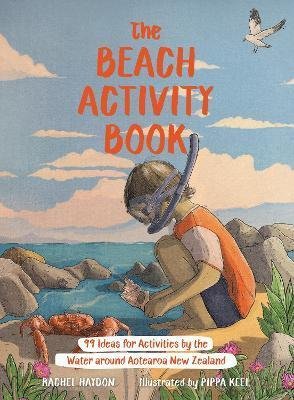
The Beach Activity Book: 99 ideas for activities by the water around Aotearoa New Zeland by Rachel Haydon, illustrated Pippa Keel $35

The 99 activities in this immersive book for children aged 7 to 14 range from experiments and observation to conservation and mindfulness. Developed to inspire curious young minds to explore and appreciate our beaches, lakes, rivers and streams, it is also designed to be taken out into natural environments and to be drawn and written in. Written by a children’s learning expert, all sorts of learning styles are recognised, with each activity being open to children who like to draw and those who like to write. The book’s journal-like format and activities that range across the seasons make it a long-term and much treasured companion. Mātauranga Māori concepts and the theme of nature connectedness are an integral part of the activities. 

your copy
 

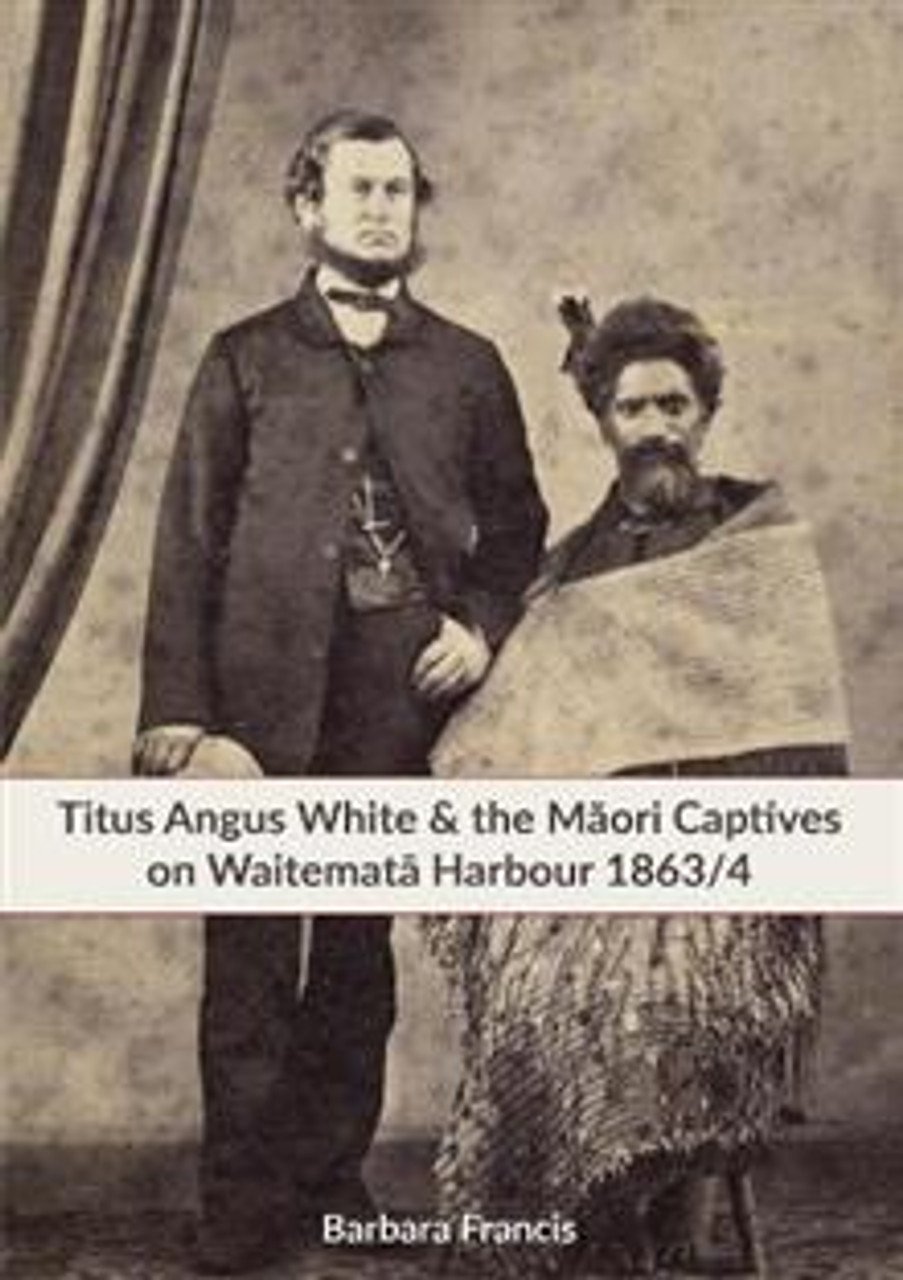
Titus Angus White and the Māori Captives on Waitematā Harbour, 1863/4 by Barbarar Francis $45

In November 1863 at the battle of Rangiriri, over 180 Māori defenders were taken prisoner. They were marched up the Great South Road to Ōtāhuhu, from where they were transferred onto the Waitematā Harbour. There they were held captive on the prison ship Marion for nearly eight months, supervised by their bilingual Pākehā Superintendent Titus Angus White, who was also sent to retrieve them after their subsequent escape from Kawau Island. This book is the story of Titus Angus White and the men he ended up supervising as they were imprisoned only 600 metres off the Port of Auckland. It is also the wider story of the invasion of the Waikato and the circumstances that led to the establishment of New Zealand’s largest ever floating prison.
“This work navigates the colonial propaganda and attempts to provide an objective perspective on a tumultuous time in New Zealand history – Barbara Francis has been meticulous in collecting, collating and connecting information to produce a detailed narrative around the work and thinking of Titus Angus White.” – Dr Mike Ross, Ngāti Hauā.

your copy
 

Granta 164: Last Notes edited by Sigrid Rausing $33

Generators, rockets, sirens and the clatter of chess – from war in Ukraine to construction booms in Phnom Penh and Cairo; from music to the experience of living in partial silence, this issue is an attempt to get at what we hear rather than what we see. Featuring non-fiction by Lydia Davis, Brian Dillon, Wiam El-Tamami, Peter Englund (tr. Sigrid Rausing), Diana Evans, Tabitha Lasley, Adam Mars-Jones, Maartje Scheltens, Anjan Sundaram, Y-Dang Troeung, Ed Vulliamy and Ada Wordsworth; Fiction by Nicola Barker, Mazen Maarouf (tr. Mazen Maarouf with Laura Susijn), Adèle Rosenfeld (tr. Jeffrey Zuckerman) and Brywan Washington poetry by Oluwaseun Olayiwola and Martha Sprackland; Photography by Suzie Howell (introduced by A.K. Blakemore), James Berrington and Sama Beydoun.

your copy
 

On the Tip of a Wave: How Ai Weiwei’s art is changing the tide by Joanna Ho and Cátia Chien $32

Told in Joanna Ho's lyrical writing, this is the story that shines a light on Ai Weiwei and his journey, specifically how the ‘Life Jackets’ exhibit at Konzerthaus Berlin came to be. As conditions for refugees worsened, Ai Weiwei was inspired by the discarded life jackets on the shores of Lesbos to create a bold installation that would grab the attention of the world. Cátia Chien portrays the intricate life of Ai Weiwei with inspirations from woodblock printing and a special emphasis on the color orange, the same color of the life jackets that became a beacon of hope. Through Chien’s dynamic illustrations, we see how Ai Weiwei became the activist and artist he is today while proving the power of art within humanity.

your copy
 

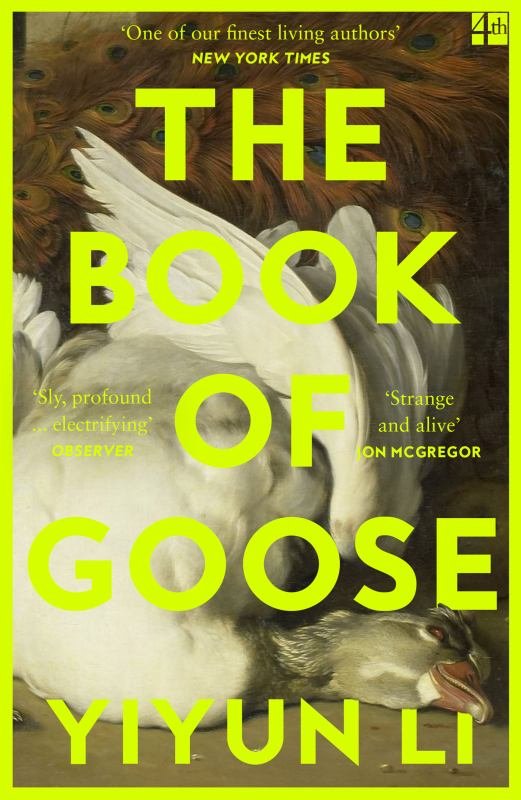
The Book of Goose by Yiyun Li $27

Fabienne is dead. Her childhood best friend, Agnes, receives the news in America, far from the French countryside where the two girls were raised — the place that Fabienne helped Agnes escape ten years ago. Now, Agnes is free to tell her story. As children in a backwater town, they'd built a private world, invisible to everyone but themselves — until Fabienne hatched the plan that would change everything, launching Agnes on an epic trajectory through fame, fortune, and terrible loss. A dark, ravishing tale winding from the rural provinces to Paris, from an English boarding school, to the quiet Pennsylvania home where Agnes can live without her past. Now in paperback.
”Wonderfully strange and alive.” —Jon McGregor
”Li has become one of our finest living authors: Her elegant metaphysics never elide the blood and maggots . The most propulsively entertaining of Li's novels, an existential fable that illuminates the tangle of motives behind our writing of stories.” —New York Times

your copy
 

Barcode (‘Object Lessons series) by Jordan Bogost $25

Barcodes are about as ordinary as an object can be. Billions of them are scanned each day and they impact everything from how we shop to how we travel to how the global economy is managed. But few people likely give them more than a second thought. In a way, the barcode's ordinariness is the ultimate symbol of its success. However, behind the mundanity of the barcode lies an important history. Barcodes bridged the gap between physical objects and digital databases and paved the way for the contemporary Internet of Things, the idea to connect all devices to the web. They were highly controversial at points, protested by consumer groups and labour unions, and used as a symbol of dystopian capitalism and surveillance in science fiction and art installations. This book tells the story of the barcode's complicated history and examines how an object so crucial to so many parts of our lives became more ignored and more ordinary as it spread throughout the world.

your copy
 

Magazine (‘Object Lessons’ series) by Jeff Jarvis $25

For a century, magazines were the authors of culture and taste, of intelligence and policy - until they were overthrown by the voices of the public themselves online. Here is a tribute to all that magazines were, from their origins in London and on Ben Franklin's press; through their boom - enabled by new technologies - as creators of a new media aesthetic and a new mass culture; into their opulent days in advertising-supported conglomerates; and finally to their fall at the hands of the internet. This tale is told through the experience of a magazine founder, the creator of Entertainment Weekly at Time Inc., who was also TV critic at TV Guide and People and finally an executive at Condé Nast trying to shepherd its magazines into the digital age.

your copy
 

Dreamhome: Stories of art and shelter by Justin Paton $70

This book reveals how some of today's most exciting artists are reimagining the idea of home for our unsettled times. In his evocative style, Justin Paton investigates a place we all have a stake in — from houses of memory to upturned houses, from haunted houses to light houses, from intimate spaces of shelter to optimistic future communities. Richly illustrated, Dreamhome brings together artworks by twenty-six artists from around the world, as well as diverse contextual imagery that includes family photographs, film stills, architectural drawings, and historical records. Artists include: Michael Parekowhai (Aotearoa); Afshar (Iran/Australia); Isabel and Alfredo Aquilizan; Philippines/Australia); Igshaan Adams (South Africa); Phyllida Barlow (UK); Zarina Hashmi (India/USA); Simone Leigh (USA); Tracey Moffatt (Australia); John Prince Siddon (Australia/Walmajarri)

your copy
 

The Wall Between Us by Dan Smith $22

BERLIN 1961. Anja and Monika live opposite each other. They play together every day, with Otto the cat. One night they wake up to bangs and shouts. Soldiers are building a huge barbed wire fence between them. A terrible forever wall that gets longer and higher until it divides the whole city. On the East side, Monika is scared — neighbours are becoming spies and there are secret police everywhere. It's Anja who spots that Otto has found a way across. If he can visit Monika, then perhaps she can too. But Anja gets trapped and there's no safe way back . . . From the author of She Wolf.

your copy
 

Edible Economics: Around the world in seventeen dishes by Ha-Joon Chang $30

For decades, a single, free-market philosophy has dominated global economics. But this intellectual monoculture is bland and unhealthy. Ha-Joon Chang makes challenging economic ideas delicious by plating them alongside stories about food from around the world, using the diverse histories behind familiar food items to explore economic theory. For Chang, chocolate is a lifelong addiction, but more exciting are the insights it offers into postindustrial knowledge economies; and while okra makes Southern gumbo heart-meltingly smooth, it also speaks of capitalism's entangled relationship with freedom. Myth-busting, witty, and thought-provoking, Edible Economics serves up a feast of bold ideas about globalisation, climate change, immigration, austerity, automation, and why carrots need not be orange. It shows that getting to grips with the economy is like learning a recipe: when we understand it, we can adapt and improve it — and better understand our world.
”Excellent. Chang has been working hard at providing an alternative to neoliberalism for two decades; Now he's reached the summit of the profession.” —Dan Davies , Guardian
Edible Economics is a moveable feast of alternative economic ideas wrapped up in witty stories about food from around the world. Ha-Joon Chang proves yet again that he is one of the most exciting economists at work today.” —Owen Jones

your copy
 

Appliance by J.O. Morgan $26

A highly inventive and and humane novel about our relationship with technology and our addiction to innovation. This is the tale of a new technology, an alternative history that unfolds over many decades. It is a fable told through a constantly shifting cast of characters, all drawn into the world of a machine that slowly alters every life it touches. But in this unending quest for progress, what will happen to the things that make us human- the memories, the fears, the love, the mortality? As we push towards a brave new world, what do we stand to lose? Now in paperback.

your copy
 

Solito by Javier Zamora $30

Young Javier dreams of eating orange sherbet ice cream with his parents in the United States. For this to happen, he must embark on a three-thousand-mile journey alone. It should last only two weeks. But it takes seven. In limbo, Javier learns what people will do to survive - and what they will forfeit to save someone else. This is a memoir of perilous boat trips, relentless desert treks, and pointed guns. But it is also a story of tasting tacos for the first time, of who passes you their water jug in the crippling heat, and of longing to be in your mother's arms.
”I don't think I've ever read a memoir which captivated me in so many ways. It was a beautiful book about family, those that we have and those that we make, and the little family that they made on their journey, which was almost sort of Iliad-esque. An epic journey to their loved ones, because they had no choice.” —Jenna Bush Hager
”Crafted with stunning intimacy, you'll feel so close to the boy Zamora was then that you'll think about him long after the book is done. It's impossible not to feel both immersed in and changed by this extraordinary book.” —Los Angeles Times 
”An important, beautiful work.: —New York Times Book Review
Solito is at once blistering and tender, devastating and affirming — it is, quite simply, a revelation, a new landmark in the literature of migration, and in nonfiction writ large.” —Francisco Cantu

your copy
 

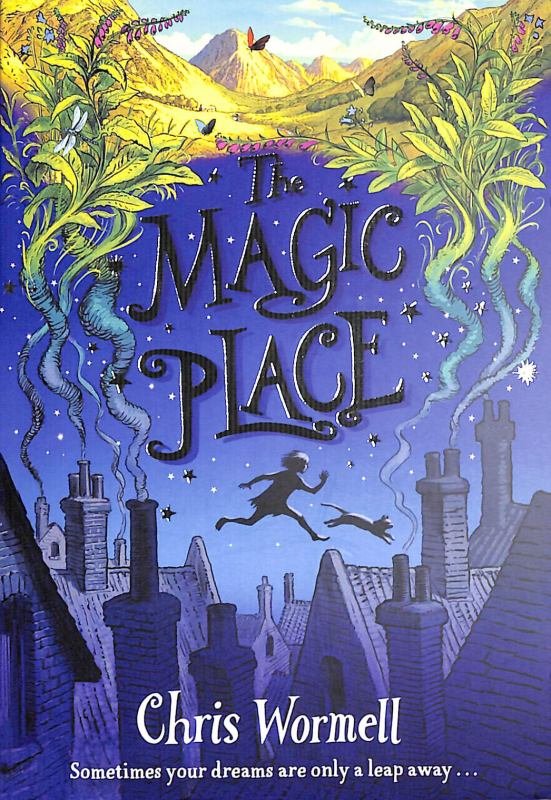
The Magic Place by Chris Wormell $20

Clementine works as a slave for her wicked aunt and uncle. But she dreams of a magic place, and she's determined to escape and find it. With the help of a very clever cat, she sets off on an adventure that might just make her dreams come true.

your copy
 

Once a Monster by Robert Dinsdale $38

London, 1861: Ten-year-old Nell belongs to a crew of mudlarks who work a stretch of the Thames along the Ratcliffe Highway. An orphan since her mother died four years past, leaving Nell with only broken dreams and a pair of satin slippers in her possession, she spends her days dredging up coals, copper and pieces of iron spilled by the river barges - searching for treasure in the mud in order to appease her master, Benjamin Murdstone. But one day, Nell discovers a body on the shore. It's not the first corpse she's encountered, but by far the strangest. Nearly seven feet tall, the creature has matted hair covering his legs, and on his head are the suggestion of horns. Nell's fellow mudlarks urge her to steal his boots and rifle his pockets, but as she ventures closer the figure draws breath and Nell is forced to make a decision which will change her life forever . A reimagining of the Minotaur legend, set in Victorian London.

your copy
VOLUME BooksNew releases
BOOKS @ VOLUME #362 (5.1.24)

NEW BOOKS AND BOOK NEWS!

Our first newsletter of the year.

Our best wishes to you for 2024! We hope that your coming year will be full of excellent books and other satisfactions (we can help at least with the first of these), and that we can find ways to work together to make the world a better place for all its people and for the children who come after us (books will help with this). We are now back on board and ready to supply all your summer reading requirements — just purchase your book from our website and we can have it ready to collect from our door, or dispatch it to you by overnight courier. Make 2024 a year of excellent reading! —Stella & Thomas

VOLUME BooksNewsletter
PUZZLING — Stella's summer jigsaw review

When it’s too hot to play outside, to garden, or walk yourself or your dog, what should one do? When a cool room beckons, but you have reached a point in your book where you need a pause, what is a good restful alternative? When the summer evening keeps you awake longer and the cooking and dishes are done for the day, and the relatives have gone home, what’s a relaxing, but also engaging, reward? When all the conversations are had and there is no more news to catch up on, the drinks are made — cool or hot (depending on your preference) — what’s an activity you can do alone or shared? A 1000-piece jigsaw puzzle!* Not any kind, but one that is interesting enough, well illustrated and designed, and one that preferably has a book theme, of course! Our summer evening activity throughout the busy festive season — not quite finished yet — has been In the Bookstore. It’s not too easy, nor frustratingly difficult. (These challenges are for other times in the year). A 1000-piece to me is perfect. The 500 never feel quite enough and are done before you know it; while the 2000 either have tiny pieces or they are too big for the puzzle cardboard which needs to be moved from room to room (i.e. has to fit through doorways) during the construction process due to the nature of small rooms in small houses. This puzzle is a delight. One, because it is a bookshop. Two, it is filled with a vast array of genres (fantasy, cooking, travel, art). Three, it has colour-coordinated bookshelves (something I would never have in reality, but love it in a puzzle). Four, book characters are popping up in their respective areas — a detective in a deerstalker solving a crime, a bard in the poetry section, Tintin and Snowy, as well as wizards and a happy prince — as well as some well-known writers checking the shelves. Five, the comic-style design is visually appealing and the illustrator’s humour peeks through. Six, it’s nicely made — nothing is worse than flimsy bending pieces or too many strange-shaped pieces. (The exception being my round childhood puzzle which I still think is wonderful. This is a themed stamps of the world jigsaw. Horses, of course!). Also available, Paperback Classics and In the Museum. And on the book theme, more amusement can be found in Classic Paperbacks Memory Game and for extra distraction, A Book of Surrealist Games.

*(Unfortunately most dogs can not participate successfully in this activity. Our cat attempts to help by skidding the pieces into place (!) when we are out of the room.)

BARLEY PATCH by Gerald Murnane — reviewed by Thomas

Barley Patch by Gerald Murnane

This book begins with the question that prompted its author to stop writing for fourteen years: “Must I write?” In finally finding himself capable of addressing this question, Murnane also addresses its corollary: “Why had I written?" What follows is a subtle and often profound examination of the relationship between the ‘actual’ world and the image world from which fiction arises. Inverting the traditional Romantic model of fiction, Murnane disavows the so-called ‘imagination’ and instead stakes out the primary territory of his image world: “what I call for convenience patterns of images, in a place that I call for convenience my mind, wherever it may lie or whatever else it may be a part of”. By emphasising the porosity of a work of fiction, which is “capable of devising a territory more extensive and more detailed by far than the work itself”, Murnane shows that although the territory is landmarked by images introduced from the memory of events or fictions or artworks or other experiences, both author and reader inhabit the spaces between and surrounding these landmarks, find themselves exploring and enlarging the backgrounds of pictures and the spaces surrounding texts, and forming relationships with ‘personages’ who are both part of, and give rise to, the personages of both author and reader. Every region written about implies a further region not yet written about, “a country on the far side of fiction”, inhabited by personages who may be accessible to the personages in fiction but not yet to us. In tracing (and correlating) the memories of the personage of the narrator-Murnane and the memories of the main character in the book he abandoned when he stopped writing, Murnane gives an exacting topography of his mind (“so to call it”) and a precisely worded description of its operations, and of the yearning, distance and loneliness that both underlie and seek remedy in fiction. 

your copy
other books by gerald murnane