A selection of books from our shelves. Click through to find out more:
An Attempt at Exhausting a Place in Paris


A selection of books from our shelves. Click through to find out more:
An Attempt at Exhausting a Place in Paris
New books for a new season! Click through to secure your copies. We can have your books delivered by overnight courier or ready to collect from our door.

Terrier, Worrier: A poem in five parts by Anna Jackson $25
"If sometimes I think of thoughts as being behind the eyes, sometimes I think of them more as floating, in a kind of cloud around the outside of my head." Part autobiography of thought, part philosophical tract, part poetics, a book about chickens and family and seasons, Terrier, Worrier is a literary sequence to be relished as language and as thought. [Paperback with French flaps]
”Terrier, Worrier is a remarkable and playful book on language, anxiety, poetry and the strangeness of being a person. I loved its short length especially, as well as its fragmentary form falling somewhere between a diary and a collection of poetic essays. I wish more of my favourite poets wrote these kinds of books.” —Nina Mingya Powles
”Terrier, Worrier is extraordinary, in both concept and form. It joins the conversations of great writers and thinkers, past and present, who analyse how we function aesthetically in our little lives.” —Anne Kennedy

Is a River Alive? by Robert Macfarlane $65
Is a River Alive? is a joyous exploration into an ancient, urgent idea: that rivers are living beings who should be recognized as such in imagination and law. Macfarlane takes readers on three unforgettable journeys teeming with extraordinary people and places: to the miraculous cloud-forests and mountain streams of Ecuador, to the wounded creeks and lagoons of India, and to the spectacular wild rivers of Canada — imperiled by mining, pollution, and dams. Braiding these journeys is the life story of the fragile chalk stream a mile from Macfarlane's house, which flows through his own years and days. Powered by Macfarlane's dazzling prose and lit throughout by other voices, Is a River Alive? will open hearts, challenge perspectives, and remind us that our fate flows with that of rivers — and always has. [Hardback]
”Macfarlane is a naturalist who can unfurl a sentence with the breathless ease of a master angler." —Holly Morris, New York Times
”A rich and visionary work of immense beauty. Macfarlane is a memory keeper. What is broken in our societies, he mends with words. Rarely does a book hold such power, passion, and poetry in its exploration of nature. Read this to feel inspired, moved, and ultimately, alive.” —Elif Shafak
”This book is a beautiful, wild exploration of an ancient idea: that rivers are living participants in a living world. Robert Macfarlane's astonishing telling of the lives of three rivers reveals how these vital flow forms have the power not only to shape and reshape the planet, but also our thoughts, feelings, and worldviews. Is a River Alive? is a breathtaking work that speaks powerfully to this moment of crisis and transformation.” —Merlin Sheldrake
”This book is itself a river of poetic prose, an invitation to get onboard and float through the rapids of encounters with places and people, the eddies of ideas, to navigate the resurgence of Indigenous worldviews through three extraordinary journeys recounted with a vividness that lifts readers out of themselves and into these waterscapes. Read it for pleasure, read it for illumination, read it for confirmation that our world is changing in wonderful as well as terrible ways.” —Rebecca Solnit

Ripeness by Sarah Moss $38
It is the 60s and, just out of school, Edith finds herself travelling to rural Italy. She has been sent by her mother with strict instructions: to see her sister, ballet dancer Lydia, through the final weeks of her pregnancy, help at the birth, and then make a phone call which will seal this baby's fate, and his mother's. Decades later, happily divorced and newly energised, Edith is living a life of contentment and comfort in Ireland. When her best friend Maebh receives a call from an American man claiming to be her brother, Maebh must decide if she will meet him, and she asks Edith for help. Ripeness is a novel about familial love and the communities we create, about migration and new beginnings, and about what it is to have somewhere to belong. [Paperback]
”Sex and childbirth, emigrant and exile, the present and the past: Sarah Moss's ambidextrous talent is evident on every page of this elegant novel. It is intelligent, but never disembodied; evocative, but never sentimental; honest, but never cruel. Ripeness is a book of tart and lasting pleasures.” —Eleanor Catton
”This book felt to me like I was reading the achievement of a lifetime, written by one of the best writers alive. Moving, unexpected, masterful, it is a story of stories, of belonging, of exits and entrances, and everything in between. Moss's understanding of who her characters are is also her understanding of all of us. A beautiful, powerful read that echoed for me long after.” —Jessie Burton

Short | Poto: The big book of small stories | Iti te kupu, nui te kōrero edited by Michelle Elvey and Kiri Piahana-Wong $37
Short short stories, sometimes known as flash fiction or microfictions, are one of the trickiest forms to write. Create a resonant world in fewer than 300 words? Not so easy! In this collection of 100 stories, a range of New Zealand writers, both well known and emerging, deliver emotionally charged stories that punch well above their weight and length. And there's more! Each of the stories has either been translated into te reo Māori from English or translated into English from te reo Māori by some of this country's most experienced translators, making this book a valuable contributor to our literary landscape that rewards repeated readings. [Paperback]

1985: A novel by Dominic Hoey $38
It's 1985 and Obi is on the cusp of teenagehood, after a childhood marked by poverty, dysfunctional family dynamics, (dis)organised crime and street violence. His father is delusional, his mother is dying, the Rainbow Warrior is bombed, and it's time for Obi to grow up and get out of the arcade. When he and his best mate Al discover a map leading to unknown riches, Obi wonders if this windfall could be the thing that turns his family's fortunes around. Instead, he's thrown into a quest very different from the games he loves. A novel about life in a multi-cultural, counter-cultural part of Auckland pre-gentrification. 1985 is an adventure story with a local flavour, a coming-of-age story for the underdogs, the disenfranchised, and the dreamers. [Paperback]

A Different Kind of Power: A memoir by Jacinda Ardern $60
What if we could redefine leadership? What if kindness came first? Jacinda Ardern grew up the daughter of a police officer in small-town New Zealand, but as the 40th Prime Minister of her country, she commanded global respect for her empathetic leadership that put people first. This is the remarkable story of how a Mormon girl plagued by self-doubt made political history and changed our assumptions of what a global leader can be. When Jacinda Ardern became Prime Minister at age thirty-seven, the world took notice. But it was her compassionate yet powerful response to the 2019 Christchurch mosque attacks, resulting in swift and sweeping gun control laws, that demonstrated her remarkable leadership. She guided her country through unprecedented challenges—a volcanic eruption, a major biosecurity incursion, and a global pandemic—while advancing visionary new polices to address climate change, reduce child poverty, and secure historic international trade deals. She did all this while juggling first-time motherhood in the public eye. Ardern exemplifies a new kind of leadership—proving that leaders can be caring, empathetic, and effective. She has become a global icon, and now she is ready to share her story, from the struggles to the surprises, including for the first time the full details of her decision to step down during her sixth year as Prime Minister. [Hardback]

Killing Time by Alan Bennett $25
”We have a choir and on special occasions a glass of dry sherry. It's less of a home and more of a club and very much a community.” Presided over by the lofty Mrs McBryde, Hill Topp House is a superior council home for the elderly. Among the unforgettable cast of staff and residents there's Mr Peckover the deluded archaeologist, Phyllis the knitter, Mr Cresswell the ex-cruise ship hairdresser, the enterprising Mrs Foss and Mr Jimson the chiropodist. Covid is the cause of fatalities and the source of darkly comic confusion, but it's also the key to liberation. As staff are hospitalised, protocol breaks down. Miss Rathbone reveals a lifelong secret, and the surviving residents seize their moment, arthritis allowing, to scamper freely in the warmth of the summer sun. “'Violet? She'll be having a little lie-down,' said Mrs McBryde. 'She likes to give her pacemaker a rest. I'll rout her out.'“ [Hardback]
”A mini-masterpiece.” —The Times
”Full of wit and style.” —Observer
”A geriatric Lord of the Flies.” —Spectator

How to Kill a Witch: A guide for the patriarchy (The witches of Scotland) by Claire Mitchell and Zoe Venditozzi $40
As a woman, if you lived in Scotland in the 1500s, there was a very good chance that you, or someone you knew, would be tried as a witch. Witch hunts ripped through the country for over 150 years, with at least 4,000 accused, and with many women's fates sealed by a grizzly execution of strangulation, followed by burning. Inspired to correct this historic injustice, campaigners and writers Claire Mitchell and Zoe Venditozzi, have delved deeply into just why the trials exploded in Scotland to such a degree. In order to understand why it happened, they have broken down the entire horrifying process, step-by-step, from identification of individuals, to their accusation, 'pricking', torture, confessions, execution and beyond. With characteristically sharp wit and a sense of outrage, they attempt to inhabit the minds of the persecutors, often men, revealing the inner workings of exactly why the Patriarchy went to such extraordinary lengths to silence women, and how this legally sanctioned victimisation proliferated in Scotland and around the world. With testimony from a small army of experts, pen portraits of the women accused, trial transcripts, witness accounts and the documents that set the legal grounds for the hunts, How to Kill A Witch builds to form a rich patchwork of tragic stories, helping us comprehend the underlying reasons for this terrible injustice, and raises the serious question — could it ever happen again? [Paperback]

Pathemata, Or, The story of my mouth by Maggie Nelson $35
As the narrator contends with chronic pain, and with a pandemic raging in the background, she sets out to examine the literal and symbolic role of the mouth in the life of a writer. Merging dreams and dailies, Pathemata recounts the narrator's tragicomic search to alleviate her suffering, a search that eventually becomes a reckoning with various forms of loss — the loss of intimacy, the loss of her father and the loss of a pivotal friend and mentor. In exacting, distilled prose, her account blurs the lines between embodied, unconscious and everyday life. With characteristic precision, humour and compassion, Nelson explores the limits of language to describe experience, while also offering a portrait of an unnerving time in our shared history. An experiment in interiority by the author of Bluets and The Argonauts, Pathemata is a personal and poetic reckoning with pain and loss, both physical and emotional, as well as a meditation on love, affliction and resilience. [Hardback]
”Among the sharpest and most supple thinkers of her generation” —Olivia Laing
”One of the most unique voices in non-fiction: enquiring, political, lyrically dazzling, empathetic.” —Sinead Gleeson
”Always brilliant.” —Geoff Dyer
”Her words come as though from a great distance and strike incredibly close.” —Anne Enright
”Maggie Nelson shows us what it means to be real, offering a way of thinking that is as challenging as it is liberating.” —Eula Biss

The Image of Her by Simone de Beauvoir (translated from French by Lauren Elkin) $38
Laurence lives what appears to be an ideal existence. Her life features all the trappings of 1960s Parisian bourgeoisie- money, a handsome husband, two daughters and a lover. She also has a successful career as an advertising copywriter, though her mind unbidden writes copy whilst she's at home, and dreams of domesticity in the office. But Laurence is a woman whose happiness was relegated long ago by the expectation of perfection. Relentlessly torn by the competing needs of her family, it is only when her 10-year-old daughter, Catherine, starts to vocalise her despair about the unfairness of the world that Laurence resists. [Hardback]

The Passengers on the Hankyu Line by Hiro Arikawa (translated from Japanese by Hiro Arikawa (translated from Japanese by Allison Markin Powell) $38
Famously scenic, the Hankyu commuter train trundles daily through changing landscape unaware of the heartaches of the passengers it carries. On the outward journey we are introduced to the emotional dilemmas of five characters as we puzzle out how they will unravel; on the return journey six months later, we watch them resolve: a man meets the woman who always happens to borrow a library book just before he can take it out himself — a woman in a white bridal dress boards looking inexplicably sad — a university student leaves his hometown for the first time — a girl prepares to leave her abusive boyfriend — a widow discusses adopting the Dachshund she has always wanted with her granddaughter. As the season and the landscapes change, passengers jostle and connect, holding and releasing their dreams and desires, as this famous little train carries them ever forward towards the person each intends to become. From the author of The Travelling Cat Chronicles. [Hardback]

Lawn (‘Object Lessons’ series) by Giovanni Aloi $23
A quintessential feature in Western gardens and landscaping, the lawn is now at the center of a climate change controversy. The large carbon footprint maintenance, its unquenchable thirst for fertilisers, weed-killers, and water, and the notorious unfriendliness towards all forms of wildlife have recently attracted criticism and even spurred an anti-lawn movement. Lawn untangles the colonial-capitalist threads that keep our passion for mown grass alive despite mounting evidence that we'd be better off without it. The lawn is aesthetically and ideologically versatile. From museums and hospitals to corporate headquarters and university campuses, it has become the verdant lingua franca of institutions of all kinds. Its formal homogeneity and neatness imply reliability, constancy, and solicit our trust. But beneath the lawn lies a stratification of intricate ideological and ecological issues that over time have come to define our conception of nature. [Paperback with French flaps]

Against the Odds: New Zealand’s first women doctors by Cynthia Farquhar and Michaela Selway $55
In 2025, the year in which the Otago medical school celebrates 150 years, 50% of graduates are women. Back in 1891 when Emily Seideberg, who would go on to become the school's first woman graduate, applied for entrance it was not at all clear that it would be granted. There was active hostility in many quarters to the very idea that women could be doctors. This book traces the paths of the women who, between the 1880s and 1967 (when the Auckland medical school opened), battled indifference and chauvinism and, later, many of the other challenges that faced women in the professions, to become New Zealand's first women doctors. Their stories are often remarkable and the contribution to research, medical breakthroughs and improved patient care is to be honoured. [Paperback]

Peter Cleverley: Between Transience and Eternity by Alistair Fox $60
This heavily illustrated book traces Peter Cleverley's formation and evolution as an artist, identifying the influences that aroused in him a sense of the transience of human life and the paradoxical complexity of the human condition. The portrait that results shows how Cleverley's sense of the human condition has driven him to convey it symbolically in a way that simultaneously captures not only the fragility of human life, but also its joys. His art communicates an appreciation of the beauty of this world and the gift of being alive, together with the value of art as a means of transcending mutability. [Hardback]

NHOJ: A memoir that started backwards by John Lazenby $50
With an eye for peculiar detail and meticulous research, John Lazenby takes us on an evocative visit to the Britain of the 1960s, when, aged nine, he saw the Beatles play live in London before he could even hope to read, or write down, the lyrics from their iconic songbook. Along the way, we meet the warm and eccentric family who never gave up on him — and the array of severe teachers and tutors who did. We are reminded that it takes only one person to change a life for the better and, having been sent away to boarding school at the age of seven, John's young life pivoted on the miracle discovery of that person, a teacher who finally understood the boy that no one else could teach. NHOJ: A Memoir That Started Backwards is the story of his progress from seven-year-old who could write only one word — his own name, spelt backwards — to journalist and author who built a career around the very words that had initially been so elusive. [Hardback]
The Three Robbers by Tomi Ungerer $35

An old favourite (first published in 1962), ready for a new generation. The book tells the story of three fierce black-clad robbers who terrorise the countryside, scaring everyone they meet. One robber stops carriage horses with his pepper spray, the second destroys the wheels of the carriage with his axe, and the third robs the passengers by holding them up with his blunderbuss. One day the robbers stop a carriage only to find a small orphan girl called Tiffany inside. On her way to live with a strange aunt, Tiffany is delighted to meet the robbers, who take her back to their cave instead of their usual haul of money, gold and jewels. The next day, Tiffany sees the treasures the robbers have amassed and asks what they plan to do with their riches.The men are baffled, as they had never thought about spending their money. So they decide to buy a castle and welcome all the lost, unhappy and abandoned children they can find. The robbers dress them in tall hats and long capes, just like the ones they wear themselves, only in red instead of black. Years later, when they are grown up, the children build a village near the castle, full of people wearing red hats and red capes. They also build three tall towers, in honour of the three robbers. [Hardback]

Mānawatia a Matariki $5
This beautifully designed booklet contains karakia for each of the nine stars of Matariki to celebrate and educate readers about the traditions and cultural importance of Matariki.

Buying interesting books makes interesting books possible
Read our latest newsletter
6 June 2025

“Absence is inconceivable, as long as there is presence. For the bereaved, the world is defined by absence,” she wrote. She went to Olevano, some distance from Rome, in the hills, in the winter, two months after her partner died, the bereavement was taking hold, she no longer fitted into her life. It was winter, as I said, she stayed alone in Olevano, she looked out of the window, she went for walks, she took photographs, she wrote. The whole place, and the text she wrote, was cold, damp, dim, filled with mist, vagueness, echoes, mishearings. Well, of course. This is not to say that her observations were not precise, preternaturally precise, and the sentences she wrote to describe them, they too were preternaturally precise, whatever that means. “In the unfamiliar landscape I learned to read the spatial shifts that come along with changes to the incidence of light.” She is unable to think of the one who is lost, rather, the one she has lost, she is unable to face an absence that at this time is an overwhelming absence, instead she observes in minute detail, with great subtlety, as if subtlety could be anything but great, the particulars of the day and the season, the fall of light, those things that only she could notice, or only a bereaved person could notice, the weight of noticing shifted by her bereavement, death pulling at everything and changing its shape, changing the fall of light, even, or making her aware of changes in the fall of light, and in the shape of everything, so to call it, that are inaccessible to the non-bereaved. There are other worlds, but they are all in this one, wrote Paul Éluard, apropos of something, if it was him who wrote it, and if that was what he wrote, if these are different things, but as we can cope with the world only by suppressing almost everything that comes at us, even at best, we notice only as our circumstances allow, our mental circumstances, our emotional circumstances perhaps most significantly, and we are somehow sharing space but seeing everything differently from others and some more differently than others. We live in different worlds in the same world. She was bereaved, she saw what she saw, observed what she observed, with great precision and intensity as I have said, out of the mist, among the fallen leaves. There is a cemetery in every town, or vice-versa, she visits them all, acquaints herself with the faces of the dead, but not her dead, not the one of whom she is bereaved. She writes of herself in a continuous past, “I would.” she writes, “Each morning I went,” she writes, as if also all that is observed also continues in this continuous and unbordered way, which might be so. Death, first of all, is an aberration of time, bereavement acts on time like a point of infinite gravity that cannot be observed but which bends all else. Memories are the property of death, there can be no memories if she is to face each day, though the memories pluck at her in her dreams. She observes, she wanders, she acts on nothing, she changes nothing, the season moves slowly through darkness and chill. She travels to the nearby towns and into the hills, the mists. She recognises herself more in those displaced like her to Italy, the migrants and the refugees, those for whom no easy place welcomes them, those who have lost something, recently, that the others around there have perhaps not recently lost. “We sized each other up as actors on a stage of foreignness,” she writes, “Each concerned with his own fragmented role, whose significance for the entire play, directed from an unknown place, might never come to light.” She is aware, everywhere, of the loss that outlines and gives shape to that which goes on, and the mechanisms of loss that are built into the function of a whole town, or a whole human life. She sees the junkyard by the bus station, “an intermediate space for the partially discarded, whose time for final absence has nevertheless not yet arrived.” She visits the Etruscan tombs and sees the reliefs there as a membrane separating the living from the dead, their loss is one of space as well as of time, what is shared between her and them is two dimensional only, “as if the dead would know how to reach through the cool thickness of the masonry to touch the object’s or animal’s other side, invisible to us, and hold it in their life-averted hands.” The membrane is infinitely thin. It is only two dimensions. It is everywhere. She asks, “Will it wither away, the hand I pull back from the morti?” Time passes. Something unobserved is changing beneath the changes she observes, “the Spring air a different shade of blue-gray.” She leaves Olevano and leaves the first section of the book. Because she, we, you, I perceive only a fraction of what we could call the external, the fraction to which we are at a moment attuned, it is easy to fall out of tune with others. For her, whom bereavement has differently attuned, or untuned, her reattunement must be achieved by words, she who lives by words must recalibrate her world through words, descriptions, care, precision, nuance, it is wrong to think of nuance as somehow imprecise, it, all this, is an exercise in slowness, and we who read must also change our speed to the speed of her noticing if we are to experience the text, if we are to experience, through the wonder of her text, somehow, her experience, or something thereof. The external reveals itself only to those moving at the precise right speed of perception, so she shows us, and so too her text reveals itself only to those moving at the precise right speed, those who read the text at the speed the text requires. In the second section she remembers, memory being the province of death, or vice-versa, her father, of whom she has also been bereaved, a little longer ago, and the holidays in Italy of her childhood, with him, and, presumably, with her mother, though this section deals specifically with memories of her father, perhaps because her mother is still alive, if she is still alive. This section is the section of the father, of the memories of the father more particularly, the only way her father now exists, he has finished contributing to memories that might be had of him and fairly soon these memories become the memories of memories, the parts magnified becoming still more magnified, the other parts abraded, becoming lost. Each memory contains a necropolis, it seems. With nothing, she begins the third and final section. She rents a cottage, so to call it, in the delta of the Po. Marshes, salt pans, mists again, fogs, rains. Birds. It is winter. “Everything had been repeatedly disturbed, was forever suspended between traces and effacement.” All that is human, and all of nature is abraded. “It was even hot when I arrived, the air similarly gray and viscous, and the landscape lay motionless, disintegrating under its weight; on hillcrests and in the occasionally visible strips of riverbank clung fragments of memory that had been torn away from a larger picture and settled there.” Time moves differently, again, here, she lets it, broken things stand about, the past is forgotten but is everywhere, is in the dust and mud, more often mud, the rain, the fog. “It was a place that could only be found in its absence, by recalling what was lost, therein lay its reality.” But here in this slow nowhere something almost unperceived begins to change, the emptiness provides a space, the past gets somehow out of her, death begins not to completely overwhelm her, memory relinquishes something of its choke. She even gets a ride to town with the owner of the cottage, in his car. Perhaps she comes to think that history is the proper province of the past. “Among the places of the living are the places of the dead,” she says, and not vice-versa nor one inside the other. She visits Ravenna and in Ravenna the two mosaics spoken of to her by her father not long before his death, actually the last time she saw him before his death. The mosaics are now outside her, sensed, and no longer trapped inside, her father’s experience of the two blue mosaics likewise no longer trapped, the experience of her father, something of a connoisseur of blue, no longer confined inside the one who is bereaved, the bearer of his memory, but somehow shared with her. These two mosaics, I wonder, for her, also a connoisseur of blue, are, perhaps, the mosaic of life and the mosaic of death. “These two mosaics — the dark-blue, bordered harbour with its still unsteady boats; and the light-blue expanse with no obstruction, nothing nameable, not even a horizon.”

Han Kang's semi-autobiographical The White Book is a contemplation of life and death. It’s her meditative study of her sibling’s death at a few hours old, and how this event shapes her own history. Taking the colour white as a central component to explore this memory, she makes a list of objects that trigger responses. These include swaddling bands, salt, snow, moon, blank paper and shroud. “With each item I wrote down, a ripple of agitation ran through me. I felt I needed to write this book, and that the process of writing would be transformative, would itself transform, into something like a white ointment applied to a swelling, like a gauze laid over a wound.” Han Kang was in Warsaw - a place which is foreign to her when she undertook this project - and in being in a new place, she recalls with startling clarity the voices and happenings of her home and past. The book is a collection of quiet yet unsettling reflections on exquisitely observed moments. These capsules of text build upon each other, creating a powerful sense of pain, loss and beauty. Each moment so tranquil yet uneasy. Han Kang’s writing is sparse, delicate and nuanced. Describing her process of writing she states, “Each sentence is a leap forwards from the brink of an invisible cliff, where time’s keen edges are constantly renewed. We lift our foot from the solid ground of all our life lived thus far, and take that perilous step out into the empty air.” You can sense the narrator’s exploration and stepping out into the unknown in her descriptions of snow, in her observations as she walks streets hitherto unknown, and in her attempts to realise the view of her mother, a young woman dealing with a premature birth, and the child herself, briefly looking out at the world. Small objects become talismans of memory, a white pebble carries much more meaning than its actuality. Salt and sugar cubes each hold their own value in their crystal structure. “Those crystals had a cool beauty, their white touched with grey.” “Those squares wrapped in white paper possessed an almost unerring perfection.” In 'Salt', she cleverly reveres the substance while at the same time cursing the pain it can cause a fresh wound. The White Book is a book you handle with some reverence - its white cover makes you want to pick it up delicately. The text is interspersed with a handful of moody black and white photographs. This is a book you will read, pick up again to re-read passages, as each deserves concentration for both the writing and ideas.

“Hope is a shovel and will give you blisters.” Overwhelmed and often unmoved by the scientific and political jargon of climate change, Nadine Hura sets out to find a language to connect more deeply to the environmental crisis. But what begins as a journalistic quest takes an abrupt and introspective turn following the death of her brother. In the midst of grief, Hura works through science, pūrākau, poetry and back again. Seeking to understand climate change in relation to whenua and people, she asks: how should we respond to what has been lost? Her many-sided essays explore environmental degradation, social disconnection and Indigenous reclamation, insisting that any meaningful response must be grounded in Te Tiriti and anti-colonialism. Slowing the Sun is a karanga to those who have passed on, as well as to the living, to hold on to ancestral knowledge for future generations.

A selection of books that take our hand. Click through to find out more:
Grief is the Thing with Feathers

Read our latest newsletter!
30 May 2025

He had always found the countryside horrible. This, he now realised, was not due to anything inherent in the landscape, so to call it, but due to the rurality that has been imposed everywhere upon the landscape, a rurality fundamentally at odds with the landscape, smothering it, a rurality in some places intolerably dense and in other places miserably attenuated yet everywhere resulting in what he experienced, driving through it, as a terrible claustrophobia. The road, and how he clung to it, provided the only chance of escape from the rurality pressing down upon him, and yet it was the road that brought them, with every bend, deeper and deeper into the countryside. As he drove, he thought of the book that he was reading, Prairie, Dresses, Art, Other by Danielle Dutton, there on the back seat, just in case, though circumstances were unlikely to allow any reading on this journey, or at least he hoped not, certainly not when he was driving, although he had been known to read a book when riding a bicycle, foolishly, where was he, the book, and how the feeling of unease inherent in the stories in the ‘Prairie’ section, especially what he now remembered as the feeling of unease when the narrator is driving through the prairie, though what even is a prairie, he wondered, is any of the landscape we have been driving through today anything like a prairie, the feeling of unease perhaps arises from the unresolved transitional state that the narrator finds herself in, in the prairie or driving through the prairie, whatever that is, either by herself or with other people, members of her family perhaps, or other people, somehow sharing a small capsule of hyperawareness moving through an indeterminate and possibly oppressive landscape, just as in all car journeys and in all stories, borne on detail by detail through what otherwise could have been a long view, though a long view is nothing but impressionistic at best, not that there’s necessarily anything wrong with impressionistic. The road is what matters. In Dutton’s stories, he thought, all manner of often small but generally disquieting uncertainties and disruptions, if uncertainties and disruptions could be anything but disquieting, are introduced into the text or into the narrator’s mind, if there is any difference between the text and the narrator’s mind, and move their weight upon it in causing bends and dips that the narrator must steer herself around or through. In a classic story, as Chekhov iterated, any detail introduced must eventually be discharged, the gun seen early will be fired later, but this, he thought, is fundamentally a lie, life is not like that really, and neither are Dutton’s stories. The firing of Chekhov’s gun, he thought, provides relief from the expectation that the gun will at some point be fired, literature is fundamentally reassuring in this way though it has no reason and no right to be. Is that why we read? He had wondered. Dutton’s stories have no such reassurances of shape and no catharses. Details bulge into hyperawareness and the narrator must intensify her awareness of them and steer her anxiety around them and between them, and the cumulation of undischarged and perhaps undischargeable details in the stories result in angst, just like in real life, or so he has found and in fact, if he admitted it to himself, has recently increasingly found, or so it seemed to him, grasping the steering wheel and turning it this way and that as he drove them through this increasingly intolerable rurality. He was now overaware of every turn of the steering wheel, of every acceleration and deceleration, of the way that every slight move he made of his body was translated into or was dictated by the movement of the vehicle upon the infinite turns and inclines of the road, each turn and incline composed as it was of an infinitude of subturns and subinclines, each of which required a subresponse from him as he drove upon them, each of which demanded of him that he not make even the slightest error in his driving. Whereas once he used to feel himself or managed to somehow make himself one with the machine, an extension of the vehicle, moving as one being over the terrain, he was now finding himself uncomfortably separate from the vehicle, acting upon it and responding to it consciously, to every minute variation of the terrain consciously, to every bend and every incline, hyperaware, as if he was writing an infinitely detailed story or a set of instructions for achieving an impossibly complex task, the task of guiding them safely through the rurality of this possibly prairie-like non-prairie landscape, keeping the car not only on the road but comfortably so, a task certainly impossible in its totality but, he hoped, perhaps just achievable as a string of details, a string of details for which the accumulating angst was certainly preferable to discharge. Is the vehicle responding differently, very slightly differently to the terrain, to the bends and inclines that comprise the road they are travelling upon, is there something in the steering, he wondered, or in the wheels, or in the response of the engine to the accelerator, he couldn’t isolate anything, everything seemed fine and the wheels had been recently aligned so it wasn’t that, it wasn’t the car, so perhaps the disconnect he was experiencing was between his awareness-and-intention and his body, perhaps he was becoming or even needed to become hyperaware of his own body, perhaps he was inducing in himself by merely thinking about it one of those degenerative conditions in which, before it is too far progressed, every movement necessarily becomes a set of conscious micro-instructions to the body, micro-instructions that make the movement at first possible but ultimately impossible. He had once written a very detailed description of a person walking up some stairs, he had broken down this action into the smallest possible micro-actions, he himself had walked up some stairs and worked out how to describe these micro-actions in words and it had filled or wasted several pages, and after that he occasionally found himself repeating the exercise, and it had initially just been an exercise, involuntarily for other actions, which was at first intriguing but ultimately very unpleasant, even horrific, the mind is a fragile instrument to which everything becomes a threat. Everything. He drove on.

Gliff is a book about authoritarianism, bonding, boundaries, bureaucracy, categories, choices, climate, community, crisis, cruelty, curiosity, data, definitions, devices, disconnection, doubt, exploitation, fables, fierceness, freedom, hope, horses, humanness, identity, imagination, kindness, language, lies, limitations, loss, meaning, meaningless, money, obedience, pollution, power, possibilities, power, profit, questions, rebellion, a red line, reduction, refugees, regulations, reports, resistance, revelation, rigidity, siblings, story-telling, a strange machine, surveillance, the digital world, the othered, the unwanted, toeing the line, truth, undesirables, verification, words.
It’s a book about now, our near future, the past, time. It’s a book that frightens, dances, plays, whispers and shouts. It’s a book that draws on mythology, fairytales, art, poetry and literature; and gives us words that have come before and will go ahead of us. It’s a warning and a promising embrace.
Siblings Briar and Rose are left to fend for themselves. Leif has found them an empty house to wait in. He’s taken their passports, left them with a stack of tinned food and a roll of notes. Their home has been red-lined, their camper van red-lined. There’s a paddock of horses waiting to be sent to the knacker’s yard. Rose and Gliff have formed an unbreakable bond of perfect trust. Briar is putting the pieces of the puzzle together, while Rose is clear-eyed in instinct if not in knowledge, in a world that insists on order. An order that feeds the machine of the wealthy and the powerful.
Ali Smith’s Gliff is a book that I didn’t want to finish. A book so interesting, nuanced and layered, that I did not want to depart. To stay in this playfulness of words, the richness of language and story, to be suspended with curiosity, while also confronted by the urgency of our 21st century landscape must surely be a work of genius. Fortunately, this book is one of a pair; —Glyph will follow Gliff.

A selection of books from our shelves. Click through to find out more:

“An astute, discomfiting, cringe-making and often laugh-out-loud funny portrait of everyday privilege and modern aspirations, following an expat couple in Berlin. Tom and Anna are defined by their material lives, working their way through a tick-list of clichés readers will recognise in themselves and experience as a dig in the ribs. Compassionate as well as cynical, the book — in an exquisite, precise and perfectly executed translation from Italian by Sophie Hughes — holds up a mirror up to the way so many people aspire to and are let down by today’s off-the-shelf measures of success. A startlingly refreshing read.” —International Booker Prize judges’ citation
Ease into the season with new books to get you through. Click through to our website to secure your copies — or just email us or phone us. We can dispatch your books by overnight courier or have them ready to collect from our door.

The Abyss by Fernando Callejo (translated from Spanish by Yvette Siegert) $40
A memorably caustic autobiographical novel about the demise of a crumbling house in Medellín, Colombia. Fernando, a writer, visits his brother Darío, who is dying of AIDS. Recounting their wild philandering and trying to come to terms with his beloved brother's inevitable death, Fernando rants against the political forces that cause so much suffering. Vallejo is the heir to Céline, Thomas Paine, and Machado de Assis. He hurls vitriolic, savagely funny insults at his country and at his mother who has given birth to him and his many siblings. Within this firestorm of pain, Fernando manages to get across much beauty and truth: that all love is painful and washed in pure sorrow. He loves his sick brother and the family's Santa Anita farm (the lost paradise of his childhood where azaleas bloomed); and he even loves his country, now torn to shreds. Always, in this savage novel about loss — as if in the eye of Vallejo's hurricane of talent — we are in the curiously comforting workings of memory and of the writing process itself, as, recollecting time, it offers immortality. [Paperback]
"Proof that people in Colombia don't read is that Vallejo hasn't been shot yet." —Juan Gabriel Vasquez
"Vallejo inserts the violence battering his country into the very language of his text where words are no mere reflection, they are the violence that startles and overwhelms the reader." —Juan Goytisolo
"Vallejo's novel is about how to care for oneself and others, human and nonhuman beings, when everything seems doomed." —Bruno Franco, Full Stop

The Seers by Sulaiman Addonia $36
The Seers follows the first weeks of a homeless Eritrean refugee in London. Set around a foster home in Kilburn and in the squares of Bloomsbury, where its protagonist Hannah sleeps, the novel grapples with how agency is given to the sexual lives of refugees, presenting gender-fluid, trans and androgynous African immigrants, and insisting that the erotic and intimate side of life is as much a part of someone’s story as ‘land and nations’ are. Hannah arrives in London with her mother’s diary, containing a disturbing sexual story taking place in Keren, Eritrea, where the Allies defeated the Italians in the Second World War. In a gripping, continuous paragraph, The Seers moves between the present day and the past to explore intergenerational histories, colonial trauma, and the realities of the UK asylum system and its impact on young refugees. Sulaiman Addonia is an Eritrean-Ethiopian-British novelist. He spent his early life in a refugee camp in Sudan, and his early teens in Jeddah, Saudi Arabia. He arrived in London as an underage unaccompanied refugee without a word of English and went on to earn an MA in Development Studies from SOAS and a BSc in Economics from UCL. [Paperback]
”The Seers is an incandescent howl of anti-colonial rage and insatiable desire; a powerful and taboo-breaking love letter to a London made of stories, and a scathing indictment of the UK asylum system’s ability to break hearts and bodies to pieces again and again.” —Preti Taneja

Perfection by Vincenzo Latronico (translated from Italian by Sophie Hughes) $40
Anna and Tom, an expat couple, have fashioned a dream life for themselves in Berlin. They are young digital "creatives" exploring the excitements of the city, freelancers without too many constraints, who spend their free time cultivating house plants and their images online. At first, they reasonably deduce that they've turned their passion for aesthetics into a viable, even enviable career, but the years go by, and Anna and Tom grow bored. As their friends move back home or move on, so their own work and sex life — and the life of Berlin itself — begin to lose their luster. An attempt to put their politics into action fizzles in embarrassed self-doubt. Edging closer to forty, they try living as digital nomads only to discover that, wherever they go, "the brand of oat milk in their flat whites was the same." Perfection is a scathing novel about contemporary existence, a tale of two people gradually waking up to find themselves in various traps, wondering how it all came to be. Was it a lack of foresight, or were they just born too late? [Paperback]
Short-listed for the 2025 International Booker Prize.
"Vincenzo Latronico is a writer who sees clearly and conveys it beautifully. In Perfection, he paints a stark picture of the conditions that have created a generation's 'identical struggle for a different life': globalisation, homogenisation, the internet. Though on one level the novel is (pitch-perfectly) 'about' Berlin and the 'creative professional' expatriates who have sought a different life in, and inevitably colonised, the city, the story of Anna and Tom will be uncomfortably familiar to anyone who has tried to resist the flattening effects of whatever life is now. I can't recommend it highly enough." —Lauren Oyler
"Perfection gave me the gift of being able to hold a long span of time — in a relationship, in a city — and the experience of being young, and the experience of being not so young — all in my head at once. I could hold it there the way you hold a parable or fable, but with all these tiny details, too. It also functioned like a kind of murder mystery: what killed the magic? Was it their values, was it aging, was it... was it...? It's such a beautiful, thoughtful, impeccably crafted book." —Sheila Heti
"Perfection is a jewel of a novel: precisely cut, intricately faceted, prismatically dazzling at its heart. Vincenzo Latronico is the finest of writers." —Lauren Groff

The Honditsch Cross: A tale from 1813 by Ingeborg Bachmann (translated from German by Tess Lewis) $40
An early novel from the author of the wholly remarkable Malina, translated into English for the first time. In the final days of the Napoleonic occupation of Austria in 1813, a young theology student, returning from Vienna to his family home in Carinthia, finds the invading troops stationed there, led by a despotic officer who has been exploiting and terrorising his family and friends. He is immediately thrown into the centre of the conflict, torn between defending his homeland, the pull of physical desire, and the pursuit of his theological studies. In this work, Bachmann begins to explore themes that will pre-occupy her for the rest of her writing career: complex notions of nationality and patriotism, the roles and rights of women in patriarchal societies, the meaningless destruction of war and its aftermath, and the bitter moments of disillusionment that lead to intellectual maturity. [Paperback]
”A quietly furious work, bitterly conscious of the ideological threads that tie the blithe nationalism of the 19th century to its 20th century apotheosis. Bachmann’s father was a lieutenant in the Wehrmacht, and all her work is astoundingly clear-eyed about ambiguities, ambivalences and nostalgic rationalisations of fascism.” —The Berliner
"Equal to the best of Virginia Woolf and Samuel Beckett." —The New York Times Book Review
"Bachmann's vision is so original that the effect is like having a new letter of the alphabet." —The Guardian

Gilgamesh: A new translation of the ancient epic by Sophus Helle $29
Gilgamesh is a Babylonian story about love between men; loss and grief; the confrontation with death; the destruction of nature; insomnia and restlessness; finding peace in one's community; the voice of women; the folly of gods, heroes, and monsters — and more. Translating directly from the Akkadian, Sophus Helle offers a literary translation that reproduces the original epic's poetic effects, including its succinct clarity and enchanting cadence. Millennia after its composition, Gilgamesh continues to speak to us in myriad ways. [Paperback]
"Looks to be the last word on this Babylonian masterpiece." —Michael Dirda, Washington Post
"Lively, earthy, and scrupulous in its scholarship." —Robert Macfarlane, New York Review of Books
"Sophus Helle's Gilgamesh is woven of earthly, muscular language that breathes an epic of gutsy dreams and ancient knowhow. In Helle's rendition, this scholar truly translates rhythm and movement until Gilgamesh breathes anew." —Yusef Komunyakaa
"The translation is elegant and eloquent. The essays and elucidations are learned, lively, and hugely illuminating. Sophus Helle is a poet, a scholar, and, if truth be told, a genius." —Marshall Brown, University of Washington
"Helle's new translation reminds us just what a miracle it is that Gilgamesh has survived, an emblem of mortality available only in fragments, yet speaking to our mortal loves and fears with undying force." —Wai Chee Dimock, Yale University

Natalja’s Stories by Inger Christensen (translated from Danish by Denise Newman) $36
modeled after Boccaccio's Decameron, takes an usual approach to the theme of migration by focusing on the shifting ground of meaning itself. It is a tale told to the narrator by her grandmother — about her mother, "abducted" by a Russian from Copenhagen: taken to Russia, she tries to flee the Revolution; she dies and her ashes are carried back to Denmark. But the story is told and retold in marvelous ways, digressing playfully (often hilariously), and involving murders and absurd characters, with wonderful repeating motifs and passages. Natalja's Stories springs surprise after surprise and, instead of a conventional heartbreaking story of loss and disaster, the book appears as a tantalising account of a character seizing the moment, leaving the past behind, and becoming someone else — offering, in fact, a deconstruction of the usual take on migrant fate as a tragic narrative. [Paperback]
"Her luminous prose confirms what was already evident in the poems: that Christensen was one of the eminent visionaries of the 20th century." —Los Angeles Review of Books
"She whispers to me in my own writing, a brilliant, fierce literary mother whom I will read and reread again and again." —Siri Hustvedt

Still Life with Remorse by Maira Kalman $80
Maira Kalman's most autobiographical and intimate work to date, Still Life with Remorse is a beautiful, four-color collection combining deeply personal stories and 50 striking full-color paintings. Tracing her family's story from her grandfather's birth in Belarus and emigration to Tel Aviv — where she was born — Maira considers her unique family history, illuminating the complex relationship between recollection, regret, happiness, and heritage. The vibrant original art accompanying these autobiographical pieces are mostly still lifes and interiors which serve as counterpoints to her powerful words. In addition to vignettes exploring her Jewish roots, Kalman includes short stories about other great artists, writers, and composers, including Leo Tolstoy, Franz Kafka, Gustav Mahler, and Robert Schumann. Through these narratives, Kalman uses her signature wit and tenderness to reveal how family history plays an influential role in all of our work, lives, and perspectives. A feat of visual storytelling and vulnerability, Still Life with Remorse explores the profound hidden in the quotidian, and illuminates the powerful universal truths in our most personal family stories. [Hardback]

Landfall 249: Aotearoa New Zealand arts and letters edited by Lynley Edmeades $35
For almost 80 years, Landfall has been a dedicated space for writers, artists and reviewers in Aotearoa New Zealand. Published twice a year, each volume showcases two full-colour art portfolios and brims with vital new fiction, poetry, cultural commentary, reviews and essays. Bringing together a range of voices and perspectives, from established practitioners to emerging talents, Landfall is always an exciting anthology with a finger on the pulse of innovation and creativity in Aotearoa today. Landfall 249: Autumn 2025 also announces the winner of the Landfall Young Writers’ Essay Prize, an annual competition that encourages up-and-coming writers to explore the world around them through words. Landfall 249 will feature the winning essay, alongside the judge’s report from Landfall editor, Lynley Edmeades. [Paperback]

The Unworthy by Agustina Bazterrica (translated from Spanish by Sarah Moses) $33
In the House of the Sacred Sisterhood, the unworthy live in fear of the Superior Sister's whip. Seething with resentment, they plot against each other and await who will ascend to the level of the Enlightened - and who will suffer the next exemplary punishment. Risking her life, one of the unworthy keeps a diary in secret. Slowly, memories surface from a time before the world collapsed, before the Sacred Sisterhood became the only refuge. Then Luca arrives. She, too, is unworthy — but she is different. And her arrival brings a single spark of hope to a world of darkness. [Paperback]
”Barbaric, brutal and utterly beautiful. The Unworthy is a searing haunt of a novel that I will never forget.” —Lucy Rose
”Brutal and aching. A perfect fever dream of a book.” —Heather Darwent
”Unflinching, uncompromising, and unforgettable. Agustina Bazterrica shines a light at the end of the brutal and bleak path we are on so that maybe, just maybe, we can turn around and forge a new one.” —Paul Tremblay

Japan: An autobiography by Peter Shaw $50
Peter Shaw first went almost unwillingly to Japan 25 years ago, staying in Tokyo for only two days. Surprised at how little he knew or understood he was, however, smitten. In the following years he returned many times searching for answers about the country’s culture: its art, architecture, food, religion, history and people. Accompanied by many of his own photographs this book conveys a New Zealand writer’s feelings and thoughts about a unique culture. A nicely designed and produced volume with photographs throughout. [Paperback with French flaps]

Carbon: The book of life by Paul Hawken $40
Carbon animates the entirety of the living world. Though it comprises only a tiny fraction of Earth's composition, our planet would be lifeless without it. From the intricate microscopic networks of fungi in the Earth's soils to the tallest trees of the forests to every cell in every animal, the very fabric of life on Earth is shaped by carbon. Though it is much maligned as a driver of climate change, blamed for the possible demise of civilisation, that is only one part of its story. In this stirring, hopeful and deeply humane book, Paul Hawken illuminates the omnipresence of this life-giving element and the possibilities it provides for the future of human endeavour, inviting us to see nature, carbon and ourselves as exquisitely intertwined and inseparably connected. [Paperback]
”Carbon is an enormously hopeful book — hopeful about the creatures we live among and about our innate human capacities.” —Elizabeth Kolbert
”A book you'll find yourself quoting and reading aloud to anyone who will listen. Hawken tells the beautiful story of carbon's role in our world-as our lifeblood, our synthesis with all living things, our planet's protector-with the grace and fluency of a deep, compassionate thinker. A masterful, urgent, powerful book.” —Isabella Tree
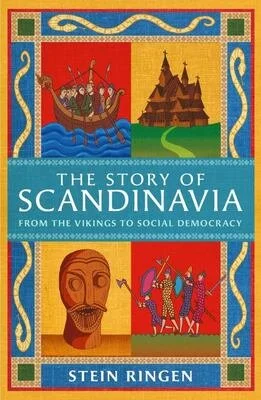
The Story of Scandinavia: From the Vikings to social democracy by Stein Ringen $30
1,200 years of drama, economic rise and fall, crises, kings and queens, war, peace, language and culture! Scandinavian history has been one of dramatic discontinuities of collapse and restarts, from the Viking Age to the Age of Perpetual War to the modern age today. For a thousand years, the Scandinavian countries were kingdoms of repression where monarchs played at the game of being European powers, at the expense of their own populations. The brand we now know as ‘Scandinavia’ is a recent invention. During most of its history, Denmark and Sweden, and to some degree Norway, were bloody enemies. These sentiments of enmity have not been fully settled. Under the surface of collaboration remain undercurrents of hatred, envy, contempt and pity. What does it mean today to be Scandinavian? For the author, whose identity is Scandinavian but his life European, this masterly history is a personal exploration as well as a narrative of compelling scope. [Paperback]

The Light of Asia: A history of Western fascination with the East by Christopher Harding $32
From the time of the ancient Greeks onwards the West's relationship with Asia consisted for the most part of outrageous tales of strange beasts and monsters, of silk and spices shipped over vast distances and an uneasy sense of unknowable empires fantastically far away. By the twentieth century much of Asia might have come under Western rule after centuries of warfare, but its intellectual, artistic and spiritual influence was fighting back. The Light of Asia is a history of the many ways in which Asia has shaped European and North American culture over centuries of tangled, dynamic encounters, and the central importance of this vexed, often confused relationship. From Marco Polo onwards Asia has been both a source of genuine fascination and equally genuine failures of comprehension. [Paperback]

The Green Kingdom by Cornelia Funke $21
Caspia's summer is transformed when she discovers a bundle of letters containing ten botanical riddles in this enchanting adventure. Twelve-year-old Caspia hates big cities, especially one as busy as New York. So she isn't thrilled by the news that her parents are taking her to stay in Brooklyn. It's summer-devouring bad luck! But everything changes when Caspia discovers a bundle of letters, hidden in an old chest of drawers. They belonged to two sisters who lived there long ago. Each letter contains a 'green' riddle, with clues leading to a different plant. Caspia sets out to solve the riddles and, as she does, she meets friends she could never have imagined and discovers that anywhere can feel like home, if you are just brave enough to put down new roots. [Paperback]

Looking at Women Looking at War: A war and justice diary by Victoria Amelina $40
When Russia invaded Ukraine on February 24, 2022, Victoria Amelina was busy writing a novel, taking part in the country's literary scene, and parenting her son. Now she became someone new: a war crimes researcher and the chronicler of extraordinary women like herself who joined the resistance. These heroines include Evgenia, a prominent lawyer turned soldier, Oleksandra, who documented tens of thousands of war crimes and won a Nobel Peace Prize in 2022, and Yulia, a librarian who helped uncover the abduction and murder of a children's book author. Everyone in Ukraine knew that Amelina was documenting the war. She photographed the ruins of schools and cultural centers; she recorded the testimonies of survivors and eyewitnesses to atrocities. And she slowly turned back into a storyteller, writing what would become this book. On the evening of June 27th, 2023, Amelina and three international writers stopped for dinner in the embattled Donetsk region. When a Russian cruise missile hit the restaurant, Amelina suffered grievous head injuries, and lost consciousness. She died on July 1st. She was thirty-seven. She left behind an incredible account of the ravages of war and the cost of resistance. [Paperback]
”Rare, powerful and affecting, a work of principle and courage by a truly brilliant and inspiring writer.” —Philippe Sands

Ten Little Rabbits by Maurice Sendak $21
The magician pulls ten rabbits out of a hat — and then puts them back in! Acounting book up to ten and back again. [Board book]

Read our latest newsletter. Find out the winner of the 2025 International Booker Prize.
Winter is coming — get some books to get you through.
23 May 2025
Books are wonderful. They are sources of information, knowledge, and witness. They are worlds to get lost and found in, with stories that entertain, inspire, or provoke. Books are ideas; and, for children, building curiosity and encouraging the ability to question should never be underestimated. Here are a handful of books on our shelves for the curious child in your life.


My Little Book of Big Questions is a great place to begin. I think this might be my favourite Britta Teckentrup book (and she is the author and illustrator of many delightful children’s books). The illustrations are variously thoughtful, joyful and enigmatic.
As are the questions, that range from the whimsical to tentative to philosophical and provocative. Here there are only questions, some where the only answer may be who knows? or only time will tell, while others open doors to conversations and contemplation.
Here’s a small selection:
Will I be able to fly someday?
Who will be my friend?
Why I am afraid of what I don’t know?
Am I special?
Why is nature so colourful?
Are dreams as true as reality?

From The School of Life crew comes this excellent introduction to philosophy. Big Ideas for Curious Minds features leading figures in the history of philosophy, engages young minds with the concept of thinking, its relevance to everyday life, and why asking questions will always be important.
It’s informative, well-written, relevant to modern life and young people’s concerns and interactions.

So if you would like to know what Hypatia was thinking in 400AD, why Kant thought it important ask why, and how Derrida can make you think again, this is the book for you. There are lots of thinking and talking points, and everyone is bound to learn something new about themselves, each other, and the the world and how it ticks.

Who can resist a book written by Speck Lee Tailfeather — a bird? In Architecture According to Pigeons Speck Lee is determined to share his passion for architecture, and show off his knowledge a little, too! Take a trip around the world to some standout buildings and constructions and get a pigeon-eyed view for a new perspective!
Speck Lee Tailfeather will introduce to the Hungry Beaks Hall (Sydney Opera House), The Worm (The Great Wall of China), The Colosseum, Taj Mahal, The Crabshell (Notre Dame de Ronchamp) and many other architectural wonders. Fabulous illustrations with plenty to look at and dotted with facts and curious tidbits from Tailfeather, as well as architectural notes. Enjoy and learn.

Take an anthropologist, take an artist and shake up how humans live in the world. David Graeber and Nika Dubrovsky free-wheel in Cities Made Differently . Melding history and myth, science and imagination, this is a visual interpretation of a dialogue over several decades between the two authors.

With thought-provoking examples of past cities, and ideas about future cities, the conversation not only grapples with the physicaltity of the spaces we live in, but also ideas of who holds power within these structures and how we want to live together. Mind-spinning stuff — a visually imaginative portal!
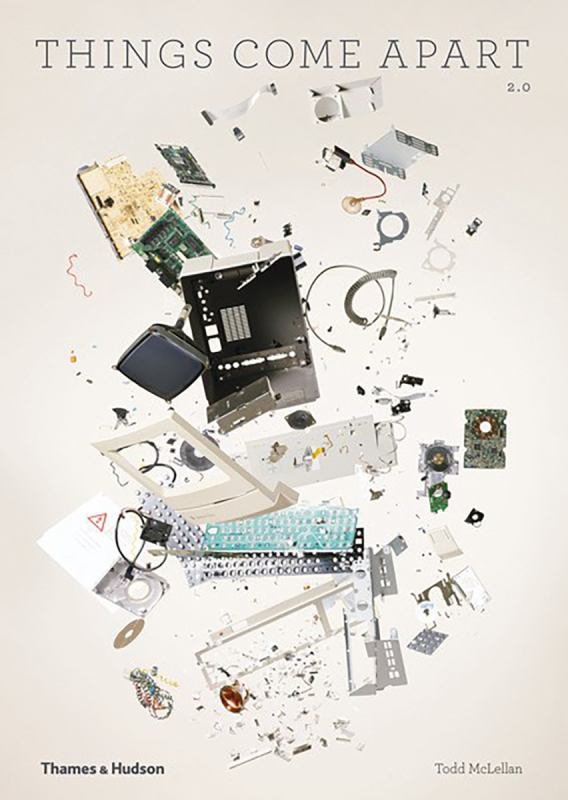
Things Come Apart 2.0 is a brilliant book for those who need to know how it works! If you love to navigate the world by unpacking it — literally — then this will be an endless source of fascination short of deconstructing every appliance in the house. (It may well inspire some coming apart, so consider a few defunct items to be close at hand!).

This highly visual catalogue will appeal to the deconstructor in your household, as well as the budding designer. The attention to detail of all the components neatly ordered and looking superb right down to the nuts and bolts is almost meditative!
At VOLUME we offer a book subscription service. There are many options, including a Non-Fiction selection for children. Our book subscriptions for children are so enjoyed that we have many repeat yearly subscribers. Find out why with a six-book taster! ( All subscription prices include postage.)

Mesmerising from the opening lines, At Night All Blood is Black will take hold in its repetitive, rhythmic structure, creating a landscape of madness and violence that is haunting, beautiful, disturbing, and viscerally rich. This is trench warfare pared back to the lives of two Senegalese soldiers fighting for the French. Spurred on by mistaken loyalty to the mother country and by the false cultural narrative (encouraged by their Captain) of the fearsome savage — the brave, rising into no-man’s land on the shrill whistle — the attack signalled for all, both friend and foe, these two men run side-by-side screaming into the void. Alfa Ndiaye and Mademba Diop are more-than-brothers, raised in the same village, in the same family, with a shared life that binds them to each other and their destiny. The opening paragraphs of Alfa’s confession to a crime lead us quickly to the death of Mademba. In looping sequences, David Diop carves out the story through Alfa’s guilt and his jarring memories in line with the young man’s descent into madness. Guilty for denying his more-than-brother’s dying request, not once but three times, Alfa sets out to avenge his enemy as well as his conscience in an increasingly gruesome manner. An activity, at first applauded and then reviled by his brothers in arms, as well as his superiors — who eventually send him away from the front — unnerves his companions. With a brevity of action and repetitive narrative, Diop (with the excellent translation of Anna Moschovakis) invades us with the rawness, violence and fear of the front, with the absurdity of the actions of war, and the disturbing hollowing of emotion only to be replaced with superstition and mistrust. As Alfa wreaks havoc in a situation overwhelmingly chaotic, he becomes further separated from reality, and increasingly isolated, living to his own strange rationale, and becomes a symbol of bad luck, and feared by his fellow soldiers. In the second half of the book, reassigned to the Rear and a psychiatric ward, Alfa’s grip on reality tips further. Here, as his memories of village life, the disappearance of his mother, the social politics of his age sect, and the friendly rivalry, as well as enduring bond, with Mademba, come to the fore as the intensity of the Front is pushed aside, we sense why his madness descended so intensely. Here, we have myth and story. Here, we see that Alfa, without his French-speaking more-than-brother Mademba, is at sea on the battlefield and in his ability to communicate beyond gesture and drawing. Diop cleverly keeps us in Alfa’s head, our mad and unreliable narrator, but gives us enough clues to set the alarm ringing as we dip into a dream-like sequence that will take us somewhere unexpected. So unexpected that you will loop back to the start to read this slim, but unforgettable novel with fresh eyes. Stunning, unrelenting and beautifully executed.

When something is at rest it is only conceptually differentiated from the physical continuum of its location, but when moving its differentiation is confirmed by the changes in its relations with the actual. Likewise, humans have in them a restlessness, a will to change, a fluidity of identity and belonging that Olga Tokarczuk in her fine and interesting book Flights would see as our essential vitality, an indicator of civilisation so far as it is acknowledged and encouraged, otherwise a casualty of repression or of fear. “Barbarians stay put, or go to destinations to raid them. They do not travel.” Flights is an encyclopedic sort-of-novel, a great compendium of stories, fragments, historical anecdotes, description and essays on every possible aspect of travel, in its literal and metaphorical senses, and on the stagnation, mummification and bodily degradation of stasis. The book bristles with ideas, memorable images and playful treatments, for instance when Tokarczuk reframes the world as an array of airports, to which cities and countries are but service satellites and through which the world’s population is constantly streaming, democratised by movement, no preparation either right or wrong in this zone of civilised indeterminacy. To create a border, to restrict a movement is to suppress life, to preserve a corpse. Tokarczuk’s fragments are of various registers and head in different directions, but several strands reappear through the book, such as the story of a father and young son searching for a mother who disappears on holiday on a small Croatian island. Historical imaginings include an account of the journey of Chopin’s heart from Paris to Poland following his death, the ‘biography’ of the ‘discoverer’ of the achilles tendon, and an account of a peripatetic sect constantly on the move to elude the Devil. For Tokarczuk, we find ourselves, if we find ourselves at all, somewhere in the interplay between impulse and constraint.

Present and Past — some International Booker Winners on our shelves. Click through to find out more:
There’s still a week of autumn left to squirrel away your store of books for the winter. Click through to our website to place your orders. Your books can be sent to you by overnight courier or collected from our door in Church Street, Whakatū.

Cry When the Baby Cries by Becky Barnicoat $60
A glorious antidote to parenting books, this darkly humorous, candid and insightful graphic memoir brings the early years of parenthood to life — in all their chaos, wonder and delirium. Intimate, relatable and very funny, Becky Barnicoat explores everything from the anatomy of the hospital bag to the frantic obsession with putting your baby down drowsy but awake, to the tyranny of gentle parenting. From pregnancy to the feral toddler years, Barnicoat extends a sticky hand to all new parents grappling with the impossible but joyous jigsaw puzzle of their lives. Barnicoat gives us permission to cry when the baby cries — and also laugh, snort, lie on the floor naked, drool and generally revel in a deeply strange new world ruled by a tyrannical tiny leader, growing bigger and more loved by the day. [Hardback]
”This book is a perfect testament to the wild ride of early parenting. It's tender, moving, beautifully drawn and also, extremely hilarious. Parents everywhere: you will feel very very seen.” —Isabel Greenberg

Sad Tiger by Neige Sinno (translated from French by Natasha Lehrer) $40
"Reading Sad Tiger is like descending into an abyss with your eyes open. It forces you to see, to really see, what it means to be a child abused by an adult, for years. Everyone should read it. Especially teenagers." —Annie Ernaux
Sad Tiger is built on the facts of a series of devastating events. Neige Sinno was seven years old when her stepfather started sexually abusing her. At 19, she decided to break the silence that is so common in all cultures around sexual violence. This led to a public trial and prison for her stepfather, and Sinno started a new life in Mexico. Through the construction of a fragmented narrative, Sinno explores the different facets of memory — her own, her mother's, as well as her abusive stepfather's; and of abuse itself in all its monstrosity and banality. Her account is woven together with a close reading of literary works by Vladimir Nabokov, Virginia Woolf, Toni Morrison, Christine Angot, and Virginie Despentes among others. Sad Tiger — the title inspired by William Blake's poem ‘The Tyger’ — is a literary exploration into how to speak about the unspeakable. In this extraordinary book there is an abiding concern — how to protect others from what the author herself endured? [Paperback]
"An achingly vivid, cerebral memoir of her abuse and its long aftermath. Close-reading her own shards of memory alongside these texts, Sinno contends with both the power and the inevitable impotence of writing, particularly about abuse." —Lauren Christensen, New York Times
"Sad Tiger is not what you'd expect from a memoir about sexual abuse and trauma. Unlike Vanessa Springora's 2020 international bestseller Consent, say, which was also translated by Natasha Lehrer, Sad Tiger is not a taut narrative of devastation and reclamation. At times Sinno writes with the essayistic force of Virginie Despentes's King Kong Theory, at others with the vividness of Edouard Louis's novels. She shares Annie Ernaux's will to self-excavation and proclivity for experimentation. Sinno refuses to be hamstrung by genre, choosing a balletic approach, as if only a choreographed dance around her subject, again and again, will properly encapsulate its blast radius." —Elias Altman, Bookforum

An Uncommon Land: From an ancestral past of enclosure towards a regenerative future by Catherine Knight $50
A story of enclosure, dispossession, colonisation and — ultimately — hope for a better future. Through the lens of her ancestors’ stories, Catherine Knight throws light on the genesis and evolution of the commons, its erosion through enclosure and the ascendency of private property in parallel with the rise of capitalism — a history that has indelibly shaped New Zealand society and its landscape. Like other European settlers, the lives and future prosperity of the author’s ancestors had their foundations in war, land appropriation and environmental destruction — but in their histories lie glimmerings of the potentiality of commons: tantalising hints of an alternative path to a re-commoned, regenerative future. From a past of enclosure, resource exploitation and exponential growth, this book shines light on the potentiality of a different future, taking inspiration from our collective history. [Paperback]
”A highly original, intriguing and excellent work of scholarship, An Uncommon Land looks to the past to provide a pathway to a sustainable and fairer future. Weaving family histories of migration brilliantly into broader themes of colonisation, the commodification of land and climate change, Knight suggests we look to the concept of the commons as a way of managing finite environmental resources for the benefit of all. A timely, topical and essential read.” —Vincent O'Malley

I Shall Not Die: Titokowaru’s war, 1868—1869 by James Belich $40
"You were made a Pakeha, and the name of England was given to you for your tribe. I was made a Maori, and New Zealand was the name given to me. You forgot that there was a space fixed between us of great extent — the sea. You, forgetting that, jumped over from that place to this. I did not jump over from this place to that. Move off from my places to your own places in the midst of the sea." —Titokowaru.
Straddling the Maori and European worlds of the 1860s, Titokowaru was one of New Zealand's greatest leaders. A brilliant strategist, he used every device to save the Taranaki people from European invasion. When peaceful negotiation failed, he embarked on a stunning military campaign against government forces. His victories were many, before the battle he lost. Although he was 'forgotten by the Pakeha as a child forgets a nightmare', his vision was one that would endure. Titokowaru (Ngati Ruanui) was born in South Taranaki in 1823. Converting to Christianity (and pacifism) at 20, he later became disillusioned with Christianity and joined the bitter fighting of the period — protesting against continual land loss and the erosion of his people's rights. Leading a strong intertribal force, Titokowaru nearly succeeded in repelling the colonial forces in the Taranaki wars of 1868-69. But at the final hour his people deserted him, in circumstances that remain unclear. [Paperback]

Eurotrash by Christian Kracht (translated from German by Daiel Bowles) $30
Realising he and she are the very worst kind of people, our unnamed middle-aged narrator embarks on a highly dubious road trip through Switzerland with his terminally ill and terminally drunken mother. They try unsuccessfully to give away or squander the fortune she has amassed from investing in armament industry shares. Along the journey they bicker endlessly over the past, throw handfuls of francs into a ravine and exasperate the living daylights out of their long-suffering taxi driver. The crimes of the twentieth century are never far behind, but neither is the need for more vodka. Eurotrash is a bitterly comic, vertiginous mirror-cabinet of familial and historical reckoning. Kracht's novel is a narrative tour-de-force of the tenderness and spite meted out between two people who cannot escape one another. [Paperback]
Long-listed for the 2025 International Booker Prize.
”Eurotrash is the auto-fictional account of a writer contemplating his unpleasant and abusive childhood, his morally repugnant ancestry and his toxic financial inheritance as he drives his crotchety, alcoholic, senile mother through the landscape outside Zurich. This doesn’t sound like much fun! But this book is one of the most entertaining and ultimately moving stories we read. It is brilliantly, bitterly funny, even as it documents a vicious and tarnished emotional universe. This book is immaculately and wittily translated; on every page its sentences sparkle and surprise like guilty-legacy gold.” —International Booker Prize judges’ citation
”Whether he's fictionalising history in order to question the validity of history, or fictionalising himself in order to question the validity of self, it is by now apparent to me and to his many readers that Christian Kracht is the great German-language writer of his generation.” —Joshua Cohen
”Christian Kracht is a master of the well-formed sentence, the elegance of which conceals horror. His novels involve Germany, ghosts, war and madness, and every conceivable fright, but they are also full of melancholy comedy, and they all hide a secret that one never quite fathoms.” —Daniel Kehlmann

Air by John Boyne $35
Being in limbo, 30,000 feet in the air, offers time to reflect and take stock. For Aaron Umber, it's an opportunity to connect with his 14-year-old son as they travel halfway across the world to meet a woman who isn't expecting them. Unsettled by his past, and anxious for his future, Aaron is at a crossroads in life. The damage inflicted upon him during his youth has made him the man he is, but now threatens to widen the growing fissures between him and his only child. This trip could bind them closer together, or tear them further apart. In this penetrating examination of action and consequence, fault and attribution, acceptance and resolution, John Boyne gives us a redemptive story of a father and a son on a moving journey to mend their troubled lives. This novella completes ‘The Elements’ quartet. [Hardback]

Three Wee Bookshops at the End of the World by Ruth Shaw $40
The Bookseller at the End of the World described the first part of Ruth Shaw's tumultuous life, touching readers in powerful ways. It became an international bestseller, translated into eleven languages. Three Wee Bookshops at the End of the World picks up Ruth's story with more charming, heartbreaking, brave and funny tales. Having found the love of her life, Lance, she tells of their sailing adventures together, world travels, conservation efforts and their wee bookshops. Life has never been easy for Ruth but, despite that, her book is chock full of extraordinary people and situations, many of them laugh-out-loud funny. Tales from the bookshops are interwoven with Ruth's story, along with expert book recommendations. Written in Ruth's characteristic style, this absorbing memoir traverses the highs and lows of a life lived to the full. [Hardback]

The Sound of Utopia: Musicians in the time of Stalin by Michel Krielaas $55
When Stalin came to power, making music in Russia became dangerous. Composers now had to create work that served the state, and all artistic production was scrutinised for potential subversion. In The Sound of Utopia, Michel Krielaars depicts Soviet musicians and composers struggling to create art in a climate of risk, suspicion and fear. Some successfully toed the ideological line, diluting their work in the process; others ended up facing the Gulag or even death. While some, like Sergei Prokofiev, achieved lasting fame, others were consigned to oblivion, their work still hard to find. As Krielaars traces the twists and turns of these artists' fortunes, he paints a fascinating and disturbing portrait of the absurdity of Soviet musical life. [Hardback]

Mythica: A new history of Homer’s world, through the women written out of it by Emily Hauser $40
Hauser takes readers on an epic journey to uncover the astonishing true story of the real women behind ancient Greece's greatest legends — and the real heroes of those ancient epics, Homer's Iliad and Odyssey. Contrary to perceptions built up over three millennia, ancient history is not all about men. In Mythica Emily Hauser tells, for the first time, the extraordinary stories of the real women behind some of the western world's greatest legends. Following in their footsteps, digging into the history behind Homer's epic poems, piecing together evidence from the original texts, recent astonishing archaeological finds and the latest DNA studies, she reveals who these women — queens, mothers, warriors, slaves — were, how they lived, and how history has (or has not - until now) remembered them. A riveting new history of the Bronze Age Aegean and a journey through Homer's epics charted entirely by women — from Helen of Troy, Briseis, Cassandra and Aphrodite to Circe, Athena, Hera, Calypso and Penelope — Mythica is a ground-breaking reassessment of the reality behind the often-mythologised women of Greece's greatest epics, and of the ancient world itself as we learn ever more about it. [Paperback]

The Midnight Plane: Selected and new poems by Fiona Kidman $40
The Midnight Plane comes in to land exactly half a century after the 1975 publication of Kidman’s debut book, the poetry collection Honey and Bitters and contains poems from each of her six published collections as well as new sequences. There’s a sense in which The Midnight Plane works like an alternative memoir, offering a poet’s immediacy of vision and gift of linguistic precision on a life unfolding in real time. The Midnight Plane speaks to human relationships, to connection and disconnection, to the mystery and the majesty of life, to seasons of loss and cycles of renewal. Each of these poems is, in its own way, a midnight plane, flying in the dark, navigating for home in sometimes perilous conditions. [Hardback]

The Eyes of Gaza: A diary of resilience by Plestia Alaqad $35
In early October 2023, Palestinian Plestia Alaqad was a recent graduate with dreams of becoming a successful journalist. By the end of November, she would be internationally known as the 'Eyes of Gaza'. Millions of people would be moved by her social media posts depicting daily life in Gaza amid Israel's deadly invasion and bombardment. Written as a series of diary extracts, The Eyes of Gaza shares the horrors of her experiences while showcasing the indomitable spirit of the men, women and children that share Plestia's communities. From the epicentre of turmoil, while bombs rained around her and devastation gripped her people, she witnessed their emotions, their gentle acts of quiet, necessary heroism, and the moments of unexpected tenderness and vulnerability amid the chaos. Through the raw honesty and vulnerability of a normal 22-year-old woman trying to make her way through a human tragedy, The Eyes of Gaza is a powerful call for peace. It recounts a harrowing experience, but it is not a heart-breaking lamentation. Rather, it is a manifesto for hope, advocating for a better future for Gaza, the Middle East, and our divided world. [Paperback]

Always Home, Always Homesick by Hannah Kent $40
In 2003, seventeen-year-old Australian exchange student Hannah Kent arrives at Keflavík Airport in the middle of the Icelandic winter. That night she sleeps off her jet lag and bewilderment in the National Archives of Iceland, unaware that, years later, she will return to the same building to write Burial Rites, the haunting story of Agnes Magnúsdóttir, the last woman executed in Iceland. The novel will go on to launch the author's stellar literary career and capture the hearts of readers across the globe. Always Home, Always Homesick is Hannah Kent's love letter to a land that has forged a nation of storytellers, her ode to the power of creativity. [Hardback]

Limitarianism: The case against extreme wealth by Ingrid Robeyns $30
An expert in inequality makes the case for a hard limit on personal wealth. We all notice when the poor get poorer — when there are more rough sleepers and food bank queues start to grow. But if the rich become richer, there is nothing much to see in public and, for most of us, daily life doesn't change. Or at least, not immediately. In this game-changing intervention, leading philosopher and economist Ingrid Robeyns exposes the true extent of our wealth problem, which has spent the past fifty years silently spiralling out of control. In moral, political, economic, social, environmental and psychological terms, she shows, extreme wealth is not only unjustifiable but harmful to us all — the rich included. In place of our current system, Robeyns offers a breathtakingly clear alternative — limitarianism. The answer to so many of the problems posed by neoliberal capitalism — and the opportunity for a vastly better world — lies in placing a hard limit on the wealth that any one person can accumulate. [Paperback]
”Powerful — a must-read.” —Thomas Piketty
”Effortlessly navigating between ethics, political theory, economics and public policy, Ingrid Robeyns's nuanced and persuasive defence of limitarianism is also a much-needed manifesto for reimagining political institutions.” —Lea Ypi

A View from the Stars: Stories and essays by Cixin Liu $25
”We re mysterious aliens in the crowd. We jump like fleas from future to past and back again, and float like clouds of gas between nebulae; in a flash, we can reach the edge of the universe, or tunnel into a quark, or swim within a star-core. We re as unassuming as fireflies, yet our numbers grow like grass in spring. We sci-fi fans are people from the future.” —Cixin Liu, from the essay 'Sci-Fi Fans'
A View from the Stars features a range of short works from the past three decades of bestselling author Cixin Liu's prolific career, putting his nonfiction essays and short stories side-by-side for the first time. This collection includes essays and interviews that shed light on Liu's experiences as a reader, writer, and lover of science fiction throughout his life, as well as short fiction that gives glimpses into the evolution of his imaginative voice over the years. [Paperback]
”His stories are filled with a sense of wonder as they push ideas about the future of humanity to their extremes, and the personal essays offer a rare glimpse into attitudes towards science fiction in China and how the genre has changed. A fascinating collection.” —Guardian

On awarding Heart Lamp the International Booker Prize, the judges said: “In a dozen stories – written across three decades — Banu Mushtaq, a major voice within progressive Kannada literature — portrays the lives of those often on the periphery of society: girls and women in Muslim communities in southern India. These stories speak truth to power and slice through the fault lines of caste, class, and religion widespread in contemporary society, exposing the rot within: corruption, oppression, injustice, violence. Yet, at its heart, Heart Lamp returns us to the true, great pleasures of reading: solid storytelling, unforgettable characters, vivid dialogue, tensions simmering under the surface, and a surprise at each turn. Deceptively simple, these stories hold immense emotional, moral, and socio-political weight, urging us to dig deeper.
Published originally in the Kannada language between 1990 and 2023, praised for their dry and gentle humour, these portraits of family and community tensions testify to Mushtaq’s years as a journalist and lawyer, in which she tirelessly championed women’s rights and protested all forms of caste and religious oppression. Written in a style at once witty, vivid, colloquial, moving and excoriating, it’s in her characters — the sparky children, the audacious grandmothers, the buffoonish maulvis and thug brothers, the oft-hapless husbands, and the mothers above all, surviving their feelings at great cost — that Mushtaq emerges as an astonishing writer and observer of human nature, building disconcerting emotional heights out of a rich spoken style. Her opus has garnered both censure from conservative quarters as well as India’s most prestigious literary awards; this is a collection sure to be read for years to come.”
More stock is due soon!