>> Read all Stella's reviews.


The Animals in That Country by Laura Jean McKay    {Reviewed by STELLA}
It’s the flu, but nothing like you have seen before. When Laura Jean McKay started writing her latest novel, The Animals in That Country, she had no idea she would be launching her book virtually because she would be in lock-down in New Zealand during a worldwide pandemic! So, you might not be in the mood for a ‘plague’ book, but this one will surprise you. It’s completely unexpected and refreshing. The Zooflu has hit Australia and everyone is getting pinkeye and talking to the animals. Enter our heroine — if you could possibly call her that — Jean, and her animal companion, a dingo called Sue. Jean’s an alcoholic, chain-smoking (if she can get any ciggies) brassy mess with a heart, her greatest love being her grandchild Kimberly, working as a tour guide at a wildlife park and hankering after a ranger’s job — one that Ange, the boss and also Kimberly’s Mum, won’t give her. Sue, an inmate at the park, is the top dog in the enclosure and hankering for a bit of freedom. When the Zooflu hits the park despite their best efforts to keep it out, everything goes to custard. Food is short, the animals are restless and the workers are cracking up, running away or talking to the animals. Or often, trying to communicate that they, the warders are not the enemy. The Zooflu hits everyone with different intensity — the most severe being communication with insects, which leads to some very trance-like experiences for the human species. As Jean finds out, being able to communicate with the animals — she has always wondered what they have been thinking and in the past and has articulated their wants aloud to anyone that would listen — isn’t a walk in the park, and their ways of talking are vastly different from human patterns, with layered meanings and oblique messages for their human companions. When Jean’s wayward son, Lee, turns up at the fence begging to be let in, despite being infected, Jean succumbs, much to her regret. A few days later he’s gone, taking Kimberly with him. Off to see the whales. (The idea of communing with the whales will never have the same resonance after you read this novel). Jean’s guilt drives her to follow, despite the crisis of the wildlife park in freefall (Ange is talking to reptiles, including the crocodile), with Sue by her side. As they traverse Australia — a remade wilderness of human proportions, as resources (fuel, food, alcohol) become scarce and hardy fellows in utes and with guns roam in packs, blocking their ears and noses with anything that comes to hand to keep out the sound and scents of animals — Jean becomes increasing feral and reliant on Sue to help find her granddaughter. Their travels are both hilarious and tense with both animals and humans. Popping in to see her Mum at the old folks' home, she finds the elderly happily interacting with the birds. They free a load of confused pigs from a truck, watch a child lost to the ants, hear the birds call out ‘not yet, not today’ for Jean’s eyes and other tasty morsels, come across towns where animals aren’t welcome, get robbed of petrol and take to the road on foot, meet oddities isolated in their own madness, and others celebrating their new communion. The Animals in That Country is a crazy, yet deeply philosophical, novel about our relationship with animals, what we see and fail to see, and our role as only one of the species in our ecosystem. And with Jean and Sue and their changing power relationship at the centre of this story, you are rewarded with a sharply funny, bizarre and profound exploration of these themes.   


 >> Read all Thomas's reviews. 


Essayism by Brian Dillon      {Reviewed by THOMAS}
An essay is at once a wound and an act of piercing. An essay is not only about (‘about’) its subject but also, whether the writer is aware of this or not, about (‘about’) writing about the subject (and also, by extension, about (‘about’) reading about the subject (although Brian Dillon in his excellent and thoughtful book Essayism is interested primarily the writing of essays (or rather in what he terms ‘essayism’: “not the practice of the form but an attitude to the form — to its spirit of adventure and unfinished nature — and towards much else. Essayism is tentative and hypothetical, and yet it is also a habit of thinking, writing and living that has definite boundaries.” (note here, incidentally, the introduction of the subject of this review within (closer to the surface, though, than this observation) two levels of parentheses)))). An essay is a transparent barrier, a means of focus at once providing intimacy with and distance from its subject, or, better metaphor (if any metaphor can be better than another (and better by what criteria, we might ask (though that is another matter))), an essay is a stick at once both joining and separating the writer and the subject, a tool by which the writer can lever weight upon the subject, which, although never able to be wrenched free from its context (what we might call the hypersubject), a context innately amorphous, unwieldable and inconceivable, provides a point of leverage from which the writer may rearrange the disposition of that grab-bag (or “immense aggregate” (William Gass)) of feelings, thoughts and impressions that is, out of convenience and little more, referred to as the self. To write is to continually and simultaneously pull apart and remake the ‘I’ that writes. An essay is, in Dillon’s words, “a combination of exactitude and evasion,” an eschewing of the compulsion for, or the belief in the possibility of, completion or absolutism, an affirming instead of the fragmentary, the transitory, the subjective. The operating principle of the essay is style, the advancing of the text “through the simultaneous struggle and agreement between fragments,” the production of “spines or quills whose owner evades and attacks at the same time.” Style is the application of form to content, or, rather, form results from the application of style to content. Style can be applied to any subject with equivalent results. Essayism is an essay about essays, or a set of essays about essays, about the reading and, more devotedly, the writing of essays, about the approaches to, reasons for, and functions of essays. Dillon especially examines the connection, for him at least, between the essay and depression: “Writing had become a matter of distracting myself from the urge to destroy myself” (even though “away from my desk it was possible to suppress or ignore the sense of onrushing disaster” (suggesting perhaps that it was only writing itself that presents the void from which it must then rescue the writer (always at the risk of failure))). Is the essay a cure or palliative for depression, or a contributor to, or ‘styler’ of, depression? “What if the ruinous and rescuing affinity between depression and the essay is what got you into this predicament in the first place? Will a description of how you made your way along the dry riverbeds of prose and self-pity provide any clues as to how to get out of the gulch again? How to connect once more, if in fact you have ever really known it, with the main stream of human experience? Such questions seem too large, too embarrassing even  though they have never been too grand for the essay. Or they may seem too small, too personal. Same answer.” As the best essays do, Essayism provides understanding without answers and leaves the reader with a habit of thinking, writing and living which will help them to ask just the sorts of unanswerable questions about their own experience, so to call it, that will increase both their intimacy with and detachment from it.

 NEW RELEASES

Summer by Ali Smith        $34
Smith's outstanding quartet, written 'in real time' comes to its conclusion with this eagerly anticipated volume. 
"These novels, in straddling immediacy and permanence, the personal as well as the scope of a world tilting toward disaster, are the ones we might well be looking back on years from now as the defining literature of an indefinable era. And the shape the telling takes is, if not salvation, brilliance itself." —The New York Times
Read Stella's reviews of the other books in the quartet: >> Autumn. >>Winter. >>Spring.

Wild Swims by Dorthe Nors          $23
The Danish writer Dorthe Nors creates a series of intimate, psychologically acute portraits of individuals in states of emotional crisis: a woman's attempts to cope with a recent breakup lead her to commit a deeply immoral act, a professor's relationship with a much older woman takes a sudden sinister turn, a man who has grown resentful of his partner takes drastic action, and a young woman's nostalgic memories of wild swimming draw her back to the water. In attempting to escape the present moment, Nors's characters must confront the impact of the past. In prose that is both elegantly spare and saturated with emotion, Nors explores the relationships that we have with others, and those we forge with ourselves.
>>Beyond hygge.

Death in Her Hands by Ottessa Moshfegh          $35
An isolated elderly woman and her dog investigate a murder that happened on her land, but the victim is as elusive as the killer. An existential thriller from the author of My Year of Rest and Relaxation

Diamonds by Armin Greder             $33
A small girl's question reveals the chain of exploitation and corruption the led to a pair of diamond earrings. Greder's illustrations are even more searching and powerful than ever. 
The Coral Merchant: Essential stories by Joseph Roth (translated by Ruth Martin)       $28
Roth shows us isolated souls pursuing lost ideals and impossible desires. Forced to remove a bust of the fallen Austrian emperor from his house, an eccentric old count holds a funeral for it and intends to be buried in the same plot himself; a humble coral merchant, dissatisfied with his life and longing for the sea, chooses to adulterate his wares with false coral, with catastrophic results; young Fini, just entering the haze of early sexuality, falls into an unsatisfying relationship with an older musician.

Dark, Salt, Clear: Life in a Cornish fishing village by Lamorna Ash          $35
There is the Cornwall Lamorna Ash knew as a child — the idyllic, folklore-rich place where she spent her summer holidays. Then there is the Cornwall she discovers when, feeling increasingly dislocated in London, she moves to Newlyn, a fishing town near Land's End. This Cornwall is messier and harder; it doesn't seem like a place that would welcome strangers. Before long, however, Lamorna finds herself on a week-long trawler trip with a crew of local fishermen, afforded a rare glimpse into their world, their warmth and their humour. Out on the water, miles from the coast, she learns how fishing requires you to confront who you are and what it is that tethers you to the land. But she also realises that this proud and compassionate community, sustained and defined by the sea for centuries, is under threat.
"Marks the birth of a new star of non-fiction." —William Dalrymple
Double Lives: A history of working motherhood by Helen McCarthy        $33
In Britain today, three-quarters of mothers are in employment and paid work is an unremarkable feature of women's lives after childbirth. Yet a century ago, working mothers were in the minority, excluded altogether from many occupations, whilst their wage-earning was widely perceived as a social ill. In Double Lives, McCarthy accounts for this remarkable transformation, whose consequences have been momentous for Britain's society and economy.

Feminist City: Claiming space in a man-made world by Leslie Kern          $33
This book records an ongoing experiment in living differently, living better, and living more justly in an urban world. We live in the city of men. Our public spaces are not designed for female bodies. There is little consideration for women as mothers, workers or carers. The urban streets often are a place of threats rather than community. What would a metropolis for working women look like?

How to Pronounce Knife by Souvankham Thammavongsa        $43
In these stories, Souvankham Thammavongsa captures the day-to-day lives of immigrants and refugees in a nameless city, illuminating hopes, disappointments, love affairs, and above all, the pursuit of a place to belong. An ex-boxer turned nail salon worker falls for a pair of immaculate hands; a mother and daughter harvest earthworms in the middle of the night; a country music-obsessed housewife abandons her family for fantasy; a young girl's love for her father transcends language.
"Sharp and vital." —Daisy Johnson
"A riveting, subversive collection." —Madeleine Thien
Wonder Women: A bingo game by Isobel Thomas and Laura Bernard       $35
Get to know these high-flying women from many fields and countries in this beautifully drawn (and fun!) game. Many of these women featured in the Wonder Women Happy Families Game, but there are several new additions to the pantheon in this game, including Jacinda Ardern and Greta Thunberg. 
The Nature Activity Book: 99 ideas for activities in the natural world of Aotearoa New Zealand by Rachel Haydon and Pippa Keel         $35
Good fun and good information; produced in conjunction with Te Papa. 


Those Seal Rock Kids by Jon Tucker          $23
When a group of young Australian and Kiwi sailing friends are allowed to camp in New Zealand's Bay of Islands, they discover something very unexpected on a tiny nearby rocky islet. Fresh cultural and environmental insights are introduced with the arrival of a pair of children from the local iwi who bring humour and resilience while facing problems that threaten to turn their lives upside-down. 
Why Do Cats Meow? by Lily Snowden-Fine and Nick Crumpton     $30
How long have people kept cats? Why do cats like scratching chairs? What does 'meow' mean? Do cats have nine lives? Great illustrations, too. 
Jefferson by Jean-Claude Mourlevat       $17
When Jefferson the hedgehog goes to his local hairdresser's, he's shocked to discover the barber lying dead on the floor. Falsely accused of the murder, Jefferson goes into hiding in the human kingdom with only his friend Gilbert the pig to help him clear his name. But can the two hunt down the real killer before it's too late? And how is the murder connected to the fight for animal rights?

Poo Bingo by Aidan Onn and Claudia Boldt      $35
Now you can keep your hands clean and reunite the animals with their droppings. 


VOLUME BooksNew releases
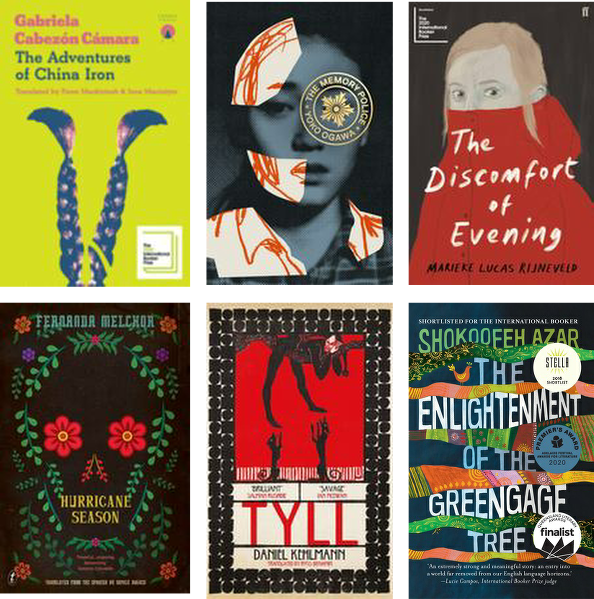
There are some remarkably good books short-listed this year for the International Booker Prize. The winner will be announced in a few days (on 26 March). Tell us which book you think should receive the award. 


>> Read all Stella's reviews.


A Traveller at the Gates of Wisdom by John Boyne           {Reviewed by STELLA}  
John Boyne has written the quintessential everyman’s novel. It has an intriguing premise: spanning all history with one man’s story at its centre ranging in time from AD 1 to 2016 and following a life from birth to an unknown future self (the epilogue / future self is intriguing). We meet our traveller through time in the opening pages, at his birth. It’s Palestine AD 1 and he is the second son to be born to a proud, violent father and a caring, slightly unorthodox mother. As you can imagine, the second son cannot please his father no matter his significant creative and imaginative talents that range (over time) from young artist to gifted craftsman (in various fields) to a spinner of words in many forms. A father that would rather rage against the world as soldier and womaniser with unfettered pleasure sees little use in the talents of his son and bemoans the fact that his first son has fled the home for greater adventures leaving him the hopeless second. This is a novel with family at its centre — firstly the child and his family, then later the man and his wives and children. Much misery, as well as joy, befalls our hero, and revenge or justice plays a large role in this man’s journey. There are some wonderful explorations and descriptions of place and the time. And highly enjoyable are the cameos of the famous and infamous dotted throughout the book. Our man in his various guises works on the Buddhas in Afghanistan, he is an assistant to Michelangelo, he sails with Abel Tasman and shares a jail with Ned Kelly. Each chapter propels us through time in about 50-year leaps: in the first part, entitled 'A Traveller in the Dark', we start in Palestine, find ourselves in Turkey, AD 41, then on to Romania AD 105 and Iran AD 152 and through to Italy AD 169. It’s a fascinating way to pin some of the greater historical moments into a work of fiction, and it is a work of fiction (licence can be allowed with the ‘facts’ as long as it stays convincing). For this is a novel where you are propelled forward by your involvement in this man’s plight, in his loves and hates, in his wanderings to find a sense of peace in either new places or new relationships, his joy of having a child, his pleasure in success, and his anger and sorrow when the fates strike him down. There are some wonderful moments in the book that keep you hooked firmly in this story. Italy, AD 169 — being forced as a child to be the Emperor’s son’s playmate to the extent of being locked in with him when he has the plague to keep him company. AD 260, Somalia — after finding himself captured during battle and becoming a slave. In Switzerland AD 214 — he finds himself in the opposite position: a slave owner. This juxtaposition balances the conflicting aspects of our traveller. In the fifth part, Boyne manages to place the action in a series of monasteries and chapels. Devastated by a mishap in his life, the man finds refuge in these peaceful places and uses his skills to pay his way. In Ireland, 800 AD, he is an illuminator; in Indonesia, AD 907, a sculptor. And so this pattern continues as he seeks the answers to his life’s misfortunes and seeks his cousin who has wronged him. The confrontation when it comes is not what he expects. Across time and place, he finds his brother, takes opportunities, seeks a family of his own, and encounters actions that harm him and others. A Traveller at the Gates of Wisdom is ambitious, and like all of John Boyne’s novels, it is great story-telling: clever and inventive.  


 >> Read all Thomas's reviews. 


Speedboat by Renata Adler     {Reviewed by THOMAS}
You’re soaking in it, he said when I asked him how he was getting on with the review of Renata Adler’s novel Speedboat, the review he was supposedly writing for the newsletter that his bookshop issued each week. You’re soaking in it, he said, but he did not elaborate further, and it was unclear to me what he meant. He was referring, perhaps, to the decades-old advertisement for a dishwashing liquid that softens your hands while you do the dishes, if we are to believe the advertisement, a liquid that undoes the effects of work upon the worker, a liquid that leaves a person who commits a certain act seeming less like a person who would commit that act than they did before they committed that act, in this case washing the dishes but presumably the principle could apply to anything, providing that the appropriate liquid could be found. You’re soaking in it, he repeated, and, yes, I thought that perhaps he was right, we are immersed always in something that undoes the effects upon ourselves of our own intentions, something that Adler alludes to when she writes, “For a while I thought that I had no real interests, only ambitions and ties to certain people, of a certain intensity. Now the ambitions have drifted after the interests, I have lost my sense of the whole. I wait for events to take a form.” But there is an uneasy relationship between the narrating mind and the world in which it soaks, in which it is softened as it does its work, he might think. “Situations simply do not yield to the most likely structures of the mind,” wrote Adler. The world in which we soak is comprised of random events, or at least of events sufficiently complex as to appear random or to be treated without fear of correction as random, he might think, a world of discontinuity, of agglomeration and dissolution, of fragmentations, collisions and tessellations, he might think, a world in which the one who is soaking in it instinctively, or, perhaps, instinctually, it’s hard to tell which, searches for meaning even while acknowledging its impossibility, for this, he probably is thinking, is the nature of thought, or the nature of language, if that is not the same thing. We cannot help but narrate, narrate and describe, observe and relate. There is no meaning, I suppose he is thinking as he contemplates, or as I suppose he contemplates, the review he could be writing of the book that he has read, or claims to have read, may well have read, no meaning other than the pattern we impose by telling. Stories both create and consume their subjects, he thinks, I think, or he might as well think. Writing and reading, the so-called literary acts, are concerned with form and not with content, or, he might say, more precisely, concerned primarily with form and only incidentally with content, so to call them, he might think, the literary acts are patterning acts and it is only the patterning that has meaning. Renata Adler writes beautiful sentences, he thinks, and this you can tell by the small pleasant noises he makes while reading them, she turns her sentences upon the sharpest commas. The comma, is the way in which life, so to call it, impresses itself upon us. Each assertion Adler makes is mediated by the realisation that it could be otherwise, either in point of fact, or in change of context, perspective, or scope. There is no progress without hesitation: no progress. Each comma is a rotation. There is humour in precision. “Doctor Schmidt-Nessel, sitting, immense, in his black bikini, on a cinder-block in the steam-filled cubicle, did not deign immediately to answer.” Speedboat is filled with such perfect sentences arrayed on commas. Sentences in paragraphs, often brief, filled with the jumble, so to call it, of the life of its ostensible narrator, Jen Fain, but, perhaps, of the life of Renata Adler, if such a distinction can sensibly be made, the narrator does not observe herself but those around her, she is a space in what she observes, she is an outline in the snippets that attach themselves to her. The real subject of the book, though, is language, others’ and her own. The book might be a novel, it is almost a novel, it is a novel if you don’t expect a novel to do what a novel is generally expected to do, it is information is caught in a sieve, the nearest to a novel that life can resemble, if this is of any importance. All novels, even the most fantastic, are comprised predominantly of facts, he is probably thinking, if he is in fact thinking, and it is only the arrangement of facts that comprises fiction. Adler’s narrator is entirely extrospective. She reports. She dissolves the distinctions between novelist, gossip columnist, journalist, and spy, the distinctions that were always only conceptual distinctions in any case and not distinctions of practice. Fain wonders what several of her friends actually do who have become spies. “I guess what these spies — if they are spies, and I’m sure they are — are paid to do is to observe trends.” Fain as a journalist cannot conduct an interview, she cannot impose herself to seek an answer, she has no programme, she can only observe. At one point she “receives communications almost every day from an institution called the Centre for Short-Lived Phenomena”. Her news, and it is news, is her own life, but not herself within it. She knows the risks: “The point changes and goes out. You cannot be forever watching for the point, or you will miss the simplest thing: being a major character in your own life.” Is meaning a hostage to circumstance, or is it the other way round? When the narrator starts to think about the world in terms of hostages it is because she has what she sees as a hostage inside her, a pregnancy she has not told her partner about, all things are hostages to other things, this is perhaps a sort of meaning. Hostages are produced by grammar. There he sits, hostage, I suppose, to his intention to write a review, or at least to the set of circumstances, odd though they may be, that contrived to expect of him this review, the review he will not write, disinclined as he is to write, though he will say, I am sure, if you ask him, that he enjoyed the book Speedboat very much. He makes no presumption upon you. As Jen Fain or Adler writes, “You are very busy. I am very busy. We at this rest home, this switchboard, this courthouse, this race track, this theatre, this lighthouse, this studio, are all extremely busy. So there is pressure now, on every sentence, not just to say what it has to say but to justify its claim on our time.”

 NEW RELEASES

Mihi by Gavin Bishop         $18
This beautiful te Reo board book introduces ideas of me and my place in the world in the shape of a simple mihi: introducing yourself and making connections to other people and places. Essential. 

Marti Friedlander: Portraits of the Artists by Leonard Bell         $75
Friedlander's incisive photographs chronicled the country's social and cultural life from the 1960s into the twenty-first century. From painters to potters, film makers to novelists, actors to musicians, Marti Friedlander was always deeply engaged with New Zealand's creative talent. This thoughtfully assembled book shows us new sides of both well-known and forgotten artists and writers. 

Little Dancer, Aged Fourteen by Camille Laurens         $38
She is famous throughout the world, but how many know her name? You can admire her figure in Washington, Paris, London, New York, Dresden or Copenhagen but where is her grave? She danced as a 'petit rat' at the Paris Opera. She was also a model, she posed for painters and sculptors - among them Edgar Degas. Taking us through the underbelly of the Belle Epoque, Laurens casts a light on those who have traditionally been overlooked in the study of art, and opens a space for essential questions. She paints a compelling portrait of Marie van Goethem and the world she inhabited, in the 1880s; a time when art unsettled the hypocrisy of society.
"It’s a wonderful book, a little jewel, the way the author tries––discreetly, with respect and even a bit of shyness––to approach the dancer and through her the vices of representation, the injustice of the transformation of an individual into a figure, is quite beautiful, and touches on what for me is one of the most significant problems for fiction: how we try to understand someone else while honoring that inner secrecy they will always possess and we never will be able to grasp––the paradox, you know, of how we never understand and yet are condemned to understanding, however far our way of understanding is from approximating the real inner nature of the people we contemplate.’ — Adrian Nathan West

Who Sleeps with Katz by Todd McEwen           $36
The doctor delivers bad news. What's a man to do, with the life he has left to live? He can cry, he can wonder which particular cigarette did it - the 564,119th or the 976,835th - or which brand. Or (and as well) he can call the friend he loves in the city he loves and then set out down the avenues and streets of New York to meet him. Every corner, every block has a memory: women, food, drink, friendship, the comedy of office life and of sexual success and failure. It's as though the towers of Manhattan have become a shelf of books, each to be opened and regretfully read for the last time. A journey, truly, of a lifetime.
"Ferocious wit, a stream of magnificent sentences, something to savour on every page, and a blissful knowledge of what really matters in life." – Guardian
"One of the great American novels. Overwhelming – as great and sad a love song as New York has ever inspired." – Salon

A Respectable Occupation by Julia Kerninon           $28
"The best early training for a writer is an unhappy childhood," Hemingway famously said. Julia Kerninon, one of France's most acclaimed young novelists, tells an altogether different story in a poetic account of her pursuit. Her ode to reading, and to writing as a space for discovery (as well as a 'respectable occupation') entwines the French and Anglo-Saxon literary traditions as she journeys through her formative years.
"The greatest writers are also the greatest readers. Virginia Woolf, Roland Barthes, Jeanette Winterson - they all read, as Woolf put it, 'to refresh and exercise their own creative powers.' They can't stop themselves from writing about reading. They have origin stories of how reading and writing became as necessary as breathing. Julia Kerninon's A Respectable Occupation joins the shelf of these biblioautobiographies; books on how writers crave books, how books beget books, how tricky it is to move from the position of the reader to that of the writer, and stand there feeling you've earned the right to call yourself, finally, a writer." —Lauren Elkin


Rave by Rainald Goetz          $38
Rave is the fruit of Goetz's intense collaboration with major figures from the early electronic music scene, among them Sven Vath and DJ Westbam. An unapologetic embrace of the nightlife under the motto `Meet girls. Take drugs. Listen to music', this fragmentary novel attempts to capture the feel of debauchery from within while at the same time critiquing the media structures that contribute to the 'epochality' of pop culture phenomena. Throughout the four decades of his career, Goetz has sought to dissolve the critical distance between writer and object which, in the quest for distance, actually distorts its object; in Rave he dives fully into dissolution, celebrating what is neither counter-culture nor `mass culture' in Adorno's disparaging sense, but a new way of experiencing mental processes and intimacy. 
"Rainald Goetz is the most important trendsetter in German literature." —Suddeutsche Zeitung
>>Read Thomas's review of Insane.
>>Goetz cuts his head open for the 1983 Ingeborg Bachmann Prize (a sort of Germany's Got Talent).

A Silent Fury: The El Bordo Mine Fire by Yuri Herrera           $35
On March 10, 1920, in Pachuca, Mexico, the Compañía de Santa Gertrudisth—thelargest employer in the region, and a subsidiary of the United States Smelting, Refining and Mining Company—may have committed murder. The alert was first raised at six in the morning: a fire was tearing through the El Bordo mine. After a brief evacuation, the mouths of the shafts were sealed. Company representatives hastened to assert that "no more than ten" men remained inside the mineshafts, and that all ten were most certainly dead. Yet when the mine was opened six days later, the death toll was not ten, but eighty-seven. And there were seven survivors. A century later, acclaimed novelist Yuri Herrera has reconstructed a workers' tragedy at once globally resonant and deeply personal: Pachuca is his hometown. His work is an act of restitution for the victims and their families, bringing his full force of evocation to bear on the injustices that suffocated this horrific event into silence. Harrera's book has the penetrative effect of a novel. 
"Searing, painful, poetic, simple, extraordinary." —Philippe Sands
>>Yuri Herrera talks with Fernanda Melchor.
>>Other books by Yuri Herrera

Handmade in Japan: The pursuit of perfection in traditional crafts by Irwin Wong           $135
A beautifully presented record of the care, skill and aesthetic sensibilities of practitioners of traditional Japanese crafts. 

Mā Wai e Hautū? by Leo Timmers (translated by Karena Kelly)           $19
A new play on the fable of the tortoise and the hare. This is a picture book for drivers of all ages, now available in te reo Māori.

Sisters by Daisy Johnson           $37
Something unspeakable has happened to sisters July and September. Desperate for a fresh start, their mother Sheela moves them across the country to an old family house that has a troubled life of its own. Noises come from behind the walls. Lights flicker of their own accord. Sleep feels impossible, dreams are endless. In their new, unsettling surroundings, July finds that the fierce bond she's always had with September is beginning to change in ways she cannot understand. From the author of the Booker-shortlisted Everything Under.
"A short sharp explosion of a gothic thriller whose tension ratchets up and up to an ending of extraordinary lyricism and virtuosity." —Observer
>>"It's not an easy time to be looking at yourself or other people."

Stalin's Wine Cellar by John Baker and Nick Place        $40
Stolen from the Csar, hidden from the Nazis, and found by a Sydney wine merchant. 
>>Is this the secret cellar? 


Book of Wonders: How Euclid's Elements built the world by Benjamin Wardhaugh         $40
Wardhaugh traces how an ancient Greek text on mathematics – often hailed as the world's first textbook – shaped two thousand years of art, philosophy and literature, as well as science and maths. Writing in 300 BC, Euclid could not have known his logic would go unsurpassed until the nineteenth century, or that his writings were laying down the very foundations of human knowledge.
>>Byrne's edition of Euclid

The Smallest Lights in the Universe by Sara Seager       $37
After spending her career peering into the stars in search of Earth-like planets, Seager found her connections with an Earth-like planet much closer to home following the death of her husband and the realisation that her Asperger's affects how she relates to every part of the universe. 


One, Two, Three, Four: The Beatles in time by Craig Brown         $37
Deals with the minutiae of the Beatles metamorphoses in a lively way, but looks at their interactions with, and effects upon, the wider world.
>>All Together Now.


From a Dark Cave to New Zealand by Mustafa Darbandi       $30
The remarkable story of a refugee's flight from Iraq to Turkey to Iran to Pakistan to Afghanistan and finally to New Zealand, his life always in danger, first because he belonged to a banned Kurdish political organisation, and then because of security forces, mercenaries, police, helicopters, landmines, wild wolves and even UNHCR indifference. 


Do You Read Me? Bookshops around the world by Marianne Julia Strauss     $120
You want this book. 



VOLUME BooksNew releases


>> Read all Stella's reviews.


The Great Godden by Meg Rosoff      {Reviewed by STELLA}
Meg Rosoff’s new book for teens is a coming-of-age story that crosses a golden summer holiday with an unexpected sequence of events involving a Patricia-Highsmith's-Mr-Ripley character in the form of Kit Godden. Our narrator, never named and gender-neutral (there are no clues — the reader can decide), child number two in a family of four siblings, is our eyes and ears to this tale. The usual family antics play out as they arrive at their holiday home — the jostling of the siblings, the relief of being released from the squeeze of the car, and that marvellous sense of arrival in a place and pace both familiar and different from home. The holiday has begun and anything is possible. For our narrator, it's a chance to draw and enjoy the beach surroundings, despite their own self-consciousness in comparison to just slightly older sister Mattie, who has become irresistibly gorgeous. Their close family friends, Mal and Hope, have already arrived at the neighbouring house and the summer seems set to be a golden one. And the shine seems even greater with the arrival of Hope’s godmother’s sons, Kit and Hugo Godden. Kit is immediately captivating to the family group, especially the impressionable teens, and from the get-go, you know that trouble follows where this young man wanders. A story of love, lust, obsession, and the ability of a charismatic figure to be a catalyst for emotions and actions that otherwise may have lain dormant, Rosoff’s novel is captivating and unfolds in an unexpected way as the family and friends navigate around each other and circle this young man. Kit and Mattie, unsurprisingly, strike up a steamy summer romance, which to all purposes looks like it will be a classic boy-meets-girl/girl-meets-boy cliche. However, this is not to be, as Kit is more interested in the effect he has on others and the skills he has to manipulate and push others beyond their intentions. Enter, stage left, his brother Hugo, who is, in comparison, surly and antisocial. Here we are given the trigger warning — something is up between these two siblings and the burden that Hugo carries runs deeper than he can articulate. As the summer runs on, the family continues with their often jolly activities and summer traditions, each of the siblings playing out their roles, and the older teens circling each other. As Kit’s affections and attentions move from one to other of the party, including flattering some of the adults, the stakes run high for our besotted narrator, the confused Mattie (Kit’s on-again/off-again games are a tease which begins to wear her down) and the increasingly fractious adult group. Yet The Great Godden isn’t merely a story about a  sociopath but, more importantly, an awakening of a young person into the adult world, the desires that can drive decisions, and the ability to see through facades as well as ways in which to discover meaningful emotional and physical connections in a world that doesn’t always make sense. Excellent writing, with Rosoff’s ability to blend humour with adversity, makes this a compelling and sensitive teen novel with a narrator who you can’t help falling for.    


 >> Read all Thomas's reviews. 


Autoportrait by Édouard Levé   {Reviewed by THOMAS}
“I am inexhaustible on the subject of myself,” states Édouard Levé in a book that is nothing less than an attempt to exhaust everything that he can think of to say about himself, no matter how banal or embarrassing, with relentless objectivity. In one long string of seemingly random declarative statements without style or development or form (other than the form of the list, if a list can be said to be a form), the details accumulate with very fine grain, but the effect is disconcerting: the author comes no closer to exhausting his observations, and the idea that there is such a thing as a 'person' beyond the details seems more and more implausible. The list is not so much an accumulation as an obliteration: facts obscure that which they purport to represent. “I dream of an objective prose, but there is no such thing.” Levé’s style is deliberately and perfectly and admirably flat throughout (all perfect things should be admired (whatever that means)), like that of a police report. “I try to write prose that will be changed neither by translation nor by the passage of time.” The constructions often feel aphoristic but eschew the pretension of aphorisms to refer to anything other than the particulars of which they are constructed. There is no lens formed by these sentences to ‘see through’, no insight, no intimation of personality other than the jumbled bundling of details and tendencies assembled under the author’s name, no ‘self’ that expresses itself through these details or is approachable through these details, because we are none of us persons other than what we for convenience or comfort (or, rather, out of frustration and fear) bundle conceptually, mostly haphazardly, and treat as an entity or ‘person’. The more fact is compounded (or, rather, facts are compounded), the stronger the intimation that any attempt to exhaust the description of a person will never be approach we usually think of as a person. “If I look in mirrors for long enough, a moment comes when my face stops meaning anything.” As well as demonstrating the impossibility of the task which it attempts, description also cancels itself by implying for each positive statement a complementary negative statement. Each statement of the self-description of Édouard Levé functions to include those of us among his readers who are similar and to exclude those who are dissimilar. We find each statement either in accord or in disagreement with a statement we could similarly (or dissimilarly) make about ourselves. The reader is charted in the text as much as the author. The reader is continually comparing themselves to the author, finding accord or otherwise, exercising the kind of judgement concealed beneath all social interaction but typically hidden by content and mutuality. In Autoportrait, the author’s self-obsession is matched by our fascination with him, with the kinds of details that may or may not come to light in social interchange. Because the author is not aware of us and is not reciprocally interested in us, or feigning reciprocal interest in us, as would be the case in ‘real life’ social interaction, we feel no shame in our fascination, our fascination is dispassionate, clinical. He is likewise unaffected by our interest or otherwise in him. But as well as bundling together an open set of details that we may conveniently think of as facts (“Everything I write is true, but so what?”) about Édouard Levé (or ‘Édouard Levé’), the text also conjures an inverse Édouard Levé (or ‘Édouard Levé’) who is the opposite to him in every way, the person who nullifies him (in the way that all statements call into being their simple or compound opposites, their nullifiers). Levé’s obsession with identity, facsimile and the corrosive effects of representation reappear throughout the book, and towards the end he mentions the suicide of a friend from adolescence, which would form the basis for Levé’s final book, Suicide (after which Levé himself committed suicide). Édouard Levé was born on the same day as me, but on the other side of the planet. In Autoportrait he writes, “As a child I was convinced that I had a double on this earth, he and I were born on the same day, he had the same body, the same feelings I did, but not the same parents or the same background, for he lived on the other side of the planet, I knew that there was very little chance that I would meet him, but still I believed that this miracle would occur.” We never met and I am not that person. 

MOPHEAD by Selina Tusitala Marsh, this week's Book of the Week, has just been named as the Margaret Mahy Book of the Year at the 2020 New Zealand Book Awards for Children and Young Adults. 
At school, Selina is teased for her big, frizzy hair. Kids call her ‘mophead’. She ties her hair up this way and that way and tries to fit in. Until one day, after Sam Hunt visits her school, Selina gives up the game. She decides to let her hair out, to embrace her difference, to be herself — to be WILD!

>>On being the first

>>Warrior poet

>>On being New Zealand Poet Laureate

>>How your difference makes a difference

>>On being a Pasifika role model

>>On being Afakasi

>>On the relationship between the tale and the teller. 

>>Five minutes with Selina Tusitala Marsh. 

>>Fast talking P.I.

>>The most memorable book launch

>>Is New Zealand 'the lucky country'?

>>Telling it to the Queen.  >>And after!

>>Books by Selina Tusitala Marsh

>>Mophead Tu: The Queen's poem is due for release in November, Order a copy now. 

>>Other category winners in the NZBACYA. 


NEW RELEASES 

Grove: A field novel by Esther Kinsky           $38
An unnamed narrator, recently bereaved, travels to a small village southeast of Rome. It is winter, and from her temporary residence on a hill between village and cemetery, she embarks on walks and outings, exploring the banal and the sublime with equal dedication and intensity. Seeing, describing, naming the world around her is her way of redefining her place within it. For readers of W.G. Sebald. 
"Deeply sad and darkly beautiful. The novel is masterly and uplifting and without any doubt it offers solace." —
Jury for the Düsseldorf Literature Prize
The seventh collection from one of New Zealand's most admired poets. Camp stares down the ordinary until it reveals both its beauties and its threats. 

The Swimmers by Chloe Lane       $30
Erin's mother has motor neurone disease and has decided to take her fate into her own hands. As Erin looks back at her twenty-six-year-old self, she can finally tell the story of the unimaginable task she faced one winter.
"The Swimmers has the kind of intelligent and beautiful quiet that explodes a brightness deep within the reader. It's an incredibly humane book that looks closely at love — not the easy, conventional love but the complicated, brutal love that invites us at once to forget ourselves and know ourselves completely. We are faulty and perfect in our faults. Sad and buoyant with our sorrows. I can't remember the last time I read a more generous book about care, courage and figuring it out." —Pip Adam
Intimations: Six essays by Zadie Smith           $16
A series of perceptive essays on the experiences and lessons of lock-down.  "There will be many books written about the year 2020: historical, analytic, political and comprehensive accounts. This is not any of those. What I've tried to do is organize some of the feelings and thoughts that events, so far, have provoked in me, in those scraps of time the year itself has allowed. These are, above all, personal essays: small by definition, short by necessity. Early on in the crisis, I picked up Marcus Aurelius and for the first time in my life read his Meditations not as an academic exercise, nor in pursuit of pleasure, but with the same attitude I bring to the instructions for a flat-pack table - I was in need of practical assistance. I am no more a Stoic now than I was when I opened that ancient book, but I did come out with two invaluable intimations. Talking to yourself can be useful. And writing means being overheard."
Far-Flung by Rhian Gallagher          $25
Far-Flung traverses multiple terrains — home and upheaval, our connection to the environment and to people, our relation to the past, place and placelessness. From 'the Kilmog slumping seaward' to 'the bracts and the berries and the leaves' of the Mackenzie country; the moth ('courier of bloom powder'); the wind that grows like an animal and 'the great loneliness / of grass' — Gallagher is in conversation with the natural world. Her lyric poems, marked by attentiveness, have an earthy, intuitive music and a linguistic clarity. Gallagher moves easily from the ecological and personal concerns of contemporary life to the nineteenth-century Irish migrants and the historic legacy of the Seacliff Lunatic Asylum
The Bird Within Me by Sara Lundberg         $30
Berta is a young girl growing up on a farm in the Swedish countryside at the beginning of the 20th century. Her father doesn't understand her and her mother is dying. Berta longs to be an artist and can't stay on the farm forever. This beautifully illustrated book is based on the life of Swedish artist Berta Hansson. It is the story of a young woman with the bravery to follow her own path, despite the protests of her father and society at the time.
For the first time, McSweeney's Quarterly is illustrating each short story with full-spread, elaborately-staged photographs. Featuring eight original stories, and accompanying photos by the award-winning photographer Holly Andres, Issue 60 contains tales of healing powers discovered in a neighborhood market and retiring baseball stars, of ill-fated father-daughter float-plane trips and a romance with the ghost of an old Hollywood heartthrob. 
"A key barometer of the literary climate." —The New York Times
"This is an issue you'll want to keep preserved in a temperature-controlled room for generations to come."—Timothy McSweeney
The Great Godden by Meg Rosoff           $18
"Everyone talks about falling in love like it's the most miraculous, life-changing thing in the world. Something happens, they say, and you know That's what happened when I met Kit Godden. I looked into his eyes and I knew. Only everyone else knew too. Everyone else felt exactly the same way." An excellent YA novel about a family and a summer — the summer when everything changes.
Why Visit America by Matthew Baker        $33
A young man breaks the news to his family that he is going to transition from an analogue body to a digital existence. A young woman abducts a child — her own — from a government-run childcare facility. The citizens of Plainfield, Texas, have had it with the United States. So they decide to secede, rename themselves America in memory of their former country, and set themselves up to receive tourists from their closest neighbour — America. The stories in Matthew Baker's collection portray a world within touching distance. This is an America riven by dilemmas — from old age to consumerism, drugs to internet culture — each turned on its head by this darkly innovative and defiantly strange writer.
"This is the first of its kind, a work born of a deep understanding and a philosophical awareness of how things are. Over a century ago James Joyce aimed to write a moral history of his country: Matthew Baker has achieved that for his own. At the end of this acclaimed and untouchable collection there has been horror, but what remains is love.” –  Lunate
Neither plant nor animal, fungi are found throughout the earth, the air and our bodies. It can be microscopic, yet also accounts for the largest organisms ever recorded, living for millennia and weighing tens of thousands of tonnes. Its ability to digest rock enabled the first life on land, it can survive unprotected in space, and thrives amidst nuclear radiation. 
"A dazzling, vibrant, vision-changing book. Sentence after sentence stopped me short. I ended it wonderstruck at the fungal world. A remarkable work by a remarkable writer." —Robert Macfarlane
In the Company of Crows and Ravens by John M. Marzluff      $55
From the cave walls at Lascaux to the last painting by Van Gogh, from the works of Shakespeare to those of Mark Twain, there is clear evidence that crows and ravens influence human culture. Yet this influence is not unidirectional, say the authors of this fascinating book: people profoundly influence crow culture, ecology, and evolution as well.
Heated debates about the rise of the Anthropocene and the current 'sixth extinction' crisis demonstrate an urgent need and desire to move beyond mainstream approaches. Yet the conservation community is deeply divided over where to go from here. Some want to place 'half earth' into protected areas. Others want to move away from parks to focus on unexpected and 'new' natures. Many believe conservation requires full integration into capitalist production processes. Buscher and Fletcher argue that the Anthropocene challenge demands something bolder, a revolution that goes beyond protected areas and faith in markets to incorporate the needs of humans and nonhumans within integrated and just landscapes. 
Selected Poems by James Brown         $40
"James Brown is the New Zealand poet laureate of torpor, resignation and exhaustion — with intermittent bouts of fanatical bicycle riding. The miracle is that he can make it all so interesting and darkly humorous and weirdly moving." —Gregory O'Brien 
"This is not a poetry book for the faint-hearted." —Pania Brown (James's sister)
"In 2030 there may be six million of us. One and a half million of us will live overseas. We will be clustered in Auckland, dependent on migration, and worried about a shortage of workers. We haven't planned for this. We need to."
What if we could have babies without having to bear children, eat meat without killing animals, have the perfect sexual relationship without compromise or choose the time of our painless death? To find out, Jenny Kleeman has interviewed a sex robot, eaten a priceless lab-grown chicken nugget, watched foetuses growing in plastic bags and attended members-only meetings where people learn how to kill themselves. Many of the people Kleeman has met say they are finding solutions to problems that have always defined and constricted humankind. But what truly motivates them? What kind of person devotes their life to building a death machine? What kind of customer is desperate to buy an artificially intelligent sex doll — and why? This is not science fiction. 
AntiRacist Baby by Ibram X. Kendi and Ashley Lukashevsky       $25
A board book. Start as you mean to go on. 


VOLUME BooksNew releases
Our Book of the Week this week is Minor Detail by Adania Shibli (translated by Elisabeth Jaquette). This superbly well written novel is comprised of two reflecting parts: the first narrating the fate of a young woman abducted by soldiers during the 1948/49 Naqba/Israeli War of Independence; the second telling of a contemporary woman's obsession with finding out more about this 'minor detail' of history. Shibli is interested in how the past remains in and shapes the present, and in how mechanisms of power harm both the wielders and the victims of that power.
>>Read Thomas's review
>>Read an extract
>>Preview the book (Text Publishing edition). 
>>Another extract (Fitzcarraldo Editions)
>>Writing Palestine from the inside
>>The choreography of violence
>>Silence
>>Book now to hear Adania Shibli at the Edinburgh Festival (to be held this year on your sofa)
>>A session with Dr. Shibli
>>The politics of translation
>>Meet the translator, Elisabeth Jaquette
>>Choose your edition of Minor Detail.  >New Directions, >Text Publishing, >Fitzcarraldo Editions.
>>Books by Adania Shibli

 >> Read all Thomas's reviews. 


The Dominant Animal by Kathryn Scanlan   {Reviewed by THOMAS}
He was careful not to write a review that was longer than the stories in the book he was reviewing, but he was uncertain how he could do this. Uncertain seems more of an introspective word than careful, for some reason, and is therefore unsuitable for use in a review of a book which contains no introspection, or at least displays no introspection. This is not to say that the characters are not propelled by forces deep below the surfaces of their appearances, they are propelled entirely by such deep forces, unconscious compulsions, so to call them, we all have them, or similar ones, but these are not manifest in anything but action, action and appearances also, both austerely told, or seemingly so, briefly, directly, barely, or something to that effect, each of the forty stories, he thinks it is around forty stories, told like a folk or fairy tale, without anything unnecessary, without elaboration, like a folk or fairy tale in which someone, the narrator, so to call her, is trapped in the first person. Folk and fairy tales are never told in the first person because the first person is a trap, or trapped, there in the mechanism of the story, told in the past tense, unalterable, and, like fairy tales, Scanlan’s forty stories are about the relations of power, as the title suggests, about the struggle for dominance that is the basis of all stories. All that happens happens as if by instinct, or by reflex, awareness lags, is only good for telling a story and only in the past tense, and, as with all stories, as with all relations of power, as with all struggles for dominance, everything in the past tense is at once horrible and ludicrous. And the same goes for the present. The horrible is ludicrous, the ludicrous is horrible, there are no other modes of being. All other modes are modes of non-being, if there are other modes, he supposed, fictional modes, perhaps, but he was not sure. That which we see in animals, the tooth-and-nail struggle, so to call it, the immediacy of all response, the inescapability of all compulsion, the way of nature, the cruelty, so to call it, what we call cruelty, is mainly true of us, he thought, without introspection he hoped, that which we affect to see in animals we see only of ourselves, is not apt of animals, who in any case have the advantage over us of seldom being capable either of deception or of self-deception. Just like objects, he thought, Scanlan gives objects the same agency as persons, not by giving agency to objects but by removing it from persons, or by recognising its absence, persons are just objects moving in rather complex ways, scudded on by some force, momentum, compulsion, whatever, but no freer to be otherwise or do otherwise than an object thrown at a wall, notable primarily through the effects of our velocity. Scalan is master of the velocity of her prose, honed to sharpness, careful, devastating, puncturing the imposed limit of the conscious to deliver the reader precisely at the point where rationality, or what passes by that name, flounders in what lies beyond, behind, beneath, or wherever, the point where the unsayable is both revealed and annulled. Think Fleur Jaeggy, Lydia Davis, Diane Williams, he thought, these authors share a sensibility both verbal and incisive, but Scalan’s sentences are no-one’s but her own, she who ends a story, “I watched the man drive away in his glossy, valuable car and prayed he might be met with some misfortune. Due to a major failing — the pathological poverty of my imagination — I could not call to mind anything more specific than that.”


>> Read all Stella's reviews.


Blanket by Kara Thompson    {Reviewed by STELLA}
When you think of a blanket, initially what might come to mind is a source of comfort or warmth: a blanket in a crib or across the end of a child’s bed — something to protect and keep one safe. And then, the blanket as an item of exchange or gift, maybe passed down through generations with a family history embedded. It’s also the object which is used to cover the unsightly: the ill or the dead and, metaphorically, the deed not wanting to be seen. In Kara Thompson’s essay, Blanket, in the 'Object Lessons' series, she starts with her inability to write about this object, with what eludes her. “When I try to write about blankets, I tell the story of death.” In her introduction, Thompson aligns the concept of the fold and the blanket — she writes about what is hidden beneath and what is condensed, culturally in particular, within the object’s folds. What do we no longer see and, by unfolding, what do we and must we reveal? As a professor of English and American Studies, it is no surprise that the meanings of the blanket as exchange and weapon arise in this exploration of an everyday object that we use often, that has a central role to play in political and social interactions, and has been a tool of distraction and exploitation. With chapters headed Witness, Folds, Extraction, Security, Cover, and Carriers, Thompson delves deeply and honestly, recording historic as well as contemporary voices in her study of this seemingly innocuous item. From the blankets, knowingly infested with smallpox, given to indigenous peoples in the 1760s, spearheading an epidemic that killed 90 per cent of the population in Ohio, making a land grab and the desires of colonists easier, to a star quilt made by a Dakota artist presented to President Obama with an embroidered message, "NoKXL", as a protest against the pipeline proposed for Standing Rock, blanket and land have been intricately linked in our political histories. Recorded in blankets through their woven patterns and decorative elements are stories passed down through generations. Thompson focuses here on the Ute blanket — made between 1840 and 1860 by Navajo (Diné) peoples as they were disenfranchised from their lands during and at the conclusion of the Mexican-American war. The Diné women continue to weave and their blankets tell their story — the forced march, imprisonment and railroads are manifest in their designs. Thompson does not only focus on the blanket as telling of colonial histories but also as remembrance — the AIDS quilts and the symbol of illness and recovery. The blanket enfolds us when we are born and covers us as we falter. Interspersed with her examination of cultural histories, contemporary artists’ use of blanket in sculpture and blanket as protector, is Thompson's own personal story of her brother’s death as a young man and her memories triggered by the blanket that covered him as he lay at home, and of the hospital blankets, always white, and the blanket in which she found shelter. Each ‘Unfold’ reveals a little more or her brother’s story of illness and her inescapable memories of death in the house of her childhood. They are brief and affecting, making the story of the blanket-as-object more personal, and enable the reader to reflect on their own cultural knowledge and personal experiences, triggering memories and examination. This is another excellent addition to the 'Object Lessons' series — the books are always fascinating and relevant, windows into something you may have not considered previously — in this case, to fold a blanket now has greater resonance.  
NEW RELEASES
The Inkberg Enigma by Jonathan King         $30
Miro and Zia live in Aurora, a fishing town nestled in the shadow of an ancient castle. Miro lives in his books; Zia is never without her camera. The day they meet, they uncover a secret. The fishing works, the castle, and the town council are all linked to an ill-fated 1930s Antarctic expedition. But the diary of that journey has been hidden, and the sea is stirring up unusual creatures. Something has a powerful hold over the town. With Zia determined to find out more, Miro finds himself putting aside his books for a real adventure. A superb graphic novel for 8—12-year-olds. 
>>Watch the trailer!
After Midnight by Irmgard Keun         $24
"In 1937, German author Irmgard Keun had only recently fled Nazi Germany with her lover Joseph Roth when she wrote this slim, exquisite, and devastating book. It captures the unbearable tension, contradictions, and hysteria of pre-war Germany like no other novel. Yet even as it exposes human folly, the book exudes a hopeful humanism. It is full of humor and light, even as it describes the first moments of a nightmare. After Midnight is a masterpiece that deserves to be read and remembered anew." —Fantastic Fiction
Beyond these Shores: Aotearoa and the world edited by Nina Hall        $15
In recent years, more people are calling for an independent, values-based foreign policy and parties of all political stripes are looking for new ideas to achieve that. This book brings together a diverse group of New Zealanders to outline their visions for New Zealand's role in the world. It sparks a conversation about how we can exercise leadership and influence in the international arena.


The Island of Sea Women by Lisa See         $23
A tale of friendship between two members of an all-female diving collective on a small Korean island, set in the decades covering the Japanese colonial period, World War 2, and the Korean War.


Across the Risen Sea by Bren MacDibble        $19
Neoma and Jag and their small community are 'living gentle lives' on high ground surrounded by the risen sea that has caused widespread devastation. When strangers from the Valley of the Sun arrive unannounced, the friends find themselves drawn into a web of secrecy and lies that endangers the way of life of their entire community. Soon daring, loyal Neoma must set off on a solo mission across the risen sea, determined to rescue her best friend and find the truth that will save her village. New from the author of How to Bee and The Dog Runner
Human Compatible: A.I. and the problem of control by Stuart Russell            $26
Russell considers that if we do not prioritise the objectives of potential artificial intelligence, humans' crowning inventions may be their last. 
All Adults Here by Emma Straub           $37
One of Astrid's grandchildren becomes the catalyst for the revelation of secrets that she had successfully hidden from her children, and even from herself.
"Intimate, epic, beautifully observed." —Jennifer Egan
"Has all the pleasures of Anne Tyler's compelling family portraits, with a Lorrie Moore-like sense of the absurdities of contemporary life." —Michiko Kakutani, New York Times
>>The author's bookshop. 
Shouting Zeros and Ones: Digital technology, ethics and policy in New Zealand edited by Andrew Chen        $15
 A diverse group of contributors reveal the hidden impacts of technology on society and on individuals, exploring policy change and personal action to keep the internet a force for good. Timely.
The Telling Time by P.J. McKay           $35
Two young women, a generation apart, travel to opposite sides of the world on fraught journeys of self-discovery. 1958: Gabrijela yearns to escape the confines of bleak post-war Yugoslavia and her tiny fishing community, but never imagines she will be exiled to New Zealand- a new immigrant sent to housekeep for the mysterious and surly Roko, clutching a secret she dare not reveal. 1989: Luisa, Gabrijela's daughter, departs on her own covert quest, determined to unpick the family's past. But not all decisions are equal and amid Yugoslavia's brewing civil unrest, Luisa's journey confronts her with culture shocks and dark encounters of her own.
"A vivid, engrossing family story that crosses oceans and eras, exploring the price two women pay when new and old worlds collide." —Paula Morris
Brasswitch and Bot ('Rise of the Remarkables' #1) by Gareth Ward        $23
Screams surge along York's narrow Victorian streets as a run-away crackle-tram races toward disaster. Fearing an accident like the one that killed her parents, Brasswitch Wrench is forced to reveal her powers - a decision that will change her life forever. Recruited to the sinister department of Regulators who hunt down others like her, Wrench teams up with their maverick mechanical leader, Bot as they are tasked with halting the rise of the aberration threat. Until today, being called Brasswitch would have got you killed. Now, it might save your life. The first book in an exciting new series from the author of 'The Traitor and the Thief'.
Overkill: W@hen modern medicine goes too far by Paul Offit          $38
Dr Offit contends that many common medical procedures and treatments do rather more harm than good. 
>>Is medicine the answer? 
Beyond a Boundary by Cyril Lionel Robert James      $26
In this classic summation of half a lifetime spent playing, watching and writing about the sport, James recounts the story of his overriding passion and tells us of the players whom he knew and loved, exploring the game's psychology and aesthetics, and the issues of class, race and politics that surround it. Part memoir of a West Indian boyhood, part passionate celebration and defence of cricket as an art form, part indictment of colonialism, Beyond a Boundary addresses not just a sport but a whole culture and asks the question, 'What do they know of cricket who only cricket know?'
"To say 'the best cricket book ever written' is piffingly inadequate praise." —Guardian
"Great claims have been made for Beyond a Boundary since its first appearance in 1963: that it is the greatest sports book ever written; that it brings the outsider a privileged insight into West Indian culture; that it is a severe examination of the colonial condition. All are true." —Sunday Times
How To Be Old: Poems by Rachel McAlpine         $25
Always developing her own aging, McAlpine has written a selection of poems that capture often unnoticed aspects of this process. 
>>Rachel's website.
Dirty Politics: How attack politics is poisoning New Zealand's political environment by Nicky Hager          $35
Recent political developments have made elements of this book relevant again, and it has been reprinted. 

A Book of Surrealist Games compiled by Alastair Brotchie         $30
Game playing was a primary creative method of the Surrealists. This book provides language games, alternative card games, "Dream Lotto", automatic techniques for making poems, stories, collages and photo-montages to re-enact Surrealist creativity. The games may also be used to delve into the collective unconscious in much the same ways as the original surrealists did at the start of the movement.
>>Exquisite corpses.