>> Read all Thomas's reviews. 


The Dolls by Ursula Scavenius (translated by Jennifer Russell)   {Reviewed by THOMAS}
“The disasters that befall you are always different from the ones you imagine,” states a character in one of the stories in Ursula Scavenius’s riveting and unsettling collection The Dolls, a collection suffused with unidentifiable or unquantifiable threats, threats that leave the narrators transfixed by the mundane details of lives distorted by unbearable forces that they cannot comprehend or name. It is hard to make a case that 'real life', so to call it, operates any differently. Is it the case that the unbearable arises from the mundane, that the unbearable is inherent in the mundane but suppressed to make the mundane bearable, or, rather, is it that by suppressing the unbearable we are left with the mundane, the only evidence we have, perhaps, of the forces set against us? Is the mundane therefore the surest point of access to the unbearable? Is the most unbearable closest to the most mundane? The potentising restraint of Scavenius’s prose, the withholding of all but the most resonant details, gives great power to that which is excluded, to that which it is impossible to include. Just as the universe is, supposedly, comprised mostly of dark matter, which we cannot sense and for which the only evidence is the effect it has upon that portion of the universe that we can sense, so too literature is most effective when attending to the effects upon the mundane of forces that cannot otherwise be directly or adequately addressed. The total, comprised primarily of dark matter, cannot be expressed. Any idea of 'the total' comes at the expense of the parts, by the suppression of some parts and the magnification of other parts. Any idea of 'the total' is a distortion of that which it purports to represent. A ‘story’, a ‘development’, likewise, is a totalitarian concept. Naturalism is a totalitarian concept. Scavenius has Kafka’s gift of being able to allow her details to resonate in the spaces that surround them, echoing in spaces that cannot otherwise be delineated, intimating the complex forces seething beneath her deceptively simple prose. Her characters move about in worlds strangely sloped, the familiar becoming unfamiliar and revealed as evidence of the unbearable. Time slips, the past is seen to be a threat, even an idyllic past is a threat because it contains the circumstances out of which the problematic present arose. “Birds chirp in the bushes outside. I laugh, realising it’s only a memory.” Every detail, every occurrence is a point of pressure, a point at which the mundane is assailed by dark matter. In the title story, ‘The Dolls’, the arrival of some refugees reveals the fascistic potential latent in the local community, including in the narrator’s father, and the distorting effect of that force upon thought and language: “There is no way to prove whether the scream was real, someone on the radio says. … It sounds real, but these days anything could be propaganda.” The force of the unbearable is always felt first upon language. 

 NEW RELEASES

Choose from these new titles and click through to have them delivered to your door!

Natural History by Carlos Fonseca (translated by Megan McDowell)       $40
Just before the dawn of the new millennium, a curator at a New Jersey museum of natural history receives an unusual invitation from a celebrated fashion designer. She shares the curator's fascination with the secrets of the animal kingdom—with camouflage and subterfuge—and she proposes that they collaborate on an exhibition, the nature of which remains largely obscure, even as they enter into a strange relationship marked by evasion and elision. Seven years later, after the designer's death, the curator recovers the archive of their never-completed project. During a long night of insomnia, he finds within the archive a series of clues about the true history of the designer's family, a mind-bending puzzle that winds from Haifa, Israel, to bohemian 1970s New York to the Latin American jungles. As he follows this trail, the curator discovers a cast of characters whose own fixations interrogate the unstable frontiers between art, science, politics, and religion. An aging photographer, living nearly alone in an abandoned mining town where subterranean fires rage without end, creates miniature replicas of ruined cities. A former model turned conceptual artist becomes the star defendant in a trial over the very soul and purpose of art. A young indigenous boy receives a vision of the end of the world. Reality is a curtain, the curator realises, and to draw it back is to reveal the theater of the obsessed.
The Luminous Novel by Mario Levrero (translated by Annie McDermott)            $35
A writer attempts to complete the novel for which he has been awarded a large Guggenheim grant, though for a long time he succeeds mainly in procrastinating — getting an electrician to rewire his living room so he can reposition his computer, buying an armchair, or rather, two: "In one, you can't possibly read: it's uncomfortable and your back ends up crooked and sore. In the other, you can't possibly relax: the hard backrest means you have to sit up straight and pay attention, which makes it ideal if you want to read."
>>Read an excerpt
>>Levrero hunting. 
Kāinga: People, land, belonging by Peter Tapsell                               $15
"Dare we elevate kāinga as a way of achieving regionalised ecological accountability, and in the process can we bring humanity back into balance with the universe?" Through his own experience and the stories of his tīpuna, Paul Tapsell (Te Arawa, Tainui) charts the impact of colonisation on his people. Alienation from kāinga and whenua becomes a wider story of environmental degradation and system collapse. This book is an impassioned plea to step back from the edge. It is now up to the Crown, Tapsell writes, to accept the need for radical change. The ecological costs of colonisation are clear, and yet those same extractive and exploitative models remain foundational today. Only a complete step-change, one that embraces kāinga, can transform our lands and waterways, and potentially become a source of inspiration to the world.
October Child by Linda Boström Knausgård (translated by Saskia Vogel)        $33
From 2013 to 2017, Linda Boström Knausgård was periodically interned in a psychiatric ward where she was subjected to electroconvulsive therapy. As the treatments at this 'factory' progressed, the writer’s memories began to disappear. What good is a writer without her memory? This book, based on the author’s experiences, is an eloquent and profound attempt to hold on to the past, to create a story, to make sense, and to keep alive ties to family, friends, and even oneself. Moments from childhood, youth, marriage, parenting, and divorce flicker across the pages of October Child. This is the story of one woman’s struggle against mental illness and isolation. It is a raw testimony of how writing can preserve and heal.
Karearea by Māmari Stephens       $15
"My journey into law and mātauranga is one more defined by absence, understanding of loss, whakamā, accident and a sense of coming in from the cold, than by any programmatic acquisition of expertise. " This collection of writing from Māmari Stephens (Te Rarawa) travels through introspection, loss and doubt, to present striking moments of insight into the world around us. From a perceptive legal scholars, these are words that question neat categorisations and easy assumptions. Kārearea returns, always, to the ground, the people, the experiences that make up a life of learning, and to the stories that we tell ourselves.
Against the Loveless World by Susan Abulhawa         $28
Nahr has been confined to the Cube: nine square metres of glossy grey cinderblock, devoid of time, its patterns of light and dark nothing to do with day and night. Journalists visit her, but get nowhere; because Nahr is not going to share her story with them. The world outside calls Nahr a terrorist, and a whore; some might call her a revolutionary, or a hero. But the truth is, Nahrhas always been many things, and had many names. She was a girl who learned, early and painfully, that when you are a second class citizen love is a kind of desperation; she learned, above all else, to survive. She was a girl who went to Palestine in the wrong shoes, and without looking for it found what she had always lacked in the basement of a battered beauty parlour: purpose, politics, friends. She found a dark-eyed man called Bilal, who taught her to resist; who tried to save her when it was already too late. Nahr sits in the Cube, and tells her story to Bilal. Bilal, who isn't there; Bilal, who may not even be alive, but who is heronly reason to get out.
Feeling and Knowing: Making minds conscious
 by Antonio Damasio        $50
Damasio is convinced that recent findings in neuroscience, psychology and artificial intelligence have given us the necessary tools to the mystery of consciousness. He explores the relation between consciousness and the mind; why being conscious is not the same as either being awake or sensing; the central role of feeling; and why the brain is essential for the development of consciousness.
>>Making minds conscious. 

Woman Made: Great women designers by Janet Hill         $80
Featuring more than 200 designers from more than 50 countries, this well-documented book records and illuminates the often overlooked history of women pre-eminent in the field — shining a vital spotlight on the most extraordinary objects made by female designers but, more importantly, offering a compelling primer on the best in the field of design.
Metamorphosis by Penelope Lively            $50
The definitive selection of short stories from the collections by Penelope Lively. 
"A sublime storyteller, Lively has us riveted with curiosity as to what will happen next, yet also keeps us consistently aware of the nature of the illusion." —Guardian
To Walk Alone in the Crowd by Antonio Muñoz Molina       $45
"I want to live on foot, by hand, by pencil, at ease, responsive to whatever I meet, loose like the air that moves around my body as I walk or like a graceful swimming stroke. I want to remain astonished." Join Antonio Munoz Molina for a walk through Madrid, Paris, London and New York, where the past and the present live side by side in the literature of newspaper headlines, billboards, casual glances and overheard conversation. This is the digital metropolis, captured in notebooks, recorded on the iPhone, where Edgar Allan Poe, Herman Melville, Charles Baudelaire, Thomas de Quincey, Fernando Pessoa and Walter Benjamin step beside us, all of us writing the unfinished poem of the crowded city.

Great Demon Kings: A memoir of poetry, sex, art, death, and enlightenment by John Giorno           $43
When he graduated from Columbia in 1958, John Giorno was handsome, charismatic, ambitious, and eager to soak up as much of Manhattan's art and culture as possible. Poetry didn't pay the bills, so he worked on Wall Street, spending his nights at the happenings, underground movie premiers, art shows, and poetry readings that brought the city to life. An intense romantic relationship with Andy Warhol—not yet the global superstar he would soon become—exposed Giorno to even more of the downtown scene, but after starring in Warhol's first movie, Sleep, they drifted apart. Giorno soon found himself involved with Robert Rauschenberg and later Jasper Johns, both relationships fueling his creativity. He quickly became a renowned poet in his own right, working at the intersection of literature and technology, freely crossing genres and mediums alongside the likes of William Burroughs and Brion Gysin.
Murder: The biography by Kate Morgan      $40
Behind historical changes to murder law lie very human stories and sad cases. There's Richard Parker, the cannibalised cabin boy whose death at the hands of his hungry crewmates led the Victorian courts to decisively outlaw a defence of necessity to murder. Dr Percy Bateman, the incompetent GP whose violent disregard for his patient changed the law on manslaughter. Ruth Ellis, the last woman hanged in England in the 1950s, played a crucial role in changes to the law around provocation in murder cases. And Archibald Kinloch, the deranged Scottish aristocrat whose fratricidal frenzy paved the way for the defence of diminished responsibility. These, and many more, are the people — victims, killers, lawyers and judges — who unwittingly shaped the history of that most grisly and storied of laws.
The Italian Bakery: Step-by-step recipes with Silver Spoon         $70
Dishes found in bakeries throughout Italy's diverse regions come to life in 140 accessible classic and contemporary patisserie recipes with step-by-step photography, geared toward novices and experienced bakers alike. Includes cakes, pastries, pies, cookies, sweets and chocolates, and frozen puddings.
The history of humanity's relationship with other species is baffling. Without animals there would be no us. We are all fellow travellers on the same evolutionary journey. By charting the love-hate story of people and animals, from their first acquaintance in deep prehistory to the present and beyond, Richard Girling reveals how and where our attitudes towards animals began — and how they have persisted, been warped and become magnified ever since.


The Nordic Baker: Plant-based bakes and seasonal stories from a bakery in the heart of Sweden by Sofia Nordgren          $45
From Thumbprint cookies, Kladdkaka and Rhubarb galette in springtime, Raspberry and cardamom cupcakes when the weather begins to warm up, and a Midsommar cake for summer celebrations, through to Lingonberry roll cake, pear tart and cardamom rolls for cosy autumn nights and Gingerbread bundt cake, Saffron buns and Semlor for snowy winter days.

The Hidden Case of Ewan Forbes by Zoe Playdon          $33
Ewan Forbes was born Elizabeth Forbes to a wealthy landowning family in 1912. It quickly became clear that the gender applied to him at birth was not correct, and from the age of six he began to see specialists in Europe for help. With the financial means of procuring synthetic hormones, Ewan was able to live as a boy, and then as man, and was even able to correct the gender on his birth certificate in order to marry. Then, in 1965, his older brother died and Ewan was set to inherit the family baronetcy. After his cousin contested the inheritance on the grounds that it could only be inherited by a male heir, Ewan was forced to defend his male status in an extraordinary court case, testing the legal system of the time to the limits of its understanding. In The Hidden Case of Ewan Forbes, Zoe Playdon draws on the fields of law, medicine, psychology and biology to reveal a remarkable hidden history, uncovering for the first time records that were considered so threatening that they had been removed from view for decades.


VOLUME BooksNew releases


Welcome to our 
SUMMER BOOK SELECTOR
We recommend these books for summer reading. Click through to our website to reserve or purchase your copies—we will have them delivered anywhere. 
If you don't find what you're looking for here, browse our website, or e-mail us: we have many other interesting books on our shelves.
List #1:  FICTION
List #3:  SOCIETY


>> Read all Stella's reviews.


We Run the Tides by Vendela Vida  {Reviewed by STELLA}

Eulabee lives in Sea Cliff, a coastal neighbourhood of San Fransisco with an enviable view of the Golden Gate. She attends a private all-girls school and is part of a group of teenage girls with her best friend, the enchanting Maria Fabiola, at its centre. All is perfect and desirable, on the surface. Yet the fog that rolls in, literally, over the bay, and metaphorically over the teens, obscuring and confusing the landscape, of the neighbourhood and the girls' behaviour, is quietly threatening. In We Run the Tides, the girls own the streets: they know who lives where and why, who the strange ones are, and what goes on behind closed doors in the skimpiest sense. What it hides, as the girls come to discover as they move through that time between child and adulthood, is both blindingly obvious and indeterminately deceptive: a vagueness that can’t be resolved with the lifting of the murk. Life is golden for Eulabee: her mother, a nurse and her father, an antique dealer, who scored their home through hard work and good fortune — theirs was the doer-upper in the street, a warm, culturally rich home; she has the best friend with a ‘laugh that sounded like a reward’, and is free to enjoy her privileged life. As adolescence raises her head and the gang of girls shift around each other in different patterns, the blinkers slowly lift. Shifts overlaid by the landscape, the tides that rise and fall, creating beauty as well as danger. An incident on the way to school will change her relationship with Maria Fabiola in a way she could never have imagined. Perception is everything, and what one sees and another does not escalates a situation from the trivial to the dramatic, not helped by the enchanting Maria Fabiola and her penchant for attention and excitement. Under this coming-of-age story are deeper issues of coming womanhood, body image and sexual awakening, deception, pretension and power. A missing girl and a body on the beach shake the neighbourhood at its core. Against this backdrop, Eulabee, now isolated and confused after being ousted from the group, edges towards a new understanding of herself and a realisation that her best friend is not the girl she thought she was — and even meeting years later will reveal further truths that the teenage girl had failed to see. Vendela Vida’s compulsively attractive writing and vivid portrayal of growing up in 1980s San Francisco make We Run the Tides captivating and subtly played. 


 >> Read all Thomas's reviews. 


In Memory of Memory by Maria Stepanova (translated by Sasha Dugdale) {Reviewed by THOMAS}

The past gets bigger every day, he realised, every day the past gets a day bigger, but the present never gets any bigger, if it has a size at all it stays the same size, every day the present is more overwhelmed by the past, every moment in fact the present more overwhelmed by the past. Perhaps that should be longer rather than bigger, he thought, same difference, he thought, not making sense but you know what I mean, he thought, the present has no duration but the duration of the past swells with every moment, pushing at us, pushing us forward. Anything that exists is opposed by the fact of its existing to anything that might take its existence away, he wrote, the past is determined to go on existing but it can only do this by hijacking the present, he wrote, by casting itself forward and co-opting the present, or trying to, by clutching at us with objects or images or associations or impressions or with what we could call stories, wordstuff, whatever, harpooning us who live only in the present with what we might call memory, the desperation, so to call it, of that which no longer exists except to whatever degree it attaches itself to us now, the desperation to be remembered, to persist, even long after it has gone. Memory is not something we achieve, he wrote, memory is something that is achieved upon us by the past, by something desperate to exist and go on existing, by something carrying us onwards, if there is such a thing as onwards, something long gone, dead moments, ghosts preserving their agency through objects, images, words, impressions, associations, all that, he wrote, coming to the end of his thought. This book, he thought, Maria Stepanova’s In Memory of Memory, is not really about memory at all in the way we usually understand it, it is not about the way an author might go around recalling experiences she had at some previous point in her life, this book is about the way the past forces itself upon us, the way the past forces itself upon us particularly along the channels of family, of ancestry, of blood, so to call it, pushing us before it in such as way that we cannot say if our participation in this process is in accordance with our will or against it, the distinction in any case makes no sense, he thought, there is only the imperative of all particulars not so much to go on existing, despite what I said earlier, though this is certainly the effect, as to oppose, by the very fact of their particularity, any circumstance that would take that existence away. Everything opposes its own extinction, he thought, even me. That again. But the past is vulnerable, too, which is why memory is desperate, a clutching, the past depends upon us to bear its particularity, and we have become adept at fending it off, at replacing it with the stories we tell ourselves about it. The stories we tell about the past are the way we keep the past at bay, the way we keep ourselves from being overwhelmed by this swelling urgent unrelenting past. “There is too much past, and everyone knows it,” writes Stepanova, “The excess oppresses, the force of the surge crashes against the bulwark of any amount of consciousness, it is beyond control and beyond description. So it is driven between banks, simplified, straightened out, chased still-living into the channels of narrative.” When Stepanova’s aunt dies she inherits an apartment full of objects, photographs, letters, journals, documents, and she sets about defusing the awkwardness of this archive’s demands upon her through the application of the tool with which she has proficiency, her writing. Although she writes the stories of her various ancestors and of her various ancestors’ various descendants, she is aware that “this book about my family is not about my family at all, but about something quite different: the way memory works, and what memory wants from me.” Stepanova’s family is unremarkable from a historical point of view, Russian Jews to whom nothing particularly traumatic happened, notwithstanding the possibilities during the twentieth century for all manner of traumatic things to happen to those such as them, and they were not marked out for fame or glory, either, whatever that means, in any case they had no wish to be noticed. History is composed mainly of ordinariness, the non-dramatic predominates, he thought, although there may be notable crises pressing on these particular people, Stepanova’s family for example but the same is true for most people, these notable crises do not actually happen to these particular people. Do not equals did not. The past, as the present, he wrote, was undoubtedly mundane for most people most of the time, and yet they still went on existing, at least resisting their extinction in the most banal of fashions. Is this conveyed in history, though, family or otherwise, he wondered, how does the repetitive uneventfulness of everyday life in the past press upon the present, if at all? Can we appreciate any particularity in the mundanity of the past, he wondered, are we not like the tiny porcelain dolls, the ‘Frozen Charlottes’ that Stepanova collects, produced in vast numbers, flushed out into the world, identical and unremarkable except where the damage caused by their individual histories imbues them with particularity, with character? “Trauma makes us individuals—singly and unambiguously—from the mass product,” Stepanova writes. Who would we be without hardship, if indeed we could be said to be? No idea, not that this was anyway a question for which he had anticipated an answer, he thought. “Memory works on behalf of separation,” Stepanova writes. “It prepares for the break without which the self cannot emerge.” Memory is an exercise of edges, he thought, and all we have are edges, the centre has no shape, there is only empty space. He thought of Alexander Sokurov’s film Russian Ark, and thought how it too piled detail upon detail to reduce the transmission—or to prevent the formation—of ideas about the past, the past piles more and more information upon us in the present, occluding itself in detail, veiling itself, reducing both our understanding and our ability to understand. Stepanova’s words pile up, her metaphors pile up, her sentences pile up, her words ostensibly offer meaning but actually withhold it, or ration it. Although In Memory of Memory is in most ways nothing like Russian Ark, he thought, why did he start this comparison, as with Russian ArkIn Memory of Memory is—entirely appropriately—both fascinating and boring, both too long and never quite reaching a point of satisfaction, the characters both recognisable and uncertain but in any case torn away, at least from us, the actions both deliberate and without any clear rationale or consequence—just like history itself. No residue. No thoughts. No realisations. No salient facts. No wisdom. The past drives us onward, pushes us outward as it inflates. 


Our Book of the Week is the very wonderful A Cook's Book by Nigel Slater. 
Nigel Slater is always superb company in the kitchen. In this substantial new book, he looks back over his life and presents his culinary experiences from childhood to the present alongside 200 of his deliciously relaxed recipes. 
>>The cook who writes
>>Quiet moments of joy
>>"I yearn for them all."
>>Nigel Slater's website
>>Your copy of A Cook's Book (and/or one to give away)
>>Other books by Nigel Slater
>>Toast

 NEW RELEASES

NUKU: Stories of 100 indigenous women by Qiane Matata-Sipu           $65
An interesting and inspiring snapshot of Indigenous wāhine today, with both text and photographs. Through wide-ranging voices this ambitious social documentary showcases diverse representations of leadership, systems change and success. From Oscar-nominated filmmakers and award-winning musicians, to scientists, entrepreneurs, tribal leaders, artists, environmental champions, knowledge holders, mothers and more. The youngest wahine is 14, the eldest is in her mid-70s, and their locations span both North and South Islands of Aotearoa and across to Rēkohu (Chatham Islands). They are wāhine Māori, wāhine Moriori, Pasifika, Melanesian, Wijadjuri, Himalayan and Mexican.
>>Check out the NUKU 100. 
>>Includes Wakatū Incorporation CEO Kerensa Johnston

The Sea Is Not Made of Water: Life between the tides by Adam Nicolson          $55
Nicolson explores the natural wonders of the intertidal and our long human relationship with it. The physics of the seas, the biology of anemone and limpet, the long history of the earth, and the stories we tell of those who have lived here: all interconnect in this zone where the philosopher, scientist and poet can meet and find meaning. Beautiful in hardback (limited stock).
"Miraculous. An utterly fascinating glimpse of a watery world we only thought we knew." —Philip Hoare

The Nutmeg's Curse: Parables for a planet in crisis by Amitav Ghosh          $55
The history of the nutmeg is one of conquest and exploitation - of both human life and the natural environment - and the origin of our contemporary climate crisis. Tracing the threats to our future to the discovery of the New World and the sea route to the Indian Ocean, The Nutmeg's Curse argues that the dynamics of climate change are rooted in a centuries-old geopolitical order constructed by Western colonialism. The story of the nutmeg becomes a parable revealing the ways human history has always been entangled with earthly materials - spices, tea, sugarcane, opium, and fossil fuels. Our crisis, Ghosh shows, is ultimately the result of a mechanistic view of the earth, where nature exists only as a resource for humans to use for our own ends, rather than a force of its own, full of agency and meaning. Beautiful in hardback—limited stock. 
Sapiens: A graphic history, Volume 2: The Pillars of Civilisation by Yuval Noah Harari, David Vandermeulen and Daniel Casanave         $48
When nomadic Homo sapiens settled to live in one place, they started working harder and harder. But why didn't they get a better life in return? In The Pillars of Civilisation, Yuval Noah Harari and his companions including Prof. Saraswati and Dr. Fiction travel the length and breadth of human history to investigate how the Agricultural Revolution changed society forever. Discover how wheat took over the world, how war, famine, disease and inequality became a part of the human condition, and why we might only have ourselves to blame. Nicely drawn. Follows The Birth of Humankind
The Library: A fragile history by Arthur der Weduwen and Andrew Pettegree             $55
Andrew Pettegree and Arthur der Weduwen explore the contested and dramatic history of the library, from the famous collections of the ancient world to the embattled public resources we cherish today.
Where You Come From by Saša Stanišić (translated by Damion Searls)       $37
A novel about a village where only thirteen people remain, a country that no longer exists, a shattered family that is Stanišić's own. Blending autofiction, fable, and choose-your-own-adventure, Stanišić explores a family's escape during the conflict in Yugoslavia, and the years that followed as they built a life in Germany. He examines what it means to learn a new language, to find new friends and new jobs, to build an identity between countries and cultures. 

Hannah Arendt by Samantha Rose Hill              $30
Born in Germany in 1906, Arendt published her first book at the age of twenty-three, before turning away from the world of academic philosophy to reckon with the rise of the Third Reich. After World War II, Arendt became one of the most prominent—and controversial—public intellectuals of her time, publishing influential works such as The Origins of Totalitarianism, The Human Condition, and Eichmann in Jerusalem. Draws uponnew biographical detail, archival documents, poems, and correspondence.
The Grater Good: Hearty, delicious recipes for plant-based living by Flip Grater         $50
Flip Grater is a renowned kiwi singer/songwriter, who boasts her own Indie record label and owns Grater Goods, a plant-based delicatessen based in central Christchurch. In her professional life she is a successful chef and recipe writer, developing her vegan recipes and Grater Goods products that are sold in retailers throughout Aotearoa. In her precious spare time you'll find her chilling with French husband Youssef and five-year-old daughter Anais. Flip and Youssef met in Paris in 2012 where she was recording her album Pigalle, and moved Back to Flips native New Zealand in 2018. Grater Goods is a little slice of Paris in industrial Sydenham. Over 60 European-inspired, adaptable dishes, ranging from Seitan sausages, cassoulets and breads to super easy spreadable cheeses, pates, crackers, delectable desserts and plant-based baking and cooking. These recipes are edible activism, ethical hedonism.
Te Puna Waiora: The weavers of Te Kahui Whiritoi by Donna Campbell          $60
Raranga, the Māori art of weaving, is deeply bound with the customs and protocols of te ao Māori. The weavers of Te Kāhui Whiritoi are considered to be the most accomplished of all Māori weavers, and are of great significance to the art history of Aotearoa New Zealand. Written in te reo Māori and English, this book shares the energy, culture and strength of the weavers of Te Kāhui Whiritoi, and their taonga. It honours their voices, stories and knowledge, celebrating weaving as a significant artform with a long and special history and a vibrant future.
The Sheep Stell by Janet White          $28
As a child in wartime England, Janet White decided that she wanted to live somewhere wild and supremely beautiful, to inhabit and work the landscape. She imagined searching the whole world for a place, high and remote as a sheep stell, quiet as a monastery, challenging and virginal, untouched and unknown. Turning her back on convention, Janet's desire to carve out her own pastoral Eden has taken her from the Cheviot Hills to Sussex and Somerset, via rural New Zealand. 
"This is a strange and lovely book, and quiet as it is, it makes you gasp at the profoundly lived quality of the life it so modestly describes." —Jenny Diski 
"A hymn to country solitude, lyrical, unpretentious and deeply felt." —Colin Thubron
Lost in Thought: The hidden pleasures of an intellectual life by Zena Hitz         $28
 In an overloaded, superficial, technological world, in which almost everything and everybody is judged by its usefulness, where can we turn for escape, lasting pleasure, contemplation, or connection to others? While many forms of leisure meet these needs, Zena Hitz writes, few experiences are so fulfilling as the inner life, whether that of a bookworm, an amateur astronomer, a birdwatcher, or someone who takes a deep interest in one of countless other subjects.

The Way of the Cocktail: Japanese traditions, techniques and recipes by Julia Momosé and Emma Janzen       $50
With its studious devotion to tradition, craftsmanship, and hospitality, Japanese cocktail culture is an art form treated with the same kind of spiritual reverence as sushi-making. Julia Momose presents a journey into the realm of Japanese spirits and cocktails with eighty-five drink recipes. In this essential guide, she breaks down master techniques and provides in-depth information on cocktail culture, history, and heritage spirits that will both educate and inspire. The recipes, inspired by the twenty-four micro-seasons that define the ebb and flow of life in Japan, include classics like the Manhattan and Negroni, riffs on some of Japan's most beloved cocktails like the whisky highball, and even alcohol-free drinks inspired by traditional ingredients, such as yuzu, matcha, and ume.
W-3: A memoir by Bette Howland        $40
W-3 is a small psychiatric ward in a large university hospital, a world of pills and passes dispensed by an all-powerful staff, a world of veteran patients with grab-bags of tricks, a world of disheveled, moment-to-moment existence on the edge of permanence. Bette Howland was one of those patients. In 1968, Howland was thirty-one, a single mother of two young sons, struggling to support her family on the part-time salary of a librarian; and labouring day and night at her typewriter to be a writer. One afternoon, while staying at her friend Saul Bellow's apartment, she swallowed a bottle of pills. W-3 is both an extraordinary portrait of the community of Ward 3 and a record of a defining moment in a writer's life. The book itself would be her salvation: she wrote herself out of the grave.
Blue in Chicago by Bette Howland           $25
Blue in Chicago collects together the sharp, bittersweet stories of Bette Howland and restores to our bookshelves an extraordinarily gifted writer, who was recognized as a major talent before all but disappearing from public view completely, until nearly the end of her life. Bette Howland was an outsider: an intellectual from a working-class neighborhood in Chicago; a divorcée and single mother, to the disapproval of her family; an artist chipped away at by poverty and perfection. Each of these sides of her life plays a shaping role in her work. Mining her most precarious struggles for her art in each of these stories, she chronicles the fears and hopes of her generation. 
Can't Get There from Here: New Zealand passenger rail since 1929 by Andre Brett, with maps by Sam van der Weerden         $65
Traces the expansion and the contraction of New Zealand's passenger rail network over the last century. What is the historical context of today's imbalance between rail and road? How far and wide did the passenger rail network once run? Why is there an abject lack of services beyond the North Island's two main cities, even as demand for passenger transport continues to grow?


VOLUME BooksNew releases

Book of the Week. One of the most charming picture books of the year (or possibly ever) is the wonderfully imaginative and interactive Inside the Suitcase by Clotilde Perrin (published by Gecko Press). What will the child take in his suitcase on his adventure—and what will he add along the way? You—and any young child—will absolutely love this book. 
>>Read Stella's review
>>Take a look inside the suitcase
>>A snip!
>>A reading of the French edition
>>Inside the Villains. 
>>Have a look inside the villains
>>The House of Madame M.
>>Perrin enters the house


>> Read all Stella's reviews.


Inside the Suitcase by Clotilde Perrin  {Reviewed by STELLA}
Remember the fairy-tale inspired Inside the Villains, the slightly macabre House of Madam M, both from the clever pen and brush of French writer and illustrator Clotilde Perrin? Now, there’s an equally delightful new picture book — Inside the Suitcase. A small boy is going on a journey. He packs his suitcase. Click-clack! What will he need? Something warm? Something to wear if he needs to cool off? And some food — a cheese sandwich is just the right thing for a journey. Look under the flaps to see what is inside the suitcase. What’s this? A key. But a key for what? Filled with small clues and mysteries that will unfold as you turn the pages, lift the flaps (there are many on each page) and read the story, you will discover the perfect purpose for each item. The boy leaves his lovely red-roofed home to cross the ocean, suitcase clutched on his knees, to a land with a large rock behind which he finds a little house. Knock-knock! Look inside — there’s something in a locked cage — what could it be? The key comes in useful. It’s something delicious — sponge fingers, strawberry mousse and a chocolate dome (and did I mention a cherry on top!). Into the suitcase it goes — for later…. The boy walks on — up high into snowy peaks, so delightfully drawn that you can feel the icy air. Brrr. The boy thinks so too — luckily he packed something warm. Keep lifting the flaps on this page to discover some beautiful creatures swimming in the sea below. The boy will find an underwater world and an even tinier house. Knock-knock. There’s something very precious in this tiny house. Absolutely overjoyed, the boy pops it into his suitcase and walks on into a magical forest. But between the beautiful plants lurks danger. Our resourceful young fellow has just what he needs, in his suitcase, of course! On the run, he comes across another house — this one is slightly different from the others, and here he finds a seed. What might grow from this seed? He’ll have to go home and plant it! This is a charming story for curious young minds, with adventure and playful discoveries on every page and under every flap. Perfect! Wonderfully illustrated, beautifully designed and cleverly told. Click-clack.


 >> Read all Thomas's reviews. 


Essays: One by Lydia Davis   {Reviewed by THOMAS}
An essay is a literary form but a collection of essays is not a literary form, or, rather, a collection of essays, unless written specifically as a cohesive set, which is unusual for collections of essays and in which case they are not usually considered a collection of essays but something else, only becomes a literary form, and only if we stretch our concept of what constitutes a literary form, at the point at which the essays are assembled, selected and ordered by someone, plausibly not even the author of the essays, some time, perhaps some considerable time, after they were written, at various times perhaps over a considerable period of time, during which the author may or may not have changed her approach to whatever and however she writes and may or may not have written and had published any number of other literary forms, if she happens to be an author who also writes other literary forms. ‘Selected works’ is not a literary form, and essay collections often tend to be selected works, these works often having appeared in various periodicals or other platforms over the years preceding their collection, or, generally more accurately, selection. Reviewing a collection of essays, as an instance of a literary non-form, presents certain difficulties as the reviewer is denied the various familiar analytic tools that are dependent on form, usually ending up making some generalised statements about the author, her qualities and importance, and then garnishing these comments with snippets pulled from various of the works in the collection, each work of which could be analysed as a literary form but none of which tend to be so treated, except perhaps cursorily, due to lack of space and time, space and time being a single entity in writing as they are in physics. If a reviewer does not quite know how to approach the literary non-form of a collection of essays this is because a reader, of which a reviewer is merely a pitiful example, does not know how to approach a non-form. A reader has no obligations towards the collectedness of pieces towards which, severally, he may have obligations, but also, at least, thankfully, tools dependent upon the form of the several pieces, but what obligations does a reviewer have towards the collectedness of the pieces? It is hard to review something that you do not recognise as a thing. Lydia Davis is best known for the devastating precision of the sentences that comprise some of the shortest, sharpest stories you are likely to read, and for her subtle and precise translations of Proust, Flaubert, Blanchot, Foucault, Leiris and others. Her economy of expression astounds, whether that economy is displayed in a single-sentence fiction, indefinitely extended in a translation, or in such various essays as are collected in this book. The essays, which are of various forms, all concern the relationship between language and lucidity; they all concern writing: either writers or the practice of writing; they are all about reading (of which the practice of writing is a peculiarly freighted subset). The essays all both demonstrate and concern what we could call ‘the mechanics of form’, the way in which language, well used, creates, sharpens or transfigures meaning in literature. Davis shows us how to narrow our linguistic aperture in order to maximise our literary depth of field. She is full of good advice, suggestions for new reading, exemplary sentences and memorable observations: “If we catch only a little of the subject, or only badly, clumsily, incoherently, perhaps we have not destroyed it.” Because a collection is not a literary form, you have no obligation as a reader towards the totality of the volume, but there is much here to enjoy and discover, much that will sharpen your writing and your reading of the writing of others, much to return to and re-read. Most likely you will read it all. 

 NEW RELEASES

The Books of Jacob by Olga Tokarczuk (translated by Jennifer Croft)          $48
In the mid-eighteenth century, as new ideas begin to sweep the continent, a young Jew of mysterious origins arrives in a village in Poland. Before long, he has changed not only his name but his persona; visited by what seem to be ecstatic experiences, Jacob Frank casts a charismatic spell that attracts an increasingly fervent following. In the decade to come, Frank will traverse the Hapsburg and Ottoman empires, throngs of disciples in his thrall as he reinvents himself again and again, converts to Islam and then Catholicism, is pilloried as a heretic and revered as the Messiah, and wreaks havoc on the conventional order, Jewish and Christian alike, with scandalous rumours of his sect’s secret rituals and the spread of his increasingly iconoclastic beliefs. The Nobel Prize in Literature laureate writes the story of Frank through the perspectives of his contemporaries, capturing Enlightenment Europe on the cusp of precipitous change, searching for certainty and longing for transcendence.
"A visionary novel. Tokarczuk is wrestling with the biggest philosophical themes: the purpose of life on earth, the nature of religion, the possibility of redemption, the fraught and terrible history of eastern European Jewry. With its formidable insistence on rendering an alien world with as much detail as possible, the novel reminded me at times of Paradise Lost. The vividness with which it’s done is amazing. At a micro-level, she sees things with a poetic freshness. The Books of Jacob, which is so demanding and yet has so much to say about the issues that rack our times, will be a landmark in the life of any reader with the appetite to tackle it." —Marcel Theroux, Guardian
>>
The rise and fall of a messiah. 

The Dawn of Everything: A new history of humanity by David Graeber and David Wengrow         $75
This remarkable book challenges our received narratives of historical determinism, narratives that were devised in the eighteenth century as a conservative reaction to critiques of European culture inherent in the Indigenous cultures then entering European awareness. If we unshackle ourselves from thee preconceptions about human 'progress' and look more closely at the evidence, we find a wide array of ways in which humans have lived with each other, and with the natural world. Many of these can provide templates for new forms of social organisation, and lead us to rethink farming, property, cities, democracy, slavery, and civilisation itself.
>>All figured out. 

Essays: Two by Lydia Davis              $55
"A writer as mighty as Kafka, as subtle as Flaubert, and as epoch-making, in her own way, as Proust." —Ali Smith
Lydia Davis gathered a selection of her non-fiction writing for the first time in 2019 with Essays: One. Now, she continues the project with Essays Two, focusing on the art of translation, the learning of foreign languages through reading, and her experience of translating, amongst others, Flaubert and Proust, about whom she writes with an unmatched understanding of the nuances of their styles.
>>Read Thomas's review of the first volume
Somebody Loves You by Mona Arshi               $35
"A teacher asked me a question, and I opened my mouth as a sort of formality but closed it softly, knowing with perfect certainty that nothing would ever come out again." Ruby gives up talking at a young age. Her mother isn't always there to notice; she comes and goes and goes and comes, until, one day, she doesn't. Silence becomes Ruby's refuge, sheltering her from the weather of her mother's mental illness and a pressurised suburban atmosphere.
Slug, And other stories by Megan Milks              $38
A woman metamorphoses into a giant slug; another quite literally eats her heart out; a wasp falls in love with an orchid; and hair starts sprouting from the walls. These stories slip and slide between genres—from video games to fan fiction, body horror to choose-your-own-adventure—as characters cycle through giddying changes in gender, physiology, species, and identity. Collapsing boundaries between bodies and forms, these fictions interrogate the visceral, gross, and absurd.
"This book is fucking weird." —Brit Mandelo
Being You: A new science of consciousness by Anil Seth           $37
Consciousness is the great unsolved mystery in our scientific understanding of the brain. Somewhere, somehow, inscribed in the brain is everything that makes you you. But how do we grasp what happens in the brain to turn mere electrical impulses into the vast range of perceptions, thoughts and emotions we feel from moment to moment? Anil Seth charts the developments in our understanding of consciousness, revealing radical interdisciplinary breakthroughs that must transform the way we think about the self. Drawing on his original research and collaborations with cognitive scientists, neuroscientists, psychiatrists, brain imagers, virtual reality wizards, mathematicians and philosophers, he puts forward a new theory about how we experience the world that should encourage us to view ourselves as less apart from and more a part of the rest of nature. 
"Beautifully written, crystal clear, deeply insightful." —David Eagleman
The Provensen Book of Fairy Tales illustrated by Alice Provensen and Martin Provensen         $48
A long-out-of-print classic first published 50 years ago, The Provensen Book of Fairy Tales is a treasury of their illustrations accompanied by fairy tales from authors such as A. A. Milne, Hans Christian Andersen, and Oscar Wilde. Republished and set to become a favourite 'special book' for another generation. 
Benjamin's Crossing by Jay Parini            $23
Walter Benjamin is dead. One of the radiant minds of the twentieth century has been snatched away by death in a small town on the border between Spain and France. His thousand-page manuscript, carried the length of France during his flight from the Nazis, has vanished with him, never to be recovered. Jay Parini's novel traces Benjamin's steps back through time, from the salons of Berlin to the winding roads of Catalonia. A tale of escape and pursuit, Benjamin's Crossing dramatises a poignant peripheral episode of the Holocaust. 


All That She Carried: The journey of Ashley's sack, a Black family keepsake by Tiya Miles           $60
In 1850s South Carolina, an enslaved woman named Rose faced a crisis, the imminent sale of her daughter Ashley. Thinking quickly, she packed a cotton bag with a few precious items as a token of love and to try to ensure Ashley's survival. Soon after, the nine-year-old girl was separated from her mother and sold. Decades later, Ashley's granddaughter Ruth embroidered this family history on the bag in spare yet haunting language—including Rose's wish that "It be filled with my Love always." Ruth's sewn words, the reason we remember Ashley's sack today, evoke a sweeping family story of loss and of love passed down through generations.  A remarkable book, using an object to uncover histories not otherwise recorded. US National Book Award winner. 
Tells the story of our relationship with the deep sea how we imagine, explore and exploit it. It captures the golden age of discovery we are currently in and looks back at the history of how we got here, while also looking forward to the unfolding new environmental disasters that are taking place miles beneath the waves, far beyond the public gaze.


Requiem for a Fruit by Rachel O'Neill           $25
The prose poems in this book cast a slant lens on the everyday, opening up a world of possibilities. With imagined and real dialogue, characters converse and live. O'Neill covers topics from love to interstellar travel, from the domestic to the absurd. Here are dowagers and dogs, a robot mother, husbands hiding behind fire trucks, and families made of stone. The landscape they populate is without reason, yet full of fruit.
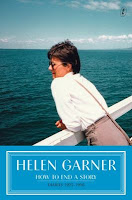
How to End a Story: Diaries, 1995—1998 by Helen Garner             $37
Helen Garner's third volume of diaries is an account of a woman fighting to hold on to a marriage that is disintegrating around her. Living with a writer—Murray Bail—who is consumed by his work, and trying to find a place for her own spirit to thrive, she rails against the confines while desperate to find the truth in their relationship—and the truth of her own self.

Just the Plague by Ludmila Ulitskaya (translated by Polly Gannon)          $23
A rreimagining of a plague outbreak in 1930s Moscow, inviting parallels with our pandemic-stricken times. Rudolf Maier, a young microbiologist working on a plague vaccine, is summoned to Moscow to deliver a progress report to his superiors. Inadvertently, he carries the virus with him from the lab. When his illness is discovered, the state machinery turns with terrifying efficiency, rounding up dozens of people. But for many, the distinction between this enforced, life-sparing isolation and the constant churn of political surveillance and arrests is barely detectable, and personal tragedy is not completely averted. Based on real events in the Stalinist Russia of the 1930s, this novel, written in the late 1970s and rediscovered by the author during lockdown — and never before translated into English — chimes with uncomfortable truths about the current Russian regime and the pandemic crisis. Includes a new preface by the author.
Whai by Nicole Titihuia Hawkins            $25
With poems centred around whanau, mana wahine, and love, Whai explores what it means to be Maori in a colonised space. These poems are playful, staunch, vulnerable and at times hilarious.
Granta 154: I've Been Away for a While             $28
This issue features Lindsey Hilsum, author of the award-winning In Extremis, on cholera in Hutu refugee camps; Ian Jack on the toxic slag heaps of Glasgow and the aristocratic lives built on them; memoir by Vidyan Ravinthiran and Rory Gleeson; and poetry by Jason Allen-Paisant and Anthony Anaxagorou. Plus, new fiction from Paul Dalla Rosa, shortlisted for the 2019 Sunday Times Audible Short Story Award, and Gwendoline Riley, author of First Love.
Granta 156: Interiors          $28
Interiors explores the spaces and systems that contain and control us. Featuring Chris Dennis on Ghislaine Maxwell, Debra Gwartney on the last days of Barry Lopez and Lynne Tillman on the photographs of Kaitlin Maxwell. Introducing Eva Freeman, Vanessa Onwuemezi, Sara Freeman and Okwiri Oduor.


The Every by Dave Eggers             $35
When the world's largest search engine / social media company merges with the planet's dominant e-commerce site, it creates the richest and most dangerous-and, oddly enough, most beloved-monopoly ever known—The Every. Delaney Wells is an unlikely new hire. A former forest ranger and unwavering tech skeptic, she charms her way into an entry-level job with one goal in mind—to take down the company from within. With her compatriot, the not-at-all-ambitious Wes Kavakian, they look for the company's weaknesses, hoping to free humanity from all-encompassing surveillance and the emoji-driven infantilisation of the species. But does anyone want what Delaney is fighting to save? Does humanity truly want to be free?
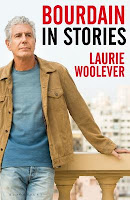
Bourdain in Stories  by Laurie Woolever        $33
Insight into the legendary chef's life, philosophy and exploits through the eyes of his colleagues, family and friends. 


The Lost Art of Baking with Yeast: Delicious Hungarian cakes and pastries by Baba Schwartz             $40
 The book includes recipes for cakes, slices, pastries and buns - and Baba's golden dumpling cake.
Old Possum's Book of Practical Cats by T.S. Eilot, with illustrations by Julia Sarda            $33
Macavity's a Mystery Cat: he's called the Hidden Paw -
For he's the master criminal who can defy the Law.
He's the bafflement of Scotland Yard, the Flying Squad's despair:
For when they reach the scene of crime – Macavity's not there!


A handsome A5 hardback diary printed in colour throughout with a ribbon bookmark and an elastic closure. A week to a view diary containing a new selection every year of forty poems and twelve illustrations from the Faber Archive.


VOLUME BooksNew releases


OUR FAVOURITE FICTION from the books we read in 2021 (click through to read our reviews):

STELLA:
1. The Sunken Land Begins to Rise Again by M. John Harrison
2. Crossroads by Jonathan Franzen
3. At Night All Blood Is Black by David Diop
4. Night Bitch by Rachel Yoder
5. Great Works by Oscar Mardell

THOMAS:
1. The Employees by Olga Ravn (translated by Martin Aitken)
2. Three by Ann Quin
3. Chasing Homer by László Krasznahorkai (translated by John Batki), with paintings by Max Neumann and music by Szilveszter Miklós 
4. Veilchenfeld by Gert Hofmann (translated by Eric Mace-Tessler)


 NEW RELEASES

Some Answers Without Questions by Lavinia Greenlaw          $28
Part memoir, part manifesto, Some Answers Without Questions is a rigorous and lyrical work of self-investigation. Lavinia Greenlaw sets out to explore the impulse to say something, to write or sing, and finds herself confronting matters of presence and absence, anger and speechlessness, authority and permission. The result is important and timely, a spirited and vital exploration of what enables anyone — but a woman and an artist in particular — to create and record even when not invited to do so. Some Answers Without Questions is the result of decades of answering questions that don't really matter - and not being asked the ones that do.

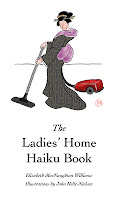
The Ladies' Home Haiku Book by Elizabeth McNaughtan Williams, illustrated by John Helle-Nielsen                $25
Is it the case that repetitive tasks of quotidian cleaning better distill our existential predicaments than the loftiest theoretical musings? Possibly, but, be that as it may, this little book of delightfully sprightly, concisely insightful verse, matched with equally amusing illustrations, will improve the mood of anyone who reads it. 
>>And there are cards!! 

Byobu by Ida Vitale (translated by Sean Manning)            $34
a story's existence, even if not well defined or well assigned, even if only in its formative stage, just barely latent, emits vague but urgent emanations.
Byobu's every interaction trembles with possibility and faint menace. A crack in the walls of his house, marring it forever, means he must burn it down. A stoplight asks what the value of obedience is, what hopefulness it contains, and what insensible anarchy it defies. In brief episodes, aphorisms, and moments of spiritual turbulence and gentle scrutiny, reside a wealth of habits, worries, curiosities, pleasures, peculiarities, and efforts to understand. Representative of the modesty and complexity of Ida Vitale's poetic universe, Byobu flushes the world with meaning and playfully offers another way of inhabiting the everyday.
The Latin American Cookbook by Virgilio Martínez            $70
Strong on regional cuisines and variations, this book brings together 600 remarkable recipes expressing the vibrancy of Latin America and its myriad influences — indigenous, European, Asian and beyond. 
Excavate! The wonderful and frightening world of The Fall by Tessa Norton and Bob Stanley       $55
Over the course of their prolific forty-year career The Fall were consistently one of the most influential and idiosyncratic groups in Britain, with frontman Mark E. Smith hailed as one of the sharpest lyricists. Following Smith's death in January 2018, there was an outpouring of tributes from a surprising spectrum of admirers. With contributions from Adelle Stripe, Dan Fox, Elain Harwood, Mark Fisher, Ian Penman and others, alongside never-before seen artwork, photographs, and hand-written material from Smith and the band, Bob Stanley and Tessa Norton book unpack and make sense of the strangely fascinating landscape of The Fall.
Something Out of Place: Women and disgust by Eimear McBride       $23
McBride unpicks the contradictory forces of disgust and objectification that control and shame women. She asks, —Are women still damned if we do, damned if we don't? —How can we give our daughters (and sons) the unbounded futures we want for them? —In this moment of global crisis, might our gift for juggling contradiction help us to find a way forward?
These Precious Days by Ann Patchett          $33
Essays exploring family, friendship, marriage, failure, success — and how all these forces have shaped her as a writer.
>>What matters most? 
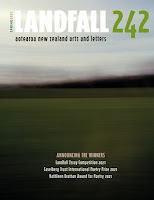
Landfall 242 edited by Linley Edmeades          $30
Results from the Landfall Essay Competition 2021, Caselburg Trust International Poetry Prize 2021 and the Kathleen Grattan Award for Poetry 2021. Art: Conor Clarke, Zina Swanson, et al. Non-fiction: Justine Whitfield, Diane Comer, Andrew Dean, Melody Nixon, Sarah Natalie Webster. Poetry:
Ruth Arnison, Wanda Barker, Owen Bullock, Nathaniel Calhoun, Medb Charleton, Ruth Corkill, Molly Crighton, Mark Edgecombe, David Eggleton, Summer Gooding, Michael Hall, Trevor Hayes, Jenna Heller, Bronte Heron, Hayley Rata Heyes, Zoë Higgins, Lily Holloway, Erik Kennedy, Megan Kitching, Wes Lee, Mary Macpherson, Frankie McMillan, Vana Manasiadis, Cilla McQueen, Rebecca Nash, Janet Newman, Claire Orchard, Robyn Maree Pickens, Hayden Pyke, Derek Schulz, Antonia Smith, Elizabeth Smither, Nicola Thorstensen, Richard von Sturmer, Sophia Wilson, E Wen Wong, Sebastien Woolf, Nicholas Wright. Fiction: Joanna Cho, Olly Clifton, Isabel Haarhaus, Bree Huntley, Eileen Kennedy, Scott Menzies, Airana Ngarewa, James Pasley, Fergus Porteous, Anna Reed, J.D. Robertson.
The Coward by Jarred McGinnis          $33
After a car accident Jarred discovers he'll never walk again. Confined to a 'giant roller-skate', he finds himself with neither money nor job. Worse still, he's forced to live back home with the father he hasn't spoken to in ten years. Add in a shoplifting habit, an addiction to painkillers and the fact that total strangers now treat him like he's an idiot, it's a recipe for self-destruction. How can he stop himself careering out of control? As he tries to piece his life together again, he looks back over his past - the tragedy that blasted his family apart, why he ran away, the damage he's caused himself and others - and starts to wonder whether, maybe, things don't always have to stay broken after all.
Huia Short Stories 14: Contemporary Māori fiction        $25
An exciting collection of emerging writers in te reo Māori and English. 


Secret Selves: A history of our inner space by Stephen Prickett        $44
Our inner sense of self seems a natural and permanent part of being human, but it is in fact surprisingly new. Whilst confessional religious writings, from Augustine to Jane Austen, or even diaries of 20th-century Holocaust victims, have explored inwards as part of a path to self-discovery, our inner space has expanded beyond any possible personal experience. This development has enhanced our capacity not merely to write about what we have never seen, but even to create fantasies and impossible fictions around them. Yet our secret selves can also be a source of terror. The fringes of our inner worlds are often porous, ill-defined and susceptible to frightening forms of external control.
Murakami T: The shirts I love by Haruki Murakami           $38
The literary icon opens his eclectic closet. Here are photographs of Murakami's extensive and personal T-shirt collection, accompanied by essays that reveal a side of the writer rarely seen by the public.


The Night Life of Trees by Bhajju Shayam, Durga Bai, and Ramsingh Urveti         $70
An exquisite hand-bound and screen-printed book of paintings by three of the finest artists of the Gond tribal art tradition. The Gonds, a tribe of central India, are traditionally forest dwellers. They believe that trees are hard at work during the day providing shelter and nourishment to all. Only when night falls can they finally rest, and their spirits reveal themselves. These luminous spirits are captured in The Night Life of Trees, a fascinating and haunting foray into the Gond imagination. Each painting is accompanied by its own poetic tale, myth or lore, narrated by the artists themselves, which recreate the familiarity and awe with which the Gond people view the natural world. Screen-printed by hand on black paper, every page of this limited-edition book is an original print. 
>>How the book was printed
Hogarth: Life in progress by Jacqueline Riding         $45
A major new biography of the artist who represents the texture of Georgian London in the popular imagination. 

Class of '37: Growing up before the war by Claire Langhamer and Hester Barron        $40
It is 1937 in a northern mill-town and a class of twelve- and thirteen-year-old girls are writing about their lives, their world, and the things that matter to them. They tell of cobbled streets and crowded homes; the Coronation festivities and holidays to Blackpool; laughter and fun alongside poverty and hardship. They are destined for the cotton mill but they dream of being film stars. Class of '37 uses the writing of these girls, as collected by the research organisation Mass Observation, to rediscover this lost world, transporting readers back in time to a smoky industrial town in an era before the introduction of a Welfare State.


VOLUME BooksNew releases