

| >> Read all Stella's reviews. | |
 | The Dangers of Smoking in Bed by Mariana Enriquez (translated from the Spanish by Megan McDowell) {Reviewed by STELLA} Let the title of this short story collection be a warning. In the second of Mariana Enriquez's collections to be translated into English, the macabre and disorderly rise to the surface. There are ghosts in these pages, phantoms and hauntings. Some reside just under the surface in superstition, some make their presence known by their unsettled, revenge-seeking wanderings, while others are phantoms that walk in broad daylight, bold and violent. Enriquez’s tales resist the easy condition of horror or the gothic, creeping under our skin — making us uneasy yet fascinated. We can not turn away, as our curiosity gets the better of us. The stories meld the mundane, the daily chores, and the familiar with unresolved crimes, passions and jealousies, and the uneasy moments when you know that the truth lies in a shallow grave just under a veneer of lies. As the characters, predominantly women, navigate their way through the stories, Enriquez spins a web of deceit, dark magic and fantastical scenarios to point a finger at the horror of a place imbued with violence, hypocrisy, fear and grief. Her themes do not rest easy, but the tales and the worlds she builds through metaphor and fantasy are hypnotic, taking us in, sometimes gently, often not. Teenage jealousy in 'Our Lady of The Quarry' conjures up a pack of raving dogs. In 'The Well', a young girl unwittingly becomes the vehicle, body and soul, for her mother, aunt and siblings fear of a malign spirit. So imbued with this malign force, madness is the only solution. 'The Lookout' sends a shiver down your spine — trapped in her frightening form, The Lady Upstairs is looking for a victim — someone to set her free. Each story draws you into a situation that has no easy answers, where friends are bonded by shared crises and sanity is a breath away from collapse. Yet Enriquez’s writing is succinct, beguiling and fizzes with energy — with a force that points a finger at death, at violence and corruption, and says I am not afraid. |
| >> Read all Thomas's reviews. | |
 |
|

>>Read Stella's review.
>>His first time travelling north by train.
>>What the judges thought when short-listing the book for the 2021 Booker Prize.
>>What the judges thought when short-listing the book for the 2021 Booker Prize.
NEW RELEASES

Modern-day Beirut is seen through the eyes of a failed writer, the eponymous Mister N. He has left his comfortable apartment and checked himself into a hotel—he thinks. Certainly, they take good care of him there. Meanwhile, on the streets below, a grim pageant: there is desperate poverty, the ever-present threat of violence, and masses of Syrian refugees planning to reach Europe via a dangerous sea passage. How is anyone supposed to write deathless prose in such circumstances? Let alone an old man like Mister N., whose life and memories have become scattered, whose family regards him as an embarrassment, and whose next-door neighbours torment him with their noise, dinner invitations, and inconvenient suicides. Comical and tragic by turns, his misadventures climax in the arrival in what Mister N. had supposed to be his 'real life' of a character from one of his early novels—a vicious militiaman and torturer. What is real? Just what kind of help does Mister N. Need?

Nine-year old Marina may swear like a sailor and think like a novelist, but even the most exceptional child can get lost on the road to adulthood. While her mother is in the hospital with a grave but unnamed illness, Marina spends the summer with her grandmother, waiting to hear whether she’ll get to go home or be bundled off, newly orphaned, to a convent school. There are no rules at Grandma’s, but that also means there are no easy ways to fend off the visions of sex and violence that torment and titillate the girl. Presenting a unique and vivid take on the coming-of-age novel, Oldladyvoice reimagines childhood through the eyes of its one-of-a-kind, hilarious, perceptive and endearing narrator.
"More than anything, Oldladyvoice is hugely good fun. Victoria’s prose is effervescent, her jokes never miss their marks, and the observations of her young narrator feel as tender as they do authentic. I loved this wise, warped little jewel of a novel." —A.K. Blakemore, Guardian

There is a space between life and death: it's called waxworks. Born in Alsace in 1761, the unsightly, diminutive Marie Grosholtz is quickly nicknamed "Little." Orphaned at the age of six, she finds employment in the household of reclusive anatomist, Dr Curtius. Her role soon surpasses that of mere servant as the eccentric doctor takes an interest in his newfound companion and begins to instruct her in the fine art of wax modelling. From the gutters of pre-revolutionary France to the luxury of the Palace of Versailles, from clutching the still-warm heads of Robespierre's Terror to finding something very like love, Little traces the improbable fortunes of a, almost-nobody who eventually became known as Madam Tussaud.
"Don't miss this eccentric charmer." —Margaret Atwood
"Marie's story is fascinating in itself, but Carey's talent makes her journey a thing of wonder." —The New York Times
"Compulsively readable: so canny and weird and surfeited with the reality of human capacity and ingenuity that I am stymied for comparison. Dickens and David Lynch? Defoe meets Atwood? Judge for yourself." —Gregory Maguire

There’s a stash of heroin waiting to be imported, and no one seems sure what to do with it. But Ayla’s a gardener, and she has a plan. Offering a fresh and funny take on the machinery of the North London heroin trade, Keeping the House lifts the lid on a covert world thriving just beneath notice: not only in McDonald’s queues and men’s clubs, but in spotless living rooms and whispering kitchens. Spanning three generations, this is the story of the Turkish Cypriot immigrant women who keep their family – and their family business – afloat, juggling everything from police surveillance to trickier questions of community, belonging and love.
"Crackling with energy. An exhilaratingly idiosyncratic first novel, Keeping the House has 'cult classic' written all over it." —Guardian

A blend of a documentary, collage, narration, and fictional interviews exploring the experiences of real-life German General Kurt von Hammerstein and his wife and children. A member of an old military family, a brilliant staff officer, and the last commander of the German army before Hitler seized power, Hammerstein, who died in 1943 before Hitler's defeat, was nevertheless an idiosyncratic character. Too old to be a resister, he retained an independence of mind that was shared by his children: three of his daughters joined the Communist Party, and two of his sons risked their lives in the July 1944 Plot against Hitler and were subsequently on the run till the end of the war. Hammerstein never criticised his children for their activities, and he maintained contacts with the Communists himself and foresaw the disastrous end of Hitler's dictatorship. In The Silences of Hammerstein, Hans Magnus Enzensberger offers a brilliant and unorthodox account of the military milieu whose acquiescence to Nazism consolidated Hitler's power and of the heroic few who refused to share in the spoils.

The Guyana Quartet by Wilson Harris $33
The four remarkable novels, The Palace of the Peacock, The Far Journey of Oudin, The Whole Armour, and The Secret Ladder, comprise a dizzying, myth-inflected epic literary experience unlike much else. Guyana is an ancient landscape of rainforests and swamplands, haunted by the legacy of slavery and colonial conquest. It is the site of dangerous journeys through the Amazonian interior, where riverboat crews embark on spiritual quests and government surveys are sabotaged by indigenous uprisings. It is a universe of complex moralities, where the conspiracies of a sinister money-lender and the faked death of a murderer question innocence and inheritance. It is a place where life and death, myth and history, philosophy and metaphysics blur.
"One of the great originals, Visionary. Dazzlingly illuminating." —Guardian
"Harris is the Guyanese William Blake." —Angela Carter

The Unconscious knows no time, it has no before-and-after, it does not have a history of its own. Yet, it does not always remain the same. Different political and economic conditions transform the way in which the Unconscious emerges within the psychosphere of society. In the early 20th century, Freud characterized the Unconscious as the dark side of the well-order framework of Progress and Reason. At the end of the past century, Deleuze and Guattari described it as a laboratory: the magmatic force ceaselessly bringing to the fore new possibilities of imagination. Today, at a time of viral pandemics and in the midst of the catastrophic collapse of capitalism, the Unconscious has begun to emerge in yet another form. In this book, Franco 'Bifo' Berardi vividly portraits the form in which the Unconscious will make itself manifest for decades to come, and the challenges that it will pose to our possibilities of political action, poetic imagination, and therapy.

The Great Adaptation tells the story of how scientists, governments and corporations have tried to deal with the challenge that climate change poses to capitalism by promoting adaptation to the consequences of climate change, rather than combating its causes. From the 1970s neoliberal economists and ideologues have used climate change as an argument for creating more 'flexibility' in society, that is for promoting more market-based solutions to environmental and social questions. The book unveils the political economy of this potent movement, whereby some powerful actors are thriving in the face of dangerous climate change and may even make a profit out of it. A perfect riposte to the idea that the market can address climate change or social issues.

High in the Armenian mountains, villagers in the close-knit community of Maran bicker, gossip and laugh. Their only connection to the outside world is an ancient telegraph wire and a perilous mountain road that even goats struggle to navigate. As they go about their daily lives - harvesting crops, making baklava, tidying houses - the villagers sustain one another through good times and bad. But sometimes a spark of romance is enough to turn life on its head, and a plot to bring two of Maran's most stubbornly single residents together soon gives the village something new to gossip about.

Over the centuries, women, people from underrepresented communities, and immigrants overcame prejudices and social obstacles to make remarkable discoveries in science—but they weren't the ones to receive credit in history books. People with more power, money, and prestige were remembered as the inventor of the telephone, the scientists who decoded the structure of DNA, and the doctor who discovered the cause of yellow fever. This book aims to set the record straight and celebrate the nearly forgotten inventors and scientists who shaped our world today. Nicely illustrated.

Kua Whetūrangitia a Koro and How My Koro Became a Star by Brianne Te Paa each $22
A young boy learns about the customs around celebrating Matariki from his grandfather. They watch the stars from the top of a mountain, prepare their offering of food for the gods, and the boy learns about Te Waka o Rangi and the tradition of calling out the names of loved ones who have passed away so that they can become stars. Just before Matariki the following year, the boy’s Koro suddenly dies. He gathers and prepares the food offering and asks each family member to come with him up the mountain when Matariki is due to rise, but they all make excuses, and he is disheartened. But when he tells them what Koro taught him, they all climb the mountain before sunrise, follow the rituals Koro carried out and call out Koro’s name so that he can become a star.

Kohei Fujiwara has never seen a giant dragon in real life. The big ryu all disappeared from Japan after World War II, and twenty years later, they've become the stuff of legend. Their smaller cousins, who can fit in your palm, are all that remain. And Kohei loves his ryu, Yuharu, but Kohei has a memory of the big ryu. He knows that's impossible, but still, it's there, in his mind. In it, he can see his grandpa - Ojiisan - gazing up at the big ryu with what looks to Kohei like total and absolute wonder. When Kohei was little, he dreamed he'd go on a grand quest to bring the big ryu back, to get Ojiisan to smile again. But now, Ojiisan is really, really sick. And Kohei is running out of time. Kohei needs to find the big ryu now, before it's too late. With the help of Isolde, his new half-Jewish, half-Japanese neighbour; and Isolde's Yiddish-speaking dragon, Cheshire; he thinks he can do it. Maybe. He doesn't have a choice.
 Tom Stoppard by Hermione Lee $33
"An extraordinary book filled with dragons big and small." —Carole Wilkinson, author of the 'Dragonkeeper' series
Born in Czechoslovakia, Stoppard escaped the Nazis with his mother and spent his early years in Singapore and India before arriving in England at age eight. Skipping university, he embarked on a brilliant career, becoming close friends over the years with an astonishing array of writers, actors, directors, musicians, and political figures, from Peter O'Toole, Harold Pinter, and Stephen Spielberg to Mick Jagger and Václav Havel. Having long described himself as a bounced Czech, Stoppard only learned late in life of his mother's Jewish family and of the relatives he lost to the Holocaust. A paperback edition of this outstanding biography.

Three tiny, ancient beings - Moss, Burnet and Cumulus, once revered as Guardians of the Wild World - wake from winter hibernation in their beloved ash tree home. When it is destroyed, they set off on an adventure to find more of their kind, a journey which takes them first into the deep countryside and then the heart of a city. Helped along the way by birds and animals, the trio search for a way to survive and thrive in a precious yet disappearing world.
"Each page brims with the wonder of our natural world, so much to learn but all a sheer delight." —Piers Torday
Followed by: By Rowan and Yew.

On February 6, 1978, a catastrophic nor'easter struck the city of New York. On that night, in a penthouse in the Upper West Side's stately Apelles apartment building, a crowd gathered for a wild party. And on that night, Mr. Albert Haynes Caldwell—a partner emeritus at Swank, Brady & Plescher; Harvard class of '26; father of three; widower; atheist; and fiscal conservative--hatched a plan to fake a medical emergency and toss himself into the Hudson River, where he would drown. In the eye of this storm: Hazel Saltwater, age six. The strange events of that night irrevocably altered many lives, but none more than hers. The Blizzard Party is Hazel's reconstruction of the facts, an exploration of love, language, conspiracy, auditory time travel, and life after death. Cinematic, with a vast cast of characters and a historical scope that spans World War II Poland, the lives of rich and powerful Manhattanites in the late 1970s, and the enduring effects of 9/11.

Ko wai kei te papa tākaro? by Te Ataakura Pewhairangi $23
A very relatable board book in simple te reo Māori, about playing in the playground.

By the end of the First World War, the whereabouts of more than half a million British soldiers were unknown. Most were presumed dead, lost forever under the battlefields of northern France and Flanders. Robert Sackville-West brings together the accounts of those who dedicated their lives to the search for the missing. These stories reveal the lengths to which people will go to give meaning to their loss: Rudyard Kipling's quest for his son's grave; E.M. Forster's conversations with traumatised soldiers in hospital in Alexandria; desperate attempts to communicate with the spirits of the dead; the campaign to establish the Tomb of the Unknown Warrior; and the exhumation and reburial in military cemeteries of hundreds of thousands of bodies. It was a search that would span a century: from the department set up to investigate the fate of missing comrades in the war's aftermath, to the present day, when DNA profiling continues to aid efforts to locate, recover and identify these people. What a Shell Can Tell by Helen Scales and Sonia Pulido $35
A lavishly illustrated and information-packed introduction to the wonder of shells through the art of observation. Using a friendly question-and-answer format, the book explores, through a richly sensory experience, the incredible diversity of shells around the world and showcases the environments molluscs inhabit.
 A Dictionary of Naval Slang by Gerald O'Driscoll $23
Trapped aboard leaky ships and creaking vessels for months, sometimes years, on end, the crews developed a peculiar language all of their own. The Royal Navy's heyday is long past and much of the sailor's vocabulary has vanished with it. But before it disappeared once and for all, veteran sailor Gerald O'Driscoll preserved its unique language in this sometimes hilarious but always fascinating compendium of nautical language.
Elephant's part: The part of the spectator. One who elects to watch others working and does not make any attempt to lend a hand is said to be doing the elephant's part.

| >> Read all Stella's reviews. | |
 | A Passage North by Anuk Arudpragasam {Reviewed by STELLA} Anuk Arudpragasam’s second novel takes us back to the civil war in Sri Lanka. It is a reflective, philosophical view through the eyes of Krishan — a young Tamil man recently returned to Colombo and confronting his country’s violence, as well as contemplating his relationships with his family and the woman he thinks he still loves. On a long train trip to attend a funeral, he has time to think and Arudpragsam uses this tool of the journey to take us across the northern landscape scarred by war and destruction, as well as the internal landscape of Krishan’s thoughts: both lively memories and contemplative existentialism. Here, on the page, we travel between the present and the past, rich in descriptive language and cultural references. Away studying in India when the worst atrocities occurred in Sri Lanka, Krishan is riven with guilt and obsesses about certain activists, documentaries and news items, as well as others’ personal experiences. His guilt is also balanced by his interest in Tamil literature and cultural practices, making his response in the post-war years less stifling than it could have been. Arudpragasam, while never flinching from the devastation wrought, physically and mentally, by war, gives us room to breathe. It is quietly affecting rather than aggressive in its intent. Many of the scenes — and it does feel like a series of windows and doors opening into the different worlds of Krishan (the train heading north, his days with his lover Anjum, his relationship with his grandmother) — are domestic and relatable. Told gracefully, walking the streets in the early evening, remembering a confrontation on a train, lighting a cigarette, these observances are precise, detailed and nuanced, providing more than their supposed simplicity of action. The watchful eye of Krishan tells us much about the impact of a violent past and the ongoing endeavour to come to terms with the emotional chaos that rises from this past, from whichever place you stand. Either directly affected, as in the case of Rani (the woman who has recently died), tormented by the death of two sons and her own subsequent mental anguish, or indirectly, like Krishan, knowing and witnessing second-hand but unsure how to assimilate this history. It is also a novel about connections, and how human relationships change us, as well as challenge our preconceptions. A Passage North, intelligent and meditative, is quietly confronting. |
| >> Read all Thomas's reviews. | |
 |
|


>>The authors, 2009 and 2022.
>>Democracy on the defensive.
>>A fragile form of government.
>>The case for a constitution.
>>Not enough reform.
>>What can we do about future injustices?
>>Towards Democratic Renewal.
>>Your copy of Democracy in Aotearoa New Zealand.
NEW RELEASES
.jpg)
A double-stranded novel about weaving, programming, and the treatment of women by history. A tapestry-weaver in her thirties embarks on her first big commission: a digitally woven tapestry for a public building. As she works, devoting all her waking hours to the commission, she draws engrossing connections between the stuff that life is made from – DNA, plant tissue, algorithms, text, and textile – and that which disrupts it – radiation, pests, entropy, and doubt. In the novel’s second strand, we meet Ada Lovelace, the 1830s mathematician and pioneer of computer programming, and mythical figures such as Penelope, the faithful wife of Odysseus, who wove and unpicked a shroud to put off her 108 suitors. Contemplative yet clear-sighted, and reviving women’s histories, Amalie Smith’s bracing hybrid of a novel bares the aching interwovenness of art and life.
"A dreamy, spacious book which threads together many exquisite components: the languages of data, irradiated gardens, computer bugs, sensate plants, the experience of longing. It tells stories of what it's like to live now, in our hybrid bodies, and it gives the oldest technologies new life." –Daisy Hildyard
"Made of interconnected texts that summon stories from the recent past, personal memory and obscure historical periods, Thread Ripper is an absorbing and compulsive read. Moments in bended time are summoned or recalled by a single mind, and woven together, electrified like a neural network. Amalie Smith’s book reflects how it feels to be inside a generative mind and a body, and celebrates the desire to ask provocative questions without the need for definitive answers." –Alice Hattrick
"A mesmerizing choreography of textile and technology, archive and memory. With cellular precision, Amalie Smith weaves connective tissue between selfhood and history through vital, tactile accumulations of affect and imagery. Innovative, intricate and achingly bodily, Thread Ripper is a rare treasure." –Elinor Cleghorn
>>On translating the novel.
>>Flora digitalica.
>>On translating the novel.
>>Flora digitalica.

A hugely energetic, genre-bending, cinematic work of autobiographical fiction. From one of Aotearoa's fiercest and most versatile artists comes a day in the life of three friends beefing with their own city. There is the gorgeous Q (Tongan, Fijian "with a dash of Indian and Solomon"); a sensitive poet-in-denial with a shitty bakery day-job, "her long hair always to one side, which friends dub 'the ramen sweep'". Meet Rosina (Hawaiian, Rarotongan, Samoan, Irish), a hungry artist on the rise with an unfortunate weakness for privileged white boys. "The words 'what's that supposed to mean?' should be tattooed on her neck (among the others)." Then there's Te Hoia (Maori and Filipino). A cranky political science student and our narrator, "she identifies with the toffee waves being churned in the (constantly-broken) ice-cream machine." Together, they navigate the stuffy busses, streets and markets of Tamaki Makaurau at the height of summer. With gentrification closing in around them and racial tensions sweltering, the three must cling to their friendship like a life raft. Coming of age while struggling with family, identity and attraction, the trio are determined not to let their neighbourhood drift out to sea.
"Imbued with fierce intelligence and cosmic warmth. " —Rose Matafeo
"One of the most exciting books I've ever read." —Pip Adam
>>ABC.
 Democracy in Aotearoa New Zealand: A survival guide by Geoffrey Palmer and Gwen Palmer Steeds $40
 Iro: The essence of colour in Japanese design by Rossella Menegazzo $110
An important and accessible book outlining the principles and mechanisms of our democracy and showing how it can be made to function optimally. The book unravels the mysteries of our political system and show how ordinary people can navigate the political world and influence decisions made by our government. Its forty chapters include a brief history of government in Aotearoa New Zealand; introductions to our principal institutions; interviews with the Prime Minister, Leader of the Opposition, Governor-General, Speaker, and Chief Justice; advice on how to campaign, complain and obtain information; and consideration of future challenges of climate change, decolonisation, and engaging rangatahi in the political process. Much of it written as a series of exchanges between Geoffrey Palmer (a former Prime Minister, Minister of Justice, Attorney-General, and an expert on constitutional law), and his granddaughter Gwen Palmer Steeds (a student of political communication and political science at Te Herenga Waka—Victoria University of Wellington, and a youth political activist), the book is both urgent and engaging. Read it and use it to ensure democracy's survival.
The traditional colours of Japan have been in use since the seventh century, originally to indicate rank and social hierarchy but, over time, their significance has broadened to include all manner of designed objects. This landmark volume celebrates a curated selection of 200 colours (iro in Japanese), with each traditional shade illustrated by one or more items — ranging from 16th-century kimonos to contemporary chairs, humble kitchen utensils to precious ceramics — providing a unique route to a deeper appreciation of Japanese design. Beautifully bound in the Japanese traditional manner, this volume makes a good companion to Wa: The essence of Japanese design.
>>Some sample pages. The Shiatsung Project by Brigitte Archambault $40
 Lāuga: Understanding Samoan oratory by Sadat Muaiava $40
>>Some sample pages.
An outstanding graphic novel. A woman lives alone in a small house situated in a tidy yard surrounded by a seemingly impenetrable wall. She spends her days reading, swimming, and watching TV. She eats regular meals and keeps her house clean. But the simplicity is deceiving, because the woman has no idea how she came to live in her house, and—most importantly—what exists beyond the wall. Her only source of information is a talking TV monitor in her living room called Shiatsung. The entity controlling the monitor is committed to keeping the woman hydrated and educated, but it refuses to answer any of her existential questions and keeps her under constant surveillance. Lonely and frustrated, the woman begins to search for answers of her own. The Shiatsung Project explores surveillance culture and authoritarian control, and how they disrupt our very human need for connection, intimacy, and a meaningful life.
>>Meet Brigitte.
>>Meet Brigitte.
Lāuga or Samoan oratory is a premier cultural practice in the faasāmoa (Samoan culture), a sacred ritual that embodies all that faasāmoa represents, such as identity, inheritance, respect, service, gifting, reciprocity and knowledge. Delivered as either lāuga faamatai (chiefly speeches) or lāuga faalelotu (sermons), lāuga is captivating and endowed with knowledge, praxis and skill. Lāuga is enjoyed by many, but today many Samoan people, especially in the Samoan diaspora, also remain disconnected from it and lack proficiency in its rhetorical inventory. It is critical that the knowledge and skills that underpin lāuga are retained. This accessible book explains the intricacies of lāuga and its key stages and is an ideal companion for those who may be called upon to speak at significant occasions, those wanting to improve their knowledge and skills, and all those interested in faasāmoa.

"Published in Ukraine in 2018, these surreal short stories by a noted photographer probe the experiences of women from the Donbas region, many of whom fled the separatist conflict that erupted in 2014 and now live as refugees in Kyiv. The stories, ethnographic in perspective but Gogolian in register, gravitate toward inexplicable disappearances, repressed memories, and phantasmagoria. Belorusets writes of 'the deep penetration of traumatic historical events into the fantasies of everyday life' and richly evokes the fatalistic humour of her marginalised characters, one of whom observes, 'If you had the luck to be born here, you take things as they come.'" —The New Yorker
 Pesticides and Health: How New Zealand fails in environmental protection by Neil Pearce $15
 I Will Die in a Foreign Land by Kalani Pickhart $44
 White Tears / Brown Scars: How white feminism betrays women of colour by Ruby Hamad $35
 Every Good Boy Does Fine: A love story, in music lessons by Jeremy Denk $40
Through a series of unexpected encounters, we are pulled into the ordinary lives of these anonymous women: a florist, a cosmetologist, readers of horoscopes, the unemployed, cardplayers, a witch who catches newborns with a mitt. One refugee tries unsuccessfully to leave her broken umbrella behind as if it were a sick relative; another sits down on International Women’s Day and can no longer stand up. With a mix of humor, verisimilitude, the undramatic, and a profound irony reminiscent of Gogol, Belorusets threads these tales of ebullient survival with twenty-three photographs that form a narrative in lyrical and historical counterpoint.
"Belorusets is interested in the histories of the defeated, of the unseen and unheard, and above all in the experiences of eastern Ukrainian women in wartime. Her willingness to exist between document and fiction is daring, even provocative. This is a moment when facts are both utterly compromised and vastly overvalued—asked to do all the work of politics, to justify whole worldviews with single data points. Belorusets, by contrast, is for plurality, subjectivity, a kind of narrative democracy. She wants us to remember that even documentary photographs and factual narratives are determined, and sometimes distorted, by the worldview that shaped them.” —The Baffler

"Dead hobbits, A4-isms, eradication plans for feral poets in Titirangi, capers and encomiums, blue bottle blues, swirled together in the bottom of the glass. In questionable taste and all the better for it, in turns rude, sardonic, reflective, witty and mercurial, FARCE shows an unfashionable disregard for contemporary pieties. Murray Edmond is back on the night shift, striding across the arsehole of the world in his squeaky crocs." —Victor Billot
New Zealand has been one of the world's heaviest users of pesticides, including some contaminated with dioxin, a notorious toxic chemical. A leading epidemiologist uses the example of dioxin to illustrate how badly New Zealand handles problems of environmental pollutants, and why we can do better. Concern with public health has been recast by the Covid-19 pandemic. Neil Pearce's eye-opening account of our country's ongoing failures in environmental protection shows there is much more work to be done.
In November 2013, thousands of Ukrainian citizens gathered at Independence Square in Kyiv to protest then-President Yanukovych's failure to sign a referendum with the European Union, opting instead to forge a closer alliance with President Vladimir Putin and Russia. The peaceful protests turned violent when military police shot live ammunition into the crowd, killing over a hundred civilians. I Will Die in a Foreign Land follows four individuals over the course of a volatile Ukrainian winter, as their lives are forever changed by the Euromaidan protests. Katya is an Ukrainian-American doctor stationed at a makeshift medical clinic in St. Michael's Monastery; Misha is an engineer originally from Pripyat, who has lived in Kyiv since his wife's death; Slava is a fiery young activist whose past hardships steel her determination in the face of persecution; and Aleksandr Ivanovich, a former KGB agent, who climbs atop a burned-out police bus at Independence Square and plays the piano. As Katya, Misha, Slava, and Aleksandr's lives become intertwined, they each seek their own solace during an especially tumultuous and violent period. The story is also told by a chorus of voices that incorporates folklore and narrates a turbulent Slavic history.
"As thoughtful as it is explosive." —Buzzfeed
"Intensely moving." —Washington Post
Taking us from the slave era, when white women fought in court to keep 'ownership' of their slaves, through centuries of colonialism, when women offered a soft face for brutal tactics, to the modern workplace, in which tears serve as a defense to counter accusations of bias and micro-aggressions, White Tears/Brown Scars tells a charged story of white women's active participation in campaigns of oppression. It offers a long-overdue validation of the experiences of women of colour and an urgent call-to-arms in the need for true intersectionality. Hamad builds a powerful argument about the legacy of white superiority that we are socialised within, a reality that we must all apprehend in order to fight for true equality.
Pianist Jeremy Denk explores what he learned from his teachers about classical music: its forms, its power, its meaning - and what it can teach us about ourselves. In this enjoyable memoir, Denk explores both the joys and miseries of artistic practice, hours of daily repetition, mystifying early advice, pressure from parents and teachers who drove him on in an ongoing battle of talent against two enemies: boredom and insecurity. Denk also explores how classical music is relevant to 'real life,' despite its distance in time. He dives into pieces and composers that have shaped him - Bach, Mozart, Schubert, and Brahms, among others - and gives unusual lessons on melody, harmony, and rhythm. Why and how do these fundamental elements have such a visceral effect on us?

Tiller is an average American college student with a good heart but minimal aspirations. Pong Lou is a larger-than-life, wildly creative Chinese American entrepreneur who sees something intriguing in Tiller beyond his bored exterior and takes him under his wing. When Pong brings him along on a boisterous trip across Asia, Tiller is catapulted from ordinary young man to talented protégé, and pulled into a series of ever more extreme and eye-opening experiences that transform his view of the world, of Pong, and of himself.
"An extraordinary book, acrobatic on the level of the sentence, symphonic across its many movements. My Year Abroad is a a caper, a romance, a bildungsroman, and something of a satire of how to get filthy rich in rising Asia." —Vogue

Merkens takes us on a journey across Aotearoa meeting 37 inspiring women who find meaning and connection through food. From mothers, gardeners, hunters, chefs and hobbyists, their conversations dive deep into how food influences their lives. Meet women who know which mushrooms to pick, how to preserve the olives growing along public land, how to make rosewater from blooms, and how to make 'coffee' from roasted dandelion roots.

When Anne-Lise Briard books a room at the Beau Rivage Hotel for her holday on the Brittany coast, she has no idea this trip will start her on the path to unearthing a mystery. In search of something to read, she opens up her bedside table drawer in her hotel room, and inside she finds an abandoned manuscript. Halfway through the pages, an address is written. She sends pages to the address, in hopes of hearing a response from the unknown author. But not before she reads the story and falls in love with it. The response, which she receives a few days later, astonishes her. Not only does the author write back, but he confesses that he lost the manuscript thirty years earlier. And then he reveals that he was not the author of the second half of the book. Anne-Lise can't rest until she discovers who this second mystery author is, and in doing so tracks down every person who has held this manuscript in their hands. Through the letters exchanged by the people whose lives the manuscript has touched, she discovers long-lost love stories and intimate secrets. Romances blossom and new friends are made. And finally, with a plot twist you don't see coming, she uncovers the astonishing identity of the author who finished the story. Charming.

Oblivion’s final sieve meets your lucky day. Found poems jostle with autobiographical poems, essayistic with epigrammatic, formally expert with some of his very best freeform sprawls.
"How gifted Brown is at the craft of poetry, the game of word and sounds on the page that are tidy and tight and clever and cool. And also how he lifts aside that cleverness to show us the tender inner self, the moist soft core of James Brown and his world." —Anna Livesey, Academy of New Zealand Literature

Jordan Hamel is falling in and out of love with his own mediocrity. Caught between the instinct to build a franchise of rock hard abs, and succumb to death among the kitchen appliances of Briscoes, Jordan is the star of his own demise. He’s on the brink of becoming the world’s worst life coach, or the plot twist to a bygone reality show. But absurd delusions of grandeur reveal a more unsettling feeling—the pointlessness of being alive. In the face of existential dread, what is the purpose of a life if not for entertainment value? The result: this poetry collection.

It's another busy day at the hospital! Meet doctors and nurses, ride in an ambulance, and discover the magic of medicine. This book is perfect for any child who is nervous about a trip to the hospital. Dr Christle Nwora takes readers behind the scenes to meet the people who keep you healthy, from surgeons to mental health therapists. Dr Nwora also explains the science behind how things work, from X-rays to operating theatres. As you turn the pages of this book, marvel at the way hospital staff work together for the good of us all.

The Astromancer is looking for four new apprentices to learn about Matariki and the Maramataka calendar. She chooses three boys and an orphan girl, Aria, who will come only if she can bring her smelly dog. Aria, though, is bored by the lessons, and she doesn't want to be told what to do. But these are dangerous times, and Ruatapu the Ravenous is about to threaten the safety of the whole tribe. Will Aria step up to save them?

This is the Māori language edition of Whetū Toa and the Magician. When Whetu’s mother takes a job at a magician’s house and farm, Whetū becomes the animal keeper, looking after some unusual animals and the magician’s stage assistant – a troublesome white rabbit called Errant. Errant’s been playing around with magic and done something he can’t undo. Rather than face the magician, Errant disappears, and Whetū becomes the magician’s new assistant, just in time for the royal performance. It all seems to be going well until Errant reappears, and Whetū must save the day.
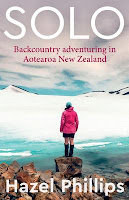
One afternoon, journalist Hazel Phillips decided to close her laptop and head for the hills. She then spent the next three years living in mountain huts and tramping alone for days at a time, all the while holding down a full-time job. As she ranged from Arthur's Pass and the Kaimanawa Forest Park to the Ruahine Range and Fiordland, she had her share of danger and loneliness, but she also grew in confidence and backcountry knowledge.

Unicorns don’t belong in fairy tales; they belong in nightmares. So begins Skandar and the Unicorn Thief. Soar into a world where unicorns are real – and they’re deadly. They can only be tamed by the rider who hatches them. Thirteen-year-old Skandar Smith has only ever wanted to be a unicorn rider, and the time has finally come for him to take his Hatchery Exam, which will determine whether he is destined to hatch a unicorn egg. But when Skandar is stopped from taking the exam, and the mysterious and frightening Weaver steals the most powerful unicorn in the world, becoming a rider proves a lot more dangerous than he could ever have imagined. And what if Skandar was always destined to be the villain rather than the hero?

He Wheke Wai Mamangu Au presents educational facts about the wheke (octopus) in a fun and colourful way for early readers – where it lives, and what makes it unique in its realm. The story and illustrations will appeal to children’s imaginations, and are elevated by the translator’s use of te reo Māori. Lots of fun.
Short-listed for the 2022 New Zealand Book Awards for Children and Young Adults.


>>How the illustrations were made.
>>"If we don't observe carefully we don't know how to intervene."
>>The dangers of passive allegiance.
>>Some pages.
>>"It turns out that people really like democracy."
>>Other excellent books by Timothy Snyder.
>>Also by Nora Krug.
>>Your copy of On Tyranny.
| >> Read all Stella's reviews. | |
 | Metronome by Tom Watson {Reviewed by STELLA} It’s the near future and a couple are near the end of a twelve-year exile. The Warden is due to uplift them from their remote island prison where they have lived a subsistence existence reliant on yearly supply drops, what they scavenge from shipwrecks, and pills deposited at eight-hour intervals. The yearly supply drops have become non-existent. The Warden hasn’t shown up the last three years. Whitney sees this as a test — of their loyalty to the regime and their contrition. Aina is more doubtful — increasingly suspicious of not only the Warden and the regime but also her husband. 'No one is coming' is the refrain that ebbs at the edges of her mind. The shipwrecks, which had become more frequent, have dwindled as they see fewer signs of any human behaviour. Yet when a yacht is pitched up on the Needles — a sharp range of rocks just off the coast — it is surprisingly rich with treasures and unsettlingly obvious that human inhabitants have been living on board recently. But where are they? Whitney is sure they have come on land. Aina is more puzzled by their lack of access to pills. How could they survive without them? And that brings us to the Pill Clock. Every eight hours, via identification by thumbprint technology, a pill is dispensed — one for Whitney and one for Aina. Without the medication, they will die, poisoned by the atmosphere. This is a climate hell — low on resources, crappy weather (a massive flood triggers chaos as well as a personal catastrophe), and bad air. The pill dispenser keeps them tethered to the croft and the patch on land they live on. They are controlled, even at a distance, by the schedule of the clock — by the prison sentence. As the day of their freedom comes and passes, the couple respond in opposing manners. Whitney’s concept of 'the test' is reinforced, while Aina is determined to unpick the doubts she harbours and the questions that bother her about the island. Is it really an island? If yes, where did the lone sheep come from and why is Whitney determined to keep her from exploring beyond a craggy range? This schism, in conjunction with an unexpected encounter, undermines their relationship and pulls them both back to an unbearable past. A past where breaking the rules — having a child without permission — resulted in their banishment, and Maxime, their son, taken by the state. It was an oppressive regime, where citizens toed the line, dobbing in others, hoping to remain unnoticed or to be socially rewarded. Yet saving your own skin in this conservative regime didn’t, you realise as the story unfolds, keep the wolf from the door — resources became scarce and the environment harsher. Whitney and Aina, completely isolated, know little, and as Aina makes a decision to leave, determined to find Maxime, it is unclear whether this will be her redemption or destruction. Tom Watson’s debut focuses on the tense relationship between the couple, their diverging perspectives, lack of trust in each other, and disintegrating grip on reality. Metronome is tightly drawn with the clockwork precision and logic of survival, balancing the emotional turmoil of love and betrayal in this remote atmospheric landscape. |
| >> Read all Thomas's reviews. | |
 |
|
NEW RELEASES

Having returned to the Mackenzie Country to deal with the unexpected death of his brother, Roland has more than enough on his plate. The last thing he needs are the demands of a cantankerous neighbour, the complaints of his partner back in Australia and to find that someone is impersonating him on Facebook, stirring up the locals against him. Even the weather is hostile, rendering roads unpassable, his old home an icebox and the fire offering little comfort. And yet, when cycling on the empty roads, cocooned in a snow-muffled landscape, he finds he can confront what he actually feels.
"Fearnley's prose is precise, spare, springy with cadences of colloquial Kiwispeak, yet resonant with imagery." —David Hill
>>Read an extract.
>>Other books by Laurence Fearnley. Galatea by Madeline Miller $13
 How To Be
 A Bad Muslim by Mohamed Hassan $35
>>Other books by Laurence Fearnley.
In this short story, Miller boldly retells the legend of Galatea and Pygmalion, focussing on Galatea's plight as the 'creation' of an obsessively controlling husband, and her determination to secure her own independence and personhood. A beautifully produced little hardback from the author of The Song of Achilles and Circe.
From Cairo to Takapuna, Athens to Istanbul, How To Be A Bad Muslim maps the personal and public experience of being Muslim through essays on identity, Islamophobia, surveillance, migration and language. Traversing storytelling, memoir, journalism and humour, Hassan speaks authentically and piercingly on mental health, grief and loss, while weaving memories of an Egyptian immigrant fighting childhood bullies, listening to life-saving '90s grunge and auditioning for vaguely ethnic roles in a certain pirate movie franchise.
>>Hassan introduces the book.
>>Hassan's poetry collection National Anthem was short-listed in the 2021 Ockham New Zealand Book Awards.
>>Hassan introduces the book.
>>Hassan's poetry collection National Anthem was short-listed in the 2021 Ockham New Zealand Book Awards.

A genuinely heartwarming but not-at-all cloying, beautifully illustrated book — an instant favourite. Raccoon decides to bake an apple cake. But he has no eggs, so visits his friend Fox, who needs a ladder to mend the roof. Badger will have one, but he needs help too, so they set off to find Bear. They stroll through meadows, meet up with Crow, nibble blackberries and find Bear fishing at the river. Soon the five friends are having the best day out--the sun shining on their fur, fishing, swimming, picnic and finally home to bake the cake — two cakes, because bears have big appetites.

The genuinely heartwarming story of how a teenager beat depression through baking — and a whole batch of her bakery's favourite recipes, too.
"If you had told me at 14 when I couldn't even get out of bed with depression and anxiety that three years later I would have written a book I would never have believed you. But here it is — the story of the Orange Bakery. How I went from bed to bread and how my Dad went from being a teacher to a baker. You reading it means everything to me." —Kitty Tait
>>Kitty's story — and some recipes!
>>Kitty's story — and some recipes!

On the morning of October 21, 1966, Kathleen Middleton, a music teacher in suburban London, awoke choking and gasping, convinced disaster was about to strike. An hour later, a mountain of rubble containing waste from a coal mine collapsed above the village of Aberfan, swamping buildings and killing 144 people, many of them children. Among the doctors and emergency workers who arrived on the scene was John Barker, a psychiatrist from Shelton Hospital, in Shrewsbury. At Aberfan, Barker became convinced there had been supernatural warning signs of the disaster, and decided to establish a “premonitions bureau,” in conjunction with the Evening Standard newspaper, to collect dreams and forebodings from the public, in the hope of preventing future calamities. Middleton was one of hundreds of seemingly normal people, who would contribute their visions to Barker’s research in the years to come, some of them unnervingly accurate. As Barker’s work plunged him deeper into the occult, his reputation suffered. But in the face of professional humiliation, Barker only became more determined, ultimately realizing with terrible certainty that catastrophe had been prophesied in his own life.

:To probe the past is to submit the memory of one's ancestors to a certain kind of trial. In this case, the trial came to me." A few years ago Linda Kinstler discovered that a man fifty years dead, a former Nazi who belonged to the same killing unit as her grandfather, was the subject of an ongoing criminal investigation in Latvia. It looked as if the proceedings might pardon his crimes. They put on the line hard-won facts about the Holocaust at the precise moment that the last living survivors were dying. With no living witnesses, how secure are the facts of history? What is the nature of memory and justice when revisionism, ultra-nationalism and denialism make it feel like history is slipping out from under our feet?
 A Gentle Radical: The life of Jeanette Fitzsimons by Gareth Hughes $40
 Changing Track by Michel Butor (translated from French by Jean Stewart) $32
 Winchelsea by Alex Preston $37
 Life as Told by a Sapiens to a Neanderthal by Juan José Millás and Juan Luis Arsuaga $37
 The King of the Copper Mountains by Paul Biegel $18
 Modern Times: Temporality in art and politics by Jacques Rancière $28
 Notes from Deep Time: A journey through our past and future worlds by Helen Gordon $25
 Love and Youth: Essential stories by Ivan Turgenev (newly translated by Nicolas Slater) $28
 Out of the Sun: Essays at the crossroads of race by Esi Edugyan $40
 New Zealand Nurses: Caring for our people, 1880—1950 by Pamela Wood $45
 An Exciting and Vivid Inner Life by Paul Della Rosa $33
"A masterpiece." —Peter Pomerantsev
How did a girl from a conservative rural family get to the front lines of radical political thought and then into the front benches of Parliament? How did she become the first Green MP in the world to win an electorate seat? How did she survive the brutal world of politics and get through the death of her co-leader Rod Donald? How did the world's first national Green Party form in New Zealand, and what was Jeanette's role? What can we learn from her politics and what did she think of the Green Party that followed her?
On a train from Paris to Rome on his way to surprise his lover, the businessman Leon Delmont begins to mull over his past and question the decisions he has made about his future. These musings — together with his impressions of the unfolding scenery, conjectures about his fellow passengers and some recurring leitmotifs — form the basis of a narrative that provides a psychological case study of an everyman and subtly illustrates the onset of the protagonist's doubts and fears. Published in 1957 as La Modification and awarded the prestigious Prix Renaudot, Michel Butor's groundbreaking novel remains the most widely read work of the nouveau roman genre. Written in the second person in order to immerse the reader more fully into the psyche of the main character, Changing Track pulls off the rare feat of being at once experimental and accessible, disquieting and engrossing.
>>A brief sample.
>>A brief sample.
The year is 1742. Goody Brown, saved from drowning and adopted when just a baby, has grown up happily in the smuggling town of Winchelsea. Then, when Goody turns sixteen, her father is murdered in the night by men he thought were friends. To find justice in a lawless land, Goody must enter the cut-throat world of her father's killers. With her beloved brother Francis, she joins a rival gang of smugglers. Facing high seas and desperate villains, she also discovers something else: an existence without constraints or expectations, a taste for danger that makes her blood run fast.
"Imagine Daphne du Maurier crossed with Quentin Tarantino, and you will have some idea of just what a thrilling, bloody and heady ride this novel is." —Tom Holland
"I was riveted. Winchelsea is a great read — terrific narrative drive, credible characters, and such an elegant creation of the backdrop in terms of both time and place." —Penelope Lively
"What a story! What a heroine! What an adventure! Alex Preston sweeps you from scene to scene, surprise to surprise with all the deft theatricality and fluency of a modern Robert Louis Stevenson. I have rarely read anything so vivid or that makes the 18th century, with all its ambitions, terrors, desires and sheer juiciness, so grippingly alive." —Adam Nicolson
Juan Jose Millas has always felt like he doesn't quite fit into human society. Sometimes he wonders if he is even a Homo sapiens at all, or something simpler. Perhaps he is a Neanderthal who somehow survived? So he turns to Juan Luis Arsuaga, one of the world's leading palaeontologists and a super-smart sapiens, to explain why we are the way we are and where we come from. Over the course of many months, the two visit different places, many of them common scenes of our daily lives, and others unique archaeological sites. Arsuaga tries to teach the Neanderthal how to think like a sapiens and, above all, that prehistory is not a thing of the past.
At the end of his thousand-year reign of the Copper Mountains, old King Mansolain is tired and his heart is slowing down. When his attendant, the Hare, consults The Wonder Doctor, he is told he must keep the King engaged in life by telling him a story every night until the Doctor can find a cure. The search is on for a nightly story more wonderful than the last, and one by one the kingdom's inhabitants arrive with theirs; the ferocious Wolf, the lovesick Donkey, the fire-breathing three-headed Dragon. Last to arrive is the Dwarf, with four ancient books and a prophecy that the King will live for another thousand years — but only if the Wonder Doctor returns in time.
Time is more than a line drawn from the past to the future. It is a form of life, marked by the ancient hierarchy between those who have time and those who do not. This hierarchy, continued in the Marxist notion of the vanguard and nakedly exhibited in Clement Greenberg's modernism, still governs a present which clings to the fable of historical necessity and its experts. In opposition to this, Rancière shows how the break with the hierarchical conception of time, formulated by Emerson in his vision of the new poet, implies a completely different idea of the modern. He sees the fulfilment of this in the two arts of movement, cinema and dance, which at the beginning of the twentieth century abolished the opposition between free and mechanical people, at the price of exposing the rift between the revolution of artists and that of strategists.
The story of the Earth is written into our landscape: it's there in the curves of hills, the colours of stone, surprising eruptions of vegetation. Gordon's odyssey takes her from the secret fossils of London to the 3-billion-year-old rocks of the Scottish Highlands, and from a state-of-the-art earthquake monitoring system in California to one of the world's most dangerous volcanic complexes, hidden beneath the green hills of Naples. At every step, she finds that the apparently solid ground beneath our feet isn't quite as it seems. "In deep time," Gordon finds, "everything is provisional. Bones become rock. Sands become mountains. Oceans become cities."
This collection places Turgenev's novella 'First Love' alongside a selection of his classic stories, from the evocative rural scenes of 'Bezhin Meadow' and 'Rattling Wheels', to the pathos and humanity of 'The District Doctor' and 'Biryuk'.
A searing analysis of the relationship between race and art. What happens when we bring stories consigned to the margins up to the light? How does that complicate our certainties about who we are, as individuals, as nations, as human beings? As in her fiction, the essays in Out of the Sun demonstrate Esi Edugyan's commitment to seeking out the stories of Black lives that history has failed to record. Edugyan reflects on her own identity and experiences as the daughter of Ghanaian immigrants. She delves into the history of Western Art and the truths about Black lives that it fails to reveal, and the ways contemporary Black artists are reclaiming and reimagining those lives. She explores the legacy of Afrofuturism, the complex and problematic practice of racial passing, the place of ghosts and haunting in the imagination, and the fascinating relationship between Africa and Asia dating back to the 6th Century.  Matariki: The Maori New Year by Libby Hakaraia $21
A good survey of the traditions and practices associated with the rising of the Matariki stars that marked on of the most significant periods of the year. Includes information on astronomy, celestial navigation, mahi whai (string patterns), celebrations, the planting and harvesting calendar, gathering practices, and the reading of omens.
In the late nineteenth century, British nurses who had been trained in the system established by Florence Nightingale began to spread across the world. This was the British nursing diaspora and New Zealand was its southernmost landfall. New Zealand Nurses explores the growth of a distinctly Kiwi nursing style and how nurses in this part of the globe responded to, and ultimately came to challenge, imperial influences. New Zealand Nurses examines the nursing cultures that emerged in a range of different settings and circumstances: from hospitals to homes, rural backblocks to Maori settlements, and from war and disaster zones to nursing through a pandemic.
"A pleasure to read - there are lots of lively stories and it will have great appeal to nurses and former nurses." —Barbara Brookes
Whether working in food service or in high-end retail, lit by a laptop in a sex chat or by the camera of an acclaimed film director, sharing a dangerous apartment in the city, a rooming house in China or a vacation rental in Mallorca, the protagonists of the ten stories comprising this collection navigate the spaces between aspiration and delusion, ambition and aimlessness, the curated profile and the unreliable body. By turns unsparing and tender, Dalla Rosa explores our lives in late-stage Capitalism, where globalisation and its false promises of connectivity and equity leave us all further alienated and disenfranchised.
"An Exciting and Vivid Inner Life is an existential prayer of a book that attempts to find meaning in a rapidly changing and absurdly disconnected, occasionally nightmarish, modern world. Often bleakly hilarious, while remaining relatably, fiercely, melancholic, Dalla Rosa's characters quietly yearn for love, for change, for those childlike demands that went unfulfilled: to be seen and heard." —Oliver Mol Anna: The biography by Amy Odell $40
 The Adventure of French Philosophy by Alain Badiou $33
 Eating to Extinction: The world's rarest foods and why we need to save them by Dan Saladino $40
 Yellow Notebook: Diaries, Volume one: 1978—1987 by Helen Garner $30
A major biography of Anna Wintour, the hugely influential editor of Vogue.
 Lionel Eats All By Himself by Éric Veillé $15
Lionel may have a mane but in other respects he is just taking his first steps towards independence. Sitting in his high-chair, he decides that it is about time for him to start feeding himself. Most of the food gets into his mouth, but quite a bit gets in other places. What fun! A very relatable board book.
Guided by a small set of fundamental questions concerning the nature of being, the event, the subject, and truth, Badiou pushes to an extreme the polemical force of his thinking. Against the formless continuum of life, he posits the need for radical discontinuity; against the false modesty of finitude, he pleads for the mathematical infinity of everyday situations; against the various returns to Kant, he argues for the persistence of the Hegelian dialectic; and against the lure of ultraleftism, his texts from the 1970s vindicate the role of Maoism as a driving force behind the communist Idea.
A thrilling journey through the history of humankind's relationship with food, revealing a world at a crisis point. From a tiny crimson pear in the west of England to great chunks of fermented sheep meat in the Faroe Islands, from pistachios in Syria to flat oysters in Denmark, from a wild honey harvested with the help of birds to an exploding corn that might just hold the key to the future of food - these are just some of the thousands of foods around the world today that are at risk of being lost for ever. Dan Saladino spans the globe to uncover the stories of these foods. He meets the pioneering farmers, scientists, cooks, food producers and indigenous communities who are preserving food traditions and fighting for change. All human history is woven through these stories, from the first great migrations to the slave trade to the refugee crisis today.
Helen Garner has kept a diary for almost all her life. But until now, those exercise books filled with her thoughts, observations, frustrations and joys have been locked away, out of bounds, in a laundry cupboard. Finally, Garner has opened her diaries and invited readers into the world behind her novels and works of non-fiction. Now in paperback.

Some of the most disruptive ideas in modern art were invented in Japan in the 1700s and expressed like never before in the designs of such masters as Hokusai, Utamaro, and Hiroshige in the early 19th century. This volume presents Japanese woodblock prints in their historical context. Ranging from the 17th-century development of decadent ukiyo-e, or "pictures of the floating world," to the decline and later resurgence of prints in the early 20th century, the images collected here are a record not only of a unique genre in art history, but also of the shifting mores and cultural development of Japan.

The short lists for the 2022 NEW ZEALAND BOOK AWARDS FOR CHILDREN AND YOUNG ADULTS have just been announced. >>Click through to find out more — and to make your choices.
>>Read what the judges have to say.


TOMB OF SAND by Geetanjali Shree, translated from the Hindi by Daisy Rockwell, was described by the judges as "a book that is engaging, funny and utterly original, at the same time as being an urgent and timely protest against the destructive impact of borders and boundaries — whether between religions, countries or genders."
>>"All languages have the possibility of crossing borders."
>>Stories imbue your senses.
>>On translating Tomb of Sand.
>>Ballroom dancers.
>>"An exuberance and a life."
>>Showered in language.
>>"The most original and undefinable work of our times."
>>On the author's bookshelf.
>>On the translator's bookshelf.
>>"Writers make national literature; translators make universal literature."
>>Fun shorts.
| >> Read all Stella's reviews. | |
 | The Secrets of Cricket Karlsson by Kristina Sigunsdotter, illustrated by Ester Eriksson (translated from Swedish by Julia Marshall) {Reviewed by STELLA} Ever been eleven and lonely? Or wondered why your best friend is hanging out with the mean kids? Or wished your mother didn’t sigh so much? If you answer yes to any of these questions then you need Cricket Karlsson. Ever wanted to make art? Ride a horse in the moonlight? Ever been unable to get out of bed or unable to get someone you love out of bed? Then you need Cricket Karlsson. Cricket Karlson is eleven, has a ‘potato’ heart (which is currently mashed because her best friend Noa isn’t talking to her), is finding out about love, is visiting her aunt in the psych ward, loves to draw and doesn’t like the horse girls. And she has secrets — secrets that only a best friend, like Noa, knows! The Secrets of Cricket Karlsson from the pen of Kristina Sigunsdottir and the brush of Ester Eriksson is another standout from Gecko Press. I loved it, and it’s even better on the second reading. It has lists of not very Ugliest Words, absurd and unlikely Things Grandpa Says you Can Die From, unusual Psychiatric Illnesses I Don’t Want, and delightful Secrets I Have Only Told to Noa. Told with the keen observation of an eleven-year-old with all the concerns of childhood and changing circumstances, the words leap off the page with feistiness, humour and pathos. It lightly touches on worries and fears (climate change, mental health, sadness, regret) while embracing the best things about being that age when you’ll still a kid, but only just. Who hasn’t noticed the horse girls with their neighing and prancing, or squirmed when a boy (or a girl) is doe-eyed and you just don’t like him like that, or locked themselves in the bathroom (sometimes crying) to avoid being harassed? Cricket Karlsson finds out that life isn’t always what you expect, that loneliness passes, and that even an eleven-year-old can make a sad person happy. Black humour abounds and Cricket Karlsson is a star (with secrets and lists, a big heart and a little mischief, and her favourite food is cheese-on-cheese-in-cheese). I think I’ll pop to bed and read it again. |
| >> Read all Thomas's reviews. | |
 |
1] Wishing to write a review of the novel Armand V. by the Norwegian author Dag Solstad, I’ve decided the best way to realise this is not by writing a review of the novel but by allowing it instead to appear in an outpouring of footnotes to a review that will not be or can not be written. The sum of the footnotes, therefore, is my review of the novel Armand V. |