Our Book of the Week is Gotcha! A funny fairy tale hide-and-seek by Clotilde Perrin. Chased by monsters, each more comically hideous than the last, a child hides here and there inside three fairytale houses (the three little pigs' brick house, Cinderella's palace, the gingerbread house visited by Hansel and Gretel) before coming out and frightening the monsters away. Each house is a wonderland of lift-the-flap discoveries and hilarious details. This is a large, very enjoyable and very special book. 

Also by Clotilde Perrin: 

We gift-wrap, and send books anywhere!



 NEW RELEASES
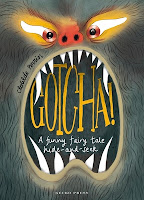
Gotcha! A funny fairy tale hide-and-seek by Clotilde Perrin           $42
Chased by monsters, each more comically hideous than the last, a child hides here and there inside three fairytale houses (the three little pigs' brick house, Cinderella's palace, the gingerbread house visited by Hansel and Gretel) before coming out and frightening the monsters away. Each house is a wonderland of lift-the-flap discoveries and hilarious details. This is a very enjoyable and special book. 
Also by Clotilde Perrin: 
Dislocations by Sylvia Molloy (translated by Jennifer Croft)            $38
Almost every day, the narrator visits ML, a close friend who is now suffering from Alzheimer’s. Based on these encounters and ML.’s fragments of memory, she constructs a powerfully moving tale about the breakdown of a mind that progressively erases everything in a very peculiar way. An attempt through writing to ‘make a relation endure despite the ruin, to hold up even if only a few words remain’. ‘How does someone who can’t remember say ‘I’?’ asks the narrator, considering this woman who shows her around the house as if she were visiting for the first time, or who is unable to say she feels dizzy, yet is perfectly capable of translating into English a message saying that she feels dizzy. Passages from a shared past and present that are transformed into fiction when faced with a forgetting that can no longer refute them. A book that opposes disintegration with a precise and vital prose and a unique sensibility.
"A masterclass in writing, with a brevity and clarity which is both rare and welcome, and firmly situates Molloy as an outstanding talent." —The Skinny
Novelist as a Vocation by Haruki Murakami             $40
The famously reclusive writer shares with readers what he thinks about being a novelist; his thoughts on the role of the novel in our society; his own origins as a writer; and his musings on the sparks of creativity that inspire other writers, artists, and musicians. How does Murakami think about his own novels, and how does he craft them? 
>>Read an extract

Downfall: The destruction of Charles Mackay by Paul Diamond              $45
In 1920, New Zealanders were shocked by the news that the brilliant, well-connected mayor of genteel Whanganui had shot a young gay poet, D'Arcy Cresswell, who he thought was blackmailing him. They were then riveted by the trial that followed. Mackay was sentenced to hard labour and later left the country, only to be shot by a police sniper during street unrest in Berlin during the rise of the Nazis. Downfall shines a clear light on the vengeful impulses behind the blackmail and Mackay's ruination. The Mackay affair reveals the perilous existence of homosexual men and how society conspired to control and punish them. This careful examination of a little understood moment is unique for the queer lens through which it views the complex lives and motivations of key figures in late-Edwardian New Zealand and the systems within which they operated.
>>The mayor makes a comeback
Our Share of the Night by Mariana Enriquez              $37
Gaspar is in danger. Only six-years-old, he is frightened he may have inherited the same strange abilities as his father, Juan; a powerful medium who can open locked doors, commune with the dead, and possess the ancient forces of the Darkness. Now father and son are in flight, hunted by the Order, a group of wealthy acolytes who seek to harness the Darkness, no matter the cost. Among them, Gaspar's grandmother, whose twisted desires have already driven her to commit unspeakable acts. Nothing will stop the Order, nothing is beyond them. Surrounded by horrors, can Gaspar and Juan break free? Spanning the brutal years of Argentina's military dictatorship and its turbulent aftermath, Our Share of Night is a haunting, thrilling novel of broken families, cursed land, inheritance, power, and the terrible sacrifices a father will make to help his son escape his destiny. From the author of the International Booker short-listed The Dangers of Smoking in Bed
Nocilla Trilogy by Agustín Fernández Mallo (translated by Thomas Bunstead)         $28
The globe-spanning narratives that explode across the trilogy take us from a lone poplar tree in the Nevada desert to a barnacle-covered cliff in Galicia, Spain, through scientific treatises and film-editing manuals, personal journals, and comic strips. The books are full of references to indie cinema, theoretical physics, conceptual art, practical architecture, the history of computers and the decadence of the novel. And yet, for all the freewheeling, fragmentary swagger, a startling order emerges and takes hold. The Nocilla Trilogy charts a hidden and exhilarating cartography of contemporary experience.
"Like having multiple browser windows open, and compulsively tabbing between them." —Chris Power, Guardian
"The most original and powerful author of his generation in Spain." —Mathias Enard
'Think of Nocilla Trilogy as three novels at the edge of the form, their manifold narratives folded into each other: all highly imaginative, all fairly unhinged, all methodically interrupted by a range of scientific, theoretical and literary quotations." —Kevin Breathnach, London Review of Books
A Book of Days by Patti Smith            $43
In 2018, without any plan or agenda for what might happen next, Patti Smith posted her first Instagram photo: her hand with the simple message "Hello Everybody!" Known for shooting with her beloved Land Camera 250, Smith started posting images from her phone including portraits of her kids, her radiator, her boots, and her Abyssinian cat, Cairo. Followers felt an immediate affinity with these miniature windows into Smith's world, photographs of her daily coffee, the books she's reading, the graves of beloved heroes--William Blake, Dylan Thomas, Sylvia Plath, Simone Weil, Albert Camus. Over time, a coherent story of a life devoted to art took shape. This book combines those images with vintage photographs: anniversary pearls, a mother's keychain, and a husband's Mosrite guitar; and photographs from Smith's archives of life on and off the road, train stations, obscure cafés, a notebook always nearby.  In wide-ranging yet intimate daily notations, Smith shares dispatches from her travels around the world.
>>Look inside!
In 2018, boundary-breaking visual and sonic artist Cosey Fanni Tutti received a commission to write the soundtrack to a film about Delia Derbyshire, the pioneering electronic composer who influenced the likes of Aphex Twin and the Chemical Brothers. While researching Derbeyshire's life, CFT became immersed in Derbyshire's story and uncovered some fascinating parallels with her own life. At the same time she began reading about Margery Kempe, the 15th century mystic visionary who wrote the first English language autobiography. 
Re-Sisters is the story of three women consumed by their passion for life, a passion they expressed through music, art and lifestyle; they were undaunted by the consequences they faced in pursuit of enriching their lives, and fiercely challenged the societal and cultural norms of their time.
Swanfolk by Kristín Ómarsdóttir (translated by Vala Thorodds)          $35
In the not-too-distant future, a young spy named Elisabet Eva is about to discover something that will upend her carefully controlled life. Elisabet's work is the lynchpin of her existence in the city; her friends and social life centre around the Special Unit. But recently Elisabet has found herself taking long solitary walks near the lake. One day, she sees two creatures emerging from the water, half-human, half-swan. She follows them through tangles of thickets into a strange new reality. Elisabet's walks turn into regular visits to these swan women, who reveal to her the enigma of their secret existence, and their deepest desires. Pulled further and further into the monomaniacal, and often violent, quest of the swanfolk she finds her own mind increasingly untrustworthy. Ultimately, Elisabet is forced to reckon with both the consequences of her involvement with these unusual beings and a past life she has been trying to evade.
"One of the most original authors in contemporary Icelandic literature, known for subverting traditional binaries like fantasy and realism, feminine and masculine, good and evil, and the animal and the human." —Ord um Baekur
The Glass Pearls by Emeric Pressburger             $23
London, June 1965. Karl Braun arrives as a lodger in Pimlico: hatless, with a bow-tie, greying hair, slight in build. His new neighbours are intrigued by this cultured German gentleman who works as a piano tuner; many are fellow émigrés, who assume that he, like them, came to England to flee Hitler. That summer, Braun courts a woman, attends classical concerts, dances the twist. But as the newspapers fill with reports of the hunt for Nazi war criminals, the hunt is on for a Nazi surgeon hiding somewhere in Britain...
"A wonderfully compelling noir thriller and audacious and challenging act of imagination." —William Boyd
"A haunting, remarkable novel, as startlingly original as any of Pressburger's films." —Nicola Upson
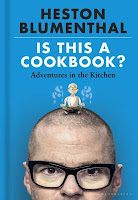
Is This a Cookbook? Adventures in the kitchen by Heston Blumenthal         $53
This is probably Blumenthal's most intimate cookbook, allowing us to see the way he thinks and approaches (and rethinks) relatively simple but interesting food. Each of the seventy recipes includes Blumenthal's thoughts, hacks and anecdotes, and show that the most important ingredient is personality. Illustrated with gusto by Dave McKean. 
"Heston's done it again. With the original molecular gastronomist, nothing is ever straightforward, and his latest cookbook is no exception. Why is banana and parsley such a winning combination? What is it about a cheese sandwich that causes such a nostalgic rush? But perhaps the biggest surprise is that every musing leads to a simple recipe well within the reach of any curious home cook." —Tony Turnbull, The Times
"This is a glorious sprawl of a book, beautifully illustrated by Dave McKean, that looks at the practical and emotional components of food. Is this a cookbook? For me this is a picture book, a collection of questions that hit you like little darts, and uncomplicated recipes you'll approach in a different, more thoughtful way." —Diana Henry, The Telegraph
Moro Easy by Sam and Sam Clark           $65
Following their acclaimed Moro: The cookbook, which introduced us to the Moorish cuisine, fresh ingredients and fragrant spices of North Africa and Southern Spain, this new book continues their project to reinvigorate home cooking, with simple and speedy dishes such as Courgette, Lemon and Manchego Salad, Spiced Potato Cake with Egg, Asparagus and Jamon and Seabass with Migas, Lemon Zest and Garlic, as well as one-pot Spring Greens with Crispy Chorizo and Brown Rice and Potato Pilaf. 
"A rare and very special cookbook." —Nigel Slater
Oxygen Mask: A graphic novel by Jason Griffin and Jason Reynolds         $23
Set within the walls of a family home, this graphic novel for young adults is an  artefact of the historic year we have all lived through. We travel from the depths of despair but not without hope; the mundane details contained within four walls becomes our sanctuary. This is a gift in commemoration of a time and place, of a worldwide pandemic, of loss, and of the murder of George Floyd. It is a reminder of how, in uncertain times, we can cling to the simple things for respite, for hope. A reminder of how comforting books and artworks are in times of extreme stress.
The Intersectional Environmentalist: How to dismantle systems of oppression to protect people + planet by Leah Thomas            $28
Activist and environmental scientist Leah Thomas shows how Black, Indigenous and People of Colour are unequally and unjustly impacted by climate change and environmental degradation - and argues that the fight for the planet lies in tandem with the fight for civil rights. In fact, one cannot exist without the other. This book provides an accessible foundation in the theory, exploring everything from the birth of the environmental movement to Kimberle William Crenshaw's concept of intersectionality, 'mainstream feminism' to ecofeminism. It helps readers frame their experiences and those of their community, question concepts of privilege and ownership, and better understand how climate change impacts the most marginalised and how to help amplify their voices.
Saving Freud: A life in Vienna and an escape to freedom in London by Andrew Magorski           $37
The dramatic true story of Sigmund Freud's last-minute escape to London following the German annexation of Austria, and of the group of friends who made it possible.
Existential Physics: A scientist's guide to life's biggest questions by Sabine Hossenfelder         $38
In this lively, thought-provoking book, Hossenfelder takes on the biggest questions in physics: Does the past still exist? Do particles think? Was the universe made for us? Has physics ruled out free will? Will we ever have a theory of everything? She lays out how far physicists are on the way to answering these questions, where the current limits are, and what questions might well remain unanswerable forever.
"Hossenfelder is a rare gem. There are other theoretical physicists out there who can write for a popular audience, but very few of them are able to do so in such a no-nonsense way. The result is not just illuminating, but enjoyable." —Charles Seife
Am I Normal? The 200-year search for normal people (and why they don't exist) by Sarah Chaney           $40
Before the nineteenth century, the term normal was rarely ever associated with human behaviour. Normal was a term used in maths, for right angles. People weren't normal; triangles were. But from the 1830s, this branch of science really took off across Europe and North America, with a proliferation of IQ tests, sex studies, a census of hallucinations — even a UK beauty map (which concluded the women in Aberdeen were 'the most repellent'). This book tells the surprising history how the very notion of the normal came about, how it shaped us all, often while entrenching oppressive values. Sarah Chaney looks at why we're still asking the internet: Do I have a normal body? Is my sex life normal? Are my kids normal? And along the way, she challenges why we ever thought it might be a desirable thing to be.
A Ballet of Lepers: A novel and stories by Leonard Cohen          $37
 "This fascinating collection of Cohen's early fiction foreshadows motifs and concerns that the performer later mined across decades." —Observer 
Lean Fall Stand by Jon McGregor            $23
When an Antarctic research expedition goes wrong, the consequences are far-reaching — for the people involved and for their families back home. Robert 'Doc' Wright, a veteran of Antarctic field work, holds the clues to what happened, but he is no longer able to communicate them. While Anna, his wife, navigates the sharp contours of her new life as a carer, Robert is forced to learn a whole new way to be in the world.
"It leaves the reader moved and subtly changed, as if she had become part of the story." —Hilary Mantel
"So moving and delicate and terrifying and haunting." —Maggie O'Farrell
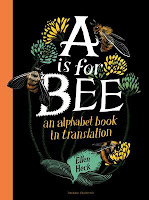
A Is For Bee: An alphabet book in translation by Helen Peck         $28
A is for bee, L is for rabbit, M is for jellyfish, T is for octopus, U is for mouse, X is for bear, Y is for porcupine. Not in English, perhaps, but in other languages the names of things often start with different letters. Boldly illustrated, this book introduces children to language diversity.

Living Pictures by Polina Barskova             $25
Two lovers remain in a gallery of the Hermitage, refusing to shelter underground while Leningrad is under siege. Freezing and gnawed by hunger, they recite poems and stories to pass the time, re-enacting the paintings that are being evacuated from the museum. As their voices and bodies begin to fail and fragment, their conversation is interspersed with sections from a diary — a real document from a person who died during the blockade. This is the centrepiece of Living Pictures, Polina Barskova's genre-defying collection of fiction that reckons with the history and aftermath of the siege of Leningrad. Drawing on archival material and refracting it through fiction, Barskova draws arresting, fearless portraits of the lives caught up in the blockade. A work of inventiveness and richly poetic language, Living Pictures is a collage of a city and a culture in crisis.
"A precise, tremendous and beautiful book." —Maria Stepanova
Freedom, Only Freedom: The prison writings by Behrouz Boochani, edited by Moones Mansoubi and Omid Tofighian             $35
Over six years of imprisonment on Australia's offshore migrant detention centre, the Kurdish Iranian journalist and writer Behrouz Boochani bore personal witness to the suffering and degradation inflicted on him and his fellow refugees, culminating eventually in his prize-winning book — No Friend but the Mountains — which was painstakingly typed out in text messages while he was incarcerated. In the articles, essays, and poems he wrote while detained, he emerged as both a tenacious campaigner and activist, as well as a deeply humane voice which speaks for the indignity and plight of the many thousands of detained migrants across the world. In this book, his collected writings are combined with essays from experts on migration, refugee rights, politics, and literature. Together, they provide a moving, creative, and challenging account of not only one writer's harrowing experience and inspiring resilience, but the wider structures of violence which hold thousands of human beings in a state of misery in migrant camps throughout the western hemisphere and beyond.
Black and Female by Tsitsi Dangaremba               $23
Being categorised as black and female does not constrain my writing. Writing assures me that I am more than merely blackness and femaleness. Writing assures me I am.
This paradigm-shifting essay collection weaves the personal and political in an exploration of Dangarembga's complex relationship with race and gender. At once philosophical, intimate and urgent, Dangarmebga's landmark essays address the cultural and political questions that underpin her novels.
"Poignant, profound, essential. The human cost of colonisation laid bare." —Audrey Magee
Empire City by John E. Martin              $70
Empire City brings the story of Wellington to life, from the invasions of iwi from further north in the early 1800s and uneasy coexistence of different iwi to the purchase of land by the New Zealand Company and the beginnings of Pākehā settlement. Whaling was replaced by pastoralism, the mercantile community rose to prominence, and a viable town with a polyglot population was established. The tales are wide-ranging and compelling, from politicians butting heads, to merchants prospering and others going bankrupt, to earthquakes and shipwrecks, Māori endeavouring to keep the peace or resisting the depredations of Pākehā settlement, the impact of the military in town, the citizenry’s establishment of a variety of social institutions and their enjoyment of diverse entertainments and sports, tales of the distressed and unfortunate underclass as exposed in court, and prisoners escaping from gaol. For its long-term future Wellington needed to secure a rural hinterland but it was hemmed in by rugged hills and heavy bush and the lack of land further north. The war that erupted in 1846 consolidated British sovereignty, purchases of land in Wairarapa and the west coast and the extension of roading helped the town gain a stronger economic footing, while its commercial sector developed apace. Gaining its own provincial government allowed a voice for Wellington and the long campaign began for it to become the capital. Political deadlock and the involvement of the lower North Island in the wars for a time hindered the town’s development and its agitation to become the capital, but in 1865 what had been a long-held dream became a reality. Wellington had truly become the Empire City. In the contributions made by Māori, the New Zealand Company, early Pākehā settlers, merchants, shopkeepers, working people, worthy and less worthy citizens alike, together with a host of institutions and organisations, we appreciate how Wellington came to be from such unpromising beginnings. This diverse, rich and turbulent story is the key to understanding Wellington’s status as the capital of New Zealand.


VOLUME BooksNew releases


Kiwi Christmas Books. If you can't imagine the festive season without a pile of good books, remember that there are children whose whānau are experiencing hardship and who have little to look forward to at Christmas. If you would like to give books to needy children in our community, either 1. Make a donation and we will choose books on your behalf; or 2. Choose books from our website yourself and just put "Kiwi Christmas Books" in the 'notes' field as you check out. Thank you for making a difference! >>Find out more about the Kiwi Christmas Books scheme. 


Our Book of the Week, Diego Garcia by Natasha Soobramanien and Luke Williams, has just been awarded the 2022 Goldsmiths Prize ("for fiction at its most novel"). This unique multivocal multilocational collaborative novel tells of two friends, blocked writers struggling with the relationship between fiction and reality, who make friends with a man whose mother was forced to leave one of the Chagos Islands in the Indian Ocean under the unlawful administration of the British government. Will fiction provide the friends with a way to tell a story that is not their own without appropriating or colonising that story? 


>> Read all Stella's reviews.


Arbitrary Stupid Goal by Tamara Shopsin   {Reviewed by STELLA}

Tamara Shopsin has written a personal and lively memoir about growing up in New York in the 1970s, specifically, about growing up in Greenwich Village in the shadow, or more precisely in the arms, of The Store. The Store was famous in spite of itself, and still is an iconic New York institution. What started solely as a grocer became a restaurant of repute in the 1970s, a place with its very own style and culture and a centre of the conversation, happenings and relationships of a neighbourhood. Tamara’s father Kenny Shopsin was a New York personality running The Store with his partner Eve. The five children grew up on the street and in the restaurant - on the sawdust floor, beside the freezer that gave electric shocks, in the arms of regulars, and under the feet of customers. Each had their shop chores and all chipped in as needed. Tamara Shopsin’s memoir is a homage to New York City, a New York that she sees as under threat from developers, increased housing prices and homogenised culture. It’s a homage to her eccentric father who had his own style, constantly changing the vast menu (especially if a dish became too popular) and making crazy customer rules - rules that made his place even more attractive to some and completely repellent to others: no phones, parties of no more than four people (don’t even try to sneak in with a three and a two and then pretend it is a coincidence), and no copying what someone else has just ordered. You could be a friend for life or blacklisted by putting a foot wrong with Kenny. The book is a homage to friends, family, and the importance of neighbourhood. Shopsin recalls the famous and the ordinary, drawing out the stories of those closest to her, particularly her father’s friend Willy, who in his unusual way sees them all through some sticky situations. There is a fascinating account of the development of the crossword puzzle and Margaret Petherbridge’s role in this at the New York Times. Kenny sometimes submitted puzzles and kept up a correspondence with Margaret over numerous years. There are numerous asides and insights making reading this memoir a delight. Arbitrary Stupid Goal is arranged as small pieces loosely connected, pieces that scoot from present day to a Tamara of age five and back, into times before her birth and retold stories. Over the course of the book she shapes a conversation that gives you an insight to her and her siblings’ childhood, the bohemian nature of The Village, the quirks of her father's cooking practices and temperament, the significance of the seemingly ordinary, and the importance of place. The Store was a meeting place that attracted celebrities, eccentrics and local, a place that accepted people for who they were but brokered no quarter for fakes or demanding clientele. In fact, Kenny feared success (and having to work too hard) and shrugged off reviewers and interviews, even going as far as to tell guidebook publishers that the restaurant had closed or that The Store was now a shoe shop. Tamara Shopsin’s writing style is quirky and idiosyncratic. She writes from the point of view a middle child, a keen observer with an agile mind, the point of view of a woman still very much connected to the place that made such an impact on her. Tamara Shopsin cooks weekends at The Store and is passionate about its legacy and the New York City she believes in. Touchingly personal and endlessly fascinating, this is a memoir which moves from hilarious to tragic and back again in a half a breath.  


 >> Read all Thomas's reviews. 


Speedboat by Renata Adler   {Reviewed by THOMAS}

You’re soaking in it, he said when I asked him how he was getting on with the review of Renata Adler’s novel Speedboat, the review he was supposedly writing for the newsletter that his bookshop issued each week. You’re soaking in it, he said, but he did not elaborate further, and it was unclear to me what he meant. He was referring, perhaps, to the decades-old advertisement for a dishwashing liquid that softens your hands while you do the dishes, if we are to believe the advertisement, a liquid that undoes the effects of work upon the worker, a liquid that leaves a person who commits a certain act seeming less like a person who would commit that act than they seemed before they committed that act, in this case washing the dishes but presumably the principle could apply to anything, providing that the appropriate liquid could be found. You’re soaking in it, he repeated, and, yes, I thought that perhaps he was right, we are immersed always in something that undoes the effects upon ourselves of our own intentions, something that Adler alludes to when she writes, “For a while I thought that I had no real interests, only ambitions and ties to certain people, of a certain intensity. Now the ambitions have drifted after the interests, I have lost my sense of the whole. I wait for events to take a form.” But there is an uneasy relationship between the narrating mind and the world in which it soaks, in which it is softened as it does its work, he might think. “Situations simply do not yield to the most likely structures of the mind,” wrote Adler. The world in which we soak is comprised of random events, or at least of events sufficiently complex as to appear random or to be treated without fear of correction as random, he might think, a world of discontinuity, of agglomeration and dissolution, of fragmentations, collisions and tessellations, he might think, a world in which the one who is soaking in it instinctively, or, perhaps, instinctually, it’s hard to tell which, searches for meaning even while acknowledging its impossibility, for this, he probably is thinking, is the nature of thought, or the nature of language, if that is not the same thing. We cannot help but narrate, narrate and describe, observe and relate. There is no meaning, I suppose he is thinking as he contemplates, or as I suppose he contemplates, the review he could be writing of the book that he has read, or claims to have read, may well have read, no meaning other than the pattern we impose by telling. Stories both create and consume their subjects, he thinks, I think, or he might as well think. Writing and reading, the so-called literary acts, are concerned with form and not with content, or, he might say, more precisely, concerned primarily with form and only incidentally with content, so to call them, he might think, the literary acts are patterning acts and it is only the patterning that has meaning. Renata Adler writes beautiful sentences, he thinks, and this you can tell by the small pleasant noises he makes while reading them, she turns her sentences upon the sharpest commas. The comma is the way in which life, so to call it, impresses itself upon us. Each assertion Adler makes is mediated by the realisation that it could be otherwise, either in point of fact, or in change of context, perspective, or scope. There is no progress without hesitation: no progress. Each comma is a rotation. There is humour in precision: “Doctor Schmidt-Nessel, sitting, immense, in his black bikini, on a cinder-block in the steam-filled cubicle, did not deign immediately to answer.” Speedboat is filled with such perfect sentences arrayed on commas. Sentences in paragraphs, often brief, filled with the jumble, so to call it, of the life of its ostensible narrator, Jen Fain, but, perhaps, of the life of Renata Adler, if such a distinction can sensibly be made, the narrator does not observe herself but those around her, she is a space in what she observes, she is an outline in the snippets that attach themselves to her. The real subject of the book, though, is language, others’ language and her own. The book might be a novel, it is almost a novel, it is a novel if you don’t expect a novel to do what a novel is generally expected to do, it is information is caught in a sieve, the nearest to a novel that life can resemble, or vice-versa, if this is of any importance. All novels, even the most fantastic, are comprised predominantly of facts, he is probably thinking, if he is in fact thinking, and it is only the arrangement of facts that comprises fiction. Adler’s narrator is entirely extrospective. She reports. She dissolves the distinctions between novelist, gossip columnist, journalist, and spy, the distinctions that were always only conceptual distinctions in any case and not distinctions of practice. Fain wonders what several of her friends actually do who have become spies. “I guess what these spies — if they are spies, and I’m sure they are — are paid to do is to observe trends.” Fain as a journalist cannot conduct an interview, she cannot impose herself to seek an answer, she has no programme, she can only observe. At one point she “receives communications almost every day from an institution called the Centre for Short-Lived Phenomena”. Her news, and it is news, is her own life, but not herself within it. She knows the risks: “The point changes and goes out. You cannot be forever watching for the point, or you will miss the simplest thing: being a major character in your own life.” Is meaning a hostage to circumstance, or is it the other way round? When the narrator starts to think about the world in terms of hostages it is because she has what she sees as a hostage inside her, a pregnancy she has not told her partner about, all things are hostages to other things, this is perhaps a sort of meaning. Hostages are produced by grammar; grammar cannot do other than make hostages. There he sits, hostage, I suppose, to his intention to write a review, or at least to the set of circumstances, odd though they may be, that contrived to expect of him this review, the review he will not write, disinclined as he is to write, though he will say, I am sure, if you ask him, that he enjoyed the book Speedboat very much. He makes no presumption upon you. As Jen Fain or Adler writes, “You are very busy. I am very busy. We at this rest home, this switchboard, this courthouse, this race track, this theatre, this lighthouse, this studio, are all extremely busy. So there is pressure now, on every sentence, not just to say what it has to say but to justify its claim on our time.”

 NEW RELEASES

Needles and Plastic: Flying Nun Records, 1981—1988 by Matthew Goody           $70
Stupendously well documented and illustrated, this book takes a clear and generous look at the over 140 records produced by Flying Nun during its prime years in the 1980s, when it was based in Christchurch and was an effective catalyst for homegrown music that rejected the ethos of the corporate labels. The book is packed with information about the bands that were central to an Aotearoan cultural resurgence, and also about bands that you have never heard of or had (sometimes justly) forgotten. Goody's discographic history provides a clear view from a distance, and is even better than you might have hoped it would be. 
>>See some of the many, many pages
>>The best and most interesting period.
>>A faraway fanatic
>>Somewhere in the room
>>Our (nonrepresentative) playlist of sorts: Pin GroupThe BuildersThe Clean; Tall Dwarfs; Sneaky FeelingsLook Blue Go Purple; 25Cents; Victor Dimisich BandGordonsDoubleHappysThe BatsScorched Earth Policy; All Fall Down; The Fall; Marie and the AtomThe Terminals; &c, &c.
Liberation Day by George Saunders            $33
Saunders's fist short story collection in ten years explores ideas of power, ethics, and justice, and cuts to the very heart of what it means to live in community with our fellow humans. With his trademark prose — funny, unsentimental, and perfectly tuned — Saunders continues to challenge and surprise: here is a collection of nine stories that encompass joy and despair, oppression and revolution, bizarre fantasy and brutal reality.
"The world's best short story writer." —Telegraph

The Golden Mole, And other living treasure by Katherine Rundell         $45
The animal world is endlessly varied, fascinating and inspiring, and needs to be preserved both for its own sake and for the richness it adds to human experience and thought. Rundell considers 22 animals (including the human) whose existence is endangered by humans, and reveals the depths of wonder embodied in these animals. Did you know that the Golden Mole is luminescent, but blind and therefore unable to see its own radiance? This hardback book is beautifully presented (the book even has gilt edges), and illustrated by Tayla Baldwin. 
"A rare and magical book. I didn't want it to end." —Bill Bryson
>>Startling astonishments
Seven Empty Houses by Samanta Schweblin (translated by Megan McDowell)         $38
Playful and unsettling, teeming with the energy of barely contained violence, the stories in Seven Empty Houses dismantle the neat appearance of domesticity to expose the darkness and discomfort that lies beneath. A neighbour looks on as a couple grieve the loss of their son. A young girl makes an unwelcome acquaintance in a hospital waiting room. A woman prepares for death with ruthless precision.
'The Argentine writer Samanta Schweblin loves Franz Kafka and Elizabeth Strout. It's hard to conceive of two more different writers. But imagine a fusion between their styles — dreamlike surrealism and taut domestic drama — and you'll have some idea of Schweblin's uniquely weird storyscapes. What does it mean to inhabit a house, or a body, and what do those spaces become when we're no longer fully there? Haunting, elemental questions that run right through this bold writer's eerie, mysterious oeuvre." —The Sunday Times
"Starting a story by Samanta Schweblin is like tumbling into a dark hole with no idea where you'll end up." —Chris Power
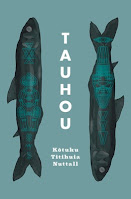
Tauhou by Kōtuku Titihuia Nuttall         $30
Tauhou envisions a shared past between two Indigenous cultures, set on reimagined versions of Vancouver Island and Aotearoa, two lands that now sit side by side in the ocean. Each chapter in this innovative hybrid novel is a fable, an autobiographical memory, a poem. A monster guards the cultural objects in a museum, a woman uncovers her own grave, another woman remembers her estranged father. On the rainforest beaches or the grassy dunes, sisters and cousins contend with the ghosts of the past—all the way back to when the first foreign ships arrived on their shores. In a testament to the resilience of Indigenous women, the two sides of this family, Coast Salish and Māori, must work together in understanding and forgiveness to heal that which has been forced upon them by colonialism. Tauhou is an ardent search for answers, for ways to live with truth. It is a longing for home, to return to the land and sea.
Small Fires: An epic in the kitchen by Rebecca May Johnson               $38
Cooking is thinking! The spatter of sauce in a pan, a cook's subtle deviation from a recipe, the careful labour of cooking for loved ones: these are not often the subjects of critical enquiry. Cooking, we are told, has nothing to do with serious thought. In this innovative memoir, Rebecca May Johnson rewrites the kitchen as a vital source of knowledge and revelation. Drawing on insights from ten years spent thinking through cooking, she explores the radical openness of the recipe text, the liberating constraint of apron strings and the transformative intimacies of shared meals. Playfully dissolving the boundaries between abstract intellect and bodily pleasure, domesticity and politics, Johnson awakens us to the richness of cooking as a means of experiencing the self and the world — and to the revolutionary potential of the small fires burning in every kitchen.
"One of the most original food books I've ever read, at once intelligent and sensuous, witty, provoking and truly delicious, a radical feast of flavours and ideas." —Olivia Laing
Alison by Lizzy Stewart             $45
A beautifully drawn subtle and insightful graphic novel, from the author of It's Not What You Thought It Would BeAlison is newly married, barely twenty and struggling to find her place in the world. A chance encounter with an older artist upturns her life and she forsakes convention and her working-class Dorset roots for the thrumming art scene of London in the late seventies. As the thrill of bohemian romance leads inevitably to disappointment, Alison begins to find her own path — through art, friendship and love.
"This book is a testament to the right to choose your own life. It is a tender, heartbreaking meditation on the bonds between women, the dazzle of the city, the struggle to become a female artist within the bounds of patriarchy, and the desire to make a mark on the world." —Jessica Andrews
The Novelist: A novel by Jordan Castro              $45
In Jordan Castro's inventive, funny, and surprisingly tender first novel, we follow a young man over the course of a single morning as he tries and fails to write an autobiographical novel, finding himself instead drawn into the infinite spaces of Twitter, quotidian rituals, and his own mind. The act of making coffee prompts a reflection on the limits of self-knowledge; an editor's embarrassing tweet sparks rage at the literary establishment; a meditation on first person versus third examines choice and action; an Instagram post about the ethics of having children triggers mimetic rivalry; the act of doing the dishes is at once ordinary and profound: one of the many small commitments that make up a life of stability. The Novelist: A Novel pays tribute to Nicholson Baker's The Mezzanine and Thomas Bernhard's Woodcutters, but in the end is a wholly original novel about language and consciousness, the internet and social media, and addiction and recovery.
>>Just one more click
A Guest at the Feast by Colm Tóibín       $38
This essay collection subtly uncovers the places where politics and poetics meet, where life and fiction melancholy and amusement within the work of the writer John McGahern to an extraordinary essay on his own cancer diagnosis, Tóibín delineates the bleakness and strangeness of life and also its richness and its complexity. As he reveals the shades of light and dark in a Venice without tourists and the streets of Buenos Aires riddled with disappearances, we find ourselves considering law and religion in Ireland as well as the intricacies of Marilynne Robinson's fiction. The imprint of the written word on the private self, as Tóibín himself remarks, is extraordinarily powerful. In this collection, that power is gloriously alive, illuminating history and literature, politics and power, family and the self.
Where Is It in Town? A wildlife hunt for kiwi kids by Ned Barraud           $20
This is a ‘look and find’ book for all children who want to learn about New Zealand’s wildlife, focusing on wildlife that Kiwi children will encounter in town. Each page illustrates a different urban environment, including a garden both in the daytime and at night, the local botanic gardens, a creek, the sea below a wharf, in long grass and the trees above, and in the country on the edge of town. 
Mokorua: Nga korero mo toku moko kauae | My story of moko kauae by Ariana Tikao, with photographs by Matt Calman          $45
One woman’s journey to her moko kauae as an expression of her Kāi Tahu identity. Ariana Tikao grew up in suburban Christchurch in the 1970s and ’80s surrounded by te ao Pākehā. This book tells the story of Ariana exploring her whakapapa, her whānau history and her language. This is one woman’s story, but it is interwoven with the revival of language, tikanga and identity among Kāi Tahu whānau over the last thirty years. Ariana’s journey culminates in her decision to take on Mokorua – her moko kauae – from tā moko artist Christine Harvey. After an emotionally charged ceremony that brought together whānau, young and old, for songs and tautoko, hugs and tears, Ariana writes: "Our whānau had reached another milestone in the decolonisation process – or, rather, in our journey of reindigenising ourselves, becoming who we always were."
>>Look inside
All Our Yesterdays by Natalia Ginzburg (translated by Angus Davidson)         $23
Anna, a sixteen-year-old schoolgirl in a small town in northern Italy, after a brief romance finds herself pregnant. To save her reputation, she marries an eccentric older family friend and they move to his village in the south. Her relationship with Cenzo Rena is touched by tragedy and grace as the events of their life in the countryside run parallel to the war and the encroaching threat of fascism — and in their wake, a society dealing with anxiety and grief. At the heart of the novel is a concern with experiences that both deepen and deaden existence: adultery and air raids, neighbourhood quarrels and bombings. With her signature clear-eyed wit, Ginzburg asks how we can act with integrity when faced with catastrophe, and how we can love well.
"I'm utterly entranced by Ginzburg's style — her mysterious directness, her salutary ability to lay things bare that never feels contrived or cold, only necessary, honest, clear." —Maggie Nelson
"This is a perfect novel." —Sally Rooney
Nights of Plague by Orhan Pamuk                 $37
It is April 1900, in the Levant, on the imaginary island of Mingeria—the (fictional) twenty-ninth state of the Ottoman Empire—located in the eastern Mediterranean between Crete and Cyprus. Half the population is Muslim, the other half are Orthodox Greeks, and tension is high between the two. When a plague arrives—brought either by Muslim pilgrims returning from the Mecca, or by merchant vessels coming from Alexandria—the island revolts. To stop the epidemic, the Ottoman sultan Abdul Hamid II sends his most accomplished quarantine expert to the island—an Orthodox Christian. Some of the Muslims, including followers of a popular religious sect and its leader, Sheikh H, refuse to take precautions or respect the quarantine. And the sultan's expert is murdered. As the plague continues its rapid spread, the sultan sends a second doctor to the island, this time a Muslim, and strict quarantine measures are declared. But the incompetence of the island's governor and local administration and the people's refusal to respect the bans dooms the quarantine to failure, and the death count continues to rise. Faced with the danger that the plague might spread to the West and to Istanbul, the sultan bows to international pressure and allows foreign and Ottoman warships to blockade the island. Now the people of Mingeria are on their own, and they must find a way to defeat the plague themselves. Steeped in history and rife with suspense, Nights of Plague is set more than one hundred years ago but has themes that feel remarkably contemporary.
"Pamuk's lovingly obsessive creation of the invented Mediterranean island of Mingeria is a world so detailed, so magically full, so introverted and personal in emphasis, that it shimmers like a memory palace. The effect is daringly vertiginous, at once floatingly postmodern and solidly realistic. Nights of Plague is a big but swift novel, a novel about pain and death that is fundamentally light and buoyant." —James Wood, The New Yorker
Belated Accolades: Joint historical biography of Rosaline Frank and William Tyree by Rosalina-Ludmila McCarthy        $160
The Tyree Studio Collection, now held in the Nelson Provincial Museum, comprises one of the most important photographic records of life in New Zealand from 1882—1947. The Tyree Studios were founded by brothers William and Frederick Tyree but were largely operated by Rose Frank, and McCarthy's impressively detailed book celebrates Frank's importance to New Zealand photographic history and Nelson provincial culture. 

Big Ideas from History: A history of the world for you          $50
The present can loom very large in a child's mind: all the crises and challenges of the modern world can feel overwhelming and at times dispiriting. This book is a big history of the world, from the beginnings of the universe to now, which places the reader at its centre. It encourages them to think about how and why they experience the world as they do and offers a helpful perspective by placing their thoughts and feelings in the context of our history and evolution.
Gaylene's Take: Her life in New Zealand film by Gaylene Preston            $40
Gaylene Preston has always sought out the stories that have not yet been told, and in this book she reveals the challenges and sometimes heartbreak that have come with that ambition. In both wide lens and close-up, she writes of formative experiences: her childhood in Greymouth in the 1950s, working in a psychiatric institution near Cambridge, England in the 70s, interviewing her tight-lipped father about his life in the war, and a mysterious story of her great-grandfather chiselling a biblical text off a gravestone in the dead of night. Along the way she takes us behind the scenes and into the shadows of some of the most enduring popular classics of New Zealand cinema, including Mr Wrong, Ruby & Rata, War Stories Our Mothers Never Told Us, and My Year With Helen, and how she has worked to realise her vision, come what may.
"I had no idea Gaylene was so hilarious. I adored this brilliant memoir: part liar, part cowgirl, mouthy and determined Gaylene grows up in Greymouth and migrates into the wild 70s, ending up in the tough-as-gumboots world of New Zealand film. Her book is irresistible." —Jane Campion
Thrust by Lydia Yuknavitch            $40
It is 2085 and Laisve is learning to use the ancient waterways to travel through water and time. Sifting through the detritus of a fallen city known as The Brook, she discovers a talisman that will connect her with people from the past two centuries, including a squad of labourers at work on a huge, national monument to liberty. As waters rise and a police state encroaches, Laisve must find her way back to the early days of her imperfect country, to forge a bond that might save all their lives — and their shared dream of freedom.
"Brilliant and incendiary." —Jeff Vandermeer
The Poverty of Ethics by Anat Matar             $40
The Poverty of Ethics stands the usual moral-political dichotomy on its head. It argues that moral principles do not in fact underlie or inform political decisions. It is, rather, the conceptual primacy of political discourse that rescues ethics from its poverty. Our ethical convictions receive their substance from historical narratives, political analyses, empirical facts, literary-educational models, political activity and personal experience. Yet morality, essentially, doesn't leave room for relativity: not every ethos deserves to be titled 'moral'. Hence the book argues further, it is the left ethos, as it has evolved over years, which forms the basis for ethics: morality is left-wing! 
"It is rare that one sees such a combination of progressive political engagement and deepest philosophical reflection as in The Poverty of Ethics. Matar's book is a guide for all those who are trying to survive with dignity in a topsy-turvy world that is our own." —Slavoj Zizek
Vanishing Ice: Stories of New Zealand's glaciers by Lynley Hargreaves          $60
Glaciation has had a huge impact on the shape of the New Zealand landscape. Enormous rivers of ice once flowed out onto the Canterbury Plains, stretched beyond the current West Coast shore of Te Waipounamu/ South Island, and spread down the slopes of the volcanoes in central Te Ika-a-Maui/North Island. These glaciers of past ice-ages built plains and vast rocky moraines, sculpted fiords and valleys, and carved out deep lakes. This book tells the stories of our glaciers though the lens of human interaction, with chapters moving through time from first Maori discoverers to colonial explorers, mountaineers and modern glaciologists. In the process, the book investigates the way nature, science and culture interact and sometimes collide, while providing a fascinating insight into the way New Zealand's glaciers work. As the world warms, our glaciers are disappearing at an unprecedented rate.
Faber & Faber Poetry Diary 2023           $28
Our most popular diary! Every week there is either a poem to read or a poetry book cover design to admire, drawn from Faber's incomparable list. We have only limited stock of this sturdy, well produced handbook to the year ahead, so be fast to order. 


VOLUME BooksNew releases


>> Read all Stella's reviews.


Avalon by Nell Zink   {Reveiwed by STELLA}
The end of this novel is at the beginning, and the end of the novel feels like a beginning. This pretty much sums up the tone of Nell Zink’s sixth book, Avalon. It has that beguiling characteristic of being simultaneously clever and maddening. On one hand, it holds you in the palm of the narrator, Bran, while the other hand slaps you down and holds the door closed. Yet, it all kind of hangs together — due in large part to Zink’s ability to tune the reader into Bran’s offbeat world. The details, which you tease out, of Bran’s upbringing come to light over the course of the novel, as she obsesses over the undeserving Peter. You meet the young lovers under the moonlight, a hound between them and a cringing announcement in the air. From the get-go, you get a sense that Peter will never be what Bran needs, even as she sinks into romantic reverie. After a few pages, the scene cuts to Avalon — a family holiday trip of childhood — a memory that Bran holds close. Her parents are still in the picture and she has yet to be abandoned by them both. Her father goes to Australia and later her mother, in a fit of self-centered awakening, leaves to live at a hippy Buddhist retreat to spend her days vacuuming and meditating. Bran is left, (after a brief interlude with her grandparents (but the trailer park rules don’t allow children)), with her stepfather, his creepy father, and her half-brother living in a drafty lean-to and working after school in the family plant nursery. A perfect cheap labour source and later she’s a free carer to her ‘grandfather’. If it wasn’t for her outsider friend Jay and her own fierce intellect (which she is perfectly unaware of), here she would stay forever. Yet it is her friendship with Jay and by extension his group of friends, that gives her a connection to a world beyond the confines of her crooked family (there are tax evasions, drug deals — probably, and bike gangs looming) and small-town mentality. She meets Peter through Jay (they both have crushes on the charming and attractive Peter), and through them she has a window, which she can’t go through, but she can definitely see through, to university life and the possibilities that beckon. Although her drive is much more about scoring the boy, than about scoring an education. We, the reader, hope, after Avalon concludes, that Bran will dump the boy and find her own path. There are nods to this — to an independent future — throughout. For Jay and the other wealthy side characters, life is offered up on a plate. For Bran, constantly working, literally in the nursery and later in the precariat workforce, and figuratively on herself, it’s more hit-and-miss. Will her car make it across the country without overheating? Can she avoid the biker gang and her crazy family? Will Peter call off his engagement to the very attractive and wealthy Yasira — his ticket to the easy life? If she tells herself enough time she’s a screenwriter, will it come true? Avalon is a classic girl-meets-boy tale with a twist, which is hardly surprising when Nell Zink is in charge. It has a hilarious overtone of wry observation — it’s a playfully clever novel about pretense and fecklessness — while sustaining a grittier, yet more oblique, undertone of danger and unsettling behaviour. 


 >> Read all Thomas's reviews. 


Veilchenfeld by Gert Hofmann (translated by Eric Mace-Tessler)   {Reviewed by THOMAS}

“One understands only what one expects, says Father.” Through the perspective of a young boy in a small town, Gert Hofmann’s pitch-perfect novel tells of the gradual, sure and awful destruction of a Professor Veilchenfeld, who comes to live in the town after (we deduce) his expulsion from a university position. Hofmann is careful to limit the narrative to what the boy knows, learns and asks, and the answers he gets from his parents — answers progressively unable to encompass or explain the situation. Although the novel does not contain the words ‘Jew’ or ‘Nazi’, but narrates the abuses heaped upon Veilchenfeld directly as the actions of persons upon another person — Hofmann provides no buffer of abstraction or identity to Veilchenfeld’s miserable fate (the abusers, after all, are the ones motivated by identity) — the novel, evidently set in the years preceding World War 2, gives subtle and devastating insight into how an attrition of civility in German society in the 1930s prepared it to both tolerate and perpetrate the Holocaust. The change in society is seen as a loss, a narrowing, a degradation, a stupification; the abusers themselves seem helpless and perplexed even at the height of their abuse. Fascism is the opposite of thought. For others, what cannot be accepted is erased from awareness. “What one does not absolutely have to know, one can also live without knowing,” says Father. What begins as some surreptitious stone-throwing and more general avoidance escalates over the three-year period of the book into community-sanctioned violence and brazen cruelty. As Hofmann shows well, degradation also degrades the degraders, for which the degraders hate their victim still more and therefore subject them to yet greater degradation — thereby degrading themselves still more and hating the victim still more in a cycle that quickly becomes extreme. Veilchenfeld applies to leave Germany but has his passport torn up and his citizenship revoked by an official at the town hall. Ultimately, his abjection cannot be borne; he hides in his apartment, despairs, loses the will to live, awaits his ‘relocation’. Eventually even the narrator’s father, Veilchenfeld’s doctor, sees death as the only solution. For the degraded degraders, though, there is no such simple release from the degradation they have wrought, only further escalation. “Reality is a gruesome rumour,” says Father. Towards the end of the book the townsfolk hold — for the first time ever — a unifying and nationalistic ‘traditional folk festival’, with the children grouped into different cohorts supposedly emblematic of aspects of the town’s heritage (though nobody actually recognises the supposed woodsman’s costume the narrator is issued to wear). This ludicrous festival is an innovation, a lie, emotive quicksand; all Fascism is retrospective folk fantasy, fraudulent nostalgia, a mental weakness, a sentimental longing to return to an imagined but non-existent past. Hofmann was the age of the narrator in the period described and was later concerned at the ongoing relevance of what happened then. History is a good teacher, Herr Veilchenfeld says, but, time and again, we are proven to be very poor students. 


Our Book of the Week is The Seven Moons of Maali Almeida by Shehan Karunatilaka, the winner of the 2022 Booker Prize. The judges said, "The Seven Moons of Maali Almeida takes readers on a journey at once horrific and humorous — beyond life and beyond death, to the world’s dark heart. There, astonishingly and encouragingly, we find tenderness, laughter, loyalty and love." The novel addresses the trauma of the civil war in Sri Lanka, but is funny, audacious, and full of verve and compassion. Now back in stock!
>>Read an extract. 
>>Jokes rob the tyrants of power.
>>A coping mechanism

NEW RELEASES

Click through to our website to get your copies!

Te Wehenga: The separation of Ranginui and Papatūānuku by Mat Tait                $37
Before the world as we know it could come into being, space had to be made between the Sky and the Earth; their children had somehow to force them apart. Tait's stunning dark illustrations and seamlessly bilingual, typographically exciting text bring this foundation myth alive for a new generation.
>>Just look at these illustrations!
>>Visit Mat Tait's website

Acting Class by Nick Drnaso            $45
"Every single person has something unique to them which is impossible to re-create, without exception." —John Smith, acting coach
Nick Drnaso's graphic novel Acting Class creates a tapestry of disconnect, distrust, and manipulation. Ten strangers are brought together under the tutelage of John Smith, a mysterious and morally questionable leader. The group of social misfits and restless searchers have one thing in common: they are out of step with their surroundings and desperate for change. A husband and wife, four years into their marriage and simmering in boredom. A single mother, her young son showing disturbing signs of mental instability. A peculiar woman with few if any friends and only her menial job keeping her grounded. A figure model, comfortable in his body and ready for a creative challenge. A worried grandmother and her adult granddaughter; a hulking laborer and gym nut; a physical therapist; an ex-con. With thrumming unease, the class sinks deeper into their lessons as the process demands increasing devotion. When the line between real life and imagination begins to blur, the group's deepest fears and desires are laid bare. Exploring the tension between who we are and how we present, Drnaso cracks open his characters' masks and takes us through an unsettling journey. From the author of Sabrina.
>>Look inside!

Demon Copperhead by Barbara Kingsolver            $37
Demon Copperhead is born to a teenaged single mother in a single-wide trailer, with no assets beyond his dead father's good looks and copper-colored hair, a caustic wit, and a fierce talent for survival. Demon takes us along on his journey through the modern perils of foster care, child labour, derelict schools, athletic success, addiction, disastrous loves, and crushing losses, in a contemporary rural America riddled with poverty and opioids. Through all of it, he reckons with his own invisibility in a popular culture where even the superheroes have abandoned rural people in favor of cities. Inspired by the unflinching truth-telling of David Copperfield, Kingsolver enlists Dickens's anger and compassion, and above all, his faith in the transformative powers of story.
>>Dickens has always been Kingsolver's ancestor.

Strega by Johanne Lykke Holm (translated by Saskia Vogel)           $42
With little boxes of liquorice, hairbands, and notebooks in her bag, Rafa arrives at the remote Alpine town of Strega to work at the grand Olympic Hotel. There, she and eight other girls receive the stiff uniforms of seasonal workers and are taught to iron, cook, and make the beds by austere matrons. In spare moments between tasks, the girls start to enjoy each other’s company as they pick herbs in the garden, read in the library, and take in the scenery. But when the hotel suddenly fills with people for a raucous party, one of the girls disappears. What follows are deeper revelations about the myths young women are told, what they are raised to expect from the world, the violence they are made to endure, and, ultimately, the question of whether a gentler, more beautiful life is possible.
"A work of mythic reinvention about the power of girls coming of age in a world hellbent on containing their passions and imaginations. Strega left me breathless, angry, and then thrilled by the dare it leaves in the reader's lap. —Lidia Yuknavitch
"If Fleur Jaeggy and Shirley Jackson had ever spent the night together in The Shining Hotel, their love child might have been Strega. As it was, this Strega came into the world through a different yet equally miraculous union: that of a writer and a translator of extraordinary talent. Its hypnotic, off-kilter prose dances the reader into a state of gloried frenzy, pressing the sometimes-nightmarish buttons of imagined memory as it probes the essence of being young, searching, and exploited." —Polly Barton
"As uncompromising and brilliant as it is disturbing." —Olga Ravn

Dropbear by Evelyn Araluen              $30
I told you this was a thirst so great it could carve rivers. This fierce debut from indigenous Bundjalung writer Evelyn Araluen confronts the tropes and iconography of an unreconciled Australian nation with biting satire and lyrical fury. Dropbear interrogates the complexities of colonial and personal history with an alternately playful, tender and mournful intertextual voice, deftly navigating the responsibilities that gather from sovereign country, the spectres of memory and the debris of settler-coloniality. This innovative mix of poetry and essay offers an eloquent witness to the entangled present, an uncompromising provocation of history, and an embattled but redemptive hope for a decolonial future.
Winner of the 2022 Stella Prize. 
>>The craziest, craziest thing
>>Read some of Araluen's poetry. 
Collected Poems by Thomas Bernhard (translated by James Reidel)           $35
Bernhard began his writing career in the early 1950s as a poet. Over the next decade, Bernhard wrote thousands of poems and published four volumes of intensely wrought and increasingly personal verse, with such titles as On Earth and in HellIn Hora Mortis, and Under the Iron of the Moon. Bernhard's early poetry, bearing the influence of Georg Trakl, begins with a deep connection to his Austrian homeland. As his poems saw publication and recognition, Bernhard seemed always on the verge of joining the ranks of Ingeborg Bachmann, Paul Celan, and other young post-war poets writing in German. During this time, however, his poems became increasingly obsessive, filled with an undulant self-pity, counterpointed by a defamatory, bardic voice utterly estranged from his country, all of which resulted in a magisterial work of anti-poetry—one that represents Bernhard's own harrowing experience, with the leitmotif of success-failure, that makes his fiction such a pleasure. For all of these reasons, Bernhard's Collected Poems, translated into English for the first time by James Reidel, is a key to understanding the irascible black comedy found in virtually all of Bernhard's writings. 
Dreaming the Karoo: A people called the /Xam by Julia Blackburn          $40
In spring 2020, Julia Blackburn travelled to the Karoo region of South Africa. She had long been fascinated by the indigenous group called the /Xam, who were brutally forced from their ancestral lands by European settlers in the nineteenth century. Facing extinction and the death of their language, several of the /Xam people related their stories to a European philologist Wilhelm Bleek and his English sister-in-law, Lucy Lloyd. In 12,000 pages of notebooks, Lloyd and Bleek meticulously recorded their words - their dreams, memories, hopes, history and beliefs - creating an extraordinary archive of this now extinct people.
Blackburn's journey to the Karoo was cut short by the outbreak of the COVID pandemic. As the world is plunged into a bewildering new state, she immerses herself in the stories of the /Xam. The /Xam saw themselves as just one small part of the complexity of nature. Their belief system gave voice and dignity to everything that surrounded them, the dead and the living, birds and animals, the wind and the rain, the moon and the stars. All things were once people, they said - everything was speaking to you, if you only knew how to listen. This is a haunting book about loss, colonialism, nature, and about how we live in the world and what we leave behind. 
"An astounding, disarming book, full of grief and beauty. It's a requiem for a lost world, but also a powerful dream of an alternative to our own age of extinction."—Olivia Laing
The Geometer Lobachevsky by Adrian Duncan           $33
"When I was sent by the Soviet state to London to further my studies in calculus, knowing I would never become a great mathematician, I strayed instead into the foothills of anthropology..." It is 1950 and Nikolai Lobachevsky, great-grandson of his illustrious namesake, is surveying a bog in the Irish Midlands, where he studies the locals, the land and their ways. One afternoon, soon after he arrives, he receives a telegram calling him back to Leningrad for a 'special appointment'. Lobachevsky may not be a great genius but he is not foolish: he recognises a death sentence when he sees one and leaves to go into hiding on a small island in the Shannon estuary, where the island families harvest seaweed and struggle to split rocks. Here Lobachevsky must think about death, how to avoid it and whether he will ever see his home again.
"He brings a mixture of the exact and the visionary—an original voice, a writer who has come to recreate the world on his own terms." —Colm Toibin
Space Invaders by Nona Fernandez (translated by Natasha Wimmer)         $23
Preoccupied by uneasy memories and visions, a group of friends look back on their childhood. Their dreams circle their old classmate Estrella Gonzlez Jepsen. They catch glimpses of her braids, hear echoes of her voice, read old letters. They recall regimented school assemblies, nationalistic class performances and a trip to the beach. It soon transpires that Estrella's father was a ranking government officer implicated in Chile's Pinochet regime and after she simply disappeared, question of what became of her haunts her former friends. Growing up, they were old enough to sense the danger and tension that surrounded them but powerless to resist or confront it. They could control only the stories they told one another and the 'ghostly green bullets' they fired in their favourite video game. Fernndez summons the collective memory of a generation, rescuing felt truth from the oblivion of official history.
"A small jewel of a book. Fernndez's picturesque language and dream-like atmosphere is well worth being invaded by. A book to slip in the pocket to read and reread." —Patti Smith
The Passenger by Cormac McCarthy           $50
McCarthy's first novel in over a decade shows his prose even sharper and his late style even tauter. In 1980 Bobby Western dives to a sunken jet near Mississippi, only to find no black box and the bodies of only nine of the ten passengers. A collateral witness to machinations that can only bring him harm, Western is shadowed in body and spirit—by men with badges; by the ghost of his father, inventor of the bomb that melted glass and flesh in Hiroshima; and by his sister. As he is drawn across, or rather through, the American South, Western confronts the ethical harms of the United States, and of the human predicament more generally. 
"What a glorious sunset song of a novel this is. It’s rich and it’s strange, mercurial and melancholic. McCarthy started out as the laureate of American manifest destiny, spinning his hard-bitten accounts of rapacious white men. He ends his journey, perhaps, as the era’s jaundiced undertaker." —Guardian
The Revenge of the Real: Politics for a post-pandemic world by Benjamin Bratton              $23
COVID-19 exposed the pre-existing conditions of the current global crisis. Many Western states failed to protect their populations, while others were able to suppress the virus only with social restrictions. In contrast, many Asian countries were able to make much more precise interventions. Everywhere, lockdown transformed everyday life, introducing an epidemiological view of society based on sensing, modeling, and filtering. What lessons are to be learned? The Revenge of the Real envisions a new positive biopolitics that recognises that governance is literally a matter of life and death. We are grappling with multiple interconnected dilemmas—climate change, pandemics, the tensions between the individual and society—all of which have to be addressed on a planetary scale. Even when separated, we are still enmeshed. Can the world govern itself differently? What models and philosophies are needed? Bratton argues that instead of thinking of biotechnologies as something imposed on society, we must see them as essential to a politics of infrastructure, knowledge, and direct intervention. In this way, we can build a society based on a new rationality of inclusion, care, and prevention.
We Could Have Been Friends, My Father and I: A Palestinian memoir by Raja Shehadeh                $33
Aziz Shehadeh was many things: lawyer, activist, and political detainee, he was also the father of author, activist (and founder of human rights organisation Al-Haq) Raja. In this memoir, Raja Shehadeh unpicks the snags and complexities of their relationship. A vocal and fearless opponent, Aziz resisted under the British mandatory period, then under Jordan, and, finally, under Israel. As a young man, Raja failed to recognise his father's courage and, in turn, his father did not appreciate Raja's own efforts in campaigning for Palestinian human rights. When Aziz was murdered in 1985, it changed Raja irrevocably.
"Raja Shehadeh is a buoy in a sea of bleakness." —Rachel Kushner
Governing the World Without World Government by Roberto Mangabeira Unger           $23
The world does not need a world government to govern itself. Roberto Mangabeira Unger argues that there is an alternative: to build cooperation among countries to advance their shared interests. We urgently need to avert war between the United States and China, catastrophic climate change, and other global public harms. We must do so, however, in a world in which sovereign states remain in command. The opportunity for self-interested cooperation among nations is immense. Unger shows how different types of coalitions among states can seize on this opportunity and avoid the greatest dangers that we face. 
Appliance by J.O. Morgan           $37
Are they paying you extra for this? You'd better be getting something. We'd better be getting something. For the inconvenience I mean. The machine's here for the whole weekend is what they said. What if we had guests? They never asked. And in any case what are the dangers? Being tested like lab-rats we are. Did they even try to provide any assurance it was all perfectly safe? This is the prototype. The first step to a new future. A future that will be easy and abundant. A future in which distance is no longer a barrier to human contact. And all it takes is a simple transport unit, in every home, every street, every town. Quick. Clean. Easy. A future driven by data, not emotion. And so begins the journey of a new technology that will soon change the world and everyone in it - the sceptics and the converts, the innocents and the evangelists. A scientific wonder that quickly becomes an everyday aspect of life. But what of our inherent messiness? In a world preoccupied with progress, what will happen to the things that make us human - the memories, the fears, the loves, the contradictions, the mortality? As we push for a sense of perfection, what do we stand to lose? Questioning, innovative and shot through with a rich humanity, Appliance is a novel that examines our faith in technology, our constant hunger for new things and the rapid changes affecting all our lives. It challenges us to stop and reflect on the future we want, the systems we trust... and what really matters to us.
Short-listed for the 2022 Orwell Prize for Political Fiction. 
Red Valkyries: Feminist lessons from five revolutionary women by Kristen Ghodsee          $29
Through a series of lively biographical essays, Red Valkyries explores the history of socialist feminism by examining the revolutionary careers of five prominent socialist women active in the 19th and 20th centuries.
- Alexandra Kollontai, the aristocratic Bolshevik
- Nadezhda Krupskaya, the radical pedagogue
- Inessa Armand, the polyamorous firebrand
- Lyudmila Pavlichenko, the deadly sniper
- Elena Lagadinova, the partisan turned scientist turned global women's rights activist
None of these women were 'perfect' leftists. Their lives were filled with inner conflicts, contradictions, and sometimes outrageous privilege, but they still managed to move forward their own political projects through perseverance and dedication to their cause. In brief conversational chapters Ghodsee tells the story of the personal challenges faced by earlier generations of socialist and communist women and renders the big ideas of socialist feminism accessible to those newly inspired by the emancipatory politics of left feminist movements around the globe.
Where I End by Sophie White                 $38
My mother. At night, my mother creaks. The house creaks along with her. Through our thin shared wall, I can hear the makings of my mother gurgle through her body just like the water in the walls of the house
Teenager Aoileann has never left the island. Her silent, bed-bound mother is the survivor of a private disaster no one will speak about. Aoileann desperately wants a family, and when Rachel and her newborn son move to the island, Aoileann finds a focus for her relentless love.
"Tremendous; the transition from pity to fear, as we warily circle Aoileann’s brutalised psyche, is brilliantly done." —Guardian
"This is a truly different Irish novel. One that entwines Irish myth, the reality of human bodies, life and death, and traditional gothic horror in a macabrely beautiful and, in the end, redemptive dance." —Irish Independent
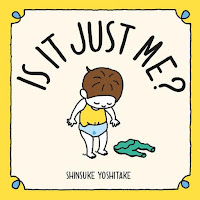
Is It Just Me? by Shinsuke Yoshitake           $25
Everyone has something that makes them feel self-conscious. It might be the smell of your breath, the size of your nose, or the way your shirt sleeves bunch up under your jumper. At the centre of this story is a little boy who has a small but embarrassing problem: every time he pees, a few drops dribble on to his underpants. Curious, he asks other children if they have the same issue. He soon discovers a simple life lesson: everyone is battling some kind of irritation.

Glitter by Nicole Seymour            $23
Glitter reveals the complexity of an object often dismissed as frivolous. Nicole Seymour describes how glitter's consumption and status have shifted across centuries-from ancient cosmetic to queer activist tool, environmental pollutant to biodegradable accessory-along with its composition, which has variously included insects, glass, rocks, salt, sugar, plastic, and cellulose. Through a variety of examples, from glitterbombing to glitter beer, Seymour shows how this substance reflects the entanglements of consumerism, emotion, environmentalism, and gender/sexual identity. 
>>Other interesting books in the 'Object Lessons' series. 


VOLUME BooksNew releases

VOLUME FOCUS : Ocean

A selection of books from our shelves. 


Kiwi Christmas Books. If you can't imagine the festive season without a pile of good books, remember that there are children whose whānau are experiencing hardship and who have little to look forward to at Christmas. If you would like to give books to needy children in our community, either 1. Make a donation and we will choose books on your behalf; or 2. Choose books from our website yourself and just put "Kiwi Christmas Books" in the 'notes' field as you check out. Thank you for making a difference! >>Find out more about the Kiwi Christmas Books scheme. 
VOLUME Books


Our Book of the Week is Catherine Chidgey's latest inventive, acute and entertaining novel The Axeman's Carnival. Narrated by Tama, a magpie who very cleverly 'does all the voices' and mimics even an author's relationship to their story and characters, the novel treats life in the backblocks of rural Aotearoa as a scenario in which humans fail to suppress their inner faults and play out their ambivalences towards each other and toward the so-called natural world.
>>Book of the Week: Bird of the Year
>>Life on the farm
>>Pecky reviews the book
>>An excellent conversation with Sara Baume (author of Seven Steeples). 
>>"There's a fire under me."
>>The New Zealand 12" Championship
>>Read Stella's review of The Wish Child
>>Read Thomas's review of The Beat of the Pendulum
>>Remote Sympathy was short-listed for the 2021 Acorn Prize
>>Your copy of The Axeman's Carnival.  


>> Read all Stella's reviews.


The Collectors by Philip Pullman, illustrated by Tom Duxbury   {Reviewed by STELLA}
If you’re waiting for the third and final installment of 'The Book of Dust', you’ll need something to be carrying on with. Luckily, there is a new small volume, The Collectors. This is a mysterious story about two artifacts: a painting and a bronze monkey. The two artifacts trail each other, ending up in a collector’s hands always at the same time. They are strangely drawn together time and time again through what would seem happenstance but what one expects is something altogether stranger. Two men have met in the Common Room at Oxford College. It’s a dark, and maybe a little stormy, night. The fire is lit, and the conversation of the men in the room is convivial. I imagine the room has large armchairs and wondrous volumes on its shelves (so just the book for our Volume Focus topic this week). As the others bid the two friends goodnight, the conversation turns to the mysterious artifacts and a spine-tingling story. Who is the woman in the painting? Why does she stare with such intensity from the picture?  And why does the monkey sculpture, a macabre and unpleasant curiosity, always turn up to join her? And why are the collectors (for there have been many) so repulsed yet drawn to possess this hideous creature? If you are a 'Dark Materials' fan, you’ve probably guessed who they are. It won’t make it any less fascinating. Delve into this short gothic tale of murder and mayhem, a story that crosses worlds and makes for a chilling bedtime read. You’ll want to add this to your collection. Others in this series are SerpentineLyra’s OxfordOnce Upon a Time in The North, and The Imagination Chamber. And if you are interested in story-telling, Pullman’s essays in Daemon Voices are rich and illuminating.