Read our latest NEWSLETTER and find out what we've been reading and recommending — and publishing!

Read our latest NEWSLETTER and find out what we've been reading and recommending — and publishing!

Blue Self-Portrait by Noémi Lefebvre (translated from French by Sophie Lewis) {Reviewed by THOMAS}
It takes approximately an hour and a half to fly from Berlin to Paris. Upon that hour and a half, a human memory, especially one working at neurotically obsessive speed, can loop a very large amount of time indeed, an hour and a half is plenty of time to go over and go over the things, or several of the things, the unassimilable things, that happened in Berlin, in an attempt to assimilate those things, although they are not assimilable, in an attempt, rather, albeit an involuntary attempt, an unconscious attempt, if that can be called an attempt, to damage oneself by the exercise of one’s memories, to draw self-blame and self-disgust from a situation the hopelessness of which cannot be attributed to anything worthy of self-blame or self-disgust but which is sufficiently involved to exercise the self-blame and self-disgust that seethe always beneath their veneer of not-caring, of niceness, the veneer that preserves self-blame and self-disgust from resolution into anything other than self-blame and self-disgust. Upon this hour and a half can be looped, such is the efficacy of human memory, not only, obsessively, the unassimilable things that happened in Berlin but also much else that happened even into the distant past, but, largely speaking, the more recent things that have bearing upon, or occupy the same memory-pocket, not the best metaphor, as the unassimilable things that happened in Berlin, for disappointment and failure seldom happen in a vacuum but resonate with, even if they are not the direct result of, disappointments and failures reaching back even into the distant past, perhaps especially into the distant past, self-blame and self-disgust having the benefit, or detriment, if a difference can be told between benefit and detriment, of binding experiences, or clumping them, to form an identity, and, not only this, upon that hour and a half can be looped also an endless amount of speculation and projection as to what may be occurring in the minds of others, or in the mind of, in this case, a specific other, a German-American pianist and composer with whom the narrator, who has been visiting Berlin with her sister, has had some manner of romantic encounter, so to call it, the extent of which is unclear, both, seemingly, to the narrator and, certainly, to the reader, the reader being necessarily confined to the mental claustrophobia of the narrator, on account of the obsessive speculation and projection and also the inescapable escapist and self-abnegating fantasising on the part of the narrator, together with the comet-like attraction-and-avoidance of her endless mental orbit around the most unassimilable things that happened in Berlin, or that might have happened in Berlin, or that did not happen in Berlin but are extrapolative fantasies unavoidably attendant upon what happened in Berlin, untrue but just as real as truth, for all thoughts, regardless of actuality, do the same damage to the brain. Lefebvre’s exquisitely pedantic, fugue-like sentences, their structure perfectly indistinguishable from their content, bestow upon her the mantle of Thomas Bernhard, which, after all, does not fall upon just any hem-plucker but, in this case, fully upon someone who, not looking skyward, has crawled far enough into its shadow when looking for something else. Where Bernhard’s narrators tend to direct their loathing outwards until the reader realises that all loathing is in fact self-loathing, Lefebvre’s narrator acknowledges her self-loathing and self-disgust, abnegating herself, rather, for circumstances in which self-abnegation is neither appropriate nor inappropriate, her self-abnegation arising from the circumstances, from her connection with the circumstances, from her rather than from the circumstances, her self-abnegation not, despite her certainty, having, really, any effect upon the circumstances. Not at all not-funny, pitch-perfect in both voice and structure, full of sly commentary on history and modernity, and on the frailties of human personality and desire, providing for the reader simultaneous resistance and release, Lefebvre shares many of Bernhard’s strengths and qualities, and the book contains memorable and affecting passages such as that in which the narrator recalls playing tennis with her mother-in-law, now her ex-mother-in-law, and finding she is not the type for ‘collective happiness’, or her hilariously scathing descriptions of Berlin’s Sony Centre or of the restaurant in what was Brecht's house, or of the narrator's inability to acknowledge the German-American pianist-composer's wife as anything but 'the accompaniment' — or, indeed, many other passages — but the excellence of the book is perhaps less in the passages than in the book as a whole.
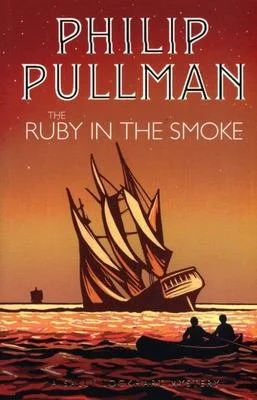
The Ruby in the Smoke by Philip Pullman {Reviewed by STELLA}
You will know Philip Pullman’s 'His Dark Materials' trilogy and you may be a fan awaiting the third installment of 'The Book of Dust' — fingers crossed for later this year. In the meantime, you can always delve backward. Pullman's excellent 'Sally Lockhart' series is worth seeking out. Sally Lockhart’s father has drowned at sea. Orphaned sixteen-year-old Sally doesn’t wait around to be rescued from her plight. Marriage? No thanks. She’s ready to head into the world and is spurred on by a letter of anonymous origin. The letter contains a warning of dire consequences and adds fuel to the strangeness of her father’s death. Sally sets out to unpick the mystery. Not an easy task. It’s Victorian England and young women are not meant to be independent, let alone smart or feisty. That won’t hold Sally Lockhart, Detective back, and with a little help from some new acquaintances including the young photographer Frederick (rather hapless yet brave and quick-witted), Jim (the sharp office lad), and an assortment of useful but not necessarily trustworthy characters, Sally Lockhart delves into the underbelly of London. It’s a risky business of cutthroat villains, aspirant investors, the pull of the opium den, poverty, and the allure of wealth; and at the heart of it all is a jewel with a bloody history. Fortunately, Sally’s father has equipped her for a life of independence, schooling her in accounting and marksmanship — useful; even if her French and embroidery are lacking. The Ruby in the Smoke is the first in the series and it’s a rip-roarer — gripping drama, daring escapades, an excellent heroine, humour laced through, and a bit of romance thrown in for good measure; as well as some spiky history (the dark side of the Victorian era) and intriguing social commentary. Great for 12+ and appealing to older teens as well.
NEW RELEASES


Pirate Enlightenment; or, The Real Libertalia by David Graeber $40
The Enlightenment did not begin in Europe. Its true origins lie thousands of miles away on the island of Madagascar, in the late seventeenth century, when it was home to several thousand pirates. This was the Golden Age of Piracy, a period of violent buccaneering and rollicking legends - but it was also, argues anthropologist David Graeber, a brief window of radical democracy, as the pirate settlers attempted to apply the egalitarian principles of their ships to a new society on land. For Graeber, Madagascar's lost pirate utopia represents some of the first stirrings of Enlightenment political thought. In this jewel of a book, he offers a way to 'decolonise the Enlightenment', demonstrating how this mixed community experimented with an alternative vision of human freedom, far from that being formulated in the salons and coffee houses of Europe. Its actors were Malagasy women, merchants and traders, philosopher kings and escaped slaves, exploring ideas that were ultimately to be put into practice in by Western revolutionary regimes a century later.
>>How enlightened were the pirates?
>>Other books by David Graeber.

Fate of the Land | Ko ngā Ākinga a ngā Rangatira: Māori Political Struggle in the Liberal Era, 1891-1912 by Danny Keenan $65
In the second half of the nineteenth century, settlers poured into Aotearoa demanding land. Millions of acres were acquired by the government or directly by settlers; or confiscated after the Land Wars. By 1891, when the Liberal government came to power, Maori retained only a fraction of their lands. And still the losses continued. For rangatira such as James Carroll, Wiremu Pere, Paora Tuhaere, Te Keepa Te Rangihiwinui, and many others, the challenges were innumerable. To stop further land loss, some rangatira saw parliamentary process as the mechanism; others pursued political independence. For over two decades, Maori men and women of outstanding ability fought hard to protect their people and their land. How those rangatira fared, and how they should be remembered, is the story of Maori political struggle during the Liberal era.
>>Ten questions.




VOLUME FOCUS: How To Be
A selection of books from our shelves.
How to Be a Good Creature
How To Be You
Living and Dying with Marcel Proust
How Should A Person Be?
How to Live a Good Life
Philosophy and Life
How to Live
How to Be Happy Though Human

I, Object is a collection of short texts by jewellery objects, as told to jeweller Stella Chrysostomou.
In these 38 stories, jewellery objects reflect on their relationship to the world, to each other, and with their human acquaintances (their makers, wearers, viewers, and owners).
These texts ask us to reconsider our attitudes to, and our thinking about, jewellery, and — the tables turned — to experience jewellery afresh.
Stella Chrysostomou is a jeweller and writer (and co-owner of VOLUME). As editor of I, Object, she is immensely grateful to the jewellery objects for their co-operation and contributions. Any errors in translation are her own.
Reviews
"What?" — Steve Braunias, NewsRoom
"Whimsical and delightful." — Alyson Baker (>>read the full review here)
Listen to Stella read some of the stories:

>>Also available by Stella Chrysostomou: LIKE: An experiment in interpretation.
The Apartment by Alexandra Litvina (translated by Antonina Bouis), illustrated by Anna Desnitskaya

I’ve had my eye on this book for a while now, and happily, I can now slip it out from my own shelf to browse whenever I wish. (Luckily for you, we can order you a copy). I like history for its stories as well as the knowledge it can impart about how we live now and how we should behave in the future. It’s always a pleasure to find a book that approaches history in a different and accessible way. This children’s book, just as enjoyable and fascinating for adults, tells the story of a Russian century through one apartment and one family over several generations. The narratives are in the voices of various children and while this gives us a child’s viewpoint and interests, the author Alexandra Litvina manages to tie in major events without shirking from contentious issues of protest, purges, hardships, and dictators. These are cleverly revealed through snippets of conversation, newspaper cuttings, and a succinct yet informative paragraph for each of the years highlighted. We follow the Muromstev family from 1902 to 2002. In 1902, Irina tells us about the new apartment in Moscow. The paint is still fresh, and the floors just polished. The nursery is big, Papa has his own study, and there is plenty of room for everyone. We can look into each room as the family moves in and meet the family as they organise their new home. Moving forward to 1914, it’s her brother Nikolai’s turn to tell us what is happening in the apartment. It’s Christmas and Papa is on the frontlines tending to the wounded, but everyone thinks that this war will be over soon. The younger sister, Marusya, takes up the story next. 1919 — food, medicine, and fuel are in short supply — revolution has turned the country on its head. Jump to 1927 and the apartment is looking very different. More people live in the same building and the Muromstev family’s lives have changed remarkably over the last three decades, not least the size of their apartment. And so it goes. We meet their friends, enjoy their discussions about politics, dabble in art and literature a little, and follow the ups and downs of this Russian century through the eyes of a family. It’s well told and wonderfully illustrated. Anna Desnitskaya's cut-away apartment illustrations are fascinating on every spread and the intervening pages are filled with details in text and drawings of quotidian culture showing us typical foods, toys, and clothes of each period alongside the more poignant mementos of ration cards, war victims, and propaganda. Here you’ll find Stalin, the Cold War, and father’s bag packed just in case of arrest, as well as family celebrations, the excitement of the race to the moon, and the significance of the fall of the Berlin Wall. Excellent!

Old Masters by Thomas Bernhard (translated by Ewald Osers) {Reviewed by THOMAS}
It is very tiring to get everything done properly, he said, it is exhausting and, really, a waste of time to get everything done properly, but it is just as exhausting and just as much a waste of time to get everything done not properly, to do a mediocre job, so to speak, he said. As not doing anything at all does not seem to be an option available to me, despite its attractions, he said, as doing nothing is fraught with its own existential dangers, so to call them, I may as well do everything properly, he said. This is a terrible trap. I will exhaust myself and waste my time whether I do things properly or not, nobody will notice whether I do things properly or not, I am uncertain if I can tell whether I am doing things properly or not myself, but they would notice if I do nothing at all. Perhaps what I call properly is in fact mediocre, I aspire to the mediocre but fall short, or I aspire to excellence and fall short, it makes no difference, I fall to the same point, somewhere below the mediocre, far below excellence, I fall to my place in the order of things whether I aspire to the mediocre or to the excellent, I may as well aspire to excellence, whatever that means, and fail more grandly, he said, though he was unsure if this failure was more grand or more pathetic. He had, he said, entertained the intention, at least briefly, of writing a proper review of Old Masters by Thomas Bernhard, he had been rereading Old Masters not merely but at least partly for the purposes of writing this review, and he had even, while researching this review or this book, discovered what seemed to him to be a video game in which he could move around the galleries of the Kunsthistorisches Museum in Vienna, although there were some galleries he could not enter for some reason, perhaps he had to advance to another level or perhaps he was just clumsy, avoiding the gallery attendants, searching for the location in which almost the entire book is set: the bench facing the painting White-Bearded Man by Tintoretto. Using the navigation arrows provided for the purpose by Google, he found, the player of the game can become well acquainted with the endless parquet flooring of the Kunsthistorisches Museum, with the marble staircases and gilded cornices and door-frames of the Kunsthistorisches Museum, and with much of what Reger, the dominant voice if not the narrator of Bernhard’s book, dismisses as its collection of “Habsburg-Catholic state art. The Kunsthistorisches Museum is entirely in line with the artistic taste of the Habsburgs, who, at least where painting is concerned, had a revolting, totally brainless Catholic artistic taste,” writes Bernhard as Atzbacher quoting Reger, Atzbacher being the book’s narrator, even though pretty much all he does is quote what Reger has at some time said. He must concentrate on his review, he thought, I am determined to write a proper review, he said aloud, forgetting that he had already reviewed the book with a proper review, or in any case something slightly closer to a proper review than what he felt himself now capable of, not that that is saying much, some years before. Old Masters is an entirely musical book, he wrote, starting at last in a sensible way, despite being set in a painting gallery it is entirely musical both in its phrasing and in its structure, if there is a difference between the two, he thought, drifting from the task, the musical form of the book is what matters, he wondered if he could say the form is all that matters, that form is all that ever matters. Old Masters is narrated in one unbroken paragraph by Atzbacher, about whom we learn little, he wrote, but the voice that reaches us is the voice of Reger, an elderly music reviewer, who has arranged to meet Atzbacher on their regular bench in front of the White-Bearded Man but on an irregular day, they normally meet there on alternate days only. Atzbacher arrives early in order to watch Reger waiting for him from the next room, and the first half of the book consists of Atzbacher telling us what Reger has previously told him, of Reger speaking through Atzbacher, so it seems, just as Reger also speaks, as Atzbacher notes, through the museum attendant Irrsigler: “Irrsigler has, over the years, appropriated verbatim many, if not all, or Reger’s sentences. Irrsigler is Reger’s mouthpiece, nearly everything that Irrsigler says has been said by Reger, for over thirty years Irrsigler has been saying what Reger has said. If I listen attentively I can hear Reger speak through Irrsigler.” As with Irrsigler so with Atzbacher, he thinks, Atzbacher seemingly unaware of the irony. Old Masters is a very funny book, he thinks, Reger’s reported opinions amount to a stream of invective against pretty much everything held in esteem in the society in which Reger lives, and in which Bernhard lived, separated as they are only by tense, admiration, after all, being for Bernhard a form of mental weakness. “There has virtually been no culture in Vienna for a long time, and one day there will really be no culture of any kind left in Vienna, but it will nevertheless be a cultural concept even then. Vienna will always be a cultural concept, it will more stubbornly be a cultural concept the less culture there is in it,” writes Benhard as Atzbacher as Reger and perhaps again as Bernhard. Well, he thought, as with Vienna so with Nelson, though I will not write that down, he thought. Heidegger, Stifter, Bruckner, Vienna’s public lavatories, restaurants, politicians, all are derided in the most amusing fashion and at length, he wrote, in this first section, in the words of Reger as remembered by Atzbacher as he watches Reger waiting for him to arrive. This might even be Bernhard’s funniest book, he thought, the way Reger’s ridicule surges through it, builds and collapses. When Atzbacher keeps his appointment with Reger, Reger’s rants continue via Atzbacher, but at one step less remove, the rants continue but the tone changes, subtly, Old Masters might be Bernhard’s both least and most subtle book, he thought, the least subtle because of Reger’s ranting but the most subtle because of the modulation in that ranting, all in this one paragraph, the rant no longer filtered by Atzbacher’s memory is more extreme, nastier, less enjoyable, clumsier, is the fact that I can go along with Reger’s rants in the first half a mark against me, he wondered, and if so am I redeemed by being put off when we meet Reger himself in the second, so to speak, when we meet Reger in the raw, so to speak, he wondered, and Atzbacher intercuts what Reger says to him at this time in the gallery with recollections of what Reger has said to him previously at the Ambassador cafe, and the depth of Reger’s unhappiness since the death of his wife is expressed in sequences of sentences, each ending “...Reger said at the Ambassador then,” repeated like sobs, and the unhappiness flows through and gives depth to the rest of the book, which principally concerns the difficulties of carrying on living is a world devoid of value, Old Masters is perhaps Bernhard’s funniest book and his saddest. “Oh yes, Reger said, the logical conclusion would invariably be total despair about everything. But I am resisting this total despair about everything, Reger said. I am now eighty-two and I am resisting this total despair about everything tooth and nail, Reger said.” Reger’s vitriol is a survival mechanism, he wrote, to despise is to survive, that is clumsily put, he thought, too clumsily put to write down. “One’s mind has to be a searching mind, a mind searching for mistakes, for the mistakes of humanity, a mind searching for failure. The human mind is a human mind only when it searches for the mistakes of humanity, Reger said. A good mind is a mind that searches for the mistakes of humanity and an exceptional mind is a mind that finds the mistakes of humanity, and a genius’s mind is a mind which, having found these mistakes, points them out and with all the means at its disposal shows up these mistakes.” Reger despises nothing more than old masters, so Reger says, and this is why he has sat on his bench at the Kunsthistorisches Museum every other day for thirty years. “Art altogether is nothing but a survival skill, we should never lose sight of this fact, it is, time and again, just an attempt to cope with this world and its revolting aspects, which, as we know, is invariably possible only by resorting to lies and falsehoods, to hypocrisy and self-deception, Reger said. … All these pictures, moreover, are an expression of man’s absolute helplessness in coping with himself and with what surrounds him all his life. … All these so-called old masters are really failures, without exception they were all doomed to failure.” Our obsession with art, he thought, if we have an obsession with art, or with celebrity, if we have that, or with sport performers, so to call them, or with wealthy people, or actors, or singers, is not with how these apogees of achievement are more successful than us, more skilled, more wonderful, more spiritual even, whatever we mean by that, but with the flaws, the weaknesses, vices and misfortunes that make them like us after all, failures, and we are reassured that not even great success, however that is measured, not even great skill, not even great fame would stop us from being failures, and so we need not therefore even strive for these things, they would not in any case save us, so to speak. When the worst happens, though, we are devastated but it is not true to say that we do not also feel relief, and this is the saddest thing of all, he thought. “Reger was looking at the White Bearded Man and said, the death of my wife has not only been my greatest misfortune, it has also set me free. With the death of my wife I have become free, he said, and when I say free I mean entirely free, wholly free, completely free, if you know, or if at least you surmise, what I mean. I am no longer waiting for death, it will come by itself, it will come without my thinking of it, it does not matter to me when. The death of a beloved person is also an enormous liberation of our whole system, Reger now said. I have lived for some time now with the feeling of being totally free. I can now let anything approach me, really anything, without having to resist, I no longer resist anything, that is it, Reger Said.” Atzbacher accepts the ticket Reger offers him to attend a performance of Kleist’s The Broken Jug, a work also mocking human faillings, at the Bergtheater that evening, but, Atzbacher says, “The performance was terrible,” ending the book with the first opinion he has expressed that might be his own, though, given the formative influence of Reger upon him, can any opinion be his own, can anyone’s opinion anyway be considered their own, he wondered. I will give up on this review, he decided, I cannot write the review properly he realised, whatever could constitute properly, perhaps I could have done so once but I can do so no longer, at least not today, the only day I have to write it, he thought, my mind no longer performs in that way. He had spent a long time playing the Kunsthistorische Museum game but he could not find the painting of the White Bearded Man.

VOLUME FOCUS : Cats
A selection of books from our shelves.
All My Cats
The Master and Margarita
Lost Cat
Mutzig the Clown Cat
I Like Cats
Kafka on the Shore
Feline Philosophy


Book of the Week: Ninth Building by Zou Jingzhi (translated by Jeremy Tiang) is a memorable, sparely written and often darkly funny set of vignettes based on the author’s experiences during China’s Cultural Revolution, first as a child in Beijing and then as a teenager sent to work in the countryside. The book captures the unseen and usually unrecalled aspects that actually comprise the majority of history, even in dramatic times; the tedium, the uncertainty, the strange acceptance, the perspective limited to the immediate time and place, the eruptions of humanity or brutality into otherwise unresolved and seemingly irresolvable circumstances.
>>”I wrote this book to let go of my childhood.”
>>Read an extract.
>>”Everyone should translate.”
>>Everything is taken for granted.
>>Your copy of Ninth Building.
>>Other books listed for the 2023 International Booker Prize.
>>Which book should you read first?

| >> Read all Stella's reviews. | |
 |
“Call me Bathsheba,” are the first lines of this inventive novel mimicking another famous story. Patrick Ness’s And the Ocean Was Our Sky is a stunning wonder of a story. In this inverse Moby-Dick, we are introduced to a pod of whales that hunt man. In this world, the sea is the right way up and our sky is the Abyss. The action takes place in and on the ocean as we travel with the whales. Our narrator Bathsheba is the Third Apprentice under the lead of Captain Alexandra — a fearless giant of a whale, a harpoon embedded in her head, survivor of numerous battles with man. When the pod come across a wrecked human ship, bodies afloat, drowned, it is difficult to tell whether this is the work of man or whale. If whale, it is messy — wasteful — the bodies haven’t been harvested for their teeth nor bone. If man, why? As they approach the ship, a hand clutching a disc protruding from the capsized hull is spied: a hand that belongs to a young man — a prisoner — called Demetrius, and he has a message about (or from) Toby Wick - the nemesis of the whales. Toby Wick, feared and hated by man and whale, is a mysterious and vicious hunter — a legend. None who have seen him live to tell the tale of who he is and the powers he can summon to win every battle. Alexandra, obsessed with overcoming Toby Wick, is determined to fulfill a prophecy — one that has been passed down through generations. The great Toby Wick will be confronted. Demetrius is kept alive under the ocean and Bathsheba is commanded to interrogate him. A relationship builds between man and whale - for centuries prejudice and hatred have reigned supreme between the species, each hunting the other, each having just cause for revenge. Yet Bathsheba is intrigued by this meeting with Demetrius, who is merely a pawn in Toby Wick’s game — not a hunter, not an enemy. As Bathsheba’s loyalty is tested, the pod swim closer to their meeting with the mythic Toby Wick. What awaits them is fearsome and surprising. And the Ocean Was Our Sky is an epic journey for Bathsheba — physically but even more so philosophically and emotionally. Her interactions with Demetrius and the encounter with Toby Wick will change her forever, and the relationship between man and whale will create a new prophecy. This mind-bending story about fear, prejudice, loyalty and legend is brilliantly and beautifully illustrated by Rovina Cai. It’s a tale for any age much like Ness’s excellent A Monster Calls. |
| >> Read all Thomas's reviews. | |
   | Poetics of Work by Noémi Lefebvre (translated from French by Sophie Lewis) {Reviewed by THOMAS} How should we occupy ourselves, he wondered, whatever that means, lest we be occupied by someone else, or something else, how do we keep our feet, if our feet at least may be said to be our own to keep, by leaning into the onslaught or by letting it wash through us? Too many metaphors, if they’re even metaphors, he thought, too much thought thought for us by the language we use to think the thoughts, he thought, too many ready-made phrases, who makes them and why do they make them, and what are their effects on us, he wondered, where is the power that I thought was mine, where is the meaning that I meant to mean, how can I reclaim the words I speak from those against whom I would speak them? No hope otherwise. The narrator of Noémi Lefebvre’s Poetics of Work happens to be reading Viktor Klemperer’s Language of the Third Reich, in which Klemperer demonstrates that the success of, and the ongoing threat from, Nazism arose from changes wrought on the ways in which language was used and thus upon the ways people thought. Whoever controls language controls thought, he thought, Klemperer providing examples, authority exerts its power through linguistic mutation, but maybe, he thought, power can be resisted by the same means, resistance is poetry, he shouted, well, perhaps, or at least a bit of judicious editing could be effective in the struggle, he thought, rummaging in the draw of his desk for his blue pencil, it’s in here somewhere. Fascism depends on buzzwords, says Klemperer, buzzwords preclude thought, and the first step in fighting fascism, says Klemperer, is to challenge the use of these buzzwords, to re-establish the content of discourse, to rescue the particular from the buzzword. Could he think of some current examples of such buzzwords, he wondered, and he thought that perhaps he could, perhaps, he thought, if terms such as the buzzword ‘woke’ or the buzzword ‘cancel’ were removed from discourse and the wielders of these buzzwords had no recourse but to say in plain language what they meant, these once-were-wielders would be revealed to be either ludicrous or dangerous or both ludicrous and dangerous and the particulars of a given situation could be more clearly discussed. That is a subversive thought, he thought, to edit is to unpick power. “There isn’t a lot of poetry these days, I said to my father,” says the narrator at the beginning of Poetics of Work. A state of emergency has been declared in France, it is 2015, terror attacks have resulted in a surge of nationalism, intolerance, police brutality, the narrator, reading Klemperer as I have already said, is aware of the ways in which language has been mutated to control thought, power acts first through language and then turns up as the special police, it seems. What purchase has poetry in a language also used to describe police weaponry, the narrator wonders. “I could feel from the general climate that imagination was being blocked and thought paralysed by national unity in the name of Freedom, and freedom co-opted as a reason to have more of it.” Freedom has become a buzzword, it no longer means what we thought it meant, but even, perhaps, well evidently, its opposite. “Security being the first of freedoms, according to the Minister of the Interior, for you have to work.” You have to work, is this the case, the narrator wonders, you have to work and by working you become part of that which harms you. The book progresses as a series of exchanges between the narrator and their father, the internal voice of their father, of all that is inherited, of Europe, of the compromise between capital and culture, of all that takes things at once too seriously and nowhere near seriously enough. “He’s there in my eyes, he hunches my shoulders, slows my stride, spreads out before me his superior grasp of all things,” the narrator says, embedded in their father, struggling to think a thought not thought for them by their father, their struggle is a struggle for voice, as all struggles are. “I am like my father but much less good, my father can do anything because he does nothing, while I do nothing because I don’t know how to defend a person who’s being crushed and dragged along the ground and kicked to a pulp with complete impunity, nor do I know how to get a job or write a CV or any biography, nor even poetry, not a single line of it.” What hope is there? Is it possible to find “non-culture-sector poetry”, the narrator wonders, or even to write this “non-culture-sector” poetry if there could be such a thing? What sort of poetry can be used to come to grips with even the minor crises of late capitalism, for instance, if any of the crises of late capitalism can be considered minor? “I watched the water flow south, and the swans driven by their insignificance, deaf and blind to the basic shapes of the food-processing industry, ignorant that they, poor sods, were beholden to market price variation over the kilo of feathers and to the planned obsolescence of ornamental fowls.” The book sporadically and ironically gestures towards being some sort of treatise on poetry, it even has a few brief “lessons,” or maxims, but these are too half-hearted and impermanent to be either lessons or maxims, perhaps, he thought, they might qualify as antilessons or antimaxims, if such things could be imagined, though possibly they ironise an indifference to both. “Indifference is a contemplative state, my father said one day when he’d been drinking.” Doing nothing because there is nothing to be done, or, rather, because one cannot see what can be done, is very different from doing nothing from indifference, but the effect is the same, or the lack of effect, so something must be done, the narrator thinks, even if it is the case that nothing can in the end be done. For those to whom language is at once both home and a place of exile, the struggle must be made in language, or for language, resistance is poetry, or poetry is resistance, I have forgotten what I shouted, I will sharpen my blue pencil, after all one must be “someone among everyone,” as the narrator says. “There’s a fair bit of poetry at the moment, I said to my father,” the narrator says at the end of Poetics of Work. “He didn’t reply.” |
NEW RELEASES


Rico, Mark, Paul and Daniel were 13 when the Berlin Wall fell in autumn 1989. Growing up in Leipzig at the time of reunification, they dream of a better life somewhere beyond the brewery quarter. Every night they roam the streets, partying, rioting, running away from their fears, their parents and the future, fighting to exist, killing time. They drink, steal cars, feel wrecked, play it cool, longing for real love and true freedom. Startlingly raw and deeply moving, While We Were Dreaming is an extraordinary coming of age novel by one of Germany's most ambitious writers, full of passion, rage, hope and despair.
"The cumulative power of the well-constructed, pitiless and unflinching dispatches from the underbelly of society is remarkable. Historical events often pass unnoticed by those living through them, unaware even of how much their lives have been changed. It is Meyer’s achievement to capture the profound effects those events had on the lives of those at the bottom of German society." — David Mills, Sunday Times
"A book like a fist. German literature has not seen such a debut for a long time, a book full of rage, sadness, pathos and superstition. —Felicitas von Lovenberg, Frankfurter Allgemeine Zeitung
"Clemens Meyer’s great art of describing people takes the form of the Russian doll principle: a story within a story within a story. So much is so artfully interwoven that his work breaks the mould of the closed narrative." —Katharina Teutsch, Die Zeit
>>Read an extract.
>>Other books long-listed for the 2023 International Booker Prize.

We think we know the trench coat, but where does it come from and where will it take us? From its origins in the trenches of WW1, this military outerwear came to project the inner-being of detectives, writers, reporters, rebels, artists and intellectuals. The coat outfitted imaginative leaps into the unknown. Trench Coat tells the story of seductive entanglements with technology, time, law, politics, trust and trespass. Readers follow the rise of a sartorial archetype through media, design, literature, cinema and fashion. Today, as a staple in stories of future life-worlds, the trench coat warns of disturbances to come.
>>Other books in the 'Object Lessons' series.


| {STELLA} | >> Read all Stella's reviews. |
      |
|
| >> Read all Thomas's reviews. | |
 | Tropisms by Nathalie Sarraute (translated by Maria Jolas) {Reviewed by THOMAS} In biology, the directional response of a plant’s growth either towards or away from an external stimulus that either benefits or harms it is termed tropism. Nathalie Sarraute, in this subtly astounding book, first published in 1939, applies the term to her brief studies of ways in which humans are affected by other humans beneath the level of cognitive thought. In these twenty-four pieces she is interested in describing “certain inner ‘movements’, which are hidden under the commonplace, harmless appearances of every instant of our lives. These movements, of which we are hardly cognisant, slip through us on the frontiers of consciousness, in the form of undefinable, extremely rapid sensations. They hide behind our gestures, beneath the words we speak. They constitute the secret source of our existence.” We are either attracted or repulsed by the presence of others, though attraction and repulsion are indistinguishable at least in the degree of connection they effect, we are either benefitted or harmed by others, or both at once, but we cannot act upon or even acknowledge our impulses without making intolerable the life we have striven so hard to make tolerable in order to survive. Neurosis may be a sub-optimal functional mode, but it is a functional mode all the same. We wish to destroy but we fear, rightly, being also destroyed. We sublimate that which would overwhelm us, preferring inaction to action for fear of the reaction that action would attract, but we cannot be cognisant of the extent to which this process forms the basis of our existence for such awareness would be intolerable. We must deceive ourselves if we are to make the intolerable tolerable, and we must not be aware that we so deceive ourselves. Such devices as character and plot, which we both apply to ‘real life’ and practise in the reading and writing of novels, are “nothing but a conventional code that we apply to life” to make it liveable. Sarraute’s brilliance in this book, which is the key to her other novels, and which constitutes an object lesson for any writer, is to observe and convey the impulses “constantly emerging up to the surface of the appearances that both conceal and reveal them.” Subliminal both in its observations and in its effects, the book suggests the urges and responses that form the understructure of relationships, unseen beneath the effectively compulsive conventions, expectations and obligations that comprise our conscious quotidian lives. Many of the pieces suggest how children are subsumed, overwhelmed and harmed by adults: “They had always known how to possess him entirely, without leaving him an inch of breathing space, without a moment’s respite, how to devour him down to the last crumb.” Sarraute is not interested here in character or plot, but in the unacknowledged impulses and responses that underlie our habits, attitudes and actions. Each thing emerges from, or tends towards, its opposite. All that is beautiful moves towards the hideous. Against what is hideous, something inextinguishable moves to rebel, to survive. ‘Tropism’ also suggests the word ‘trop’ in French, in the sense of ‘too much’. The ideas we have of ourselves are flotsam on surging unconscious depths in which there is no individuality, only impulse and response. Sarraute’s tropisms give insight into the patterns, or clustering tendencies, of these impulses and responses, and are written in remarkable, beautiful sentences. “And he sensed, percolating from the kitchen, squalid human thought, shuffling, shuffling in one spot, going round and round, in circles, as if they were dizzy but couldn’t stop, as if they were nauseated but couldn’t stop, the way we bite our nails, the way we tear off dead skin when we’re peeling, the way we scratch ourselves when we have hives, the way we toss in our beds when we can’t sleep, to give ourselves pleasure and to make ourselves suffer, until we are exhausted, until we’ve taken our breath away.” |